Theatre

Badgers

07/08/26

Traverse Theatre, Edinburgh

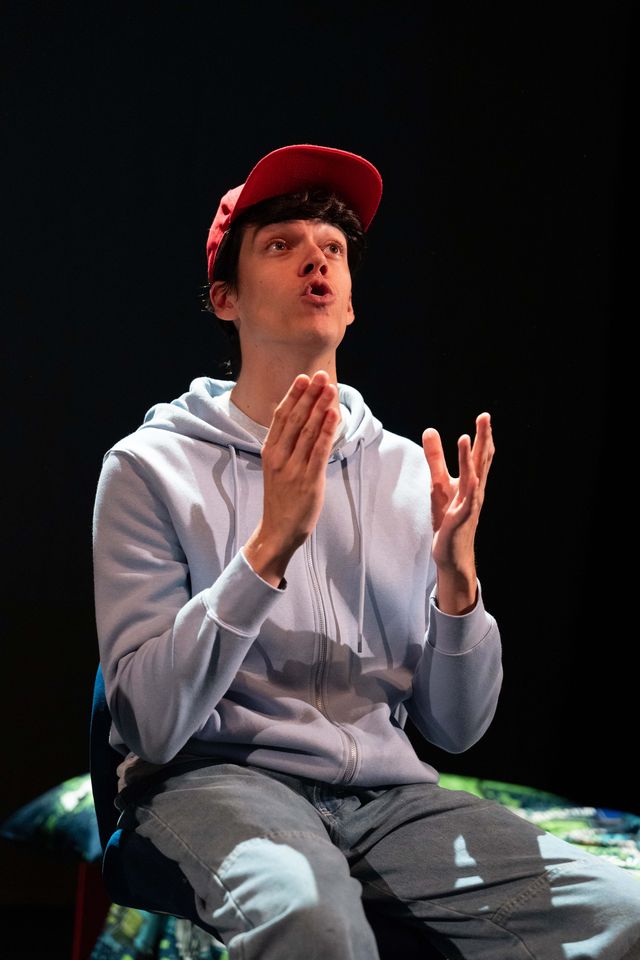
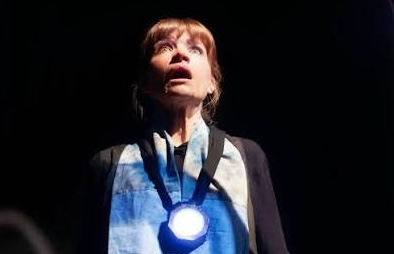
Malaika Kegode is the storyteller and we, she tells us – gently persuasive – are Meles, a young woman, struggling to make our mark as a podcaster. Our mother looms large: not only is she a famous TV journalist, she’s also dying of corticobasal degeneration (and no, Kegode sighs, a long walk won’t help). We move home, our emotions a mixture of resentment and relief. It’s good to escape the daily hustle and London rents, but it’s hard to be back in our childhood bedroom, aimless and under-occupied, fearing our mother’s death.

So, when we hear about the mysterious disappearance of a local musician, ten years ago, little wonder that we grasp the opportunity to investigate. A true-crime podcast might just be the thing to finally impress Mum. So off we go, into the woods, to visit an old crone called Dora Brock, who freely shares her tales of secret songs and magical badgers, unaware we’re using her…

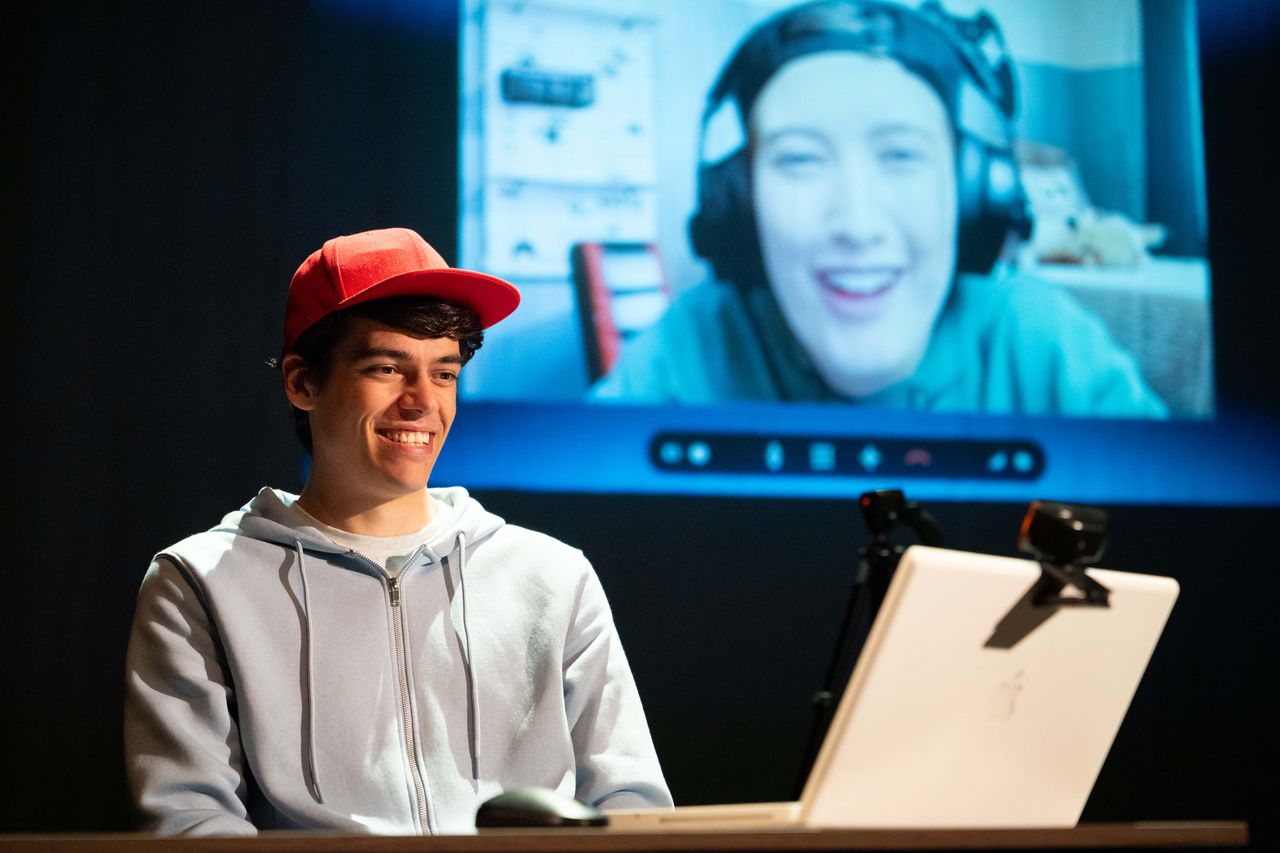
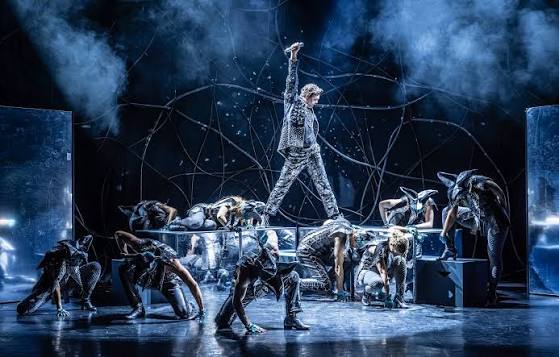
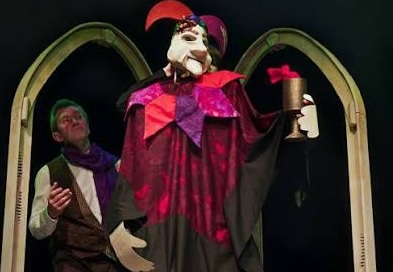
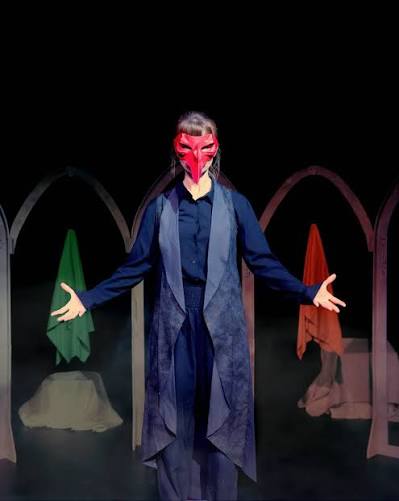
Badgers is a harmonious hybrid, Jakabol’s eclectic score perfectly complementing Kegode’s beguiling narration. Rebecca Wood’s set design is ingenious, its colour palette stark, all black, white and red; musicians Joe Williams and Beth Roberts sit in a glass box, centre-stage, a theatre within a theatre, part cage, part display case. It’s very techie, with flickering screens and distorted voices (video by Christopher Harrisson and sound by Jack Drewry), and tonally as slippery as the shape-shifting badger-humans at its heart, switching seamlessly from contemporary online vernacular to fairy tale to folk horror. It’s this last element that allows Mike Gunning and Natalia Chan’s lighting design to shine (sorry), ramping up the jump scares and other-worldliness. And then there’s Kegode again, speaking softly, bringing us back down to earth, helping us to accept Meles’ troubled reality.

If the sound levels are a little off at first, so that I struggle to hear Kegode over the music, this is soon rectified, and I leave the theatre still wearing Meles’ skin, still caught up in her life. Directed by Jenny Davies, this is a spellbinding production, weaving us into its fabric and leaving us utterly disarmed.

4.8 stars

Susan Singfield

Water Colour

07/08/26

Traverse Theatre, Edinburgh

Winner of the St Andrews Playwriting Award 2025, Milly Sweeney’s Water Colour focuses on the lives of two very different young people, who both go through bouts of depression. If that sounds off-putting, please don’t be misled, because this is an invigorating slice of theatre that moves kinetically through its rapidly-evolving story, cutting back and forth between the two characters, who move restlessly around Natalie Fern’s ingenious set design, which will eventually reveal some secrets.

Esme (Molly Geddes) is in her final year at the Glasgow College of Art and it only remains for her to submit one more painting in order to graduate. But she somehow feels unable to stir herself to undertake that final picture. Locked up alone in her student flat, friendless and far away from the nurturing powers of her mother, she is beginning to fall into a dark, enveloping world where she can no longer function. 

Harris (Ryan J Mackay) would seem her polar opposite, a cheeky lad from the schemes, who has just moved into a flat with his best pal. He’s recently secured regular work as a dishwasher at a posh city restaurant, ruled over by a glowering Head Chef of the Gordon Ramsey persuasion. Harris is happy-go-lucky and ready to adapt to just about any situation.

But Harris and Esme are destined to cross paths one dark night, when Harris is simply wandering home from work and Esme has come to the end of her tether. Their interaction ignites a series of dramatic changes…

Director Sally Reid keeps the pace up to full throttle as the pair interact, while movement director Steve Laude-Russell ensures that the unfolding story is kept in restless motion throughout. Ross Brown’s sound design lends the piece an eerie, dreamlike quality and both performers are at the top of their game in their respective guises, handling their lead roles and a string of supporting characters with aplomb. I am genuinely thrown by a late-stage revelation as middle-class Esme finds therapy and heads towards redemption, while working-class Harris, unable to afford private health care, seems destined to plunge in the opposite direction. In the final section I find myself holding my breath as everything goes haywire.

It’s easy to see what caught the St Andrews’ judges’ eyes, and the heartfelt ovation from this audience is proof enough that Water Colour exerts a powerful hold. It’s an utterly compelling script and this fabulous production plays to its strengths. I for one can’t wait to see what Milly Sweeney comes up with next.

4.5 Stars

Philip Caveney

Supposing:

07/08/26

Traverse Theatre, Edinburgh

TravFest starts off strong this year with Zinnie Harris’s magical-realist new play, Supposing:, a blend of mythology, contemporary politics and overt theatricality.

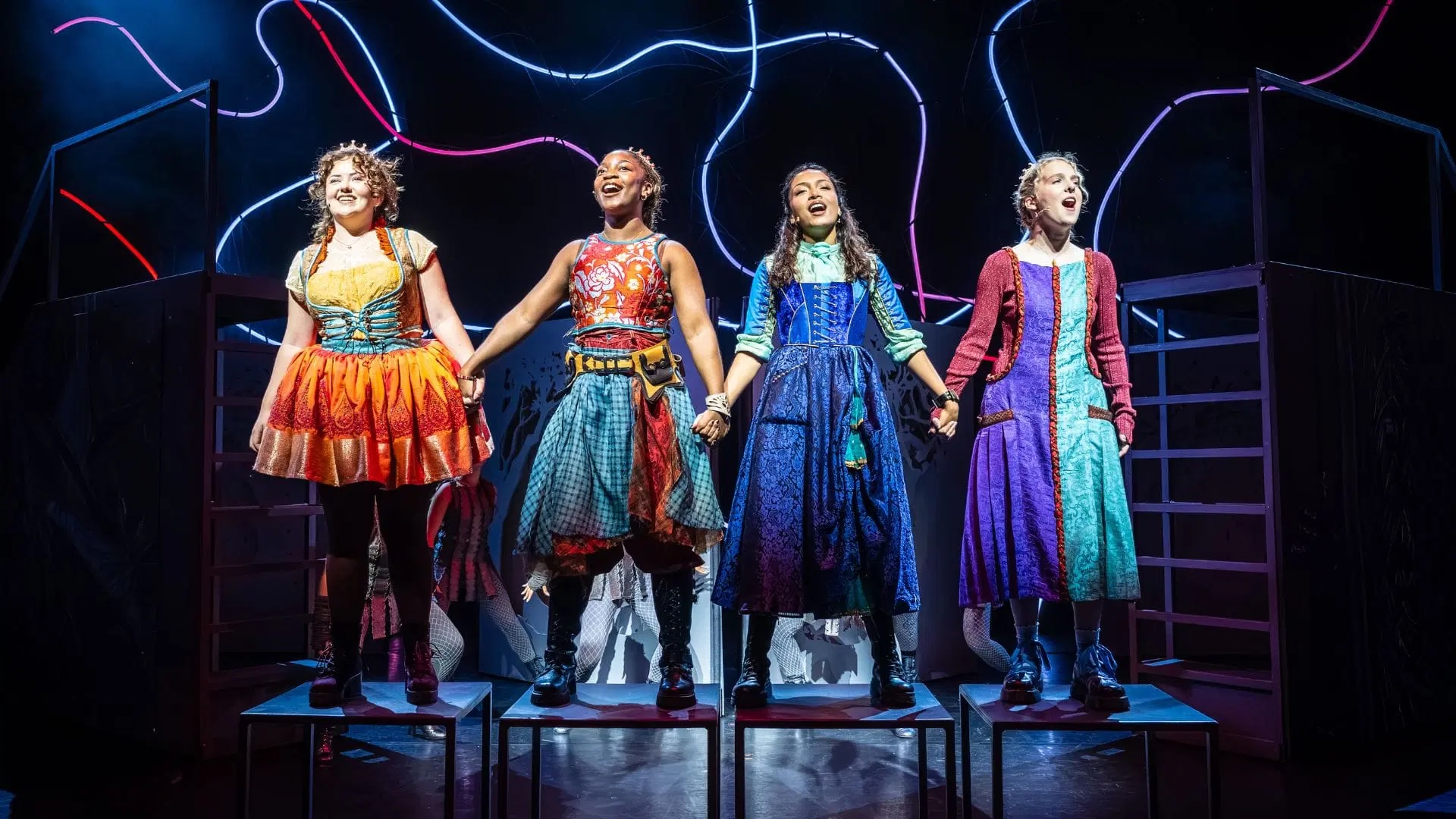
Sally (Nicole Cooper) has fallen down a hole. In literal terms, it’s just a small crater in a road outside a theatre, and she’s not seriously hurt. Metaphorically, however, it’s so much more, not least a portal for a Greek chorus, who promptly take up residence inside her head. Awkward. As if that weren’t enough, she’s also been cursed with the ability to see some very specific aspects of the future…

Sally’s husband, Rich (Richard Conlon), doesn’t believe in her newfound prophesying skills. He thinks she’s suffering from depression – again – or maybe it’s the menopause? Either way, he has absolutely no intention of popping next door to warn their racist neighbour that she has an undiagnosed medical condition, however urgently Sally insists.

It’s not just their marriage that’s under strain. The outside world is a pressure-pot too. The town’s hotels are being used to house immigrants and there are right-wing protesters gathering outside. Sally’s internal chorus never lets up its refrain: Trump, Reform, the climate crisis. Madness seems like a legitimate response.

Cooper’s performance is impressive, at first clipped and precise, then – as Sally plummets ever-deeper down the rabbit-hole – excessive, even flamboyant. Conlon provides an excellent foil, a study in baffled defensiveness and disappointment. Deftly directed by Harris, Supposing: is a timely exploration of our post-truth society, albeit one that poses more questions than it answers about how to navigate the shifting sands.

If this sounds like your kind of thing, don’t hesitate to buy your tickets. You don’t have to be Cassandra to see that this well-crafted, thought-provoking production is sure to be a hit.

4.7 stars

Susan Singfield

The Wolf of Poyais

06/08/26

Assembly Roxy, Edinburgh

Thom Tuck, first seen by B&B as Scaramouche Jones at 2015’s Fringe, is an accomplished storyteller who knows how to spin an eccentric yarn with absolute authority. In the case of this show, he employs all his considerable skills as he steps into the skin (and knee breeches) of Gregor MacGregor, a 19th century Scottish adventurer, the self-styled Wolf of Poyais. Do you know Poyais? Gorgeous little place in Central America! Fabulous climate, wonderful mineral reserves and not a mosquito in sight. Only… don’t try looking for it, because MacGregor made it up.

Along with quite a few other elements of his life.

As we’ve often remarked, the most unlikely stories are always the ones that turn out to be true and such is the case here. MacGregor started off pretty much on the level in the early 1800s by being commissioned into the British army. Though he took part in the Peninsular War and latterly the Venezuelan War of Independence, he managed to rise through the ranks without actually getting involved in much of the fighting. And when he returned to England, he came back with the news that King George Frederic Augustus had appointed him Cazique of Poyais – and, shortly thereafter, he started selling shares in the place to gullible would-be settlers. This could have been a lark – if only so many of his investors hadn’t died when they arrived in a place that didn’t exist. Annoyingly, around fifty of them survived and returned to tell what happened to them. Not that they blamed MacGregor of course…

Tuck strides boldly out onto the stage to address his audience of potential investors. With a minimum of props, he personifies the titular character as a self-aggrandising braggart with not one iota of conscience, a man who makes no secret of the fact that he is the only person in the world he cares about. He also jumps into several other characters along the way. The scene where he and his wife dance with each other is a masterclass in comic timing – and I can’t suppress a gasp of astonishment when, with the slightest flick of his hair, he transforms into Captain Thomas Strangeway, the supposed author of a guidebook to Poyais.

I love too a last minute twist where the story is brought bang up-to-date, reminding us that snake-oil salesman are still plying their trade and occupying the very highest positions of authority.

This is a masterful production and interested parties who would like to know even more about the exploits of Mr MacGregor should be aware that there’s a podcast that goes with it – and the opportunity to download the opening episode for anyone who visits the show. Get in!

4.2 stars

Philip Caveney

Buggers

06/08/26

Pleasance Courtyard, Edinburgh (Upstairs)

A wise man once remarked that ‘Life is like a box of chocolates. You never know what you’re going to get.’ The same could be said of your first day at the Fringe. We book a particular show (this year it’s the pithily titled Buggers) and in we trot, fully prepared to be either entertained or horrified. Happily, this year the gods are smiling on us, because this play offers an encouraging opening salvo for the next three weeks of madness.

Artist and muse. It’s a familiar theme but Alistair Hall’s unflinching script treats its chosen subject with candour and vivacity. Francis (Hall) and George (Peter Clements) have just bumped into each other in a London pub. The year is 1963 and now, back at Francis’s gaff, the two of them embark on a night of booze-fuelled sex and pill-popping. Francis seems extremely sure of himself but the less experienced George, a petty criminal, needs to be encouraged to let his hair down. At first, he maintains that he doesn’t know Francis is an artist – quite a successful one as it happens – but later, Francis manages to get him to admit that he had known – and that, from now on, George must tell him no more lies.

Because Francis wants George to stay a bit longer – and what’s more, he’d like to do some paintings of him…

Of course, as the pieces fall into place we realise that these are Francis Bacon and George Dyer – and that, as their relationship develops across the years, it will result in the creation of a whole series of harrowing and visceral portraits – and a tragedy that will haunt Francis for the rest of his life.

Built around two extraordinary performances and tightly directed by Alice Wordsworth, Buggers is a powerful and eviscerating study of the pleasures and pitfalls of sexual attraction. It casts its gaze on the different ways in which ill-matched lovers can both empower and ultimately destroy each other. The simple staging has the two performers literally splashing about in a tin bathtub, whilst taking regular mouthfuls of whatever it is they’ve filled the bath with (I hope they’ve had their jags!). I should perhaps add a warning for those of a photosensitive nature – there are a couple of brief but very intense sequences featuring strobe lighting. You have been warned.

We leave the production feeling we’ve made a great choice for the start of Fringe 26, with this clever, acerbic treatise on class, art and the abuse of power.

4.4 stars

Philip Caveney

A Tupperware of Ashes

04/08/26

National Theatre at Home

The onslaught of the Edinburgh Fringe looms just on the near horizon, but before it all kicks off, there’s still a chance (thanks to Brenda and her NT at Home subscription) to catch up with something we have missed earlier. The listing that first catches my eye is 2024’s A Tupperware of Ashes, a play by Tanika Gupta – but Susan has noticed something else she really wants to watch. Can we possibly cover them both?

Yes, we can.

The central character of this drama is Queenie (Meera Syal), an ambitious Michelin-starred chef and matriarch, with three children, from whom she demands complete dedication. Kamala (Natalie Dew) and Gopal (Marc Elliott) are both highly successful in their respective professions, while oldest boy, schoolteacher Raj (Raj Barjaj) lacks focus (at least in Queenie’s opinion) and doesn’t seem to have much in the way of ambition, for which she openly criticises him. But the three of them accept that their mother has her own way of handling life. Woe betide anybody who tries to make her change her ways.

But the siblings – together with Queenie’s closest friend, Indrani (Shobna Gulati) – are  becoming increasingly worried about their mother’s recent behaviour. Why does she keep mentioning other (non-existent) branches of her restaurant, supposedly based around the world? Why does she fly into rages at the slightest provocation? And why does she sometimes talk about her late husband, Ameet (Zubin Varla), as though he’s still around, ready to come strolling along at any moment.

The answer is supplied by Doctor Young (Stephen Fewell, as the first of a whole series of authority figures). Queenie, it turns out, is in the early stages of Alzheimer’s and is beginning the long, terrifying decline into dementia. As everyone watches, appalled, she begins to act and behave in ways she never has before. And, as she opts to spend more time with each of her children, they begin to realise the enormity of what is happening to their mother… and they struggle to deal with it.

Those of you who are thinking of King Lear are certainly on the right lines (Lost Lear, seen at last year’s Fringe, also mined a similar premise to great effect). Syal offers a powerful and compelling performance in a central role that features equal parts humour and tragedy – and just occasionally she utters something that directly relates to Shakespeare’s classic. When caught up in the extremes of her condition, Queenie’s observations are utterly heartbreaking and, as ever, when watching a situation like this, I’m drawn back to my own mother’s ten year battle with dementia.

Pooja Gal handles the directorial reins with great precision, aided and abetted by Rosa Maggiora’s dreamy set design and composer Nitin Sawney’s ethereal compositions. Varla is wonderful as Ameet, wandering confidently into real situations, visible only to Queenie as he makes wry observations about the chaos unfolding around him.

If there’s an issue here it’s simply that Syal is so magnetic a personality that the play’s coda (where the siblings struggle to organise the titular scattering of her ashes in the River Ganges) misses her presence so much that the ending feels oddly anticlimactic, a problem accentuated by the fact that we’ve already witnessed what feels suspiciously like the perfect conclusion a good twenty minutes earlier. 

But it’s a small issue in what is, overall, an accomplished and thought-provoking drama – and how wonderful it is to have it ready to watch at the touch of a button.

4.7 stars

Philip Caveney

Ballet Shoes

04/08/26

National Theatre at Home

We’re visiting my mum and, when she reveals she’s taken out a subscription to NT at Home, we know exactly what we’ll be doing this evening. We start scrolling through the options – and then Ballet Shoes catches my eye.

Wait, what? It’s already played two sold-out runs in its South Bank location? I’d 100% have travelled to London for this if I’d known it was on. How have I missed it? I’m usually all over theatre news, but this one has completely passed me by.

Neither Mum nor Phil is particularly keen; there are lots of other plays they’d rather see. But my enthusiasm is so fervent, I don’t think they can bear to disappoint me. They agree to give it a go. And – spoiler alert – they are both mightily impressed.

Because this is an impressive production. Kendall Feaver’s adaptation of Noel Streatfeild’s much-loved novel is exemplary, knowing exactly which ideas to heighten (and which to dispense with) to retain the heart and spirit of the book. Likewise, director Katy Rudd maintains a lively pace, expertly interweaving theatrical spectacle with more naturalistic storytelling.

For those not in the know, Streatfeild’s best-known children’s story tells the tale of three young orphans, Pauline (Grace Saif), Petrova (Yanexi Enriquez) and Posy (Daisy Sequerra). Rescued from various corners of the globe by an eccentric explorer known as ‘Great Uncle Matthew’ (Justin Salinger), they are thrust on his adopted niece, Sylvia (Pearl Mackie), who has been living a quiet life in GUM’s London home, drawing pictures of the relics he brings back from his travels. But these latest curios take a whole lot more looking after than the usual fossils…

When GUM goes AWOL and stops sending money for his wards, Sylvia and nursemaid Nana (Jenny Galloway) are at their wits’ end. They need to find a way to make some money. One answer is obvious: their shabby Cromwell Road house is enormous; they can take in lodgers! And, once the paying guests are safely ensconced, another opportunity presents itself. Their tenant, Theo Dane (Nadine Higgin), is a teacher at The Children’s Academy of Dancing and Stage Training. If the girls attend this school, they’ll be able to work and help out with the household bills.

Multi-roling Salinger perfectly embodies Madame Fidolia, the formidable Russian ballerina-turned-headmistress, who immediately notices Posy’s dancing potential, singling her out for one-to-one lessons. This plot point leads to some truly beautiful solo ballet from Sequerra, while the children’s other performances – in Alice in Wonderland and an experimental production of A Midsummer Night’s Dream – allow choreographer Ellen Kane to create a gleeful extravaganza. No chance to dazzle is missed, as Petrova’s obsession with all-things mechanical is actualised by lodger Jai (Sid Sagar)’s stunning prop car, designed by Frankie Bradshaw.

I can’t think of a single way this glorious production could be improved. It’s lively, engaging and exciting, a perfect piece of family entertainment. And a message from Phil: you don’t have to know the novel to revel in this fabulous show.

5 stars

Susan Singfield

The Burns’ Project

27/06/26

Henry Irving Room, Lyceum Theatre, Edinburgh

As someone who has lived in Edinburgh for more than a decade, I’m somewhat ashamed to admit that I know very little about Scotland’s National poet Robert Burns – or rather, I knew very little before attending this delightful piece of immersive theatre, staged in The Royal Lyceum’s Henry Irving Room. Actually, the lesson begins while I’m still waiting to go in to the event. I fall into conversation with a woman from Moscow, who tells me that Burns is huge in Russia, where people will even study Scots dialect, the better to appreciate his work. Who knew?

Feeling suitably humbled, I take my seat at a long, serpentine dining table, where various white-sprayed props are set out to accompany what amounts to a kind of potted biography of Mr B. He is played by James Clement, who originated the role for last year’s Fringe. He delivers a selection of poems, recollections and encounters from the writer’s life, while musician Lisa Rigby punctuates the proceedings with some of Burns’ songs, her ethereal voice soaring around the room, accompanied by guitar and shruti box.

I do indeed learn much about the man: his humble origins on the family farm in Alloway (which I recently visited); his schooling under the tutelage of John Murdoch; his plans to work on a sugar plantation in Jamaica; and, after the publication of his collected poems, his time spent in Edinburgh, where he quickly established a reputation as a Lothario. It’s sobering to note that Burns managed to sire a total of twelve children in his relatively short lifetime, nine of them with his wife, Jean, and the others with various lovers and servants. In 2019, it was established that he had 900 living descendants…

Clement inhabits the role of Burns with great relish, taking every opportunity for playful exchanges with members of the audience. The various props on the table are cleverly integrated, and Jenny Booth’s clever set allows for some genuinely surprising moments – especially the bit where Robbie is presented as ‘dish of the day.’ Cora Bisset’s assured direction means that this piece succeeds both as a valuable history lesson and as a smooth and entertaining piece of theatre.

I leave humming the tune to A Man’s a Man for a’ That and eager to find out even more about Robert Burns.

Job done.

4 stars

Philip Caveney

The Hen Night

18/06/26

Assembly Roxy, Edinburgh

The fourth and final offering in Assembly Roxy’s season of A Play, A Pie and A Pint is based around an event that any Edinburgh resident will be familiar with. The Scottish capital is a regular venue for parties of the Stag and Hen persuasion – and it’s not unusual to see many such celebrations playing out simultaneously on any given weekend.

Coral has proudly announced that she is going to marry her boyfriend, Scott and her three best friends – Jade (Dani Heron), Lilac (Laura Lovemore) and Amber (Anna Russell-Martin) – have decided to give her the best hen night in recorded history. Jade will do most of the planning; she has a spreadsheet and everything. The escapade (in Edinburgh, naturally) will involve dancing and boozing and er… kayaking and… flower arranging…

So what if none of the girls are exactly over the moon about Coral’s choice of Scott, who is, to put it mildly, a bit toxic? No, they are going to make this an event to remember. And when Coral’s mysterious Irish cousin, Luna, unexpectedly turns up at the nightclub where the girls are getting utterly smashed, it’s clear from the way that all the men are fainting at the very sight of her that there’s something special about the new arrival. Something other-worldly…

The Hen Night, written by Debbie Hannan and directed by Laila Noble, is a bright and breezy production, that nevertheless has plenty of serious things say about female friendship and why women shouldn’t settle for less than they desire. The three players embody their respective roles with pizzazz and also occupy other characters, with both Russell-Martin and Lovemore portraying Coral at various points, while Russell-Martin also gives us the mysterious Luna and a surly, smirking Scott. The brilliantly simple device of a character switching around her hen night sash alerts the audience to who’s being who at any given moment.

Fuelled by the momentum of its own internal logic, The Hen Night powers along, powered by a steady diet of laugh-out-loud quips and astute observations, yet still has the skill to slam home those aforementioned serious points with utter conviction. I must confess that I had some reservations about the play based on its title, but I’m even happier to admit that my assumptions were soon dashed. This makes a satisfying final flourish to what has been an outstanding first season of PPP at Assembly Roxy.

More please!

4.3 stars

Philip Caveney

Malory Towers

13/06/26

Home, Manchester

Emma Rice Company’s Malory Towers is billed as a “UK” tour. As a Welsh woman living in Scotland, I feel the need to point out that this is actually an “England” tour. Luckily, Phil’s daughter lives in Manchester and, although she and her husband are too young to be Blyton aficionados, they’re always up for a bit of theatre. Which means we get the bonus of spending quality time with them – as well as having somewhere to stay. 

It’s more than a decade since Phil and I have been to Home, but the venue is as vibrant as ever. The audience for this particular show is an odd mix, comprising mainly kids (some of them dressed up in Malory Towers school uniforms) and middle-aged women like me. It makes sense, I guess. For the latter group, it’s nostalgia for the books of our youth. For the former, it’s the more immediate joy of a children’s adventure story, presumably re-popularised by the recent (excellent) CBBC series. 

But, look. I was never going to miss this musical. I’d have travelled much further afield if I’d had to. The combination of Blyton and Rice was always going to be too potent for me to resist. Blyton’s boarding school stories have a special place in my heart, and Rice is my favourite theatre maker, so yeah. This is a must-see. 

Somehow, with just eight performers – the actors also provide the music – Rice manages to evoke the atmosphere of a busy, bustling school. Of course, some characters have been amalgamated, others missed out altogether. But the main players are present and correct.

Step forward, Darrell Rivers (Robyn Sinclair), as flawed and fabulous as ever, determined to be the kind of girl to make her school proud, but hamstrung by a feisty temper that gets her into all sorts of scrapes. Gwendoline Lacey (Rebecca Collingwood) is played less as a preening princess and more as an out-and-out psychopath, complete with murderous intentions. It’s not true to the original, but it does make for some great drama! Alicia (Molly Cheesley) – notorious trickster – is merged with Connie, who can’t keep up with her lessons, and is frustrated by falling behind. The combination works. MD Stephanie Hockley plays, appropriately, musical prodigy Irene, who – for some reason – is given the French teacher’s surname and nationality. Meanwhile, Sensible Sally is played by Bethany Wooding, and horse-loving Bill by Zoë West. But it’s Eden Barrie’s Mary-Lou who’s the standout, her loveably gawky character the centre point, as she learns to overcome her timidity and stand proud of who she is. 

Rice’s direction is as quirky as ever, and her inventive set-pieces are what really make this production. Miss Grayling is a silhouette projection, voiced by Sheila Hancock, a conceit that cleverly distances the head teacher from the girls’ everyday lives, while reminding the audience that they are being looked after. The swimming scene is a particular highlight, with puppets jumping from cartoon cliffs before the actors emerge from the ‘sea’, shivering and spitting water. Best of all is the opening to the second act, the inevitable clifftop rescue. I won’t reveal here how it’s done; suffice to say the entire audience is in paroxysms of laughter. 

Is it all a little too spoofy? It is, for my taste at least. I understand why Rice has taken this route. Blyton’s characters are easy to mock: they’re painted with broad strokes, each with her own standout trait; their concerns and adventures so trivial and trite. But – and I know it’s a different beast entirely – I think the CBBC series manages this better, treating the girls’ adolescent struggles with respect and empathy rather than as a joke. In contrast, this production has a very adult perspective, and almost everything is played for laughs. The one exception is the scene where Gwendoline receives bad news. The poignancy of the moment is beautiful – and intensely emotional. 

I like the overt reminders about the second world war. Blyton never mentions it but, as Rice reminds us here, the series was published between 1946 and 1951. The girls have lived through the war; their fathers, uncles, brothers will have fought in it. No wonder the pupils are so excited about midnight feasts: they’re used to rationing and shortages. This backdrop adds another dimension to the story, which works really well.

Overall, this Malory Towers musical is something of a mixed bag. But am I glad I’ve seen it? Rather!

4 stars

Susan Singfield