Simon Gleave

Endgame

14/08/26

Pleasance at EICC (Lomond Theatre), Edinburgh

Which adjective best describes Samuel Beckett’s Endgame? Depressing? Dystopian? Dingy? Dark? Take your pick. And yet this is also a funny play, full of clowning, jokes and silly absurdities. Who better to illuminate the weirdness than the wonderful Flabbergast Theatre?

We’ve been fans of Flabbergast ever since we stumbled across Tatterdamelion at 2016’s Fringe; in the intervening years, we’ve been wowed by The Swell Mob, The Tragedy of Macbeth and Paper Swans. We’re excited to see what they do with “the play that Beckett considered bleaker than Godot“.

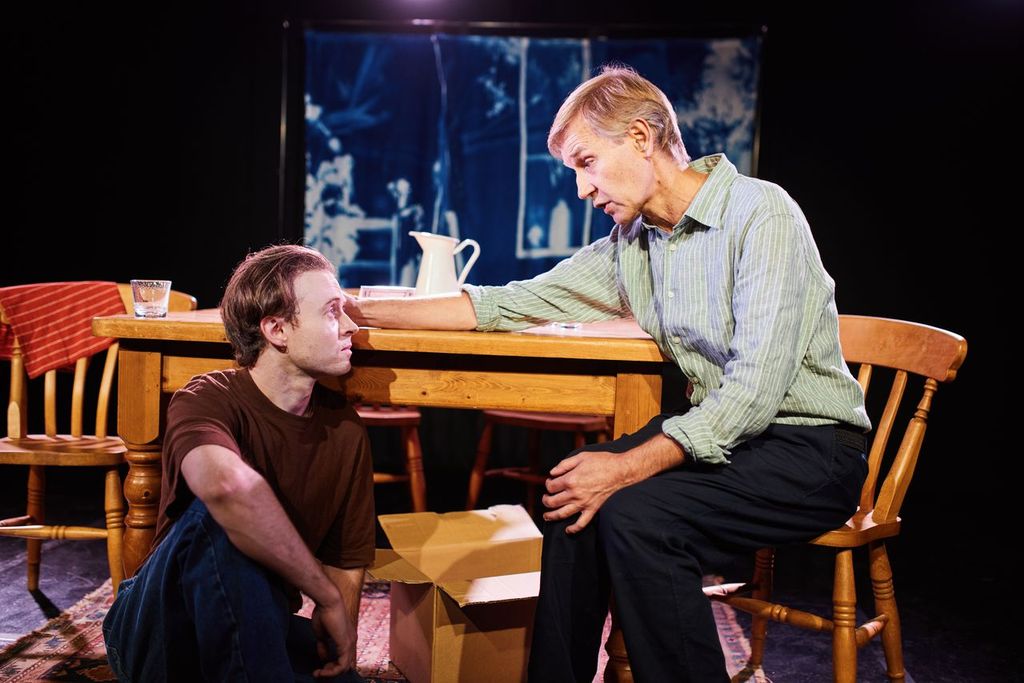
Henry Maynard is not only Flabbergast’s founder and the director of Endgame, he’s also Hamm, the blind and dying man at the centre of this piece. Hamm is angry with life, railing against his failing body and the terrible state of the world. The view from his window, he is told, is desolate, post-apocalyptic. Something dreadful has happened out there – and it’s not much better inside his home. Hamm is stuck in his chair, unable to move, utterly reliant on the hapless Clov (Simon Gleave), who’s been with Hamm since he was a boy. Part servant, part surrogate son, Clov is cowed by Hamm, incapable of standing up to him.

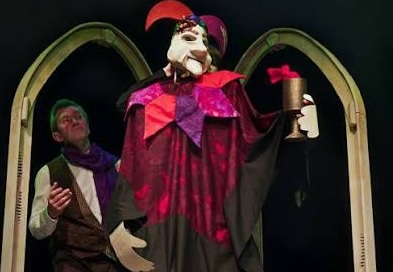
The play’s most transparent metaphor is Hamm’s parents’ accommodation. Old and useless, Nagg (Derek Ellwood) and Nell (Complicité’s Annabel Arden) have been discarded like rubbish: they live in a pair of dustbins outside their son’s house, popping up occasionally to beg for food. The price for a hard biscuit is high: they have to listen to Hamm’s endless shouting about how they neglected him when he was young. His accusations are born out by Nagg’s cruel replies but their helplessness makes us sympathise with the aged couple.

Mostly, though, our hearts go out to Clov. He’s the only one who’s able to move, albeit with difficulty, and so he’s stuck caring for these dreadful people, none of whom has a kind word for him. Gleave’s expert clowning gives the play its physical dynamism, preventing it from seeming static, despite the fixed positions of the other three characters.

Skilfully conceived, this production has a clarity that illuminates Beckett’s dream-like, complex play, making it more accessible than any other version I have seen. Just as in life, death looms large – but there are plenty of laughs along the way.

5 stars

Susan Singfield

Paper Swans

05/08/24

Pleasance Courtyard (Upstairs), Edinburgh

As soon as we note that Paper Swans is a Flabbergast production, we know we need to see it. Two of their previous shows, Swell Mob and The Tragedy of Macbeth, are among the most memorable pieces we’ve ever seen at the Fringe, and we’ve seen a lot. We know that – whatever else – Paper Swans is sure to be both experimental and innovative.

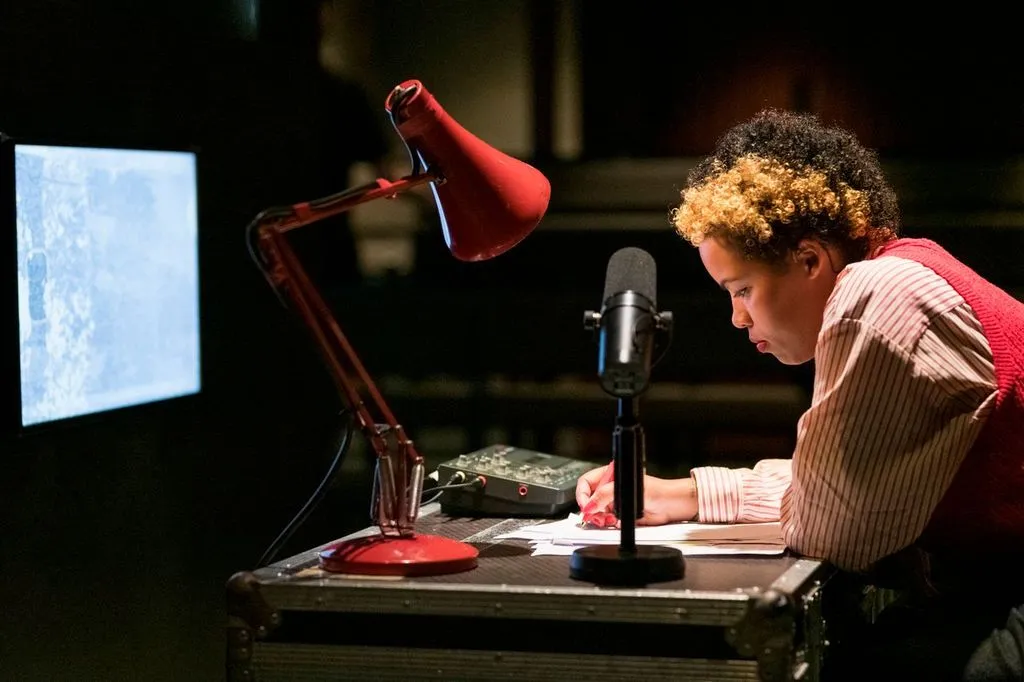
We’re not wrong. Written by and co-starring Vyte Garriga, this is a surreal piece depicting a young woman in a park at night, obsessively making the titular paper swans, while a security guard (Daniel Chrisostomou) urges her to leave.

Like most absurdist theatre, the structure is cyclical, reminiscent of a recurring dream, the characters destined to repeat the same encounter over and over. Ambiguous imagery takes precedence over coherent narrative or plot, and we’re left to ponder the possible meanings. Indeed, we spend the whole walk home doing exactly that.

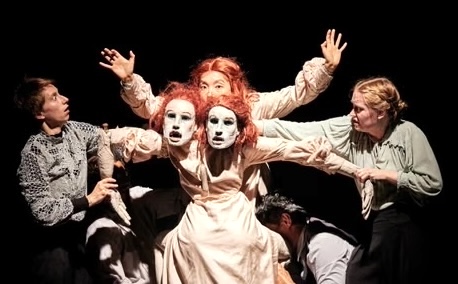
The performances are highly stylised. Garriga, clad in a white leotard and tutu, resembles the origami swans she’s folding; her movement and gestures are like a ballet in slow-mo. Indeed, there are overt references to Swan Lake – to Odette, Odile and Siegfried – as well as to famous ballerinas from the past. Chrisostomou is more clown-like, his exaggerated physicality at first wonderfully comic and then desperately sad. Director Simon Gleave’s choreography is so precise and disciplined that every moment is intense, heightened to the nth degree. There is no let-up here. The hour flashes by and, as the actors take their bows, I realise that I’ve been holding my breath. I don’t know for how long.

What is Paper Swans about? I’m not entirely sure. Garriga’s website tells us that it draws on her personal experience as a woman from a post-Soviet country (Lithuania), “exploring the trauma of oppression, the price of freedom and self-discovery through visual symbolism.” So there’s that. I think it also says something about futility, about how we take up pointless causes and projects and try to make them meaningful, attaching such importance to them that we’re prepared to die rather than give them up. There’s something here about the performative nature of authoritarianism too, about how shedding the apparatus of the oppressor can make people more sympathetic, more human. Who knows? I suspect that, in fact, it’s a hall of mirrors, and all we can see are distorted images of our own mindsets.

Whatever it is, it’s gloriously done. I love it.

4.8 stars

Susan Singfield

The Tragedy of Macbeth

07/08/22

Assembly Roxy, Edinburgh

We first encountered Flabbergast Theatre at the Fringe in 2018 with their wonderfully immersive project, The Swell Mob, a site-specific evocation of a Victorian drinking den. Now the company returns to the Fringe to take on one of the bard’s most celebrated plays and we’re really excited to see what they do with it. Let’s face it, we’ve all seen Macbeth in its various shapes and guises – but I think it’s fairly safe to say we’ve never seen it quite like this.

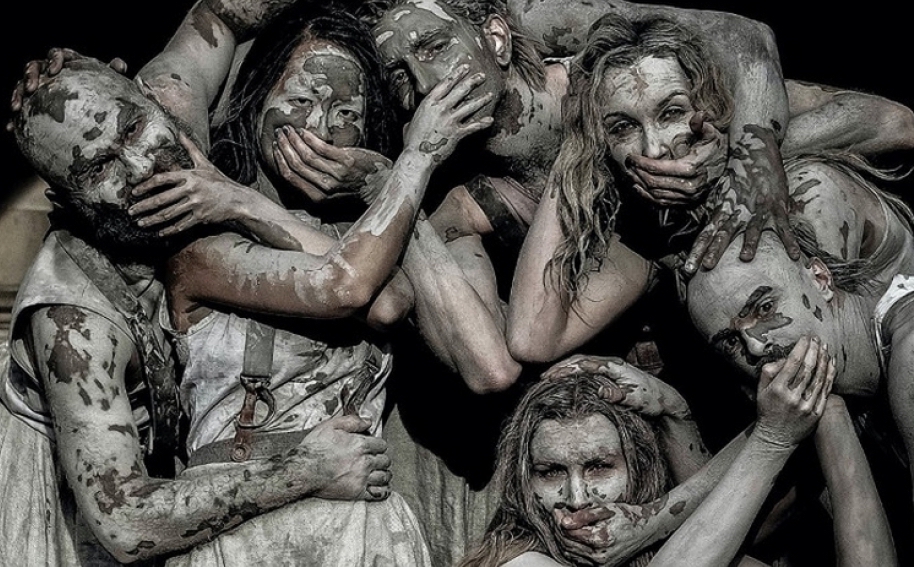
When we enter the venue, the eight-strong cast are already reeling around the stage, plastered in mud and raving and flailing around like demented beings. After all, this is a play about the madness brought on by the seductive power of hubris, so it feels entirely appropriate. The lights go down and, one by one, the players slip into their roles, switching effortlessly from character to character, but that sense of lunacy is always lurking at their sleeves, ready to take over at any moment.

I don’t need to relate the plot, because it’s ingrained into most people from high school onwards – but this raucous, visceral reimagining of the story captures the essence of the piece more eloquently than pretty much any other production I’ve seen.

It explodes, it capers, it struts its fretful stuff upon the stage and signifies plenty, while the austere stone arches of The Roxy provide the perfect setting for its excesses.

Simon Gleave gives a powerful performance in the lead role and Briony O’Callaghan’s Lady Macbeth is also extraordinary. But Flabbergast are essentially an ensemble troupe and every single member of the cast gives one hundred percent to this, with the volume dialled up to eleven. My initial fears that, with such ferocity, the piece could become one-note are neatly sidestepped, with a brilliantly clownish diversion from Dale Wild in the role of the Porter – and, after an explosive climax, there’s a delicate, musical a cappella song to bring everything gently back to earth.

The Tragedy of Macbeth ends with a heartfelt standing ovation from the crowd and it is fully deserved. Don’t miss this, it’s a wonder to behold.

5 Stars

Philip Caveney