Edfringe 2026

Copycat

24/08/26

Pleasance Dome (Jack Dome), Edinburgh

I’m initially drawn to Joe Sellman-Leava’s show because it promises to tackle the thorny topic of AI and, as an author and therefore somebody who sees it as perhaps the most dangerous invention of the 21st century, I’m keen to learn more.

And yes, it does handle the subject, but in a frustratingly roundabout way.

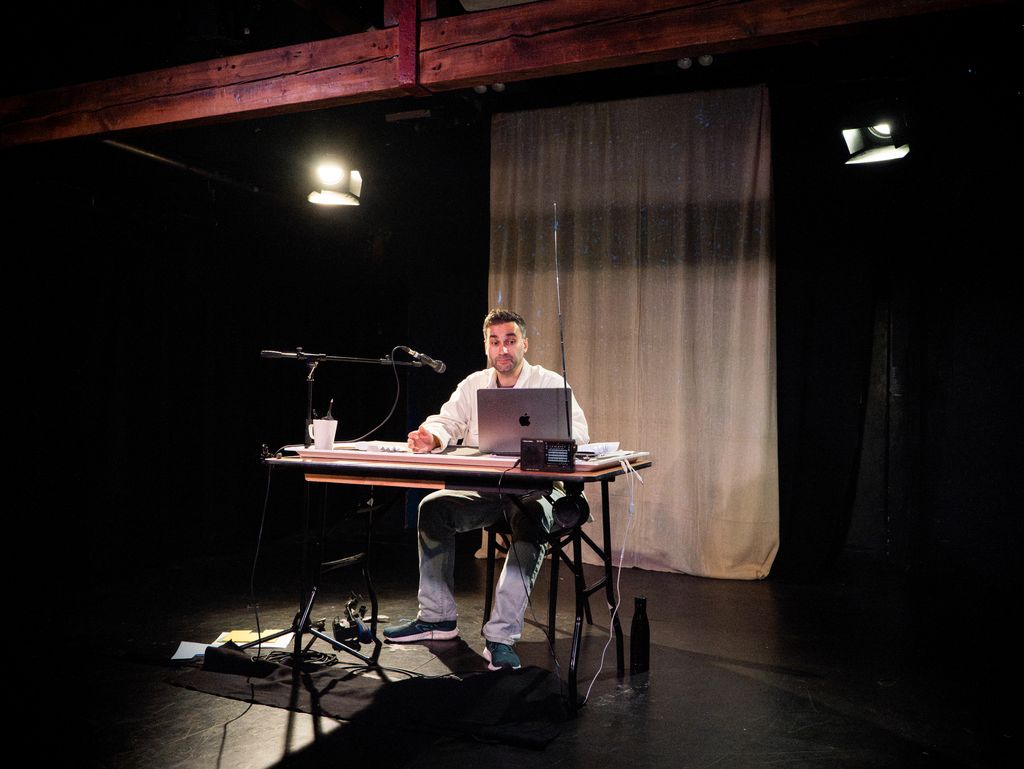
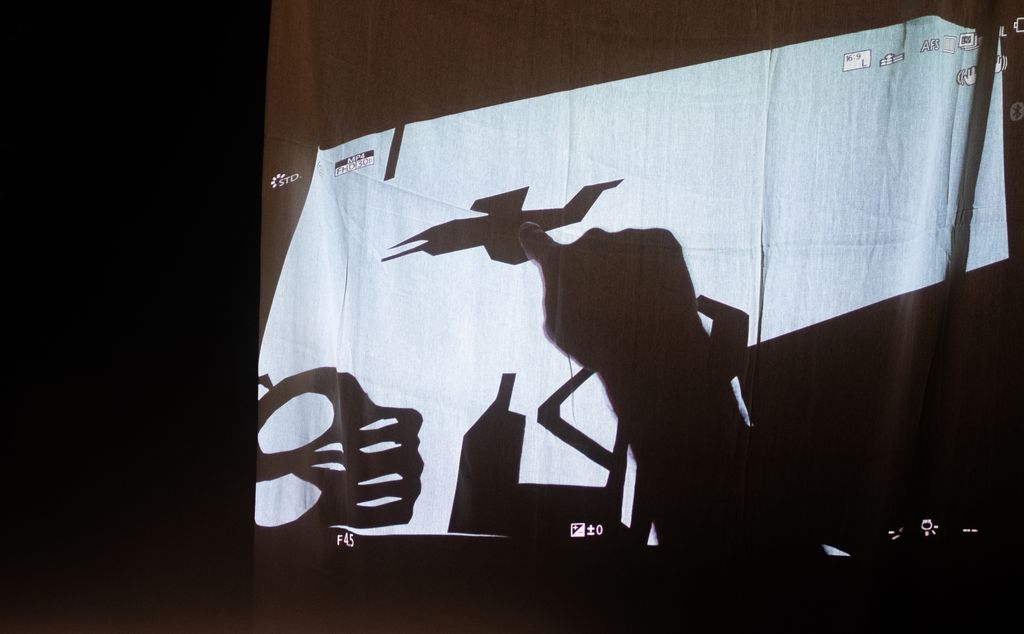
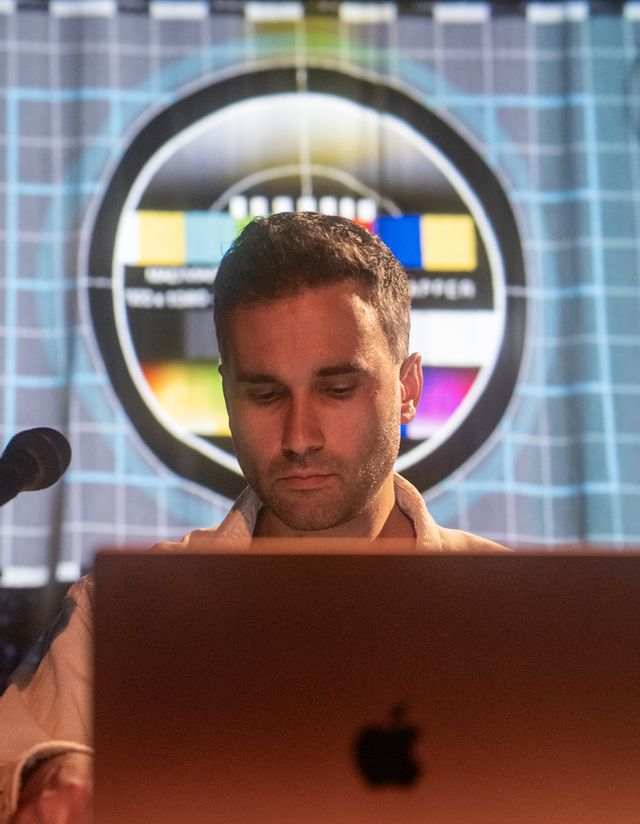
We find our narrator seated at a desk in front of a laptop, surrounded by heaps of discarded paper. An overhead projector allows him to display the different images he sets out on his (non-virtual) desktop. He proudly shows us a sketch book from his schooldays, which features caricatures of the teachers who guided him through his academic years. One in particular, it turns out, was an inspiration to him – and a section of the show will be all about Mr Swift.

Then Sellman-Leava does some impersonations – good ones as it turns out. His Ed Miliband is right on the nose. Just as I’m settling into that, he impersonates Big Arnie before segueing into selected excerpts from Lord of the Rings. It starts to become clear that Copycat is made up from a lot of disparate threads.

When we eventually get to the AI stuff, it is absolutely terrifying – the point that our National Health Service’s computer system has been outsourced to Palantir – an AI company often accused of ‘techno-fascism’ – is a particularly chilling premise. Sellman-Leava points out that we are all turkeys voting for Christmas, a conclusion with which I heartily concur. But then once again, we’re heading off in a different direction to revisit Sellman-Leava’s end-of-term show, in which he is obliged to impersonate the aforementioned Mr Swift.

Sellman-Leava is a talented and confident performer for sure, his warm, friendly demeanour connecting with his audience – but when he gets to the extended sequence where the presentation collapses into a confusing blare of random voices, augmented by impressive sound and lighting effects, I find myself thinking how much more effective this would be if the framework of the story were more straightforward.

There’s plenty of interesting content here but, in this form, they’re all fighting each other for dominance – and there’s no clear winner. Nonetheless, it does raise some vital points – and asks important questions..

3 stars

Philip Caveney
Dracula: Lucy’s Dream

21/08/26

EICC (Lennox Theatre), Edinburgh

It may be that you’re thinking, ‘Hmm. Yet another version of Dracula?’

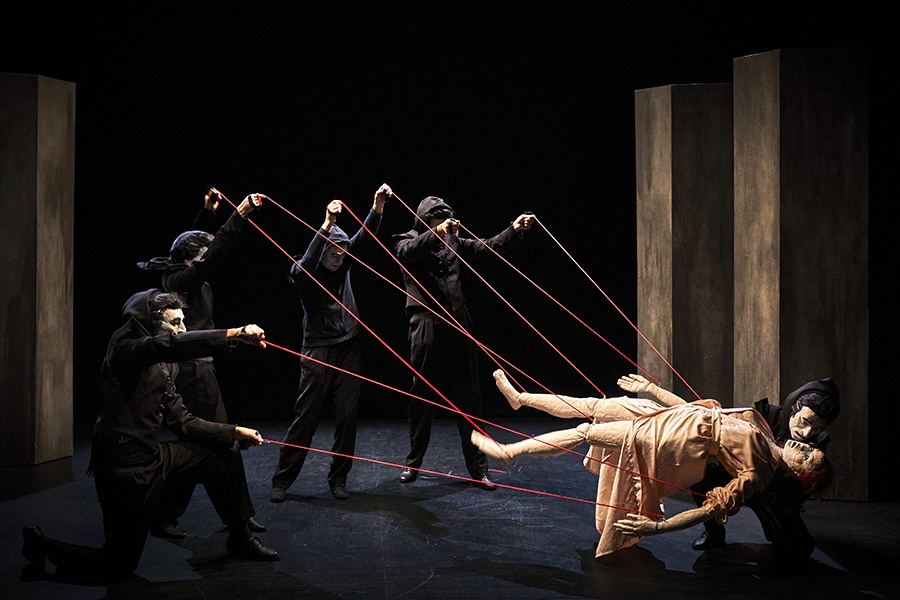
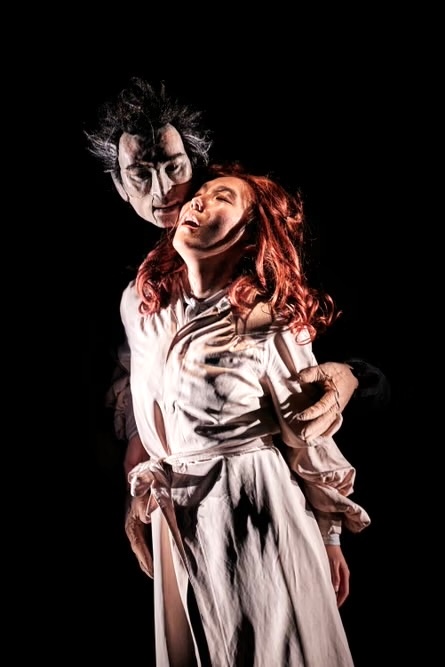
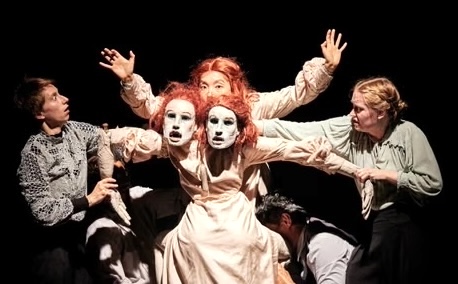
If so, think on. I’m willing to bet that you’ve never seen an adaptation like this one. French-Norwegian theatre company Plexus Polaire present their production in the spacious environs of The Lennox Theatre, using a mix of actors and life-size puppets to depict exactly what it says in the title. This is a visual representation of the dreams of Lucy Westenra. There’s hardly any dialogue, only a series of almost hallucinogenic scenes, which flow together into a surreal hour of movement, music and puppetry.

I sit there mesmerised and can honestly say I’ve never seen anything like this before. There’s a cast of only five performers – though I only realise there are so few of them when they take their bows at the end.

First there’s Lucy, wandering around the huge stage – but then there are two of her and, an instant later, three, running back and forth between gliding stone pillars – and, of course, there’s Dracula, who shifts between human and puppet and back again, at one point even breaking into separate components and floating eerily around the stage. Yngfeld Aspeli directs with all the skill and flair of a magician.

And the truly astounding thing is, you cannot see when one thing becomes another, so seamlessly is it integrated. A couple of times I fail to hold back a gasp of astonishment as something entirely unexpected happens. How do they do that?

There’s unearthly music and chanting voices, spectral lighting effects and half-seen shapes that shift and lurch through the gloom – oh, and there’s a dog! One that that looks real enough to put on a lead and take for a walk…

The Lennox Theatre is packed and the only advice I can give is to GET THERE EARLY because you’ll want to be as close to the stage as you can possibly can be, the better to see the magic unfold. Dracula: Lucy’s Dream is quite simply, a masterpiece.

5 stars

Philip Caveney

Playback

18/08/26

Summerhall (Former Womens Locker Room), Edinburgh

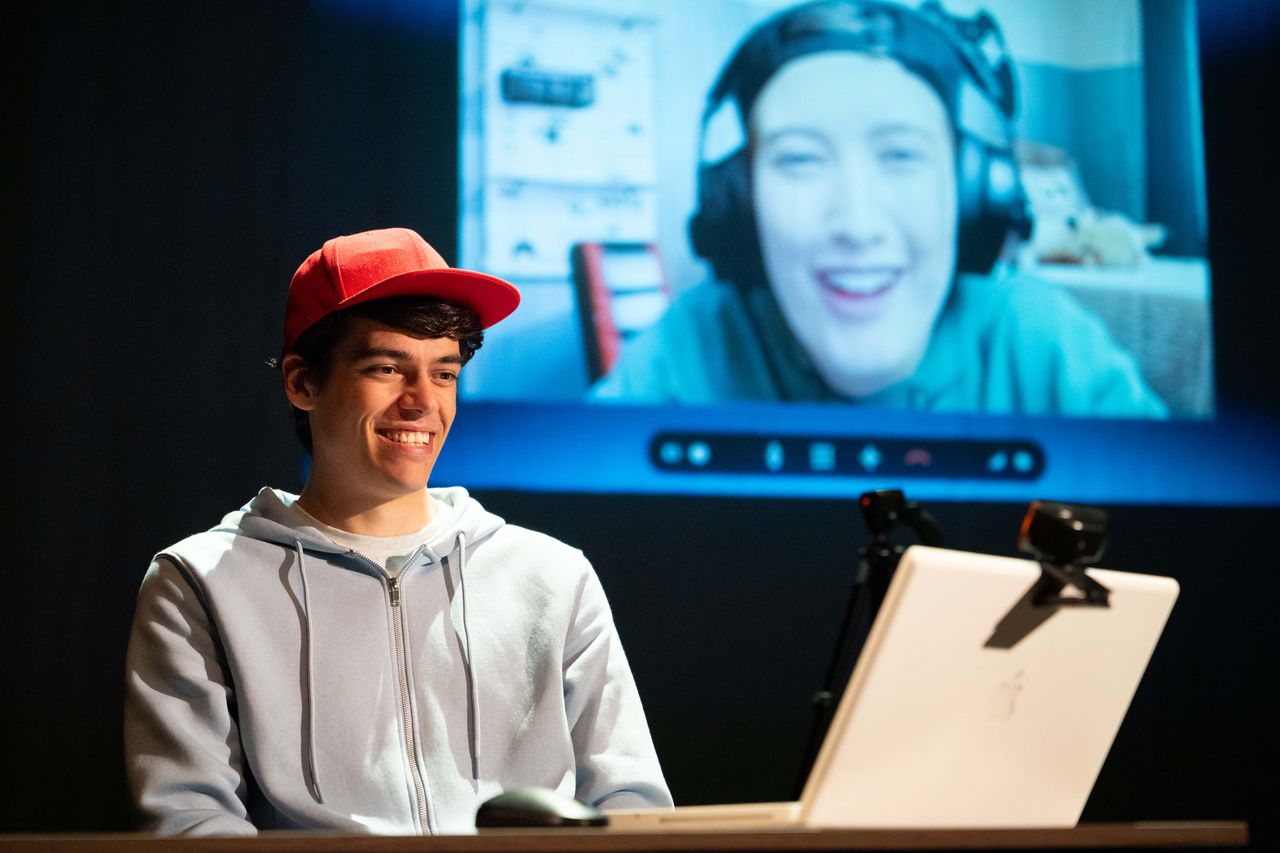
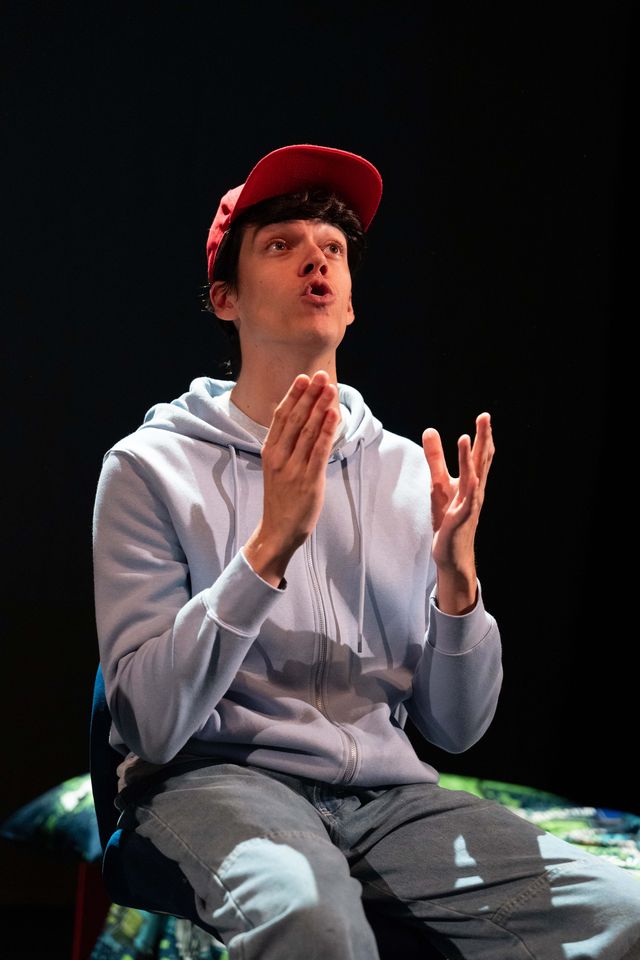
It’s 2013 and Euan Munro is taking his first steps as a filmmaker on YouTube. We watch entranced as clips of the cheeky eleven-year-old play on a large screen at the back of the room and we know instantly that they are too spot-on to have been faked. Then, suddenly, we’ve moved on a couple of years and now here’s Euan in person, still sporting that trademark red baseball cap – only now, he’s being played by his present-day self (aged twenty-four). We join this new incarnation as things are beginning to hot up on the YouTube front.

For one thing, Euan is still sparring with his friend, Cammy (Yana Harris) – also a YouTuber and sometimes Euan’s collaborator. Euan is initially jealous of his pal, who has more followers than he does, but then he gets his own good news. A popular vlogger calling himself Billosaurus wants to be Euan’s friend – and he lives in Iowa! After Billosaurus features Euan’s World as a hot tip on his account, the kid’s legend begins to grow. Soon he’s approaching the dizzy heights of 1000 followers!

Inspired by Munro’s own childhood experiences, this is a cleverly immersive account of the rise of a wannabe digital superstar. But he’s a naïve boy who takes everything at face value as he tries to negotiate his ascent to fame in a world where he’s perceived as easy prey. Would he maybe accept the sum of $100 dollars to show his bare feet on camera? Why not? That’s good money! Luckily, Billosaurus is on hand to advise Euan against accepting the offer, but… who exactly is Billosaurus?

And what is he expecting from this friendship?

Munro’s autobiographical play, directed by Katya Searle, is a wonderfully-affecting piece of theatre, made all the more powerful by its use of genuine found-footage. As the reality of the central character’s situation begins to dawn on him, there’s also an emotional scene between Euan and his mum (Mori Christian.) The final payoff has me welling up with tears. Though young Euan is never directly harmed by any of the people he encounters online, they are all grooming him for their own nefarious purposes – and their silent intent speaks volumes.

Chilling and compelling in equal measure, Playback is another unmissable show at Summerhall.

4. 8 stars

Philip Caveney

Cathy

09/08/26

Traverse Theatre, Edinburgh

Cathy has all the hallmarks of a sitcom: distinctive characters, familiar settings and a serious of humorous conflicts. Like the best of the genre, it also carries some real emotional weight.

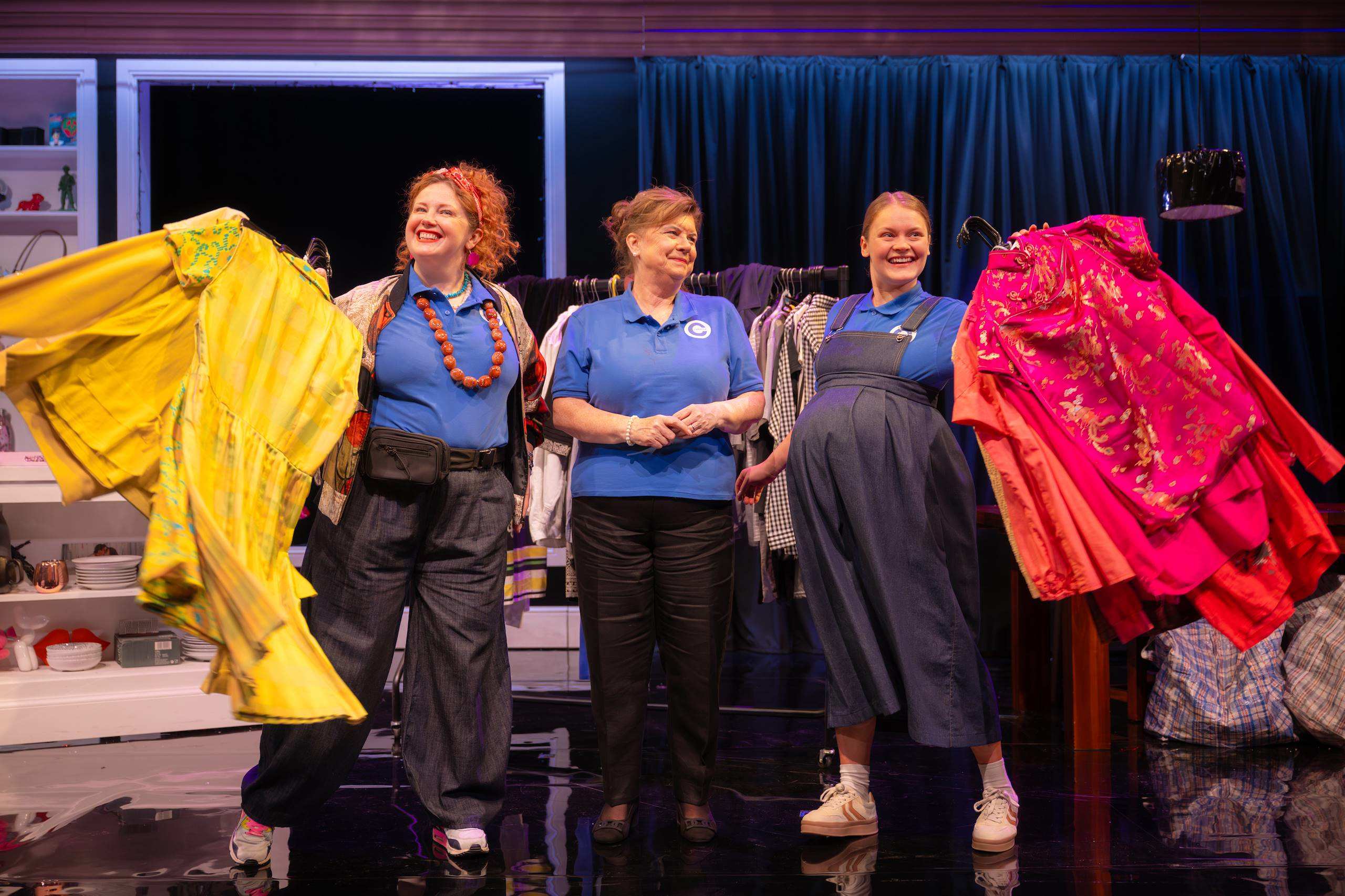
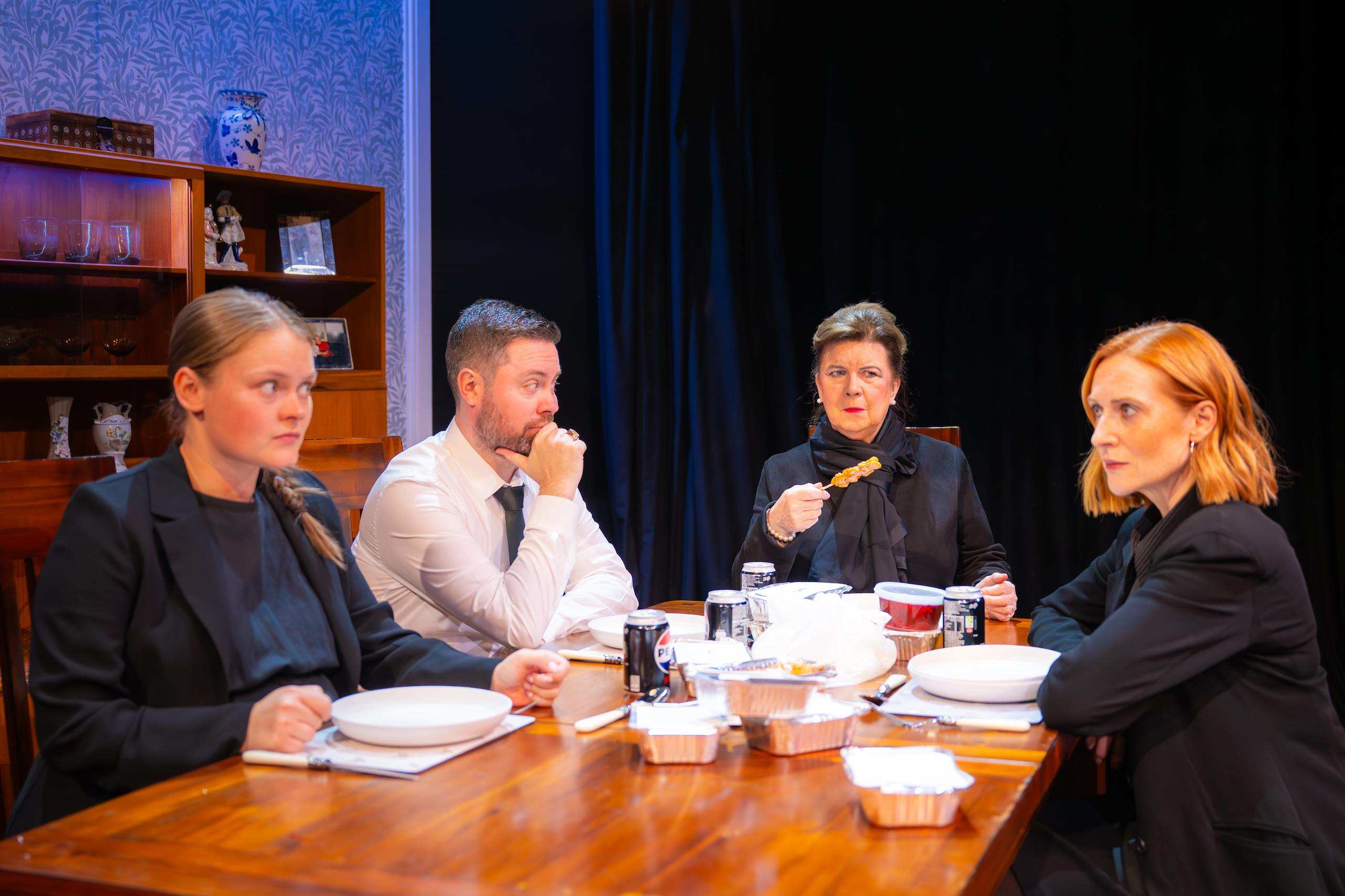
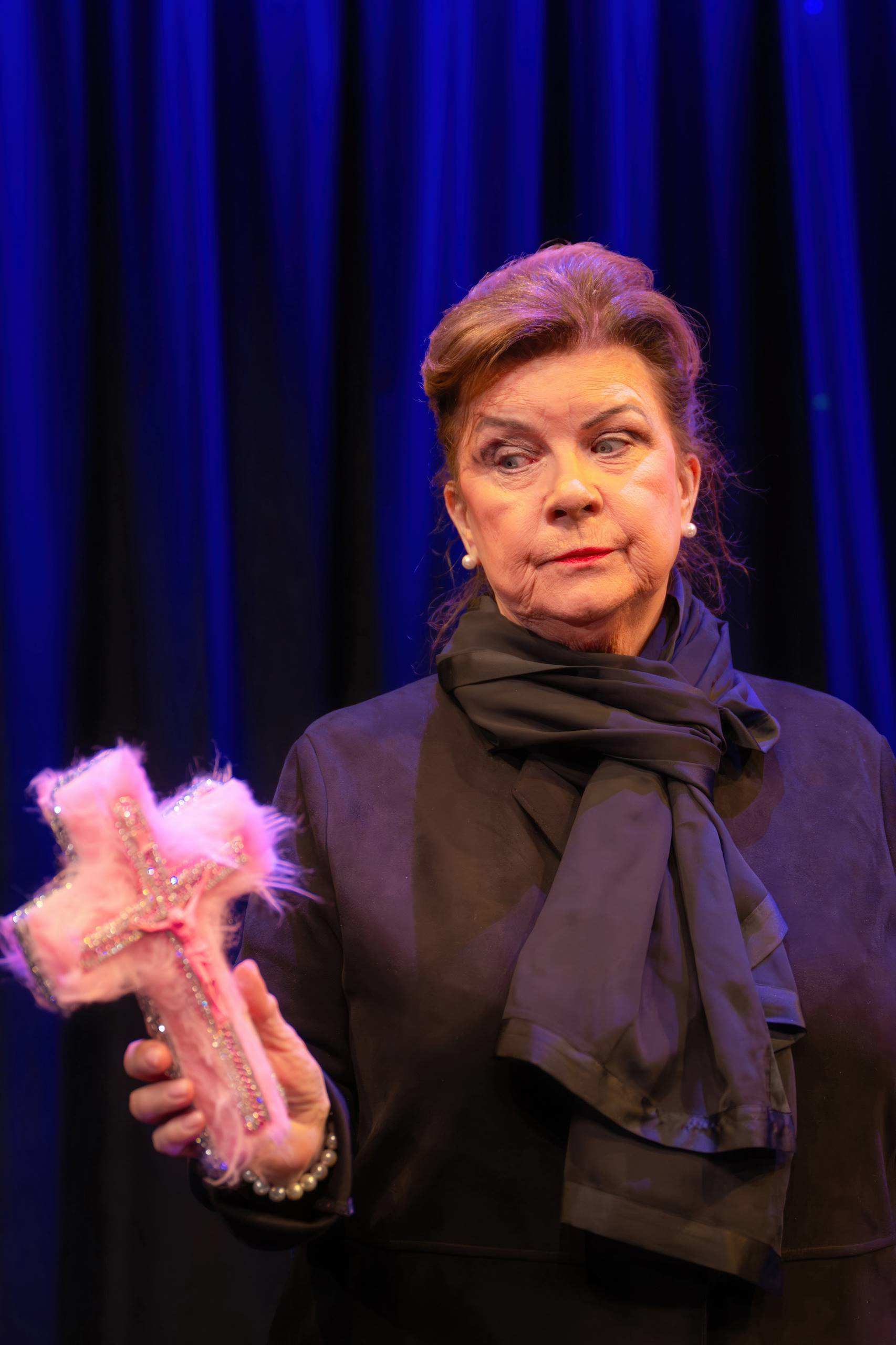
The eponymous Cathy (Elaine C Smith) is based on writer-director Eilidh Loan’s own grandmother. She’s a spiky, complicated woman, struggling to deal with the death of her beloved husband, Tommy. She’s angry in her grief, lashing out at everyone she cares for: her daughter, Florence (Michele Gallagher), son-in-law, Colin (Alan Orr), and pregnant granddaughter, Amy (Chloe Hodgson).

She’s furious with God too. She’s been a good Catholic all her life, done everything He’s asked. So where is He when she needs Him? Cathy is adrift, unable to imagine a future without Tommy. But when she takes his clothes to the local charity shop, she meets an unlikely angel of deliverance in the form of Lizzie (Sally Reid), who manages the store. Boho, woo-woo and musically ignorant, Lizzie isn’t the sort of person Cathy normally warms to. But there’s something disarming about the cheerful, crystal-wearing volunteer – and Lizzie has her own experience of devastating loss.

I don’t usually like a stage full of props, but Kenny Miller’s set design perfectly complements the play’s themes: the stuff that accumulates over a long life; the items we cling to and those we have to learn to let go. The transitions are complicated but extremely well-managed, so that we move with ease between realistic sets, from funeral home to Cathy’s dining room to Lizzie’s busy, bustling shop.

Unsurprisingly, this is very much Cathy’s play, and Smith’s performance is flawless, allowing us to see the central character’s hidden warmth and vulnerability, as well as delivering every gag with deadly precision. The supporting cast are very good too, Reid in particular lighting up the stage.

Cathy makes me laugh and cry. Part Christmas play, part family drama, it feels like the start of something bigger, with characters that could easily be drawn out over a series.

If you want all the feels, this is the show for you.

4 stars

Susan Singfield

An Echo in the Void

08/08/26

Assembly Roxy (Upstairs), Edinburgh

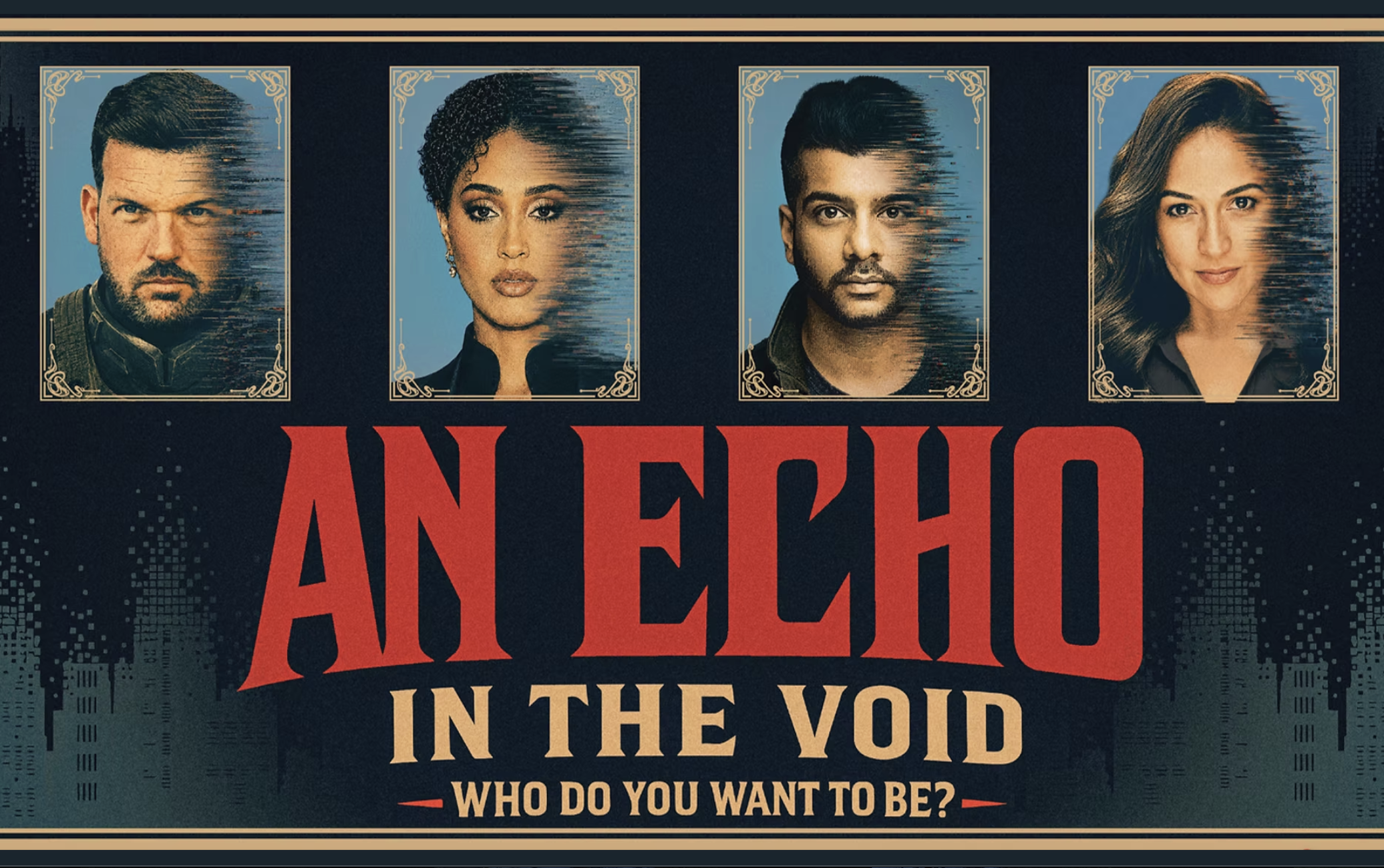
Written and directed by Jason Weiss, No Boundaries’ An Echo in the Void deals with the timely topic of AI. When journalist Ivy (Grace Serrano) logs into her regular Sanctuary session, she’s surprised to find three strangers there. It’s supposed to be a private virtual space and should only be populated by those she chooses. But here are soldier Toby (Adam Sinclair), programmer Arthur (Sunkrish Bala) and CEO Miranda (Lee Rodriguez), each as dumbfounded as she is by the others’ presence. What’s happening? Has the tech model gone rogue? And if so, why?

If Arthur is the brains behind the platform, Miranda is the money – and Ivy has long been petitioning to interview them both. As for Toby, he’s the company’s poster boy. Sanctuary offers a safe place, where people can leave their real-world troubles behind for a few hours, so who better to front its ad campaign than a war veteran suffering from PTSD?

But Sanctuary is addictive. If life on-line is so much better than off, why would anyone want to return?

This minimalist production is performed on a bare stage, which works well, echoing the blank canvas of a Sanctuary space. Like the platform’s users, we are invited to create our own imaginary setting. Simple tech is used to good effect, with pinspots emphasising the characters’ isolation, and a repeated sound motif signalling glitches in the machine. The actors inhabit their roles convincingly, and a sense of dread builds steadily.

However, although I applaud Weiss’s decision to eschew set and props, the piece could benefit from some more visual elements. It’s very dialogue-heavy, with a lot of information for the audience to absorb. It would be easier to engage emotionally with some of the more complex sequences if they were played out rather than reported. I also think the actors could change their voices and mannerisms when they are taking on characters from each other’s pasts, in order to clarify exactly who and where they are.

An Echo in the Void questions what it means to be human, when everything we think we are can be so cleverly mimicked by computer code. In the twenty-seven years since the similarly-themed The Matrix was released, the issues have only grown more urgent. It’s hard to imagine a more topical play.

3 stars

Susan Singfield

Badgers

07/08/26

Traverse Theatre, Edinburgh

Malaika Kegode is the storyteller and we, she tells us – gently persuasive – are Meles, a young woman, struggling to make our mark as a podcaster. Our mother looms large: not only is she a famous TV journalist, she’s also dying of corticobasal degeneration (and no, Kegode sighs, a long walk won’t help). We move home, our emotions a mixture of resentment and relief. It’s good to escape the daily hustle and London rents, but it’s hard to be back in our childhood bedroom, aimless and under-occupied, fearing our mother’s death.

So, when we hear about the mysterious disappearance of a local musician, ten years ago, little wonder that we grasp the opportunity to investigate. A true-crime podcast might just be the thing to finally impress Mum. So off we go, into the woods, to visit an old crone called Dora Brock, who freely shares her tales of secret songs and magical badgers, unaware we’re using her…

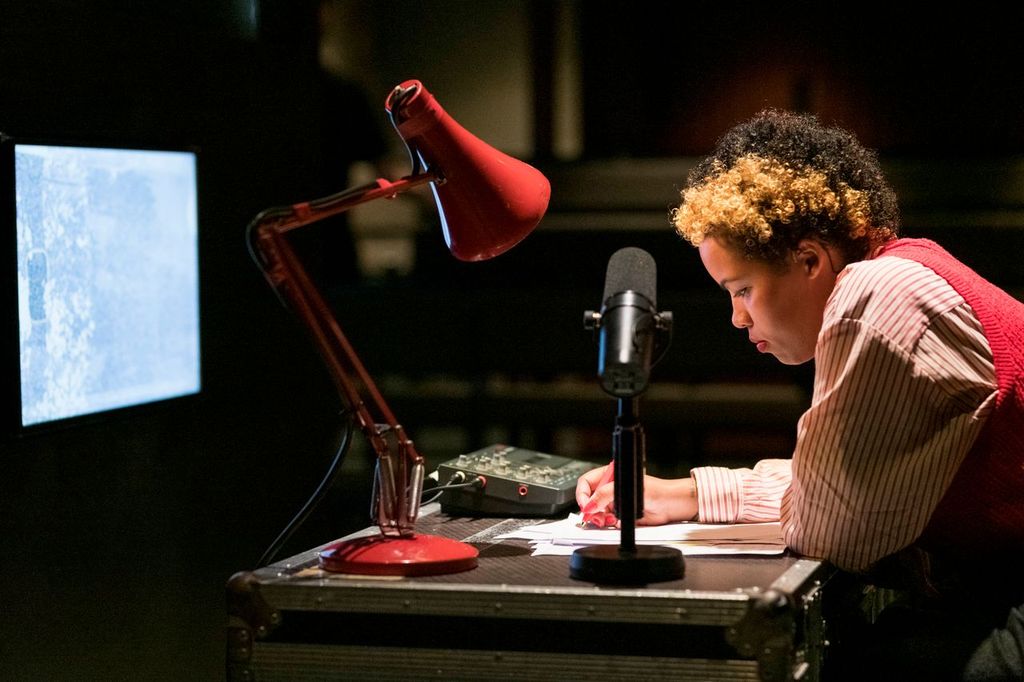
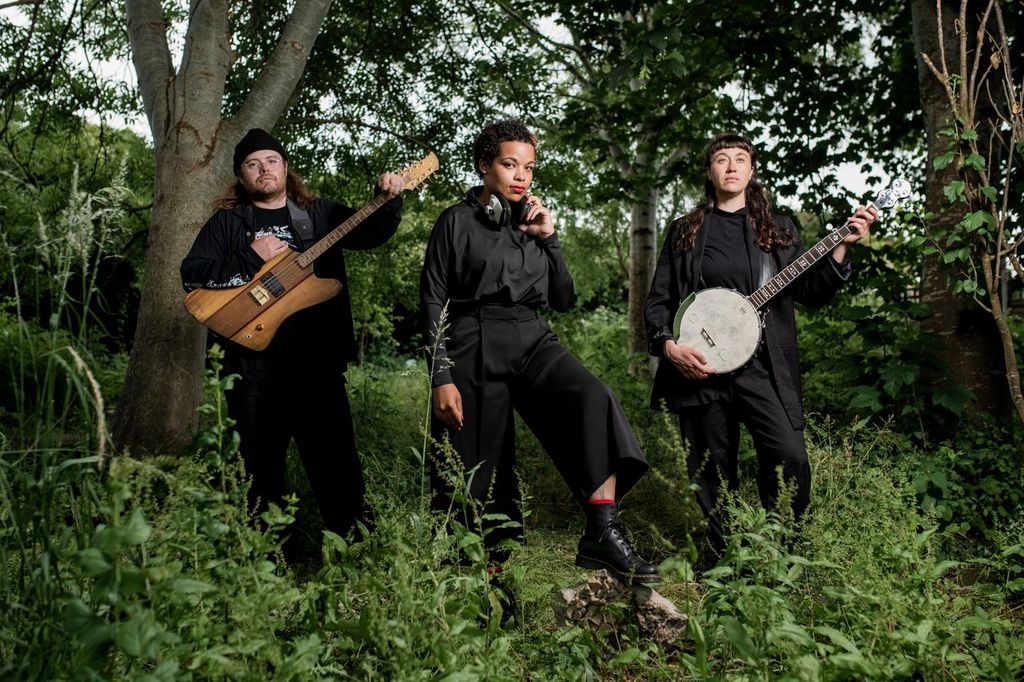
Badgers is a harmonious hybrid, Jakabol’s eclectic score perfectly complementing Kegode’s beguiling narration. Rebecca Wood’s set design is ingenious, its colour palette stark, all black, white and red; musicians Joe Williams and Beth Roberts sit in a glass box, centre-stage, a theatre within a theatre, part cage, part display case. It’s very techie, with flickering screens and distorted voices (video by Christopher Harrisson and sound by Jack Drewry), and tonally as slippery as the shape-shifting badger-humans at its heart, switching seamlessly from contemporary online vernacular to fairy tale to folk horror. It’s this last element that allows Mike Gunning and Natalia Chan’s lighting design to shine (sorry), ramping up the jump scares and other-worldliness. And then there’s Kegode again, speaking softly, bringing us back down to earth, helping us to accept Meles’ troubled reality.

If the sound levels are a little off at first, so that I struggle to hear Kegode over the music, this is soon rectified, and I leave the theatre still wearing Meles’ skin, still caught up in her life. Directed by Jenny Davies, this is a spellbinding production, weaving us into its fabric and leaving us utterly disarmed.

4.8 stars

Susan Singfield

Supposing:

07/08/26

Traverse Theatre, Edinburgh

TravFest starts off strong this year with Zinnie Harris’s magical-realist new play, Supposing:, a blend of mythology, contemporary politics and overt theatricality.

Sally (Nicole Cooper) has fallen down a hole. In literal terms, it’s just a small crater in a road outside a theatre, and she’s not seriously hurt. Metaphorically, however, it’s so much more, not least a portal for a Greek chorus, who promptly take up residence inside her head. Awkward. As if that weren’t enough, she’s also been cursed with the ability to see some very specific aspects of the future…

Sally’s husband, Rich (Richard Conlon), doesn’t believe in her newfound prophesying skills. He thinks she’s suffering from depression – again – or maybe it’s the menopause? Either way, he has absolutely no intention of popping next door to warn their racist neighbour that she has an undiagnosed medical condition, however urgently Sally insists.

It’s not just their marriage that’s under strain. The outside world is a pressure-pot too. The town’s hotels are being used to house immigrants and there are right-wing protesters gathering outside. Sally’s internal chorus never lets up its refrain: Trump, Reform, the climate crisis. Madness seems like a legitimate response.

Cooper’s performance is impressive, at first clipped and precise, then – as Sally plummets ever-deeper down the rabbit-hole – excessive, even flamboyant. Conlon provides an excellent foil, a study in baffled defensiveness and disappointment. Deftly directed by Harris, Supposing: is a timely exploration of our post-truth society, albeit one that poses more questions than it answers about how to navigate the shifting sands.

If this sounds like your kind of thing, don’t hesitate to buy your tickets. You don’t have to be Cassandra to see that this well-crafted, thought-provoking production is sure to be a hit.

4.7 stars

Susan Singfield