Month: June 2026

Heron

20/06/26

Henderson Street, Leith

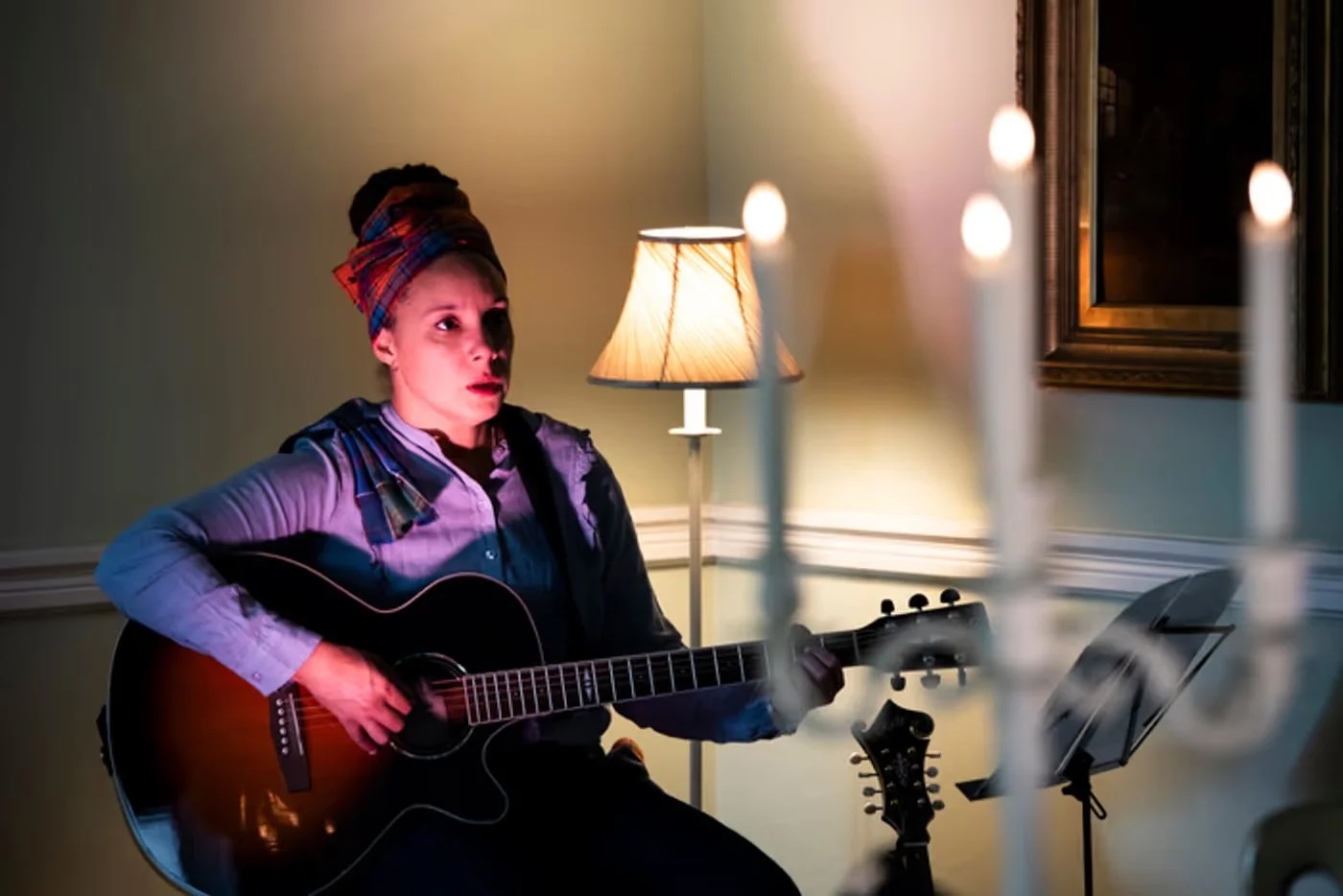
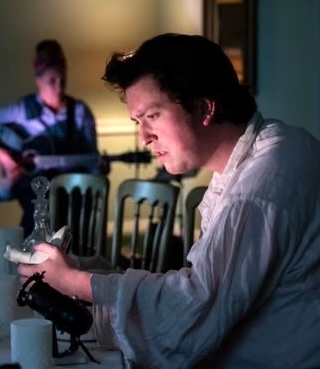
Regular readers of B&B will know that it has, for some years now, been our regular custom to celebrate Susan’s birthday with a trip to a high-end restaurant. This practice has recently become more complicated after she was diagnosed with a gluten intolerance. We were surprised to discover that some of the venues we approached this year were adamant that they could not – would not – make any alterations to their hallowed menus.

Happily, Heron assured us that they could easily accommodate such a dietary requirement: they only use limited amounts of gluten anyway, and can always substitute a tasty alternative in those recipes that do feature it. So on a beautiful summer’s evening we make the trip out to Leith Shore to the relaxed, convivial venue that is already one of our favourite places to eat.

We start off with a selection of amuse bouches – complex little creations that virtually explode with a variety of intense flavours. For me, there’s an Isle of White tomato burrata, sea trout with rhubarb, chilli and beetroot and lobster with gooseberry and dill. Instead of burrata, Susan has something made of chickpeas, which is far more elaborate than it sounds. All of the flavour combinations are vibrant and exciting and get our taste buds ready for the dishes to come. 

Bread is not usually something to shout about, but Heron’s seeded loaf served with salted butter and house charcuterie is one of their celebrated standards – and they’ve even made a gluten-free version so Susan doesn’t have to miss out. The trick here is not to devour the whole thing in one go but to eke it out through the following courses so you have something on hand to mop up the variety of sauces that ensue.

Next up there’s a hand-dived Orkney scallop, served with chive, hazelnut and oscietra caviar, salty and crunchy and every bit as tasty as you would expect – and this is followed by what might be the high point of the meal, North Sea squid served with asparagus spears, blackcurrant leaf and walnuts. It’s not just that the mingling flavours in the dish are truly out of this world, there’s also the ingenious way the squid has somehow been made to impersonate tagliatelle. And lest you think that’s it for the fish courses, how about a tender hunk of crisp-skinned sea bream, wallowing in a broth of mussel, whey, lovage, pea and spruce tip? Here it is – and it’s spectacular!

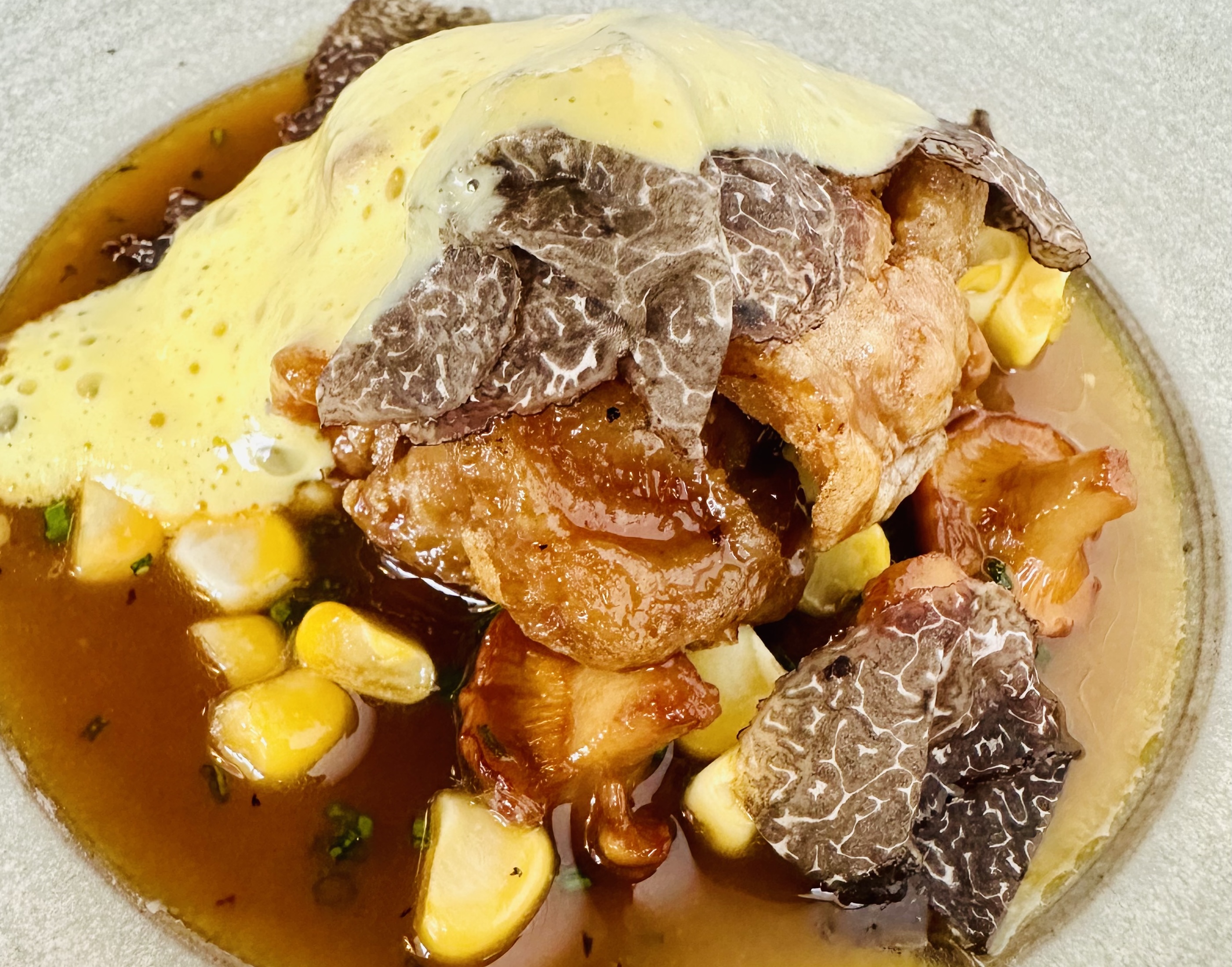
On to the meat courses, starting with a veal sweetbread on a bed of corn, girolle and black truffle. Some diners are put off by the thought of what a sweetbread actually is but set that thought aside and this is very good indeed. Even better is the tender slice of Harthstane’s sika deer, liberally ladled with a sauce comprising beetroot, rose harissa and dukkah (a traditional Egyptian condiment made from toasted nuts, seeds and spices).

At this point, we are offered the possibility of a cheese course, but we’re flagging a bit and want to ensure that we have room for the pudding, so we politely decline and move straight on to ‘buttermilk’ – a description that hardly does justice to a beautifully crafted palate cleanser, comprising lemon, bay and macadamias. It is utterly delicious and, just as I’m thinking that they’ll never top that, ‘strawberry’ arrives: another understated title that cannot begin to describe an exquisite concoction of – well, guess what? – on a bed of pistachio and black cardamom, served with a scoop of sorbet.

We ask for the bill and this arrives in a little wooden box accompanied by three handmade petit fours nestled on a bed of coffee beans, each mouthful more delicious than the last. A sweet, sugary jelly flavoured with sea buckthorn is perhaps the most memorable, but they are all wonderful examples of the confectioner’s art.

Heron is a unique dining establishment that produces some of the finest cuisine I’ve ever tasted. Those who don’t want to go the full tasting menu route, can opt for a simpler three-course affair (let’s face it, no one could eat like this every day) but, for a special occasion, the team here can provide a dining experience that will linger in memory long after the last mouthful has been swallowed. And for those who can no longer enjoy gluten, this is the place to come.

5 stars

Philip Caveney 

The Hen Night

18/06/26

Assembly Roxy, Edinburgh

The fourth and final offering in Assembly Roxy’s season of A Play, A Pie and A Pint is based around an event that any Edinburgh resident will be familiar with. The Scottish capital is a regular venue for parties of the Stag and Hen persuasion – and it’s not unusual to see many such celebrations playing out simultaneously on any given weekend.

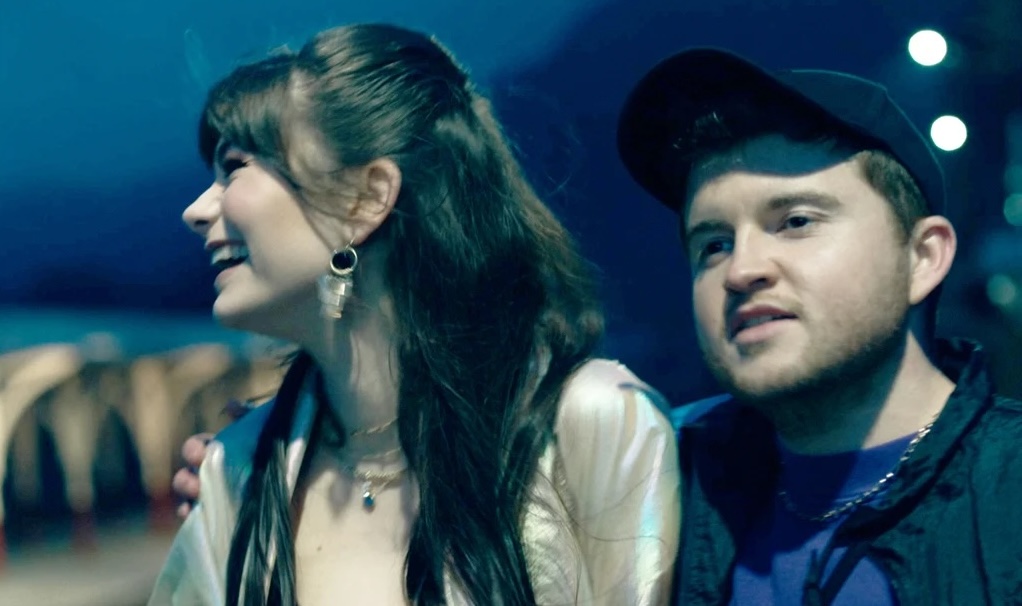
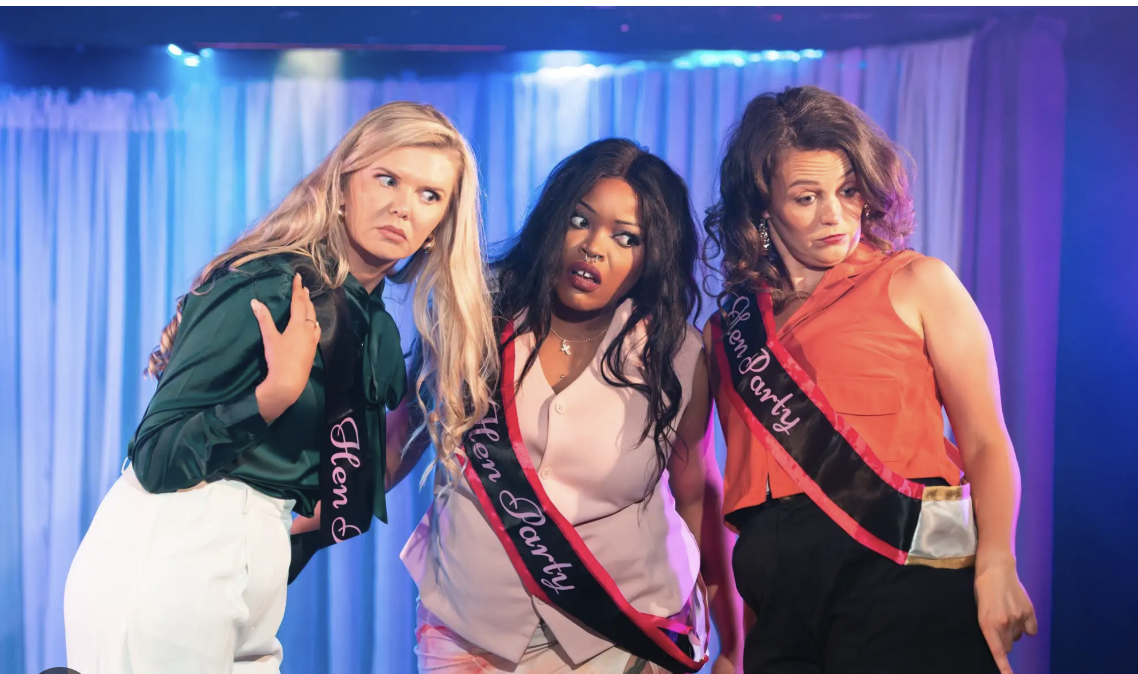
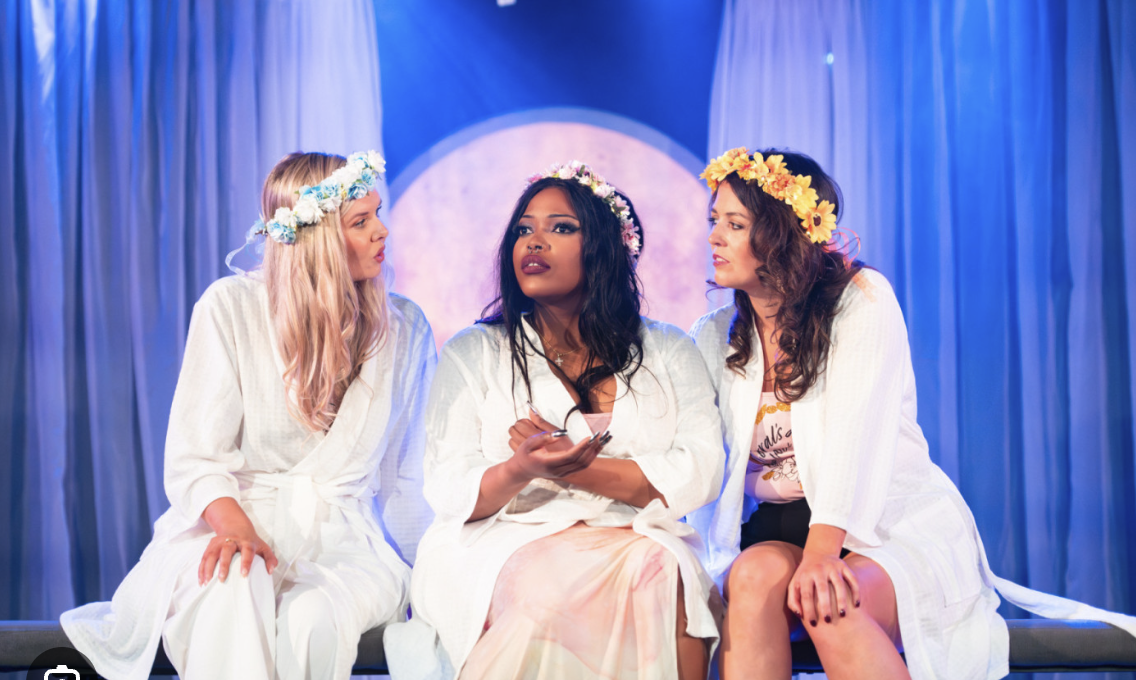
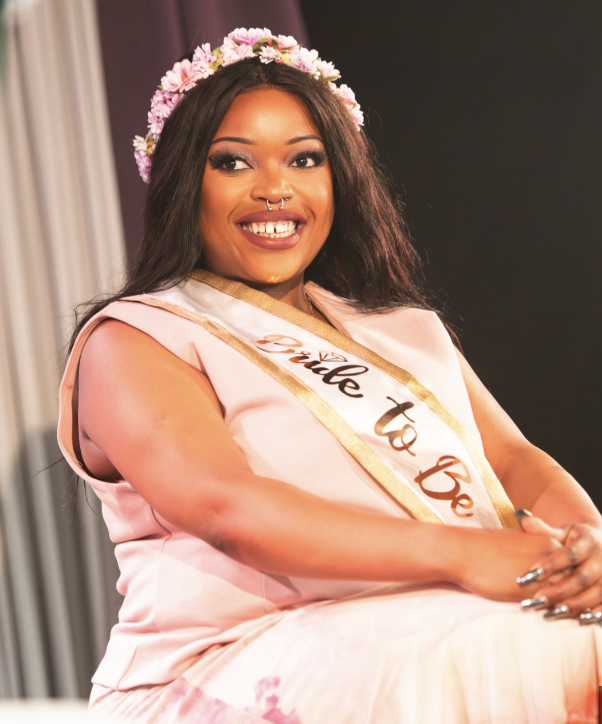
Coral has proudly announced that she is going to marry her boyfriend, Scott and her three best friends – Jade (Dani Heron), Lilac (Laura Lovemore) and Amber (Anna Russell-Martin) – have decided to give her the best hen night in recorded history. Jade will do most of the planning; she has a spreadsheet and everything. The escapade (in Edinburgh, naturally) will involve dancing and boozing and er… kayaking and… flower arranging…

So what if none of the girls are exactly over the moon about Coral’s choice of Scott, who is, to put it mildly, a bit toxic? No, they are going to make this an event to remember. And when Coral’s mysterious Irish cousin, Luna, unexpectedly turns up at the nightclub where the girls are getting utterly smashed, it’s clear from the way that all the men are fainting at the very sight of her that there’s something special about the new arrival. Something other-worldly…

The Hen Night, written by Debbie Hannan and directed by Laila Noble, is a bright and breezy production, that nevertheless has plenty of serious things say about female friendship and why women shouldn’t settle for less than they desire. The three players embody their respective roles with pizzazz and also occupy other characters, with both Russell-Martin and Lovemore portraying Coral at various points, while Russell-Martin also gives us the mysterious Luna and a surly, smirking Scott. The brilliantly simple device of a character switching around her hen night sash alerts the audience to who’s being who at any given moment.

Fuelled by the momentum of its own internal logic, The Hen Night powers along, powered by a steady diet of laugh-out-loud quips and astute observations, yet still has the skill to slam home those aforementioned serious points with utter conviction. I must confess that I had some reservations about the play based on its title, but I’m even happier to admit that my assumptions were soon dashed. This makes a satisfying final flourish to what has been an outstanding first season of PPP at Assembly Roxy.

More please!

4.3 stars

Philip Caveney

Malory Towers

13/06/26

Home, Manchester

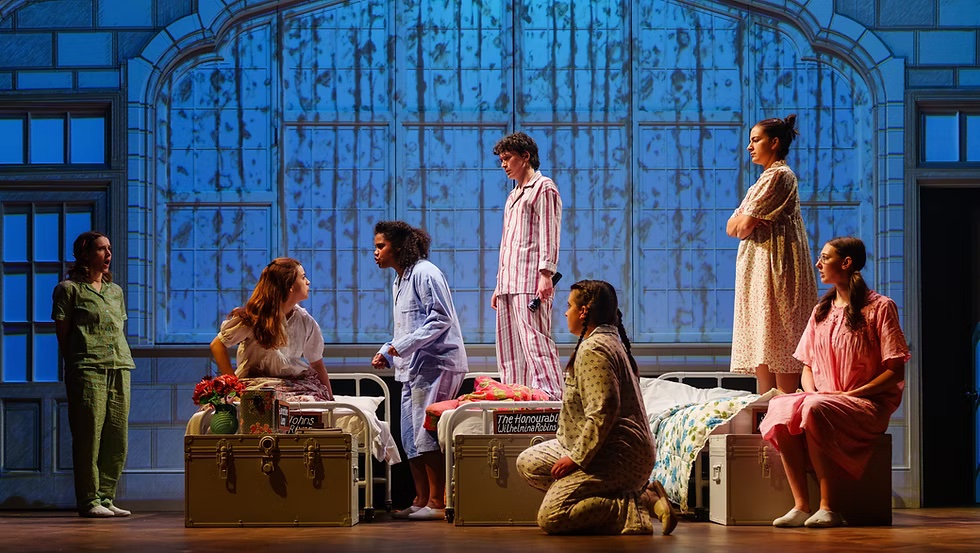
Emma Rice Company’s Malory Towers is billed as a “UK” tour. As a Welsh woman living in Scotland, I feel the need to point out that this is actually an “England” tour. Luckily, Phil’s daughter lives in Manchester and, although she and her husband are too young to be Blyton aficionados, they’re always up for a bit of theatre. Which means we get the bonus of spending quality time with them – as well as having somewhere to stay. 

It’s more than a decade since Phil and I have been to Home, but the venue is as vibrant as ever. The audience for this particular show is an odd mix, comprising mainly kids (some of them dressed up in Malory Towers school uniforms) and middle-aged women like me. It makes sense, I guess. For the latter group, it’s nostalgia for the books of our youth. For the former, it’s the more immediate joy of a children’s adventure story, presumably re-popularised by the recent (excellent) CBBC series. 

But, look. I was never going to miss this musical. I’d have travelled much further afield if I’d had to. The combination of Blyton and Rice was always going to be too potent for me to resist. Blyton’s boarding school stories have a special place in my heart, and Rice is my favourite theatre maker, so yeah. This is a must-see. 

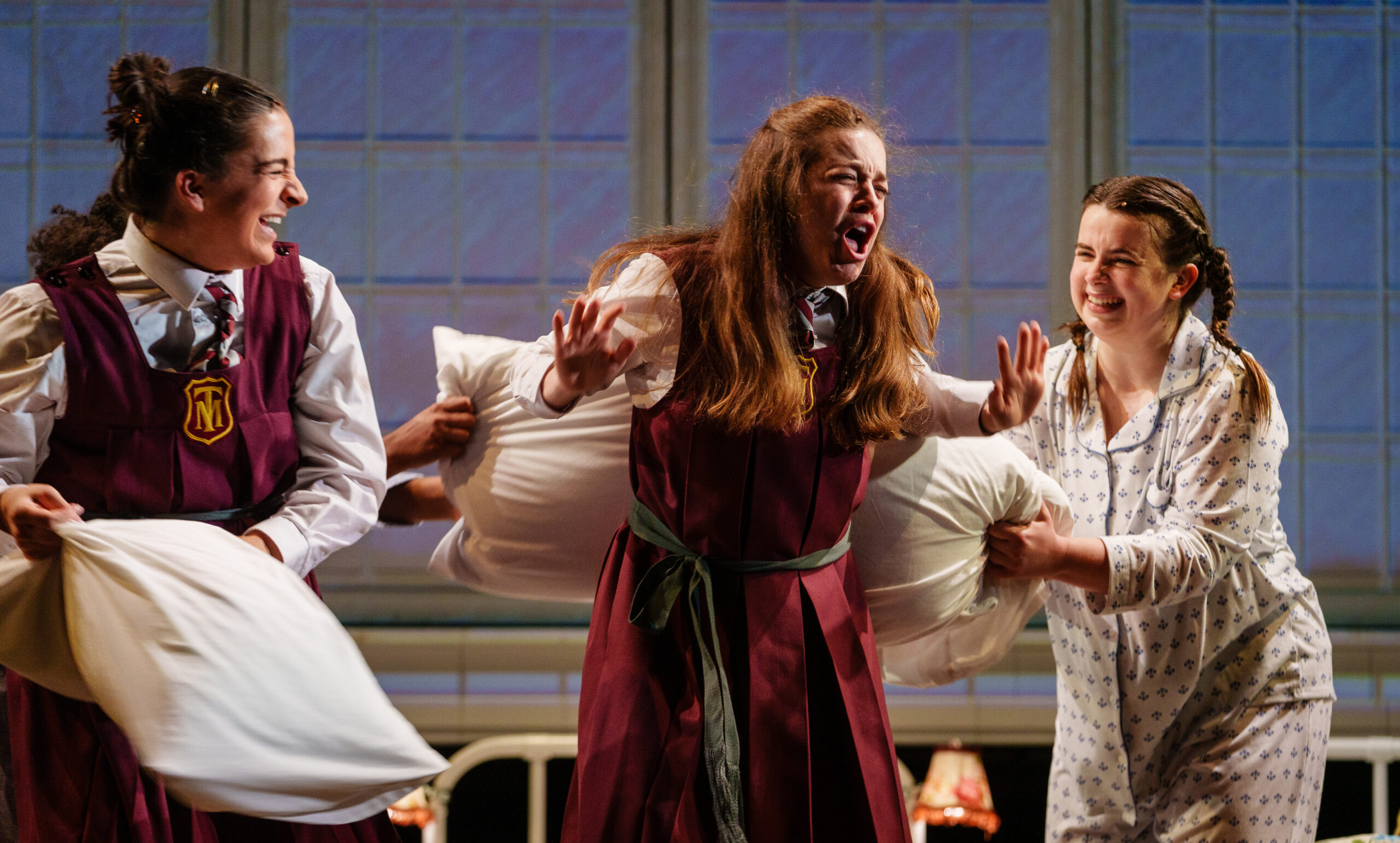
Somehow, with just eight performers – the actors also provide the music – Rice manages to evoke the atmosphere of a busy, bustling school. Of course, some characters have been amalgamated, others missed out altogether. But the main players are present and correct.

Step forward, Darrell Rivers (Robyn Sinclair), as flawed and fabulous as ever, determined to be the kind of girl to make her school proud, but hamstrung by a feisty temper that gets her into all sorts of scrapes. Gwendoline Lacey (Rebecca Collingwood) is played less as a preening princess and more as an out-and-out psychopath, complete with murderous intentions. It’s not true to the original, but it does make for some great drama! Alicia (Molly Cheesley) – notorious trickster – is merged with Connie, who can’t keep up with her lessons, and is frustrated by falling behind. The combination works. MD Stephanie Hockley plays, appropriately, musical prodigy Irene, who – for some reason – is given the French teacher’s surname and nationality. Meanwhile, Sensible Sally is played by Bethany Wooding, and horse-loving Bill by Zoë West. But it’s Eden Barrie’s Mary-Lou who’s the standout, her loveably gawky character the centre point, as she learns to overcome her timidity and stand proud of who she is. 

Rice’s direction is as quirky as ever, and her inventive set-pieces are what really make this production. Miss Grayling is a silhouette projection, voiced by Sheila Hancock, a conceit that cleverly distances the head teacher from the girls’ everyday lives, while reminding the audience that they are being looked after. The swimming scene is a particular highlight, with puppets jumping from cartoon cliffs before the actors emerge from the ‘sea’, shivering and spitting water. Best of all is the opening to the second act, the inevitable clifftop rescue. I won’t reveal here how it’s done; suffice to say the entire audience is in paroxysms of laughter. 

Is it all a little too spoofy? It is, for my taste at least. I understand why Rice has taken this route. Blyton’s characters are easy to mock: they’re painted with broad strokes, each with her own standout trait; their concerns and adventures so trivial and trite. But – and I know it’s a different beast entirely – I think the CBBC series manages this better, treating the girls’ adolescent struggles with respect and empathy rather than as a joke. In contrast, this production has a very adult perspective, and almost everything is played for laughs. The one exception is the scene where Gwendoline receives bad news. The poignancy of the moment is beautiful – and intensely emotional. 

I like the overt reminders about the second world war. Blyton never mentions it but, as Rice reminds us here, the series was published between 1946 and 1951. The girls have lived through the war; their fathers, uncles, brothers will have fought in it. No wonder the pupils are so excited about midnight feasts: they’re used to rationing and shortages. This backdrop adds another dimension to the story, which works really well.

Overall, this Malory Towers musical is something of a mixed bag. But am I glad I’ve seen it? Rather!

4 stars

Susan Singfield

Disclosure Day

12/06/26

Cineworld, Edinburgh

In 1974, I went to the cinema to watch Sugarland Express, the debut movie from new kid on the block, Steven Spielberg. In the review I subsequently wrote, I probably said something to the effect that here was a young man with a bright future ahead of him. I could have had no inkling back then that, in just one year’s time, a film called Jaws would be a complete game-changer and that it would herald the arrival of a cinematic behemoth. Spielberg is now in his eightieth year and, over the decades, has accrued one of the most impressive backlists of all time. Okay, there are a few duds in there (The Kingdom of the Crystal Skull, I’m looking at you) but, happily, the misfires have been few and far between. Having said that, I am quite unprepared for just how good Disclosure Day is.

First things first. It’s pointless to give too much information about the actual plot because, on paper, it does sound faintly preposterous. But part of the film’s strength is the way it flings viewers headlong into what seems like an unfathomable mystery and keeps us guessing as to where the story is headed, a position it maintains until the final furlong. And then, in that last stretch, it somehow manages to create a sense of pure wonder, recalling earlier hits like Close Encounters and ET.

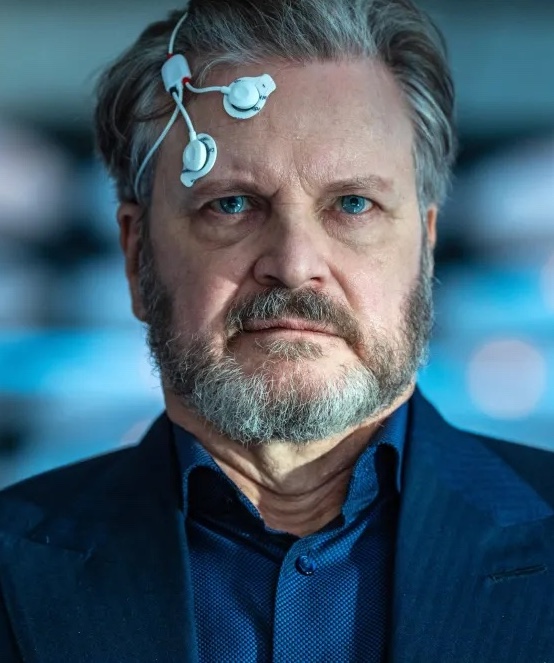
The story begins in 2026, and the world stands poised on the brink of what looks suspiciously like World War 3. (Too close to home?) We are in the audience at a wrestling match, where we witness Dr Daniel Kellner (Josh O’ Connor) being arrested for theft – though at this stage, we have no idea what he’s supposed to have stolen. He is confronted by Noah Scanlon (Colin Firth), the head of a powerful and secretive government organisation called Wardex, and we learn that Scanlon is Daniel’s former employer. Daniel manages to escape and goes on the run with his girlfriend, Jane (Eve Hewson), but even she doesn’t know what he’s accused of.

The action cuts to Kansas, where TV weather girl Margaret Fairchild (Emily Blunt) unexpectedly starts speaking in tongues on live TV – and shortly thereafter, discovers that she has inherited incredible skills. It’s clear that she and Daniel are linked somehow – but it’s quite some time before I begin to suspect that the two of them will be the ones to make the titular disclosure that will resolve decades of lies and subterfuge…

Disclosure Day is a powerful and compelling drama that has about it something of those paranoid 70s Cold War thrillers, where two opposing forces struggle for supremacy. Leading the fight for disclosure is Hugo Wakefield (Colman Domingo), another former Wardex employee, who seems prepared to go to extraordinary lengths to ensure that the truth is handed to the public. Scanlon and his team are the ones who want to keep everybody in the dark, convinced that ordinary people will be unable to accept the truth without losing their collective minds. While all the actors here do exemplary work, Blunt is required to handle most of the heavy lifting, going through a whole range of personas as the various twists and turns of David Keopp’s script – co-written with Spielberg – demands ever more of her. I’ve long been convinced she’s a terrific actor and here she finally gets the chance to really prove it.

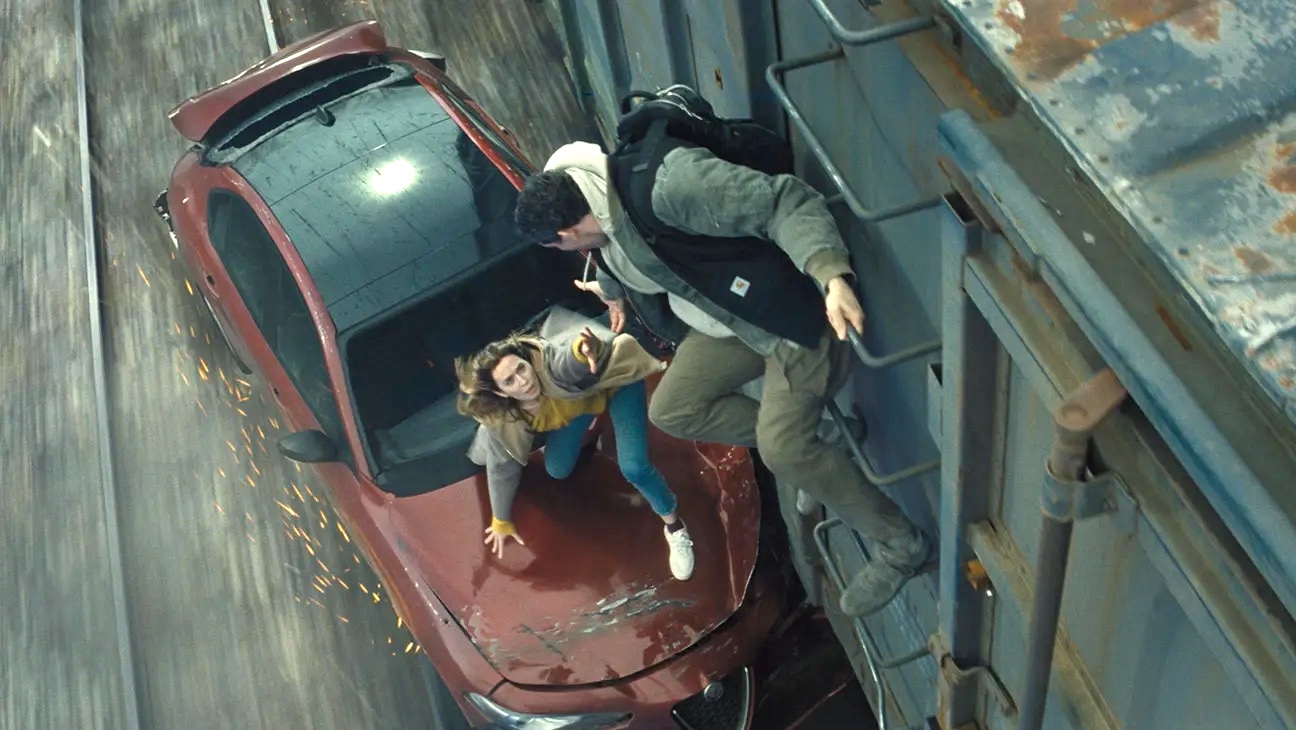
And it’s not all talk: there are hair-raising action set pieces (a car/train interface is a particular high point); a scary sequence from Margaret’s childhood that has an eerie prescience; and recreations of key events in UFO folklore (and yes, I’m aware the American government prefers the term UAP – Unidentified Anomalous Phenomenon). Janusz Kaminski’s cinematography looks absolutely exquisite and veteran composer John Williams actually came out of retirement to provide another of his stirring scores. What’s not to like?

Whether this will bring in the punters is yet to be determined. I hope so. It’s proper grown-up filmmaking of the kind we don’t often see these days but it doesn’t help that it arrives in UK cinemas just as World Cup fever erupts. But those who have given up on Spielberg after recent more modest efforts are sure to find much to enjoy here.

And as ever, this is a big concept that deserves to be seen on the biggest screen available.

4.7 stars

Philip Caveney

The Corinthian

11/06/26

Assembly Roxy, Edinburgh

The third play of Assembly Roxy’s inaugural A Play, A Pie and a Pint season is The Corinthian, a compelling monologue about real-life footballer, Andrew Watson, who experienced extremes of both prejudice and privilege throughout his lifetime. If the name is unfamiliar, here are a few key facts: Watson was the first Black international football player; the first Black man to captain a national team, as well as winning the Scottish cup three times in 1881, 1882 and 1886. Oh, and he was also distantly related to William Gladstone. And yet, the chances are you’ve never heard of him.

Born in 1856 in Demerara, British Guiana (now Guyana), he was the son of wealthy plantation-owner Peter Watson and local woman Hannah Rose. He had a fairly idyllic childhood but that all changed when the family relocated back to Peter’s native Scotland. It was here that young Andrew experienced the aforementioned prejudice – from his neighbours, his fellow pupils and even from his father’s servants. He was also suddenly impacted by the tragic suicide of his mother.

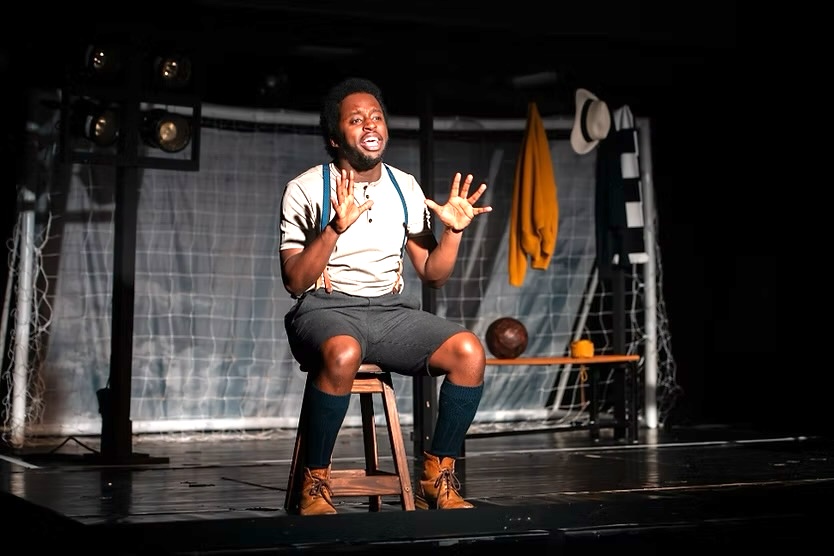
Joe McCann’s monologue, evocatively performed by Dayton Mungal, conveys Watson’s determination to succeed at all costs and to overcome the various hurdles flung in his path as he makes the long climb to the top of his game. Mungal handles the role with aplomb, occasionally talking directly to the audience and also slipping in and out of various supporting characters. 

Because the play is mostly interested in the time he spent as a football player, it consequently skips over a lot of the intervening years – his schooling in Halifax, his college tuition in Wimbledon and the year he spent at the University of Glasgow studying natural philosophy. I do find myself wondering if this piece would benefit from a longer running time, where Watson’s life could be examined in more detail, offering more nuance to the story. 

For The Corinthian though, the story really kicks off when he is signed to play for local team Parkgrove, where he soon learns that some of the toughest discrimination he will need to overcome emanates directly from his teammates…

Director Martin McCormick throws in some impressive imaginative flourishes, while keeping everything well-paced as Mungal runs, skips and leaps energetically around Heather Grace Currie’s simple set. In quieter, more reflective moments, the actor manages to tug at the audience’s collective heartstrings as he recalls what his mother taught him about perseverance.

The applause at the play’s conclusion is enthusiastic. Though I’m left with the conviction that there’s probably more to say about Watson than there is space for here, The Corinthian nonetheless manages to put the ball convincingly into the back of the net.

4 stars

Philip Caveney
Savage House

06/06/26

Cineworld, Edinburgh

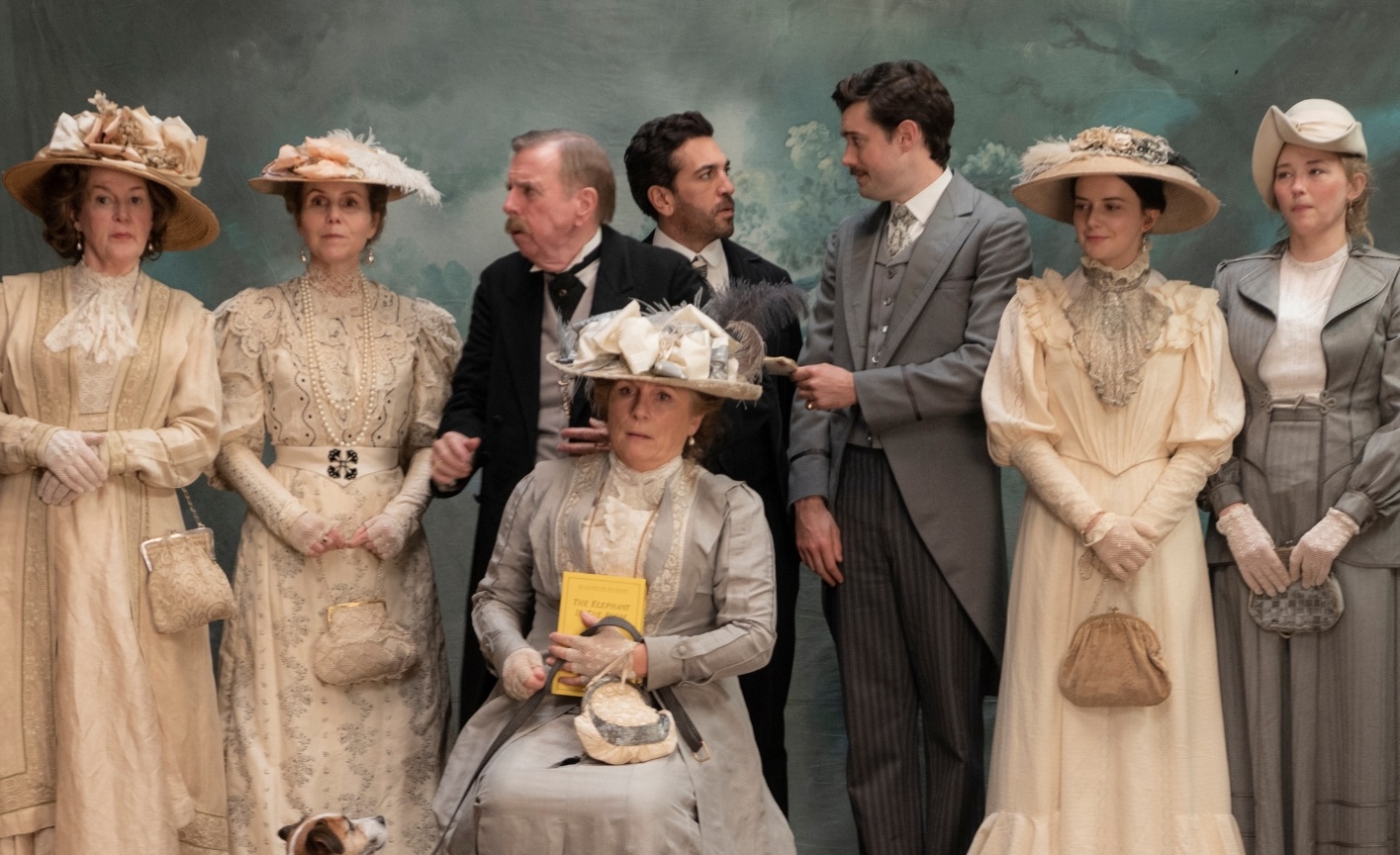
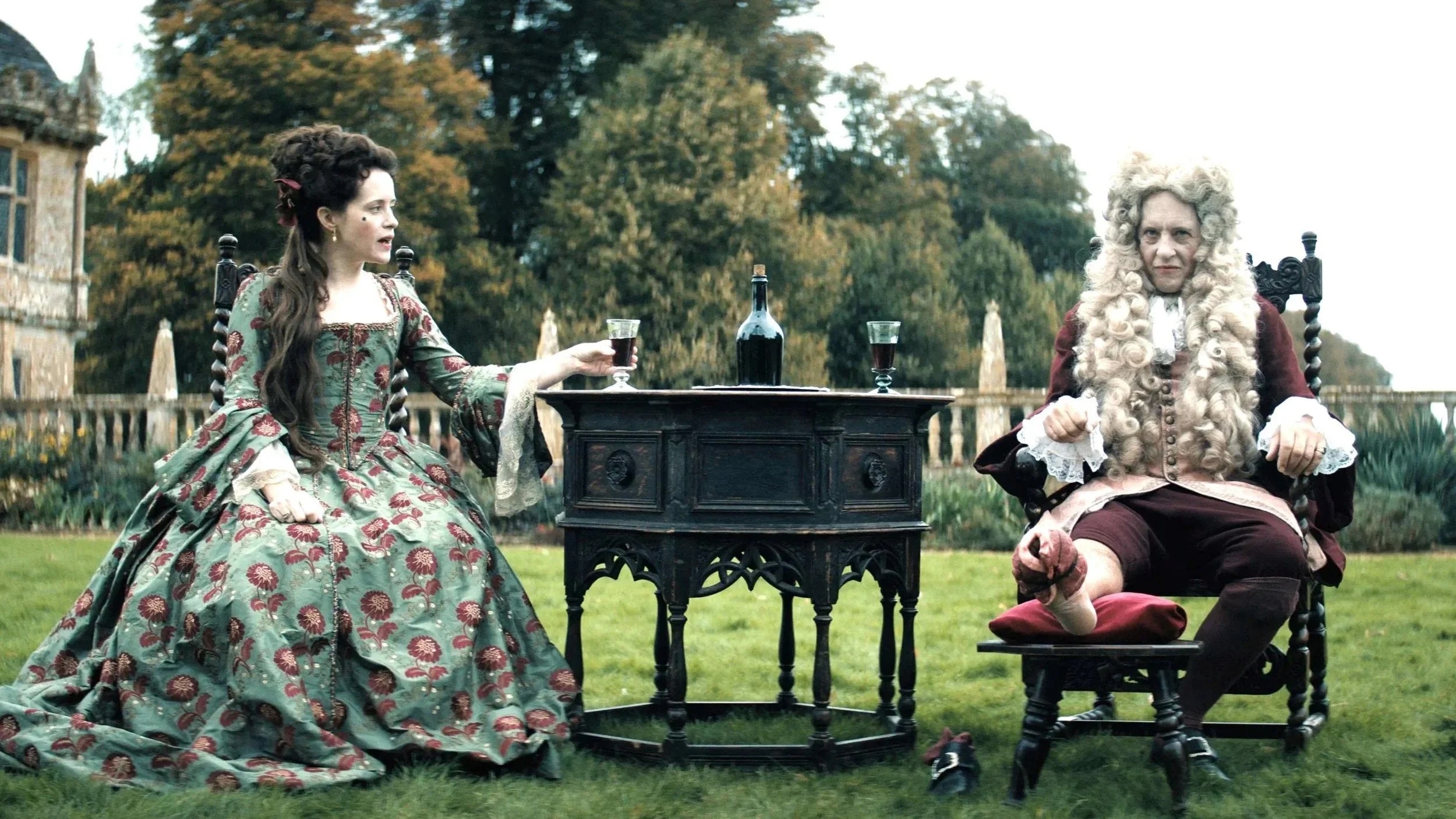
It’s 1817 and England is beset by both a Jacobite uprising and a massive pox outbreak – and the Savages are in dire straits. Oh sure, they live in a great big mansion, replete with massive oil paintings and fancy gardens, but Sir Chauncy Savage (Richard E Grant) is an utter rake and has somehow managed to gamble away all of the land that surrounds the house. Now his creditors are closing in on him. 

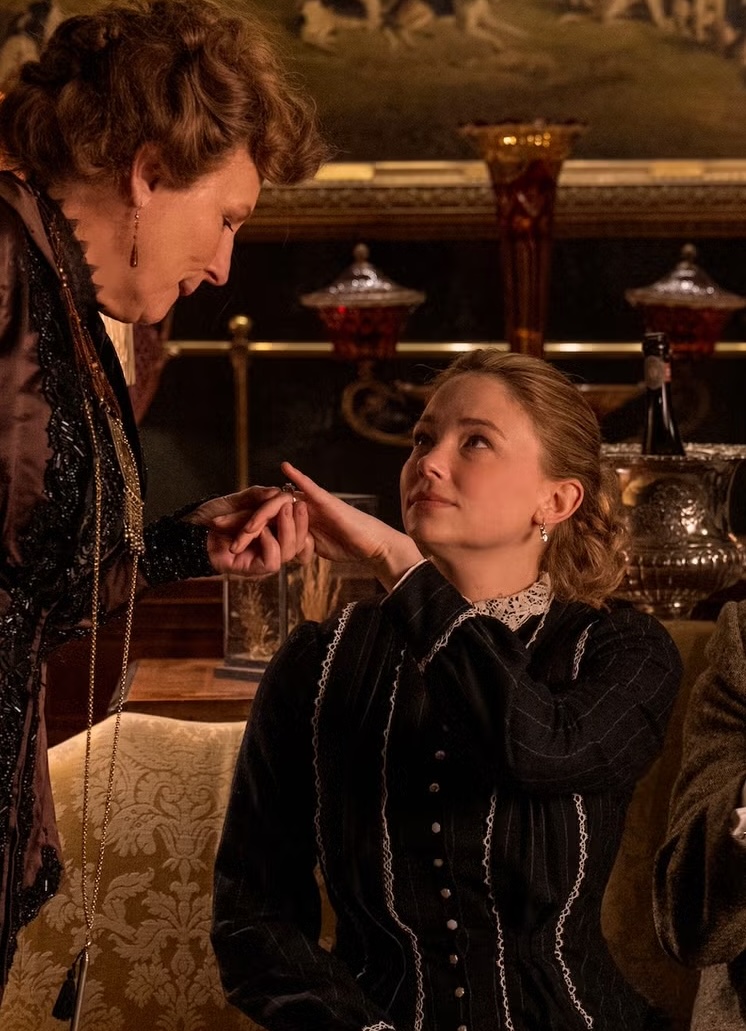
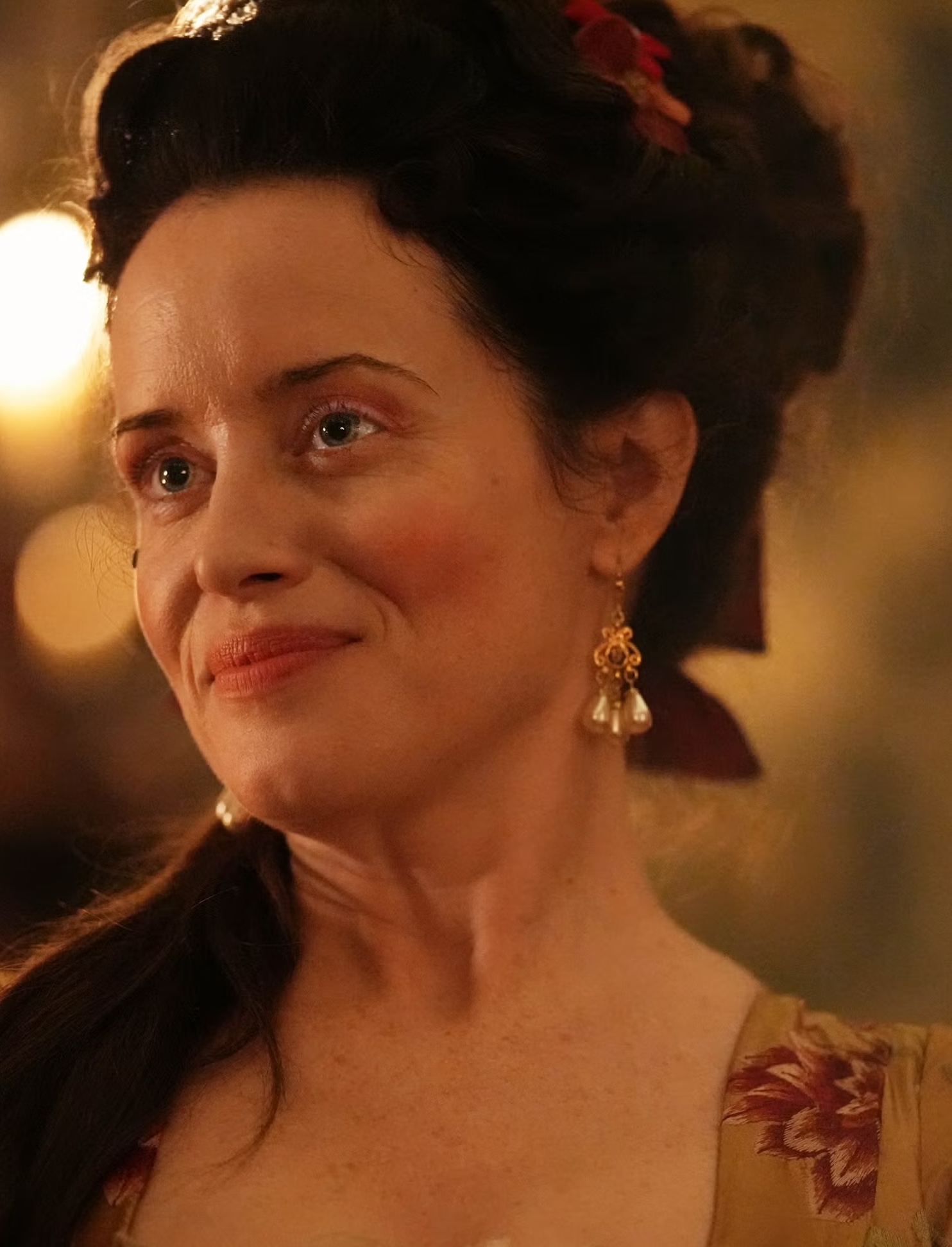
All that’s left of real value are Lady Savage (Claire Foy)’s family jewels. Luckily, despite the couple’s differences – and the fact that they choose to seek sexual gratification with their servants, Dorothy (Bel Powley) and Reginald (Jack Farthing) – the Savages clearly love each other. Meanwhile, their daughter, Fanny (Kila Lord Cassiday), concentrates on tending to the family of mice living in her doll’s house and preparing for an upcoming total eclipse of the sun, which many believe will signal unprecedented changes.

Sir Chauncy, we are told by The Narrator (Robert Bathurst), is something of an imposter, the son of a humble swineherd, while Lady S is from proper aristocracy. (The idea that working-class people aren’t allowed to aspire to nice things is an unpleasant subtext that writer/director Peter Glanz seems to ram home at every opportunity, mostly via the image of a huge pig wandering around the rooms of the Savage’s house.)

Things are beginning to look desperate. Then out of the blue, word arrives that the celebrated Duke and Duchess of Devonshire have requested permission to dine and sleep at Savage House in ten days time. Chauncy spots an all-important opportunity to improve his social standing and persuades his wife that they must not miss out. The aforementioned jewels are sold and Dorothy and Reginald are put to work sprucing the place up – though we soon discover that they have devious plans of their own…

Savage House is something of a mixed bag. Both Grant and Foy are wonderful in their roles, with Grant in particular revelling in the unhinged nature of Chauncy, who invites disaster at every turn. A scene where he performs a drunken dance despite suffering agonising gout is a high point – as is a duelling sequence where Adriano Goldman’s cinematography briefly evokes the grandeur of Kubrick’s Barry Lyndon. There’s also a wonderful orchestral score of classical compositions, though this too reminds me of an earlier (and better) film – Peter Greenaway’s The Draughtsman’s Contract

The film also seems obsessed with focusing on the most unpleasant aspects of life in the 1800s. It never misses the opportunity to focus on piles of steaming excrement, streams of rancid pus, wriggling leeches and acts of lewd sex. A scene where a gangrenous limb is sawn off is shown in such unflinching detail that I almost feel the need to cover my eyes. Those who are squeamish about vermin may find themselves in similar straits at regular intervals. (Susan, I’m looking at you!)

As one disaster after another assails Chauncy’s boundless ambitions, and his unfettered hubris leads him inexorably to a tragic conclusion, I find myself hoping for a single ray of sunshine to pierce the unremitting gloom. But sadly, that isn’t allowed to happen – and the bleak ending feels disappointingly flat as a consequence. 

We leave the cinema discussing potential ways that such illumination might have been achieved, but the film is already in the cinemas where it is sure to divide audiences. Though it occasionally hits the heights, one thing’s for certain. Savage House isn’t short of ambition.

3.4 stars

Philip Caveney
Backrooms

02/06/26

Cineworld, Edinburgh

Contemporary horror films by Gen Z filmmakers seem to be soaring to ever-new heights. Just last week, twenty-six-year-old Curry Barker’s Obsession proved a breakout hit on a budget that was just short of a million dollars, meaning that it was able to move into profit on its release day. More interestingly, the film bucked the usual trend by taking even more on its second week, buoyed by good word of mouth.

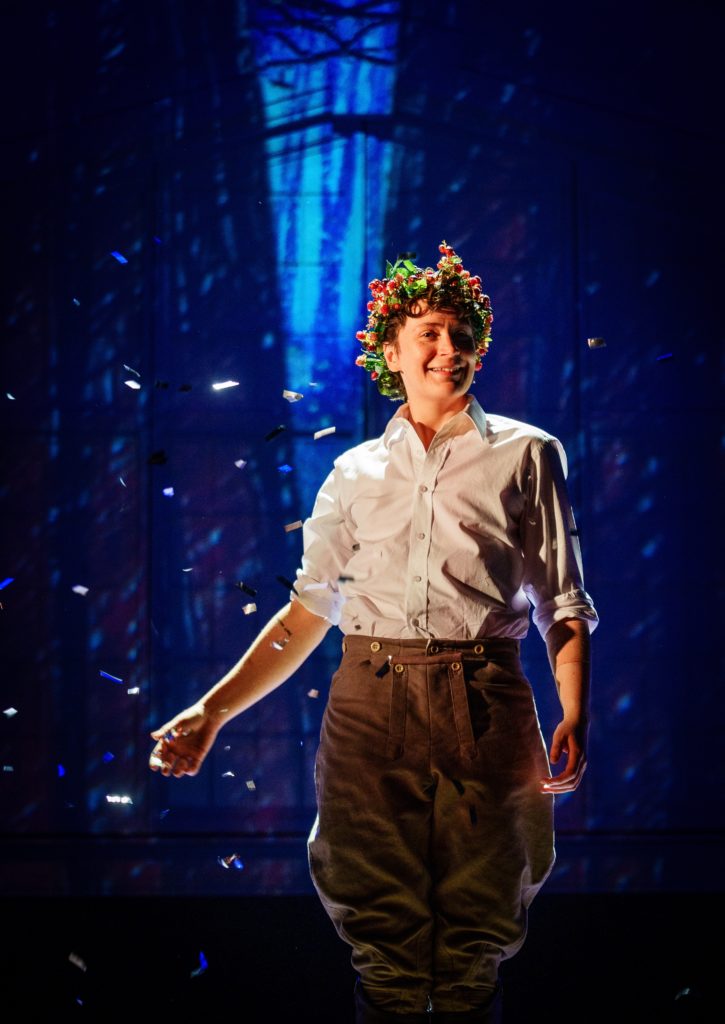
Now twenty-year-old Kane Parsons’ Backrooms (developed from one of the ‘creepy pasta’ shorts he’s been posting on YouTube since his teens) scores an even bigger opening. It does boast a budget of ten million (though this is peanuts compared to the excesses of most contemporary Hollywood blockbusters) but once again, premier production company A24 have spotted a filmmaker’s potential and granted them the opportunity to fulfil it. While Obsession has its roots in classic horror story, The Monkey’s Paw, Backrooms‘ closest cousin could arguably be Alice in Wonderland – if that book were transposed to the early 1990s and had moments of absolute terror.

Clark (Chiwetel Ejiofor) is the manager of Cap’n Clark’s Ottoman Empire, a down-at-heel furniture store, which despite Clark’s ramshackle attempts at a promotional video, appears to be struggling to entice any customers over the threshold. After a messy break up with his wife, Clark is actually sleeping in the store. He occasionally drives off for a session with his therapist, Mary (Renate Reinsve), who is trying to explore Clark’s anger issues – but she has some psychological baggage of her own, which she’s been lugging around since childhood.

Meanwhile, Clark is having major problems with the store’s electricity supply and, when investigating some strange noises in the basement, he discovers a portal that takes him to the backrooms of the title, a series of interconnecting sickly-yellow enclosures seemingly designed by Escher and heaped here and there with piles of furniture that defy all logic.

When Clark subsequently tells Mary about his new discovery, she’s understandably worried about his state of mind…

Backrooms is an incredibly immersive and occasionally heart-stopping film, that somehow manages to conjure moments of absolute dread from the smallest things: a muffled noise; a briefly glimpsed figure; a narrow opening a character is required to squeeze through. It’s all I can do not to shout warnings to the luckless fools who wander in there, despite knowing only too well that if I found a wall I could walk through, I’d most surely want to do it, again and again.

Co-written by Parsons with Will Soodik, the film boasts an incisive script which is open to interpretation, but nonetheless utterly affecting. The Jungian ‘Dream House’ metaphor is made frighteningly real, as the terrors herein bubble up from the central characters’ own psyches – and are all the more disturbing because of that. As the film careers confidently onwards, it carries me helplessly along with it.

A final revelation confirms a devastating truth: that we are all prisoners of whatever bad things happened to us back down the line. Parsons would appear to have a promising (and lucrative) film career ahead of him and on the strength of Backrooms, I’ll be first in the queue to see whatever he comes up with next. There’s already talk of a ‘Backrooms 2‘ but I for one hope it’ll be something entirely different.

5 stars

Philip Caveney
Power Ballad

31/05/26

Cineworld, Edinburgh

Since his 2006 breakthrough, Once, Irish director John Carney has concentrated his attention on films about musicians – and, as you’ll no doubt have guessed from its title, Power Ballad is no exception. I’m pretty sure this is his first attempt to deal with the subject of intellectual copyright though. And if that sounds dull, don’t be misled. For my money, this sparky, enjoyable drama might be Carney’s best offering yet.

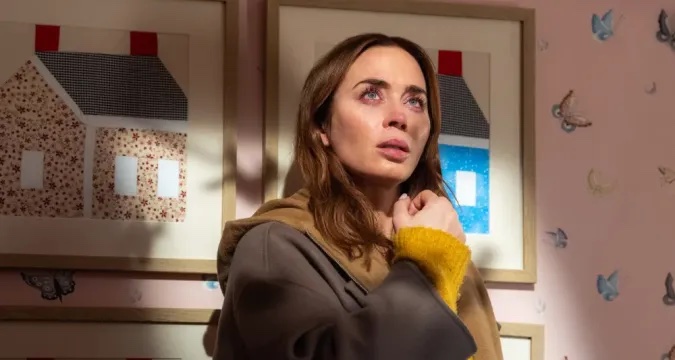
Rick Power (Paul Rudd) is a former member of an influential band. Back down the years, he swapped his dreams of stardom for marriage and fatherhood. He’s living happily with Rachel (Marcella Plunkett) and their teenage daughter, Aja (Beth Fallon), in the suburbs of Dublin. To earn a crust, Rick fronts a band called Bride and Groove, who specialise in playing weddings, covering all the usual hits. Occasionally (and much to the chagrin of his fellow band members), he throws in one of his own compositions, with predictably dancefloor-clearing results.

When the band picks up a gig at a swanky hotel, one of the wedding guests turns out to be Danny Wilson (Nick Jonas), a former member of a chart-busting boy band, now trying to find his way as a solo artist. Danny joins the band on stage for a Stevie Wonder song and Rick and Danny appear to have an easy rapport. After the gig, they hang out together, drinking whiskey, smoking spliffs and exchanging ideas. 

Rick plays Danny one of his old compositions, How To Write a Song Without You, which Danny seems to take an instant shine to.

Six months later, Rick is walking through a shopping mall when he hears a very familiar melody playing on the tannoy. It turns out that Danny has recorded Rick’s song as his new single and it’s on track to be a massive number one hit… but there’s no mention of Rick’s involvement.

Anyone who has played in a band will identify with Rick’s resulting anguish. His song has been appropriated but he has no proof that it’s his original composition. When he tells people about it, a lot of them (even his friends) think he’s fantasising. His inability to obtain the recognition he deserves sends him into a spiral of frustration that threatens to destroy everything he has – including his relationship with his daughter.

Rudd is always an appealing performer and he’s terrific in the lead role, performing his own vocals and looking every inch a musician, while Jonas (a genuine former boy band member) does a great job of portraying Danny’s conflicted emotions, his inability to own up to what he has done. Keith McErlean is impressive as Kyle, Danny’s ruthless American manager, and I also love Peter McDonald’s performance as Sandy, Rick’s supportive best friend, ready to back his mate up no matter what happens – even if it means hopping on a flight to Los Angeles to take the bull by the horns.

Power Ballad is perfectly pitched and manages to keep its conclusion tantalisingly unresolved until almost the final shot. If you don’t come out of this with an earworm for that central song, then there’s frankly no hope for you.

4.7 stars

Philip Caveney