Edfest 26

Sanctuary

27/08/26

Pleasance Dome (Ace Dome), Edinburgh

Set in the 1990s and based on real events, Sanctuary is a compelling play about the AIDS epidemic, offering a brand new perspective on those dark and dreadful days as the UK death toll neared its peak.

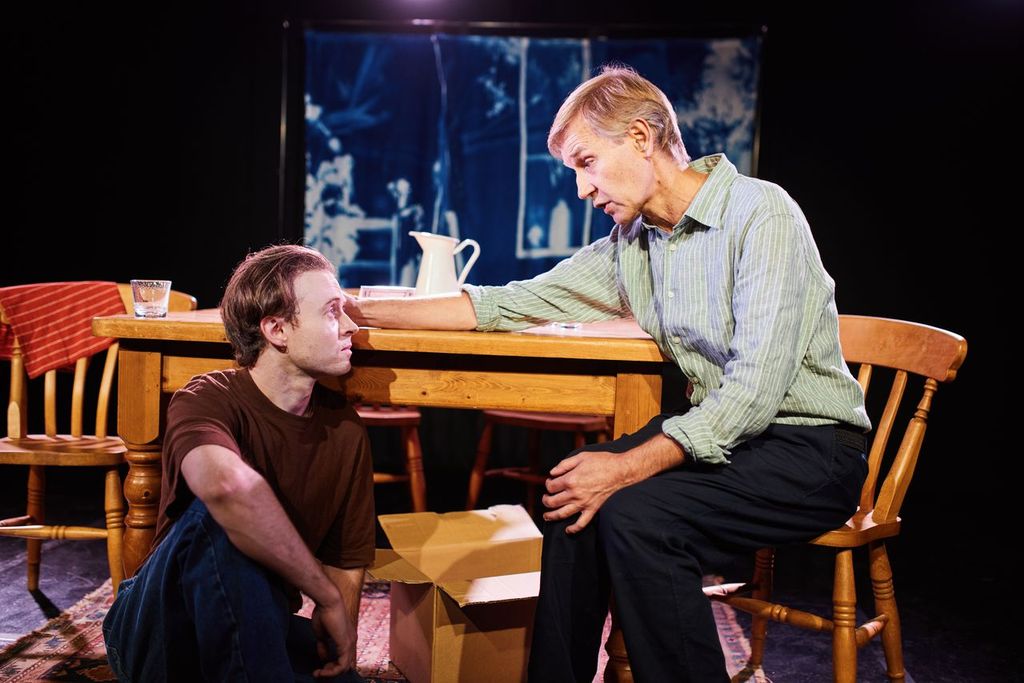
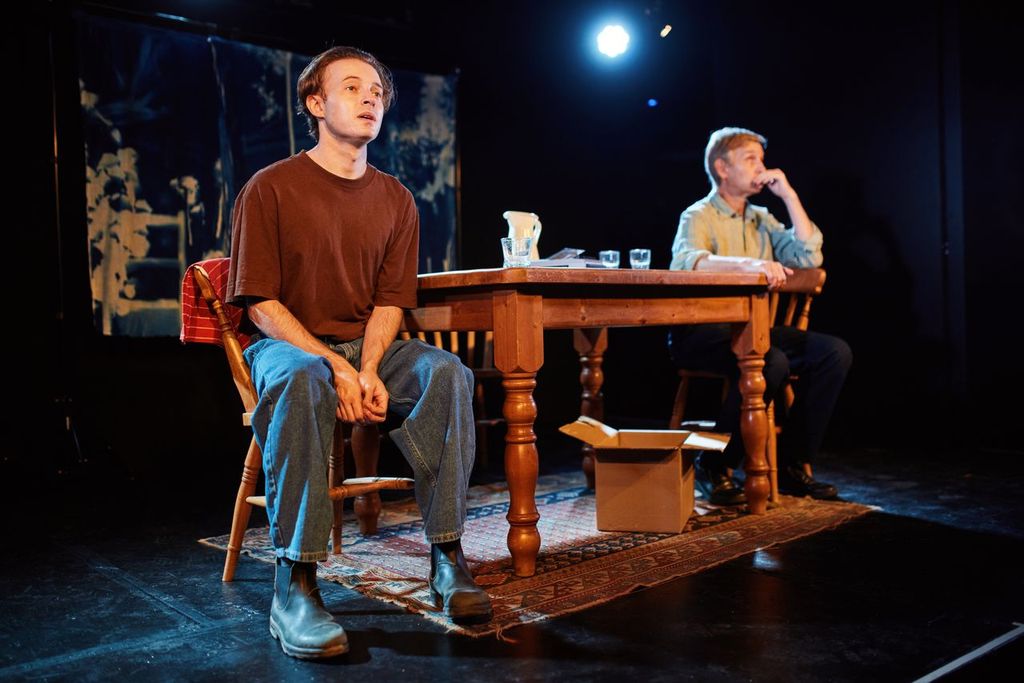
Michael (Matthew Tennyson) is ill. He’s moved from London into a remote Suffolk farmhouse, which owner Wendy is planning to turn into an AIDS hospice. She wants to provide a place where sufferers can die in dignity, away from judgement and stigma. Sadly, she’s met with local opposition, so there are currently only two patients: Michael and a trans woman, Mary, who is very close to death.

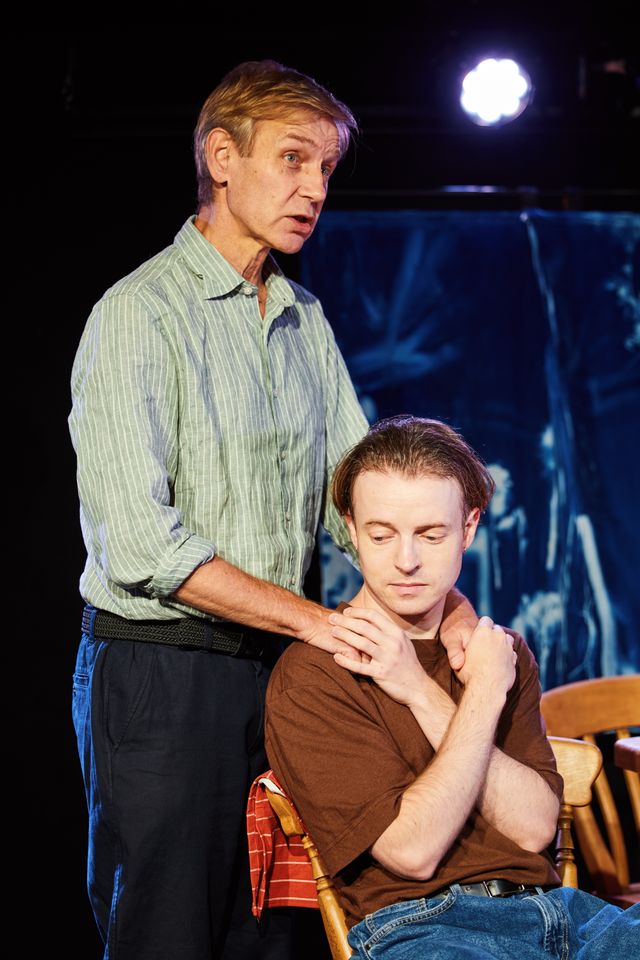
Michael isn’t too sick yet, but he is frightened and lonely, dithering about whether or not he should just pack up and leave. But then an elderly stranger (Richard Cant) appears in the kitchen. He’s a friend of Wendy’s, he says; he’s hoping she’ll be able to give his hair a trim. Michael is suspicious – and rightly so, it turns out, as the man reveals that, actually, Wendy has asked him to come. She’s worried about her young house guest and thinks that talking to an older homosexual might help.

She might not know much about planning permission or council licenses, but Wendy is canny when it comes to human connection. Although he bristles at first, Michael soon opens up to the unnamed man, sharing his anger, his fear, his shame. He talks about hedonism and drug-fuelled sex; about longing and lost love and the sickening number of funerals he’s been to. The stranger is gentle and understanding, offering just the slightest glimpse of hope…

It’s easy to see why Jacob Sparrow’s spare, uncompromising script caught the eye of the judges of the inaugural Leodis Prize for playwriting. Directed by Josh Seymour, the play is at once tender and raw, the artifice of its clever construction never overpowering its humanity.

There are only four more performances of Sanctuary at this year’s Fringe. Don’t miss your chance to see it!

4.8 stars

Susan Singfield

Noted

26/08/26

Assembly Roxy (Upstairs), Edinburgh

I’m attracted by The Back Pack’s press release, which promises “playful invention” – a phrase that strikes joy into my heart. It chimes with the ideology of the youth theatre company I work with here in Edinburgh so I arrive with a smile this morning, clutching my coffee, expectations high.

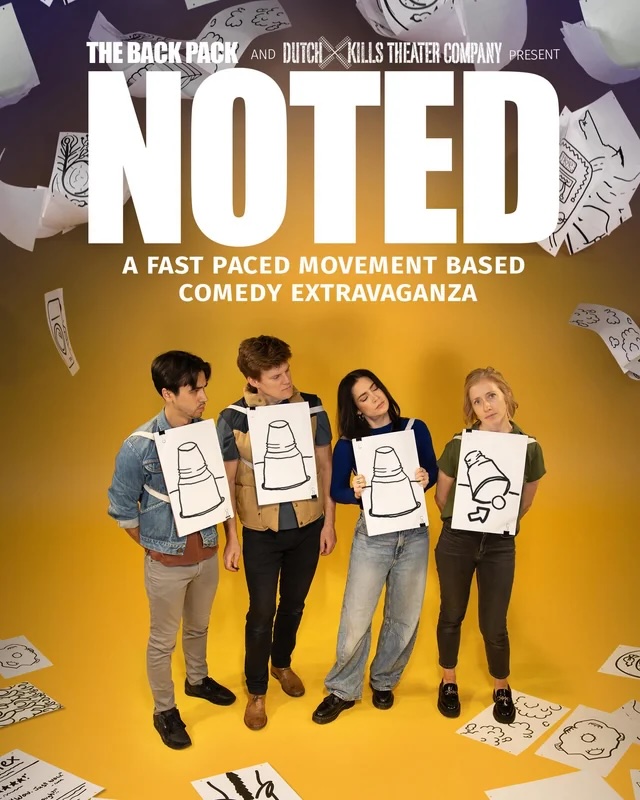
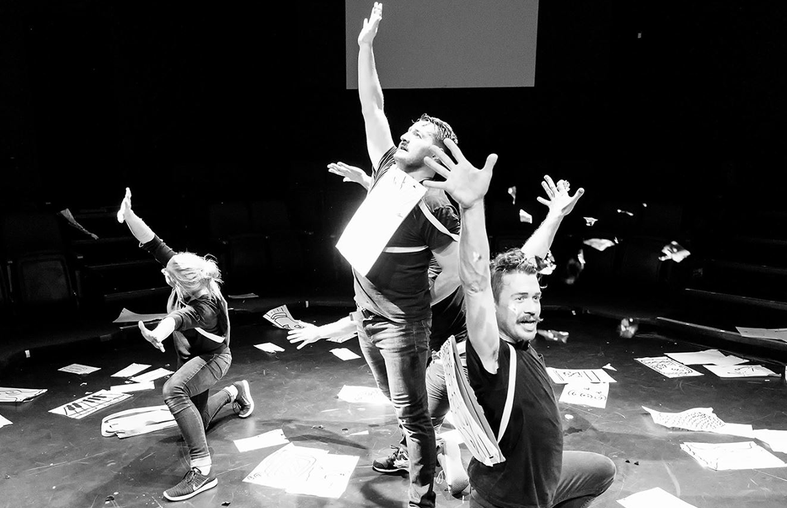
The Back Pack’s dizzying mix of clowning, illustration and animation doesn’t disappoint. We whirl from one scene to another with barely time to catch our breath. A short film – gently amusing; a group of school kids with cartoon backpacks – lots of lols. Puppetry, dance, video, cine-theatre – it doesn’t get more eclectic than this.

Twenty minutes in and there are hundreds of pieces of paper discarded on the stage. I’m grinning like a fool, loving every minute – even though I’m struggling to understand how the performers are managing to keep everything under control. There’s so much of it. Including the entire history of the world…

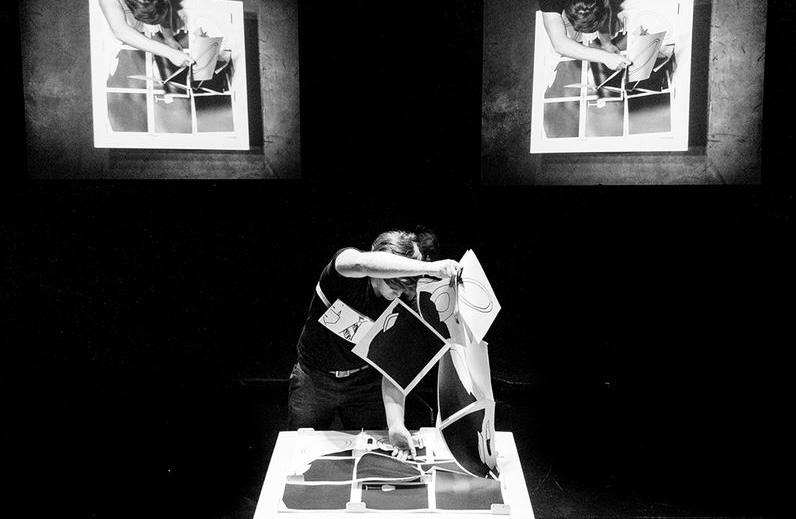
The live-delay is especially impressive (it’s all impressive, but this stands out). The performers are on stage, moving; we can’t tell what their contortions mean. Thirty seconds behind them, an overhead shot is projected onto the backdrop, creating an array of scenarios: horse-racing, moon walks, synchronised swimming. What’s not to love?

The choreography is stunning. The performers – Pete Betcher (who also directs), Katie Kohler, Alec Silver and Lauren McFall – are all excellent dancers, and they form a perfectly drilled quartet, making this most complex of productions look effortless (which logic tells me cannot be the case).

Noted is family-friendly in the best possible way. There really is something here for everyone. It’s silly, funny, clever and astonishing. An ideal start to the day.

5 stars

Susan Singfield

Bad Boy

25/08/26

Underbelly Cowgate (Belly Laugh), Edinburgh

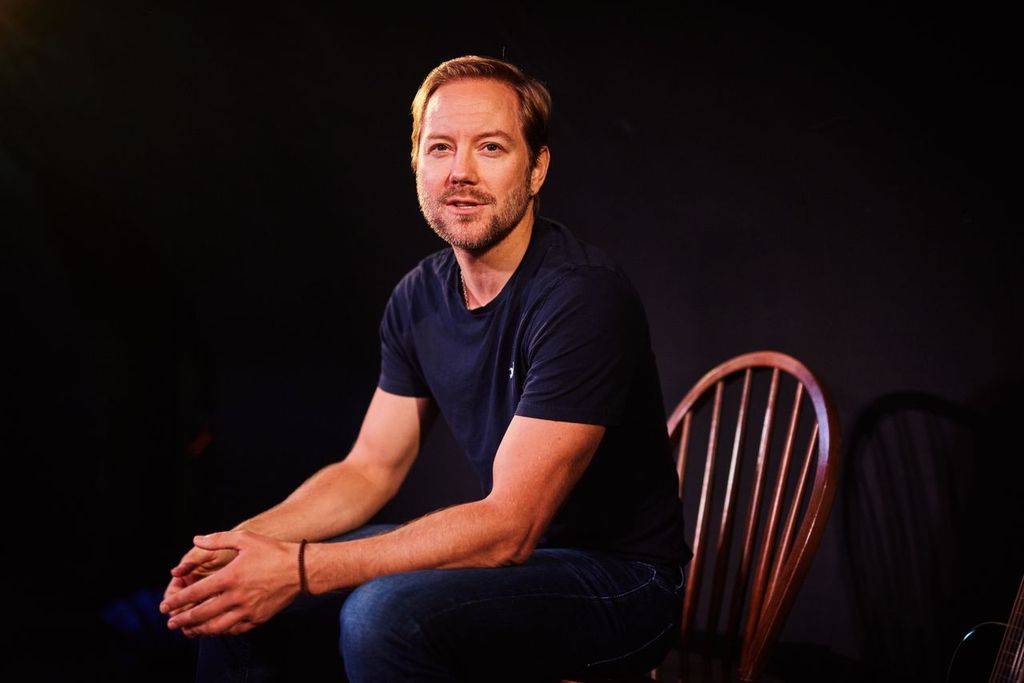
Meet Jack (Daniel Adolfsson), a laid-back kind of guy, just trying to make his way in the world. Okay, so he recently split up with the girl he’s still hopelessly in love with, and from whom he’s inherited a bulldog (her new partner is allergic, apparently). And yes, he does live in a crummy little flat that doesn’t even have its own shower, but he’s determined to make it as an actor. Meanwhile, to make ends meet, he’s happy to man a suicide line and talk people out of doing something desperate… and there’s no chance of him ever doing anything stupid like that himself because that big break will surely come along one of these days. Won’t it?

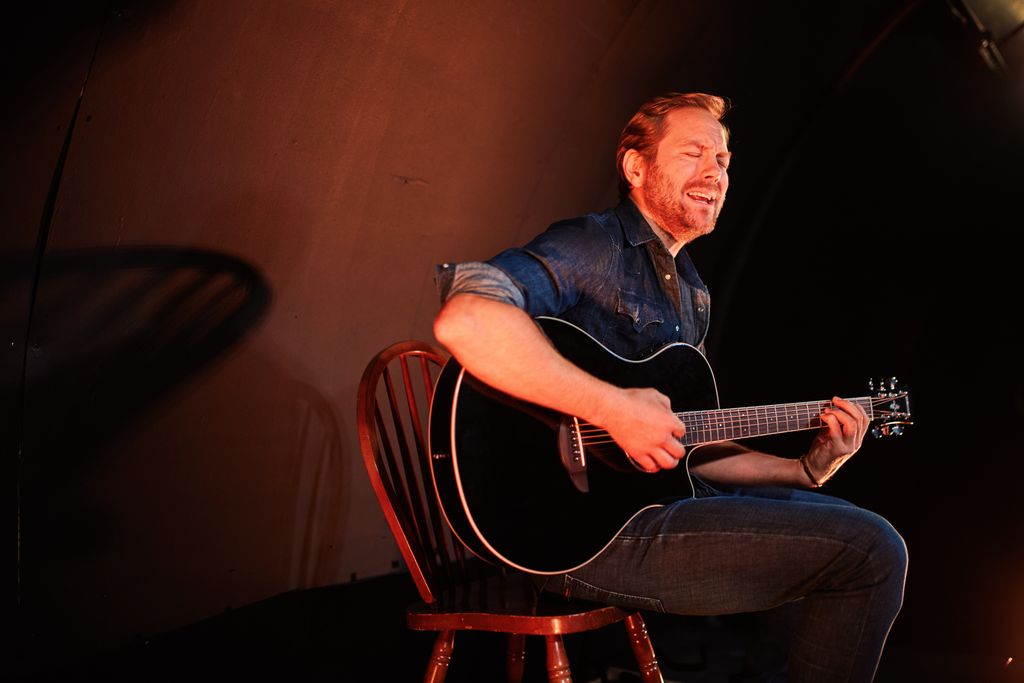
Oh, and the guitar on the chair beside him? He doesn’t even play guitar, it’s just there as a conversation piece.

Adolfsson has a relaxed and likeable presence and the story (which he also wrote) is gently and confidently told – which makes the character’s toxicity all the more chilling. He describes his irascible landlord, the shy woman who recently moved in next door, and her eight year old daughter, who just might be interested in having occasional guitar lessons. And then, one day, his best friend casually mentions that he might have fixed him up with a major role in an adaptation of Anna Karenina

Directed by Lilac Yosiphon, this piece of narrative storytelling is described as a dark, Nordic comedy. It follows a linear path and is most interesting when things go wrong for Jack, which they inevitably do. However, I can’t help feeling this piece could do with a little more fire in its belly, a little more jeopardy.

And the guitar? Sure enough Adolfsson eventually picks it up and gives us a couple of (very good) songs. Which only goes to show, you can’t trust everything a Fringe performer tells you. Maybe it’s a sign that Jack is starting to deal with all those unresolved issues.

3 stars

Philip Caveney

Spring Awakening

24/08/26

theSpace@Surgeon’s Hall, Edinburgh

I’ve said this before: it’s mind-blowing to think that Frank Wedekind’s Frühlings Erwachen was written way back in 1890, when Kaiser Wilhelm II ruled the Deutsches Reich, Queen Victoria was on the British throne and Robert Gascoyne-Cecil was our PM. Not that anyone was brave enough to stage it right away – it wasn’t until 1906 that the transgressive play premiered at Berlin’s Deutsches Theater.

A whole century later, Steven Sater and Duncan Sheik’s musical adaptation opened on Broadway – and this is the version we’re seeing today. You might think a contemporary adaptation would go further than the original, but it’s actually not the case. Yes, there’s more swearing, but there’s a softer ending – and no rape or masturbation scenes.

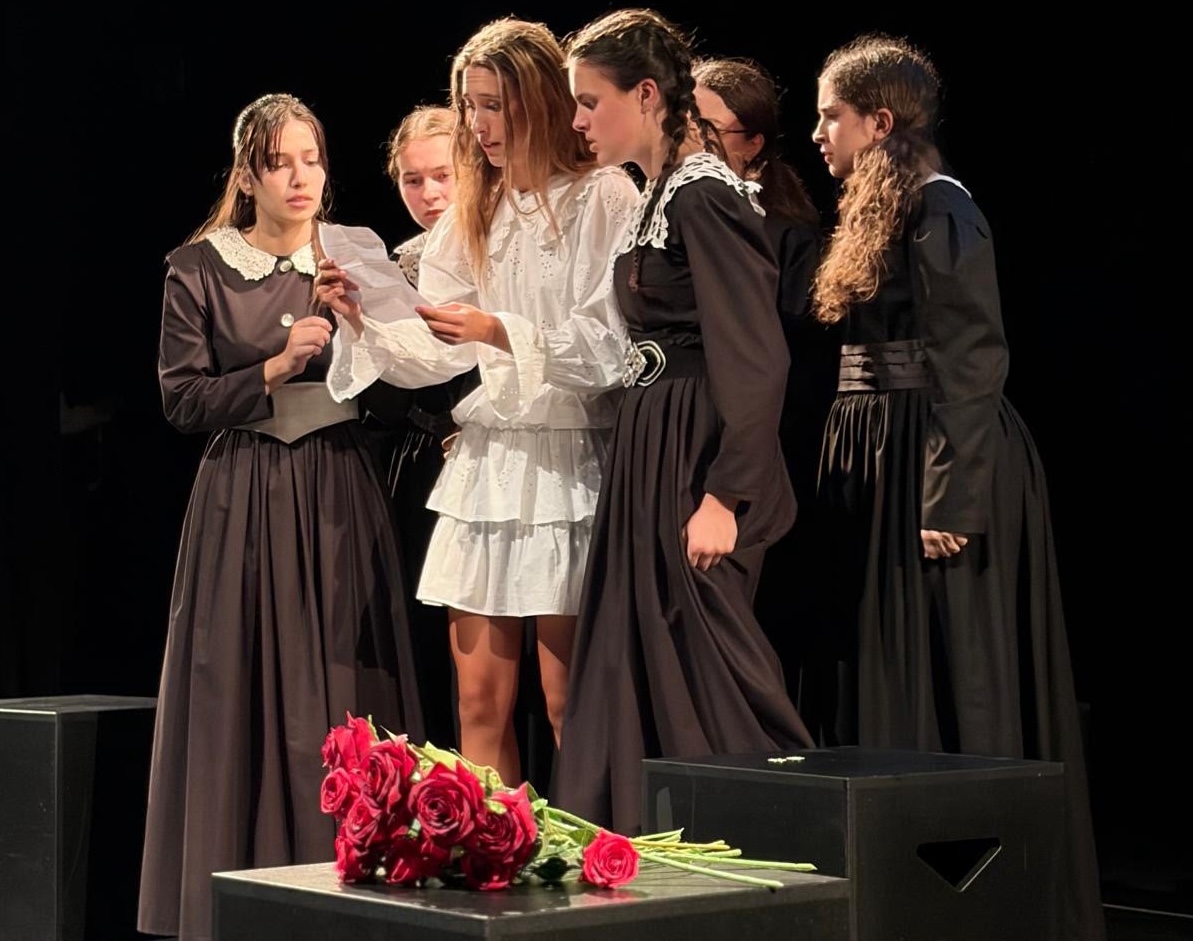
Nonetheless, this still feels like a bold piece for a school to take on. The very fact that I find myself thinking They must have a really progressive head teacher and I wonder if all the parents are on board just proves how relevant the play’s themes still are. These students are the same age as the characters, and Wedekind’s whole point was to illustrate the dreadful consequences for young people of silence, censorship and repression.

Set in Germany, in a conservative provincial town, Spring Awakening tells the story of a group of teenagers, forced to abide by a very strict set of rules that no one ever explains. Wendla (Melody Moppett) asks her mother (Alice Davidson) to tell her how babies are made, but Mrs Bergmann is too embarrassed to explain. “You have to love your husband,” she tells her daughter, leaving her horribly ill-equipped to deal with her burgeoning sexuality. Wendla finds herself drawn to Ilse (Minna Williams), who ran away from her abusive home at fourteen and now appears to enjoy a bohemian lifestyle in an artists’ colony. What Wendla doesn’t know is that Ilse’s freedom carries a heavy price.

Meanwhile, Moritz (Greg Cameron) is struggling to keep up with his studies, working day and night, unaware that his fate has already been decided. “There are only sixty places in the final year,” says Headmaster Knochenbruch (Rufus Pilcher). There’s no room for Moritz, whatever grade he achieves – but his father won’t forgive him if he fails. What’s a boy to do?

Hänschen (Alexander Christie) and Ernst (Joe Ridley) have their own problems: they know how they feel about one another, but they’ve been taught that homosexuality is a sin. Still, as ever, love and lust prove stronger than societal disapproval. They might just be the happiest characters in the play.

On the surface, Melchior (Jasper Simmons) is better off than the others. His mum (Davidson) is relatively open-minded; she’s raised her son as a free-thinker and taught him about sex. As a result, he’s seen as the fount of all knowledge by the other boys. He’s also a thorn in the side of the Headmaster, and an easy scapegoat when things go horribly awry…

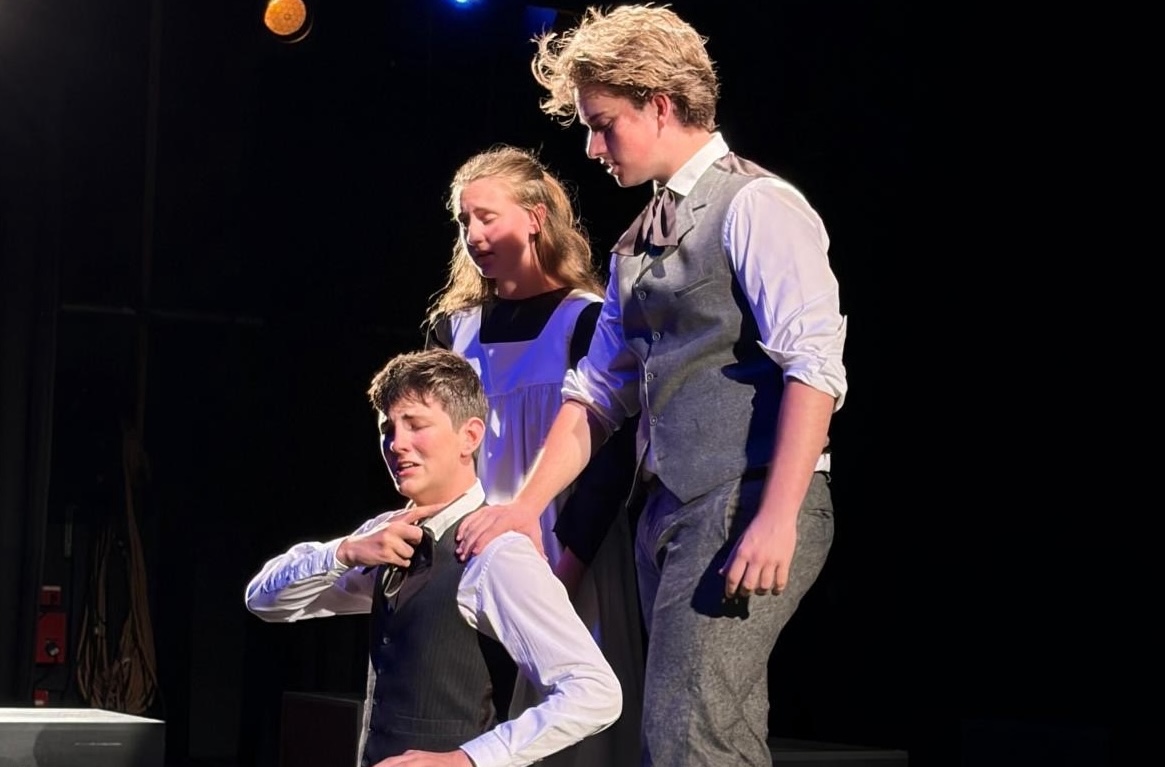
This is a very ambitious project and, for the most part, Kingston Grammar School’s KGS Theatre Company pulls it off. Meg Christmas’s direction is impressive: there are a lot of bodies but the stage traffic and choreography run like clockwork – no mean feat in a performance space without any wings, just an awkward opening upstage centre. I also like the simple set: stage blocks are positioned in regimented formation, with cleverly-concealed pockets behind them, holding microphones and minimal props.

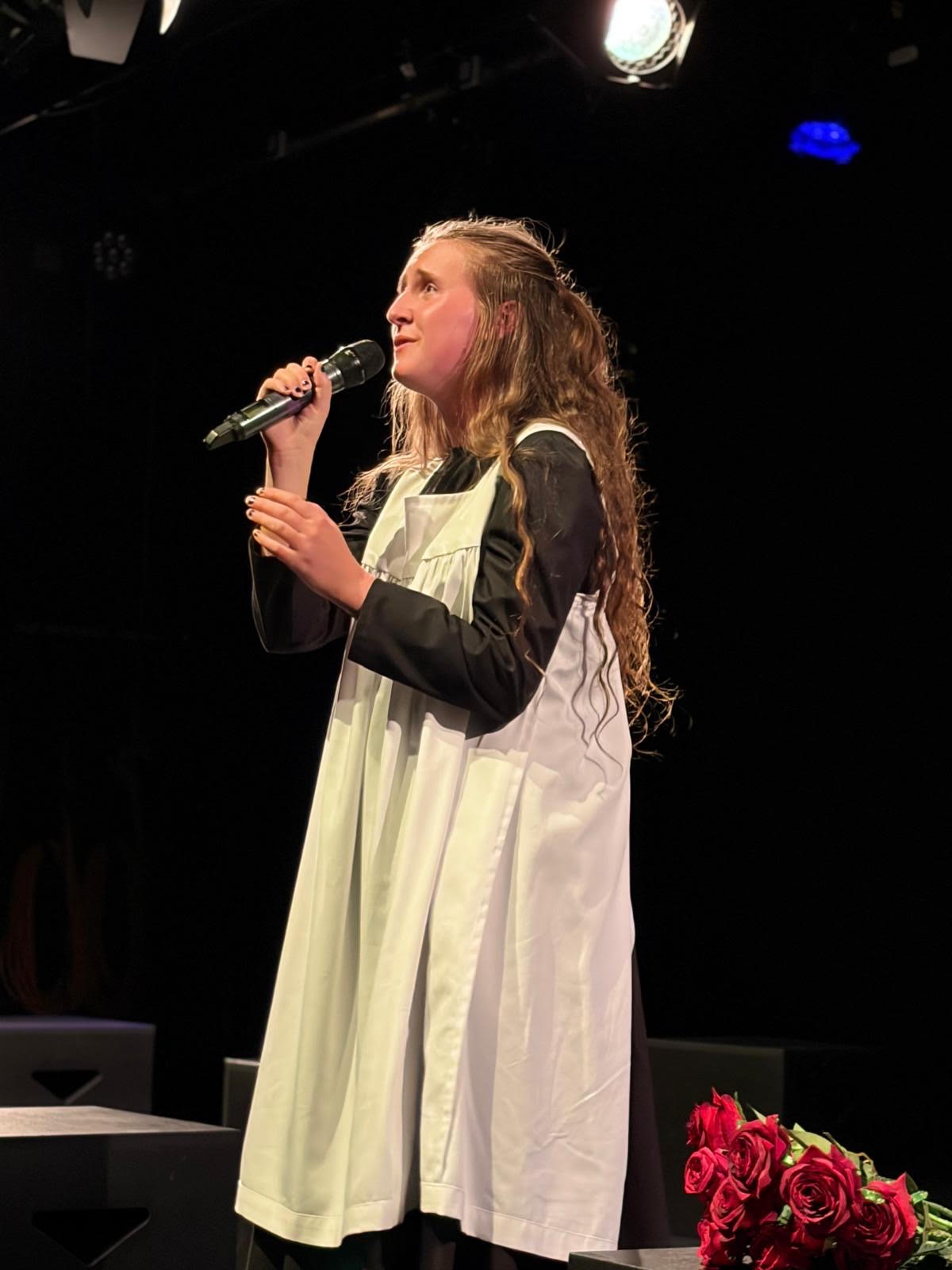
Musical director Mark Laflin provides keyboard accompaniment, augmented by cast members Williams, Ridley and Catherine O’Shea on acoustic guitars.

The whole cast work well, both in their individual roles and as an ensemble, but the standouts for me are Moppett and Williams, who both have beautiful singing voices and imbue their very different characters with strength and vulnerability. Allegra Kelly also offers a strong performance, evoking our sympathy as the maltreated Martha.

If you’re looking for a lively, provocative start to your day, I recommend you take yourself to the Surgeon’s Hall for this high-octane, fearless production of Spring Awakening.

4 stars

Susan Singfield

The Second Best School Shooting

23/08/26

Pleasance Courtyard (Baby Grand), Edinburgh

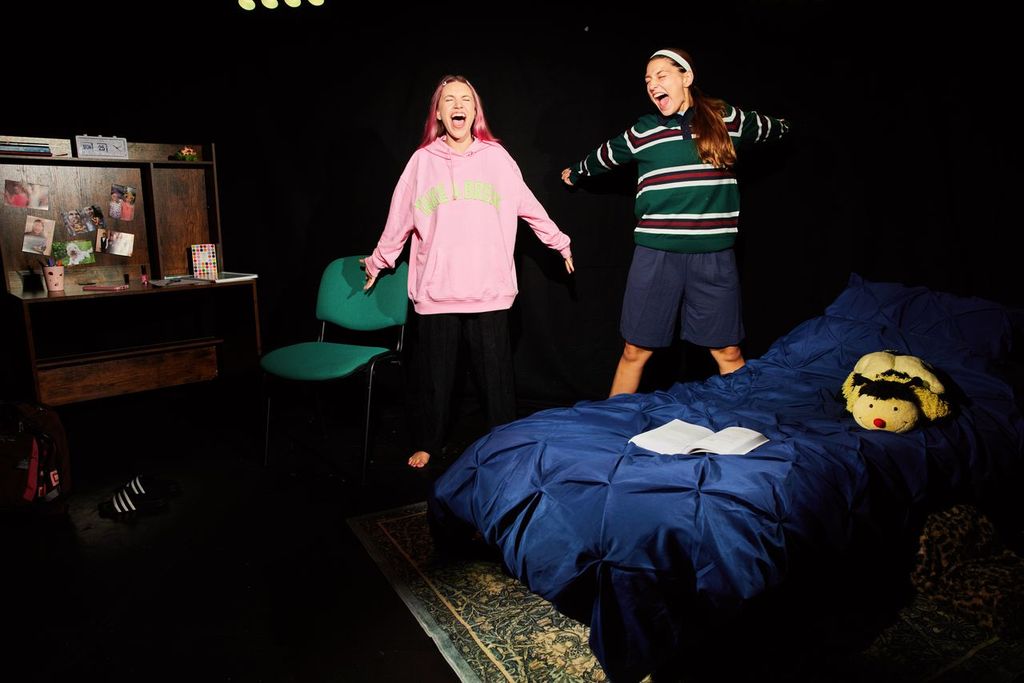
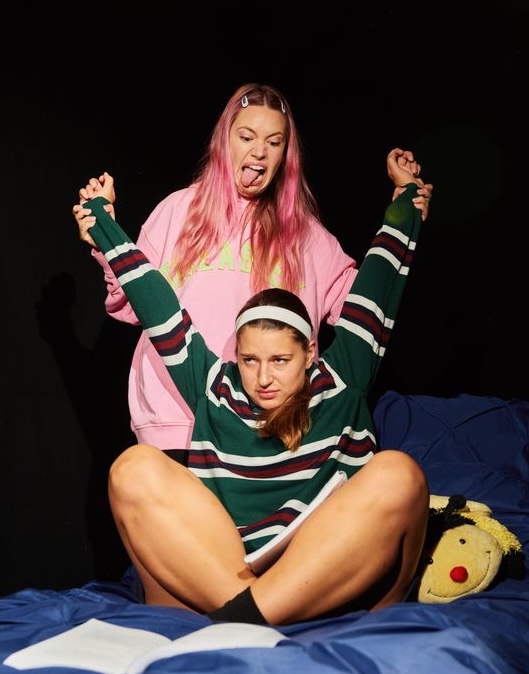
Parker (Rachael DeBoer) and Ava (Shaylaren Hilton) are besties, hanging out in Parker’s bedroom, studying and painting their toe nails. So far, so ordinary. But it soon transpires that this is a school day and that they’re home because something terrible has happened…

One of their classmates brought a gun to their physics lesson yesterday, planning a massacre.

The girls are in shock.

But they don’t feel entitled to their trauma because, while their shooter was stopped before he hurt anyone, another incident across town led to thirteen teenage deaths. Social media is full of sympathy for the students of the other school. Meanwhile, no one’s even acknowledging that anything happened to Parker and Ava.

Parker’s on board with that. She just wants to forget it ever happened, to bury herself in physics revision and try to get the GPA she needs for a college scholarship. Ava, on the other hand, is furious. How dare people brush their experience under the carpet? Of course she’s glad that no one she knows died but that doesn’t make everything okay. She’s been through something terrifying and she wants to effect change.

She wants to mount a challenge to the NRA, to gun laws, to late-stage capitalism and selfish billionaires.

But all she’s got is a TikTok account, some headed notepaper and a purple Sharpie. It’s not exactly a fair fight. How is a schoolgirl to make her voice heard?

Written by Alice Stanley Jr and directed by Riley Rose Critchlow, The Second Best School Shooting offers a rare insight into the effects of gun violence on teenage survivors, whose emotional landscape is shaped by the ever-present background fear that they could be shot at. Anywhere. The script is sharp and snappy, creating a believable dynamic between the friends, and confronting the audience with some uncomfortable truths about the world we’ve created for our young people.

DeBoer and Hilton are perfectly cast as the contrasting central duo, DeBoer skilfully capturing Parker’s outward calm as well as her internal struggle, while Hilton cleverly allows Ava’s high-octane performance to slip, revealing the panic she’s struggling to control.

Developed alongside March for Our Lives, the political group formed by students who were in the 2018 Parkland tragedy, The Second Best School Shooting is an urgent, important piece of theatre. I urge you to see it.

4.2 stars

Susan Singfield

Big Stuff

22/06/26

Assembly Roxy (RoxyBoxy), Edinburgh

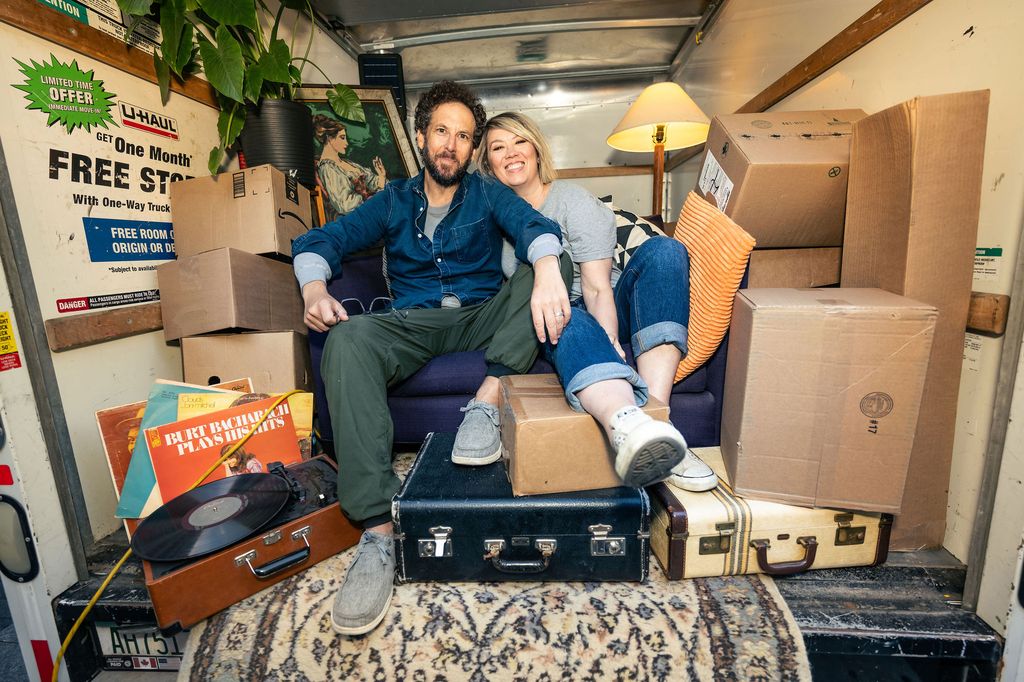
Stuff. Love it or hate it, we’re all surrounded by it; it’s just the way we deal with it that differs. How about you? Are you a hoarder or a declutterer?

As two self-declared stuff-shunners, we’re fascinated to see what Canadian comics Matt Baram and Naomi Snieckus have to say on the subject.

We hit our first obstacle as soon as we enter the cutely-named RoxyBoxy shipping container (an apt venue). We’re given pencils, cards and a question: what object do you own that reminds you of someone you love? In my best handwriting (I’m always keen to please), I put, “the books my husband wrote,” not realising until later that it should be someone who’s dead. Philip is sitting next to me, very much alive and frowning at his card. “I haven’t got a clue,” he says. I remind him of his great uncle’s mandolin, which is hanging on our wall. “I never met him though,” he says, then shrugs and writes it down. I guess we’re really not ‘stuff’ people.

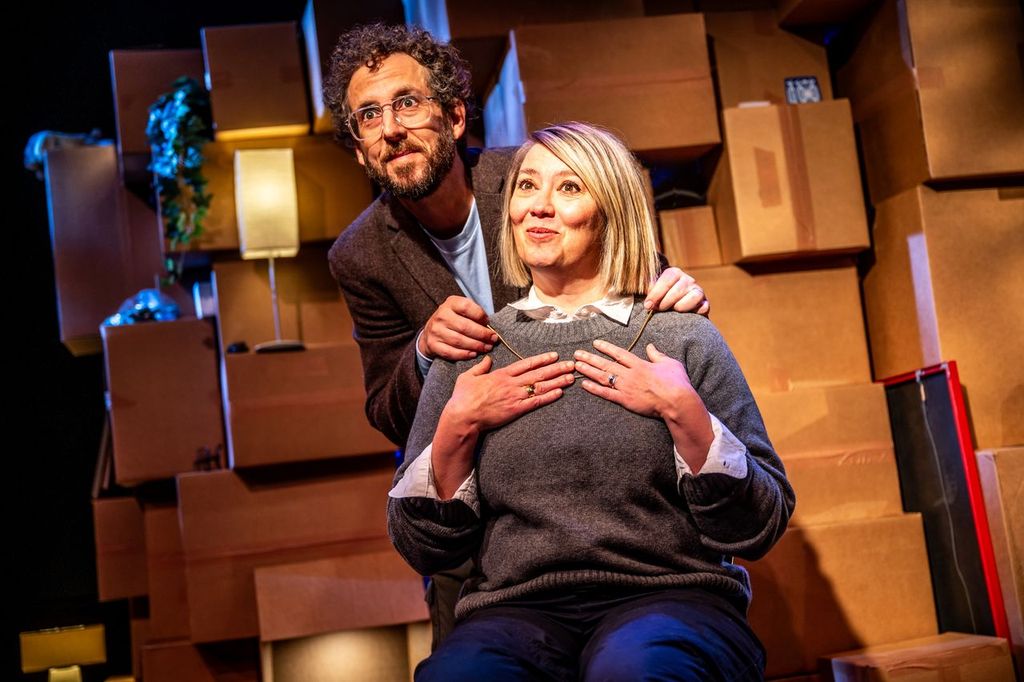
But that’s okay – because that’s the point of the show. One person’s trash is another one’s treasure and all that. Matt and Naomi are married and, unlike Philip and me, do not agree about clutter. Where Matt sees a bag full of half-used lipsticks, Naomi sees her late mum, putting on her face. Matt wants to chuck it all in a skip; Naomi wants to hold on to everything. The answer – unsurprisingly – lies somewhere in between.

Directed by Kay Sandler, this is a gently comic, life-affirming show – part love story, part obituary, part (metaphorical) communal hug. Snieckus provides the warmth – she genuinely has one of the friendliest faces I’ve ever seen – while Baram tempers the show’s more saccharine moments with his precisely-timed jibes. Their affection for one another is palpable and it envelops the audience too.

Are there any profound revelations or transformative ideas? No. But do I leave with a smile on my face and a general sense of wellbeing? Yes, I do.

I’m still a minimalist though. That hasn’t changed.

3.5 stars

Susan Singfield

Long Way Home

20/08/26

Gilded Balloon Patter House (Snug), Chambers Street, Edinburgh

Layla Warren’s earliest memories are of war-torn Tehran, where she is sheltering in her grandparents’ basement from Iraqi bombs. Four decades and three continents later, here she is at the Edinburgh Fringe, recounting her almost incredible tale.

Warren is an engaging speaker. She knows how to turn those enormous eyes on her audience, demanding our attention. The problem is, there’s so much extraordinary information packed into the hour that it’s impossible to take it all in. It’s like listening to a podcast on triple speed. There’s five shows’ worth of material crammed into one, so that – inevitably – we find ourselves skating over the surface.

Directed by Sepy Baghaei, the best moments are those when things slow down; when we’re shown instead of told. A scene where Warren dons traditional Iranian dress and dances at her leaving party stands out, as does her blind grandmother memorising Layla’s face through touch.

There are so many incidents I want to see in more detail, to understand them better and marvel at teenage Layla’s blagging skills. A fifteen-year-old bluffing her way onto an international flight? Landing a job at a top London club? Deciding she wants a TV career so just heading to LA and finding one (the evidence is on YouTube; she was known as Layla Kayleigh then)? It’s all fascinating, but we’re only allowed a tantalising glimpse before we gallop on to the next event.

Sometimes, the breakneck speed works to Warren’s advantage, illuminating the astonishing nature of her life. More often, it undermines the importance of traumatic experiences, such as sexual assault or family breakdown. As an audience, we need longer to process these incidents.

There’s so much potential in this autobiographical show – but its depth is obscured by its overwhelming breadth.

3 stars

Susan Singfield

Amnesia

19/08/26

Pleasance Courtyard (Bunker Two), Edinburgh

What comes to mind when you think of Rhyl? If it’s “Blackpool after a neutron bomb” or “Satan’s armpit” then you’re not alone.

For me, it conjures up fond memories. I grew up in a village a few miles inland and Rhyl was the nearest town. The Little Theatre, where I spent my teenage Saturdays. The White Rose Centre, for shops and summer jobs. Nightclubs (I was a Bistro girl). And all the fun of the fair.

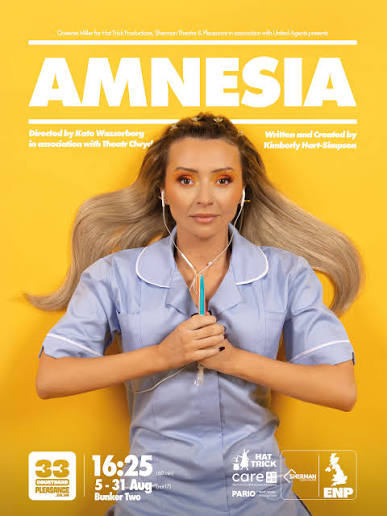
For Kelly (Kimberley Hart-Simpson), it’s home. She lives on West Parade with her bestie, Amrit, in a flat above Les Harker’s arcade with a glorious sea view. Everywhere they need to go is only a short walk away: the Bryn Môr nursing home, where they both work; the Cob and Pen, where they socialise (and where Kelly’s mum performs weekly Tom Jones tribute gigs). Kelly’s happy with her life – but Amrit, it transpires, is not.

And Kelly isn’t good with change…

Hart-Simpson paints a convincing portrait of life in a forgotten town – the sort of place that politicians love to talk about but where nothing ever seems to improve. Outsiders mock Rhyl: it’s “the Costa del Dole” – somewhere to escape from. But Kelly mounts a spirited defence. She’s proud of her home, the tourist spot that spawned not only Carol Vorderman and Mike Peters, but also Lisa Scott-Lee and, well, Kimberley Hart-Simpson. No one should need to feel ashamed of where they’re from (especially when it’s as beautiful as the North Wales coast).

If this all sounds a little po-faced, don’t be fooled. Directed by Kate Wasserberg in association with Theatr Clwyd, Amnesia is a wild ride, with as many highs and lows as Ocean Beach’s infamous Runaway Train. Kelly is always in motion – even when she’s still  – and Hart-Simpson effortlessly draws our attention to her pent-up energy and frustration, fizzing fit to burst. From Ibiza nightclubs to old ladies’ bed baths, we’re under the spell of a talented actor, who knows exactly how to engage her audience. 

Although Kelly is thirty-seven, this is essentially a coming-of-age story, as she learns to accept two crucial truths: things don’t always stay the same, and her own idea of happiness is perfectly valid.

4.5 stars

Susan Singfield

The Trials of Magnus Coffinkey

19/08/26

Summerhall (Red Lecture Theatre), Edinburgh

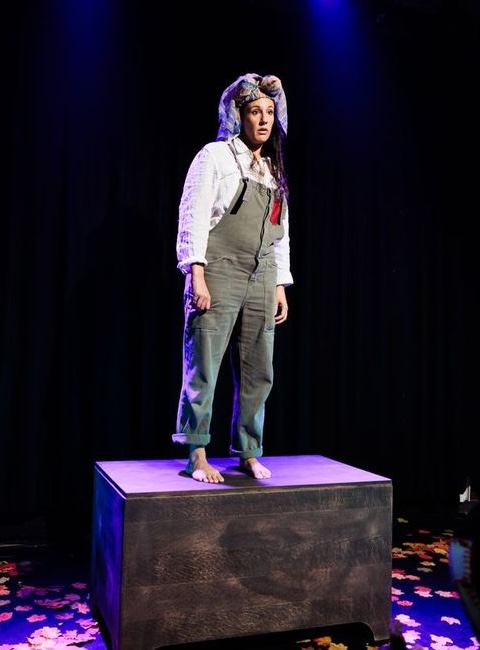
On a stage littered with autumn leaves, the Storyteller (Rebecca Camilleri) begins a whimsical, rhyming fairytale about a doomed bell hanger called Magnus Coffinkey (Jospeh Zammit). In the middle of the night, high up in a belfry, Coffinkey is spooked, first by a malevolent gargoyle and then by a cauldron of bats. As he falls, he grabs the bell – which proves a near-fatal error. He and it tumble together, the silver bell entombing him in the graveyard.

When Magnus wakes up, it’s to find a sweet, guileless creature stealing his heart. From her, he learns that he is in The Gloom, a space somewhere between life and death. If he wants to return to the world he knows, he’ll need Harmony’s help to mend his broken ticker…

So far, so twee – but there is more to this dark fable than meets the eye. Zammit imbues Magnus with real sorrow, while Camilleri perfectly inhabits a whole host of roles, most heartbreakingly that of Harmony. The piece is, in fact, an ode to grief, Magnus’s story serving as catharsis for Lara (Camilleri), a writer trying to cope with immense loss. Cleverly, despite the allegorical structure, there are no glib answers offered here. In fact, when Lara’s husband, Jeremy (Zammit), attempts to provide the ending Lara’s struggling with she dismisses his maxims as useless platitudes.

Something deeper is required…

Co-written by husband and wife team, Malcolm and Angele Galea of Malta’s Give or Take Productions, this play is at once profound and beautiful, precise and dynamic; the script perfectly complemented by Philip Leone-Ganado’s sure-footed direction. Sam Edmunds’ imaginative use of simple lighting – a bell gobo; a couple of coloured bars; a few overhead lamps – provides the finishing touches, establishing whether we’re in Magnus’s story or Lara’s reality.

Only the most stone-hearted person could fail to cry at this play – but only the most cynical could fail to smile.

4.3 stars

Susan Singfield
Jerk Off!

17/08/26

Underbelly Bristo Square (Dairy Room), Edinburgh

Don’t be misled by the title. Jerk Off! is not a bro-comedy, akin to The Hangover or The Inbetweeners. Instead, it’s a profound autobiographical play about death, abusive relationships – and hip hop.

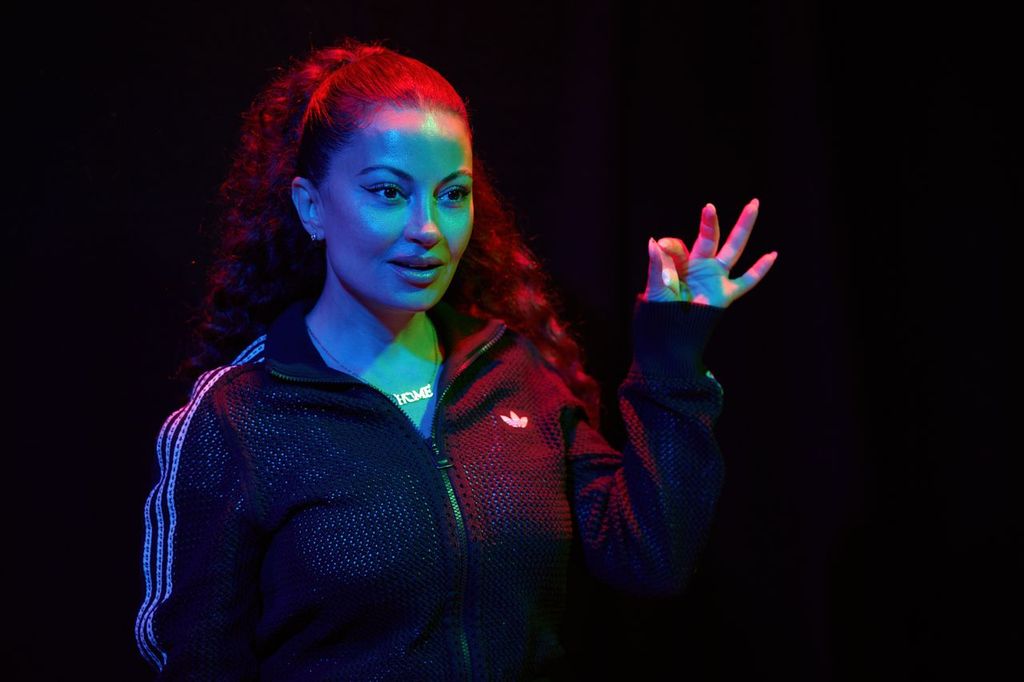
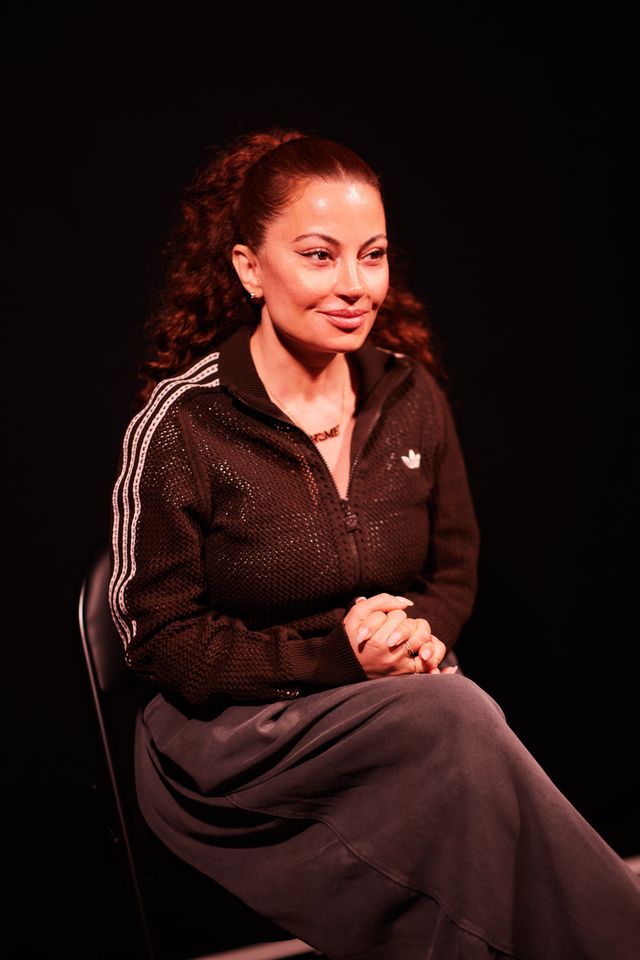
Nadia P Manzoor is a triple threat. Not only has she penned this provocative script; not only is she a compelling actor; this woman can really dance.

Framed as a story (or perhaps a lesson) for her daughter, Rumi, the play follows Nadia in the aftermath of her mother’s death. She’s only twenty when her mother dies and she doesn’t know how to process her grief. Her British-Pakistani family want her to get married to a nice Muslim boy, but Nadia wants to spread her wings. So when her cousin Zeinab invites her to Boston, she books a ticket right away.

Boston is a revelation: an internship at Harvard (thanks, Zeinab!), a hip-hop dance class and a hot boyfriend. And if the boyfriend’s behaviour raises a few red flags, well, that’s a small price to pay for a cool new life… Until it’s not.

As well as Manzoor’s skilled performance, what makes Jerk Off! so powerful is her refusal to offer us any easy answers. There is nuance upon nuance; there are no heroes or villains here. Instead, we have a cast of flawed humans, failing and succeeding, trying their best and falling short. By the end of the play, Nadia has come to terms with the imperfect reality of who her mother was. The message to Rumi seems to be that people are tricky and love is complicated – but we can learn to make peace with that.

Engaging, informative and challenging, Jerk Off! is not to be missed.

5 stars

Susan Singfield