Underbelly

Jerk Off!

17/08/26

Underbelly Bristo Square (Dairy Room), Edinburgh

Don’t be misled by the title. Jerk Off! is not a bro-comedy, akin to The Hangover or The Inbetweeners. Instead, it’s a profound autobiographical play about death, abusive relationships – and hip hop.

Nadia P Manzoor is a triple threat. Not only has she penned this provocative script; not only is she a compelling actor; this woman can really dance.

Framed as a story (or perhaps a lesson) for her daughter, Rumi, the play follows Nadia in the aftermath of her mother’s death. She’s only twenty when her mother dies and she doesn’t know how to process her grief. Her British-Pakistani family want her to get married to a nice Muslim boy, but Nadia wants to spread her wings. So when her cousin Zeinab invites her to Boston, she books a ticket right away.

Boston is a revelation: an internship at Harvard (thanks, Zeinab!), a hip-hop dance class and a hot boyfriend. And if the boyfriend’s behaviour raises a few red flags, well, that’s a small price to pay for a cool new life… Until it’s not.

As well as Manzoor’s skilled performance, what makes Jerk Off! so powerful is her refusal to offer us any easy answers. There is nuance upon nuance; there are no heroes or villains here. Instead, we have a cast of flawed humans, failing and succeeding, trying their best and falling short. By the end of the play, Nadia has come to terms with the imperfect reality of who her mother was. The message to Rumi seems to be that people are tricky and love is complicated – but we can learn to make peace with that.

Engaging, informative and challenging, Jerk Off! is not to be missed.

5 stars

Susan Singfield

Penelope

11/08/26

Underbelly Cowgate (Belly Button), Edinburgh

As we file into the dank gloomy confines of Belly Button, Penelope (Grace McLean) is already sitting on a stool, awaiting us with the patient air of somebody who is well acquainted with biding time. As anyone who’s read Homer – or watched Christopher Nolan’s The Odyssey – will be aware, Penelope has been waiting for twenty years for her husband Odysseus to return from his travels. While he’s off battling a Cyclops and negotiating the Clashing Rocks, she’s stuck at home doing some weaving. As you might imagine, she’s getting pretty bored with the process.

As the lights go down, three musicians file in to provide the musical soundtrack. Alex Bechtel, who wrote the music and lyrics, takes a seat at the keyboards and he’s joined by a cello player and a drummer. The sound they create is moody and haunting – and then McLean begins to sing a mournful, soaring ballad. It’s evident after just a few bars that she has an extraordinary voice.

From this point, the story progresses through a wide range of musical styles, sometimes solemn, sometimes frivolous, occasionally edging toward rock. Penelope gets through quite a lot of alcohol as she delivers her tale of woe and, of course, it’s always interesting to hear the story from a different perspective: a woman who was always her husband’s second choice after the legendary Helen; a woman dealing with a son growing into manhood; a woman resisting the advances of those predatory suitors, who are constantly seeking ways to break down her determination not to remarry. We’ve all been there.

For me, the high point in this hour-long musical extravaganza is a lengthy conversation with Pallas Athene, whose voice is supplied by the three musicians talking in unison. It’s interesting to note that the Goddess offers very little in the way of answers.

This is an assured hour of musical theatre, directed by co-creator Eva Stenmetz and impeccably delivered by the four performers. You don’t have to know The Odyssey – or even Margaret Atwood’s The Penelopiad – but it might help to be familiar with the original story.

Or maybe just trot along to Belly Button and soak it all up.

4 stars

Philip Caveney
Goodbye Dandelion

10/08/26

Underbelly Cowgate (Belly Dancer), Edinburgh

It turns out assisted dying is a hot topic at this year’s Fringe. A mere five days in and, not only is this the second show we’ve seen about it, but there’s someone waiting outside with flyers for another one “dealing with the same issues”. Euthanasia, it seems, is in.

But if the theme is redolent of the Traverse production we saw yesterday, the form could hardly be more different. While After Party is a raucous two-act play, Goodbye Dandelion is an altogether gentler affair – a whimsical hour of musical storytelling, charting Maddie Rice’s friendship with the titular Dandelion, aka octogenarian Darcy O’Shea.

Thirty-something Maddie is feeling a bit lost. There’s nothing wrong exactly: she has a steady job, a caring boyfriend, an agreeable flatmate. It’s just… shouldn’t there be something more? When she sees an advert for Run-Relate, she thinks it might be the spur she needs. Simultaneously improving her fitness and helping a lonely pensioner; surely that’ll make her feel fulfilled?

But things don’t go as Maddie expects. For one thing, it turns out she hates running. And for another, Darcy doesn’t want her help. Still, as their spiky, unlikely friendship develops, it’s clear the benefits are mutual. Until, that is, Darcy tells Maddie her deepest, darkest wish…

Maddie narrates her tale with an engaging openness, the language simple but compelling. Her brother, Marcus, provides musical accompaniment and wry asides, knowing exactly when to undercut the more sentimental moments with a witty song or some salient statistics. Everybody Dies is easily my favourite number; who knew a song about death’s inevitability could make an entire audience laugh out loud?

Although it’s about dying, this charming, clever show is ultimately life-affirming. There’s no bold ‘seize the day’ message, no cloying, fridge-magnet platitude. Instead, there’s a clear-eyed, honest appraisal of what it means to live.

4.6 stars

Susan Singfield

James Barr: I’m Sorry I Hurt Your Son (Said My Ex to My Mum)

11/08/25

Underbelly George Square (Buttercup), Edinburgh

Comedian/presenter James Barr tackles the thorny issue of domestic violence in this candid one-hour show, as he looks back on an abusive relationship and considers how it has affected him. There’s no denying that there’s some dark material here, but Barr is quick to assure us that we’re allowed to laugh – he’s a comedian, he says; if we don’t respond to his macabre jokes, then we’re just adding to his trauma.

By sharing his story, Barr exposes some of the masculine stereotypes that amplify his feelings of shame: he’s a man; he’s not supposed to be a victim. And there’s the added pressure of being gay: of having already been through the stress of coming out, defending his homosexuality, reassuring his family that he will be okay. How now to admit that he’s really not okay at all?

Directed by Madeleine Parry and Chris Gau, ISIHYS (SMETMM) is a bleakly funny piece, with plenty of laughs to leaven the mood. In fact, I think there’s too much humour here – which I know is an odd criticism to level at a stand-up show. It’s just that the joking feels like a defence mechanism: whenever Barr gets close to revealing some emotion, he cuts away to a smutty one-liner. While these are always funny and elicit laughs, they also serve as a barrier, pushing the audience away. Perhaps he needs more distance from his trauma before he can really open up and mine this material to its full effect – or maybe he will never be comfortable with that.

Either way, ISIHYS (SMETMM) is a witty and thought-provoking stand-up show, and it’s a pleasure to spend an hour in James Barr’s company.

4 stars

Susan Singfield

Lost Girl

10/08/24

Underbelly George Square (Wee Coo), Edinburgh

Tracey Emin… stereotype… train wreck. Oops! Sorry. Wrong notes. Let’s try again…

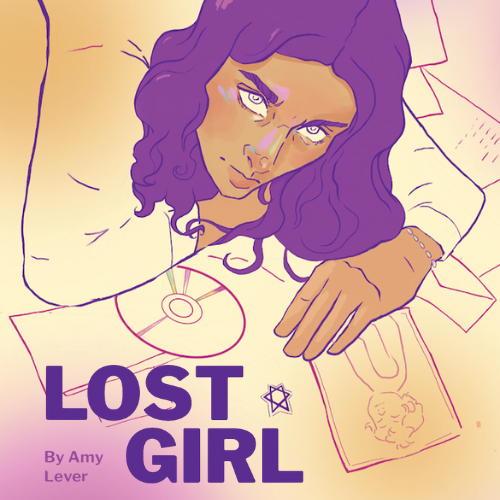
Amy Lever’s Lost Girl is a fascinating monologue, charting nineteen-year-old Birdy’s search for self-acceptance. She’s never been particularly clever (as her A level results confirm); she hasn’t any special talents and she doesn’t know what she wants to do with her life. Until now, none of this has really mattered, because she’s had her best friend Bex by her side, and they’ve been battling the world together. So what if Birdy didn’t make it into uni? Neither did Bex – or Jeremy Clarkson, for that matter – and they’re both doing okay.

But now Bex – resolutely Catholic – has unearthed some hitherto unknown Portuguese Jewish ancestry, which means she can claim an EU passport, and so she’s gone off travelling. Birdy, meanwhile, who is actually Jewish, has no such useful connections. “Hey, Siri,” she asks. “Is Syria in the EU?” Even Siri, who surely hears all sorts, isn’t programmed to deal with this level of ignorance. “Don’t be stupid,” he responds.

So Birdy feels lost. She’s plagued by recurring nightmares and angry with Bex for deserting her. She’s angry with her family too because… well, because they’re her family. Who else is going to bear the brunt of her frustration?

But when Birdy gets a job working in the archives of a local Jewish museum, she begins to unearth some secrets that make her see her relatives in a whole new light…

Lever is an accomplished actor, quickly earning our sympathy with her heartfelt performance. Her depiction of wannabe actor Bex’s disastrous one-woman show is very witty, as is her portrayal of the monosyllabic Sammy Morrison. The writing is good too, often causing us to laugh out loud, as well as giving us plenty to think about.

The simple, unfussy staging is well-suited to the piece, the frame of documents and photographs symbolising both cage and portal, illuminating Birdy’s contradictory impulses for stasis and for flight.

As much a character study as a play, Lost Girl offers a fascinating insight into the mind of a teenager seeking validation and coming to terms with her cultural identity.

4 stars

Susan Singfield

Diva: Live from Hell

08/08/24

Underbelly Cowgate (Belly Button), Edinburgh

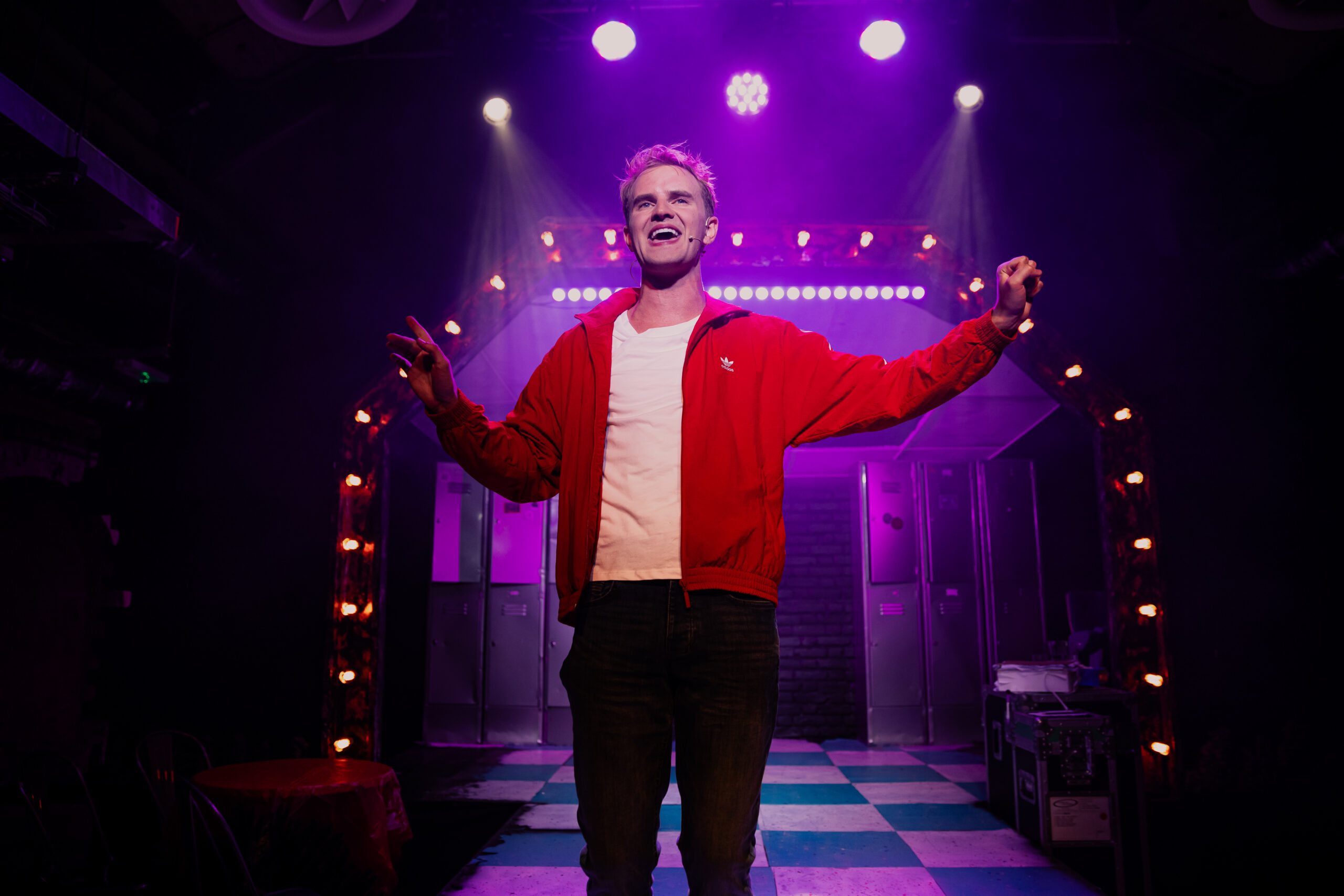
The dank environs of Belly Button somehow make an apt setting for Diva: Live from Hell. If there is a hell, this is surely what the place must look like. It’s here in the Seventh Circle that former high school musical theatre star, Desmond Channing (Luke Bayer), is obliged to re-enact the story of his fall on a nightly basis. Back in the day, Channing was the all-singing, all-dancing star of The Ronald Reagan High School’s drama society. Camp and undeniably talented, he is also the society’s president – something he never lets his co-stars forget.

And then along comes Evan Harris, a new recruit recently transferred from California. Despite his bluff ‘aw shucks’ attitude, everybody seems to like Evan and Desmond dutifully takes him under his wing. Evan soon lands a plump role in the society’s production of Gilbert and Sullivan’s The Pirates of Penzance and, pretty soon, he is making moves on the young actress who Desmond has had his eye on for ages.

Naturally, there’s going to be hell to pay.

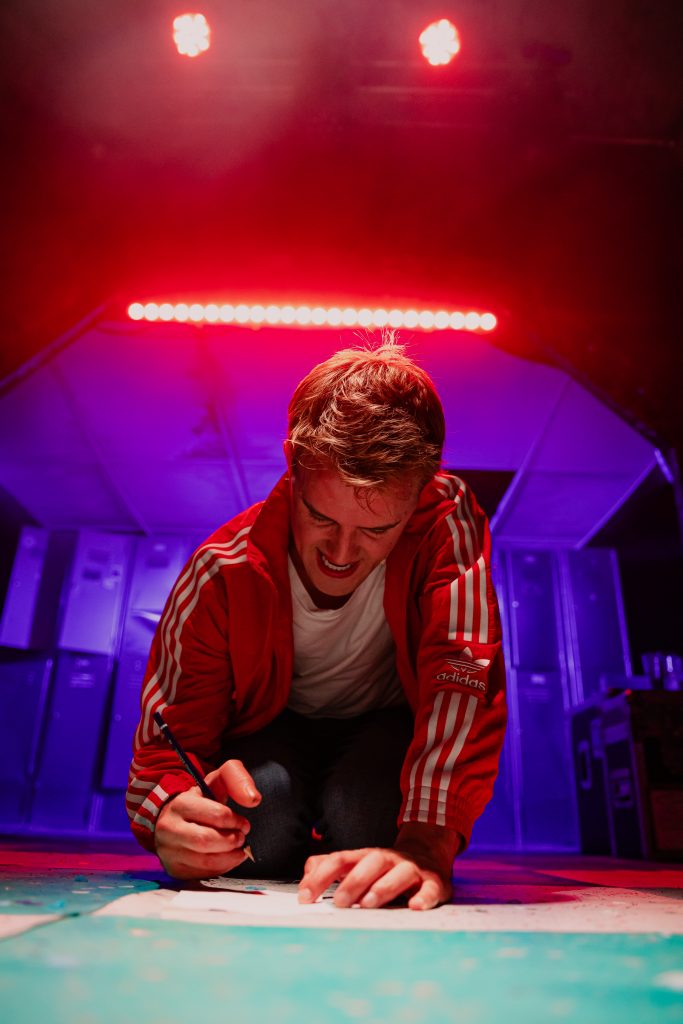
Triple-threat Bayer is a tour de force in this supremely entertaining riff on the high school musical genre. There’s just him and three backing musicians (two of whom have to work very hard not to keep laughing out loud at his snarky asides to the audience). Bayer is quite simply astonishing, singing and dancing up a storm, slickly slipping from one character to another with absolute assurance, even delivering a frenetic tap dance routine at one point.

Channing (the name is obviously a reference to Bette Davis in All About Eve) is a delightful character, supremely self-obsessed, deliciously callous and intent on achieving stardom at any cost. The songs by Alexander Sage Oyen are insanely catchy and Nora Brigid Monahan’s script is packed with references to the stars of musical theatre. Given the modest size of the performance space, the presentation is really inventive, a line of metal lockers providing Bayer with costume changes, props and even a mirror in which to check his makeup. A scene involving a death by automobile is simply but ingeniously depicted.

Diva: Live from Hell deserves to be shown on a massive stage with an equally massive production budget, but this is the Fringe, baby and, up in the modest setting of Belly Button, Bayer and his team are creating theatre to die for. Literally.

5 stars

Philip Caveney

Edfest Bouquets 2023

August in Edinburgh, and the Fringe was back with a boom! As ever, after seeing so many brilliant productions, it’s been hard to select our favourites, but it’s (virtual) Bouquet time and so, in no particular order, here are the shows that have really stayed with us:

COMEDY

John Robins: Howl (Just the Tonic)

‘Raw and achingly honest….’

The Ice Hole: a Cardboard Comedy (Pleasance)

‘An inspired piece of surreal lunacy…’

Dominique Salerno: The Box Show (Pleasance)

‘One of the most original acts I’ve ever seen…’

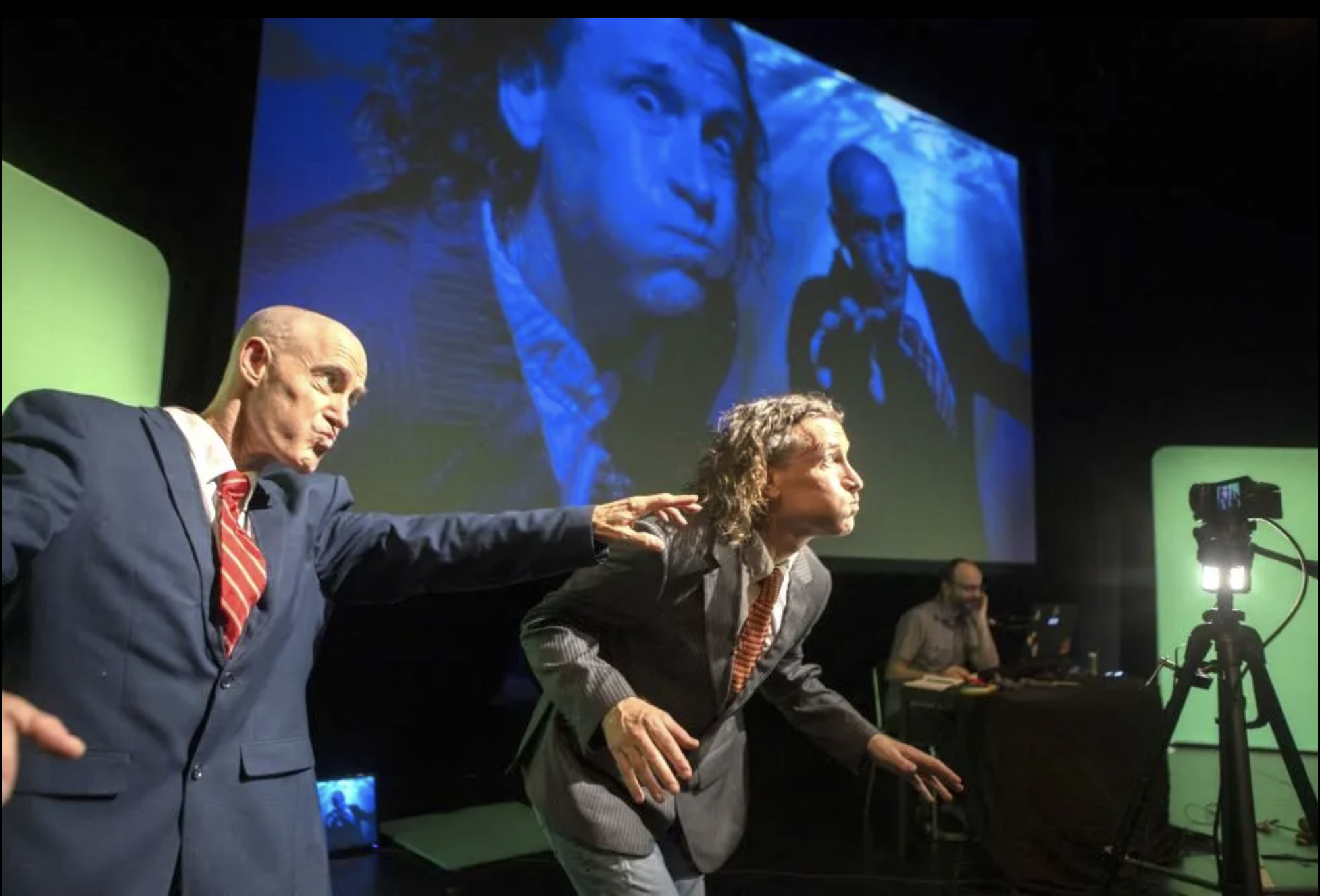
The Umbilical Brothers: The Distraction (Assembly)

‘An amorphous mass of nonsense – but brilliantly so!’

THEATRE

Bacon (Summerhall)

‘A whip-smart, tightly-constructed duologue…’

The Grand Old Opera House Hotel (Traverse)

‘Part slapstick, part comic-opera, part mad-as-a-box-of-frogs spectacle, this is something you really don’t want to miss.’

Salty Irina (Roundabout at Summerhall)

‘Fresh and contemporary, all minimal props and non-literal interpretation…’

Dark Noon (Pleasance)

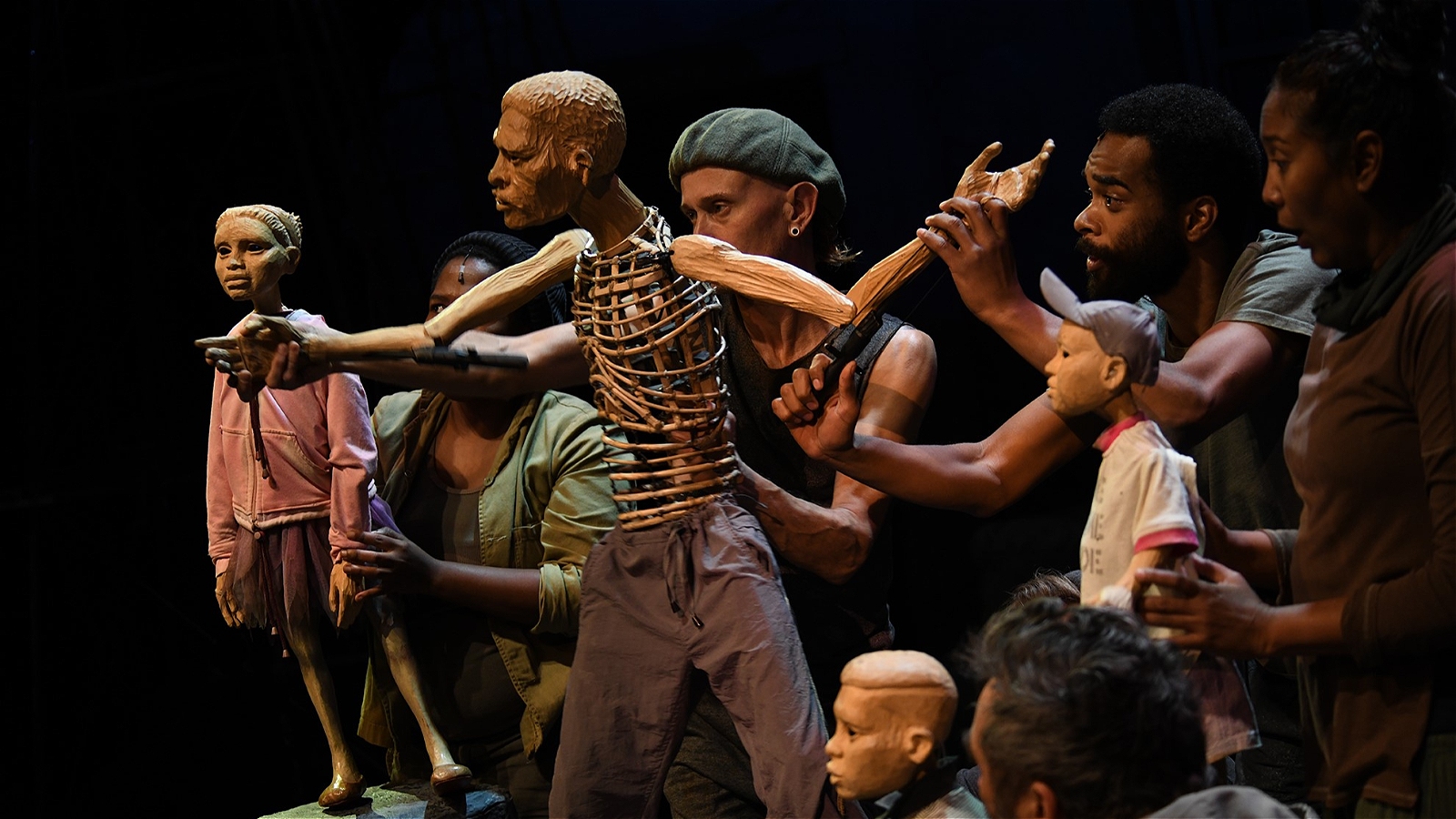
‘A unique piece of devised theatre, sprawling and multi-faceted…’

JM Coetzee’s Life and Times of Michael K (Assembly)

‘A gentle but powerful production…’

One Way Out (Underbelly)

‘The piece is brave enough not to offer a solution…’

SPECIAL MENTIONS

After the Act (Traverse)

‘We have to learn from what has gone before…’

Woodhill (Summerhall)

‘Though unnervingly bleak, this does offer a glimmer of hope…’

Things Hidden Since the Foundation of the World (Traverse)

‘The closest I’ve ever come to experiencing an acid trip in the theatre…’

Susan Singfield & Philip Caveney

One Way Out

24/08/23

Underbelly Cowgate (Belly Button), Edinburgh

One Way Out by Theatre Peckham’s NO TABLE productions is a deserving winner of Underbelly’s Untapped award, “a game-changing investment in early and mid-career theatre companies wanting to bring their work to the world’s biggest arts festival”. Hats off to Underbelly: if we want the Fringe to be an inclusive event, one that celebrates vibrancy and creativity, then financial support like this is a must. And One Way Out is certainly worth backing.

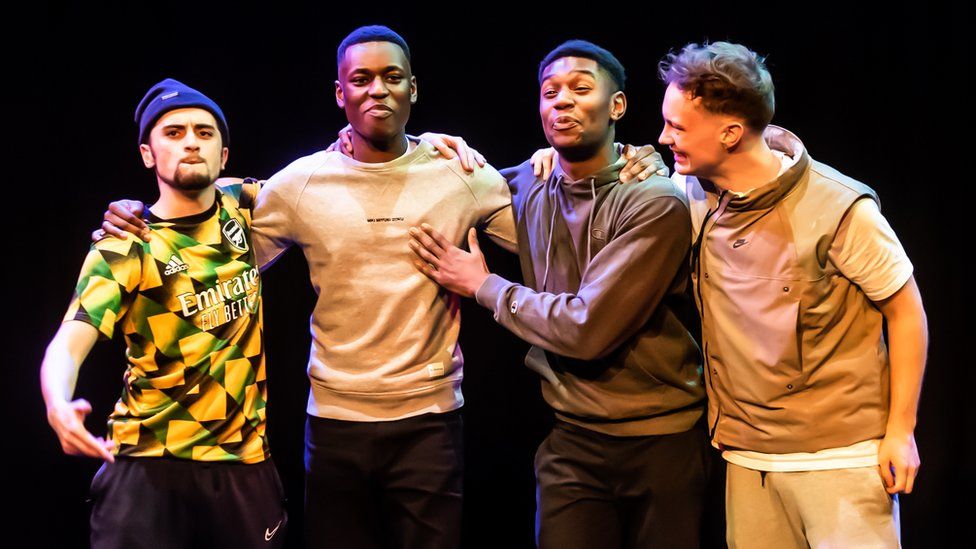
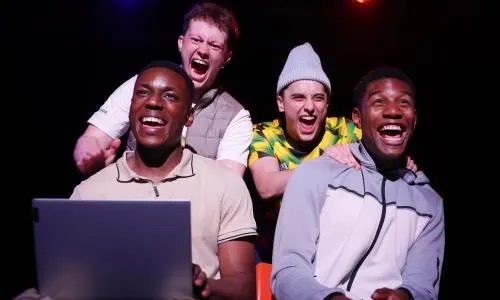
Written and directed by Montel Douglas, this is the tale of four friends, poised on the brink of adulthood, awaiting their A level results and planning their futures. The performances are high-octane; the direction bold and energetic. The boys are nervous about leaving school, but excited too. Tunde (Marcus Omoro) is focused on getting to university, the first step towards his dream of “a job with a suit”. Salim (Adam Seridji) plans on expanding his family’s business; his Uncle has one shop, but Salim will have many. Meanwhile, Paul (Sam Pote) is struggling academically. He does like performing magic tricks though. Maybe he could do something with that? Of the four, Devonte (Shem Hamilton) is the least certain of what he wants. He’s too busy worrying about his mum, who is on dialysis. Tunde is concerned about him. “You’re clever,” he tells his friend. “You’ve got to think about yourself as well as your mum. You should at least apply to university.”

But Jamaican-born Devonte’s UCAS application is his undoing. He doesn’t have the relevant documentation, can’t prove his leave to remain in the UK. He’s been here since he was nine years old, but now he’s being sent away…

Inspired by Douglas’s own memories of a cousin who was given a deportation notice at nineteen, One Way Out is a deceptively clever piece. Beneath all the fun and banter, all four young men are preoccupied with the question of what will happen to them, what their futures will look like. They’re dizzy with possibility. Devonte’s misfortune sends shockwaves through the group – and through the audience. It seems impossible that he should be uprooted against his will, torn from everything he knows – his friends, his sick mother – punished, as if he is a criminal. It should be impossible. Tragically, it is not. The Windrush scandal shames Britain, and Devonte’s plight highlights the atrocity. “It’s seventy-five years since the Windrush arrived,” Devonte says. “And seventy-five years since the NHS was founded. That’s not a coincidence.”

I like that the piece is brave enough not to offer a solution. There isn’t one. Three of the boys move on, for better or worse, into their adult lives, but we don’t find out what happens to Devonte because he’s gone. His friends’ efforts to save him fail. The system is brutal and its consequences dire. The audience just has to hope that Devonte will find happiness, and that Jamaica treats him better than the UK ever did.

4.3 stars

Susan Singfield

The Death of Molly Miller

10/08/23

Underbelly Cowgate (Big Belly), Edinburgh

Have you heard the one about the influencer and the thief? No, me neither. It sounds like the set-up for a joke, but it isn’t. Instead it’s the premise for Matthew Greenhough’s thought-provoking and, yes, funny play about penury and privilege.

As far as Tommy (Greenhough) can see, reality TV star Molly (Esther-Grace Button) has it all: a posh flat, designer clothes, an active social life and a gazillion followers. Tommy, on the other hand, has nothing. Desperate to clear his debts with a fearsome loan shark, he decides to burgle Molly. After all, what has she ever done to deserve such riches? He despises her, thinks she’s fair game. But if he thinks that Molly is an easy target, he’s got another think coming. Because Molly Miller didn’t get where she is by being soft…

Under Jonny Kelly’s direction, The Death of Molly Miller is a engaging piece of theatre, and Button in particular is great at eliciting laughs from tonight’s appreciative audience. Between her performance and Greenhough’s writing, Molly’s initially vapid character soon reveals hidden depths, and we see the bottle beneath the Botox. Tommy too is a complex, multi-dimensional man, although perhaps Greenhough’s performance is a little too frenetic at times; some stillness and relative calm would help to highlight the moments of panic.

Like Molly herself, The Death of Molly Miller seems superficial, but actually has a lot to say.

4 stars

Susan Singfield

Tink

05/08/23

Underbelly Bristo Square (Clover), Edinburgh

In this coming of age tale, a thoroughly modern Tink navigates the awkwardness of adolescence. This sassy young fairy is very different from that other Tinkerbell’s pal, Peter – she definitely wants to grow up. What she doesn’t want is to follow the trajectory of most fairies, getting smaller and smaller as she ages, until all her lovely light goes out. “I’m going to stay big forever,” she declares, aged five, picking up her guitar and delighting us with a song. She’s an accomplished player.

But of course, not even fairies are immune to the toxic messages imparted by the patriarchy, and teenage fairies struggle just as much as human girls when the whole world seems intent on diminishing their verve.

Wittily performed by Kat Kleve (who also wrote the songs), Tink is a charming piece. Kleve has a lovely singing voice and I’m glad she’s not prepared to shrink, to hide her light under a bushel and pretend she’s not as brilliant as she is.

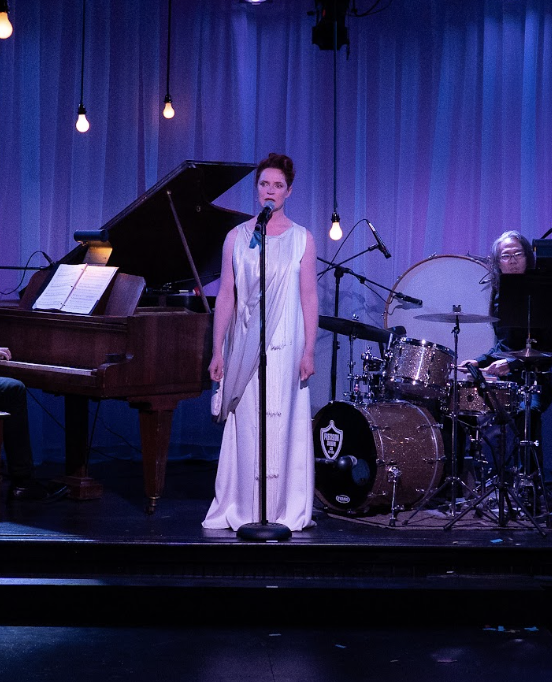
Co-writer and director Lizzy Connolly has forged a dynamic piece, making impressive use of the tiny space. The staging is very detailed and precise: I’m in the front row so I can see the intricacy of the beautifully sewn costume and the convincing magazine mock-up. The hanging bulbs are simple but effective, evocative of a fairy glen, as well as providing literal reminders of the metaphorical dimming that occurs every time Tink’s exuberance is quashed. 

There’s a little of Greta Gerwig’s Barbie about Tink, the same heady mixture of celebration and critique. Gen Z women are showing us that fairies and feminism can co-exist. It’s an exciting revelation, and this is a gently empowering show.

4 stars

Susan Singfield