Theatre

The Insider

21/08/25

The Pleasance Dome (King Dome), Edinburgh

We’ve reached that point in August where, when I see a fabulous show at the Fringe, I come away wishing I’d caught it earlier, all the better to extoll its virtues. Mind you, Teater Katapult’s The Insider is selling out the Pleasance’s 174-seat King Dome with apparent ease, so perhaps they don’t need any help from me.

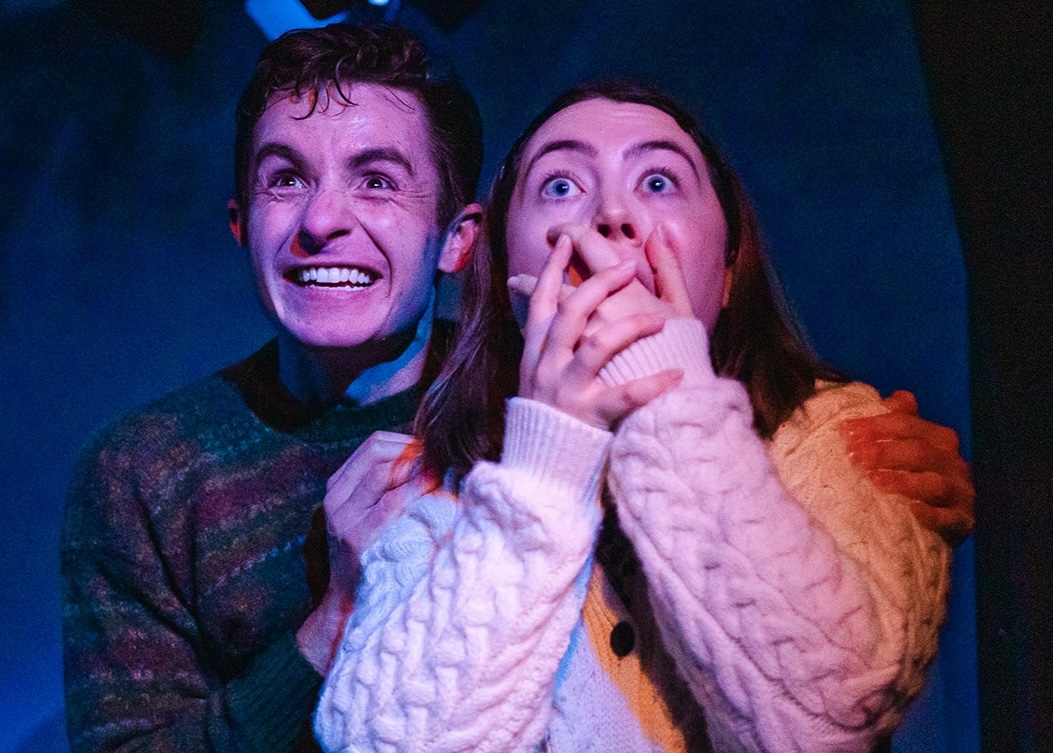
As we file into the performance space, we cannot help but notice actor Christoffer Hvidberg Rønje, dressed in a smart business suit, glaring balefully at us from the confines of a large glass cubicle, like some exhibit in a freakish zoo. He will not emerge from his enclosure until the play is done. As per our instructions, we all put on the stereo headphones we’ve been supplied with to be greeted by the sound of a blues performer singing about money and how he needs it really REALLY badly. (Well, we’ve all been there.) Then the lights go down on us, the glass box is illuminated and the play begins.

It’s 2017 and Hvidberg Rønje plays a banker – we are never given his name – involved in the Cum-Ex insider trading scam that resulted in high street banks losing billions of dollars. But now he’s been called to answer for his actions. The actor speaks his lines to a series of pre-recorded accomplices and inquisitors and, because it’s all filtered through headphones, every single utterance – every bump, squeak and scratch – is weirdly amplified in the crucible of my head. The result is totally immersive and weirdly compelling. It’s astonishing that somebody like me – a poster boy for dyscalculia – can be transfixed by a story about mathematics, but there’s no other adjective for the state in which I find myself.

That glass box where the story plays out could so easily be reductive, but the walls occasionally feature vivid projections and rows of information. Occasionally, Hvidberg Rønje draws on the glass with a white pen, illustrating how the great scam was achieved in ways that even I can understand.

The actor goes through a whole range of moods during the performance – the sequence where he makes his first ‘killing’ has him dancing around his enclosure in a drunken frenzy and performing a gymnastic leap from the top of a filing cabinet that makes me gasp – and, once again, that amplified sound system has us sharing every mood with him, from those early bouts of ecstatic glee to a sense of mounting paranoia as his malpractice is uncovered.

Brilliantly directed by Johan Sarauw, with sound design by Peter Albrectsen and Sun Tee Engelstoft, The Insider is quite simply mesmerising. If you can get hold of a ticket for one of its last few performances, I urge you to do so. You’ll be watching one of the Fringe’s most original productions.

5 stars

Philip Caveney
Ghouls Aloud: Elysium

20/08/25

Appleton Tower, (Ruby)

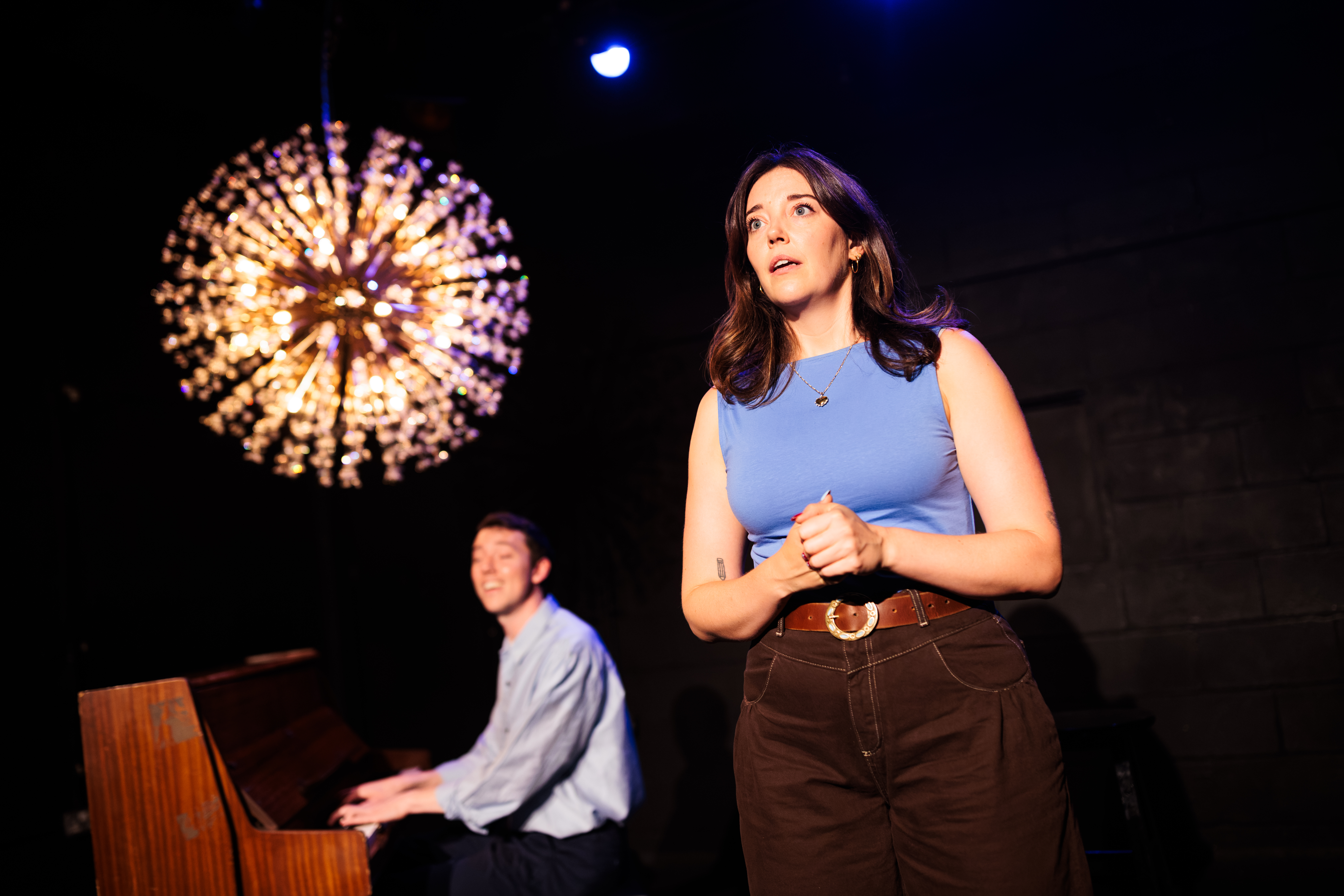
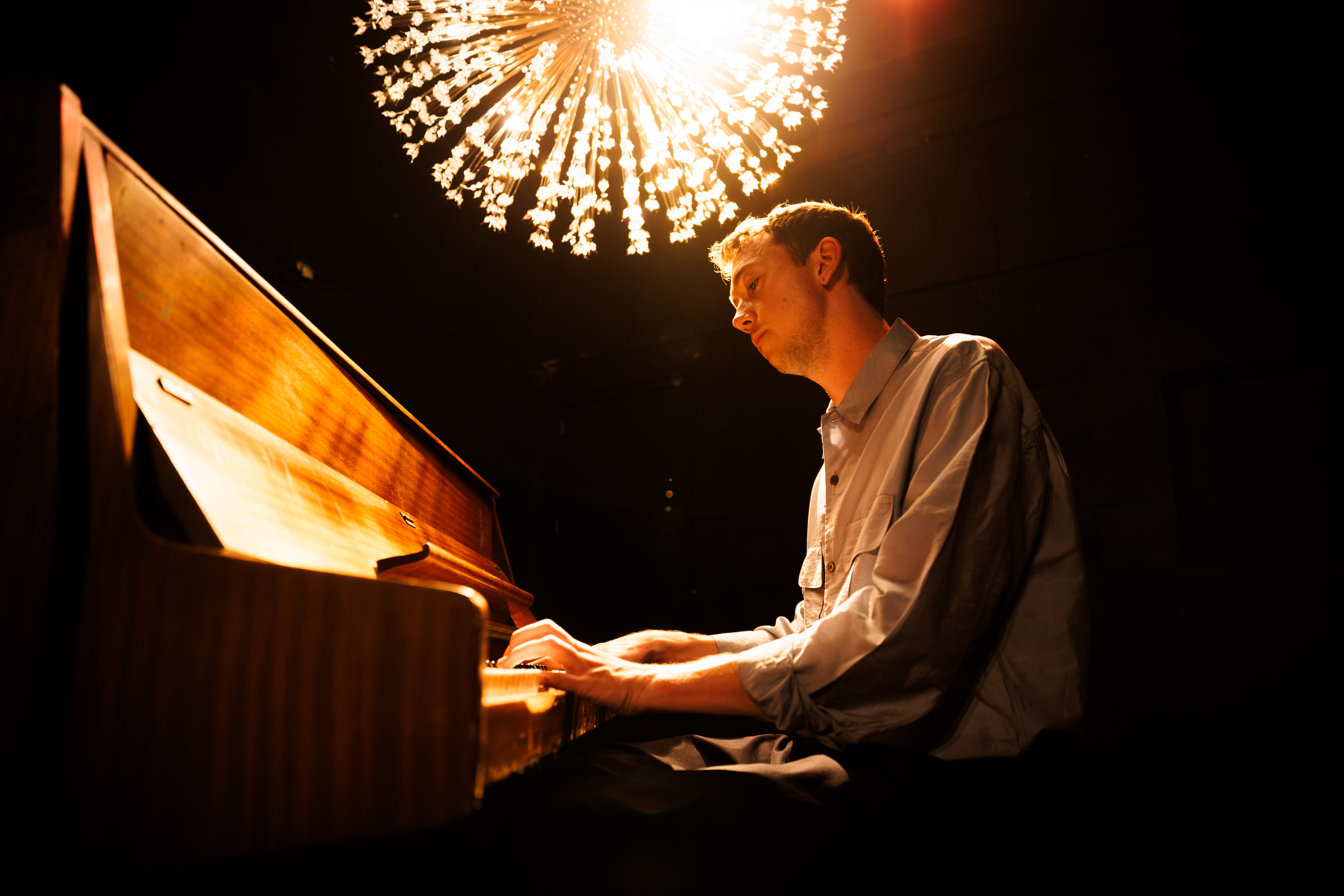
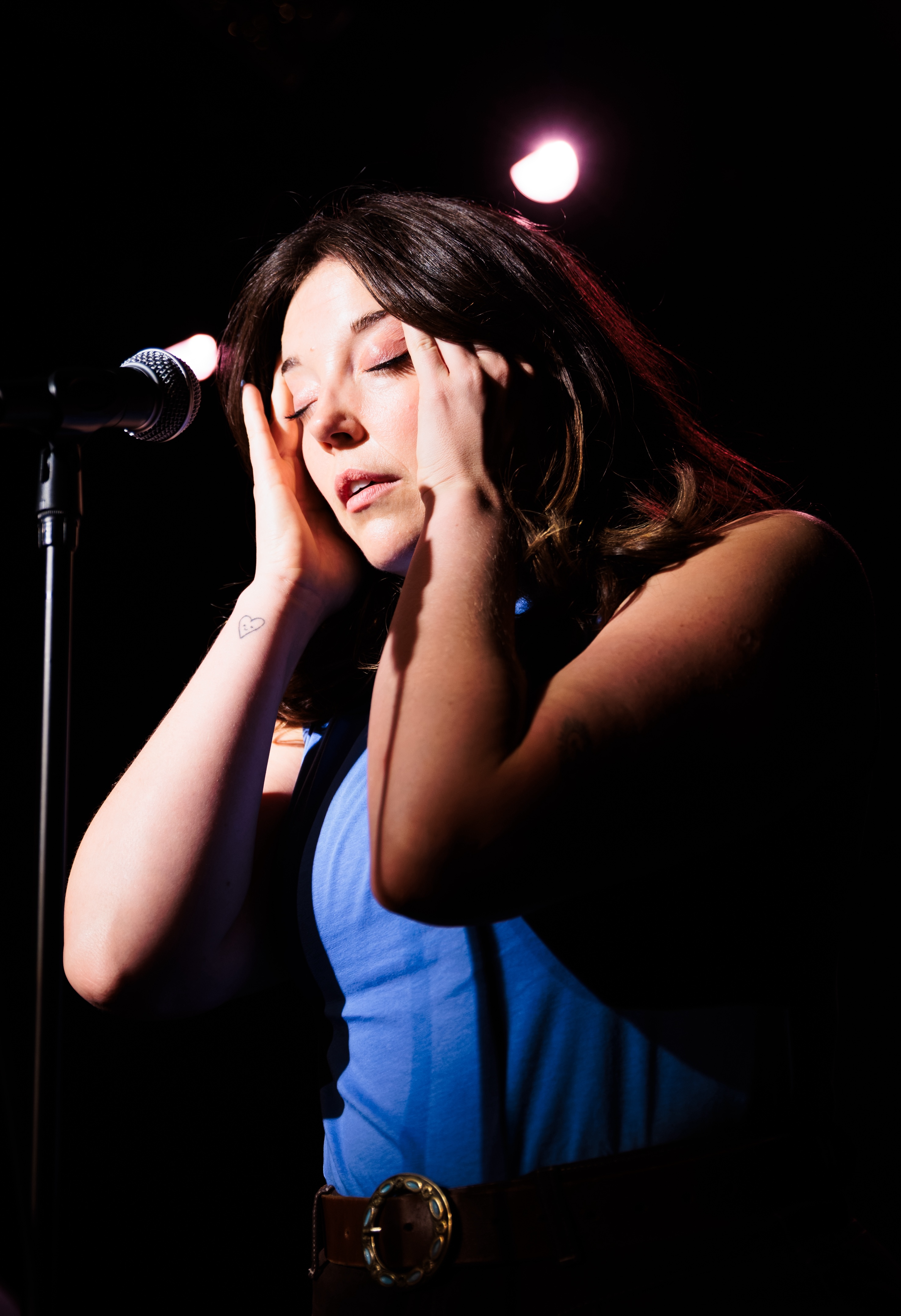
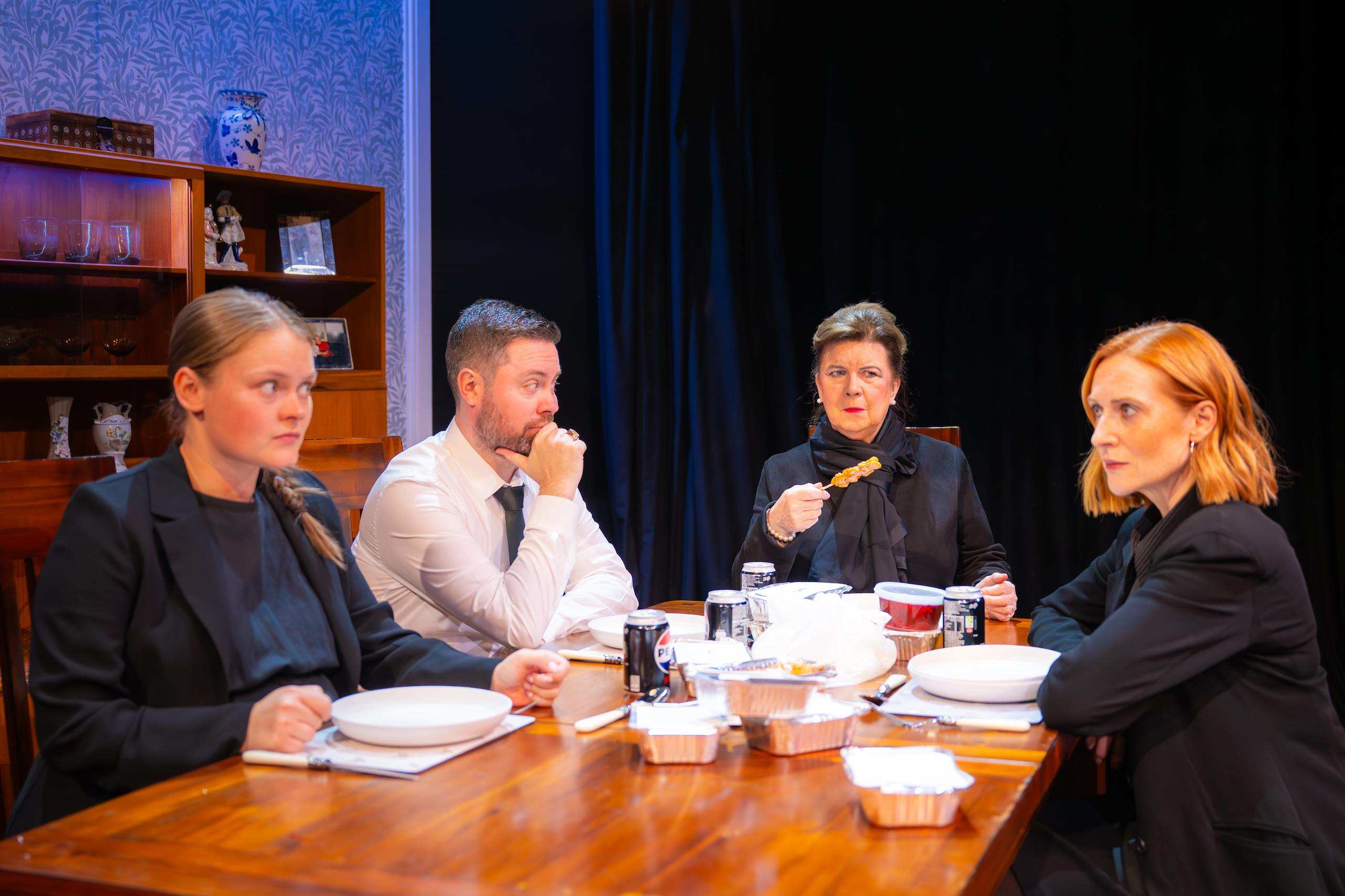
In the final week of Fringe 2025, it’s gratifying to chance upon an act that feels quite unlike anything else we’ve seen this year. Ghouls Aloud are Milly Blue and Jessie Maryon Davies, the former a singer/storyteller, the latter a musician. The show begins in straightforward fashion with a song, Blue accompanying herself on acoustic guitar, before breaking off and launching into a story, described by its creators as contemporary horror. It is, I suppose, a piece of gig theatre.

It’s the tale of a young couple who, with their new baby, move into the protective surroundings of Elysium Fields, a gated community somewhere in prosperous South London. ‘The woman’ (we don’t learn her name) likes the feel of their new home – with one exception. The little garden at the back of their house is covered with a layer of astroturf, and she vows to remove it to plant vegetables and wild flowers.

But she will learn that Elysium Fields has a dark history and there are things in its soil that might better be left undisturbed…

Blue becomes the central character of the piece and also personifies a clutch of others in and around Elysium Fields: friends, neighbours, the odd gatekeeper who the residents call ‘Penfold.’ Blue switches accents and mannerisms with great skill, so there’s never any doubt who she is portraying at any given moment. Maryon Davies also chips in with lines of dialogue, whilst supplying original keyboard compositions, ranging from beautiful melodic ballads to eerie, unsettling soundscapes as the tension begins to build.

Occasionally I find myself distracted by a few too many complications, minor characters who don’t really add enough to the narrative to earn their place, however skilfully they’re portrayed – and I’m not entirely convinced that a subplot that talks about the conflict between Israel and Gaza is a comfortable fit here – though arguably, that may be the point.

But I do admire the ambition of Elysium and the distinctive ways in which the duo go about telling the central story. If I am reminded of anyone, it’s the much-missed Will Greenway, who, for several years was a must-see at the Fringe and who also has a highly individual way of creating a story with music – albeit much more gentle than this. Overall, I find this compelling enough to keep me hooked right up to the unsettling final scene – and I’ll be interested to see what Ghouls Aloud come up with next.

4 stars

Philip Caveney
Alone

19/08/25

Assembly George Square (The Box), Edinburgh

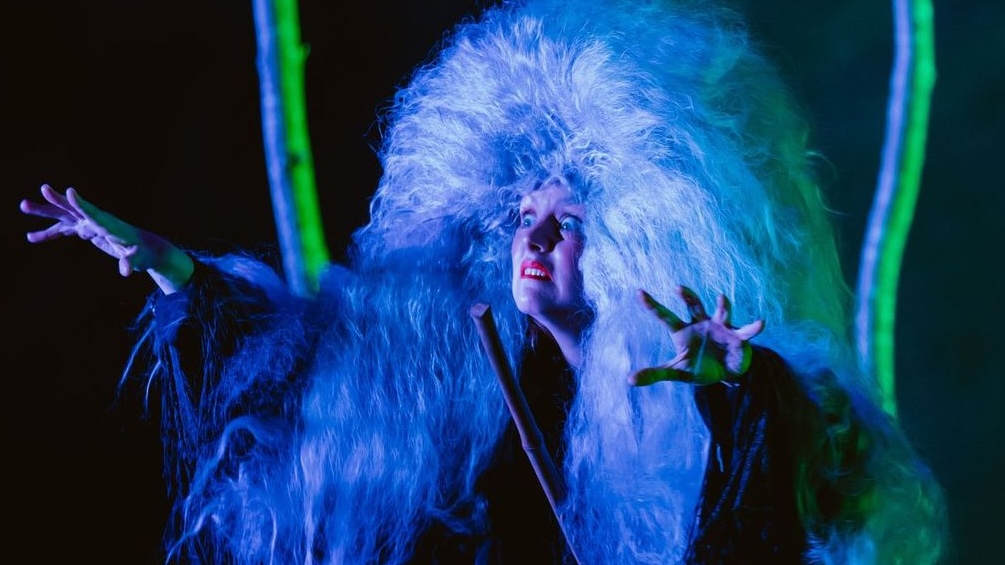
Writer-director Luke Thornborough’s Alone has been selling out the Assembly’s tiny Box theatre, and it’s easy to see why this intense two-hander is benefitting from great word-of-mouth. Co-directed by Stuart McDougall and performed by Alchemy Theatre, it tells the tale of a couple of astronauts stranded in a failing spaceship, facing their inevitable doom. Even though there are two of them, it’s hard to imagine a more lonely scenario, and the theme of isolation is explored in great detail.

Dr Sarah Taylor (Anthea Freya Hill) is a climate scientist, collecting extra-terrestrial bacteria in an attempt to reduce carbon dioxide back on Earth. Jessica Holland (Courtney Bassett) is her pilot, tasked with keeping the spacecraft on course. They don’t have much in common – they are definitely colleagues rather than friends – but, over time, they have settled into an uneasy alliance. But now, five years into their mission, with everything spiralling out of control, they are really put to the test…

The set, originally by Courty Kayoss (this version designed and built by Indrid Heron), is ingenious: convincingly techy, despite, on closer inspection, comprising mainly painted wooden panels and shiny bolt locks. It’s chaotic without being overwhelming, highlighting the enormity of the women’s work, while still allowing for small-scale, precise actions. It’s immersive too, especially when the smell of cooked noodles pervades the room.

Bassett and Hill deliver flawless performances, their chalk-and-cheese characters both utterly convincing. Taylor’s earnest obsession contrasts nicely with Holland’s down-to-earth approach, and there’s something really endearing about the latter’s excessive ketchup consumption, her sole home comfort confined to a squeezy bottle. As the tension rises and cracks begin to appear in both the spaceship and the women’s relationship, I find myself spellbound by their moral quandaries, wondering where they will draw the line.

And the ending is perfect.

Holland’s wrong about The Smiths though: their lyrics are glorious.

4.6 stars

Susan Singfield

The Alchemy of Sadness

18/08/25

Space@Niddry Street, Edinburgh

Thiago (Oscar Fabela) works at a major public relations firm but, when we first meet him, he’s stuck at home, talking via his laptop to HR operative, Aurora (Kristen Tarrago). There has been an ‘issue’ between Latino Thiago and his pushy white boss, Liam (Zachary Story), one that has resulted in Thiago being ousted from his long-established post.

But who is to blame? Liam’s relationship with Thiago has alternated between staring at him in silence, openly flirting with him and then yelling at him to shape up. Thiago doesn’t know how to deal with these wildly contrasting attitudes. What does Liam actually want from him?

It doesn’t help that the two men have recently been handling the comeback of a notorious celebrity chef, who has been widely criticised and publicly shamed for his adversarial relationships with his own workforce. Thiago’s suggestion to base the chef’s return around the launch of a new menu centred on the concept of ‘gratitude’ has been well received by everyone who hears about it – including the chef himself. But since Thiago came up with the concept, why is Liam taking all the credit?

Written by Alex Garcia Lagua (inspired by his own time as a restaurant supervisor) and directed by Leticia Mora, this tight little three-hander examines the toxic environment of the office and the various ways in which people can find themselves exploited by their seniors. Furthermore, who owns an idea? The person who first thought it… or that person’s boss? Both Fabela and Story convince in their respective roles, while Tarrago doubles as the ultra-corporate Aurora and as Thiago’s no-nonsense work-mate, Mari.

I like that the drama is relatively low key. This isn’t some massive world-shaking event: instead, it’s entirely credible, the kind of issue that can be found in any workplace and which can profoundly affect the lives of those who suffer through it.

4 stars

Philip Caveney
Tom at the Farm

17/08/25

Pleasance at EICC (Lennox Theatre), Edinburgh

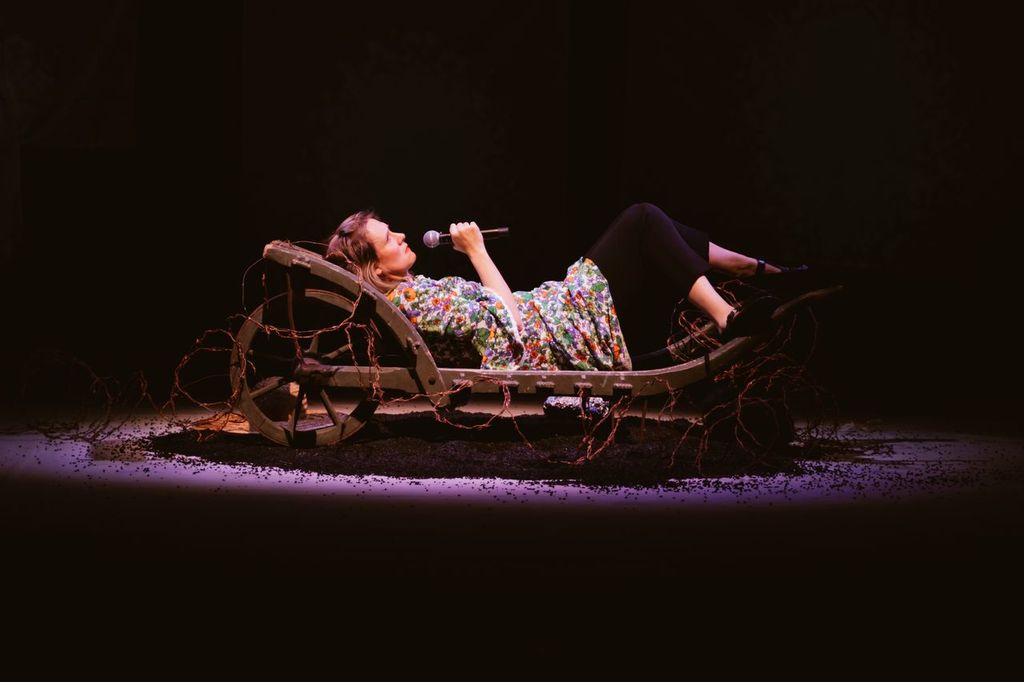
I have high hopes for this critically-acclaimed Brazilian adaptation of Michel Marc Bouchard’s Tom at the Farm. The eponymous Tom (Armando Babaioff) is grieving: his boyfriend, Paul, has recently died in a car accident. Paul will be buried in the rural town where he was raised, so advertising executive Tom leaves the big city behind and makes his way to the remote family farm. But he soon discovers that he isn’t welcome there: Paul’s mother, Ágatha (Denise Del Vecchio), doesn’t know that her son was gay, and his homophobic older brother, Francis (Iano Salomão), is determined to keep her in ignorance. Francis is a brutish, unreconstructed kind of guy, and his threats feel very real. Tom agrees to say nothing, so long as he can attend his lover’s funeral.

Just a few years ago, the plot might have seemed outdated: LGBTQIA+ people in Brazil have had their rights enshrined in law for many years; surely closeting has long been relegated to the past? Sadly, however, this 2011 play is all-too relevant again, as regressive regimes gain strength around the world – and none more so than Bolsanaro’s Brazil. It is no longer a safe place for the queer community, whatever their law says.

So this Cena Brasil Internacional production, directed by Rodrigo Portella, has an important message at its heart: homophobia is toxic and damaging, corrupting everything it touches.

However, I’m not as immersed in the story as I want to be. The vast Lennox Theatre feels too big for four actors, the audience too far away from the action. The staging is simple, relying on the buckets of mud and muck that engulf the space, but it’s all at such a distance; even in the front row, I’m in no danger of being spattered, or pulled in like Tom. I find myself reminiscing about a student production of The Lieutenant of Inishmore I saw back in 2014, where we were herded into a tiny room and given bin-bags to put over our clothes to protect them from the bloodshed. Tom at the Farm needs more of that: what’s the point in all the spitting and fighting and slipping and sliding if the audience experience is sanitised?

I have three other bugbears and they are both with the script. First, Sara (Camila Nhary)’s arrival unbalances the play: it’s too late and precipitates nothing. Second, the climactic, most exciting moment occurs offstage, and is merely recounted to us, which seems especially peculiar in such a carnal production. Third, I’m just a bit over the whole sophisticated city slickers vs. boorish country folk cliché.

Despite all this, there is still a lot to admire here: the performances are angry and raw, the actors’ physical commitment unwavering. The lighting (by Tomás Ribas) is stark and uncompromising, transfixing Tom as effectively as a proverbial deer, illuminating the dark heart of the farm. I like the use of golden English subtitles translating from the spoken Portuguese, and the unfurling of the Pride flag during the final bows.

Tom at the Farm is a haunting howl against prejudice, and a timely reminder that we have to keep on fighting the good fight.

3.4 stars

Susan Singfield

Mariupol

17/08/25

Pleasance Courtyard (Beneath), Edinburgh

Katia Haddad’s two-hander is an epic tale of love and loss spanning thirty years, exposing the quiet horrors of war: the tendrils that insinuate their way into ordinary people’s lives, strangling their hopes for happiness.

It’s 1992, a year after the dissolution of the USSR, when “Steve” and Galina (Oliver Gomm and Nathalie Barclay) meet at their friends’ wedding in the titular Ukrainian city. Steve (real name: Bondarenko, nicknamed for his karaoke renditions of Stevie Wonder songs) is a well-travelled naval officer, while Muscovite Galina is a literature student, who has so far only dreamed of seeing foreign lands. “You’re in a foreign land,” Steve reminds her, and he’s right: Ukraine is now an independent state. But it doesn’t feel foreign to Galina: “We speak the same language,” she says. And indeed they do, in more ways than one. But, after a whirlwind holiday romance on the picturesque Belosarayskaya Sandbank, it’s time for the two to say goodbye and return to their ‘real’ lives.

Three decades later, Russia invades Ukraine. Galina’s teenage son, a member of the Russian army, is captured by Ukrainian forces in Mariupol. She’s desperate to rescue him – and can only think of one person who might be able to help. But can Steve – who has lost everything and is fighting for his country’s very existence – really be expected to come to the aid of an enemy soldier?

Gomm and Barclay are both perfectly cast, delivering heartfelt but understated performances, which feel totally authentic. They seem to age before my eyes, and it’s impossible not to empathise with these two regular Joes, who ought to be free to focus on more mundane problems. Directed by Guy Retallack, Mariupol is an expertly-crafted piece of theatre, starkly illustrating the brutality of war without ever sensationalising it. Hugo Dodsworth’s monochrome video projections emphasise the awful devastation in Ukraine.

Of course, the ongoing nature of this particular conflict adds real urgency to the production, and I find myself crying as the dreadful human cost is laid bare. But tears are not enough. The play supports the David Nott Foundation, which trains doctors in countries impacted by conflict – including Ukraine – and I feel compelled to make a donation as soon as I get home. If you’d like to do the same, you can do so here: https://davidnottfoundation.com/.

A deeply moving and important play, Mariupol is horribly relevant but beautifully drawn.

4.7 stars

Susan Singfield

1984

17/08/25

Pleasance Courtyard (Above), Edinburgh

We first chanced upon the work of theatre company Box Tale Soup at 2023’s Fringe, where we were impressed by their intriguing adaptation of MR James’ Casting the Runes. If 1984 seems like an ambitious step-up in scale, we needn’t worry. All of the company’s impressive tricks are deployed to great effect to bring George Orwell’s dystopian masterpiece to the stage.

For starters, there are those distinctive-looking puppets, sometimes external representations of the people who carry them – which makes me think of the masks we so often choose to display to the world – and in other instances, they are characters in their own right.

The story of Winston Smith (Mark Collier), his forbidden romance with Julia (Antonia Christophers), and his ultimate torture at the hands of O’Brien (Noel Byrne), is so universally known, it seems pointless to say too much about the storyline; suffice to say, this adaptation leaves nothing out – and it’s also chilling to acknowledge that in today’s turbulent world, Orwell’s warnings about totalitarianism seem more relevant than ever.

The inventive ways in which this familiar story is told are so intriguing and immersive that I never suffer from the common problem of knowing what happens next – each successive scene has some new detail to marvel at. The performances from all three actors are compelling and the complex set in which the drama unfolds is so skilfully manipulated and rearranged as the story progresses that the pace is never allowed to flag.

From the very beginning I’ve been aware of a set of closed doors at the back of the stage – and when the doors of Room 101 are finally opened, this powerful adaptation exerts an even more chilling grip on its spellbound audience.

Before I go, one question. How many fingers am I holding up?

4.6 stars

Philip Caveney
Fly, You Fools!

16/08/25

Pleasance Courtyard (Beyond), Edinburgh

New York-based theatre company Recent Cutbacks specialise in producing no-budget parodies of epic films. Last year, their Hold Onto Your Butts (an unlicensed version of Jurassic Park) gave us plenty of cheap laughs and, as predicted in our review, they’ve returned with that show – and also a companion piece, Fly, You Fools!, their interpretation of Peter Jackson’s The Fellowship of the Rings.

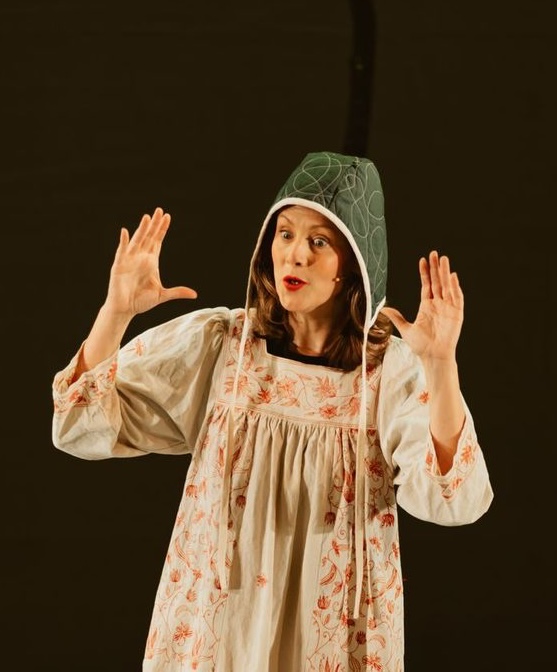
Three performers – Nick Abeel, Kyle Schafer and Regan Sims – team up with Foley artist Kelly Robinson, plus a collection of props that look like they’ve been salvaged from the back of a wardrobe, and do their damnedest to perform a version of the movie for a packed crowd at the Pleasance.

I have to confess to being a fan of the Rings trilogy, which for three years of my life were a birthday go-to for me and my daughter – but I can’t deny that they have more than their fair share of pomposity and illogical happenings, which makes them fair game for a debunk. Clearly today’s audience is in full agreement. There’s raucous laughter as the performers switch from character to character and height to height, doing their level best to depict Frodo and his crew making their way to Mordor – or as they prefer to say it, Morrrrrrdddddoooooor.

And yes, that most pertinent of questions does get a mention: why didn’t they just fly there there on the back of an eagle and save themselves a lot of hassle?

The story was developed by Matt Zambrano and directed by Kristen McCarthy Parker. It’s a fun way to spend an hour but is it as strong as HOYB? For my money, Fly, You Fools! doesn’t er… land quite as effectively as its predecessor – a lengthy sequence featuring crap shadow theatre slows down the pace somewhat – but there are close to three hundred people at Beyond who appear to be having the time of their lives.

Mission accomplished. (Now there’s a franchise they might have some fun with…)

3.8 stars

Philip Caveney
Macbeth

16/08/25

Zoo Southside, Edinburgh

The last thing we need to see is another version of Macbeth. And yet, when Barden Party’s bluegrass adaptation is recommended to us, we somehow can’t resist. So here we are, coffee in hand, ready to spend our Saturday morning in the company of cowboy-witches, banjo players and a murderous would-be monarch.

This is the most fun rendition of the Scottish play I’ve ever seen: it’s a rambunctious, in-yer-face musical, and the seven-strong cast are having a blast. The “travelling troupe from New Zealand” usually perform outdoors, often in people’s gardens, but they’re clearly very adaptable, making the most of Zoo Southside’s tiny black-box theatre space.

The genders are switched: Macbeth (Laura Irish) receives a prophecy from two weird brothers (Caleb James and Wiremu Tuhiwai). Egged on by her husband (Ollie Howlett), she murders Queen Duncan (Tara McEntee) and ascends to the throne. Frightened for her life, Duncan’s daughter, Malcolm (Kit Berry), flees to England but, although he is suspicious of Macbeth, Banquo (Criss Grueber) remains loyal to his friend – and we all know where that leads. The gender-swap doesn’t change anything much, but it does add to the feeling of irreverence: this production isn’t bound by any stuffy idea of what Shakespeare ‘ought’ to be. This is pure entertainment – and yet it remains true to the heart and spirit of the bard’s script.

It’s great to see an actor who uses a wheelchair in such an active role: Grueber’s Banquo is a fierce soldier, celebrated for his prowess on the battlefield and more than ready to show off his fighting skills. Meanwhile, James and Boyle are terribly unsettling as the cowboy-hatted witches, writhing across the stage and screaming in our faces. (At one point, Philip screams back.)

This is very much an ensemble piece, but Irish and Howlett are compelling in the central roles, Irish’s intensity ensuring that we mourn the woman Macbeth might have been, before her corruption. I especially like the way that McEntee exaggerates Duncan’s ego, as she forces people to laugh at her jokes, i.e. the dodgy puns that proliferate in Shakespeare’s dialogue.

The music is lively and engaging, switching from propulsive up-tempo toe-tappers to plaintive ballads at the drop of a stetson.

Murder has never been so full of life.

4.8 stars

Susan Singfield

Lachlan Werner: Wondertwunk

15/08/25

Pleasance Dome (10 Dome), Edinburgh

Originality counts for a great deal at the Fringe and I have to say that Lachlan Werner has that commodity in spades. We’re here to catch his act mostly because a publicist we work with casually mentioned that she thought it would be ‘right up our street.’ The fact that it so definitely is probably says something about us, because this is utterly weird – but, I should add, in a good way. And it’s clear from the audience reaction that we’re far from the only ones delighted by what we’re viewing.

Werner plays Jack Hammer, the Strongest Boy in the World. He might not look the type to be lifting weights and bending steel bars, what with his impeccably-plaited curls, his grotesquely-painted features and his cupids-bow lips; and yet, thanks to some shonky-looking props, he manages these macho skills with ease. He performs every night in a circus owned by his clearly dodgy dad (depicted by a monstrous life-sized puppet), and his only friend in the world is a talented sea lion called Slippy, who, it turns out, can balance wine glasses on his nose.

Werner is a gifted ventriloquist, able to switch from his own cartoonish little voice to his dad’s gruff tones (or the distinctive bark of a sea lion) with apparent ease – and, while on paper the ‘jokes’ are simply a string of lame puns and outlandish boasts, there’s something so utterly beguiling in Werner’s delivery that I find myself laughing helplessly along from start to finish.

There are elements of horror in the story which put me in mind of the theatre of Grand Guignol, as Jack slowly begins to uncover grisly secrets about his father and, ultimately, himself. A guy from the audience is invited onto the stage to become his assistant and ends up as the object of his affection, an integral part of the show, as Werner flirts outrageously with him. By the show’s final stages, the entire audience is cheering Jack on, wanting him to to vanquish the powers of evil, to find a new identity and a suitably happy ending.

This show takes me completely by surprise and I’m fairly confident that other first-timers will have the same experience. One thing’s for certain: unless you’re already a fan of Lachlan Werner, you won’t have seen anything quite like it before. It’s sublime.

5 stars

Philip Caveney