
Month: July 2026

The Odyssey

18/07/26

Cineworld, Edinburgh

‘See it on the biggest screen possible.’

Advice we’ve often given and something we had every intention of following ourselves in the case of Sir Christopher Nolan’s latest release. But, for the first time ever, finding an empty seat in an IMAX screening in Edinburgh proves impossible – unless we’re prepared to sit in the very front row. (Done that once, never again.) This development is simultaneously annoying and wonderfully heartening. Perhaps that much-rumoured resurgence in cinema attendance, fuelled by the likes of Obsession and Backrooms, is actually gathering momentum. Or is it just Nolan’s astute handling of the movie’s advertising, coupled with the Oscar success of Oppenheimer that has led to this stampede for tickets?

Whatever the reason, we decide to book in for a standard screening. We’ll revisit in IMAX sometime in the near future. Providing it’s any good, of course. Despite widespread critical acclaim, the online vitriol poured on the film by people who haven’t actually seen it yet means that this one has much to prove. And happily, it passes every test with flying colours.

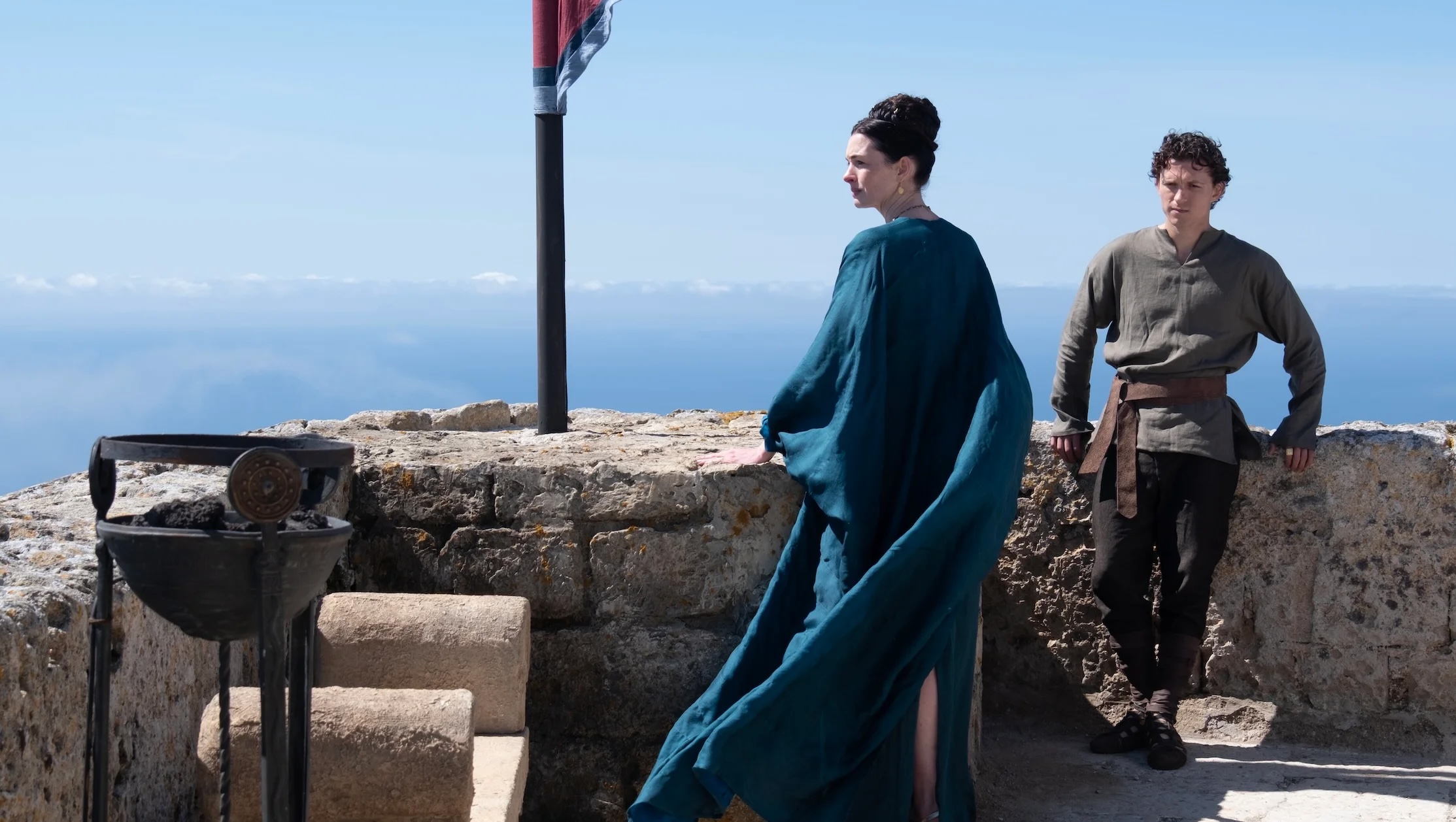
We all know The Odyssey, of course. Homer’s epic poem is still the bane of many young students’ lives as they are obliged to read their way through its meandering stanzas, which focus on the twenty year ordeal of its central character, Odysseus (played here rather wonderfully by Matt Damon). Our hero, forced for the first decade to play a key role in the siege of Troy, then has to spend the next ten trying to find his way back to Ithaca, where his faithful wife, Penelope (Anne Hathaway), and his loyal son, Telemachus (Tom Holland), still await his return.

But to get to them, Odysseus and his crew must take on all manner of obstacles: the giant cyclops, Polythemus (Bill Irwin); the powerful witch, Circe (Samantha Morton); the Lotus-dispensing Calypso (Charlize Theron); and, most egregious of all, the Ocean – which, because Odysseus has annoyed Poseidon, is determined to send them all to a watery grave.

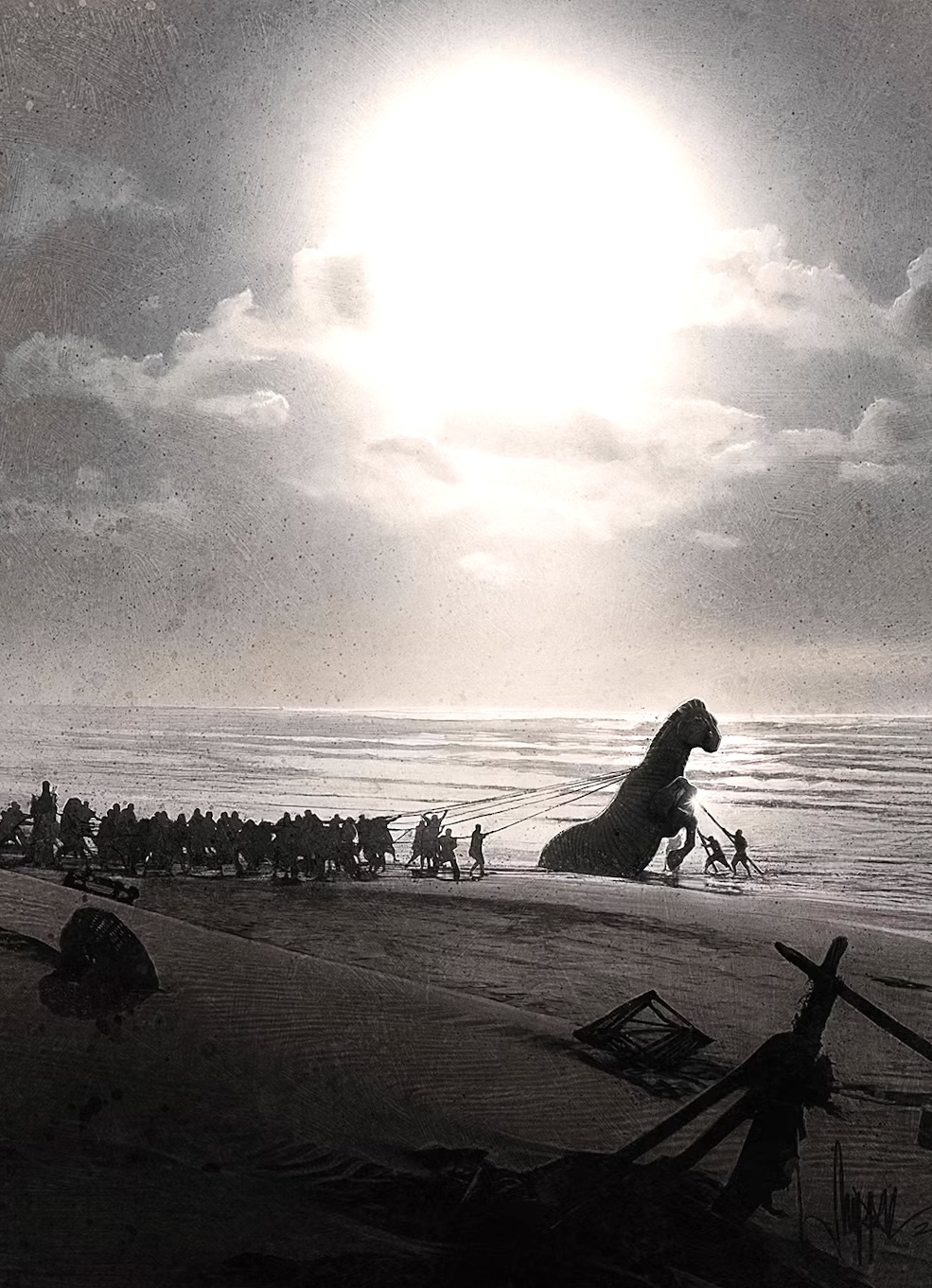
With a running time just short of three hours, this could be a ponderous affair but Nolan (who also adapted the screenplay from the original poem) employs an ingenious non-sequential approach, cutting effortlessly back and forth across the passing years to ensure that no particular sequence overstays its welcome. What’s more, even though most of the situations are familiar from earlier versions of the story (the 1954 Ulysses starring Kirk Douglas springs to mind, as do several of the films featuring the work of stop-motion genius Ray Harryhausen), Nolan always manages to put a different spin on proceedings.

Of course, a tale as packed as this one is sure to have its more memorable sections. The scene where Odysseus and his men are locked in a cave with the aforementioned Polythemus is a particular standout, as is Circe’s transformation of Odysseus’s crew into swine. She uses a hands-on approach like a potter moulding clay, the sequence employing old-school practical effects that recall the work of the legendary Rick Baker.

And if you’re a fan of an enormous climactic dust-up, well, I don’t think you’ll be left feeling short-changed.

The cast is stellar with many big names popping up in minor roles. Robert Pattinson proves once again that he is a terrific actor as the oily, scheming Antinous and all hail to John Leguizamo as the ever-faithful Eumaeous. Much has been made of the casting of Elliot Page as Sinon and Lupita Nyong’o as Helen of Troy, with incensed commentators complaining about ‘authenticity’ as though this is a historical piece rather than a slice of weird fantasy, but both actors give strong performances that more than justify their casting. Oh, and by the way, those American accents serve as a commentary on the current world order, which – when you think about it – makes a lot of sense.

Perhaps the most original addition here is the clarification of just how much two decades of havoc have taken their toll on the central character. In the film’s final section, as Odysseus recalls the cruelty and bloodshed visited upon the people of Troy, this feels increasingly like the recollections of a man suffering from PTSD, finally emerging from a lotus-induced fog and forced to confront the pain his decisions have inflicted on those who followed him.

Make no mistake, this is a superb film: assured, inventive and directed by a man at the very top of his game. I haven’t always loved Nolan’s films but this may just be his masterpiece. Buckle in and get those IMAX seats booked… if you can find them.

5 stars

Philip Caveney

The Last Viking

15/07/26

Filmhouse, Edinburgh

The Last Viking begins with the opening pages of a dark storybook for younger readers – though shortly thereafter it becomes the kind of thing that really wouldn’t be deemed suitable for anyone under the age of 15. It’s essentially a (very) black comedy that occasionally makes me feel guilty for laughing at the frenetic action that ensues the moment we’re out of the pages of that book – largely because the ‘comic’ elements stem from the erratic behaviour of people with various kinds of mental illness.

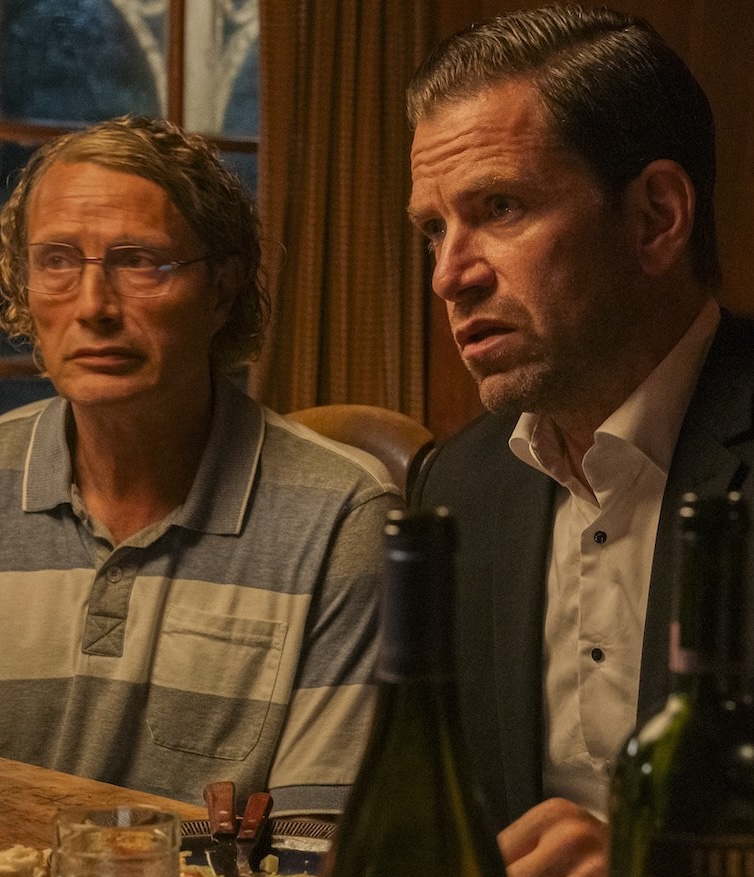
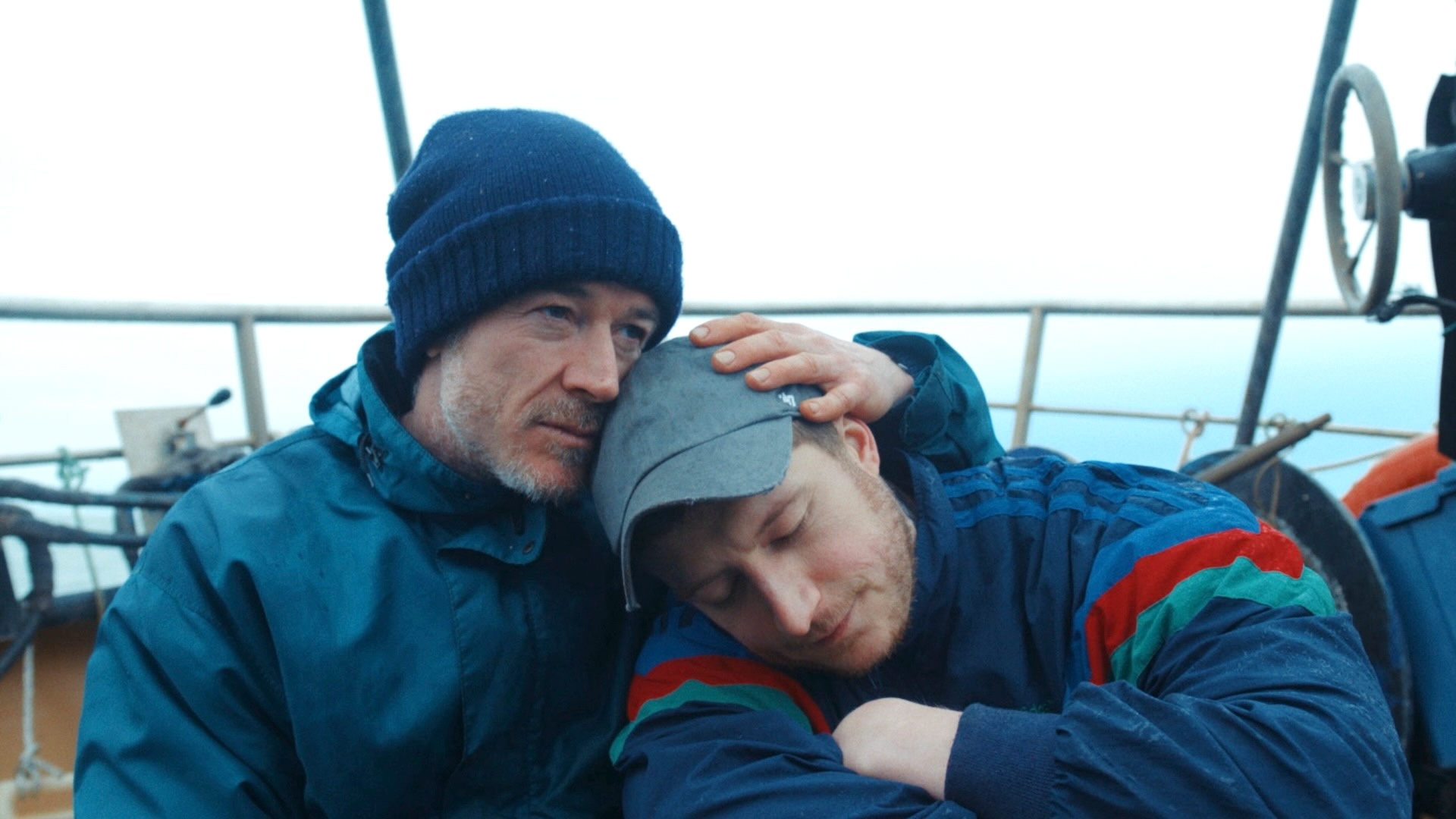
Anker (Nikolas Lie Kaas) is one of the few ‘sane’ characters in the story, though when we join the action, he has done something very bad. He’s been involved in a violent bank heist where somebody was killed and he’s currently toting a bag containing a lot of stolen money. As the police begin to home in on him, he heads to the flat where his sister Freja (Bodil Jørgensen) and his younger brother Manfred (Mads Mikkelsen) both live. Anker instructs Manfred to take the bag and bury it in the woods near their old family home – but back in his youth, Manfred suffered abuse from his disciplinarian father and as a result has become fixated on Vikings and Nordic runes, so it isn’t always clear if he’s actually got the message.

Shortly thereafter, the police arrive and Anker goes to prison for fifteen years. On release, he heads back to the flat, eager to get his hands on that stolen money, but in Anker’s long absence, Manfred has taken several turns for the worse and is now suffering from dissociative identity disorder. He thinks he’s John Lennon and any mention of his real name causes him to throw himself out of a moving vehicle or through the nearest open window. What’s more, when Ankers asks him about the buried money he seems to have no recollection of it.

At the hospital where Manfred is recovering from his latest tumble, Ankers encounters psychiatrist Lothar (Lars Brygmann) who mentions that there are other patients who believe themselves to be members of the Beatles. Why not put them together with Manfred, he suggests, to see if working as a member of a group might help him recover his memory? (I know. As unlikely premises go, this one is up there. But stick around, there’s more.)

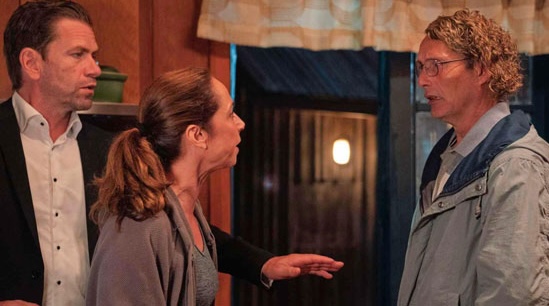
Ankers and Manfred head for the family home, which is now an Air B&B owned by failed author, Werner (Søren Malliing) and failed model, Margrethe (Sofie Gråbøl of Nordic crime milestone, The Killing). The two brothers check in and Ankor starts searching the woods… but shortly thereafter Lothar shows up. He has taken it upon himself to enlist the services of a guy who thinks he’s Ringo and a man who is both Paul and George (and occasionally Bjorn from Abba). As if this isn’t complicated enough, they are soon joined by Flemming (Nicholas Bro), a member of Ankor’s former gang, who has somehow managed to avoid jail and over the intervening years has spent his share of the stolen money. He now wants what’s left and is prepared to go to any lengths of cruelty to get his hands on that bag of cash…

Okay, so for the first half hour or so, I’m entertained enough to laugh out loud at some of the furious antics depicted here, though I can’t help feeling that Ankor isn’t the sharpest tool in the shed, because it takes three suicide attempts before it dawns on him that maybe he should stop calling his brother Manfred and try ‘John’ instead. Mind you, most of what happens here beggars credulity and it doesn’t help that the arrival of Flemming adds a whole new layer of gratuitous violence to the mix. It’s around this point that I really don’t feel like laughing any more – and the treatment meted out to Gråbøl is little short of heinous. Am I supposed to laugh about what happens to her? I sincerely hope not. There are also several plot holes which I won’t go into.

On the plus side, Mikkelsen does a heroic job of capturing Manfred/John’s conflicted nature, though even his considerable acting chops can’t convince me that this was ever a good idea. Writer/director Anders Thomas Jensen – a former member of Dogme 95 – at least makes it all sort of hang together and a later scene, with the band bashing out a spirited rendition of a Beatles classic does briefly help to lift the mood – but for me, this is a case of too little, too late.

3 stars

Philip Caveney

The Invite

06/07/26

Cineworld, Edinburgh

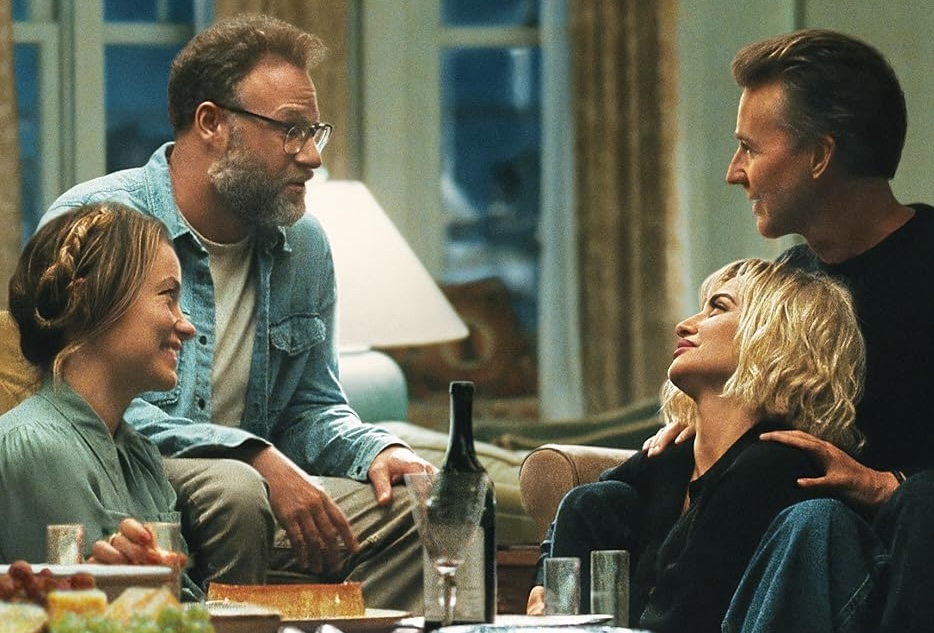
Married couple Joe (Seth Rogen) and Angela (Olivia Wilde) are locked in a beautifully-gilded cage of an apartment, inherited from his parents. They’re both desperately miserable, but they don’t know how to break free, trapped by social convention and their own inertia. The couple who’ve moved in upstairs, Pina (Penélope Cruz) and Hawk (Edward Norton), are their polar opposites: lively, curious, fresh and uninhibited. So when Angela invites their new neighbours down for drinks, the scene is set for a perfect storm.

Directed by Wilde, with a snappy screenplay by Will McCormack and Rashida Jones, The Invite is a tragicomedy of manners, at times laugh-out-loud funny but also moving and profound. Joe and Angela’s unhappiness is so horribly ordinary; exhausted by disappointment, they blame each other for their broken dreams, unable to break free from the prison they’ve created. Pina is a sex therapist and that’s the function her character performs: Pina and Hawk’s vibrant, overtly sexual relationship shining an unforgiving light on Joe and Angela’s marriage, prompting the joyless couple to examine their feelings and acknowledge that they cannot carry on. The laughs come in the form of toe-curling awkwardness and physical ineptitude, the clash between fantasy and reality. But we’re never allowed to forget that these are real people, their humiliations causing real pain.

A remake of the Cesc Gay’s 2020 Spanish film, The People Upstairs, this is something of a triumph, Wilde perfectly encapsulating the claustrophobic atmosphere of a failing marriage. Although Joe and Angela’s apartment is twice the size of Hawk and Pina’s, their world is so much smaller, the four walls constraining them. We can feel this in the direction, the actors seemingly too big for the space, unable to move without knocking things over and breaking them.

The four actors work well together. None of the characters is especially likeable, but they’re all sympathetically drawn and we want a happy ending for them. Rogen is effortlessly funny, eliciting most of the laughs with his gloomy defeatism and misplaced anger, while Norton somehow manages to imbue the world’s smuggest, most annoying man with enough humanity to save him. Cruz is so charming that Pina’s sharpness becomes an attribute, while Wilde’s quiet desperation is genuinely painful.

This is Wilde’s third feature as a director. I loved her 2019 debut, Booksmart, and also found a lot to admire in 2022’s Don’t Worry, Darling, although the latter was perhaps a little muddled. The Invite is her most sophisticated to date, and I’m already keen to see where she goes next.

4.7 stars

Susan Singfield