
Pleasance Courtyard

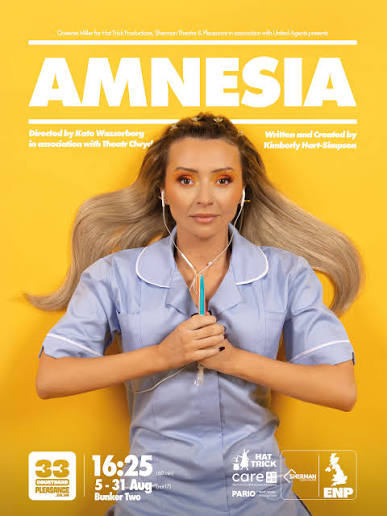
Amnesia

19/08/26

Pleasance Courtyard (Bunker Two), Edinburgh

What comes to mind when you think of Rhyl? If it’s “Blackpool after a neutron bomb” or “Satan’s armpit” then you’re not alone.

For me, it conjures up fond memories. I grew up in a village a few miles inland and Rhyl was the nearest town. The Little Theatre, where I spent my teenage Saturdays. The White Rose Centre, for shops and summer jobs. Nightclubs (I was a Bistro girl). And all the fun of the fair.

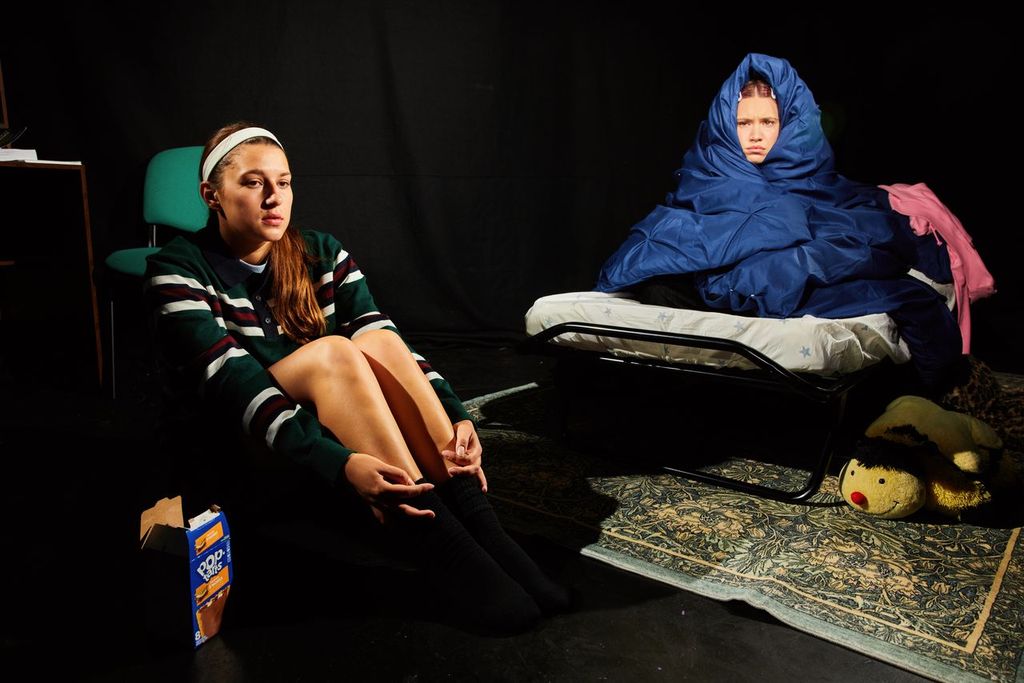
For Kelly (Kimberley Hart-Simpson), it’s home. She lives on West Parade with her bestie, Amrit, in a flat above Les Harker’s arcade with a glorious sea view. Everywhere they need to go is only a short walk away: the Bryn Môr nursing home, where they both work; the Cob and Pen, where they socialise (and where Kelly’s mum performs weekly Tom Jones tribute gigs). Kelly’s happy with her life – but Amrit, it transpires, is not.

And Kelly isn’t good with change…

Hart-Simpson paints a convincing portrait of life in a forgotten town – the sort of place that politicians love to talk about but where nothing ever seems to improve. Outsiders mock Rhyl: it’s “the Costa del Dole” – somewhere to escape from. But Kelly mounts a spirited defence. She’s proud of her home, the tourist spot that spawned not only Carol Vorderman and Mike Peters, but also Lisa Scott-Lee and, well, Kimberley Hart-Simpson. No one should need to feel ashamed of where they’re from (especially when it’s as beautiful as the North Wales coast).

If this all sounds a little po-faced, don’t be fooled. Directed by Kate Wasserberg in association with Theatr Clwyd, Amnesia is a wild ride, with as many highs and lows as Ocean Beach’s infamous Runaway Train. Kelly is always in motion – even when she’s still  – and Hart-Simpson effortlessly draws our attention to her pent-up energy and frustration, fizzing fit to burst. From Ibiza nightclubs to old ladies’ bed baths, we’re under the spell of a talented actor, who knows exactly how to engage her audience. 

Although Kelly is thirty-seven, this is essentially a coming-of-age story, as she learns to accept two crucial truths: things don’t always stay the same, and her own idea of happiness is perfectly valid.

4.5 stars

Susan Singfield
Omar Badawy: Guided Detour

16/08/26

Pleasance Courtyard (Bunker One), Edinburgh

Omar Badawy leads us on a Guided Detour through the life of a conflict-averse ‘Posh Arab’, who somehow keeps stumbling into situations where passivity isn’t an option. Take a grey London afternoon in September 2025, for example. Badawy is on his way to a Norwegian-themed fancy dress party. He doesn’t want to go but he’s certainly not going to risk an argument by telling his girlfriend that. So here he is, reluctantly making his way across the city, only to find himself in the midst of Tommy Robinson’s ‘Unite the Kingdom’ march, surrounded by far-right protestors.

Oops.

What’s a non-confrontational Viking to do?

Twenty-eight-year-old Badawy has an affable persona, relating his series of unfortunate events with a rueful, resigned air. The tone is light and the jokes are plentiful, but he makes some serious points. He just wants to get on with his life: he doesn’t want to be drawn into race-debates; why should he? Ever since primary school (a particularly funny anecdote, which I won’t spoil here), he’s been defined by his Egyptian lineage, expected to engage with identity politics.

Confident, articulate and perfectly in control of his material, Badawy is a deceptively breezy comedian. I laugh throughout the show, as if I’m watching something playful and inconsequential. It’s only later, walking home, that the more profound elements begin to assert themselves.

4 stars

Susan Singfield

The Day of the Locust

15/06/26

Pleasance Courtyard (Attic), Edinburgh

Published in 1939 by Nathanael West and set in LA, The Day of the Locust is widely considered to be one of the great American novels – a treatise on the insatiable hunger for fame. It was also memorably turned into a feature film by John Schlesinger in 1975. Sprawling, visceral and strangely apocalyptic, it’s an ambitious subject for a monologue and I’m intrigued to see what storyteller Calum Patrick Hughes can make of it in the claustrophobic confines of the Pleasance’s Attic. 

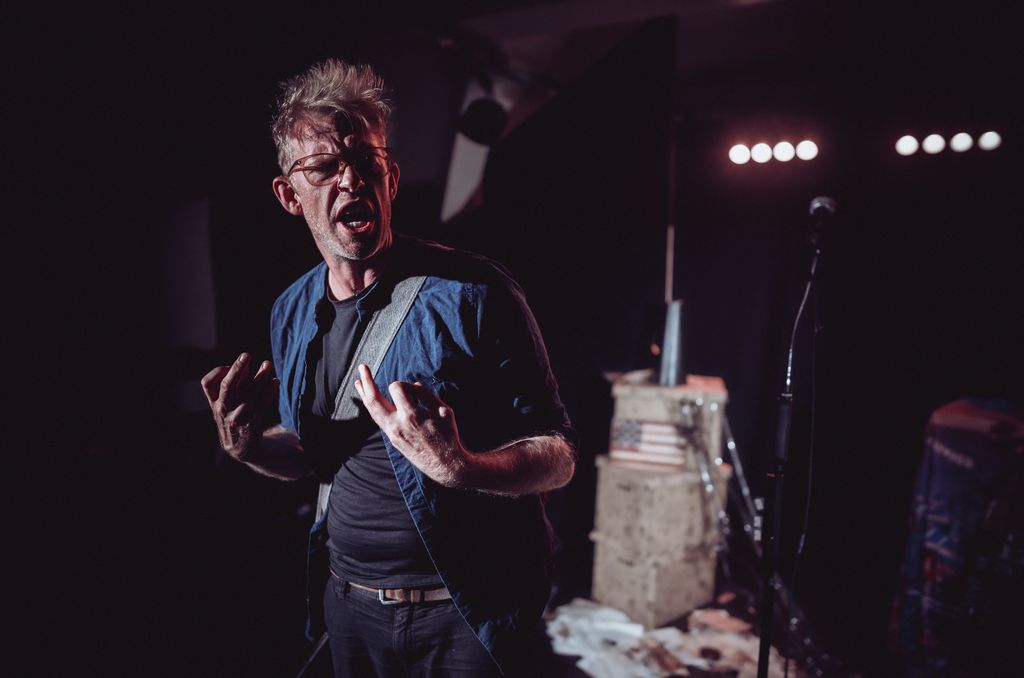
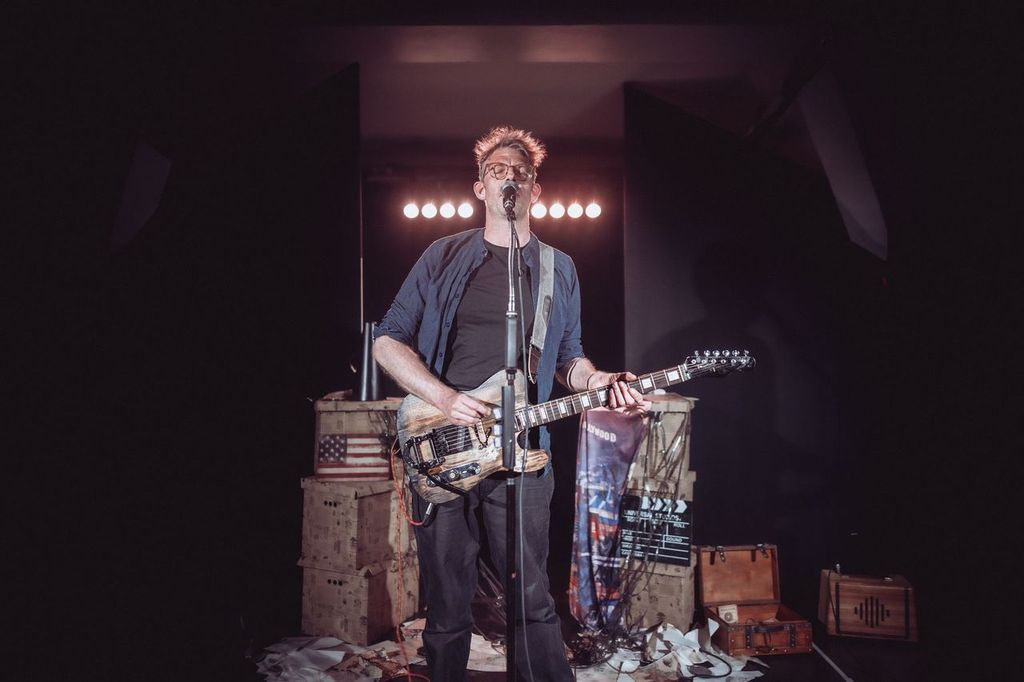
He manages to weave a beguiling tale with just his voice (occasionally boosted by a microphone) and atmospheric layers of sound, courtesy of an electric guitar fed through various loop and drone pedals, to create haunting soundscapes. Though he’s done a moderate amount of updating to the story – there’s mention of mobile phones at one point and also a couple of scenes where security forces have morphed into ICE agents – what’s interesting is how convincingly these elements gel with what was essentially a depiction of 1930s Hollywood. The avarice and greed remains undiminished; there’s the same propensity for people to exploit each other for personal gain.

Perhaps less successfully, Hughes has also retained the brutish sexual politics of the era in which the book was written, and I find myself wondering if those aspects too could be reappraised. Just a thought.

Hughes embodies all the familiar characters convincingly, varying his voice just enough to identify each of them in turn, and his descriptions of Hawthorn’s startling images create an atmosphere of steadily-rising tension throughout, until we are slammed headlong into the novel’s infamous climax. 

All in all, this is an experiment that has yielded a powerful and thought-provoking monologue. You don’t have to be a fan of the original – or even familiar with it – to enjoy this performance.

4 stars

Philip Caveney 

Revolver

23/08/25

Pleasance Courtyard (Beneath), Edinburgh

In 1966, when Revolver was released, my mum was 18 years old, and had already been a fan of The Beatles for quite some time. As a Liverpudlian teenager, she’d spent many a lunchtime in the legendary Cavern Club, and was lucky enough to attend the Fab Four’s notorious 1964 homecoming gig at the Empire. She was, naturally, a member of their fan club – and still has her Christmas Flexi Discs to prove it. So, when she was scheduling her visit to this year’s Fringe, it was obvious that there was one production she wouldn’t want to miss…

Writer-performer Emily Woof’s play doesn’t disappoint. It’s about three women, the first of whom is Jane Fraser, a former teacher turned TV-researcher, delighted to be working on a documentary about female fandom through the ages. The second is Helen, Jane’s mum, who spent her adolescence dreaming about John Lennon. And the third is Valerie Solanas: writer, activist – and pistol-wielding would-be killer.

Directed by Hamish McColl, Revolver is an intricate piece of theatre, dealing with the very questions Jane thinks the ‘Fangirls’ documentary should address. But, while the protagonist is thwarted in her endeavours by James, the ratings-driven film-maker who hired her, Woof makes her points cogently, drawing salient connections between fame and feminism, reverence and rage.

James’s sensationalist approach to the documentary – he favours the tagline ‘Young, Dumb and Fun’ – undermines the girls who screamed for their pop idols, ignoring the sociopolitical circumstances that gave rise to them. Woof uses Helen and Valerie to illuminate the disconnect between history and herstory, to validate the heightened emotions of teenage fans – and to shed light on the boiling rage that drove Solanas to shoot Andy Warhol.

Tracks from The Beatles album are played throughout, sometimes to mark transitions and sometimes as the soundscape. This works best when there is a clear association between the songs and what is happening onstage, e.g. Tomorrow Never Knows provides the perfect background to an acid trip. Occasionally, the song choices seem a little random, taking me out of the moment while I try to understand the link (Tax Man plays us out, for instance, and I don’t know why), but overall the soundtrack serves the piece well.

I like how knotty this is: Woof doesn’t shy away from the complexity of the issues at hand, and her performance is both bold and nuanced. I’m not entirely convinced by the sexual fantasy sequence (the language seems too sophisticated for an inexperienced young girl), but that’s my only quibble with the writing.

A thoughtful, exacting play, Revolver demands serious consideration from its audience. “Nobody can deny that there’s something there.”

4.4 stars

Susan Singfield
Mariupol

17/08/25

Pleasance Courtyard (Beneath), Edinburgh

Katia Haddad’s two-hander is an epic tale of love and loss spanning thirty years, exposing the quiet horrors of war: the tendrils that insinuate their way into ordinary people’s lives, strangling their hopes for happiness.

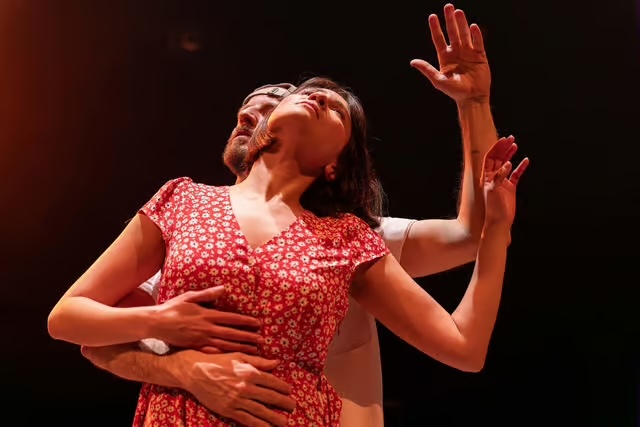
It’s 1992, a year after the dissolution of the USSR, when “Steve” and Galina (Oliver Gomm and Nathalie Barclay) meet at their friends’ wedding in the titular Ukrainian city. Steve (real name: Bondarenko, nicknamed for his karaoke renditions of Stevie Wonder songs) is a well-travelled naval officer, while Muscovite Galina is a literature student, who has so far only dreamed of seeing foreign lands. “You’re in a foreign land,” Steve reminds her, and he’s right: Ukraine is now an independent state. But it doesn’t feel foreign to Galina: “We speak the same language,” she says. And indeed they do, in more ways than one. But, after a whirlwind holiday romance on the picturesque Belosarayskaya Sandbank, it’s time for the two to say goodbye and return to their ‘real’ lives.

Three decades later, Russia invades Ukraine. Galina’s teenage son, a member of the Russian army, is captured by Ukrainian forces in Mariupol. She’s desperate to rescue him – and can only think of one person who might be able to help. But can Steve – who has lost everything and is fighting for his country’s very existence – really be expected to come to the aid of an enemy soldier?

Gomm and Barclay are both perfectly cast, delivering heartfelt but understated performances, which feel totally authentic. They seem to age before my eyes, and it’s impossible not to empathise with these two regular Joes, who ought to be free to focus on more mundane problems. Directed by Guy Retallack, Mariupol is an expertly-crafted piece of theatre, starkly illustrating the brutality of war without ever sensationalising it. Hugo Dodsworth’s monochrome video projections emphasise the awful devastation in Ukraine.

Of course, the ongoing nature of this particular conflict adds real urgency to the production, and I find myself crying as the dreadful human cost is laid bare. But tears are not enough. The play supports the David Nott Foundation, which trains doctors in countries impacted by conflict – including Ukraine – and I feel compelled to make a donation as soon as I get home. If you’d like to do the same, you can do so here: https://davidnottfoundation.com/.

A deeply moving and important play, Mariupol is horribly relevant but beautifully drawn.

4.7 stars

Susan Singfield
The Unstoppable Rise of Ben Manager

10/08/25

Pleasance Courtyard (Above), Edinburgh

Bunkum Ensemble’s The Unstoppable Rise of Ben Manager is a Kafka-esque nightmare of a play, skewering the emptiness at the heart of many people’s work.

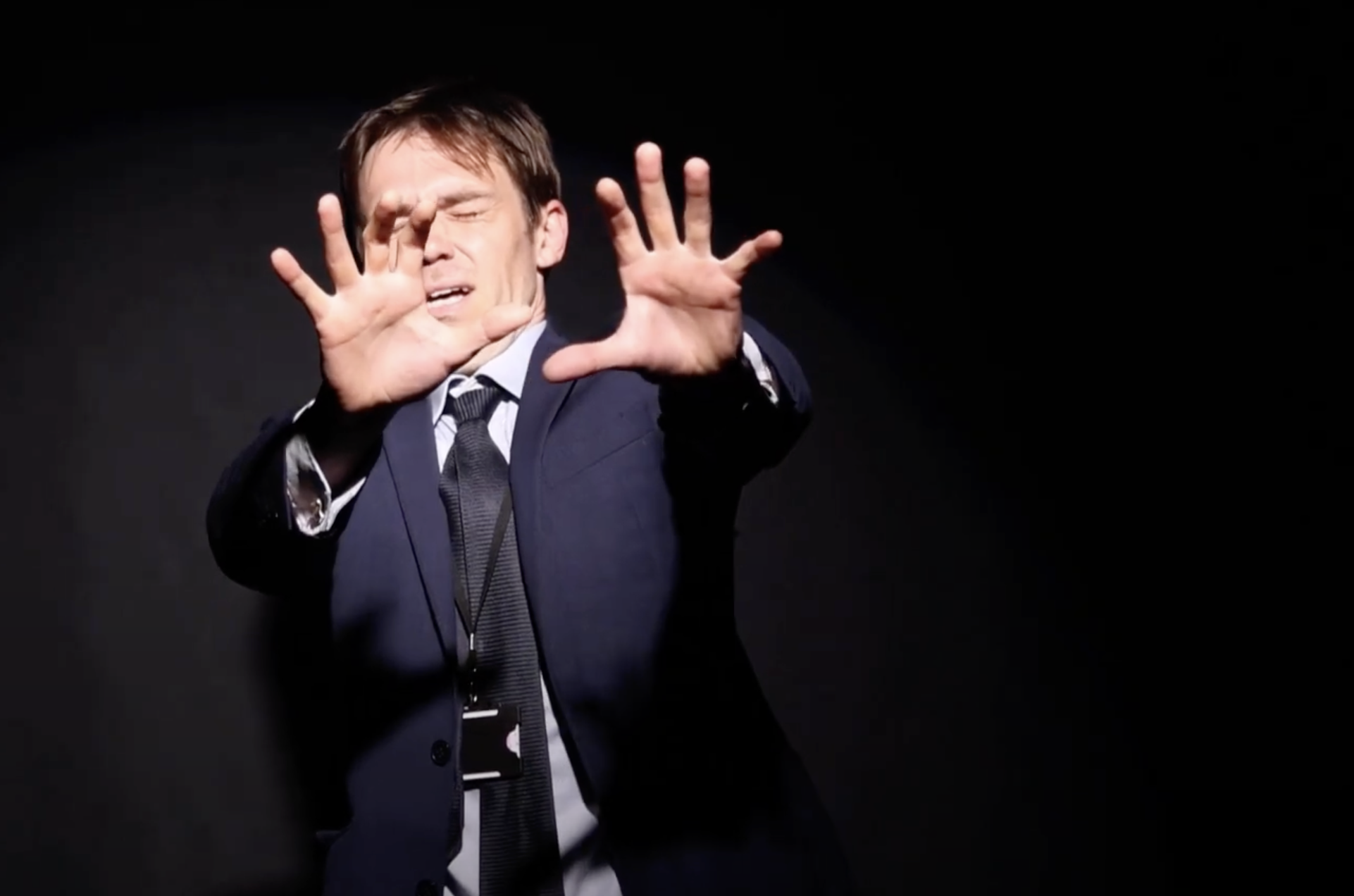
Ben Weaver (Jack Parris, who also wrote the script) is an ordinary kind of guy, an unassuming office drone, who works to live, to pay the bills. As the play opens, we see him suited and booted, in town early for an interview, eating an almond croissant to kill the time. But Fate has something different in store for Ben today: when he picks up a lanyard bearing the name ‘Ben Manager’, he finds himself caught in a Faustian trap…

Ben aces his interview. As Ben Manager, he is king of the vacuous PowerPoint, master of the mindless acronym. He knows his OOOs from his ETDs and he’s great at restructuring (“You’re all fired!”). What’s harder to understand is what it’s all for: what does the company actually do? What exactly is his role? Disoriented, Ben tries to remember what used to drive him. “I think I’d like to be creative,” he muses. “Maybe costume design?” But these half-formed thoughts are nebulous, impossible to grasp, lost to the demands of his daily routine.

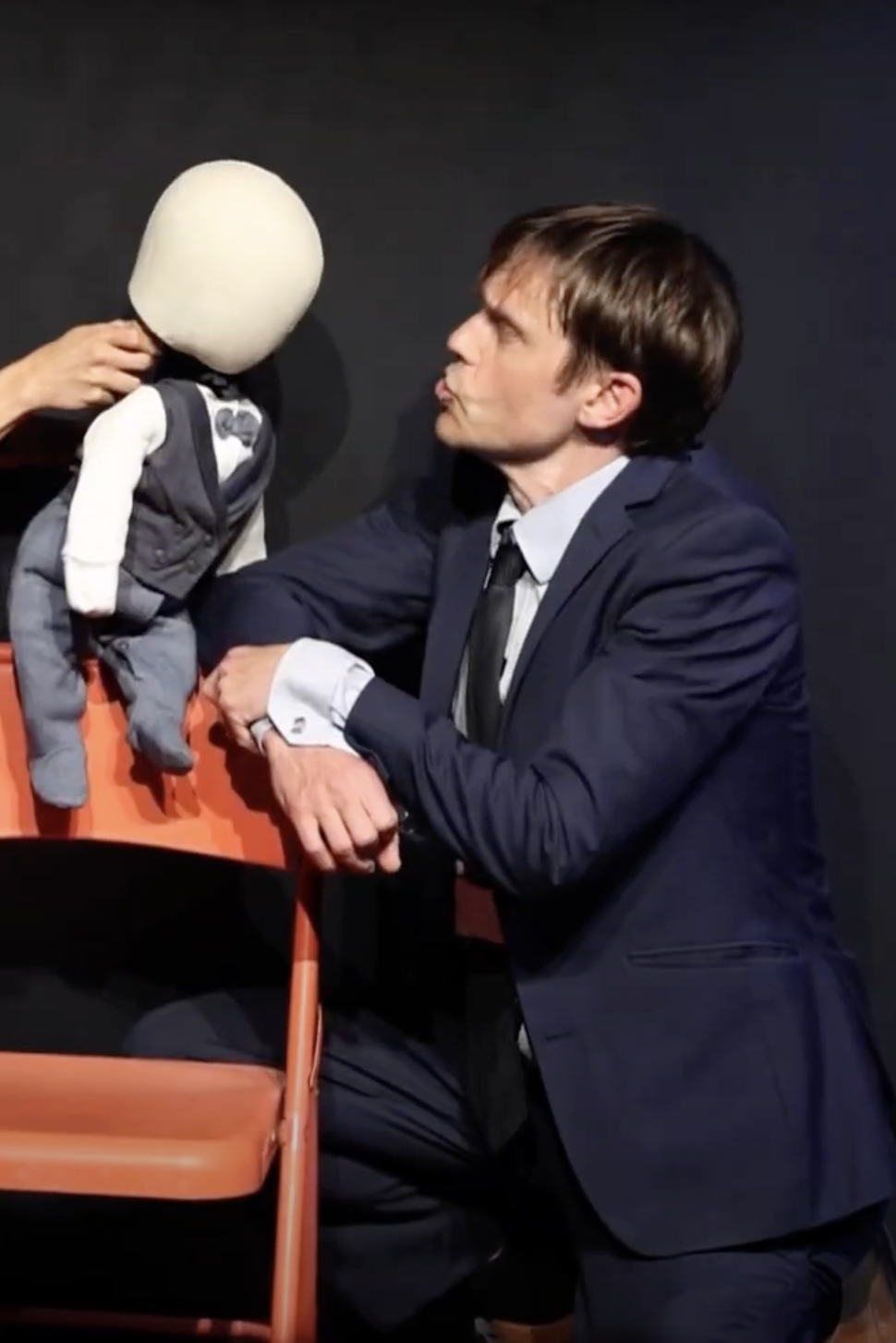
Parris is commanding in the central role, a leaf-cutter ant caught in the corporate machine. As events build to an almost hallucinatory crescendo, his mental unravelling is cleverly physicalised, and I love the disconcerting effect of the baby-sized puppet-colleague (operated by Teele Uustanti), its words spoken into a microphone by musician-performer Mike Coxhead). The audio-visual design is also impressive, adding to Ben’s (and our) growing sense of disconnection from reality.

Although it elicits plenty of laughs from the audience, The Unstoppable Rise of Ben Manager is fundamentally a brutal and discomfiting piece of theatre – and I’m not sure I’d find it amusing at all if I worked a nine-to-five.

4.3 stars

Susan Singfield

A Jaffa Cake Musical

10/08/25

Pleasance Courtyard (Forth), Edinburgh

Every year, the Fringe manages to boast an improbably-titled musical with broad audience appeal. In 2024, Gigglemug Theatre’s A Jaffa Cake Musical was a huge hit but, for reasons too complicated to explain, we didn’t manage to see it. So when it was announced that it would return for one final run, we decided we really should catch up with it. Tickets were duly arranged and we set off with high expectations.

But on the fateful day in question, Storm Floris decided to strut its stuff, managing to shut down the entire Pleasance Courtyard. Some frantic rescheduling ensued – a mere hiccup for us but no doubt a massive pain in the backside for all the productions affected. Finally, several days later, here we sit in the sold-out Forth and the show begins.

You might think, with that seemingly random title, that this is simply a silly fantasia, conjured up for everyone’s entertainment. But Sam Cochrane’s zany creation is loosely based on fact – the 1991 court case that determined the most important question of all: whether a Jaffa Cake is actually a cake… or a biscuit. Let’s face it, we’ve all asked ourselves the same thing at some point in our lives. And there was a lot on money riding on the outcome, since cakes (a necessity, apparently) are not subject to VAT while biscuits (a mere frivolity) are. Go figure.

Rookie barrister Kevin (Cochrane) lands his first big trial and, wouldn’t you know it, he is to defend Jake (Harry Miller), the Godlike genius who actually invented Jaffa Cakes, from the depredations of the villainous Tax Man (Katie Pritchard, embodying a character that pretty much everyone can hiss at). Opposing Kevin will be confident young barrister, Catherine (Sabrina Messer), who has a winning way with the old dance moves and has yet to lose a case. Meanwhile, the stern Judge (Alex Prescot) plays the keyboards while he presides, backed by bass and drums. (I did say it was loosely based on fact.)

Fuelled by its own sheer exuberance and gifted with a collection of witty songs, arranged by Rob Gathercole, A Jaffa Cake Musical is a delicious concoction (much like its inspiration) that hooks its audience, much like the tantalising taste of that smashing orangey bit.

There’s plenty to admire here, not least the antics of the seven-strong cast – bowler hats off to Pritchard in particular, who is a quadruple threat: singing, dancing, playing the saxophone and swapping roles with absolute assurance. The staging is simple but effective, everything nicely colour-coded in distinctive shades of orange and chocolate brown, and one song in particular has such a catchy hook you’ll almost certainly leave the building humming it aloud. (I know I do.) Ali James directs with aplomb and a jolly good time is had by all.

Lights down. Applause.

Which only leaves me to answer that all-important question: is it a cake or a biscuit? Well, why not cut along to the Pleasance (weather permitting) and judge for yourselves?

4 stars

Philip Caveney

Kanpur: 1857

06/08/25

Pleasance Courtyard (Beneath), Edinburgh

Set in Kanpur, India, in the aftermath of the so-called “Sepoy Mutiny,” an unnamed Indian (portrayed by the play’s author, Niall Moojani) is sentenced to death for insurrection. The captive is a Hijra, often described as ‘the third sex,’ who are traditionally assigned as male at birth, and can decide which gender they wish to assume in the fullness of time. The officer in charge of the execution, played by co-director Jonathan Oldfield, offers his victim an opportunity to speak, or rather demands that they do so. Afterwards, they will be strapped to a cannon and blown apart in front of a crowd of onlookers – or, as we’re known in these quarters, a Fringe audience.

A serviceable-looking cannon has been sourced, and it’s pretty much the only prop in evidence. I can’t help thinking about the difficulties of bringing such a cumbersome weapon down into the Pleasance Courtyard’s ‘Beneath’ performance space, but happily that’s not my job.

Oldfield’s officer serves in a distinguished Highland regiment, though his accent is – perhaps inevitably – cut-glass English. Now, he suggests, is the time for the condemned to explain what has brought them to this awful situation. A garrulous sort, the officer can’t stop interrupting his victim’s narrative, asking awkward questions, offering his own privileged perspectives, even at one point picking up a guitar and lending some lilting accompaniment.

Kampur: 1857 has interesting points to make about the nature of colonialism, reminding us that, during the conflict there have been acts of barbarism on both sides – though these observations come from Oldfield’s character, speaking from the more comfortable point of view of somebody who isn’t about to be evenly distributed across the landscape, and whose side’s reaction to the mutiny has been massively disproportionate.

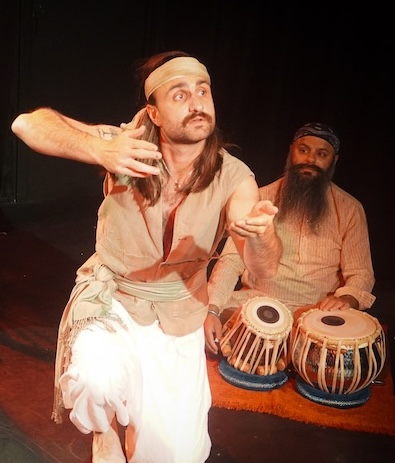
The piece, which lies somewhere in that strange no-man’s-land between storytelling and drama is at its best when the two characters are exchanging views, bickering, joking, vainly trying to bring each other around to some shared worldview. Oldfield gets the best of it, his sneering superiority played at full-throttle, while Moojani’s dialogue is more reserved and contemplative. Meanwhile, tabla player Hardeep Deerhe provides a rhythmic accompaniment to his words.

It’s impossible not to feel swept up in the play’s final moments, as the victim waits, helpless and silent, their final seconds ticking inexorably away…

3.8 stars

Philip Caveney

Single Use

06/08/25

Pleasance Courtyard (Bunker Three), Edinburgh

Ella’s life is a muddle: she’s struggling to separate her mounting troubles and figure out how to deal with them. A bit like her recycling.

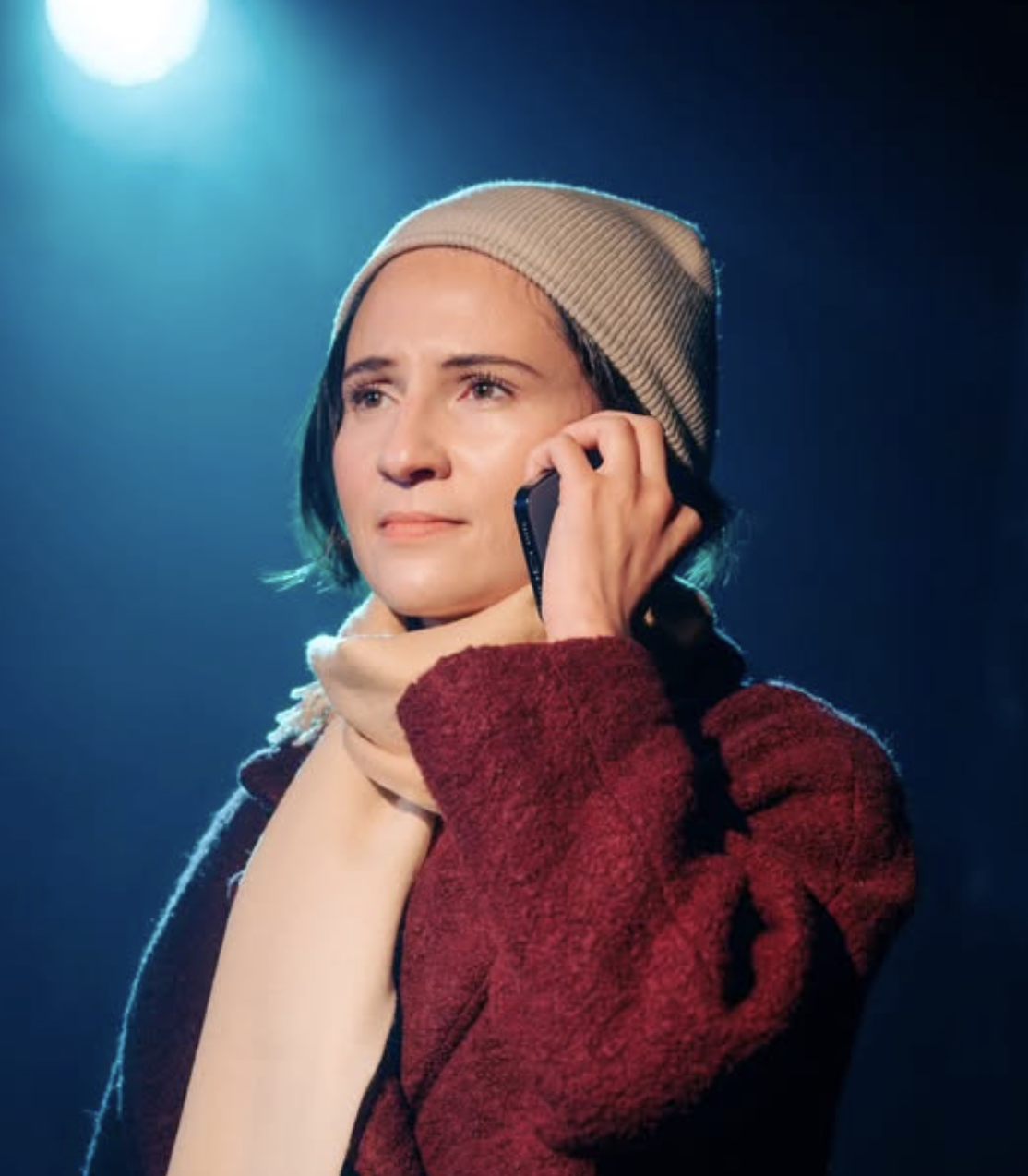
Ella (Verity Mullan) is an expert procrastinator. She’s unfulfilled by her bar job, but can’t be bothered to look for anything else. She likes the idea of her allotment, but tending to it is a step too far. She never pays her rent on time and doesn’t get on with her flatmate anyway. She cares about the planet, but it’s not her fault takeaways are delivered in plastic boxes – and who has the energy to cook? From the outside, it’s clear that Ella is depressed. It’s just that she hasn’t realised it yet.

Written by Mullan and directed by Emma Beth Jones, Single Use works well as a character study. Mullan is an engaging performer, imbuing Ella with a winsome vulnerability and spark. I particularly enjoy the physical comedy – her exaggerated sense of repulsion as she deals with her icky bin bags; the slurping of beer from Tupperware – all perfectly complemented by Flick Isaac-Chilton’s sound design.

However, there are too many disparate plot strands competing for our attention and it’s not always clear who the various voice messages are from. I’m confused by ‘Stusi’ (Ella’s young stepsister), who is first described as someone to whom “puberty has not been kind” – leading me to assume that she is about thirteen years old – but then turns up in a car to give Ella a lift home. The climate crisis element feels particularly under-developed, with the tantalising messages from Malaysia left to fizzle into nothing.

Ultimately, there are some promising ideas here, but they perhaps need a little more cohesion and development for this piece to fully realise its potential.

3 stars

Susan Singfield
Edfest Bouquets 2024

Another incredible August in Edinburgh. Another Fringe packed with wonders to behold. As ever, we’ve put together our annual list of virtual bouquets for the shows that blew us away.

Julia VanderVeen : My Grandmother’s Eye PatchZOO Playground

“A lot of the comedy comes simply from VanderVeen’s exaggerated facial expressions and her tendency to skewer audience members with a scarily intense stare…”

Luke BayerDiva: Live from HellUnderbelly (Belly Button), Cowgate

“Channing (the name is obviously a reference to Bette Davis in All About Eve) is a delightful character, supremely self-obsessed, deliciously callous and intent on achieving stardom at any cost…”

The Sound Inside – Traverse Theatre

“Director Matt Wilkinson handles the various elements of the play with skill, and guides it to a poignant conclusion…”

Summer of Harold – Assembly (Checkpoint)

‘If you’re looking for an hour-and-a-half of impressive theatre, with snort-out-loud humour as well as profound emotional moments, then Summer of Harold ticks all the boxes…”

Rebels and Patriots – Pleasance Courtyard (Upstairs)

“Loosely stitched with a sprinkling of history and Shakespeare, it all adds up to something very thoughtful…”

Chris Dugdale: 11 – Assembly George Street (Ballroom)

“There are some examples of mind control that have us shaking our heads in disbelief – and I may be guilty of muttering the odd expletive…”

Natalie Palamides: Weer – Traverse Theatre

“A great big slice of the absurd, expert clowning performed with such reckless abandon that you can’t help loving it…”

V.L. – Roundabout at Summerhall

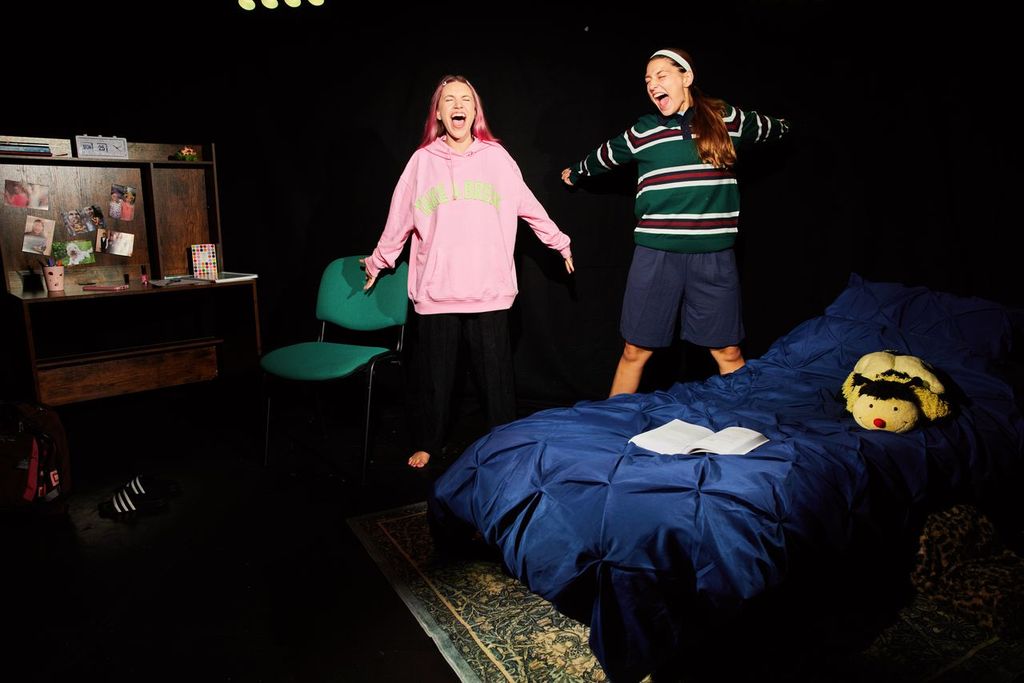
“A whip-smart comedy that also has some incisive things to say about the difficulties of adolescence and the importance of friendship…”

Sam Ipema: Dear Annie, I Hate YouZOO Playground

“A wonderfully inventive and cleverly-assembled slice of true experience, by turns funny, profound and – at one particular point – very challenging…”

Michaela Burger: The State of Grace – Assembly George Street (Drawing Room)

“Not so much an impersonation as a transformation. Burger talks eloquently and provocatively about the lives of sex workers, explaining why there is a need for their business to be recognised…”

Honourable Mentions

Werewolf – Summerhall (Former Women’s Locker Room)

“I love it. The wardens do an excellent job of inhabiting their characters at the same time as managing the narrative, expertly drawing what they need from the participants…”

Megan Prescot: Really Good Exposure – Underbelly (Belly Button)

“Prescott is an accomplished performer. She tantalises and reels us in before skewering our internal biases and forcing us to think…”