

Edfest 26

Omar Badawy: Guided Detour

16/08/26

Pleasance Courtyard (Bunker One), Edinburgh

Omar Badawy leads us on a Guided Detour through the life of a conflict-averse ‘Posh Arab’, who somehow keeps stumbling into situations where passivity isn’t an option. Take a grey London afternoon in September 2025, for example. Badawy is on his way to a Norwegian-themed fancy dress party. He doesn’t want to go but he’s certainly not going to risk an argument by telling his girlfriend that. So here he is, reluctantly making his way across the city, only to find himself in the midst of Tommy Robinson’s ‘Unite the Kingdom’ march, surrounded by far-right protestors.

Oops.

What’s a non-confrontational Viking to do?

Twenty-eight-year-old Badawy has an affable persona, relating his series of unfortunate events with a rueful, resigned air. The tone is light and the jokes are plentiful, but he makes some serious points. He just wants to get on with his life: he doesn’t want to be drawn into race-debates; why should he? Ever since primary school (a particularly funny anecdote, which I won’t spoil here), he’s been defined by his Egyptian lineage, expected to engage with identity politics.

Confident, articulate and perfectly in control of his material, Badawy is a deceptively breezy comedian. I laugh throughout the show, as if I’m watching something playful and inconsequential. It’s only later, walking home, that the more profound elements begin to assert themselves.

4 stars

Susan Singfield

Endgame

14/08/26

Pleasance at EICC (Lomond Theatre), Edinburgh

Which adjective best describes Samuel Beckett’s Endgame? Depressing? Dystopian? Dingy? Dark? Take your pick. And yet this is also a funny play, full of clowning, jokes and silly absurdities. Who better to illuminate the weirdness than the wonderful Flabbergast Theatre?

We’ve been fans of Flabbergast ever since we stumbled across Tatterdamelion at 2016’s Fringe; in the intervening years, we’ve been wowed by The Swell Mob, The Tragedy of Macbeth and Paper Swans. We’re excited to see what they do with “the play that Beckett considered bleaker than Godot“.

Henry Maynard is not only Flabbergast’s founder and the director of Endgame, he’s also Hamm, the blind and dying man at the centre of this piece. Hamm is angry with life, railing against his failing body and the terrible state of the world. The view from his window, he is told, is desolate, post-apocalyptic. Something dreadful has happened out there – and it’s not much better inside his home. Hamm is stuck in his chair, unable to move, utterly reliant on the hapless Clov (Simon Gleave), who’s been with Hamm since he was a boy. Part servant, part surrogate son, Clov is cowed by Hamm, incapable of standing up to him.

The play’s most transparent metaphor is Hamm’s parents’ accommodation. Old and useless, Nagg (Derek Ellwood) and Nell (Complicité’s Annabel Arden) have been discarded like rubbish: they live in a pair of dustbins outside their son’s house, popping up occasionally to beg for food. The price for a hard biscuit is high: they have to listen to Hamm’s endless shouting about how they neglected him when he was young. His accusations are born out by Nagg’s cruel replies but their helplessness makes us sympathise with the aged couple.

Mostly, though, our hearts go out to Clov. He’s the only one who’s able to move, albeit with difficulty, and so he’s stuck caring for these dreadful people, none of whom has a kind word for him. Gleave’s expert clowning gives the play its physical dynamism, preventing it from seeming static, despite the fixed positions of the other three characters.

Skilfully conceived, this production has a clarity that illuminates Beckett’s dream-like, complex play, making it more accessible than any other version I have seen. Just as in life, death looms large – but there are plenty of laughs along the way.

5 stars

Susan Singfield
Nesting

13/08/26

Summerhall (Old Lab), Edinburgh

Nesting is a difficult play – complex, ambitious and emotionally devastating. But that’s the beauty of art, right? It comes in so many guises. Sometimes it’s good to be challenged.

This one’s very close to home: it’s about a man dying of MND, the neurological condition that killed my lovely dad four years ago. Billy Mack’s embodiment of the disease is horribly accurate and I find myself crying. A lot.

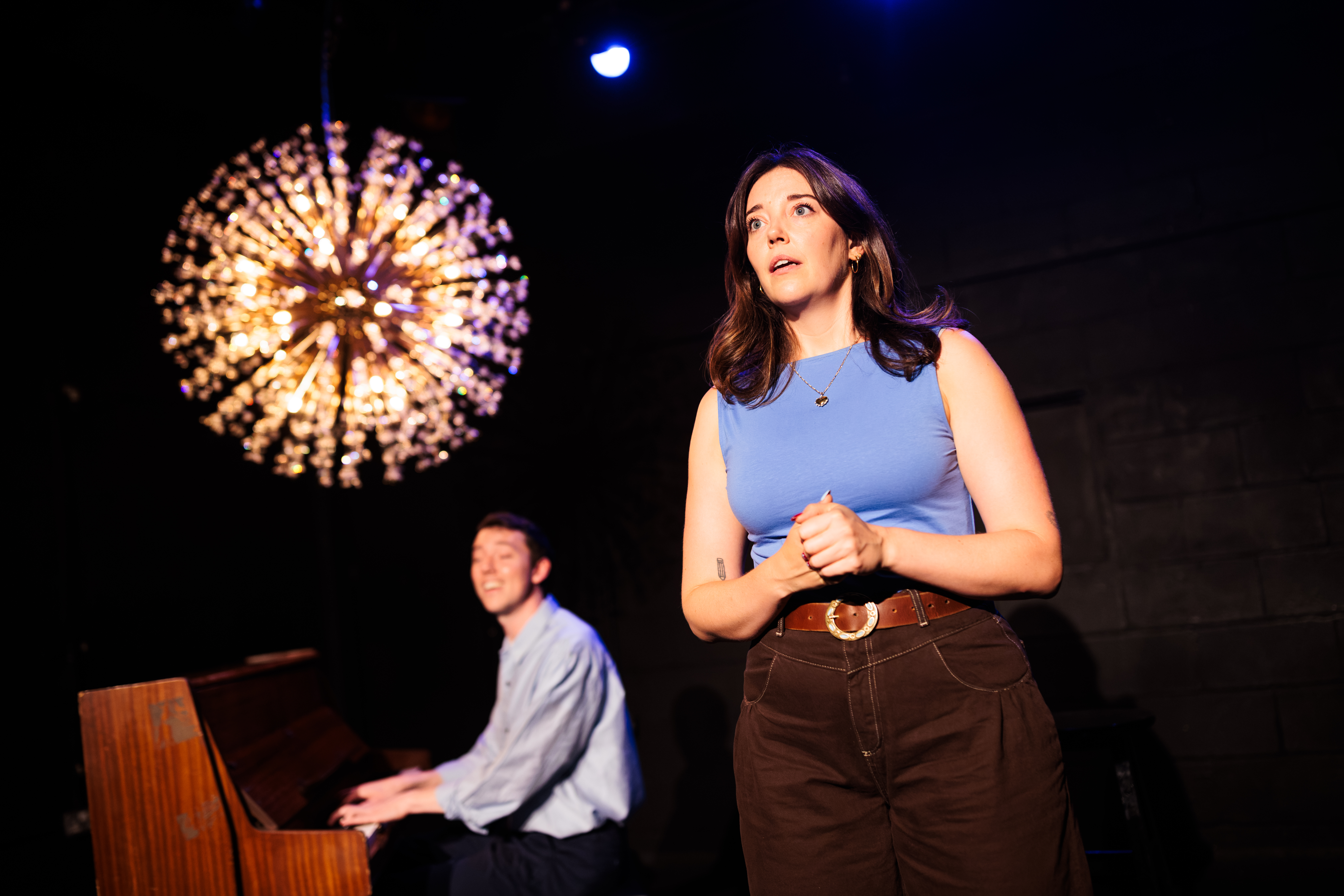
Mack plays Francis, a widower who lives with his pregnant daughter, Emma (Francesca Hess). The two enjoy a close relationship, teasing and joking and looking out for each other. Emma’s an overworked teacher, and – although he’s retired – Francis is very busy too. He’s making a crib for his new grandchild, lovingly cutting and sanding the wood he’s chosen so carefully.

But there’s something wrong with his right hand…

The diagnosis of motor neurone disease, delivered by Dr Bell (Peter McCormick, who also wrote the play), is devastating.

So far, so sadly ordinary. But then we meet Gull (Michael Guest), a seagull with a mission. If Francis agrees, Gull will kill him and take over his body, stalling the disease at its current level. It’s a no-brainer, he squawks. Not only will Emma be spared the burden of caring for her dad, she won’t even know he’s gone. Francis is very tempted. He just needs some time to think.

Under Ben Standish’s assured direction, Nesting is an arresting, deliberately stagy piece. As befits the Fringe, with its quick turnaround, the set is simple yet extraordinarily effective. A wooden frame with a curtain serves as hospital ward, bedroom window, room divider, etc. Meanwhile, Guest’s performance is a masterclass in physical theatre, committed, unnerving and utterly convincing. If the metaphor is a little opaque, that’s not necessarily a bad thing. We find ourselves discussing possible interpretations long into the evening.

McCormick’s script addresses the strain placed on carers too. Hess perfectly conveys the toll her dad’s illness takes on Emma, as she struggles to look after him as well as keeping up with her job and coping with her pregnancy. The impassioned speech she gives is perhaps the most memorable moment of the play. She pleads with Dr Bell to help her, explaining that the care homes she’s approached have rejected her dad because MND is too complex for them! If that’s the case, how is she supposed to cope? How can two hours of daily home help be enough?

Dark, funny, absurd, salient: Nesting is not an easy play to pin down. But it is an intensely thought-provoking drama, one that will stay with you for a long time.

4.2 stars

Susan Singfield

Shaun Guff: Enuff is Enuff

12/08/26

Hoots Potterow, Edinburgh

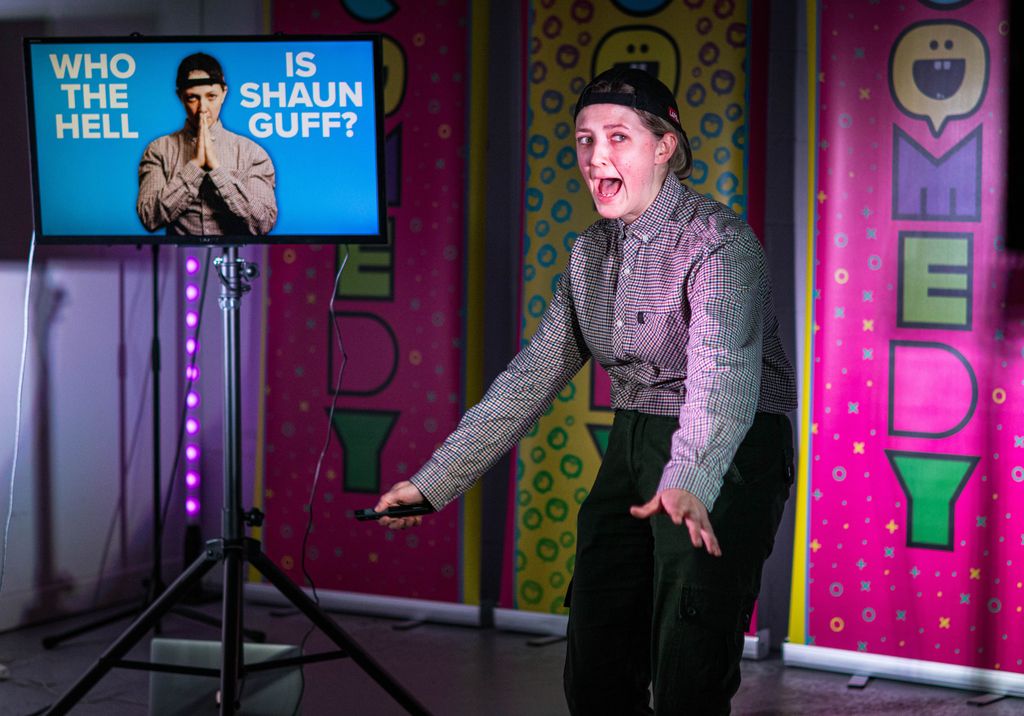
Do you want to be happier? More successful? Have you had enuff? If so, get yourself to Shaun Guff’s self-funded seminar. He’s hit rock bottom so you don’t have to, and he’s ready to share his sensational life lessons via a very Y2K PowerPoint.

Guff is the third solo show from talented actor-comedian Clementine Bogg-Hargroves, who clearly isn’t one to keep churning out the same old stuff: the three productions could hardly be more different. 2021’s Skank was a heart-wrenching comic drama about a young woman with extreme health anxiety; 2023’s Please Love Me was an exploration of societal expectations, accompanied by pole dancing. And now here’s a character comedy, featuring an unqualified life coach called Shaun Guff, whose pronouncements are, well… You’ll have to pop along and see for yourself.

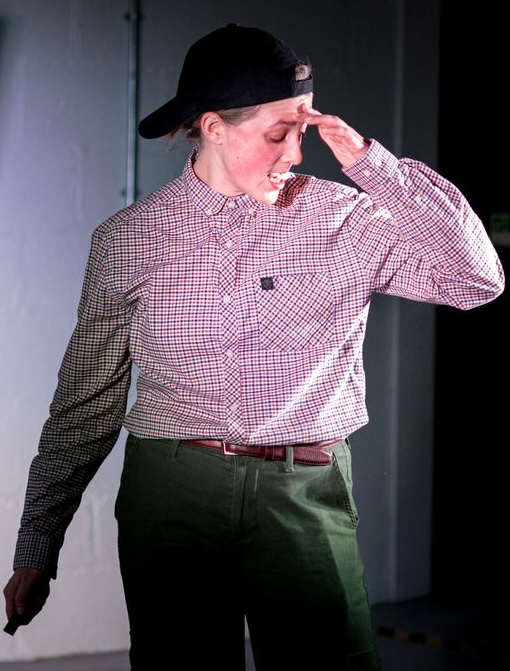
Created by Bogg-Hargroves and Lewis Coleman, this is cringe-comedy at its best: think Alan Partridge with a dash of David Brent or Larry David. Guff’s lack of self-awareness is cleverly depicted, the moments of social awkwardness he creates are genuinely mortifying. Bogg-Hargroves is an engaging performer anyway, but she turns that up to eleven in this show, forcing eye contact for just a bit too long, standing just that little bit too close. It’s wonderfully excruciating.

There is some audience participation but don’t let that put you off. Bogg-Hargroves is a lot more sensitive than her alter-ego, and she knows how to pick the right people. (And let’s face it, there’s never a shortage of willing performers watching a Fringe show.)

The show is laugh-out-loud funny from start to finish – a joyous, silly hour of nonsense.

And who knows? It might just open the door to a brand new you.

4.3 stars

Susan Singfield

Penelope

11/08/26

Underbelly Cowgate (Belly Button), Edinburgh

As we file into the dank gloomy confines of Belly Button, Penelope (Grace McLean) is already sitting on a stool, awaiting us with the patient air of somebody who is well acquainted with biding time. As anyone who’s read Homer – or watched Christopher Nolan’s The Odyssey – will be aware, Penelope has been waiting for twenty years for her husband Odysseus to return from his travels. While he’s off battling a Cyclops and negotiating the Clashing Rocks, she’s stuck at home doing some weaving. As you might imagine, she’s getting pretty bored with the process.

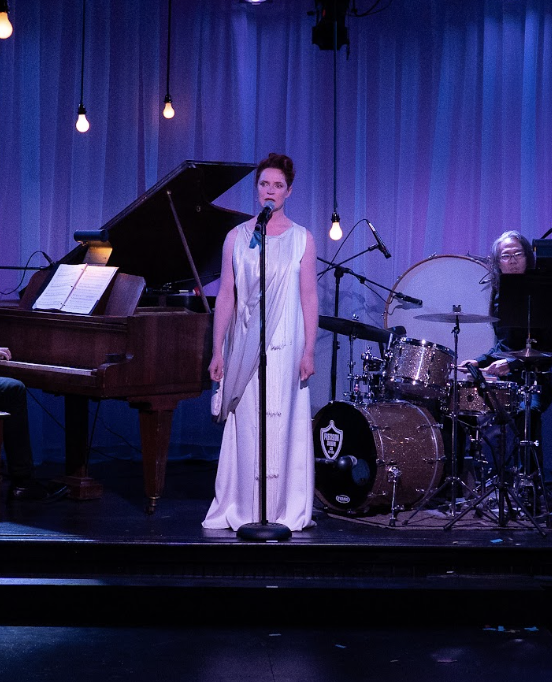
As the lights go down, three musicians file in to provide the musical soundtrack. Alex Bechtel, who wrote the music and lyrics, takes a seat at the keyboards and he’s joined by a cello player and a drummer. The sound they create is moody and haunting – and then McLean begins to sing a mournful, soaring ballad. It’s evident after just a few bars that she has an extraordinary voice.

From this point, the story progresses through a wide range of musical styles, sometimes solemn, sometimes frivolous, occasionally edging toward rock. Penelope gets through quite a lot of alcohol as she delivers her tale of woe and, of course, it’s always interesting to hear the story from a different perspective: a woman who was always her husband’s second choice after the legendary Helen; a woman dealing with a son growing into manhood; a woman resisting the advances of those predatory suitors, who are constantly seeking ways to break down her determination not to remarry. We’ve all been there.

For me, the high point in this hour-long musical extravaganza is a lengthy conversation with Pallas Athene, whose voice is supplied by the three musicians talking in unison. It’s interesting to note that the Goddess offers very little in the way of answers.

This is an assured hour of musical theatre, directed by co-creator Eva Stenmetz and impeccably delivered by the four performers. You don’t have to know The Odyssey – or even Margaret Atwood’s The Penelopiad – but it might help to be familiar with the original story.

Or maybe just trot along to Belly Button and soak it all up.

4 stars

Philip Caveney

Goodbye Dandelion

10/08/26

Underbelly Cowgate (Belly Dancer), Edinburgh

It turns out assisted dying is a hot topic at this year’s Fringe. A mere five days in and, not only is this the second show we’ve seen about it, but there’s someone waiting outside with flyers for another one “dealing with the same issues”. Euthanasia, it seems, is in.

But if the theme is redolent of the Traverse production we saw yesterday, the form could hardly be more different. While After Party is a raucous two-act play, Goodbye Dandelion is an altogether gentler affair – a whimsical hour of musical storytelling, charting Maddie Rice’s friendship with the titular Dandelion, aka octogenarian Darcy O’Shea.

Thirty-something Maddie is feeling a bit lost. There’s nothing wrong exactly: she has a steady job, a caring boyfriend, an agreeable flatmate. It’s just… shouldn’t there be something more? When she sees an advert for Run-Relate, she thinks it might be the spur she needs. Simultaneously improving her fitness and helping a lonely pensioner; surely that’ll make her feel fulfilled?

But things don’t go as Maddie expects. For one thing, it turns out she hates running. And for another, Darcy doesn’t want her help. Still, as their spiky, unlikely friendship develops, it’s clear the benefits are mutual. Until, that is, Darcy tells Maddie her deepest, darkest wish…

Maddie narrates her tale with an engaging openness, the language simple but compelling. Her brother, Marcus, provides musical accompaniment and wry asides, knowing exactly when to undercut the more sentimental moments with a witty song or some salient statistics. Everybody Dies is easily my favourite number; who knew a song about death’s inevitability could make an entire audience laugh out loud?

Although it’s about dying, this charming, clever show is ultimately life-affirming. There’s no bold ‘seize the day’ message, no cloying, fridge-magnet platitude. Instead, there’s a clear-eyed, honest appraisal of what it means to live.

4.6 stars

Susan Singfield

An Echo in the Void

08/08/26

Assembly Roxy (Upstairs), Edinburgh

Written and directed by Jason Weiss, No Boundaries’ An Echo in the Void deals with the timely topic of AI. When journalist Ivy (Grace Serrano) logs into her regular Sanctuary session, she’s surprised to find three strangers there. It’s supposed to be a private virtual space and should only be populated by those she chooses. But here are soldier Toby (Adam Sinclair), programmer Arthur (Sunkrish Bala) and CEO Miranda (Lee Rodriguez), each as dumbfounded as she is by the others’ presence. What’s happening? Has the tech model gone rogue? And if so, why?

If Arthur is the brains behind the platform, Miranda is the money – and Ivy has long been petitioning to interview them both. As for Toby, he’s the company’s poster boy. Sanctuary offers a safe place, where people can leave their real-world troubles behind for a few hours, so who better to front its ad campaign than a war veteran suffering from PTSD?

But Sanctuary is addictive. If life on-line is so much better than off, why would anyone want to return?

This minimalist production is performed on a bare stage, which works well, echoing the blank canvas of a Sanctuary space. Like the platform’s users, we are invited to create our own imaginary setting. Simple tech is used to good effect, with pinspots emphasising the characters’ isolation, and a repeated sound motif signalling glitches in the machine. The actors inhabit their roles convincingly, and a sense of dread builds steadily.

However, although I applaud Weiss’s decision to eschew set and props, the piece could benefit from some more visual elements. It’s very dialogue-heavy, with a lot of information for the audience to absorb. It would be easier to engage emotionally with some of the more complex sequences if they were played out rather than reported. I also think the actors could change their voices and mannerisms when they are taking on characters from each other’s pasts, in order to clarify exactly who and where they are.

An Echo in the Void questions what it means to be human, when everything we think we are can be so cleverly mimicked by computer code. In the twenty-seven years since the similarly-themed The Matrix was released, the issues have only grown more urgent. It’s hard to imagine a more topical play.

3 stars

Susan Singfield

The Wolf of Poyais

06/08/26

Assembly Roxy, Edinburgh

Thom Tuck, first seen by B&B as Scaramouche Jones at 2015’s Fringe, is an accomplished storyteller who knows how to spin an eccentric yarn with absolute authority. In the case of this show, he employs all his considerable skills as he steps into the skin (and knee breeches) of Gregor MacGregor, a 19th century Scottish adventurer, the self-styled Wolf of Poyais. Do you know Poyais? Gorgeous little place in Central America! Fabulous climate, wonderful mineral reserves and not a mosquito in sight. Only… don’t try looking for it, because MacGregor made it up.

Along with quite a few other elements of his life.

As we’ve often remarked, the most unlikely stories are always the ones that turn out to be true and such is the case here. MacGregor started off pretty much on the level in the early 1800s by being commissioned into the British army. Though he took part in the Peninsular War and latterly the Venezuelan War of Independence, he managed to rise through the ranks without actually getting involved in much of the fighting. And when he returned to England, he came back with the news that King George Frederic Augustus had appointed him Cazique of Poyais – and, shortly thereafter, he started selling shares in the place to gullible would-be settlers. This could have been a lark – if only so many of his investors hadn’t died when they arrived in a place that didn’t exist. Annoyingly, around fifty of them survived and returned to tell what happened to them. Not that they blamed MacGregor of course…

Tuck strides boldly out onto the stage to address his audience of potential investors. With a minimum of props, he personifies the titular character as a self-aggrandising braggart with not one iota of conscience, a man who makes no secret of the fact that he is the only person in the world he cares about. He also jumps into several other characters along the way. The scene where he and his wife dance with each other is a masterclass in comic timing – and I can’t suppress a gasp of astonishment when, with the slightest flick of his hair, he transforms into Captain Thomas Strangeway, the supposed author of a guidebook to Poyais.

I love too a last minute twist where the story is brought bang up-to-date, reminding us that snake-oil salesman are still plying their trade and occupying the very highest positions of authority.

This is a masterful production and interested parties who would like to know even more about the exploits of Mr MacGregor should be aware that there’s a podcast that goes with it – and the opportunity to download the opening episode for anyone who visits the show. Get in!

4.2 stars

Philip Caveney