Christopher Nolan

On the Sea

30/07/26

Filmhouse, Edinburgh

In the immediate wake of Christopher Nolan’s The Odyssey, new cinema releases have been in somewhat short supply. Most studios have chosen to give the screens a hard pass for a couple of weeks while the general population battles to secure themselves any empty seats in an IMAX screening.

As the title suggests, On the Sea shares one important component with the story of Odysseus – it does feature a sea voyage at one point – but, in terms of scale, writer/director Helen Walsh’s sombre tale, set in present day Ynys Môn (Anglesey) really couldn’t be any less epic. This is an intensely-focused story of love, desire and – ultimately – tragedy.

It’s the tale of Jack (Barry Ward), a mussel harvester who has been plying his back-breaking trade for many years. Working alongside his bullish brother, Dyfan (Celyn Jones), he’s managed to carve out a decent living for himself, his wife, Maggie (Liz White), and his teenage son, Tom (Henry Lawfull), selling on his harvests to high-end restaurants.

But not everything is running to plan. Jack is currently in remission from cancer and knows all-too well that it could return at any point. Meanwhile, Tom really isn’t keen on the thought of a life spent scrabbling in the mud for crustaceans and is clearly more interested in running around with a rough crowd of trouble makers. He’s also spending a lot of time with his girlfriend, Lois (Leisa Gwenllian, star of recent Welsh language hit, Effi O Blaenau – though it must be said that she is given far less to do here).

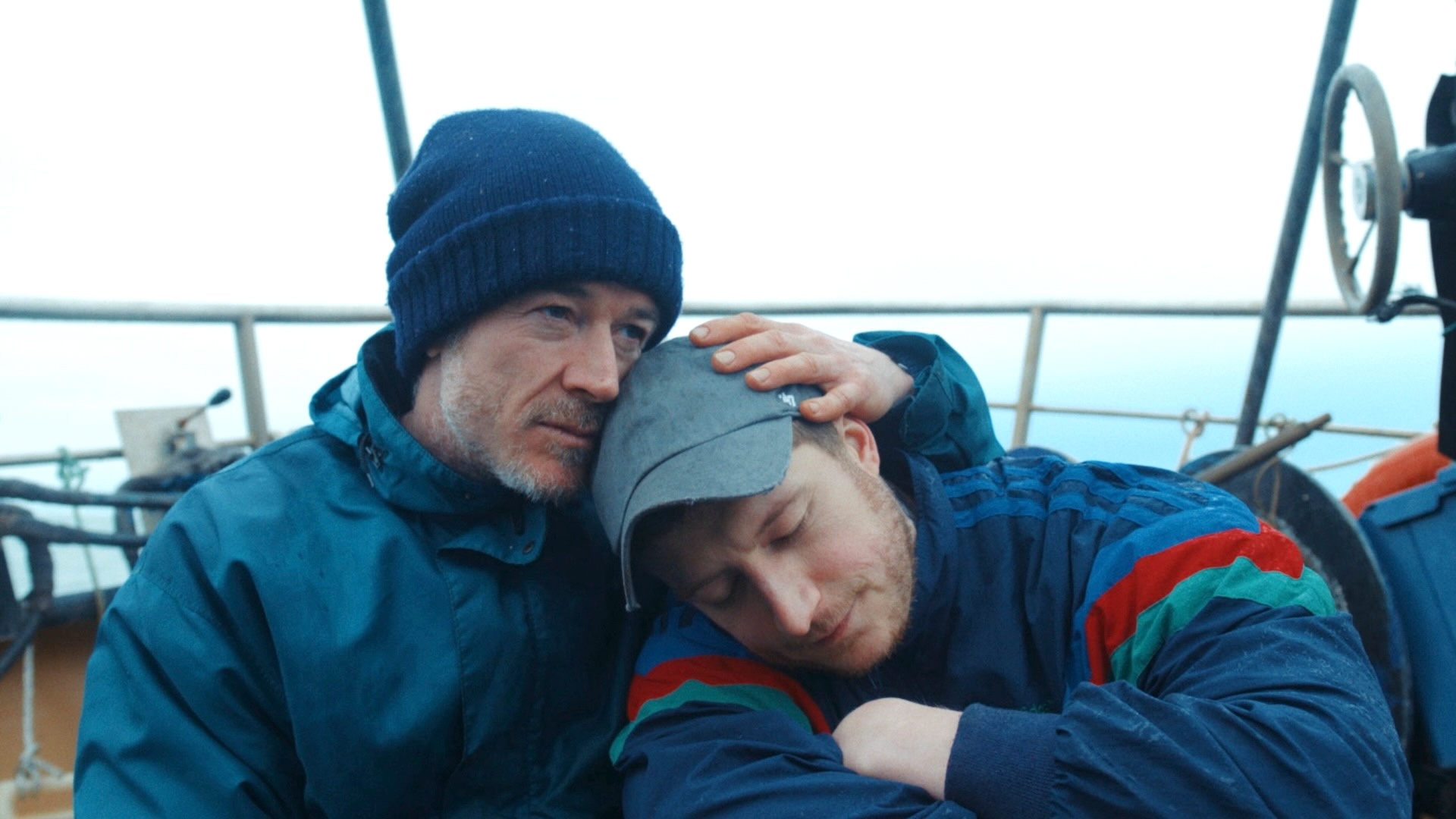
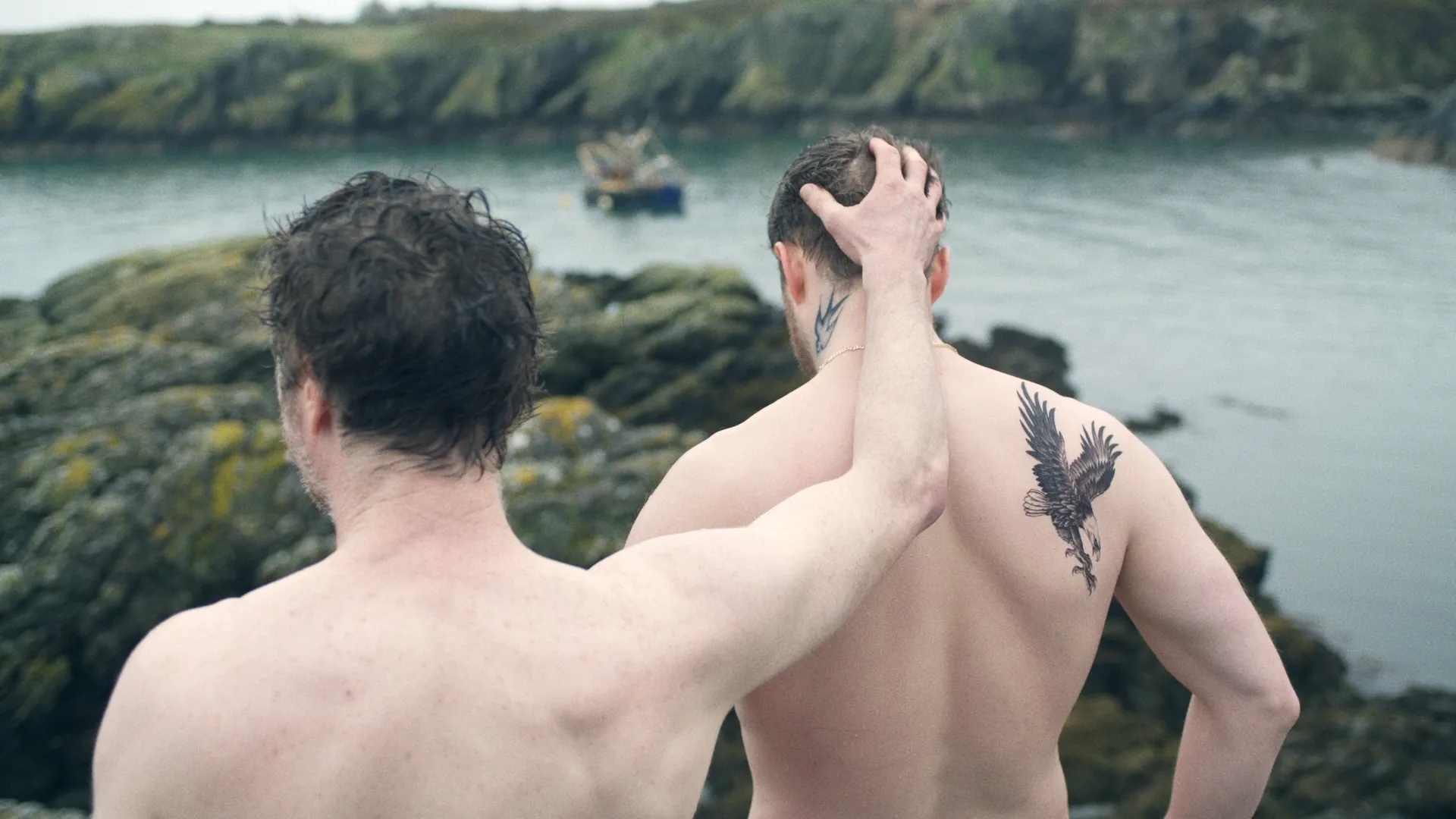
After an incident when the elderly owner of a trawler is injured by Tom’s new friends, Jack steps in to look after the old man and is afforded the opportunity to (quite literally) venture out into new waters. He also strikes up a friendship with young hired hand, Daniel (Lorne MacFadyen), one that quickly and unexpectedly ignites into a full-blown love affair…

This simple but powerful film captures the look and feel of a small Welsh fishing community in intricate detail. Every frame of Sam Goldie’s cinematography amplifies the bleak, unforgiving nature of the landscape, while Felix Rösch’s ethereal soundtrack appears to find its inspiration in the excesses of the weather. Watching Jack and his team work through the hours dredging mussels from the shallows makes me feel like I’m working alongside them.

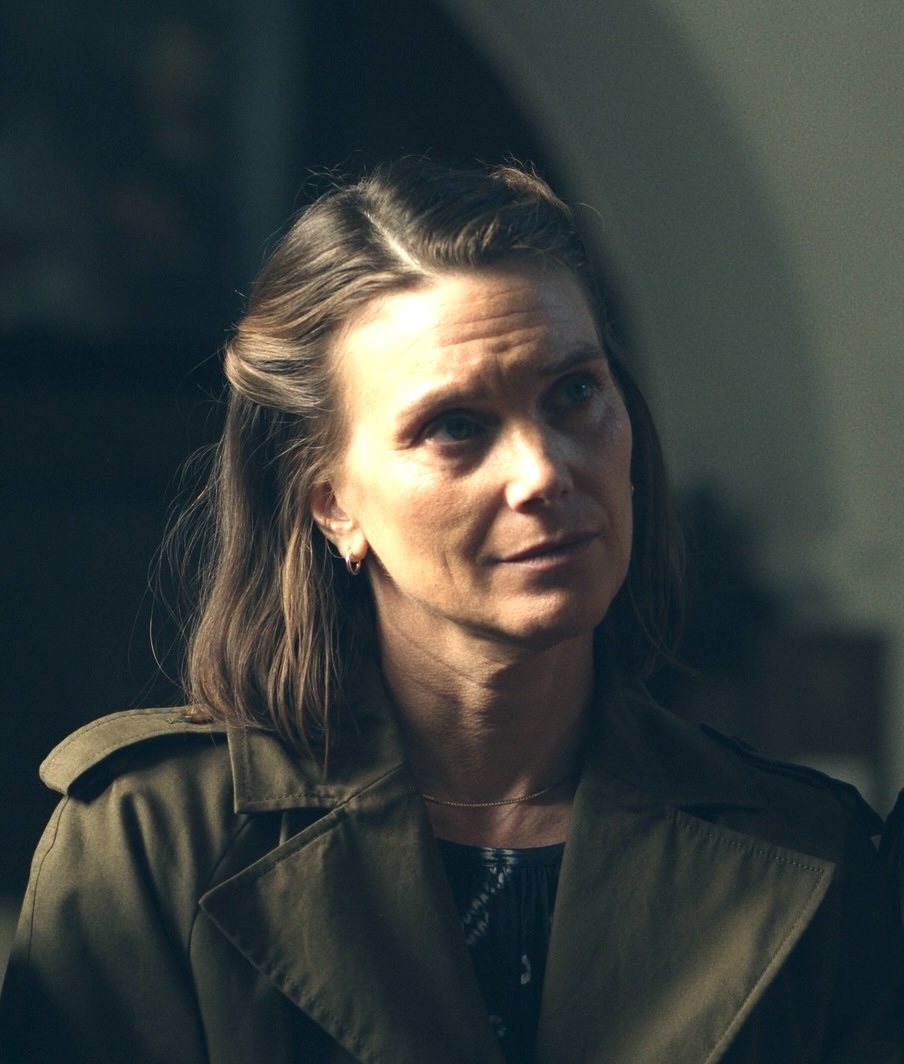
The performances are terrific, particularly from Ward and MacFadyen as the central duo, both of them bound by the power of their mutual passion. White is impressive too, as Maggie reacts with understandable shock to the implosion of her marriage, yet manages somehow to remain steadfast and gracious.

Those who’ve had had their fill of bombastic special effects and are looking for something more subtle will find much to enjoy in this deceptively simple story. And, as a North Walian myself, I’m delighted to see my fellow Gogs beginning to make their mark on the big screen.

4 stars

Philip Caveney

The Odyssey

18/07/26

Cineworld, Edinburgh

‘See it on the biggest screen possible.’

Advice we’ve often given and something we had every intention of following ourselves in the case of Sir Christopher Nolan’s latest release. But, for the first time ever, finding an empty seat in an IMAX screening in Edinburgh proves impossible – unless we’re prepared to sit in the very front row. (Done that once, never again.) This development is simultaneously annoying and wonderfully heartening. Perhaps that much-rumoured resurgence in cinema attendance, fuelled by the likes of Obsession and Backrooms, is actually gathering momentum. Or is it just Nolan’s astute handling of the movie’s advertising, coupled with the Oscar success of Oppenheimer that has led to this stampede for tickets?

Whatever the reason, we decide to book in for a standard screening. We’ll revisit in IMAX sometime in the near future. Providing it’s any good, of course. Despite widespread critical acclaim, the online vitriol poured on the film by people who haven’t actually seen it yet means that this one has much to prove. And happily, it passes every test with flying colours.

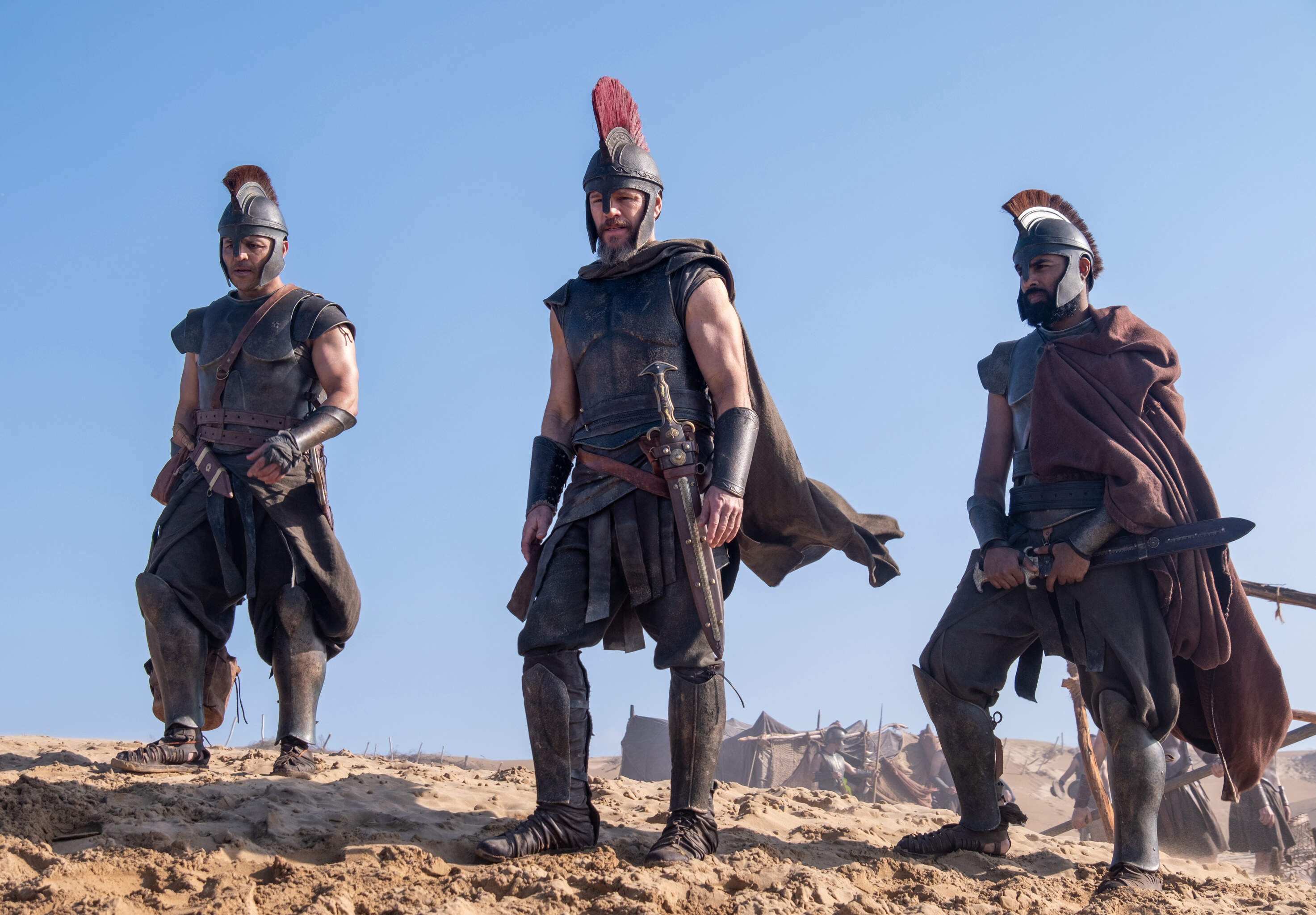
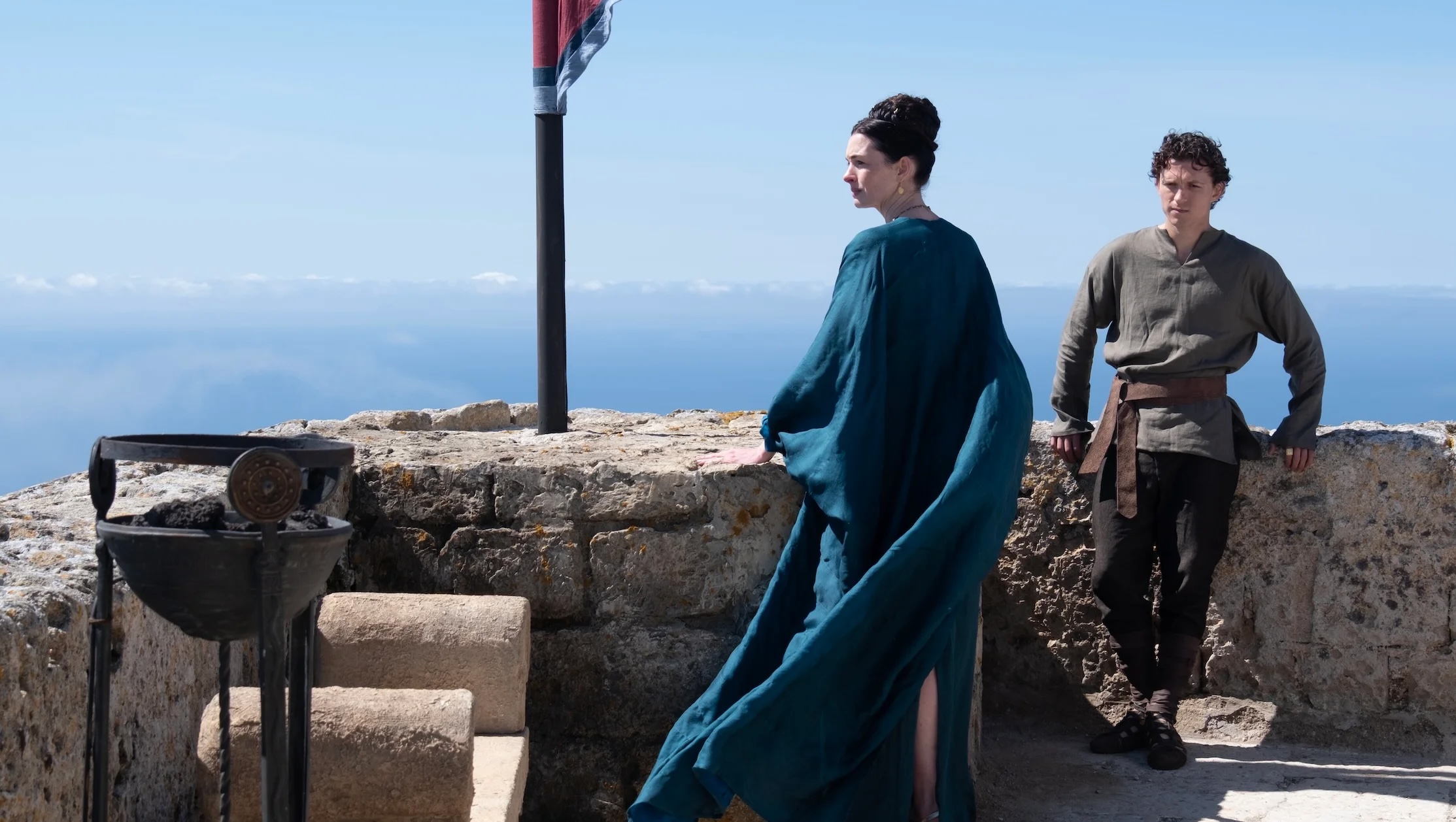
We all know The Odyssey, of course. Homer’s epic poem is still the bane of many young students’ lives as they are obliged to read their way through its meandering stanzas, which focus on the twenty year ordeal of its central character, Odysseus (played here rather wonderfully by Matt Damon). Our hero, forced for the first decade to play a key role in the siege of Troy, then has to spend the next ten trying to find his way back to Ithaca, where his faithful wife, Penelope (Anne Hathaway), and his loyal son, Telemachus (Tom Holland), still await his return.

But to get to them, Odysseus and his crew must take on all manner of obstacles: the giant cyclops, Polythemus (Bill Irwin); the powerful witch, Circe (Samantha Morton); the Lotus-dispensing Calypso (Charlize Theron); and, most egregious of all, the Ocean – which, because Odysseus has annoyed Poseidon, is determined to send them all to a watery grave.

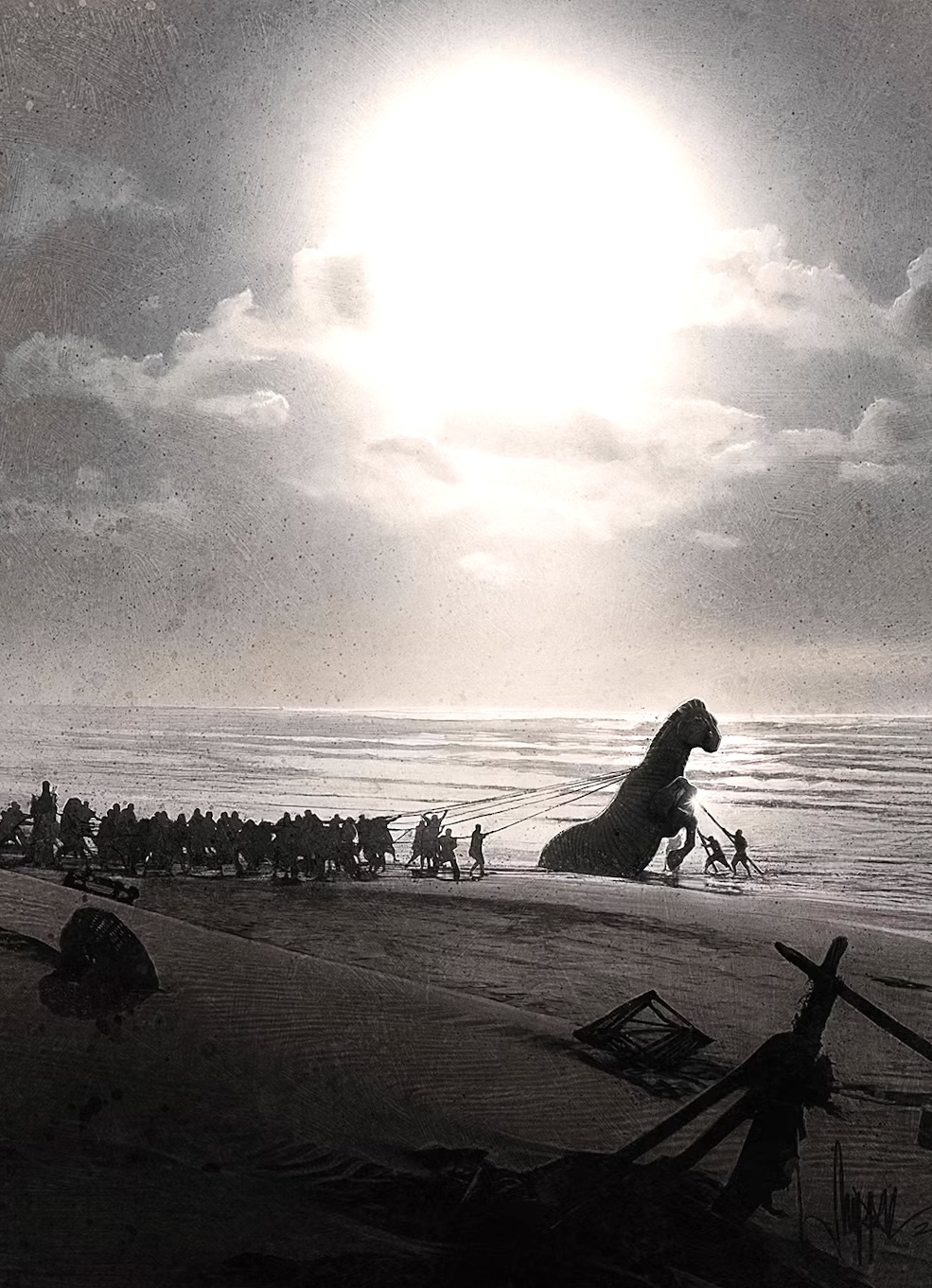
With a running time just short of three hours, this could be a ponderous affair but Nolan (who also adapted the screenplay from the original poem) employs an ingenious non-sequential approach, cutting effortlessly back and forth across the passing years to ensure that no particular sequence overstays its welcome. What’s more, even though most of the situations are familiar from earlier versions of the story (the 1954 Ulysses starring Kirk Douglas springs to mind, as do several of the films featuring the work of stop-motion genius Ray Harryhausen), Nolan always manages to put a different spin on proceedings.

Of course, a tale as packed as this one is sure to have its more memorable sections. The scene where Odysseus and his men are locked in a cave with the aforementioned Polythemus is a particular standout, as is Circe’s transformation of Odysseus’s crew into swine. She uses a hands-on approach like a potter moulding clay, the sequence employing old-school practical effects that recall the work of the legendary Rick Baker.

And if you’re a fan of an enormous climactic dust-up, well, I don’t think you’ll be left feeling short-changed.

The cast is stellar with many big names popping up in minor roles. Robert Pattinson proves once again that he is a terrific actor as the oily, scheming Antinous and all hail to John Leguizamo as the ever-faithful Eumaeous. Much has been made of the casting of Elliot Page as Sinon and Lupita Nyong’o as Helen of Troy, with incensed commentators complaining about ‘authenticity’ as though this is a historical piece rather than a slice of weird fantasy, but both actors give strong performances that more than justify their casting. Oh, and by the way, those American accents serve as a commentary on the current world order, which – when you think about it – makes a lot of sense.

Perhaps the most original addition here is the clarification of just how much two decades of havoc have taken their toll on the central character. In the film’s final section, as Odysseus recalls the cruelty and bloodshed visited upon the people of Troy, this feels increasingly like the recollections of a man suffering from PTSD, finally emerging from a lotus-induced fog and forced to confront the pain his decisions have inflicted on those who followed him.

Make no mistake, this is a superb film: assured, inventive and directed by a man at the very top of his game. I haven’t always loved Nolan’s films but this may just be his masterpiece. Buckle in and get those IMAX seats booked… if you can find them.

5 stars

Philip Caveney

Oppenheimer

22/07/23

Cineworld, Edinburgh

What do you do the day after you’ve seen Barbie? You watch Oppenheimer, of course, because some bright spark has decided that, as these two completely disparate films share the same release date, they shall henceforth be known as Barbenheimer. Well, fair enough. I’m just pleased to see the cinemas bustling again, which at least gives me some hope for their future. And I have the sense to see the films over two days, rather than as a bizarre double-bill.

Where Barbie was lighthearted and vivacious, Oppenheimer is deadly serious stuff, a biopic of the man who gave humanity the atomic bomb, along with the distinct possibility of destroying the planet we inhabit. Furthermore, with a running time of three hours, it’s clear that director Christopher Nolan wants us to ponder the titular character’s life in some considerable detail.

Nolan – still smarting, no doubt – from the underwhelming critical response for his previous offering, Tenet, has pulled out all the stops here, choosing to shoot the film using IMAX cameras. This at first seems an odd decision for a film where men in suits talk about physics but Nolan constantly cuts away to dazzling optical displays of nuclear fission, fizzing and popping like surreal fireworks, and there are impressive recreations of Los Alamos in New Mexico.

Ludwig Göransson’s score also impresses though it occasionally underpins some quite complicated dialogue (just as it did in Tenet) and I find myself wishing it would pipe down a bit. Just saying.

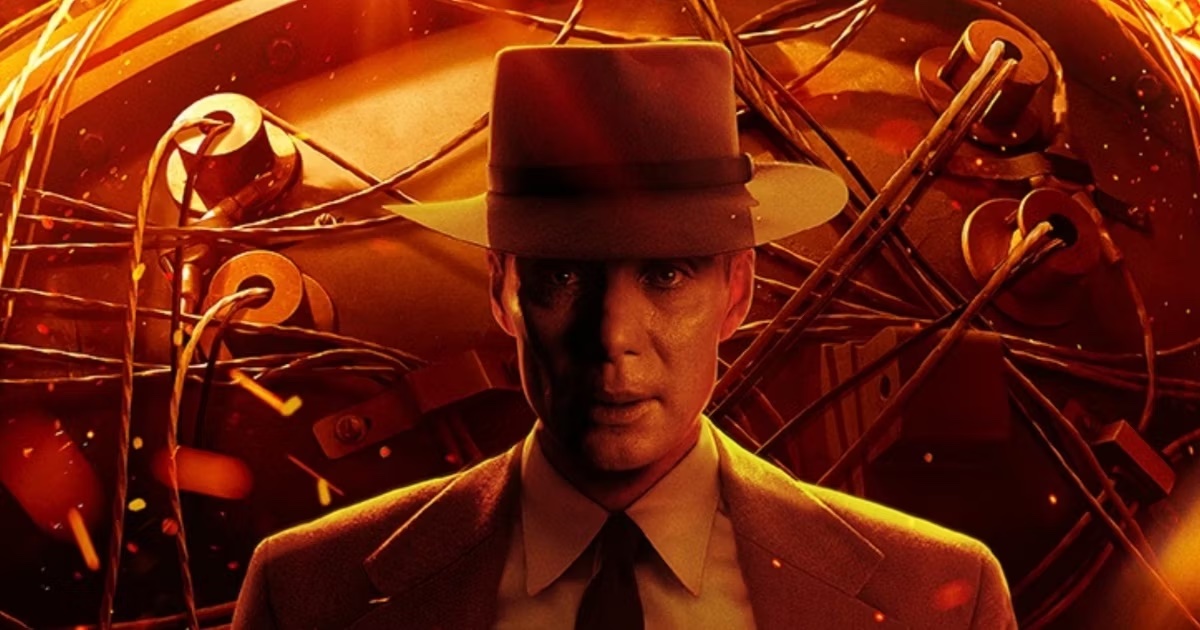
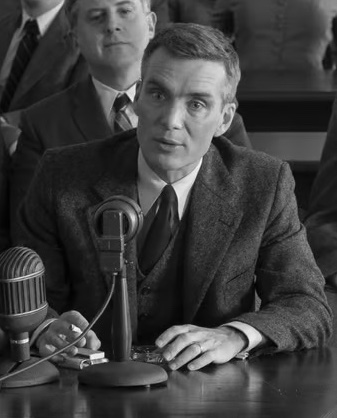
Cillian Murphy plays J. Robert Oppenheimer with considerable presence, managing to portray him convincingly at various stages of his life, from wide-eyed young student of physics to embittered elder statesman. Emily Blunt is quietly impressive as his wife, Kitty, and Robert Downey Junior is delightfully devious as Lewis Strauss, the man who sets Oppenheimer on the path to his ultimate destiny. The film boasts a massive cast that positively bristles with A listers, so many it feels pointless to mention them all – but I’ll make an exception for the assured performance of Matt Damon as Lt General Leslie Groves, the man who appointed Oppenheimer to oversee the Manhattan Project.

The screenplay, written by Nolan, sweeps confidently backwards and forwards through Oppenheimer’s chronology, never confusing and constantly throwing out disturbing questions about the nature of mankind’s eternal hubris. The potential danger that the complicated science might be hard to follow is not allowed to become a problem.

Ultimately, the central character emerges as a martyr, a brilliant man encouraged and seduced by the powers that be, then rejected and used as their scapegoat. Murphy’s chiselled features seem to stare out of that giant screen as if appealing for understanding for the torture he’s going through, the awful weight of responsibility resting on those narrow shoulders. I know little about Oppenheimer before I see this film and am now fascinated to learn more.

Oppenheimer keeps me hooked throughout and sometimes does the near impossible, creating suspense for an event I already know the outcome of. While this doesn’t quite measure up to Nolan’s finest work, it’s nonetheless an impressive film that deserves the plaudits it’s receiving.

And if it isn’t quite as assured as it’s shocking pink stablemate, well, this is a much tougher tale to tell… and a harder one to stomach.

4.4 stars

Philip Caveney

The Batman

04/03/22

Cineworld, Edinburgh

Director Matt Reeves’ modest ambition for The Batman was to make ‘the best Batman movie yet.’

Well, he hasn’t done that – but he’s certainly made the longest. Weighing in at a bum-numbing two hours and fifty minutes, it brings to mind the conviction that while ‘less’ is often ‘more’, ‘more’ usually equals ‘less’ when it comes to movies. And, while this just about scrapes four stars in its present bloated form, it would have scored much higher with some judicious editing. I mean, like, excising fifty minutes.

What is it about Batman that makes directors keep returning to that oft-plundered well? The fact that this is a comic-book hero who doesn’t have any super powers is always appealing, and there’s that delicious interplay between the vigilante who takes the law into his own hands and those misguided fools who see him as a hero. In this regard, The Batman feels a lot more nuanced than many of its predecessors, but it’s also sobering to think that the best film of the franchise is the one that he doesn’t even feature in.

Joker, thanks for asking.

Mind you if you thought Christopher Nolan’s depiction of Gotham City was dark, prepare to turn the palette down several notches. Reeves’ Gotham (shot in studios all over the UK) is filmed in tones of obsidian and anthracite. In this Gotham, it never seems to stop raining and the city is ruled by corrupt public officials, who gleefully take bribes and exploit the working classes for their own enrichment. (Remind you of anywhere?)

It’s Hallowe’en and a masked villain called The Riddler (brilliantly played by Paul Dano, though we don’t actually see his face until late on in the proceedings) is gleefully murdering those in power, who have allowed their standards to slip. Batman/Bruce Wayne (Robert Pattinson), though hated by most of the police force, is invited to investigate the crimes by Commissioner Gordon (Jeffrey Wright), the only cop who trusts him.

The Riddler is leaving cryptic clues at the scenes of the crime and Batman is good at deciphering them. In the course of his investigations, he comes into contact with Selina Kyle (Zoe Kravitz), crime kingpin, Carmine Falcone (John Turturro), and The Penguin (an unrecognisable Colin Farrell, hidden beneath layers of latex and sounding for all the world like Robert De Niro).

As the proceedings unfold, it becomes clear to Bruce that his own father, whose murder initiated Bruce’s transition into the Caped Crusader, might not have been as innocent as his son has always supposed. Batman also comes to realise that there are many people out there who follow his vigilante tactics with relish – and who would really like to be him.

And, as loyal butler, Alfred (Andy Serkis) is quick to point out, Bruce’s father might have done the wrong thing – but for very sound reasons.

There’s a lot here that I really like. It offers a much more interesting vision of DC’s premier hero than we’re used to seeing – but too much time is spent wandering along dark alleyways that don’t advance the plot enough. It’s only as I’m starting to grow impatient with the film that it finally coalesces and ramps up the suspense, as it heads into a vaguely apocalyptic climax that is weirdly prescient and also, in a strange way, uplifting. Reeves has already proven his worth with the likes of Cloverfield and his astute retooling of the Planet of the Apes trilogy – but, inevitably, The Batman just feels too long for its own good.

This is a shame because Pattinson really works in the lead role (for once, I actually believe that nobody would suspect his Bruce Wayne of being Batman, since the two personas are so different). Kravitz is also compelling in the Catwoman role, and I fully expect to see her return to it. A nifty coda shows us exactly where Reeves plans to go next and, given the projected casting for the next lead villain, I have to confess I’m suitably intrigued.

But please, Matt, next time around… can we just have a bit less?

4 stars

Philip Caveney

Tenet

26/08/20

You have to feel a wee bit sorry for Christopher Nolan. He is the first film director of stature to pop his head above the parapet post-lockdown, and so Tenet has the daunting task of being the flag bearer, the film expected to tempt cinema-goers back into the multiplexes en masse. Both the Bond franchise and Disney’s Mulan, have recently baulked at the responsibility and who can blame them?.

Interestingly, it’s a Bond movie that most springs to mind watching Tenet, though it would be 007 On Acid, given that its plot elements are so incomprehensible, I feel singularly unqualified to say much about them. (Sadly, I don’t possess a PHD in quantum physics.) Suffice to say that Nolans’s regular obsession with time (and the manipulation of it) are taken to their ultimate conclusion here. The result is mind bending – and not always in a good way.

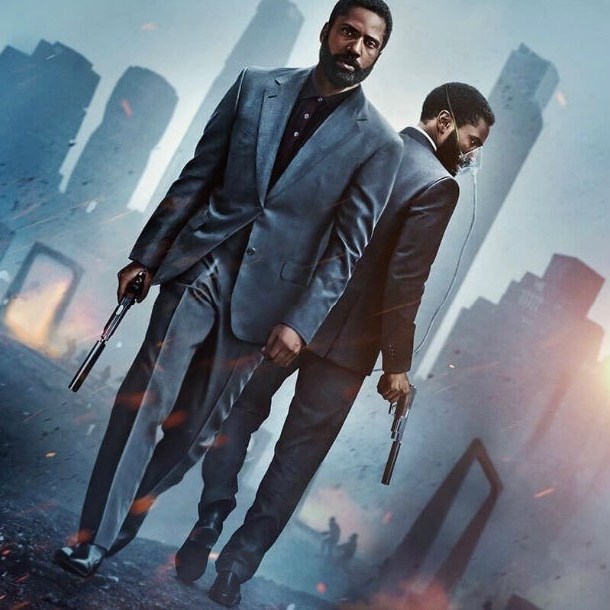
The hero of the film, a CIA operative known only as The Protagonist (John David Washington), is first encountered as a member of a team carrying out a (frankly baffling) assignment in the Kiev Opera House. After that, he is recruited for a special assignment, which is referred to only by the palindromic title and a certain hand gesture. It’s all about the reversal of time or, as one character puts it, ‘entropy’. What ensues is a whole series of action set-pieces, where fights, car chases and even explosions can run forwards or backwards – often simultaneously.

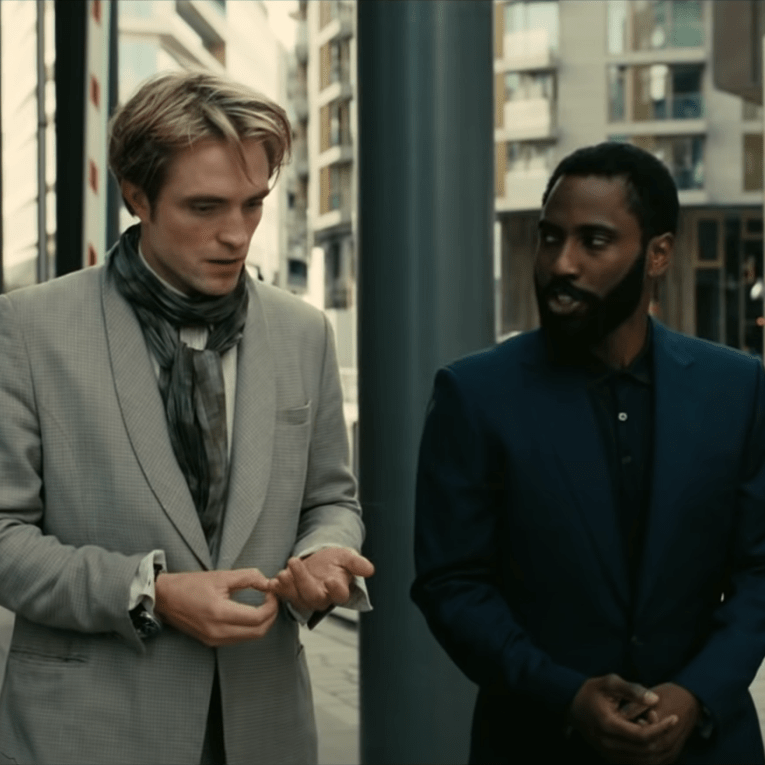
The Protagonist soon finds himself teamed with the more modestly monikered Neil (Robert Pattinson) and, shortly after that, becomes increasingly enmeshed in the lives of the enigmatic Kat (Elizabeth Debicki) and her husband, power-mad Russian arms dealer, Andrei (Kenneth Branagh). Andrei, it seems, has the power to end the world as we know it, and The Protagonist has been handed the job of putting a stop to his shenanigans – so, no great pressure there…

There’s no doubting the sheer scale and ambition of this work and there’s certainly plenty of brain-scrambling action on offer, but Nolan doesn’t do himself any great favours with the complexity of the plot and the fact that much of the expository dialogue is obscured by an overly intrusive soundtrack, courtesy of Ludwig Göronsson. Washington doesn’t really have the opportunity to emote enough for us to care what happens to him, while Branagh’s snarling, bellowing Andrei veers dangerously close to caricature. Debicki is good though, and Pattinson manages to exude a suave, laidback charm, which helps no end.

I find myself alternately enjoying parts of this and feeling frustrated by others. While I’m generally the last person to favour ‘easy’ stories, I’m not convinced that this is the kind of material designed to tempt Joe Public back to the cinema – though I also have to add that it did feel wonderful to be back there, even if this isn’t the best Christopher Nolan film ever (that would be The Prestige, by the way. Thanks for asking).

If you’re looking for something big, loud and packed with action, Tenet is probably the logical choice – just don’t expect to understand everything you see.

3.8 stars

Philip Caveney

Dunkirk

22/07/17

Christopher Nolan must be one of the most eclectic directors currently working. From The Dark Knight to Inception – from The Prestige to Interstellar, he seems to favour no particular genre, preferring to go wherever his fancy takes him. But I would never have predicted he’d direct a classic war movie like Dunkirk… but then, of course, this coming from the same man who made Memento means that it’s actually nothing like Leslie Norman’s 1958 film of the same name. This version employs experimental time frames to tell three interlinking stories. Powered along by Hans Zimmer’s urgent soundtrack and decidedly spare in its use of dialogue, the film grips like a vice from the opening shot to the closing frame.

The first strand concerns a young soldier, appropriately enough named Tommy (Fionn Whitehead) who is desperately making his way to Dunkirk beach in the hope of finding a boat to take him to safety. Along the way he meets up with the strangely taciturn Gibson (Damien Bonnard) and with Alex (Harry Styles – relax, it turns out he can act). The three men brave the dangers of ‘The Mole,’the perilous wooden jetty that leads out into deeper water where the larger ships can dock, but finding a safe berth is not easy and they are forced to seek alternative means of escape. The soldiers’ story plays out over one week.

Next up, we encounter Mr Dawson (Mark Rylance), a quietly spoken boat-owner who answers the desperate call for help and sets off for Dunkirk from his home port in Devon, with his son, Peter (Tom Glynn-Carney) and George (Barry Keoghan), a young lad desperate to prove himself to his parents. On the way they pick up ‘the shivering soldier’ (Cillian Murphy), a man so traumatised by his recent experiences that he can barely speak and who is clearly in no great hurry to return to France. This story is enacted over the course of one day.

And finally, in the deadly skies above Dunkirk, we meet Farrier (Tom Hardy) and Collins (Jack Lowden), two spitfire pilots charged with the thankless task of taking on the might of the Luftwaffe, buying time for the fleeing army to make its escape. In what at first appears to be a perverse move, Nolan keeps Hardy’s distinctive features mostly hidden behind goggles and an oxygen mask – but then you realise that he’s doing it for a reason – to emphasise the fact that the individual pilots who took part in this conflict remain largely unknown. Their tale, dictated by the amount of fuel that a Spitfire can carry, takes only an hour.

But of course, the three strands are interwoven like an expertly braided length of rope and it’s to Nolan’s credit that the ensuing events never become confusing, even when one particular character appears to be in two places almost simultaneously. What this film does splendidly is pull you into the heart of the hurricane and hold you there in almost unbearable tension.

This is after all not a film about bloodshed – in fact we see very little of that onscreen. It’s more about the brutal realities of survival, the mental toll on the participants and the quiet heroism of those who participate in the carnage. It’s the true life story of a military miracle, pulled off against all the odds. It may not be Nolan’s finest achievement – I’d hand that accolade to The Prestige – but it’s nonetheless a superbly affecting film that justifies all the rave reviews it’s been getting.

Where will Nolan go next, I wonder? Well, I suppose he’s yet to make a teen romance. But I won’t hold my breath.

5 stars

Philip Caveney
Interstellar

MV5BMjIxNTU4MzY4MF5BMl5BanBnXkFtZTgwMzM4ODI3MjE@._V1_SX214_AL_

9/11/14

Some films arrive in the cinema burdened by the weight of unreasonable expectation and Interstellar is one such film. Probably the most anticipated release since Prometheus (and look what happened with that!), if we are to believe what we’re told, this film is destined to save the film industry itself because what the world needs now is a major blockbuster and this just might be it. The film takes on weighty themes like the demise of mankind, the exploration of space and some fairly ‘out there’ theories about black holes and the fifth dimension. If much of it feels like a homage to Kubrick’s 2001, that’s no bad thing. The good news is, that though not perfect, Christopher Nolan’s three hour epic manages to hold a viewer’s attention throughout and in two key set pieces racks up levels of almost unbearable suspense.

The world is going to hell in a handcart, mostly because it’s turning into one great big dustbowl. Crops are dying out and ex space explorer Cooper, (Matthew McConaughey) now a corn farmer, sees his livelihood slipping away. When his young daughter Murphy tells him that the bookcase in her bedroom is trying to communicate with her (stay with me) Cooper identifies an anomaly, one that leads him to a remote location, where NASA scientist, Professor Brand (Michael Caine) is preparing a secret space mission, which he hopes will find a way to save the world. He’s prepared to send his own daughter, (Anne Hathaway) as a member of the team and he wants Cooper to pilot the spaceship. But it will mean being parted from his children for many years, with no guarantee of survival…

It’s to the film’s credit, that it makes some fairly unlikely events seem believable, but much of the ‘science’ here is so mind-blowingly complicated, that characters often have to resort to sketching diagrams to ensure that the audience understands it better – and there’s a final M. Night Shymalan-style twist that will either have you starry-eyed with wonder or shouting ‘no way!’ at the screen. Whether Interstellar can save the film industry is debatable. What is for sure is that Nolan hasn’t lost his Midas touch when it comes to creating awe-inspiring cinema. The father-daughter relationship at the heart of this tale is a powerful hook and the cinematography and special effects sequences are often breath-taking. A palpable hit, methinks.

4.8 stars

Philip Caveney