09/10/26
The Royal Lyceum Theatre, Edinburgh
The titular educator is an Edinburgh icon, her legacy woven into the fabric of the city, from the Vennel’s Miss Jean Brodie Steps to Bruntsfield’s Muriel Spark Walk. Her very name references Deacon Brodie, one of the city’s most infamous 18th century luminaries, a thief and philanderer she proudly claims as her ancestor. Perhaps her duplicitous nature is part of her DNA.
This vibrant production (from the National Theatre of Scotland, The Royal Lyceum and Pitlochry Festival Theatre) breathes new life into the old favourite, amplifying the teacher’s allure as well as her failings.
It’s 1935. In Europe, Adolf Hitler is a rising threat but Benito Mussolini, although polarising, is admired by many for his bold authoritarianism. Primary school teacher Miss Jean Brodie (Gayle Rankin) is certainly a fan: she shares his aesthetic obsession with order and control. Like the Italian fascist, she is a charismatic leader – and her classroom is her country.
Miss Brodie’s eleven-year-old pupils are in their final year of Juniors and she’s supposed to be preparing them for their Senior school entrance exam. Instead, as soon as her classroom door is closed, she kicks off her shoes and denounces the system. She lambasts the conservative Miss Mackay (Maureen Beattie), encouraging the girls to mock their headmistress. In lieu of maths, she shares bon mots; rather than history, she tells tales of her holidays. In short, Miss Brodie casts a spell over her students, inspiring a cult-like devotion that feeds her monstrous ego.
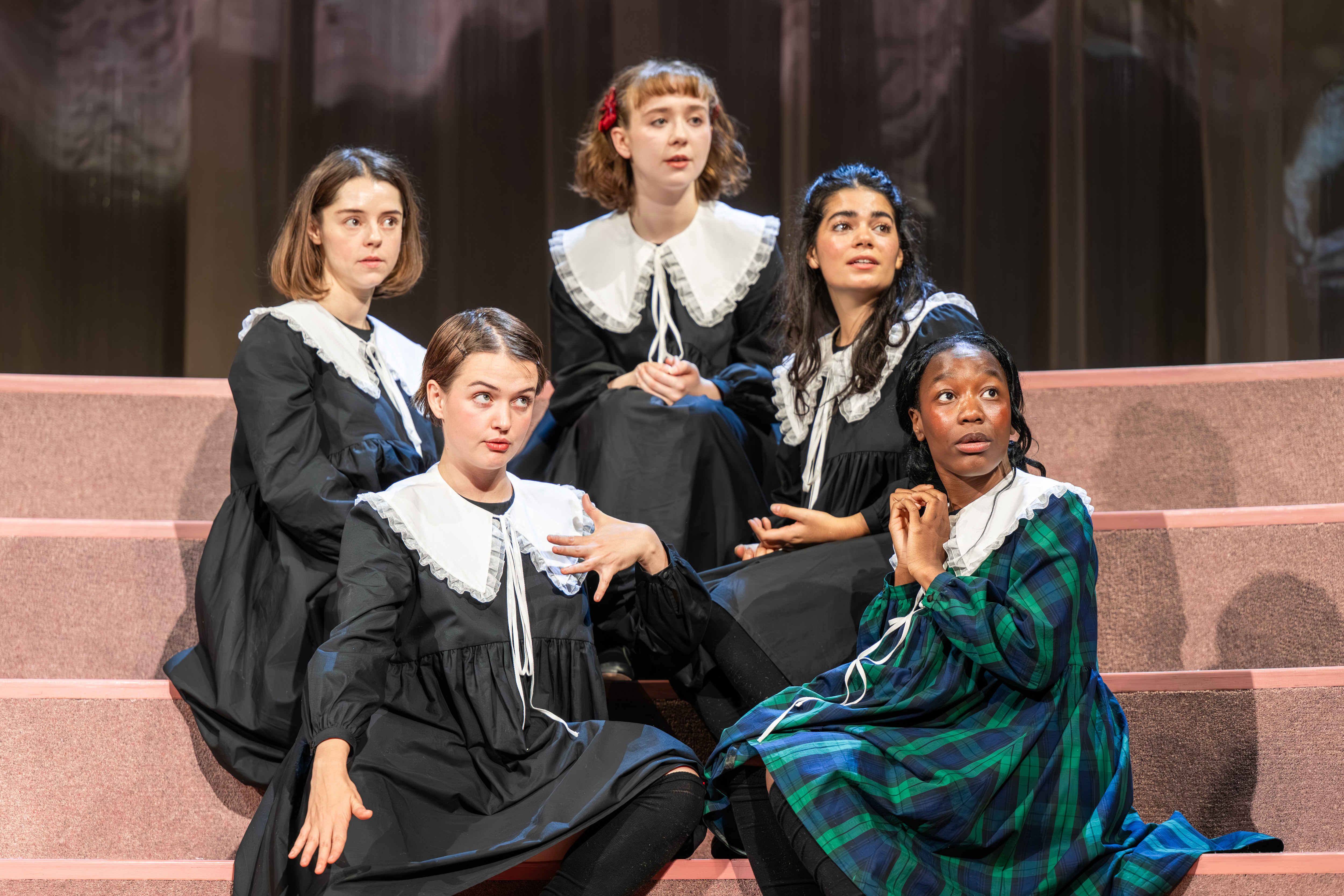
Of course, we’d call it grooming nowadays. Miss Brodie’s ‘set’ are carefully selected for their pliability and romanticism, wooed with flattery, sex-talk, secrets and booze. For preteens Sandy (Bobby Rainsbury), Jenny (Shreya Khaund Marshall), Monica (Tallulah Greive), Mary (Liberty Black) and Joyce Emily (Sophie Fortune), it’s a heady, irresistible mix, in stark contrast to Miss Mackay’s moribund regime. But children have a habit of growing up and noticing their heroines’ feet of clay. And who is Miss Brodie without her posse of adoring fans?
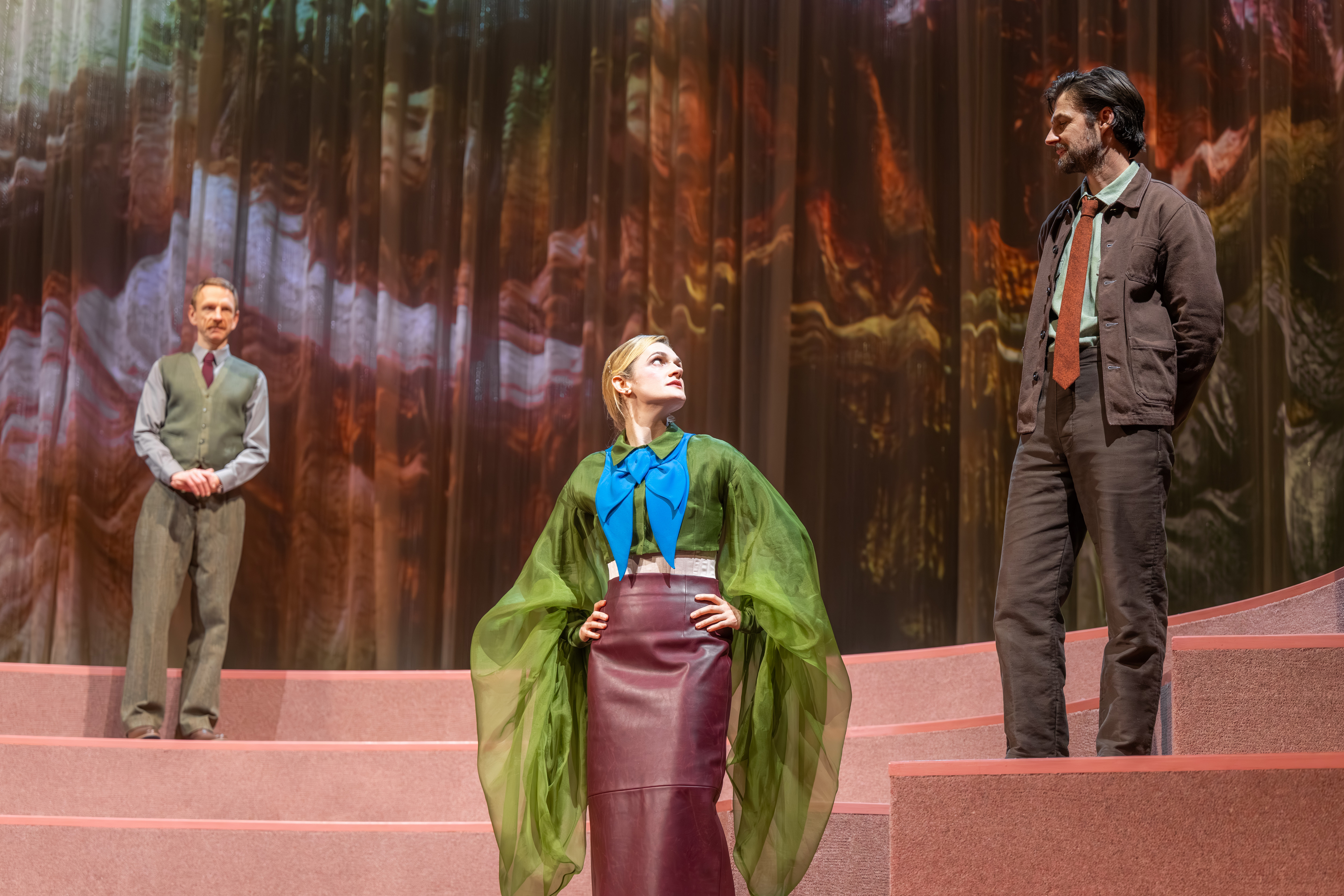
Written by David Harrower and directed by Vicky Featherstone, this adaptation of Sparks’ best-known novel is a triumph, with a clarity of vision that renders the play every bit as engaging as its protagonist. The three-hour running time flies by. Rankin is mesmerising as the charismatic lead; it’s easy to understand why the girls are so in thrall to her, not to mention her two suitors, drippy, devoted Mr Lowther (Brian Ferguson) and brooding badass Mr Lloyd (Dyfan Dwyfor).
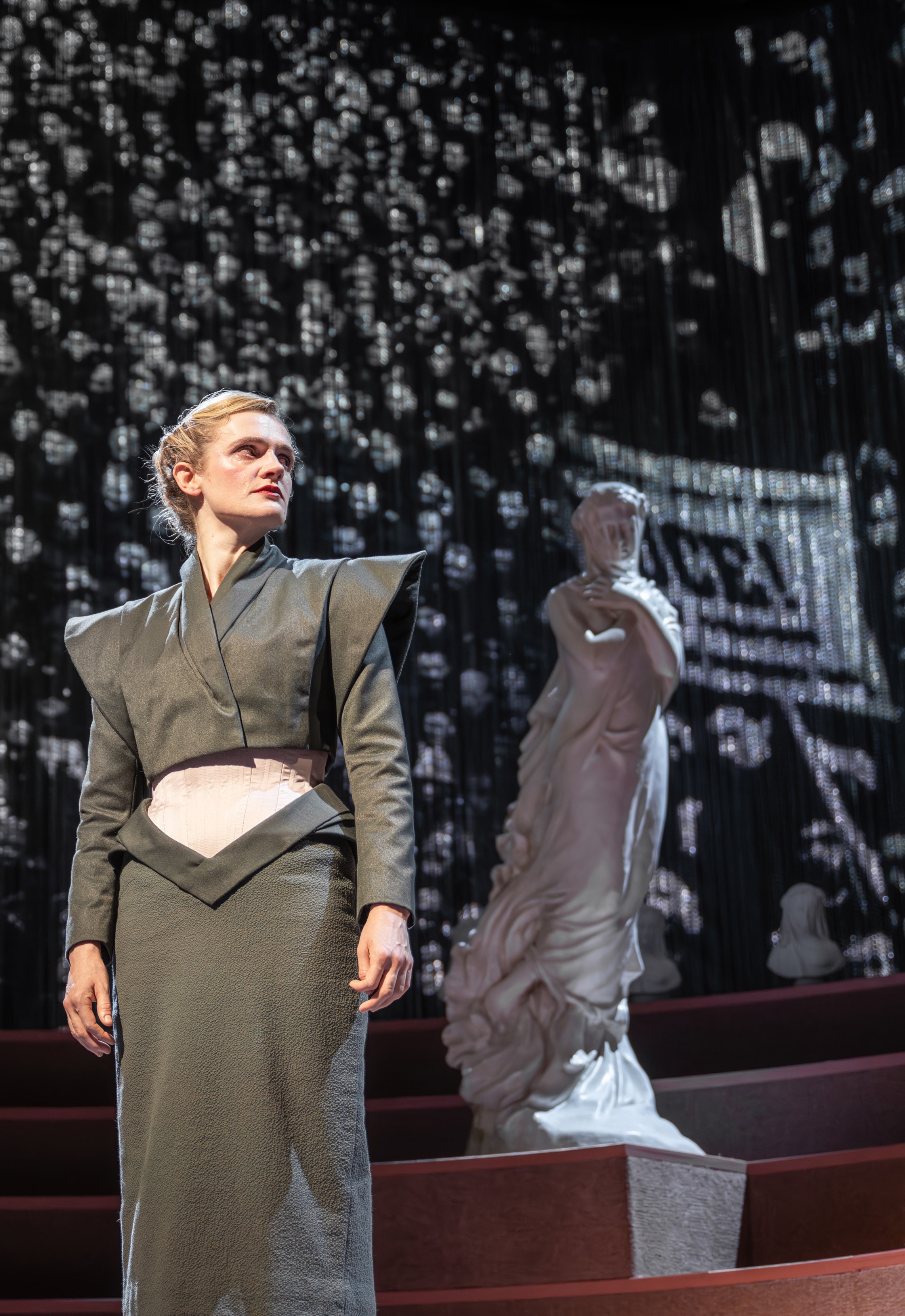
Chloe Lamford’s spectacular set design – a giant semi-circle of tiered steps – resembles nothing so much as a Roman amphitheatre (with the auditorium completing the circle), the perfect venue for the gladiatorial-style battle Miss Brodie believes she is engaged in, determined as she is to promote individualism and free the girls from the tyranny of ‘team spirit’. Behind the steps, Lewis den Hertog’s enormous video projections throw up ever-changing images, from Proto-Renaissance art to fascist marches, Miss Brodie’s adult worldliness dwarfing her young acolytes’ limited experience. No wonder she clings to her job so passionately; in this arena, she appears all-knowing.
I love Anna Orton’s costume design, Miss Brodie’s outfits reflecting the different stages of the girls’ relationship with her. When Rankin first enters, striking a powerful pose centre stage, she’s dressed flamboyantly in a fitted pink leather skirt and a green shirt with oversized, wing-like sleeves. We see her through her pupils’ eyes as she morphs from exotic and exciting to strong and commanding, changing into a structured suit with sharp lines and pagoda shoulders. As the girls grow older and she confides in them about her love-life, she begins to dress in a more overtly sexy way (cue tight-fitting zebra print) before finally being cut down to size, literally undressed and relegated to a nursing home and a dull dressing gown.
The girls’ costumes are interesting too. In the first act, they wear simple black smocks, complete with white collars and black knee socks. After the interval, it takes me a few minutes to notice a subtle difference: the dresses are now sheer, the girls’ sensible underwear clearly visible beneath. The imagery is clever in its simplicity, showing how the girls are becoming young women, their sexuality burgeoning despite the school’s strictures.
It’s also a sign that Miss Brodie’s reign is coming to an end.
To be honest, when I re-read The Prime of Miss Jean Brodie a few years ago, I didn’t enjoy it, and I wondered if the story had lost its potency. Thanks to this magnificent production, I now know that it has not.
5 stars
Susan Singfield