Lyceum Theatre

Rhinoceros

25/03/18

Lyceum Theatre, Edinburgh

There are, I’m told, people who “don’t like” theatre. And, of course, those people are absolutely entitled to their opinion. But, oh, how I wish I could take them by the hand and guide them to the Royal Lyceum, where Edinburgh’s International Festival and Istanbul’s Dot Theatre have joined forces to create something I’m sure would change their minds.

I’ve read Eugene Ionesco’s Rhinoceros, but I’ve never seen it performed. And, in Turkish director Murat Daltaban’s hands, something magical happens in that leap from page to stage. This is inspirational theatre: at once lively, accessible, thought-provoking and funny. It’s clever, clever stuff – and, judging by the excited, enthusiastic buzz in the theatre bar, it’s crowd-pleasing as well.

Speaking of crowds, that’s pretty much what this play’s about; more specifically, to quote the Lyceum’s artistic director, David Grieg, it’s about “the fragility of the individual in a time of crowds.” Ionesco witnessed the rise of fascism in 1930s Romania, and this play – with bewildered everyman, Berenger (Robert Jack), at its core – highlights the unsettling horror he must have felt at watching his world change. And, of course, the timing of this production is no accident, with the rise of the ‘alt-right’ and the increasing polarisation of political debate.

As the play opens, all seems well. The sleepy French village comes to life like an animated postcard, all bright hues and exaggerated dimensions. Characters and relationships are quickly established, and there is humour and energy in the exchanges, even when they become heated. But the sight of a rhinoceros (or are there two?) rampaging through the town results in the first real tension, the first real rift.

As growing numbers of rhinoceroses appear, Berenger – a drifter with a drink problem – is horrified to learn that they are his friends and neighbours, that the townsfolk are literally turning into these braying beasts. As more and more of them join the herd, Berenger becomes ever more isolated, a predicament that is illustrated beautifully by the ingenious set, reminiscent of a Chinese puzzle box, shrinking his ‘safe place’ until it’s perilous and unworkable.

This is a truly glorious production, as witty and vivacious as it is prescient. There are some great comic turns, most notably from Myra McFadyen as Papillon and Steven McNicoll as Jean. It’s visually stunning, and the sensual, Middle Eastern-inflected music adds to the mood of transformation, with musician Oguz Kaplangi onstage throughout.

Seriously, grab a reluctant theatre-goer and head along to the Royal Lyceum tonight. You’ll be changing hearts and minds.

5 stars

Susan Singfield

The Lover

23/01/18

Lyceum Theatre, Edinburgh

I was sold on this production from the moment I saw it featured Susan Vidler, whom I’ve long admired. (It’s 1997, there’s a TV movie everyone’s talking about: Macbeth on the Estate. Vidler gives the best portrayal of Lady Macbeth I’ve ever seen. There’s been a score of contenders since, but she still wears the crown.)

In The Lover, she plays a very different role. She’s The Woman, both mother and future self of The Girl (the child is mother of the woman, I suppose) and almost the sole voice of the play. To clarify, she live-narrates the story of her past, and also provides a recorded voice-over for other actors who mime flashbacks. In the flashbacks, she’s The Mother; Amy Hollinshead plays The Girl. And it’s all very clever and artful – perhaps too much so?

Still, based on Margeurite Duras’s novel set in 1920s Saigon, this co-production between the Lyceum, Stellar Quines and Scottish Dance Theatre was surely never aiming for the mainstream. It’s a complex tale of love and loss, of colonialism and privilege, of innocence and experience. If ever a tale were to lend itself to a dual-form adaptation, The Lover is surely it: its poetic language ripe for interpetation in this way.

Directed by Fleur Darkin and Jemima Levick, The Lover shows how dance and theatre are complementary arts. The literal and the metaphorical are interwoven in the telling, The [poor teenage French] Girl’s love affair with The [rich Chinese twenty-seven-year-old] Man (Yosuke Kusano) a slow, sensual unravelling of accepted social norms. The gulf that develops between her and her family; the way she is subsumed by her sexuality: these are beautifully conveyed.

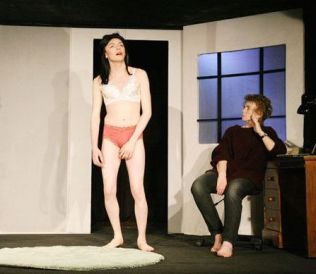
But it’s not an easy watch. That voice-over – so intricately worked, so delicately spoken – has such a distancing effect that it renders all emotion mute. The very control and precision of the movement makes the sex scenes curiously staid, a notion that is heightened by the Ken and Barbie genitals suggested by flesh-coloured underwear. And perhaps I’m being a bit dense (I haven’t read the novel; this may be made clear there), but I’m not at all sure what the deal is between the girl and her big brother, Paulo (Francesco Ferrari).

There is artistry and skill a-plenty here; it’s a beautifully constructed piece. Will it be a big-hitter, a seat-filler? I’m not convinced on that score. A play to appreciate, maybe, rather than one to enjoy.

3.5 stars

Susan Singfield

Theatre Bouquets 2017

unknown-18

unknown-18

unknown-18

Once again we have been wowed by some fantastic theatre this year. Here, in order of viewing (and with the benefit of hindsight), are our favourite productions of 2017.

The Winter’s Tale – Lyceum Theatre, Edinburgh

The Winter's Tale

This thrilling, modern-day version of Shakespeare’s play was dynamic and audacious – with the whole fourth act recast in Scots. We loved every minute of it, especially Maureen Beattie’s performance as Paulina.

Chess: The Musical  – Festival Theatre, Edinburgh

Chess

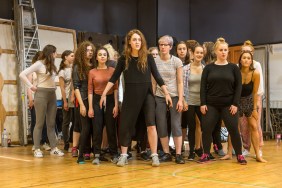
The students from the Royal Conservatoire of Scotland thrilled the audience with a skilful display of all things theatrical. We loved the sophisticated choreography (often incorporating the real time use of video cameras) and choral singing that sent chills down our spines.

Nell Gwyn – King’s Theatre, Edinburgh

Nell Gwyn\

This superb production of Jessica Swales’ Olivier Award-winning comedy was a delight in just about every respect. From the superbly realised set, through to the opulent costumes and the lively period music, this was fabulous to behold.

Death of a Salesman – King’s Theatre, Edinburgh

Death of a Salesman

It was the direction that made this production so good: Abigail Graham did a wonderful job of clarifying everybody’s pain. And Nicholas Woodeson was perfect for the lead role, conveying Willy’s struggle with warmth and vitality.

The Toxic Avenger – Pleasance One, Edinburgh

The Toxic Avenger

A musical in the same vein that made Little Shop of Horrors such a pleasure, The Toxic Avenger was an unqualified delight, romping happily along powered by its own exuberance and the efforts of a stellar cast, who gave this everything they had – and then some.

The Power Behind the Crone – Assembly George Square, Edinburgh

The Power Behind the Crone

This was a wonderful piece of theatre, an exemplar of a Fringe show: beautifully scripted, and acted with precision and panache. Alison Skilbeck had absolute control of the material and created an impressive range of distinct, believable characters.

Seagulls – The Leith Volcano, Edinburgh

Volcano Theatre SEagulls at Edinburgh Fringe Festival

This was the most ambitious, exhilarating piece of theatre we saw this year. Site-specific productions – when the site is as spectacular and relevant as this (we were in an abandoned church, which had been flooded with forty-five tons of water) – can be truly exciting, and this one had a lot to offer.

Safe Place – Rose Street Theatre, Edinburgh

Safe Place

Safe Place provided a sensitive, insightful examination of the uneasy relationship between trans-activism and feminism. It asked (and answered) many questions, all within the framework of a nuanced and intelligent play.

Angels in America: NT Live – Festival Theatre, Edinburgh

Angels In America

Clocking in at just under eight hours, Tony Kushner’s play offered us a “gay fantasia on national themes” – a sprawling, painful and searingly funny depiction of New York in the 1980s, fractured and ill-prepared to deal with the AIDS epidemic. A truly iconic piece of theatre.

Twelfth Night/Romeo & Juliet – King’s Theatre, Edinburgh

Twelfth Night

Romeo & Juliet

Merely Theatre gave us some ‘stripped-back’ Shakespeare, performing Twelfth Night and Romeo & Juliet in rep. The plays featured only five actors and the casting was gender-blind. It all made for an interesting dynamic and prompted us to re-examine familiar scenes.

Cockpit – Lyceum Theatre, Edinburgh

Cockpit

Cockpit was a witty, clever play, which saw the Lyceum transformed into a truly immersive space.  Director Wils Wilson served up a fascinating piece of theatre: arresting, thought-provoking, provocative and demanding – and it kept us talking for hours afterwards.

Cinderella – King’s Theatre, Edinburgh

Cinderella

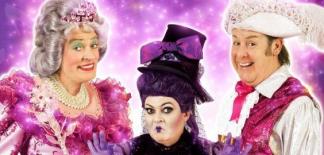
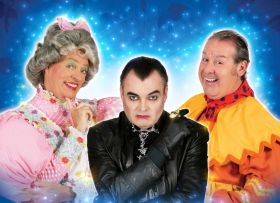
We never thought a pantomime would feature in any ‘best of’ list of ours but, for the second year running, the King’s Theatre’s stalwarts managed to wow us. Allan Stewart, Andy Gray and Grant Stott knew exactly how to work their audience, and the special effects were truly spectacular.

Susan Singfield & Philip Caveney

The Arabian Nights

07/12/17

Lyceum Theatre, Edinburgh

The Arabian Nights is unusual: a children’s Christmas show that never mentions Christmas. Of course it doesn’t – this is a collection of mainly Middle Eastern and Indian stories – but they’re wonderfully apt for the festive season, as marvellous and magical as can be. Suhayla El-Bushra’s script is sprightly and engaging, and nicely complemented by Joe Douglas’s lively direction. This is a delightful production.

At its centre is Scheherazade  (Rehanna MacDonald), a young girl who has fallen foul of the tyrannical Sultan (Nicholas Karimi). Desperate to stay her impending execution, she regales the taciturn leader with tales she has learned from her storyteller mother (Neshla Caplan). Despite professing to hate stories, the Sultan is beguiled, demanding more and more. And, as time goes by, the two develop an unlikely friendship.

The staging is lovely: simple but evocative, brightly coloured and celebratory. And the stories are beautifully told: there’s puppetry and music, shadow-play and song. It’s zesty and energetic, the stories tumbling across the stage as quickly and impressively as the acrobats. It could be chaotic, but it’s not, even when we are faced with a sequence of four (or is it five?) tales within tales, each left open as the next begins, a masterful piece of writing if ever there was one. The actors are fantastic too: a true ensemble, most performing many roles with humour and precision.

Accessible yet profound; moving yet funny; sophisticated yet full of fart jokes: this is perfectly pitched for a family audience.

4.5 stars

Susan Singfield

Cockpit

10/10/17

Lyceum Theatre, Edinburgh

If you want to see the Lyceum in a completely different light, then now is the time to do so, as the whole place has been transformed for a timely production of Bridget Boland’s Cockpit, a challenging political piece set in the aftermath of World War Two.

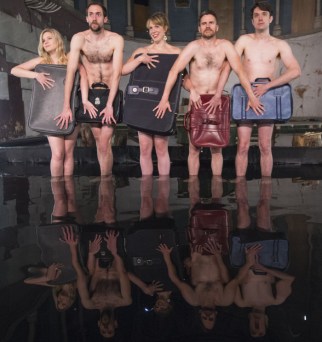
It’s hard to make truly immersive theatre in a Victorian proscenium arch, but the design here is radical. There is raked seating on the stage, facing the auditorium, making the performance space effectively traverse. There are suitcases spilling their guts onto random seats; ladders leading up to (and down from) the boxes; the gantry is exposed. Even the trap-room is utilised. And yet, despite being rendered almost unrecognisable, the theatre building is also given a central role in this production, which is – cleverly – site-specific. For we are all (actors and audience) cast as displaced people (DPs), released from prisons and concentration camps across Germany but not yet able to celebrate our liberation. Instead we are cooped up in a provincial German theatre, which has been requisitioned by the British Army to serve as a holding pen before we are repatriated.

There’s a strong reminder here of the complexity of war: the common enemy may have been defeated but there are other grievances just as entrenched, which may never be resolved. This exploration of European history and relations seems especially prescient, as – outside the theatre – we try to navigate the choppy waters of Brexit. Divisions within our own country are deep and rancorous; our relationships with others have yet to be determined. Cockpit feels as though it could have been written last week, although in fact it was penned in 1948. These are interesting times in which to consider the notions of idealism versus pragmatism, hope versus despair.

Cockpit  is a witty, clever play. Forcing people of different nationalities and political persuasions to co-exist in a confined space allows the arguments put forward to appear spontaneous and natural, while the plot device of a suspected plague outbreak ensures we also see the characters’ common humanity, as they put aside their differences to focus on survival. The enormity of the task faced by Captain Ridley (Peter Hannah) is made very clear. A workable exit strategy seems nigh on impossible, as tensions rise between the various factions, and no one is prepared to compromise.

There is comedy here too: Dylan Read (who also plays French farmer Duval) excels as Bauer, the uptight stage manager, who prizes saving his beloved building above all else. His pomposity is funny: he fusses over petty details, takes great delight in providing props, bristles at the suggestion he might be ‘front of house.’ Through him, Boland also explores the redemptive power of theatre, a thread which culminates in an awe-inspiring performance from La Traviata by singer Sandra Kassman. Bauer might seem ridiculous, but preserving art and culture is important, we are shown.

Director Wils Wilson has served up a fascinating piece of theatre, which, if not exactly enjoyable, is nevertheless arresting and thought-provoking. It’s provocative and demanding; it’s not an easy piece to watch. But it’s certainly worth the effort, and will have you thinking long after the curtain falls.

4.5 stars

Susan Singfield


Hay Fever

HayFever

14/03/17

Lyceum Theatre, Edinburgh

The world of Noel Coward is arguably an overly familiar one – a world of tennis whites and champagne cocktails, of country houses and French windows. Perhaps the word most associated with his work is ‘arch.’ If you’re going to have a crack at the plays of ‘The Master’, you’d better be sure that quality is there in abundance.

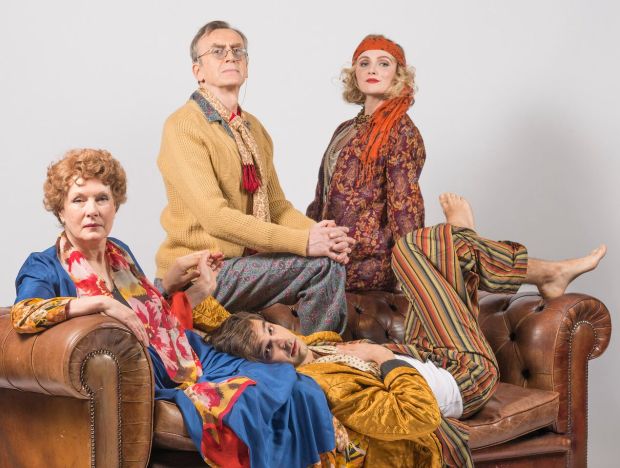
Luckily, this co-production from The Lyceum Theatre and Glasgow’s Citizens Theatre, under the astute direction of Dominic Hill, gets it just right. Hay Fever is the story of the Bliss family, four eccentric bohemians co-existing in their country retreat and planning a bit of a bash at the weekend. The father of the house, David (Benny Baxter-Young), is a successful novelist, currently hard at work on his latest opus, The Sinful Woman. His wife, Judith (Susan Woolridge), is a former grande dame who has never quite lost her flair for the theatrical and is happy to utilise it whatever she’s doing (even she’s simply rearranging flowers). And then there are the kids, Sorel (Rosemary Boyle) and Simon (Charlie Archer), both bored to distraction, endlessly bickering and always ready to make a little mischief. When it transpires that each member of the Bliss family has invited a different house guest down for the weekend, it’s clear that the stage is set for some farcical encounters… but who, you might ask, will get to sleep in the Japanese room? And why does it seem to matter so much?

I’ve rarely seen Coward done better than this. The social awkwardness of the various visitors is played for maximum effect. The scene where hopelessly-out-of–her-depth Jackie Coryton (Katie Barnett) is obliged to interact with pompous Richard Greatham (Hywel Simons) is almost painfully funny. On the night we attend, an onstage accident, which results in a hostess trolley tipping over complete with everyone’s breakfast, is skilfully incorporated into the proceedings and gets some of the biggest laughs of the evening. I also enjoy the brief interval where housekeeper Clara (Myra McFadyen) treats us to a brief selection of Coward’s greatest hits.

This is a delightfully frothy confection and, even though it’s set in the 1920s, the awkward toe-curling moments it offers for our entertainment are still just as relevant today. Go along and treat yourself. These days laughter like this is in perilously short supply.

4.4 stars

Philip Caveney

Lyceum Variety Night 2

26/02/17

Lyceum Theatre, Edinburgh

Those enterprising people at Flint & Pitch have been busy putting together another night of  entertainment at the Lyceum Theatre, featuring the best of spoken word, theatre and music. Hosted by genial regulars Sian Bevan and Jenny Lindsay, this eclectic second helping kicks off with the jazz-inflected rhythms of Pronto Mama, a band who revel in slippery time signatures and who soon have everybody bopping along in their seats.

Next up, poet Aidan Moffat treats us to some of his wry and rather saucy poems (plus some rather wonderful extracts from his son’s diary). He finishes his section with a dedication to all the people he’s canoodled with down the years, complete with a raised can of Tenants Lager at the end. I’ll drink to that!

Actress/musician/singer/author Gerda Stevenson offers us a varied selection of items – a traditional Scottish ballad accompanied by one of those strange droning instruments that resembles a wooden suitcase (and which I’ve annoyingly never learned the name of), a trio of prose pieces commemorating great Scottish women, and a final song for which she enlists the help of a couple of friends for the harmonies.

After a short break, festival favourites, The Creative Martyrs take to the stage, looking like a cross between Estragon & Vladimir and Laurel & Hardy. Incredibly, they soon have us chanting along to the suggestion that we should ‘Burn The Books’, while their song about drowned refugees is also incredibly provocative and revealing, the final line leaving the audience temporarily too stunned to applaud. These two performers are really quite brilliant.

Tonight being the anniversary of Johnny Cash’s death, singer/songwriter Rachel Sermanni kicks off her segment with a haunting cover of one of the great man’s most famous songs, A Thing Called Love, and then offers a couple of songs of her own. Her voice is remarkable – ethereal, haunting, quietly amazing. I fully expect to hear more of her soon.

The advertised act, Don Paterson, is down with the flu, but Colin McGuire fearlessly steps in at the last moment to give us an extract from his work-in-progress play, which is all about that most important of subjects – sleep. He goes down a storm with the Lyceum audience.

Last up, American poet (and BBC slam-champion), Adele Hampton offers us some of her wry and distinctive poems. She admits that she is feeling a little nervous but despite that, acquits herself well with tales of weight-lifting and belonging. She leaves the stage to heartfelt applause.

It is left to Pronto Mama to finish off the night, which they do not with the usual pounding rock song, but with a plaintive acapella tune, which sends everyone home feeling happy and thoroughly entertained.

The next variety night is penciled in for Sunday 4th June. Miss it and you’ll only have yourselves to blame.

4.2 stars

Philip Caveney

The Winter’s Tale

14/02/17

Lyceum Theatre, Edinburgh

The Winter’s Tale is famously a play of two halves, and Max Webster’s production for the Lyceum exaggerates and develops this juxtaposition in every possible way – and the result is thrilling.

This is an modern-day version of the play: ‘Sicilia’ is now Edinburgh; ‘Bohemia’ is Fife. Although Leontes (John Michie) and Polixenes (Andy Clark) are still ostensibly ‘kings’, they are presented more as middle-class business men, rich and successful, with teams of staff assisting them. The set design helps to cement the contrasts between them: Leontes’ apartment, slightly raised and framed in black, looks exactly like the glass boxes lining Edinburgh’s Quartermile; a walled-off sound-booth reinforces this image. It’s an inspired idea: those apartments look like stage-sets anyway, their fourth walls removed to allow us to peep in. And they are sterile and hard, seemingly perfect but ultimately lacking – just like Leontes’ relationship with Hermione (Frances Grey). The pastoral scenes, on the other hand, are deliberately hokey. The fake grass is rolled out before us: there is no attempt at realism here. The props are more panto than serious Shakespeare, all bright-bunting and shopping trolleys and rickety wooden stuff. The costumes  all look hand-made, in a local am-dram kind of way. It’s hard to imagine we’re watching the same play. Polixenes  is a big fish here, but he’s in a very different kind of pond.

The contrasts are further underlined by both dialogue and acting style. While acts one, two, three and five retain Shakespeare’s original language, act four has been recast in Scots, an audacious undertaking performed with evident delight by writer James Robertson. The performances are mismatched too: whereas the Sicilian scenes are very serious and actorly, the Bohemian scenes are played for laughs, with comedic exaggeration and audience interaction; it’s beautifully done.

If I’ve a criticism of this play – and I haven’t much – it’s that the fayre goes on too long, without adding much to the plot. It is a lovely interlude, and the scene-setting is vital, but it starts to drag after a while: we want to know what happens next.

The performances here are universally strong, but Maureen Beattie’s Paulina is a definite stand-out; she imbues the character with warmth, vitality and strength. The musicians, led by composer Alasdair Macrae, deserve a mention too: their on-stage accompaniment is integral to the story-telling, and their presence adds a strange unearthliness that really elevates the play.

Do get yourself along to the Lyceum to see this: it’s really rather wonderful.

4.9 stars

Susan Singfield

Theatre Bouquets 2016

unknown-18

unknown-18

unknown-18

We’ve been lucky enough to see some amazing theatre again in 2016. Here, in order of viewing (and with the benefit of hindsight), are our favourite productions of the year.

Hangmen – Wyndham’s Theatre, London

Unknown-1

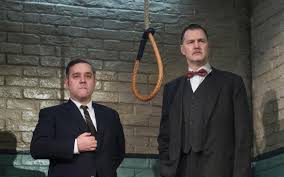
An excellent start to the year’s theatrical viewing, Martin McDonagh’s play was absolutely superb: funny, frightening and thought-provoking with an outstanding central performance by David Morrissey.

The Girls – The Lowry, Salford

Gary Barlow, Tim Firth and the original Calendar Girls credit Matt Crockett

This was the biggest surprise of the year for us: on paper, it sounded a million miles away from the sort of thing we usually enjoy, and we went along reluctantly. But it was a truly delightful production – flawlessly realised.

The Merry Wives – The Lowry, Salford

image

Northern Broadsides version of The Merry Wives of Windsor was a rambunctious, irreverent take on the tale, with the inimitable Barrie Rutter clearly relishing the role of Falstaff.

I Am Thomas – Lyceum Theatre, Edinburgh

I_Am_Thomas_415x800_jpg_300x200_crop_q85

A strange and eclectic production, telling the tale of Thomas Aikenhead, the last person in Scotland to be hanged for blasphemy, this was essentially a series of vignettes and musical interludes, with an ensemble taking turns to play the eponymous role.

King Lear – Royal Exchange Theatre, Manchester

04-KING-LEAR-RET-L-R-Pepter-Lunkuse-Cordelia-Don-Warrington-King-Lear-Photo-Jonathan-Keenan

Michael Buffong’s King Lear was a tour de force, a gimmick-free yet undeniably modern production. Don Warrington was well-cast in the central role, but it was Pepter Lunkuse’s Cordelia who really stood out for us. She’s definitely one to watch!

Stowaway – Home, Manchester

Unknown

Analogue Theatre’s troubling tale of a stowaway falling from a flying aeroplane and landing in the car park of a DIY store was fascinating, depicting a moment where worlds collide and understandings begin to take root. A thought-provoking, political play.

Royal Vauxhall – Underbelly Med Quad, Edinburgh

2016ROYALVA-APJ-300

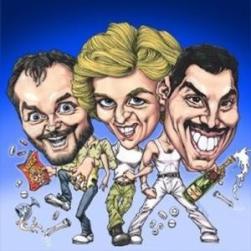
A quirky and irreverent musical, telling the true story of when Freddie Mercury and Kenny Everett dressed Princess Diana in drag and took her to the Royal Vauxhall Tavern in London for a night out, incognito. We loved this production.

Wonderman – Underbelly Potterrow, Edinburgh

Wonderman_edinburgh_FOURSHEETS-quartersize_final

Based on the short stories of Roald Dahl – and incorporating a true incident from his eventful life – Gagglebabble’s collaboration with the National Theatre of Wales was a sprightly mix of drama and music with a deliciously dark heart.

Cracked Tiles – Spotlites, Edinburgh

2016CRACKED_AVH

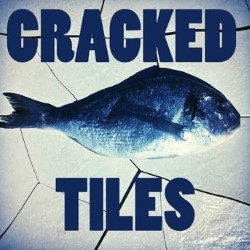
This beautifully crafted monologue, written and performed by Lorenzo Novani, was the downbeat tale of a young man who inherits a Glasgow fish and chip shop from his father Aldo. Novani was quite staggering as Riccardo.

Dear Home Office – Underbelly Med Quad, Edinburgh

2016DEARHOM_AXD

This was the story of unaccompanied minors applying for asylum in the UK, performed with touching vulnerability by eight refugee boys. The play was an amalgamation of the performers’ own experiences, blended with fictional accounts. A raw and truthful exposé.

The Suppliant Women – Lyceum Theatre, Edinburgh

29676962992_8e7a020135_b

It’s a rare thing indeed when you go into a theatre and are treated to something unique – but that is the word that kept coming to us, as we sat entranced in the stalls of The Lyceum, watching David Greig’s production of The Suppliant Women. Truly brilliant.

Grain in the Blood – Traverse Theatre, Edinburgh

unknown-2

A real one-off, this was a stark, unnerving chiller, at once contemporary and classical, with dialogue that was taut and ultra-modern in style, all fragments and silences and unfinished thoughts. This was a complex, angular, unwieldy play – a fascinating watch.

Jack and the Beanstalk – King’s Theatre, Edinburgh

cfk-panto-beanstalk-header

By far the best panto we have ever seen, this was a standout production, with fantastic performances from King’s Theatre regulars Allan Stewart, Andy Gray and Grant Stott. It brought the year to a celebratory end.

Susan Singfield

Alice in Wonderland

09/12/16

Lyceum Theatre, Edinburgh

The Lyceum’s Alice is a sumptuous affair, with a gorgeously decadent design aesthetic. Of course, the imagery is all there in the source material (by which I mean both Lewis Carroll’s novel and John Tenniel’s original illustrations), but it’s beautifully realised here by designer Francis O’Connor, with a set and costumes that are at once familiar and completely new. The script focuses on some of the lesser-known scenes from the book – that is to say, those not immortalised by Disney: the duchess and the pig-baby; the mock-turtle and the gryphon – but sensibly includes the most dynamic moments too: we’re not deprived of the tea-party, nor the ‘off-with-her-head’ trial. And the special effects are truly mesmerising, with Alice’s final transformation a particular delight.

If there are problems, some of them lie with the tale itself: it’s an episodic story, famed more for its eclectic characters than for any narrative thrust. This Alice doesn’t even seem too bothered about finding her way home and, without this aim, the play is lacking any real drive; there’s just no sense of peril here. Some scenes work well anyway – giant Alice trapped in the rabbit’s house, for example – but others are somehow lacklustre, let down in part by the music, which just isn’t toe-tapping enough for a children’s show (although it might sound better if the singers were mic’d so we could actually hear the lyrics properly).

Jess Peet, making her professional debut here, is a lively and appealing Alice. And the ensemble cast work well together, convincingly populating Wonderland, although there are only nine of them. Their brief moments of audience interaction feel a little grafted-on, but all-in-all this is a decent show, and the kids in the audience certainly seem enthralled.

3.6 stars

Susan Singfield