Alice in Wonderland

Backrooms

02/06/26

Cineworld, Edinburgh

Contemporary horror films by Gen Z filmmakers seem to be soaring to ever-new heights. Just last week, twenty-six-year-old Curry Barker’s Obsession proved a breakout hit on a budget that was just short of a million dollars, meaning that it was able to move into profit on its release day. More interestingly, the film bucked the usual trend by taking even more on its second week, buoyed by good word of mouth.

Now twenty-year-old Kane Parsons’ Backrooms (developed from one of the ‘creepy pasta’ shorts he’s been posting on YouTube since his teens) scores an even bigger opening. It does boast a budget of ten million (though this is peanuts compared to the excesses of most contemporary Hollywood blockbusters) but once again, premier production company A24 have spotted a filmmaker’s potential and granted them the opportunity to fulfil it. While Obsession has its roots in classic horror story, The Monkey’s Paw, Backrooms‘ closest cousin could arguably be Alice in Wonderland – if that book were transposed to the early 1990s and had moments of absolute terror.

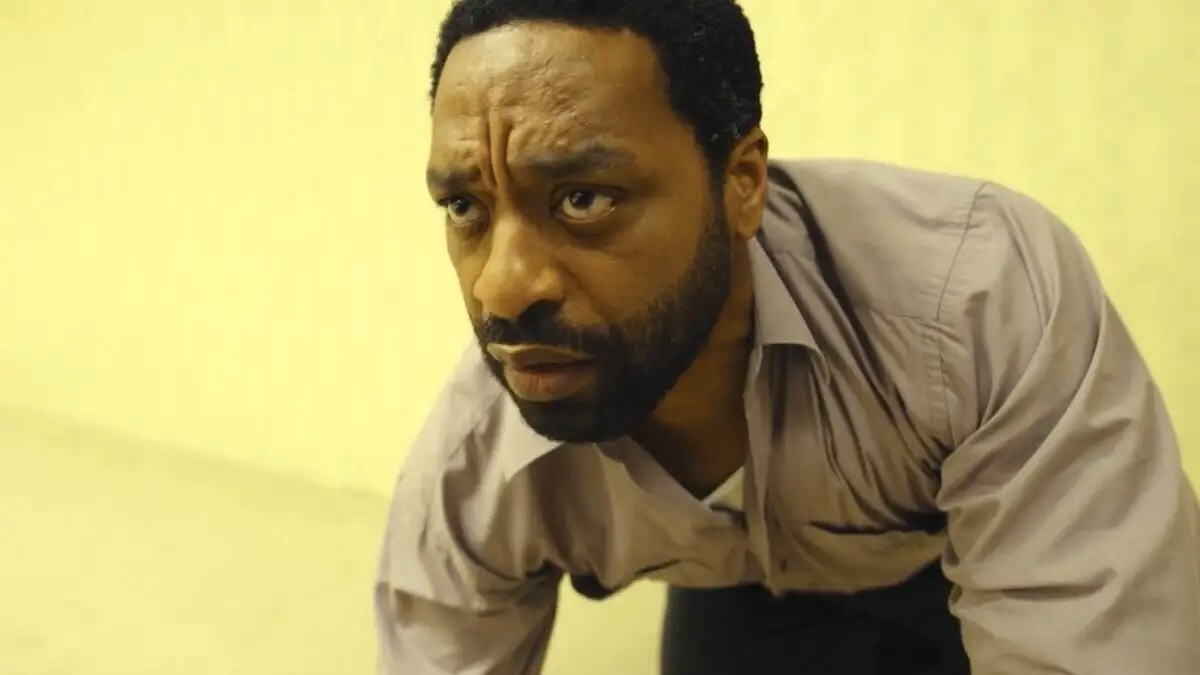
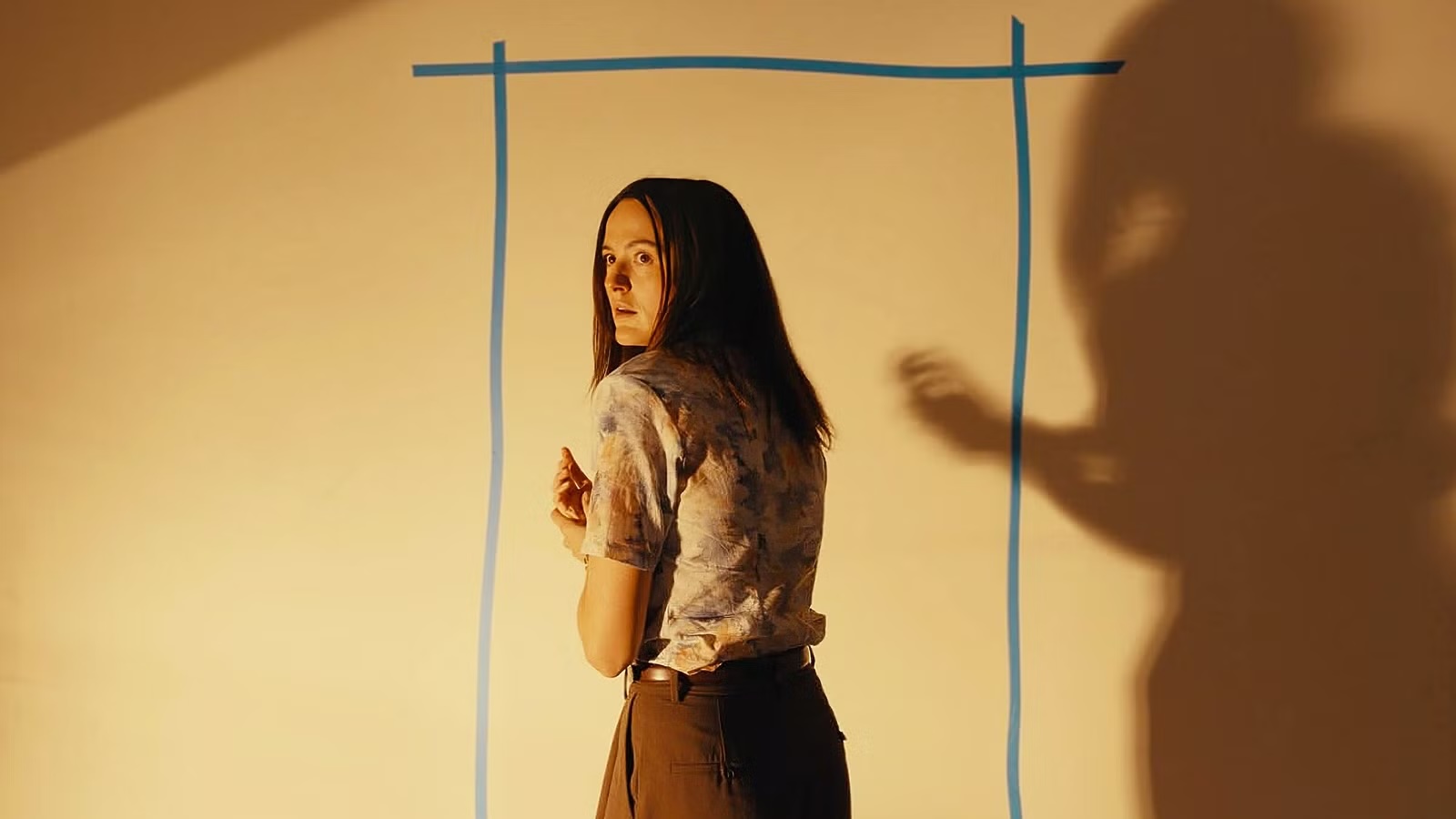
Clark (Chiwetel Ejiofor) is the manager of Cap’n Clark’s Ottoman Empire, a down-at-heel furniture store, which despite Clark’s ramshackle attempts at a promotional video, appears to be struggling to entice any customers over the threshold. After a messy break up with his wife, Clark is actually sleeping in the store. He occasionally drives off for a session with his therapist, Mary (Renate Reinsve), who is trying to explore Clark’s anger issues – but she has some psychological baggage of her own, which she’s been lugging around since childhood.

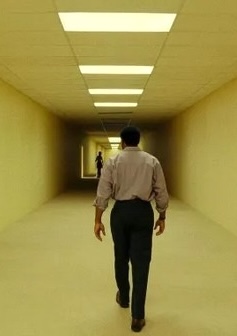
Meanwhile, Clark is having major problems with the store’s electricity supply and, when investigating some strange noises in the basement, he discovers a portal that takes him to the backrooms of the title, a series of interconnecting sickly-yellow enclosures seemingly designed by Escher and heaped here and there with piles of furniture that defy all logic.

When Clark subsequently tells Mary about his new discovery, she’s understandably worried about his state of mind…

Backrooms is an incredibly immersive and occasionally heart-stopping film, that somehow manages to conjure moments of absolute dread from the smallest things: a muffled noise; a briefly glimpsed figure; a narrow opening a character is required to squeeze through. It’s all I can do not to shout warnings to the luckless fools who wander in there, despite knowing only too well that if I found a wall I could walk through, I’d most surely want to do it, again and again.

Co-written by Parsons with Will Soodik, the film boasts an incisive script which is open to interpretation, but nonetheless utterly affecting. The Jungian ‘Dream House’ metaphor is made frighteningly real, as the terrors herein bubble up from the central characters’ own psyches – and are all the more disturbing because of that. As the film careers confidently onwards, it carries me helplessly along with it.

A final revelation confirms a devastating truth: that we are all prisoners of whatever bad things happened to us back down the line. Parsons would appear to have a promising (and lucrative) film career ahead of him and on the strength of Backrooms, I’ll be first in the queue to see whatever he comes up with next. There’s already talk of a ‘Backrooms 2‘ but I for one hope it’ll be something entirely different.

5 stars

Philip Caveney

The Cat Returns

16/03/20

Netflix

When the world goes mad, when cinemas across the UK close their doors, and when all major film releases are pushed back for months, what does a movie reviewer do for entertainment? Well, the recent rash of Studio Ghibli films, streamed on Netflix, seems a promising source to explore.

We’ve seen many of the big hitters, of course, but here’s something we missed on its first release in 2002. Directed by Hiroyuki Morita (who directed Akira and The Ghost in the Shell), The Cat Returns tells the story of Haru (Chizuru Ikewaki), a shy seventeen-year-old schoolgirl, whose life is completely upended when she saves a cat from being run over by a truck. It turns out that he’s no ordinary moggie, but Prince Lune (Takayuki Yamada), the heir to the magical Cat Kingdom. What’s more, he’s determined to reward Haru for her good deed, even though showering her with mice isn’t as well-received as he expects.

This features the usual enchanting hand-drawn animation and a storyline that owes more than a passing debt to Alice in Wonderland – indeed, there are whole sequences here that pay homage to Lewis Carroll’s most famous book and the similarities are too marked to be accidental. While Alice finds her way to Wonderland by following a white rabbit, Haru follows podgy white cat, Muta (Tetsu Watanabe), and ends up in an equally bewildering destination.

Much like that story, the plot here meanders into some very eccentric backwaters and doesn’t make very much sense, but that’s not really a problem. I love the character of Baron (Yoshihiko Hakamada), a super-cool cat who sports a sharp suit and bowler hat and has more than a dash of 007 about him – and Tetsurô Tanba’s Cat King is also entertaining, a clumsy buffoon, intent on marrying his son off to Haru (I know, weird, right?).

While The Cat Returns may not be top flight Ghibli, it’s nonetheless quirky and inventive enough to make an hour and fifteen minutes pass in the blink of a cat’s eye. And right now, that’s a bonus.

3.5 stars

Philip Caveney

Alice in Wonderland

06/06/19

Traverse Theatre, Edinburgh

Alice in Wonderland is something of a phenomenon, famous more for its cast of extraordinary characters than for its storyline. Anyone who grew up reading English novels (or watching the films based on them) knows the Mad Hatter, the Queen of Hearts, Tweedle-dum and Tweedle-dee. Lewis Carroll’s 1865 creations are an illustrator’s dream; indeed, John Tenniel’s drawings are at least as powerful as the author’s words, and surely party responsible for propelling Alice to stardom. Responsible too, perhaps, for sidelining the protagonist, who slides into insignificance in many adaptations of the work.

And there are many adaptations of the work. I’m almost weary at the thought of seeing another one. I know the story well: I read both books as a child, and have seen countless stage and cinematic versions. I’ve even directed a school production – the Disney Junior one – so I’m well-versed in its lore.

Esteemed Irish theatre company, Blue Raincoat, are well-versed too: this is a revival of their own 1999 production, adapted by Jocelyn Clark. I didn’t see their original, so I can’t compare the two, but I can say that this interpretation is the closest I’ve seen to the novel, with young Alice (Miriam Needham) placed firmly centre-stage, her internal monologue brought to life by her older self (Hilary Bowen-Walsh)’s narration.

This is a shabby, degraded Wonderland, seen through the adult eyes of a jaded Alice. But the bold, frenetic, questing nature of the child is captured perfectly, as is the perplexity of growing up, where one minute she is like a little girl, the next too big for the confines of her world. The people and creatures this Alice meets are (rightly, I think) peripheral: she’s the hero of her own tale; they exist only insofar as they relate to her. Her intelligence and curiosity shine brightly in this production; she demands answers to everything, but is offered nothing satisfactory. Only when she takes charge and asserts herself is she able to wake up from the dream.

With such emphasis on Alice, it’s safe to say that this is an intense piece of theatre, with both Needham and Bowen-Walsh surely pushing themselves to exhaustion. But the supporting cast are strong as well; the portrayal of the Duchess (Sandra O’Malley) is particularly interesting, especially as her baby morphs into a pig.

The set design (by Paul McDonnell) is ingenious: adult Alice’s basement transformed into Wonderland, all broken picture frames and stepladders and old bits of wood, and (of course) a series of different-sized tables used to great effect.

Under  Niall Henry’s frantic, physically-focused direction, this show is something of a tour de force.  Not a new take, exactly, but certainly a refreshing one.

4 stars

Susan Singfield


Alice in Wonderland

09/12/16

Lyceum Theatre, Edinburgh

The Lyceum’s Alice is a sumptuous affair, with a gorgeously decadent design aesthetic. Of course, the imagery is all there in the source material (by which I mean both Lewis Carroll’s novel and John Tenniel’s original illustrations), but it’s beautifully realised here by designer Francis O’Connor, with a set and costumes that are at once familiar and completely new. The script focuses on some of the lesser-known scenes from the book – that is to say, those not immortalised by Disney: the duchess and the pig-baby; the mock-turtle and the gryphon – but sensibly includes the most dynamic moments too: we’re not deprived of the tea-party, nor the ‘off-with-her-head’ trial. And the special effects are truly mesmerising, with Alice’s final transformation a particular delight.

If there are problems, some of them lie with the tale itself: it’s an episodic story, famed more for its eclectic characters than for any narrative thrust. This Alice doesn’t even seem too bothered about finding her way home and, without this aim, the play is lacking any real drive; there’s just no sense of peril here. Some scenes work well anyway – giant Alice trapped in the rabbit’s house, for example – but others are somehow lacklustre, let down in part by the music, which just isn’t toe-tapping enough for a children’s show (although it might sound better if the singers were mic’d so we could actually hear the lyrics properly).

Jess Peet, making her professional debut here, is a lively and appealing Alice. And the ensemble cast work well together, convincingly populating Wonderland, although there are only nine of them. Their brief moments of audience interaction feel a little grafted-on, but all-in-all this is a decent show, and the kids in the audience certainly seem enthralled.

3.6 stars

Susan Singfield