
Edinburgh

Goodbye Dandelion

10/08/26

Underbelly Cowgate (Belly Dancer), Edinburgh

It turns out assisted dying is a hot topic at this year’s Fringe. A mere five days in and, not only is this the second show we’ve seen about it, but there’s someone waiting outside with flyers for another one “dealing with the same issues”. Euthanasia, it seems, is in.

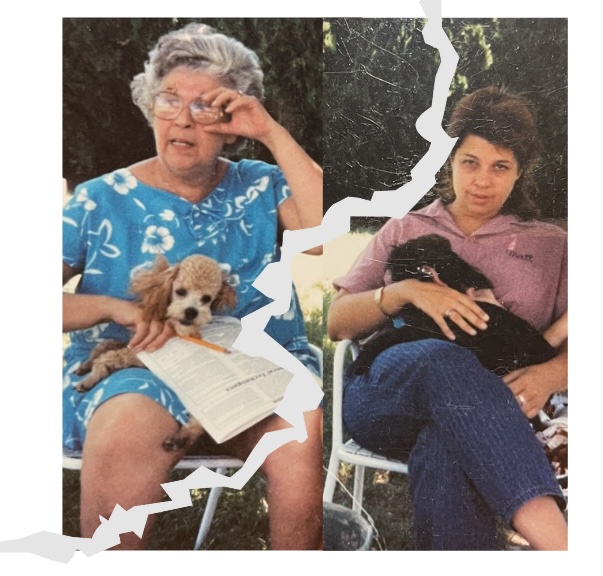
But if the theme is redolent of the Traverse production we saw yesterday, the form could hardly be more different. While After Party is a raucous two-act play, Goodbye Dandelion is an altogether gentler affair – a whimsical hour of musical storytelling, charting Maddie Rice’s friendship with the titular Dandelion, aka octogenarian Darcy O’Shea.

Thirty-something Maddie is feeling a bit lost. There’s nothing wrong exactly: she has a steady job, a caring boyfriend, an agreeable flatmate. It’s just… shouldn’t there be something more? When she sees an advert for Run-Relate, she thinks it might be the spur she needs. Simultaneously improving her fitness and helping a lonely pensioner; surely that’ll make her feel fulfilled?

But things don’t go as Maddie expects. For one thing, it turns out she hates running. And for another, Darcy doesn’t want her help. Still, as their spiky, unlikely friendship develops, it’s clear the benefits are mutual. Until, that is, Darcy tells Maddie her deepest, darkest wish…

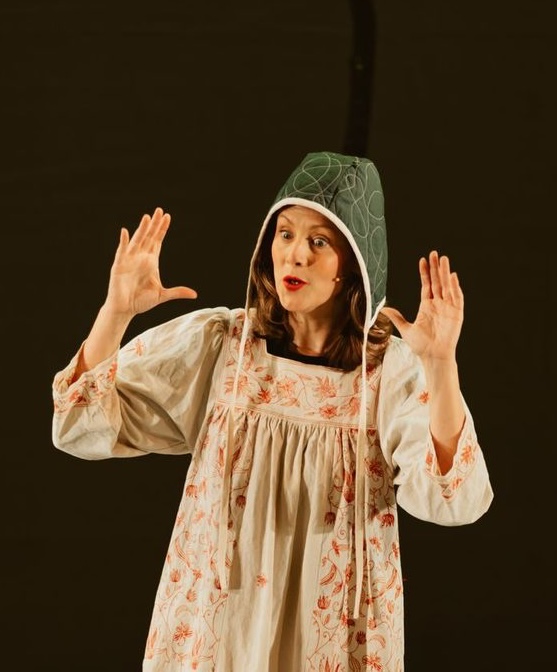
Maddie narrates her tale with an engaging openness, the language simple but compelling. Her brother, Marcus, provides musical accompaniment and wry asides, knowing exactly when to undercut the more sentimental moments with a witty song or some salient statistics. Everybody Dies is easily my favourite number; who knew a song about death’s inevitability could make an entire audience laugh out loud?

Although it’s about dying, this charming, clever show is ultimately life-affirming. There’s no bold ‘seize the day’ message, no cloying, fridge-magnet platitude. Instead, there’s a clear-eyed, honest appraisal of what it means to live.

4.6 stars

Susan Singfield
Cathy

09/08/26

Traverse Theatre, Edinburgh

Cathy has all the hallmarks of a sitcom: distinctive characters, familiar settings and a serious of humorous conflicts. Like the best of the genre, it also carries some real emotional weight.

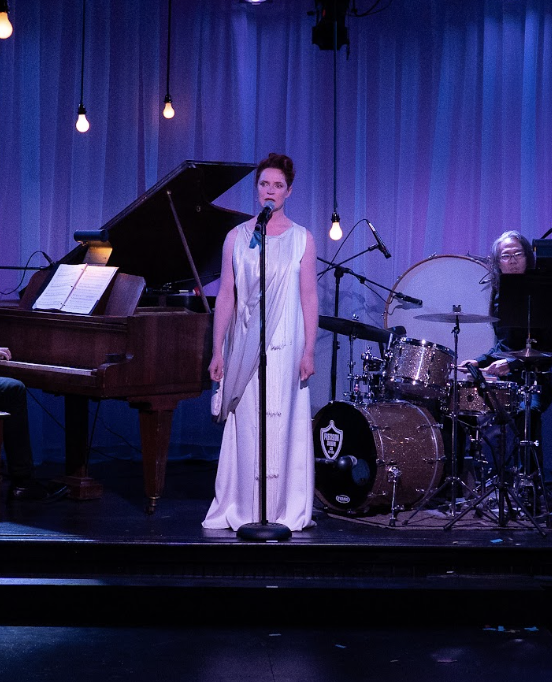
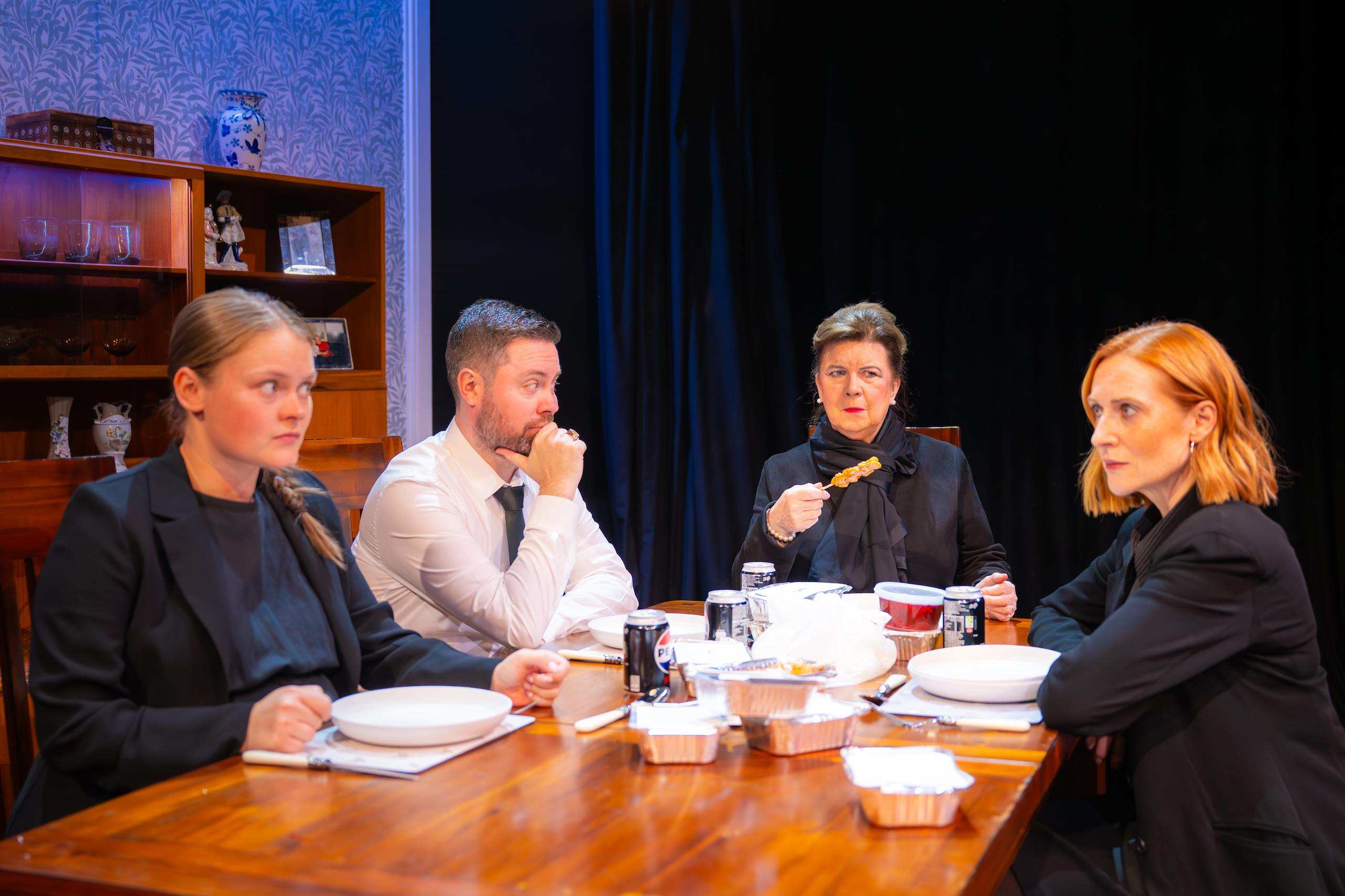
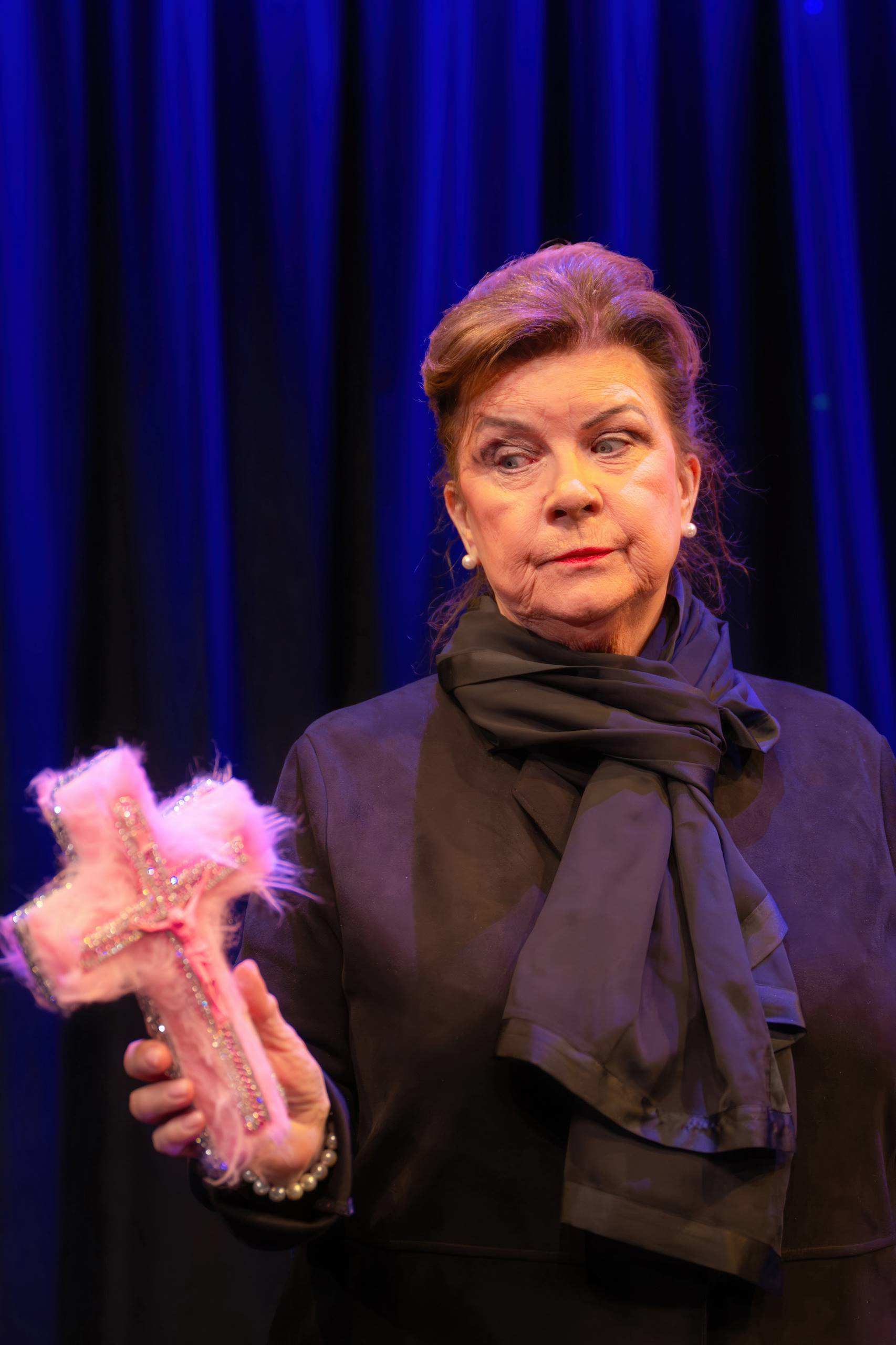
The eponymous Cathy (Elaine C Smith) is based on writer-director Eilidh Loan’s own grandmother. She’s a spiky, complicated woman, struggling to deal with the death of her beloved husband, Tommy. She’s angry in her grief, lashing out at everyone she cares for: her daughter, Florence (Michele Gallagher), son-in-law, Colin (Alan Orr), and pregnant granddaughter, Amy (Chloe Hodgson).

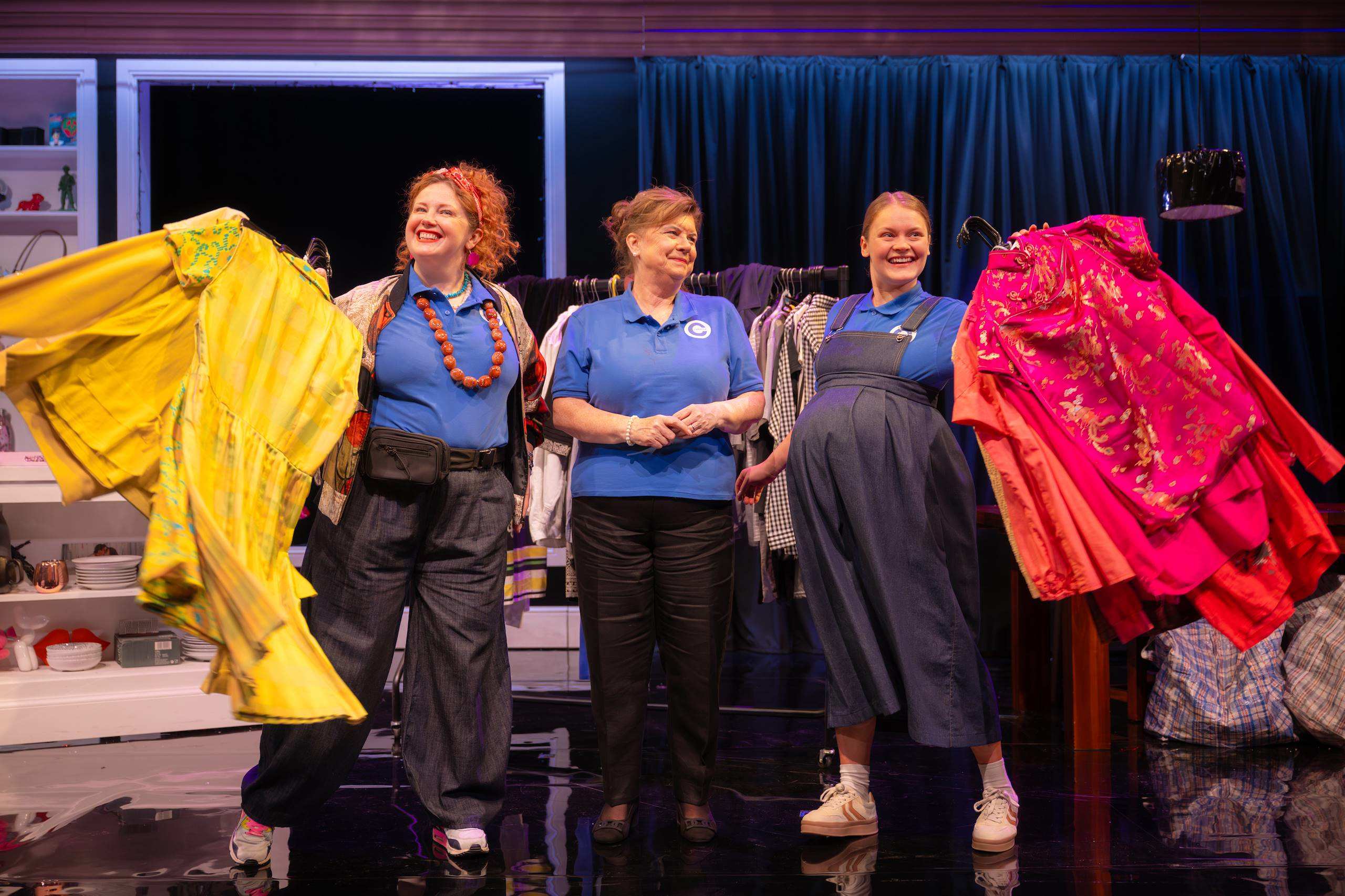
She’s furious with God too. She’s been a good Catholic all her life, done everything He’s asked. So where is He when she needs Him? Cathy is adrift, unable to imagine a future without Tommy. But when she takes his clothes to the local charity shop, she meets an unlikely angel of deliverance in the form of Lizzie (Sally Reid), who manages the store. Boho, woo-woo and musically ignorant, Lizzie isn’t the sort of person Cathy normally warms to. But there’s something disarming about the cheerful, crystal-wearing volunteer – and Lizzie has her own experience of devastating loss.

I don’t usually like a stage full of props, but Kenny Miller’s set design perfectly complements the play’s themes: the stuff that accumulates over a long life; the items we cling to and those we have to learn to let go. The transitions are complicated but extremely well-managed, so that we move with ease between realistic sets, from funeral home to Cathy’s dining room to Lizzie’s busy, bustling shop.

Unsurprisingly, this is very much Cathy’s play, and Smith’s performance is flawless, allowing us to see the central character’s hidden warmth and vulnerability, as well as delivering every gag with deadly precision. The supporting cast are very good too, Reid in particular lighting up the stage.

Cathy makes me laugh and cry. Part Christmas play, part family drama, it feels like the start of something bigger, with characters that could easily be drawn out over a series.

If you want all the feels, this is the show for you.

4 stars

Susan Singfield
Bog Witch

09/08/26

Traverse Theatre, Edinburgh

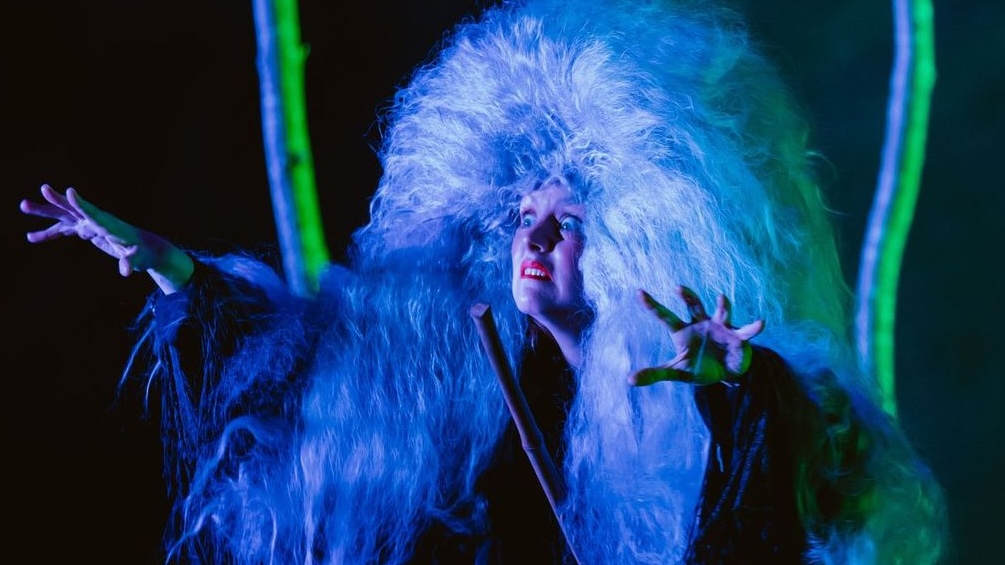
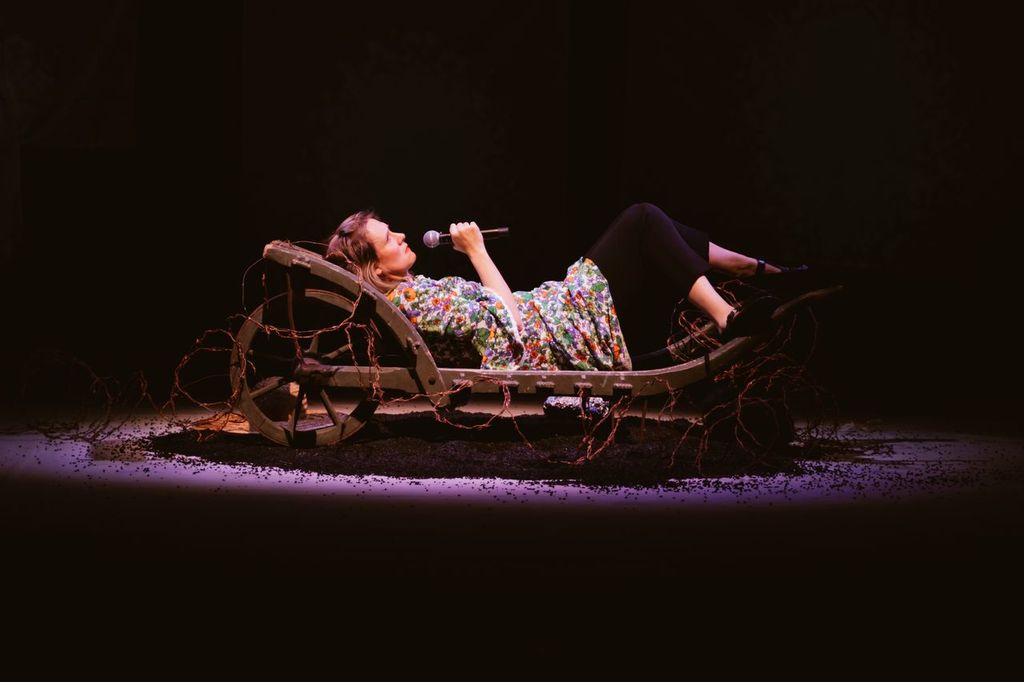
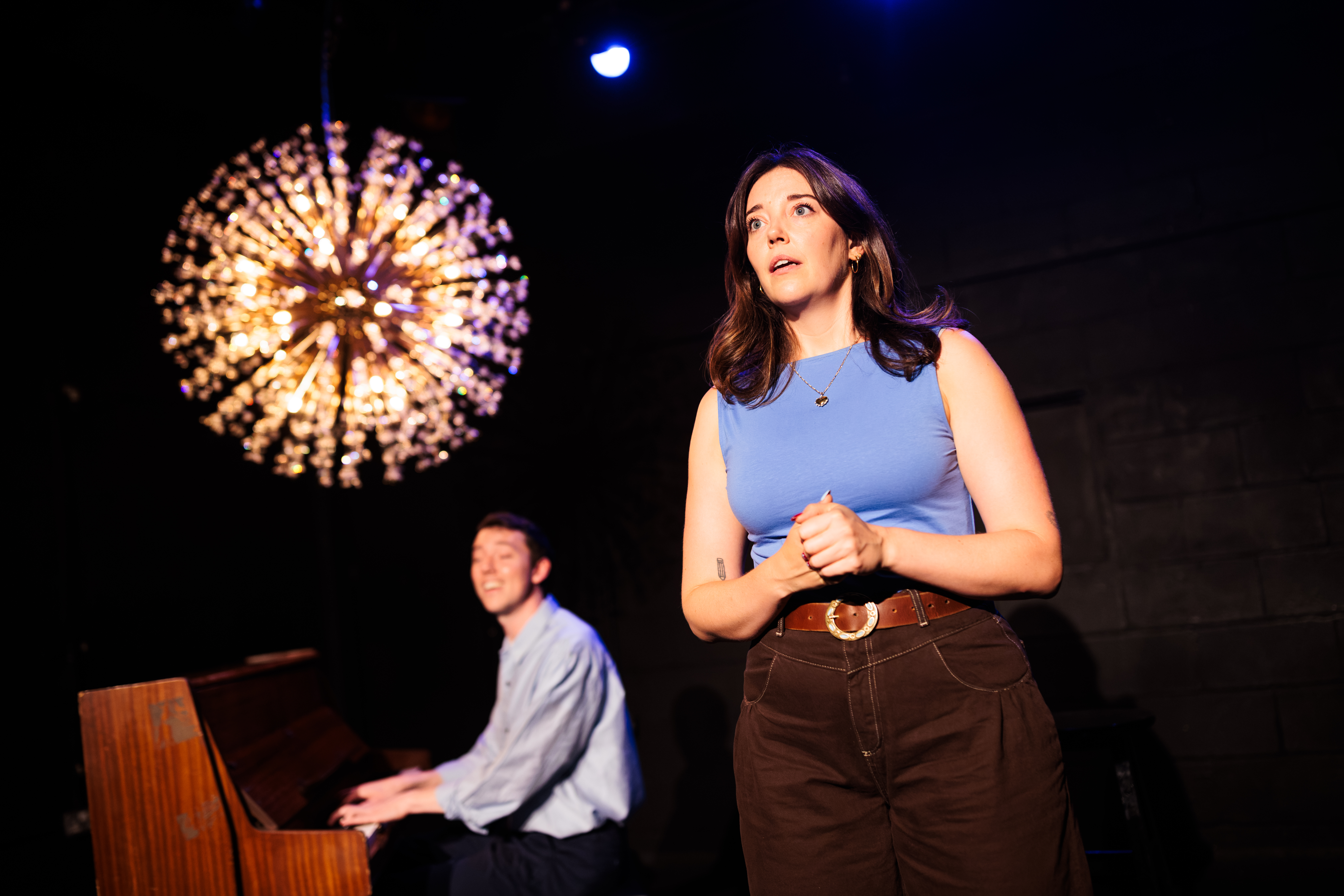
Bog Witch is an elusive concept that initially wrong-foots me. The opening minutes of Bryony Kimmings’ semi-autobiographical show are like a gentle stand-up routine, built around the idea of a contemporary woman, addicted to doom-scrolling and online-ordering, pouring scorn on all those silly people wringing their hands over climate change and plastic pollution. All they really need to do is knock back some alcohol and get out on the dance floor! But happily, as it develops, the story turns out to be much more nuanced than that.

Kimmings relates the events of one year in her life, when she falls in love with ‘Will,’ a man with an urgent need to get back to the soil, where he can grow his own food and live at peace with the land. To Kimmings, it sounds like a perfect nightmare but she loves Will and, against her better judgement, decides to move with him to the countryside. They each have a child from a previous relationship and fresh starts are good, right? What can possibly go wrong? She just needs to ensure that she doesn’t turn into the titular creature…

As the year unfolds, season by season, Kimmings gamely attempts to adapt to her new life – and, despite all her misgivings, she is beginning to change…

Kimmings has clearly put her heart and soul into this, taking the directorial reins and really exploring the possibilities of the central concept – and trust me, it’s a lot more fun than I’ve made that sound. She’s assisted by a whole team of talented individuals: Tom Rogers’ set and costume designs are fabulous, as are the linking animations from Raf Vartanian and Nathan Fernée. In addition, Tom Parkinson has written some suitably plaintive folk songs, which Kimmings sings beautifully.

She’s an accomplished storyteller, acerbically funny in the earlier sections and confidently steering her ship into darker waters as a bleak autumn heads inexorably into a tragic winter. My only reservation here is with a concluding section where she invites nine audience members to join her on stage for ‘the great council meeting.’ Though there are some magnificent costumes for the participants to put on (with masks by Kiera Saunders), the lengthy set-up disrupts the momentum and I find myself wondering if it would work just as well with fewer participants. But that’s a niggle, really, because Kimmings does make it work – and naturally two shows are never going to be the same.

Bog Witch is an accomplished production with so much to commend it. Anyone toying with the idea of moving out to the sticks might want to check this out first. Or be like Kimmings and watch that helpful documentary before you head off. You know the one: The Wicker Man.

4.5 stars

Philip Caveney

An Echo in the Void

08/08/26

Assembly Roxy (Upstairs), Edinburgh

Written and directed by Jason Weiss, No Boundaries’ An Echo in the Void deals with the timely topic of AI. When journalist Ivy (Grace Serrano) logs into her regular Sanctuary session, she’s surprised to find three strangers there. It’s supposed to be a private virtual space and should only be populated by those she chooses. But here are soldier Toby (Adam Sinclair), programmer Arthur (Sunkrish Bala) and CEO Miranda (Lee Rodriguez), each as dumbfounded as she is by the others’ presence. What’s happening? Has the tech model gone rogue? And if so, why?

If Arthur is the brains behind the platform, Miranda is the money – and Ivy has long been petitioning to interview them both. As for Toby, he’s the company’s poster boy. Sanctuary offers a safe place, where people can leave their real-world troubles behind for a few hours, so who better to front its ad campaign than a war veteran suffering from PTSD?

But Sanctuary is addictive. If life on-line is so much better than off, why would anyone want to return?

This minimalist production is performed on a bare stage, which works well, echoing the blank canvas of a Sanctuary space. Like the platform’s users, we are invited to create our own imaginary setting. Simple tech is used to good effect, with pinspots emphasising the characters’ isolation, and a repeated sound motif signalling glitches in the machine. The actors inhabit their roles convincingly, and a sense of dread builds steadily.

However, although I applaud Weiss’s decision to eschew set and props, the piece could benefit from some more visual elements. It’s very dialogue-heavy, with a lot of information for the audience to absorb. It would be easier to engage emotionally with some of the more complex sequences if they were played out rather than reported. I also think the actors could change their voices and mannerisms when they are taking on characters from each other’s pasts, in order to clarify exactly who and where they are.

An Echo in the Void questions what it means to be human, when everything we think we are can be so cleverly mimicked by computer code. In the twenty-seven years since the similarly-themed The Matrix was released, the issues have only grown more urgent. It’s hard to imagine a more topical play.

3 stars

Susan Singfield

Badgers

07/08/26

Traverse Theatre, Edinburgh

Malaika Kegode is the storyteller and we, she tells us – gently persuasive – are Meles, a young woman, struggling to make our mark as a podcaster. Our mother looms large: not only is she a famous TV journalist, she’s also dying of corticobasal degeneration (and no, Kegode sighs, a long walk won’t help). We move home, our emotions a mixture of resentment and relief. It’s good to escape the daily hustle and London rents, but it’s hard to be back in our childhood bedroom, aimless and under-occupied, fearing our mother’s death.

So, when we hear about the mysterious disappearance of a local musician, ten years ago, little wonder that we grasp the opportunity to investigate. A true-crime podcast might just be the thing to finally impress Mum. So off we go, into the woods, to visit an old crone called Dora Brock, who freely shares her tales of secret songs and magical badgers, unaware we’re using her…

Badgers is a harmonious hybrid, Jakabol’s eclectic score perfectly complementing Kegode’s beguiling narration. Rebecca Wood’s set design is ingenious, its colour palette stark, all black, white and red; musicians Joe Williams and Beth Roberts sit in a glass box, centre-stage, a theatre within a theatre, part cage, part display case. It’s very techie, with flickering screens and distorted voices (video by Christopher Harrisson and sound by Jack Drewry), and tonally as slippery as the shape-shifting badger-humans at its heart, switching seamlessly from contemporary online vernacular to fairy tale to folk horror. It’s this last element that allows Mike Gunning and Natalia Chan’s lighting design to shine (sorry), ramping up the jump scares and other-worldliness. And then there’s Kegode again, speaking softly, bringing us back down to earth, helping us to accept Meles’ troubled reality.

If the sound levels are a little off at first, so that I struggle to hear Kegode over the music, this is soon rectified, and I leave the theatre still wearing Meles’ skin, still caught up in her life. Directed by Jenny Davies, this is a spellbinding production, weaving us into its fabric and leaving us utterly disarmed.

4.8 stars

Susan Singfield
Supposing:

07/08/26

Traverse Theatre, Edinburgh

TravFest starts off strong this year with Zinnie Harris’s magical-realist new play, Supposing:, a blend of mythology, contemporary politics and overt theatricality.

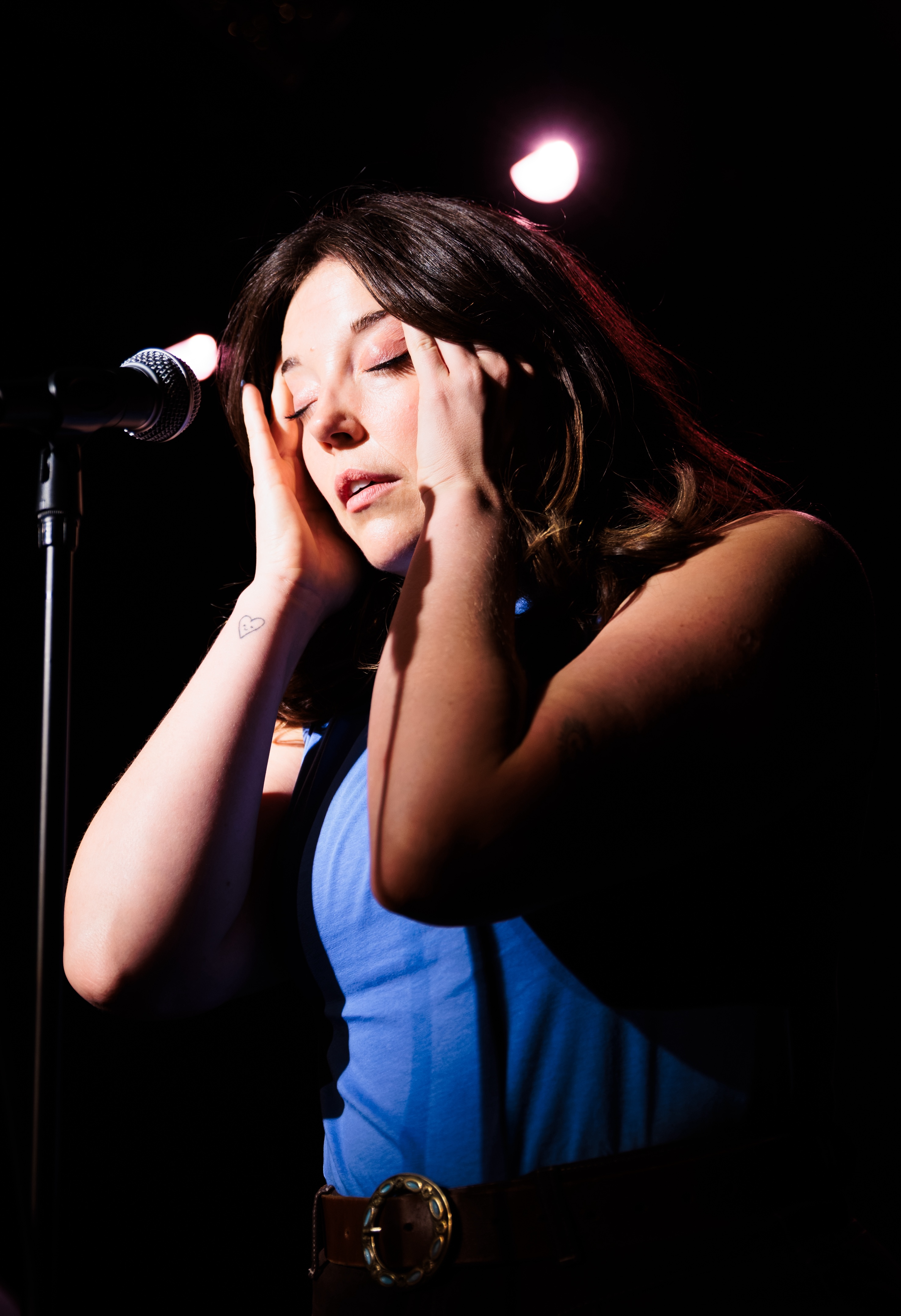
Sally (Nicole Cooper) has fallen down a hole. In literal terms, it’s just a small crater in a road outside a theatre, and she’s not seriously hurt. Metaphorically, however, it’s so much more, not least a portal for a Greek chorus, who promptly take up residence inside her head. Awkward. As if that weren’t enough, she’s also been cursed with the ability to see some very specific aspects of the future…

Sally’s husband, Rich (Richard Conlon), doesn’t believe in her newfound prophesying skills. He thinks she’s suffering from depression – again – or maybe it’s the menopause? Either way, he has absolutely no intention of popping next door to warn their racist neighbour that she has an undiagnosed medical condition, however urgently Sally insists.

It’s not just their marriage that’s under strain. The outside world is a pressure-pot too. The town’s hotels are being used to house immigrants and there are right-wing protesters gathering outside. Sally’s internal chorus never lets up its refrain: Trump, Reform, the climate crisis. Madness seems like a legitimate response.

Cooper’s performance is impressive, at first clipped and precise, then – as Sally plummets ever-deeper down the rabbit-hole – excessive, even flamboyant. Conlon provides an excellent foil, a study in baffled defensiveness and disappointment. Deftly directed by Harris, Supposing: is a timely exploration of our post-truth society, albeit one that poses more questions than it answers about how to navigate the shifting sands.

If this sounds like your kind of thing, don’t hesitate to buy your tickets. You don’t have to be Cassandra to see that this well-crafted, thought-provoking production is sure to be a hit.

4.7 stars

Susan Singfield
The Invite

06/07/26

Cineworld, Edinburgh

Married couple Joe (Seth Rogen) and Angela (Olivia Wilde) are locked in a beautifully-gilded cage of an apartment, inherited from his parents. They’re both desperately miserable, but they don’t know how to break free, trapped by social convention and their own inertia. The couple who’ve moved in upstairs, Pina (Penélope Cruz) and Hawk (Edward Norton), are their polar opposites: lively, curious, fresh and uninhibited. So when Angela invites their new neighbours down for drinks, the scene is set for a perfect storm.

Directed by Wilde, with a snappy screenplay by Will McCormack and Rashida Jones, The Invite is a tragicomedy of manners, at times laugh-out-loud funny but also moving and profound. Joe and Angela’s unhappiness is so horribly ordinary; exhausted by disappointment, they blame each other for their broken dreams, unable to break free from the prison they’ve created. Pina is a sex therapist and that’s the function her character performs: Pina and Hawk’s vibrant, overtly sexual relationship shining an unforgiving light on Joe and Angela’s marriage, prompting the joyless couple to examine their feelings and acknowledge that they cannot carry on. The laughs come in the form of toe-curling awkwardness and physical ineptitude, the clash between fantasy and reality. But we’re never allowed to forget that these are real people, their humiliations causing real pain.

A remake of the Cesc Gay’s 2020 Spanish film, The People Upstairs, this is something of a triumph, Wilde perfectly encapsulating the claustrophobic atmosphere of a failing marriage. Although Joe and Angela’s apartment is twice the size of Hawk and Pina’s, their world is so much smaller, the four walls constraining them. We can feel this in the direction, the actors seemingly too big for the space, unable to move without knocking things over and breaking them.

The four actors work well together. None of the characters is especially likeable, but they’re all sympathetically drawn and we want a happy ending for them. Rogen is effortlessly funny, eliciting most of the laughs with his gloomy defeatism and misplaced anger, while Norton somehow manages to imbue the world’s smuggest, most annoying man with enough humanity to save him. Cruz is so charming that Pina’s sharpness becomes an attribute, while Wilde’s quiet desperation is genuinely painful.

This is Wilde’s third feature as a director. I loved her 2019 debut, Booksmart, and also found a lot to admire in 2022’s Don’t Worry, Darling, although the latter was perhaps a little muddled. The Invite is her most sophisticated to date, and I’m already keen to see where she goes next.

4.7 stars

Susan Singfield
Virginia Woolf’s Night & Day

22/06/26

Cineworld, Edinburgh

Despite the prominence of the famous name in the title, Justine Waddell’s movie adaptation of Night & Day bears only a passing resemblance to Virginia Woolf’s 1919 novel, stripping away a lot of the author’s thorny political nuance in favour of a lighter, more straightforward feminism.

Kit Hilbery (Haley Bennett) rails against the confines of her class and gender. Her parents (Jennifer Saunders and Timothy Spall) want her to marry her childhood friend, the affable William Rodney (Jack Whitehall), but Kit – an aspiring astronomer – has other plans. She wants to go to Cambridge. Okay, so women aren’t actually allowed to study at the men’s college she’s applied to, nor permitted to join the Royal Astronomical Society, but Kit’s nothing if not determined. Someone has to be the first, right?

Kit isn’t alone in her fight against the old order. Her gay cousin, Cy (Misia Butler), has his own battles to face, and her new pal, Mary Datchet (Lily Allen), is an active member of the Suffragette Society, working full-time to change the world.

And, of course, there’s always a bit of romance to complicate things. Kit doesn’t fancy her fiancé, William, but there’s more than a spark between her and Ralph Denham (Elyas M’Barek), the lower-class radical hired to edit her mother’s sprawling book. But why shouldn’t Kit strive for emotional fulfilment as well as intellectual? After all, she’s used to reaching for the stars…

Directed by Tina Ghavari, the setting is vividly realised, and Bennett gives a spirited performance in the central role, imbuing Kit with an earnest vulnerability that ensures we’re on her side. Whitehall also acquits himself well (I guess ‘congenial toff’ isn’t much of a stretch for him), but it’s Butler’s brittle façade that gives the film its emotional depth.

I’m less keen on the (presumably deliberate) anachronism in Datchet’s presentation: Allen’s costume and hair are in line with current fashion, in contrast to the Edwardian garb worn by the other characters. What’s more, we never get to know anything about her or her politics, beyond the fact that she thinks women should have the vote and prints pamphlets saying so. Still, Datchet is positively well-developed compared to Kit’s Aunt Celia (Elizabeth Edmonds) and Cousin Joan (Sally Phillips), two fine actors whose talent is entirely wasted in these pointless roles.

Despite it’s style and elegance, Night & Day is something of a mixed bag: not funny enough for a comedy, not political enough for a polemic and not romantic enough for a love story. It’s an entertaining watch that doesn’t quite cohere.

3.4 stars

Susan Singfield
Heron

20/06/26

Henderson Street, Leith

Regular readers of B&B will know that it has, for some years now, been our regular custom to celebrate Susan’s birthday with a trip to a high-end restaurant. This practice has recently become more complicated after she was diagnosed with a gluten intolerance. We were surprised to discover that some of the venues we approached this year were adamant that they could not – would not – make any alterations to their hallowed menus.

Happily, Heron assured us that they could easily accommodate such a dietary requirement: they only use limited amounts of gluten anyway, and can always substitute a tasty alternative in those recipes that do feature it. So on a beautiful summer’s evening we make the trip out to Leith Shore to the relaxed, convivial venue that is already one of our favourite places to eat.

We start off with a selection of amuse bouches – complex little creations that virtually explode with a variety of intense flavours. For me, there’s an Isle of White tomato burrata, sea trout with rhubarb, chilli and beetroot and lobster with gooseberry and dill. Instead of burrata, Susan has something made of chickpeas, which is far more elaborate than it sounds. All of the flavour combinations are vibrant and exciting and get our taste buds ready for the dishes to come. 

Bread is not usually something to shout about, but Heron’s seeded loaf served with salted butter and house charcuterie is one of their celebrated standards – and they’ve even made a gluten-free version so Susan doesn’t have to miss out. The trick here is not to devour the whole thing in one go but to eke it out through the following courses so you have something on hand to mop up the variety of sauces that ensue.

Next up there’s a hand-dived Orkney scallop, served with chive, hazelnut and oscietra caviar, salty and crunchy and every bit as tasty as you would expect – and this is followed by what might be the high point of the meal, North Sea squid served with asparagus spears, blackcurrant leaf and walnuts. It’s not just that the mingling flavours in the dish are truly out of this world, there’s also the ingenious way the squid has somehow been made to impersonate tagliatelle. And lest you think that’s it for the fish courses, how about a tender hunk of crisp-skinned sea bream, wallowing in a broth of mussel, whey, lovage, pea and spruce tip? Here it is – and it’s spectacular!

On to the meat courses, starting with a veal sweetbread on a bed of corn, girolle and black truffle. Some diners are put off by the thought of what a sweetbread actually is but set that thought aside and this is very good indeed. Even better is the tender slice of Harthstane’s sika deer, liberally ladled with a sauce comprising beetroot, rose harissa and dukkah (a traditional Egyptian condiment made from toasted nuts, seeds and spices).

At this point, we are offered the possibility of a cheese course, but we’re flagging a bit and want to ensure that we have room for the pudding, so we politely decline and move straight on to ‘buttermilk’ – a description that hardly does justice to a beautifully crafted palate cleanser, comprising lemon, bay and macadamias. It is utterly delicious and, just as I’m thinking that they’ll never top that, ‘strawberry’ arrives: another understated title that cannot begin to describe an exquisite concoction of – well, guess what? – on a bed of pistachio and black cardamom, served with a scoop of sorbet.

We ask for the bill and this arrives in a little wooden box accompanied by three handmade petit fours nestled on a bed of coffee beans, each mouthful more delicious than the last. A sweet, sugary jelly flavoured with sea buckthorn is perhaps the most memorable, but they are all wonderful examples of the confectioner’s art.

Heron is a unique dining establishment that produces some of the finest cuisine I’ve ever tasted. Those who don’t want to go the full tasting menu route, can opt for a simpler three-course affair (let’s face it, no one could eat like this every day) but, for a special occasion, the team here can provide a dining experience that will linger in memory long after the last mouthful has been swallowed. And for those who can no longer enjoy gluten, this is the place to come.

5 stars

Philip Caveney 

The Corinthian

11/06/26

Assembly Roxy, Edinburgh

The third play of Assembly Roxy’s inaugural A Play, A Pie and a Pint season is The Corinthian, a compelling monologue about real-life footballer, Andrew Watson, who experienced extremes of both prejudice and privilege throughout his lifetime. If the name is unfamiliar, here are a few key facts: Watson was the first Black international football player; the first Black man to captain a national team, as well as winning the Scottish cup three times in 1881, 1882 and 1886. Oh, and he was also distantly related to William Gladstone. And yet, the chances are you’ve never heard of him.

Born in 1856 in Demerara, British Guiana (now Guyana), he was the son of wealthy plantation-owner Peter Watson and local woman Hannah Rose. He had a fairly idyllic childhood but that all changed when the family relocated back to Peter’s native Scotland. It was here that young Andrew experienced the aforementioned prejudice – from his neighbours, his fellow pupils and even from his father’s servants. He was also suddenly impacted by the tragic suicide of his mother.

Joe McCann’s monologue, evocatively performed by Dayton Mungal, conveys Watson’s determination to succeed at all costs and to overcome the various hurdles flung in his path as he makes the long climb to the top of his game. Mungal handles the role with aplomb, occasionally talking directly to the audience and also slipping in and out of various supporting characters. 

Because the play is mostly interested in the time he spent as a football player, it consequently skips over a lot of the intervening years – his schooling in Halifax, his college tuition in Wimbledon and the year he spent at the University of Glasgow studying natural philosophy. I do find myself wondering if this piece would benefit from a longer running time, where Watson’s life could be examined in more detail, offering more nuance to the story. 

For The Corinthian though, the story really kicks off when he is signed to play for local team Parkgrove, where he soon learns that some of the toughest discrimination he will need to overcome emanates directly from his teammates…

Director Martin McCormick throws in some impressive imaginative flourishes, while keeping everything well-paced as Mungal runs, skips and leaps energetically around Heather Grace Currie’s simple set. In quieter, more reflective moments, the actor manages to tug at the audience’s collective heartstrings as he recalls what his mother taught him about perseverance.

The applause at the play’s conclusion is enthusiastic. Though I’m left with the conviction that there’s probably more to say about Watson than there is space for here, The Corinthian nonetheless manages to put the ball convincingly into the back of the net.

4 stars

Philip Caveney