Theatre

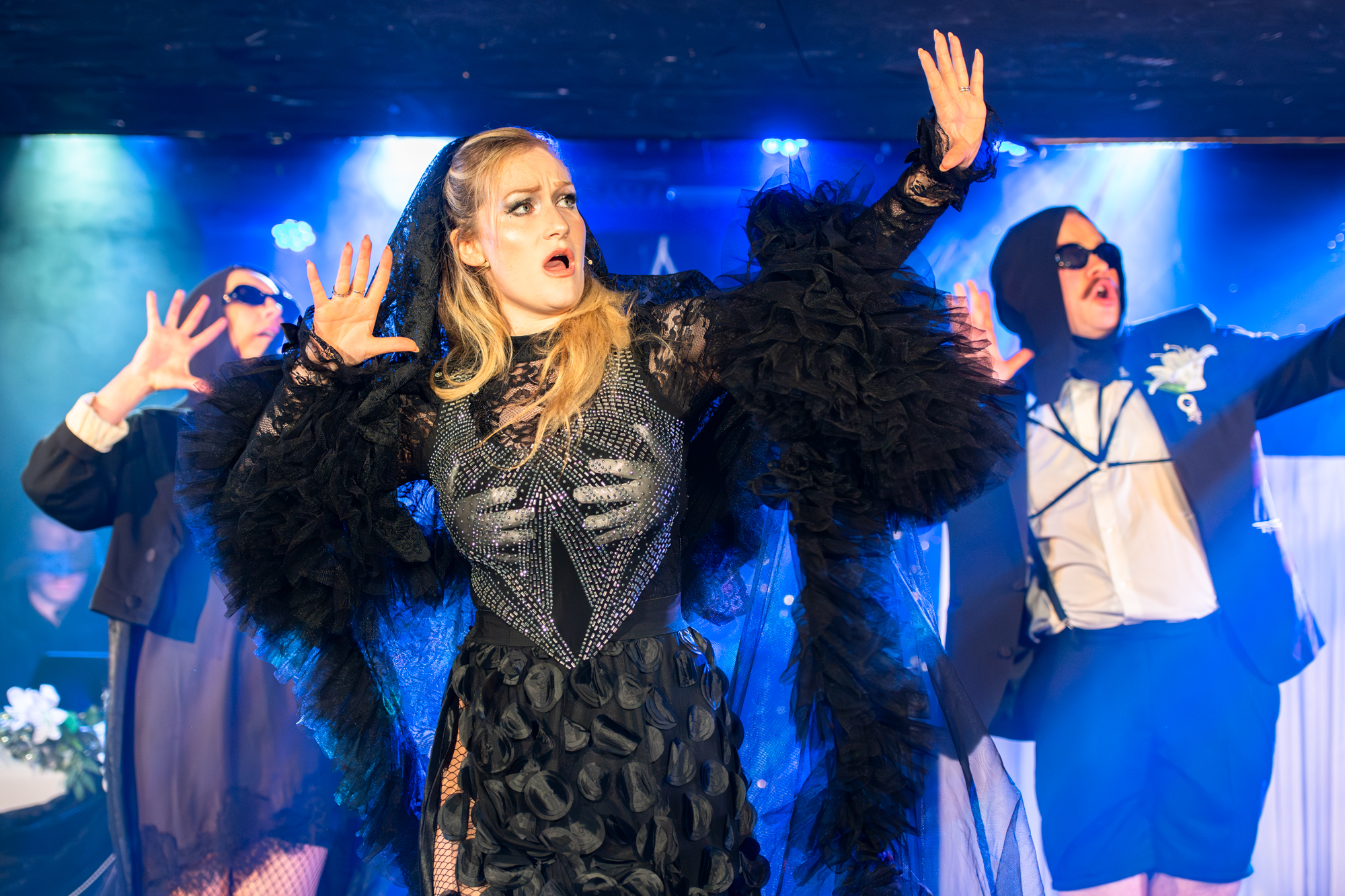
Funeral For My Boobs

21/05/26

Assembly Roxy, Edinburgh

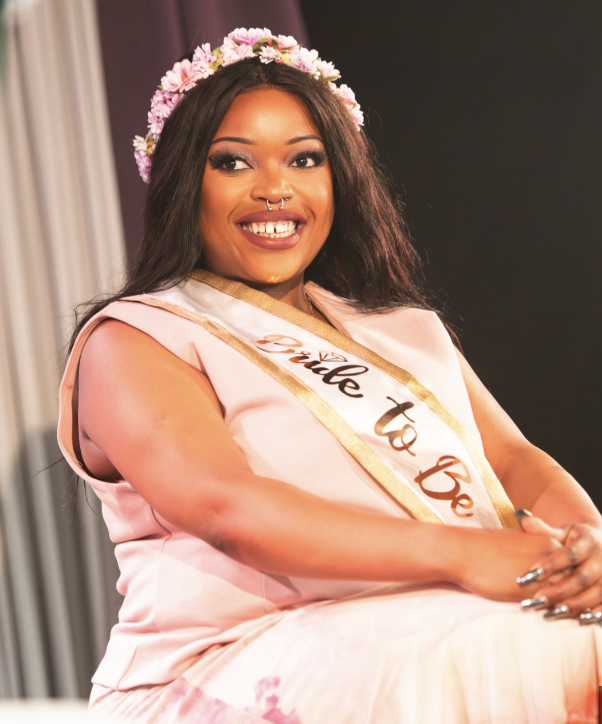
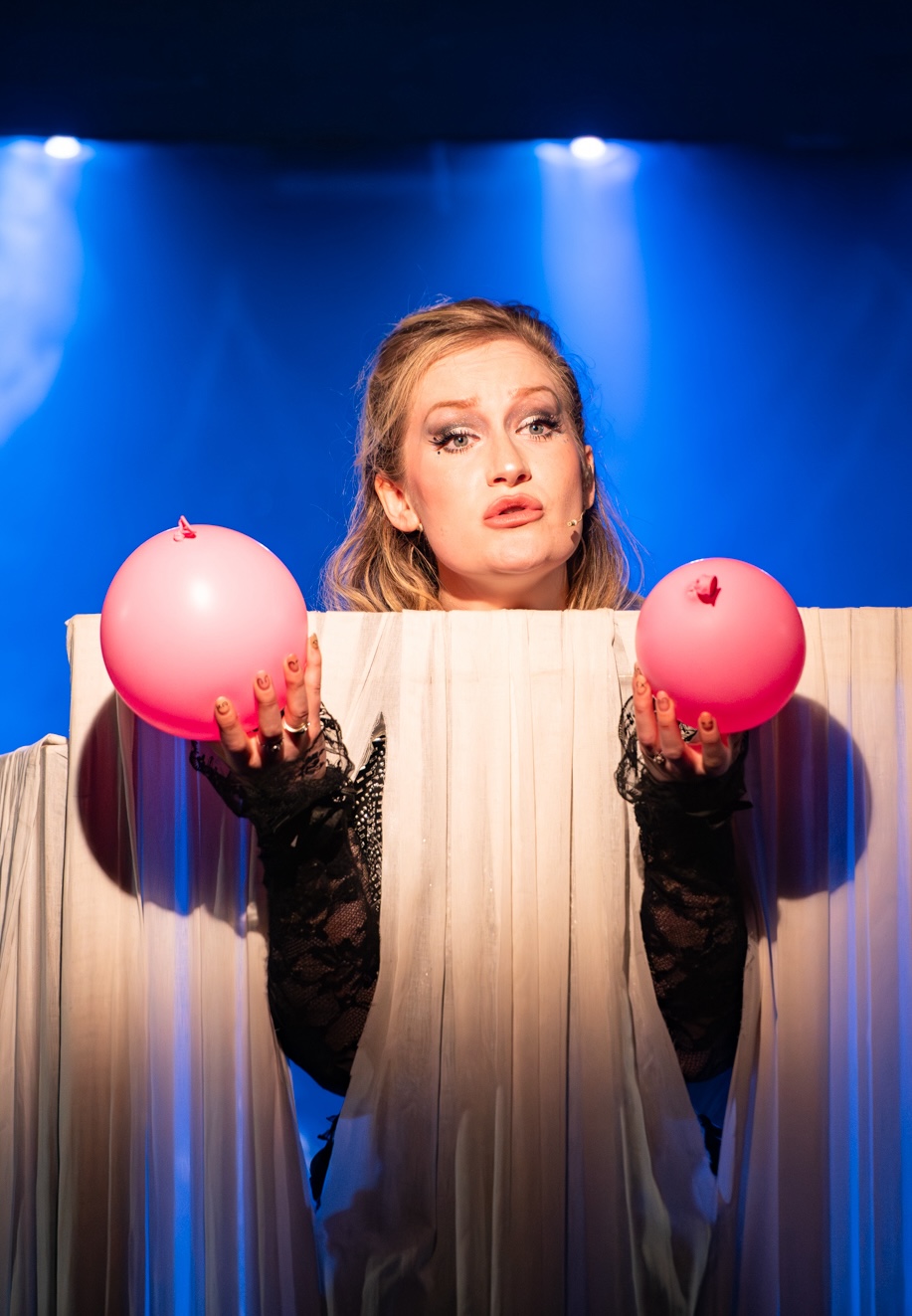
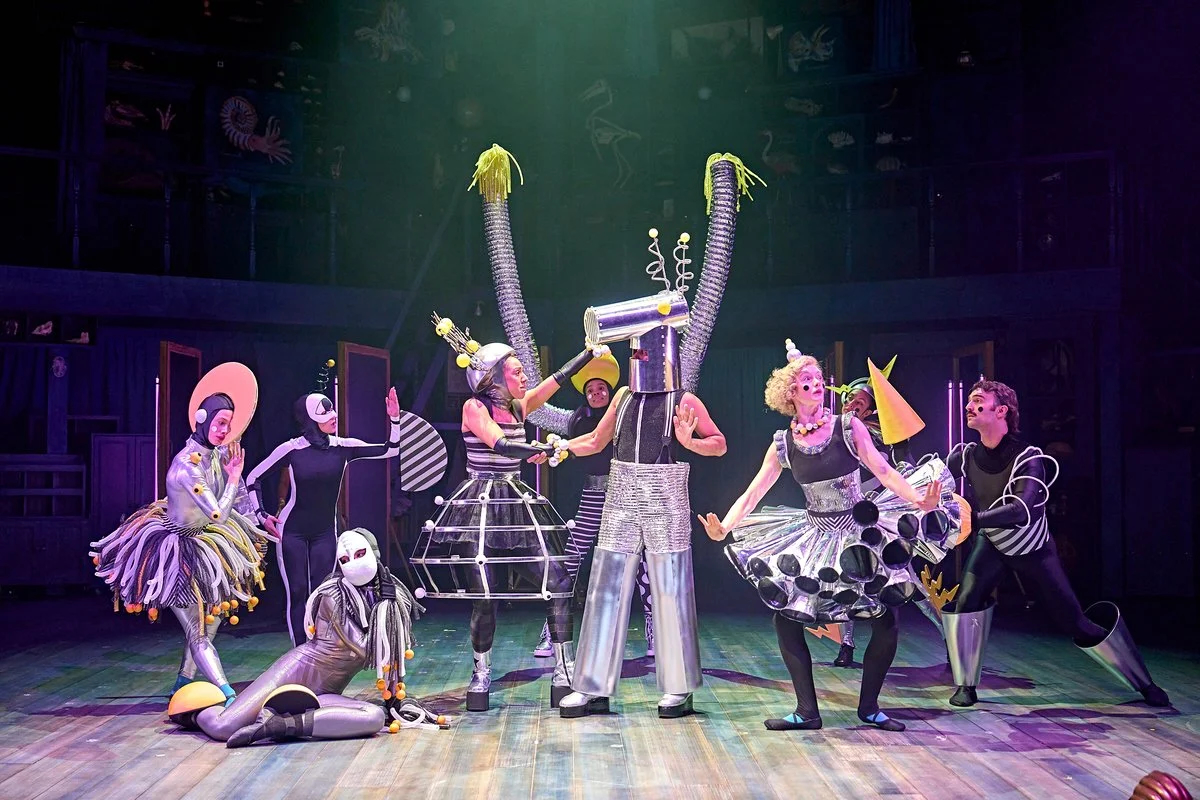
A double mastectomy is not generally something to make a song and dance about… but that’s pretty much what you’ll get from Hannah Howie’s Funeral For My Boobs. If you are expecting something dour and po-faced, let me assure you that this is an upbeat show that hurtles gleefully through a whole range of songs, dance routines and comedy exchanges. Which is not to say that it doesn’t have its more thoughtful moments, because it most surely does.

The story is based on Howie’s own experience of choosing to undergo the aforementioned surgical procedure after learning that she had inherited a gene through her family line that gave her an 85% chance of contracting breast cancer, leaving her with difficult decision. The play takes a holistic approach, exploring the complex relationship we have with our bodies, the myths and the realities of life with mammary glands, and the pressures heaped upon young girls as they go through puberty.

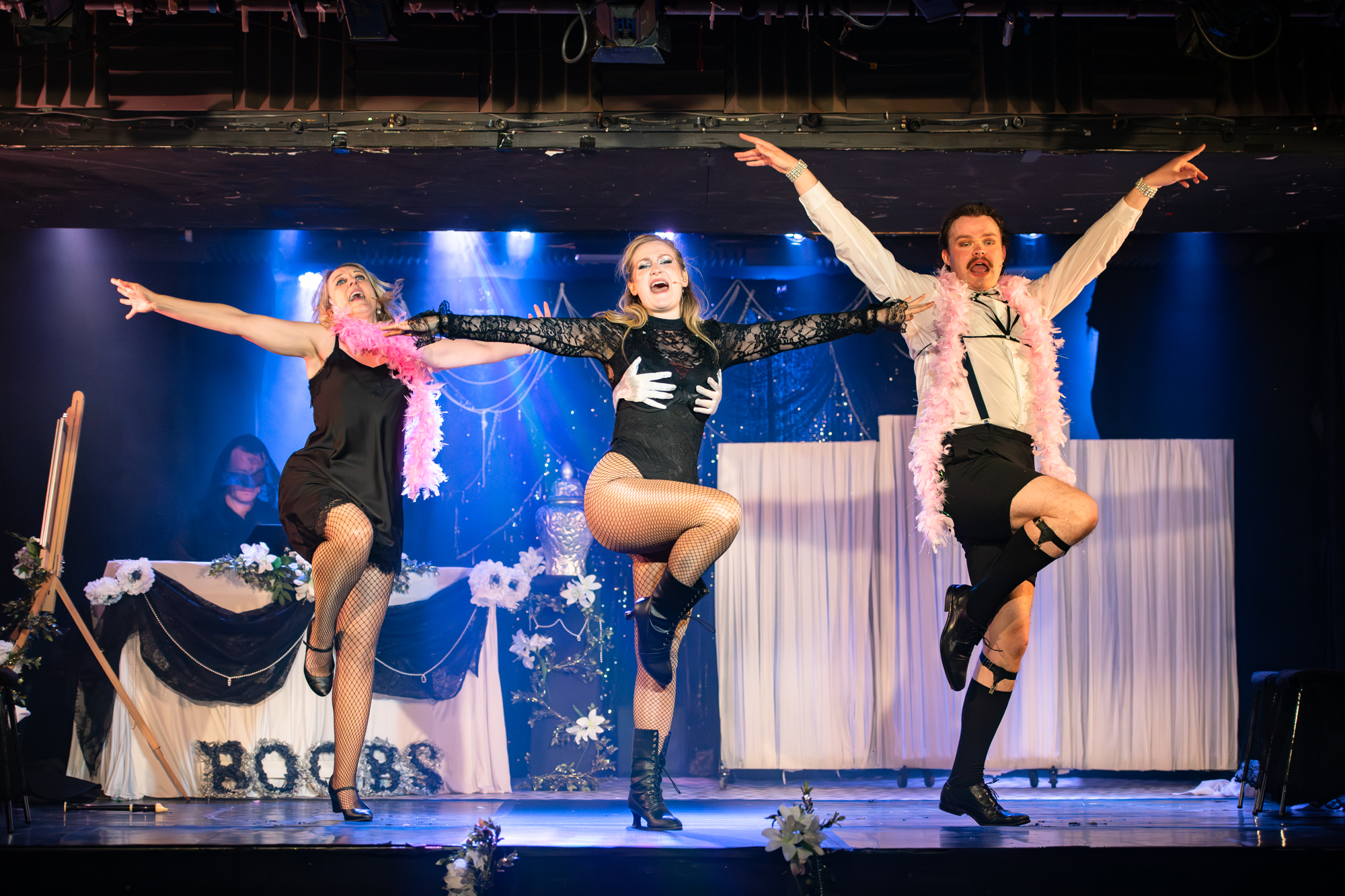
Opening in madcap grande guignol fashion, Howie rejoices in throwing out just about every breast-related pun you can think of, before singing and dancing up a storm. She’s brilliantly supported by Right Boob (Kirsty Malone) and Left Boob (Gregor John-Owen), who also slip in and out of a whole variety of other roles.

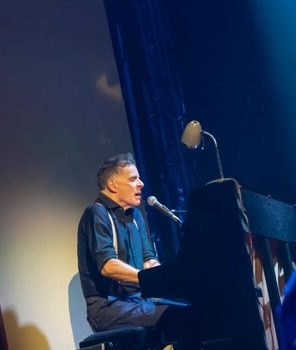
Musical director Stuart Fleming provides some impressive keyboards and Chris Stuart Wilson directs with flair and precision. A special nod should go to Heather Grace Currie for her inventive set and costume design, which belies the modest budget of A Play A Pie and a Pint.

Here’s the beauty of it. Whenever I think I’ve got the measure of the piece, it takes off in an entirely different direction and delights me all over again. There’s an impressive range of familiar songs to relish, ranging from Fleetwood Mac and Billie Eilish, to an beautifully-sung excerpt from Bizet’s Carmen – and, just when you wonder if there’s anywhere else this can go, we’re given a rendition of Celine Dion’s theme from Titanic that literally has me crying… with laughter. 

And then, to top it all off, Howie slips behind the keyboards to deliver a heartfelt ballad dedicated to her grandma, who died from the same condition in her early 30s.

I really can’t find anything to fault in this utterly fabulous production. I urge anyone who can grab a seat for one of the last couple of shows at the Roxy to do so and, while you’re there, to maybe consider making a donation to The House of Hope, Scotland, who provide support to people impacted by breast cancer.

Expect to have your expectations shattered… in a good way.

5 stars

Philip Caveney

Black Diamonds and the Blue Brazil

13/05/26

Royal Lyceum, Edinburgh

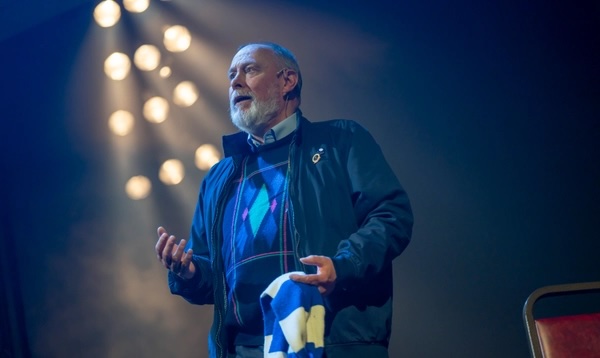
Sally (Dawn Steele) works in the high-pressure cauldron of a London-based law firm but, after the death of her beloved father, she is called back to her home town of Cowdenbeath to attend his funeral. Dad (Barrie Hunter) was a lifelong fan of the local football team – the ‘Blue Brazil’ of the title. One of her father’s friends informs Sally that her dad’s deepest wish was to have his ashes scattered on the team’s home ground of Central Park.

She initially surmises that the ritual will take place after the next game, only a few days away but soon learns that Dad has requested it should only happen after Cowdenbeath’s next win. And it turns out that his team doesn’t have a great record of scoring actual goals. In fact, their ability to snatch defeat from the jaws of victory is almost beyond belief. 

Sally’s sojourn in her Dad’s council house is haunted by recollections of her father’s obsession with his team’s history and her own terrible memories of what happened to her Mum. As the season slips inexorably by, Sally begins to wonder if she’ll ever get back to the career she’s worked so hard for…

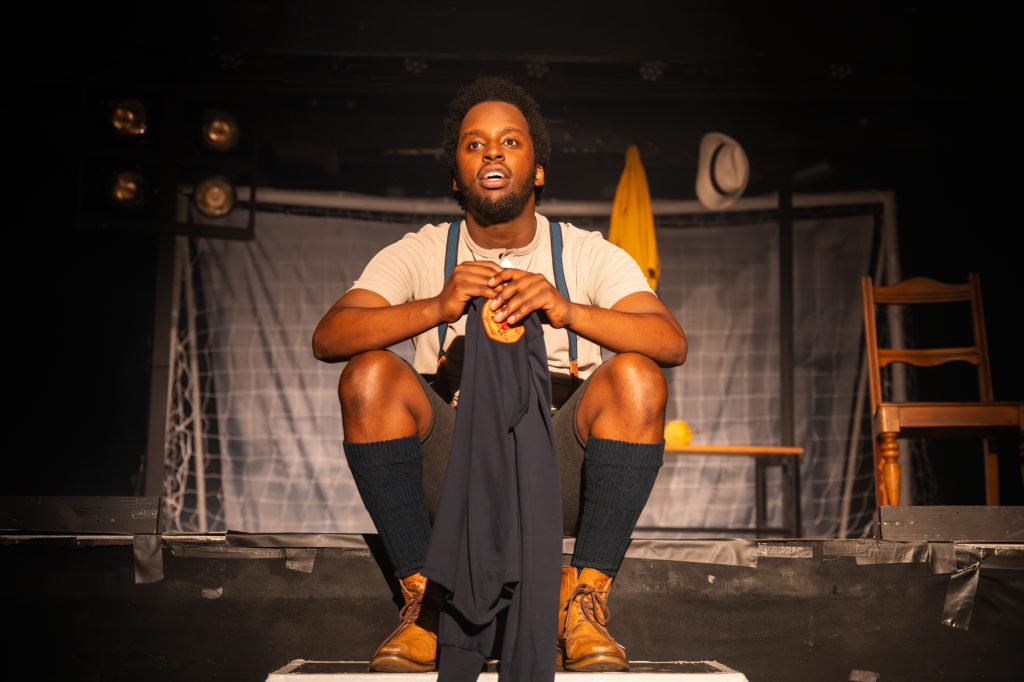
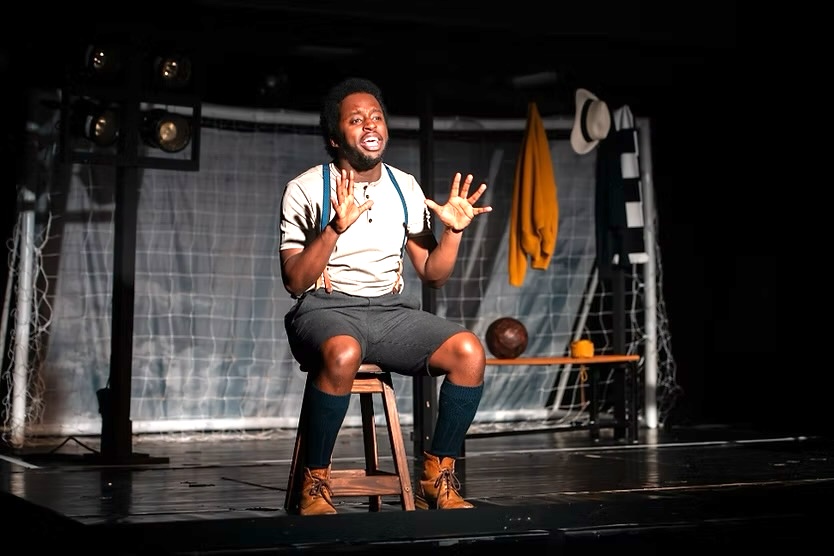
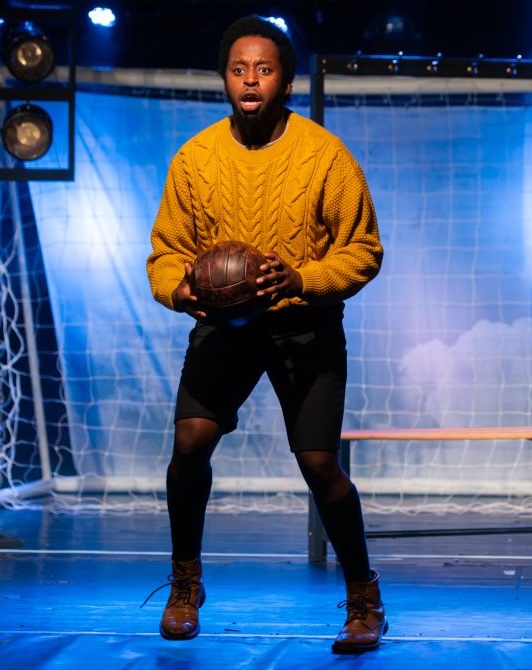
Black Diamond and the Blue Brazil, based on the book by Ron Ferguson and adapted by Gary McNair, is quick to point out that you don’t have to be a Cowdenbeath fan to enjoy this story, but it certainly helps if you are. It’s clear from the laughter (and at one point some actual tears) in tonight’s packed audience that there are many supporters in the house.

Steele does an excellent job of the world-weary, comedic patter, evincing plenty of perfectly-timed laughs from the crowd, but the story is essentially one long litenany of failure, which doesn’t exactly make for an easy watch. The story is punctuated by Ricky Ross’s plaintive ballads which are a little too one-note to help lift the mood – and since each song appears to be a retelling of the scene we’ve just witnessed, they don’t quite generate enough momentum to power the story. Sitting way back at stage left, Ross feels somehow distanced from what’s happening, commentating rather than collaborating.

This play first surfaced as an audio piece and its staging seems a little uneven in its adaptation. Jessica Worrall’s set design is unapologetically realistic in concept, right down to an urn containing the deceased remains. I prefer the occasional moments when the songs are illuminated by Lewis Den Hertog’s video projections, hinting at the long history of the team and its roots in the black soil of coal mining.

At this point, I should confess that I’ve never had any interest in football, though I do sometimes enjoy theatrical interpretations of it (SameTeam immediately springs to mind). However, it’s clear from tonight’s heartfelt standing ovation that the majority of the crowd are with this every step of the way. 

Maybe I’m the problem, but for me, this doesn’t quite hit the back of the net..

3 stars

Philip Caveney

Mayday: Rapid Responses to Our Times

01/05/26

Central Hall, Edinburgh

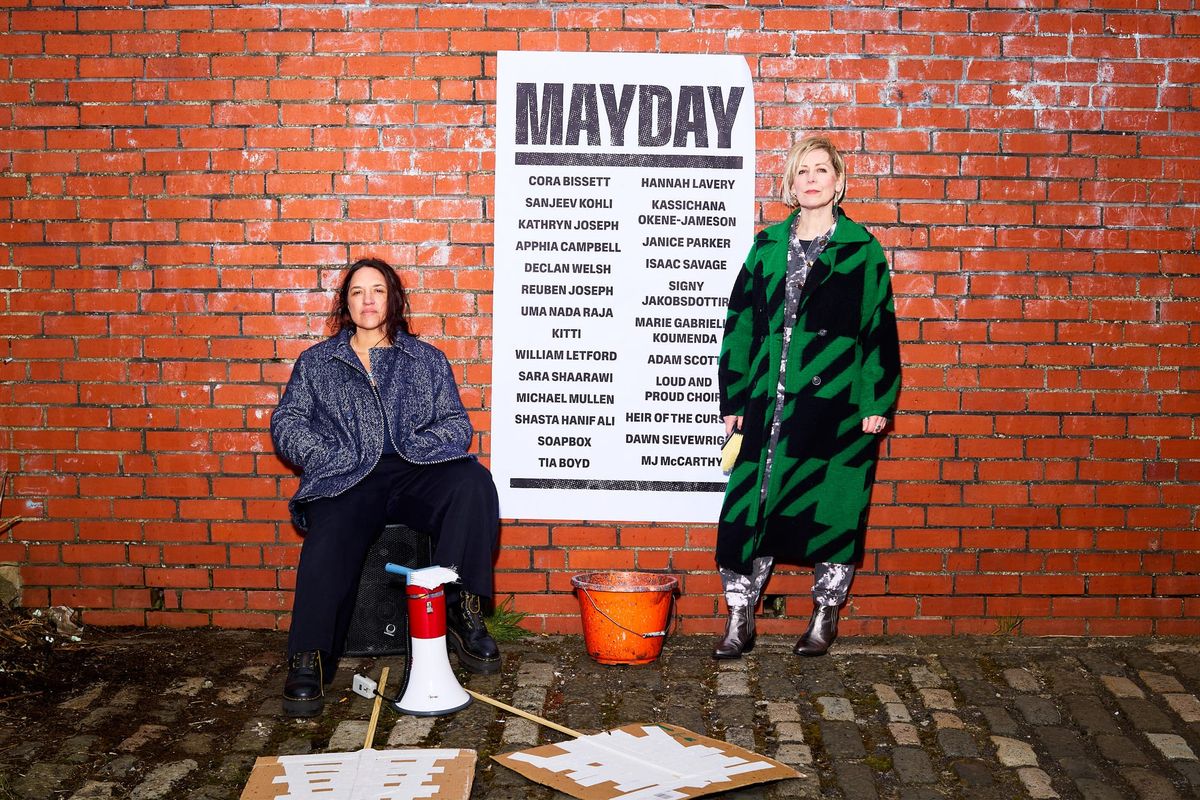
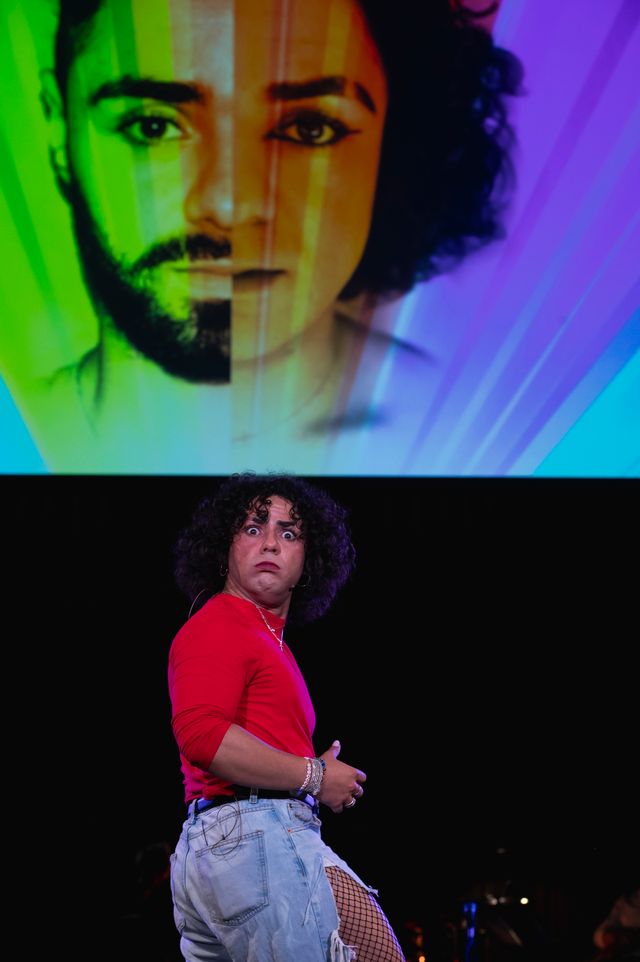
This National Theatre of Scotland production, co-curated and directed by Cora Bissett and Hannah Lavery, comprises live music, theatre, poetry, comedy and dance. Commissioned as a rapid-response project – a reaction to our turbulent political climate – this is part call-to-arms and part howl into the void. Because sometimes we need the catharsis of the latter before we can can put on our big-girl pants and contemplate the former.

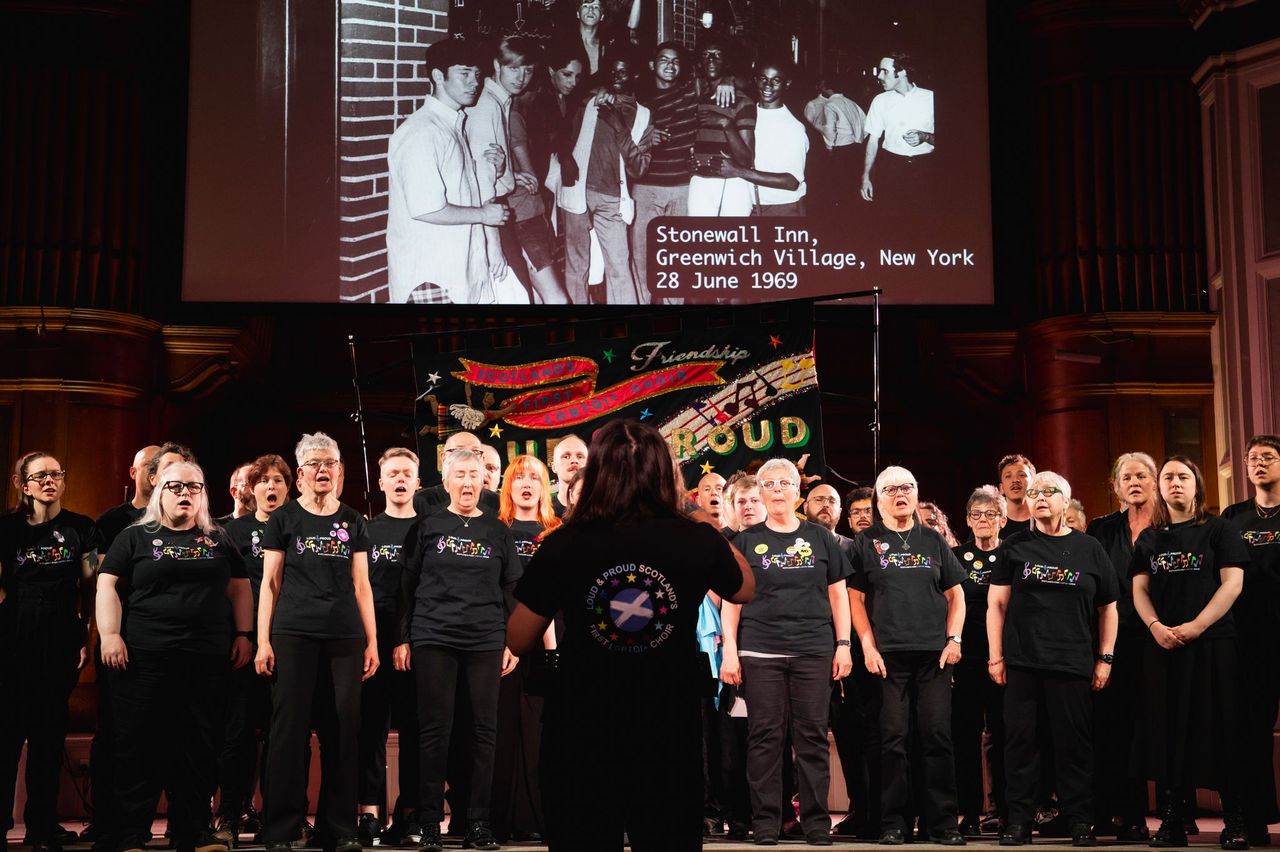
Organisationally, this is a triumph, each act flowing smoothly into the next, even when an ensemble as large as the Loud and Proud choir has to file onto the stage. There’s a lot that could go wrong: as well as the numerous performances, there are short films, set changes and BSL interpreters, not to mention the house band. That it all unfolds without a glitch is mightily impressive.

The auditorium is packed; this is a sell-out. It’s not surprising: we’re all looking for answers and maybe artists are the right people to pose the questions. They have strong voices, diverse audiences and myriad means of expression. Some of us will respond to ideas that emerge from dance; others to music or drama. It doesn’t matter. Anything that makes us pause and think. And act accordingly.

For me, the strongest elements of the evening are the punchiest. The songs – especially Dawn Sievewright’s rendition of Bissett’s It’s No a Wean’s Choice and Kitti’s feminist polemic – are especially stirring, and I also appreciate the insights I gain from both Tia Rey and Sanjeev Kohli’s spoken word sections. The choirs are very affecting, as is the garland of socks that campaign group Mothers Against Genocide Scotland have hung around the venue, each tiny bootee representing a child who has died in Gaza.

Although theatre is usually my favourite art-form, I find the dramatic scenes included here the least effective elements of the evening. Although they’re well-performed (and have been penned by writers I admire, including Apphia Campbell and Uma Nada-Rajah), there isn’t enough time for the arguments to develop or for us to fully engage with the characters.

No matter. Overall, the evening is a resounding success, reminding us that – together – we can make a difference. There are lots of people out there, right now, trying – and, if we join them, we can become part of the solution. Because we really do have to do something, don’t we?

Even if it’s as small as turning out to vote next week, to stop the fascists in their tracks.

Susan Singfield

Off the Rails

30/04/26

Assembly Roxy

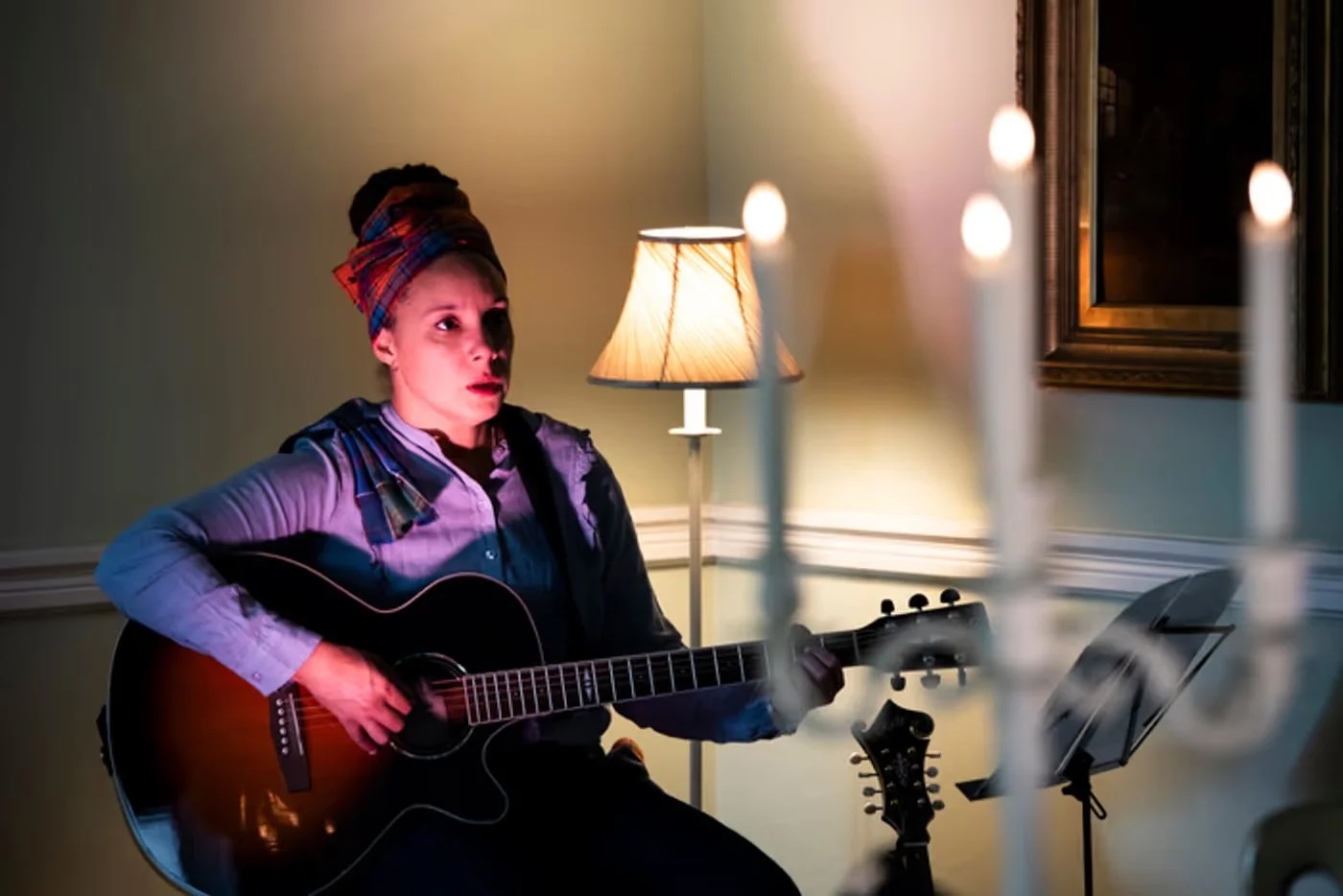
Off the Rails is Stephanie MacGaraidh’s professional writing debut – and what a debut it is. Playwright, songwriter, actor, musician: this is a one-woman show in every sense of the phrase. And it’s extraordinarily affecting.

It’s an auspicious start to the Assembly Roxy’s first ever season of Òran Mór’s A Play, A Pie and A Pint, whose productions usually play at the Traverse when they come to Edinburgh. The venue works well for the small-scale black box shows that PPP is known for, although the old building is not very accessible, which might exclude some of the Traverse’s regular patrons. If the rest of the plays are as good as this one, it will be a real shame for them to miss out.

MacGaraidh is Maggie, a woman on the run – or, more specifically, a woman on a train. In the quiet coach. Wearing pyjamas. With only an empty tote bag and a stale Go Ahead bar as luggage.

It’s not the way most people dream of spending their 30th birthdays…

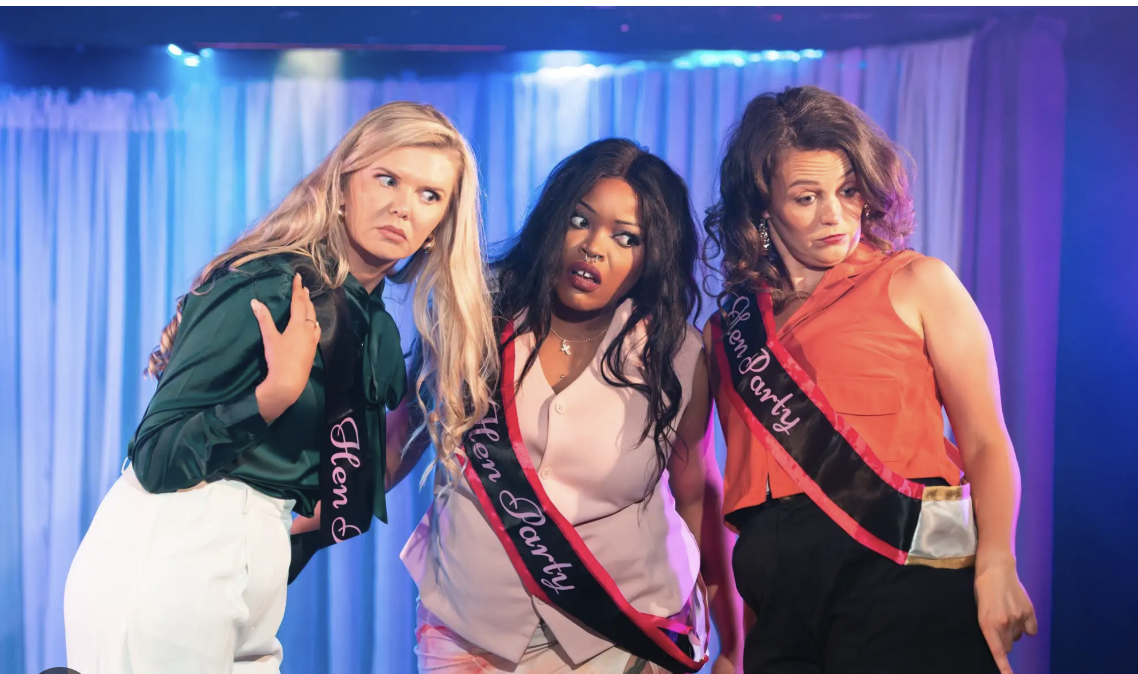
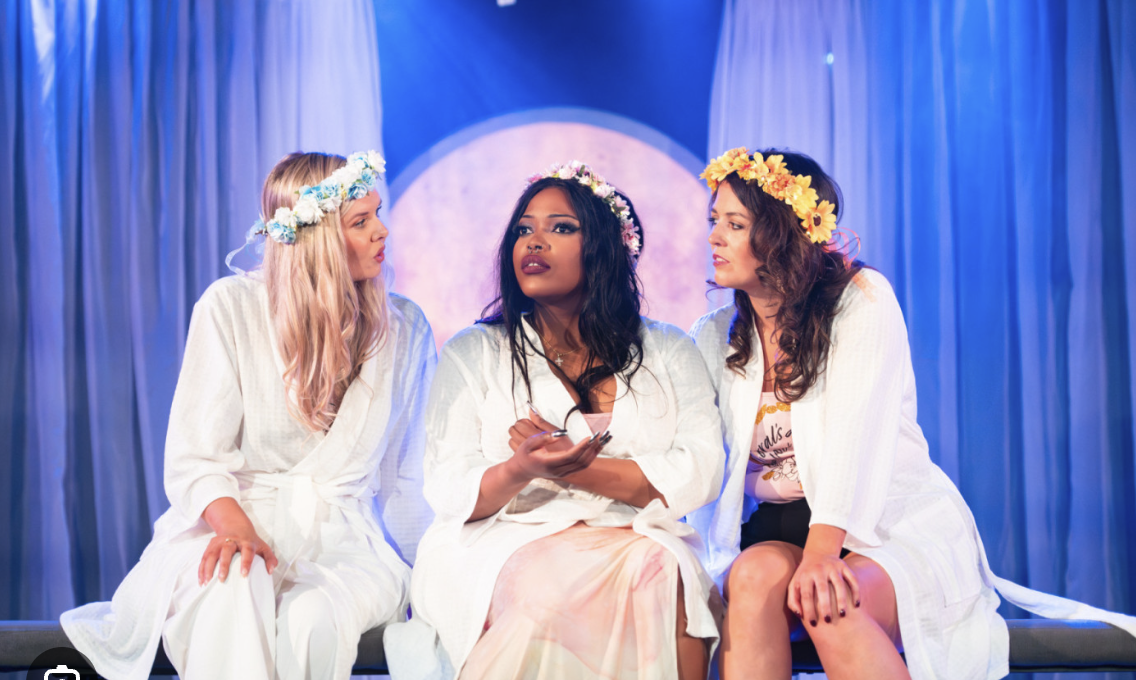
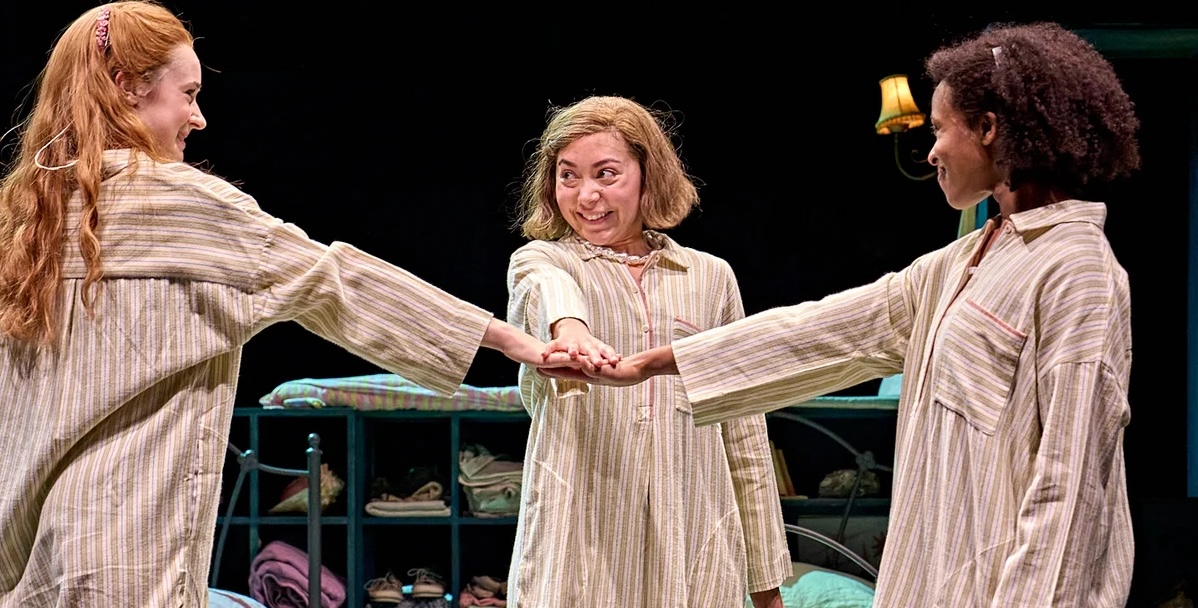
The tone evolves with the people Maggie meets on her journey north, from raucous hen party to lonely widower. MacGaraidh plays every character with conviction, eliciting both laughter and tears. Maggie’s story emerges bit by bit, revealed through an enticing mix of song and monologue, slowly revealing a young woman who has never really recovered from high school bullying, and whose adulthood is blighted by social anxiety.

I’ve rarely seen a looper used to such excellent effect, not only as backing vocals and added guitar, but also as interior monologue, amplifying the tension as Maggie’s life veers off the rails. The intrusive train announcements intensify the pressure even further, so that we’re as relieved as Maggie when one final encounter brings her back from the brink.

Directed by Katie Slater, Off the Rails is a triumph – and MacGaraidh is surely a star in the ascendance.

4.5 stars

Susan Singfield
Jackals

24/04/26

Tech Cube, Summerhall

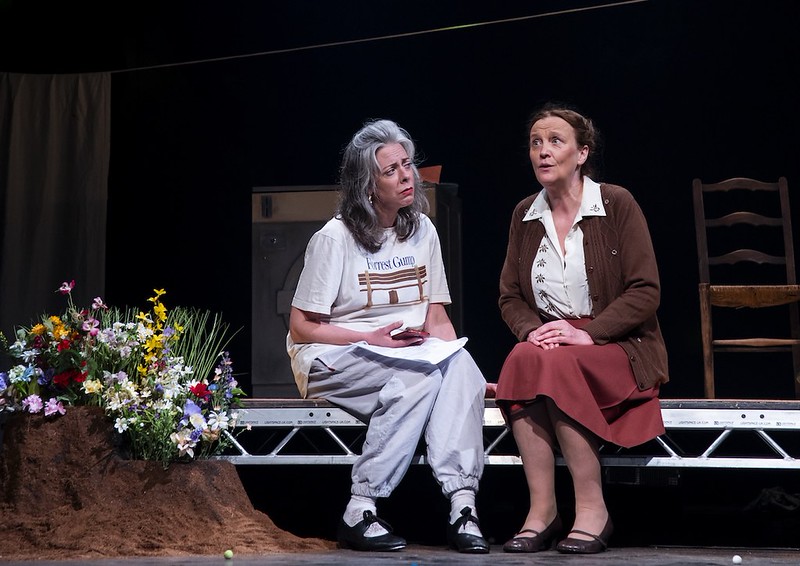
We’re in Vienna in the 1890s (well, we’re really in the Tech Cube, Edinburgh, but you get the idea), where Sigmund Freud (Claire Macallister) is fast becoming the most prominent name in the field of psychoanalysis. His first meeting with new patient, Emma Eckstein (Becca Robin Dunn), is initially clumsy and awkward but they soon get the measure of each other and Emma becomes a regular visitor to his office, both as a patient and as a contributor to his research. Indeed, as the years roll by, she begins to contemplate a future in the same line of work.

When they first meet, Emma is prone to bleeding copiously, a symptom we now know is caused by endometriosis but which in that era was identified – mostly by Freud – as an inevitable result of ‘hysteria.’ But when he brings in his friend, surgeon Wilhelm Fleiss (also played by Dunn), to perform a nasal operation on Emma, he unwittingly initiates the key event that will essentially end their friendship and leave Emma scarred for life…

Written by the two performers and directed by Olivia Millar-Ross, Jackals is an engrossing and often unexpectedly funny piece of work. The two actors handle their roles with skill. Macallister captures Freud’s pomposity and his tendency to claim other people’s ideas as his own, while Dunn also excels as the contradictory Emma, a woman at once fragile and fierce. In one key scene, Dunn slips on a black waistcoat and makes a confident switch to the swaggering, self-aggrandising Fleiss, urging Freud to pursue his dreams to the bitter end, to take advantage of his new-found fame.

Niroshini Thambar’s sound design is eerily haunting and Melanie Jordan’s short movement pieces, punctuating the various acts as five years unroll, are nicely judged transitions. A moment when Macallister eviscerates an orange to depict Eckstein’s surgery is a particularly effective touch and I also love the scenes where the two performers crouch on a desktop, glaring balefully into the audience like the creatures of the title.

I leave the theatre outraged by what happened to Eckstein and determined to find out more about her, which I suppose must surely be one of the main objectives of the play. It’s eye-opening.

There are just a couple more opportunities to catch Jackals at Summerhall before it moves on, so book your tickets now.

4.2 stars

Philip Caveney

Gush

23/04/26

Traverse Theatre, Edinburgh

Ally (Jessica Hardwick) is expecting her first baby. She’s looking forward to becoming a mum, but she’s also scared of losing her own identity. Already, before ‘Bug’ has put in an appearance, she’s ceded some of her autonomy to Kevin, her loving but anxious husband, who asks her to drink rooibos tea instead of her preferred English Breakfast, and keeps imploring her to ‘relax.’ Her world seems to be shrinking and she’s desperate to claw back her sense of self…

Especially that one particular aspect of herself she’s never had the courage to explore.

In a few short weeks she’ll be too busy, too tired, too focused on looking after her child, so it’s now or never, she reasons. And never isn’t an option. Ally’s always known she’s bisexual but she’s only ever been with men. She needs to try sex with a woman, just once, before she settles down for good. She deserves this last hurrah, doesn’t she?

Hardwick’s ebullient performance anchors the monologue effectively: she’s funny and appealing, so that we want her to find fulfilment, despite the moral ambiguity of her plan (namely, cheating on her husband with a sex worker). Jess Brodie’s script is witty and well-paced, the cringe-comedy elements perfectly judged, so that I often find myself laughing from behind my hands, my toes literally curled, as Ally’s quest leads her from one awkward moment to the next.

Becky Minto’s design is deceptive. At first, the set appears to be all clinical white surfaces, a perspex-coated cyclorama morphing into a hard-edged bed, softened only by a few cushions. But as the play develops and the lighting (courtesy of Renny Robertson) becomes more subdued, we notice that the bed’s walls are clad in intricately knitted wool, reminiscent of a baby’s blanket, and there’s a pleated cotton valance around the raised platform.

Under Becky Hope-Palmer’s direction, this is a lively, kinetic piece of drama, and there are some lovely creative touches. I like the way the audience is manipulated into vicarious embarrassment and, more specifically, the simplicity of Ally’s bump becoming her baby.

If you’re in the mood for a highly-original take on impending parenthood, Gush might just be the play for you. There are only two nights left to see it in Edinburgh though, so you’ll need to get your skates on.

4 stars

Susan Singfield
The High Life

07/04/26

Festival Theatre, Edinburgh

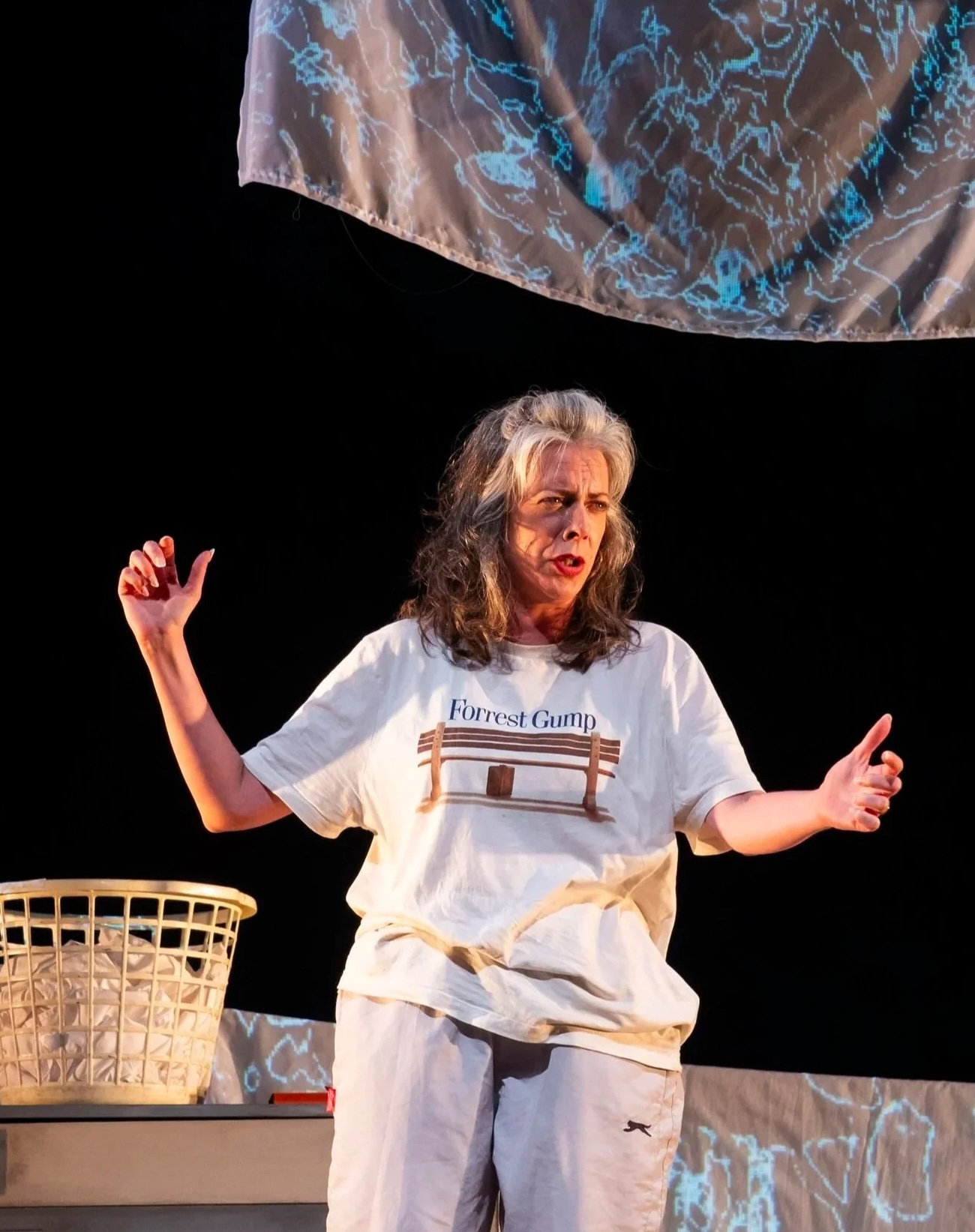
Way back in 1994, a seven-part television series aired on the BBC. The brainchild of actors Alan Cumming and Forbes Masson, it offered a surreal blend of Scottish whimsy and outrageous musical routines. Cumming played Sebastian Flight and Masson was Steve McCracken, two flight attendants working for the fictional airline, Air Scotia. These were men for whom sarcastic asides came fitted as standard. A second series was planned but never came to fruition but, over the years, The High Life achieved a sizeable cult following. Who could have foreseen that three decades later the two originators would team up with Johnny McKnight to create a stage musical inspired by that very series? And who could have predicted that it would star four members of the original cast and would be presented by The National Theatre of Scotland, no less?

But the proof is right here on the stage of the Festival Theatre, as Sebastian and Steve prepare for take off once more. Suffice to say, their old adversary, Shona Spurtle (Siobhan Redmond), is still prowling the aisle ‘like Mussolini in micro-mesh,’ keeping our two heroes well and truly under her thumb, while Captain Hilary Duff (Patrick Rycart) can always be depended on to wander in at inappropriate moments, making rambling observations about whatever happens to be on his mind. Not the flight, that’s for sure.

The sense of affection from the packed auditorium is palpable and the staunch fans’ reactions to familiar references are loud and appreciative. As somebody who has never seen the TV series, I must admit that these allusions go right over my head – but it doesn’t really matter. This is, more than anything else, utterly devoted to unbridled silliness in all its exquisite forms. The script is packed with superb one-liners and up-to-the-minute political references. The lead players demonstrate that they really can turn their boundless skills to just about any genre – and the supporting cast are (nylon) uniformly excellent. Kyle Gardiner is particularly impressive in the role of new recruit Mylie, while Rachael Kendall Brown is utterly adorable as Kylie, the stewardess who has been secretly carrying a candle for Shona.

Colin Richmond’s set and costume design are suitably ingenious, taking nylon to places it’s never been before, while Emily Jane Boyle’s slick choreography keeps the 11-strong cast striding, dancing (and occasionally crawling) across every inch of the massive stage. Director Andrew Panton handles all the rampant mayhem with commendable skill and the pace never flags for a moment.

The first act culminates in a sudden and startling manner. During the interval, Susan and I speculate about what might await us in the second. It speaks volumes that both of us are half-right and simultaneously, completely wrong about where Flight 123 is ultimately headed. The High Life goes to places most other airlines dare not venture and it’s fun to travel with them. My advice would be to get yourselves down to the Festival Theatre before this show jets off on tour.

4.2 stars

Philip Caveney

Miss Lockwood Isn’t Well

01/04/26

Traverse Theatre, Edinburgh

It’s April Fool’s Day and the final offering in this season’s A Play A Pie and a Pint seems an apt choice for the occasion. Miss Lockwood Isn’t Well focuses on the trials and tribulations of primary school teacher Alice Lockwood (Karen Young), who has been suspended from work after experiencing a series of visions. Each encounter features a saint, who arrives in her classroom bearing helpful advice. Mind you, the insights she’s granted aren’t (at least, initially) in Joan of Arc territory.

That earring she lost? It’s under the fridge. Apparently.

Dr Freer (Jane McQuarry) has been given the tricky task of determining whether or not Alice is fit to return to work. For the assessment, Alice has requested that her parish priest, Father Mackin (Mark Cox), should also be in attendance, presumably to offer some moral support – though his snarky, mocking attitude probably isn’t what she was hoping for. Dr Freer asks Alice to explain, in her own words, the bizarre encounters that have brought her to her current situation and her ensuing account makes up the substance of James Reilly’s acerbic and occasionally hilarious play.

Young manages to keep her character grounded throughout, wide-eyed with dismay that anybody would think her a potential danger, but occasionally slipping into a kind of altered state – whereupon some of her revelations really do seem to verge on the miraculous. It’s an intriguing twist. Cox is given the lion’s share of the one-liners, which he handles with perfect timing, coaxing big laughs from the audience – and McQuarry makes an excellent job of the play’s trickiest role, refereeing the constant sparring of her two companions, yet still managing to create a convincing and utterly professional character.

This is an undeniably intriguing piece. The revelation that there are actually thousands of patron saints recognised by the Catholic church – and that many of them have pretty inane responsibilities – adds to the general air of amusement. Did you know, for instance, that there’s actually a patron saint of dysentery? St Polycarp. Thanks for asking.

Catriona McLeod handles the direction with her usual skill and Heather Grace Currie’s neon-splashed set revels in the innate tackiness of Catholicism (sorry, lapsed Catholic speaking). If the play’s conclusion doesn’t quite smack home with a killer punch, this is a thoroughly entertaining way to spend a Wednesday lunchtime.

Come to think of it, there’s probably a patron saint for those too. Saint Pie-us? I’ll get my coat.

4 stars

Philip Caveney

The Light House

28/03/26

Traverse Theatre, Edinburgh

Alys Williams’ one-woman show raises some important issues about caring for someone who is struggling with their mental health. The play opens with a boat on a stormy sea – and the terrifying realisation that someone has fallen in. “Man overboard!” yells Williams. “Man overboard!” echo the audience members she has previously primed. “Call the bridge!” Williams says. “Blow the whistle! Throw the lifebuoy! Point!”

The final instruction is the hardest to follow, because she has to keep pointing without looking away until someone else comes to take over.

No matter how long that takes.

The metaphor soon becomes clear. The protagonist’s boyfriend experiences suicidal ideation. When he’s found on a Dublin bridge, contemplating throwing himself into the Liffey, she tries her best to rise to the occasion. She sounds the alarm: “Man overboard!” She doesn’t let him out of her sight. But no one comes to her assistance, and her own wellness begins to suffer.

It’s interesting to see this story from the caregiver’s point of view. However, although this is very much Alys’s tale, I think the piece would benefit from a deeper exploration of Nathan’s experience, offering us more insight into his illness than the superficial assertion that he’s ‘depressed’. Without this, it’s hard to appreciate the extent to which Alys’s care is needed.

From a dramatic point of view, there’s not a lot of jeopardy. Williams assures us at the beginning that everything turns out okay, and it does – with nary a bump on the road. Aside from the initial incident – where Nathan thinks about killing himself and then decides not to – everything progresses relatively smoothly. Sure, there are the long waiting lists for psychiatric care, his parents’ worries about their medical insurance and Alys’s spiralling anxiety. But none of these potentially serious complications ever amounts to anything, which makes the play feel strangely anticlimactic.

Nonetheless, Williams is a very engaging performer. Directed by Andrea Heaton, her gentle, inclusive demeanour makes the audience participation work well. I also like her use of puppetry and clowning; in fact, I think Williams could make more of these to amplify the emotional impact. The set (by Emma Williams) is effective, conjuring both boat and bedsit, its many ladders and hiding places allowing for dynamic movement.

A nicely-told drama about a vital subject, The Light House is on tour until the 24th May.

3 stars

Susan Singfield
One-Man Poe: The Black Cat & The Raven

22/03/26

The Swallow Theatre, Ravenstone

We’re enjoying a short campervan trip to Dumfries and Galloway. Tomorrow, a 10k hike is planned on the Isle of Whithorn where we’ll explore the setting of the final scenes of the iconic 1973 film, The Wicker Man. But how should we pass a quiet Sunday evening? Well, obviously we’re not going to a theatre show, that really would be a busman’s holiday… but then a friend tells us about The Swallow Theatre, which proudly proclaims itself to be ‘the smallest theatre in Scotland.’ Originally set up by Jill and David Sumner in 1990, it now has new owners, and is currently celebrating its 30th year!

And what’s more, tonight’s show looks very interesting…

Almost before we know what’s happening, our seats are booked and we’re dodging pot holes as we drive along a remote country road, until we see welcoming lights ahead of us. Someone is waiting by the parking area to guide cars into their spaces and, once inside, we take seats in the convivial bar, where drinks and snacks are being dispensed. The new owners have been running the theatre since 2016 and seem to be able to turn their hands to just about everything. As curtain up draws near, we’re led out to the converted cow byre behind the cottage, where performer Stephen Smith is already seated at a desk, awaiting our arrival. Blankets are dispensed (it’s Scotland; it’s cold!), the lights dim and One-Man Poe begins.

In the opening monologue, Smith relates the author’s classic short story, The Black Cat, the tale of a disturbed man who cannot stop himself from indulging in random acts of cruelty, most of them directed at his titular pet. Smith is a confident and assured performer and he embodies the narrator with great skill, seizing upon the man’s every gesture, every sidelong glance: the way he suddenly pauses to stare intently at a member of the audience. There are nicely-judged moments of dread, subtly accentuated by sound and lighting effects.

If the first half is impressive, the second is even more so as, in full view of the audience, Smith transforms himself into an entirely different character, the old man who relates Poe’s best-known poem, The Raven. This is stage craft of the highest order. We’ve seen Smith changing his clothes and applying his makeup, so why should we believe that he’s an elderly man approaching the end of his life? And yet, we absolutely do. It’s a mesmerising performance, during which the audience watches in spellbound silence as the familiar lines unfold.

Already a regular performer at the Edinburgh Fringe, Smith announces afterwards that he’s planning to return this August with two new pieces by Edgar Allen Poe. Something to check out at a later date, I think, but for now we return to our van, marvelling at what we’ve just watched and trying not to be aware of the countless pairs of glinting eyes watching us from the hedgerow…

4.4 stars

Philip Caveney