04/08/26
National Theatre at Home
The onslaught of the Edinburgh Fringe looms just on the near horizon, but before it all kicks off, there’s still a chance (thanks to Brenda and her NT at Home subscription) to catch up with something we have missed earlier. The listing that first catches my eye is 2024’s A Tupperware of Ashes, a play by Tanika Gupta – but Susan has noticed something else she really wants to watch. Can we possibly cover them both?
Yes, we can.
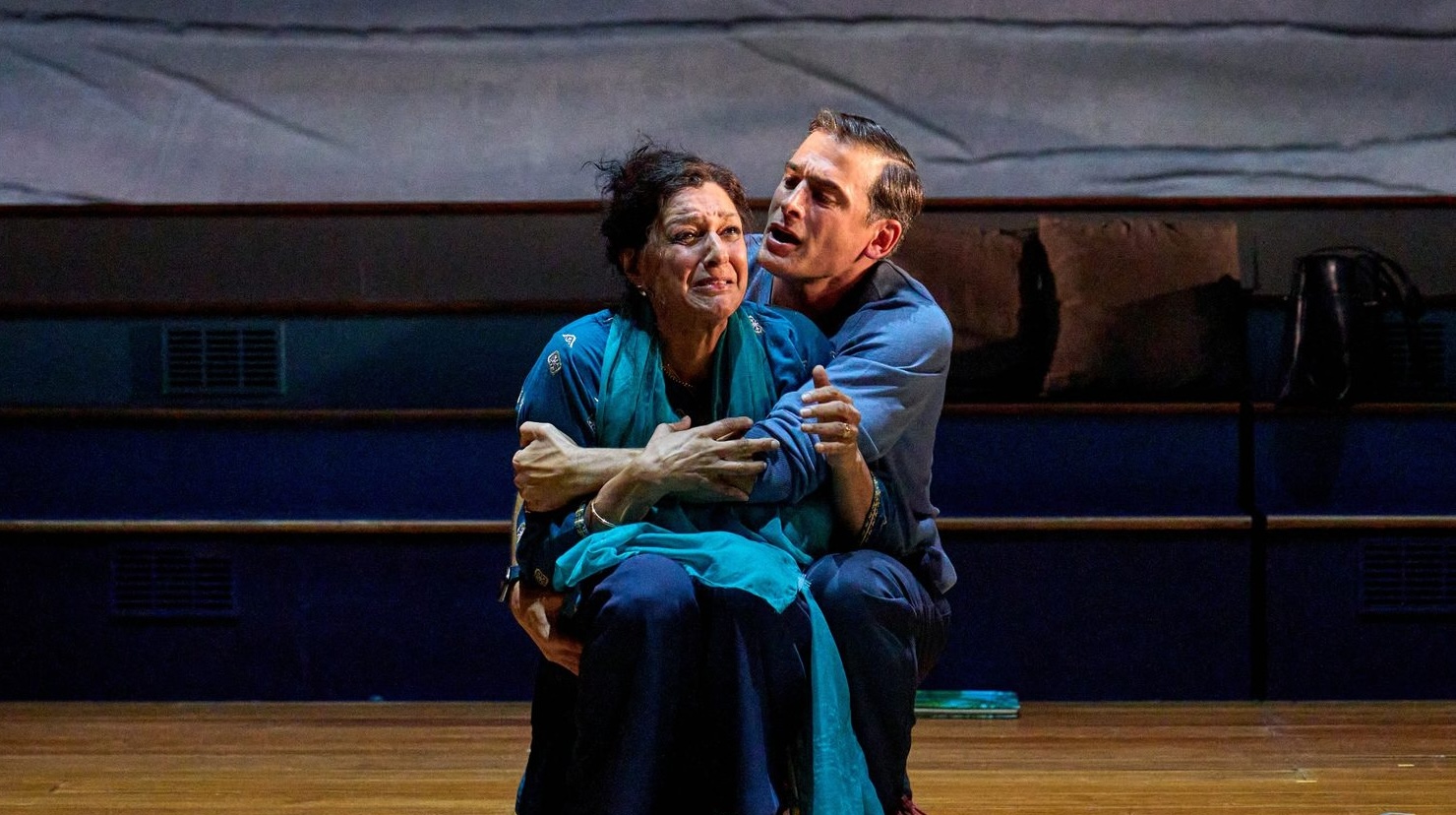
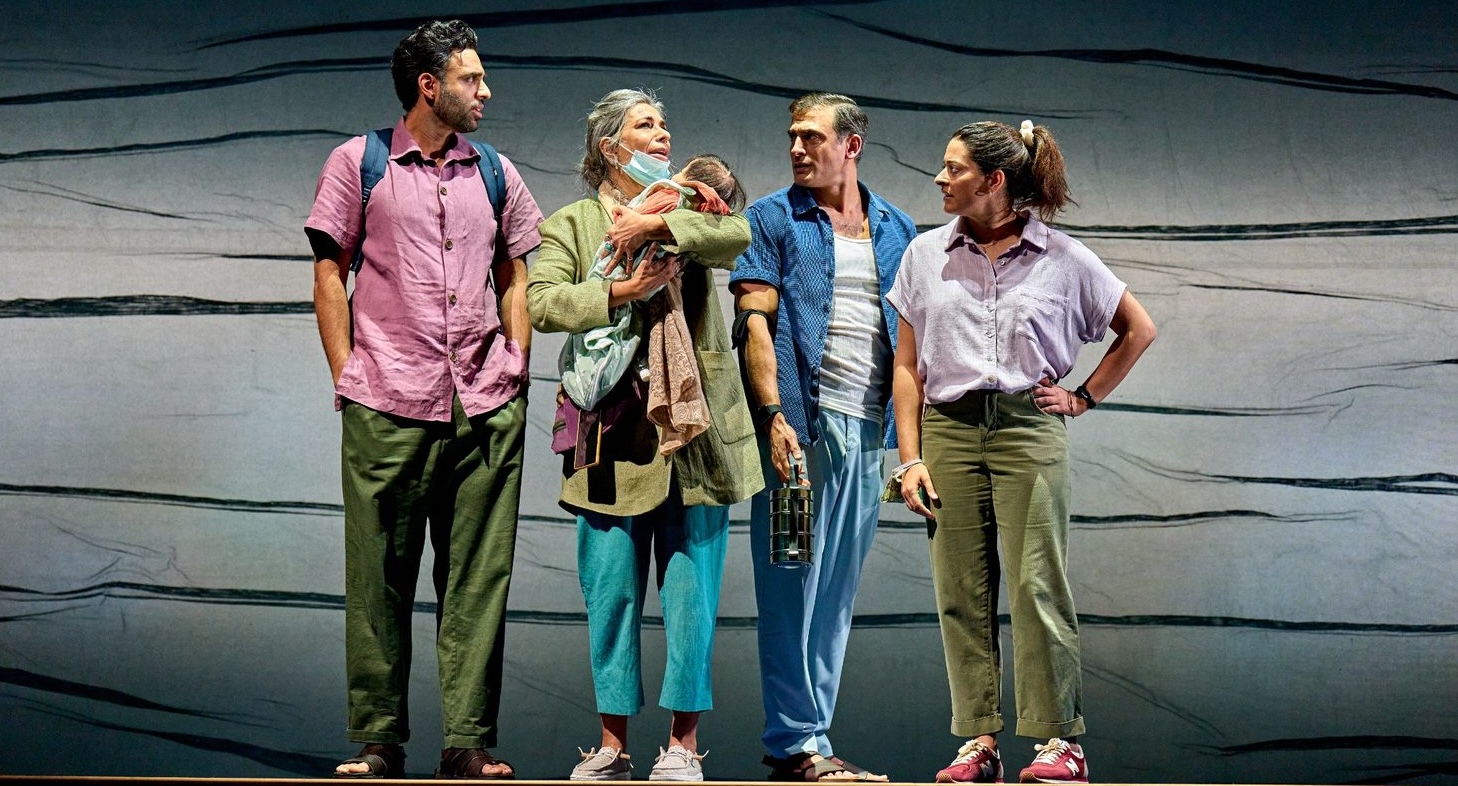
The central character of this drama is Queenie (Meera Syal), an ambitious Michelin-starred chef and matriarch, with three children, from whom she demands complete dedication. Kamala (Natalie Dew) and Gopal (Marc Elliott) are both highly successful in their respective professions, while oldest boy, schoolteacher Raj (Raj Barjaj) lacks focus (at least in Queenie’s opinion) and doesn’t seem to have much in the way of ambition, for which she openly criticises him. But the three of them accept that their mother has her own way of handling life. Woe betide anybody who tries to make her change her ways.
But the siblings – together with Queenie’s closest friend, Indrani (Shobna Gulati) – are becoming increasingly worried about their mother’s recent behaviour. Why does she keep mentioning other (non-existent) branches of her restaurant, supposedly based around the world? Why does she fly into rages at the slightest provocation? And why does she sometimes talk about her late husband, Ameet (Zubin Varla), as though he’s still around, ready to come strolling along at any moment.
The answer is supplied by Doctor Young (Stephen Fewell, as the first of a whole series of authority figures). Queenie, it turns out, is in the early stages of Alzheimer’s and is beginning the long, terrifying decline into dementia. As everyone watches, appalled, she begins to act and behave in ways she never has before. And, as she opts to spend more time with each of her children, they begin to realise the enormity of what is happening to their mother… and they struggle to deal with it.
Those of you who are thinking of King Lear are certainly on the right lines (Lost Lear, seen at last year’s Fringe, also mined a similar premise to great effect). Syal offers a powerful and compelling performance in a central role that features equal parts humour and tragedy – and just occasionally she utters something that directly relates to Shakespeare’s classic. When caught up in the extremes of her condition, Queenie’s observations are utterly heartbreaking and, as ever, when watching a situation like this, I’m drawn back to my own mother’s ten year battle with dementia.
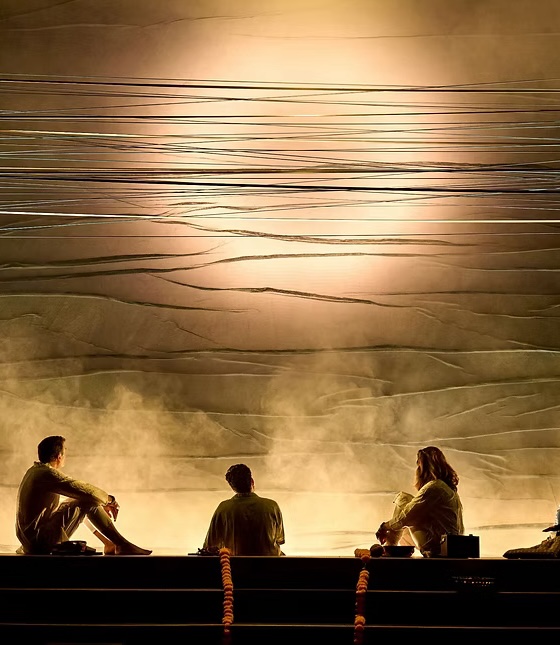
Pooja Gal handles the directorial reins with great precision, aided and abetted by Rosa Maggiora’s dreamy set design and composer Nitin Sawney’s ethereal compositions. Varla is wonderful as Ameet, wandering confidently into real situations, visible only to Queenie as he makes wry observations about the chaos unfolding around him.
If there’s an issue here it’s simply that Syal is so magnetic a personality that the play’s coda (where the siblings struggle to organise the titular scattering of her ashes in the River Ganges) misses her presence so much that the ending feels oddly anticlimactic, a problem accentuated by the fact that we’ve already witnessed what feels suspiciously like the perfect conclusion a good twenty minutes earlier.
But it’s a small issue in what is, overall, an accomplished and thought-provoking drama – and how wonderful it is to have it ready to watch at the touch of a button.
4.7 stars
Philip Caveney