TravFest 2026

After Party

09/08/26

Traverse Theatre, Edinburgh

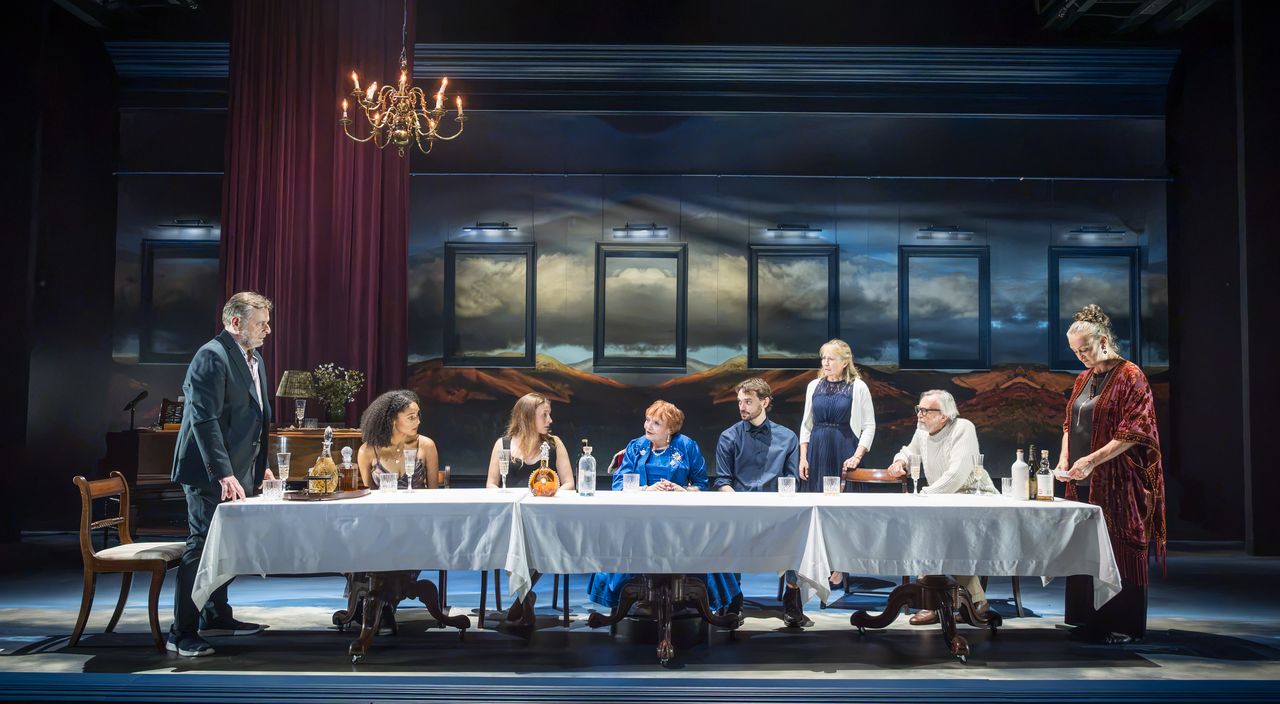
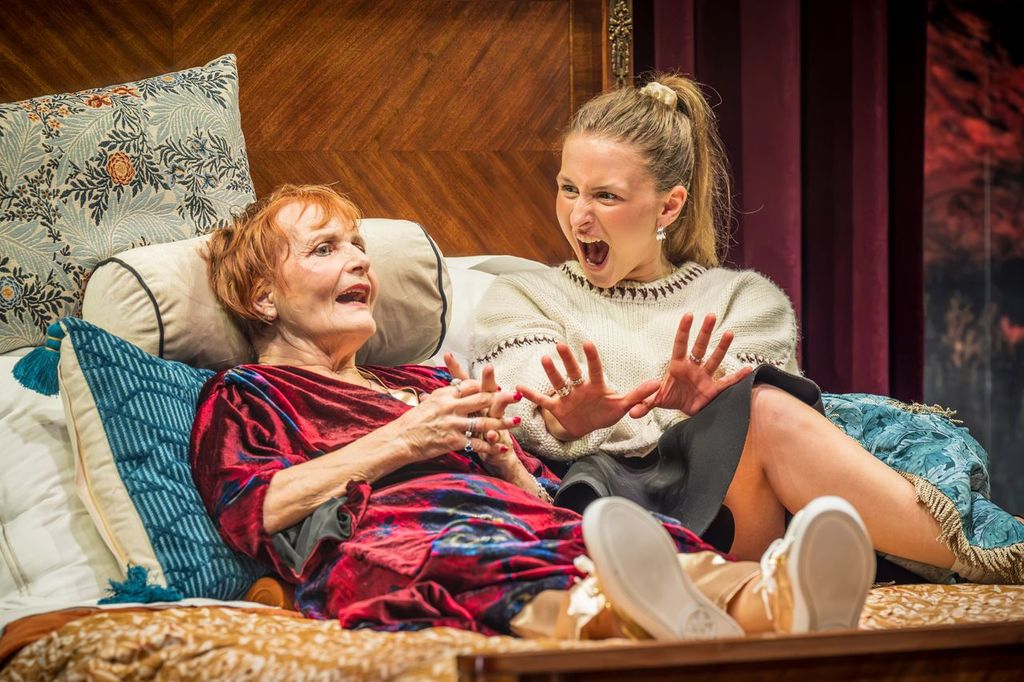
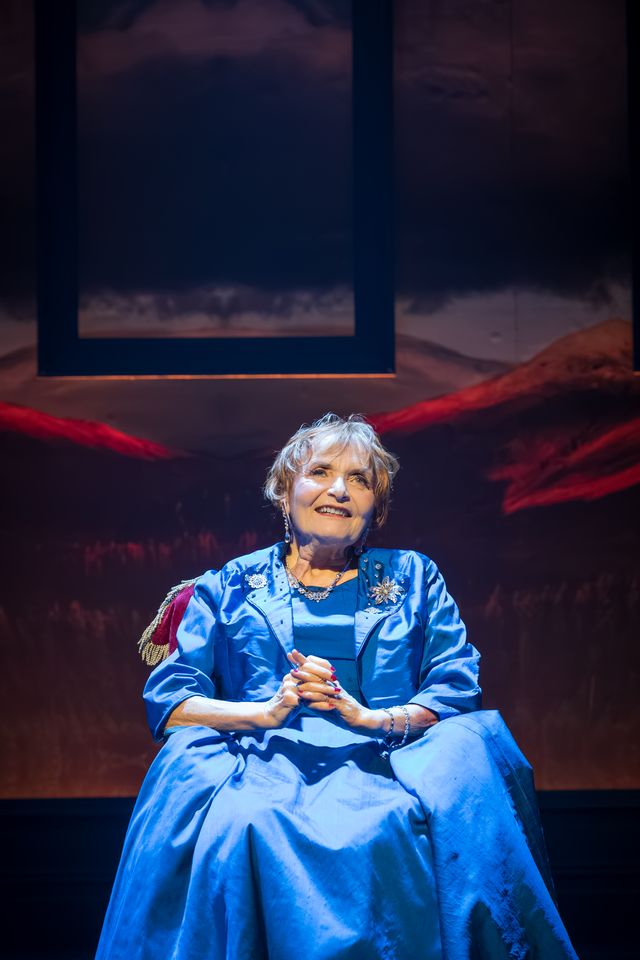
Families can be complicated and the Blackwood’s are an excellent case in point. Their matriarch, Vivienne (Alison Peebles), has reached her 80th year. Once a dazzling star of stage and screen, she’s now stricken with incurable cancer and has gathered the various strands of her fractured clan for one last get-together. 

Her grandson, James (Angus Yellolees), is super-excited to see his ‘Glam-Ma’ again (he’s always adored her) and he’s even brought along his new pop star girlfriend, Cass (Ruby Glyne), to meet her in person. James’ pompous Uncle Geoff (Gilly Gilchrist) is somewhat surprised when he arrives to discover that his ex-wife, Carol (Liz Kettle), is in residence as Vivienne’s carer… and er… partner?  

Geoff’s daughter, Sasha (Rachel Dick), an influencer, has her own surprising announcement to make, while James’ mother, Lily (Hilary Maclean), is still an ardent God-botherer, stalking grumpily around the place, praising the Lord and despairing of the dissolute ways of everybody but herself. 

To add to the general confusion, Vivienne’s former husband, Bill (Benny Young), has snatched the time to make a surprise appearance before he sets off to film yet another movie. He’s handy to have around whenever a Shakespeare quotation is needed, which seems to happen quite a lot in this play.

And then Vivienne arrives to tell everybody that this gathering isn’t going to be a glass-of-bubbly-and-a-plate-of-cocktail-sausages affair. Something much more monumental is about to go down…

Morna Young’s After Party is an ambitious piece of absurd comedy, set in the near future to allow for the possibility of its central premise. It’s handsomely located in Richard Kent’s grandiose set, which features lush paintings and red velvet drapes that put me in mind of a 1950s technicolour film. (There’s definitely something of the Elizabeth Taylor/Joan Collins archetype to Vivienne, who seems to revel in making everyone she talks to feel inferior.) But I’m not always entirely convinced by the various twists and turns in this complicated scenario, that require its characters to do and say things that sometimes beggar belief. 

Director Katie Posner (of Paine’s Plough) does her utmost to present the various goings on to their best advantage and the second half is definitely stronger than the first but, to my mind, there’s something at the heart of this that doesn’t quite click. This is a shame because the production values of this show are impeccable and there are a lot of talented actors up the stage giving it their all. But they’re essentially playing caricatures and, perhaps inevitably, the overall effect is that I don’t quite buy the package they are trying to sell me.

Nonetheless, this is a timely and thought-provoking production, offering a convincing argument on a divisive issue.

3. 5 stars

Philip Caveney
Water Colour

07/08/26

Traverse Theatre, Edinburgh

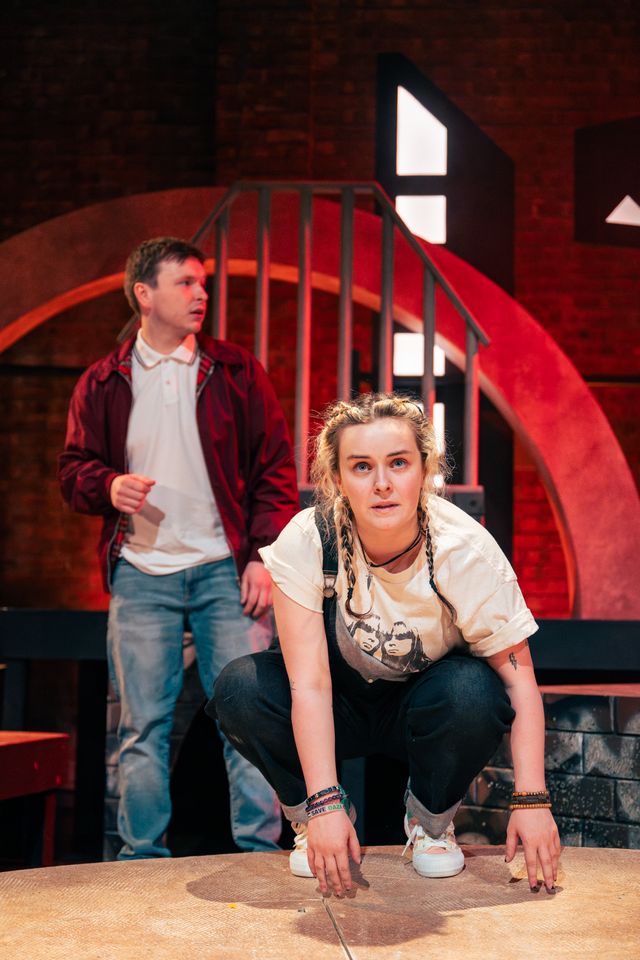
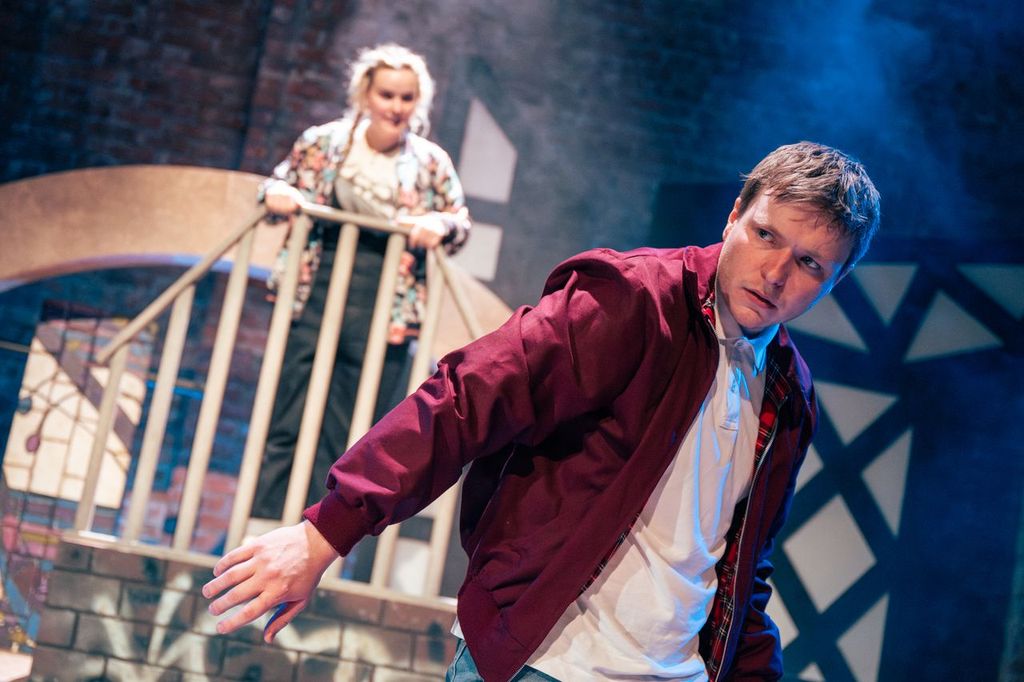
Winner of the St Andrews Playwriting Award 2025, Milly Sweeney’s Water Colour focuses on the lives of two very different young people, who both go through bouts of depression. If that sounds off-putting, please don’t be misled, because this is an invigorating slice of theatre that moves kinetically through its rapidly-evolving story, cutting back and forth between the two characters, who move restlessly around Natalie Fern’s ingenious set design, which will eventually reveal some secrets.

Esme (Molly Geddes) is in her final year at the Glasgow College of Art and it only remains for her to submit one more painting in order to graduate. But she somehow feels unable to stir herself to undertake that final picture. Locked up alone in her student flat, friendless and far away from the nurturing powers of her mother, she is beginning to fall into a dark, enveloping world where she can no longer function. 

Harris (Ryan J Mackay) would seem her polar opposite, a cheeky lad from the schemes, who has just moved into a flat with his best pal. He’s recently secured regular work as a dishwasher at a posh city restaurant, ruled over by a glowering Head Chef of the Gordon Ramsey persuasion. Harris is happy-go-lucky and ready to adapt to just about any situation.

But Harris and Esme are destined to cross paths one dark night, when Harris is simply wandering home from work and Esme has come to the end of her tether. Their interaction ignites a series of dramatic changes…

Director Sally Reid keeps the pace up to full throttle as the pair interact, while movement director Steve Laude-Russell ensures that the unfolding story is kept in restless motion throughout. Ross Brown’s sound design lends the piece an eerie, dreamlike quality and both performers are at the top of their game in their respective guises, handling their lead roles and a string of supporting characters with aplomb. I am genuinely thrown by a late-stage revelation as middle-class Esme finds therapy and heads towards redemption, while working-class Harris, unable to afford private health care, seems destined to plunge in the opposite direction. In the final section I find myself holding my breath as everything goes haywire.

It’s easy to see what caught the St Andrews’ judges’ eyes, and the heartfelt ovation from this audience is proof enough that Water Colour exerts a powerful hold. It’s an utterly compelling script and this fabulous production plays to its strengths. I for one can’t wait to see what Milly Sweeney comes up with next.

4.5 Stars

Philip Caveney

Supposing:

07/08/26

Traverse Theatre, Edinburgh

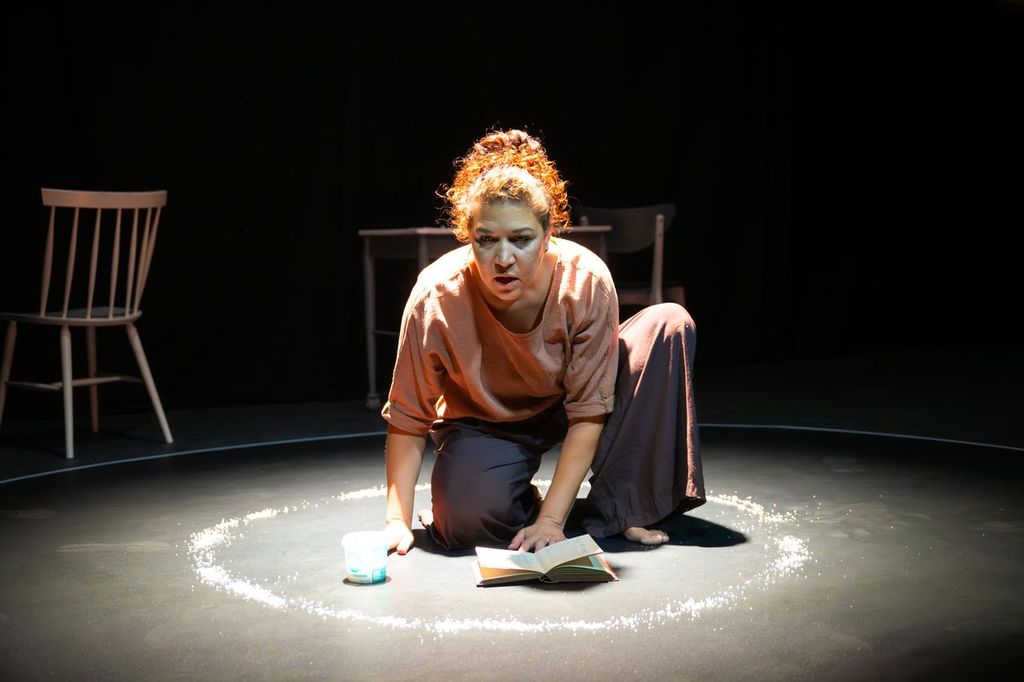
TravFest starts off strong this year with Zinnie Harris’s magical-realist new play, Supposing:, a blend of mythology, contemporary politics and overt theatricality.

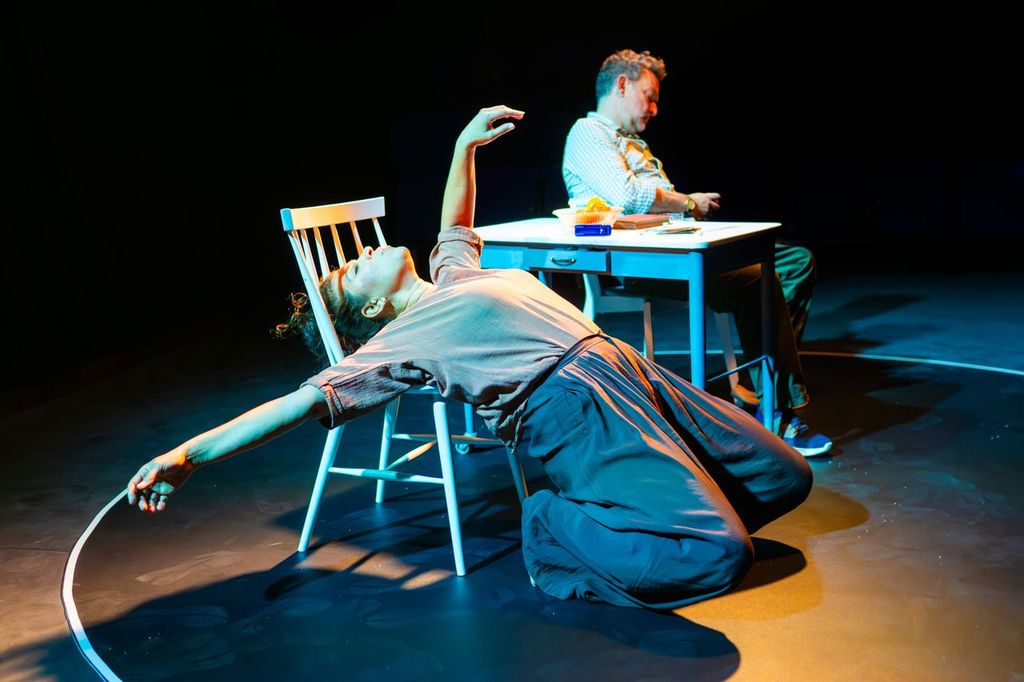
Sally (Nicole Cooper) has fallen down a hole. In literal terms, it’s just a small crater in a road outside a theatre, and she’s not seriously hurt. Metaphorically, however, it’s so much more, not least a portal for a Greek chorus, who promptly take up residence inside her head. Awkward. As if that weren’t enough, she’s also been cursed with the ability to see some very specific aspects of the future…

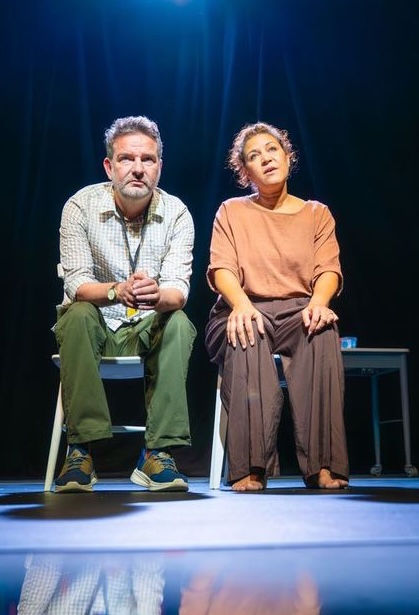
Sally’s husband, Rich (Richard Conlon), doesn’t believe in her newfound prophesying skills. He thinks she’s suffering from depression – again – or maybe it’s the menopause? Either way, he has absolutely no intention of popping next door to warn their racist neighbour that she has an undiagnosed medical condition, however urgently Sally insists.

It’s not just their marriage that’s under strain. The outside world is a pressure-pot too. The town’s hotels are being used to house immigrants and there are right-wing protesters gathering outside. Sally’s internal chorus never lets up its refrain: Trump, Reform, the climate crisis. Madness seems like a legitimate response.

Cooper’s performance is impressive, at first clipped and precise, then – as Sally plummets ever-deeper down the rabbit-hole – excessive, even flamboyant. Conlon provides an excellent foil, a study in baffled defensiveness and disappointment. Deftly directed by Harris, Supposing: is a timely exploration of our post-truth society, albeit one that poses more questions than it answers about how to navigate the shifting sands.

If this sounds like your kind of thing, don’t hesitate to buy your tickets. You don’t have to be Cassandra to see that this well-crafted, thought-provoking production is sure to be a hit.

4.7 stars

Susan Singfield