Shobna Gulati

A Tupperware of Ashes

04/08/26

National Theatre at Home

The onslaught of the Edinburgh Fringe looms just on the near horizon, but before it all kicks off, there’s still a chance (thanks to Brenda and her NT at Home subscription) to catch up with something we have missed earlier. The listing that first catches my eye is 2024’s A Tupperware of Ashes, a play by Tanika Gupta – but Susan has noticed something else she really wants to watch. Can we possibly cover them both?

Yes, we can.

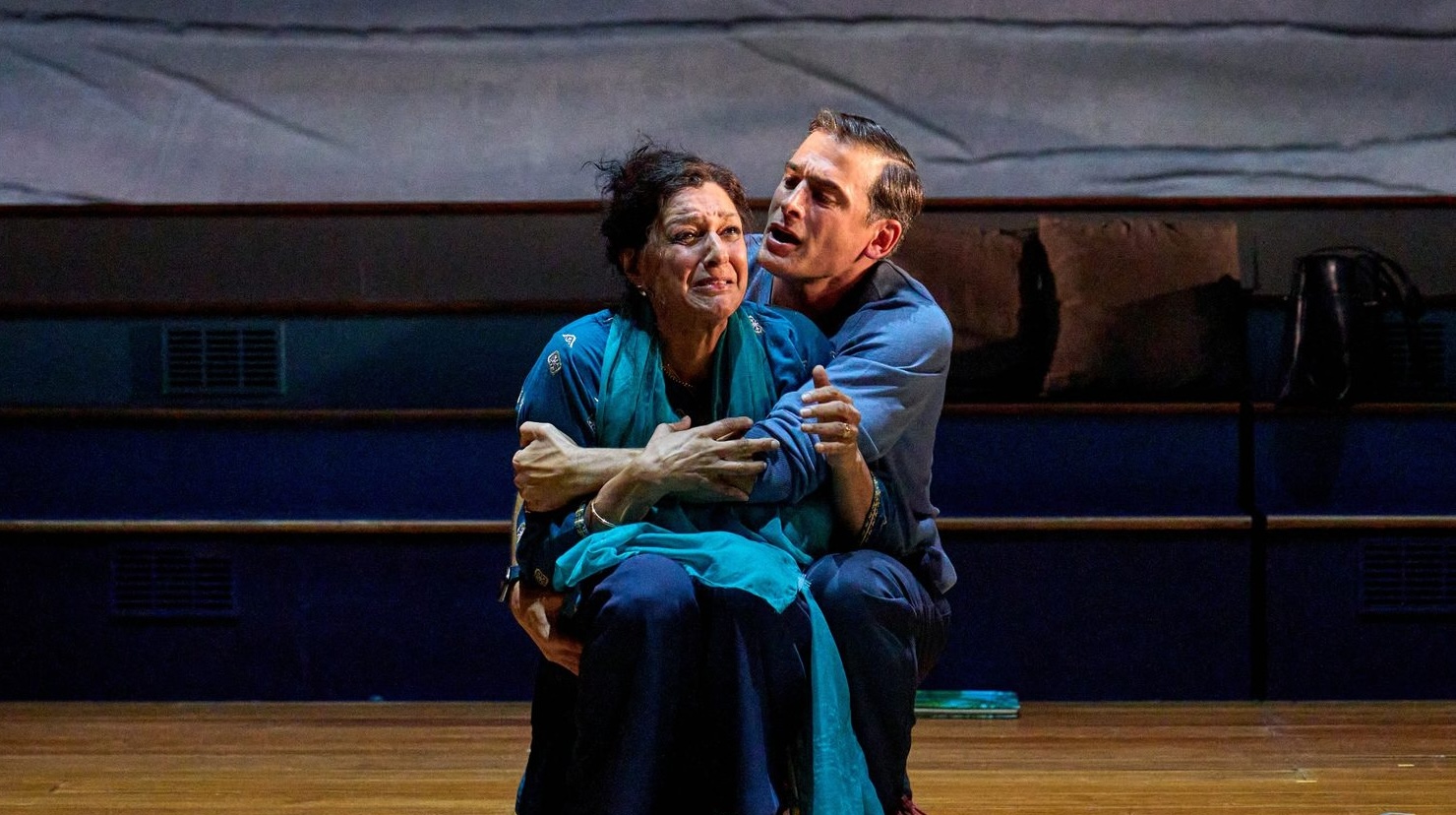
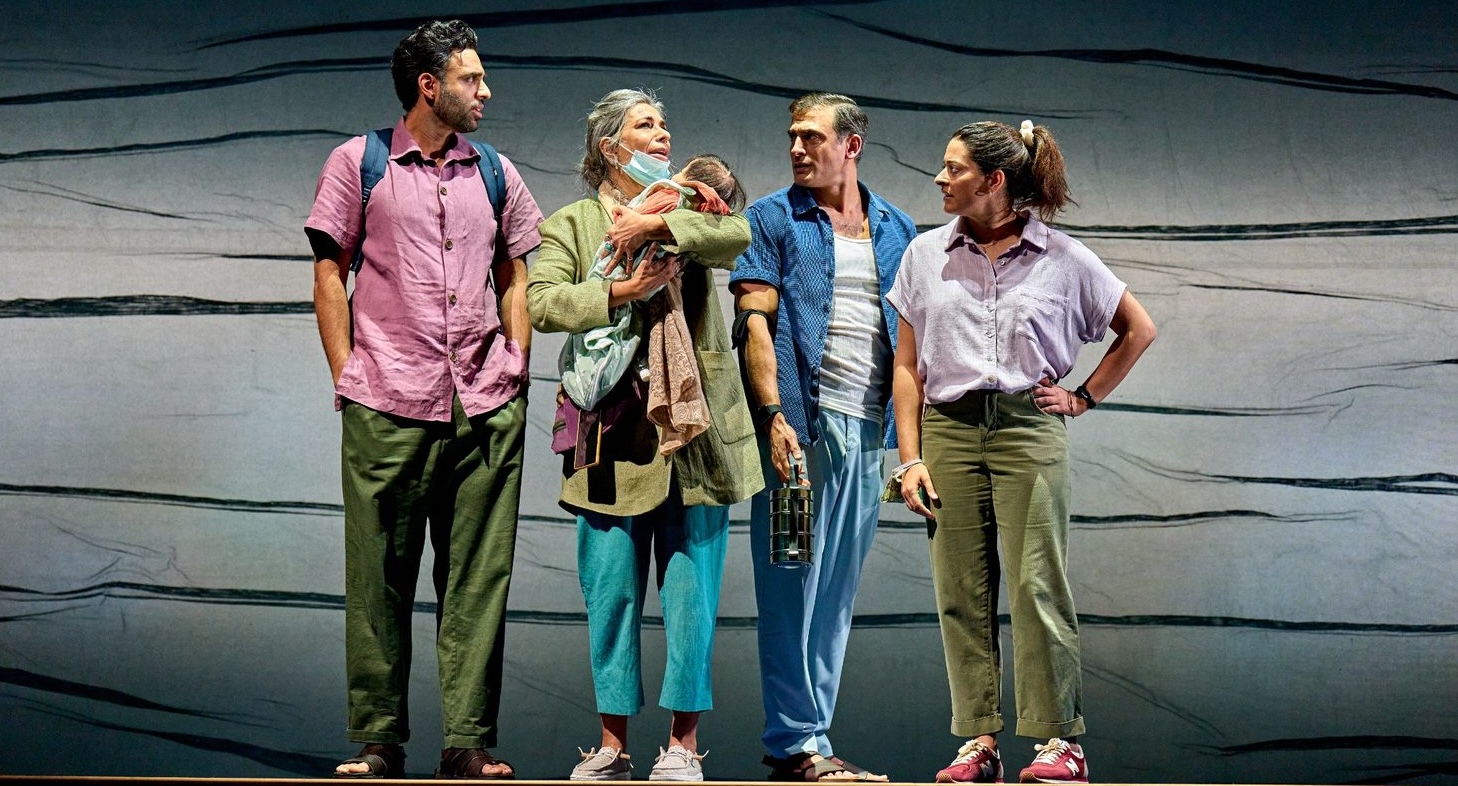
The central character of this drama is Queenie (Meera Syal), an ambitious Michelin-starred chef and matriarch, with three children, from whom she demands complete dedication. Kamala (Natalie Dew) and Gopal (Marc Elliott) are both highly successful in their respective professions, while oldest boy, schoolteacher Raj (Raj Barjaj) lacks focus (at least in Queenie’s opinion) and doesn’t seem to have much in the way of ambition, for which she openly criticises him. But the three of them accept that their mother has her own way of handling life. Woe betide anybody who tries to make her change her ways.

But the siblings – together with Queenie’s closest friend, Indrani (Shobna Gulati) – are  becoming increasingly worried about their mother’s recent behaviour. Why does she keep mentioning other (non-existent) branches of her restaurant, supposedly based around the world? Why does she fly into rages at the slightest provocation? And why does she sometimes talk about her late husband, Ameet (Zubin Varla), as though he’s still around, ready to come strolling along at any moment.

The answer is supplied by Doctor Young (Stephen Fewell, as the first of a whole series of authority figures). Queenie, it turns out, is in the early stages of Alzheimer’s and is beginning the long, terrifying decline into dementia. As everyone watches, appalled, she begins to act and behave in ways she never has before. And, as she opts to spend more time with each of her children, they begin to realise the enormity of what is happening to their mother… and they struggle to deal with it.

Those of you who are thinking of King Lear are certainly on the right lines (Lost Lear, seen at last year’s Fringe, also mined a similar premise to great effect). Syal offers a powerful and compelling performance in a central role that features equal parts humour and tragedy – and just occasionally she utters something that directly relates to Shakespeare’s classic. When caught up in the extremes of her condition, Queenie’s observations are utterly heartbreaking and, as ever, when watching a situation like this, I’m drawn back to my own mother’s ten year battle with dementia.

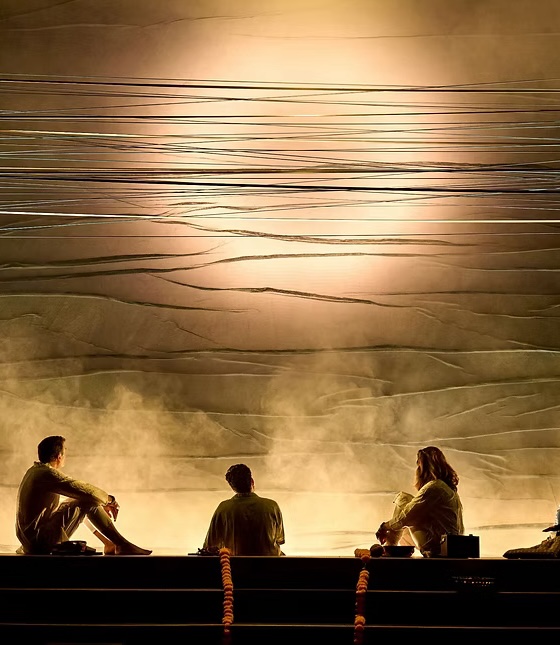
Pooja Gal handles the directorial reins with great precision, aided and abetted by Rosa Maggiora’s dreamy set design and composer Nitin Sawney’s ethereal compositions. Varla is wonderful as Ameet, wandering confidently into real situations, visible only to Queenie as he makes wry observations about the chaos unfolding around him.

If there’s an issue here it’s simply that Syal is so magnetic a personality that the play’s coda (where the siblings struggle to organise the titular scattering of her ashes in the River Ganges) misses her presence so much that the ending feels oddly anticlimactic, a problem accentuated by the fact that we’ve already witnessed what feels suspiciously like the perfect conclusion a good twenty minutes earlier. 

But it’s a small issue in what is, overall, an accomplished and thought-provoking drama – and how wonderful it is to have it ready to watch at the touch of a button.

4.7 stars

Philip Caveney

Everybody’s Talking About Jamie

03/03/20

Festival Theatre, Edinburgh

Nobody’s talking about sixteen-year-old Jamie New (Layton Williams). There’s nothing remarkable about him. His careers teacher, Miss Hedge (Lara Denning), predicts a future for him as a forklift truck driver. His friend, Pritti (Sharan Phull), does her best to help him to revise. Sure, class eejit Dean Paxton (George Sampson) enjoys a bit of homophobic bullying, but Jamie doesn’t let it get to him. It’s not like his sexuality is a secret.

He does have a secret though: he knows exactly what he wants to do when he leaves school – and it doesn’t involve any forklift trucks. Jamie wants to be a drag queen. But  Miss Hedge keeps banging on about being realistic, and Jamie doesn’t have the confidence to believe that he can realise his dream. Until his lovely mum (Amy Ellen Richardson) buys him some red high heels for his birthday, and Pritti challenges him to drag up for prom – if that’s what he wants to do.

And Jamie realises he’s going to have to come out for a second time.

This is a heartwarming story by Dan Gillespie Sells and Tom MacRae, reminiscent of Jonathan Harvey’s Beautiful Thing in its positive depiction of a young gay man, also called Jamie, loved and supported by his family and friends – although, of course, this one is true. Jamie New experiences very few obstacles: his dad (Cameron Johnson)’s a shit, but so what? He’s got Ray (Shobna Gulati), his mum’s gloriously gobby best mate, who’s always on hand to offer knock-off lippy and sage advice. He doesn’t need his dad. And if Miss Hedge is set against Jamie drawing attention to himself by wearing a dress to prom, clearly the only thing to do is to show her why she’s wrong.

Williams is very appealing in the lead role, and utterly convincing as the conflicted teen, veering between bravado and fear as he works out what kind of adult he wants to be. Shane Richie is hilarious, both as drag shop owner Hugo and his alter ego Loco Chanelle: he’s a seasoned performer with perfect comic timing, and he really knows how to elicit a big laugh. But the standouts are Phull and Gulati: the former’s plaintive singing is beautifully emotive, while the latter’s well-timed profanities are both audacious and refreshing.

It’s a shame the score is kind of meh, with only a couple of notable tunes and no real bangers that linger in the memory. Still, Katie Prince’s lively choreography complements Matt Ryan’s direction well, and I leave the theatre smiling, and glad to see that the real Jamie (Jamie Campbell) is clearly living his best life, posing for photos in a fabulous show gown, a million miles away from a fork lift truck.

 4 stars

Susan Singfield

Anita and Me

28/03/17

King’s Theatre, Edinburgh

Meera Syal really knows how to spin a yarn. I read and enjoyed Anita and Me when it was first published, back in 1996. I watched the 2002 movie adaptation too, which was okay, although more superficial than the source novel. So I am interested to see this musical stage production, which is a collaborative effort by The Touring Consortium Theatre Company and Birmingham Repertory Theatre.

And it’s a lively, energetic piece, with an animated central performance from Aasiya Shah as Meena. The story of a young British-Indian girl, coming of age in a time of overt racism, is nicely told. There is anger here – Meena’s fury at local heart-throb Sam’s bigotry and ignorance, for example, and her refusal to allow him to get away with saying “I don’t mean you; I mean those other ones” – but there is humour, sadness, and forgiveness too. Sam’s anger is misdirected, but it’s understandable. He’s at the bottom of the pile, and he’s just lashing out. Far more important is Meena’s internal struggle to come to terms with who she is and who she wants to be.

It doesn’t work as well as the novel: the brush strokes are too broad and the nuances are lost. Without Meena’s internal monologue to temper our impressions, we’re left with a lot of stock characters behaving in predictable ways, declaiming their positions in loud, stagey voices. The Black Country accents feel overdone; it all needs toning down a bit. The novel has the same naivety, but it’s more credible on the page, when it’s told from a ten-year-old’s point of view. Here, we see the adults on their own terms, not Meena’s, and they are just too exaggerated to convince. It’s a shame, because the amplification hides the heart.

Despite this, there are some lovely moments, and some strong performances. Shobna Gulati and Robert Mountford, as Meena’s parents, give the subtlest characterisations, and these are easiest to believe. Nanima is a gift of a comic role, and Rina Fatania clearly revels in it. Meena’s sung letters to agony aunts Cathy and Claire are a nifty device, allowing us some insight into how she feels. And the set is impressively detailed, with some clever scene changes incorporated.

All in all, this is an enjoyable show, with much to recommend it. But it’s not as good as the book.

3.6 stars

Susan Singfield