Author: Bouquets & Brickbats

After Party

09/08/26

Traverse Theatre, Edinburgh

Families can be complicated and the Blackwood’s are an excellent case in point. Their matriarch, Vivienne (Alison Peebles), has reached her 80th year. Once a dazzling star of stage and screen, she’s now stricken with incurable cancer and has gathered the various strands of her fractured clan for one last get-together. 

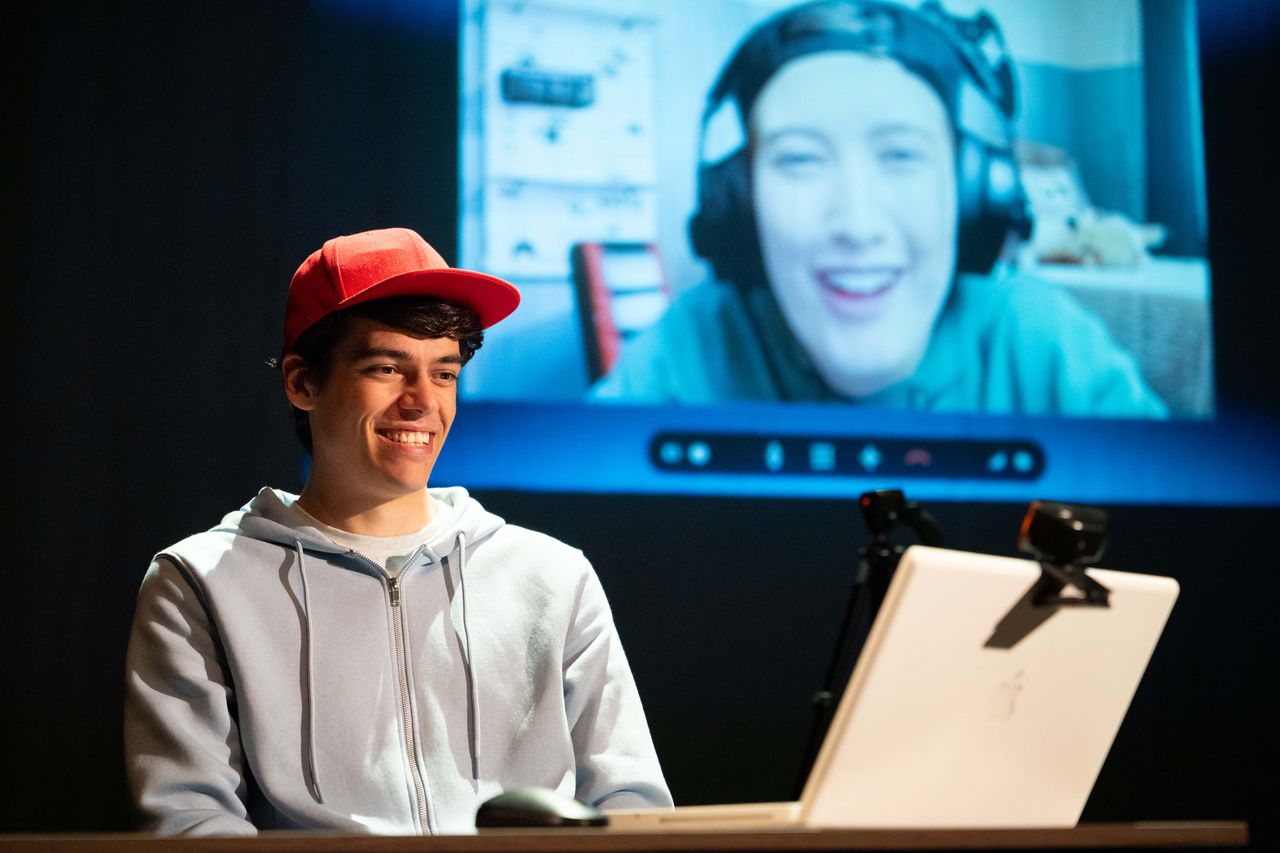
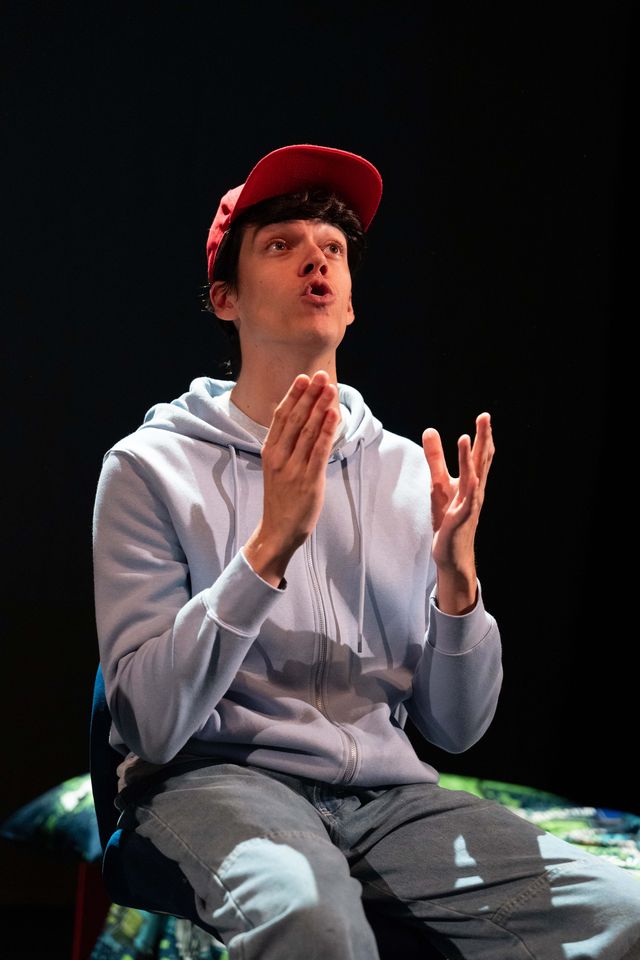
Her grandson, James (Angus Yellolees), is super-excited to see his ‘Glam-Ma’ again (he’s always adored her) and he’s even brought along his new pop star girlfriend, Cass (Ruby Glyne), to meet her in person. James’ pompous Uncle Geoff (Gilly Gilchrist) is somewhat surprised when he arrives to discover that his ex-wife, Carol (Liz Kettle), is in residence as Vivienne’s carer… and er… partner?  

Geoff’s daughter, Sasha (Rachel Dick), an influencer, has her own surprising announcement to make, while James’ mother, Lily (Hilary Maclean), is still an ardent God-botherer, stalking grumpily around the place, praising the Lord and despairing of the dissolute ways of everybody but herself. 

To add to the general confusion, Vivienne’s former husband, Bill (Benny Young), has snatched the time to make a surprise appearance before he sets off to film yet another movie. He’s handy to have around whenever a Shakespeare quotation is needed, which seems to happen quite a lot in this play.

And then Vivienne arrives to tell everybody that this gathering isn’t going to be a glass-of-bubbly-and-a-plate-of-cocktail-sausages affair. Something much more monumental is about to go down…

Morna Young’s After Party is an ambitious piece of absurd comedy, set in the near future to allow for the possibility of its central premise. It’s handsomely located in Richard Kent’s grandiose set, which features lush paintings and red velvet drapes that put me in mind of a 1950s technicolour film. (There’s definitely something of the Elizabeth Taylor/Joan Collins archetype to Vivienne, who seems to revel in making everyone she talks to feel inferior.) But I’m not always entirely convinced by the various twists and turns in this complicated scenario, that require its characters to do and say things that sometimes beggar belief. 

Director Katie Posner (of Paine’s Plough) does her utmost to present the various goings on to their best advantage and the second half is definitely stronger than the first but, to my mind, there’s something at the heart of this that doesn’t quite click. This is a shame because the production values of this show are impeccable and there are a lot of talented actors up the stage giving it their all. But they’re essentially playing caricatures and, perhaps inevitably, the overall effect is that I don’t quite buy the package they are trying to sell me.

Nonetheless, this is a timely and thought-provoking production, offering a convincing argument on a divisive issue.

3. 5 stars

Philip Caveney

Cathy

09/08/26

Traverse Theatre, Edinburgh

Cathy has all the hallmarks of a sitcom: distinctive characters, familiar settings and a serious of humorous conflicts. Like the best of the genre, it also carries some real emotional weight.

The eponymous Cathy (Elaine C Smith) is based on writer-director Eilidh Loan’s own grandmother. She’s a spiky, complicated woman, struggling to deal with the death of her beloved husband, Tommy. She’s angry in her grief, lashing out at everyone she cares for: her daughter, Florence (Michele Gallagher), son-in-law, Colin (Alan Orr), and pregnant granddaughter, Amy (Chloe Hodgson).

She’s furious with God too. She’s been a good Catholic all her life, done everything He’s asked. So where is He when she needs Him? Cathy is adrift, unable to imagine a future without Tommy. But when she takes his clothes to the local charity shop, she meets an unlikely angel of deliverance in the form of Lizzie (Sally Reid), who manages the store. Boho, woo-woo and musically ignorant, Lizzie isn’t the sort of person Cathy normally warms to. But there’s something disarming about the cheerful, crystal-wearing volunteer – and Lizzie has her own experience of devastating loss.

I don’t usually like a stage full of props, but Kenny Miller’s set design perfectly complements the play’s themes: the stuff that accumulates over a long life; the items we cling to and those we have to learn to let go. The transitions are complicated but extremely well-managed, so that we move with ease between realistic sets, from funeral home to Cathy’s dining room to Lizzie’s busy, bustling shop.

Unsurprisingly, this is very much Cathy’s play, and Smith’s performance is flawless, allowing us to see the central character’s hidden warmth and vulnerability, as well as delivering every gag with deadly precision. The supporting cast are very good too, Reid in particular lighting up the stage.

Cathy makes me laugh and cry. Part Christmas play, part family drama, it feels like the start of something bigger, with characters that could easily be drawn out over a series.

If you want all the feels, this is the show for you.

4 stars

Susan Singfield

Bog Witch

09/08/26

Traverse Theatre, Edinburgh

Bog Witch is an elusive concept that initially wrong-foots me. The opening minutes of Bryony Kimmings’ semi-autobiographical show are like a gentle stand-up routine, built around the idea of a contemporary woman, addicted to doom-scrolling and online-ordering, pouring scorn on all those silly people wringing their hands over climate change and plastic pollution. All they really need to do is knock back some alcohol and get out on the dance floor! But happily, as it develops, the story turns out to be much more nuanced than that.

Kimmings relates the events of one year in her life, when she falls in love with ‘Will,’ a man with an urgent need to get back to the soil, where he can grow his own food and live at peace with the land. To Kimmings, it sounds like a perfect nightmare but she loves Will and, against her better judgement, decides to move with him to the countryside. They each have a child from a previous relationship and fresh starts are good, right? What can possibly go wrong? She just needs to ensure that she doesn’t turn into the titular creature…

As the year unfolds, season by season, Kimmings gamely attempts to adapt to her new life – and, despite all her misgivings, she is beginning to change…

Kimmings has clearly put her heart and soul into this, taking the directorial reins and really exploring the possibilities of the central concept – and trust me, it’s a lot more fun than I’ve made that sound. She’s assisted by a whole team of talented individuals: Tom Rogers’ set and costume designs are fabulous, as are the linking animations from Raf Vartanian and Nathan Fernée. In addition, Tom Parkinson has written some suitably plaintive folk songs, which Kimmings sings beautifully.

She’s an accomplished storyteller, acerbically funny in the earlier sections and confidently steering her ship into darker waters as a bleak autumn heads inexorably into a tragic winter. My only reservation here is with a concluding section where she invites nine audience members to join her on stage for ‘the great council meeting.’ Though there are some magnificent costumes for the participants to put on (with masks by Kiera Saunders), the lengthy set-up disrupts the momentum and I find myself wondering if it would work just as well with fewer participants. But that’s a niggle, really, because Kimmings does make it work – and naturally two shows are never going to be the same.

Bog Witch is an accomplished production with so much to commend it. Anyone toying with the idea of moving out to the sticks might want to check this out first. Or be like Kimmings and watch that helpful documentary before you head off. You know the one: The Wicker Man.

4.5 stars

Philip Caveney

An Echo in the Void

08/08/26

Assembly Roxy (Upstairs), Edinburgh

Written and directed by Jason Weiss, No Boundaries’ An Echo in the Void deals with the timely topic of AI. When journalist Ivy (Grace Serrano) logs into her regular Sanctuary session, she’s surprised to find three strangers there. It’s supposed to be a private virtual space and should only be populated by those she chooses. But here are soldier Toby (Adam Sinclair), programmer Arthur (Sunkrish Bala) and CEO Miranda (Lee Rodriguez), each as dumbfounded as she is by the others’ presence. What’s happening? Has the tech model gone rogue? And if so, why?

If Arthur is the brains behind the platform, Miranda is the money – and Ivy has long been petitioning to interview them both. As for Toby, he’s the company’s poster boy. Sanctuary offers a safe place, where people can leave their real-world troubles behind for a few hours, so who better to front its ad campaign than a war veteran suffering from PTSD?

But Sanctuary is addictive. If life on-line is so much better than off, why would anyone want to return?

This minimalist production is performed on a bare stage, which works well, echoing the blank canvas of a Sanctuary space. Like the platform’s users, we are invited to create our own imaginary setting. Simple tech is used to good effect, with pinspots emphasising the characters’ isolation, and a repeated sound motif signalling glitches in the machine. The actors inhabit their roles convincingly, and a sense of dread builds steadily.

However, although I applaud Weiss’s decision to eschew set and props, the piece could benefit from some more visual elements. It’s very dialogue-heavy, with a lot of information for the audience to absorb. It would be easier to engage emotionally with some of the more complex sequences if they were played out rather than reported. I also think the actors could change their voices and mannerisms when they are taking on characters from each other’s pasts, in order to clarify exactly who and where they are.

An Echo in the Void questions what it means to be human, when everything we think we are can be so cleverly mimicked by computer code. In the twenty-seven years since the similarly-themed The Matrix was released, the issues have only grown more urgent. It’s hard to imagine a more topical play.

3 stars

Susan Singfield

Mortal Sin

08/08/26

Gilded Balloon Teviot (Wee Room), Edinburgh

One of the greatest joys of the Edinburgh Fringe is when you book in to see a little show with no real expectations – and it turns out to be a solid gold winner. Mortal Sin is exactly that, a joyful two-hander about a couple of kids in a remote seaside town in the Republic of Ireland. As the two of them negotiate the puzzles – and occasional joys – of growing up in a rural community dominated by Catholicism, you share their laughter and their pain

It’s 1963 and President John F Kennedy has recently paid a long visit to Ireland. Best friends Colm (Benjamin Reilly) and Peggy (Isolde Fenton) are infatuated with the man, seeing him as a sort of Latter Day Saint – as do many others in Ireland. As I said, Colm and Peggy are besties but they know that they will never end up married with kids. Colm is already presenting in ways that his hardline father condemns as ‘sissy’ and Peggy is adamant that she will not be bound to this desolate, straight-laced community forever. And when she leaves, she’ll be taking Colm with her.

And then the unthinkable happens: JFK is assassinated. Peggy persuades Colm that, because of this tragedy, they should have a day off school to mark his passing. So the two of them set about engineering a protest, with the aim of making that happen…

It’s quite something for adult actors to take on junior roles and play them believably, but both Reilly – who also wrote the incredibly witty script – and Fenton, inhabit their respective characters as though it’s second nature to them. They convey so much through gestures and facial expressions, coaxing big laughs from the smallest things. And while most of the story is played for humour, there’s also a brilliantly understated coda, where the couple’s respective tragedies are skilfully sketched in just a few lines of dialogue.

I laugh until I cry.

Sensitively directed by Lee Coffey, Mortal Sin is an eloquent piece of work, demonstrating what can be achieved with talent and a modest budget. Those looking for a memorable piece of theatre should grab a ticket for the Wee Room, before the word gets out and the seats are gone.

This is fabulous stuff. See it and weep. Miss it and weep more.

5 stars

Philip Caveney
Badgers

07/08/26

Traverse Theatre, Edinburgh

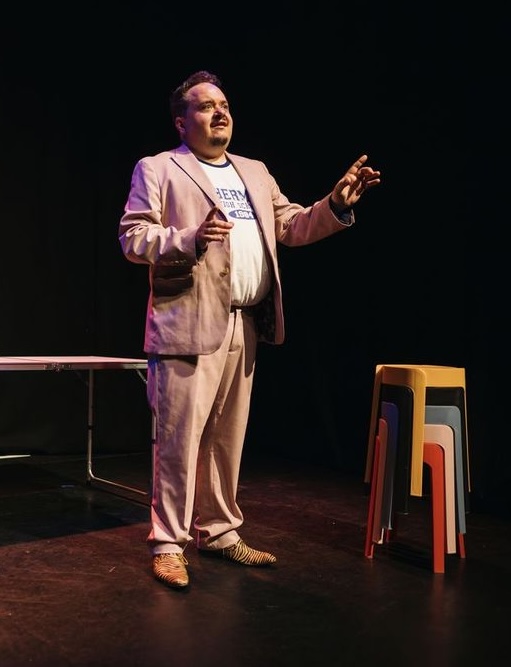
Malaika Kegode is the storyteller and we, she tells us – gently persuasive – are Meles, a young woman, struggling to make our mark as a podcaster. Our mother looms large: not only is she a famous TV journalist, she’s also dying of corticobasal degeneration (and no, Kegode sighs, a long walk won’t help). We move home, our emotions a mixture of resentment and relief. It’s good to escape the daily hustle and London rents, but it’s hard to be back in our childhood bedroom, aimless and under-occupied, fearing our mother’s death.

So, when we hear about the mysterious disappearance of a local musician, ten years ago, little wonder that we grasp the opportunity to investigate. A true-crime podcast might just be the thing to finally impress Mum. So off we go, into the woods, to visit an old crone called Dora Brock, who freely shares her tales of secret songs and magical badgers, unaware we’re using her…

Badgers is a harmonious hybrid, Jakabol’s eclectic score perfectly complementing Kegode’s beguiling narration. Rebecca Wood’s set design is ingenious, its colour palette stark, all black, white and red; musicians Joe Williams and Beth Roberts sit in a glass box, centre-stage, a theatre within a theatre, part cage, part display case. It’s very techie, with flickering screens and distorted voices (video by Christopher Harrisson and sound by Jack Drewry), and tonally as slippery as the shape-shifting badger-humans at its heart, switching seamlessly from contemporary online vernacular to fairy tale to folk horror. It’s this last element that allows Mike Gunning and Natalia Chan’s lighting design to shine (sorry), ramping up the jump scares and other-worldliness. And then there’s Kegode again, speaking softly, bringing us back down to earth, helping us to accept Meles’ troubled reality.

If the sound levels are a little off at first, so that I struggle to hear Kegode over the music, this is soon rectified, and I leave the theatre still wearing Meles’ skin, still caught up in her life. Directed by Jenny Davies, this is a spellbinding production, weaving us into its fabric and leaving us utterly disarmed.

4.8 stars

Susan Singfield

Water Colour

07/08/26

Traverse Theatre, Edinburgh

Winner of the St Andrews Playwriting Award 2025, Milly Sweeney’s Water Colour focuses on the lives of two very different young people, who both go through bouts of depression. If that sounds off-putting, please don’t be misled, because this is an invigorating slice of theatre that moves kinetically through its rapidly-evolving story, cutting back and forth between the two characters, who move restlessly around Natalie Fern’s ingenious set design, which will eventually reveal some secrets.

Esme (Molly Geddes) is in her final year at the Glasgow College of Art and it only remains for her to submit one more painting in order to graduate. But she somehow feels unable to stir herself to undertake that final picture. Locked up alone in her student flat, friendless and far away from the nurturing powers of her mother, she is beginning to fall into a dark, enveloping world where she can no longer function. 

Harris (Ryan J Mackay) would seem her polar opposite, a cheeky lad from the schemes, who has just moved into a flat with his best pal. He’s recently secured regular work as a dishwasher at a posh city restaurant, ruled over by a glowering Head Chef of the Gordon Ramsey persuasion. Harris is happy-go-lucky and ready to adapt to just about any situation.

But Harris and Esme are destined to cross paths one dark night, when Harris is simply wandering home from work and Esme has come to the end of her tether. Their interaction ignites a series of dramatic changes…

Director Sally Reid keeps the pace up to full throttle as the pair interact, while movement director Steve Laude-Russell ensures that the unfolding story is kept in restless motion throughout. Ross Brown’s sound design lends the piece an eerie, dreamlike quality and both performers are at the top of their game in their respective guises, handling their lead roles and a string of supporting characters with aplomb. I am genuinely thrown by a late-stage revelation as middle-class Esme finds therapy and heads towards redemption, while working-class Harris, unable to afford private health care, seems destined to plunge in the opposite direction. In the final section I find myself holding my breath as everything goes haywire.

It’s easy to see what caught the St Andrews’ judges’ eyes, and the heartfelt ovation from this audience is proof enough that Water Colour exerts a powerful hold. It’s an utterly compelling script and this fabulous production plays to its strengths. I for one can’t wait to see what Milly Sweeney comes up with next.

4.5 Stars

Philip Caveney

Supposing:

07/08/26

Traverse Theatre, Edinburgh

TravFest starts off strong this year with Zinnie Harris’s magical-realist new play, Supposing:, a blend of mythology, contemporary politics and overt theatricality.

Sally (Nicole Cooper) has fallen down a hole. In literal terms, it’s just a small crater in a road outside a theatre, and she’s not seriously hurt. Metaphorically, however, it’s so much more, not least a portal for a Greek chorus, who promptly take up residence inside her head. Awkward. As if that weren’t enough, she’s also been cursed with the ability to see some very specific aspects of the future…

Sally’s husband, Rich (Richard Conlon), doesn’t believe in her newfound prophesying skills. He thinks she’s suffering from depression – again – or maybe it’s the menopause? Either way, he has absolutely no intention of popping next door to warn their racist neighbour that she has an undiagnosed medical condition, however urgently Sally insists.

It’s not just their marriage that’s under strain. The outside world is a pressure-pot too. The town’s hotels are being used to house immigrants and there are right-wing protesters gathering outside. Sally’s internal chorus never lets up its refrain: Trump, Reform, the climate crisis. Madness seems like a legitimate response.

Cooper’s performance is impressive, at first clipped and precise, then – as Sally plummets ever-deeper down the rabbit-hole – excessive, even flamboyant. Conlon provides an excellent foil, a study in baffled defensiveness and disappointment. Deftly directed by Harris, Supposing: is a timely exploration of our post-truth society, albeit one that poses more questions than it answers about how to navigate the shifting sands.

If this sounds like your kind of thing, don’t hesitate to buy your tickets. You don’t have to be Cassandra to see that this well-crafted, thought-provoking production is sure to be a hit.

4.7 stars

Susan Singfield

The Wolf of Poyais

06/08/26

Assembly Roxy, Edinburgh

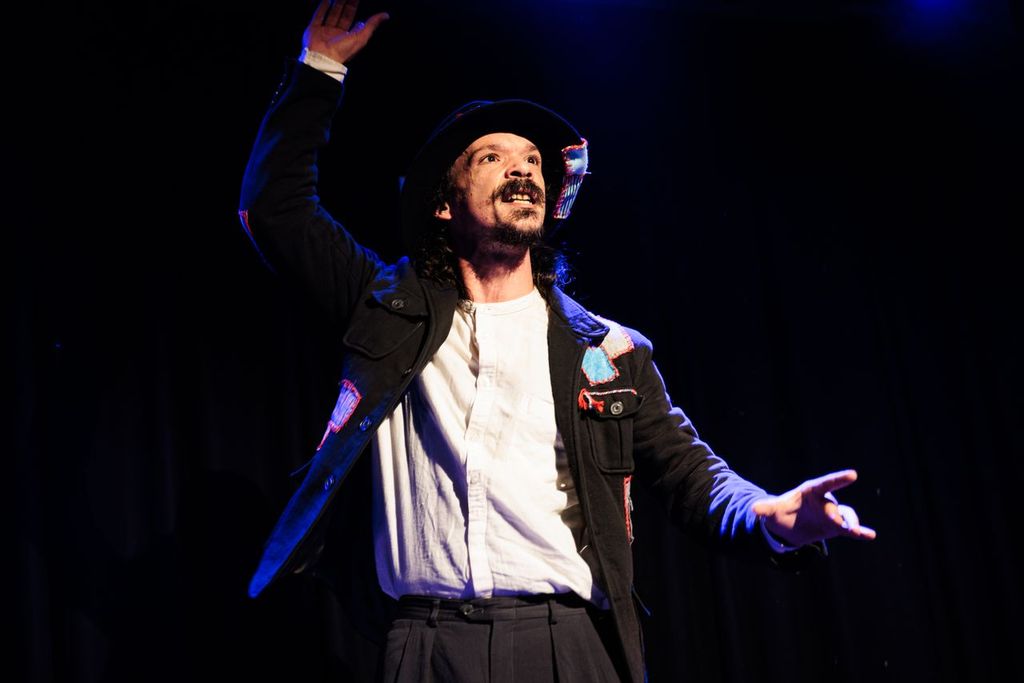
Thom Tuck, first seen by B&B as Scaramouche Jones at 2015’s Fringe, is an accomplished storyteller who knows how to spin an eccentric yarn with absolute authority. In the case of this show, he employs all his considerable skills as he steps into the skin (and knee breeches) of Gregor MacGregor, a 19th century Scottish adventurer, the self-styled Wolf of Poyais. Do you know Poyais? Gorgeous little place in Central America! Fabulous climate, wonderful mineral reserves and not a mosquito in sight. Only… don’t try looking for it, because MacGregor made it up.

Along with quite a few other elements of his life.

As we’ve often remarked, the most unlikely stories are always the ones that turn out to be true and such is the case here. MacGregor started off pretty much on the level in the early 1800s by being commissioned into the British army. Though he took part in the Peninsular War and latterly the Venezuelan War of Independence, he managed to rise through the ranks without actually getting involved in much of the fighting. And when he returned to England, he came back with the news that King George Frederic Augustus had appointed him Cazique of Poyais – and, shortly thereafter, he started selling shares in the place to gullible would-be settlers. This could have been a lark – if only so many of his investors hadn’t died when they arrived in a place that didn’t exist. Annoyingly, around fifty of them survived and returned to tell what happened to them. Not that they blamed MacGregor of course…

Tuck strides boldly out onto the stage to address his audience of potential investors. With a minimum of props, he personifies the titular character as a self-aggrandising braggart with not one iota of conscience, a man who makes no secret of the fact that he is the only person in the world he cares about. He also jumps into several other characters along the way. The scene where he and his wife dance with each other is a masterclass in comic timing – and I can’t suppress a gasp of astonishment when, with the slightest flick of his hair, he transforms into Captain Thomas Strangeway, the supposed author of a guidebook to Poyais.

I love too a last minute twist where the story is brought bang up-to-date, reminding us that snake-oil salesman are still plying their trade and occupying the very highest positions of authority.

This is a masterful production and interested parties who would like to know even more about the exploits of Mr MacGregor should be aware that there’s a podcast that goes with it – and the opportunity to download the opening episode for anyone who visits the show. Get in!

4.2 stars

Philip Caveney
Buggers

06/08/26

Pleasance Courtyard, Edinburgh (Upstairs)

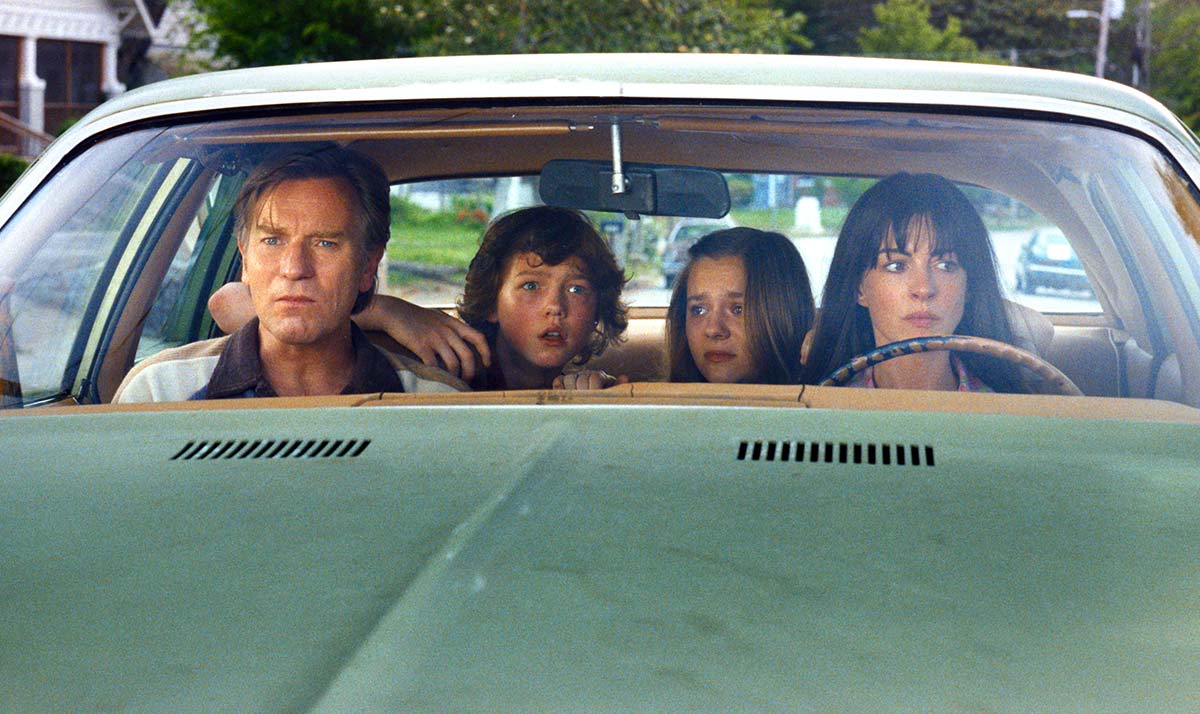
A wise man once remarked that ‘Life is like a box of chocolates. You never know what you’re going to get.’ The same could be said of your first day at the Fringe. We book a particular show (this year it’s the pithily titled Buggers) and in we trot, fully prepared to be either entertained or horrified. Happily, this year the gods are smiling on us, because this play offers an encouraging opening salvo for the next three weeks of madness.

Artist and muse. It’s a familiar theme but Alistair Hall’s unflinching script treats its chosen subject with candour and vivacity. Francis (Hall) and George (Peter Clements) have just bumped into each other in a London pub. The year is 1963 and now, back at Francis’s gaff, the two of them embark on a night of booze-fuelled sex and pill-popping. Francis seems extremely sure of himself but the less experienced George, a petty criminal, needs to be encouraged to let his hair down. At first, he maintains that he doesn’t know Francis is an artist – quite a successful one as it happens – but later, Francis manages to get him to admit that he had known – and that, from now on, George must tell him no more lies.

Because Francis wants George to stay a bit longer – and what’s more, he’d like to do some paintings of him…

Of course, as the pieces fall into place we realise that these are Francis Bacon and George Dyer – and that, as their relationship develops across the years, it will result in the creation of a whole series of harrowing and visceral portraits – and a tragedy that will haunt Francis for the rest of his life.

Built around two extraordinary performances and tightly directed by Alice Wordsworth, Buggers is a powerful and eviscerating study of the pleasures and pitfalls of sexual attraction. It casts its gaze on the different ways in which ill-matched lovers can both empower and ultimately destroy each other. The simple staging has the two performers literally splashing about in a tin bathtub, whilst taking regular mouthfuls of whatever it is they’ve filled the bath with (I hope they’ve had their jags!). I should perhaps add a warning for those of a photosensitive nature – there are a couple of brief but very intense sequences featuring strobe lighting. You have been warned.

We leave the production feeling we’ve made a great choice for the start of Fringe 26, with this clever, acerbic treatise on class, art and the abuse of power.

4.4 stars

Philip Caveney