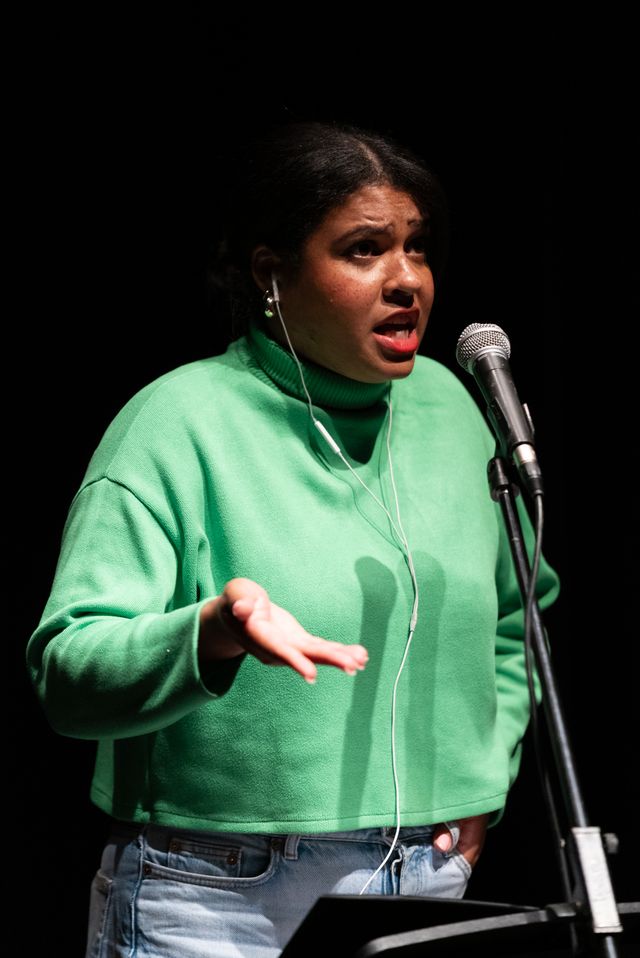
Jamie Marie Leary

Locker Room Talk

28/08/26

Traverse Theatre, Edinburgh

The scariest thing about this 10-year anniversary staging of Locker Room Talk is not just how little has changed, but how sexual politics actually seem to be sliding backwards. Not only is Pussy-Grabber-in-Chief Donald Trump still parading his misogyny in the White House, but viral influencers such as Andrew Tate have brought the manosphere into the mainstream.

“Locker room talk” has broken out of the closet.

Last time we saw this production, written by Gary McNair and directed by Orla O’Loughlin, it was 2019. Since then, POTUS Biden has been and gone and the UK has weathered five PMs. Between them, none has been able to stem the sexist tide.

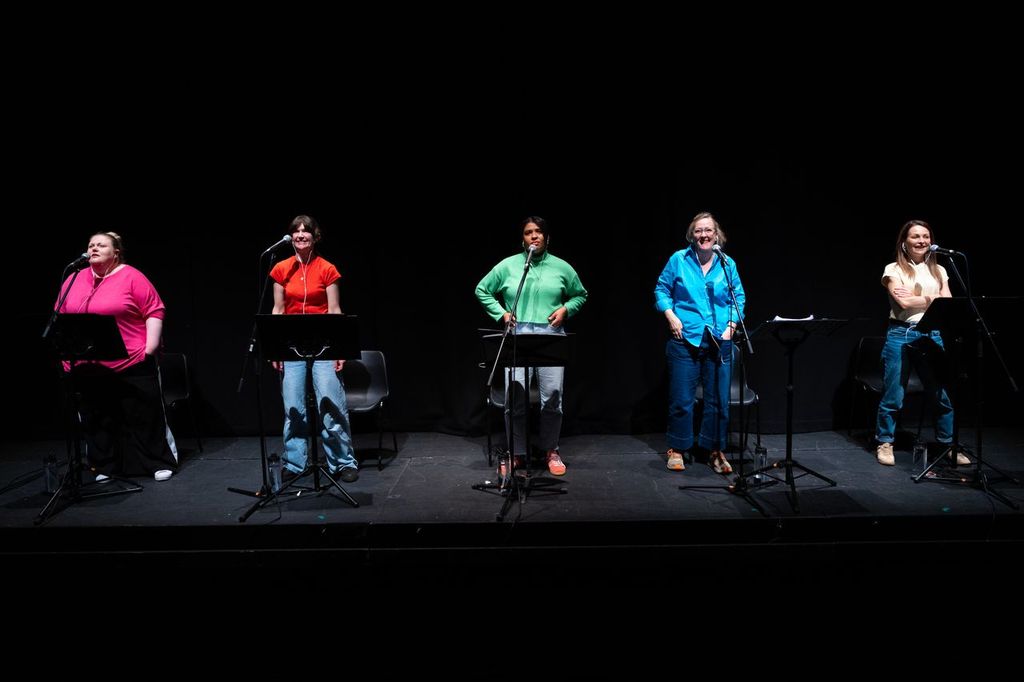
Locker Room Talk is simply staged: five women (Caroline Deyga, Gabriel Quigley, Jamie Marie Leary, Nicola Roy and Rachael Spence) stand in front of microphones, earphones in, repeating verbatim recordings of real conversations between real men. Ordinary men. The kind we all work with. Who see nothing wrong in rating their female colleagues out of ten and announcing if they’d give her one or not. It’s all just chitchat, right?

And yes, I know. Not all men.

But, still: too many men. The recordings cover blokes of different ages and backgrounds, from manual labourers to corporate lawyers. The “banter” is all depressingly similar. The saddest section is the little boys, who innocently parrot the prejudice they’ve heard.

The women’s performances are faultless. Let’s just hope the production doesn’t fall on tin* ears.

4.2 stars

Susan Singfield

*Yes, that is a reference to the ten-year anniversary. Sorry, I couldn’t resist.
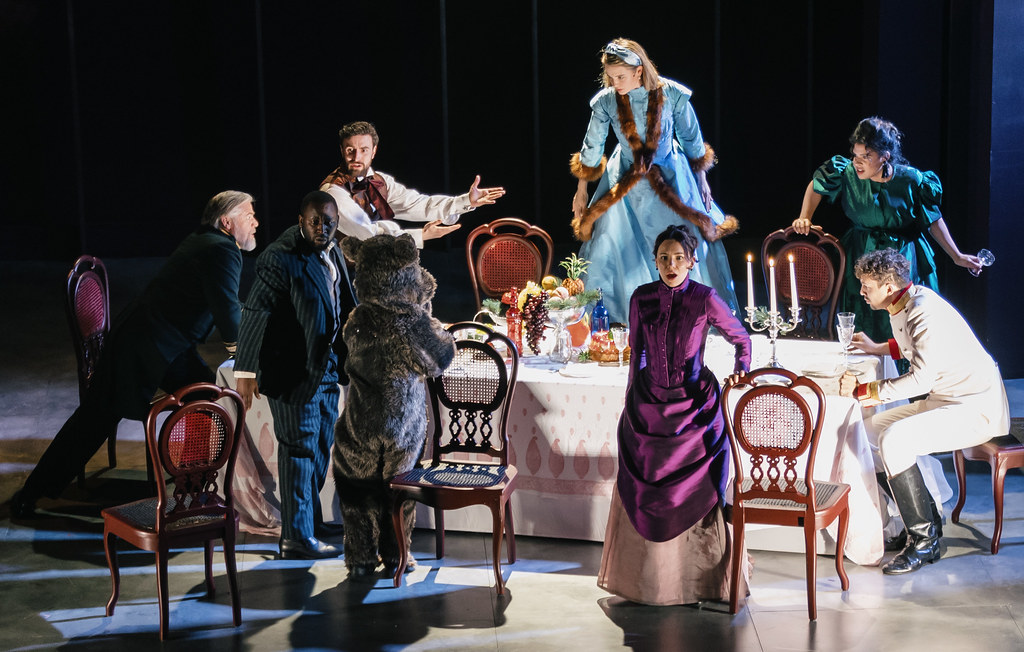
Anna Karenina

21/05/23

Lyceum Theatre, Edinburgh

As dares go, this one – from Scottish writer Lesley Hart to British-Russian director Polina Kalinina – has turned out rather well, resulting in this sparky adaptation of Tolstoy’s classic novel. It certainly disproves Kalinina’s original contention that Russian texts tend to “lose vigour and immediacy in translation”: this piece is both vigorous and immediate.

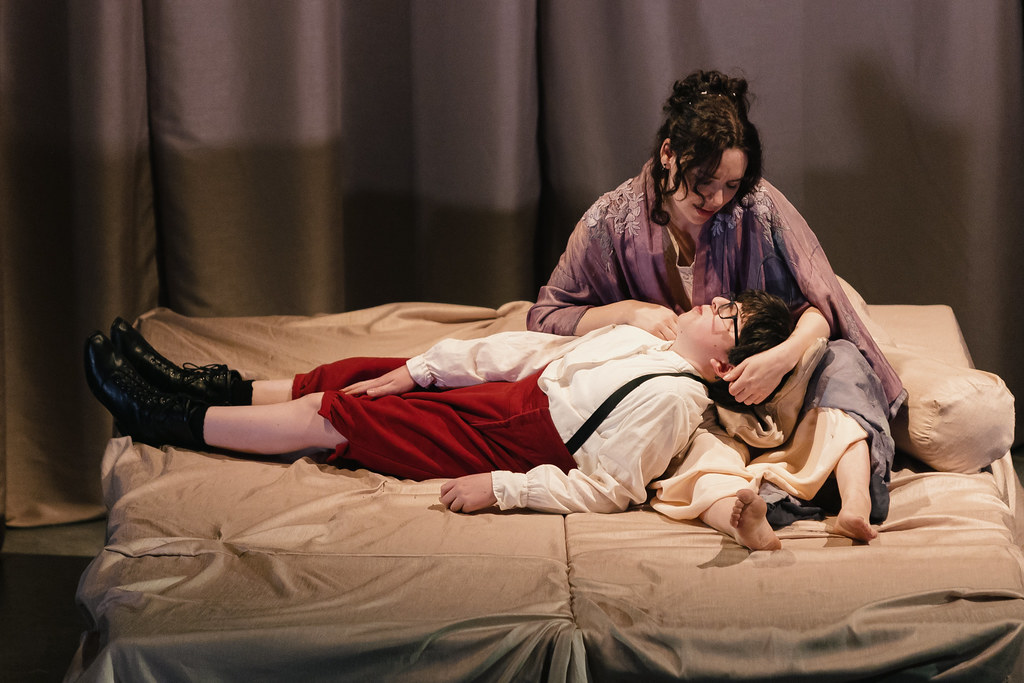
The plot is well-known. Anna (Lindsey Campbell) – bored society wife and loving mother – visits her sister-in-law Dolly (Jamie Marie Leary)’s family estate, hoping to persuade her to forgive Anna’s feckless brother, Stiva (Angus Miller), for his affair with a governess. But it’s a fateful visit, because it’s here that Anna meets Vronsky (Robert Akodoto) – and embarks upon a tumultuous affair that will have a terrible impact. The story is pared back here, of course – four-hundred-thousand words of prose are condensed into a tight two-and-a-half-hours of drama – and it’s all the better for it. The book’s lengthy histrionics are economically conveyed by Xana’s deliberately grating sound design, which feels akin to being in a dentist’s chair, the screeching somehow inside your head. It’s not pleasant, but it’s strikingly effective.

Hart’s script highlights the biting unfairness of a patriarchal order, where Stiva’s many sexual transgressions cause him only minor trouble when they’re revealed, while Anna’s single affair turns her into a social pariah, shunned by her former peers, and – most painfully – banned from seeing her own son (played tonight by Noah Osmani). Her tragic end, prefigured by a brutal train accident at the start of the play, hangs literally over her head throughout: Emma Bailey’s stark design is dominated by this sword of Damocles, a huge screw-like ceiling pendant, each action causing it to turn another notch, embedding itself into Anna’s heart.

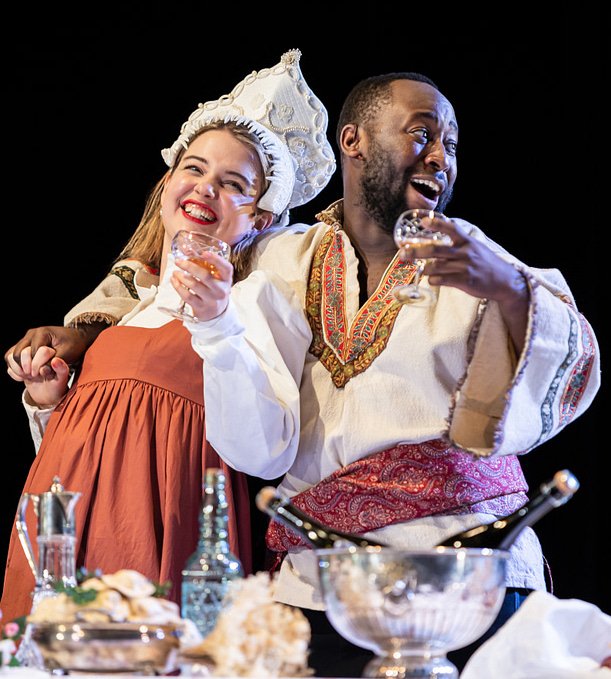
I love the urgency of the opening: a dinner party tableau that stutters and lurches into life. The characters are boldly drawn and instantly recognisable, from Karenin (Stephen McCole)’s supercilious reserve to Stiva’s self-indulgence and Levin (Ray Sesay)’s naïve modesty. The sliding screen upstage is ingenious too, opening to reveal a snowy railway platform, or pastoral wheat fields that seem to offer the hope of a simpler life.

Campbell’s Anna is a believable creation, beautiful and confident and relatively content – until she’s blindsided by her attraction for Vronsky. The tragedy here is as much about the corruption of their love as it about her death. What they have is real, but it’s destroyed by social mores and jealousy. It’s not their relationship that ruins Anna; it’s the stifling rules we humans impose upon ourselves.

So is Tolstoy still relevant and appealing in the twenty-first century? If this Royal Lyceum and Bristol Old Vic production is anything to go by, the answer is a resounding yes!

4.2 stars

Susan Singfield