Barry Lyndon

Savage House

06/06/26

Cineworld, Edinburgh

It’s 1817 and England is beset by both a Jacobite uprising and a massive pox outbreak – and the Savages are in dire straits. Oh sure, they live in a great big mansion, replete with massive oil paintings and fancy gardens, but Sir Chauncy Savage (Richard E Grant) is an utter rake and has somehow managed to gamble away all of the land that surrounds the house. Now his creditors are closing in on him. 

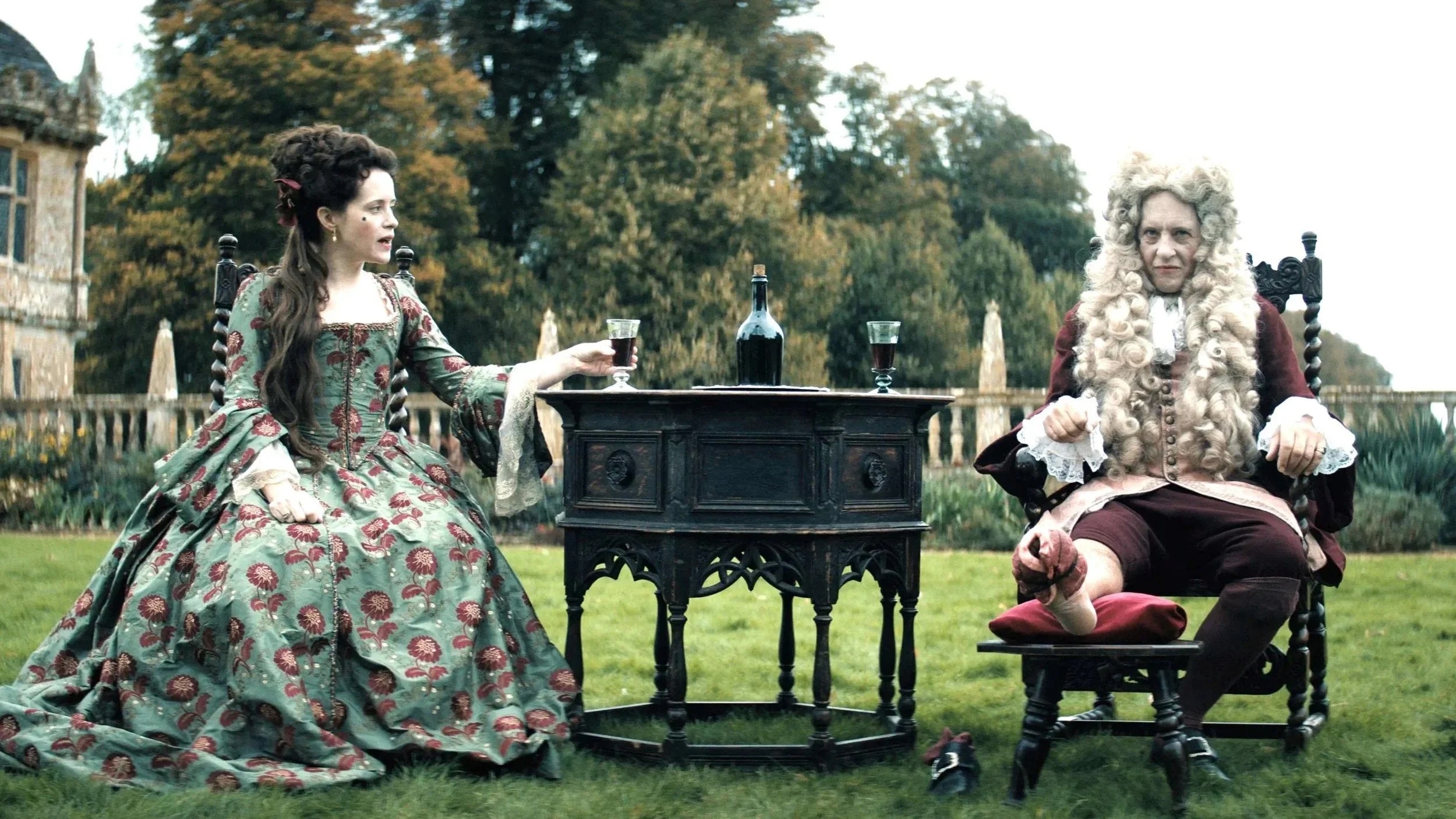
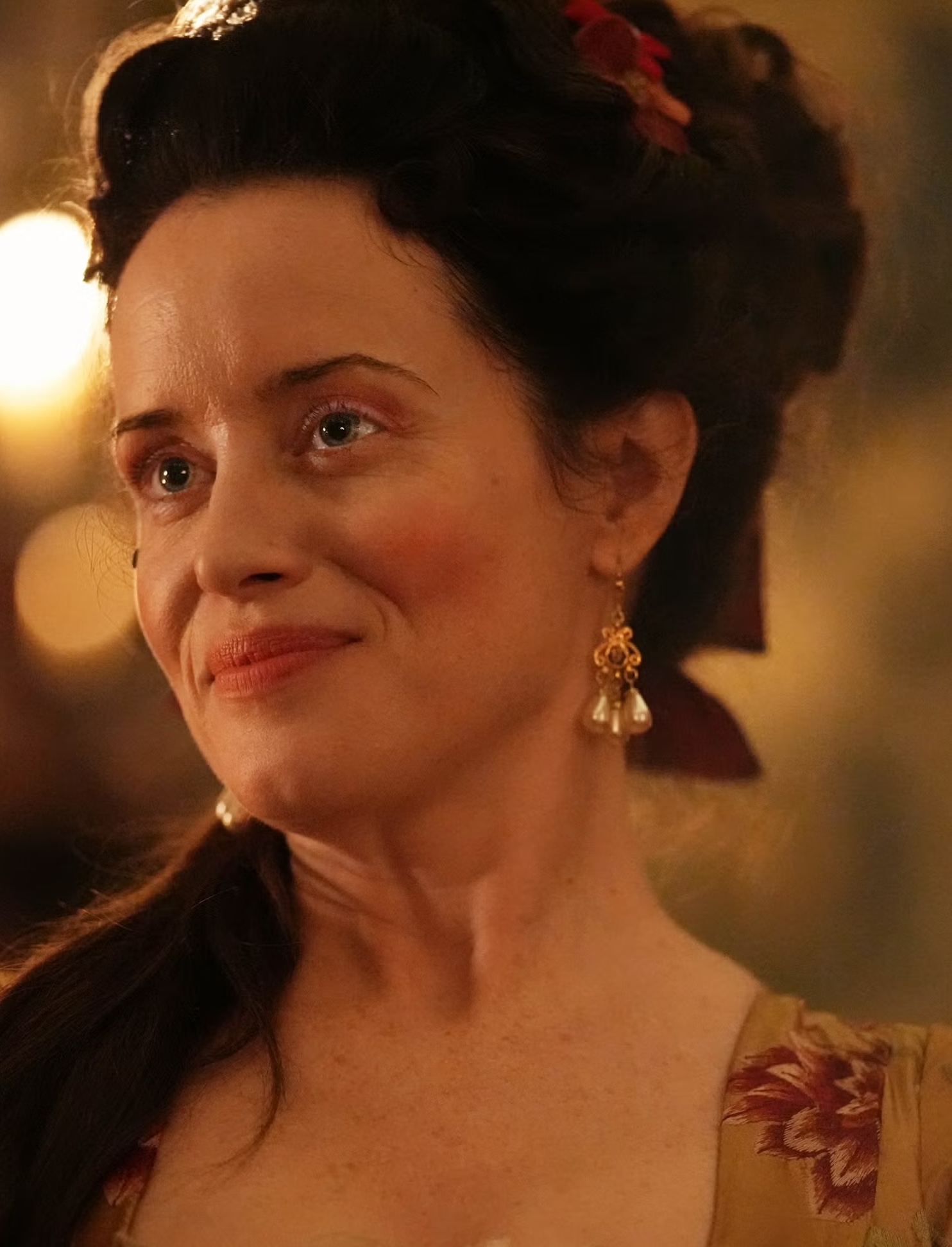
All that’s left of real value are Lady Savage (Claire Foy)’s family jewels. Luckily, despite the couple’s differences – and the fact that they choose to seek sexual gratification with their servants, Dorothy (Bel Powley) and Reginald (Jack Farthing) – the Savages clearly love each other. Meanwhile, their daughter, Fanny (Kila Lord Cassiday), concentrates on tending to the family of mice living in her doll’s house and preparing for an upcoming total eclipse of the sun, which many believe will signal unprecedented changes.

Sir Chauncy, we are told by The Narrator (Robert Bathurst), is something of an imposter, the son of a humble swineherd, while Lady S is from proper aristocracy. (The idea that working-class people aren’t allowed to aspire to nice things is an unpleasant subtext that writer/director Peter Glanz seems to ram home at every opportunity, mostly via the image of a huge pig wandering around the rooms of the Savage’s house.)

Things are beginning to look desperate. Then out of the blue, word arrives that the celebrated Duke and Duchess of Devonshire have requested permission to dine and sleep at Savage House in ten days time. Chauncy spots an all-important opportunity to improve his social standing and persuades his wife that they must not miss out. The aforementioned jewels are sold and Dorothy and Reginald are put to work sprucing the place up – though we soon discover that they have devious plans of their own…

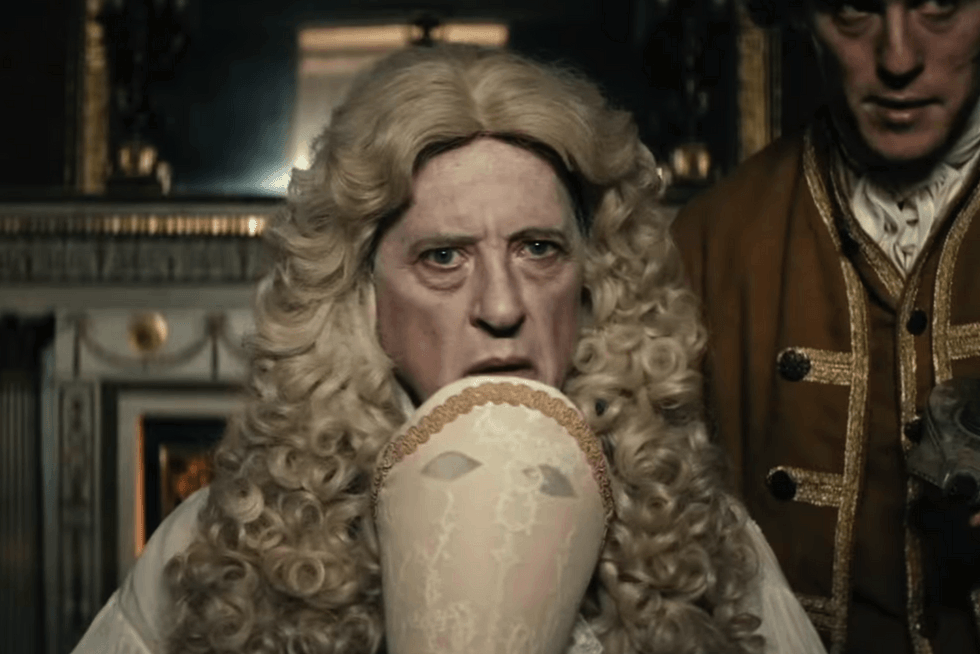
Savage House is something of a mixed bag. Both Grant and Foy are wonderful in their roles, with Grant in particular revelling in the unhinged nature of Chauncy, who invites disaster at every turn. A scene where he performs a drunken dance despite suffering agonising gout is a high point – as is a duelling sequence where Adriano Goldman’s cinematography briefly evokes the grandeur of Kubrick’s Barry Lyndon. There’s also a wonderful orchestral score of classical compositions, though this too reminds me of an earlier (and better) film – Peter Greenaway’s The Draughtsman’s Contract

The film also seems obsessed with focusing on the most unpleasant aspects of life in the 1800s. It never misses the opportunity to focus on piles of steaming excrement, streams of rancid pus, wriggling leeches and acts of lewd sex. A scene where a gangrenous limb is sawn off is shown in such unflinching detail that I almost feel the need to cover my eyes. Those who are squeamish about vermin may find themselves in similar straits at regular intervals. (Susan, I’m looking at you!)

As one disaster after another assails Chauncy’s boundless ambitions, and his unfettered hubris leads him inexorably to a tragic conclusion, I find myself hoping for a single ray of sunshine to pierce the unremitting gloom. But sadly, that isn’t allowed to happen – and the bleak ending feels disappointingly flat as a consequence. 

We leave the cinema discussing potential ways that such illumination might have been achieved, but the film is already in the cinemas where it is sure to divide audiences. Though it occasionally hits the heights, one thing’s for certain. Savage House isn’t short of ambition.

3.4 stars

Philip Caveney

Barry Lyndon

24/06/18

It’s one of the hottest days of the year and we’re in the Cameo cinema watching a film. (Yeah, I know. What else is new?)

Mind you, this is no ordinary film, but Stanley Kubrick’s Barry Lyndon, which I haven’t seen since its original release in 1975. In many ways, it’s both his masterpiece and his most under-appreciated movie. It’s being shown here as part of a Kubrick season, all three hours and five minutes of it – complete with an interval for those who need the opportunity to empty their bladders. It is a quite extraordinary accomplishment, epic in scale, with some of the most gorgeous cinematography I’ve ever seen – courtesy of the late John Alcott, for which he won a well-deserved Oscar. Individual frames look like oil paintings and the night-time interiors, lit only by diffused candlelight, really manage to capture the feel of the period.

In eighteenth century Ireland, young Redmond Barry (Ryan O’Neil) falls for his cousin, Nora (Gay Hamilton), and feels extremely slighted when she starts a flirtation with wealthy English cavalry Officer, Captain Quinn (Leonard Rossiter), a union that is widely encouraged by Nora’s impecunious family. When an impending marriage is announced, Redmond recklessly challenges Captain Quinn to a duel, the result of which forces him to leave home and head for Dublin, in order to lie low.

On the way there, however, he is robbed of everything he owns by a highwayman. This obliges him to enlist in the English army – which is just the start of a long and eventful journey for him, as his fortunes rise by the force of sheer good luck, and he travels the world courtesy of the Seven Years War. Eventually, he ends up as a professional gambler in England, where he sets his sights on Lady Honoria Lyndon (Marisa Berenson), a beautiful but melancholic married woman with an ailing husband. Pretty soon, the husband is dead and Redmond and Lady Honoria are married, but his presence is not appreciated by everyone, particularly by Lady Honoria’s young son, Lord Bullingdon (Leon Vitali), who sees Barry Lyndon (as he now calls himself) as a usurper to his late father’s title…

Based on the novel by William Makepeace Thackeray – whose witty narrative descriptions, read by Michael Hordern, regularly punctuate proceedings – this is old style movie-making of the kind we’ll probably never see again. No CGI here, folks: everything, from those lush landscapes to the expansive battle scenes, has been done for real. It’s interesting to watch Vitali (recently the star of documentary Filmworker) beginning what was to become a long and arduous relationship with Kubrick, going on to abandon acting in favour of becoming the director’s right hand man. Fascinating, also, to witness a wealth of notable actors in smaller roles – Hardy Kruger, Murray Melvin, Andre Morrell, Steven Berkoff… the list goes on.

As you’ll have gathered, I’m a huge fan of Kubrick’s work and what I particularly like about him is his eclecticism. It’s hard to believe this was directed by the same man who made The Shining… or A Clockwork Orange… or 2001: A Space Odyssey. The love and attention to detail lavished upon Barry Lyndon is quite frankly staggering and, no matter how appealing the weather, this is one opportunity that no true film fan can afford to pass up.

After all, the sun will be back another day. Sadly, Stanley Kubrick won’t.

5 Stars

Philip Caveney


Filmworker

18/06/18

Behind every great film director stands a whole horde of underpaid, overworked minions, whose very raison d’etre is to enable said director to get his or her vision up onto the big screen, exactly as it has been envisioned. As great directors go, few are as legendary as the late, great Stanley Kubrick. But Filmworker is not so much his story as that of one of those underpaid, overworked minions, in this case a man by the name of  Leon Vitali.

Vitali’s story is unusual to say the very least. In 1967, he went to the pictures to watch 2001: A Space Odyssey and casually remarked to his companion, ‘One day, I’m going to work for that director.’ Vitali went on to be a pretty successful actor, appearing in all manner of films and TV shows – weirdly, I vividly remember his appearances in the comedy series, Please, Sir, when I was just a kid. And then, in 1975, he did indeed get to work with Kubrick, playing a major role in his lavish (and under-appreciated ) historical drama, Barry Lyndon. But Vitali was much more interested in the nuts and bolts of film making than developing a career in acting and, against all advice, he gave it up to become Kubrick’s right hand man, a role he fulfilled until the director’s death in 1999, shortly after completing filming on Eyes Wide Shut. In all the tributes and ceremonies that followed Kubrick’s death, Vitali was pretty much ignored – he didn’t even receive an invitation to an exhibition based around the director’s film legacy – and yet his loyalty and love for his former employer is all too evident in this compelling documentary, which provides an intriguing look into the four features they worked on together and makes me appreciate the nuts and bolts that underlie every movie.

It must be said that the picture of Kubrick that emerges from this story is not a particularly salutary one, even if Vitali won’t hear a bad word said about him. Kubrick seems to have relished piling tons of work onto his ‘gopher,’ relentlessly making him go over and over every tiny detail – but of course, it was this very attention to detail that made Kubrick the unique director that he was and Vitali seems to have been happy to take the punishment. It’s sobering though, to see the evident toll that such a brutal schedule has taken on Vitali’s health, leaving him a shadow of his former self. More importantly, though, it does make you admire his tenacity and loyalty in doing everything he can to ensure that Kubrick’s cinematic heritage remains as pristine as he himself would have wanted. Hardly surprising then, that the story ends with the news that Vitali is currently working on a new digital transfer of 2001.

While this certainly won’t be for everyone – a working knowledge of Kubrick’s films is, I believe, a definite advantage – I find this an intriguing and curiously affecting story. It also means that whenever I rewatch a Kubrick film, I’ll be thinking of the unsung hero standing at his shoulder, helping the creative wheels to run smoothly.

4 stars

Philip Caveney