
Thelma & Louise

07/06/23

Cineworld, Edinburgh

I bloody love Thelma & Louise. Doesn’t everyone? I live by Louise’s famous mantra, “You get what you settle for.” So now, thirty-two long years after its initial release, I’m beyond excited to finally get the chance to see it on the big screen (I was living in Germany when it first came out, and only had it on a grainy VHS). This 4k restoration is an absolute treat, the vast American landscapes bathed in sunlight and glorious in their bleak beauty.

The eponymous duo have planned a weekend away. Louise (Susan Sarandon) is pissed off with her boyfriend, Jimmy (Michael Madsen), and wants to shake him out of his complacency, while Thelma (Geena Davis) is desperate for a break from the shackles of her unhappy marriage to pig-about-town, Darryl (Christopher McDonald). It’s just supposed to be a couple of nights at a friend’s cabin – fishing, swimming, chilling out. But when a pitstop turns ugly and a thug called Harlan (Timothy Carhart) tries to rape Thelma, Louise sees red and shoots him. From then, they’re on the run.

The genius of Ridley Scott’s film lies in the ordinariness of its two heroines. They’re not high-flyers or especially skilled, and neither of them has ever asked for much. But Harlan’s transgression is the final straw: like most women, these two have endured a lot from men, and they know the law won’t help them. And, having crossed the line, they’re surprised by how much fun there is on the other side. As Thelma puts it, “Everything looks different now. You feel like that? You feel like you got something to live for now?”

In a way, it’s a shame that Callie Khouri’s magnificent script stands the test of time so well. I had hoped it would feel dated, that I wouldn’t feel the need to cheer for women calling out catcalls, or find myself nodding at the frustrating truth that nobody is going to find a man guilty of assaulting a woman who’s been seen dancing with him. But here we are in the future – and when a woman’s crying like that, she still isn’t having any fun.

Despite all the serious stuff, I’d forgotten just how funny this film is, with scores of laugh-out-loud moments. Thelma and Louise are both wonderfully sassy and unabashed, and there are likeable men here too, in the form of avuncular cop, Hal (Harvey Keitel), and the world’s most handsome and politely-spoken armed robber, JD (Brad Pitt).

This re-release is every bit as much of a treat as I hoped it would be, and I can’t recommend it highly enough. For a deeper dive into its magic, you could also listen to Episode 4 of the latest series of Karina Longworth’s excellent podcast, You Must Remember This: Erotic 90s, where she shines a light on its enduring legacy.

5 stars

Susan Singfield

War Pony

06/06/23

Cineworld, Edinburgh

War Pony makes for harrowing viewing. Set – and filmed – on the Pine Ridge Reservation in South Dakota, it chronicles the everyday lives of the resident tribe, the Lakota. It’s clear from the outset that their traditional way of life has all but disappeared, brought out only occasionally in a splash of sound and colour to entertain the tourists. The film focuses mostly on the lives of two young men, who are trying their best to deal with the blows that their existence throws at them.

Matho (Ladainian Crazy Thunder) is perhaps twelve years old, living with his father, a meth dealer. A bit of a dreamer, Matho drifts aimlessly through school, preferring to read an obscure book about magic that he carries with him everywhere than to focus on the curriculum. By night, he and his four best friends run amok around the reservation, making drug deals, getting wasted and generally causing mayhem. After a violent row with his father over some pilfered drugs, Matho is kicked out and winds up bunking in the home of another dealer. But then his father dies under suspicious circumstances (something Matho may have inadvertently caused) and now he must fend for himself any way he can.

Bill (Jojo Bapteise Whiting) is in his twenties, already the father of two sons (to two different women, one of whom is in jail). He gets by with a sleepy grin and a relaxed WTF manner, but he too has to wheel and deal to make ends meet. In his world, everything has a price and, when he finally hits on his game plan, it’s fairly unconventional. He will purchase a female poodle and become a dog breeder, selling the resulting puppies for big profits. Meanwhile, a chance encounter with a local white farmer leads to him obtaining a paid position – not bad for a kid from the ‘res’.

But unfortunately, part of that job is to act as a chauffeur to the various young Native American girls whom his new employer likes to sleep with…

Though the two lead characters have nothing in common and only meet in one brief scene, the film is quick to point out that Matho is somehow already in rehearsal to be exactly like Bill one day, provided he manages to survive long enough. The repeated (unexplained) reappearance of a bison, the creature around which the Lakota’s lifestyle once centred, strikes a powerful and thought-provoking element. The creature no longer has any place here: he has become an almost surreal symbol of a lost identity, just as Matho and Bill too, are stranded. The latter no longer even knows how to speak his own language.

Utilising a cast of mostly non-professionals and written by Native Americans, Franklin Sioux Bob and Bill Reddy – in collaboration with directors Riley Keogh and Gina Gammell – War Pony feels totally authentic, a gritty and realistic piece that highlights the plight of a displaced people with absolute authority. Though there are occasional snatches of humour in the twists and turns of the story, most of what happens to the characters here is profoundly distressing.

But this is an important story that deserves to be seen by big audiences and the sizeable crowds at this Unlimited screening suggests that there are plenty of people ready and willing to watch it.

4 stars

Philip Caveney

The Boogeyman

04/06/23

Cineworld, Edinburgh

Horror movie The Boogeyman is one huge unsubtle metaphor – but it’s none the worse for it. The eponymous villain represents negative emotions – sorrow, misery, rage, etc. – and he needs dealing with before he kills you.

Sisters Sadie (Sophie Thatcher) and Sawyer (Vivien Lyra Blair) certainly know all about negative emotions. It’s only a month since their mother was killed in a car crash, and they’re struggling to adapt. Sawyer can’t sleep until her dad, Will Harper (Chris Messina), has checked her closet for monsters, and even then she needs her ball lamp next to her. Sadie is trying to put on a brave face, but her school friends aren’t really there for her. Meanwhile Will – a therapist, no less – completely refuses to talk about their mom at all.

When Lester Billings (David Dastmalchian) shows up at Will’s home office one day, he brings more than his sadness with him. His children have been killed by a mysterious boogeyman, he says, but the police suspect Lester has murdered them himself. He’s frantic with grief and wants Will’s help to cope. Instead, the insidious monster that’s following him turns its attention to the Harper family and begins to wreak havoc…

Based on a short story by Stephen King and directed by Rob Savage, The Boogeyman builds suspense well. The family dynamics are convincingly drawn, and the just-out-of-sight boogeyman feels genuinely scary (as ever, he’s a little less frightening once made corporeal).

There are a few plot holes that let the film down overall. Lester’s widow, Rita (Marin Ireland), for example, seems to be surviving on candlelight and bullets. No one’s eaten in that kitchen for some time, that’s for sure, and why haven’t the neighbours reported all the gun shots? If the police think Lester’s a killer, why isn’t he in custody? And, if the monster can only get you in the dark, why does no one ever turn on a room’s main light?

All in all, this is a fun little film. It doesn’t bear much scrutiny, but it assuredly entertains.

3.5 stars

Susan Singfield

Spider-Man: Across the Spider-Verse

04/06/23

Cineworld, Edinburgh

In 2018, Spider-Man: Into the Spider-Verse caught a lot of people napping. At that time, the Marvel Universe pretty much dominated the public movie-going imagination and here was something completely unexpected: Lord and Miller’s animated extravaganza – which had the temerity to take on the big guys. It was, quite literally, like nothing we’d seen before.

A lot has happened over the intervening years. Marvel are not quite the force they once were, with recent offerings (though still profitable) failing to reach the dizzy heights they’ve previously climbed to. And the weight of expectation for Across the Spider-Verse is palpable. Can this Sony Studios sequel really hope to put lightning into the bottle a second time?

Well, yes, as it turns out, it can. The credit sequence alone offers more imaginative filmmaking than we’re used to seeing in the average Marvel feature.

Sixteen months after the events of Into, Gwen Stacy (Hailee Steinfield) is having a hard time getting on with her life on Earth-65. After accidentally killing Peter Parker (Jake Johnson), she’s understandably depressed – and she can’t help but miss her old pal Miles Morales (Shameik Moore), who is inconveniently stranded in a completely different dimension. On Earth 1610, he’s still negotiating everyday life with his cop father, Jefferson (Brian Tyree Henry), and his nurse mother, Rio (Luna Lauren Vélez), whilst continuing his secret adventures as our friendly neighbourhood Spider-Man.

But when Gwen is visited by another couple of Spider-People, Miguel O’Hara (Oscar Isaac) and Jessica Drew (Issa Rae), they give her a handy bracelet that allows her to slip easily between dimensions. Time to give Miles a quick visit? Well, why not? Doing so couldn’t possible mess up the old twisty-turny-timey-wimey configurations… could it?

It would be pointless to try and convey more of the plot here because it’s complicated and mind-bending in the best possible sense. It’s to Lord and Miller’s credit (they wrote the script with Dave Callahan) that at no point do I feel bewildered by what’s happening onscreen. The true triumph, however, is the ever-changing beauty of the many different art techniques used to illustrate the story: from realist to impressionist; from pastel shades to psychedelia. Across the Spider-Verse is a mesmerising, eye-popping spectacle that feels like being plunged headlong into a fabulous maelstrom of sonic fury.

And it’s also more than that. The sprightly script keeps throwing snarky one-liners at me, the story counterpoints teenage angst with the minefield of parental responsibility and, with the arrival of The Spot (Jason Schwartzman), I’m offered a super-villain like none I’ve ever seen before. Best of all, I’ve rarely seen a film that feels more inclusive than this – that gleefully throws in a pregnant, afro-wearing, motorbike-riding Spider-Woman, just because it can.

My only real criticism? In a film with a running time of two hours and twenty minutes, surely the story arc could have reached some kind of standalone conclusion? When the ‘To Be Continued’ message hits the screen, I let out an audible groan. I can only hope I won’t have to wait another five years for part three, because I’d be happy to sit down and watch it right now. But hey, if my one negative comment is that I am left wanting more, that’s a good thing, surely?

Miss this one and weep. And folks, I know I say this a lot but please, please don’t wait for streaming. If ever a film was designed to be seen on the biggest screen possible, this is the one.

5 stars

Philip Caveney

The Best Exotic Marigold Hotel

31/05/23

Festival Theatre, Edinburgh

I was a big fan of Deborah Moggach’s books back in the 80s and 90s. You Must Be Sisters, in particular, made an indelible impression. Although I didn’t read These Foolish Things, when it hit the silver screen in 2011 as The Best Exotic Marigold Hotel, I was primed to enjoy it – and I kind of did. Under John Madden’s direction and with a stellar cast, it struck me as a good-natured, feel-good slice of cinema.

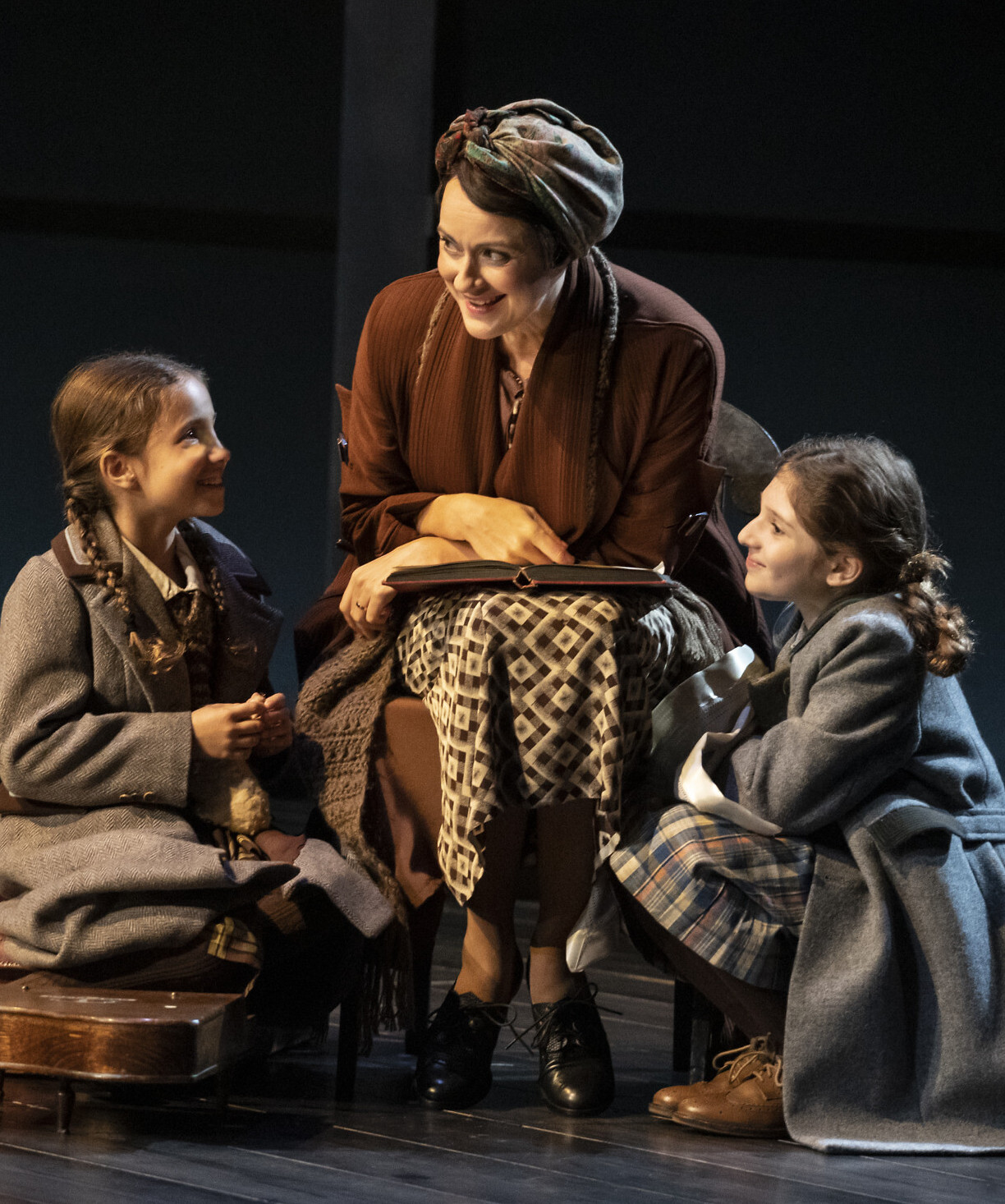
It seems to be a truth universally acknowledged that a successful, ‘uplifting’ film should be adapted into a touring play, so it’s no surprise to find TBEMH added to the roll call. This gentle comedy tells the tale of the widowed Mrs Kapoor (Rekha John-Cheryan) and her hapless son, Sonny (Nishad More), owners of the dilapidated titular hotel. His mother wants to sell the failing business, but Sonny has another idea. He’s been reading about the way old people are treated in the UK: abandoned by their families; ripped off by care homes. Why not repurpose their building as a residential hotel, where elderly white English people can see out their days?

Enter a rag-tag of pensioners: mousy Evelyn (Tessa Peake-Jones), recently widowed and terribly timid; smug married “been-there-done-that” know-it-alls Jean (Eileen Battye) and Douglas (Paul Nicholas); mysterious ex-broadcaster Dorothy (Paola Dionisotti); would-be comedian Norman (Graham Seed); sexy Madge (Belinda Lang), on the hunt for a fourth husband; and Muriel (Marlene Sidaway), ex-cleaner and current bigot. Of course, they’re all on journeys of self-discovery, and India provides the perfect exotic backdrop…

The jokes land well with tonight’s audience and there is much laughter in the auditorium but, in all honesty, it’s an uncomfortable watch. It’s 2023, and we’re all more aware than we were back in 2011. Now, the white saviour narrative feels dated and horribly self-aggrandising. I wince as Muriel points out the inequity of the caste system, thus enlightening Mrs Kapoor and convincing her to promote the ‘Untouchable’ sweeper (Anant Varman). I cringe as the old white women solve Sonny’s relationship problems by telling him to marry for love and reject the idea of an arranged marriage. I squirm as Evelyn educates the lively call-centre workers (Shila Iqbal and Kerena Jagpal), smashing their sales targets with a bit of good English common sense. There is the occasional attempt to temper this (“It was the young people’s idea”), etc., but – basically – it’s the Indians’ role to inspire the Brits by smiling through adversity, and it’s the Brits’ role to show the Indians how to get things done. Sigh.

I’ll file this one under ‘A’ for ‘Awkward’.

2.5 stars

Susan Singfield

Haar Restaurant and Rooms

27/05/23

Golf Place, St Andrews

We’ve eaten at Dean Banks’ Edinburgh venues several times – at The Pompadour and, more recently, at his seafood-themed bistro, Dulse. In each case, the food has been outstanding. We’ve heard good things about his signature restaurant in St Andrews, Haar, and resolve to try it out. A sunny bank holiday offers the ideal opportunity and, when we discover that we can also stay on the premises, it feels like a no-brainer. It’s not what you’d call a budget stay but, in lieu of a summer holiday, we feel we’ve earned the right to spoil ourselves.

We book the room at the very top of the building which, though not the most luxurious place we’ve stayed in, offers an enticing view of West Sands beach at the top of the road (with a handy telescope should we want a closer look). The room is clean, comfortable and quiet, though the absence of a wardrobe is puzzling. The bathroom is tiny but has a luxurious deluge shower. Customers with mobility and access issues should note that getting to the room does involve climbing several flights of stairs.

At 7.30pm, we head downstairs to dine and are initially worried that we seem to be the only people in the room, but that situation is very short-lived. Soon, the place is full and buzzing with conversation.

The five-course tasting menu looks pretty substantial, so we’re somewhat nonplussed by the suggestion that we might like to augment it with various other courses (at an additional cost) so, after brief consideration, we decide to stick with the basic menu – though ‘basic’ hardly covers the series of culinary delights we sample tonight.

We begin with the rather unprepossessingly titled ‘snacks’, for which we are invited to sit at the Chef’s Table, a kind of breakfast bar arrangement, where the chef creates three amuse bouche-style offerings, talking us through the process as he puts the dishes together. This is a nice theatrical touch that I’ve not experienced before.

First up there’s a very individualistic approach to trout pastrami, which resembles a tiny ice cream cone, small enough to eat in a single bite, but absolutely brimming with flavour. Next up, there’s an oyster apiece, drizzled with sea buckthorn (which grows wild along this part of the Scottish coast) and sprinkled with lime and fresh rhubarb. The oysters are presented in a dish of smoking dry ice, another theatrical flourish, and they are delicious – fresh and zingy. Finally, we return to our table to sample Dean Banks’ take on an Arbroath smokie, served in a round tin and accompanied by a slice of crisp bread. This is smoked fish dialled up to 11, and we both approve.

Now there’s a Dean Banks speciality: a mini cornbread loaf accompanied by two types of butter, one salted and the other infused with miso – the only tough choice here is which butter you’re going to have, but we both prefer the miso.

The next course is east coast crab served with pea and Thai broth, a meal so light and ethereal that we can almost inhale it. Can we resist dunking a slice of cornbread into that broth? No, we cannot! And why should we? Cornbread is made for dunking, right?

The seafood theme continues with a slice of perfectly cooked halibut, melt-in-the-mouth tender at its flaky heart with seared crispy edges. This is presented with a spear of crispy asparagus coated with mouthwatering black garlic and a pool of vibrant green sauce.

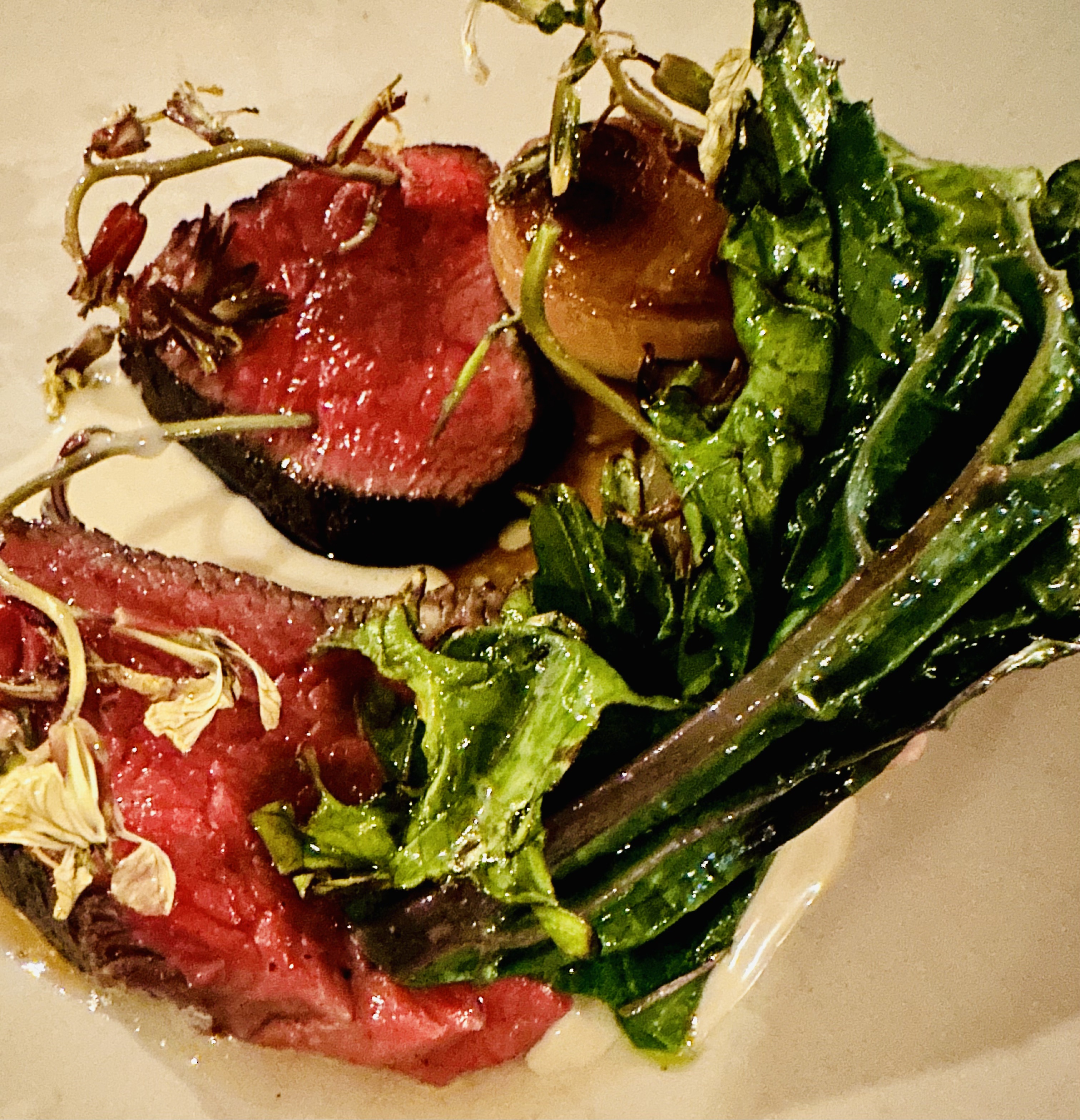
Some meat perhaps? How about a succulent chunk of salt baked duck, resplendent in a five-spice sauce and glaze? Out it comes and down it goes, the medium rare flesh tender enough to slice with an ordinary table knife.

We’re expecting the pudding next, but there’s a late addition to the menu in the form of a pre-dessert, a tasty little enticement of rhubarb sorbet and yoghurt.

And just when you’re thinking, ‘I won’t have room for the actual pud,’ it arrives and it’s Nana’s banoffee, an exquisite banana parfait that looks pretty enough to frame – but is far too delicious to do that with. It’s presented with a scoop of toffee ice cream, a chocolate rum ball (which bursts in the mouth like a flavour explosion), a chunk of fresh caramelised banana and an ingenious sugar tuille, in the shape of dulse seaweed. We often comment that it’s the pudding that lets down a great menu, but this is certainly not the case here.

And of course, this isn’t the end of the experience. The following morning, after a long bracing walk on West Sands, we’re ready for breakfast. This is quietly impressive and, as we’ve come to expect, faultlessly executed. I opt for the Scottish breakfast with poached eggs, which is perfectly done and features what might be the best bacon I’ve ever tasted – a thick crispy slab of meat with a wonderful smoked flavour. Susan’s East Neuk platter features a whole array of different foodstuffs, incorporating cured meats, fresh fruit, jam, yoghurt and a couple of fruit scones.

There’s no doubt that Banks’s culinary creations are up there with the very best. Lovers of fine dining will find plenty to enjoy at Haar.

4.8 stars

Philip Caveney

The Stamping Ground

24/05/23

Festival Theatre, Edinburgh

As jukebox musicals go, The Stamping Ground – inspired by the back catalogue of the near legendary (and now, sadly defunct) Gaelic rock band, Runrig – is more coherent than most. Writer Morna Young has skilfully repurposed twenty of the band’s songs into the story of a community of contemporary villagers struggling to save their way of life.

Euan (Ali Watt) is the author of a series of bodice-ripping novels set in the Scottish Highlands, but his career has stalled. After his teenage daughter, Fiona (Caitlin Forbes), is beaten up by a gang of bullies, he and his wife, Annie (Jenny Hulse), decide to relocate from their home in London to Glenbeag, (‘Little Valley” in Gaelic), the remote village where they were raised, and where his widowed mother, Mary (Annie Grace), still lives. But Euan is horrified to discover that Mary is now close friends with Summer (Naomi Stirrat), the daughter of the man who, years ago was responsible for Euan’s father’s death.

The family have arrived at a turbulent time for the village. The local inhabitants, who have already lost their cafe and post office, are now reeling from the news that their beloved pub may be the next thing to go, repurposed into holiday flats for visiting tourists. They all put their heads together to think of ways to raise money and it’s Annie who comes up with the idea of hosting a harvest festival. But when bad weather intervenes, its clear that a solution to the problem is not going to be easily found…

The Stamping Ground is, quite simply, a love letter to Scotland, a paean to the concept of people’s relationship to the land in which they live. It’s bold and vivacious, filled with likeable characters and fuelled by a mixture of plaintive melodies and rousing reels powered along by Stuart Semple’s propulsive drumming, John Mckenzie’s guitar and John Kielty’s keyboards. Members of the talented cast regularly grab other instruments to augment the songs as the story unfolds. While events occasionally come perilously close to sentimentality, I’d be lying if I denied filling up during Summer’s emotive ballad about leaving her friends – and, likewise, if I denied laughing out loud at some of the villager’s mischievous banter.

There’s a lot more here to enjoy. Kenneth McLoud’s fabulous set design, centred around the broken remains of an ancient standing stone, is a particular delight, while Jade Adams choreography and Luke Kernaghan’s direction keeps the whole enterprise bubbling to its stirring conclusion. By the end of the night the audience is on its feet clapping joyfully along to a rousing rendition of Loch Lomond.

The Stamping Ground is Scottish to its roots and never shies away from proudly saying so.

4 stars

Philip Caveney
Master Gardener

23/05/23

Cameo Cinema, Edinburgh

Paul Schrader is the man who wrote Taxi Driver, which became one of Martin Scorcese’s most celebrated films – but, as a director, Schrader’s career has been rather less spectacular. He prefers to concentrate on smaller stories that feature flawed protagonists who harbour dark secrets. Master Gardener, which forms a kind of loose trilogy with his earlier efforts, First Reformed and The Card Counter, seems to follow the same format.

The master gardener of the title is Narvel Roth (Joel Edgerton), a skilled horticulturalist who works on the extensive estate (clearly a former plantation) owned by Norma Haverhill (Sigourney Weaver), with whom he enjoys (if that’s the right word) the occasional sexual encounter, a process which seems to hark back to some kind of mistress/slave tradition. Narvel is nonplussed when Norma asks him to take on a new trainee, her great niece, Maya (Quintessa Swindell), who – Norma tells him – has been through ‘some issues’, and whom she has barely ever met.

Maya is a mixed race woman in her twenties and we soon discover that her foremost issue is that she’s a drug addict. She and Roth hit it off, despite the fact that he has a habit of distilling everything down to ponderous lectures about the nurture of plants – but we have already been tipped off, via the plethora of bizarre tattoos on Narvel’s torso, that he’s had a very different life before he became a gardener, one in which the swastika featured prominently. When Maya is attacked by a drug dealer, Roth takes it upon himself to be her protector – a move that incurs Norma’s anger.

There are several elements here that really don’t convince. For one thing, Maya must be the most wholesome looking drug addict in history, while her ‘beating up’ comes down to a polite cut on her bottom lip. Norma’s vitriolic reaction to Roth’s interest in the girl, on the other hand, seems totally overblown. And when the story heads along the all-too-familar trope of a tough white man becoming the saviour of a younger female, there’s an overpowering sense of ‘seen it all before’. Brief flashbacks to Roth’s earlier life (as a much more hirsute hired killer) kindle even more questions. Where did that encyclopaedic knowledge of horticulture come from in the first place? From the White Supremacists’ Handbook? And why is Maya so ready to forgive him for his previous excesses?

Some earnest twaddle about ‘new shoots’ and ‘the seeds of love growing like the seeds of hate’ fail to explain any of this and, by the time we arrive at the (again faintly unbelievable) conclusion, I’m starting to feel relieved that this is a free Picturehouse screening and that I haven’t actually had to pay for a ticket to see this movie.

Schrader has quite a history in cinema and it would be unfair to dismiss him on the strength of one film, but he can (and has) made much better ones than this.

2.8 stars

Philip Caveney
Beau Is Afraid

21/05/23

Cineworld, Edinburgh

Beau would appear to have every reason to be afraid.

When we first encounter Beau (Joaquin Phoenix), he’s living in a run-down flat in the heart of an American city that appears to have been set-dressed by Hieronymus Bosch. There are rotting bodies lying in the street, vicious fights are breaking out on every corner and he can’t even visit the convenience store without being pursued by a naked man who wants to stab him. His ever-smiling therapist (Stephen McKinley) tells him that it’s all the result of anxiety and makes sure he’s topped up with as many unpronounceable drugs as he can swallow – but he must be sure to take them with WATER!

A long-planned and somewhat overdue visit to his domineering mother, Mona (Patti Lupon), is the catalyst for a paranoiac sequence of unforeseen events, that put Beau into the hands of seemingly friendly couple, Grace (Amy Ryan) and Roger (Nathan Lane). But once ensconced in their home in the country, he soon realises that everything there is not as cosy as it seems. Why does the couple’s teenage daughter, Toni (Kylie Rogers), appear to hate him? And what’s the story with Jeeves (Denis Ménochet), the deranged army veteran who lives in a caravan in the garden? Why does he look at Beau in that sullen, threatening manner? The entire film plays like an endlessly protracted nightmare from which its lead character cannot awaken and though Beau still strives to make that all-important visit to his Mom, everything he does is destined to go horribly, catastrophically wrong…

Ari Aster is an interesting director, who excels at amping up an audience’s anxiety levels and, in the process, creating genuinely terrifying scenarios – but I felt his two previous features, Hereditary and Midsommar, both careered out of control in their final stretches and Beau Is Afraid suffers from the same complaint. While there are many memorable scenes here and a degree of invention that puts Aster amongst the forefront of contemporary filmmakers (check out the lengthy sequence where Beau wanders through a series of gorgeous animated landscapes), there’s still the conviction that he’s not quite as in control of his own storytelling as he needs to be.

With a bladder-straining running time of nearly three hours, the film’s conclusion feels needlessly protracted and there are some sections here – particularly a lengthy oedipal confrontation with his mother – that could probably have been edited out to make a tighter, more coherent movie.

Make no mistake, this is still a recommendation, because much of what’s on display here is absolutely dazzling. But you really can have too much of a good thing.

4.2 stars

Philip Caveney
Still: A Michael J Fox Movie

20/05/23

Apple TV

The name Michael J Fox is synonymous with three things: Marty McFly; a teenage, basketball-playing werewolf; and Parkinson’s disease. Mega-famous in the 1980s for smash hit films Back to the Future and Teen Wolf, Fox is just as well-known these days for his candid communications about living with a degenerative brain disorder. This inventive documentary, by Davis Guggenheim, is revelatory – about Fox, as well as about Parkinson’s.

Fox has always exuded on-screen warmth. He’s the epitome of likeable: wry, self-deprecating and funny. Whatever role I’ve seen him in, he brings these qualities to bear. Watching Still, it soon becomes apparent that that’s just who he is, which isn’t to denigrate his acting ability: he’s played a range of types – but always with a hint of sweetness shining through.

Guggenheim’s biopic is thoughtful and meandering, cutting between past and present, making clever use of film clips to illustrate key details of Fox’s life and character. From tiny live-wire working-class Canadian kid to tiny live-wire Hollywood star, we see how Fox’s kinetic energy (and general niceness) propelled him to success. It also enables him to live contentedly: unusually for someone in his career, he’s sustained a long and happy marriage and is clearly close to his four kids. Fox’s wife, Tracy Pollan, is an actor too (they met on hit TV show Family Ties) and the pair seem truly devoted. It’s lovely to see.

In some ways, the film is harrowing, because it doesn’t pull any punches about the realities of living with Parkinson’s. Fox falls over a lot and hurts himself when he lands: he’s broken all the bones around his left eye. He shakes uncontrollably, all the time; he struggles to walk. He relies on medication, very aware of when it’s wearing off and he needs his next pill. He has a lot of physio, which helps to keep him mobile. Presumably Parkinson’s sufferers without his kind of money can’t access quite so much one-to-one therapy; even with it, things are tough.

But in other ways, the film is uplifting, because – while it steadfastly avoids the ‘disabled person as inspiration’ trope – it also shows how the condition doesn’t really change the man. Michael is still very much Michael, with the same twinkle, the same humour, the same candour.

It’s fascinating to listen to him describe the tricks he employed in the early days of his diagnosis (aged only 29), when he was desperate to hide his tremors from the world. Once you know what he’s doing, footage from Spin City, the TV show he was making back then, takes on a whole new significance.

Still is a weirdly feelgood film – a testimony to a life well-lived.

4.6 stars

Susan Singfield