18/07/26
Cineworld, Edinburgh
‘See it on the biggest screen possible.’
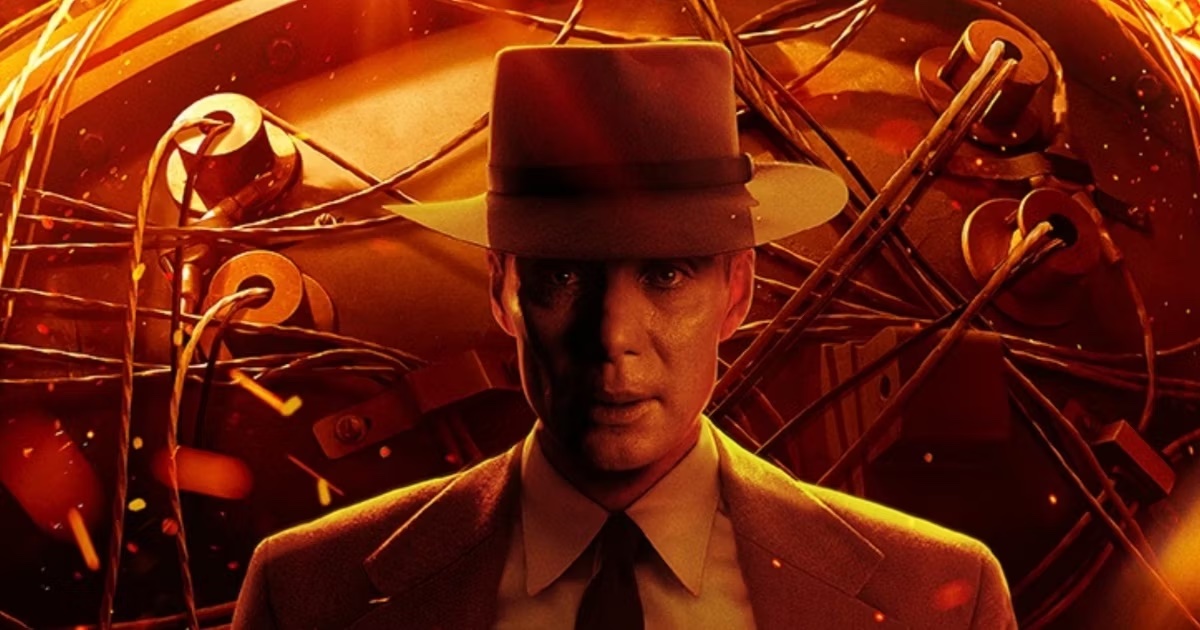
Advice we’ve often given and something we had every intention of following ourselves in the case of Sir Christopher Nolan’s latest release. But, for the first time ever, finding an empty seat in an IMAX screening in Edinburgh proves impossible – unless we’re prepared to sit in the very front row. (Done that once, never again.) This development is simultaneously annoying and wonderfully heartening. Perhaps that much-rumoured resurgence in cinema attendance, fuelled by the likes of Obsession and Backrooms, is actually gathering momentum. Or is it just Nolan’s astute handling of the movie’s advertising, coupled with the Oscar success of Oppenheimer that has led to this stampede for tickets?
Whatever the reason, we decide to book in for a standard screening. We’ll revisit in IMAX sometime in the near future. Providing it’s any good, of course. Despite widespread critical acclaim, the online vitriol poured on the film by people who haven’t actually seen it yet means that this one has much to prove. And happily, it passes every test with flying colours.
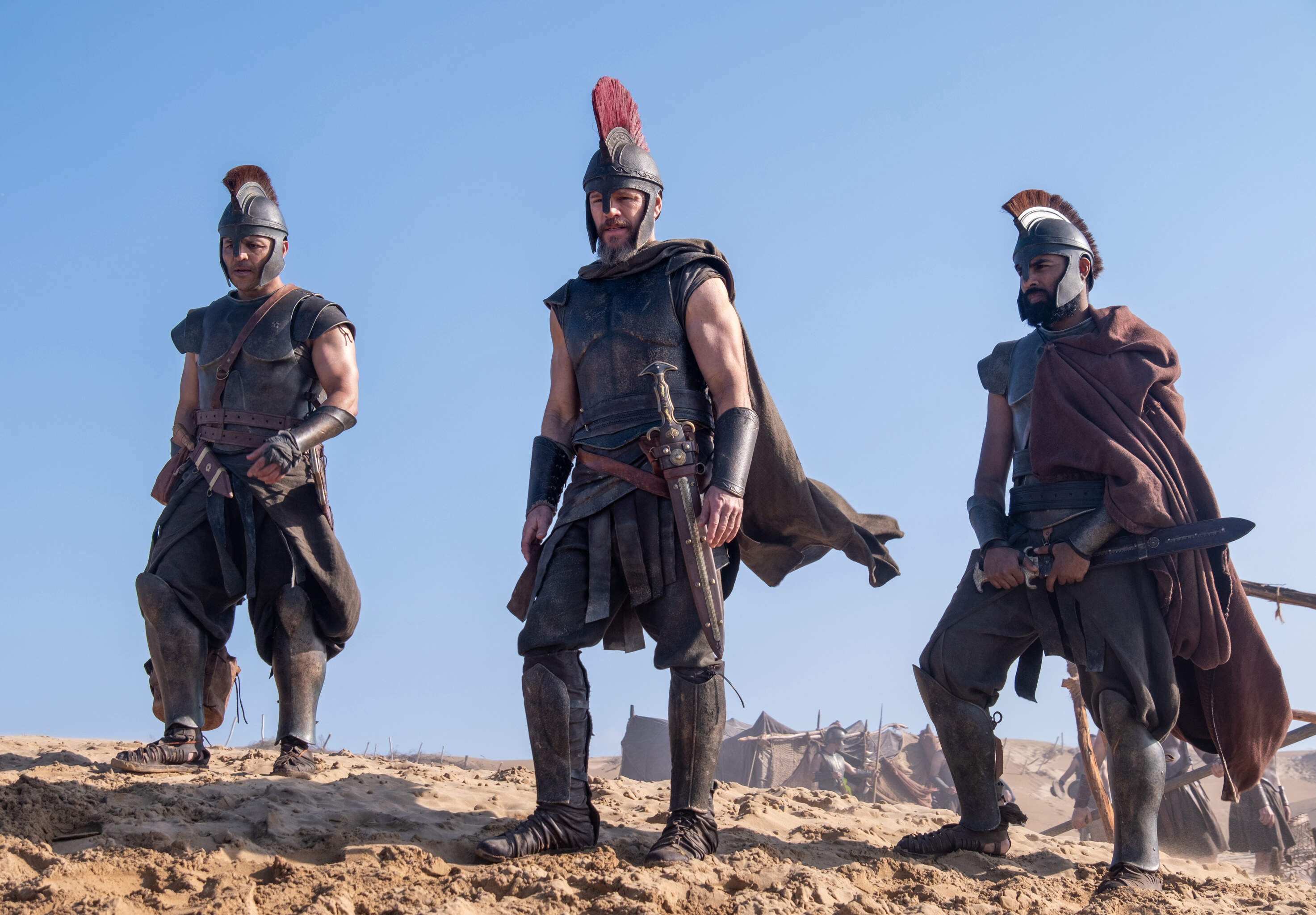
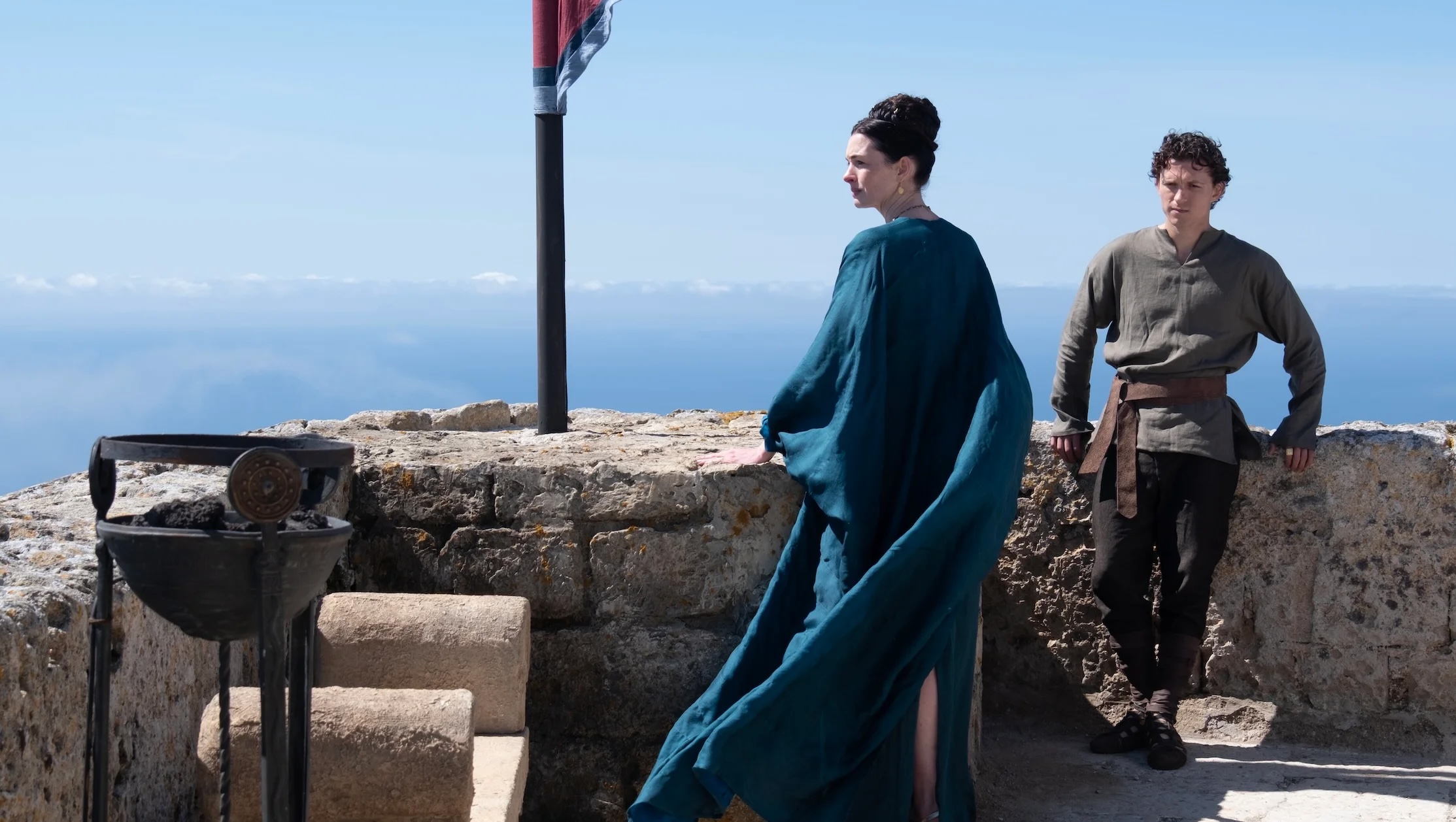
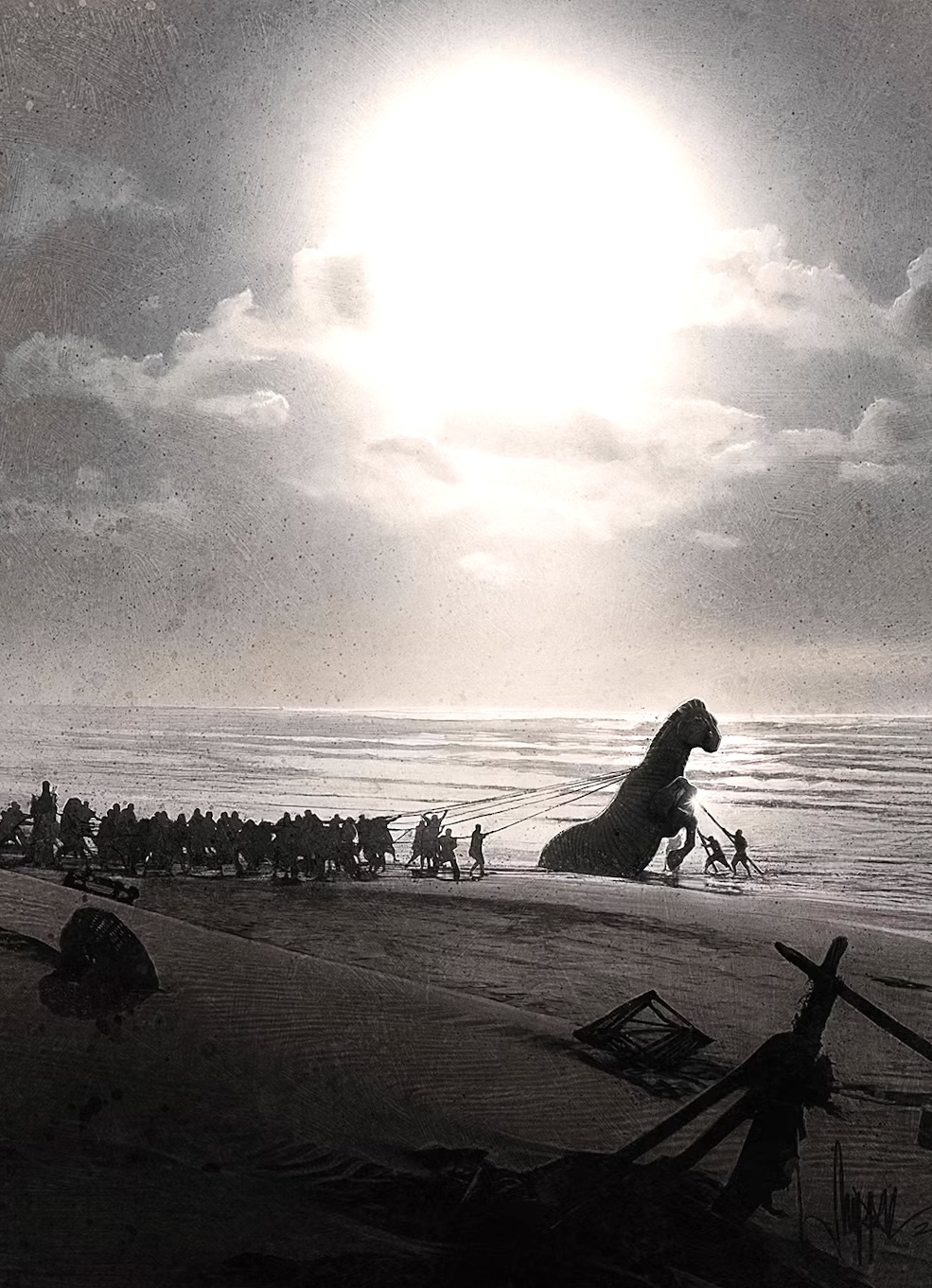
We all know The Odyssey, of course. Homer’s epic poem is still the bane of many young students’ lives as they are obliged to read their way through its meandering stanzas, which focus on the twenty year ordeal of its central character, Odysseus (played here rather wonderfully by Matt Damon). Our hero, forced for the first decade to play a key role in the siege of Troy, then has to spend the next ten trying to find his way back to Ithaca, where his faithful wife, Penelope (Anne Hathaway), and his loyal son, Telemachus (Tom Holland), still await his return.
But to get to them, Odysseus and his crew must take on all manner of obstacles: the giant cyclops, Polythemus (Bill Irwin); the powerful witch, Circe (Samantha Morton); the Lotus-dispensing Calypso (Charlize Theron); and, most egregious of all, the Ocean – which, because Odysseus has annoyed Poseidon, is determined to send them all to a watery grave.
With a running time just short of three hours, this could be a ponderous affair but Nolan (who also adapted the screenplay from the original poem) employs an ingenious non-sequential approach, cutting effortlessly back and forth across the passing years to ensure that no particular sequence overstays its welcome. What’s more, even though most of the situations are familiar from earlier versions of the story (the 1954 Ulysses starring Kirk Douglas springs to mind, as do several of the films featuring the work of stop-motion genius Ray Harryhausen), Nolan always manages to put a different spin on proceedings.
Of course, a tale as packed as this one is sure to have its more memorable sections. The scene where Odysseus and his men are locked in a cave with the aforementioned Polythemus is a particular standout, as is Circe’s transformation of Odysseus’s crew into swine. She uses a hands-on approach like a potter moulding clay, the sequence employing old-school practical effects that recall the work of the legendary Rick Baker.
And if you’re a fan of an enormous climactic dust-up, well, I don’t think you’ll be left feeling short-changed.
The cast is stellar with many big names popping up in minor roles. Robert Pattinson proves once again that he is a terrific actor as the oily, scheming Antinous and all hail to John Leguizamo as the ever-faithful Eumaeous. Much has been made of the casting of Elliot Page as Sinon and Lupita Nyong’o as Helen of Troy, with incensed commentators complaining about ‘authenticity’ as though this is a historical piece rather than a slice of weird fantasy, but both actors give strong performances that more than justify their casting. Oh, and by the way, those American accents serve as a commentary on the current world order, which – when you think about it – makes a lot of sense.
Perhaps the most original addition here is the clarification of just how much two decades of havoc have taken their toll on the central character. In the film’s final section, as Odysseus recalls the cruelty and bloodshed visited upon the people of Troy, this feels increasingly like the recollections of a man suffering from PTSD, finally emerging from a lotus-induced fog and forced to confront the pain his decisions have inflicted on those who followed him.
Make no mistake, this is a superb film: assured, inventive and directed by a man at the very top of his game. I haven’t always loved Nolan’s films but this may just be his masterpiece. Buckle in and get those IMAX seats booked… if you can find them.
5 stars
Philip Caveney