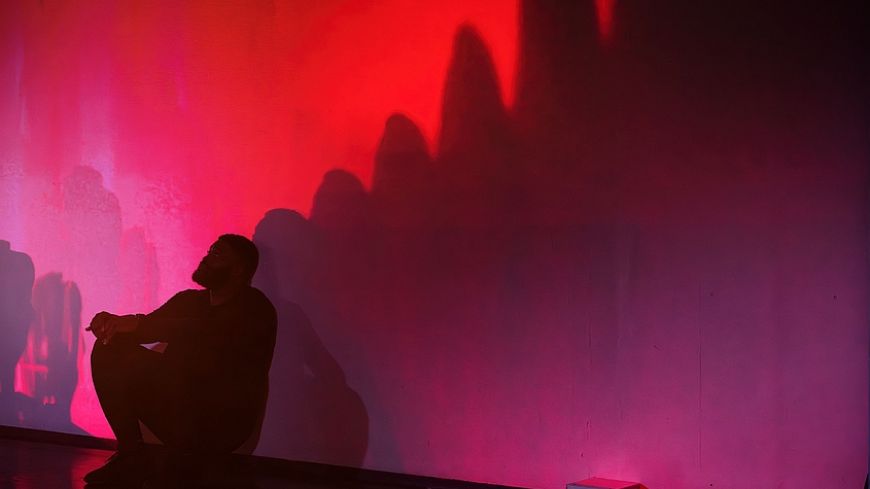
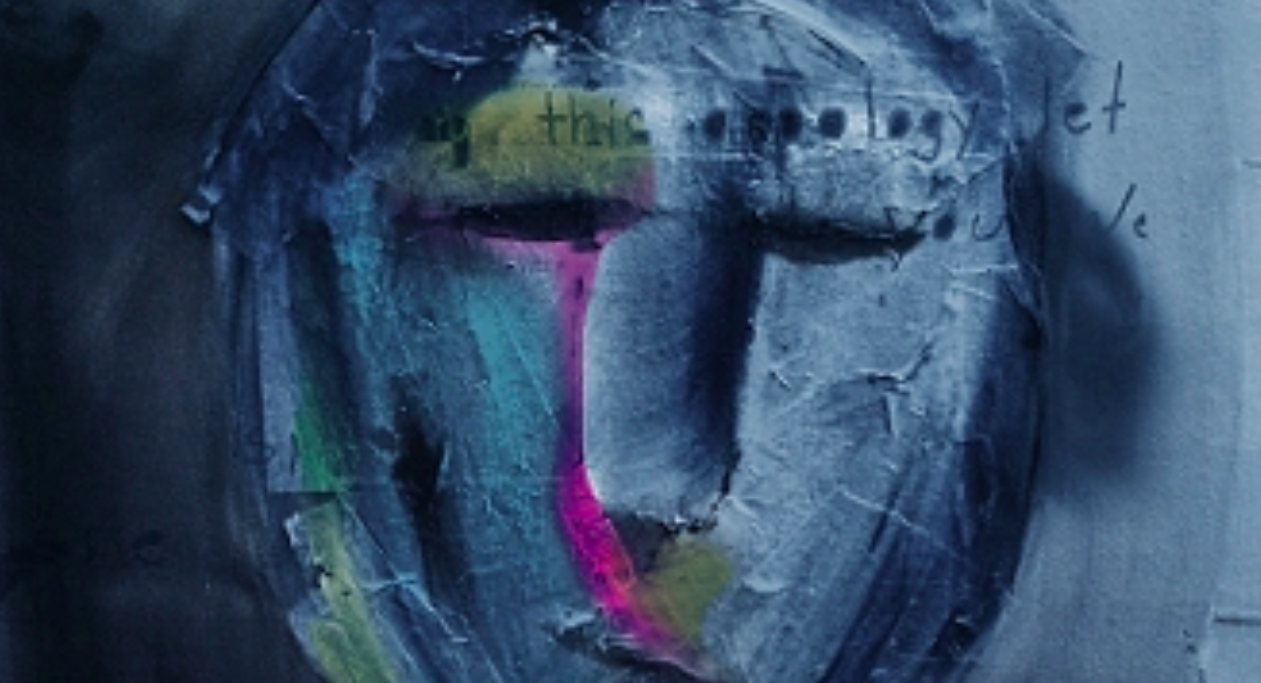
Some time in the near future, an ex-detective attempts to piece together the fragments of an old manuscript, left behind by someone called Al.
The play, by Lekan Lawal, award-winning Artistic Director of Eclipse Theatre Company, is as fragmented as the manuscript at its centre. It’s ambitious, questioning the accepted way in which we structure our narratives and calling for a new method of storytelling. The title suggests that Lawal is aware that this piece does not provide the answer, only a suggestion for where we might start.
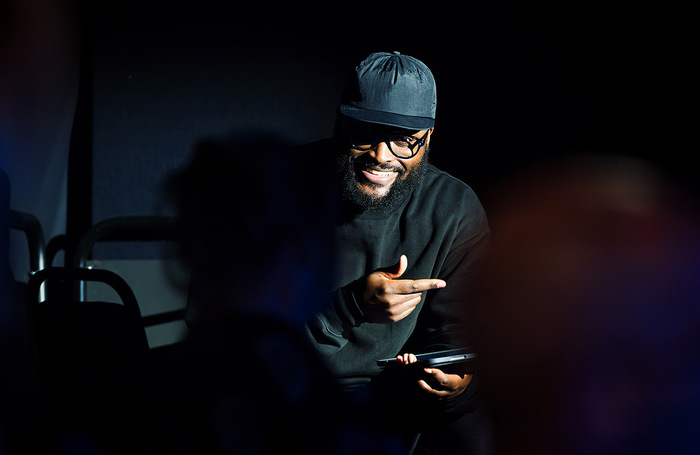
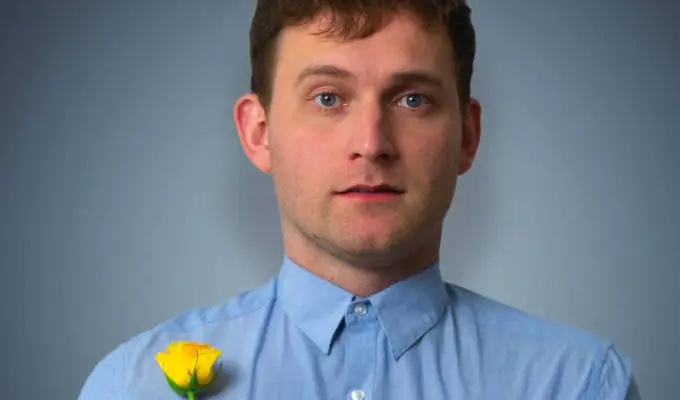
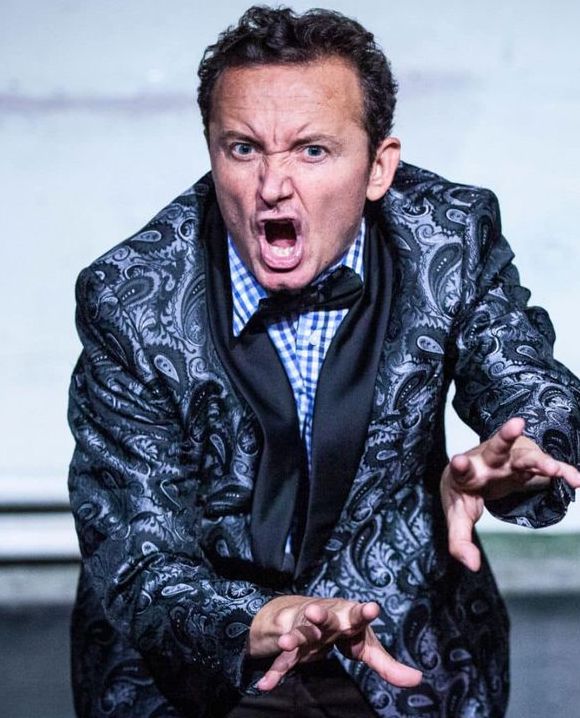
He is a genial host, introducing himself and his subject matter in a friendly, inclusive way. The room feels like a welcoming space, and I find myself warming to him, wanting to like his performance. We start off with a few audience volunteers engaging in a game of musical chairs (Philip comes third), the victor invited to share his experience of another time he felt like a winner.
And then we’re off, into a heady mix of music, live video projection, dance and spoken word. Lawal reads from Al’s manuscript, and from Chekhov; we touch on Icarus and Superman, Knight Rider and Dalston market, family weddings, race and feelings of failure. I enjoy all of it: it’s engaging and entertaining and each snippet makes sense while it’s in front of me. But I’m not sure what it all adds up to and can’t help feeling that, in the end, all the trappings serve to obfuscate rather than illuminate Al’s story.
Nonetheless, if you can’t experiment with something new at the Edinburgh Fringe, then I don’t know where you can, and I’m pretty sure that within Pilot there’s an idea that really does have wings.
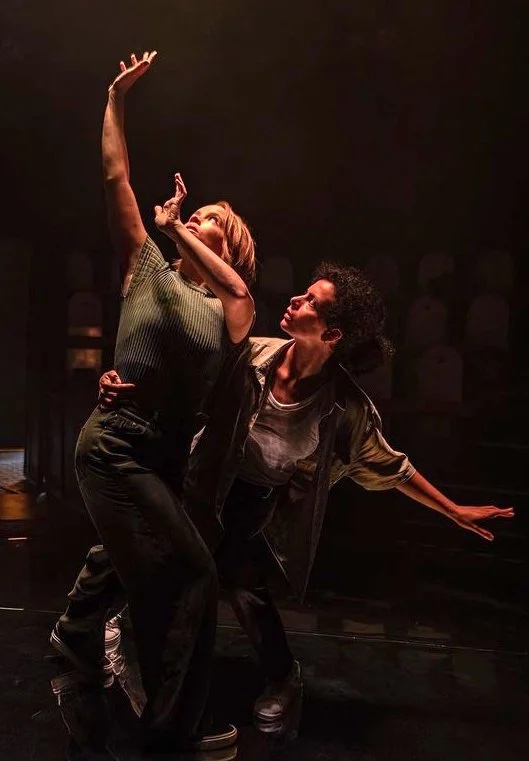
Lung is a verbatim theatre company, whose raisin d’être is to make hidden voices heard. “We use people’s real words to tell their stories; our shows always have a wider campaign and political aim.” In tonight’s show, those hidden voices belong to people failed by the UK prison system, specifically three young men who died in HMP Woodhill and the families who mourn them. It’s the first interpretative dance/verbatim mash-up I’ve ever seen, and it’s astonishingly powerful.
Recorded voices play over a soundscape by Sami El-Enany and Owen Crouch. Meanwhile, Chris Otim acts as the ghosts of the lost boys, and Tyler Brazao, Marina Climent and Miah Robinson play their relatives. Alexzandra Sarmiento’s choreography highlights the trauma inflicted on whole families by our punitive system, as they move like desperate Zombies through the years, reeling from blow after blow.
Director Matt Woodhead spent four years interviewing seventy people for this play – including inmates, prison officers, lawyers, and politicians, as well as the families featured here. The main focus is on three individuals – an urgent reminder that the awful statistics hide real people. Stephen Farrar, Kevin Scarlett and Chris Carpenter were all found dead in their cells at Woodhill. They all ostensibly took their own lives. But did they? “Woodhill killed them,” their families say. “The state killed them.”
The UK has the highest prison population in western Europe. Why? Do more than 83,000 of our people – more than 130 per 100k – really need to be locked up? Who benefits? Not the inmates, that’s for sure. And not wider society either – there is plenty of research proving prison doesn’t work. But private for-profit companies run prisons here, and they’re incentivised to lock people up, and incentivised to keep costs down once they’re inside. It shouldn’t come as a surprise that a recipe for disaster results in, well, disaster…
I get frustrated by our failure to look north: we have a model education system to look to in Finland, but we ignore it; likewise, Norway’s criminal justice system is a huge success: fewer people locked up (just 46 per 100k), low rates of recidivism, a compassionate prison culture based on rehabilitation. It’s kinder, cheaper and actually reduces crime. But still our politicians forge ahead with our failed revenge model, punishing people for being poor, for struggling with their mental health, for being Black.
Woodhill is relentless and startling, and there’s a moment, about fifteen minutes in, where I begin to feel restless, wanting a break from the dancing and recorded voices, perhaps some dialogue from the actors onstage. But I guess that’s the point: this is hard to bear, even as an audience member, even for an hour. And, of course, the fact that the actors never actually speak underscores how voiceless these people usually are. Woodhill offers them a rare chance to be heard.
Woodhead’s production, though unnervingly bleak, does offer a glimmer of hope. The piece is designed to educate, to change people’s minds. At the end, we are asked to sign a petition, to ensure that recommendations made at inquests – such as Stephen’s, Kevin’s and Chris’s – are implemented. It’s not enough, but it’s a start.
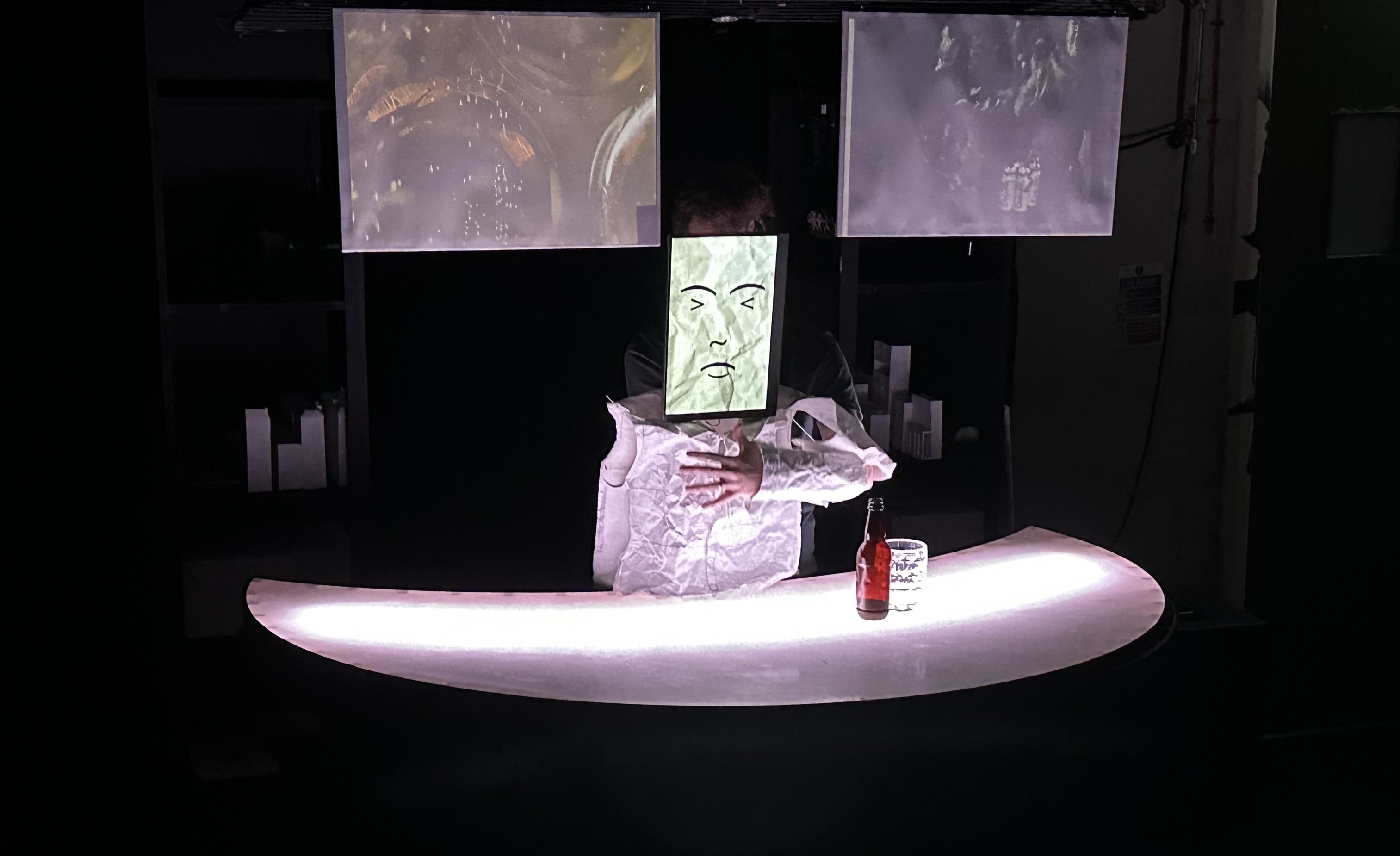
Concerned Others is a meditation on addiction – a vast, sometimes overwhelming subject for which there really are no ready answers. Tortoise In a Nutshell approaches the subject from a different perspective – using an intimate table-top performance, above which spoken verbatim dialogue is also displayed on a series of screens, while immersive music plays.
A miniature camera glides cinematically past rows of tiny houses and intricately detailed miniature figures as the words spill onto the screens. The effect, curiously, is to focus my attention on what’s actually being said and while it’s not saying much that I haven’t heard before, it does have the effect of making me concentrate. No easy matter when I’m sitting in the Demonstration Room, arguably the most uncomfortable venue of the Fringe.
Now the scene shifts to a character whose face is a video screen, a vapid smile interspersed with mixed-up advertising videos extolling the virtues of various beers, and I’m reminded of my youth, when television adverts like these ones made me long to look old enough to go into a pub and buy a drink.
Again, we’re back to the little camera, which now glides through a series of empty rooms, emphasising the loneliness and desolation of addiction, the fact that so many people are obliged to face it alone…
By the conclusion – which somehow manages to end on a rising note of optimism about the future – I leave thinking about the ubiquity of addiction, it’s prevalence and it’s many different forms. We’re all of us addicted to something, aren’t we?
You could argue that perhaps Concerned Others could delve a little deeper into its chosen subject but there’s no mistaking the superb and affecting style in which this story is told.
Written by Ed Edwards especially for Mark Thomas and directed by Cressida Brown, England & Son is a hard play about hard lives. Thomas is the ‘& Son’ of the title, and delivers a bravura performance; from the outset, he has the audience in the palm of his hand.
A semi-autobiographical piece, based on people Thomas knew in his childhood and Edwards’ experience in prison, this is a bleak exposé of an often overlooked underclass, exemplified by one boy’s complex relationship with his father. As well as this deeply personal account, it also opens up to examine an even more troubling relationship: between Britain and its former colonies. A lot of questions are raised: why is it okay for rich white people to plunder other countries, but not okay for poor white people to burgle houses? Is there any way to prevent armed forces personnel from being dehumanised by what they’ve seen and done? And what the fuck is an ‘artisan’ when it’s at home?
Although this is a dark piece, there are also some very funny lines and – as you’d expect – Thomas delivers these perfectly, the laughs landing every time. These shafts of light are much needed, so it’s a relief when caring social worker Martha offers our young offender the chance of a different life, even though it’s all too clear that he won’t be able to grasp it: his past has already shaped him; his future is assured. As soon as there’s a problem, he only knows one way to react, and he seems destined to follow in his fallen hero’s footsteps.
England & I is a deceptively complex piece, but it certainly hits home with today’s audience, who rise as one to give Thomas a standing ovation.
Eve Leigh’s Salty Irina, isn’t your average tale of first love, nor even of coming out – although it is both of those things. Instead, a much darker, more frightening theme emerges as Eirini (Yasemin Özdemir) and Anna (Hannah Van Der Westhuysen) embark on a reckless mission…
They’re teenagers, so of course they think they’re invincible; of course they’re likely to take risks. Sitting in the audience, several decades ahead of them, I can only watch in horror as they convince themselves that infiltrating a far-right festival is a good idea. From a grown-up, liberal vantage point, it’s clearly a bad idea for anyone. For an immigrant? For lesbians? For two wide-eyed young girls with more idealism than guile? It can only end badly.
But Eirini and Anna want to do something. There’s been a spate of murders in their (unspecified) city and the police don’t seem to see the link. The victims are all immigrants, but – because they’re from different ethnic groups – each is being treated as an isolated case. So when the girls learn that a fascist group is holding an event nearby, it seems logical to them to don disguises and investigate. An older hippy in their squat says what the whole audience is thinking: “Don’t go!” But when have teenagers ever listened to boring know-it-all adults telling them what to do?
It’s not until the final third of the play that Jana (Francesca Knight) appears. We’ve seen her before, acting as a stagehand, passing props, clearing the set; it’s a neat conceit. The threat she poses has always been there, in the shadows, but it’s only when the girls are isolated and vulnerable that she reveals herself.
If Eirini and Anna were older, the plot would be fantastical. Honestly, at first I think the whole thing is a bit far-fetched, but then I google ‘far-right festivals’ and discover that they really are a thing, even here in Scotland. (God knows what marketing I’ll be faced with now, as the internetty algorithms get to work.) But their age makes me ache for them: I absolutely believe that they would step boldly, naïvely into the fray, convinced that they are doing the right thing.
Debbie Hannan’s direction is fresh and contemporary, all minimal props and non-literal interpretation. It feels as youthful as the play’s protagonists, the transitions snappy and impetuous.
Van Der Westhuysen and Özdemir (last seen by us in Autopilot and You Bury Me respectively) are perfectly cast, embodying the journey from youthful innocence to devastating experience.
Former Israeli soldier, Itai Erdal, has an acutely focused view on the complex issues that surround the Arab-Israeli conflict and the occupation of Palestine, so much so that he, a former soldier himself, eventually decided to pack up his belongings and emigrate to Vancouver. It is his belief that the situation in Israel is fast approaching boiling point.
In the Old Lab at Summer Hall, battalions of tiny plastic soldiers stand guard as we enter the performance space. (A hapless audience member manages to stand on some of them and is clearly mortified, but this will prove to be ironic later.) Erdal enters and tells us a story about his regular visits to his barber, an Iraqi, who shaves him using an old fashioned straight razor – and how he can never quite stop himself from picturing this smiling, friendly man taking that razor and cutting his throat…
The following monologue takes in some of Erdal’s personal experiences in the Israeli army: interactions with his fellow troops; encounters with people who may or may not be dangerous. As he talks, Syrian musician Ermad Armoush plays live, complex pieces on traditional instruments, clearly with the intention of underpinning the monologue, though occasionally managing to obscure what Erdal is saying.
I’d be the first to admit that I’m woefully ignorant about the situation in the Middle East; as Erdal points out, many Westerners are uncomfortable discussing it, concerned about unintentionally sounding anti-Semitic. By the end of the show, I know a great deal more about the subject – a sequence utilising a whole collection of flags is particularly useful, effectively illustrating how Israel has been ruled by so many different nations over the millennia – but I feel that the delicate balance between lecture and entertainment is often too heavily weighted towards the former. At one point Erdal strides around with a very realistic automatic weapon which makes me feel really uncomfortable. That’s the point, I guess, and it works. Erdal is worried that his homeland is guilty of the very racism it was established to mitigate, and he’s distraught that his that his nephew, Ido, has recently followed in his footsteps and enlisted in the army.
It serves us all well to understand as much as we can about the Arab-Israeli situation, and there is much to learn from Soldiers of Tomorrow.
Charly (Alexa Davies) is fine… Okay, so she hasn’t got any friends, she never gets out of bed before noon, her girlfriend has left her and, although her chosen career pays well, her mum can’t help thinking that drug-dealing is a waste of her Oxbridge degree. Still, honestly, she’s fine.
But a power cut means she’s forced to sit in silence without the Beastie Boys to distract her, and she can’t charge her phones so her customers are unable to contact her. Now we see just how fragile Charly’s mental health really is. She embodies the word ‘brittle’ – sure, she presents a tough front with all that swagger, but oh, she shatters so easily. The minor change to her routine brings everything crashing down…
Written by Martha Watson Allpress, this rhyming monologue is a frenetic exploration of a character in crisis. It’s a novel idea: we’re used to seeing dealers depicted as baddies; we’re rarely invited to empathise with them. Here, Watson Allpress shows us how Charly found her path, how damaged and desperate she is. A little kindness is all it would take to change her life…
Roundabout’s small circular stage is dominated by three large speakers, creating a wall of sound and emphasising the narrow parameters of Charly’s world. Emily Aboud’s direction is as kinetic as the chaos in Charly’s mind: Davies circles the stage, pacing, her frantic thoughts made manifest.
After the slim pickings of the last two years, 2022 feels like a palpable return to form: finally, emphatically, theatre is back! We’ve relished the wide range of productions we’ve seen over the year. As ever, it was difficult to choose our particular favourites, but those listed below have really resonated with us.
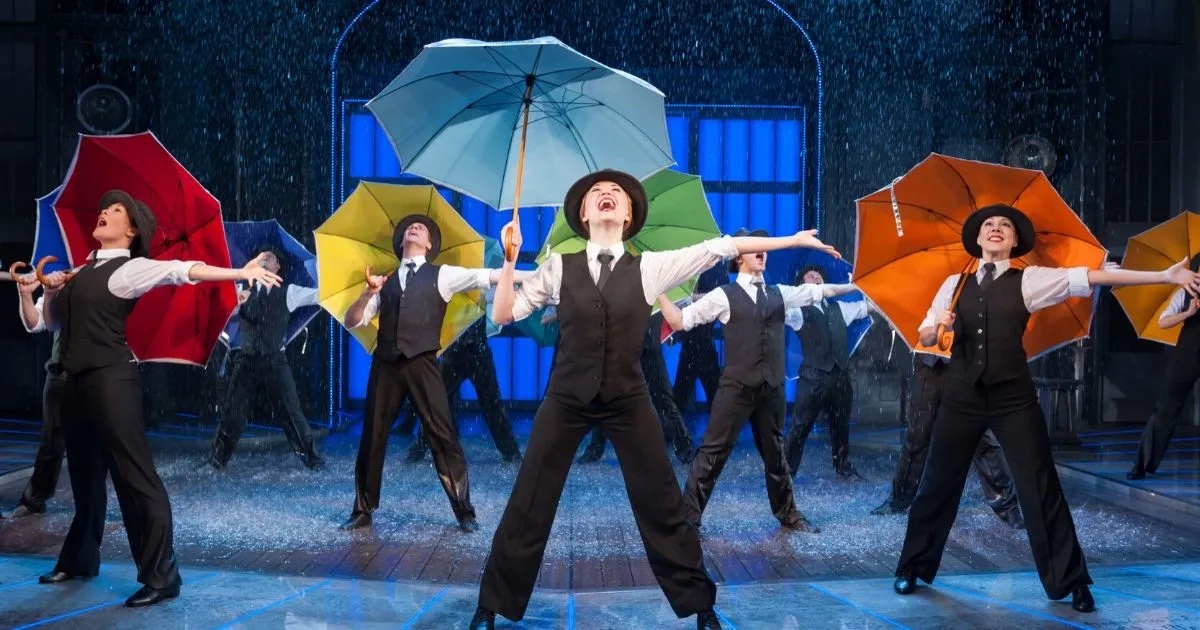
Singin’ in the Rain (Festival Theatre, Edinburgh)
Singin’ in the Rain is a delight from start to finish. It never falters, never loses pace and manages to honour the great film that inspired it. One of the most supremely entertaining shows I’ve seen in a very long time. Slick, assured, technically brilliant – it never puts a hoof wrong.
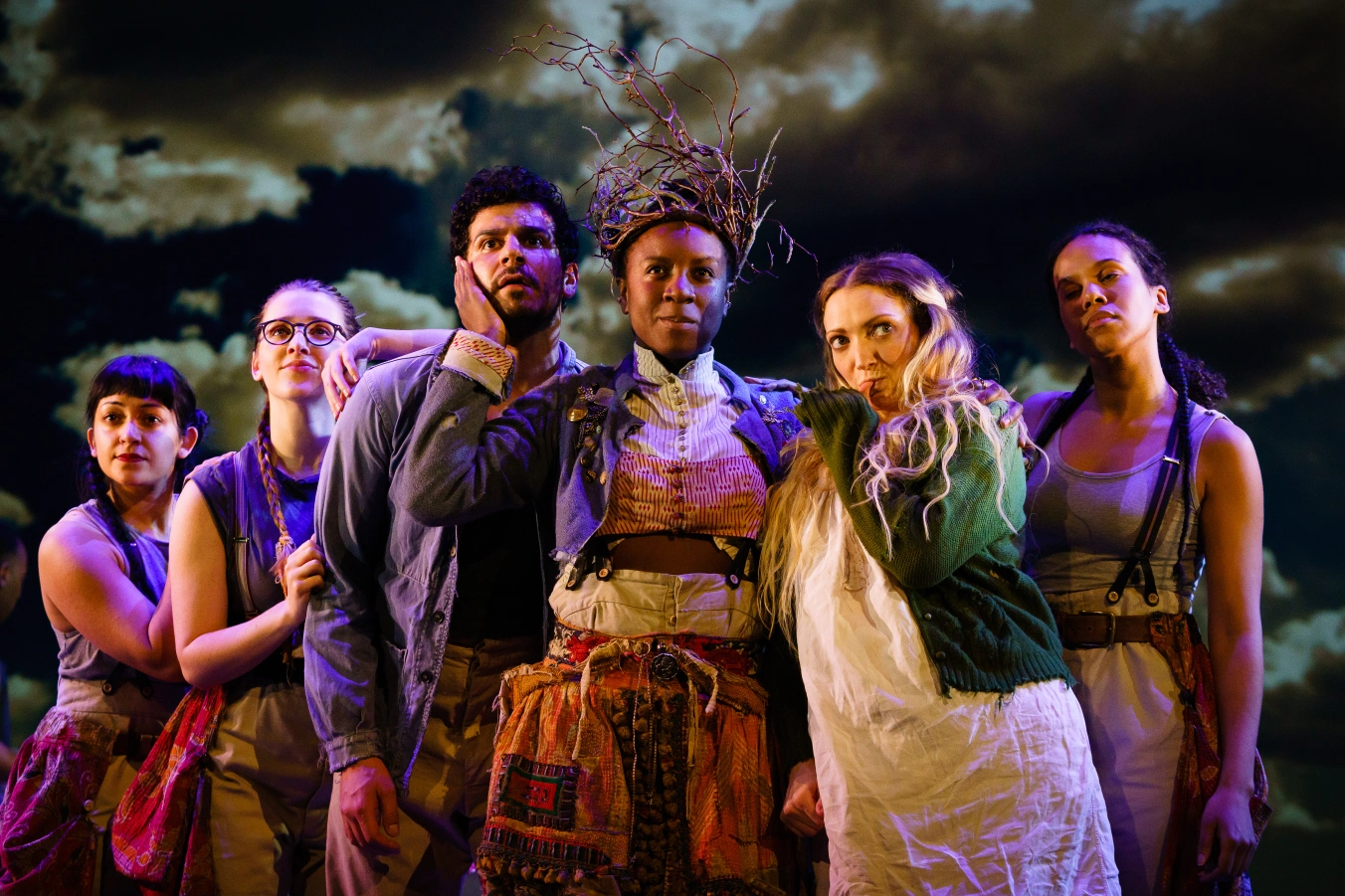
Wuthering Heights (King’s Theatre, Edinburgh)
In this Wise Children production, Emma Rice strips Wuthering Heights down to its beating heart, illuminates its essence. This is a chaotic, frenzied telling, a stage so bursting with life and energy that it’s sometimes hard to know where to look. It’s dazzling; it’s dizzying – and I adore it.
Red Ellen (Lyceum Theatre, Edinburgh)
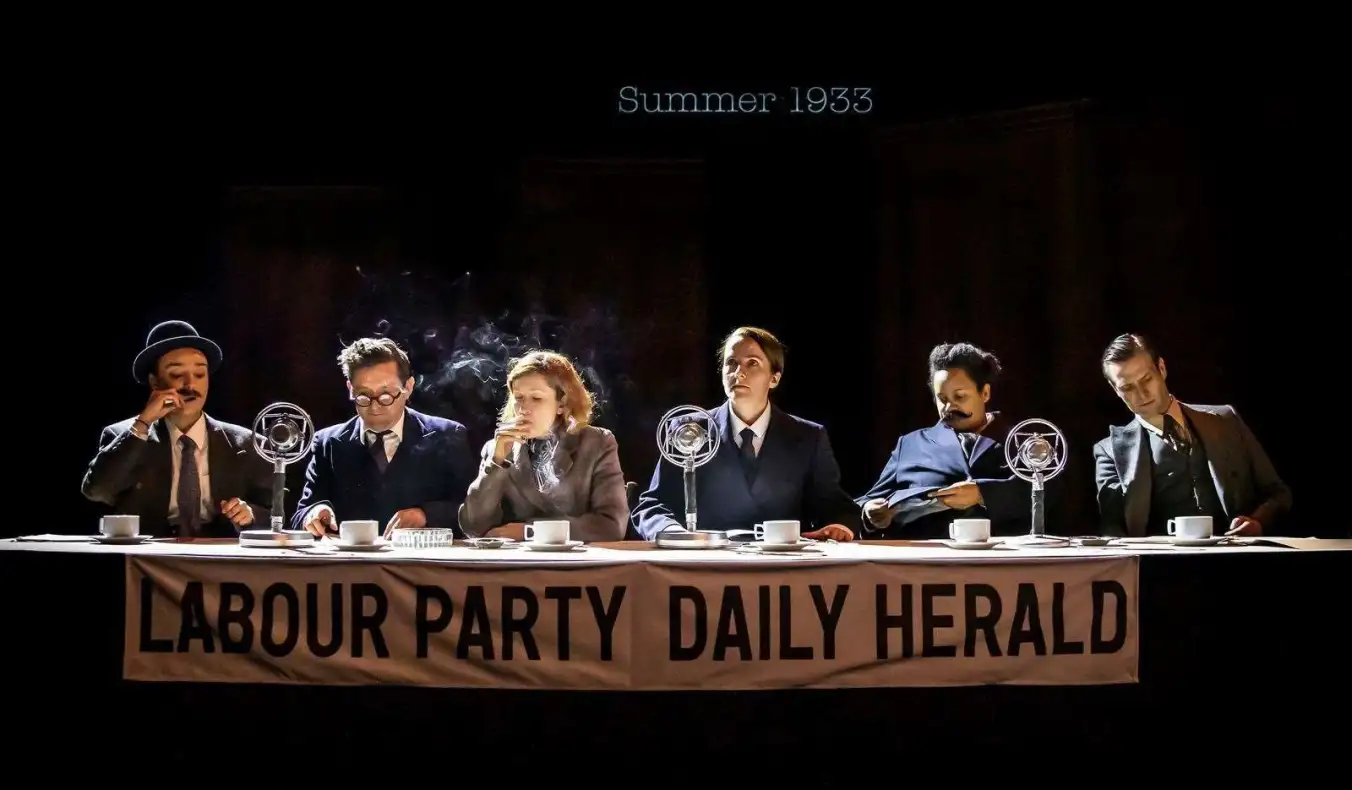
Red Ellen is a fascinating tale, ripped from the pages of political history. Wils Wilson’s propulsive direction has Ellen hurtling from one scene to the next, which keeps the pot bubbling furiously.
Prima Facie (NT Live, The Cameo, Edinburgh)
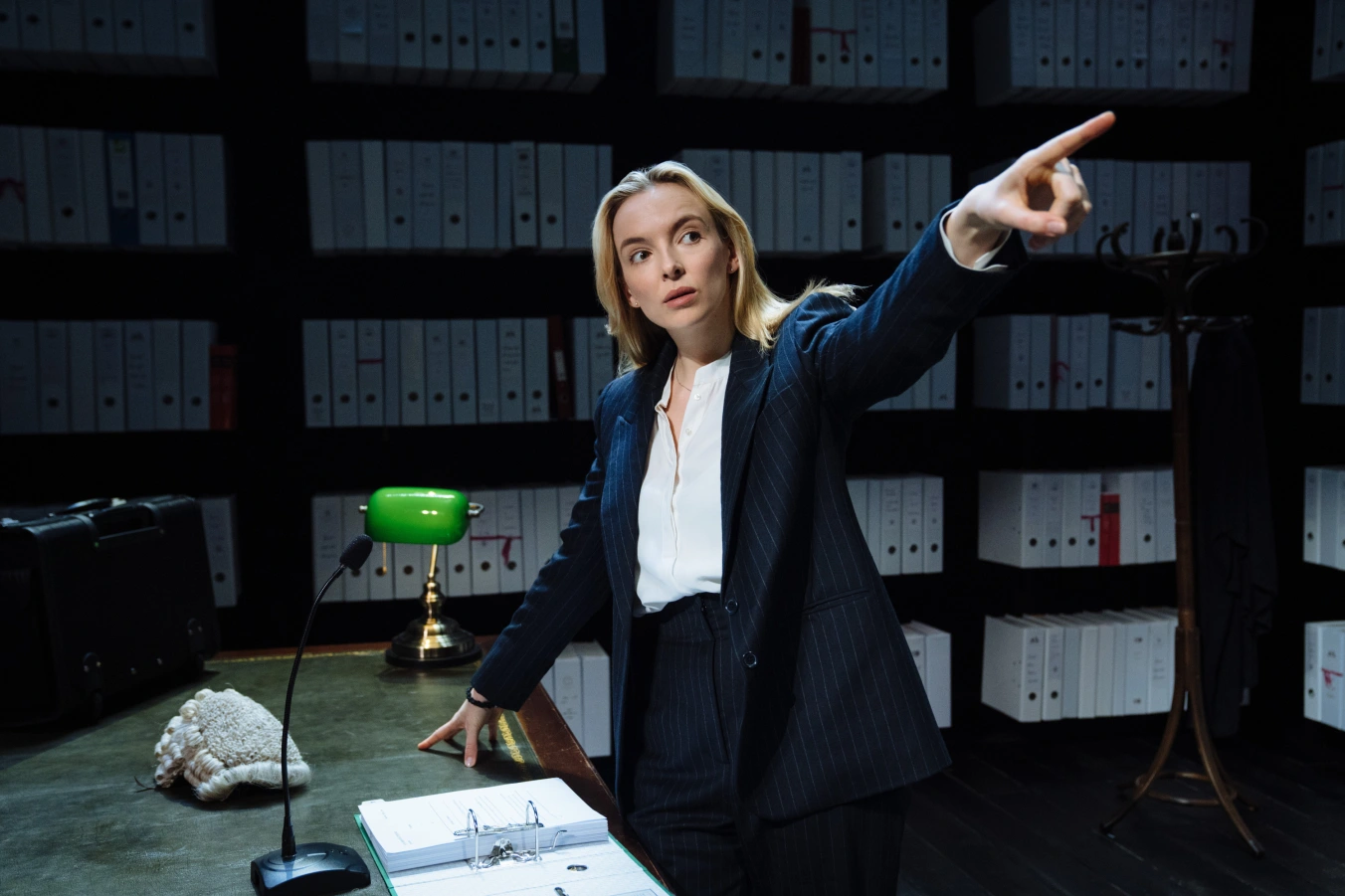
This is a call to action that walks the walk, directly supporting The Schools Consent Project, “educating and empowering young people to understand and engage with the issues surrounding consent and sexual assault”. It’s also a powerful, tear-inducing play – and Jodie Cromer is a formidable talent.
Feeling Afraid as if Something Terrible is Going to Happen (Roundabout @ Summerhall, Edinburgh)
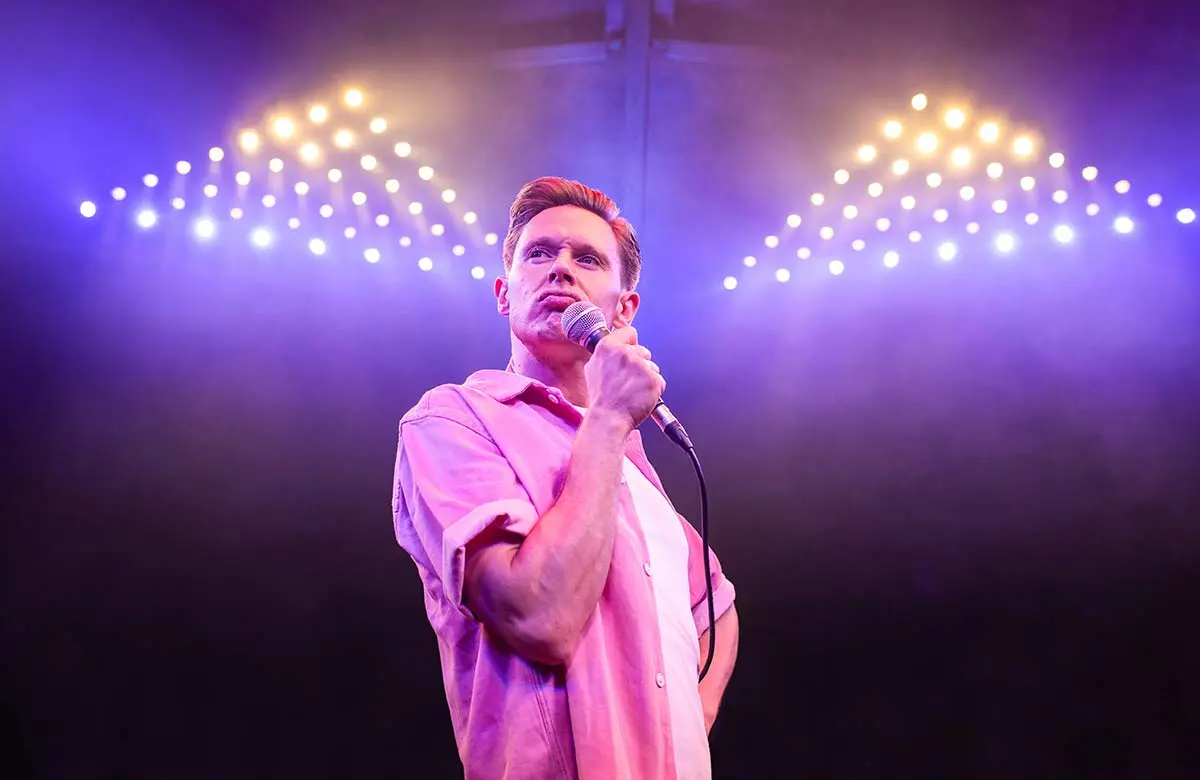
Samuel Barnett inhabits his role completely, spitting out a constant stream of pithy one liners and wry observations with apparent ease. Marcelo Dos Santos’ script is utterly compelling and Matthew Xia’s exemplary direction ensures that the pace is never allowed to flag.
Hungry (Roundabout @ Summerhall, Edinburgh)
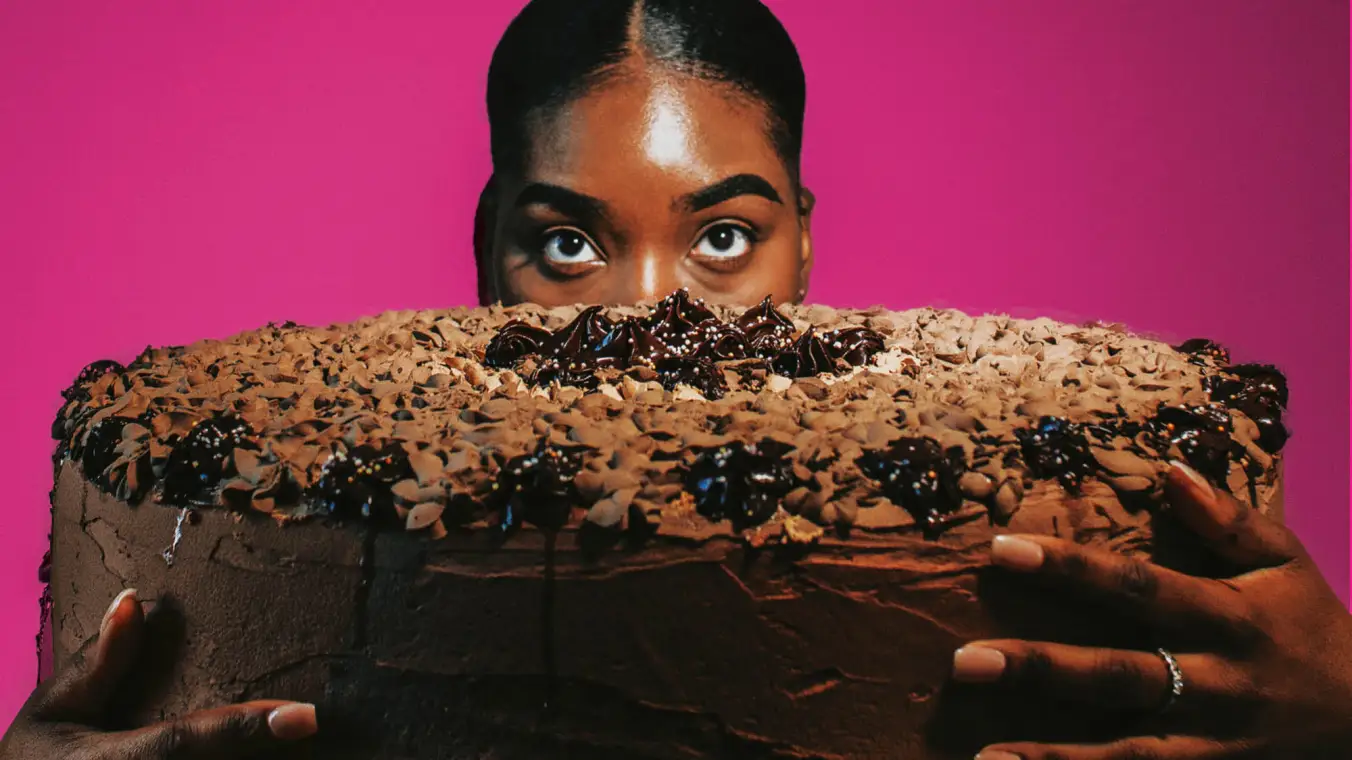
This sharply written two-hander examines the relationship between Lori (Eleanor Sutton), a chef from a relatively privileged background, and Bex (Melissa Lowe), a waitress from the local estate. This is a cleverly observed exploration of both class and race, brilliantly written and superbly acted. Hungry is a class act, so assured that, even amidst the host of treasures we saw at this year’s Roundabout, it dazzles like a precious gem.
A Very Old Man With Enormous Wings (Summerhall (Main Hall), Edinburgh)
It’s hard to encapsulate what makes this such a powerful and moving experience, but that’s exactly what it is – a spellbinding slice of storytelling, so brilliantly conceived and engineered that it makes the incredible seem real. You’ll believe a man can fly.
The Tragedy of Macbeth (Assembly Roxy, Edinburgh)
Let’s face it, we’ve all seen Macbeth in its various shapes and guises – but I think it’s fairly safe to say we’ve never seen it quite like this. This raucous, visceral reimagining of the story captures the essence of the piece more eloquently than pretty much any other production I’ve seen.
The Beauty Queen of Leenane (Traverse Theatre, Edinburgh)
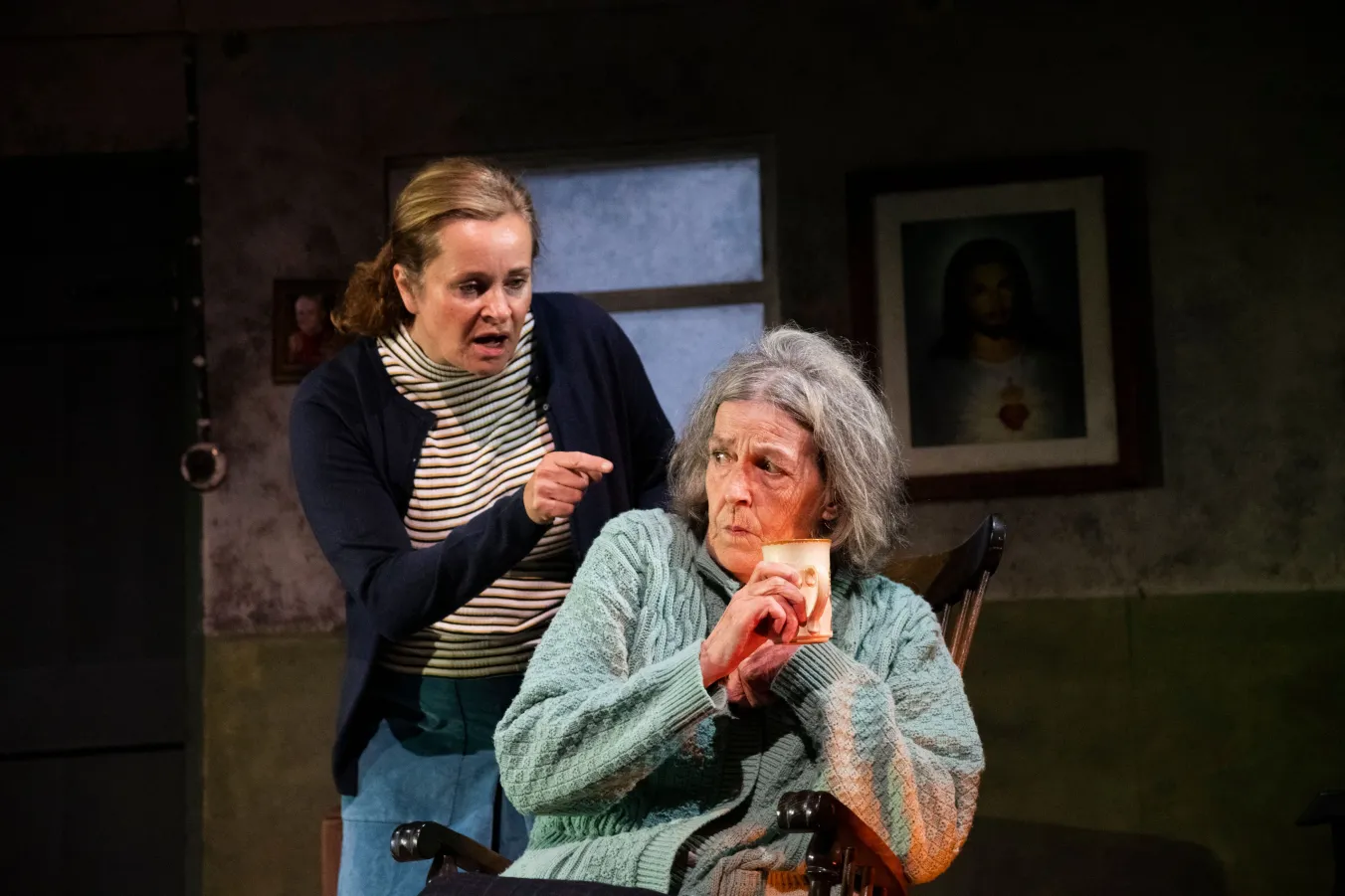
This was Martin McDonagh’s debut piece and, while it might not have the assuredness of his later works, it nonetheless displays all the hallmarks of an exciting new talent flexing his muscles. The influence of Harold Pinter is surely there in the awkward pauses, the repetitions, the elevation of innocuous comments to a weird form of poetry – and the performances are exemplary.
Don’t. Make. Tea. (Traverse Theatre, Edinburgh)
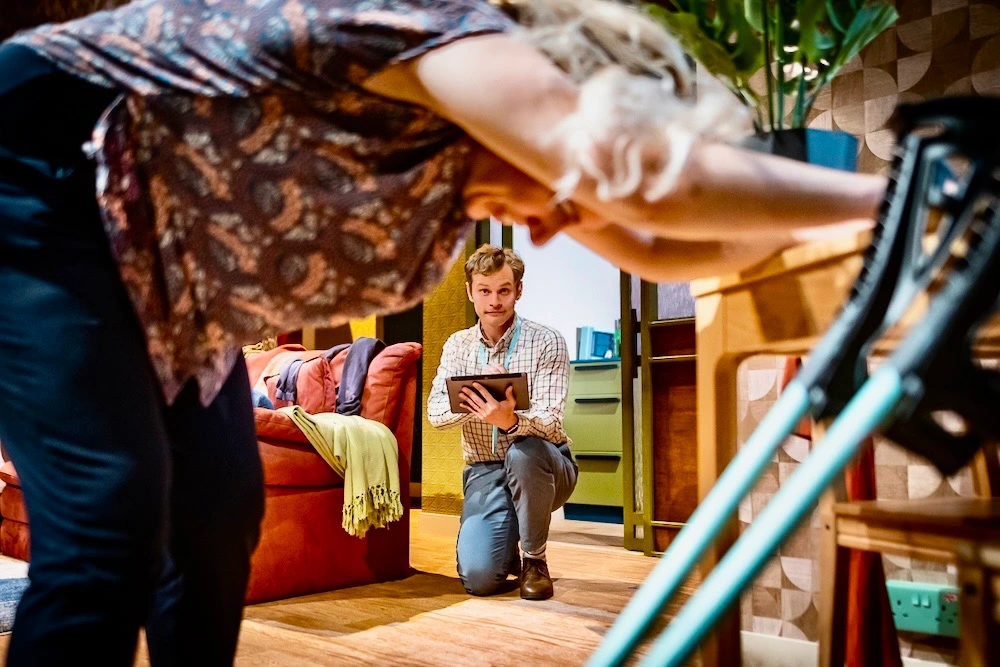
Don’t. Make. Tea. is a dystopian vision of an all-too credible near future, a play laced with dark humour and some genuine surprises. Cleverly crafted to be accessible to the widest possible audience, it’s an exciting slice of contemporary theatre.
The frenzy of the Fringe is over. It’s been beyond wonderful to see our city so vibrant again, after two quiet years. We’ve seen a startling range of exciting shows, covering many genres. We’re exhausted – but it’s not quite over yet. It’s time to award our virtual bouquets to the best performances we saw. The standard seemed higher than ever this time: has the break given writers and performers more time to sharpen their acts, or were we just lucky with the productions we chose? Either way, there were lots of contenders in each category, but we’ve narrowed them down to our favourite five.
So, without further ado, we present our choice of the best shows we saw at Edfest 2022.
THEATRE
An Audience with Stuart Bagcliffe (ZOO Playground)
An Audience with Stuart Bagcliffe is the sort of play which exemplifies the Fringe at its best. Written by Benny Ainsworth and directed by Sally Paffett (Triptytch Theatre), this ingeniously constructed monologue features Michael Parker as the titular Stuart, delivering Ainsworth’s script with consummate skill.
A Very Old Man With Enormous Wings (Summerhall)
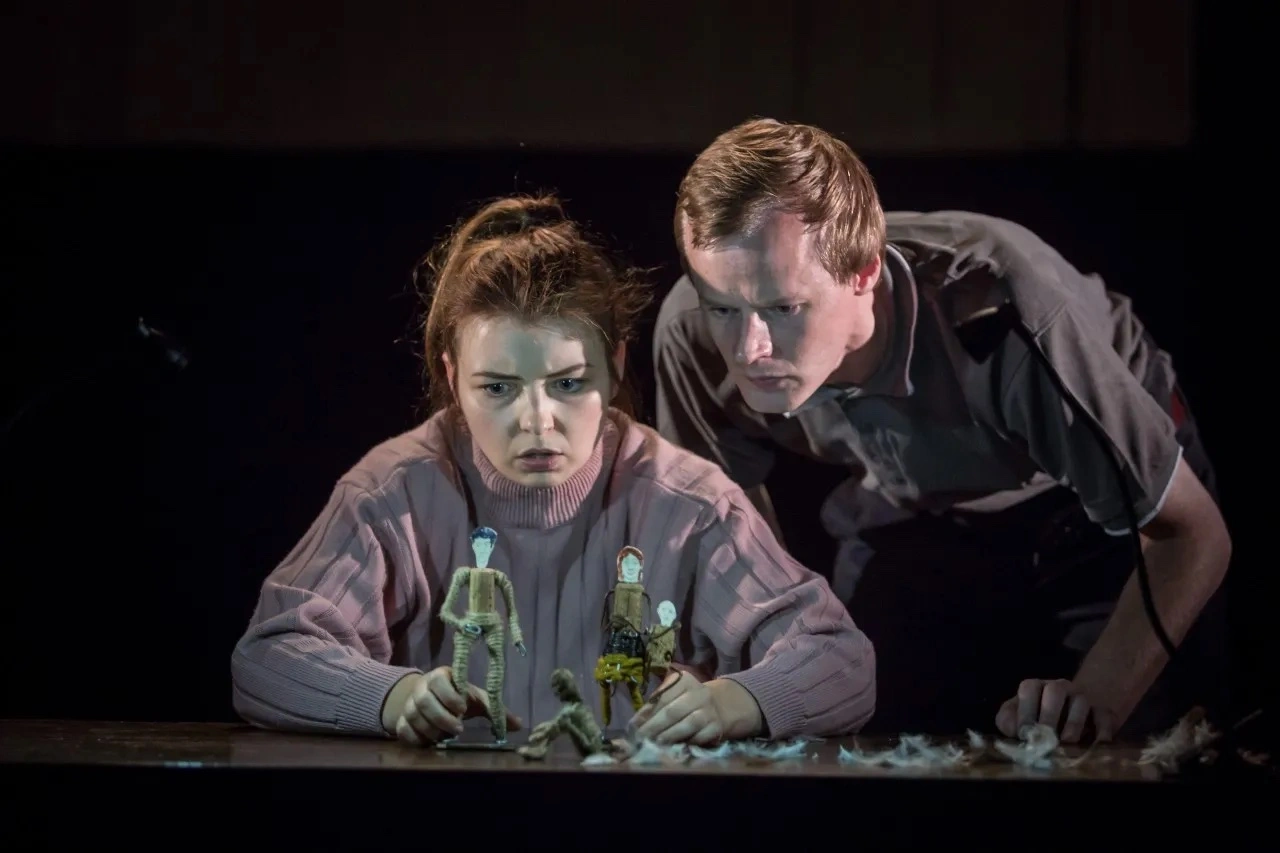
Based on a short story by Gabriel García Márquez and adapted for the stage by Dan Colley, Manus Halligan and Genevieve Hulme Beaman, this is the tale of Elisenda and Palayo, two impoverished people who live in a rickety shack on the edge of a small town. Their tale is related by Elisenda (Karen McCartney) in a deliciously sinister style. She’s aided by Palayo (Manus Halligan), who barely utters a word, but moves humbly around the stage, using a curious mixture of handicrafts and high-tech devices to illustrate the story – a series of simplistic figurines, illuminated by tiny cameras and lights, take us into their miniature world.
Sap (Roundabout @ Summerhall)
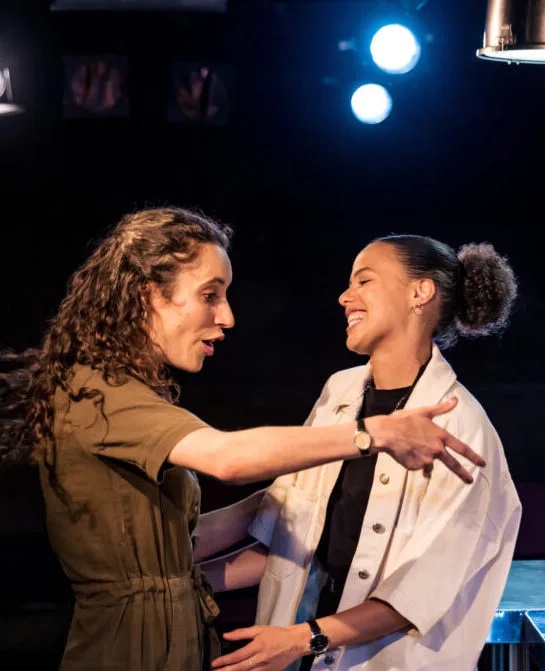
Rafaella Marcus has scripted a deliciously labyrinthine tale about sexual identity (specifically bi-invisibility), one that cleverly assimilates a Greek myth into its core. The maze-like structure is beautifully captured by Jessica Clark and Rebecca Banatvala’s hyper-physical performances, directed by Jessica Lazar and Jennifer Fletcher.
Hungry (Roundabout @ Summerhall)
Chris Bush’s sharply written two-hander examines the relationship between Lori (Eleanor Sutton), a chef from a relatively privileged background, and Bex (Melissa Lowe), a waitress from the local estate. Hungry is a class act, so assured that, even amidst the host of treasures on offer at this year’s Roundabout, it dazzles like a precious gem.
The Tragedy of Macbeth (Assembly Roxy)
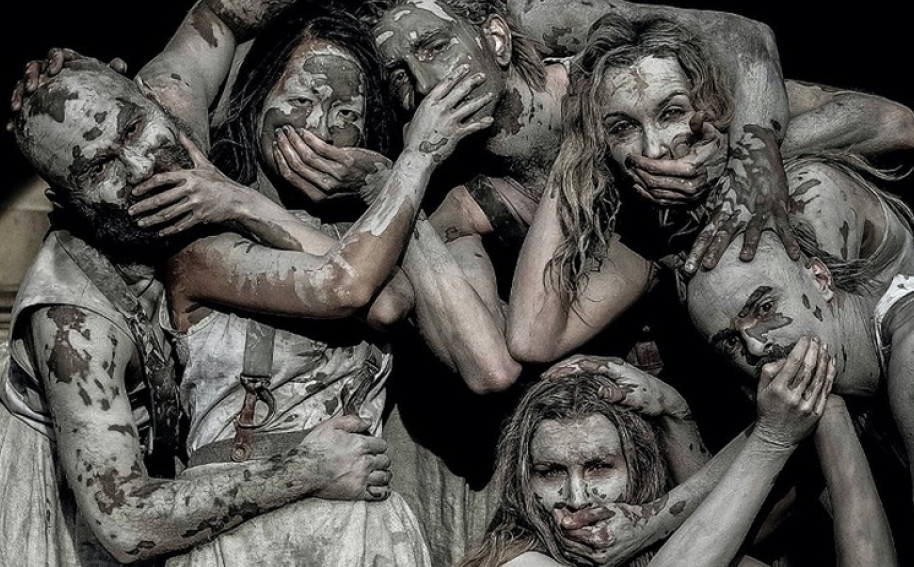
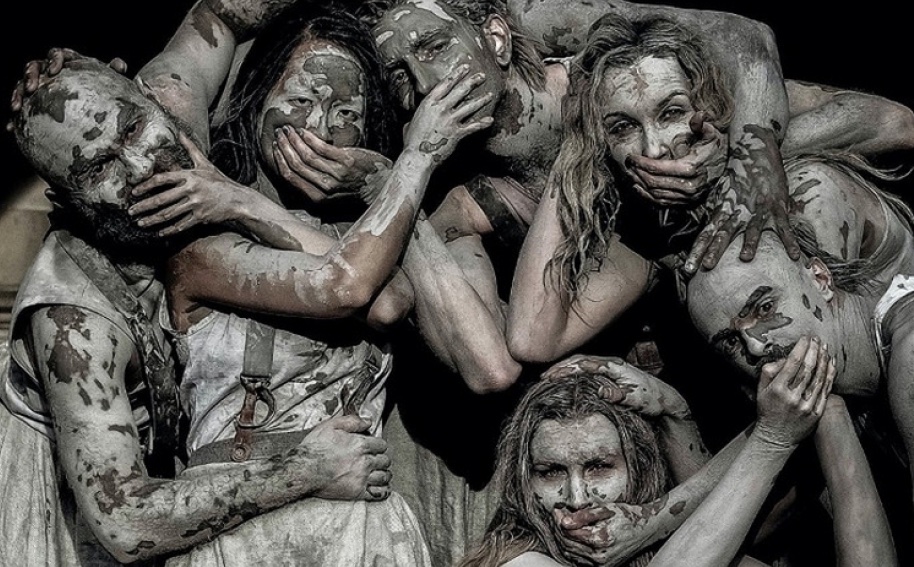
Let’s face it, we’ve all seen Macbeth in its various shapes and guises – but I think it’s fairly safe to say we’ve never seen it quite like this. Flabbergast Theatre’s eight-strong cast reel around the stage, plastered in mud and raving and flailing around like demented beings. This is a play about the madness brought on by the seductive power of hubris, so it feels entirely appropriate. It explodes, it capers, it struts its fretful stuff upon the stage and signifies plenty…
COMEDY
Feeling Afraid as if Something Terrible is Going to Happen (Roundabout @ Summerhall)
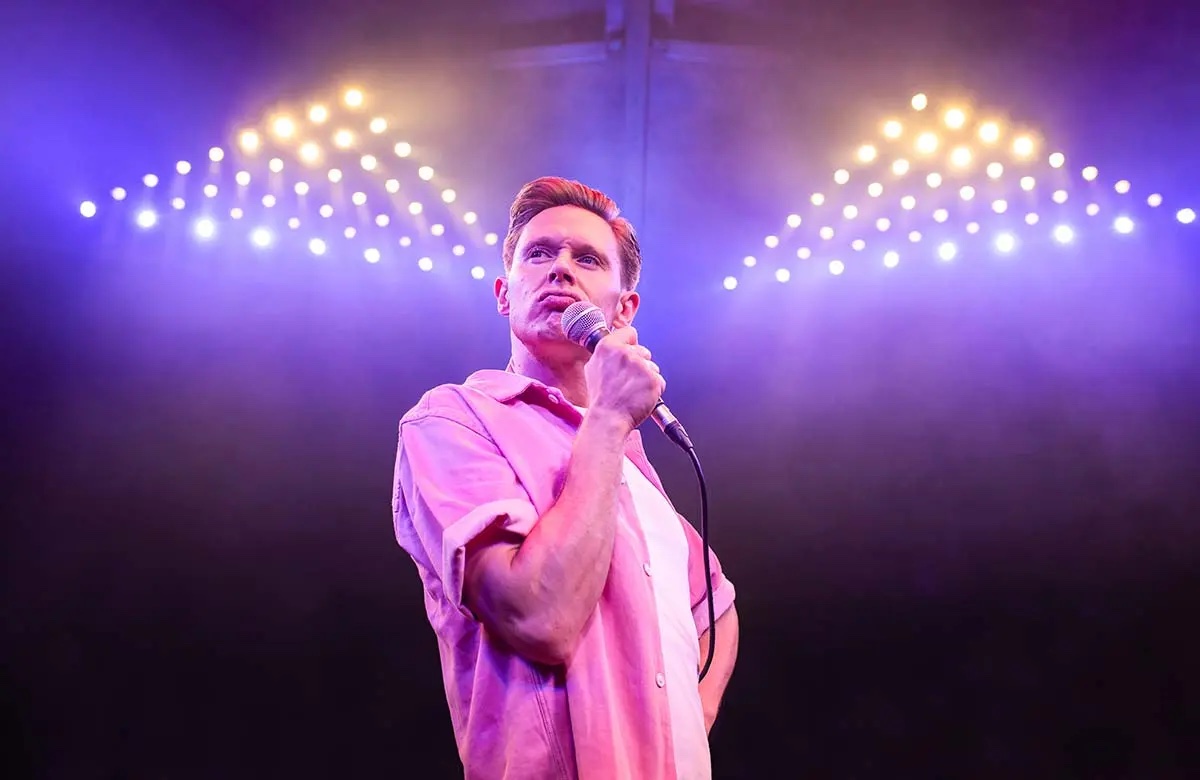
Both Samuel Barnett and Marcelo Dos Santos deserve huge praise for what is undoubtedly one of the best collaborations between writer and performer that I’ve ever witnessed. The narrator is working me like a master magician, mesmerising me, misdirecting me, even scattering a trail of clues which I somehow manage to overlook. The result? When the piece reaches its conclusion, I feel as though I’ve been punched in the solar plexus.
Kylie Brakeman: Linda Hollywood’s Guide to Hollywood (Gilded Balloon Patterhoose)
Making her Edinburgh Fringe debut, Kylie Brakeman delivers her cleverly scripted lines with consummate skill, and the whip-smart, snarky one-liners flow like honey laced with vinegar. It’s more than just a series of laughs. It also nails the cynicism and hypocrisy of the movie industry with deadly precision. I leave convinced that Brakeman (already a major name online, with over sixty million views) is destined to play much bigger venues than this one.
Emily Wilson: Fixed (Pleasance Courtyard)
Emily Wilson’s Fixed is part musical, part stand-up and part catharsis. She appeared on The X Factor USA back in 2011, as one half of the earnestly named duo, Ausem. “Because my best friend’s called Austin, and my name’s Emily, so together we’re Ausem!” She was 15 and thought she was destined to become a star. But then she hit a snag. The judges decided they liked Austin, but not Emily… What emerges is a thoughtful commentary on fame, ambition and exploitation, and it’s riveting.
Christopher Bliss: Captain Wordseye (Pleasance Courtyard)
Christopher Bliss (Rob Carter) is a new name to me and I can only regret that it’s taken me this long to encounter him. He’s that rarest of things, a brilliant character comedian… and a literary genius to boot. I can’t wait for his words of advice on poetry, which I have long considered my Achilles heel…
The Anniversary (Pleasance Dome)
Jim (Daniel Tobias) and Barb (Clare Bartholomew) are eagerly preparing for their 50th wedding anniversary but they’re not always in control of things and some of the items in the finger buffet might better be avoided. This handsomely mounted helping of slapstick from Australian company, Salvador Dinosaur, features no real dialogue, just gibberish and the occasional mention of each other’s names – but the soundtrack is far from silent. It’s essentially a piece about the indignities of ageing, replete with references to forgetfulness, dodgy bowels and the ill-advised over-application of both prescription drugs and prunes. It ought to be tragic but it’s somehow horribly funny.
SPECIAL MENTIONS
Fills Monkey: We Will Drum You (Pleasance Courtyard)
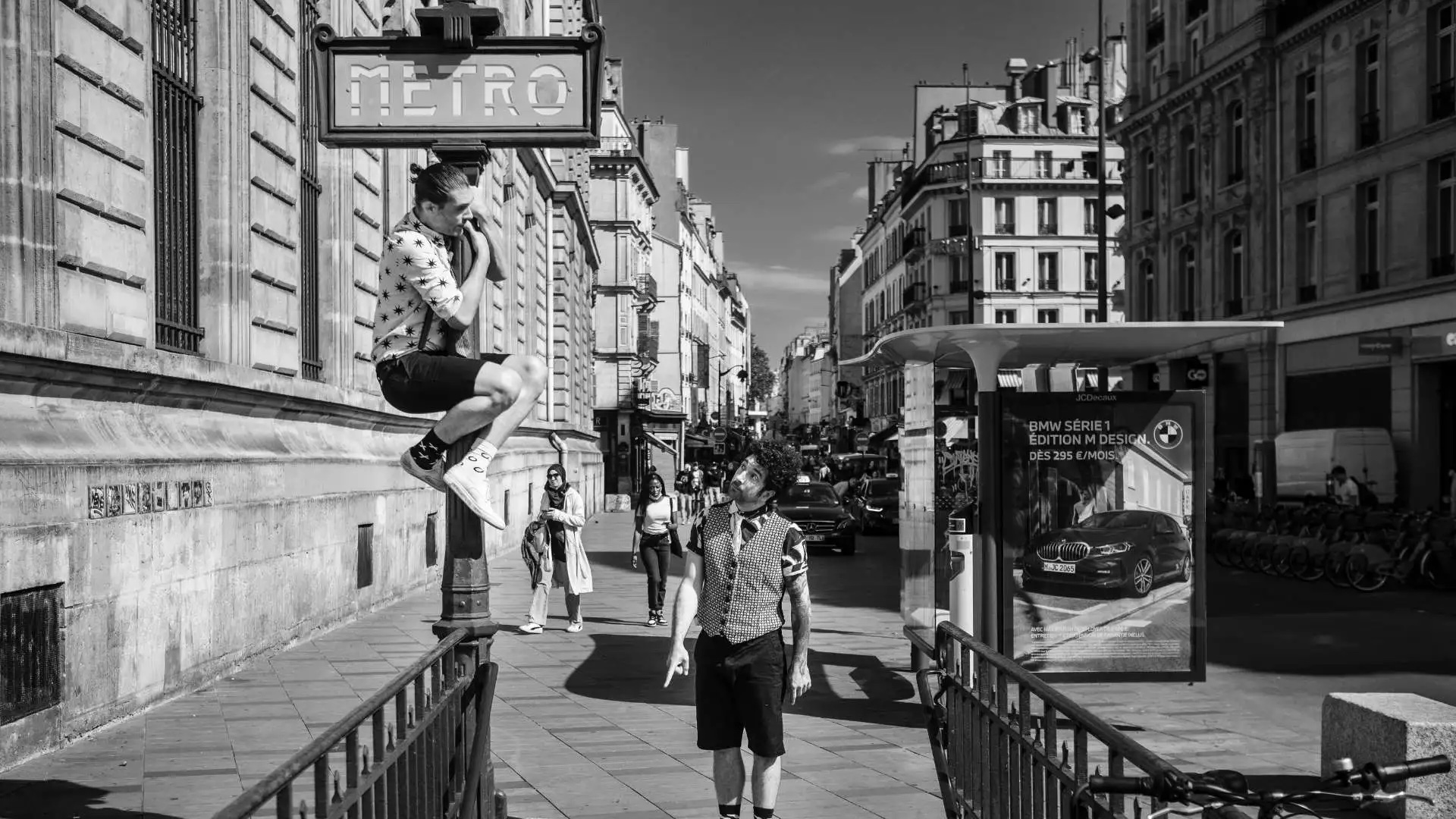
Sebastian Rambaud and Yann Coste are two brilliant percussionists, the kind of people you imagine could go through an entire day without ever breaking beat. They begin with conventional sets of drums, hammering out thrilling polyrhythms as the audience claps along. But they have an air of competitiveness about them and the stakes keep rising. It really helps that the two percussionists are also accomplished clowns. Working under the direction of Daniél Briere, they’ve devised a show that switches back and forth through a whole series of scenarios, never lingering too long in one place to ever feel repetitive.
Manic Street Creature (Roundabout @ Summerhall)
Manic Street Creature, written and performed by Maimuna Memon, is an assured slice of gig theatre that focuses on the subject of mental health from a slightly different perspective – that of the carer. Memon tells the story through a sequence of songs being recorded in a studio session. She’s a confident, assured performer, with a thrilling vocal range, accompanying herself on acoustic and electric guitars, keyboards and shruti box. When everything’s in full flow, the story takes flight and I feel myself propelled along by its urgent, rhythmic pulse.
The Ofsted Massacre (The Space @ Surgeon’s Hall)
Phil Porter’s script feels like it’s been torn from the inside of a stressed-out teacher’s head: a revenge fantasy, born of despair. It’s also a very funny play, drawing on Shakespeare, while lampooning staffroom stereotypes and exposing every cliché. This production, by Kingston Grammar School’s sixth form drama students, is a triumph. The young cast embrace their roles, eliciting gales of laughter from the audience with their well-timed punchlines and impressive slapstick.
Making a Murderer: The Musical (Underbelly Bristo Square)
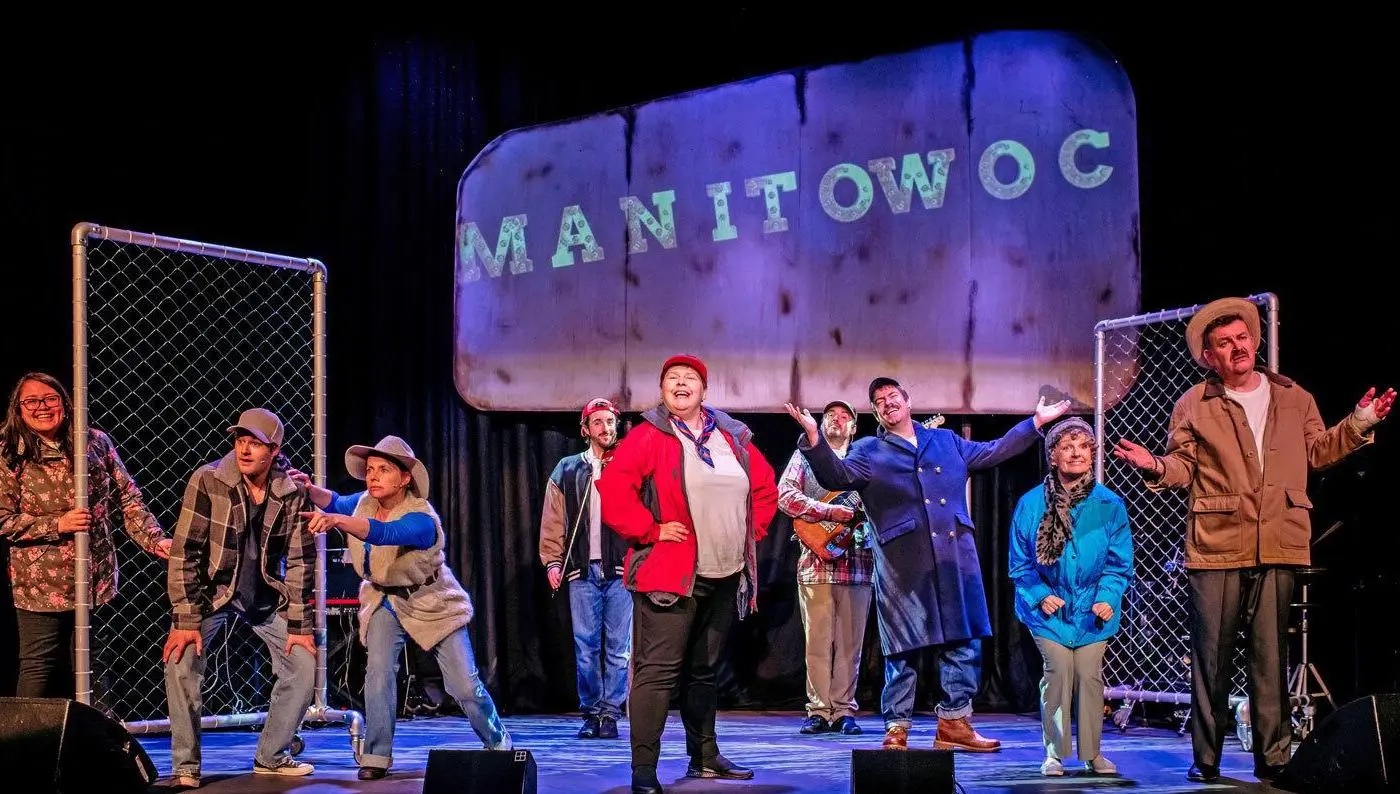
Like millions of others across the UK, I was transfixed by the Netflix documentary, Making A Murderer – so when I spot a poster on the Royal Mile with the words ‘The Musical‘ tacked onto the end, I’m intrigued – and simultaneously doubtful. Isn’t that going to be… disrespectful? But, in the capable hands of writer Phil Mealey, MAMTM offers a compelling version of the familiar events, a fresh perspective on the story that never feels like a cheap shot. The songs are terrific throughout, ranging from spirited rockers to plaintive ballads. What’s more, the production supports (and is supported by) The Innocence Project.
The Tiger Lillies: One Penny Opera (Underbelly Bristo Square)
Describing an act as ‘unique’ is often considered a cop-out, and yet I can’t think of a more appropriate word to describe The Tiger Lillies, three remarkable musicians currently strutting their inimitable stuff at The Cow Barn on Bristo Square. Originally formed way back in 1989, they’ve been through a number of personnel changes over the years, though the macabre compositions of singer-songwriter Martyn Jacques have remained a constant. They describe themselves as “Brechtian Punk Cabaret”, and who am I to argue with them?
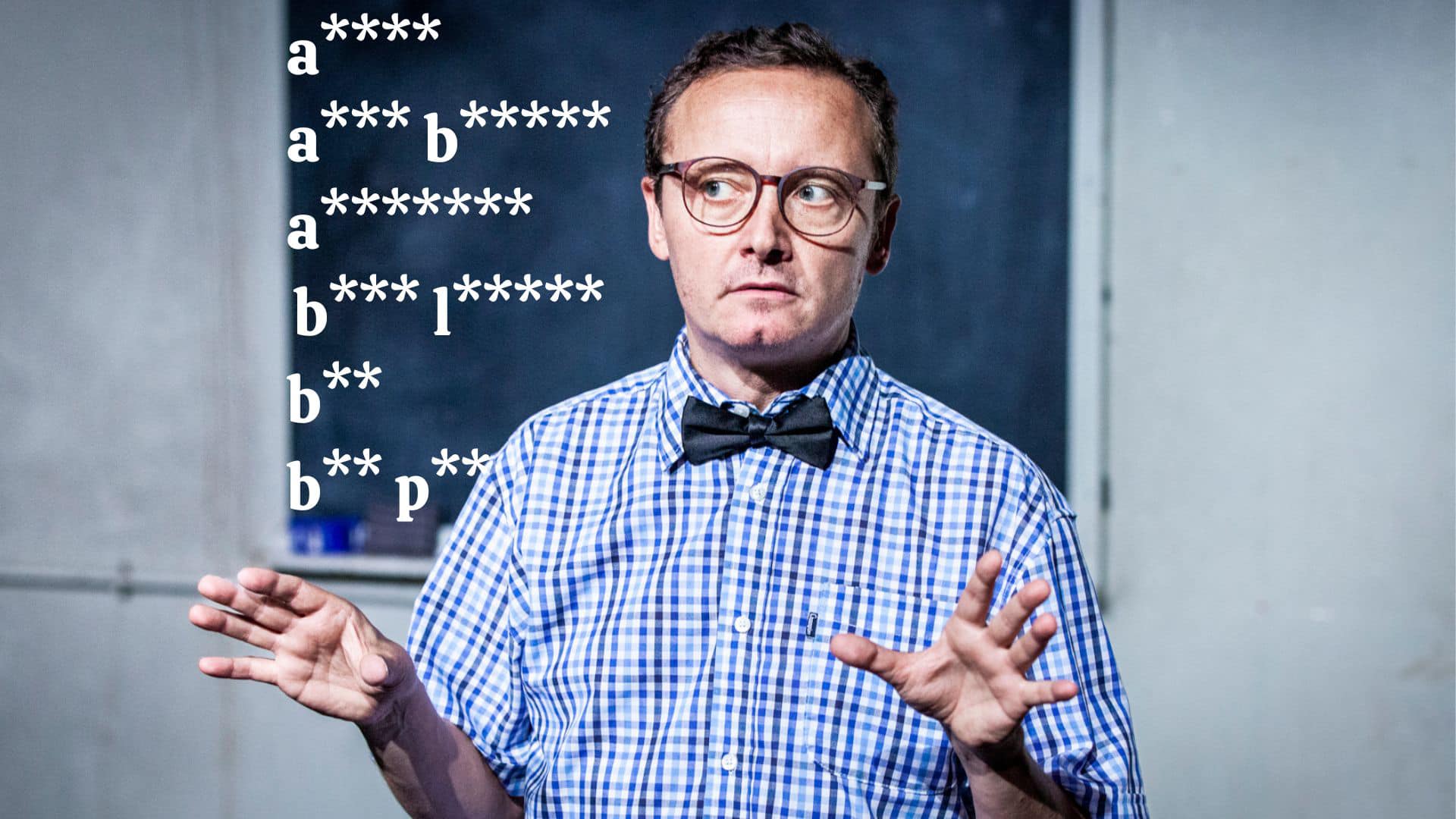
I’m sitting in a lecture theatre and a man is writing rude words on a chalkboard, pausing occasionally to give me a stern look whenever I get a fit of the giggles. I’m not exactly sure why this is so funny, but it really is. And then the lecturer begins to tell his story and it’s not funny any more.
His name is Remi and he moves from his native Poland to Glasgow in order to pursue his dream of being an actor. But one night, walking home, he is accosted by two men who rob him and beat him up. The attack affects him profoundly, stirring within him a sense of paranoia, that steadily gets worse until it threatens to overwhelm him.
Written and performed by Remi Rachuba and directed by Marcus Montgomery Roche, Intruder is a difficult play to get a handle on. Rachuba is a fearless actor, who expends so much energy during the show you feel he could run the National Grid all by himself. Arranged on the floor in front of him are pairs of shoes which he uses to signify the different characters and situations he’s talking about. (Was it Lawrence Olivier who famously always began with the shoes?) Remi changes roles as easily as he changes his footwear.
I love the repeated tics that he employs to denote his deteriorating frame of mind: those uneasy glances over his shoulder, the shuddering paroxysms when his dark thoughts overwhelm him. I also love the simple gleefulness of the dance routine he indulges in on one of the rare occasions when he feels happy.
But there are some issues here. I’m not always entirely sure where and when a particular scene is set. There’s much talk of Glasgow, but then I hear him mention places I know are in Edinburgh. Of course, this might be intentional, but it throws me occasionally. And, while it’s only right that some of the lines are delivered in Polish, this also adds to a sense of disorientation.
Rachuba is an extraordinary stage presence and it will be interesting to see where he goes next. Meanwhile, there are just two more chances to catch this intriguing show.