Summerhall

Tickbox

20/08/22

Summerhall (Tech Cube 0), Edinburgh

Lubna Kerr emigrated from Pakistan to Glasgow when she was just a child. Now, many years later, she looks back on her life, growing up as an outsider, marginalised and stereotyped, and she rails – softly – against the constrictions she has endured.

The first constriction we hear about is in her own arteries. She’s in A&E with what the doctor is insisting is a stress-related heart problem. “But I’m not stressed,” Lubna demurs. She’s happy, isn’t she? What has she got to be stressed about?

Considering this question takes Kerr down a rabbit hole of remembrance, and she recounts for us the experiences that have shaped her, and led her here: to the hospital and to this stage – to two different kinds of theatre.

Kerr’s narrative is gentle and meandering, a wry and often self-deprecating account. There is humour and affection in her tale, and she has a very amiable presence; it’s easy to warm to her. Hers is a middle-class background: her mother laments the lack of household help and bemoans the size of their Govan flat; it’s not as fancy as she was used to, back in Pakistan. Their new neighbours assume Lubna’s dad is a shopkeeper or a bus driver, because that’s what the other brown people they know do. But her father is a scientist: he’s doing a PhD; he teaches at Strathclyde university. But being educated, being relatively well-off, these aren’t enough to protect the family from casual racism. Even at Brownies, where everyone seems to mean well, Lubna’s popularity comes courtesy of a badge the others can earn for meeting someone from the Commonwealth…

This is an immensely likeable show (and not just because we’re all given a Tunnock’s teacake), although it does feel a little too polite at times, and I would like to see the stakes raised. The running race, for example, feels thrown away: the build up is nicely done, but then it peters out, with no climax. I’m also not convinced that it’s necessary to try to hide the act of drinking water; Kerr walks behind a sofa several times during the show and, with her back to us, takes a sip from her bottle. I think it would look more natural and be less intrusive if she were to incorporate this into the show – and this would also give her the opportunity to interact with the set more effectively. There’s quite a lot of paraphernalia here that doesn’t really get used; if she had a vintage jug and water glass to go with the 1970s TV, etc., she could sit on the sofa and pour herself a drink as part of the action.

Tickbox offers a fascinating insight into life as an immigrant – and we leave, talking about the issues raised, and tucking into our teacakes.

3.4 stars

Susan Singfield
Boy

20/08/22

Summerhall (Main Hall), Edinburgh

1966: Winnipeg, Manitoba, Canada. Twin babies Bruce and Brian Reimer are both diagnosed with phimosis. Circumcision is recommended. Their doctor chooses a new and unconventional method: electrocauterization. Bruce is up first.

And the procedure goes horribly, shockingly wrong. Bruce’s penis is damaged beyond repair.

Brian is spared. His phimosis is left to resolve itself naturally. Which it does.

The twins’ parents, Janet and Ron, are distraught. So when Harvard-educated psychologist John Money recommends gender reassignment, they are soon persuaded. ‘Brenda’ won’t remember being Bruce, Dr Money says; it’s a simple matter of surgery and hormones…

Writer/director Carly Wijs draws on this tragic true story to create a thoughtful drama, exploring the very topical subject of gender identity, illuminating the age-old nature/nurture debate. It’s sensitively done – socratic rather than didactic – and it’s impossible not to feel emotionally involved.

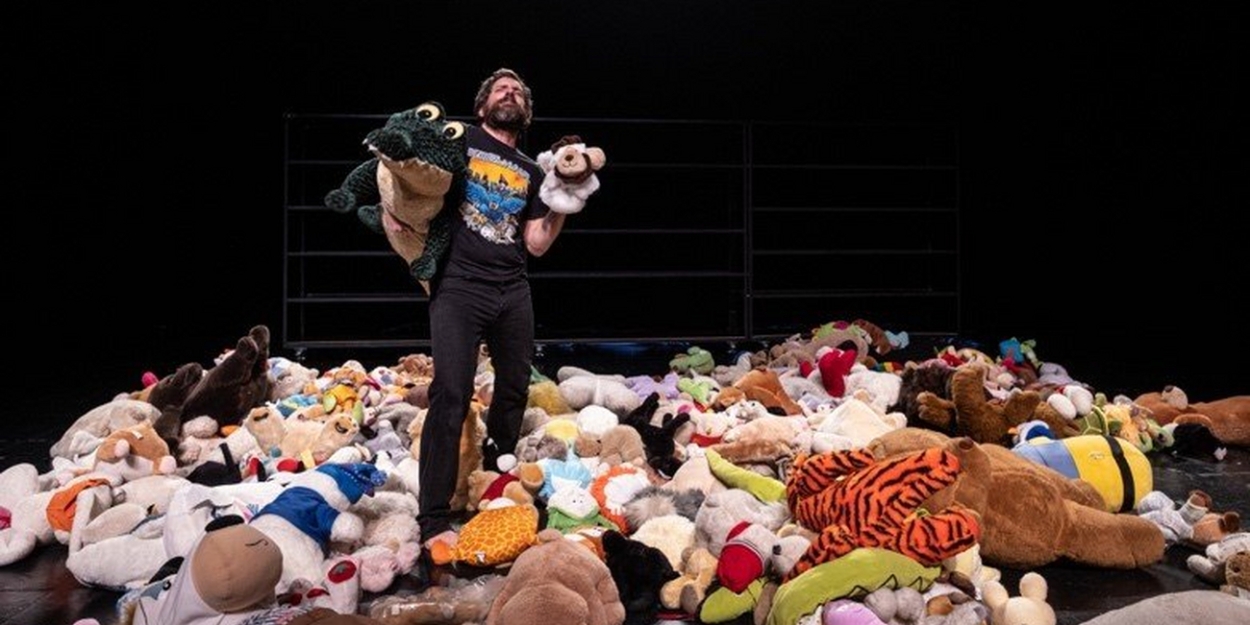
Actors Vanja Maria Godée and Jeroen van der Ven play Janet and Ron respectively, and also act as narrators, using a range of cuddly toys as stand-ins for the other characters. This technique is oddly affecting, highlighting the family’s innocence, while also suggesting that the very act of telling their story is ‘play therapy’ for the troubled pair. The set, by Stef Stessel, is wonderfully effective in its simplicity: a wheeled ‘wall’ draped with a light blue cloth, suggestive of a waterfall, spans almost the whole width of the stage, and there’s a stunning moment of revelation towards the end of the piece. Both Godée and van der Ven are immensely likeable performers; their gentleness and vulnerability ensure we’re on their side. Janet and Ron are victims of a man so caught up in his own theories that he’s stopped seeing the humanity of those he’s experimenting on.

Because Brenda is a very unhappy child. She doesn’t like the constrictions that come with being a girl; she doesn’t want to wear dresses or learn to sew; she wants to climb trees and fight and run with the boys. Is this because she is a boy, or would a cis-Brenda feel the same frustrations? We’ll never know. What we do know, unequivocally, is that it can’t be right for someone else to have made such a momentous decision for baby Bruce: to have compounded his initial mutilation with surgical castration, testosterone blockers and oestrogen – and to have concealed this fact from him. It’s his body; his choice. And the repercussions are devastating…

Despite its harrowing subject matter, Boy is a tender, poignant tale, told with real heart. This is experimental theatre-making at its best.

4.8 stars

Susan Singfield

We Were Promised Honey!

19/08/22

Roundabout at Summerhall, Edinburgh

This, storyteller Sam Ward tells us, is a choice. This: staying here, listening to what he has to say, engaging with his tale. There’s no happy ending, he says; he wants to be upfront about that. We’re free to refuse. To sit in silence for the allotted hour. It just needs one audience member to say, “I would like to begin.”

The risk is small (especially during Fringe, when more than half the audience are probably performers of some kind), but it feels real. I find myself wondering what it would be like if no one spoke. Would we really just sit? But there’s barely a hesitation. A confident voice rings out. And we begin.

This is a story on an epic scale, and the miserable outcome is existential rather than personal. Ward’s whimsical narration takes us on a journey billions of years into the future, when the planet dies, the universe collapses. Our fate is sealed. The question is, do we want to know what happens along the way? And the answer, of course, is yes.

Yesyesnono theatre company specialises in ‘democratic art’, and We Were Promised Honey! demonstrates clearly what this might look like, how it might work. Ward creates a friendly, open atmosphere, where people feel safe to join in, confident that he won’t make fools of them or push them to do things that make them uncomfortable. Apocalyptic subject matter notwithstanding, WWPH! is a joyous, hopeful kind of show, focusing on the small kindnesses and moments of happiness we find in our lives, despite our inevitable demise. We’re all like Richard Russell, the 29-year-old Sea-Tac baggage handler, who went joyriding – in a plane, even though he’d never flown before. Eventually, he crash-landed and died but, for a while, he flew…

This is a gentle, quirky piece of collaborative theatre, and I leave feeling strangely soothed, and ready to embrace the day.

4.2 stars

Susan Singfield

The Girl Who Was Very Good at Lying

13/08/22

Summerhall (Tech Cube 0), Edinburgh

Twenty-one year old Catriona (Rachael Rooney) doesn’t have much to occupy her. She lives with her mum in the house she grew up in, and spends each day trudging through the same grinding routine. She gets up; she showers; she eats breakfast; she goes to work in the local pub. Every evening, she comes home and sits down to dinner with her mum, answering the same list of questions, all while staring at a ‘live, laugh, love’ sign that seems designed to mock her. The only thing that ever changes is the breakfast, which ranges from porridge all the way to Coco Pops.

So perhaps it’s not surprising that, when an American tourist comes into the pub one day, she starts to fantasise. He’s the most exotic and exciting person who’s ever crossed the threshold. After all, there are only two hundred people living in her village; she knows them all.

And they know her. Her history.

With the American, Catriona is free to reinvent herself: to be his knowledgable tour-guide, his link to Northern Ireland’s past. After all, she’s very, very good at lying. Even to herself…

Rooney brings Eoin McAndrew’s compelling script to life with an intensity that is hard to describe. The room crackles with tension: this performance is a real tour de force. Fay Lomas’s electric direction – all jarring sound effects and choreographed scene changes that feel somehow like ruptures – ensures we’re every bit as stressed as Catriona; as she spirals out of control, we’re with her, every spin. It’s a powerful evocation of a mental health crisis – and an entertaining, mesmerising piece of theatre.

5 stars

Susan Singfield

Ruckus

07/08/22

Cairns Lecture Theatre, Summerhall, Edinburgh

Louise is a confident, vivacious character: an ambitious young primary school teacher with a kick-ass attitude. But her best mate’s impending marriage spells the end of their flat-share, and Lou finds herself adrift. When she meets Ryan, he’s funny, sweet and considerate; he seems like the answer to all her problems. Sure, he’s a bit possessive, but that’s just because he’s insecure, and, yeah, it’s a shame he’s not more welcoming when her mum comes to visit, but he doesn’t get on with his own family, so it’s difficult for him. Lou shrugs off these early warning signs; she wants the relationship to work. And slowly, drip by inexorable drip, Ryan exerts his control…

A one-woman show, Ruckus, written and performed by Jenna Fincken, explores this horribly toxic relationship in unflinching detail. And when I say ‘horribly toxic’, I mean ‘depressingly familiar’ and ‘all too common’, because we’ve all at least known someone who’s experienced something like this; we’ve all shuddered at the red flags, even if we’ve been luckier in our own entanglements.

It’s a cleverly crafted piece: the writing is both bold and nuanced. We hear the story from Lou’s point of view, so even though we recognise that things aren’t right, it takes some time to realise just how bad they really are. Standout moments include the tragic irony of Lou supporting an at-risk child at school, then coming home to face a similar situation.

The change is gradual and unsettling; its unfolding is beautifully handled by director Georgia Green. By the end, there’s not much of Lou’s spark left; she’s a shadow, who has to ask permission to see her friends, who doesn’t have her own money or even her own door key.

The simple set comprises an empty white stage with a small raised platform, but it transforms into myriad places (a nightclub, a car, a house, a school), thanks to the sound and light design (by Tingying Dong and Simeon Miller respectively), which really help to create a disorienting and sometimes dangerous atmosphere.

If I have a quibble, it’s a very minor one, and it’s with the countdown clock. I like the idea of including the days, of building tension by letting us know how far we are from an unknown-but-definitely-scary climactic event, but the numbers are too big, and I find them hard to hold in my mind, which makes it difficult on occasion to know where I am in the timeline as it shuttles back and forth. I think it would be less confusing if, instead of 832 days, it said 2 years, 9 months and 3 days, for example, because it’s easier to keep track of that.

But that’s a small thing, and definitely not a game-changer.

Fincken’s performance is remarkable; she retains absolute control throughout, and the piece seems almost choreographed. She mimics rather than inhabits the minor characters, so that it’s always Lou’s impression of Whiny Briony, or Lou’s impression of her over-anxious mum. These impersonations are often funny, and provide welcome shafts of light, as well as reminding us of the life Lou could have had, who she still is inside.

Matthew Durkan voices Ryan (we hear him a lot, although we never see him). He has a gentle Mancunian voice; he always sounds reasonable, likeable, which is another clever touch.

Ruckus is a timely, artful piece of work, and Jenna Fincken is a name to watch.

4.7 stars

Susan Singfield

The Ultimate Pickle

06/08/22

Roundabout at Summerhall, Edinburgh

The Ultimate Pickle is our first show of Fringe ’22 (previews and showcases aside), and it’s a corker, albeit intended for an audience many decades our junior. Touring theatre company Paines Plough is dedicated to new writing and, as we’ve come to expect, this latest offering is a lively, imaginative and thought-provoking piece, played deftly and with precision.

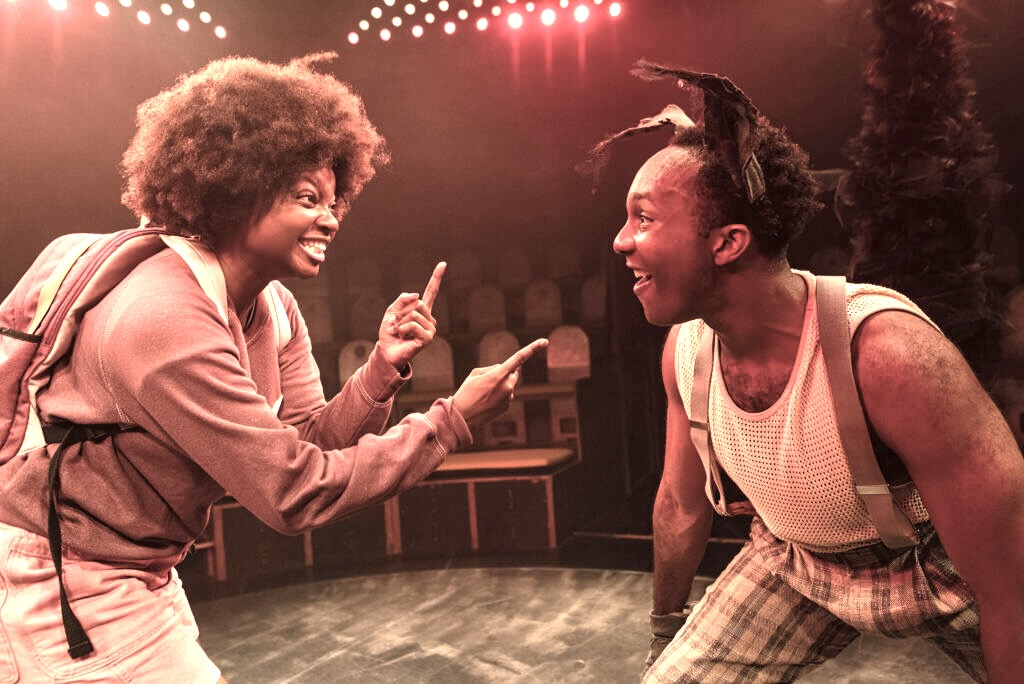
This play, by Laura Lindow, is ostensibly for children, but there’s plenty here to keep us entertained. Princess Khumalo plays Dill Pickleton, an almost-eleven-year-old whose life is turned upside down when her granddad – or Gran-Ted – dies. Her mum (Sara Hazemi) goes to pieces and, before long, the duo are facing a financial crisis, necessitating a move from Gran-Ted’s beloved ‘lighthouse’ by the sea. For Dill, this also means a new school, and she struggles to keep a lid on her feelings. And then the wolf (Samuel Tracy) emerges from her story book, and Dill’s adventures really begin…

It’s a simple tale, and the metaphor isn’t exactly subtle, but that doesn’t matter because it’s beautifully told. Paines Plough’s “pop-up, plug-and-play” theatre, Roundabout, is well-equipped with state of the art LED lighting (Rory Beaton) and surround sound (Roly Batha), and so the tech does a lot of the heavy lifting: there’s no set and very few props, but we always know exactly where we are, and the atmosphere is vibrant.

The three actors play the parts with sincerity and commitment: these are endearing performances that don’t trivialise Dill’s feelings. It’s too easy for children’s shows to talk down to their audiences; this one, directed by Eva Sampson, respects them, and I think any similarly-troubled young person watching it would feel understood rather than patronised.

The Ultimate Pickle is funny and moving – and perfectly-pitched for the whole family to enjoy. This trio of actors are also performing in two other (not-for-children) plays, and I’m looking forward to seeing more of their work.

A lovely reminder of the joy of Fringe, and of how much we’ve missed it for the past few years. What a way to herald a new beginning! Bravo.

4.5 stars

Susan Singfield

How to be Brave

24/08/19

Roundabout at Summerhall, Edinburgh

Katie (Laura Dalgliesh) isn’t in a good place. She’s moved back in with her mum, because she needs help looking after her littl’un. She’s clearly on a downward spiral, relying on her routine to keep her focused and on track. But today is different; today is difficult and new. Today she has to take the littl’un to the hospital, for heart surgery. Today Katie is scared.

And Katie doesn’t cope too well with fear.

Siân Owen’s one-woman play follows single-mum Katie as she flees a situation she can’t face, dashing impulsively out of the house and onto the streets of Newport, ricocheting from one panicked moment to the next. As she darts around the town she grew up in, she gets lost in childhood memories, the past and the present blurring into an incoherent howl.

It’s very funny. Dalgliesh’s energetic portrayal of a woman on the edge incorporates laugh-out-loud sequences, the breathless pace taking us along for the ride: we’re on that stolen BMX with her; the dread humiliation of her past failures fills us with shame as well. Katie is having a breakdown; we’re cringing even as we giggle. But still, it’s a positive piece, the kindness of strangers and, indeed, old enemies, a warming reminder that most people are actually pretty nice.

Catherine Paskell’s direction is spot-on, the small circular stage inventively utilised. Dalgliesh frequently darts towards the exits, seeking an escape, but she’s hemmed in (and supported) by the audience, hemmed in (and supported) by Newport and her past.

But will confronting her demons be enough to help her ‘find her brave’?

There’s only one more showing of Dirty Protest Theatre’s sparky Welsh play here in Edinburgh, but North Wales readers, take note. It’s coming to Theatr Clwyd at the start of September, and is well worth the trip to Mold.

4.1 stars

Susan Singfield

To Move in Time

19/08/19

Summerhall (Techcube 0), Edinburgh

To Move in Time is a prose-poem written by Tim Etchells and performed by Tyrone Huggins. In it, Huggins meditates on the various possibilities of what he might achieve if only he had the ability to travel backwards and forwards in time. The options range from the profound – preventing wars and plagues – to the more mundane – ensuring that Rick Astley never gets to record Never Gonna Give You Up.

As the piece developes, Huggins ties his brain (and consequently ours) into complex knots, as he struggles to keep control of all the loose ends that his meddling might create. And what if all his valiant struggles are in vain?

Though nicely performed and beautifully written, the piece is rather one-note in its approach and feels somewhat overstretched at an hour in duration. It would benefit, I think, from developing its subject matter onto different themes, but it stays resolutely on the same track and arrives pretty much at an inevitable conclusion.

The deep thinkers and philosophers out there might enjoy this piece rather more than I do. I’m afraid I belong to the ‘brain in knots’ cohort.

3 stars

Philip Caveney


Dexter and Winter’s Detective Agency

18/08/19

Summerhall (Roundabout), Edinburgh

Surely the hardest working trio in Edinburgh, Toyin Omari-Kinch, Charlotte Bate and Charlotte O’Leary are performing daily in not one, not two, but three plays here at Roundabout. I don’t know how they do it: so many lines to learn; such physicality required. But even now, as we head into the final stretch of the Fringe, they all look perky and healthy. Maybe they’re revelling in the joy of working with such interesting scripts, or maybe they’re just good at faking it. Whatever.

We’ve already seen them in heartbreaking, thought-provoking mode in Daughterhood (https://bouquetsbrickbatsreviews.com/2019/08/09/daughterhood/) and On the Other Hand, We’re Happy (https://bouquetsbrickbatsreviews.com/2019/08/11/on-the-other-hand-were-happy/). This time, we’re here for their children’s show, an altogether lighter affair, all high-octane energy and fast-paced storytelling.

Dexter and Winter’s Detective Agency, written by Nathan Bryon and directed (again) by Stef O’Driscoll, is all about friendship. Dexter (Omari-Kinch) has his world torn apart when his mum, Ange (Bate), is arrested, accused of jewellery theft. But his best friend, Winter (O’Leary), has a plan. Of course Ange is innocent. All they have to do is prove it, by finding out who the real culprit is.

There’s a serious undercurrent to the piece – there’s debt and immorality, betrayal and loss – but there are lots of jokes too. The performance is exuberant, the characters larger-than-life, and yet still credible. Special mention here to Bate, who plays countless roles, switching at breakneck speed, adding a hat here or an apron there: she’s Winter’s mum, she’s a policewoman, a train guard, a butcher, a bailiff… it’s endless.

Once again, Paines Plough deliver quality theatre, the direction totally in harmony with the performance space. Roundabout is the Fringe venue I can most rely on; I’ve never yet been let down by what they have to show.

4.2 stars

Susan Singfield

On the Other Hand, We’re Happy

10/08/19

Summerhall (Roundabout), Edinburgh

On the Other Hand We’re Happy is a play about adoption – the hopes, the perils, the joys and pitfalls of the process. Like most productions by Paines Plough, it’s brilliantly staged and powerfully acted. Written by Daf James and directed by Stef O’ Driscoll, this is an object lesson in how to toy with an audience’s emotions, and it succeeds admirably on just about every level. It’s a powerful, compelling story.

Josh (Toyin Omari-Kinch) and Abbi (Charlotte Bate) are a young couple in love, who – like so many others before them – plan to become parents. When they discover that they can’t make babies in the usual way, their thoughts turn to adoption, and they even elicit the opinions of the audience when discussing its merits. (The action regularly breaks the fourth wall, but it’s handled so cleverly, it never feels like a gimmick.) When the couple learn of a young girl, Tyler, who could be the right fit for them, they are naturally excited at the prospect of meeting her – but then fate deals them a cruel blow and it looks as though their dream may be an impossibility…

I love the direction of this piece, the way the actors appear to tumble and lurch from scene to scene, cutting back and forth in time, seeming to literally fall from one sequence to the next. Charlotte O’ Leary plays Tyler and also her mother, Kelly – a deliciously sweary Welsh woman, who may have taken some wrong turns in her life, but still wants the best for her daughter. All three performances are top notch, but Omari-Kinch’s physicality stands out. His is a character caught up in a maelstrom of wild emotions, flinging himself recklessly around the circular stage of Roundabout like an out of control automaton.

The conclusion is almost overpoweringly emotional and I watch the actors taking their well-deserved bows through a film of tears. If you like quality theatre, head down to Summerhall and catch this vibrant, beating heart of a play before it moves on.

It’s one of the best shows we’ve seen at this year’s Fringe.

5 stars

Philip Caveney