Pleasance

Edfest Bouquets 2023

August in Edinburgh, and the Fringe was back with a boom! As ever, after seeing so many brilliant productions, it’s been hard to select our favourites, but it’s (virtual) Bouquet time and so, in no particular order, here are the shows that have really stayed with us:

COMEDY

John Robins: Howl (Just the Tonic)

‘Raw and achingly honest….’

The Ice Hole: a Cardboard Comedy (Pleasance)

‘An inspired piece of surreal lunacy…’

Dominique Salerno: The Box Show (Pleasance)

‘One of the most original acts I’ve ever seen…’

The Umbilical Brothers: The Distraction (Assembly)

‘An amorphous mass of nonsense – but brilliantly so!’

THEATRE

Bacon (Summerhall)

‘A whip-smart, tightly-constructed duologue…’

The Grand Old Opera House Hotel (Traverse)

‘Part slapstick, part comic-opera, part mad-as-a-box-of-frogs spectacle, this is something you really don’t want to miss.’

Salty Irina (Roundabout at Summerhall)

‘Fresh and contemporary, all minimal props and non-literal interpretation…’

Dark Noon (Pleasance)

‘A unique piece of devised theatre, sprawling and multi-faceted…’

JM Coetzee’s Life and Times of Michael K (Assembly)
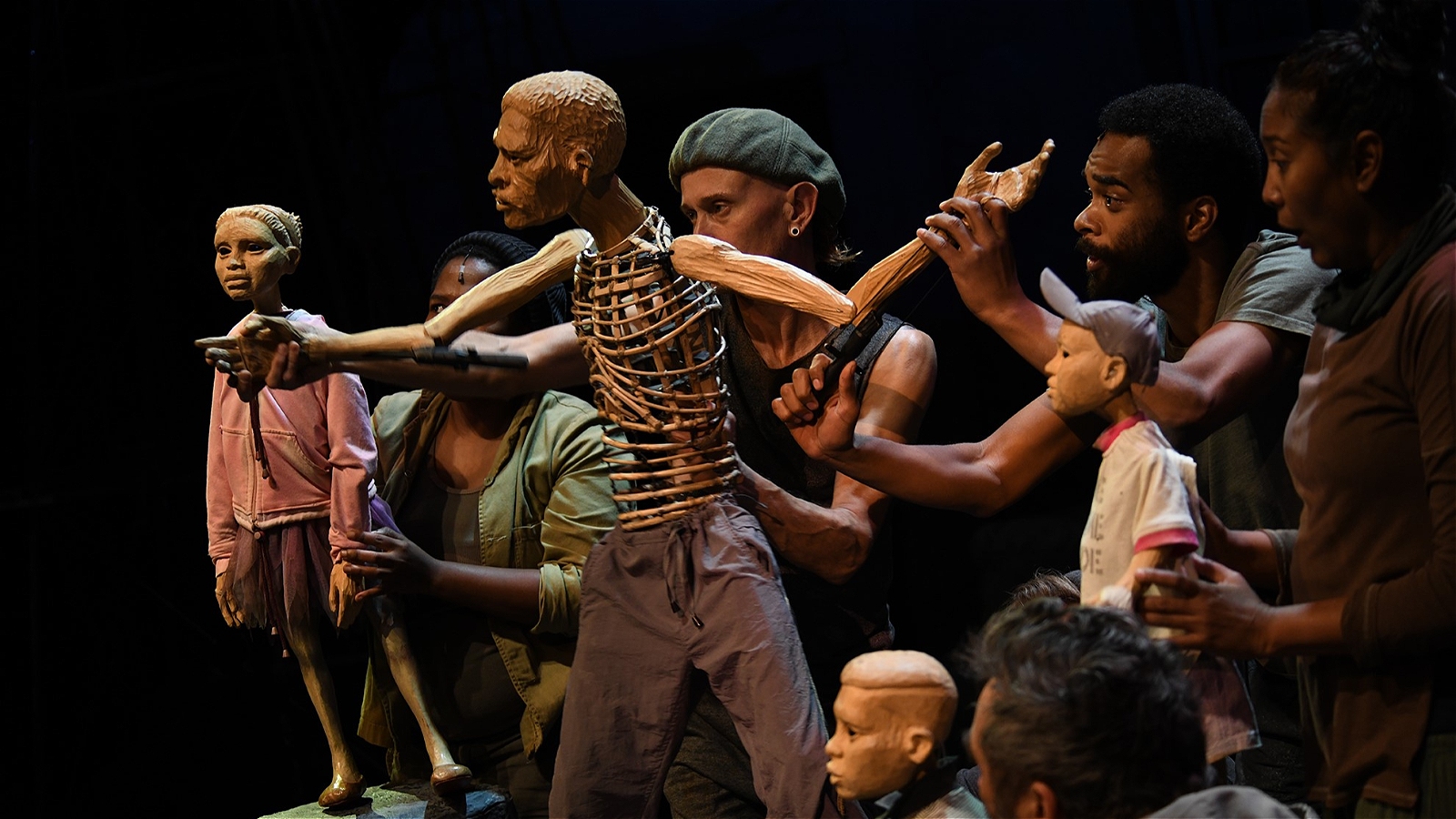
‘A gentle but powerful production…’

One Way Out (Underbelly)

‘The piece is brave enough not to offer a solution…’

SPECIAL MENTIONS

After the Act (Traverse)
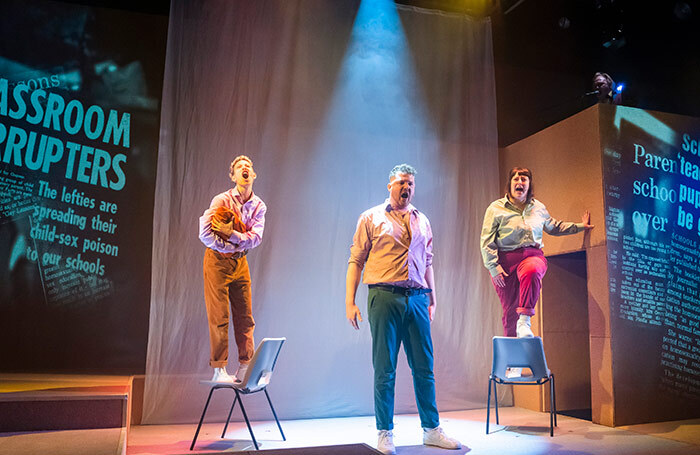
‘We have to learn from what has gone before…’

Woodhill (Summerhall)

‘Though unnervingly bleak, this does offer a glimmer of hope…’

Things Hidden Since the Foundation of the World (Traverse)

‘The closest I’ve ever come to experiencing an acid trip in the theatre…’

Susan Singfield & Philip Caveney

Martin Urbano: Apology Comeback Tour

18/08/23

Pleasance Courtyard (Bunker Three), Edinburgh

You can’t say anything theeeese days.

Martin Urbano has been cancelled, but – despite the title of his show – he’s not sorry in the least. He’s a good guy, unfairly victimised just for articulating what everyone’s thinking. And, you know, assault. “Have you tried tickling a woman you don’t know on public transport recently? Apparently, it’s not allowed any more.”

Just to be clear: this is satire, punching up at the likes of Louis CK and Bill Cosby rather than down at their victims. It’s not an hour of whinging from an entitled twat complaining loudly via a Netflix special that they’ve been de-platformed – it’s a very obvious parody of that. Indeed, at times I think the parody is too signposted: the show might be more hard-hitting if Urbano were to commit more fully to the loathsome character he has created (although I can see that further blurring those delicate lines might actually be dangerous for him. After all, he does spend fifteen minutes telling us that he’s a paedophile).

Urbano is saved from this potential danger by a self-deprecating demeanour and by regularly corpsing at the very awfulness of what he’s saying. These qualities combine to reinforce the fact that he does not stand by the ideas he’s espousing, that they are just jokes, intended to make us roar in horror and disbelief. It works. The dingy underground space of Bunker Three is alive with laughter.

The Mexican-American comedian makes his audience complicit too, handing out bits of script for several of them to read. They acquiesce, and so become a part of the phenomenon, happily making statements that conflict with their ethics. Why do I feel qualified to make this assumption about how they feel about their participation? Because I am one of them: I actually stand on the stage and read some very dodgy things into a microphone. It’s a neat reminder that, just like me, Urbano is playing a role.

For a show dominated by misogyny and paedophilia to land as well as it does proves that we’re in the hands of a professional. The hour flies by and the audacious ending really takes me by surprise.

4 stars

Susan Singfield

The Box Show

12/08/23

Pleasance Courtyard (Cellar), Edinburgh

The Box Show (theboxshow.org) is one of the most original acts I’ve ever seen. Incredibly,  the whole production is confined to one small box – every prop, every costume change – like a puppet theatre with myriad human puppets. And Dominique Salerno (dominiquesalerno.com) is the puppet master, changing herself into a giant woman, a fighting couple, a demanding pop star – and a few more esoteric surprises it would be a crime to give away. 

 The constraints of the box mean that Salerno has to be imaginative – necessity is the mother of invention, after all. Low-budget theatre is often more interesting than its splashy, blinged up West End cousin; limiting herself to such a miniscule stage pushes Salerno even further down this road. I’m in awe of her imagination. 

The Box Show is fast-paced, never letting up for the whole hour, the sketches building to a hilarious crescendo. 

Audacious, funny, and perfectly crafted, The Box Show is performed with wit and precision. Salerno has the flexibility of a gymnast or a dancer (it makes my creaky knees hurt just watching her), as well as being a gifted actor and singer.

The tiny venue mirrors the tiny box, so it doesn’t take many punters for this to be sold out. Grab a ticket while you can – this Fringiest of Fringe shows is one not to miss.

5 stars

Susan Singfield

Please Love Me

08/08/23

Pleasance Dome (Ace), Edinburgh

We last saw Clementine Bogg-Hargroves in Skank, a self-penned one-woman show, which was a bright spot in 2021’s weird semi-Fringe, even though it was largely about smear tests.  

This year’s offering is, if anything, even more up close and personal; certainly it’s more literally in-your-face. We’re in the front row, only a few feet away from the small stage, where there’s no shying away from Bogg-Hargroves’ intense, pleading gaze. Or her pole-dancing.

Please Love Me is, as the title suggests, all about need – specifically the need for love and validation. It’s also about the nature of choice, about how the decisions we make are actually part of our conditioning. “Please love me,” Clem asks again and again. By the end of the hour, we kind of do. 

In this deeply personal coming-of-age story (it’s “almost all, sort of, maybe true”), Bogg-Hargroves revisits her teenage years and her burgeoning sexuality. It’s all here: the funny stuff, the silly stuff, the friendships, trauma and heartbreak. Okay, so maybe we haven’t all done a stint as a stripper or fallen pregnant at nineteen, but I think the emotional landscape will be recognisable to most women; it isn’t hard to empathise.

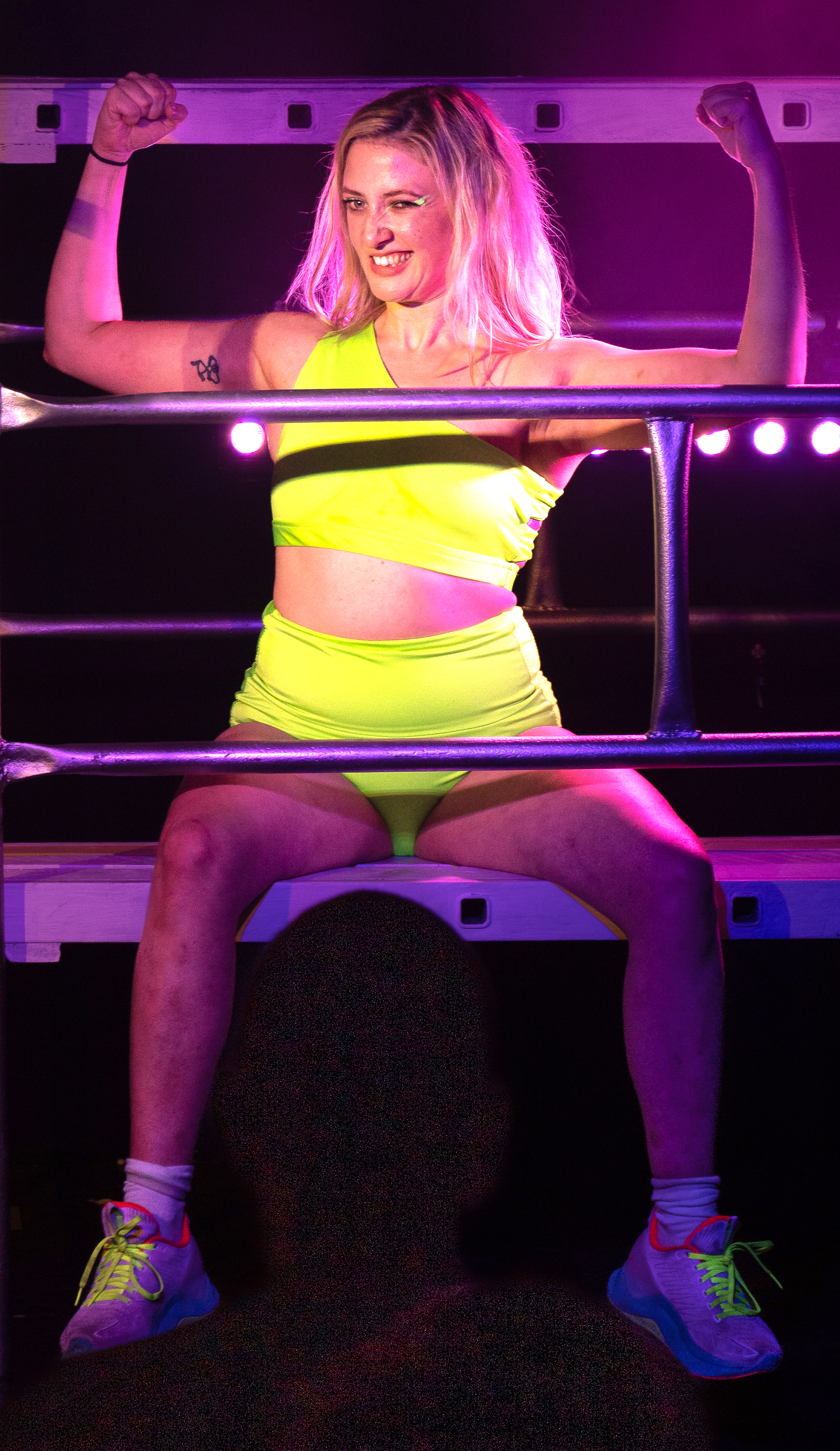
Bogg-Hargroves is a disarming performer, and she’s ably supported by co-writer and director Zoey Barnes. Indeed, I’d like to see Barnes doing more; she has a likeable stage presence, and works well as a steady foil to Clem’s heightened emotions. The set is simple – a pole and some scaffolding – and, along with the costumes, cleverly contrives to create the visual impact of a strip club without the titillation.

Please Love Me is an engaging and disarmingly frank piece of theatre that raises as many questions as it answers.

4 stars

Susan Singfield

Tessa Coates: Get Your Tessa Coates, You’ve Pulled

21/08/22

Pleasance Courtyard (Beside), Edinburgh

Whether Tessa Coates really is as ditsy and posh as the persona she creates seems almost immaterial: I’m hooked. From the moment she stumbles onto the stage, all swishy hair and giggles, I’m completely disarmed. I like her. I’m not sure why. I don’t think we’d have much in common. But she’s so lively and engaging, it’s impossible not to warm to her.

Coates has, she tells us, recently been diagnosed with ADHD. “No,” she corrects herself. “Just ADD. Without the H.” Hmm. She might not be clinically hyperactive, but she’s certainly excitable. And very, very easily distracted. At least, the on-stage version is. If the real-life Tessa is the same, then I guess we have someone else to thank for organising this Fringe run, and getting her to the show on time.

I like the way Coates leans into and acknowledges her privilege, mocking her own pony-riding past, and likening herself to an Enid Blyton character. Even if it is Anne. “The shit one.”

The show itself is a fairly straightforward “here are some silly things I’ve done” affair, detailing the scrapes Coates has tumbled headlong into, mainly because she doesn’t think things through. She leads us through a series of minor calamities: from high school embarrassments to dressage problems; from awkward elevator moments in LA to the Brighton half-marathon. It’s all delivered in the same vibrant, upbeat, appealing way, as ludicrous-but-ace as the pink ride-on electric kids’ car that dominates the stage.

Coates bought it on impulse, not realising it’d be both too small and too big. “It’ll be fine,” she tells us.

And it is.

4 stars

Susan Singfield

Lucy Porter: Wake-Up Call

12/08/22

Pleasance Courtyard (Forth), Edinburgh

Lucy Porter is as vivacious and likeable as ever – her bright-eyed enthusiasm is hard to resist. Perhaps she relies on this a little bit too much in this loosely-structured show, however, which seems to skirt around a point it never quite makes. 

The premise is ostensibly about a mid-life ‘crisis’, resolved by the wake-up call of the title. It’s relatable (most of the audience – including me – are in the same age bracket as Porter) but there isn’t really anything calamitous or, well, crisis-like here, just a vague sense of anxiety about getting old.

There are lots of laughs though. It’s a pleasant, meandering monologue, and Porter’s warmth and charm shine through. But I’m left wanting something more. That bed, for instance. It’s an enormous prop. It must be a pain in the arse to store and set up. But it’s a perfect example of Chekhov’s gun principle – if it’s not going to be used, what’s it doing there? (Okay, so it is used, in fact, but only for a nano-second, and not to any great effect.) 

An agreeable way to spend an hour, this one’s probably the perfect tonic if you’re in the mood for an undemanding treat. 

3 stars 

Susan Singfield 

Emily Wilson: Fixed

09/08/22

Pleasance Courtyard (Beneath), Edinburgh

Emily Wilson’s Fixed is part musical, part stand-up and part catharsis. Clearly a born performer, Wilson takes us on a tour of her youth, from beaming toddler to broken teen. It’s all been chronicled, of course: she’s 26 years old, a whole lifetime of phone recordings and insta-chats and YouTube videos. Oh, and primetime national TV too.

That’s the crux of the story: Wilson appeared on The X Factor USA in 2011, as one half of the earnestly named duo, Ausem. “Because my best friend’s called Austin, and my name’s Emily, so together we’re Ausem!” She thought her dreams had come true: she was 15 and destined to become a star. But then they hit a snag. The judges decided they liked Austin, but not Emily…

Wilson’s tale, co-written and directed by Sam Blumenfeld, is compelling. She’s a vivacious, funny, talented woman – and, while she’s disarmingly self-deprecating, she’s justifiably pissed off. The X Factor nearly destroyed her. How is a child supposed to process such public humiliation? How do the powerful adults in charge legitimise hurting her for viewing figures, for more dollars in their bulging bank accounts? Do the haters on social media sleep well at night, knowing they’ve made a young girl cry?

The past is detailed via a series of video clips and diary entries, interspersed with stand-up and original songs revealing Wilson’s current perspective. What emerges is a thoughtful commentary on fame, ambition and exploitation, and it’s riveting.

Oh, and she really can sing. Whatever Nicole Sherzinger says.

4.6 stars

Susan Singfield

The Twenty-Sided Tavern

08/08/22

Pleasance Dome, Bristo Place, Edinburgh

The Twenty-Sided Tavern is billed as experiential entertainment, “destined to delight everyone, from hardcore fans of D&D to those just dipping a toe into the world of role-playing games”. It doesn’t quite live up to this promise. As a toe-dipper, I find it baffling and a little dull. But I’m an outlier here: the show is a sell-out, and the bulk of the audience clearly falls into the former category. Their laughter is raucous; they’re having a whale of a time.

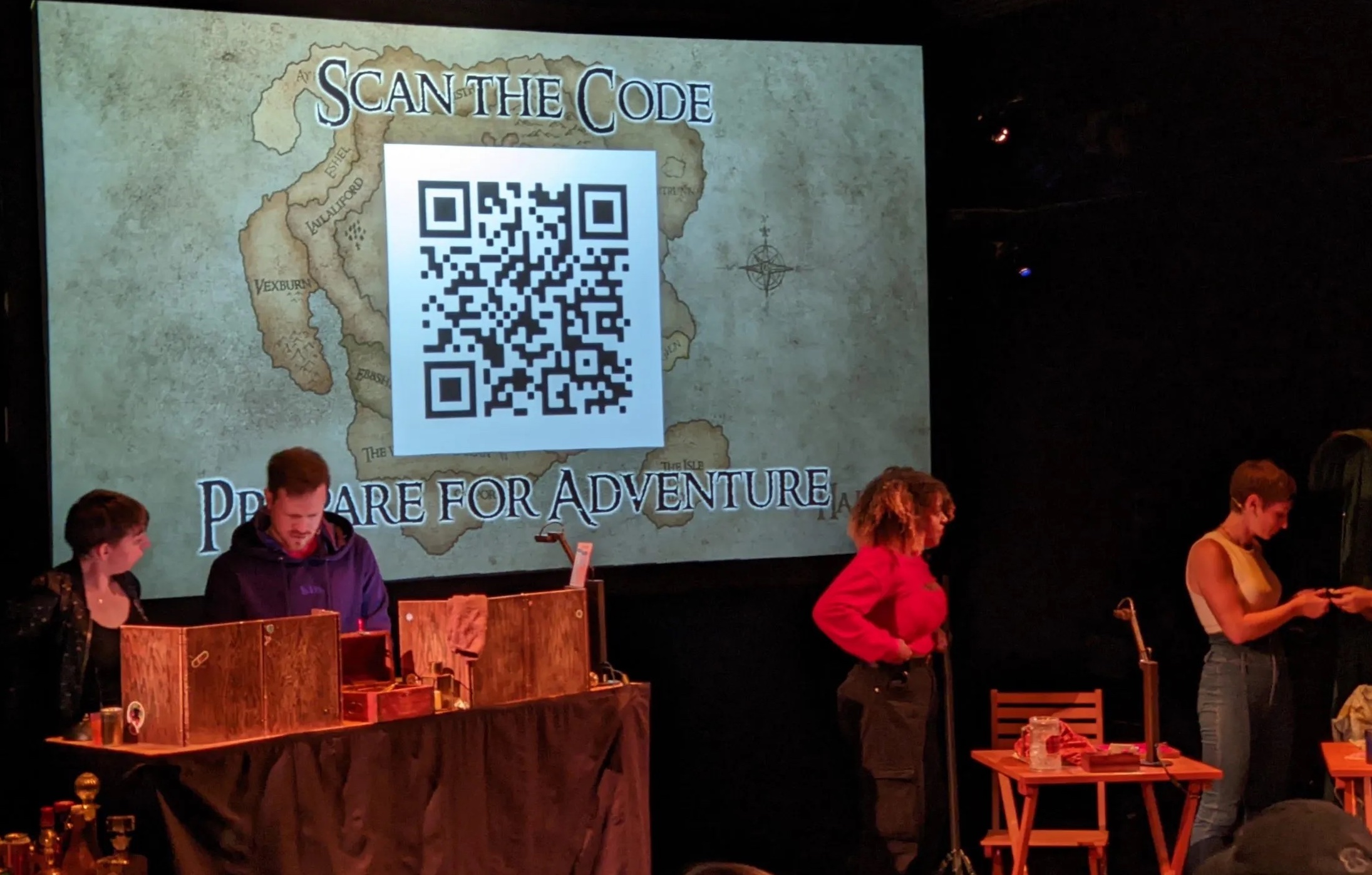
The premise is simple: it’s a choose your own adventure with added dice. We’re in a tavern, and there are three players onstage (Carlina Parker, Mateo Ervin and Madelyn Murphy), as well as a game master (David Andrew Greener Laws) and the tavern keeper (Sarah Davis Reynolds). We’re asked to access their website via a QR code and, from thereon in, it’s interactive insofar as we are allocated a team, then asked to choose which of three characters each player adopts, and to vote between two options at various points along the way. A couple of people are brought onstage for panto-style audience-participation moments, where they’re told to role a dice or throw balls into a pot. And there are a couple of riddles to answer.

But the game-play is more complex, and – to the uninitiated – rather confusing. When they roll a dice, they call the number, but then add other numbers for no reason I can discern (we’re here with two family members who love a good table-top role-playing game, and they explain it to me later). I can see that it would be fun to actually play, if I were inhabiting a character, and was actively involved in shaping the storyline. However, I don’t really enjoy watching it, especially as the players don’t seem to explore their roles beyond a few surface characteristics.

It feels rushed too; indeed, it over-runs by ten minutes, which is a no-no at the Fringe, where audiences and venues have tightly-managed schedules. There’s too much to fit into seventy minutes. It doesn’t help that the tech isn’t working properly (the wifi isn’t strong enough), so a lot of the voting is done in the old ‘analogue’ way – which team can cheer the loudest?

It’s a good idea, and it’s clearly pleasing a lot of people, so I can’t dismiss this out of hand. But I’d file this under ‘for the fans’.

2.5 stars

Susan Singfield

With Child

08/08/19

Pleasance Courtyard (Cellar), Edinburgh

Clare Pointing’s With Child is a series of monologues, connected only by the fact that each of the protagonists is pregnant. But, in a sharp little twist, only one of the six ever mentions it.

The pregnancies are all visible, and I’m not just referring to the sizeable bump that Pointing sports. These women sit down gratefully, glad to take the weight off, or they rub their bellies absent-mindedly. They snack on weird food combinations; emotions are running high. They’re definitely with child, but it’s not the only thing they care about. They have other interests, other concerns.

Pointing is a chameleon. She eschews even token costume changes, relying instead on vocal and physical characteristics to define each role. It’s a remarkable performance: these diverse women are all utterly believable. (I’m disappointed when she doesn’t do the usual ‘If you liked it, tell your friends’ spiel at the end of the show, because I want to know which – if any – of the accents used is really hers. They’re all spot on.)

From the wealthy gym enthusiast, used to complaining loudly and getting her own way, to the granny’s girl who doesn’t really like her partner very much; from the doormat who finds freedom in zumba, to the transphobic nosy neighbour who thinks she ‘just gives too much’ – these are all quirky, original creations, not a cliché in sight.

The piece is beautifully structured: we spend the first thirty minutes laughing, and then the mood changes. The final piece is poignant and powerful, the perfect place to end.

With Child is a clever piece of writing, performed with real flair.

4.6 stars

Susan Singfield

Endless Second

01/08/19

Pleasance Courtyard (Below), Edinburgh

Theo Toksvig-Stewart’s play about consent is an intense, emotionally demanding piece – and, my word, it’s impressive.

Directed by Camilla Gürtler, Endless Second chronicles the relationship between W (Madeleine Gray) and M (Toksvig-Stewart), two drama students who fall in love on the first day of their course. They’re devoted to one another; they’re sweet and supportive; they meet each other’s families; it’s perfect, idyllic. So when M rapes W one drunken night, it’s hard for her to process exactly what’s happened.

This is a beautifully nuanced piece, at once unflinching and disarming, almost forensic in its examination of the impact of M’s actions. The narrative structure is interesting, and both performances utterly compelling. I especially like the fact that M is never demonised: nice boys do this too, unless they’re taught about consent.

W’s inarticulacy following the rape is heartbreakingly convincing, a clear answer to those who question why women stay with violent men, or why rape victims don’t report immediately. She can’t admit to herself that he did that to her; not M, who’s so kind, so loving, so aware of all his privilege, who’d never hurt anyone. Facing up to what he’s done means shattering her life; no wonder she buries the knowledge deep inside; no wonder it haunts her and changes what they have.

I can’t say I enjoy this play exactly; I spend half of it weeping and am wrung out by the end. It’s clever and thought-provoking and, yes, important too.

5 stars

Susan Singfield