Pleasance

The Unstoppable Rise of Ben Manager

10/08/25

Pleasance Courtyard (Above), Edinburgh

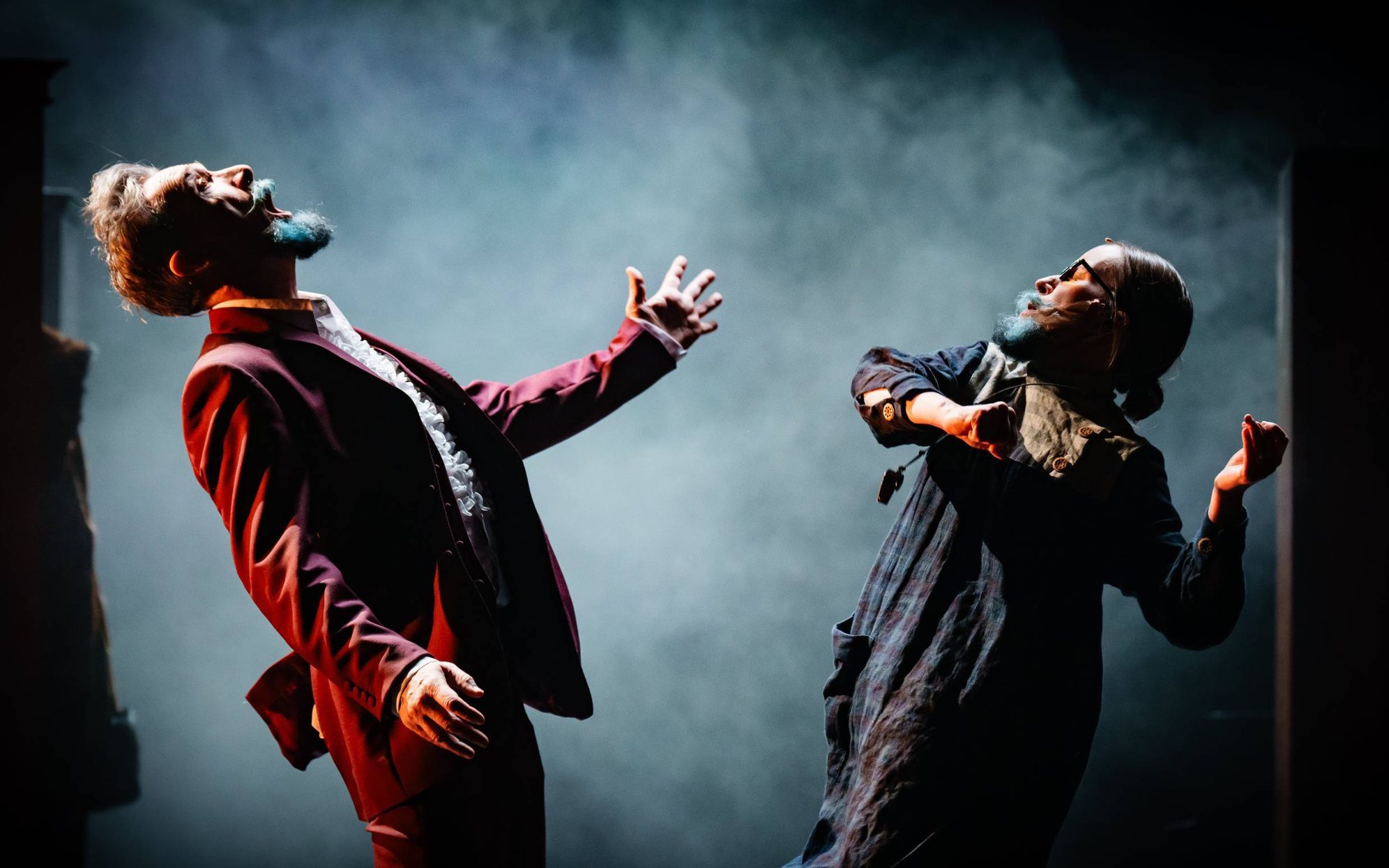
Bunkum Ensemble’s The Unstoppable Rise of Ben Manager is a Kafka-esque nightmare of a play, skewering the emptiness at the heart of many people’s work.

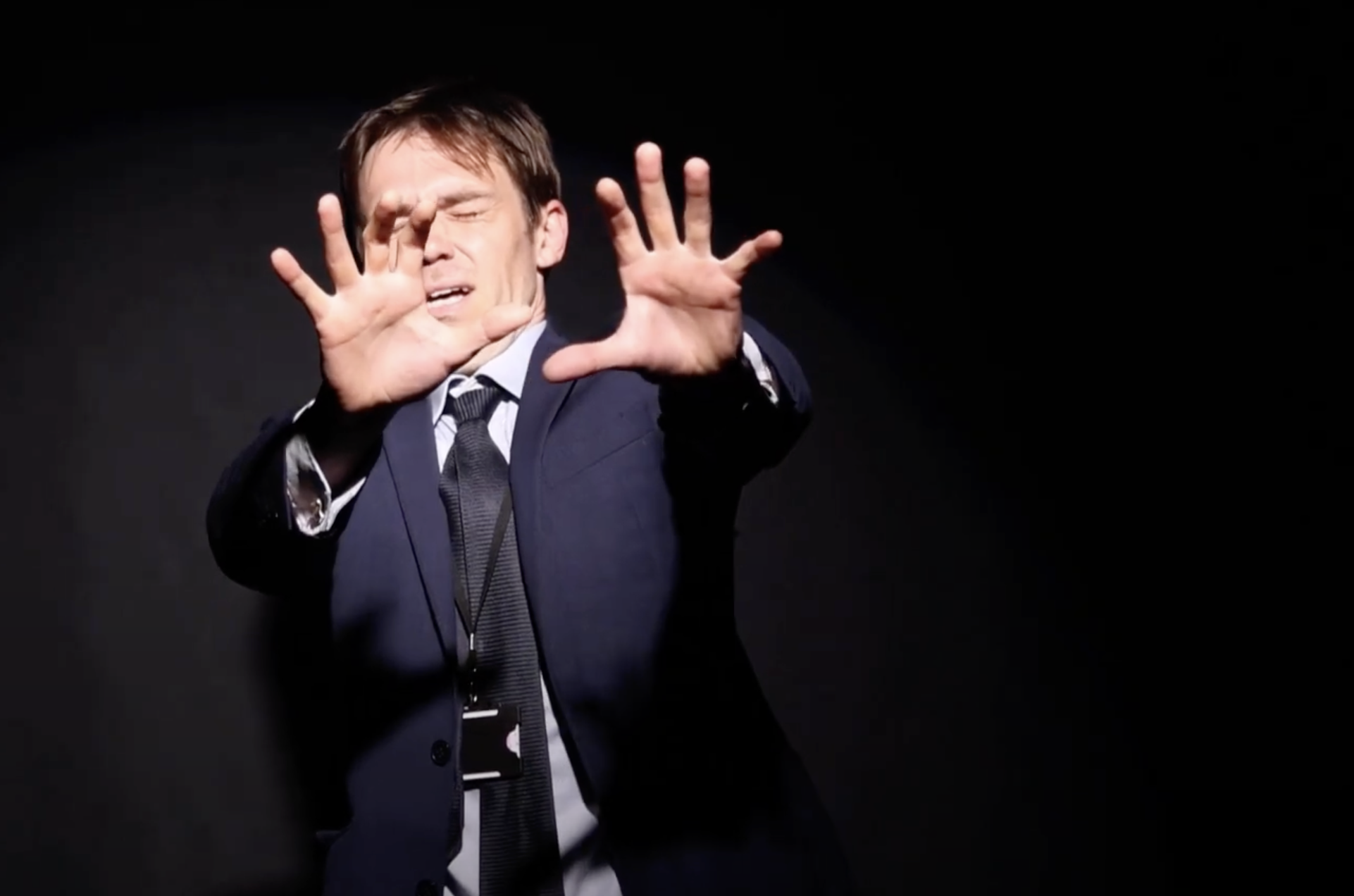
Ben Weaver (Jack Parris, who also wrote the script) is an ordinary kind of guy, an unassuming office drone, who works to live, to pay the bills. As the play opens, we see him suited and booted, in town early for an interview, eating an almond croissant to kill the time. But Fate has something different in store for Ben today: when he picks up a lanyard bearing the name ‘Ben Manager’, he finds himself caught in a Faustian trap…

Ben aces his interview. As Ben Manager, he is king of the vacuous PowerPoint, master of the mindless acronym. He knows his OOOs from his ETDs and he’s great at restructuring (“You’re all fired!”). What’s harder to understand is what it’s all for: what does the company actually do? What exactly is his role? Disoriented, Ben tries to remember what used to drive him. “I think I’d like to be creative,” he muses. “Maybe costume design?” But these half-formed thoughts are nebulous, impossible to grasp, lost to the demands of his daily routine.

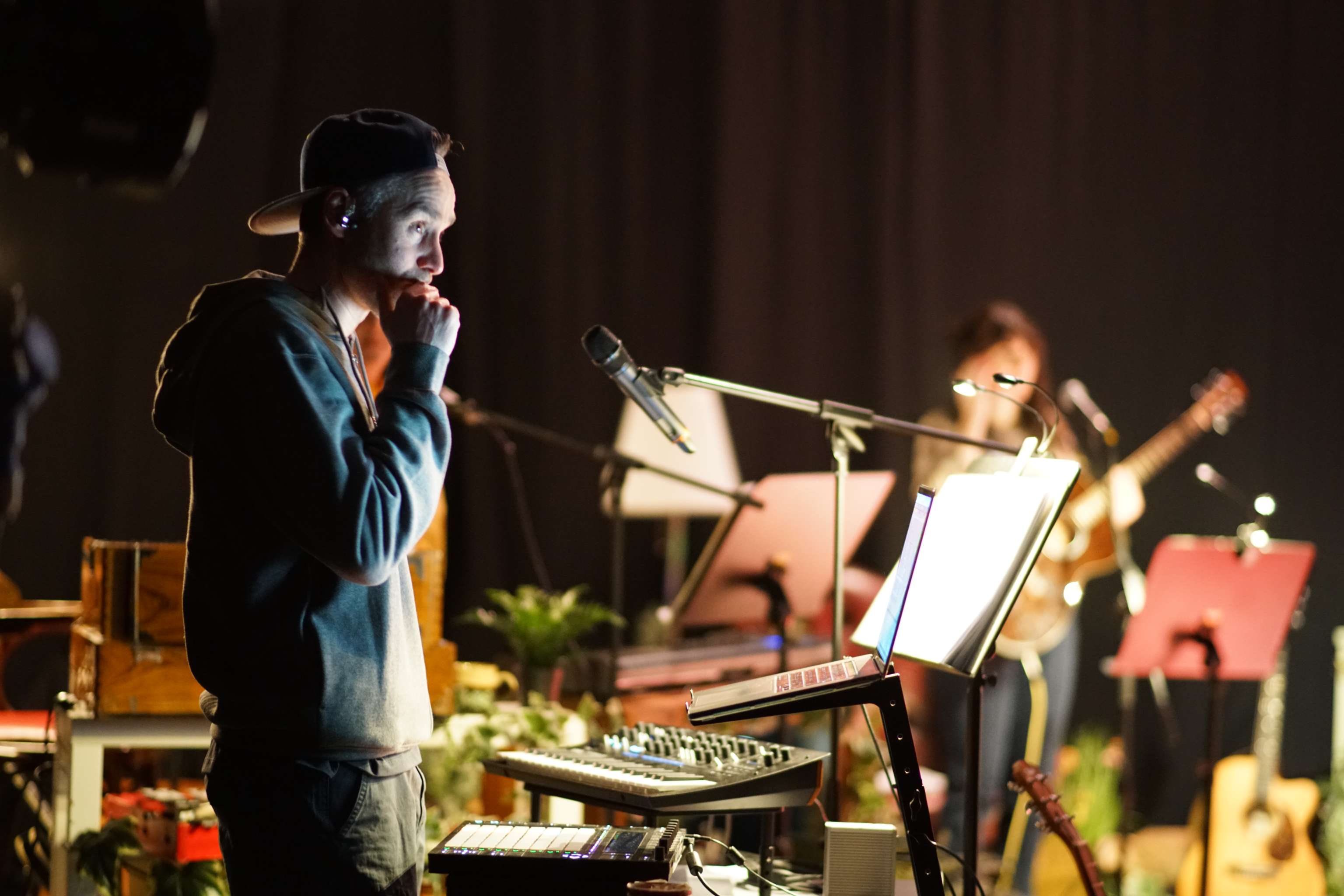
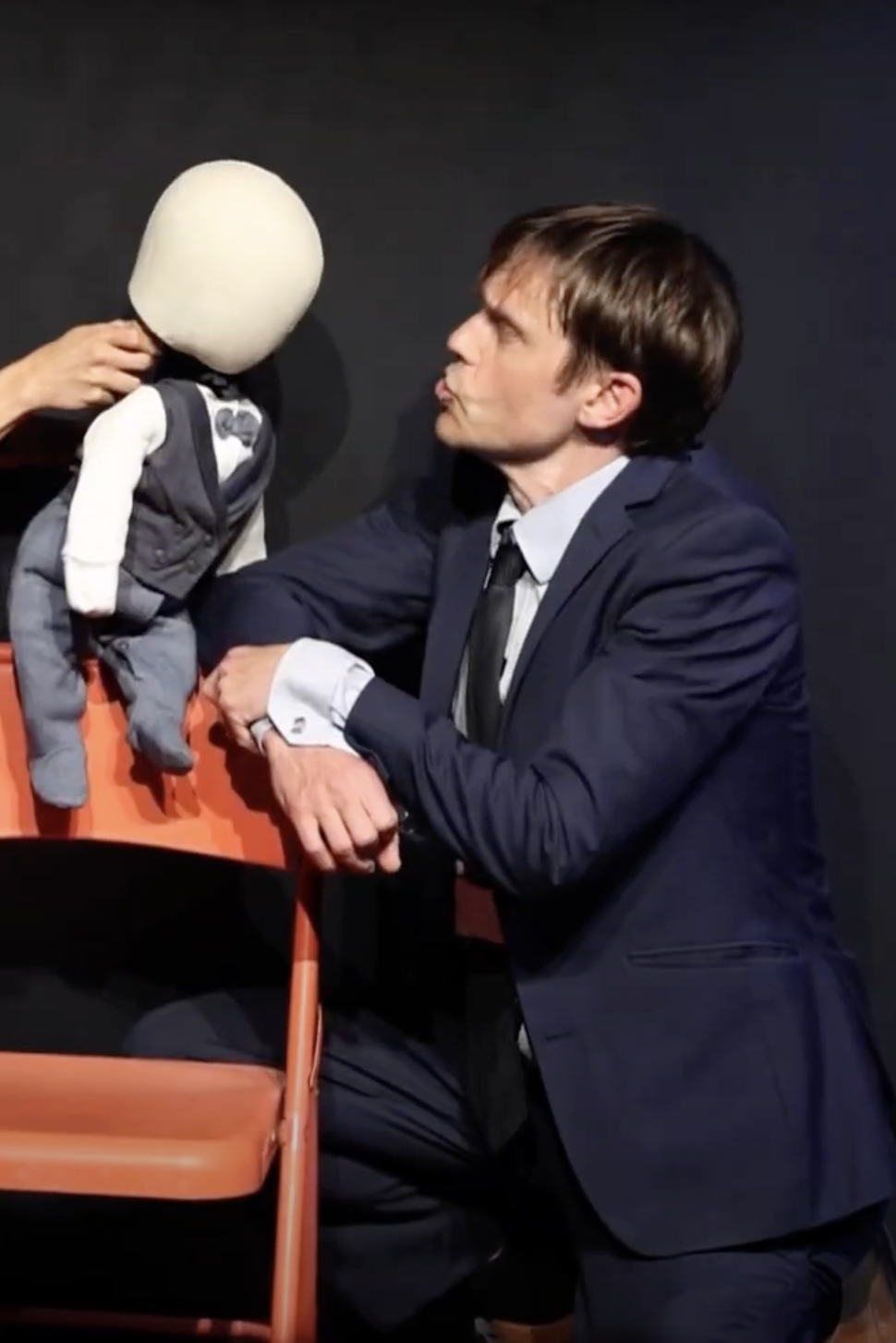
Parris is commanding in the central role, a leaf-cutter ant caught in the corporate machine. As events build to an almost hallucinatory crescendo, his mental unravelling is cleverly physicalised, and I love the disconcerting effect of the baby-sized puppet-colleague (operated by Teele Uustanti), its words spoken into a microphone by musician-performer Mike Coxhead). The audio-visual design is also impressive, adding to Ben’s (and our) growing sense of disconnection from reality.

Although it elicits plenty of laughs from the audience, The Unstoppable Rise of Ben Manager is fundamentally a brutal and discomfiting piece of theatre – and I’m not sure I’d find it amusing at all if I worked a nine-to-five.

4.3 stars

Susan Singfield

Kanpur: 1857

06/08/25

Pleasance Courtyard (Beneath), Edinburgh

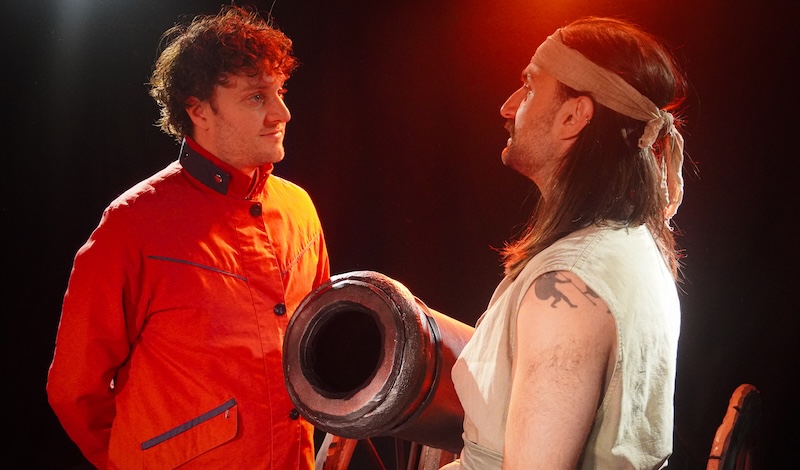
Set in Kanpur, India, in the aftermath of the so-called “Sepoy Mutiny,” an unnamed Indian (portrayed by the play’s author, Niall Moojani) is sentenced to death for insurrection. The captive is a Hijra, often described as ‘the third sex,’ who are traditionally assigned as male at birth, and can decide which gender they wish to assume in the fullness of time. The officer in charge of the execution, played by co-director Jonathan Oldfield, offers his victim an opportunity to speak, or rather demands that they do so. Afterwards, they will be strapped to a cannon and blown apart in front of a crowd of onlookers – or, as we’re known in these quarters, a Fringe audience.

A serviceable-looking cannon has been sourced, and it’s pretty much the only prop in evidence. I can’t help thinking about the difficulties of bringing such a cumbersome weapon down into the Pleasance Courtyard’s ‘Beneath’ performance space, but happily that’s not my job.

Oldfield’s officer serves in a distinguished Highland regiment, though his accent is – perhaps inevitably – cut-glass English. Now, he suggests, is the time for the condemned to explain what has brought them to this awful situation. A garrulous sort, the officer can’t stop interrupting his victim’s narrative, asking awkward questions, offering his own privileged perspectives, even at one point picking up a guitar and lending some lilting accompaniment.

Kampur: 1857 has interesting points to make about the nature of colonialism, reminding us that, during the conflict there have been acts of barbarism on both sides – though these observations come from Oldfield’s character, speaking from the more comfortable point of view of somebody who isn’t about to be evenly distributed across the landscape, and whose side’s reaction to the mutiny has been massively disproportionate.

The piece, which lies somewhere in that strange no-man’s-land between storytelling and drama is at its best when the two characters are exchanging views, bickering, joking, vainly trying to bring each other around to some shared worldview. Oldfield gets the best of it, his sneering superiority played at full-throttle, while Moojani’s dialogue is more reserved and contemplative. Meanwhile, tabla player Hardeep Deerhe provides a rhythmic accompaniment to his words.

It’s impossible not to feel swept up in the play’s final moments, as the victim waits, helpless and silent, their final seconds ticking inexorably away…

3.8 stars

Philip Caveney

Single Use

06/08/25

Pleasance Courtyard (Bunker Three), Edinburgh

Ella’s life is a muddle: she’s struggling to separate her mounting troubles and figure out how to deal with them. A bit like her recycling.

Ella (Verity Mullan) is an expert procrastinator. She’s unfulfilled by her bar job, but can’t be bothered to look for anything else. She likes the idea of her allotment, but tending to it is a step too far. She never pays her rent on time and doesn’t get on with her flatmate anyway. She cares about the planet, but it’s not her fault takeaways are delivered in plastic boxes – and who has the energy to cook? From the outside, it’s clear that Ella is depressed. It’s just that she hasn’t realised it yet.

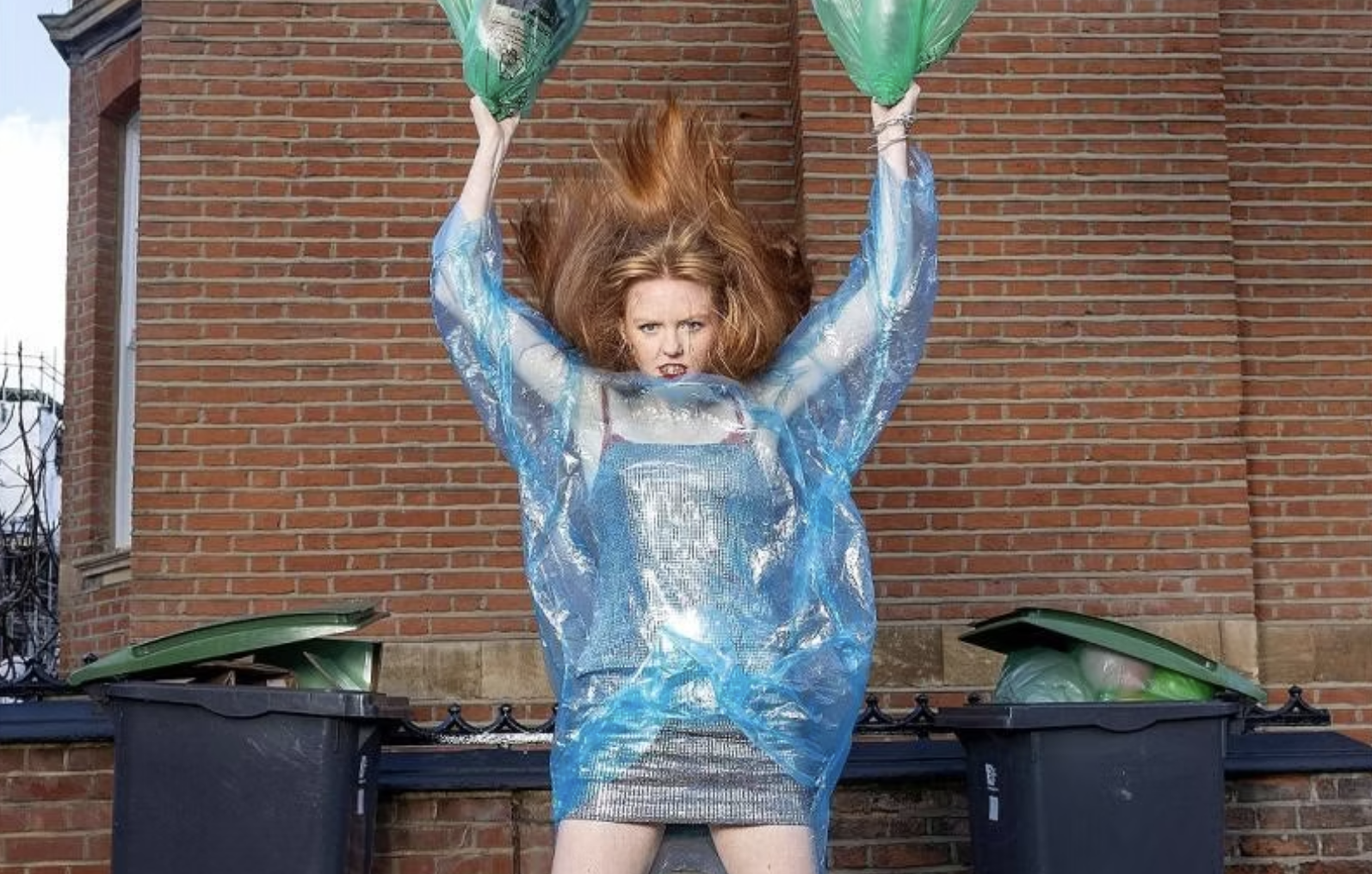
Written by Mullan and directed by Emma Beth Jones, Single Use works well as a character study. Mullan is an engaging performer, imbuing Ella with a winsome vulnerability and spark. I particularly enjoy the physical comedy – her exaggerated sense of repulsion as she deals with her icky bin bags; the slurping of beer from Tupperware – all perfectly complemented by Flick Isaac-Chilton’s sound design.

However, there are too many disparate plot strands competing for our attention and it’s not always clear who the various voice messages are from. I’m confused by ‘Stusi’ (Ella’s young stepsister), who is first described as someone to whom “puberty has not been kind” – leading me to assume that she is about thirteen years old – but then turns up in a car to give Ella a lift home. The climate crisis element feels particularly under-developed, with the tantalising messages from Malaysia left to fizzle into nothing.

Ultimately, there are some promising ideas here, but they perhaps need a little more cohesion and development for this piece to fully realise its potential.

3 stars

Susan Singfield

Alright Sunshine

03/08/25

Pleasance Dome (Jack Dome), Edinburgh

Edinburgh playwright Isla Cowan is making quite a name for herself in Scottlish theatre – and it’s easy to see why. We’ve watched two of her previous pieces (2023’s And… And… And… and 2024’s To Save the Sea) and been mightily impressed; today’s production of Alright Sunshine is even better: an intense monologue about being a woman, being a police officer, and the darkness lurking behind sunny days on the Meadows. 

PC Nicky McCreadie (Molly Geddes) is dedicated to her job. It comes first: before her family, before her relationships, before her health (who has time for eggs for breakfast when there’s a Greggs on the way to work?). Her dad was polis too, and she’s determined to be the kind of officer he’d be proud of… if he were alive. She’ll be as strong, as focused, as brave as he always urged her to be. She won’t give in to her feelings. She won’t cry. She won’t be weak like her mum. She won’t be a girl.

Directed by Debbie Hannan, Cowan’s taut, almost poetic script is brought powerfully to life by Geddes’ mesmerising performance: a tour de force with real emotional heft. The playful, observational tone of the opening sections – where the park’s ‘timetable’ is humorously detailed – is skilfully undercut by the gradual disclosure that all is not okay in PC Nicky’s world. She’s seen too much, given up too much, suppressed too many emotions in her bid to be the perfect policewoman. Now that carefully-constructed carapace is breaking apart and she has no idea what she’s supposed to do.

It would be a crime to reveal any more than this; suffice to say that this is a compelling play with an important message at its heart. If you can watch it without giving in to your feelings, without crying, without being a girl, then you probably need to talk to someone. Soon.

5 stars

Susan Singfield

Hold the Line

02/08/25

Pleasance Courtyard (Bunker Two)

Hold the Line is the type of theatre that speaks to its time. Right here, right now, when the nation’s beloved NHS has been starved of funds for the past two decades, is exactly the moment for writer/performer Sam Macgregor to shine a spotlight on one of its least glamorous aspects, the 111 non-emergency helpline.

Gary (Macgregor) is a call-handler. The job has more in common with other call-centre work than it does with what we usually think of as healthcare, but with emotional trauma thrown into the mix. In amongst the standard queries there are, of course, the timewasters, ranging from the humorously trivial (“I’ve got a lash in my eye”) to the pointlessly abusive (“Fuck off!”). But there are also desperate people who, unable to get a GP appointment or unwilling to face an eight-hour wait in A&E, stretch the definition of ‘non-emergency’ beyond recognition, forcing Gary to exceed his remit. He’s not a medic: how can he be responsible for matters of life and death? And yet here he is, the only point of contact in a situation he’s not trained for, as his boss tells him there’s no clinician available just yet, so keep the patient on the line… 

Macgregor imbues the protagonist with a raw humanity, while Gabriela Chanova takes on the supporting roles, most notably Tim, calling about his diabetic dad, and Tony, Gary’s supervisor. Regular disembodied tannoy announcements remind Gary (and us) that he has targets to meet, that ‘comfort breaks’ are essentially selfish, causing waiting times to escalate, and that everything he does is being monitored. There is no downtime, no space to process difficult calls and no information available about the outcomes. As so often seems to be the case, the caring professions are not cared for. 

Director Laura Killeen utilises the small space well: Tony’s agitated pacing back and forth along the same path, over and over, serves to underscore the repetitive nature of the work, as well as the  sense of being on a treadmill, going nowhere fast. I also like the simplicity of the design (by Nalani Julien) with its central focus on Gary’s desk, and the cunningly hidden phones, which are used to good effect in the frenetic ‘workout’ routine, highlighting Gary’s inner turmoil. 

I have just one criticism: the section where Macgregor plays ‘Top Brass’, showing how Tony faces the same pressures as Gary, makes some important points, but it’s somehow weaker than the rest of the play, the polemic less artfully disguised. 

That aside, Hold the Line is a tight two-hander, holding up a dark mirror to the state of our health service. Voices like Macgregor’s highlight what’s happening – and hopefully help to bring the change we need. 

4 stars

Susan Singfield

Chloe Petts: Big Naturals

31/07/25

Pleasance Courtyard (Forth), Edinburgh

(Happy to use she or they)

It’s that time again, when Edinburgh explodes with literally thousands of new shows – and for no particular reason that we can determine, first out of the stalls for us this year is Chloe Petts, who has named her show after er… her favourite things in the world (I’ll leave it to you to work out what they might be). She must be delighted with the turnout for her first performance, which sees the capacious Pleasance Forth very nearly packed to capacity. She strolls out and, seemingly without effort, gets the crowd on side.

Okay, it’s not revolutionary stuff, but her confident patter ranges from her formative years – when she found herself avidly embracing the lad culture of the early noughties (and often actually being mistaken for a lad in the process) – to her doomed attempts to hide her sexuality from her straight-laced but well-meaning parents.

As her story unfolds, Petts unleashes a whole barrage of howlingly funny one-liners and, at key moments, conducts a beautifully-timed series of high fives with a young lad in the front row, who doesn’t quite know whether to go with them or cross his arms in mortification.

All in all, it’s a promising start to Fringe 2025 and I leave having enjoyed a really good laugh throughout her sixty-minute set. In a world where such a commodity seems to be in increasingly short supply, what more can you reasonably ask from a stand-up?

4 Stars

Philip Caveney

Theatre Bouquets 2024

It’s been an exciting year for theatre in Edinburgh, so in time-honoured tradition, here are our ten favourite productions from 2024, plus three special mentions.

The House (Traverse Theatre, Edinburgh)

“Everything about this performance – the lighting, the music, the props – is exquisite and I love the piece’s grisly sense of humour, its celebration of the darkness of the human soul…”

The Giant on the Bridge (Traverse Theatre, Edinburgh)

“A complex, labyrinthine piece that explores a whole range of different moods, moving from plaintive acoustic ballads to propulsive electric rock…”

Blue Beard (Lyceum Theatre, Edinburgh)

“All about the seductive allure of darkness, the impulse that makes us devour murder-mysteries and glamourise the bad guys…”

The Sound Inside (Traverse Theatre, Edinburgh)

“Adam Rapp’s exquisite play has all the qualities of a great novel, pulling me deeper and deeper into its labyrinthine heart, providing the audience with puzzles to solve and mysteries to ponder…”

VL (Roundabout at Summerhall, Edinburgh)

” A whip-smart comedy that also has some incisive things to say about the difficulties of adolescence and the importance of friendship…”

Summer of Harold (Assembly Checkpoint, Edinburgh)

“An hour-and-a-half of impressive theatre, with snort-out-loud humour as well as profound emotional moments…”

The State of Grace (Assembly Rooms, Edinburgh)

“Whenever I thinkI’ve got the measure of the piece, it twists in another new direction, giving fresh food for thought, breaking down the barriers that I’ve carried around in my head for years…”

A Streetcar Named Desire (Lyceum Theatre, Edinburgh)

“Increasingly resembles a deranged carousel with the players caught in its unhealthy embrace, unable to get off the ride until it arrives at its ghastly destination…”

Angels in America: Part One – The Millennium Approaches (Bedlam Theatre, Edinburgh)

“It’s astounding what EUTC manage to achieve with their limited budget: the final scene in particular is a coup de théâtre…”

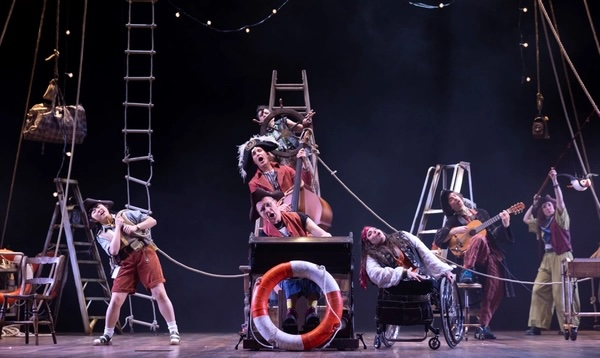
Treasure Island (Lyceum Theatre, Edinburgh)

“A must-see for the festive season – you’ll laugh, you’ll tremble, you’ll tap your feet to the jaunty jigs and reels!’

SPECIAL MENTIONS

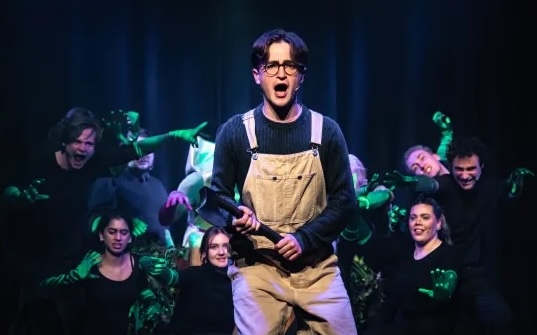
The Little Shop of Horrors (Church Hill Theatre, Edinburgh)

Rebels and Patriots (Pleasance Courtyard, Edinburgh)

Weer (Traverse Theatre, Edinburgh)

Susan Singfield & Philip Caveney

The Daughters of Roísín

24/08/24

Pleasance Courtyard (Bunker 1), Edinburgh

The Daughters of Roísín, written and performed by Aoibh Johnson, is an ode to the women of Ireland, whose histories are too often forgotten. Serving as a kind of companion piece to Luke Kelly’s 1980 poem, For What Died the Sons of Roísín? this play is a poignant reminder of what the country’s women sacrificed.

By now, we all know about the infamous Magdalene Laundries, where so-called ‘fallen women’ were sent to work before having their babies, which were then taken from them and sold to wealthy adoptive families. But even those who avoided the overt cruelty of the convents were failed by a Catholic state that viewed them as sinners.

Directed by Cahal Clarke, this play from Wee Yarn Productions tells the tale of Johnson’s great-grandmother, who fell pregnant as a teenager. Her vulnerability is highlighted by the phrase she uses to insist her parents let her go to a dance (“I’m almost an adult; I’m seventeen”), which segues into a mournful lament (“I’m only seventeen!”) when she discovers she is going to have a child. After all, how was she supposed to know? No one ever spoke about sex. She didn’t understand what she was doing.

Johnson’s performance is utterly compelling: she flits effortlessly between the past and the present, breaking the fourth wall to draw us in with direct questioning, then clipping up her hair and becoming the frightened young woman confined to her room, with only the tiniest of windows to peek out of for the nine months of her pregnancy. No one must see her; her ‘sickness’ would bring shame to the family. And, when she gives birth, the baby – Johnson’s grandfather – is spirited away and adopted.

This is a lyrical piece of work, blending poetry, song and prose, at once a scathing condemnation of the church and a love letter to Ireland’s lost women. Oisin Clarke’s simple lighting and sound work well, allowing breathing space for the moments of silence and darkness, which are eerily effective.

One of my favourite things about the Fringe is the sheer breadth of what’s on offer; I love the fact that serious plays like this sit alongside stand-up comedy and circus acts and everything in between. The Daughters of Roísín is a thought-provoking, important piece of theatre, and I’m glad it’s found a home here at the Pleasance.

4.3 stars

Susan Singfield

Rita Lynn: Life Coach

07/08/24

Pleasance Dome (Ace), Bristo Square, Edinburgh

My suicide note was so good, it made me want to live.

Enter Rita Lynn, life coach extraordinaire. After all, who better to advise the rich and foolish than a woman at rock bottom with a penchant for hard drugs? 

Imogen Wood (Louise Marwood) used to be a dancer, but it turns out no one wants to employ an addict, who disappears for days on end, then turns up drunk, hungover or high. Stuck in a codependent relationship, she can’t see any way out – until a chance encounter with a wealthy worrier sparks an audacious thought and Imogen’s alter ego, Rita Lynn, is born. For just £250 per hour, she’ll counsel ‘Helen’ – and all her well-heeled friends.

Loosely based on Marwood’s own experience with addiction, this is a cleverly crafted tragicomedy. Not only is her performance a real tour de force, the writing is mightily impressive too; Marwood is clearly a talent. 

She’s extraordinarily engaging, one of those actors who seem to carry their own light, and so we’re irresistibly drawn to Imogen despite her bitchiness, able to see beneath the brittle façade she’s constructed to protect herself from her inner demons. We want her to beat her addiction and emerge happy on the other side.

Marwood also plays a raft of supporting characters, including her toxic boyfriend, her therapist, her clients and her best friend, switching from one to the other, sometimes mid-sentence, never leaving us in any doubt about who she’s meant to be. This is a heightened, almost melodramatic piece, the humour emanating from Imogen’s outrageousness, as well as her biting criticism of the way society wants her to behave. She’s caustic and dismissive, bold and fearless – and as fragile as can be. 

At once laugh-out-loud funny and desperately sad, Rita Lynn: Life Coach is a must-see show. Just don’t be tempted to employ her to sort your problems out. 

4.8 stars

Susan Singfield
Rebels and Patriots

05/08/24

Pleasance Courtyard (Upstairs), Edinburgh

“The villainy you teach me, I will execute, and it shall go hard…”

This Israeli-Palestinian-British co-creation, written by Nadav Burstein and co-produced by Floating Shed and Flabbergast, provides a timely discourse on the devastating nature of war, where ordinary people of all stripes are sacrificed to serve the interests of a powerful few.

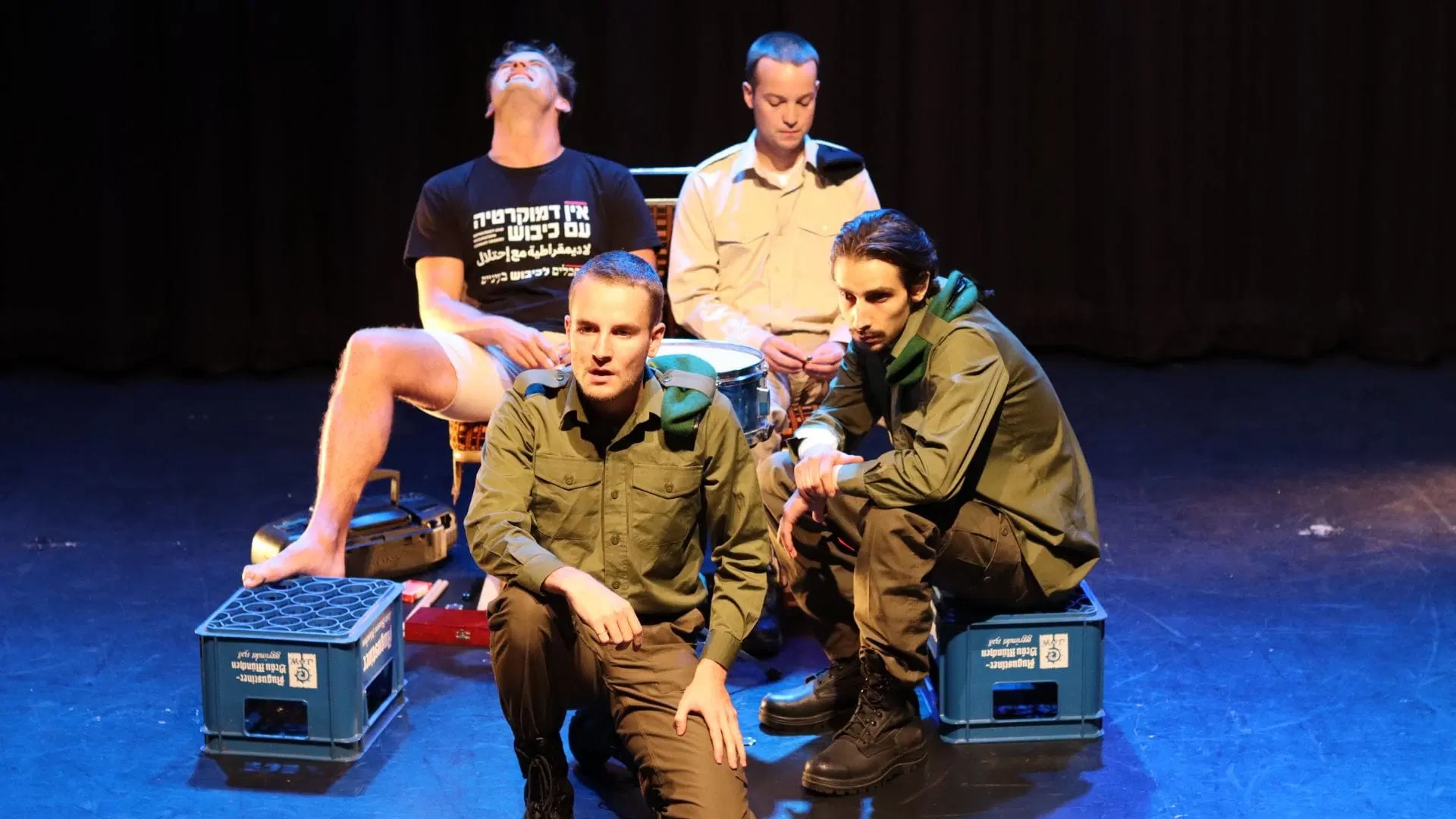
The play opens with Wonder Woman and Albert Einstein drinking vodka with two friends, as the teenage protagonists prepare for a fancy dress party. This serves to underscore the quartet’s youth, engaging our sympathy as we realise that three of them have been conscripted into the Israeli Defence Forces. The fourth (Harvey Schorah) has an exemption, courtesy of Crohn’s disease.

Burstein’s efficient deployment of the small cast is impressive: through their stories, we see multiple perspectives on the Israeli-Palestinian conflict. There’s the combat pilot (Tom Dalrymple), who’s scared to kill, but believes Israel has no choice but to fight its enemies: “If you wrong us, shall we not revenge?” Then there’s Osher (Tarik Badwan), half-Palestinian and in active service. His name means happiness but he feels torn apart, traumatised by what he’s forced to do. Burstein’s character, meanwhile, is trying every trick in the book to avoid serving in a war he thinks is wrong, even turning to self-harm. It’s all very well for Schorah’s character to go on protest marches and tell his friends that they should rebel: everything he says is right, but they’re in the thick of it, and they’re terrified.

I’m impressed by the openness with which this young company approach this thorniest of topics, gently urging us to interrogate everything we think we know. Shylock’s most famous speech is paraphrased and repeated, refrain-like: “Hath not a Jew…? Hath not an Arab…? If you prick us, do we not bleed?”

Schorah’s character works well as a mirror for the audience. He’s on the outside, like us, making judgements from the comfort of our living rooms. Don’t be misled: the play makes no excuse for genocide. But it does remind us that, when we’re placing blame, we need to focus on the powerful, not the powerless.

Theatrically – as one might expect from Flabbergast – the piece has a fragmented structure, spotlighting first one character and then another. Loosely stitched with a sprinkling of history and Shakespeare, it all adds up to something very thoughtful, and the cast are keen to hear what audience members think. If only the world’s political leaders were as committed to constructive dialogue.

4.5 stars

Susan Singfield