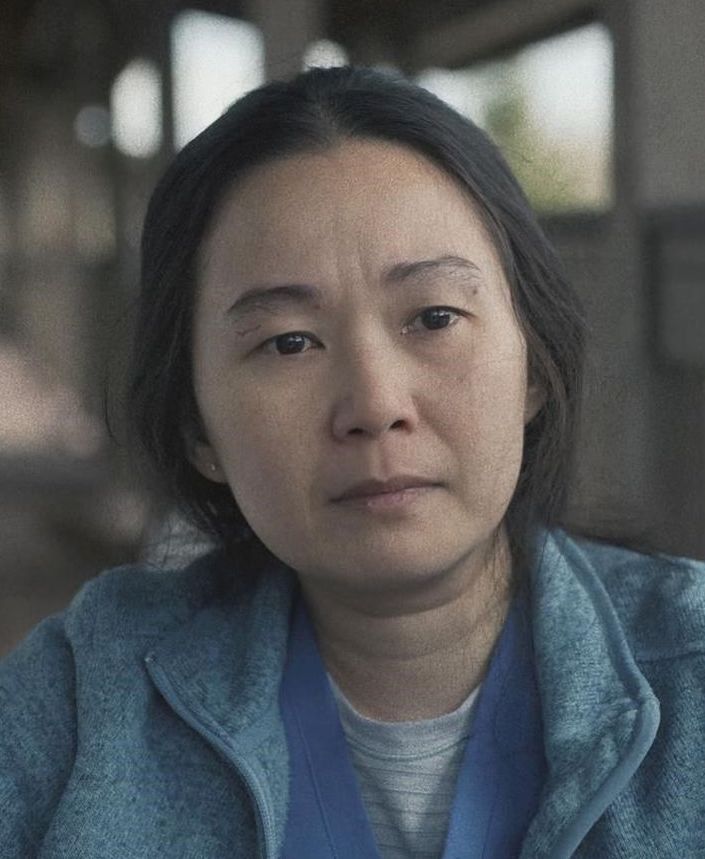
Samantha Morton

The Odyssey

18/07/26

Cineworld, Edinburgh

‘See it on the biggest screen possible.’

Advice we’ve often given and something we had every intention of following ourselves in the case of Sir Christopher Nolan’s latest release. But, for the first time ever, finding an empty seat in an IMAX screening in Edinburgh proves impossible – unless we’re prepared to sit in the very front row. (Done that once, never again.) This development is simultaneously annoying and wonderfully heartening. Perhaps that much-rumoured resurgence in cinema attendance, fuelled by the likes of Obsession and Backrooms, is actually gathering momentum. Or is it just Nolan’s astute handling of the movie’s advertising, coupled with the Oscar success of Oppenheimer that has led to this stampede for tickets?

Whatever the reason, we decide to book in for a standard screening. We’ll revisit in IMAX sometime in the near future. Providing it’s any good, of course. Despite widespread critical acclaim, the online vitriol poured on the film by people who haven’t actually seen it yet means that this one has much to prove. And happily, it passes every test with flying colours.

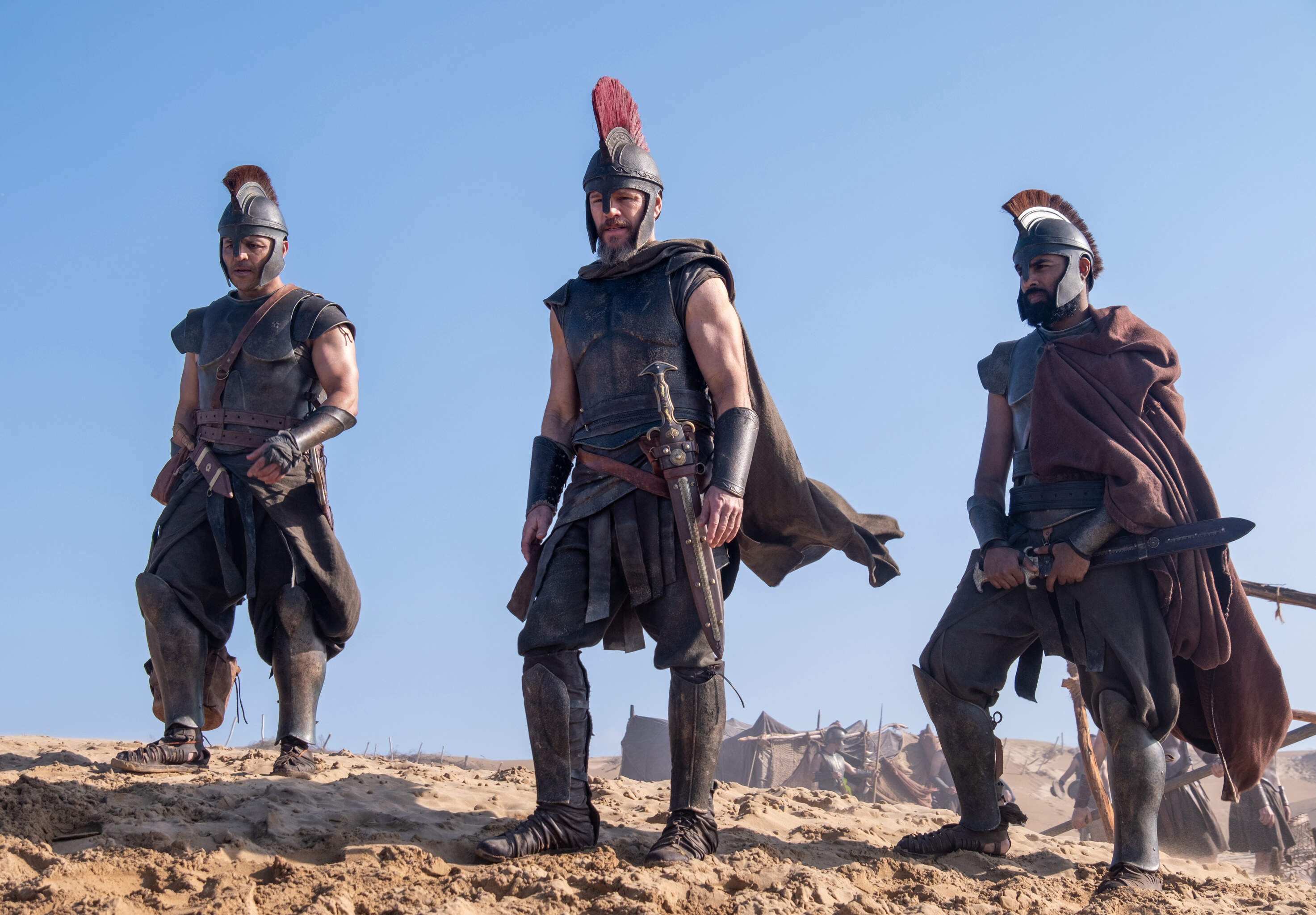
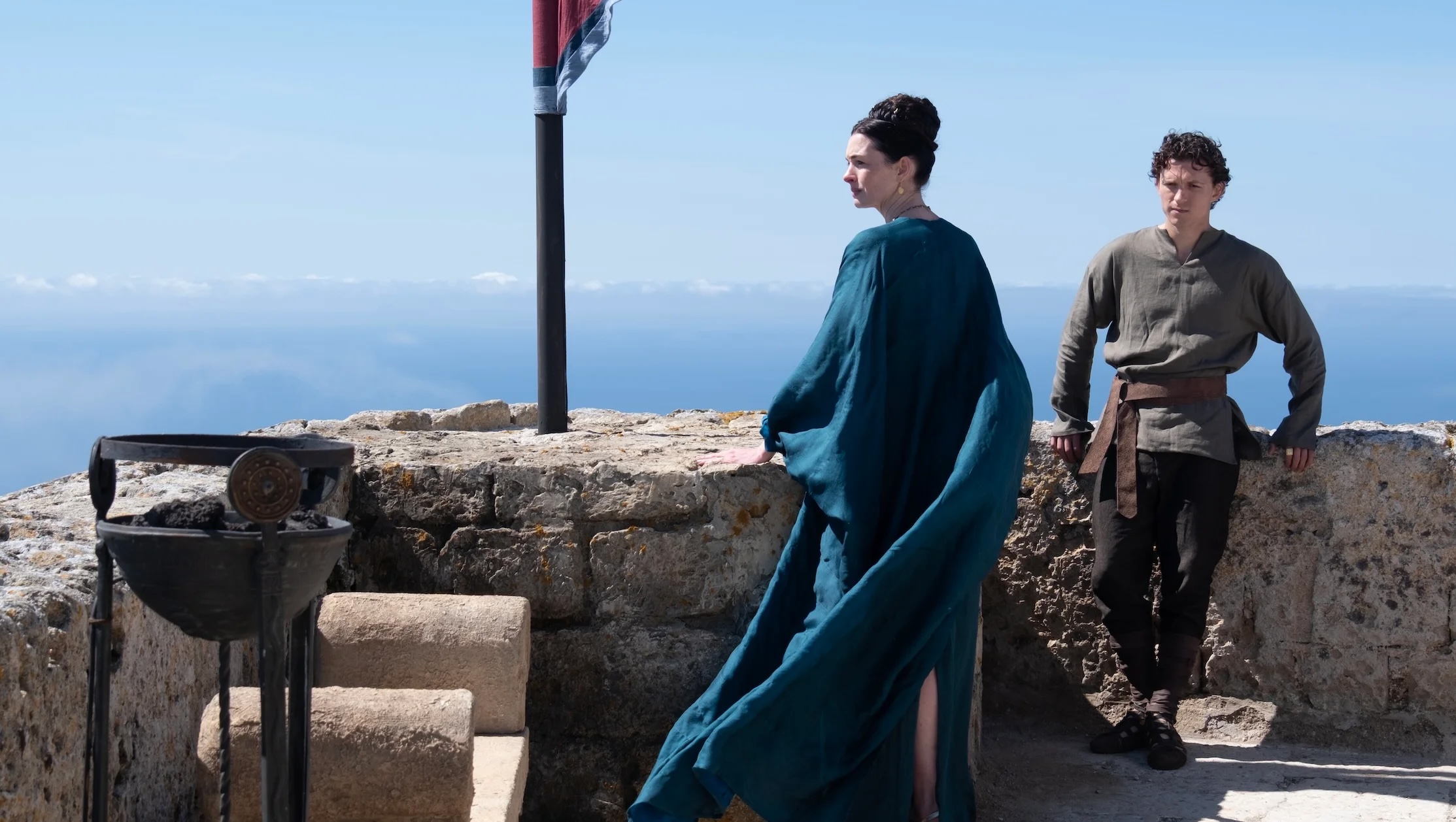
We all know The Odyssey, of course. Homer’s epic poem is still the bane of many young students’ lives as they are obliged to read their way through its meandering stanzas, which focus on the twenty year ordeal of its central character, Odysseus (played here rather wonderfully by Matt Damon). Our hero, forced for the first decade to play a key role in the siege of Troy, then has to spend the next ten trying to find his way back to Ithaca, where his faithful wife, Penelope (Anne Hathaway), and his loyal son, Telemachus (Tom Holland), still await his return.

But to get to them, Odysseus and his crew must take on all manner of obstacles: the giant cyclops, Polythemus (Bill Irwin); the powerful witch, Circe (Samantha Morton); the Lotus-dispensing Calypso (Charlize Theron); and, most egregious of all, the Ocean – which, because Odysseus has annoyed Poseidon, is determined to send them all to a watery grave.

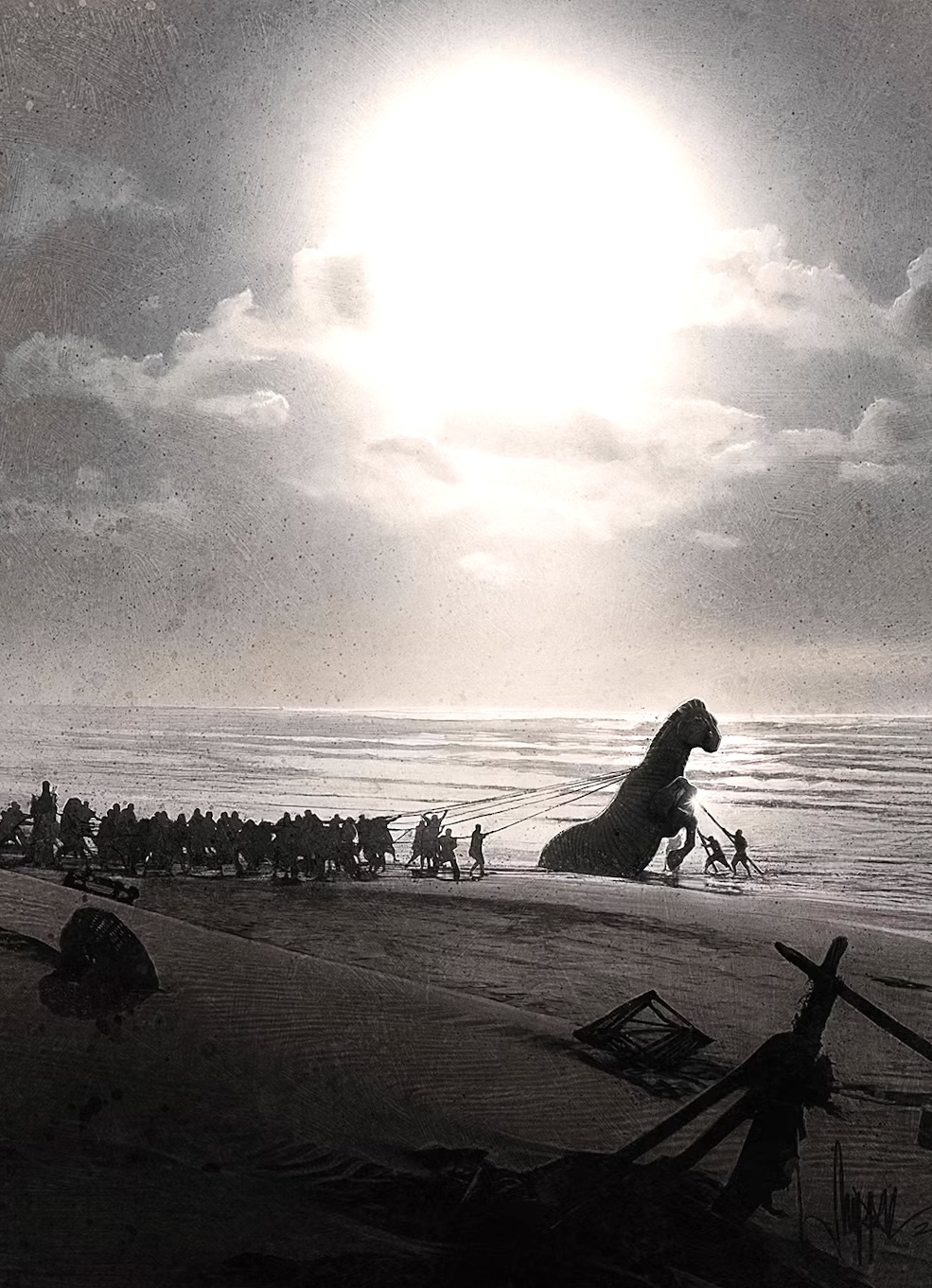
With a running time just short of three hours, this could be a ponderous affair but Nolan (who also adapted the screenplay from the original poem) employs an ingenious non-sequential approach, cutting effortlessly back and forth across the passing years to ensure that no particular sequence overstays its welcome. What’s more, even though most of the situations are familiar from earlier versions of the story (the 1954 Ulysses starring Kirk Douglas springs to mind, as do several of the films featuring the work of stop-motion genius Ray Harryhausen), Nolan always manages to put a different spin on proceedings.

Of course, a tale as packed as this one is sure to have its more memorable sections. The scene where Odysseus and his men are locked in a cave with the aforementioned Polythemus is a particular standout, as is Circe’s transformation of Odysseus’s crew into swine. She uses a hands-on approach like a potter moulding clay, the sequence employing old-school practical effects that recall the work of the legendary Rick Baker.

And if you’re a fan of an enormous climactic dust-up, well, I don’t think you’ll be left feeling short-changed.

The cast is stellar with many big names popping up in minor roles. Robert Pattinson proves once again that he is a terrific actor as the oily, scheming Antinous and all hail to John Leguizamo as the ever-faithful Eumaeous. Much has been made of the casting of Elliot Page as Sinon and Lupita Nyong’o as Helen of Troy, with incensed commentators complaining about ‘authenticity’ as though this is a historical piece rather than a slice of weird fantasy, but both actors give strong performances that more than justify their casting. Oh, and by the way, those American accents serve as a commentary on the current world order, which – when you think about it – makes a lot of sense.

Perhaps the most original addition here is the clarification of just how much two decades of havoc have taken their toll on the central character. In the film’s final section, as Odysseus recalls the cruelty and bloodshed visited upon the people of Troy, this feels increasingly like the recollections of a man suffering from PTSD, finally emerging from a lotus-induced fog and forced to confront the pain his decisions have inflicted on those who followed him.

Make no mistake, this is a superb film: assured, inventive and directed by a man at the very top of his game. I haven’t always loved Nolan’s films but this may just be his masterpiece. Buckle in and get those IMAX seats booked… if you can find them.

5 stars

Philip Caveney

The Whale

11/02/23

Cineworld, Edinburgh

Charlie (Brendan Fraser) is rapidly approaching the end of his life. Since the death of his partner, Adam, he has allowed his health to decline. Inanimate, a binge eater and a housebound recluse, he now weighs in at over 600 pounds and, as his friend, Liz (Hong Chau), repeatedly tells him, if he doesn’t get himself to a hospital he will, inevitably, suffer a massive heart attack. But Charlie has no health insurance and insists on working at every opportunity, teaching English Literature online – though he pretends that the camera on his computer is broken so his students cannot see him.

But Charlie still has one burning ambition, – to reconnect with his estranged daughter, Ellie (Sadie Sink), whom he abandoned when she was eight years old. It’s not going to be easy, because she is hostile to his approaches, blaming him for the fact that her mother, Mary (Samantha Morton), is a heavy drinker and still very much a loner. Into this scenario wanders Thomas (Ty Simpkins), a young missionary, seeking to give Charlie some spiritual help – but mostly looking for his own salvation.

Directed by Darren Aronofsky with a screenplay by Samuel D Hunter (based on his stage play), The Whale was filmed during lockdown, and (very fittingly) feels trapped by its stage origins, confining itself almost completely to Charlie’s dark and claustrophobic apartment. It’s been accused by some as an exercise in fat-shaming, though this seems unfair: Charlie is an engaging and complex character, dealing with grief and addiction. Fraser wears convincing prosthetics, created by a whole team of artists, which serve to illuminate the almost cartoonish grotesquery of his size, while still making us empathise with his plight.

There’s no doubting the power of Fraser’s Oscar-nominated performance in the central role, fuelled to some degree, I think, by his own punishing experiences in the movie industry. In fact, all of the performances here are skilled, particularly Sink’s incandescent turn as an anger-fuelled teenager, determined to exact her revenge on just about everyone she encounters. The scene where Charlie has to offer to pay her to visit him is particularly tragic.

If I’m honest, I think there are better, more nuanced films in this year’s Oscar contenders, but I won’t be at all surprised if Fraser gets the nod for best actor. His performance here is exemplary, and The Whale is a powerful and affecting drama.

4.4 stars

Philip Caveney

She Said

29/11/22

Cineworld. Edinburgh

She Said sets out its stall in the first few minutes. New York Times journalist Megan Twohey (Carey Mulligan) is about to publish a story about women being sexually abused by a presidential candidate, and the accused man calls to refute the claims. He’s boorish and threatening. The story is published, and the victims learn they were right to be afraid of speaking up. While they get death threats and envelopes of dog shit through the post, Donald Trump gets elected president.

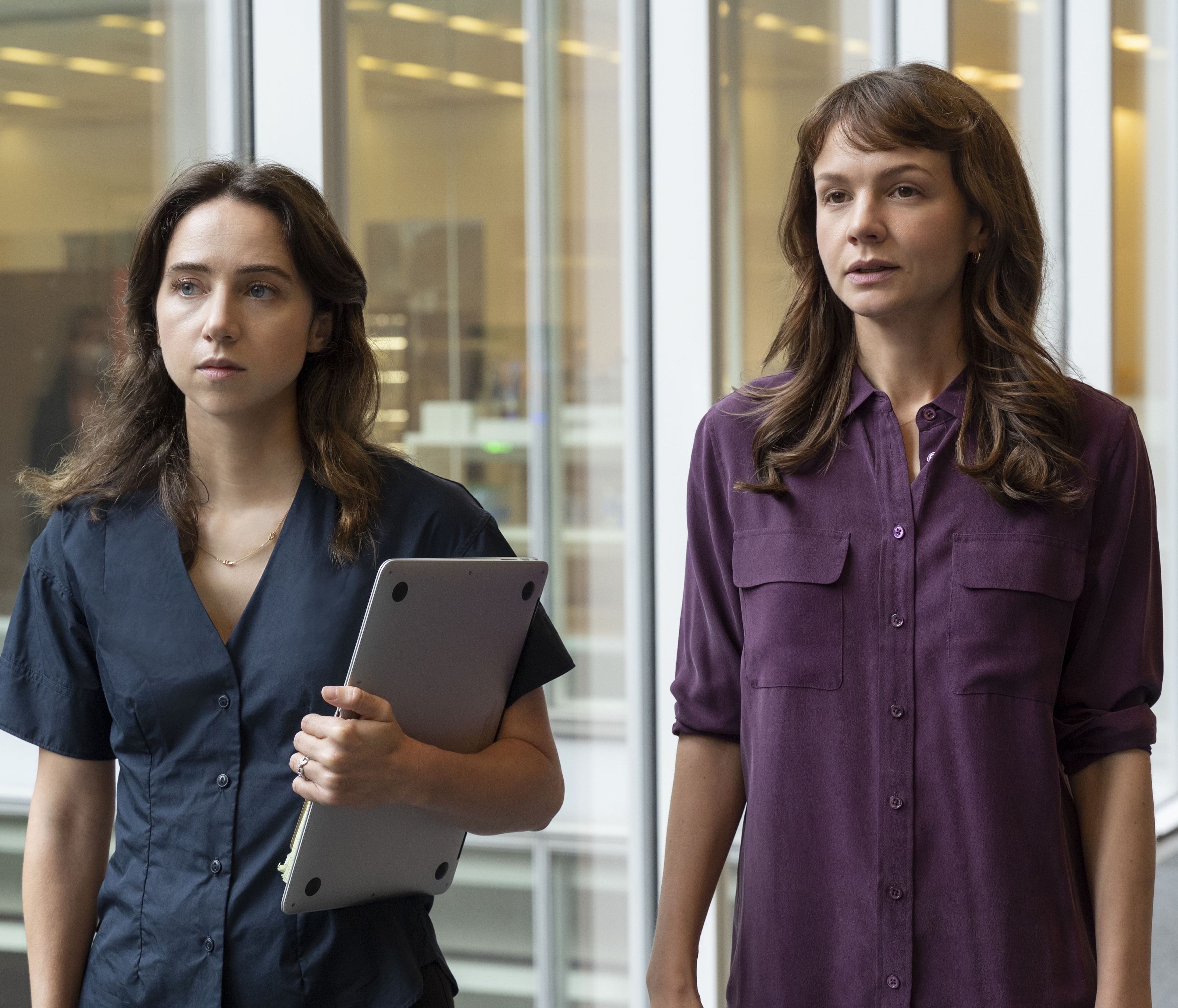
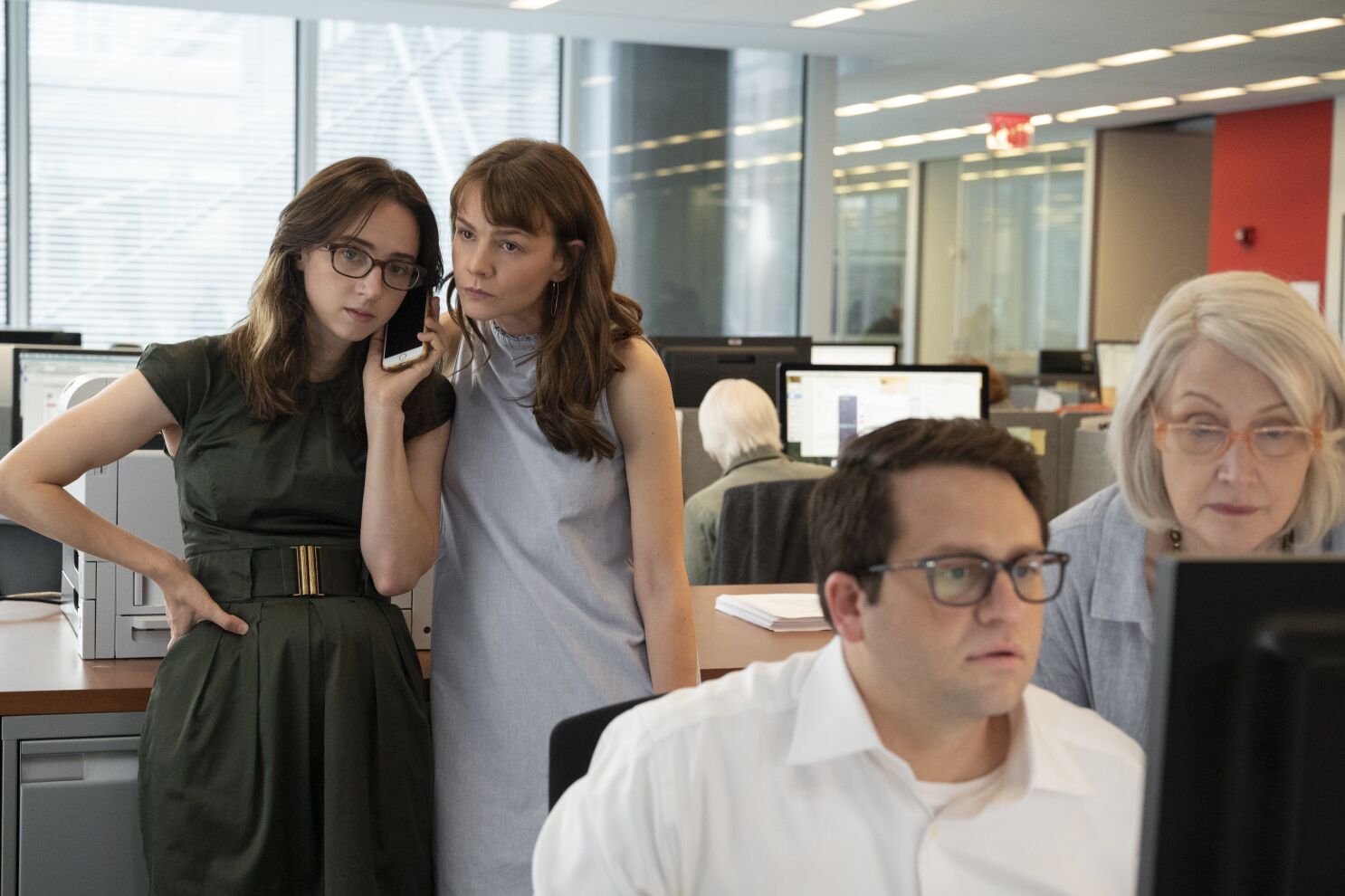
So when Twohey and her colleague, Jodi Kantor (Zoe Kazan), begin to investigate rumours about Harvey Weinstein, they know what an uphill battle they face. The system is skewed in favour of powerful men. Uncovering the truth is relatively easy; acquiring sufficient evidence to publish it is horribly complex. As if persuading understandably anxious women to out themselves to a global audience weren’t difficult enough, there are also NDAs to contend with. How are these malignant settlements even allowed to exist? They’re just get-out-of-jail-free cards for rich arseholes, who can easily afford to spaff megabucks on silencing the people they abuse. But Twohey and Kantor are tenacious, and refuse to give up. It’s not easy for either of them. Kantor has a young family, and Twohey is in the throes of post-natal depression. Calls come at all times of the day and night – both threats from trolls and revelations from sources – but still, they can’t let go. It matters too much. So they grit their teeth and crack on, relying on their partners to do the lion’s share of parenting. (It’s refreshing, actually, to see Ron Lieber and Tom Pelphrey in these peripheral, domestic roles that are usually reserved for women.)

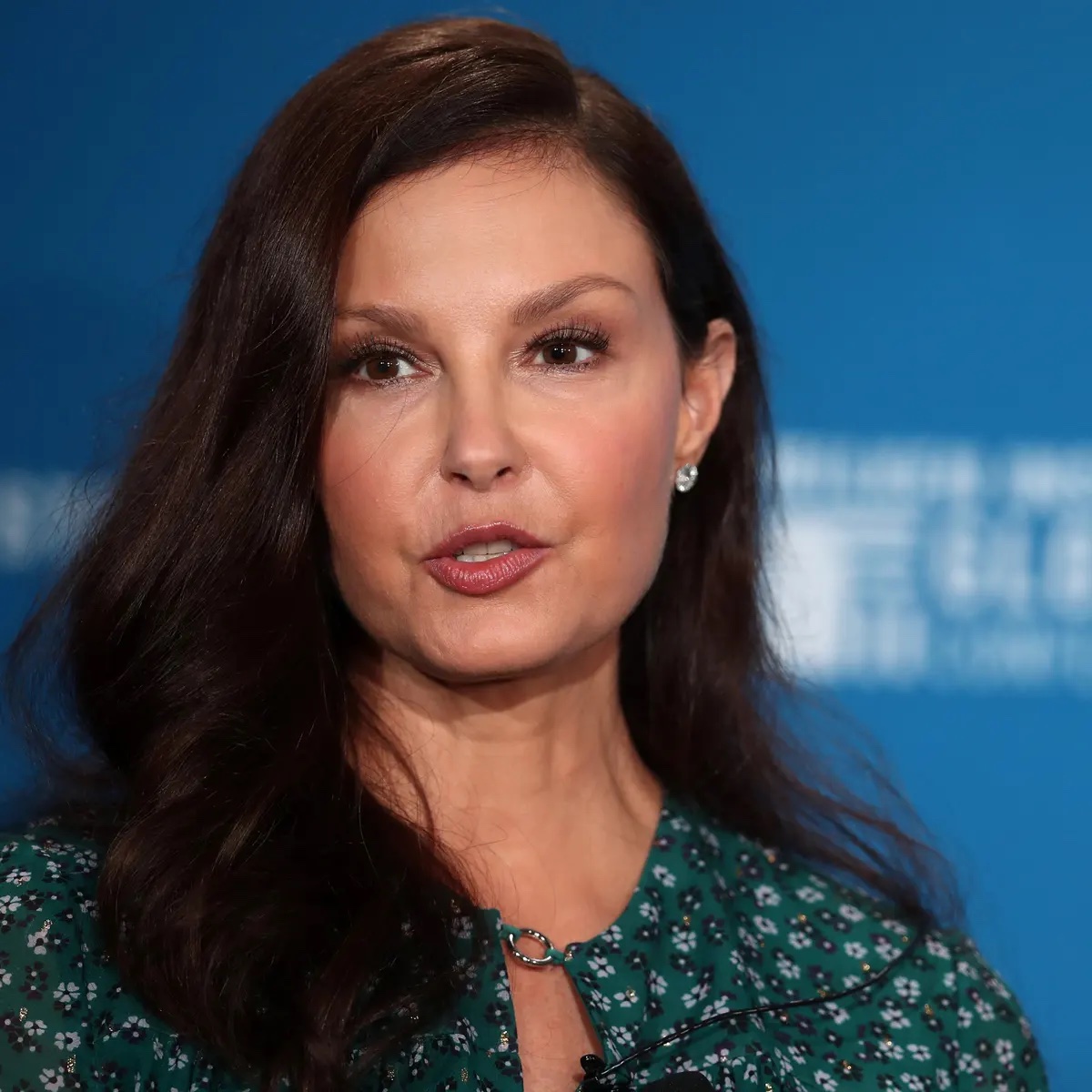
Maria Schrader’s understated direction works well, illuminating the sheer grit required to bring a prolific sex offender to account. The screenplay, by Rebecca Lenkiewicz, draws on the book written by the two journalists, and focuses on the painful process rather than the assaults. This is one instance where telling is better than showing: we don’t need to see these women being abused. Instead, we see the aftermath. We see how, while Weinstein continued to live the high life, perpetuating his attacks over and over again, any woman who dared to reject him or, worse, complain about his behaviour, had her life turned upside down. From Ashley Judd (appearing here as herself) being blacklisted and branded ‘a nightmare to work with’ to Zelda Perkins (Samantha Morton) fleeing to Guatemala, the fallout was immense.

The performances are detailed and meticulous. Kazan and Mulligan both fizz with pent-up energy, and the supporting cast are just as committed. Jennifer Ehle stands out as Laura Madden, attacked by Weinstein back when she was a young assistant, naïve and excited to be working for him. Thirty years later, she has a double mastectomy to deal with, so speaking out seems urgent, not least to show her daughters that they don’t need to internalise abuse.

She Said does a good job of highlighting the inherent power discrepancies in our society, and how ‘consent’ is problematic if one party holds the other’s prospects in their hands. It also shows how we can fight back.

#MeToo.

4.6 stars

Susan Singfield