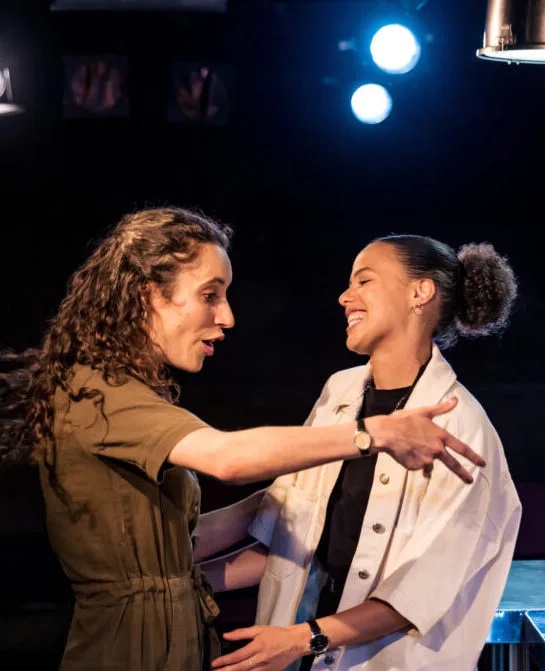
Ensemble Theatre’s three short standalone plays are brought to the Fringe via House of Oz. Written by Hilary Bell and performed by Berynn Schwerdt and Lucia Mastrantone, they form a perfect trinity, and we are treated to ninety minutes of exquisite storytelling.
The opening monologue, Summer of Harold, is all about Janet (Mastrantone), a middle-aged woman clearing out her junk room and reminiscing about the seasonal job she had when she went backpacking in her youth. But nineteen-year-old Janet doesn’t settle for bar work or fruit-picking. Instead, she spends her time in London working as a housekeeper for the titular Harold.
Pinter.
That’s right. Janet – whose story is inspired by the true-life adventures of one Margaret Woodward – provides holiday cover for Harold Pinter’s live-in help. And that summer, with Pinter and his wife, the novelist Lady Antonia Fraser, looms large and bright in Janet’s memories.
Mastrantone is tiny but she fills the stage with her glorious portrayals of the Pinters, as well as their many famous friends and her own chain-smoking Kiwi co-worker, Alison. She encapsulates the bold, vivacious swagger of youth, as the two girls bluff their way into a job they can’t do, and then learn how to do it anyway. Bell’s script is beautifully crafted and Mastrantone more than does it justice.
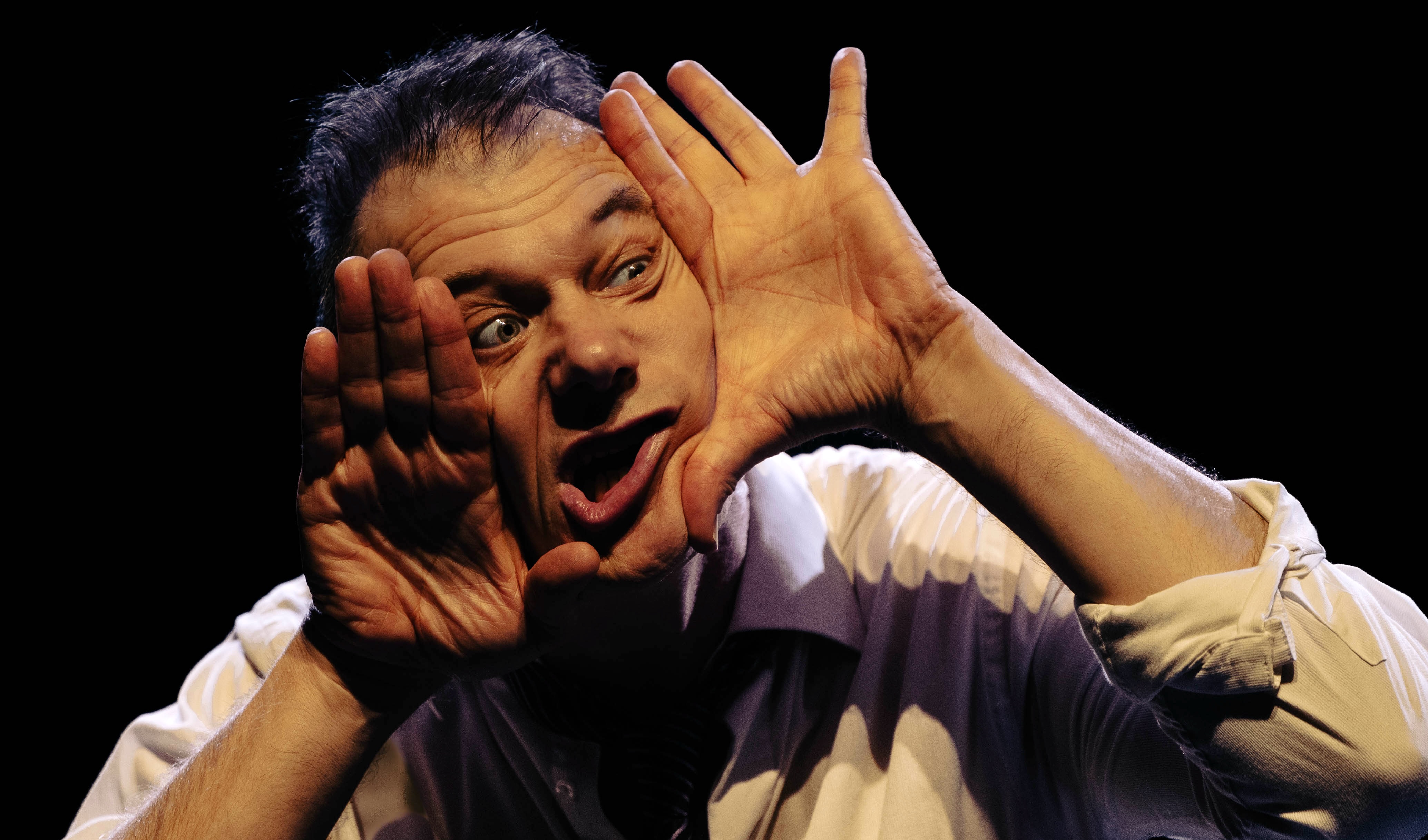
The second monologue, Enfant Terrible, stars Berynn Schwerdt, a man as big as Mastrantone is small, his gangly frame an interesting visual counterpoint to hers as they swap places and a new tale begins.
Gareth is a ceramicist but he’s not as famous as he’d like to be. More pressingly, he’s not as famous as his erstwhile best friend from art college, even though Gareth was the star back then and the work he’s producing now is definitely much better than anything “Mr Pinch-Pot” could create. Definitely. But his ex-pal is being given a big award so Gareth has to attend the ceremony and act like he is pleased.
There’s also a piece of very old and rancid Camembert he needs to deal with…
Again, it’s flawless. This is perhaps my favourite piece of writing of the three (although they’re all great), and Schwerdt’s performance has real emotional heft. His jealousy and resentment are both visceral and palpable – and any creative who says they don’t recognise these feelings is lying!
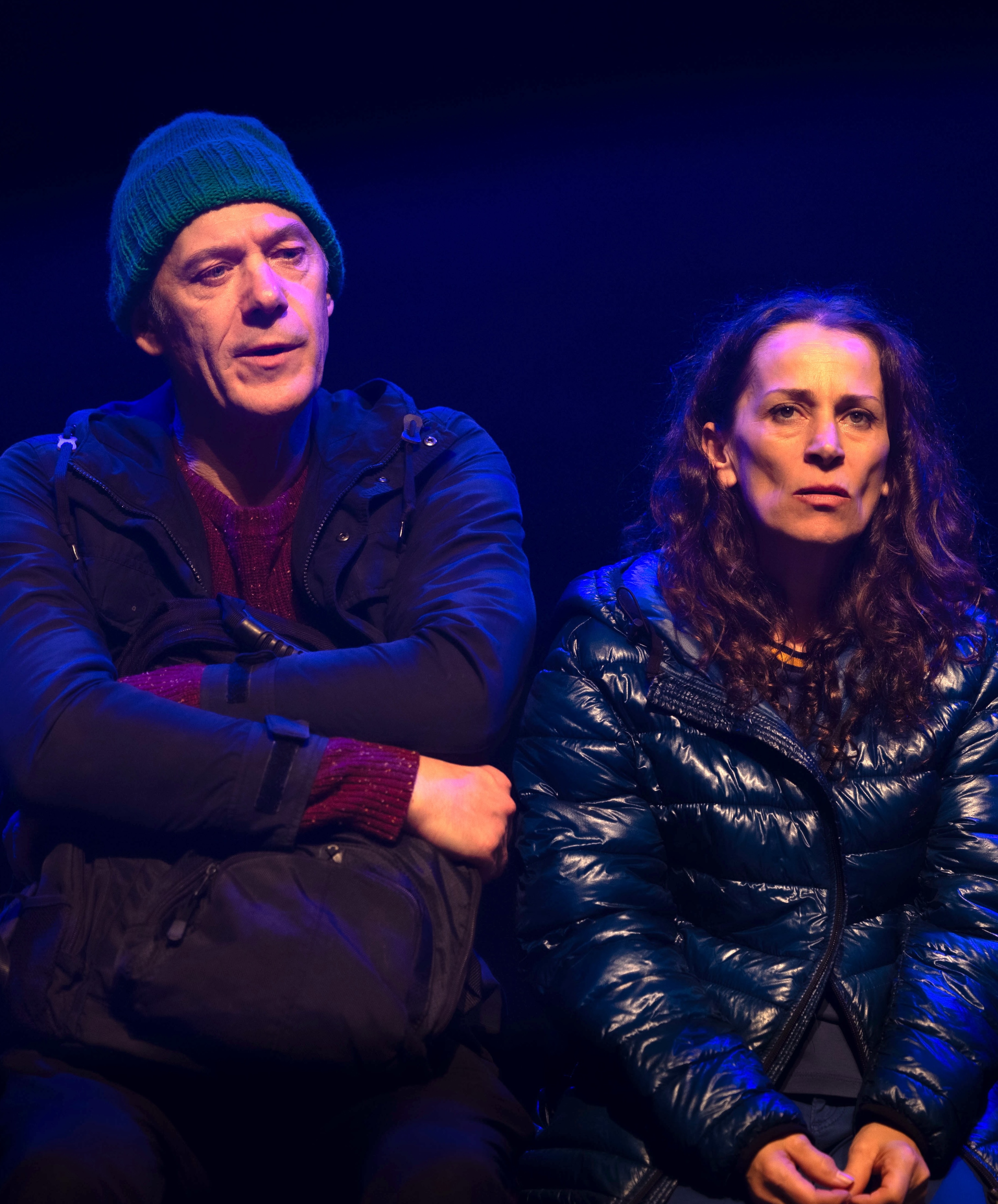
The final piece, Lookout, is a two-hander, with Schwerdt as Jonathan and Mastrantone as Rae, two people in their late 50s. It’s Jonathan’s birthday and they’re up a mountain in their special place, remembering the many times they’ve been here before. They haven’t visited recently though; they haven’t seen each other for a while. And Jonathan has some news for Rae that catches her off-guard…
Unlike the first two plays, Lookout relies on the element of surprise, so I won’t reveal too much about the storyline here. Suffice to say, it’s every bit as engaging as its predecessors, and just as skilfully acted.
Damien Ryan’s direction allows the trio of plays to shine. The transitions are particularly well-handled, overtly playful and theatrical. I especially like the device of using Schwerdt as a kind of silent removal man throughout Summer of Harold, carrying away Janet’s boxes one by one, leaving the stage bare and uncluttered for Enfant Terrible.
If you’re looking for an hour-and-a-half of impressive theatre, with snort-out-loud humour as well as profound emotional moments, then Summer of Harold ticks all the boxes. It’s an absolute pleasure from start to finish.
Flo & Joan are established Fringe favourites, loved by many. I enjoy their quirky songs which are celebrations of all matter of unlikely subjects – waiting for an Amazon delivery, the weirdness of their parents’ ornaments, the pressures when siblings make music together… seemingly trivial subjects mined for their sheer silliness. But I’ve often wondered if they might one day apply their undoubted talents to a single theme.
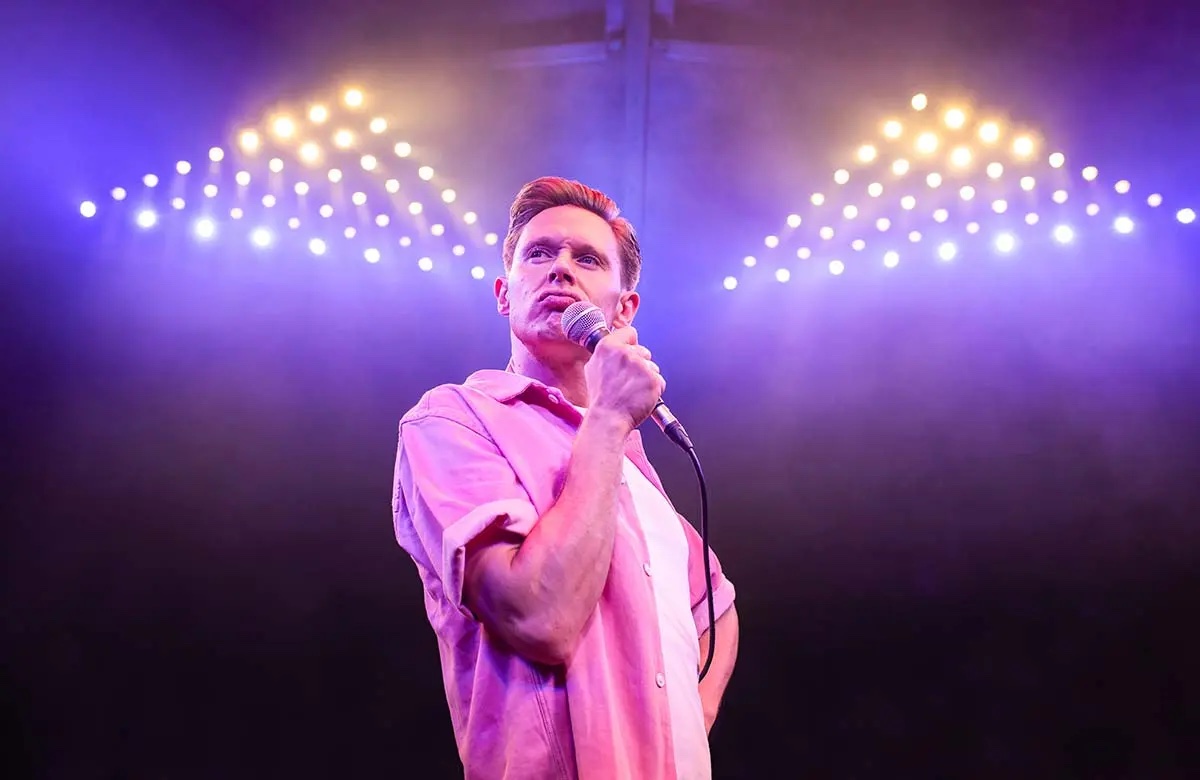
One Man Musical is exactly that, a look at the life of a VERY famous musical theatre entrepreneur – let’s call him “Andy”. He’s played by George Fouracres with such absolute assurance, I can’t help wondering why he hasn’t come to my attention before. He sings, he dances, he tells jokes, he plays the world’s smallest piano and he gives a priceless demonstration of how not to talk to a member of the audience…
Flo & Joan (or Nicola and Rosie Dempsey if you prefer) take a back seat for this one, providing solid support on keyboards and drums respectively and somehow maintaining those trademark impassive expressions. (God knows how, since the sell-out audience spends pretty much the entire hour convulsed with laughter, me included.)
This is wonderfully irreverent stuff and the selection of songs, though as witty as ever, seem to benefit from sticking to one central premise. “Andy”, it turns out, has seen more successful days and is now coasting on his back catalogue. He strives valiantly not to be bitter, but his efforts are in vain. When he sees former partners doing well with other musical collaborators, he can’t resist sticking the knife in.
And he’s keen to point out that a humble white, upper-class, privately-educated lad like him, from a palatial home in England, has really had to struggle to make it in the cut-throat world of musical theatre. A soulful ballad to this effect almost makes me start to feel sorry for “Andy”… until he weighs in with the next bunch of sour grapes.
One Man Musical is an absolute delight and anyone in need of a good laugh should make their way to the Queen Dome where – unless the real “Andy” issues them with an injunction – the show will continue.
Actors Daniel Blinkoff and Tamlyn Tomita, founders of LA Theatre Company Outside In, are committed to making a space where diverse voices can be discovered, evolved and shared. With its almost unimaginable variety of shows (more than three thousand, every day), the Edinburgh Fringe is a perfect match for such an endeavour, and Kacie Rogers’ I Sell Windows is an impressive addition to the programme.
Directed by Jaquita Ta’le, Rogers presents a monologue about love, trauma, thwarted ambition – and selling windows. Casement, sash, bay, awning: ‘Kacie’ can make your dreams come true. But first, you have to stop waiting to be ready and really start living…
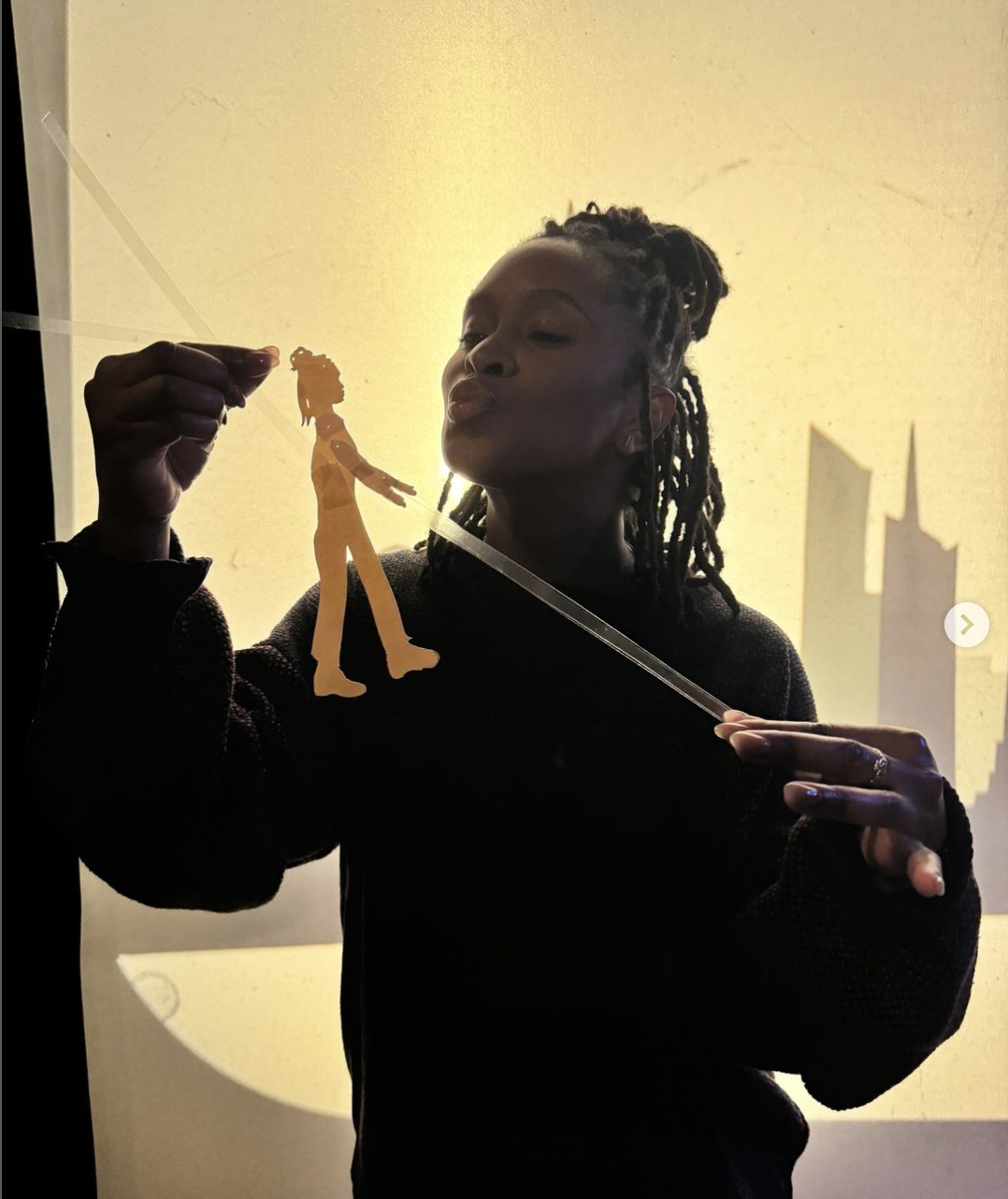
The fragmentary structure of the play reflects Kacie’s uneven mental health, as she struggles to come to terms with the death of her grandfather and the realisation that she may never earn a living as an actor. Reeling from the impact of these twin losses, she begins to implode, jeopardising her relationship and spinning out of control. Her breakdown is beautifully illustrated by the use of intricate shadow puppets (courtesy of Brittaney Talbot and Perry Daniel), as well as a sequence of recurring dreams, lit like the Northern Lights. Along with Rogers’ heartfelt a cappella rendition ofTracy Chapman’s iconic Fast Car, this amounts to both a profound character study and a rumination on the ways in which we are taught to value (and undervalue) ourselves.
Performed with verve, wit and absolute precision, I Sell Windows is a thoughtful play, ostensibly about one young Black woman’s experience, but applicable to every one of us.
At the Fringe, we spend most of our time seeking out new performers whose work we’ve never encountered before. But there are a few honourable exceptions. Back in 2015, as fledgling reviewers at the Festival, we happened upon Chris Dugdale: SleightlyDishonest and were blown away by it. We weren’t magic fans per se (still aren’t really) but something about the man’s delivery, his brain-scrambling routines, his cheeky persona, chimed with us and we’ve seen him pretty much every year since – apart from when the dreaded COVID cancelled the whole Festival in one fell swoop.
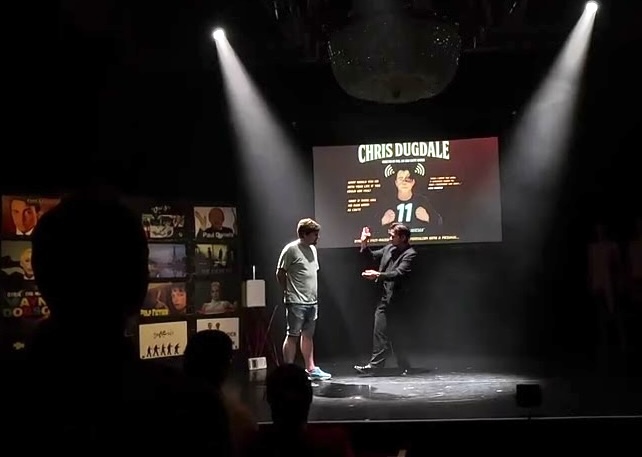
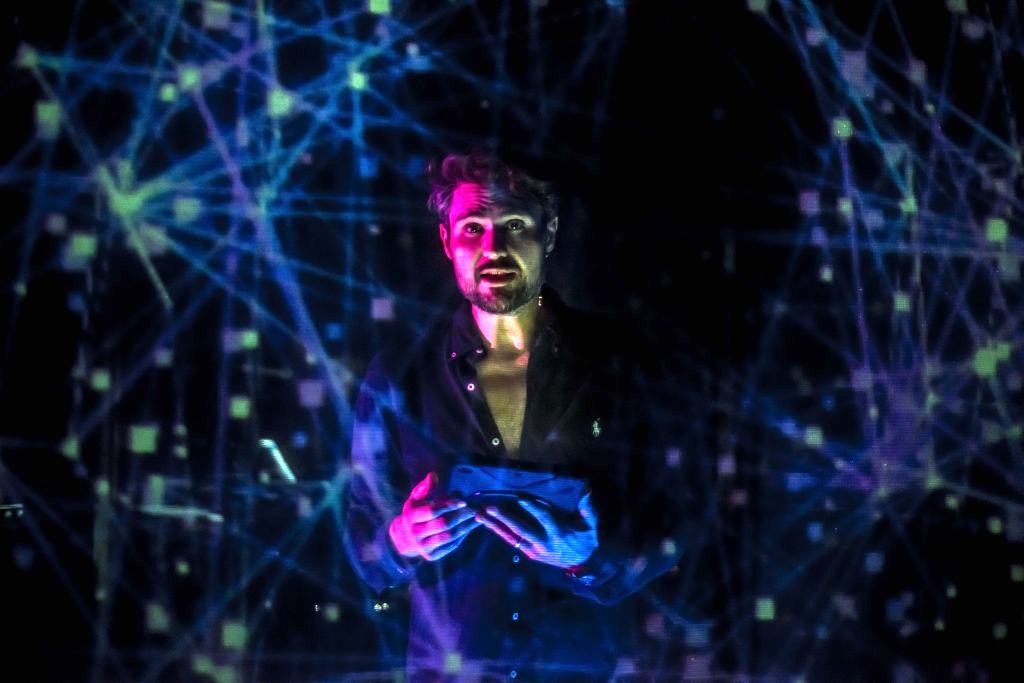
But here he is again with 11 (remember that number), another meticulously arranged head-spinner that is mostly about coincidences – or at least apparent coincidences. One section deals with the attack on the World Trade Centre and the importance of that title is suddenly made clear.
Dugdale is in a bigger theatre than usual and his wife and two young daughters are sitting in the audience (the latter putting their hands up when he asks for volunteers and having to be politely refused). As ever, we find ourselves laughing at the sheer unbelievability of some of the things we’re witness to, especially the examples of close-up magic, where a video camera is focused on the illusionist’s hands as he does a whole series of impossible things with a pack of cards. There are also some examples of mind control that have us shaking our heads in disbelief – and I may be guilty of muttering the odd expletive.
Oh and did I mention Dugdale’s poster collection? There’s a whole wall of them to stage left, a series of seemingly unconnected images…
As ever with these shows, I can’t give too much away because the best approach to Dugdale’s material is to go in with an open mind and prepare to have it opened a good deal more. But I will say that this is the best show we’ve seen from him and, trust me, it’s a very high bar. Those who like the sound of this should make a beeline for The Ballroom in the Assembly Rooms on George Street, where Mr Dugdale is doing unbelievable things every night.
Walking home afterwards, Susan randomly asks me what time it is. I glance at my watch and can’t help gasping. The numbers on the digital display are 9:11.
Another coincidence? Or is that noise I hear the distant sound of Chris Dugdale chuckling maniacally?
August in Edinburgh, and the Fringe was back with a boom! As ever, after seeing so many brilliant productions, it’s been hard to select our favourites, but it’s (virtual) Bouquet time and so, in no particular order, here are the shows that have really stayed with us:
COMEDY
John Robins: Howl (Just the Tonic)
‘Raw and achingly honest….’
The Ice Hole: a Cardboard Comedy(Pleasance)
‘An inspired piece of surreal lunacy…’
Dominique Salerno: The Box Show (Pleasance)
‘One of the most original acts I’ve ever seen…’
The Umbilical Brothers: The Distraction (Assembly)
‘An amorphous mass of nonsense – but brilliantly so!’
THEATRE
Bacon (Summerhall)
‘A whip-smart, tightly-constructed duologue…’
The Grand Old Opera House Hotel (Traverse)
‘Part slapstick, part comic-opera, part mad-as-a-box-of-frogs spectacle, this is something you really don’t want to miss.’
Salty Irina(Roundabout at Summerhall)
‘Fresh and contemporary, all minimal props and non-literal interpretation…’
Dark Noon(Pleasance)
‘A unique piece of devised theatre, sprawling and multi-faceted…’
JM Coetzee’s Life and Times of Michael K (Assembly)
‘A gentle but powerful production…’
One Way Out (Underbelly)
‘The piece is brave enough not to offer a solution…’
SPECIAL MENTIONS
After the Act (Traverse)
‘We have to learn from what has gone before…’
Woodhill (Summerhall)
‘Though unnervingly bleak, this does offer a glimmer of hope…’
Things Hidden Since the Foundation of the World (Traverse)
‘The closest I’ve ever come to experiencing an acid trip in the theatre…’
The Wednesday Women’s Writing Collective (WWWC) is “a group of women and femmes dedicated to fostering creativity and uplifting marginalised voices”. In this piece, written by Diana Feng, Tegan Verheul, and Clarisse Zamba, their focus is on the anonymous artist’s muse, who – they posit – is a co-creator, and so merits some credit.
The Assembly’s Studio Five has a day job, spending eleven months of the year as a lecture theatre. On entering the small space today, I note that there are sheets of paper and pencils on the long bench tables. “Please feel free to do some life drawing,” the usher says.
On the stage, standing inside a large gilt frame, there is a woman. We pick up our pencils and begin to draw.
It’s a neat conceit, positioning the woman as an object, a thing for us to look at and attempt to recreate. It positions us as the artist too: we’re in charge of our creations, aren’t we? Except… without her, we have nothing to draw. Her style, the expression on her face, her demeanour; we have had no say in those. She is the image and we mere interpreters. (In my case, a pretty poor one at that…)
We never finish the drawings. Once the lights go down, the story begins. The woman steps out of the frame and bursts into life. She is Olivia Fernandez (Caterina Grosoli), a life model in the middle of a screaming row. Her sculptor boyfriend, Laurent (Luke Oliver), has found a new, much younger subject – and Olivia isn’t going to go quietly. As their argument grows more violent and heated, she seeks refuge in a stranger’s house. He – “Of course!” says Olivia, despairingly – turns out to be another artist, albeit a much quieter one. He’s Paul Patel (Sushant Shekhar) and he recognises Olivia: he’s seen her image captured many times. Before long, the two have fallen in love – but Paul is jealous and begs Olivia not to pose for anyone else. But how can their relationship survive if her wings are clipped? And, if his body of work depends on her body, how can he claim full ownership?
It’s an interesting premise and we find ourselves grappling with the thorny questions it raises for a long time afterwards. (What if the subject is a mountain or a piece of fruit? What if it’s a building – should the architect be acknowledged? Can we compare life models to musicians, in that a session player/occasional model doesn’t need to be named, but a band member/muse does?)
If the script itself isn’t as weighty as its themes, losing gravitas by centring on an improbable love story, it’s engaging nonetheless. Grosoli gives a sprightly performance as Olivia. Based on Fernande Olivier, Pablo Picasso’s muse, she is a bold, sassy young woman, and Grosoli imbues her with verve and spirit. I especially like the way that dance is used to symbolise her restless nature.
The play’s design is clever too, and I’m impressed by the judicious use of projection on the enticingly blank canvases.
The first thing I do when I get home is put a face to Fernande Olivier’s name, seeking her likeness in photographic as well as painted form.
The first thing to say about Dom: The Play is that it’s not what I’m expecting. Unsurprisingly, at the world’s largest arts festival, the vibe is mostly liberal and self-aware. Like its namesake, Dom: The Play is neither of these things.
This isn’t necessarily a problem – I’m all for challenging my own preconceptions – but the play just doesn’t really work for me. It’s not incisive or satirical; instead, it’s a seventy-five minute defence of Cummings, devoid of any critical analysis of his time in government. It’s easy to understand how people believed the rumours, cunningly circulated by playwright Lloyd Evans, that Cummings actually wrote the script. The closest the play comes to any kind of criticism is the acknowledgement that he didn’t actually manage to achieve what he set out to do.
Although the publicity material promises to reveal the truth about what really happened at Barnard Castle, it doesn’t: he’s never brought to task. In reality, Dom simply dismisses it in one line: “I didn’t break the law.” Surely, even if Cummings the character can’t see his own flaws, the play ought to expose them? Here he’s presented exactly as he seems to see himself: as a visionary hampered only by other people’s mediocrity.
Dom: The Play is an oddity in other ways too. It’s tonally uneven: the bad-wig pantomime buffoonery of Tim Hudson’s Boris sits uneasily alongside the long TED talk-style sections, where Cummings (a very convincing Chris Porter) is given space to expound on his ideas, while the sketches depicting Nicola Sturgeon, Michael Gove, civil servants and Guardian readers are very broad and rarely succeed in skewering their targets.
It’s all a bit icky. There’s something very misogynistic in the way an offstage Carrie Johnson is portrayed, as if she’s Eve or Lady Macbeth, responsible for her husband’s downfall, and there are some revoltingly classist jibes too, e.g. a line about Angela Rayner, which might well be a verbatim quote, but is presented here not as something awful that should never have been said, but as a funny joke, and one we’re invited to laugh at.
I leave disappointed. It feels as though this play is meant to rehabilitate Dom in the eyes of the public, but in truth it feels as smug and tone-deaf as the man himself. I’m angry all over again – about his boorishness and self-importance, and about the damage he wrought.
Although this is (almost) our first experience of The Umbilical Brothers, they’ve been around for a long time, successfully plying their madcap blend of mime and soundscapes to appreciative audiences since the mid-90s.
We caught a glimpse of the sort of show they’re best known for at the Assembly Gala Launch, where David Collins performed a series of ever-more complex and surreal actions, accompanied by Shane Dundas’s weird and wonderful sound effects.
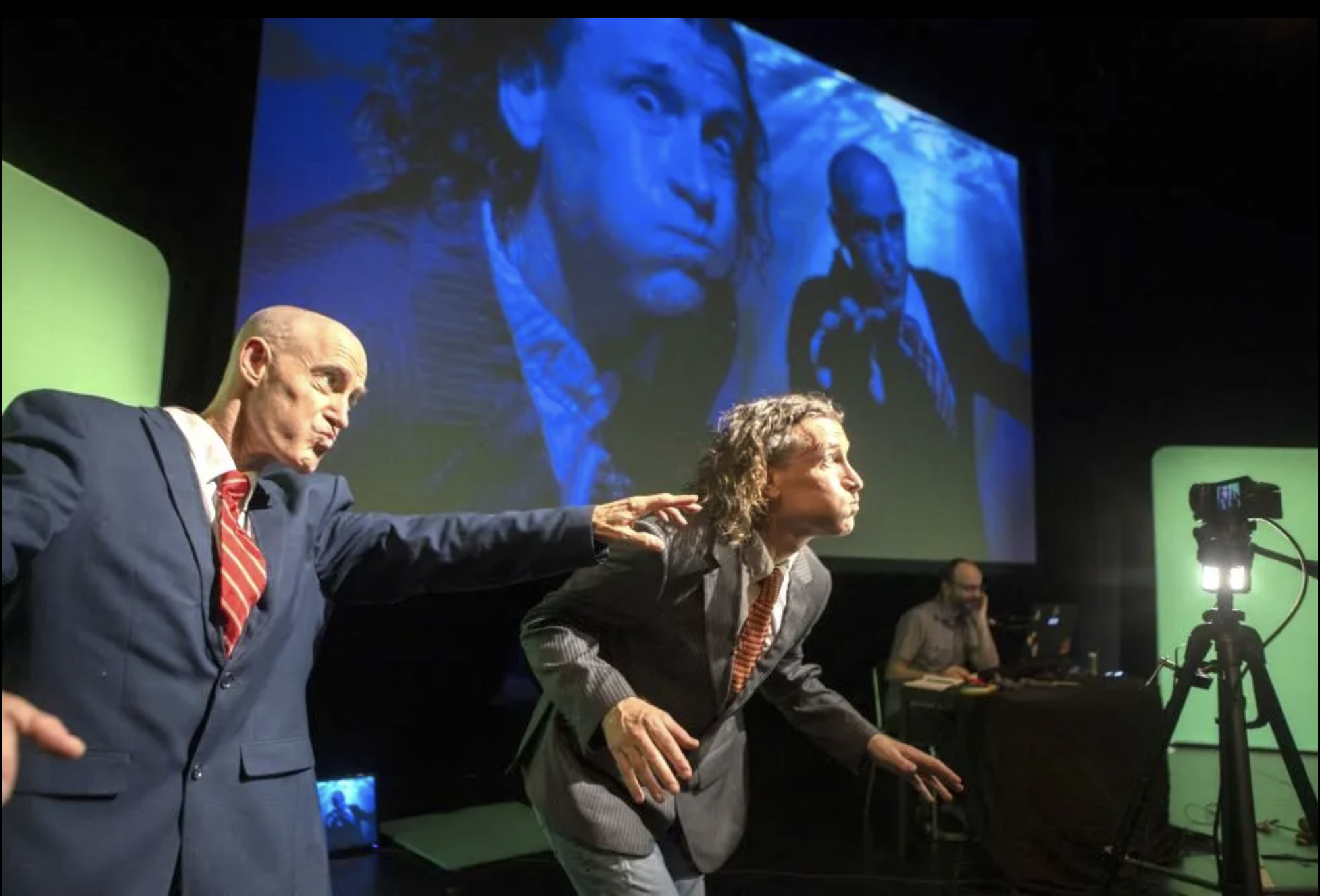
The Distraction is something else entirely though, a departure from their established style – although still just as silly and inventive. This show is all about the tech, specifically green screens and multiple cameras, and I’ve never seen anything quite like it.
You can almost hear them saying, “That’d be fun!” and then adding a series of ‘what-ifs’ until a show’s worth of shenanigans has been established.
Even while we’re waiting for the sell-out audience to file in, we get a sense of how cheery it’s going to be, as a series of groan-worthy jokes is displayed on the big screen that dominates the stage. It’s a canny move, setting the tone for the next hour.
There are some tech glitches in the first ten minutes, and it’s hard to tell if they’re real or part of the act. If the former, no matter – the delay is entertaining in itself. If, as I suspect, the latter is true, it’s a neat move, instilling a sense of jeopardy, and reminding the audience to be impressed by how much computer wizardry is being used.
Over the next sixty minutes, the duo mine the possibilities of live green-screen action, taking us from outer space to the depths of the ocean, via TV sports (played with babies – don’t ask), a guest appearance from Steve Jobs and more than one exploding head. There is audience participation – but not as you know it. And there are lots of dolls. If this all sounds like an amorphous mass of nonsense, then that’s exactly what it is – but brilliantly so.
I defy anyone to watch The Distraction without laughing all the way through.
The frenzy of the Fringe is over. It’s been beyond wonderful to see our city so vibrant again, after two quiet years. We’ve seen a startling range of exciting shows, covering many genres. We’re exhausted – but it’s not quite over yet. It’s time to award our virtual bouquets to the best performances we saw. The standard seemed higher than ever this time: has the break given writers and performers more time to sharpen their acts, or were we just lucky with the productions we chose? Either way, there were lots of contenders in each category, but we’ve narrowed them down to our favourite five.
So, without further ado, we present our choice of the best shows we saw at Edfest 2022.
THEATRE
An Audience with Stuart Bagcliffe (ZOO Playground)
An Audience with Stuart Bagcliffe is the sort of play which exemplifies the Fringe at its best. Written by Benny Ainsworth and directed by Sally Paffett (Triptytch Theatre), this ingeniously constructed monologue features Michael Parker as the titular Stuart, delivering Ainsworth’s script with consummate skill.
A Very Old Man With Enormous Wings (Summerhall)
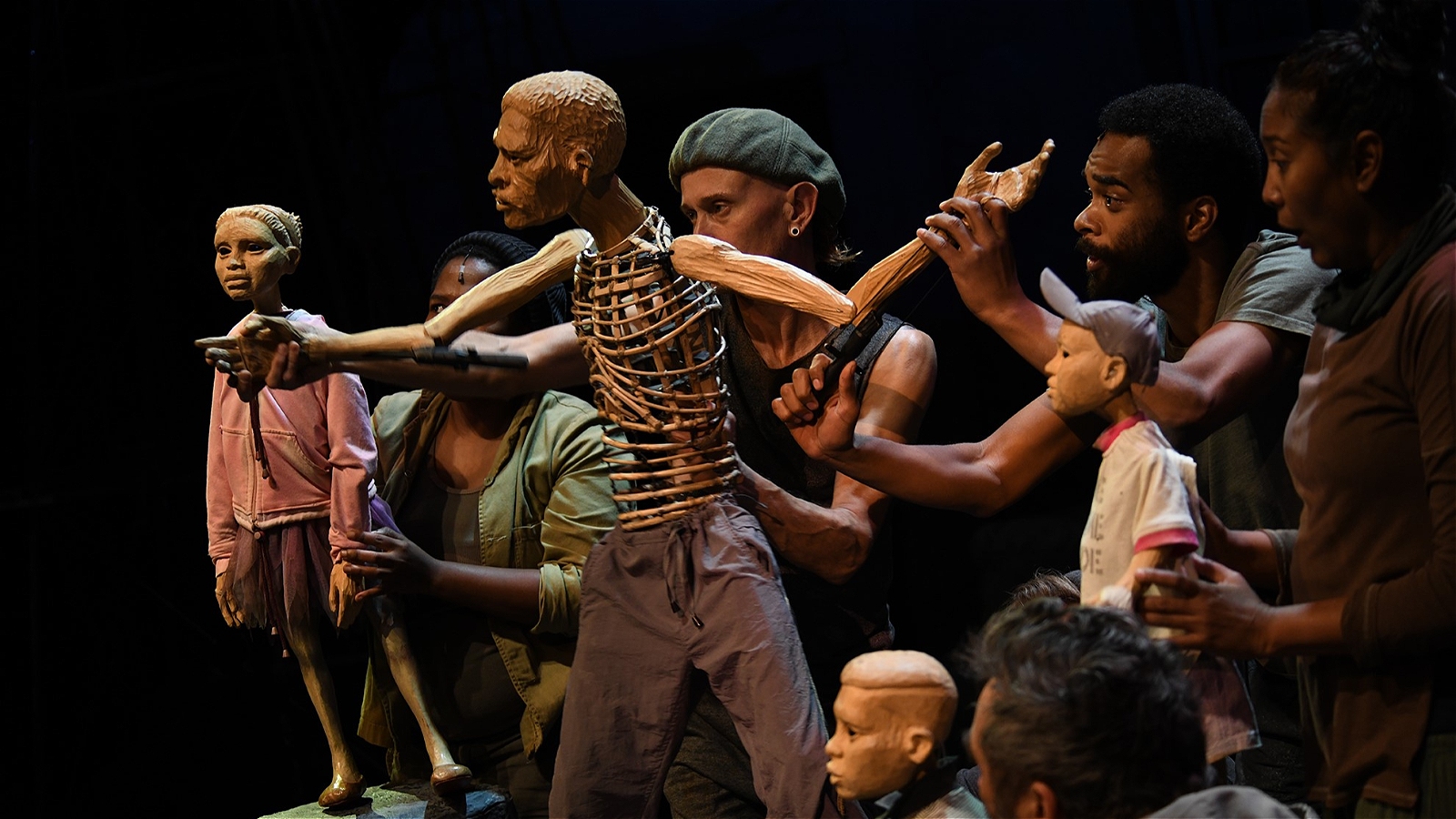
Based on a short story by Gabriel García Márquez and adapted for the stage by Dan Colley, Manus Halligan and Genevieve Hulme Beaman, this is the tale of Elisenda and Palayo, two impoverished people who live in a rickety shack on the edge of a small town. Their tale is related by Elisenda (Karen McCartney) in a deliciously sinister style. She’s aided by Palayo (Manus Halligan), who barely utters a word, but moves humbly around the stage, using a curious mixture of handicrafts and high-tech devices to illustrate the story – a series of simplistic figurines, illuminated by tiny cameras and lights, take us into their miniature world.
Sap (Roundabout @ Summerhall)
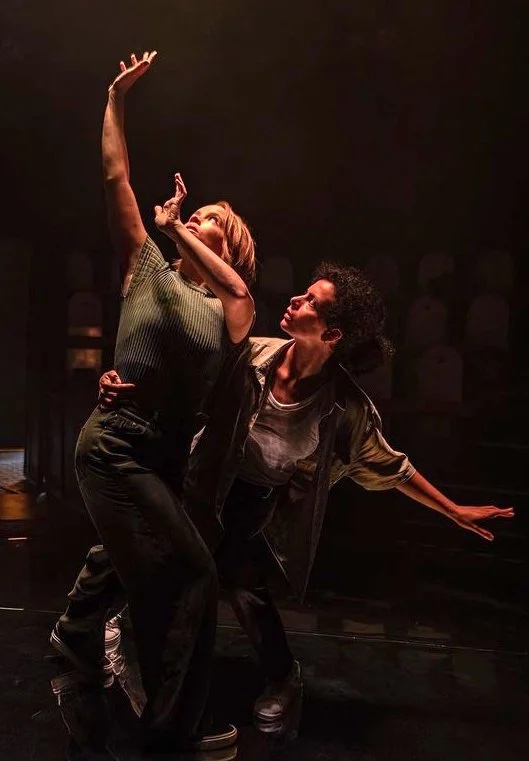
Rafaella Marcus has scripted a deliciously labyrinthine tale about sexual identity (specifically bi-invisibility), one that cleverly assimilates a Greek myth into its core. The maze-like structure is beautifully captured by Jessica Clark and Rebecca Banatvala’s hyper-physical performances, directed by Jessica Lazar and Jennifer Fletcher.
Hungry (Roundabout @ Summerhall)
Chris Bush’s sharply written two-hander examines the relationship between Lori (Eleanor Sutton), a chef from a relatively privileged background, and Bex (Melissa Lowe), a waitress from the local estate. Hungry is a class act, so assured that, even amidst the host of treasures on offer at this year’s Roundabout, it dazzles like a precious gem.
The Tragedy of Macbeth (Assembly Roxy)
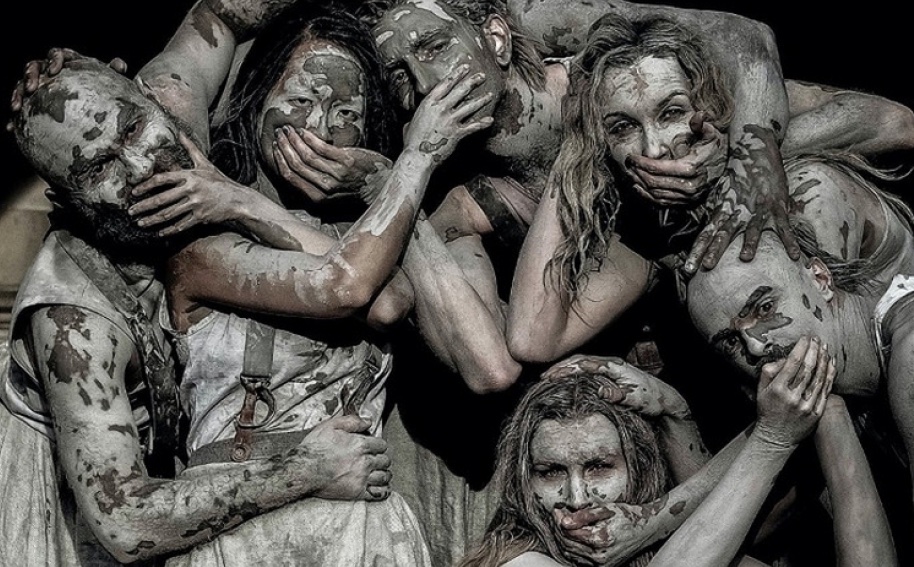
Let’s face it, we’ve all seen Macbeth in its various shapes and guises – but I think it’s fairly safe to say we’ve never seen it quite like this. Flabbergast Theatre’s eight-strong cast reel around the stage, plastered in mud and raving and flailing around like demented beings. This is a play about the madness brought on by the seductive power of hubris, so it feels entirely appropriate. It explodes, it capers, it struts its fretful stuff upon the stage and signifies plenty…
COMEDY
Feeling Afraid as if Something Terrible is Going to Happen (Roundabout @ Summerhall)
Both Samuel Barnett and Marcelo Dos Santos deserve huge praise for what is undoubtedly one of the best collaborations between writer and performer that I’ve ever witnessed. The narrator is working me like a master magician, mesmerising me, misdirecting me, even scattering a trail of clues which I somehow manage to overlook. The result? When the piece reaches its conclusion, I feel as though I’ve been punched in the solar plexus.
Kylie Brakeman: Linda Hollywood’s Guide to Hollywood (Gilded Balloon Patterhoose)
Making her Edinburgh Fringe debut, Kylie Brakeman delivers her cleverly scripted lines with consummate skill, and the whip-smart, snarky one-liners flow like honey laced with vinegar. It’s more than just a series of laughs. It also nails the cynicism and hypocrisy of the movie industry with deadly precision. I leave convinced that Brakeman (already a major name online, with over sixty million views) is destined to play much bigger venues than this one.
Emily Wilson: Fixed (Pleasance Courtyard)
Emily Wilson’s Fixed is part musical, part stand-up and part catharsis. She appeared on The X Factor USA back in 2011, as one half of the earnestly named duo, Ausem. “Because my best friend’s called Austin, and my name’s Emily, so together we’re Ausem!” She was 15 and thought she was destined to become a star. But then she hit a snag. The judges decided they liked Austin, but not Emily… What emerges is a thoughtful commentary on fame, ambition and exploitation, and it’s riveting.
Christopher Bliss: Captain Wordseye (Pleasance Courtyard)
Christopher Bliss (Rob Carter) is a new name to me and I can only regret that it’s taken me this long to encounter him. He’s that rarest of things, a brilliant character comedian… and a literary genius to boot. I can’t wait for his words of advice on poetry, which I have long considered my Achilles heel…
The Anniversary (Pleasance Dome)
Jim (Daniel Tobias) and Barb (Clare Bartholomew) are eagerly preparing for their 50th wedding anniversary but they’re not always in control of things and some of the items in the finger buffet might better be avoided. This handsomely mounted helping of slapstick from Australian company, Salvador Dinosaur, features no real dialogue, just gibberish and the occasional mention of each other’s names – but the soundtrack is far from silent. It’s essentially a piece about the indignities of ageing, replete with references to forgetfulness, dodgy bowels and the ill-advised over-application of both prescription drugs and prunes. It ought to be tragic but it’s somehow horribly funny.
SPECIAL MENTIONS
Fills Monkey: We Will Drum You (Pleasance Courtyard)
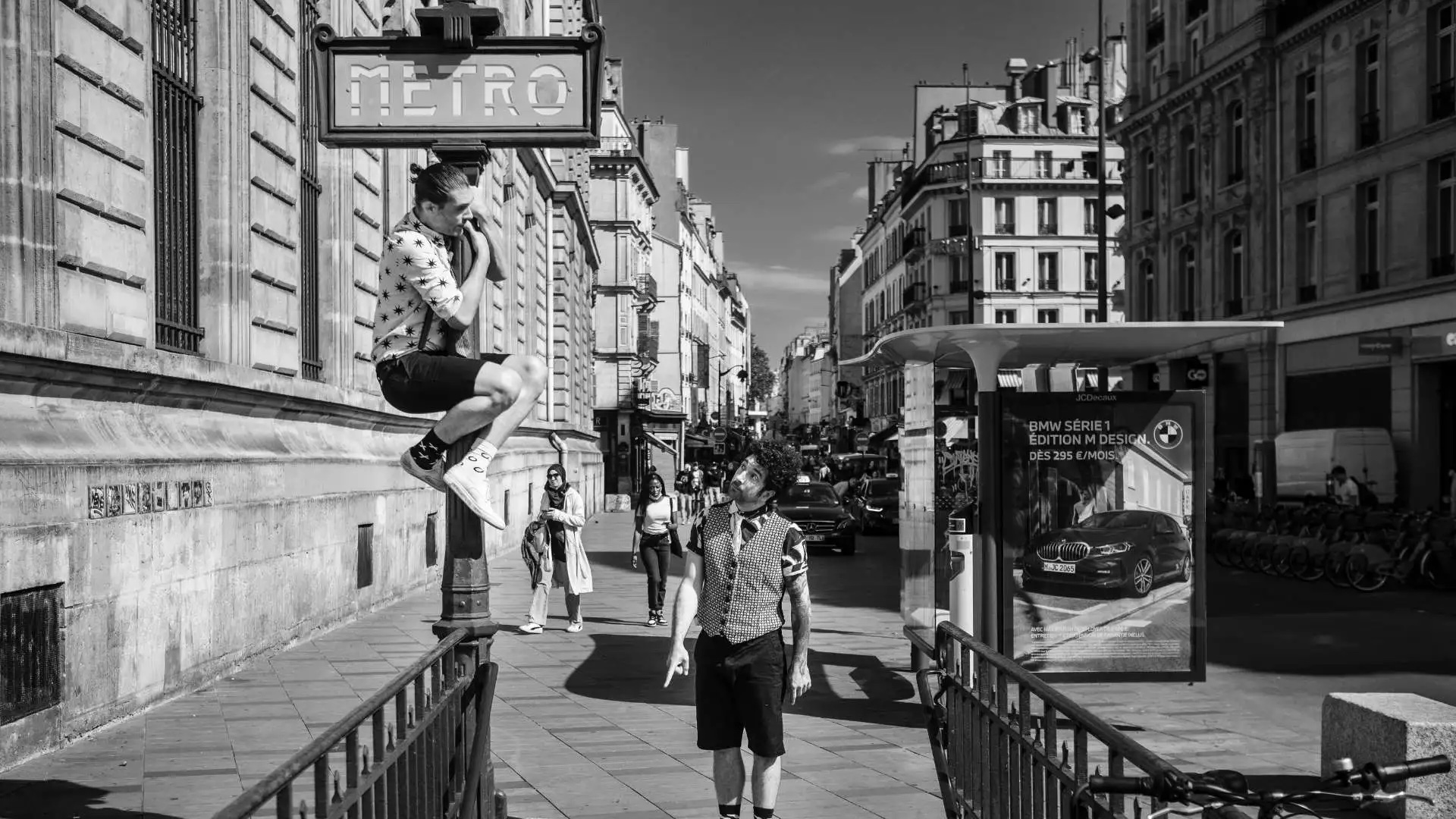
Sebastian Rambaud and Yann Coste are two brilliant percussionists, the kind of people you imagine could go through an entire day without ever breaking beat. They begin with conventional sets of drums, hammering out thrilling polyrhythms as the audience claps along. But they have an air of competitiveness about them and the stakes keep rising. It really helps that the two percussionists are also accomplished clowns. Working under the direction of Daniél Briere, they’ve devised a show that switches back and forth through a whole series of scenarios, never lingering too long in one place to ever feel repetitive.
Manic Street Creature (Roundabout @ Summerhall)
Manic Street Creature, written and performed by Maimuna Memon, is an assured slice of gig theatre that focuses on the subject of mental health from a slightly different perspective – that of the carer. Memon tells the story through a sequence of songs being recorded in a studio session. She’s a confident, assured performer, with a thrilling vocal range, accompanying herself on acoustic and electric guitars, keyboards and shruti box. When everything’s in full flow, the story takes flight and I feel myself propelled along by its urgent, rhythmic pulse.
The Ofsted Massacre (The Space @ Surgeon’s Hall)
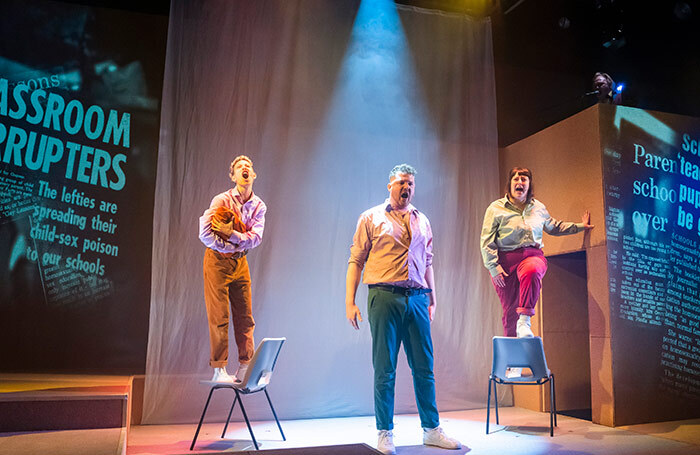
Phil Porter’s script feels like it’s been torn from the inside of a stressed-out teacher’s head: a revenge fantasy, born of despair. It’s also a very funny play, drawing on Shakespeare, while lampooning staffroom stereotypes and exposing every cliché. This production, by Kingston Grammar School’s sixth form drama students, is a triumph. The young cast embrace their roles, eliciting gales of laughter from the audience with their well-timed punchlines and impressive slapstick.
Making a Murderer: The Musical (Underbelly Bristo Square)
Like millions of others across the UK, I was transfixed by the Netflix documentary, Making A Murderer – so when I spot a poster on the Royal Mile with the words ‘The Musical‘ tacked onto the end, I’m intrigued – and simultaneously doubtful. Isn’t that going to be… disrespectful? But, in the capable hands of writer Phil Mealey, MAMTM offers a compelling version of the familiar events, a fresh perspective on the story that never feels like a cheap shot. The songs are terrific throughout, ranging from spirited rockers to plaintive ballads. What’s more, the production supports (and is supported by) The Innocence Project.
The Tiger Lillies: One Penny Opera (Underbelly Bristo Square)
Describing an act as ‘unique’ is often considered a cop-out, and yet I can’t think of a more appropriate word to describe The Tiger Lillies, three remarkable musicians currently strutting their inimitable stuff at The Cow Barn on Bristo Square. Originally formed way back in 1989, they’ve been through a number of personnel changes over the years, though the macabre compositions of singer-songwriter Martyn Jacques have remained a constant. They describe themselves as “Brechtian Punk Cabaret”, and who am I to argue with them?
Friday night at 8pm feels like the perfect time to see Flo & Joan. The crowd are up for a laugh: work is done for the week and the majority seem to be a few pints in, but no one’s obnoxiously pissed. This is an interlude in people’s nights, I guess: a fun hour to give the evening some shape, before the serious drinking starts. That’s how it feels, at any rate. And it’s none the worse for it.
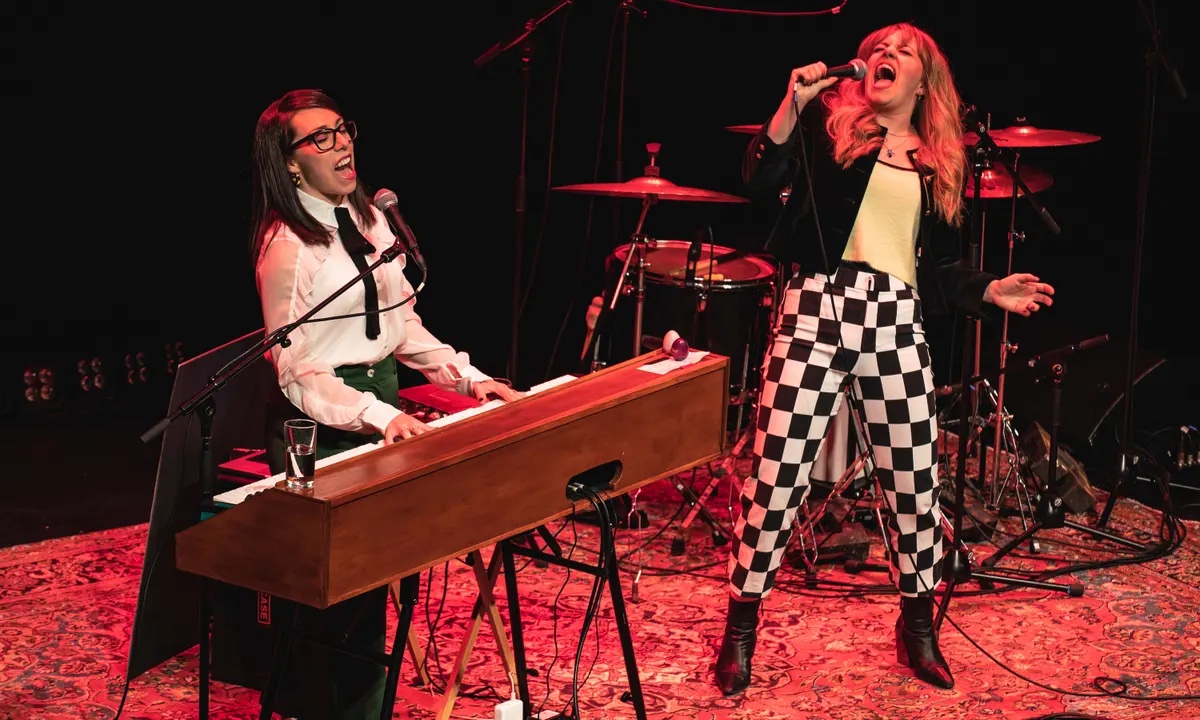
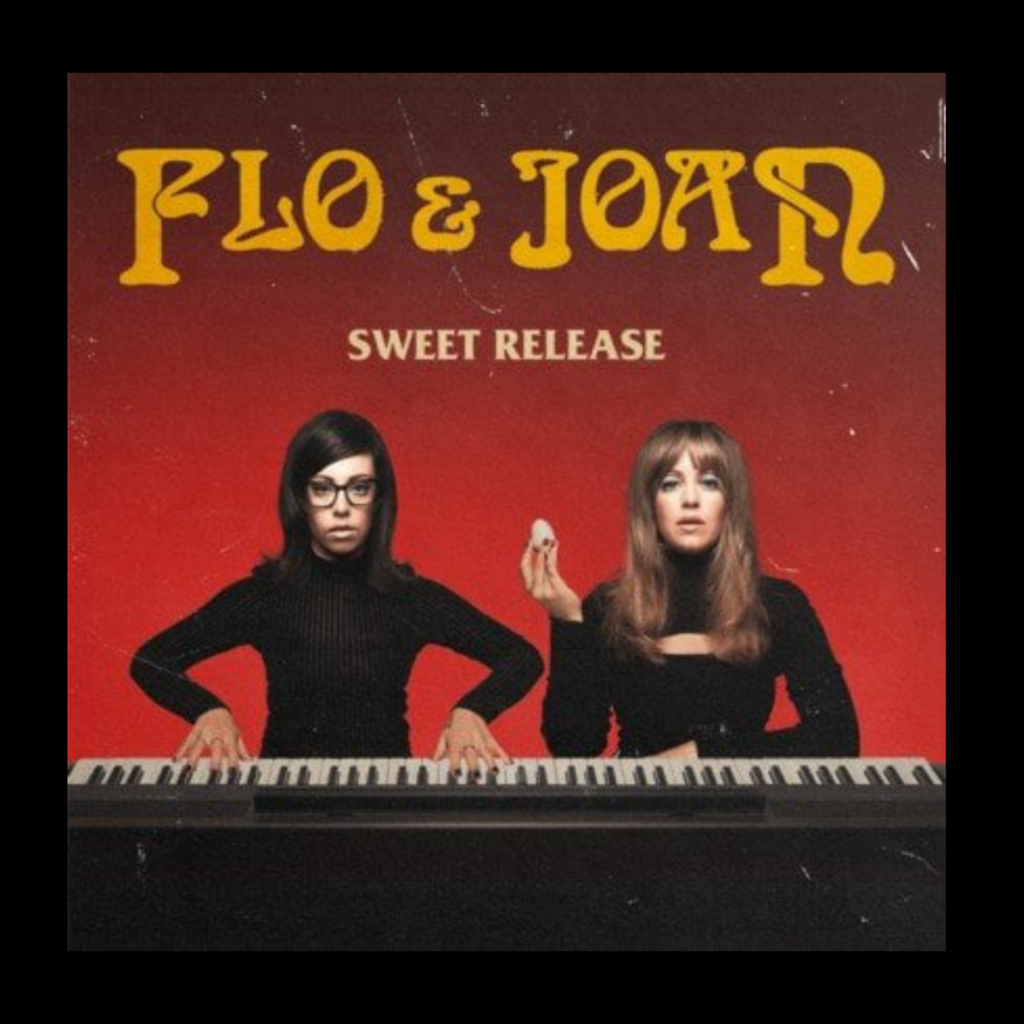
Sisters Rosie and Nicola Dempsey are completely at ease: they’re natural performers, and their act is perfectly honed. Sweet Release is everything you’d expect it to be: clever lyrics, catchy tunes, assured musicianship, lovely voices and lots of funny chat. It’s light, but there’s an edge; it’s not all candyfloss. This show is rockier than the last one we saw (Before the Screaming Starts), with a punchy backing-track to occasionally augment the sound. There’s a full drum kit too, and this helps to make the show feel bigger, and well-suited to the packed out 250-seat venue (which is large, by Fringe standards).
I particularly like the disco dancing number: Rosie’s trademark deadpan expression clashes sublimely with the silly moves, and there’s an extended motif about parents’ ornaments, which seems to resonate with everyone. (Even as I snigger, I find myself wondering which of our trinkets my step-daughter shudders at – although I don’t think we’ve anything as spectacularly awful as the item Flo & Joan reveal.)
Of course, there are only two more chances to catch them here in Edinburgh, but the duo have a fairly extensive autumn tour scheduled, so why not treat yourself?