Film

Mudbound

25/11/17

It’s getting to that time of year when rumblings are made about potential Oscar material and it must be said that some of those rumblings have already been directed towards Mudbound. This slow burning historical drama, co-written and directed by Dee Rees and based upon a novel by Hillary Jordan, certainly features the kind of material that often attracts those all-important votes. The fact that it’s a Netflix Original will doubtless cloud the waters somewhat, but the film has received a limited theatrical release (presumably to ensure that it can be considered eligible for such awards), despite the fact that it’s ready to stream right now for anyone willing to stump up their monthly subscription.

The Second World War is in full swing and, with so many able-bodied men away from home, Laura (Carey Mulligan), already in her mid-thirties, finds herself in danger of being left an ‘old maid’. So she’s pleased when she meets up with Henry McCallan (Jason Clarke), a small town businessman with big ambitions, who throws an agreeable look in her direction and hits paydirt. He promptly introduces Laura to his younger, more handsome brother, Jamie (Garrett Hedlund), and it’s evident from the outset that the two of them are instantly attracted to each other, but Laura and Henry marry nonetheless and shortly afterwards start a family. One day, Henry casually announces that he’s purchased a farm in Mississippi (as you do) and that the McCallums will soon be relocating there. Oh yes, one other thing. They will also be taking along Harry’s widower father, Pappy (Jonathan Banks of Breaking Bad fame). Pappy proves to have all the inherent charm of a grizzly bear with a bad case of hemorrhoids, but Laura decides that she’ll just have to try and make the best of things. Suffering is something she clearly has an aptitude for.

Once in Mississippi, the McCallums discover that Henry has been duped. The palatial home they expected to occupy actually belongs to somebody else and they must make the best of a dilapidated shotgun shack on the farm. They will also be the employers of a black family that works the land – Hap Jackson (Rob Morgan), his wife Florence (Mary J. Blige) and their many children. From this point, a life of utter misery ensues for pretty much everyone in the story and matters become more complicated when Jamie decides to join the air force and the Jackson’s oldest boy, Ronsel (Jason Mitchell), enlists in a tank battalion. Both men endure terrible experiences in the war, but ironically, for Ronsel at least, he is finally free of the Jim Crow laws that still hold sway in rural Mississippi. For the first time in his life, he is treated as an equal.

When the war finishes and the two men return to their respective families, it’s hard for Ronsel to accept that he must once again resume his former position in life – he can no longer even use the front door of his local general store. Traumatised by their shared experiences, Ronsel and Jamie strike up an unlikely friendship – but of course, in this bigoted world, white men and black men are not permitted to be friends – and when word of Ronsel’s adventures in Europe are accidentally made public, there is a terrible price to pay…

If Mudbound occasionally feels a little ponderous, there’s no denying the power of the narrative and the importance of the film’s inherent message. Its penultimate act is as gripping as it is devastating. There are also some nice performances here (Blige seems to be getting most of the Oscar-buzz but Banks’ portrait of a racist, misogynistic scumbag is also chillingly memorable). With its glacially slow pace and unusual attention to areas that don’t usually receive the opportunity of screen time, perhaps the film is actually more suited to being viewed on the small screen, where it’s something you can take a short break from and come back to.

Oscars? Well, if I’m honest, there are already several films I would deem more deserving of next year’s awards, but this isn’t at all bad and it certainly goes a long way to dispel the notion that Netflix are only interested in financing mindless entertainment. Mudbound is a long way from that. Interested parties can check it out at the click of a button – or the eagle-eyed might even spot one of those rare cinematic showings.

3.8 stars

Philip Caveney

Justice League


24/11/17

After a massive jump in the right direction with Wonder Woman, DC, with director Zack Snyder at the helm, take ten supersteps backwards with Justice League. Where WW was a breezy soufflé packed with humour and cheesy romance, JL takes itself incredibly seriously and this, most of all, is what makes it a terrible thing to behold.

At the start of the film, Superman (Henry Cavill) is dead – don’t worry, this isn’t a spoiler – and Batman (Ben Affleck) is feeling the weight of trying to fill those size 11 superhero boots. He’s also rather perturbed by the appearance in Gotham City of some weird winged beasties, which he assumes are of extra terrestrial origin. With this in mind, he sets about assembling a crack team of superheroes with the idea of defending the planet from these new arrivals. The team comprises Wonder Woman (Gal Gadot), Aquaman (Jason Momoa – for best results just add water), the Flash (Ezra Miller, the film’s best component by a country mile) and Cyborg (Ray Fisher), a man/machine affair, who appears to have been assembled by committee.

The threat to life as we know it comes from Steppenwolf – not the 70s rock band who recorded Born To Be Wild (who actually weren’t that bad in retrospect), but a great big dude in a horned helmet, voiced by Ciaran Hinds, who – in the best DC tradition – speaks like he’s swallowed a bottle of Rohypnol and who, you just know, would be a really dull drinking companion. He commands the weird winged beasties, The Parademons, who remind me, more than anything else, of the flying monkeys from the Wizard of Oz. For reasons best known to himself, Steppenwolf is trying to locate three magical boxes in order to bring about the destruction of the world as we know it, ushering in Doomsday. Why? Good question. I guess it’s just what big dudes in horned helmets feel they need to do. But why do they have to be so damned earnest about it?

Inevitably, what it all comes down to is yet another seemingly endless cosmic punch up, brilliantly rendered by the technical team, but incredibly dull and completely lacking in any sense of danger, since everyone involved is seemingly incapable of being seriously injured; even Batman, who we are repeatedly reminded is a mere mortal, seems to survive being thrown though buildings and automobiles without incurring more than a few token bruises. As I mentioned, Miller’s sparky turn as a nervy, possibly autistic young wannabe is the only element that offers any light relief in this maelstrom of misery, but his offerings are too occasional to lift this more than a few centimetres out of the doldrums.

Just when it appears that Steppenwolf is actually getting the upper hand, somebody comes to the aid of the team. Who is it? I’ll give you three guesses.

I know there are many out there who like their DC done with gravitas – and the three Christopher Nolan Batman movies are testament to the fact that it can work in the right hands. But sadly, those hands are not Zach Snyder’s, and this is a turgid, bloated train-wreck of a movie, that will surely have all but the most committed DC diehards turning up their noses.

1.5 stars

Philip Caveney
Battle of the Sexes


20/11/17

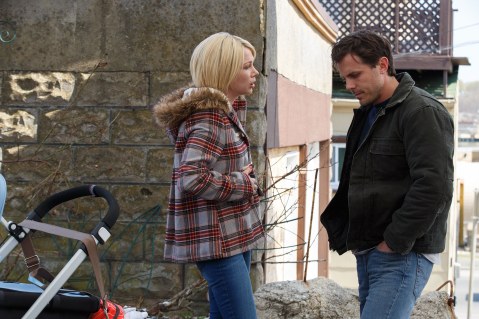
It’s the early 1970s and rising tennis star Billie Jean King (Emma Stone) is fighting to establish equal pay for female players. Why is it, she reasonably asks, that the men are being paid eight times as much as the women? American Lawn Tennis president Jack Kramer (Bill Pullman), tells her that it’s simply because the men are just ‘more interesting to watch.’ King’s answer is to pull all women players out of Kramer’s organisation and to help them to form their own, seeking sponsorship wherever they can find it. It’s mostly because of her unprecedented efforts that such appalling sexism in the sport was challenged and soundly defeated, even though it meant getting involved with some strange partners. A scene where Billie Jean’s agent, Gladys (Sarah Silverman) urges the players to smoke cigarettes because they are being sponsored by Philip Morris is a particular delight.

This fascinating film, scripted by The Full Monty’s Simon Beaufoy, is based around a real event in 1973, when King was goaded into playing a match against ex-champion player, Bobby Riggs (engagingly played here by Steve Carell), whose vociferous claim that no woman could ever beat a man at tennis, still resonates today – people are forever trying to push Andy Murray and Serena Williams into playing against each other. Beaufoy’s script cleverly displays the levels of inherent sexism that existed at the time – most of the remarks and attitudes of the commentators of the period now seem positively prehistoric. The film is aided by the fact that Stone and Carell look so convincing as their characters that genuine footage of the original match is used in long shot with the actors effortlessly spliced in for close-ups. Weirdly, although I already know the outcome of the game, the footage still somehow manages to generate considerable levels of suspense. For my money, this is perhaps the best attempt thus far to put my favourite sport up on the big screen.

The film is about more than just tennis, though. Riggs is struggling with personal demons – a powerful addiction to gambling is pushing his marriage to his socialite wife, Priscilla (Elizabeth Shue) onto the rocks – while King, married to the incredibly supportive Larry (Austin Stowells), finds herself irresistibly drawn to hairdresser, Marilyn Barnett (Andrea Riseborough). Their burgeoning romance is sensitively handled by directors Jonathan Dayton and Valerie Faris, who never fall into the trap of sensationalising it.

But perhaps what the film does best of all is to display the unbelievable levels of all-American razzmatazz that accompanied the contest, right down to Riggs being sponsored by a lollipop company called… wait for it… ‘Sugar Daddy.’ (And if you think the filmmakers have exaggerated for comic effect, you only need to glance at footage of the real event  to see that it has been reproduced with extraordinary attention to detail.)

It would be all too easy to paint Riggs as the villain of this piece, but he actually emerges as a likeable clown, whose outrageous comments are mostly done to generate interest (and large amounts of money) for the match. It’s the everyday, ingrained sexism of characters like Jack Kramer where the real problem lies – and it’s particularly satisfying to watch him get his comeuppance.

Do you need to be a tennis fan to enjoy this film? Well it certainly helps, but I don’t think it’s essential. Its powerful message about equal rights for everyone, regardless of their sexuality, rings out loud and clear. In tennis terms, this one serves an ace.

4.4 stars

Philip Caveney

Ingrid Goes West

19/11/17

Ingrid Thorburn (Aubrey Plaza) is a young woman with serious issues. Desperately lonely and hopelessly addicted to social media, she feels decidedly miffed when one of her ‘online friends’ has the temerity to get married without bothering to invite her. Most of us would shrug this off, but not Ingrid – she turns up at the wedding reception and treats the bride to a faceful of Mace. Needless to say, it doesn’t go down at all well.

After paying the price for her transgressions, Ingrid heads home to an empty house. We learn that her sick mother has recently passed away after a long illness, that Ingrid has spent the last few years caring for her, and that Mom has left her only daughter a considerable sum of money in her will. Leafing through a magazine one day, Ingrid chances upon an article about  the woman who will become her latest obsession. Taylor Sloane (Elizabeth Olsen) is an Instagram ‘influencer’ who appears to be living the perfect boho lifestyle in sunny Los Angeles, with her artist boyfriend, Ezra (Wyatt Russell), and who can’t seem to smash an avocado without photographing it and adding a hashtag. For Ingrid, it’s love at first click – so she makes a cash withdrawal from the bank, buys a plane ticket and heads out to LA, where she rents an apartment from Batman-obsessed wannabe screenwriter, Dan (O’Shea Jackson Jnr). Once settled in she sets about inveigling her way into Taylor’s world, frequenting all the places that feature in her online posts. Pretty soon, she is moving in Taylor’s exalted circles and ingratiating herself with her new ‘friends’ at every opportunity… but will this be enough to satisfy her longing for acceptance?

Ingrid Goes West is a prescient tale, skillfully told, and Plaza offers a powerful performance in the lead role, making us care about Ingrid at every step, no matter how heinous her actions. Olsen is good too, as the vain and exceedingly shallow Taylor – but then, nearly everyone here (apart from the exceedingly sweet-natured Dan) is as shallow as a kiddies’ paddling pool. I particularly like the examples we are shown of Ezra’s ‘art’, which consists of a single word printed onto a ‘found’ image (i.e. nicked from other photographers). Everything in this world, it transpires, is fake.

The script, co-written by director Matt Spicer, gleefully eviscerates the world of the online glitterati, people so obsessed with their own style that they seem to have lost their humanity. In less assured hands, this could so easily have been a dark and miserable descent into despair, but that sparkling script – and an unexpectedly upbeat conclusion – actually makes this a must-watch.

#DontMissIt!

4.4 stars

Philip Caveney

Film Stars Don’t Die in Liverpool

17/11/17

Film Stars Don’t Die in Liverpool is Peter Turner’s story. Based on his memoir of the same name, the film, scripted by Matt Greenhalgh, tells of Turner’s affair with fading film star, Gloria Grahame, and the extraordinary tale of how she came to live out her last days with his mum and dad in 1980s Liverpool.

The performances here are exemplary: both Jamie Bell (as Peter) and Annette Bening (as Gloria) are on top form, and their relationship is affectingly conveyed. Bening convinces absolutely as the ex-Hollywood sexpot, holding her head up high and forging a career in British theatre: proud but vulnerable; confident but insecure. Bell is also utterly credible as the young Turner, flattered by the attentions of someone so famous, falling hopelessly in love. And it’s a touching story: rejected by the film industry, out of touch with her family and dying of cancer, Gloria turns to her ex-lover for the warmth she knows his ‘ordinary’ family can offer, and his parents (Julie Walters and Kenneth Cranham) are more than happy to oblige.

A shame, then, that there isn’t more on offer here. There’s a stellar cast without much to do: Vanessa Redgrave, as Gaynor’s mother, says almost nothing of note; Frances Barber, as her sister, does what she can with a couple of bitchy lines. Walters stands out, as she always does, but is criminally under-used, never called upon to offer anything more than ‘kindly mum.’ The marvellous Stephen Graham plays Peter’s brother, but his talent is wasted: he just sits at the kitchen table wearing one of Harry Enfield’s Scouser wigs, whinging occasionally and looking meaningfully at his strangely silent wife (Leanne Best).

I think the problem is that it’s all very rose-tinted, too closely based, perhaps, on Turner’s memoir, without enough space for the spiky complexity of human reality. It’s superficial and chocolate-boxy: a special memory preserved as in a photo-book, rather than an engaging film that allows its characters to show their flaws. And the story arc lacks drama too, never really building, never really drawing us in. This is a film that relies entirely on its central performances; the casting director (Debbie McWilliams) has done a sterling job; thanks to her, it’s not an entirely missed opportunity.

3.6 stars

Susan Singfield

Only the Brave

13/11/17

The poster for Only the Brave suggests we are in for a good old-fashioned disaster movie, but director Joseph Kosinski is clearly more interested in the characters who made up the real life Granite Mountain Hot Shots – a bunch of hard-as-nails firefighters based in Prescott, Arizona. While this is no doubt an admirable attempt to flesh out some genuine heroes, it fatally flaws the story arc of the film, which keeps breaking off from the action to regale us with some macho prank the boys have indulged in. The result is that the story only occasionally generates enough heat to keep an audience fully hooked.

Things begin well enough with Supervisor Eric Marsh (James Brolin) champing at the bit as he tries to obtain ‘hot shot’ status for his crew of municipal firefighters. (Without that tag they will always be relegated to a support role whenever there’s a major fire). Meanwhile, young hothead and general drug abuser, Brendan McCulloch (Miles Teller) gets his girlfriend pregnant and, in a desperate attempt to clean up his act, decides to put himself forward as a candidate for the fire team. Marsh, recognising something of himself in Brendan, decides to give him a chance and before very much longer, the Granite Mountain boys have their hot shot status and are working around the clock in a series of extremely dangerous situations. Meanwhile, their long suffering wives and girlfriends must endure the knowledge that their partners might never survive the latest disaster…

There’s clearly a fascinating (and it must be said, tragic) real life story at the heart of this, but with over twenty firefighters on the team, it’s hard for us to differentiate between more than just a few of them. And, if you’re blessed with Jeff Bridges in your cast, it might be a good idea to give him something to do. The female characters, mind you,  barely get a look in. Jennifer Connelly as Marsh’s wife, Amanda, has something approaching a decent role but poor Andie McDowell is left to sit around, looking glum.

The ending when we get to it, is admittedly devastating – but by then, most of our goodwill for the film has gone up in smoke as the script cuts back and forth, recounting details that we really didn’t need to know about. Also, there’s a tendency here to assume we understand the principals of firefighting. Scenes where the team are actually setting fire to areas of forest in order to prevent the spread of an approaching conflagration might have needed a little more explanation. As it is, we’re just left to assume.

Ultimately, Only the Brave is a powerful story, awkwardly told. While it generates the occasional spark, it never really fully ignites.

3 stars

Philip Caveney

The Florida Project

11/11/17

The Florida Project is my favourite film of the year so far – and there are only a few weeks left of 2017 for any new contenders to knock it off its perch. It’s a real gem: imagine Ken Loach Does Disney and you won’t be far off.

In fact, though, it’s Sean Baker exposing the tragic underbelly of the Magic Kingdom and, if this is anything to go by, the forty-six-year-old writer-director has an important career ahead of him, chronicling the travails of the American poor, living precariously in motels, lurching from one inadequate paycheck to the next.

There is real beauty in this film: Brooklynn Prince, as six-year-old Moonee, is an absolute delight, all swagger and daring, as cheeky and charming as it’s possible to be. She feels real, a happy, confident kid, who knows she’s loved and cared for, and doesn’t worry about much. Because her mom, Halley (Bria Vinaite), might be living on the edge – struggling to find work, doing whatever she has to in order to pay the rent – but she never once lets Moonee down. She’s there for her, always, ensuring Moonee is fed and bathed, enjoying life. She’s a textbook problem parent – jobless, feckless, dabbling in drugs and prostitution – but this film shows us how wrong the textbook is.

It’s heartbreaking though; no one should have to live as uncertainly as this, especially not in the world’s richest country. Disney World’s looming presence, just out of reach, serves as a not-so-subtle metaphor: we see the glitz and glamour of the phony castle, while the squalid truth lurks just beneath. At least Halley’s found them a decent motel, with a caring manager called Bobby (Willem Dafoe), who keeps the place clean and tidy, and respects the residents. But they’re still living in one room, forced to participate in the farce of ‘moving out’ once a month so that they don’t accrue any rights as residents. They’re still eating food delivered by a charity, all cheap sugary carbs, presumably stale and out of date.

The cinematography is striking: the overwhelming impression is of cheeriness and colour. This is Moonee’s world and, free for the summer from the confines of school, she owns it, roaming freely and playing host to new motel guest, Jancy (Valeria Cotto), who’s staying with her grandmother (Josie Olivo), while her own mom ‘sorts herself out.’ Jancy’s grandma provides an oasis of calm: she has things very much sorted out; she might be poor and living in a motel, but she cooks proper food and is hot on discipline. Almost everyone here is decent, really, looking out for each other, doing their best. It’s a warm-hearted and affectionate depiction of those who are often disparaged. It’s also a searing damnation of a system that lets its people down, and its shattering conclusion is utterly devastating. Baker is clearly a film-maker with a lot to say – and he says it very well.

5 stars

Susan Singfield

Paddington 2

10/11/17

Paddington is a tough act to follow. That first film got everything right – a family entertainment that really did have something for everyone. It was also highly successful, so of course there was always going to be a sequel. The modestly titled Paddington 2 says it all. Not Paddington Episode Two, or Paddington Rides Again. No, this does exactly what it says on the tin –  a second adventure featuring Michael Bond’s celebrated ursine hero.

But, can it hope to be as good as its progenitor? The fact that the film’s release has been delayed for a month while the production company scrambles to disassociate itself from a certain Harvey Weinstein doesn’t augur well but, against all the odds, this second installment of the franchise manages to unfold its delightfully silly story without putting a single paw wrong.

The film opens with a flashback to darkest Peru, where Uncle Pastuzu (Michael Gambon) and Aunt Lucy (Imelda Staunton) first encounter the orphaned bear cub who will become Paddington – and we discover that Aunt Lucy has a longheld ambition to visit the city of London. After the credits we nip smartly back to the present day, where Paddington is now a valued member of the Brown family, helping Henry (Hugh Bonneville), Mary (Sally Hawkins), Jonathan (Samuel Joslin) and Judy (Madeleine Harris). He’s also fitting in nicely with the community of the street on which he lives – cue plenty of cameos from what seems like scores of celebrated comic actors.

But with Aunt Lucy’s 100th birthday approaching, Paddington is looking for a suitable present for his beloved aunt so, when his friend, Mr Gruber, (Jim Broadbent) who runs the local antique shop, shows him a charming (and rather expensive) pop-up book of the city, Paddington resolves to earn enough money to buy it for her. To this end, he tries his hand at window cleaning and barbering, both with suitably hilarious results. Then, by chance, his path crosses with that of has-been actor, Phoenix Buchanan (Hugh Grant), who, it transpires, wants the pop-up book for his own nefarious purposes…

Once again, the screenwriters have managed to capture the spirit of Michael Bond’s evergreen tales, presenting us with a storyline that will have people of all ages laughing uproariously – when they’re not clutching for their handkerchieves. Yes, this is undoubtedly manipulative stuff, but it’s done with such style and such sure-footedness, that you cannot help but be swept along. Scenes where the unthinkable happens and Paddington is actually sentenced to a spell in jail will have the hardest heart breaking into tiny pieces – and the little bear’s developing friendship with prison chef Knuckles McGinty (the ever dependable Brendan Gleeson) is a brilliant conceit which occasionally yields comedy gold.

It doesn’t end there. Paddington 2 is endlessly inventive (scenes where the little bear and his aunt cavort amidst a pop-up recreation of the city of London are a particular highlight). Perhaps the biggest surprise here is Hugh Grant (who, weirdly, we think we spotted walking a tiny dog near Rosslyn Chapel a couple of weeks ago). His turn as the self-obsessed Phoenix Buchanan is one of his best performances ever and he very nearly steals the show from the titular bear – still endearingly voiced by Ben Whishaw.

When you witness some of the absolute dross that passes for ‘family entertainment’ these days, it’s reassuring to see something as lovingly crafted as this. The next question? Can they do it a third time? Well, that remains to be seen. Meanwhile, this will do very nicely indeed.

5 stars

Philip Caveney

Call Me By Your Name

08/11/17

This slow, languorous, coming-of-age film by Luca Guadagnino has been stirring up some Oscar buzz recently, but it’s been a hard film to view with only one showing a day at the multiplexes – and even that in the morning! It’s easy enough to appreciate why it isn’t considered a ‘bums on seats’ vehicle – weighing in at two hours and twelve minutes, it certainly takes its own sweet time to play out and with not an awful lot in the way of storyline, it was never going to drag in the superhero crowd – but it recounts a tale of a young boy coming to terms with his own burgeoning sexuality, eloquently and without sensationalism. And that’s surely something worth supporting.

Set in Northern Italy in 1983, this is the story of seventeen year old Elio Perlman (Timothy Chalamet), a talented young musician who leads a very privileged existence in the country house belonging to his parents, a Professor of Classical Antiquity (Michael Stuhlbarg) and his wife, Annella (Amira Casar). With a cook and a gardener to cater for their every whim, there isn’t much to do to pass the time but lounge indolently around in the sunshine, eating, drinking, reading books and occasionally splashing about in a whole host of watery locations. Things change dramatically, however, when young and impossibly handsome American research assistant, Oliver (Armie Hammer) arrives at the house for a six week stay. At first, Elio finds the newcomer brash and arrogant, (and so do I, come to think of it) but as the barriers gradually start to come down, the two young men bond over their shared Jewish heritage and their love of music – and it isn’t very long before Elio realises he is falling hopelessly and wretchedly in love with Oliver…

That’s pretty much it as far as story goes, but there’s plenty here to enjoy, not least the ravishing cinematography that will have you pining for a long summer holiday in Italy. Chalamet is clearly something of a find, managing to convincingly demonstrate all of Elio’s doubts and fears, while Armie Hammer has clearly come a very long way since The Lone Ranger. A concluding speech by Stuhlbarg’s character felt a little overcooked, but I was nonetheless glad it was there, because here was a parent being completely non-judgemental about the sexuality of his son, which is a pretty rare, but very welcome thing to witness in a film.

There probably isn’t a great deal more to say about this, except perhaps, that in these short-attention-span times, films like this don’t often see the light of day – and if cinema chains won’t offer people enough opportunities to see them, they certainly aren’t going to survive for very much longer. If this comes to a screen near you, do take the opportunity to see it. It’s really rather charming.

And as for that Oscar buzz? Well, we’ll see in the fullness of time. It’ll be rather ironic if it wins something – a film that hardly anyone got the chance to see.

4.4 stars

Philip Caveney

Suburbicon

07/11/17

A recent viewing of the trailer for Suburbicon led me to observe that the film looked ‘Coenesque’ – so it comes as no great surprise to learn that is actually based around an abandoned 1980s Coen Brothers screenplay, which has been reworked by director, George Clooney and by screenwriter, Grant Heslov. Fans of the brothers grim, may notice a passing similarity to the plot of one of their finest offerings, Fargo. Having said that, this film steers its own course and certainly has plenty to recommend it.

It’s the 1950s and the titular Los Angeles community styles itself as a kind of dream home for middle America, proudly boasting that in its idyllic realm, there is no crime and everybody is welcome – that is until the Mayers family takes up residence. The Mayers , you see, are African-Americans and it’s soon made abundantly clear to them that the all-compassing welcome doesn’t actually apply to them. (It’s interesting to note that this part of the story is based on a real life family, the Myers, who suffered similar problems when they moved into a residence in Charlotteville Virginia in 1957). What starts as a few silent protesters balefully watching their home steadily builds until things degenerate into an all-out riot.

But while everyone’s focus is on the Meyers’ house, it’s clear that something very unpleasant is happening right next door. Young Nicky Lodge (Noah Jupe) is woken one night by his father, Gardner (a beefed up Matt Damon) who tells him that a couple of intruders are in the house and he is to do whatever they tell him. As Nicky watches dumbfounded, Gardner, his crippled wife, Rose and her twin sister, Margaret, (both played by Julianne Moore) are all chloroformed to unconsciousness, shortly before he is given the same terrifying treatment. When he wakes up, he learns that Rose has died – and pretty soon, his Aunt Margaret moves into the house to lend her support. Nicky gradually begins to understand that things are not quite as they seem…

One of Suburbicon’s strengths is that much of the story is seen from Nicky’s point of view and the growing realisation that he is living in a poisonous environment is expertly handled. His burgeoning friendship with young Andy Meyers (Tony Espinosa) is also nicely reined in, just two young boys getting amiably along, the message all the stronger for not being hammered home with a mallet. This being a Coen storyline, there are of course a couple of memorable villains (Alex Hassell and Glenn Fleshler, doing a kind of demented Laurel and Hardy routine) and there’s a nice cameo by Oscar Isaac as a snoopy insurance investigator.

As the story accelerates towards its conclusion, we head into Pardoner’s Tale territory, as everyone homes in on the lure of a huge insurance payout – but Nicky (and the Meyers family) are the only characters here who really deserve our compassion, and the film kept me rooting for them right up to the end.

4.6 stars

Philip Caveney