National Theatre

The Fifth Step: NT Live

01/12/25

Dominion Cinema, Edinburgh

As if NT Live performances weren’t enough of a treat, we’ve recently ramped up the indulgence levels by choosing to watch them at Edinburgh’s most bougie cinema, the Dominion. At 3pm this afternoon, we zip up our raincoats and venture out into the December drizzle, ready for the half-hour walk that will take us to our huge, reclining seats.

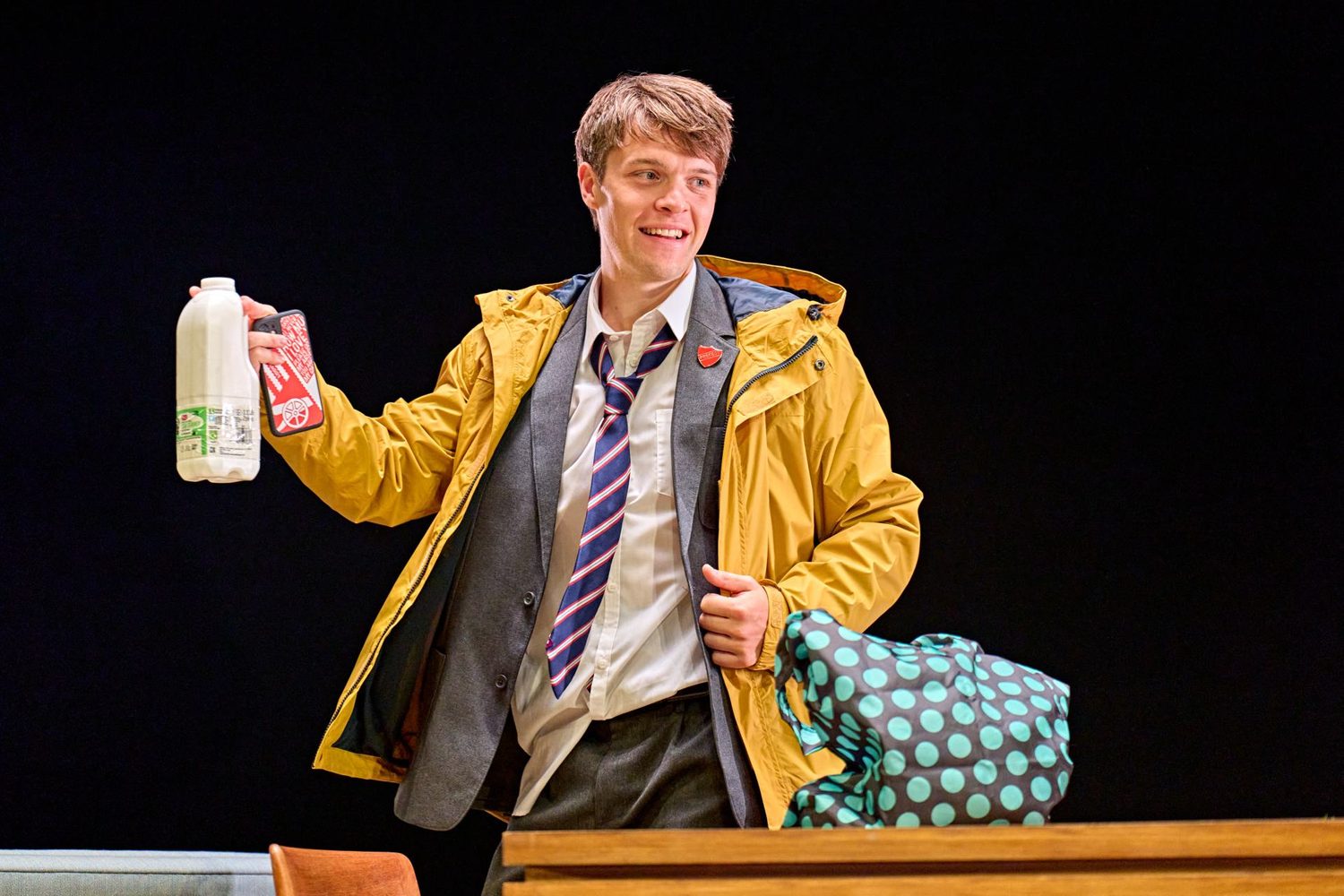
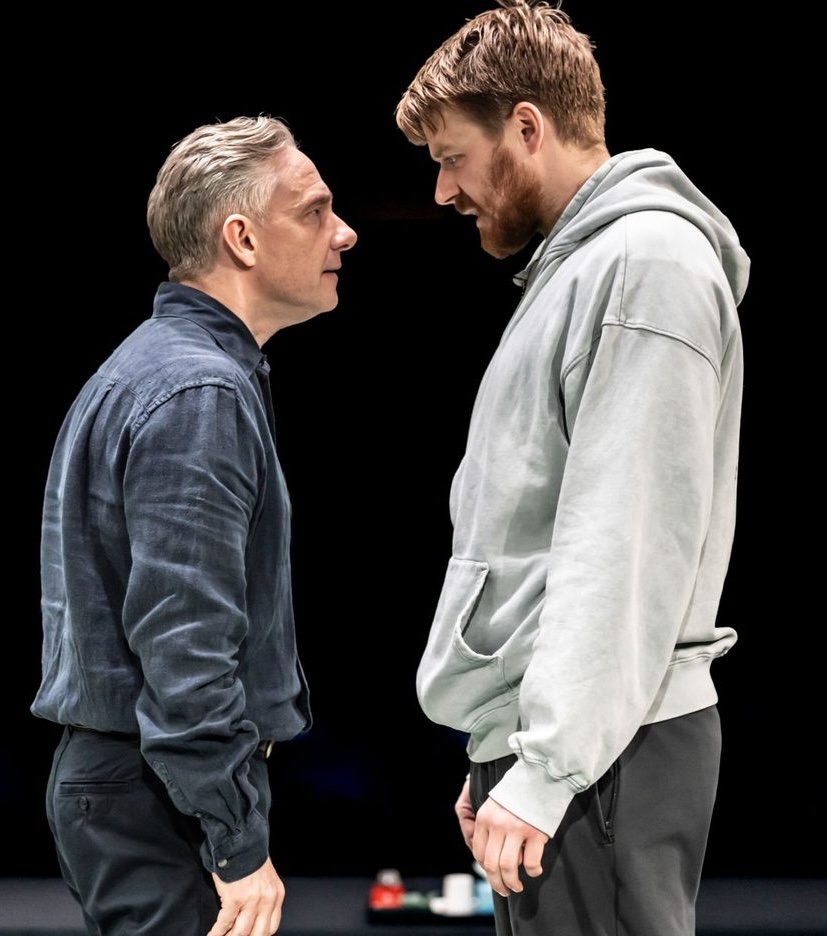
The Fifth Step is a compact, one-act play by Jack Ireland, and its ninety-minute running time is perfectly judged. This is a tight and concentrated piece, where small impulses are magnified, vague doubts forensically explored. The in-the-round set, designed by Milla Clark, is almost brutalist, comprising a stark square with raised, cushioned sides, reminiscent of a boxing ring or a trampoline: a taut jump mat, ready to absorb the characters’ anger, or give them the push they need to set themselves free.

We’re in the world of AA, where acceptance meets strict protocols and kindness sometimes seems harsh. Jack Lowden plays Luka, a twenty-something alcoholic, scared that he’s turning into his dad, and desperate to avoid this destiny. Nervy and uncertain, he isn’t sure that he can do it, not when sobriety leaves a booze-shaped void he fills with loneliness and self-loathing. Hovering in the room after a meeting, he gets chatting to James (Martin Freeman), who has been on the wagon for more than twenty-five years. The older man knows exactly what Luka is going through, and offers to become his sponsor. From hereon in, we watch as their relationship develops – and as they both continue to battle against their respective addictions.

Ireland’s script is darkly funny, and director Finn Den Hertog maximises its comic potential, without ever belittling the men’s experiences. Not much happens, and yet all of human life is here: our frailty, our fabulousness; our bravado, our beauty; our destructiveness and our shared desperation. Luka begins by looking for easy answers: if he does whatever his sponsor says, then surely he’ll find happiness. But James has his own demons to grapple with and he knows that life is far more complex than that. You just have to keep on being honest, keep facing up to your own failings – and keep supporting one another along the way…

Unsurprisingly, Lowden and Freeman deliver faultless performances. They’re perfectly cast, Freeman’s wry stillness the ideal foil for Lowden’s twitchy, pent-up energy. A fascinating insight into not just addiction but also notions of authority and responsibility, this is definitely one to watch if it’s showing at a cinema near you.

4 stars

Susan Singfield

Inter Alia: NT Live

07/09/25

Cineworld, Edinburgh

What Suzie (Miller) Did Next was bound to garner a lot of attention. The mega-success of Prima Facie, starring the inimitable Jodie Comer, has catapulted the Aussie playwright into the limelight, and left the theatre world waiting with baited breath to see what else she has up her silk sleeve.

Inter Alia, a three-hander starring Rosamund Pike, serves as a kind of companion piece to the 2019 monologue, this time examining the legal system’s response to sexual assault from the vantage point of the Bench. Pike plays Judge Jessica Parks, a high-flying professional, juggling work and family life. She’s got the drive and energy to give both her all, but there’s no escaping ‘mom guilt’, however feminist you are. Still, she and her barrister husband, Michael (Jamie Glover), seem to be managing well: their teenage son, Harry (Jasper Talbot), isn’t exactly happy – he doesn’t really fit in at school and is the victim of some mild bullying – but he’s generally okay, mooching through his days and studying for A levels. He’s a gentle, sensitive boy, nothing like the entitled defendants Jess encounters in court, with their swaggering justifications for rape…

Until, one fateful night, when the ideals Jessica has long-espoused are suddenly called into question, along with her integrity. Who is to blame when a floundering young man commits a crime? And is it possible to be guilty and innocent at the same time?

Prima Facie‘s director, Justin Martin, is back on board for this follow-up polemic, and it’s just as gorgeously kinetic as the earlier piece, perfectly encapsulating the frantic nature of Jess’s life as she hurtles from conviction to kitchen, from case files to karaoke. The set, designed by Miriam Buether, is ingenious, a combination of the domestic and the professional, with props, costumes and doorways cunningly concealed in the kitchen units. At key moments, a wooded park is revealed beyond the dominant interiors, a glimpse into the outside world – both real and online – where Jessica isn’t in control, and which Harry has to learn to navigate for himself.

This is a gentler play than its predecessor, but no less audacious or thought-provoking. Pike is extraordinary in the lead role, and ably supported by her fellow actors. Miller doesn’t offer any easy answers or let anyone off the hook, but she expertly straddles the fine line between trying to understand assailants without diminishing their victims. Like those around us, we leave the cinema deep in discussion, trawling through our own experiences, trying to work out what we would do in Judge Jessica’s place.

I’m still not sure. But I do solemnly, sincerely and truly declare and affirm that Inter Alia is another searing commentary on our times, and – as such – another must-see from the National Theatre.

5 stars

Susan Singfield

The Importance of Being Earnest: NT Live

20/02/25

Dominion Cinema, Edinburgh

Despite having lived a mere thirty-minute walk from Morningside’s Dominion Cinema for the past decade, we’ve somehow failed to set foot inside – and we dare to call ourselves cinephiles! So tonight’s NT Live screening of The Importance of Being Earnest is extra exciting for us, as it’s also an opportunity to explore a new venue.

So let’s begin with that. The Dominion is undeniably boojie; indeed, it’s the fanciest cinema either of us has ever graced. The design is art deco (think flocked wallpaper, geometric shapes and a colour palette of gold, red and black); our seat is a super-comfy reclining sofa, with privacy screens and side tables. We pour our drinks (sparkling water and alcohol-free lager, since you ask) and sit back, feet up, more than ready to enjoy ourselves in these opulent surroundings.

I’ve seen, read and taught this play so many times that I know it almost by heart, but that’s not to its detriment. After all, the script is so packed with recognisable aphorisms that few in the audience are likely to be surprised by what is said; with Earnest, it’s all in the delivery.

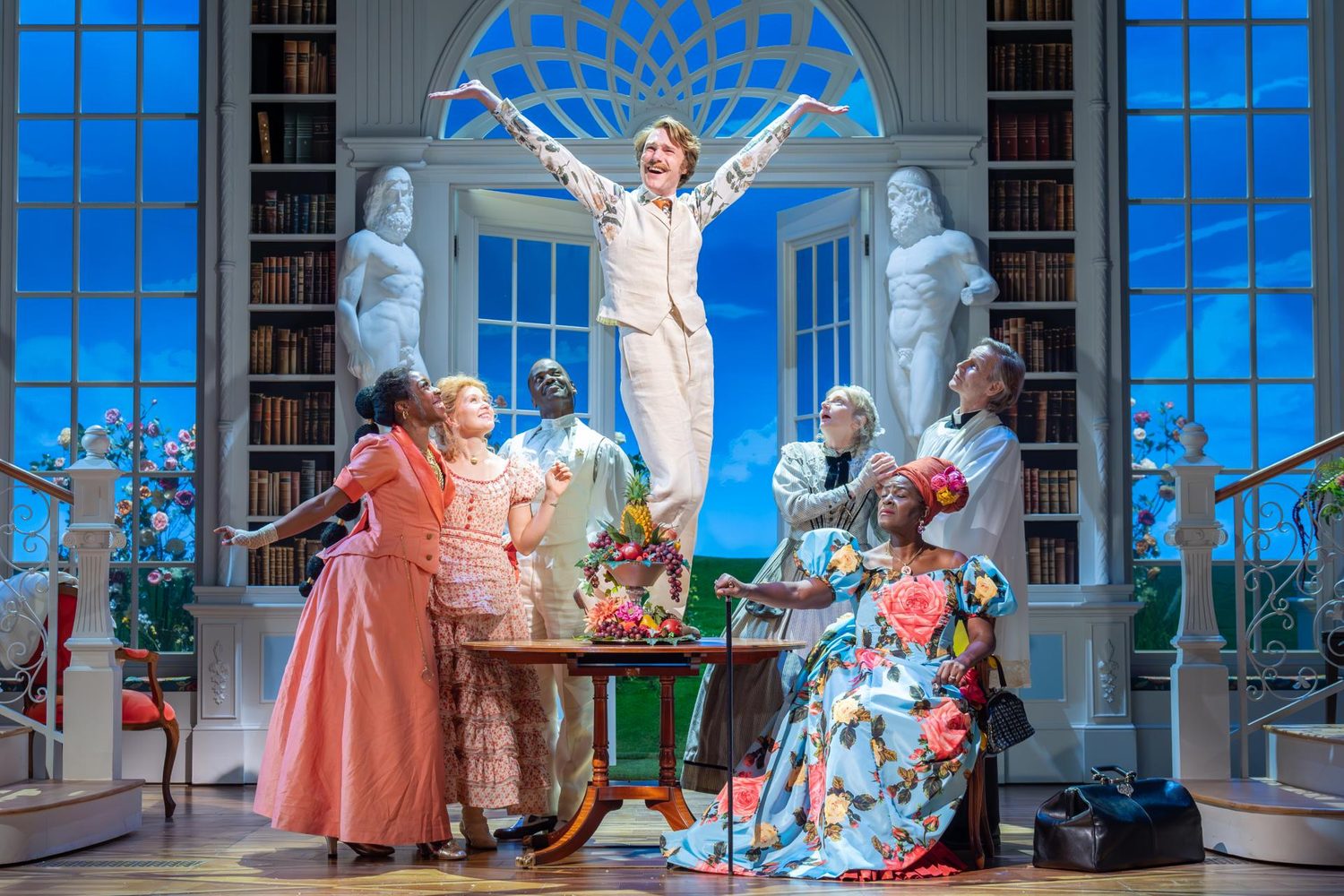
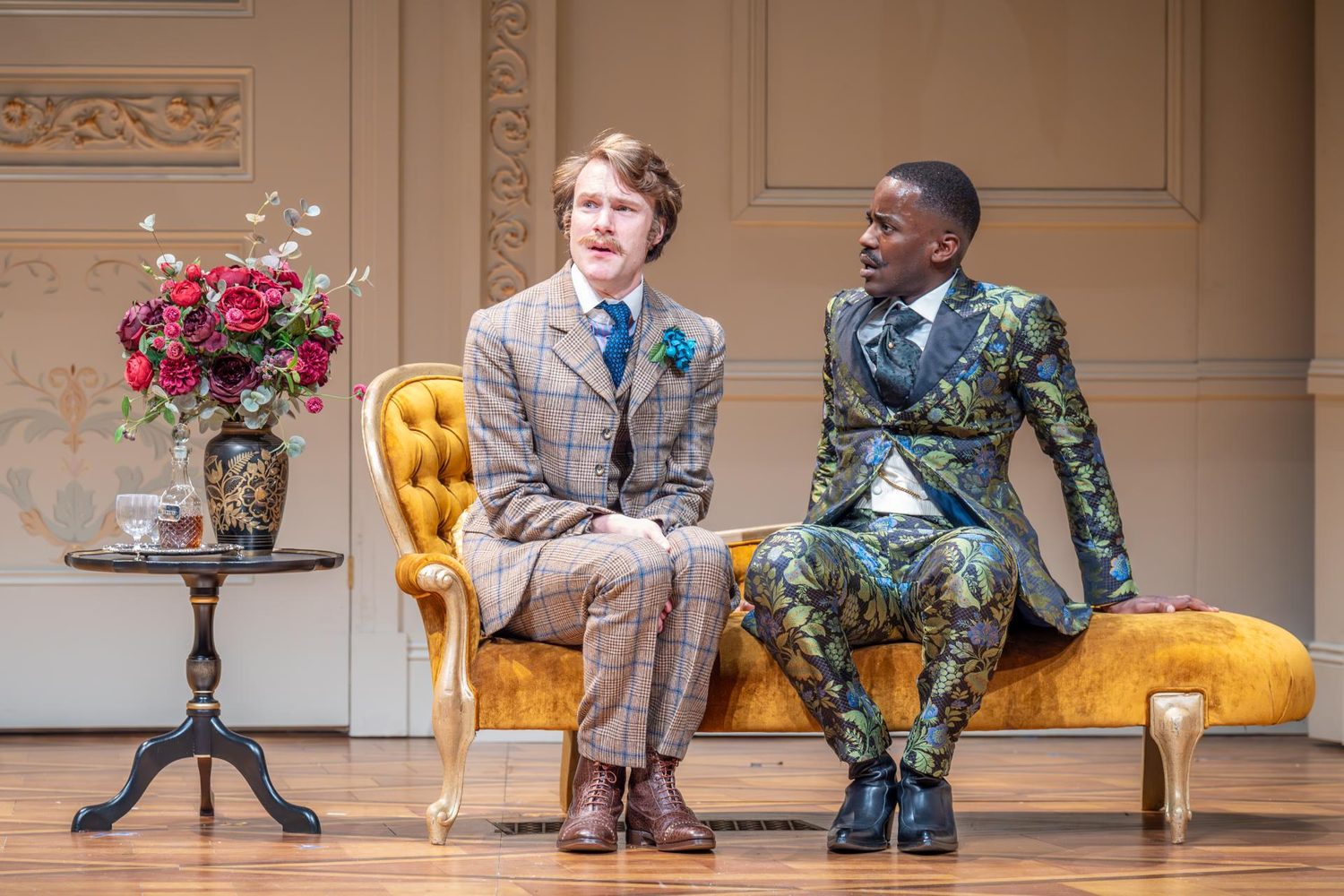
And what delivery it is! Directed by Max Webster, this is an overt celebration of queerness, Wilde’s subtext amplified to the nth degree. From the opening number, where Algernon (Ncuti Gatwa) shimmers in pink-sequinned drag, to the exuberant Mardi Gras-style finale, the closet door is flung wide open, making for a fabulously unsubtle show. To quote the wild wit himself, “moderation is a fatal thing; nothing succeeds like excess.” Webster has certainly taken this to heart.

The plot – for those who need a reminder – is at once frivolous and deadly serious. On the surface, it’s a frothy farce, all mistaken identity and foolish foppery. Underneath, it’s about repression – about the lengths people are forced to go to when their very natures are outlawed. Unbeknownst to each other, both Algernon and his best friend, Jack (Hugh Skinner), have found inventive ways to circumvent society’s disapproval of their predilections. Algernon has a pretend-friend, Bunbury, whose ill health Algy uses to excuse himself from dreary social events, while Jack has an alter-ego – an imaginary older brother called Ernest – who gets into mischief whenever he visits the city.

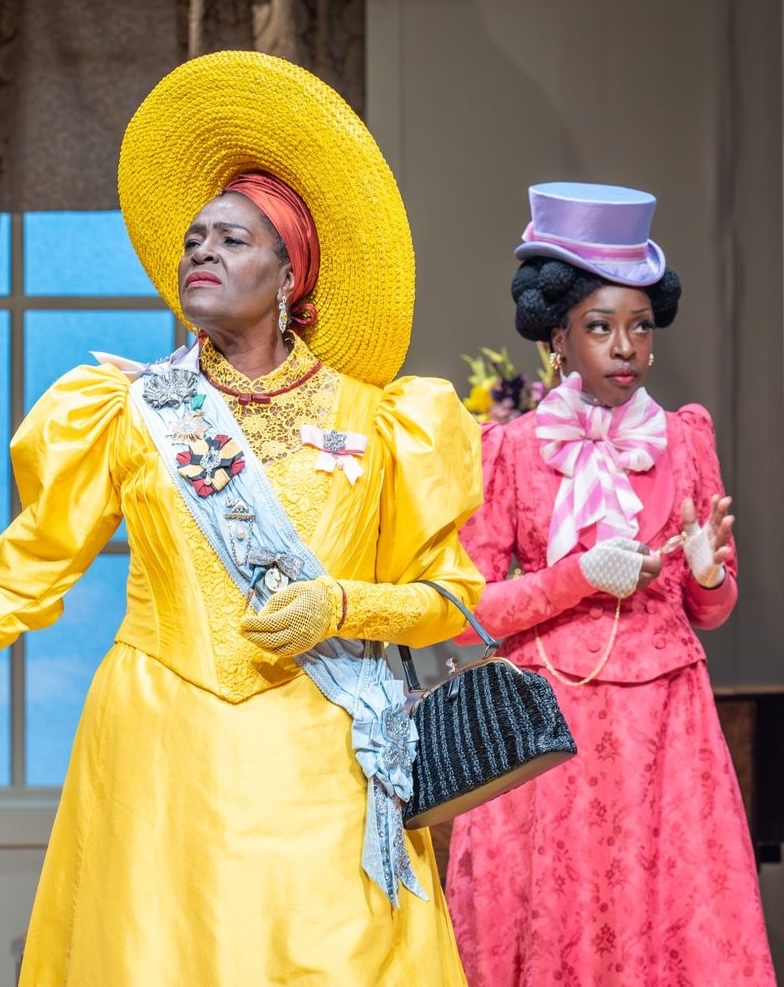
But things become complicated when Jack falls in love with Algy’s cousin, Gwendolen (Ronke Adekoluejo), whose mother, Lady Bracknell (Sharon D Clark), is far from pleased about the match. In desperation, Jack confesses his lies to Algy – who, true to form, responds by assuming Ernest’s identity for himself, and heading off to Jack’s country house to woo his pretty young ward, Cecily (Eliza Scanlen). Throw in a conflicted clergyman (Richard Cant), a dithering governess (Amanda Lawrence) and a couple of manservants (both played by Julian Bleach), and the scene is set for some merry mayhem.

The multi-racial casting within a period drama (courtesy of Alastair Coomer and Chloe Blake) gives the piece a contemporary edge, as do the occasional strains of recent-ish pop music and a cheeky allusion to one of London’s gay hotspots. Gatwa’s newfound fame as Dr Who also helps this production to appeal to a hip young audience, as does the sexual fluidity of the characters.

Clark’s depiction of Lady Bracknell is inspired: she brings a whole new dimension to the part, dispelling all my preconceptions of the character. Here, those oh-so-familiar lines are imbued with a haughty charm to create a formidable British-Jamaican matriarch without so much of a hint of Dench. Adekoluejo’s Gwendolen is a chip off the old block, saved from monstrousness by her cleverness and humour. In contrast, Scanlen’s Cecily is deliciously weird, a mix of doe-eyed intensity, sweetness and steel. But there are no weak links here: even Bleach, in the minor roles of Lane and Merriman, makes his mark, creating two distinct but equally absurd personae, evoking laughter with the simplest of smirks or stumbles.

More than anything, though, this is Skinner and Gatwa’s show, the focus firmly on the men’s friendship and their journey towards coming out. Their performances are jubilant and euphoric, and yet deceptively weighty, carrying with them real emotional heft. I can’t help thinking about Wilde, condemned to hard labour for his homosexuality, and wondering what he’d make of this? Surely, it would gladden his heart to see his characters finally set free.

5 stars

Susan Singfield

The Crucible

26/01/23

NT Live: Cineworld, Edinburgh

It’s a Thursday night, and a bit of a scramble getting to the cinema after work for a 7pm start. There’s certainly no time for anything so trivial as say, food, this evening. Sure, it’s The Crucible, and we’ve read a lot about this latest production from the National Theatre. But is it worth skipping a meal for?

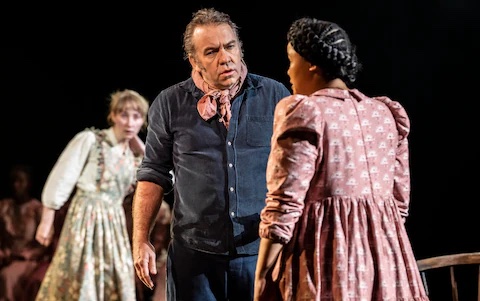
Thankfully, Lyndsey Turner’s interpretation of Arthur Miller’s timeless classic is so absorbing that we forget our empty bellies: we’re right there in Salem, Massachusetts, drawn into the destructive hysteria of the seventeenth century witch trials.

The story is well-known. A restrictive society collapses in on itself; petty grievances escalate into accusations of witchcraft; accusations of witchcraft further escalate into a feverish cull. Powerful men exploit vulnerable children, and women pay the price.

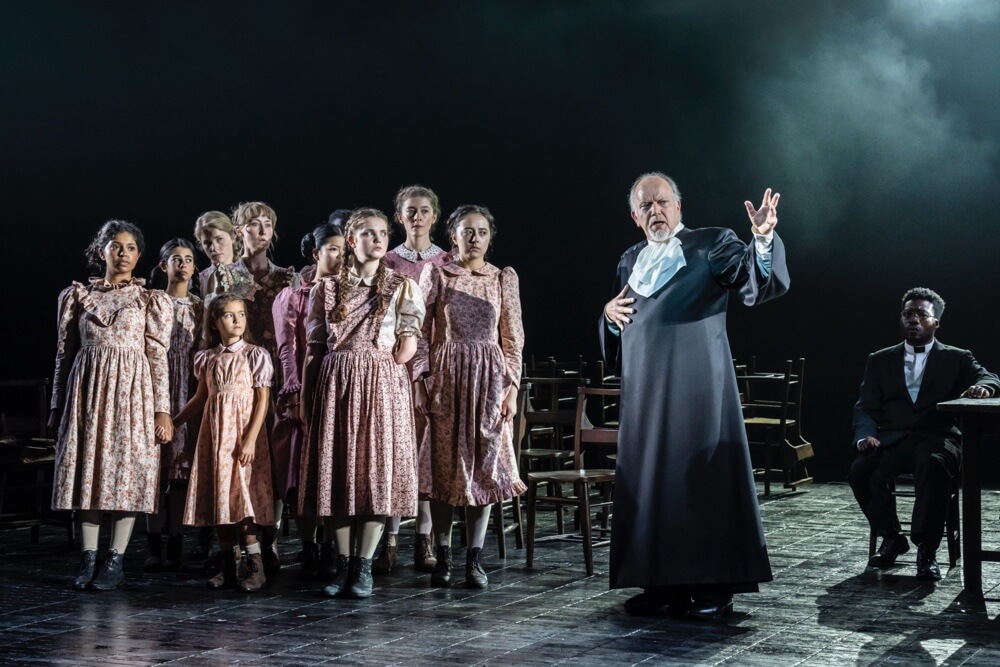
In this production, power imbalance is given centre stage. Erin Doherty’s Abigail Williams is no feisty seductress; instead, she’s a troubled teenager, all stroppy self-absorption and wounded spite. I like the way the girls are styled – as artless kids, kicking against a regime that affords them little in the way of entertainment, let alone autonomy. Proctor’s attempt to blame Abigail for their affair is shown as fundamentally flawed. It is his transgression, because he is the adult.

But he’s a victim too, and Turner’s direction highlights class warfare as well as misogyny. Hathorne (Henry Everett) and Danforth (Matthew Marsh) represent the ruling elite, issuing diktats and seizing ever more control. Reverends Parris and Hale (Nick Fletcher and Fisayo Akinade respectively) are the useful middle-class idiots, serving up the workers to the toffs. They’re very different men, but they fulfil the same role: condemning the villagers to their dreadful fates.

Es Devlin’s roofed set is wonderfully oppressive, a sheet of rain acting as an extra barrier, showing how cut off and isolated the villagers are, making their implosion all the more credible. The costumes (by Catherine Fay) also work well to create a sense of timelessness: they’re sort-of period, sort-of modern; not-quite-now but not-quite then. And what is The Crucible if it’s not a play for all ages, exposing our ongoing susceptibility to witch-hunts, both literal and metaphorical?

Brendan Cowell’s John Proctor is fascinating. He’s a shambling contradiction of a man: an honest cheat; an exploitative victim. I think he might be my favourite of all the Proctors I’ve seen, illuminating the character’s complexities. Here, he’s styled almost as a lone cowboy – a broken maverick, who comes good in the end. “Because it is my name” is such a weighted line, fraught with audience expectation (akin to Lady Bracknell’s “A handbag?” or Hamlet’s “To be or not to be?”) and it’s nice to see it being played down, spoken softly, as if it’s a simple, self-evident thing.

I’ve said it before and I’ll no doubt say it again: hurrah for NT Live. It means that our ‘national theatre’ really is national – easily accessible and (relatively) affordable. And definitely worth one missed evening meal.

4.7 stars

Susan Singfield

A Midsummer Night’s Dream

27/06/20

National Theatre Live

Watching immersive theatre via a screen, especially a small screen, is always going to be oxymoronic. My first thought, as Egeus (Kevin McMonagle) drags his errant daughter, Hermia (Isis Hainsworth), through the Bridge Theatre’s standing audience to face the judgement of Theseus (Oliver Chris) is, ‘Oh, this isn’t going to work…’ By which I mean, this isn’t going to work for me. Because sometimes you really do have to be there.

This production, directed by Nicholas Hytner and Ross MacGibbon, is all about the live experience. I can only imagine how exhilarating it must have been in that auditorium, at once spectator and spectacle. Instead I’m at home (for the millionth night running), sitting on my sofa, watching via a computer.

It’s still very good, and I soon get over feeling distanced. I suppose we’ve all had to get over a lot stranger things in recent times. The chilling opening scene – where father-of-the-year Egeus seeks permission to put his daughter to death if she refuses to marry a man she doesn’t love – highlights the importance of the midsummer madness in the woods. Away from the strict patriarchal rule of Athens, the characters are free to explore their deepest desires, able to give rein to their true selves.

The story – for those who need reminding – is of four young lovers who run away into the forest. Also present is a group of amateur actors, seeking a quiet place to rehearse their latest play, and – of course – the resident fairies, who view these human interlopers as playthings, to be teased and manipulated just for fun. In this version, Oberon (Chris) and Titania (Gwendoline Christie)’s roles are switched, with Titania orchestrating the action.

Bunny Christie’s design is bold and daring, all flying beds and shifting green floors. The audience is called upon to move with the action, to pass a parachute above their heads, to dance; they become the forest’s shadows, the Athenian court. I’ve seen a lot of immersive theatre, but rarely anything as well-integrated as this, where the audience action feels purposeful and not just grafted on. The beds are especially clever, highlighting the dual themes of sex and dreaming; it’s not subtle, but why should it be? This is not a subtle play.

There’s not a bum note here, but there are some standout performances, not least from Hammed Animashaun, who plays Bottom as a wide-eyed enthusiast rather than a bumptious fool. He’s utterly endearing, so I’m delighted with Hytner’s decision to make his drug-fuelled tryst with Oberon a tender one, ill-advised but not risible. David Moorst’s Puck is also a delight, all twisty movements and Mancunian patter.

In short, I wish I’d been there; a show like this reminds me exactly why I love live theatre. But seeing it like this is much, much better than not seeing it at all.

4.6 stars

Susan Singfield

One Man, Two Guvnors

02/04/20

National Theatre Live

Recordings of live theatre are the closest we can get to the real thing right now. It’s not the same, of course, especially not as an iMac is the largest screen we have. But it’s a whole lot better than nothing and, like thousands of others, we’re sitting on our sofa at 7pm tonight, ready to take advantage of the first of the National Theatre’s free YouTube screenings, a welcome Corona-distraction if ever there was one.

It’s One Man, Two Guvnors this evening, which we saw at The Lowry back in 2011 and thoroughly enjoyed. And it’s long enough ago for us to relish the chance to see it again, to retain an element of surprise at the humour, to have forgotten the punchlines to the jokes.

James Corden is magnificent in the lead role (the ‘one man’ of the title, Francis Henshall); it’s easy to see why his performance was so lauded, earning him a coveted Tony award. He’s brimming with talent, and I’ll never understand why he’s anathema to so many people. I defy them to watch this and remain unimpressed.

Based on Goldoni’s eighteenth century play, The Servant of Two Masters, Richard Bean’s farcical script transposes the action to 1960s Brighton, where Henshall finds himself doubly employed, acting as ‘minder’ not only to Stanley Stubbers (Oliver Chris), but also to Roscoe Crabbe (Jemima Rooper) – a situation made more complex by the fact that Stubbers is in hiding after murdering one… ahem… Roscoe Crabbe. Hapless Henshall tries to juggle the two jobs and fails at every turn. It’s ridiculous, nonsensical stuff – and I love every minute.

Nicholas Hytner’s direction is spot on, and the skiffle band covering the scene transitions is a lovely idea that pays real dividends. But it’s Cal McCrystal’s choreography of the physical comedy that really stands out, a dynamic blend of clowning and drama that ensures there’s never a dull moment. The storyline is pretty slight, but holds up for three hours because of the vitality of the performances.

One Man, Two Guvnors is available on the National Theatre’s YouTube channel until next Thursday, the 9th April, when Jane Eyre will take its place.

Don’t miss the chance to see it. After all, what else have you got to do?

5 stars

Susan Singfield

Barber Shop Chronicles

24/10/19

Lyceum Theatre, Edinburgh

There’s a different vibe in the Lyceum tonight: a youthful, energetic atmosphere. We take our seats fifteen minutes early, but the party’s already in full swing, with audience members invited up on to the stage, where the twelve-strong cast are dancing, chatting and miming cutting people’s hair. A couple of teenagers from the front row run up the steps self-consciously; within seconds they’re in barbers’ chairs, laughing with the actors standing behind them. A middle-aged man tries in vain to copy some dance moves; he’s having a great time. An actor wanders through the auditorium, shaking hands, making daft jokes. This immersive opening has a clear message: Barber Shop Chronicles is an inclusive piece of theatre, and we’re meant to be more involved than mere observers.

Inua Ellams’ play was first performed two years ago at the National Theatre (who co-produced it with Fuel and Leeds Playhouse). Since then, it’s been on tour, and its success is well-deserved. An intimate piece that spans six countries; a politically-charged play that doesn’t proselytise; a comedy that brings its audience to tears: Barber Shop Chronicles is nothing if not original.

The conceit is simple: a barber is not just a man who cuts his clients’ hair. He is also a counsellor, his shop is a confessional. And, if this is true, if men really do open up to their barbers, then what can we glean if we listen in? London-based Ellams’ research took him to South Africa, Kenya, Uganda, Nigeria and Ghana, and he returned with sixty hours of recordings on which he based his play. The authenticity of the voices rings true throughout, exploring the experiences of black men in Africa and the UK. We flit between time zones and hairdressers, the clocks whizzing round at double speed to take us between continents. In each shop, they’re watching the same football match (Chelsea vs Barcelona), each disparate group united by their interest in the sport.

There’s a lot to take in; under Bijan Sheibani’s direction, everything happens at breakneck speed. I like this: sure, there’s not always time to absorb one idea before another comes along, but the overlapping stories and fragments of ideology feel wonderfully realistic, adding to the impression that we’re listening in to what real people have to say.

The performances are exuberant for the most part, but quiet and heartfelt when required. This is true ensemble work, with a real sense of a team creating something together. The scene transitions are fascinating, the choreography both lively and precise.

The best thing, though, is the wide-ranging conversation, encompassing little-heard persepctives on everything from Nigerian Pidgin to Mugabe, from high performance cars to fatherhood. It’s densely packed – and never dull.

4.2 stars

Susan Singfield

A Taste of Honey

24/09/19

King’s Theatre, Edinburgh

I first encountered Shelagh Delaney through The Smiths, way back when, before Morrissey disgraced himself. His gorgeous early songs are littered with her words, and her face features on both album and single covers. As a young Moz-fan with literary pretensions, of course I read A Taste of Honey; of course I bought a video of the film. Since then, I’ve seen a few theatre productions too, but – honestly – tonight’s interpretation is my favourite of the lot.

Bijan Sheibani’s Honey might not be as gritty as some versions, but it illuminates the dysfunctional mother-daughter relationship at the heart of the play more effectively than I have seen before. The characters are more ordinary, more credible, than they sometimes appear, the quirky expositional dialogue rendered somehow hyper-real.

Jodie Prenger excels as Helen, the non-maternal mother-figure who dominates the play. She’s resentful of her teenage daughter, Jo (Gemma Dobson), seeing her as an encumbrance, a dead weight dragging her down. Unsurprisingly, Jo is resentful too; she demands attention, yearns for Helen’s love. But Helen’s too busy thinking about herself and her sex life to care what her daughter’s up to, and Jo has learned not to expect much from life. Even as she’s losing her virginity, in thrall to erudite sailor Jimmie (Durone Stokes) – whose race doesn’t seem as relevant as it did in 1958 – she’s gloomily predicting that he’ll walk out of her life.

And she’s right.

Jo seems doomed to follow in Helen’s fucked-up footsteps: by the second act, all too predictably, she too is a pregnant teenager, alone and dreading motherhood. Her best friend, Geoffrey (Stuart Thompson), really wants to help; he’s even prepared to try to make a heterosexual relationship work. But Jo knows that can’t fly – and Helen’s not about to let Jo find happiness anyway.

In this National Theatre production, relationships are centre-stage. Poverty is less of an issue than it usually seems in this play: Helen’s marriage to the rich-but-odious Peter (Tim Carey), for example, seems borne more from greed than financial necessity.

The ever-present three-piece band is an interesting touch, lending the piece a kind of louche, lounge-bar-style seediness. The songs are beautifully sung, underscoring the emotional effects of the characters’ actions. I like the direction (although perhaps the scenery doesn’t need to be moved quite so much): the business and bustle, the use of understudies as strange double/twin stage hands.

This really is a ‘revival’ in the truest sense of the word – breathing new life into an ageing classic, making it relevant to today’s audience.

4.3 stars

Susan Singfield


Macbeth

23/10/18

Festival Theatre, Edinburgh

We were awed by the original version of this production, which we saw at the cinema via NT Live earlier in the year (https://bouquetsbrickbatsreviews.com/2018/05/12/macbeth-3/). Still, marvellous as the National Theatre’s outreach programme is, it’s not the same as seeing a live show, and so we were delighted to learn that the Scottish play was heading out on tour. We wrote the Edinburgh date in our diary, and eagerly anticipated its arrival. How would director Rufus Norris and designer Rae Smith handle the transition from the Olivier Theatre with its drum revolve stage to the myriad regional venues and their proscenium arches? Would they be able to retain at least some of the stature of the set, the awful bleakness of the London show?

They would. They did. The bridge that arcs over the central wasteland is smaller, sure, and moved by hand, but its construction is ingenious. Homes – damaged, mostly, with bare concrete walls and broken furniture – are two-sides of a wheeled box, spun as we move from outside to in. The lighting (by Paul Pyant) is eerie and atmospheric, all mottled shadows and clear bright shafts.

Usually, I’m irked when Macbeth is played by a middle-aged actor: to me, the character exemplifies a ‘young pretender’ – not just ambitious but impatient and impetuous, careless of consequence, swaggering in self-belief. He’s a fine soldier, but newly recognised as such; I’d place him at twenty, tops. But here, in this post-apocalyptic vision of the Macbeths’ world, fifty-year-old Michael Nardone’s casting as the eponymous anti-hero makes perfect sense. This is a war-torn nowhere/anywhere, adrift in time, as much now as then, and it’s dog-eat-dog; he doesn’t have a lot to lose. There are indeed daggers in men’s smiles; only the fittest can survive. Kirsty Besterman makes a decent Lady Macbeth too – her husband’s equal, complicit in his downfall, but not the evil cause of it.

I like the depiction of the witches; in this war-torn landscape they seem more displaced than supernatural, feral rather than ethereal. There’s a telling contrast between the ramshackle, held-together-with-gaffa-tape body armour of the rebels, and the fit-for- purpose equipment of the English troops. And the sound design (by Paul Arditti) builds a pervading sense of unease; these are very troubled times.

I’m relieved and delighted that the touring production is so good. I know this interpretation of the play has been quite controversial, but it really works for me. I think it captures the very essence of Macbeth and illuminates the themes and characters with great clarity.

5 stars

Susan Singfield

Home, I’m Darling


07/07/18

Theatr Clwyd, Yr Wyddgrug

What’s this? A trip to the homeland to visit family that coincides with a chance to see the world première of Laura Wade’s latest play before it transfers to the National at the end of the month? Perfect timing! Four tickets, please. For the Saturday matinee.

It’s a sunny day, so we pack some fruit and sandwiches to take with us. Theatr Clwyd is in Yr Wyddgrug (aka the more prosaic ‘Mold’), and there are picnic tables outside, with panoramic views over the Clwydian hills. It’s a lovely place to sit and eat our lunch before we venture indoors. This is a bustling regional arts centre, with three theatres, a cinema and a function room, as well as a shop, bar, and bistro cafe. Neither Philip nor I have been here for a while, so we spend some time exclaiming over changes, and reminiscing about the past (factoid: Philip’s band, Hieronymous Bosch, used to play here, providing the music for youth theatre productions such as Godspell back in the day). We’re with my parents and, as mum walks with a zimmer frame, we’re pleased to note that the venue is pretty accessible, and that the staff are friendly and willing to help, e.g. with storing her wheels while we watch the play.

And what a play! We’re so glad we’ve come, even though there are blue skies outside and mum and dad are missing England defeating Sweden in the football word cup (we’re missing it too, of course, but we wouldn’t have watched anyway).

Katherine Parkinson stars as Judy, a woman obsessed with the 1950s. She met her husband, Johnny (Richard Harrington, or – as he’ll always be known in this house – DI Mattias) at a vintage car convention; their clothes and home decor are all authentic detritus from the decade they love so much. But paraphenalia isn’t enough to satisfy Judy and Johnny’s obsession; unlike their best friends, Fran (Kathryn Drysdale) and Marcus (Barnaby Kay), who just like the 50s aesthetic, the dancing and the airstream caravans, Johnny and Judy choose to model their whole lives around the fantasy, embracing – as Judy’s mother (Siân Thomas) says – a strange nostalgia for a time they never knew. Judy’s redundancy (she’s been working in finance and hating every minute) is the catalyst for their whole-hearted immersion; she will become a traditional housewife, making everything from scratch, keeping their home perfect. Meanwhile, Johnny will continue to work, but – when he comes home – it will be to warm slippers and a cocktail, a clean house and a fragrant wife. He takes some persuading – this is Judy’s dream, really – but he knows she’s unhappy in her job, and he can’t pretend he isn’t drawn to the idea of being waited on. It sounds great, right?

Except, of course, that it isn’t real. This isn’t the 1950s and this is not what life is like. Indeed, again according to Judy’s wonderfully acerbic and impatient mother – Siân Thomas is clearly relishing this role – this is not even what life was like in the actual 1950s. It’s a sanitised, glamourised version, an ideal that glosses over myriad inconvenient details. And, when Johnny’s new boss (Sara Gregory) fails to honour the promotion he’s been promised by her predecessor, Judy’s carefully constructed edifice is threatened by the humdrum irritant of ‘not having enough money to pay the mortgage or the bills.’

It’s a clever play, this, with a lot to say. Through Judy’s brittle fetishisation of the past, we get to analyse the gender politics of the modern age, to see that traditional gender roles don’t make men happy either; they’re no good for any of us. The rise of the alt-right means we’re being dragged backwards, losing rights hard-won by those who came before us. This play lays bare the problem with rose-tinted reminiscence, with cherry-picking details that seem appealing to us now. It also looks at the present with an eye that matches Judy’s gimlet cocktail, with nods to #metoo and eroding workers’ rights. Under Tamara Harvey’s direction, the performances are note-perfect, six complex, rounded characters with believable relationships.

I like the set, designed by Anna Fleischle: a doll’s house construction with a front wall that’s opened out as the play starts, all yellow kitchen and pineapple ice-buckets, flamingo shower curtains and muslin bottle tops. And the transitions between scenes are audacious, choreographed by Charlotte Broom, the jive entwined with prop-positioning.

If you’re in or near North Wales, you really should try to catch this before it makes the move to London – you’ve got until Friday. If not, it’s worth the trip to England’s capital.

4.8 stars

Susan Singfield

10/01/19

This excellent play is transferring soon to the Duke of Yorks Theatre in London’s West End. You’ll find booking details here: https://www.atgtickets.com/shows/home-im-darling/duke-of-yorks/