Dominion Cinema

NT Live: The Misanthrope

22/09/26

Dominion Cinema, Edinburgh

This is Molière as you’ve never seen him before – unless, of course, you witnessed earlier iterations of Martin Crimp’s adaptation in 1996, 1999 or 2009. The key difference in 2026 is that there’s much more at stake.

The French playwright’s 1666 comedy of manners satirised French salon culture, where superficial manners and flattery were social currency. His aristocratic protagonist, Alceste, rails against the hypocrisy, refusing to play by the generally-accepted rules. But in King Louis XIV’s court, his principles cost him everything: a lawsuit, his social standing – and the love of his life.

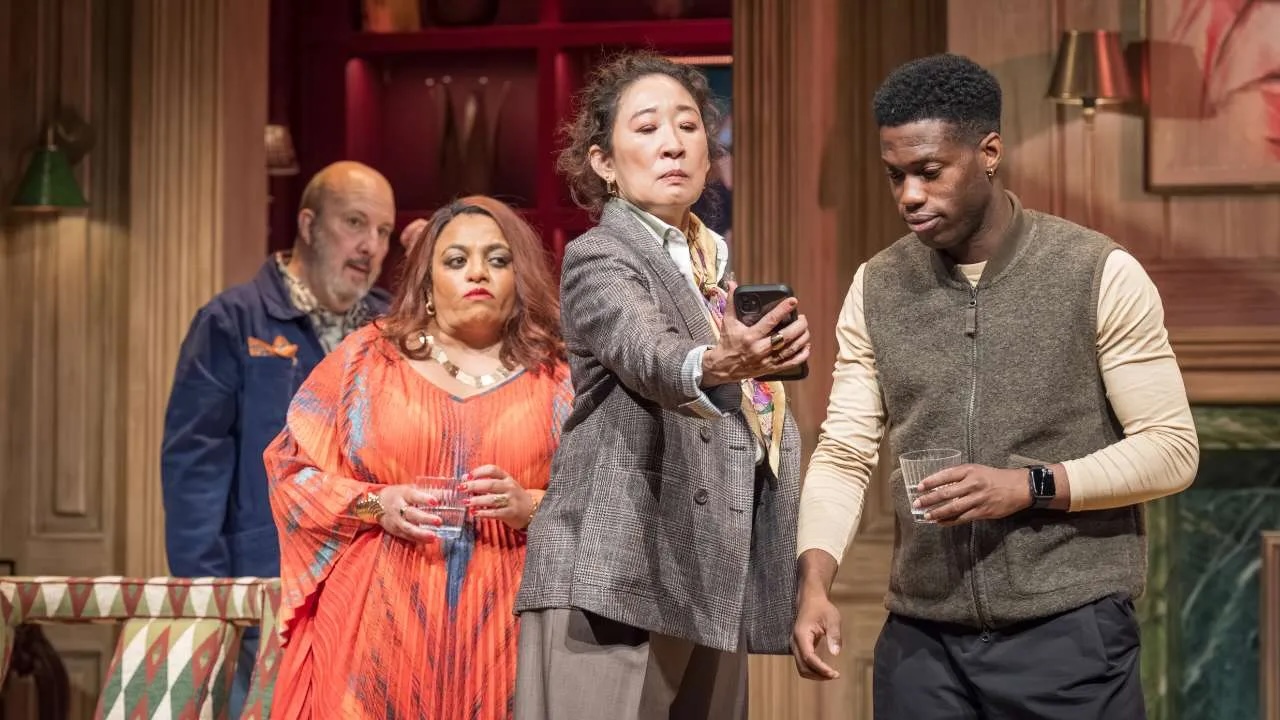
Directed by Indhu Rubasingham, the National Theatre’s new version replaces Alceste with Alice (Sandra Oh), a Booker-winning novelist known for her bold political opinions. And, while previous productions of Crimp’s Misanthrope were criticised for a lack of jeopardy (Michael Billingham famously wrote that he could see this Alceste being offered “a Guardian column or a spot on Channel 4), the times have changed. Cancellation culture and social media pile-ons are very real threats. Alice really is risking her neck.

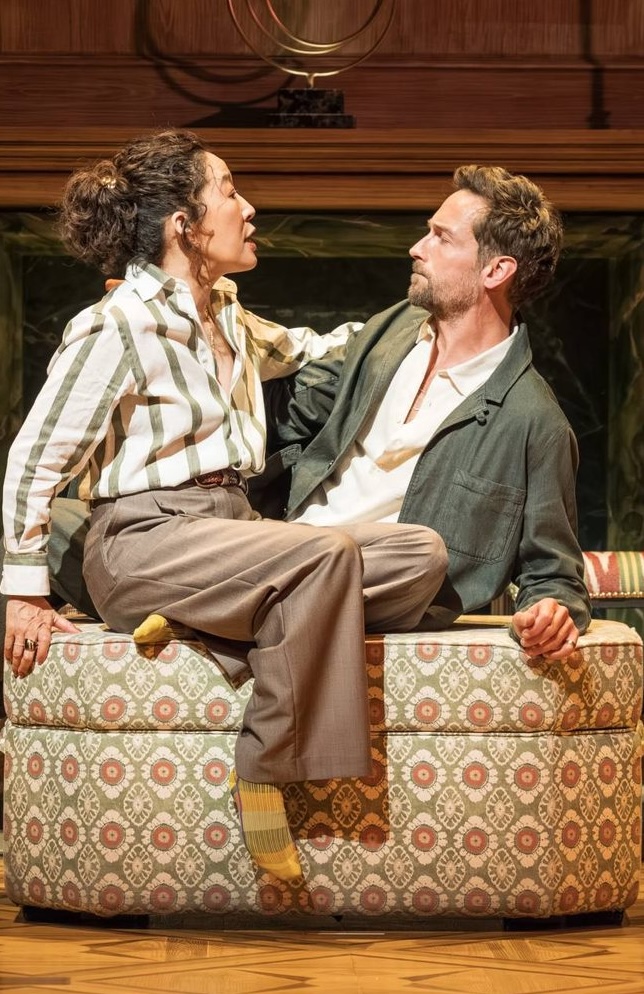
It’s astonishing how apposite the plot is. Alice is supposed to be travelling to Berlin to collect a literary prize of €200k – but the press have unearthed an old interview where she expresses an opinion at odds with current thinking. Her playwright friend, John (Paul Chahidi), urges her to issue a generic apology but Alice refuses. Why should she bow to public pressure and lie about how she feels? If the prize committee renege on their deal, then so be it. She has her film star lover, Stefan (Tom Mison), to comfort her, doesn’t she?

Well, to a point…

Stefan is everything that Alice usually despises: vain and vacillating, with no hidden shallows, let alone depths. He’s charming and handsome, attentive and sweet, but he’s hardly someone to rely on. Just ask his ex-wife, Elaine (Jemima Rooper), who has to dash to London from Paris when Stefan fails to collect their kids from school.

When superfan Esmée (Imogen Elliott) asks for an autograph in her battered copy of Alice’s critically-acclaimed novel, John persuades Alice to give the girl (“It’s woman, actually”) a hearing. Predictably, Esmée has a manuscript of her own that she’d like Alice to read. Like Alceste before her, Alice offers a scathing critique of the deliciously dreadful prose – with terrible consequences. Esmée, it transpires, is an influencer with hordes of followers. If Alice was in hot water before, she’s about to feel the temperature rise…

Crimp’s script is witty and lyrical, written in rhyming verse to mirror Molière’s original. It’s so cleverly done that it takes me a while to notice; when I do, it’s to laugh out loud at some of the more audacious pairings (“We’ve fucked it / why not just sit back and deconstruct it?” or “People will praise a pile of shit / if they’ve dressed up and paid fifty quid for it.”). The juxtaposition of highbrow and lowbrow works really well, reinforcing the theme of a social veneer obscuring the gritty truth.

Rubasingham’s direction is pacy and fluid; the ninety-minute running time flies by, reflecting Alice’s almost manic mood. Robert Jones’ set reveals a series of drawing rooms – each more stifling than the last – until the final party scene, where the walls disappear and scores of chandeliers drop from above. Alice’s isolation is emphasised by Tim Lutkin’s lighting, a single spot highlighting her variance from societal norms, as everyone around her is dressed in Baroque costume while she’s still wearing her customary trouser suit.

Oh is fabulous in the central role, giving us a complex character we can both admire and despise. Cannily, Crimp never reveals what Alice’s objectionable opinion was, so we’re not able to judge her based on our own position. Instead, we have to consider the abstract premise: what is the point in demanding outward conformity to a set of beliefs that are not truly held? And who are the gatekeepers deciding what’s acceptable?

Once again, I find myself mentally thanking whoever it was who came up with the idea of live-streaming theatre. I love being able to see London shows for the price of a film ticket – and Edinburgh’s luxurious Dominion Cinema offers a real sense of occasion.

4.5 stars

Susan Singfield

The Fifth Step: NT Live

01/12/25

Dominion Cinema, Edinburgh

As if NT Live performances weren’t enough of a treat, we’ve recently ramped up the indulgence levels by choosing to watch them at Edinburgh’s most bougie cinema, the Dominion. At 3pm this afternoon, we zip up our raincoats and venture out into the December drizzle, ready for the half-hour walk that will take us to our huge, reclining seats.

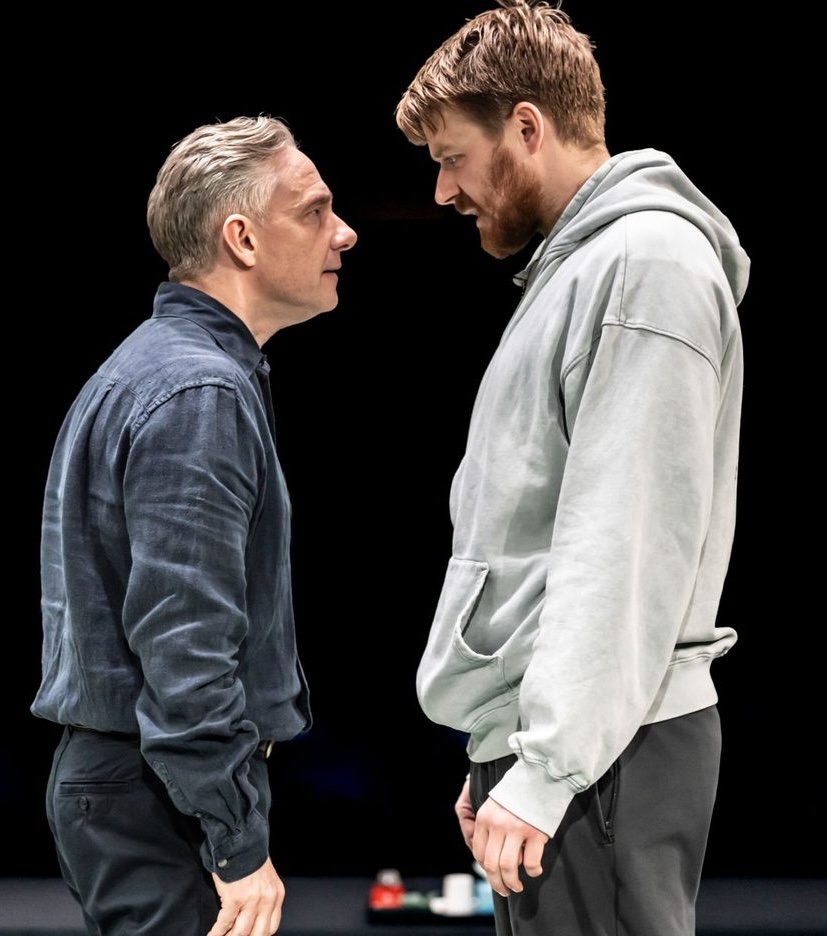
The Fifth Step is a compact, one-act play by Jack Ireland, and its ninety-minute running time is perfectly judged. This is a tight and concentrated piece, where small impulses are magnified, vague doubts forensically explored. The in-the-round set, designed by Milla Clark, is almost brutalist, comprising a stark square with raised, cushioned sides, reminiscent of a boxing ring or a trampoline: a taut jump mat, ready to absorb the characters’ anger, or give them the push they need to set themselves free.

We’re in the world of AA, where acceptance meets strict protocols and kindness sometimes seems harsh. Jack Lowden plays Luka, a twenty-something alcoholic, scared that he’s turning into his dad, and desperate to avoid this destiny. Nervy and uncertain, he isn’t sure that he can do it, not when sobriety leaves a booze-shaped void he fills with loneliness and self-loathing. Hovering in the room after a meeting, he gets chatting to James (Martin Freeman), who has been on the wagon for more than twenty-five years. The older man knows exactly what Luka is going through, and offers to become his sponsor. From hereon in, we watch as their relationship develops – and as they both continue to battle against their respective addictions.

Ireland’s script is darkly funny, and director Finn Den Hertog maximises its comic potential, without ever belittling the men’s experiences. Not much happens, and yet all of human life is here: our frailty, our fabulousness; our bravado, our beauty; our destructiveness and our shared desperation. Luka begins by looking for easy answers: if he does whatever his sponsor says, then surely he’ll find happiness. But James has his own demons to grapple with and he knows that life is far more complex than that. You just have to keep on being honest, keep facing up to your own failings – and keep supporting one another along the way…

Unsurprisingly, Lowden and Freeman deliver faultless performances. They’re perfectly cast, Freeman’s wry stillness the ideal foil for Lowden’s twitchy, pent-up energy. A fascinating insight into not just addiction but also notions of authority and responsibility, this is definitely one to watch if it’s showing at a cinema near you.

4 stars

Susan Singfield

The Importance of Being Earnest: NT Live

20/02/25

Dominion Cinema, Edinburgh

Despite having lived a mere thirty-minute walk from Morningside’s Dominion Cinema for the past decade, we’ve somehow failed to set foot inside – and we dare to call ourselves cinephiles! So tonight’s NT Live screening of The Importance of Being Earnest is extra exciting for us, as it’s also an opportunity to explore a new venue.

So let’s begin with that. The Dominion is undeniably boojie; indeed, it’s the fanciest cinema either of us has ever graced. The design is art deco (think flocked wallpaper, geometric shapes and a colour palette of gold, red and black); our seat is a super-comfy reclining sofa, with privacy screens and side tables. We pour our drinks (sparkling water and alcohol-free lager, since you ask) and sit back, feet up, more than ready to enjoy ourselves in these opulent surroundings.

I’ve seen, read and taught this play so many times that I know it almost by heart, but that’s not to its detriment. After all, the script is so packed with recognisable aphorisms that few in the audience are likely to be surprised by what is said; with Earnest, it’s all in the delivery.

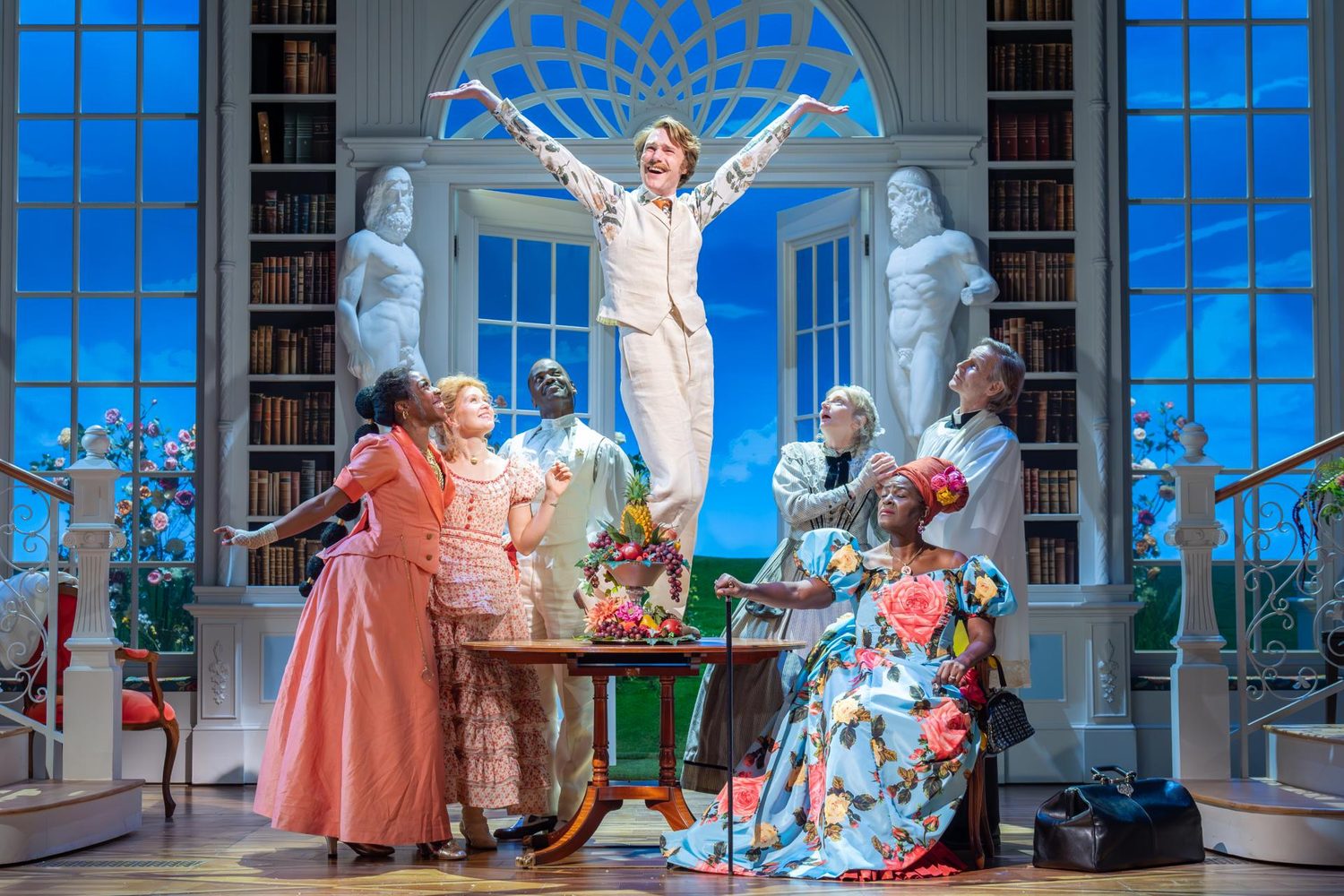
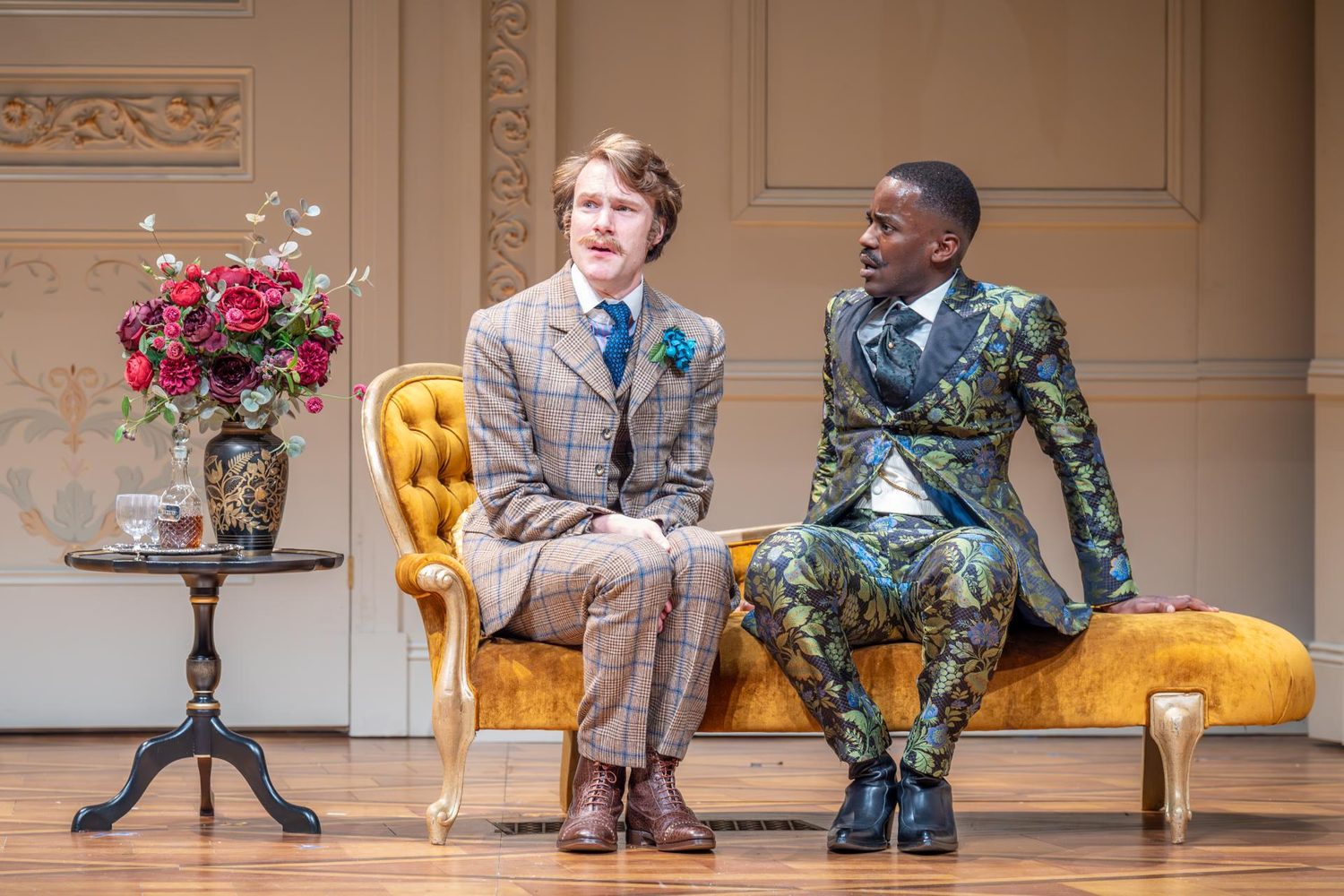
And what delivery it is! Directed by Max Webster, this is an overt celebration of queerness, Wilde’s subtext amplified to the nth degree. From the opening number, where Algernon (Ncuti Gatwa) shimmers in pink-sequinned drag, to the exuberant Mardi Gras-style finale, the closet door is flung wide open, making for a fabulously unsubtle show. To quote the wild wit himself, “moderation is a fatal thing; nothing succeeds like excess.” Webster has certainly taken this to heart.

The plot – for those who need a reminder – is at once frivolous and deadly serious. On the surface, it’s a frothy farce, all mistaken identity and foolish foppery. Underneath, it’s about repression – about the lengths people are forced to go to when their very natures are outlawed. Unbeknownst to each other, both Algernon and his best friend, Jack (Hugh Skinner), have found inventive ways to circumvent society’s disapproval of their predilections. Algernon has a pretend-friend, Bunbury, whose ill health Algy uses to excuse himself from dreary social events, while Jack has an alter-ego – an imaginary older brother called Ernest – who gets into mischief whenever he visits the city.

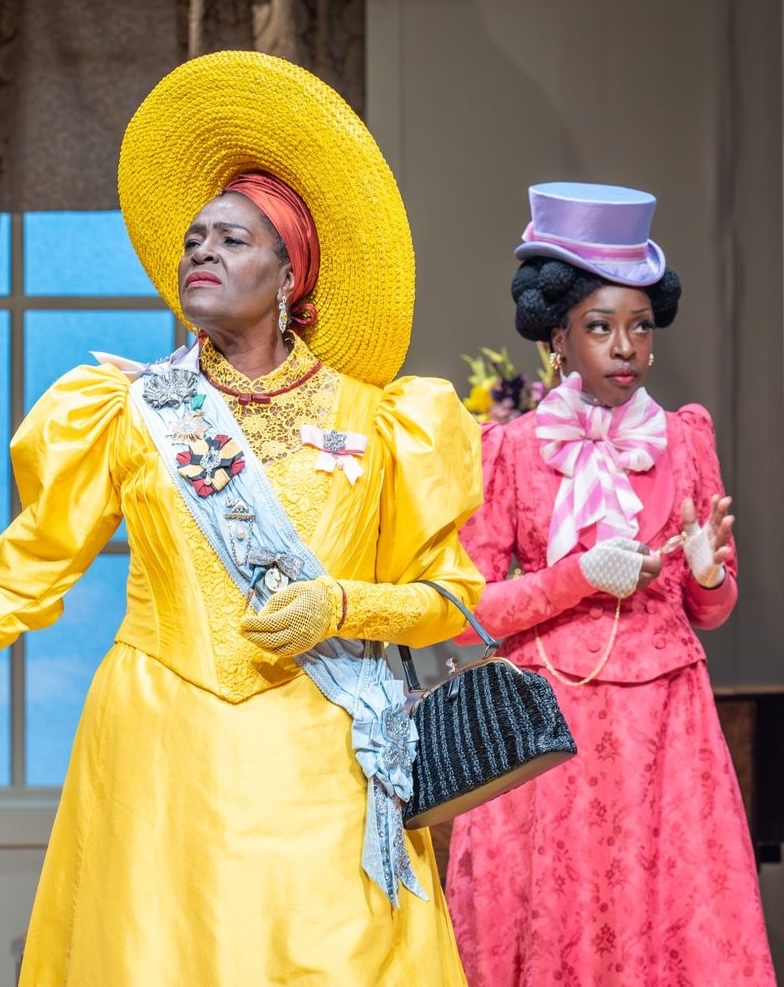
But things become complicated when Jack falls in love with Algy’s cousin, Gwendolen (Ronke Adekoluejo), whose mother, Lady Bracknell (Sharon D Clark), is far from pleased about the match. In desperation, Jack confesses his lies to Algy – who, true to form, responds by assuming Ernest’s identity for himself, and heading off to Jack’s country house to woo his pretty young ward, Cecily (Eliza Scanlen). Throw in a conflicted clergyman (Richard Cant), a dithering governess (Amanda Lawrence) and a couple of manservants (both played by Julian Bleach), and the scene is set for some merry mayhem.

The multi-racial casting within a period drama (courtesy of Alastair Coomer and Chloe Blake) gives the piece a contemporary edge, as do the occasional strains of recent-ish pop music and a cheeky allusion to one of London’s gay hotspots. Gatwa’s newfound fame as Dr Who also helps this production to appeal to a hip young audience, as does the sexual fluidity of the characters.

Clark’s depiction of Lady Bracknell is inspired: she brings a whole new dimension to the part, dispelling all my preconceptions of the character. Here, those oh-so-familiar lines are imbued with a haughty charm to create a formidable British-Jamaican matriarch without so much of a hint of Dench. Adekoluejo’s Gwendolen is a chip off the old block, saved from monstrousness by her cleverness and humour. In contrast, Scanlen’s Cecily is deliciously weird, a mix of doe-eyed intensity, sweetness and steel. But there are no weak links here: even Bleach, in the minor roles of Lane and Merriman, makes his mark, creating two distinct but equally absurd personae, evoking laughter with the simplest of smirks or stumbles.

More than anything, though, this is Skinner and Gatwa’s show, the focus firmly on the men’s friendship and their journey towards coming out. Their performances are jubilant and euphoric, and yet deceptively weighty, carrying with them real emotional heft. I can’t help thinking about Wilde, condemned to hard labour for his homosexuality, and wondering what he’d make of this? Surely, it would gladden his heart to see his characters finally set free.

5 stars

Susan Singfield