

Edinburgh

Montrose

16/11/25

Montrose Terrace, Edinburgh

We’re in the mood for a spot of high-end lunch and we’ve heard good things about Montrose, which is a sister establishment to Timberyard, one of the undoubted stars in the Edinburgh culinary firmament. Montrose claims to offer a more relaxed kind of cuisine at reasonable prices so, in order to put that claim to the test, we take a leisurely stroll over to Montrose Terrace to sample their three-course set lunch.

The offer is all three courses for £30, with a small selection of side-dishes, which can be added for a little more outlay. The menu is changed on a monthly basis, though the advertised dishes can be tweaked if somebody has an allergy issue or a pronounced dislike of one of the key ingredients. But, as we so often claim, there’s not much out there that we won’t eat.

The restaurant has a calm, pleasant atmosphere and is arranged on two levels. (Halfway up the stairs there’s what must qualify as the smallest customer toilet in Edinburgh.) The staff are friendly and easy to chat to as we order drinks and wait for our two additional dishes to arrive.

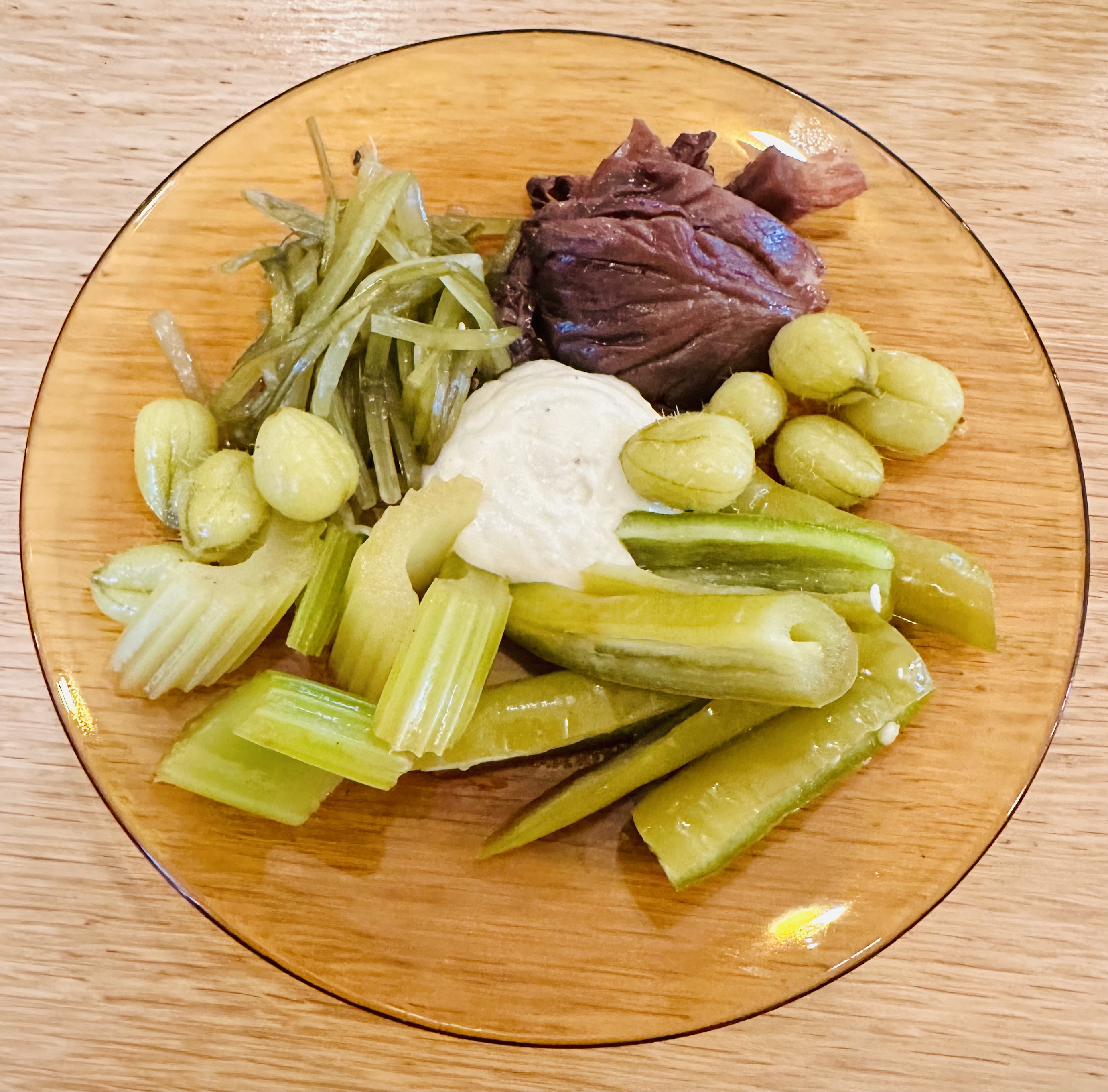
These are a Pickle Plate and a Cantabrian Anchovy Gilda. The former is a plate of crunchy pickles served with a tangy dressing, amid which some beautifully-sweet gooseberries are undoubtedly the stars. The latter turns out to be a single (though quite delicious) fresh anchovy nestled on some truly scrumptious olives. For £5, I find myself wishing we had an anchovy apiece.

Next up is our starter, which is Crown Prince Pumpkin with trevino, hazelnut and rosemary. There’s a decent-sized chunk of slow roasted pumpkin, drizzled with a creamy, nutty sauce and there’s a lot of (too much?) green salad, which is as fresh as you like, but leaves me feeling that this dish perhaps needs an extra element to make it zing.

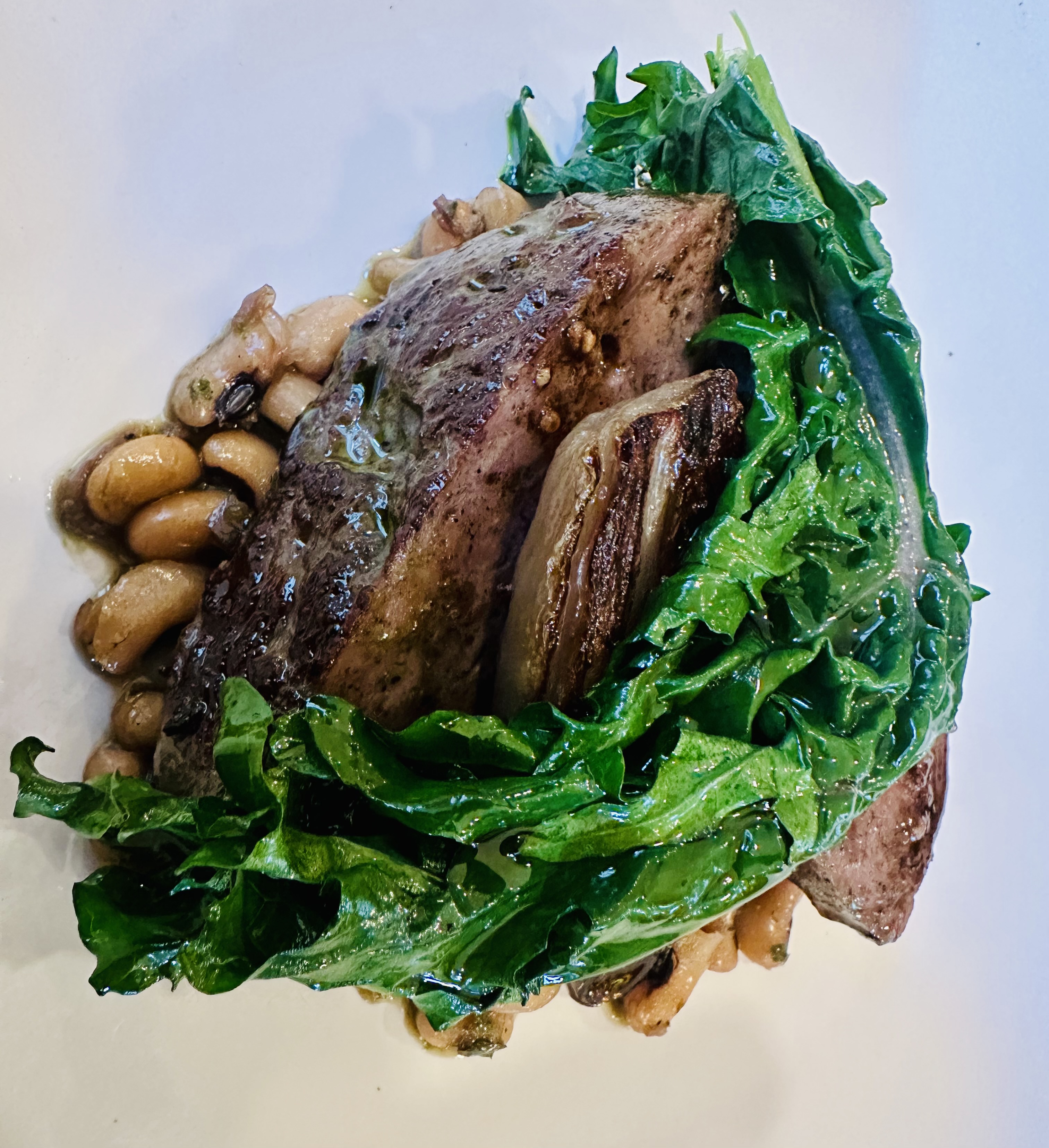
The main course is essentially the restaurant’s take on sausage and beans, though it’s a lot more interesting than that sounds. It comprises two spicy slices of Venison and Pork Kofta, a chunk of crispy seared shallot and some earthy black-eyed beans. They’ve even managed to make an accompanying portion of kale taste good. It’s a great idea and perfectly suited to an autumn lunch.

Pudding must inevitably follow. Out comes a Pear, Vanilla and Walnut Trifle, which – while it’s not the most photogenic of dishes, the colours all being variations of brown – is nonetheless a lip-smacking delight. It’s like somebody’s crossed a tiramisu with a crumble and this is the weird but oddly satisfying result. I’m definitely in favour taste-wise, but surely a scattering of bright red raspberries would make this look a lot more appetising.

With drinks, this meal comes in at around £90, which in these troubled times represents good value for this standard of cuisine. We depart, sated and happy, and ready for – you’ve guessed it – a visit to the cinema.

4 stars

Philip Caveney

Die, My Love

16/11/25

Filmhouse, Edinburgh

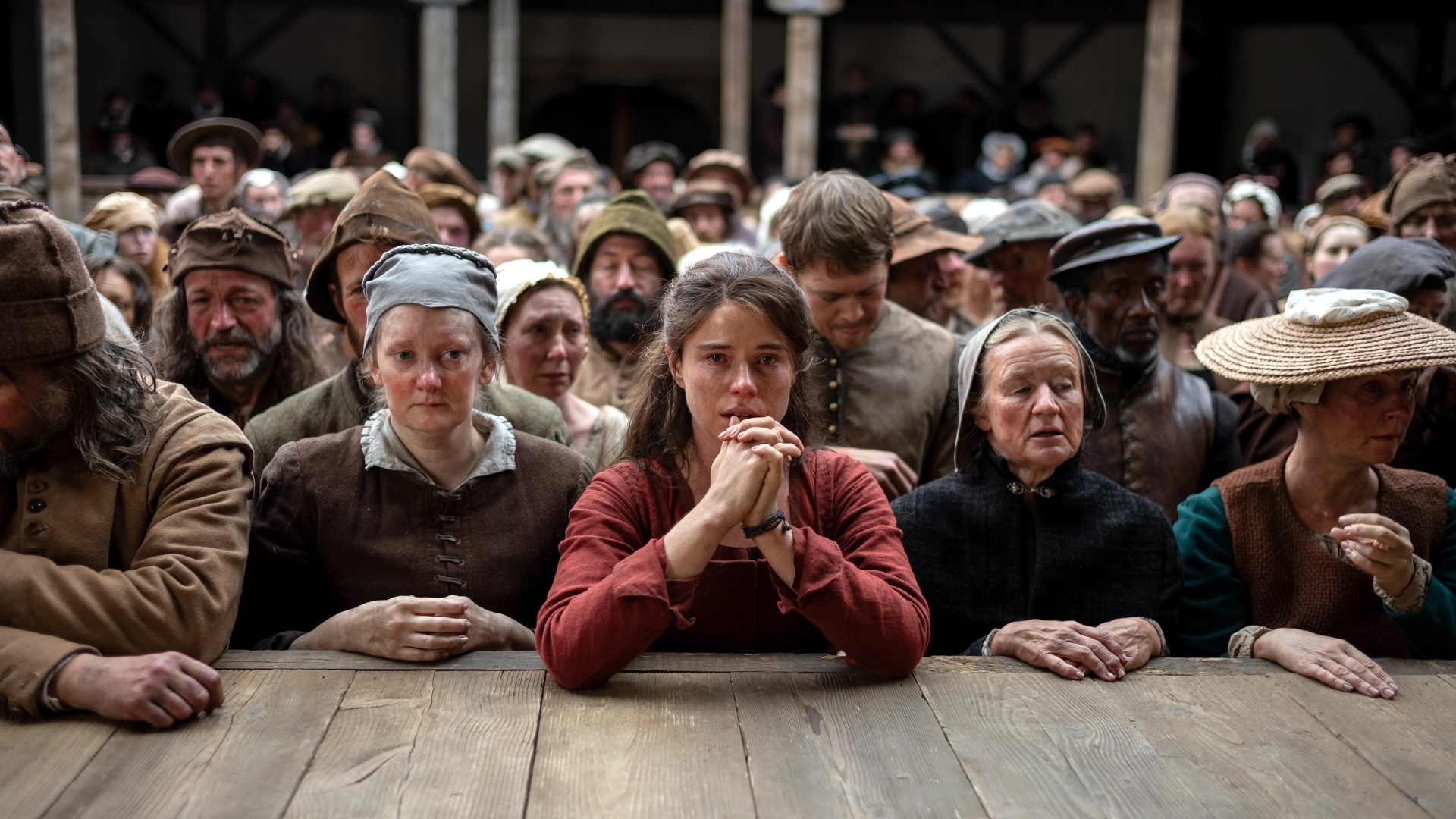
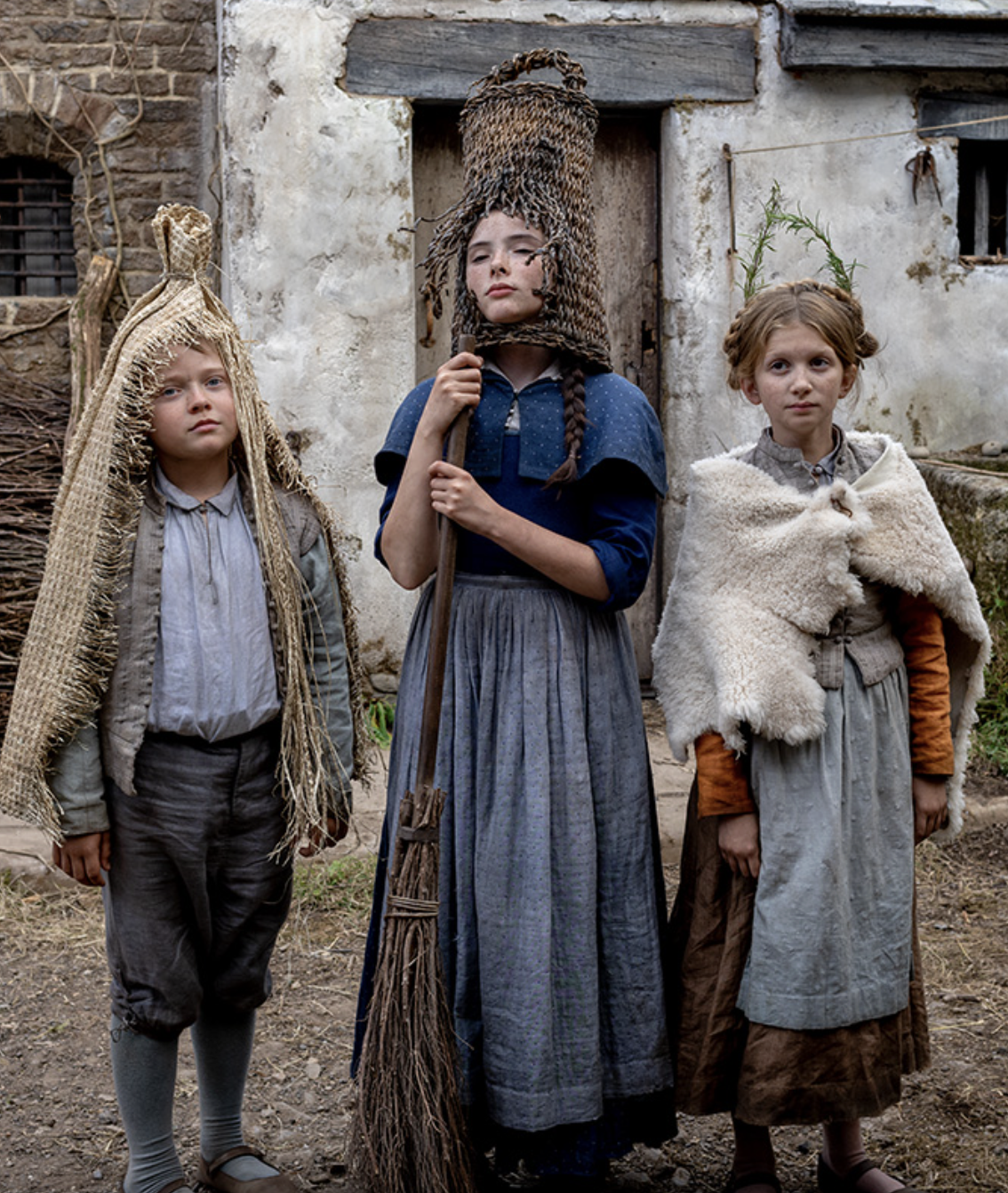
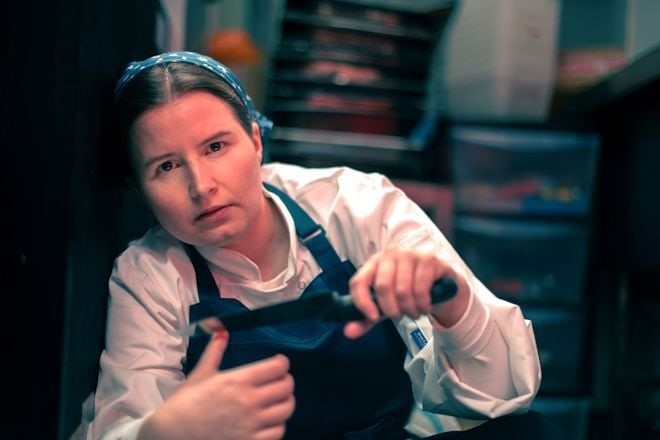
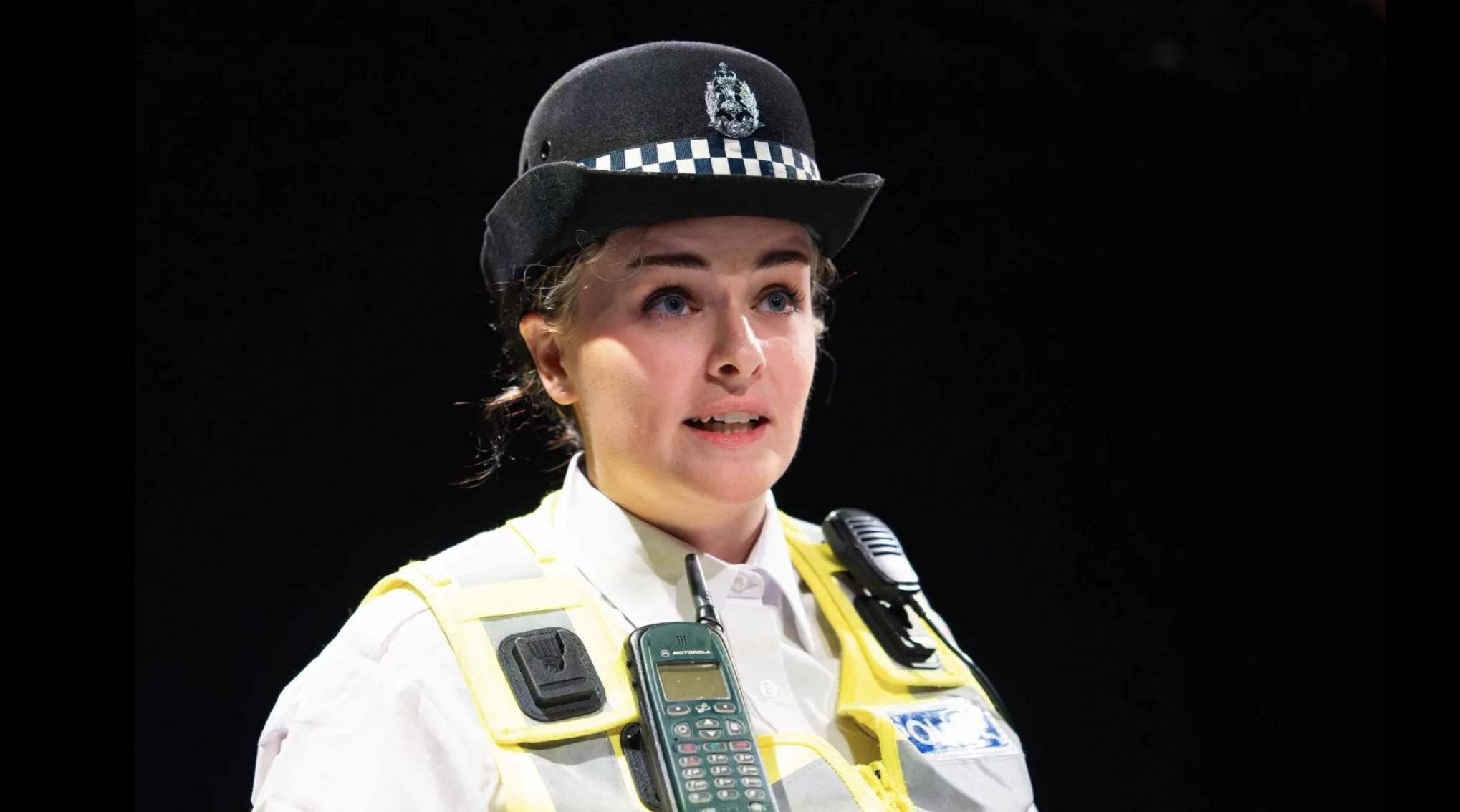
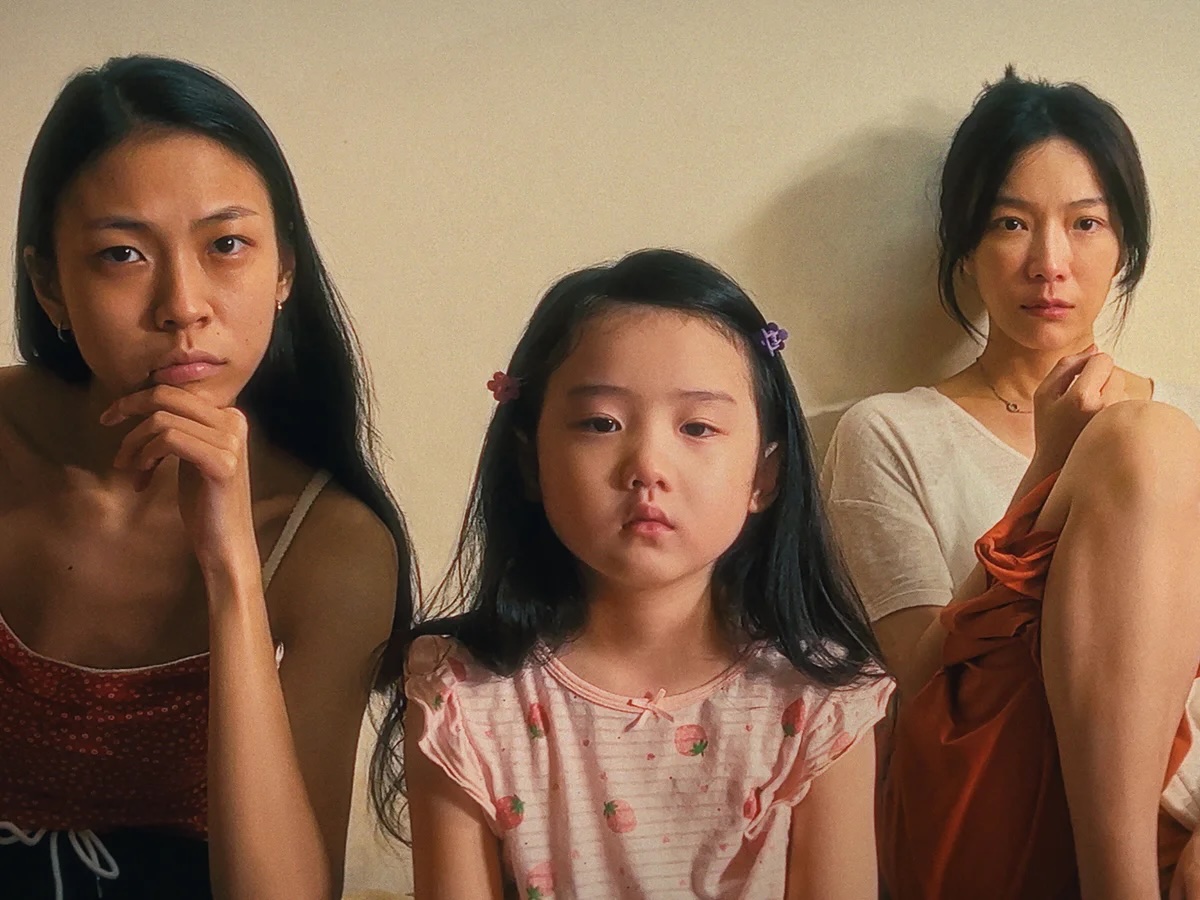
Die, My Love, based on Ariana Harwicz’s acclaimed novel, is another irresistible movie from Scottish director, Lynne Ramsay. With a script by Ramsay, Enda Walsh and Alice Birch, this unflinching study of a woman’s postpartum psychological breakdown is as compelling as it is harrowing – and Jennifer Lawrence is frankly wonderful in the lead role.

Grace (Lawrence) and Jackson (Robert Pattinson) are expecting their first baby and, in preparation for this new chapter of their lives, they move into Jackson’s deceased uncle’s house. They’re not fazed by the piles of leaves in every room, the old-fashioned decor or even a minor rat infestation: they’re young, excited and in love. They’ll make it work.

But once Grace gives birth to Harry, the spark between her and Jackson dies. She’s stuck at home: bored, resentful and unable to cope. Jackson’s job means that he can escape from the oppressive confines of their isolated house, but Grace’s work is writing; it doesn’t get her out and she can’t focus on it anyway. “I don’t do that any more,” she says.

She loves her baby but she feels trapped and abandoned. Jackson never wants to have sex with her any more, although the box of condoms in his car seems to be getting lighter by the week. She refuses to be just Harry’s mother: why can’t she also still be Grace-the-writer, Grace-and-Jackson, Grace-the-wild, the-impulsive, the-let’s-have-fun? With only Jackson’s bereaved mother, Pam (the fabulous Sissy Spacek), for company, Grace’s mental health begins to deteriorate, her behaviour becoming ever more erratic and dangerous.

Ramsay’s film is undoubtedly dark, but it’s bleakly funny too. Grace’s blunt responses to the platitudes she’s offered often fall into the “things-we-all-wish-we-could-say-but-can’t” category, and – if it weren’t for all the damage they cause – her devil-may-care actions are almost inspirational. I feel sorry for both Grace and Jackson, a couple trapped in a relationship that no longer works, dragging each other down in their attempts to meet society’s expectations of them. “Let’s get married,” says Jackson in desperation. Maybe a wedding is the glue they need to stick them back together?

Or maybe not…

More than anything, this movie reminds me of Charlotte Perkins-Gilman’s The Yellow Wallpaper; indeed, there are several overt references here to the 19th century short story, not least in Grace’s frantic stripping of the heavily-patterned wallpaper with her fingernails, or her crawling through the long grass just like Perkin-Gilman’s “creeping woman”. It’s not just the remote house and the remote husband, nor even the medicalisation of female emotions or the retreat into a fantasy world. More than any of that, it’s the mind-numbing boredom of the protagonist’s existence, and her refusal to accept this as her lot.

A real contender for my film of the year, Die, My Love is a bravura piece of movie-making: stark, beautiful and as uncompromising as its heroine.

5 stars

Susan Singfield
The Glass Menagerie

07/11/25

Royal Lyceum Theatre, Edinburgh

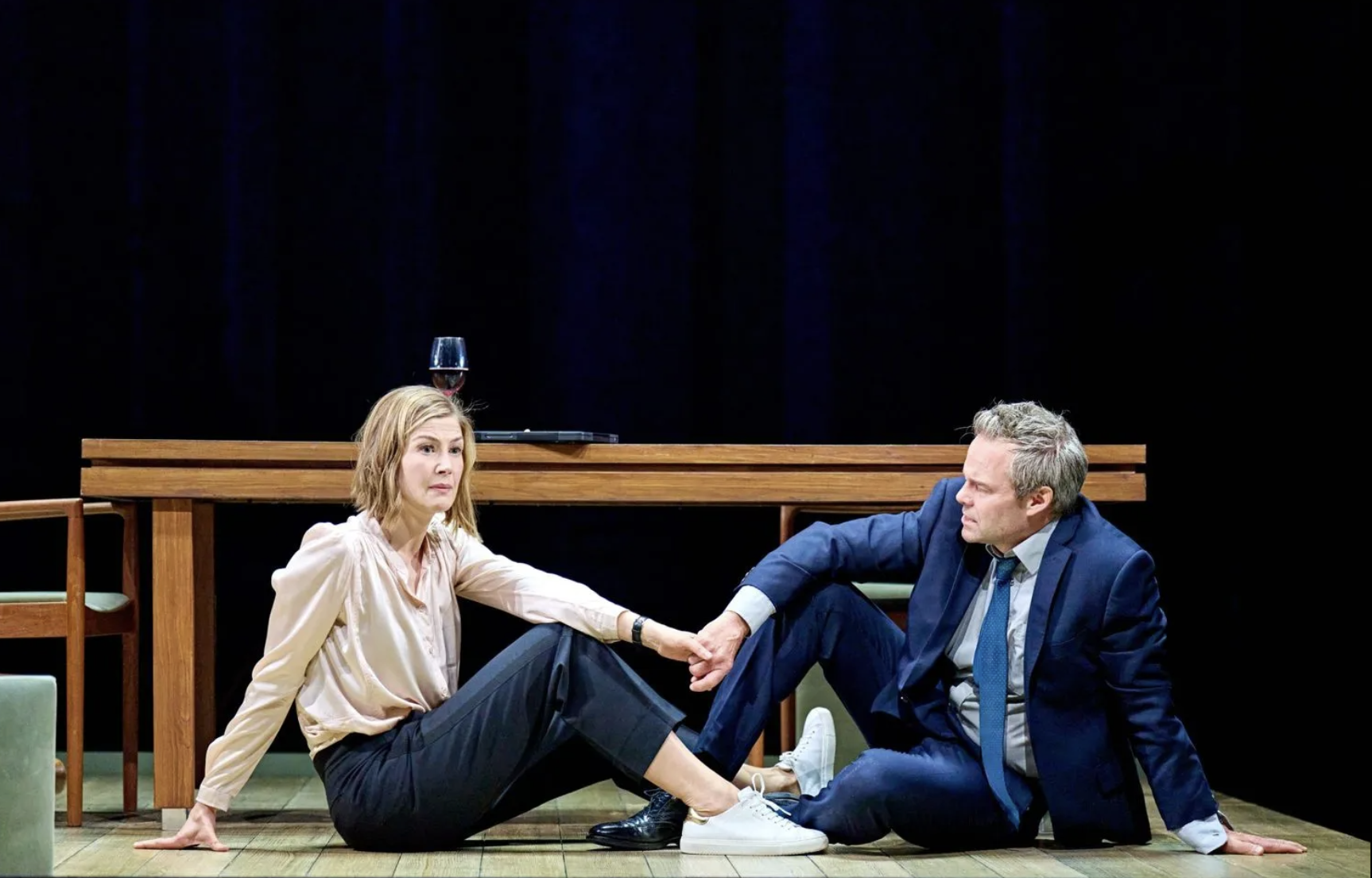
Directed by Andrew Panton, this production of The Glass Menagerie (from Dundee Rep, Citizens and the Royal Lyceum) is an altogether gentler and less histrionic affair than other interpretations I have seen – and all the more compelling for it. Emily James’ barely-there set echoes the characters’ fragility, underscoring the narrator’s opening assertion that the play “is not realistic.” The overt theatricality – the fourth-wall breaking; the exaggerated miming as the family eat a meal – paradoxically emphasises the underlying authenticity, the idea that this is “truth in the pleasant disguise of illusion”.

The time: 1937. The place: St Louis, Missouri. Our narrator is Tom Wingfield (Christopher Jordan-Marshall), and it’s no coincidence that he shares his initials with the playwright. The Glass Menagerie was described by Tennessee Williams as “a memory play,” a loosely autobiographical attempt to pin down his relationship with his emotional past – so it makes perfect sense that Tom should be an aspiring writer, desperate to escape the clutches of a dead-end job in a broken economy. He is consumed by the need for freedom in all its guises – creative, personal, sexual – bitterly resentful of his mother’s insistence that it is his duty to stay at home and provide for her and his sister.

His mother, Amanda (Sara Stewart), is the kind of fading Southern belle Williams is famous for, but – at least in this iteration – she’s less monstrous than Blanche DuBois or Maggie the Cat. This Amanda reminds me more of Austen’s Mrs Bennett: a woman made ridiculous by her desire to find a husband for her daughter, even though her zealotry makes perfect sense in a society where women are financially dependent on men. Stewart imbues Amanda with warmth and likability, while also making clear exactly why Tom finds her so intolerable.

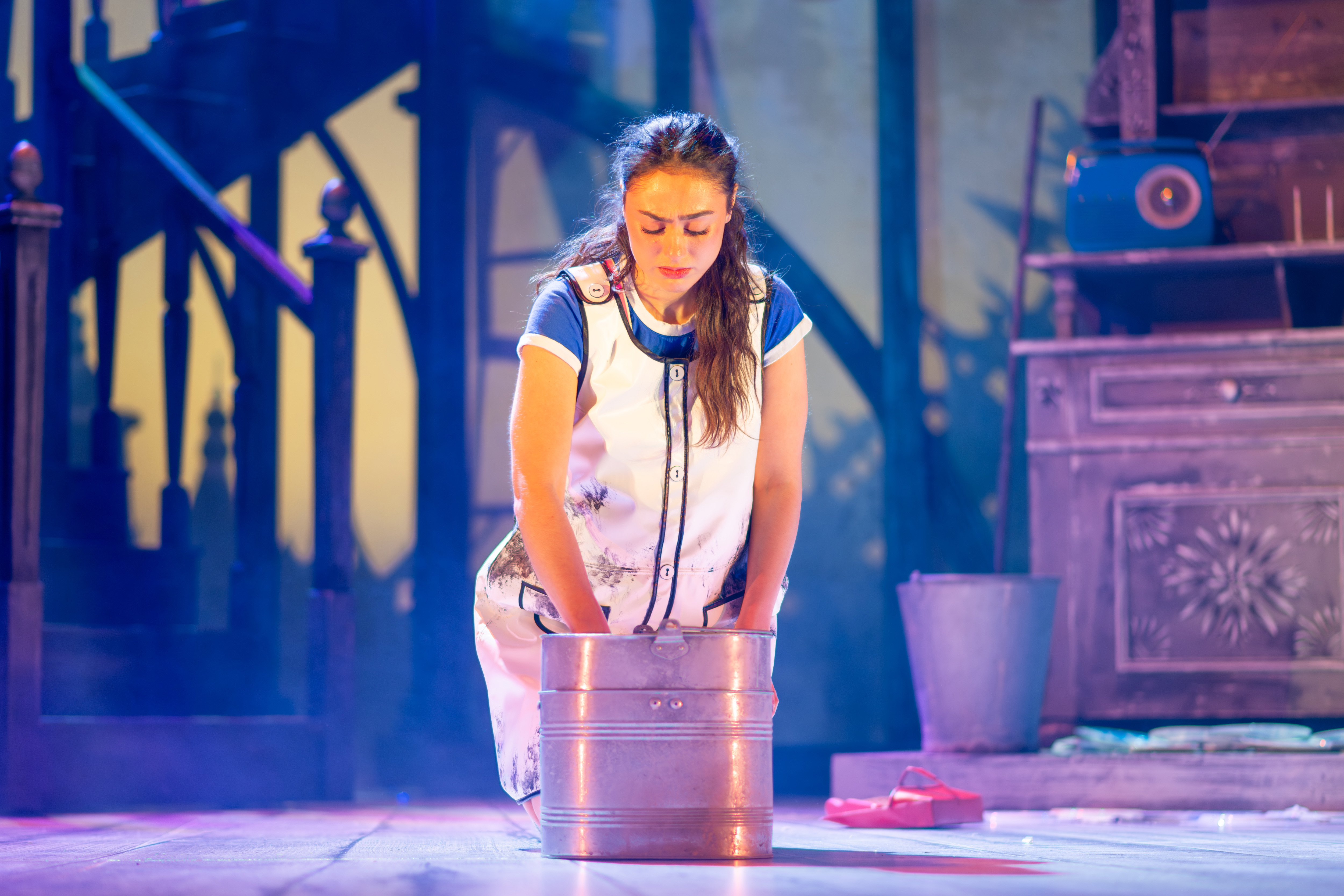
Amy Conachan’s Laura is irresistible. She is Tom’s older sister, but a combination of shyness and disability means that she is far less worldly-wise than him. In fact, they are opposites in almost every respect. While Tom finds the city too small and claustrophobic, Laura is agoraphobic, too terrified even to open the front door, let alone build a life for herself outside the home. Tom rails against his situation but Laura has ruefully accepted her lot in life, successfully side-stepping Amanda’s attempts to set her up on dates and dedicating herself to the care of her collection of delicate glass ornaments. So it’s all the more heartbreaking to see her open up to Tom’s kindly friend, Jim (Declan Spaine), only to have her hopes dashed by his smiling comment that he’d love to have a sister just like her. Exquisitely acted, the extended duologue between this pair is a real highlight for me.

The dreamy nature of the play is further emphasised by the music, liltingly performed by Spaine as the story unfolds, and Simon Wilkinson’s light design perfectly complements the ethereal atmosphere, at times illuminating the characters’ faces in such a way as to almost create cinematic close-ups, so that we’re forced to focus on their pain and misery.

This beautifully-realised production of The Glass Menagerie has only one more showing at the Lyceum, so you’ll have to be quick if you want to get yourself a ticket for tonight’s performance.

4.6 stars

Susan Singfield

Baba

02/11/25

George Street, Edinburgh

We’re dubbing today the ‘Double-B’ – we’ve just been to Cineworld to see Bugonia and now we’re in Baba, keen to sate our hunger while we chat about the film.

Baba has been on our radar for a while. It’s part of the Scoop group, which also boasts the excellent Ox and Finch and – our favourite – Ka Pao. Like these, Baba is a fusion restaurant, this one blending Levantine cuisine with distinctly Scottish ingredients. The menu is very enticing.

After some deliberation, I decide to start with buffalo mozzarella. A generous portion of creamy cheese arrives, topped with sour cherries, harissa and basil, a flavour combo which comes as something of a revelation. It’s delectable. It’s served with pitta as standard but, as I’m in the process of working out if I have a gluten intolerance, I ask for the NGCI alternative. This takes the form of a paper bag filled with two charred slices of GF bread, which complement the mozzarella perfectly.

Philip opts for pan-fried cod cheeks, which come with prawns, merguez, butterbeans and toasted pitta. The dish as a whole is excellent, but it’s the prawns that stand out. They’re huge and wonderfully flavoured.

For our main, we decide to share a Baba mixed grill, comprising slow-cooked lamb shoulder, pork neck, chicken thigh and grilled veg, accompanied with harissa, zhug, tahini and herbs. It’s a simple dish, but the meat is tender and very well cooked, and we enjoy it immensely. We also have a side of blackened sweet potato, elevated by a mixture of saffron crème fraîche and harissa, which I’m planning to try to recreate at home.

Naturally we both want pudding. I have a dark chocolate and tahini crémeux, wiith sesame tuilles and my second helping of both cherries and crème fraîche, while Philip has a tahini cookie, with peanut praline, orange and chantilly cream. Both deliver the lip-smacking sweetness we’re craving, and we scrape our plates clean.

We leave the restaurant feeling pleasantly full, and head out into the November evening, debating whether or not to call at the Filmhouse bar for a (non-alcoholic) nightcap to round things off. Of course the answer is yes. After all, we’ve still got loads to discuss about the film, and what better place to do it?

4.4 stars

Susan Singfield
Righ Lasgair: The Fisher King

28/10/25

Traverse Theatre, Edinburgh

Lexie (Fiona MacNeil) and Effie (MJ Deans) have lived on the Isle of Lewis since childhood. At Lexie’s insistence, they have set off on a fishing trip to the remote Loch that she used to visit with her late father, back when she was wee. Effie has gone along with the idea, but it’s clear from the get-go she’s really not suited to the outdoor life, complaining every step of the way and much more interested in singing and chatting nonsense than pressing on with the hike.

On the long trek to their destination, Lexie spins yarns about some of the mysterious mythological creatures that are connected with this mountainous landscape. Chief among them is the elusive Righ Lasgar: The Fisher King, a creature renowned for luring his victims to their bloody deaths by apparently granting their heart’s desire. Lexie is desperate to catch fish today and, after a distinctly unpromising start, the two women begin to reel them in…

Kenny Boyle’s understated supernatural folk tale would, on the face of it, suggest that it’s an appropriate subject this close to Hallowe’en, but perhaps it’s too understated for its own good: the duo’s bickering is mostly played for laughs, which means that a late-stage attempt to shift the tone abruptly into the realms of terror really doesn’t come off.

There are other issues. While of course it’s commendable to incorporate Gaelic elements into new Scottish writing, reeling off words in the language and then repeating them in English feels ponderous. Non-Gaelic speakers should be able to work out what’s being said from the context. Furthermore, Lexie’s late-stage ‘revelation’ has no impact because it’s something that’s already been announced much earlier in the play.

MacNeil and Deans give this their best shot, and Heather Grace Currie’s set design cleverly evokes the great outdoors in the tiny space of Traverse 2. The costuming of the titular creature (played by Adam Buksh) is also pretty impressive but, sadly, it fails to generate the necessary chills to make that final gear-change work.

2.8 stars

Philip Caveney

Roofman

26/10/25

Cineworld, Edinburgh

Rarely has Mark Twain’s pronouncement that, “Truth is stranger than fiction… because fiction is obliged to stick to possibilities” felt more apt. Imagine the pitch. “So there’s this really sweet-natured armed robber, who pulls off an inordinate number of heists before being caught. He escapes from prison and then hides out in a busy branch of Toys “R” Us – for six whole months – during which time he also finds himself a girlfriend and joins a church…”

Nah. Way too unlikely.

What do you mean, it actually happened?

Channing Tatum is perfectly cast as Jeffrey Manchester, the charismatic criminal whose breathtaking chutzpah has us all rooting for him. He exudes the requisite warmth and charm to make us buy into this frankly incredible tale. All he wanted was to buy his daughter a bike, right? It’s perfectly reasonable for a man in his situation to load a gun and raid more than forty branches of McDonald’s. Isn’t it?

Of course, the key to this story is in the absurdity of Manchester’s hideout. There’s such a disconnect between the escaped convict and his surroundings: the Spiderman T-shirt and Heelys lend him an air of child-like innocence; the den he builds behind a bike display is a boyhood dream of unlimited computer games and bottomless bags of M&Ms. His night-time trolling of tyrannical store-manager Mitch (Peter Dinklage) is also a joy to behold.

Kirsten Dunst plays Leigh, a Toys “R” us employee who falls for “John” (Manchester’s alter-ego), an undercover intelligence officer, who charms both her and her two daughters (Lily Collias and Kennedy Moyer). He becomes an active member of Leigh’s church, forming strong relationships with the Pastor (Ben Mendelsohn) and his wife (Uzo Aduba), which even survive the eventual revelation of his true identity. (Apologies to anyone who thinks this is a spoiler, but the facts are out there in the public domain, so there’s not much point in gatekeeping them here.)

But of course the police haven’t forgotten about the armed robber on the loose and, alongside the fun and games, Manchester is plotting a vanishing act. And people are going to get hurt along the way…

Writer-director Derek Cianfrance’s adaptation of these true-life criminal escapades is a lively, engaging affair, encouraging the audience to goggle open-mouthed at Manchester’s audacity, and his ability to find joy in the most stressful conditions. Sensibly, Cianfrance and his co-writer Kirt Gunn have eschewed any cinematic flourishes in this straightforward, chronological account, the simplicity allowing the strangeness of the situation to speak for itself.

Roofman puts a different spin on ‘cosy crime’ and it’s certainly worth wrapping up and braving the ‘cosy season’ weather to make the trip to your local multiplex. Just keep an eye out for any holes in the ceiling. You never know who might be lurking up there…

4.4 stars

Susan Singfield

Little Women

24/10/25

Bedlam Theatre, Edinburgh

First, a plea to the good people of Bedlam: for the love of all little women, good wives and little men, PLEASE stop leaving the fire exit door open during your productions. Christopher Columbus! It’s cold enough in this unheated theatre without letting in a blast of late October air! I wasn’t expecting to identify quite so closely with Amy after her fall through the ice, “shivering, dripping and crying” until she’s wrapped in blankets in front of a fire.

But, to quote Louisa May Alcott, “there is always light behind the clouds” and EUTC’s Little Women, directed by Lauryn McGuire and Meri Suonenlahti, is a case in point: a bright, sparky production, perfectly encapsulating the wholesome vivacity of the nineteenth-century New England classic.

Not a lot happens in Little Women – the coming-of-age novel is character rather than plot-driven – so the play’s success relies on the actors’ embodiment of the four sisters. Liv De Pury excels as Alcott’s alter-ego, Jo, the irrepressible second child, who rails against the constraints of her gender and burns with ambition to become a writer. De Pury imbues the popular heroine with sass and drive, creating an engaging protagonist for us to root for. Sophie Davis’s Meg is a softer, sweeter young woman than Jo, but no less likeable, her warmth and kind nature almost palpable. Elsie Frith, as Beth, captures the girl’s gentleness and fragility, while Rachel McLaren shines as Amy, the melodramatic baby of the March family, eliciting much laughter from tonight’s audience.

The set (managed by Azalea Drace) works well, making the most of the small stage. A raised area represents Jo’s garret, with the rest of the performance space given over to the March family’s living room. The trusty green Chesterfield is back (it’s made an appearance in almost every show we’ve see in this venue), its period style especially appropriate for this piece. I also like the fact that the sisters actually play the old upright piano, rather than relying on recorded sound.

The costumes (managed by Millie Franchi) are similarly effective, making clever use of corsets to convert simple modern skirts into clear approximations of 1800s fashion.

The production as a whole works well. Dylan Kaeuper (Laurie) and Theodore Casimir-Lambert (John Brooke) provide excellent support as the love interests, while Roni Kane (Marmee), Hunter King (Father) and Rufus Goodman (Old Mr Laurence) are all impressively convincing as characters much older than themselves. Watching events play out, I feel transported back into the cocoon of my childhood, curled up in bed reading about these faraway adolescents and their travails.

I can’t urge you to buy a ticket because there’s only one performance left and I know that it’s sold out. But I can congratulate EUTC on another delightful production, allowing this good wife to indulge in a little nostalgia and leave the theatre with a great big smile on her face.

4.4 stars

Susan Singfield

Batshit

23/10/25

Traverse Theatre, Edinburgh

Leah Shelton’s Batshit explores the prevailing notion of madness as a female malady, where women’s physical and emotional states are pathologised and othered, deemed peculiar because they differ from the ‘norm’, i.e. the male.

Equal parts cabaret, polemic and eulogy to Shelton’s grandma, Gwen, this clever one-woman show brings its disparate strands together with absolute precision. It’s a demanding piece, blending the personal and the political with compelling sincerity. 

Gwen’s story is the microcosm, neatly illuminating the bigger picture. In the 1960s, following a miscarriage, she announced she didn’t want to be a housewife any more. Crazy, eh? Her husband certainly thought so and, backed up by a male-dominated medical profession, managed to have her sectioned. Despite many months of incarceration, drugged to the eyeballs and under constant surveillance, Gwen didn’t change her mind. She must be really, really cuckoo, right? Maybe repeated sessions of ECT might encourage her to listen to reason? Spoiler: they did. Turns out that people say what you want them to if you torture them enough…

Shelton is a talented physical performer, contorting her body to mirror her characters’ contorted thoughts. The movements are exaggerated and often grotesque, but delivered with such charm and gravitas that they never seem absurd. The metaphors are writ large – there’s nothing subtle about a straight jacket or a gag – but they’re incredibly effective, reminding us that we need to be vigilant even in these so-called enlightened times. Women’s freedoms have been hard-won and we take them for granted at our peril. Have you ever heard an angry or frustrated man being dismissed as ‘hysterical’?

Directed by Ursula Martinez, Batshit is a dazzling firework of a production, its message lingering in a trail of sparks that keep me thinking long after the applause has died away. These three nights at the Traverse (23-25 October) mark the end of the UK tour, so be sure to catch it while you can!

4.3 stars

Susan Singfield

Maybe Tomorrow

14/10/25

Traverse Theatre, Edinburgh

Glamour and strife! Bigger than life!”

Siân Silver (Liz Ewing)’s showbiz career is careering towards the end of Sunthorpe-on-Sea’s dilapidated pier, where the seventy-five-year-old singer is gamely touting her outmoded razzle-dazzle to ever-smaller audiences for a measly £250 a week. It’s a long way from the stardom she dreamed of, but at least she’s still on stage, performing – until the theatre manager tells her she’s no longer required. Siân doesn’t know who she is if she’s not sparkling in the spotlight. What’s left when even the dregs she’s settled for are so cruelly stripped away?

Forced to confront her failure, Siân is visited by the ghost of Siânny past (Julia Murray). Young Siânny is brimming with hope and vitality, urging her future self to embody the spirit of her long-time heroine, Little Orphan Annie. Instead of bemoaning her hard-knock life, Siânny thinks Siân should focus on making the most of the years she has left. “Maybe now it’s time…”

At first, Siân’s having none of it but she soon realises she has nothing to lose. Why not step into the plucky red-head’s ankle socks and Mary Janes? After all, why should little girls have all the fun? The role of Annie is wasted on a ten-year-old! If she has to bow out, then she’ll do it on her own terms…

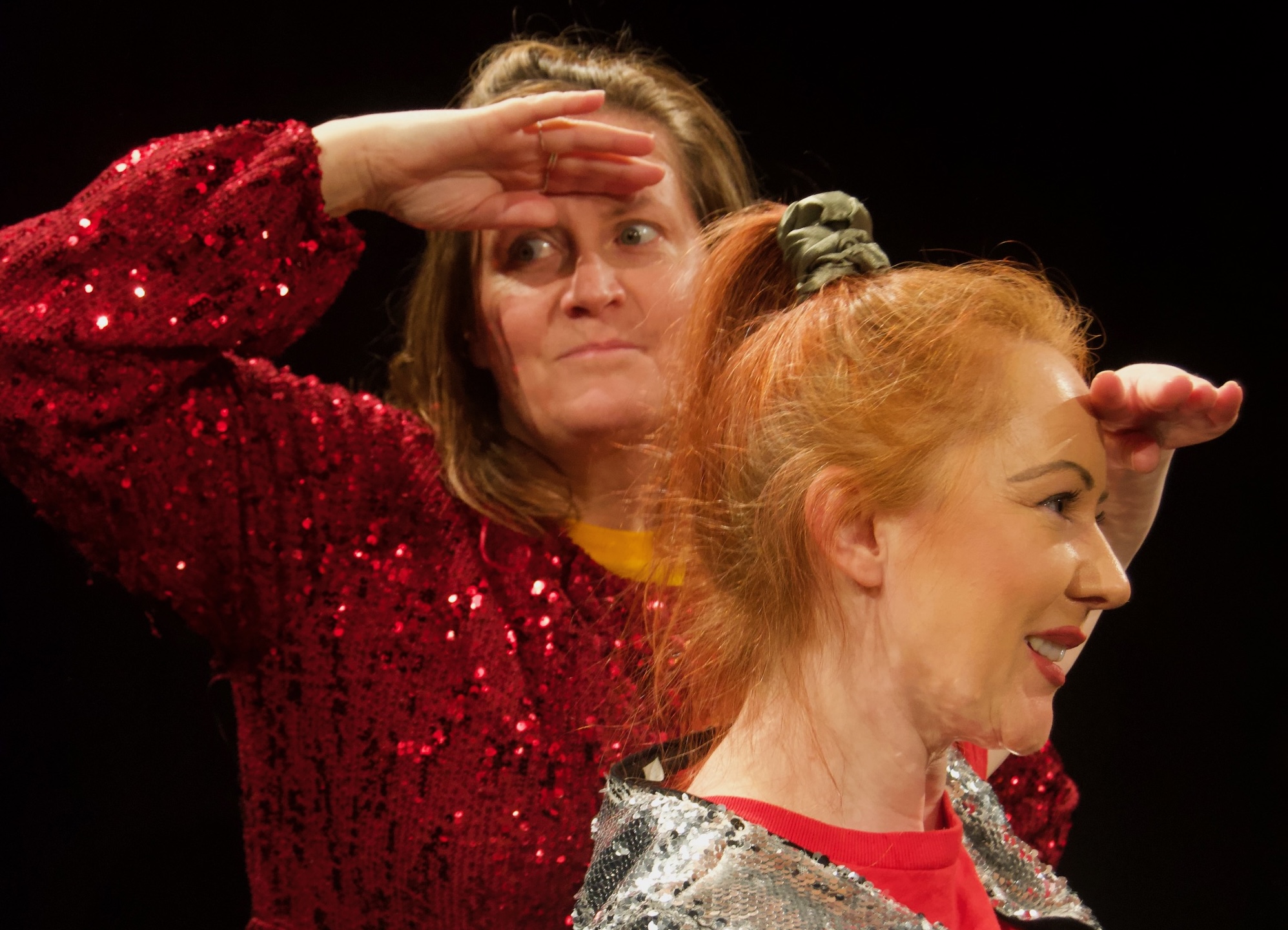
Written by Hannah Jarrett-Scott with music and lyrics by Brian James O’Sullivan, Maybe Tomorrow is a decidedly quirky piece of musical theatre, rife with heart and humour. The songs work well, paying homage to Charles Strouse’s original score without allowing it to overwhelm this play. Under Lesley Hart’s direction, Ewing shines as the protagonist (and not just because of her sequinned costumes), imbuing the fading performer with pathos. Siân is talented but unappreciated: of course she’s resentful; of course she’s angry at her producer-ex, who promised her centre-stage but left her in the wings. Murray provides excellent support, not only as the vivacious Siânny, but also as a series of minor male characters, with an impressive range of hats, accents and, um, farts.

An ageing Annie-fan myself, I enjoy this show immensely. It’s undeniably absurd, but somehow rather beautiful. It feels like the start of something that could easily evolve into a full-length musical production, where both themes and characters would have more space to breathe. Why not pop along to the Traverse this week and see for yourself? “You’re gonna have a swell time.”

4 stars

Susan Singfield

Cheapo

07/10/25

Traverse Theatre, Edinburgh

Last time we saw this play – back in December – I was a little confused by the title. This version comes with a strapline that makes things a whole lot clearer – “Cheapo: chess slang for a primitive trap, often set in the hope of swindling a win from a lost position.”

Cheapo‘s previous appearance at the Traverse was part of the annual 4PLAY programme, where four new plays are showcased over four nights. It was our favourite of last year’s quartet, and I’m delighted to have the chance to watch this new iteration.

Katy Nixon’s script still resonates: her writing is spare and succinct, capturing the teenage characters’ raw emotions with devastating precision.

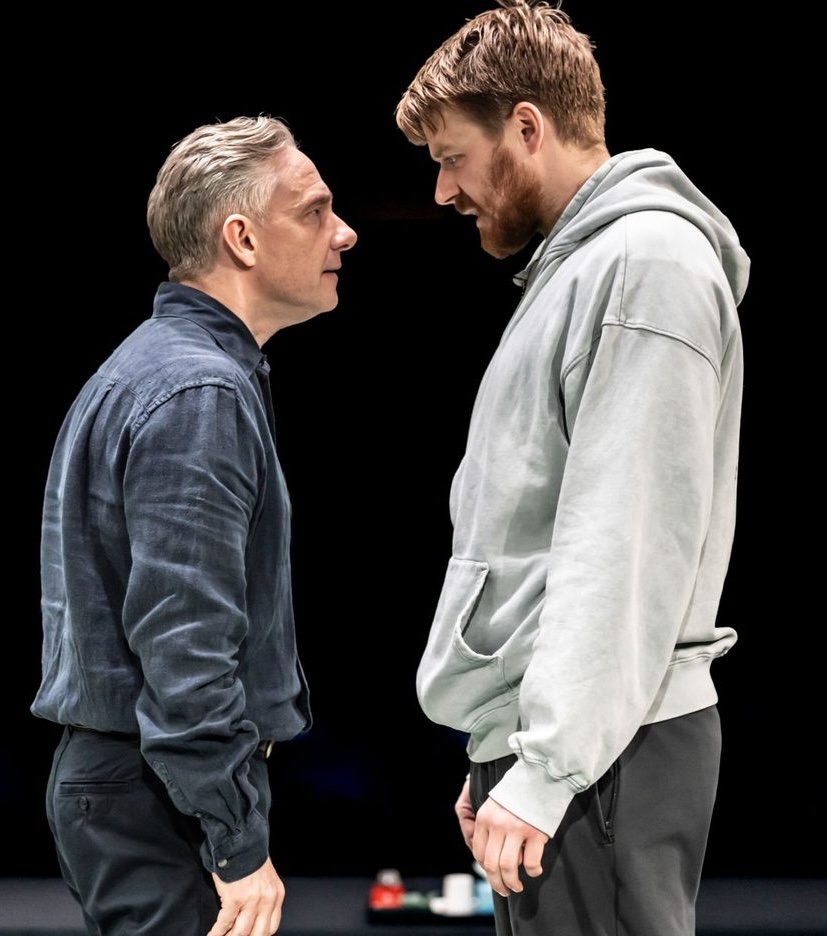
And their emotions are very raw. At a recent party, something dreadful happened to Kyla (Yolanda Mitchell) and she needs Jamie (Testimony Adegbite) to help her deal with the fallout. But Jamie isn’t prepared to renege on what he’s told the police – and he doesn’t understand why Kyla wants him to. In a not-especially-subtle-but-nonetheless-effective metaphor, they play a game of chess, arguing about their possible moves while fighting to avoid checkmate. The mounting tension is expertly undercut by some quirky flights of fancy, as the duo imagine how their lives might have played out in alternate universes – before coming back down to earth with a bump, still mired in the nightmare of their current reality.

The set, by Gillian Argo, is boldly emblematic: a crooked panel of black and white checkered flooring spreads up on to the wall, mirroring the chess board Jamie places on the table. A red carpet appears to signal the dangerous path the pair are on; again, the colour is repeated, this time in the takeaway food cartons that litter the table. It’s cunningly designed, with monochrome stools resembling giant pawns and strip lights that double as, um, light sabres.

Brian Logan is in the director’s chair this time, and the piece is perfectly paced, with long moments of stillness and contemplation punctuating the frenetic teenage energy. The movement is dynamic and I especially enjoy the dance sequences, as well as the way Kyla moves like a chess piece in the imaginary court scene.

Adegbite and Mitchell are perfectly cast: his earnest geek nicely contrasting with her streetwise façade. The exploration of misogyny and racism feels credibly rooted in their characters’ teenage experience, and their respective vulnerabilities and coping mechanisms are skilfully embodied.

Despite dealing with distressing themes, Cheapo is a witty and enjoyable piece of theatre, provocative but ultimately hopeful, that red carpet perhaps signifying something more positive than it first appears: an escape route for our young protagonists.

4.7 stars

Susan Singfield