Green Island Bistro

12/06/22

High Street, Rhuddlan

Take one small-ish Welsh village (population <4000). Add six hungry people seeking lunch. Factor in a vegan, a vegetarian, some lactose intolerance and a wheelchair. Expectation: we’ll need to drive somewhere. Reality: the answer is on my parents’ doorstep. Almost literally.

Green Island Bistro opened in October 2020, an inauspicious time to launch a new venture, what with COVID and all its attendant chaos. But owner Sarah Turner clearly welcomes a challenge. Sure, plant-based diets are all the rage, but still – are there really enough vegans here (even part-time ones) to make this work? It turns out the answer is a resounding yes, as evidenced by the tiny eatery’s Best Café/Bistro in North Wales award.

Things get off to a good start early in the morning, when Sarah sends me a detailed message in response to my query about wheelchair access. It’s the kind of thoughtful approach that lets you know this is someone who really cares about customer satisfaction and wants to get it right. She includes photos of both exterior and interior seating, and a close-up of the small step that leads inside. Dad’s impressed, and reassured that his needs will be met.

Tucked behind Rejuva beauty salon, next door to the King’s Head Pub, Green Island Bistro has space for just sixteen covers inside, but there’s a sweet little courtyard too, which can seat the same number again. It’s not especially warm today though, so we opt to go indoors. The reception is relaxed and friendly; we’re immediately at ease.

Only one of us is actually a vegan, so the rest of us are expecting to feel the weight of compromise, but the short menu looks interesting, and we all find something that sounds good.

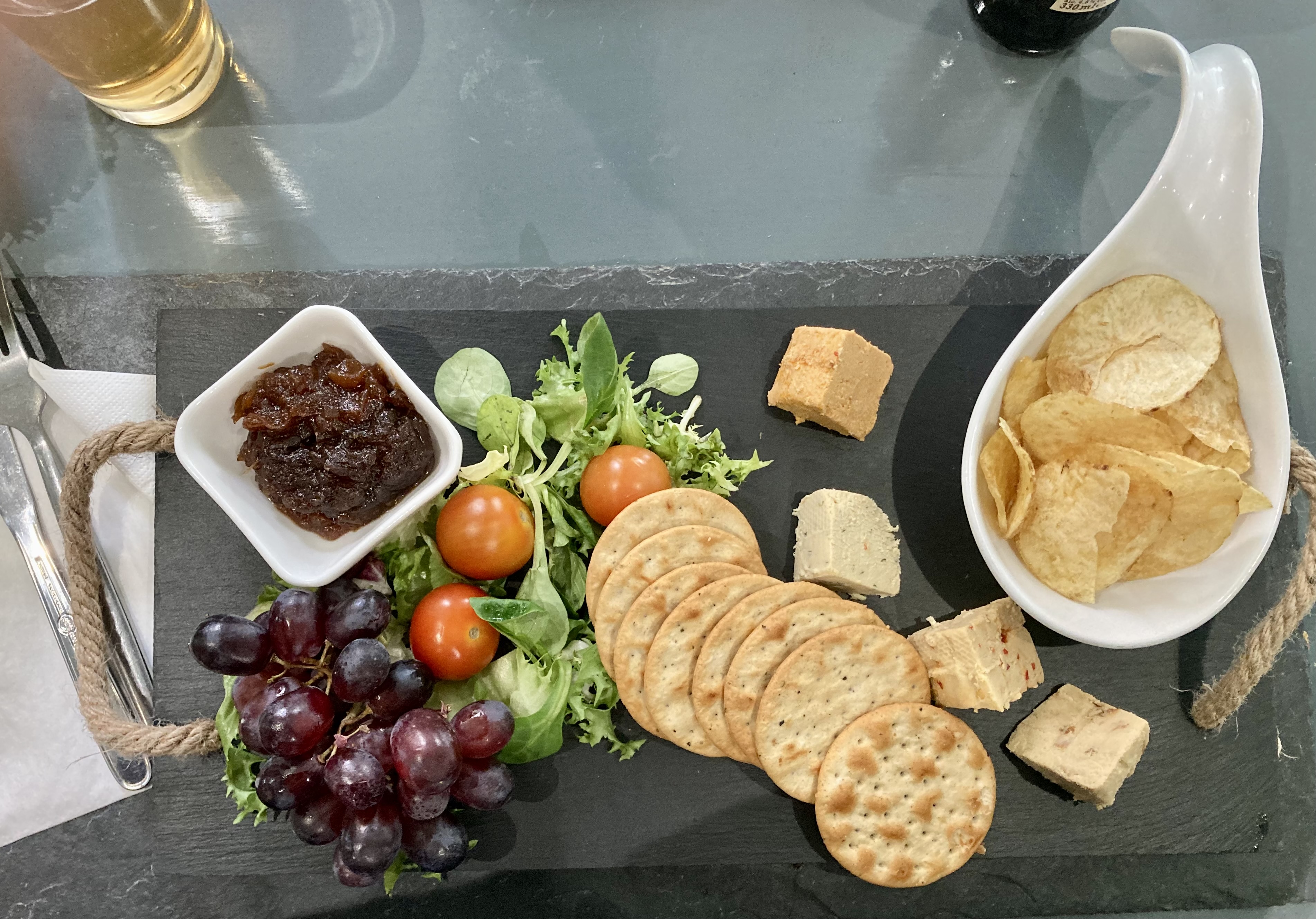
Both I and my sister-in-law opt for the daily special, which is a seitan kebab – and really enjoy it. The flatbread is clearly home-made, and the seitan (which I’ve never tried before) has a lovely savoury flavour, and a pleasingly firm texture. There’s also a spicy sauce, which adds a welcome hit. Philip and my mum have the hoisin duck flatbread, and are delighted with it. Philip says he can’t taste the difference between this and ‘real duck’ – and he likes the way it’s presented too, on an impossibly long board. My brother – our favourite vegan – has the cheese platter. He acknowledges that he’s taking a risk because some vegan cheeses are beyond the pale, but these four are all delicious. I sample one to check, and he’s not wrong. It’s like a cross between cheese and hummus, and a real pleasure to eat. That just leaves dad, who has a baked potato with vegan cheese and beans. They’re all simple dishes, but they’re perfectly executed, and we’re happy with what we’ve had.

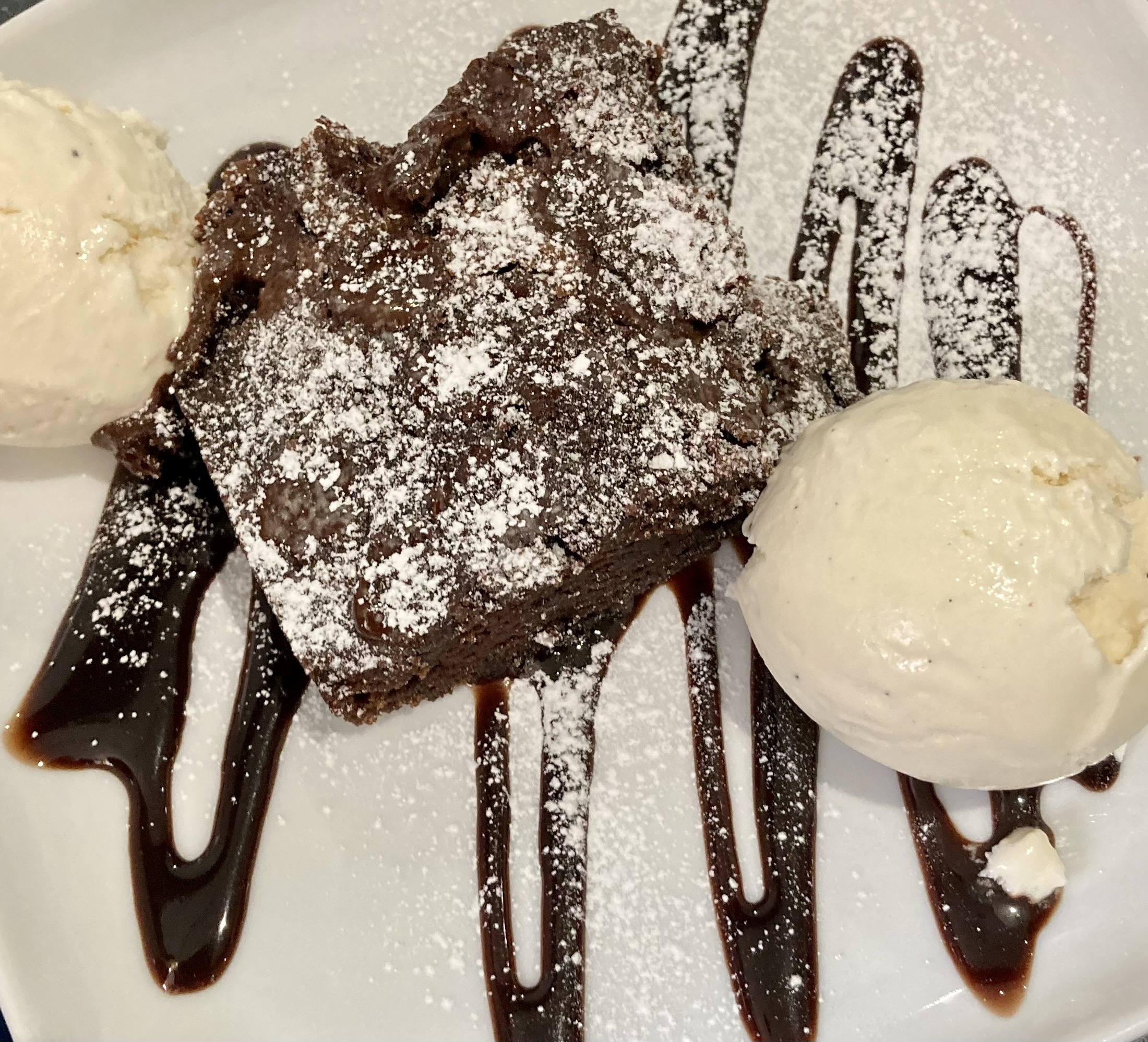
Of course we have pudding, sampling a warm chocolate brownie with ice cream, a chocolate fondue, some lemon drizzle cake and a gluten free carrot cake. The cakes and the fondue are beautifully made and presented. We’re not super keen on the ice cream: it tastes nice, but we don’t especially like the texture. Still, it’s a very minor quibble, all things considered.

We have some drinks too. I have my first ever espresso martini. It won’t be my last. The menu also boasts bottled beers, a few nice wines, and a range of coffees and soft drinks – and we put a fair few away between us.

We’re impressed. Green Island Bistro ticks all the boxes, and we’ll certainly be back for more.

4.6 stars

Susan Singfield
All My Friends Hate Me

10/16/22

Cameo Cinema, Edinburgh

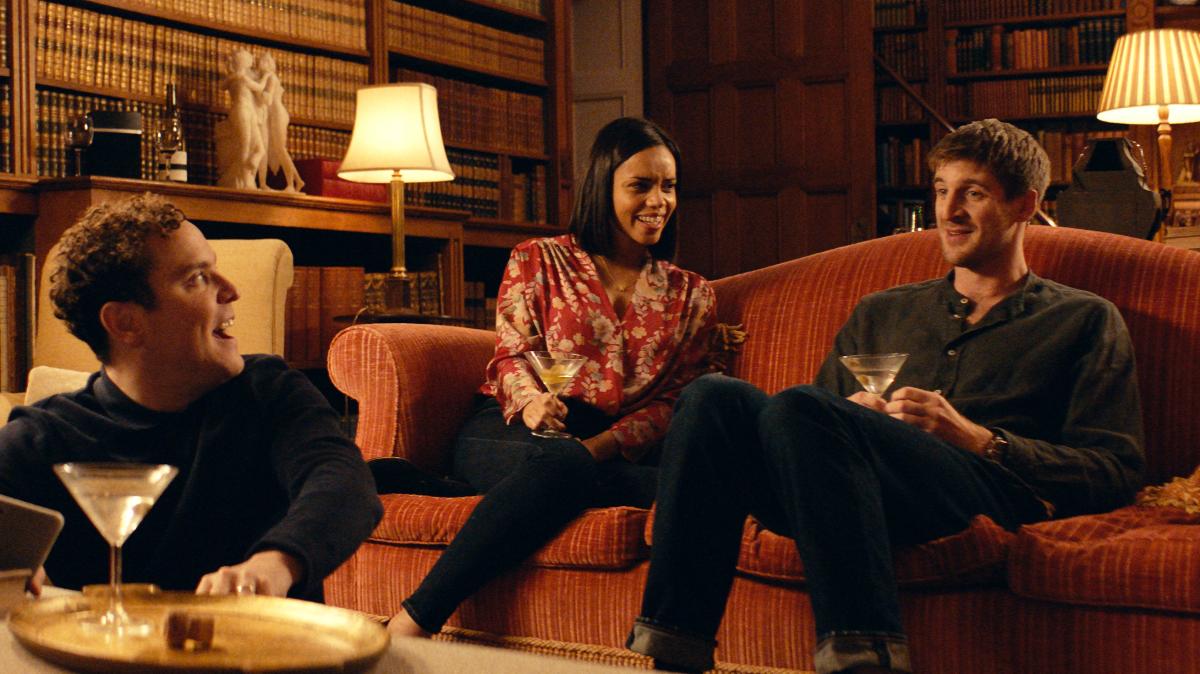
What do you do when a joke goes too far? When does humour turn to cruelty? And at what point do you need to speak out when your friends are making you unhappy? These questions are cleverly addressed in All My Friends Hate Me. Written by Tom Stourton and Tom Palmer, and directed by Andrew Gaynord, this dark comedy is a slippery exercise in steadily-mounting paranoia.

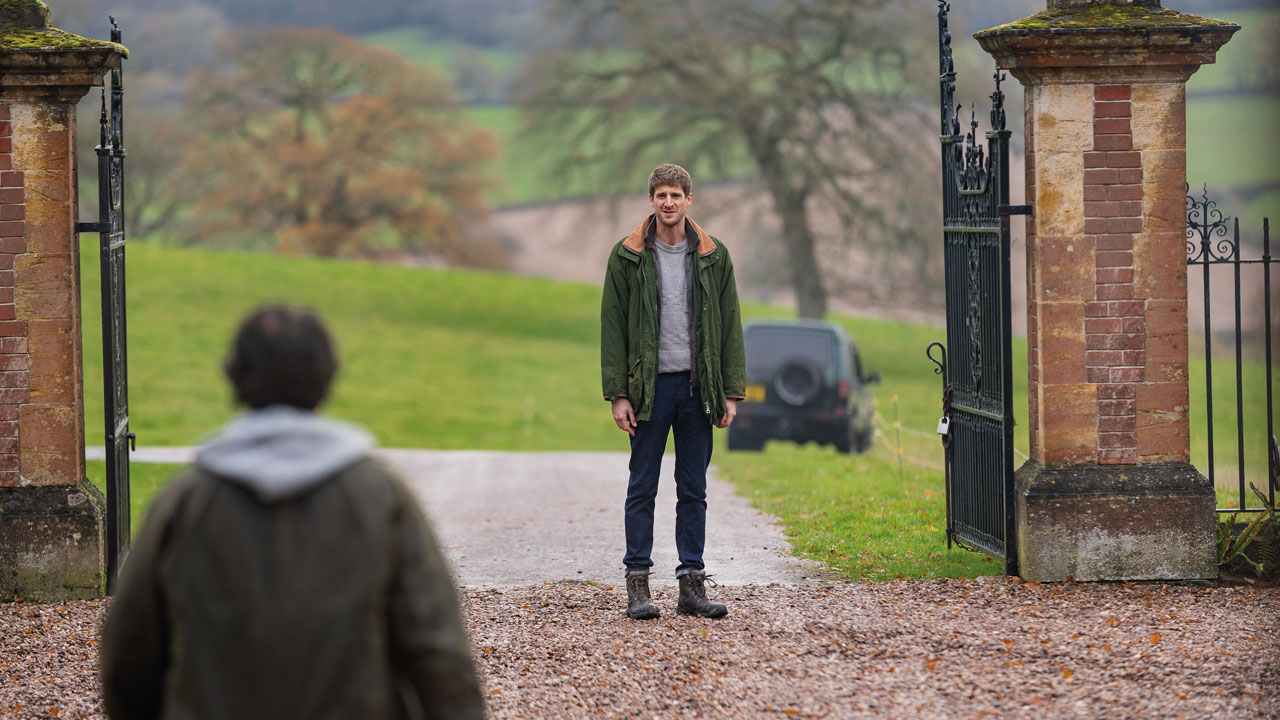
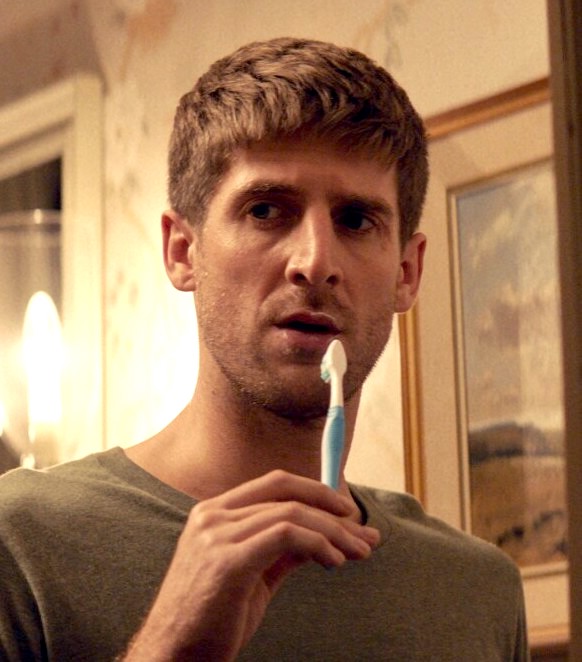
Pete (Stourton) is about to turn thirty-one and is proud of the work he’s been doing at an overseas refugee camp – and which he’s prone to mention at every opportunity. He’s also considering proposing to his partner, Sonia (Charlie Clive), but first there’s the little matter of an invitation he’s had from his old university chum, George (Joshua McGuire), to go to his swanky house in the country for a long weekend of celebration with the rest of the old uni crew. Sonia is tied up with work, but promises to follow him down later, so Pete gets into his car and sets off with high hopes for a memorable birthday.

Well, it’s certainly that, but for all the wrong reasons.

From the very beginning, things go wrong for him. He gets lost near to his destination and asks for directions from the creepy Norman (Christopher Fairbank, looking suitably sepulchral); he has a misadventure with a man sleeping rough in a car; and, when he finally reaches George’s house, he’s dismayed by what he finds.

His friends have invited a mysterious stranger along. Harry (Dustin Demri-Burns) is somebody they’ve ‘met in the pub,’ and he turns out to be quite obnoxious. As the weekend proceeds, Pete – who is socially anxious at the best of times – is subjected to a barrage of practical jokes, hurtful comments and mysterious encounters. Somebody seems to have stolen the herbal pills he takes to keep himself calm – and why does Harry keep writing down things in a little book?

Everything that happens is seen from Pete’s point of view – we share his discomfort every step of the way. One of the guests is Claire (Antonia Clarke), his old flame from college days, and people can’t seem to stop mentioning the fact. Pete hopes things will improve when Sonia finally shows up, but she dutifully arrives – and they don’t.

The ensuing misadventures are by turns toe-curling, darkly funny, deeply embarrassing and occasionally genuinely frightening. I love that the creators of this film steadfastly refuse to take things into the realms of the unbelievable. A Hollywood version of the same story would likely have ventured into bloodshed, mayhem and revenge, but this is all the stronger for avoiding that.

Astute, credible and – at times – even horribly familiar, All My Friends Hate Me keeps me hooked right up to its final unsettling moment. Those planning a birthday celebration away from home may want to wait until after they’ve returned before watching this. Because, well… just because people say they’re your friends, it doesn’t mean they really are.

4.2 stars

Philip Caveney

Laurel & Hardy

08/06/22

Lyceum Theatre, Edinburgh

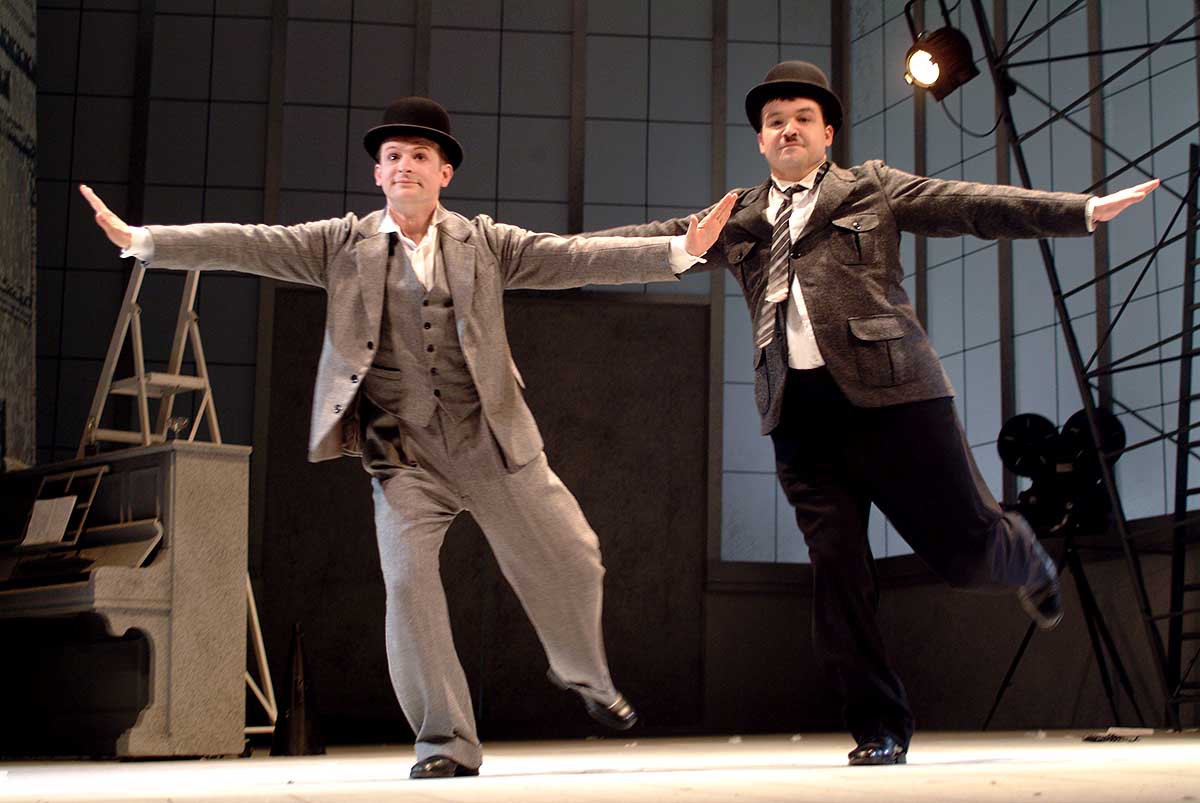
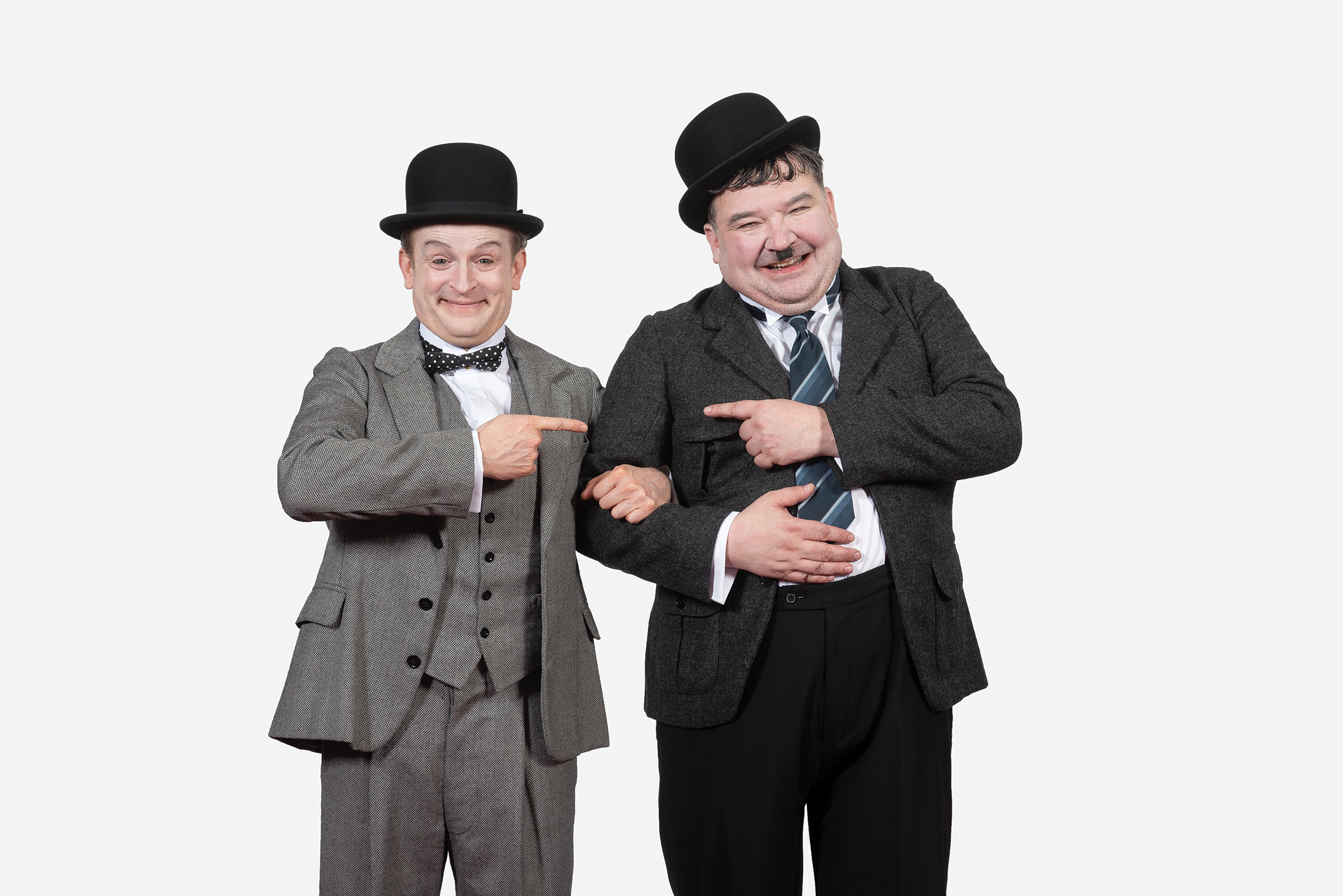
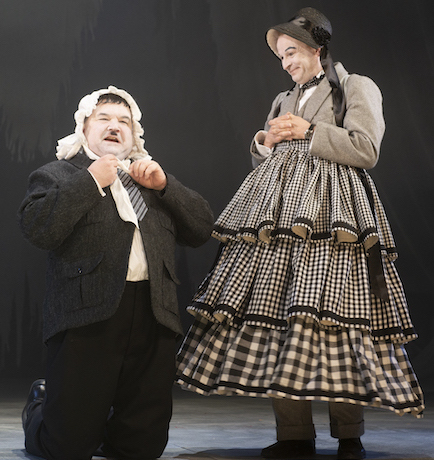
The central figures of the Lyceum’s latest production are incredibly familiar. Their expressive faces and distinctive costumes are known to people who weren’t even born when they were strutting their stuff. In the opening moments of this affectionate play, Stan & Ollie wander onto a grey stage that looks like a representation of limbo, and are quick to remind us that they are now dead (something they’re not particularly happy about) and that it’s high time the public knew about the real men behind their onscreen personas.

It’s ironic then, that the late Tom McGrath’s play, first performed at Edinburgh’s Traverse Theatre in 1976, goes on to tell us very little about their actual lives. There are snippets, told rather than shown, but we see very little of the genesis of these two great comedians, the influences that shaped them as they grew up.

There’s no doubting the authenticity of the performances. Barnaby Power (Stan) and Steven McNicoll (Ollie) are revisiting roles they debuted at the Lyceum back in 2005 and claim that that have relished the opportunity to revisit Stan & Ollie now they are older themselves. They have clearly studied every tic, every mannerism, every nuance of the titular duo. Accompanied by pianist/straight man, Jon Beales, they dutifully run through some of their most iconic scenes. But perhaps it’s possible to be too comfortable in reprised roles.

Laurel and Hardy’s greatest secret was that they made it all look so easy. Considerable effort came disguised as a walk in the park, but it was in there, hiding in plain sight. The comics’ physicality was always disguised by their meticulous timing.

Tonight, something feels a little off. It’s a little too polite, too mannered. There are ripples of laughter from the audience, but not the helpless guffaws you might expect – and while the recreations of past triumphs occasionally jolt into life (a silent-movie sequence animated by the flicker of strobes is a particular highlight), they just as often play out without making enough impact, as though the two actors are simply walking through the action.

Power and McNicholl occasionally have to step out of their main roles to portray other figures from the period, but there’s little to differentiate them and, once again, I am left wanting to know more – about the things we’ve never seen onscreen. Furthermore, it’s also true to say that some of the lines, which may have passed muster in the 1970s (or, indeed, the 1940s), don’t fly too well in this day and age. “How do you keep a married man at home? Break his legs.” Hmm.

Hardline Laurel & Hardy fans will doubtless have fun with this. As an impersonation of two great comedians, it is well executed – but as an occasional fan of their work, I am left wanting to know much more about them.

Laurel & Hardy may run like clockwork – but it doesn’t say enough about what made them tick.

3 stars

Philip Caveney

Sunshine on Leith

08/06/22

King’s Theatre, Edinburgh

In Edinburgh, you’re never more than six feet away from a Proclaimer. Or, at least, from someone proclaiming their love for the Proclaimers. The affection is well-deserved. Craig and Charlie Reid are responsible for a multitude of absolute bangers: deceptively simple tunes, combining heart and anger, warmth and sadness. It was inevitable someone would say, ‘Hey, we could make a musical from these.’ (Cue: Stephen Greenhorn.) And equally inevitable that the resulting project would be a hit, a regular on stage since its 2007 debut, with a successful film adaptation to boot.

So there are no surprises here. We’re familiar with the show; of course we are. Nonetheless, there’s a palpable thrill in the air, because we know we’re in for a treat. This two-venue production – co-directed by Elizabeth Newman and Ben Occhipinti – is laden with symbolism: the first show since Pitlochry Festival Theatre’s revamp, and the last before Edinburgh’s King’s Theatre closes for its own refurbishment. It’s the perfect choice for both, a celebration of Scottish talent and a love song to the people of Caledonia.

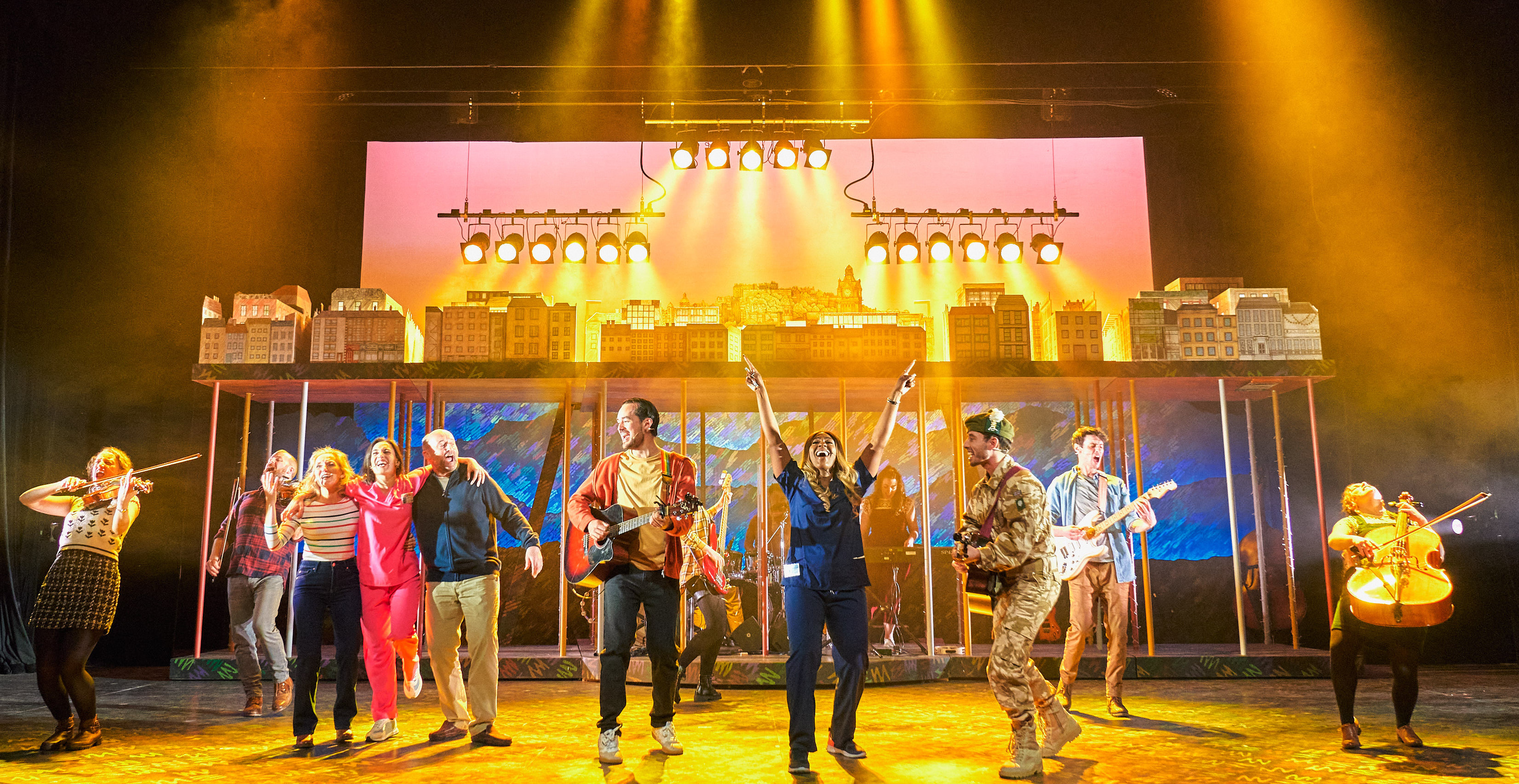
There’s a low-key, homespun ambience, which works well, creating a sense of familiarity between the performers and the audience. There are no flamboyant costumes here, no fancy pyrotechnics. Instead, like the Proclaimers’ songs, it’s quietly clever – no showing off. The band doubles as the ensemble, and they appear to be a happy team, grinning at one another and at us, and vibing unselfconsciously. There are no barriers, which cements that feeling of intimacy, enabling us to empathise with the characters. This is no mean feat in a large, traditional theatre like the King’s, with its proscenium arch and imposing loges, all designed to accentuate the separation of stage and auditorium. It’s really very impressive.

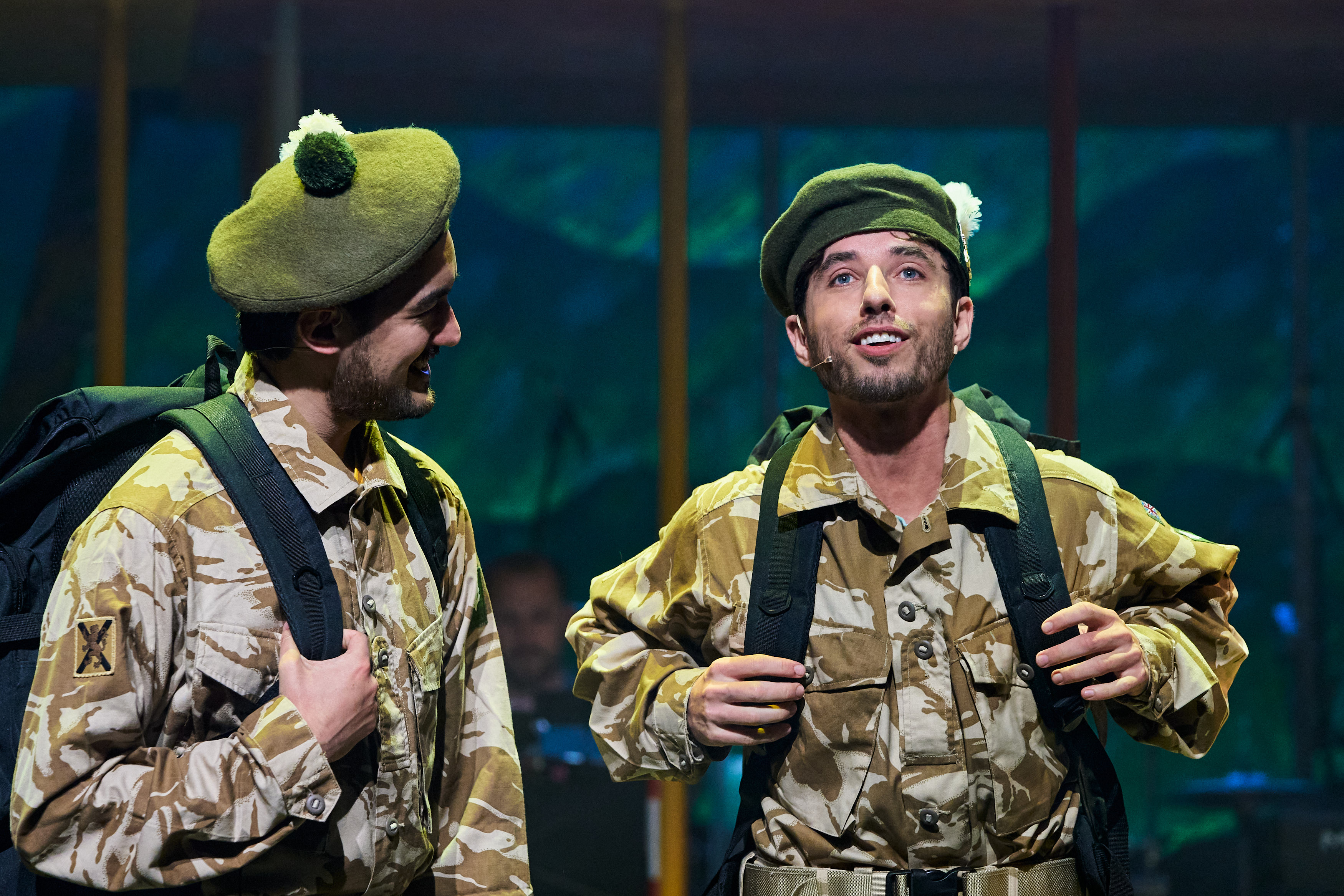
The story is a Willy Russell-esque account of working-class life, told with affection and a strong sense of place. Ally and Davy (Keith Jack and Connor Going) are back in Leith, having been honourably discharged from the army, just in time for Davy’s parents’ thirtieth wedding anniversary party. Ally’s been going out with Davy’s sister for years, and he’s hoping now’s the time to settle down, but Liz (Blythe Jandoo) isn’t quite ready for that. She’s been stuck at home while he’s been away, and she’s restless, keen to stretch her wings. Her nursing pal, Yvonne (Rhiane Drummond), meanwhile, has fallen for Davy – and what is Davy’s dad, Rab (Keith Macpherson), hiding from his wife, Jean (Alyson Orr)? It’s a simple tale, but surprisingly affecting, and I find myself tearing up on more than one occasion. No spoilers, but the line “Because they wanted me” just hits me every time, and Orr’s rendition of the titular song is genuinely heartbreaking.

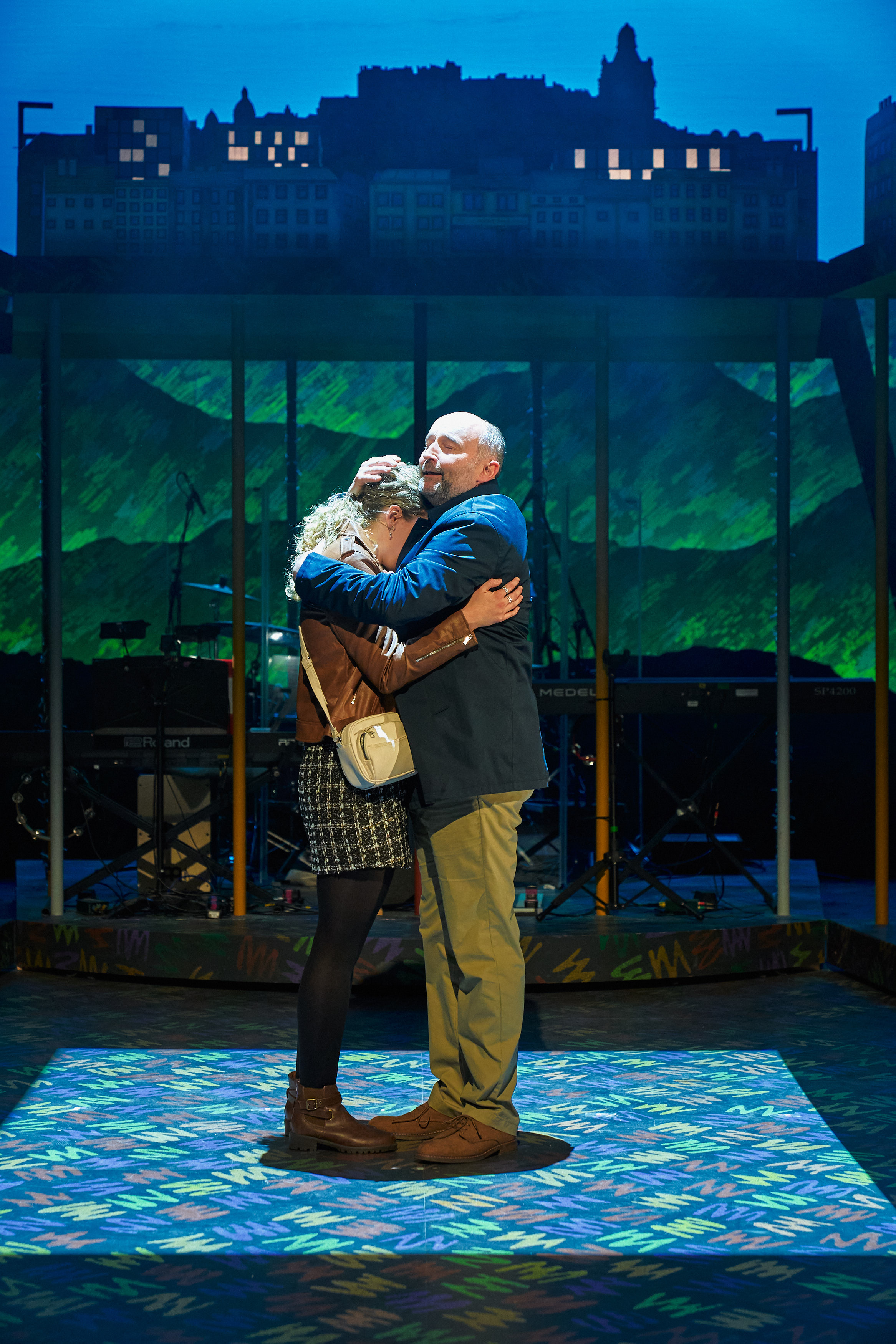
Adrian Rees’ set looks great. A miniaturised Edinburgh skyline is mounted on stilts, while the action occurs below – a neat representation of Leith and Edinburgh, the city looming over the town. There are ladders leading up to Blackford Hill; from here, we join the characters looking down on their home turf, trying to get a handle on their place in the world. The set comes apart, so that sections can be moved to create walls, but this is a distraction for me. It seems unnecessary and, although the transitions are thoughtfully choreographed, there’s too much clutter and stage traffic for very little gain.

In the end, this is all about the music (directed by Richard Reeday), and it’s a fabulous combination of the raucous and the refined. There are some issues with the sound – mics occasionally cutting out, and some imbalance between the vocals and the instrumentals – but none of it really detracts from the serious talent on display.

Sunshine on Leith has a relatively long run, so you’ve got until the 18th June to catch it here in Edinburgh – and to say “bye the nou” to the Old Lady of Leven Street.

4.3 stars

Susan Singfield

Pistol

03/06/22

Disney +

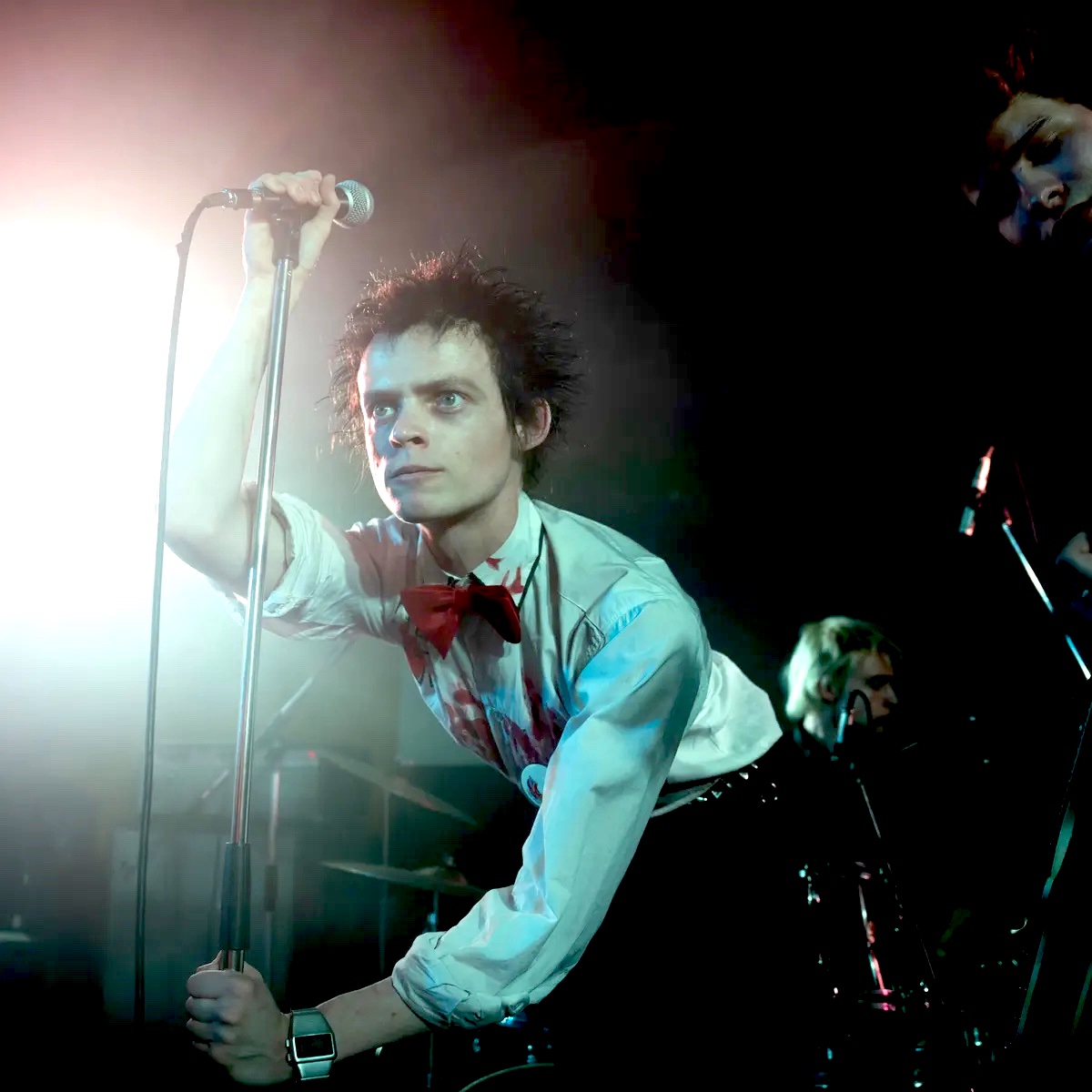
Looking back, it’s hard to fully appreciate the full cataclysm delivered to the United Kingdom by the arrival of The Sex Pistols in 1975. Here were four working class lads who could barely play their instruments and who seemed more interested in causing controversy than producing hit records. They did manage the latter, even if the radio initially refused to play them. Now, with the Jubilee in full swing, it’s a really interesting time for this six part series to land – and, if the House of Mouse seems an unlikely home for it, Danny Boyle as director makes perfect sense.

Working alongside regular collaborator, cinematographer Anthony Dod Mantel, Boyle makes this much more than a standard rock biopic. The extended running time offers him the opportunity to explore a more diverse landscape. Co-written by guitarist Steve Jones (played here by Toby Wallace), and based on his auto-biography, this shows how the Pistols were a construct, created in the fevered brain of agent provocateur Malcolm McLaren (a wonderfully smarmy performance by Thomas Brodie-Sangster). His callous machinations are clearly displayed, as he edges out original bassist Glen Matlock (Christian Lees) – who he considers too straight and too musically accomplished – in favour of Sid Vicious (Louis Partridge), who can’t play a note but looks perfect.

Dod Mantel’s restless cameras capture everyone else in the vicinity. They include Chrissie Hynde (Sydney Chandler), who comes within a hair’s breadth of fronting the band; Vivienne Westwood (Talulah Riley), who creates the Pistols’ iconic look; and Jordan (Maisie Williams), who blazes a trail for women’s rights in her own fearless way. (Sadly, the real Jordan died only weeks before this series was released.)

Boyle liberally peppers the proceedings with contemporary newsreel footage, tabloid headlines and clips of established musicians touting their pompous productions: an extract from Rick Wakeman’s ‘King Arthur & The Knight’s of the Round Table – on Ice’ really ought to be a spoof, but sadly isn’t.

There are uncannily realistic recreations of true events, including the Pistols’ explosive appearance on the Bill Grundy TV show, their ill-fated tour around the north of England and their even more disastrous attempt to play a series of gigs in America. There’s an inevitable dip in episode seven as the heartbreaking relationship between Vicious and Nancy Spungen (Emma Appleton) reaches its inevitable conclusion, but Boyle could hardly have left it out – and, happily, the lost momentum is soon recovered.

It’s interesting to note that the actors perform their own music and vocals, so much respect is due to Anson Boon, who has the difficult task of portraying John Lydon and actually making us care about him. His performance is a particular triumph.

Eagle-eyed viewers may spot the fact that Boyle occasionally slips performance footage of the real band into the mix and it’s entirely to his credit that those moments are genuinely hard to spot. Poor advance reviews mean that I don’t expect to like it as much as I do – indeed, I find it so utterly compulsive, I watch all six episodes in two hugely enjoyable binges.

Never mind the bad buzz – this really is the bollocks!

4.2 stars

Philip Caveney

Men

01/06/22

Cineworld, Edinburgh

What is it about writer/director Alex Garland? He’s a man who continually comes up with great ideas, but from his collected works, I’d be hard pressed to pick out one film that’s truly satisfying. Men is a good case in point. For a good two thirds of this atmospheric folk horror tale, I’m absolutely loving it.

But then…

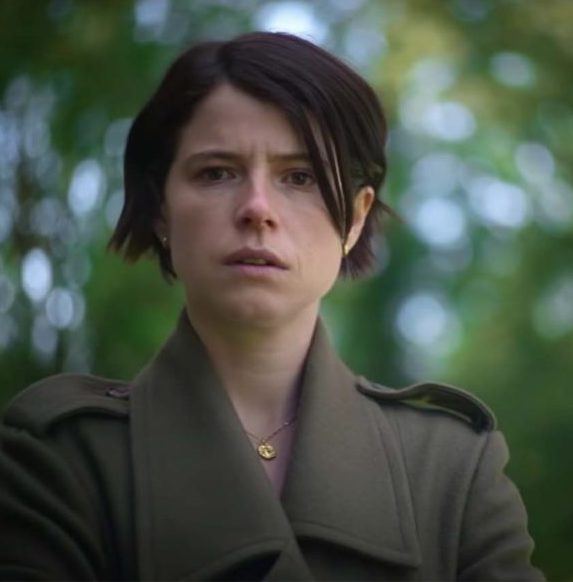
Harper (Jessie Buckley) has recently been through a tough time. She’s mourning her husband, James (Paapa Essiedu), and is haunted by the idea that he’s committed suicide because she wanted to divorce him. Badly in need of respite, she heads off to a remote country guesthouse in the hope that a bit of solitude will help to heal her wounds. There, she is greeted by the owner, Geoffrey (Rory Kinnear), a plummy, officious sort who playfully chides her for helping herself to an apple from his tree when she arrives. ‘Forbidden fruit and all that.’

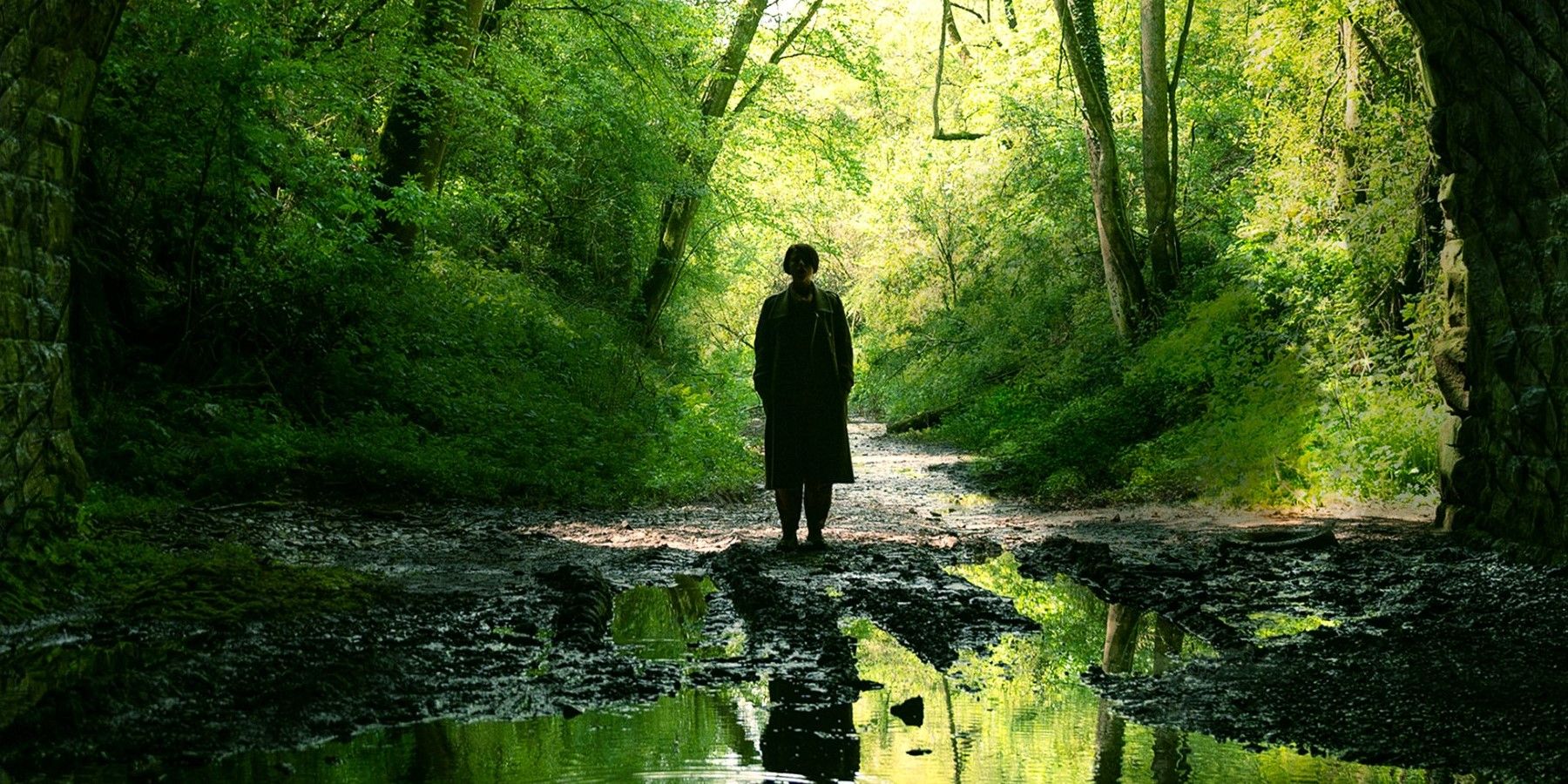
Harper decides to take a walk in the countryside, (in a glorious extended sequence that really shows off the skills of cinematographer, Rob Hardy) and begins to think that she may be on the road to recovery. But then she has a spooky encounter in an abandoned railway tunnel and shortly thereafter, is terrorised by a naked man, who she thinks, may be stalking her.

As she encounters more of the local population (nearly all of them male), she begins to realise that this isn’t going to be the peaceful sojourn she’s been hoping for…

You’ll already have read that the film’s big conceit is that every male character (except for James) is played by Rory Kinnear – and played brilliantly, I might add, his creations ranging from a deliciously sinister local priest to a troubled teenage boy. Buckley too is terrific, in a challenging role where she is obliged to do most of her emoting in silence.

The film’s subtext would be perfectly clear even without the massive clue offered in its title. All of Kinnear’s characters are examples of toxic masculinity, the essence instilled from birth and manifested in different ways – in sarcasm, in outmoded chivalric beliefs and, sometimes, in outright violence. These men all stem from the same poisoned root. The idea is perfectly expressed in the film’s first two thirds and no viewer will be in any doubt about Garland’s intentions.

So why, I ask myself, does he decide, in the film’s final stretch, to double down on the message, presenting an extended body-horror climax that tells us pretty much what we already know. I feel as though I’m being bludgeoned repeatedly over the head with the same premise, as though I can’t be trusted to appreciate its meaning.

And then, there’s the final bit, which without any warning throws a handful of doubt into the mix, obfuscating that message and ensuring that I leave the cinema feeling confused.

At any rate, it’s a disappointing conclusion to a film that has me hooked from the start.

3.6 stars

Philip Caveney

Straight Line Crazy

26/05/22

National Theatre Live, The Cameo, Edinburgh

The NT Live broadcasts are a wonderful innovation, an opportunity for viewers across the country to watch live performances beamed direct from the stages of London. We’ve seen some excellent productions in this way and, on paper, Straight Line Crazy sounds really promising. A new offering direct from the Bridge Theatre, written by David Hare, directed by Nicholas Hytner and starring Ralph Fiennes. What can go wrong?

Well, plenty, as it happens. ‘Show, don’t tell’ may be something of a cliché, but these are the three words that are repeatedly drummed into every writer of fiction from the word go. So how has somebody as seasoned as Hare managed to create a play that tells us next to nothing but shows us even less?

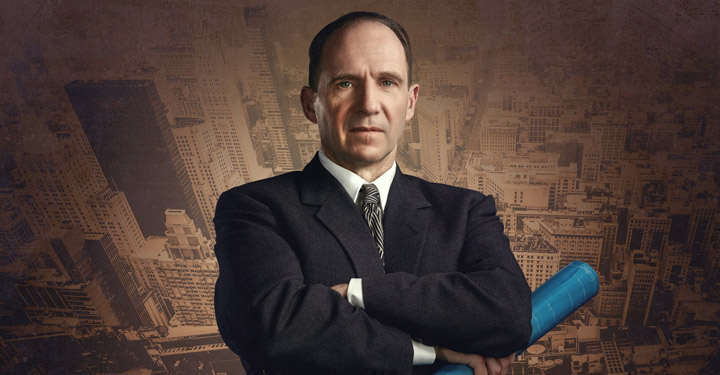
The play’s first act is set in 1926, and influential urban planner, Robert Moses (Fines) is working to push through his plans for Long Island, where the various roads and bridges he envisions will allow the masses to travel to what have previously been exclusive beaches. To this end, he has enlisted the likeable Governer Al Smith (Danny Webb), and their resulting banter is overseen by Moses’ employees, Finnuala Connell (Siobhán Cullen) and Ariel Porter (Samuel Barnett). The two men bluster amiably over glasses of bootleg whisky but we learn precious little about them, other than the fact that Moses is prepared to bend the rules in order to see his concept through.

The second act is set thirty years later, when the tide of popular opinion is beginning to turn against Moses. Here at least, the action is opened up beyond Moses’ headquarters, to a public meeting where people have the opportunity to speak out against his single-minded obsession with offering Manhattan up to the dominance of the motor car – but once again we learn very little and, all too soon, we’re back to Moses’ office for more bluster.

And that’s pretty much what you get. Fiennes, to his credit, is a terrific actor, and of course he does his best to imbue Moses with some depth, but we’re reliant on Connell’s character to occasionally step in and tell us key facts about the man – in some cases to actually remind him about things he must already know. It’s all curiously inert and unengaging and, by the play’s conclusion, which points out that Moses is still set in his ways and not about to change anytime soon, I’m left with the conviction that there must be a better story in there somewhere.

Straight Line Crazy might just as well be a radio play – and it doesn’t help that I’m fresh from seeing Wise Children’s Wuthering Heights, an endlessly inventive adaptation that seems to rejoice in finding fresh ways to show an over-familiar narrative. This seems to be its polar opposite, masking rather than illuminating a potentially interesting character.

File this one under D for ‘disappointing.’

2.8 stars

Philip Caveney

Wuthering Heights

25/05/22

King’s Theatre, Edinburgh

I can’t think of a better match than Emily Brontë and Emma Rice: two renegade spirits, purveyors of verve and rebellion; two flawed geniuses, whose work is – love it or loathe it – undeniably compelling.

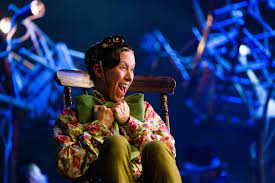
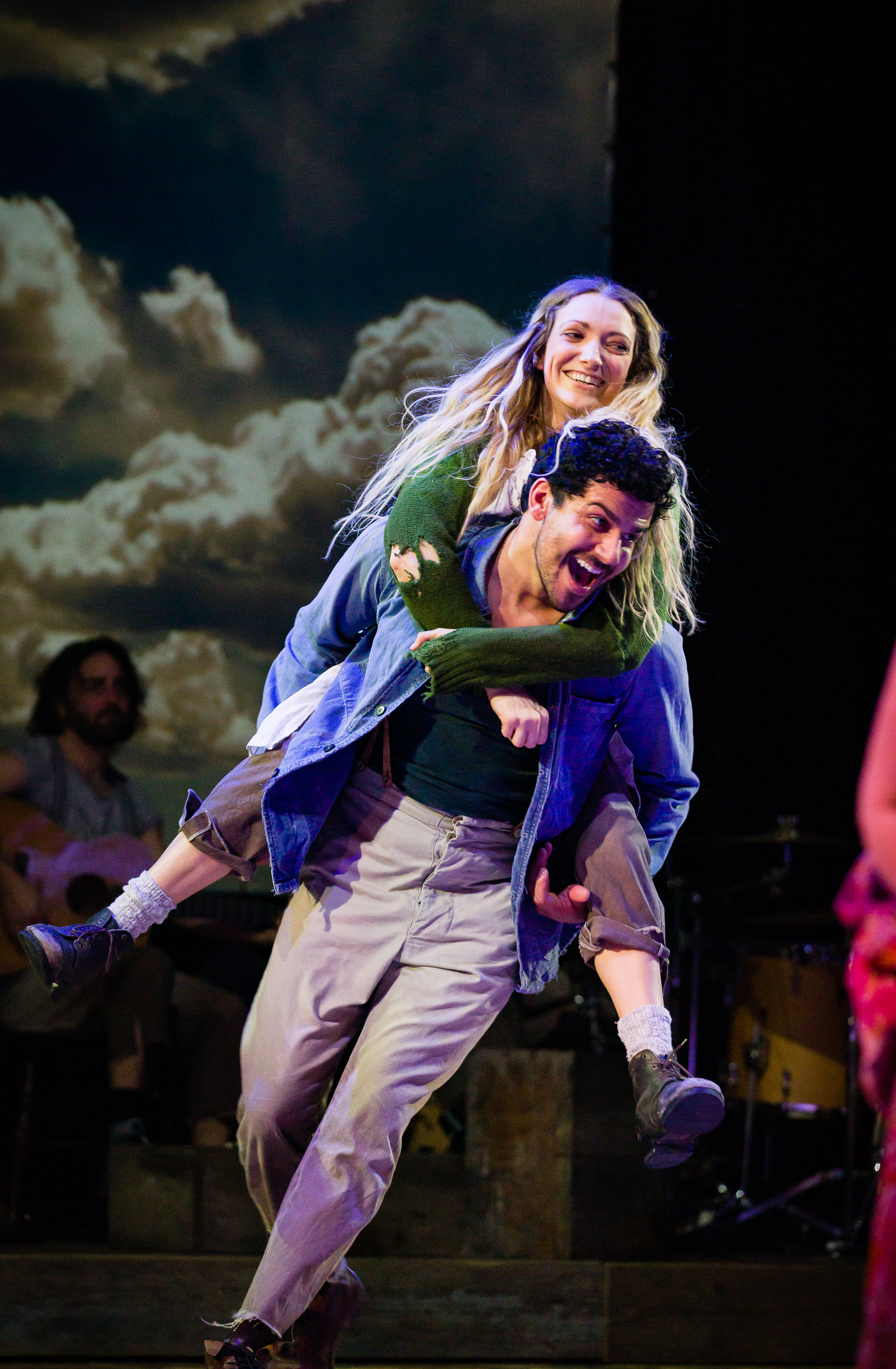
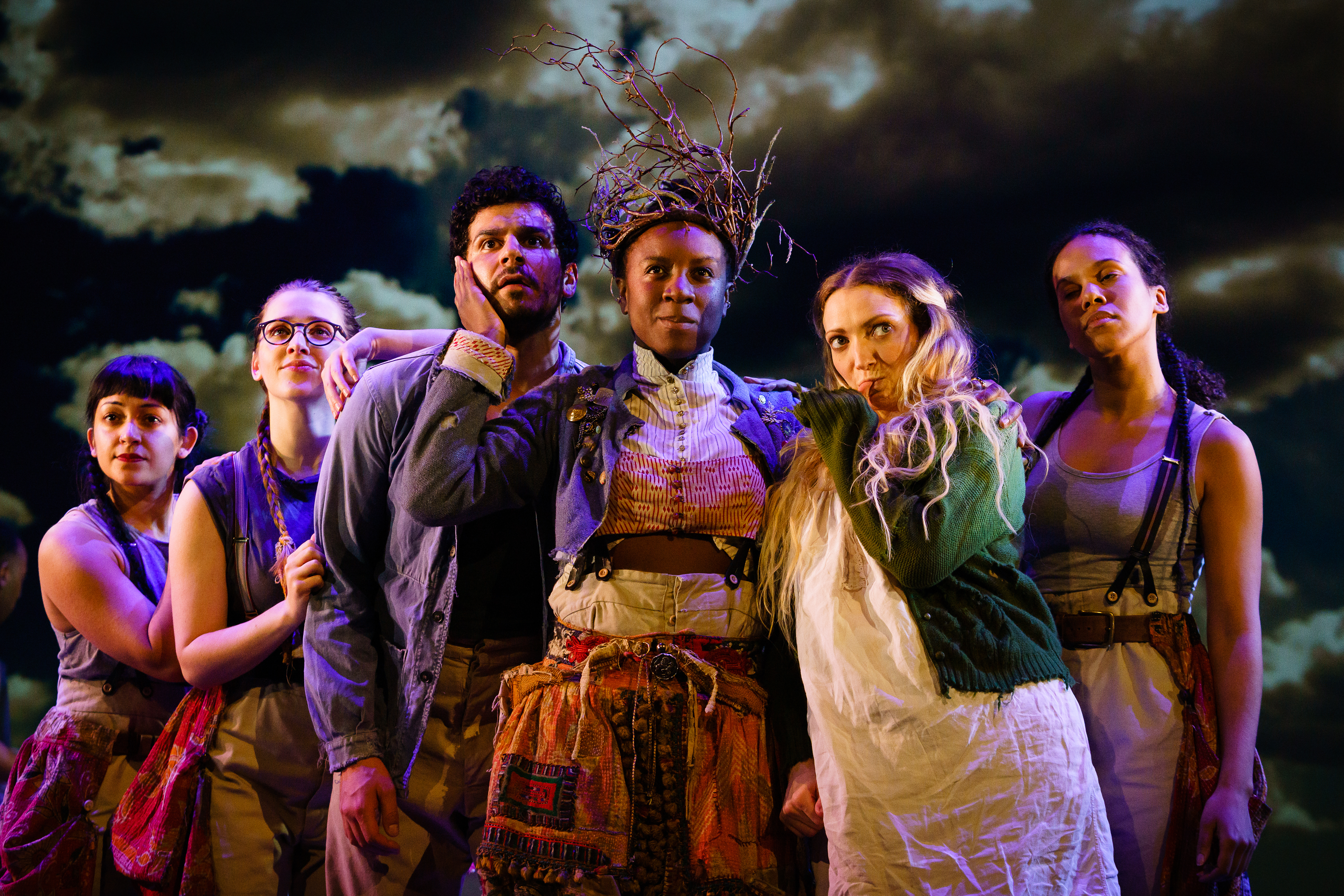
In this Wise Children production, Rice strips Wuthering Heights down to its beating heart, illuminates its essence. Anyone familiar with Rice’s previous work (at Kneehigh, for example) will know to expect a chaotic, frenzied telling, a stage so bursting with life and energy that it’s sometimes hard to know where to look. And that’s what we get. It’s dazzling; it’s dizzying – and I adore it. This is the sort of theatre that excites me.

Instead of Nelly Dean, we have The Moor, the landscape personified as a Greek chorus, whose Leader (Nandhe Bhebhe) narrates and placates, while her acolytes sing and dance their embodiments of weather, conscience and commentary. It’s a bold move, but it works. The setting is integral to Brontë’s novel; why not bring it to life? It’s also a neat way of conveying the labyrinthine plot in a mere three hours, so that we’re never in any doubt about who’s who, or how they’re all related, despite the too-similar names and the double-roles.

Adding to the bustle and busyness, there’s a live band on stage throughout (Sid Goldsmith, Nadine Lee and Pat Moran), as well as some stunning back projection, depicting turbulent skies and flocks of birds, which soar noisily into the clouds whenever someone dies. Rice’s signature puppetry puts in a brief appearance too, as the infant cuckoo, Heathcliff, lands in the Wuthering nest.

Rice foregrounds the differences between the Earnshaws and the Lintons: Hindley (Tama Phethean), Cathy (Lucy McCormick) and Heathcliff (Liam Tamne) are played as dark, almost monstrous figures, while Edgar (Sam Archer) and Isabella (Katy Owen) are light and clownish. This unevenness of tone serves to highlight how very dangerous the Earnshaws are, and it’s almost unbearable to witness the silly, foppish Lintons veer into their orbit, knowing that every encounter takes them closer to sealing their own dreadful fates. Owen garners many laughs with her cartoonish depiction of adolescent naïvety – she’s a gifted comedian – but Isabella is a petulant shrew in a tiger’s paw, and this is clearer here than in any other adaptation I have seen.

Emily Brontë purists will hate this show; it’ll give ’em the heeby-jeebies. But there’s a row of teenagers sitting behind me at the theatre tonight – they’re on a school trip – and they love it. I can hear them laughing and gasping, even exclaiming out loud. And Wuthering Heights is a YA book, isn’t it? A cautionary tale about a very, very toxic relationship, all raging hormones and melodrama, perfectly encapsulated on this anarchic stage.

5 stars

Susan Singfield
Top Gun: Maverick

25/05/22

Cineworld, Edinburgh

I wasn’t a big fan of the original Top Gun.

Reviewing it for City Life Magazine in 1986, I complained that the film felt like a glossy advertisement for the US Navy – and I wasn’t in the least bit surprised when the American military elected to instal enrolment booths in cinemas showing the film, so that pumped-up youngsters could walk straight out of a viewing and sign themselves up for active service.

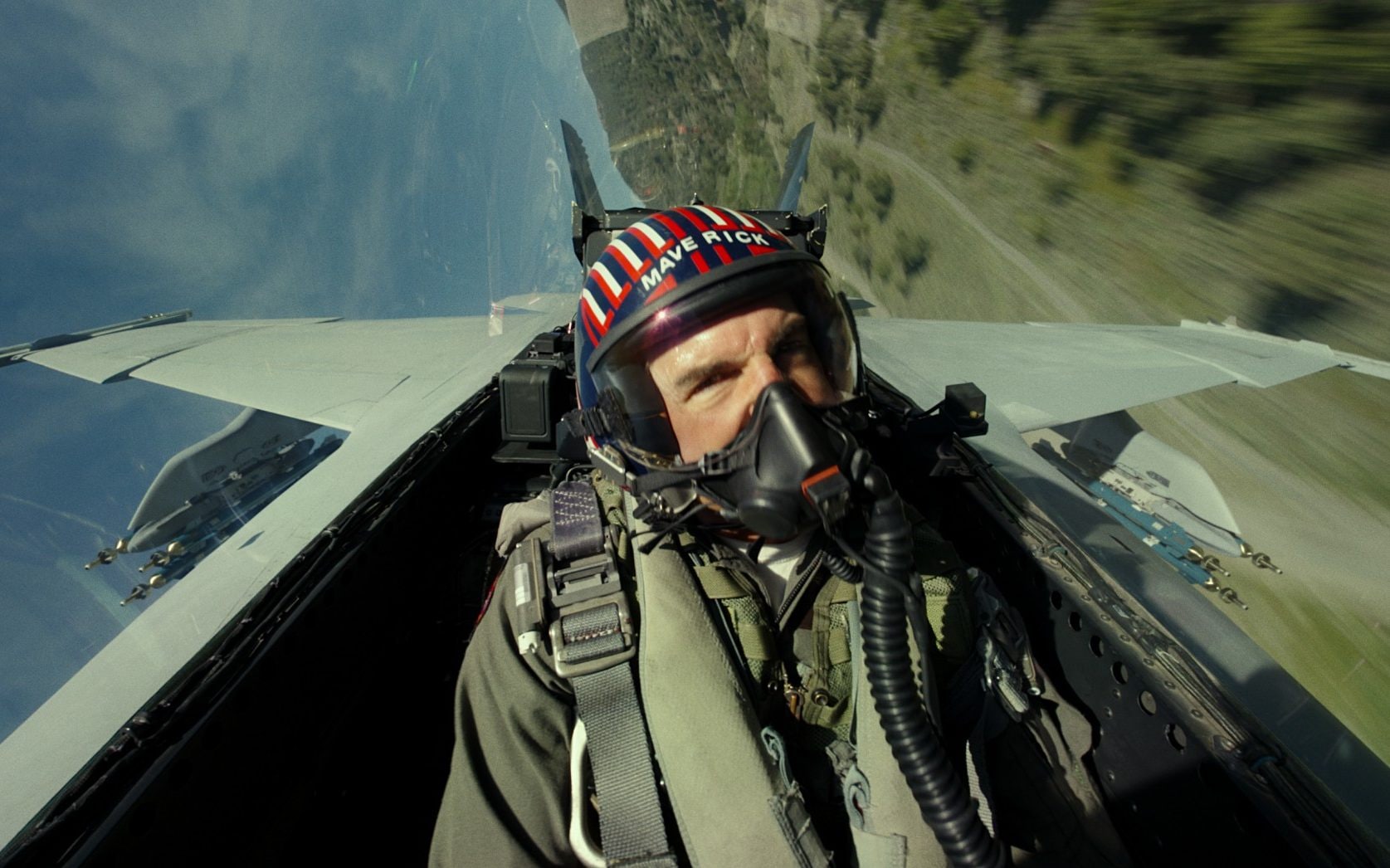
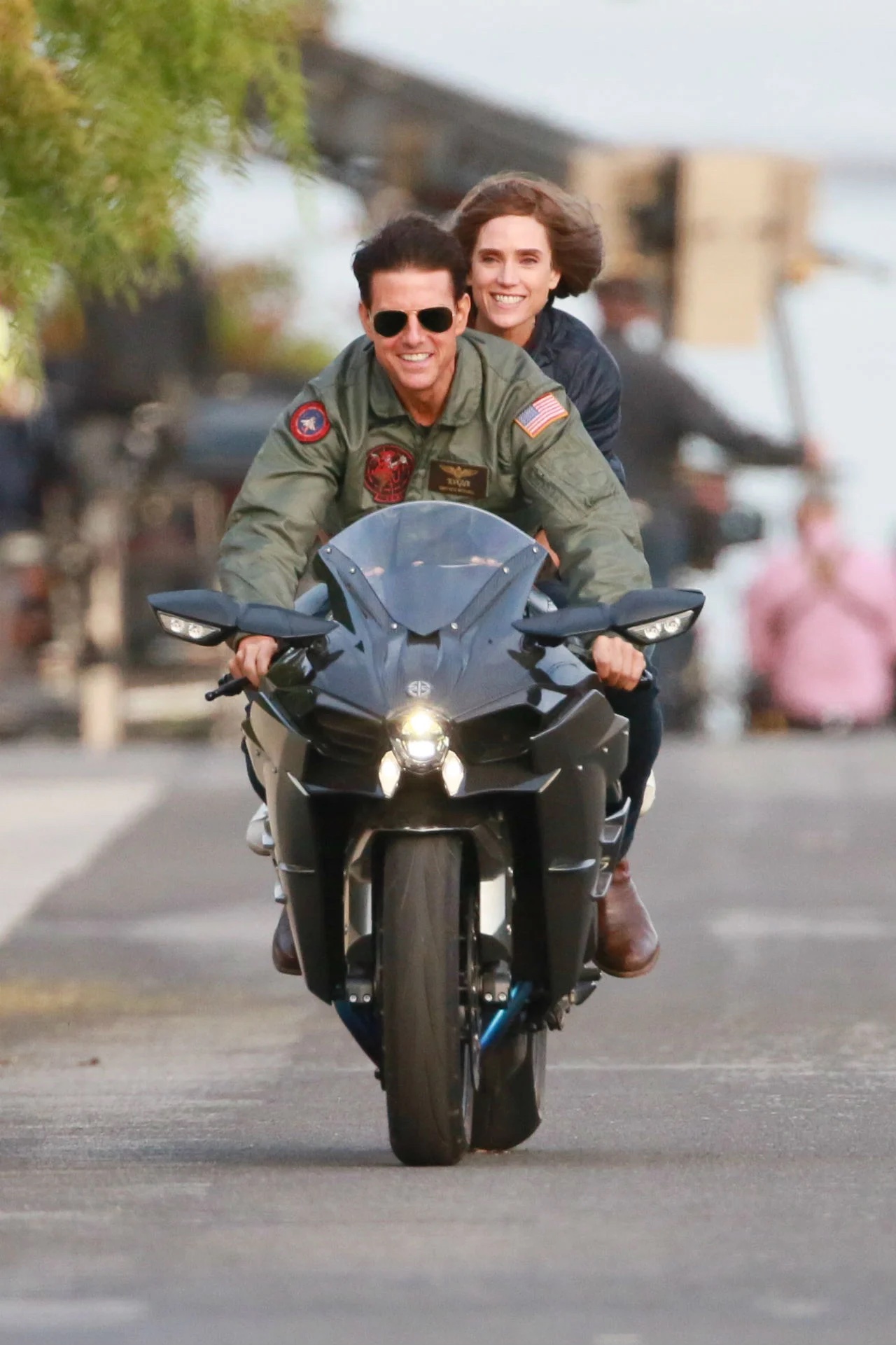
This sequel had already been a long time coming before the pandemic obliged its release date to be pushed back several times. Finally, here it is, with Tom Cruise still looking perfectly serviceable in the hunky action man role and with Joseph Kosinski taking up the directorial reins on behalf of the late Tony Scott.

Years after the events depicted in the first movie, we meet Pete ‘Maverick’ Mitchell, still a mere Captain, while most of his contemporaries are either dead or have risen through the ranks. He’s now working as a test pilot and is still more than ready to bend the rules when the powers-that-be threaten to close down his current project.

Close to facing a court martial, he’s ‘rescued’ by his former teammate Tom ‘Iceman’ Kazansky (Val Kilmer), who gets him assigned as instructor to an elite group of young pilots, training for a dangerous mission in Iran.

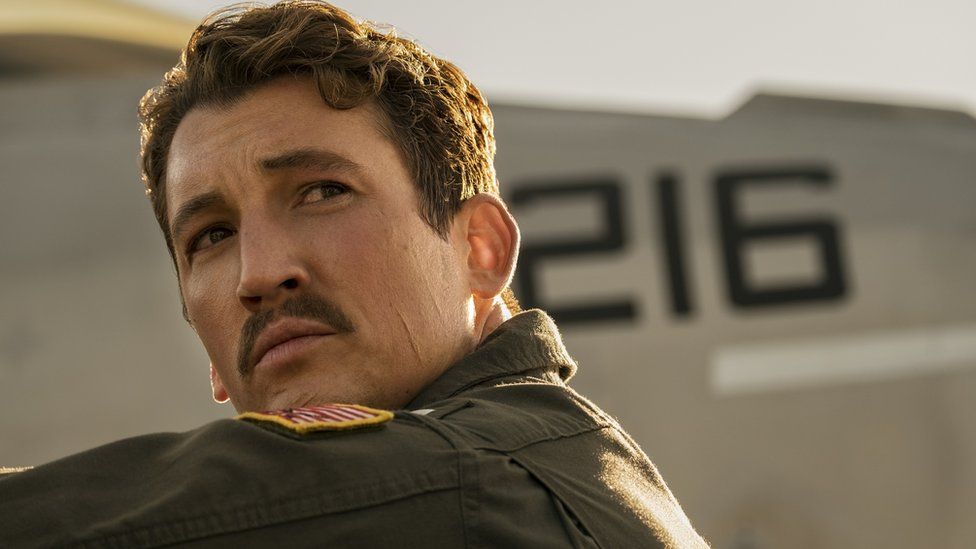
Mitchell soon discovers that one of his students is Bradley ‘Rooster’ Bradshaw (Miles Teller), the son of his old wingman ‘Goose.’ Bradshaw blames Mitchell for the death of his father – and for the the fact that he chose to hold him back in his training for several years. Can Maverick somehow bury the hatchet with Rooster and, at the same time, teach him to become a valuable member of his young team?

Hey, does the Pope shit in the woods?

Maverick is, I’m glad to say, a major improvement on the original film. Yes, it’s still pumped full of testosterone and yes, there’s still (inevitably) some major dick-swinging on display, but this story is considerably more nuanced than its predecessor and at least here the female characters are allowed to be more than just compliant love interests. There is still some romance, of course: Maverick hooks up with an ex, Penelope Benjamin (Jennifer Connelly), now conveniently divorced and running the local bar. It’s hardly a plot spoiler to say that, yes, old sparks are destined to fly.

As with the first movie, there are some extraordinary flight sequences here and they are given extra oomph when I remember that Cruise is doing it all for real, which is a mark of the man’s commitment to his craft. Unlike its perfectly honed lead, the film does get somewhat lumpen around the mid section, when a series of training sequences go into rather more detail than is necessary. It could do with a little less of that.

But things rally magnificently for a genuinely pulse-quickening final half hour and (yes, I admit it) a heartwarming conclusion. While you could argue that plot-wise it’s all faintly ridiculous (and you wouldn’t be wrong on that score), this is nonetheless a slice of highly polished entertainment that largely succeeds in taking its original premise to unexpected new heights.

3.8 stars

Philip Caveney

Though This Be Madness

22/05/22

The Studio, Festival Theatre, Edinburgh

Though This Be Madness deals with both the micro and the macrocosm: a study of one woman’s mental health, and a record of her place in a long line of other women. She is daughter, sister, mother. She is Shakespeare’s heroines.

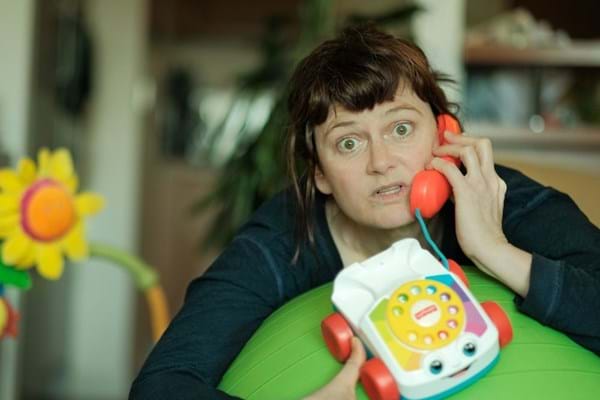
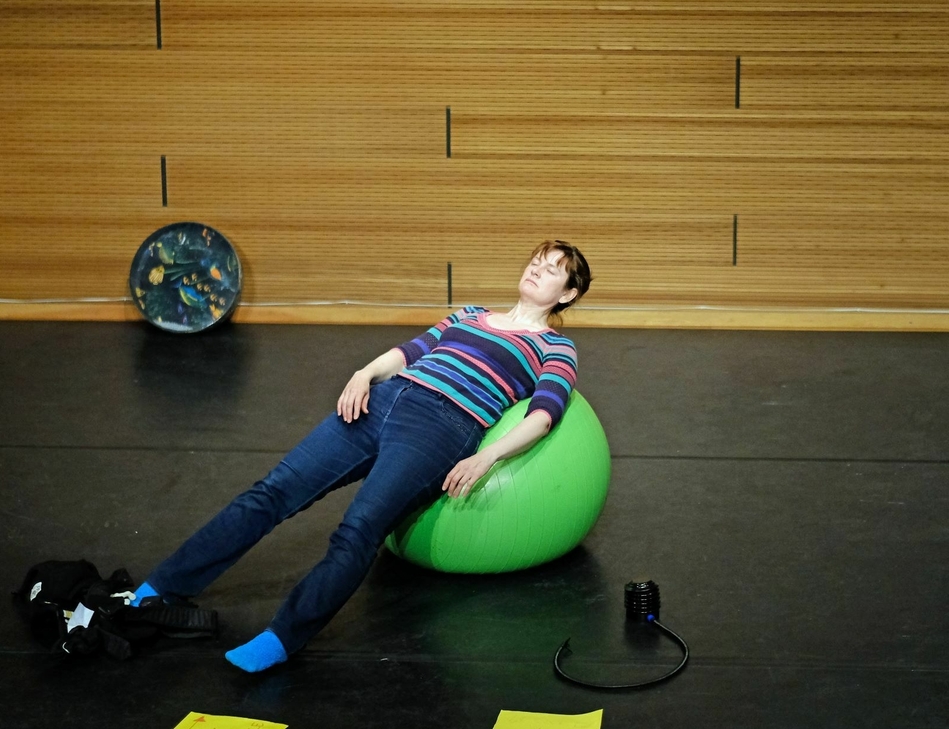
This is Skye Loneragan’s scattershot depiction of a new mother, struggling to finish a sentence without being interrupted by a baby’s cry, and it’s a haphazard, palpably stressful piece. ‘The Land of the Lounge Room’ is messy, with toys strewn everywhere, and our protagonist has given up trying to tidy them away. There’s no point, is there? Her body’s been ravaged; she doesn’t remember what sleep feels like; her doctor’s unsympathetic and her mother thinks she shares too much. Oh, and her sister’s schizophrenic.

There’s a lot to process here. The fragmented, unstructured narrative works well to convey a sense of disconnection and distraction, but it also means that not everything lands, and that some interesting ideas are lost in the chaos. The references to Shakespeare’s women, in particular, feel under-explored.

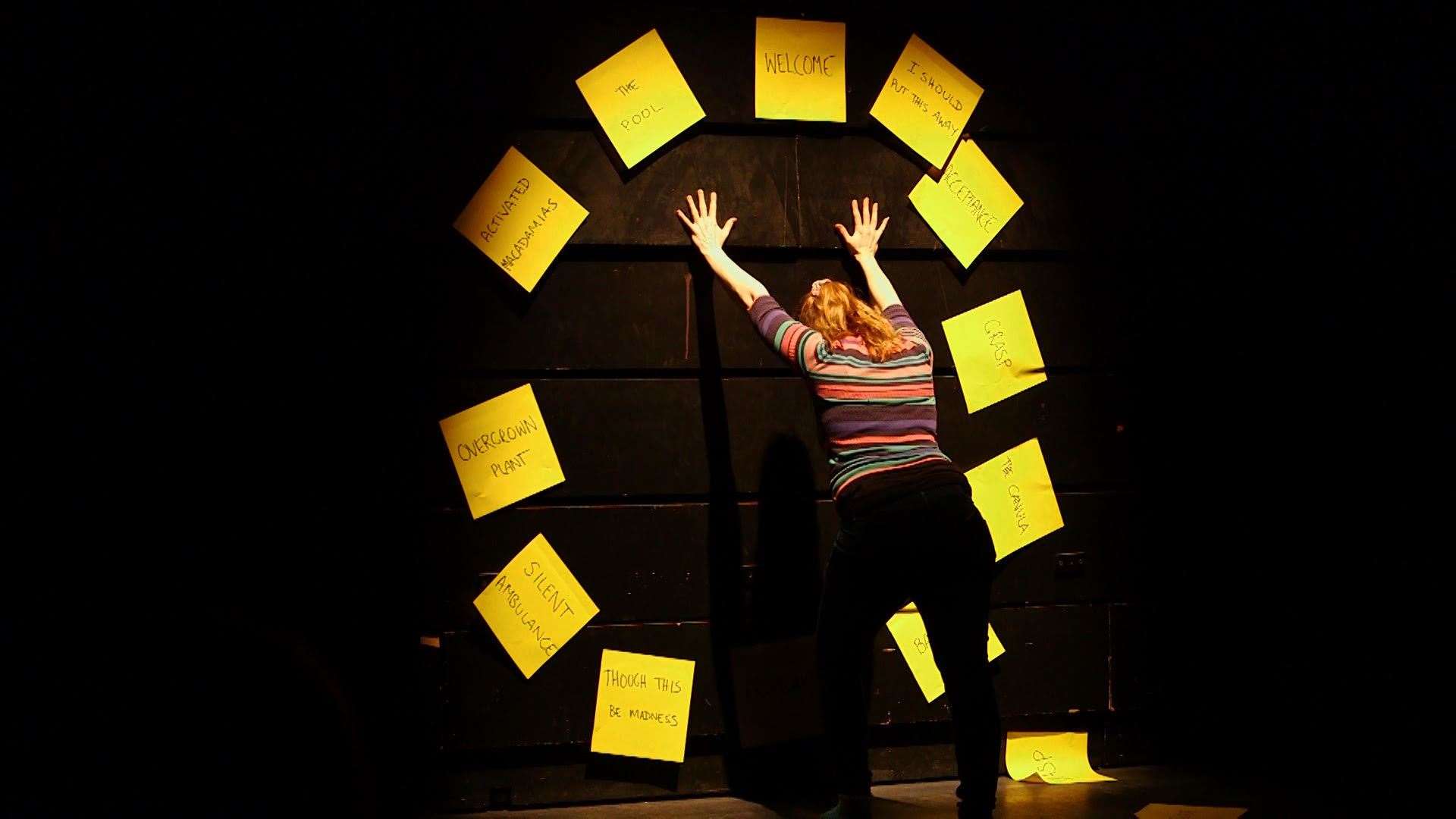
Loneragan is an engaging performer (with exemplary mime skills). I like the symbolism of the post-it notes and the overt circularity of the piece, and Mairi Campbell’s music lends it an eerie – almost hypnotic – air. In the end, however, I can’t help feeling this piece is both too much and too little: too many ideas for the short running time, and too little made of the best of them.

3 stars

Susan Singfield