The Railway Children Return

15/07/22

Cineworld, Edinburgh

As a child, I loved Edith Nesbit’s books. I read and re-read the Bastables’ treasure-seeking adventures, and was totally immersed in the magical world of Five Children and It (although, because I borrowed them from our small village library, I never managed to read any of the series in the correct order). But it was The Railway Children that really stole my heart, and I know I’m not alone. It’s a lovely book, and Lionel Jeffries’ 1970 film adaptation really captured its essence. Both book and film deserve their classic status.

Sequels, though, are tricky things. Sometimes they spill out, one after another, quickly diluting the potency of the original (Home Alone, I’m looking at you). And sometimes it’s fifty-two years before one shows its face. Is it worth the wait?

In the main, I’d say the answer’s ‘yes’. Although The Railway Children Return will never match its progenitor, it’s nonetheless a charming tale, and remains true to the spirit of Nesbit’s novel.

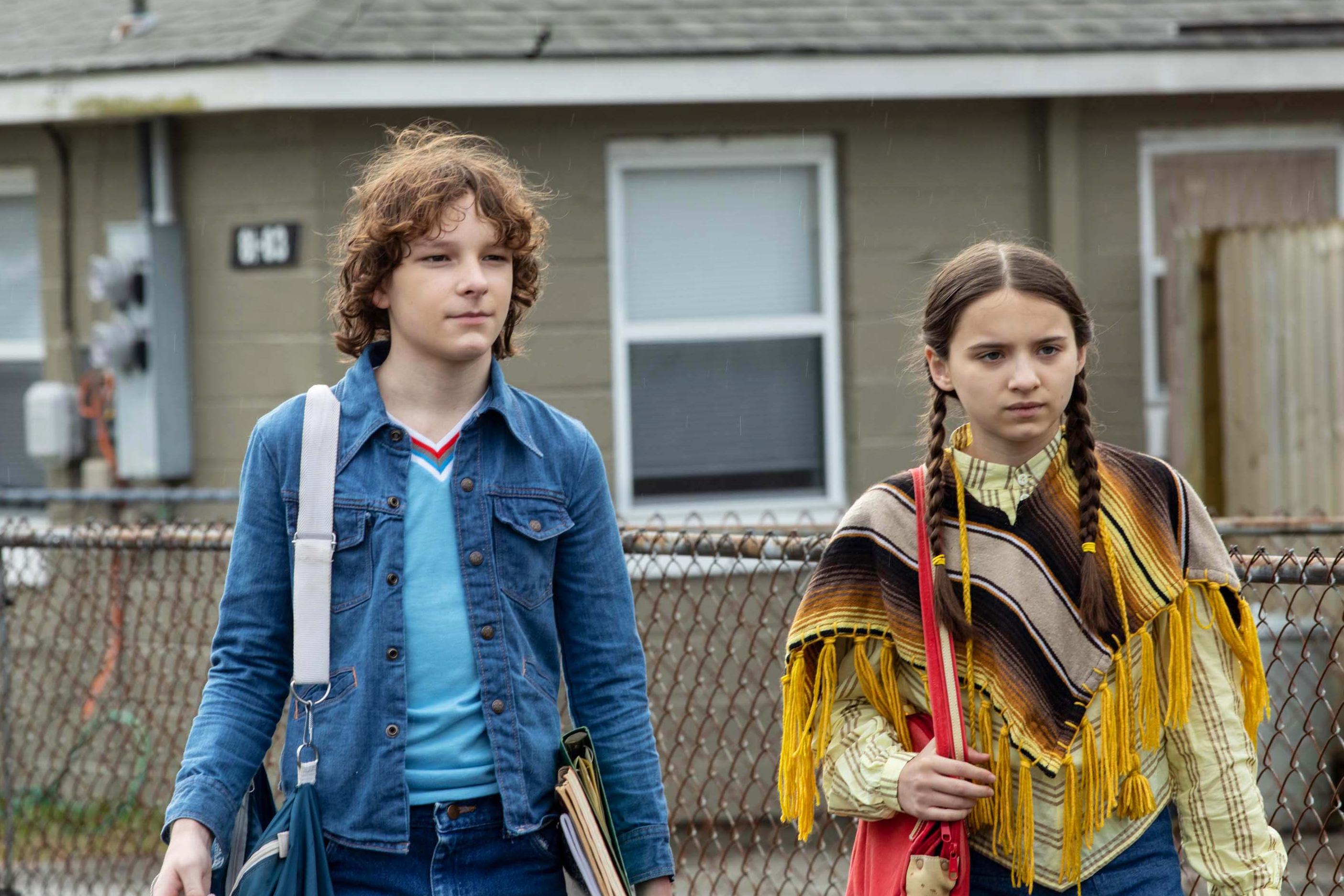
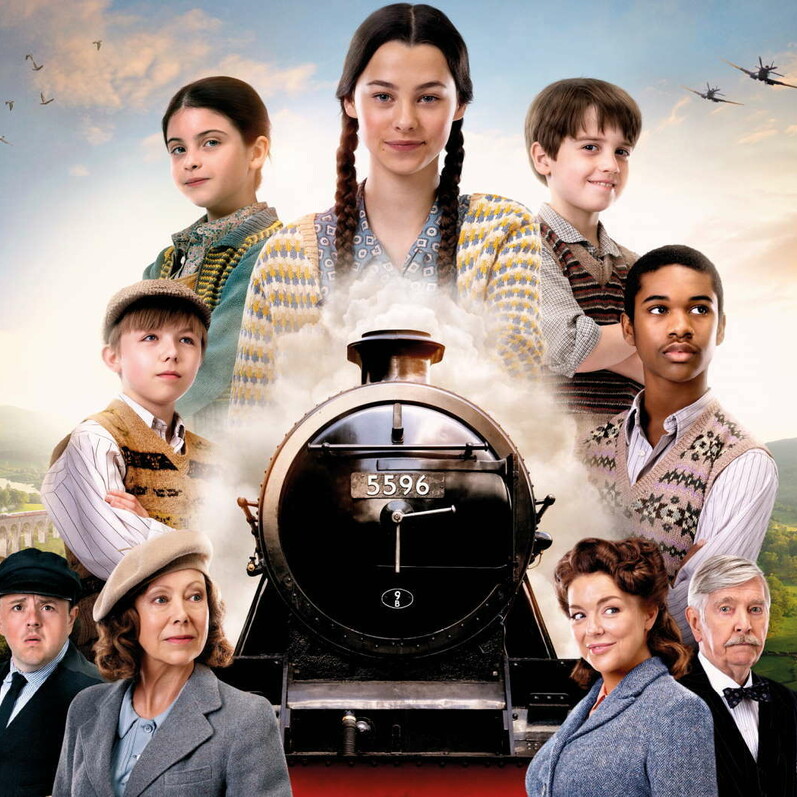
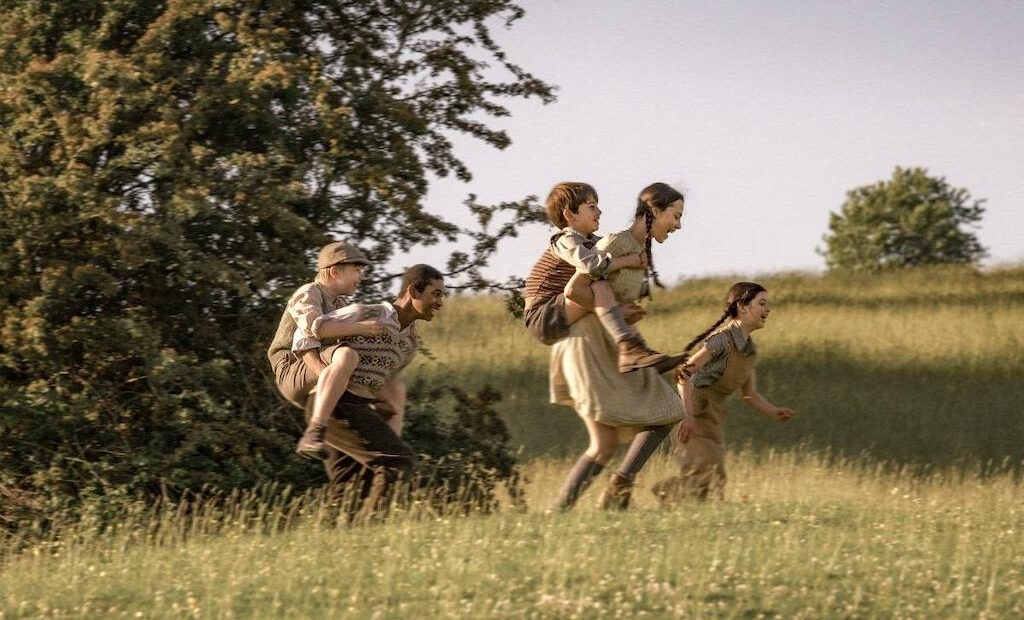
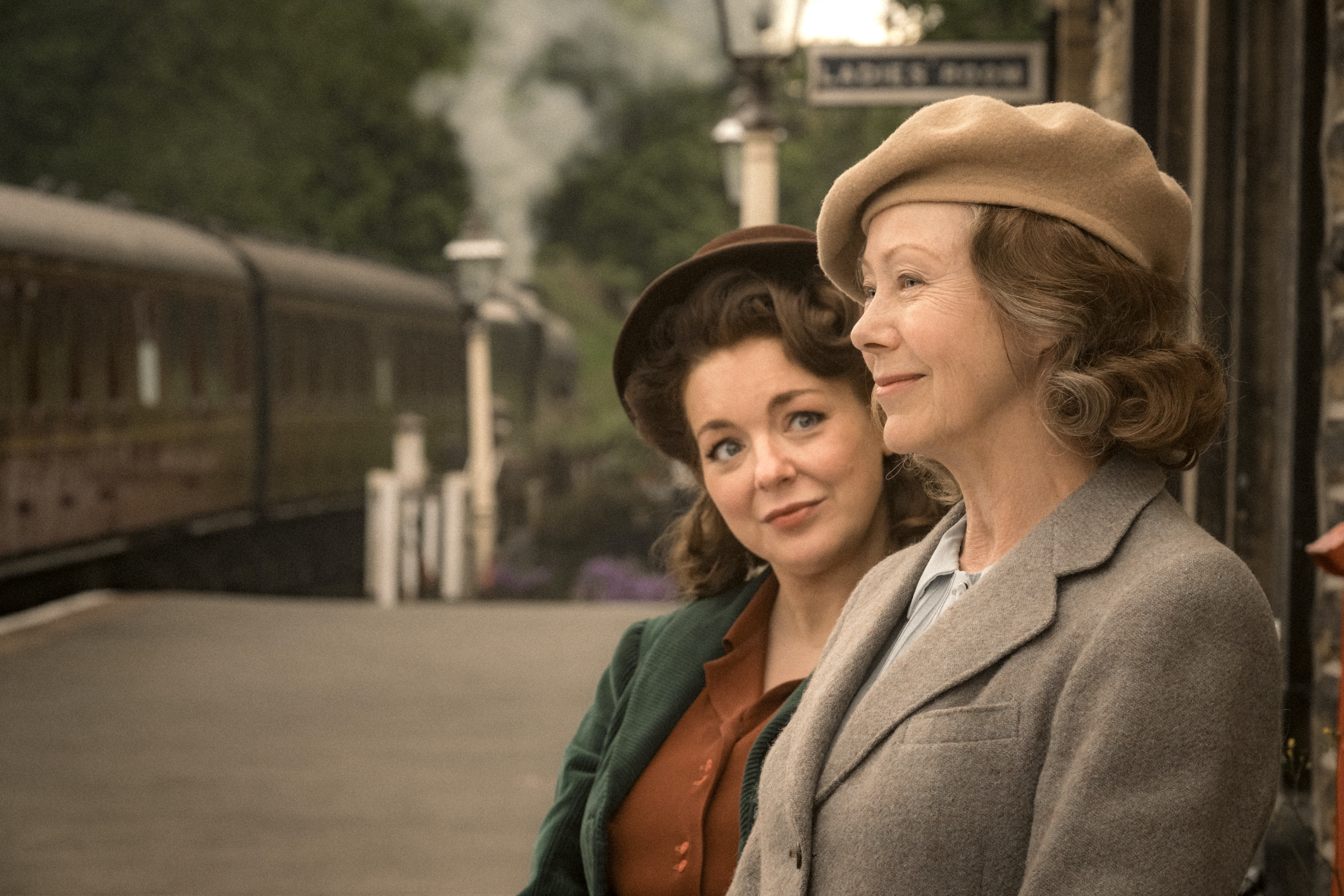
Time has marched on since a trio of young children first arrived at Three Chimneys, reeling from their father’s sudden absence and their resulting change in circumstance. But, hey – plus ça change, plus c’est la même chose. It’s 1944 and, although Bobbie (Jenny Agutter) is a grandma now, history is about to repeat itself. Lily (Beau Gadson), Pattie (Eden Hamilton) and Ted (Zac Cudby) are evacuees from Manchester – and Bobbie can’t help but empathise. Her daughter (Sheridan Smith) was only planning to accept one child; she’s very busy, after all, as headteacher of the local school, and how is she supposed to feed three hungry mouths? But she acquiesces; of course she does. Her son, Thomas (Austin Haynes), is a sweet-natured boy, and quickly befriends them all. If it weren’t for the constant background rumble of the war and their separation from their real family, this would be an idyll. But the real world keeps intruding: bombs fall; fathers die. And one day, whilst playing Hide and Seek in the railway station, the children make a startling discovery: an American soldier on a secret mission. Can they help Abe (Kenneth Aikens) achieve his goal?

The Railway Children Returns is a lot earthier than the original: Lily, Pattie and Ted are tough, working-class, city kids (although Danny Brocklehurst’s script avoids any obvious Goodnight, Mr Tom-style clichés), very different from the privileged Bobbie, Phyllis and Peter, for whom Three Chimneys – with its single, not even live-in servant – was quite the comedown. These kids scrap and tell mucky jokes, and they don’t mind lying to protect themselves. “You can’t kid a kidder,” says Lily.

Politically, the issues are different, but the tone is similarly liberal and progressive. In The Railway Children, Mrs Waterbury empathises with Russian dissidents, and takes in a refugee. In this sequel, the focus is on racism, particularly among the US troops, improbably stationed in the village. Abe is black, and has suffered horribly at the hands of his fellow officers. The message is a good one (‘racism is bad’), but it’s all very superficial, and it’s more than a little disingenuous to suggest that only the Americans are prejudiced, while the local British community refuses, as one, to accept such bigotry. I know it’s a children’s tale, but children aren’t stupid, and they can deal with more nuance than this.

For the most part, though, director Morgan Matthews competently straddles the line between the bucolic dream and the wider-world nightmare, with moments of genuine sadness piercing the children’s fun. This, at least, feels very believable. It’s a shame, though, that Agutter isn’t given more to do.

Gadson’s Lily is the perfect successor to Bobbie: she has the same lively, attractive nature; the same determination and chutzpah. I think Beau Gadson is a name we’ll hear again. Who knows, maybe she’ll even appear as a granny in The Railway Children 3: Full Steam Ahead, coming to a cinema near you in 2074.

3.6 stars

Susan Singfield
Thor: Love and Thunder

14/07/22

Cineworld, Edinburgh

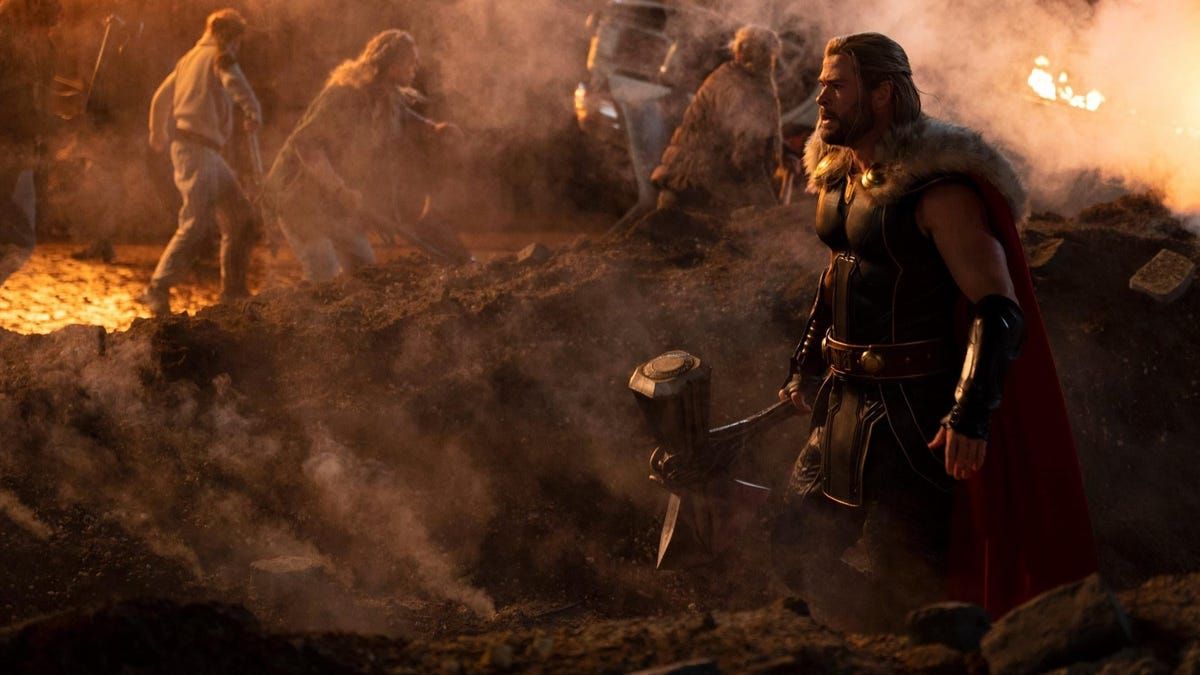
The MCU is a variable place. Sometimes its offerings can be po-faced and terribly earnest and, then again, they can occasionally be played for laughs. I tend to prefer the latter, which makes Thor: Ragnarok – in my humble opinion – one of Marvel’s better efforts. Writer/director Taika Waititi did a great job with the Thor franchise, amping up the laughs and throwing in fistfuls of surreal nonsense, just because they let him. So I go along to Thor: Love and Thunder with high expectations. For the film’s first half, I’m happy enough, though it’s probably true to say that, despite Chris Hemsworth’s best efforts, many of the jokes here don’t land quite as well as they did in the first film.

And then, in the second half, there’s an attempt to swing the mood towards more serious subject matter and I find myself less enamoured.

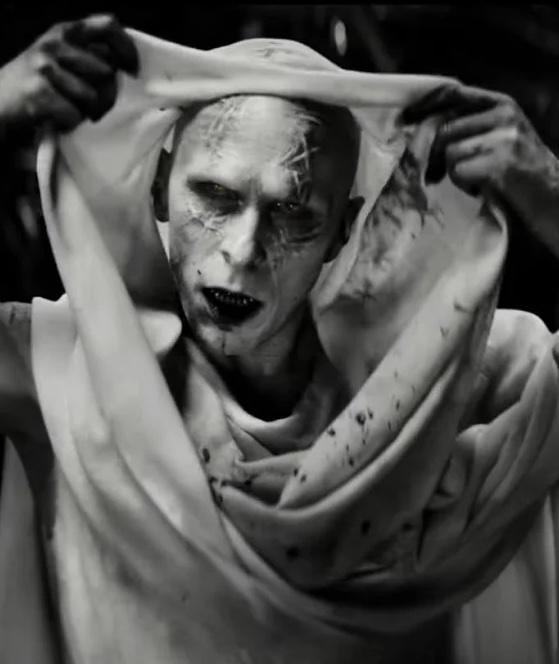
The events of the story are related by the rock-warrior, Korg (voiced by Waititi), who explains that – after much time spent voyaging with the Guardians of the Galaxy (who appear briefly but don’t get much of a look-in) – Thor parts company with them and answers a call for help from the citizens of a little village back on earth. It’s under attack by the sinister Gorr, the God butcher (Christian Bale, quite the most memorable character here), a man who has acquired a powerful sword and who has the intention of killing off every god in existence. Who shouted ‘hooray?’

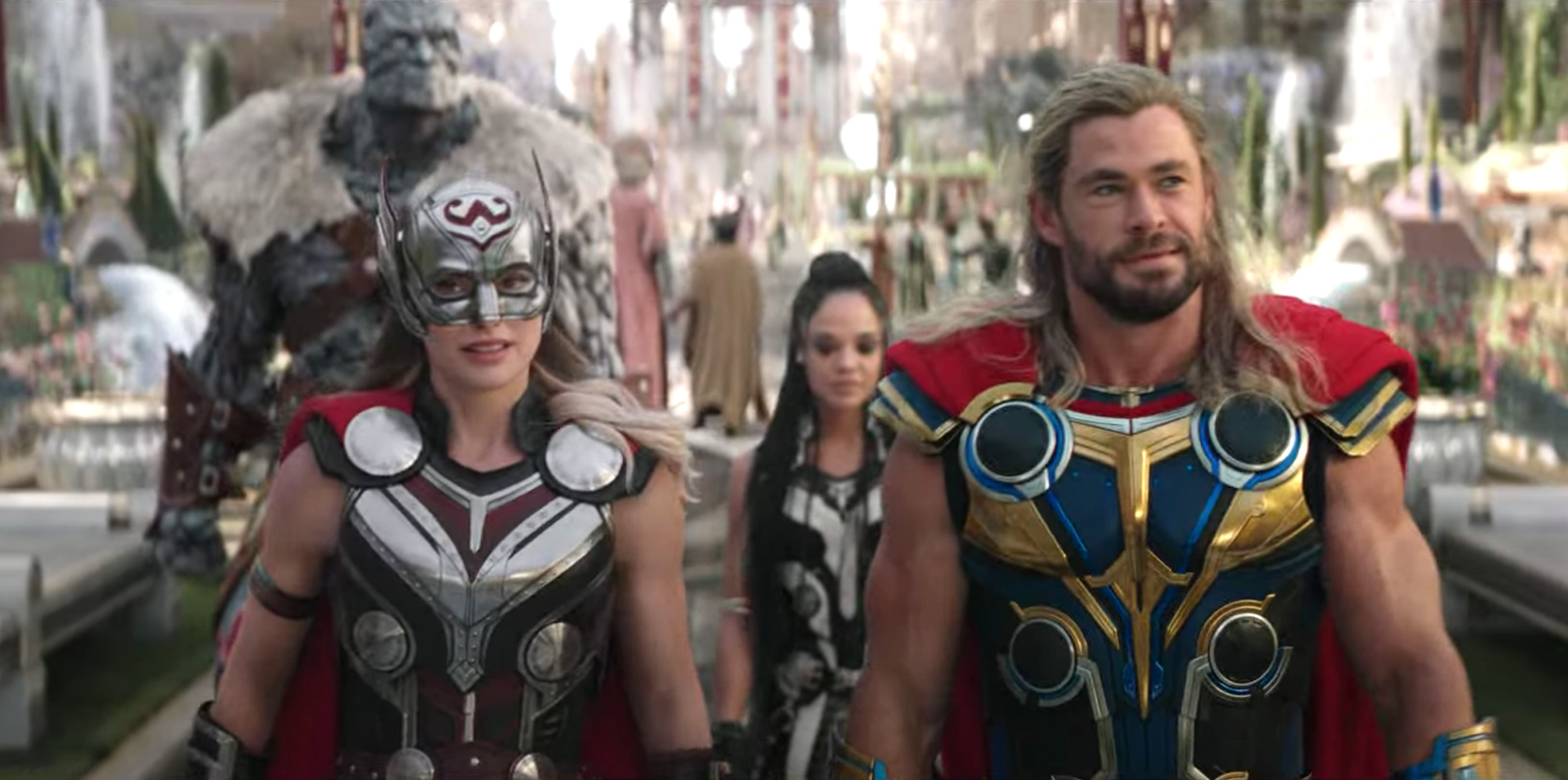
Thor arrives at the same time as his old flame, Jane Foster (Natalie Portman), who is now calling herself ‘The Mighty Thor.’ She’s dressing like her former beau and, annoyingly, has control of Mjolnir, Thor’s mighty hammer. This is one really weird love-triangle.

A mighty punch-up dutifully ensues – though, due to the inevitable 12A rating, it’s a curiously bloodless affair. Gorr eventually makes his escape, taking all the local children captive – and now Thor, Jane, Valkyrie (Tessa Thompson) and Korg must launch a rescue mission… but first they need to enlist the help of the mightiest god of all, Zeus (Russell Crowe), who might just lend them his thunderbolt and who, for reasons best know to Waititi, talks like an Italian waiter…

If the plot sounds like drivel, well, it pretty much is, but Hemsworth plays the central role with such knowing charm and swagger that he almost manages to make me overlook it. There’s lots of Guns ‘n’ Roses-style guitar noodling on the soundtrack and some neat tricks are played with the film’s colour palette (Gorr has a habit of draining everything to monochrome whenever he appears), but – for me – this lacks the sheer brio of Ragnarok and various attempts to twang at the viewers’ heartstrings feel a tad too cynical for comfort.

For those who like these things, there are, of course, a couple of post credit sequences. Whether they’re worth hanging on for is a matter of debate, but they don’t add much to what is, ultimately, a somewhat disappointing exercise.

3.4 stars

Philip Caveney

Brian & Charles

08/07/22

Cineworld, Edinburgh

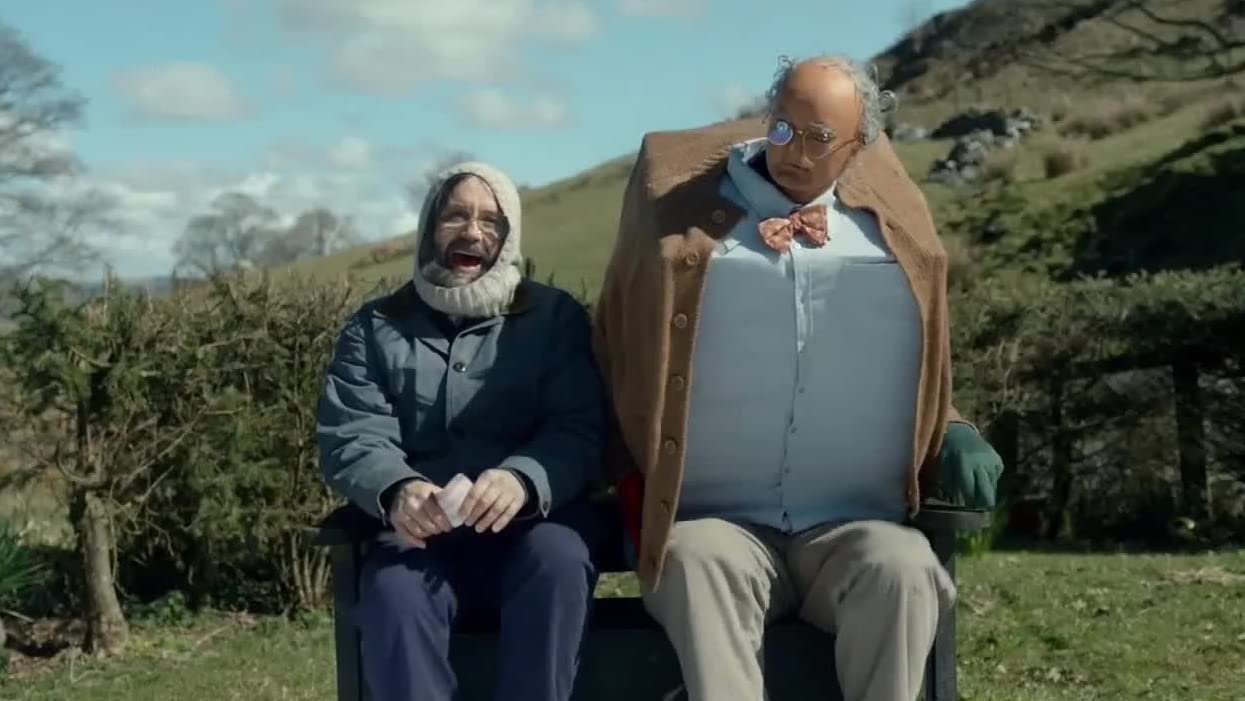
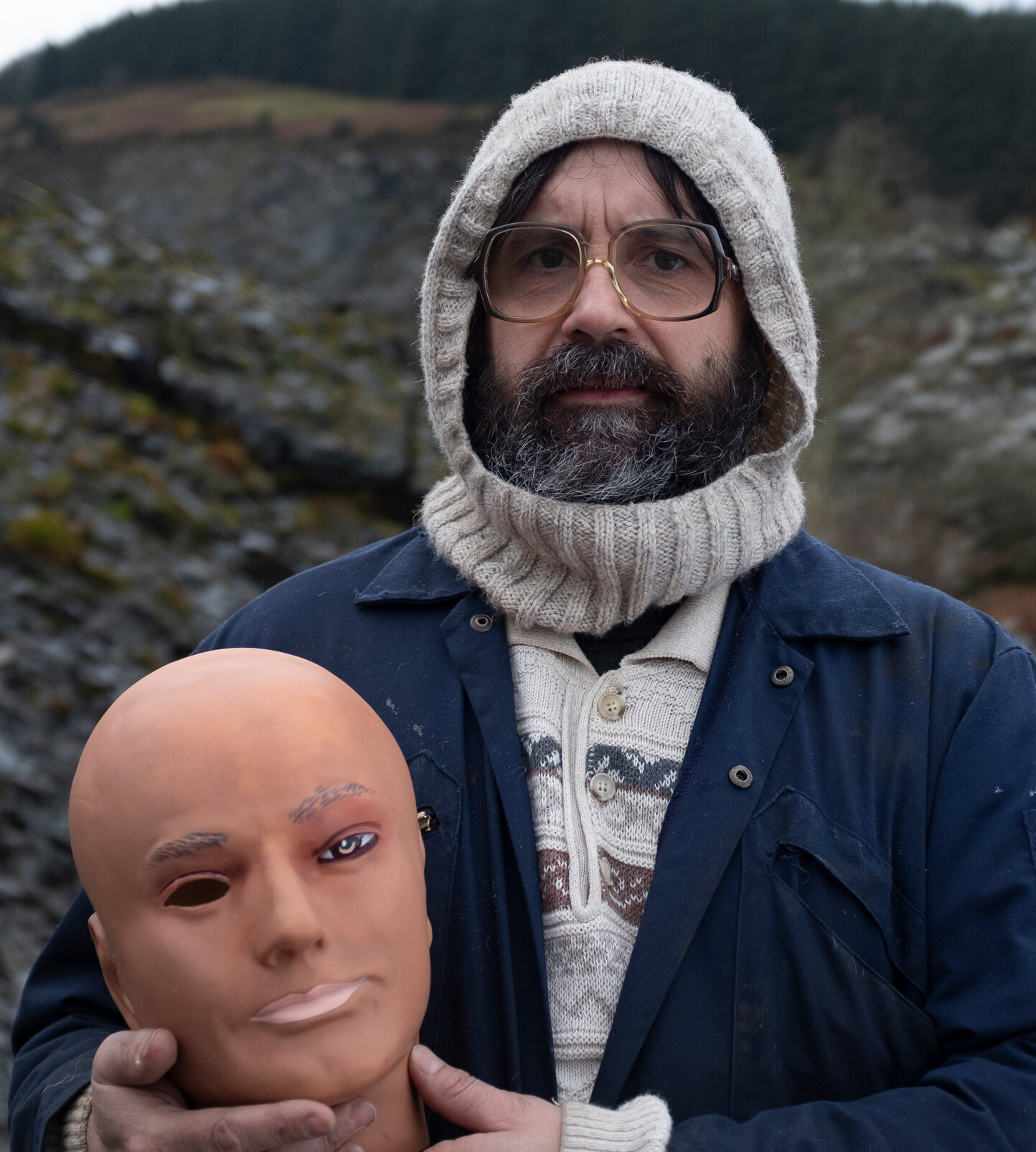
Like a grimy Wallace (pal of Gromit), Brian is an inventor. Unlike his plasticine doppelganger, Brian (David Earl) rarely enjoys success. His flying clock erupts in flames while still firmly earth-bound, and his plunger-water-bottle is an exercise in unhygienic futility. Nevertheless, he persists. Before long, he’s embarking on his most ambitious project to date, a robot – improbably fashioned from a discarded mannequin head, a washing machine and a rubber glove. All it takes is a stormy night on the Welsh hills, and Brian-Wallace-Frankenstein finds himself in possession of a fully-functioning AI called Charles (Chris Hayward).

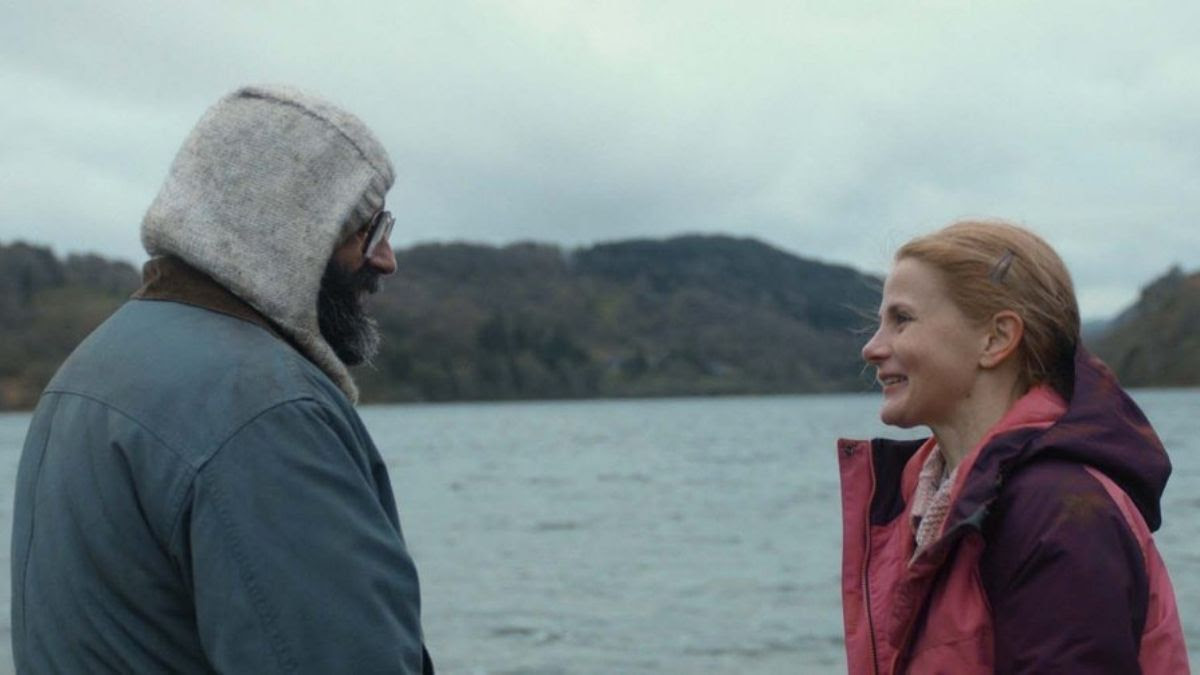
Earl (who, with Hayward, co-wrote the film) imbues Brian with a likeable vulnerability. He’s a lonely, sweet-natured man, who’d be content with his ramshackle life – cabbage-heavy diet and all – if only he had someone to share it with. The friendship Charles provides bolsters Brian’s confidence, and soon he’s mustered up the courage to ask his friend, Hazel (Louise Brealey), to join him and Charles on a day out. A gentle, touching romance ensues.

Of course, it’s not all plain sailing. Not only does Brian have to deal with Charles’ (very funny) adolescent mood swings, he’s also the target of local bully, Eddie (Jamie Michie), and his terrifying teenage daughters, Katrina and Suki (Lowri and Mari Izzard). Can he protect his invention from their cruelty?

There’s a lot to like about this film, not least its warm heart and quirky humour. Directed by Jim Archer, there are many laugh-out-loud moments, and the characters are convincingly drawn. The Welsh landscape is another joy: Snowdonia national park looks glorious, even under heavy cloud, and Llyn Gwynant is breathtakingly beautiful.

But there are issues. My main bugbear is with the accents and their subtext. Apart from a few minor roles, the cast comprises essentially three goodies (Brian, Charles and Hazel) and four baddies (Eddie, Katrina, Suki and Nina Sosanya’s Pam). While the baddies all speak with pronounced Welsh accents, the goodies, for no discernible reason, have English ones. For Charles, this might seem fair enough: he is a robot, after all. But Hazel lives with her mother, Winnie (Lynn Hunter), who has a Welsh accent, and Brian makes reference to his father teaching him to build the fences around his cottage when he was young; they’re both local through and through, and there’s no mention of either of them ever having lived elsewhere. Did no one think about the connotations here?

There are plot holes too. It’s a fun film to watch, but it doesn’t bear much scrutiny. I won’t say too much for fear of spoilers, but where does the money come for from Brian’s final gesture, for example? And why has Hazel – who’s kept horribly busy by Winnie – suddenly got so much free time? More importantly, Brian & Charles at first appears to be a fly-on-the-wall documentary, with Brian directly addressing the camera, and even receiving spoken replies from the film-maker. As the story progresses, this device peters out, and a more straightforward narrative form is deployed. This feels awkward and unresolved.

I’m a little saddened by Brian & Charles, because it would only take a few tweaks to make it utterly loveable.

3.4 stars

Susan Singfield
Kora by Tom Kitchin

07/07/22

Bruntsfield Place, Edinburgh

The Southside Scran was always our go-to place for great quality seasonal cooking – and, when it closed its doors just before lockdown after a disastrous flood, we were very sad to say the least. We couldn’t walk up to Bruntsfield without casting hopeful looks towards its shuttered premises as we went by. After what seemed an eternity of waiting we finally spotted a sign bearing a brand new name and started counting down the days. Indeed, we’d have been here on its opening night if the dreaded COVID hadn’t stepped in with a disastrously-timed delaying tactic.

Finally, my isolation period is over and we are able to take our seats in Kora, which has a fresh new look and now offers tempting bar snacks for those who aren’t looking for the full dining experience. We are greeted at the table by Tom Kitchin himself, who tells us a little bit about Kora’s ethos and presents us with two glasses of fizz and a delightfully spiced broccoli tempura, as an example of the aforementioned bar snacks. This new venue, he tells us, is all about seasonal cooking, about creating a relaxed and informal place to dine. He’s put together a young and enthusiastic team to help him deliver his new creations.

For starters I sample the day boat squid which comes with delicious crispy jambon, runner beans and girolle mushrooms. To describe it as ‘tasty’ would be doing it a disservice. It is absolutely delicious, right down to the final succulent mouthful. Susan’s courgette flower tempura, stuffed with ricotta, and accompanied by olives, tomato and chickpeas is just as assured.

The main courses are faultless too. I’ve gone for the crispy Ayrshire belly pork, a generous chunk of tender meat with a gratifyingly crunchy topping, lying on a bed of cabbage and black pudding. Mmm! Susan has the Errington goat’s cheese tart with sweet red onion and pine nuts. Accompanied by glasses of cold Sauvingon Blanc, the course is an absolute delight, and it’s hard to imagine how these dishes could be bettered. They are note-perfect.

The puddings can sometimes be the element that lets a meal down, but not so here – my Blasgowrie gooseberry fool with oatmeal granola certainly has the wow factor and looks every bit as good as it tastes – as does Susan’s praline – which is actually a island of soft meringue floating in a sea of custard. There’s really nothing here to fault and we leave feeling that the Southside has a worthy successor. Kora is another wonderful venue to add to Tom Kitchin’s impressive collection.

Will we back? Most definitely!

5 stars

Philip Caveney

Good Luck to You, Leo Grande

27/06/22

Cineworld, Edinburgh

Hmm.

I accept that ‘hmm’ isn’t the most promising of openings to a film review, but it’s the best I can muster for the inelegantly titled Good Luck to You, Leo Grande, directed by Sophie Hyde. It’s possibly the most mixed bag of a movie ever, with lots to admire – but lots to wince at too.

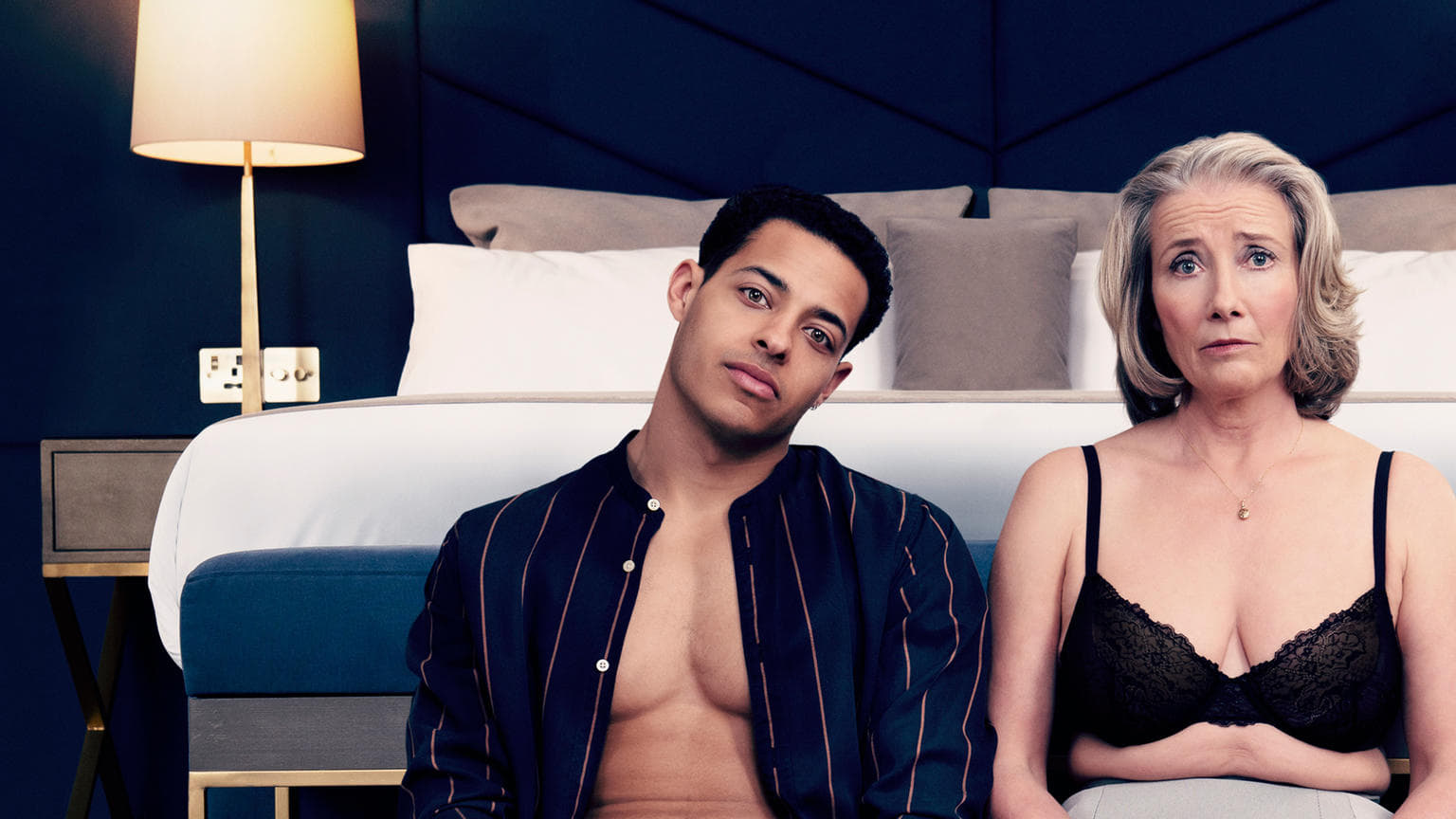
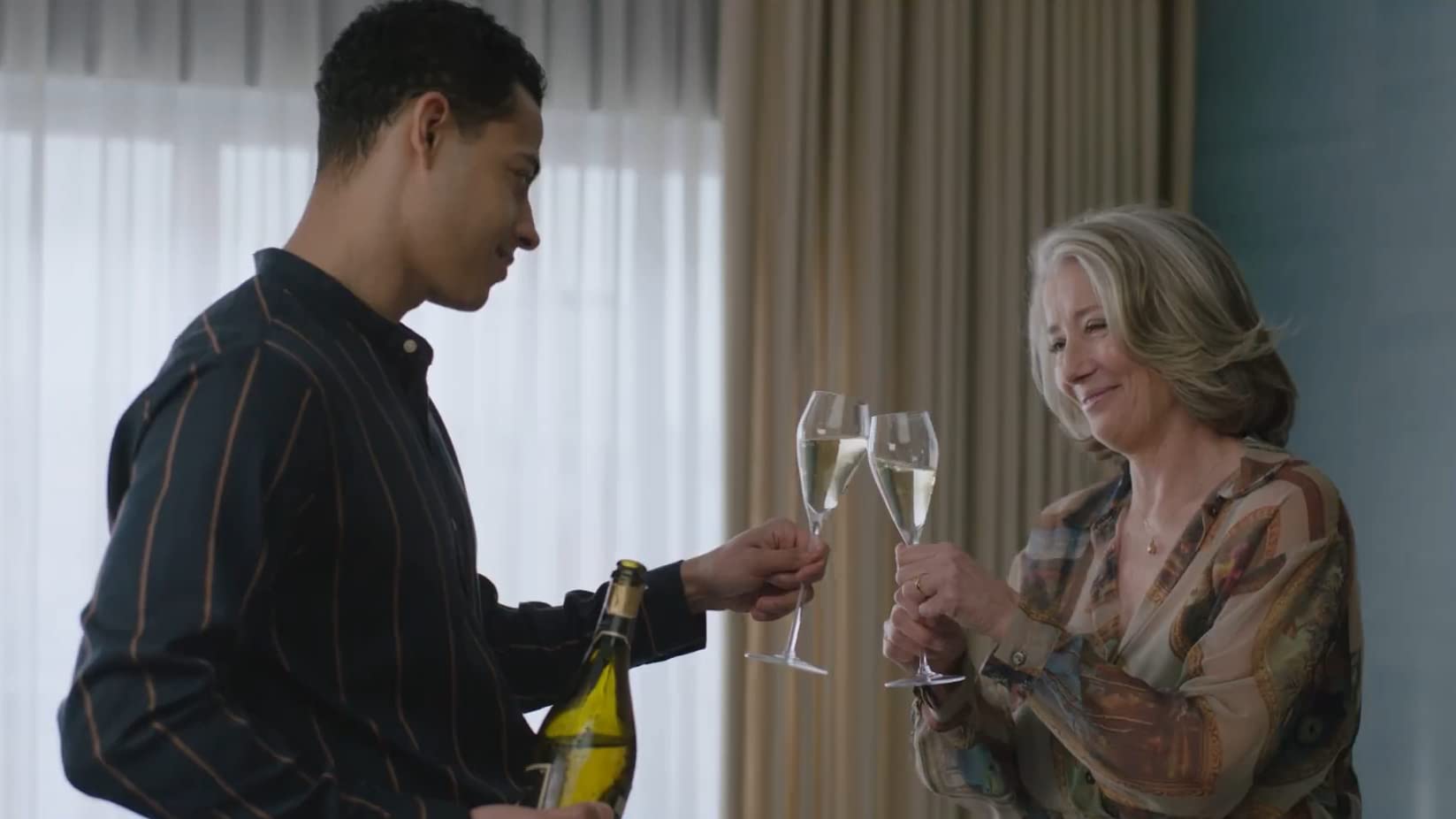
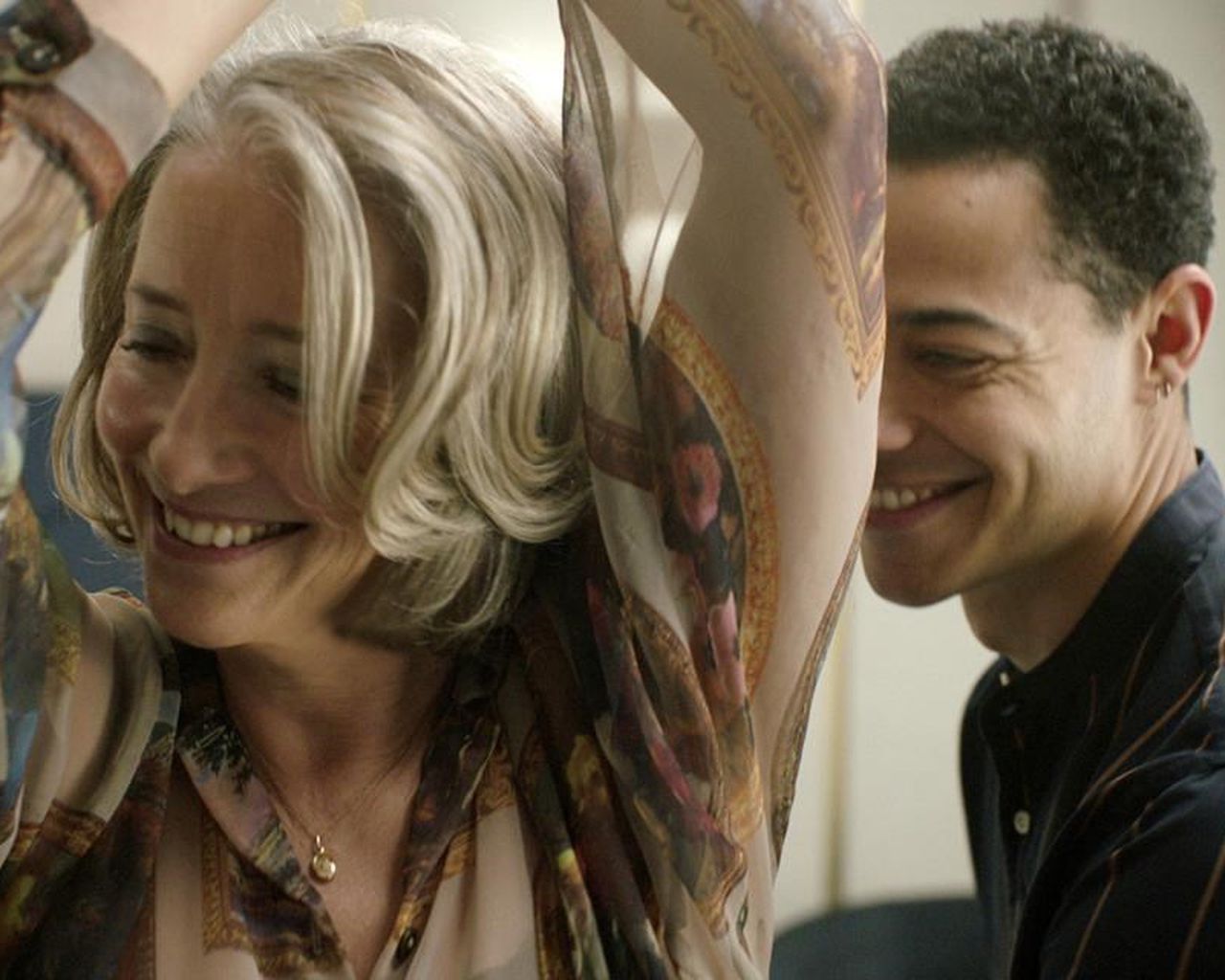
Emma Thompson, of course, falls into the former category. She’s a terrific actor. Here, she’s playing Nancy, a retired widow with a mission: to have an orgasm. A former RE teacher, Nancy has only ever had boring sex with her husband. Now he’s dead, but she’s still alive, and she’s determined not to waste the time she has left. The answer? A sex worker. Enter the titular Leo Grande (Daryl McCormack), purveyor of fantasies at an hourly rate.

But can Nancy let go enough to, well… let herself go?

We find out via a series of encounters, all in the same bland hotel room, although the focus is usually on what happens around the sex – the conversations and revelations that occur as Nancy negotiates the minefield of paid-for physical contact.

Katy Brand’s script is agonisingly funny in places: she nails Nancy’s ‘oh so British’ embarrassment, her tendency to overthink out loud, to chatter her discomfort. Thompson clearly revels in these moments, and – as a character study – the film is a roaring success. It’s also bold in its addressing of an older woman’s sexuality. The tone is set early on, when Leo describes Nigella Lawson as “sexy”. Nancy waits for him to add the obligatory “for her age” but Leo demurs. “She’s empirically sexy,” he says. And, over time, Nancy learns to like her own body too, to stop apologising for her tummy and her saggy boobs, to accept herself the way she is.

McCormack is a relative newcomer, but it seems likely he’s a big career ahead. The camera loves him, and he embodies the role well, slowly revealing the steel behind the soft exterior. “I’m who you want me to be,” says Leo, perfectly fulfilling his contract – but his boundaries are clear, and he’s protective of his ‘real’ self.

There is some attempt to deal with ethical issues, but this feels a little glib. Nancy talks about the essay she used to set her students: ‘Should sex work be legalised?’ She mentions trafficking and violence against female sex workers. Leo tells her her enjoys his work, that he doesn’t want to be painted as a ‘poor little orphan’ to suit someone else’s conscience. They reach an uneasy consensus, agreeing that sex therapy should be available ‘from the council’ (though heaven knows what that would be like). And I know it’s a complex subject, that sex workers often object to being cast as victims, when many of them have agency and choice – and who am I to tell them that they’re wrong – but I don’t think this gives us carte blanche to ignore the exploitation and misery that undeniably exists as well. And Leo is so very clean-cut that the whole thing appears curiously unsexy, so wholesome that it seems to be in denial about the gritty physicality involved. This version of sex work is not so much glamourised as defanged.

So, ‘hmm’ it is. I enjoy watching Leo Grande but I’m unconvinced by it. And if you’re a teacher? Maybe don’t tell your ex-pupils about your sex life. It’s not empowering; it’s just weird.

3 stars

Susan Singfield
Elvis

26/06/22

Cineworld, Edinburgh

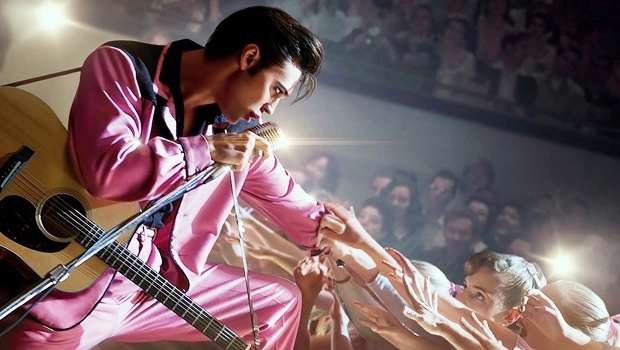
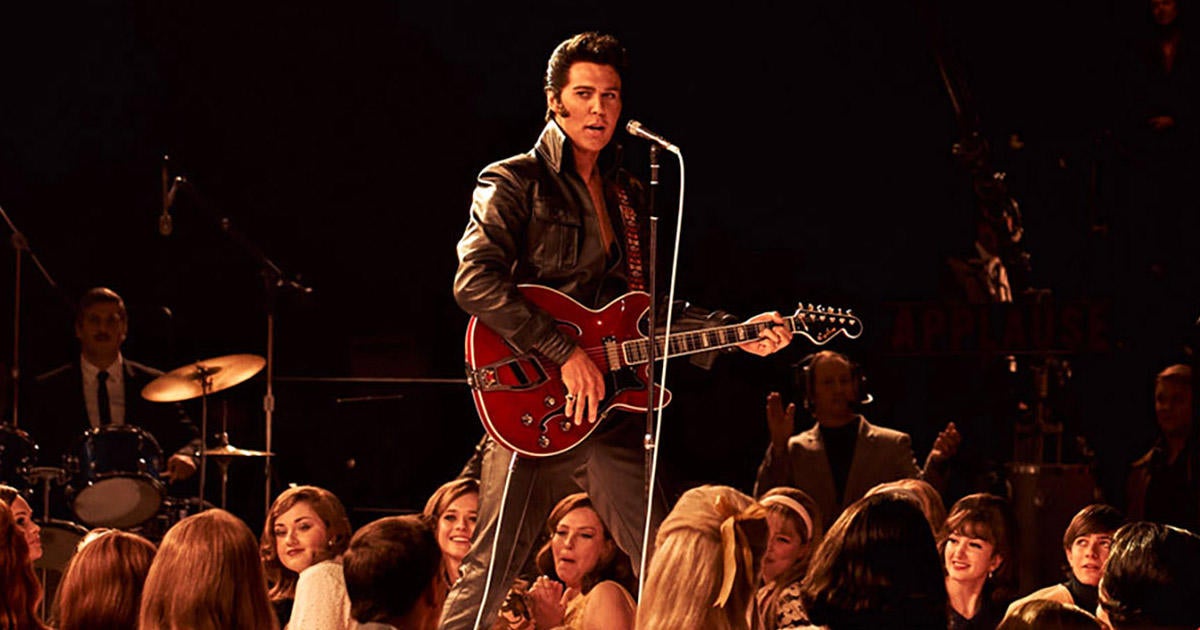
Nobody ever goes to a Baz Luhrmann film expecting subtlety – and indeed, from its opening scene onwards, Elvis is a big, brash, noisy exploration of the late singer’s life and times. It’s also an excoriating account of the Faustian deal he made with his manager, the odious ‘Colonel’ Tom Parker, that would keep Presley effectively shackled to him throughout his career. But make no mistake, the ensuing events provide a thrilling cinematic journey that powers through two hours and thirty-nine minutes at an invigorating gallop, flinging out dazzling visual flourishes and exciting musical routines as it goes. Some reviewers have complained about the film’s lack of ‘authenticity,’ but they’re surely missing the point. This is as much about Elvis’s legend as it is about his life.

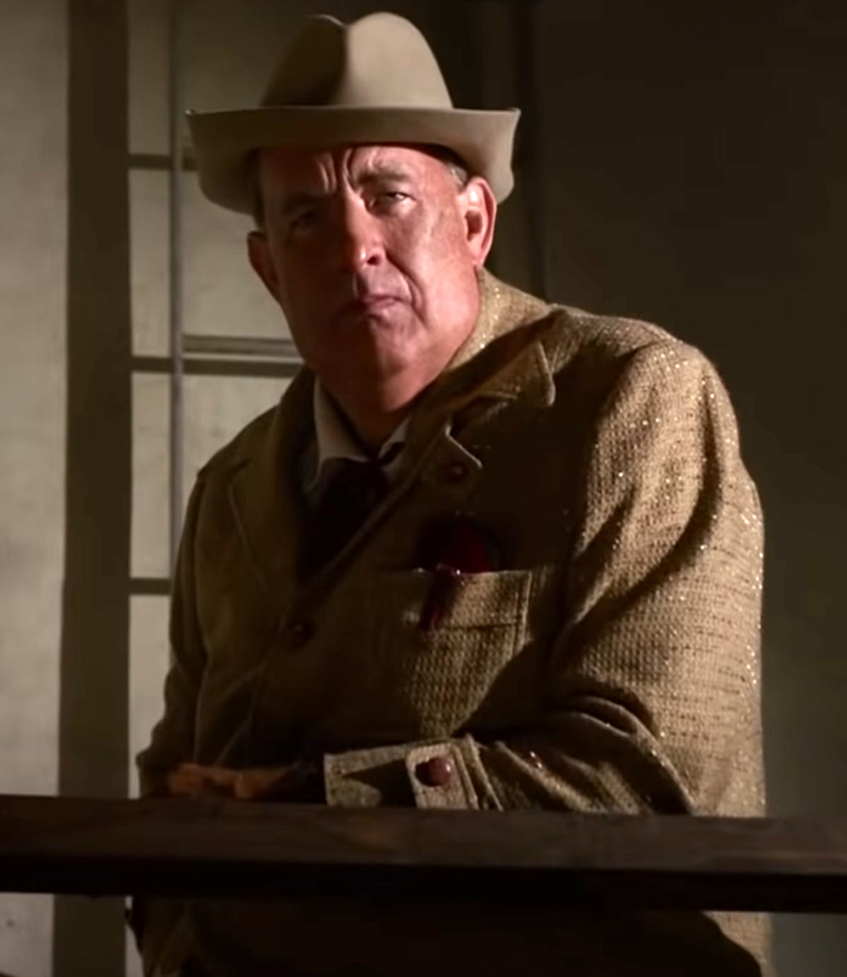
We start in 1997, at the hospital bed of Parker (Tom Hanks, looking very convincingly fleshed out), who assures us that he has played no part in the untimely death of his most famous client. We then flash back in time to see Parker’s first encounter with Presley (Austin Butler) at a Hayride event in 1955, where the young singer’s onstage gyrations drive the local teenage girls into hysterics. Parker, a long established fairground huckster, smells an opportunity to make money – and promptly signs Presley up to a punishing contract.

Soon enough, Presley is selling records by the millions and can move his beloved mother, Gladys (Helen Thompson), and his ineffectual father, Vernon (Richard Roxburgh), into the big house that will become Graceland. Super-stardom beckons but Parker is determined that whatever transpires must happen on his terms – and all that sexy hip swivelling is drawing too much criticism, as is Elvis’s habit of hanging out with black musicians and assimilating their music into his own routines. Parker is all for dialling down the unbridled sexuality that brought Elvis to the public’s attention in the first place and turning him into a ‘family’ entertainer, but Presley is understandably reluctant to lose his edge…

Elvis is built around two outstanding performances. Hanks is wonderfully slimy as the manipulative Colonel Tom, playing his snake-oil charm to the hilt, but it’s Butler who deserves most of the praise, taking on the near impossible task of personifying an icon and succeeding on just about every level. He may not look exactly like Presley, but he somehow manages to nail the man’s persona and this goes way beyond impersonation, so much so that footage of the real Presley can be slipped in toward’s the film’s conclusion without causing a ripple.

I fully expect an Oscar nomination in due course.

With the passage of time, it’s easy to forget just how repressed and racist America was in the 1950s and the cataclysmic effect that Presley’s arrival had on popular culture. This serves as an eloquent reminder, sweeping us up and dropping us headfirst into those exhilarating waters. It becomes an increasingly heartbreaking journey; nevertheless, Luhrmann’s film serves as a powerful tribute to its illustrious subject. I describe few films as ‘unmissable’ but this one definitely qualifies.

4.6 stars

Philip Caveney

The Black Phone

24/06/22

Cineworld, Edinburgh

After stepping away from Marvel’s Dr Strange franchise, director Scott Derrickson turns his attention to something entirely different. The Black Phone is a smaller scale project, filmed during lockdown, and is all the more powerful for its tight focus. Derrickson’s screenplay is based on a short story by Joe Hill. Set in Colorado in the 1970s, the grubby, hardscrabble lifestyle of the community in which the story unfolds is convincingly evoked through Brett Jutkiewicz’s stylised cinematography. Be warned, this is a visceral, uncompromising tale that’s not for the faint-hearted.

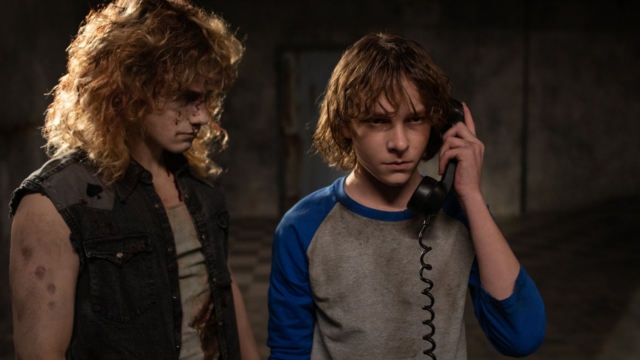
Finney (Mason Thames) is a teenage boy, struggling to come to terms with a high school that’s dominated by punch-happy alpha males, while simultaneously suffering the brutal ministrations of his alcoholic father, Terrence (Jeremy Davis), who has never properly recovered from his wife’s suicide. Finney’s younger sister, Gwen (Madeleine McGraw), also comes in for beatings from Terrence and is prone to having mysterious dreams, which seem to offer clues to the identity of ‘The Grabber,’ a local boogie man who has been kidnapping young boys from the area over a long period.

No trace of his victims has ever been found.

And then, inevitably, Finney himself falls prey to The Grabber (Ethan Hawke) and finds himself locked up in a dingy basement, awaiting an unknown fate. On the wall beside his mattress is the titular phone. It’s out of use, the wire cut through and yet it has an unnerving tendency to ring from time to time – and whenever he answers, Finney finds that the voices on the other end of the line are eerily familiar…

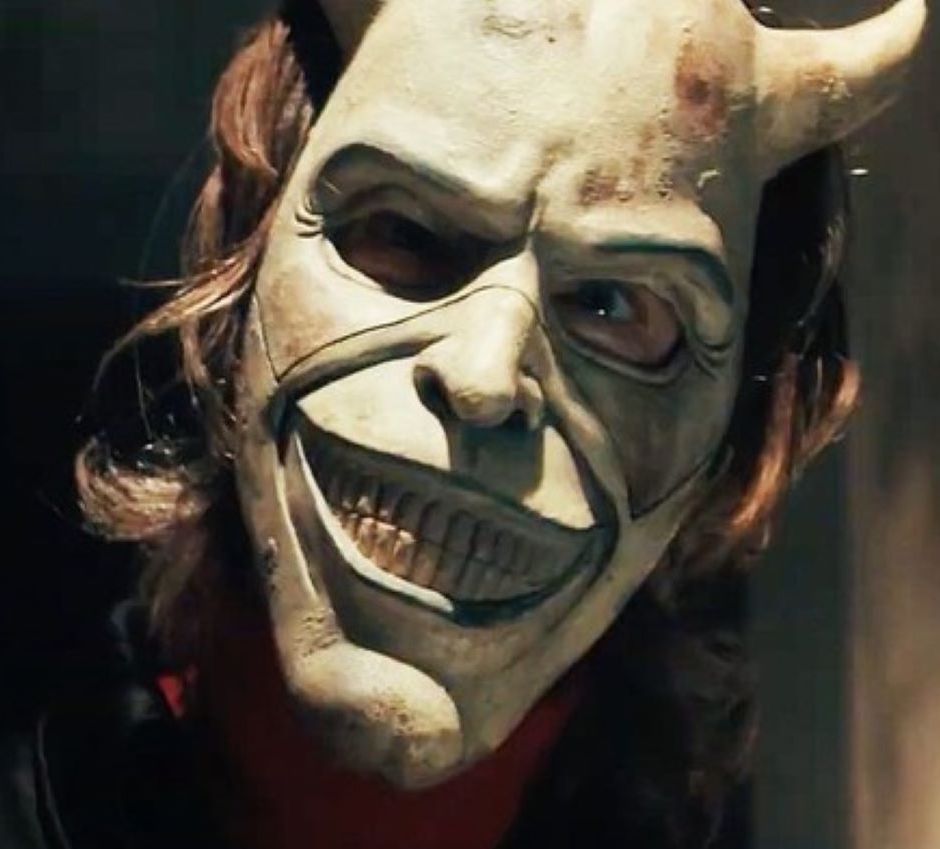
It would be impossible to relate more of the plot without giving away massive spoilers, but suffice to say this is a tale of survival, where Finney must pit his wits against his captor. Derrickson has the good sense to devote plenty of time to character development before the abduction occurs, which means I’m already rooting for Finney and Gwen by the time it happens – and it also helps that the two young leads are so appealing. Hawke submits an uncannily powerful performance as the villain, considering he spends most of the film half-hidden by a series of bizarre face masks. The sense of dread throughout the story is palpable. The jump-cut is a regular narrative device in this kind of film, but there are some here that are so impeccably timed they have me almost out of my seat on a couple of occasions.

The overall atmosphere is enhanced by a kicking 70s soundtrack and I’m particularly impressed by a lengthy sequence based around Pink Floyd’s On the Run – I suspect that Derrickson has been waiting a very long time for the opportunity to deploy it, but for me it’s one of the film’s high points.

This won’t be to everyone’s taste. Those who deplore screen violence will be sorely tested by many of the scenes unflinchingly depicted here, but if nothing else, The Black Phone offers an encouraging escape from the slice-and-dice mundanity that has dominated the horror genre for far too long.

My advice? Buckle in and give it a whirl.

4.2 stars

Philip Caveney

Lightyear

21/06/22

Cineworld, Edinburgh

After the recent disappointment of watching Pixar’s latest releases on the small screen, it’s great to see one back in its natural home – but my delight is somewhat dulled by the fact that this is a prequel to their super-successful Toy Story franchise. What’s more, what’s happened to the practice of showing a new short film before every feature? I hope that returns.

The film begins with a title card reminding us that, in the original story, Buzz Lightyear was an action-figure inspired by a movie, and we are about to watch that movie.

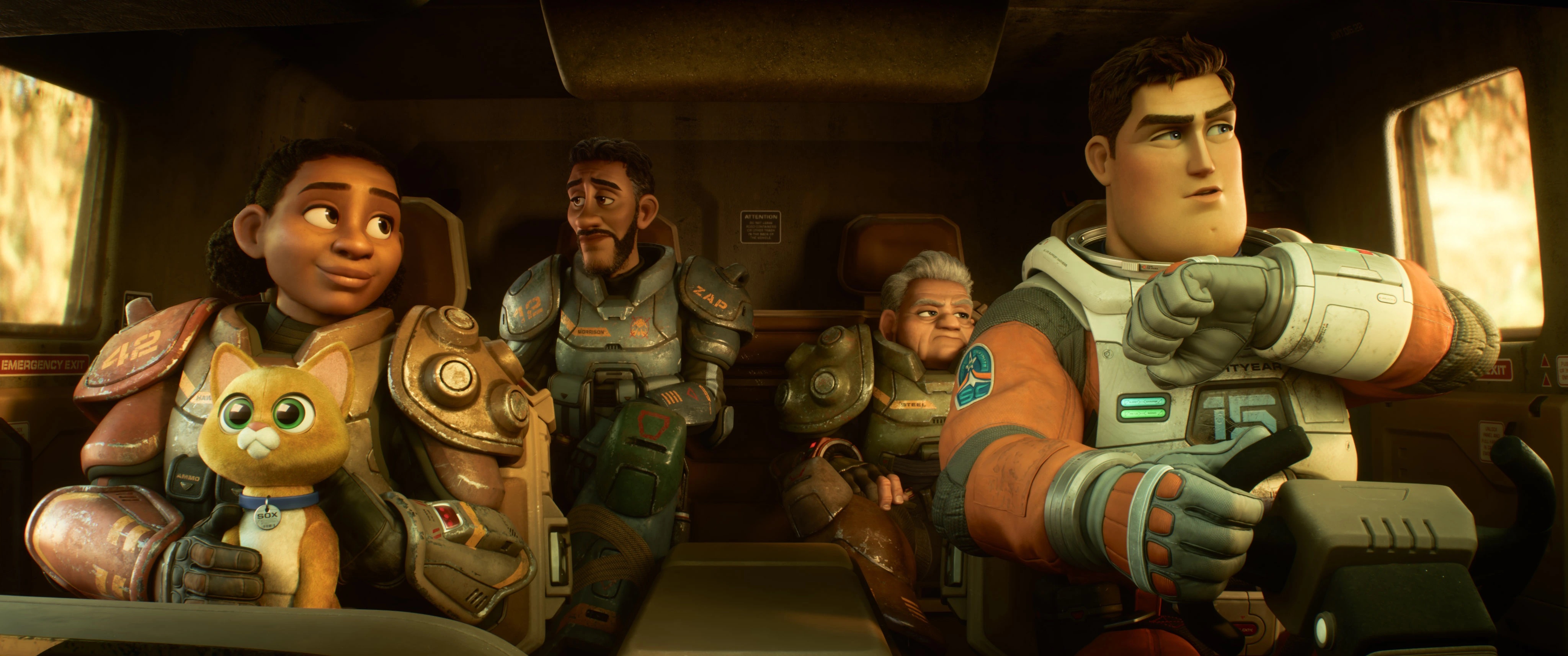
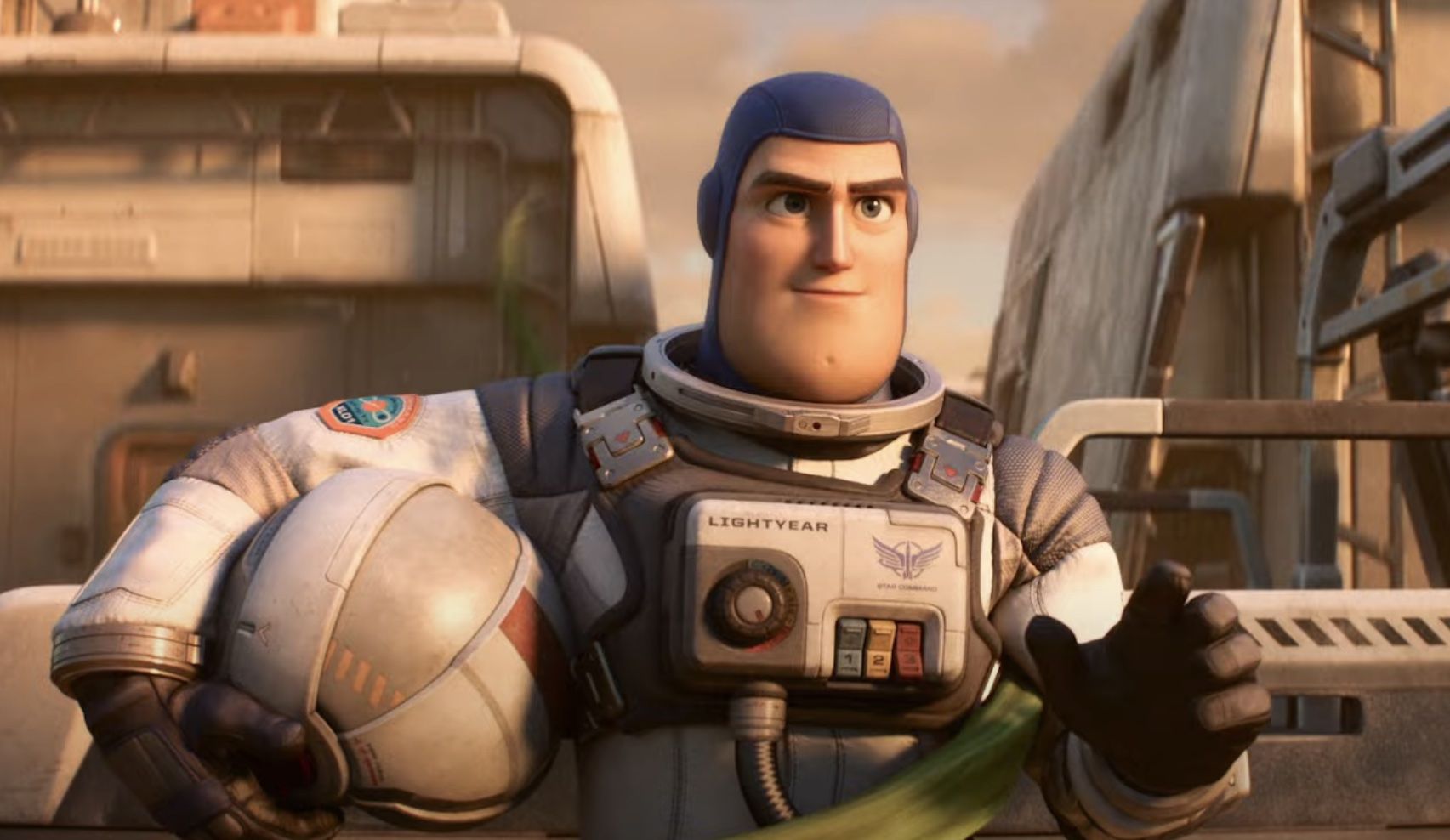
Here, Buzz (voiced by Chris Evans, replacing Tim Allen for no explicable reason) is a Space Ranger in Star Command, who, when we first encounter him, is exploring habitable planet T’kani Prime with his commander, Alisha Hawthorne (Uzo Aduba) – but his miscalculation while trying to escape the hostile life-forms that live there leaves him marooned, along with the huge crew aboard his ship. The only possible method of escape requires Buzz to fly at hyperspeed, something he repeatedly tries to do, but each trip he makes means that, though he remains the same age, everybody else ages by years.

The film’s early stages are expertly piloted, alternating suspenseful skirmishes and cliffhangers with moments of real poignancy and, needless to say, the animation throughout is sumptuous. As ever there are some wonderful characterisations here. ‘Empathy feline robot’ Sox (Peter Sohn) is a particular delight, and the fact that Alisha is gay and that she and her partner have a child is so perfectly handled, I start to think that we’re on a perfect trajectory for another Pixar triumph.

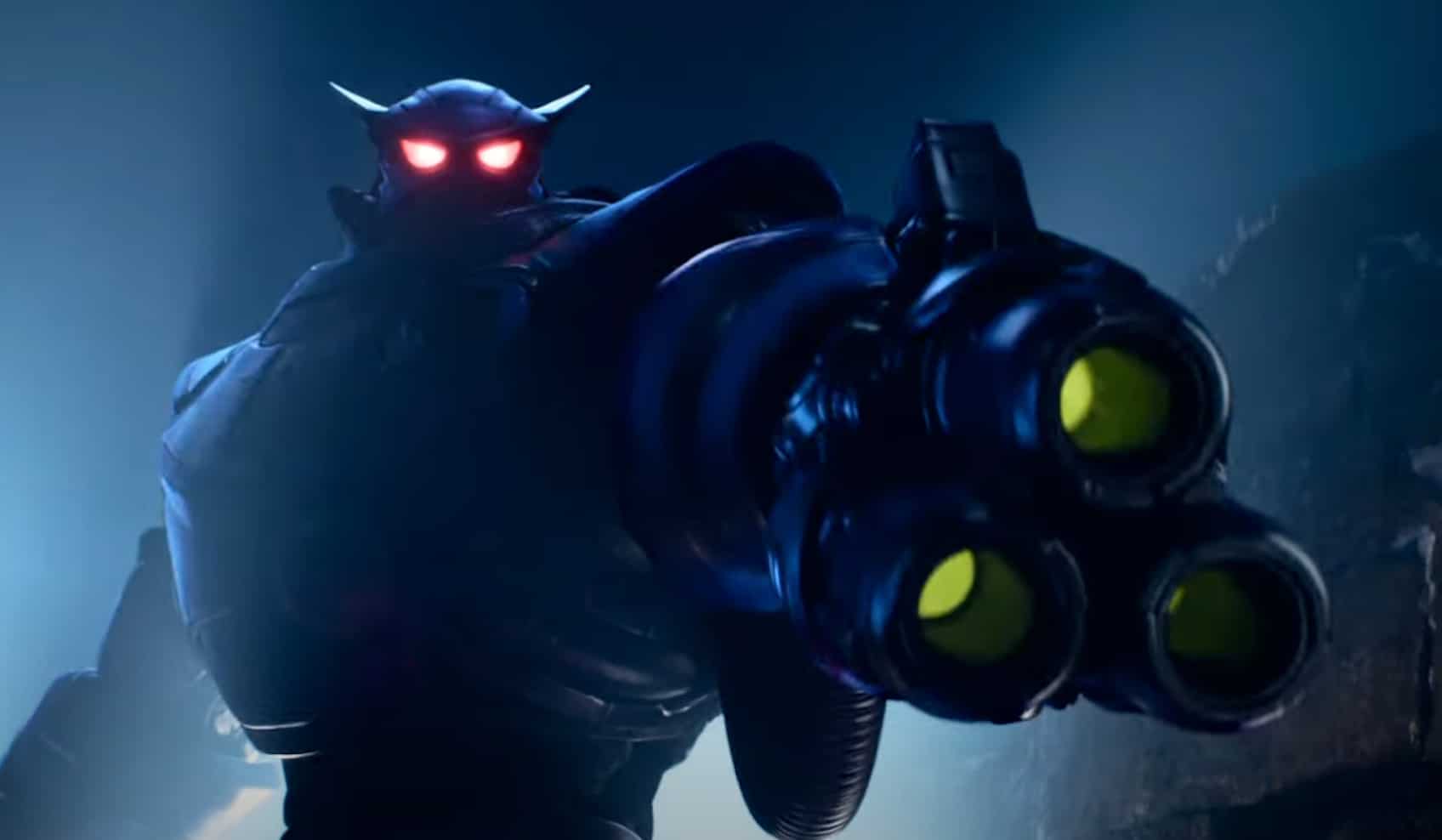
But around the halfway stage, a mysterious villain called The Emporer Zurg (James Brolin) arrives on T’kani with battalions of Zyclops robots under his command, while Buzz finds himself reluctantly teaming up with Alisha’s daughter, Izzy (Keke Palmer). Suddenly everything starts to feel much more generic and, it must be said, far too complicated for its own good. If I struggle with the labyrinthine twists of the timey-wimey adventures that ensue, God only knows what the battalions of school kids occupying the front row seats make of them.

There’s an interesting reveal towards the film’s conclusion but, by this time, too much impetus has been lost to save the project. This is a shame, because that first half demonstrates that the team at Pixar can make the most inauspicious vehicle fly, even if – as in this case – they can’t make it stay the distance.

3.4 stars

Philip Caveney

Fresh

17/06/22

Disney+

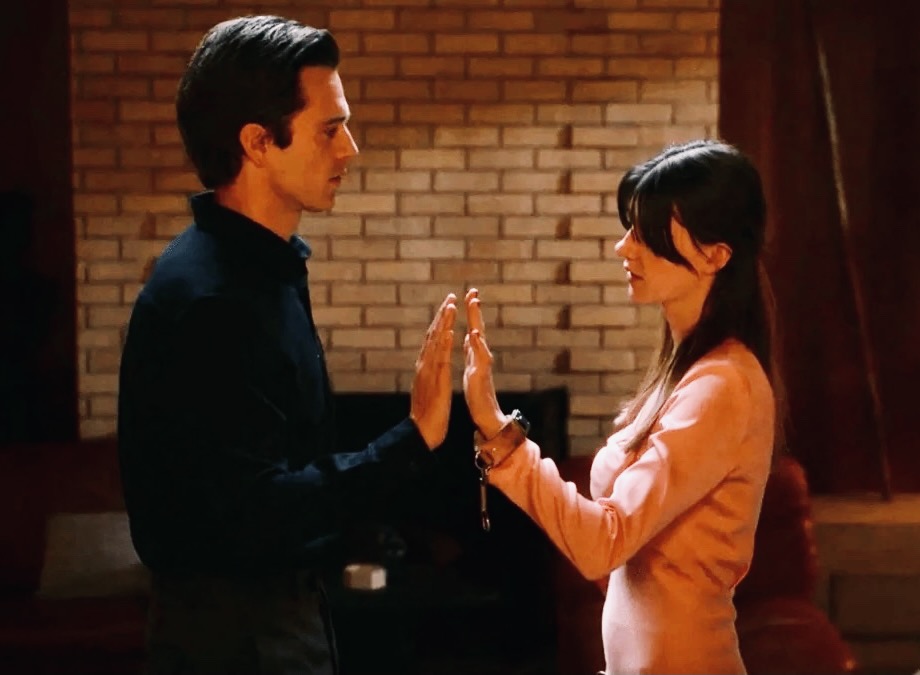
I have high hopes of this comedy-horror, where the feminist sub-text is right there on the surface. It promises to be a ‘fresh’ take on a well-worn trope, written and directed by two women (Lauryn Kahn and Mimi Cave respectively). So imagine my disappointment when I find myself watching an all-too familiar extended sequence: a beautiful young woman chained up in a cruel madman’s basement, crying and begging for her freedom. Surely I can’t be alone in thinking that it’s not enough to subvert the ending (spoiler: it’s not a man who saves the day)? That, actually, you can’t make a valid point about the exploitation of women by exploiting them further? Or that a film that lingers unironically on images of women’s suffering loses its claim to be a fucking comedy?

It starts off promisingly. Okay, so it’s not exactly subtle. Noa (Daisy Edgar-Jones) is single and sick of the dating scene. We see her out with a cartoonish man, all wafting scarf and pronouncements about how women just aren’t as feminine as they used to be. It’s mildly amusing: recognisably awful, but also (whisper) a bit hack. Later, she texts another guy, who immediately sends her a dick pic. Maybe love just isn’t for her, she tells her best pal, Mollie (Jojo T Gibbs). But then she meets Steve (Sebastian Stan), who seems too good to be true. He’s sweet, polite, engaging, kind.

And yeah, too good to be true. Because Steve is a cannibal, who butchers women. It’s an obvious metaphor for the romance meat market – and, sadly, the film’s charm wears off as quickly as Steve’s. The lengthy pre-credit sequence hints at something gentle and quirky; what follows is almost gore-by-numbers, albeit with some gorgeous cinematography (by Pawel Pogorzelski) and a banging 80s soundtrack.

Ach, I don’t know. It makes me weary. I hated rape-revenge movies The Girl With the Dragon Tattoo and Elle for the same reason: I don’t want to watch women being victimised, and then emerging, brutalised, to re-enact the same violence against men. That’s not redemption; it’s having your steak and eating it: a tone-deaf definition of a ‘strong woman’ – and we shouldn’t let the film-makers off the hook. Emerald Fennell nails feminist vengeance in Promising Young Woman, proving it can be done.

That’s not to say there’s nothing good about this film. The actors are all impressive, although Gibbs is criminally under-used as Mollie (of course she is, because Mollie is black and gay, only ever destined for a sidekick role alongside the straight, white heroine). I like the device of setting up Paul (Dayo Okeniyi) as a potential hero, and then deflating that hope. Stan is well-cast as the killer, plausibly likeable, so that his success in charming Noa seems credible enough. The initial meat-packing sequences are wonderfully stylised, hinting at the better movie this could have been.

In many ways, the whole thing works better as an analogy for farming, where animals live in captivity, and where ‘kindness’ only extends as far as keeping them warm and fed so that they’re tender and disease-free when we come to eat them. That’s not the intended message, but it’s the one I’m taking home.

This movie just doesn’t work for me: the ‘comedy’ never raises more than a small smile, and the ‘horror’ is nasty rather than scary. Sadly, in the end, Fresh is more than a little bit stale.

2.2 stars

Susan Singfield
The Midwich Cuckoos

17/06/22

Now TV

I first encountered the novels of John Wyndham while still at school. I started, like many others, with The Day of the Triffids and remember being blown away by the sheer inventiveness of it. Wyndham’s ‘home counties disaster’ genre was unlike anything I’d ever read before. And then I picked up a copy of The Midwich Cuckoos, which again had an inspired idea at its heart and was deliciously creepy.

It’s not surprising that the movies soon got in on the action. Cuckoos was first filmed in 1960 as Village of the Damned, only two years after the novel’s release. It’s a bold move to attempt to bring Wyndham’s story up to date, but this seven part series from Sky Max, created and written by David Farr, does a pretty good job of it.

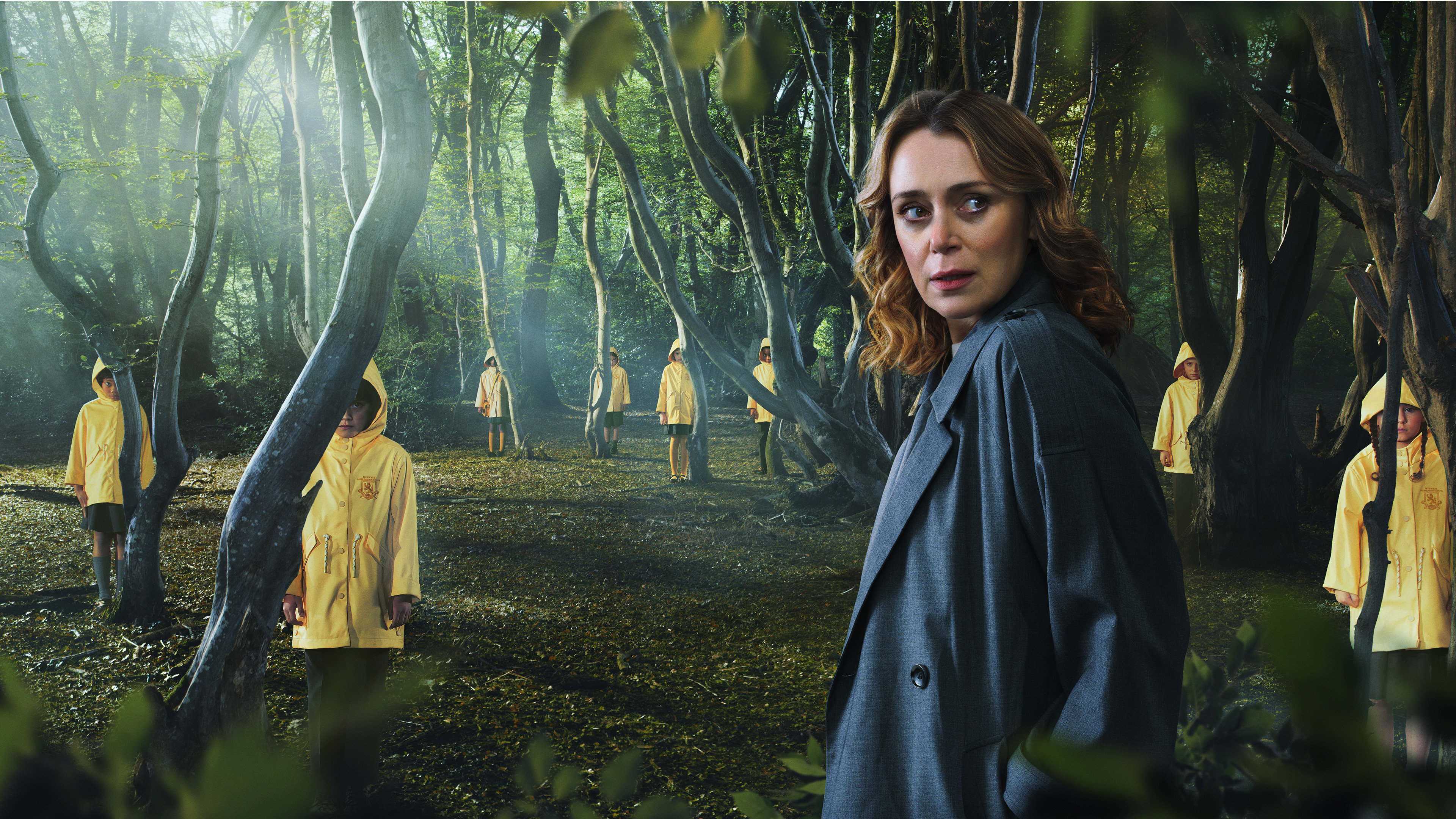
Keely Hawes stars as psychologist Dr Susannah Zellaby, struggling to connect with her daughter, Cassie (Synnove Karlsen), who has a history of poor mental health and drug abuse. On a rare trip into London, Susannah is horrified to hear of a mystifying occurrence in her home village of Midwich. After a sudden, inexplicable loss of power, everybody in the village falls unconscious at the same moment. When they wake, twenty-four hours later, it’s to the bizarre discovery that every female resident – including Cassie – has fallen pregnant. Susannah finds herself increasingly drawn into working with the initially bewildered new mothers.

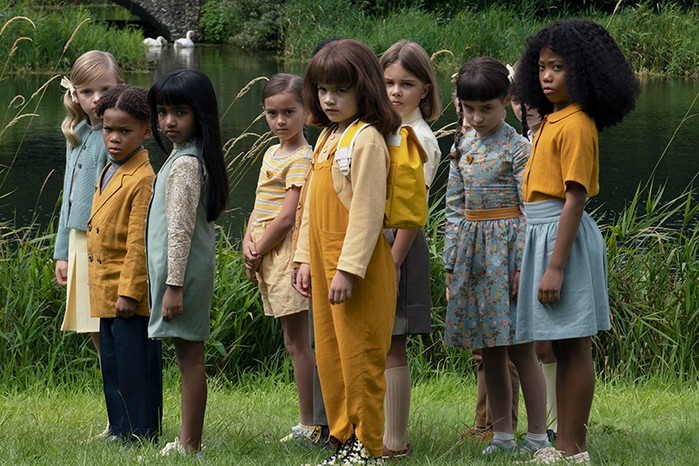
The government quickly moves in to keep the event a closely guarded secret. As time moves on, the babies are born and it’s soon becomes apparent that these are no ordinary children. They grow faster than they ought to, they demonstrate learning abilities beyond their years and, it transpires, they have a collective ‘hive’ consciousness. If something happens to one of them, the rest know about it instantly. And they are very, VERY protective of each other.

The Midwich depicted here is entirely believable: a middle-class, middle-income suburb, populated by characters who are fleshed out beyond the usual stereotypes. The production team have wisely moved away from the blonde-haired Village of the Damned kids and created something entirely different – and the creepiness of the source novel is effectively conveyed, the young actors exuding their sinister presence. Resident police officer Paul Haynes (Max Beesley), who ironically lost his pregnant wife during the blackout, has the unenviable task of attempting to make sense of it all, while also establishing a relationship with his wife’s sister, Jodie (Lara Rossi), and the strange boy she has given birth to.

Plaudits should go to the four cinematographers who filmed the lush, sun-drenched locations, which contrast effectively with the eerie sci-fi elements, making them all the more powerful. The story builds effectively over seven episodes to a suspenseful – and quite cold-blooded – climax. I’m slightly perturbed by the fact that this is referred to as ‘Season 1.’ I seriously doubt there’s much more to say about this story, but of course, Village of the Damned had its own (inferior) sequel back in the day and perhaps it’s inevitable that more will follow.

For now, this makes for the perfect binge-watch.

4.4 stars

Philip Caveney