Wham!

13/07/23

Netflix

This will surprise a lot of people but Wham! were not really one of the bands I followed back in their heyday. Oh, I was aware of them – indeed, it was hard to miss them in the four years of the 1980s that marked their meteoric rise to stardom and their unexpected demise.

This account, cleverly assembled from a mixture of archive footage, Top of the Pops appearances and the many scrapbooks collated by Andrew Ridgeley’s mum, has been herded into shape by director Chris Smith and the result makes for entertaining – and occasionally thought-provoking – viewing.

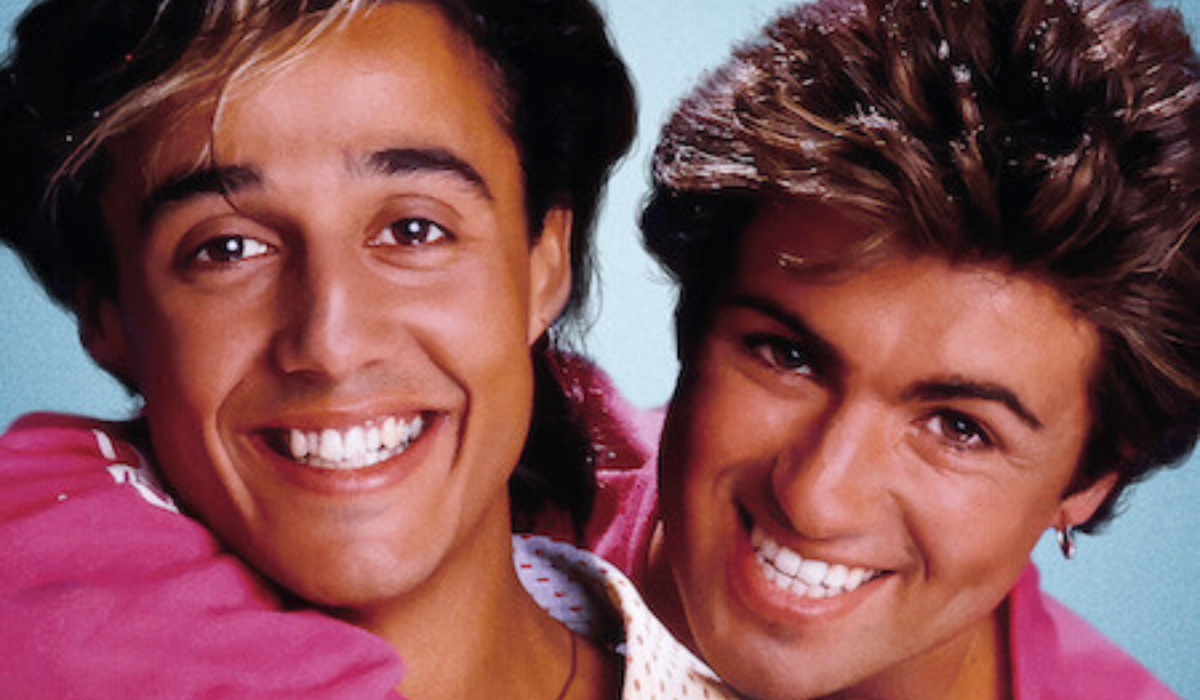
This is the story of two young schoolkids, the aforementioned Andrew and his best pal Georgios Kyriacos Panayioto (a name that would soon be changed to George Michael). The boys got into all the usual childhood scrapes but also developed a determination to be pop stars, an ambition led by Andrew and ably supported by George. Together they wrote some songs. We get to hear the originals, recorded on cassette tapes and, while they’re rough and ready, there’s already the spark of a hummable melody in there. Now all they need is a record company…

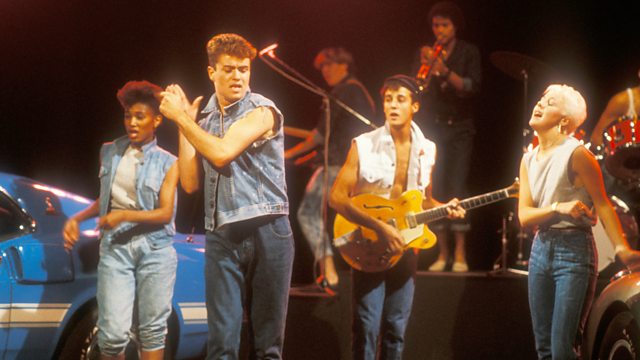
When Wham Rap! first hit the scene in 1982, it didn’t exactly set the charts alight – but the boys’ determination knew no bounds and it wasn’t long before the duo were toothily gracing every teen pop magazine in existence. They also drafted in backing singers Dee C. Lee (later replaced by Pepsi) and Shirley to broaden their appeal and, together, the four of them made a series of exhausting public appearances at clubs up and down the UK. And, as each of those early songs was given a thorough reworking and some decent production values, the hits began to flow like honey.

But as we’re watching, something quickly becomes apparent. One of the duo has a talent that easily outpaces the other. A talent for songwriting, performing and producing. And there can really only be one logical conclusion…

What connects most powerfully in this true account of male friendship, is that Andrew has to be one of the most benign and forgiving human beings in history, willing to grant his best friend artistic freedom, even if it means turning his back on the megastardom he’s enjoying himself. There are plenty of people willing to criticise George for some of the things that happened to him after he went solo, but Andrew isn’t one of them. Having led his friend into the limelight, he doesn’t hesitate to set him free. We could all do with learning that lesson.

Wham! wisely concerns itself with the years 1982 to 1986, finishing up with the band’s massive farewell tour. There were plenty of other successes awaiting George Michael further down the line – and some much darker times too – but this film doesn’t go there. What’s on the screen is cheering, celebratory and occasionally heartwarming stuff, which – of course – only makes the ensuing tragedy all the more heartbreaking. It surprises me to admit that this documentary makes me appreciate the band more than I ever did when they were at the height of their success.

You don’t have to be a Wham! fan to enjoy this extraordinary true story but, that said, if you happen to be one anyway, then it’s win-win.

4 stars

Philip Caveney

My Imaginary Country

11/07/23

The Cameo, Edinburgh

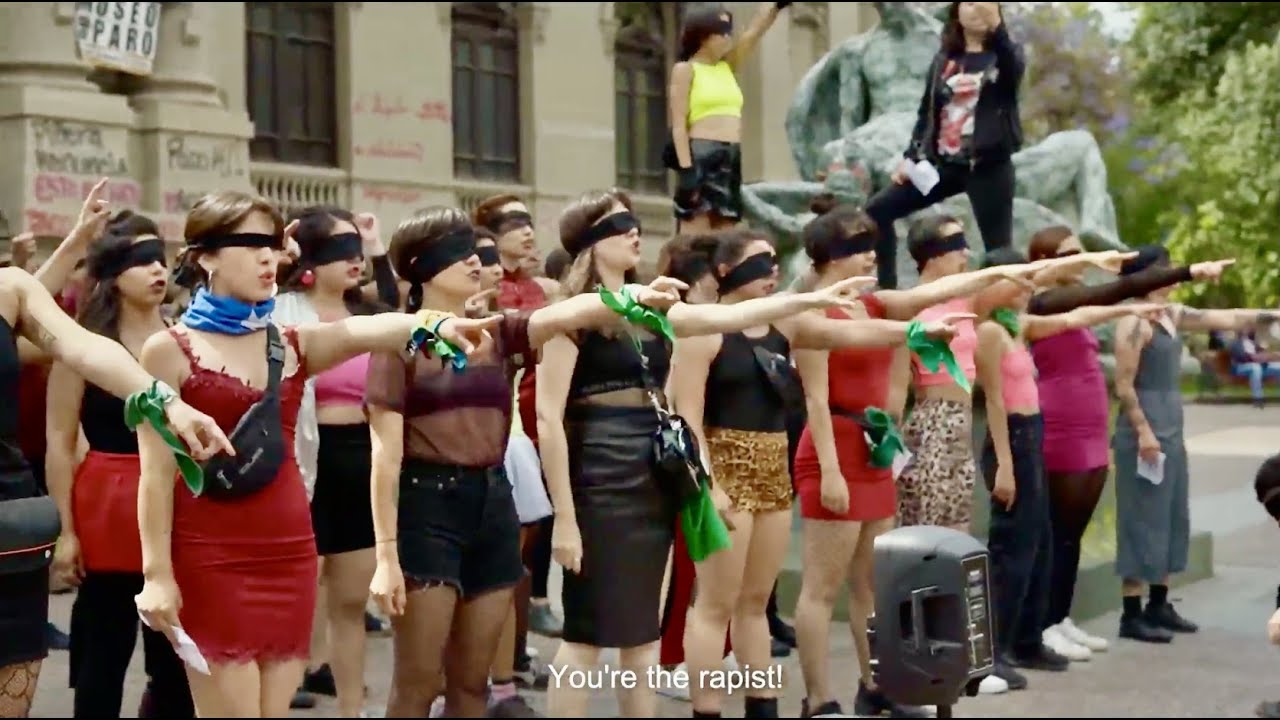
The young people at the heart of this documentary are genuinely awe-inspiring. Prior to watching this, I’ll admit that I was almost entirely ignorant of the situation in Chile, and certainly unaware of what this impressive grass-roots protest had achieved.

Sparked by – of all things – an increase in the price of subway tickets, the ensuing estallido soon expanded into a general call for equality and justice, a demand for a new way of living. Hundreds of thousands of people – primarily young women – stood up for the cause, persisting in the face of tear gas and military oppression. And they won, eventually forcing a change of government.

Patricio Guzmán is a seasoned documentary maker, and it shows. My Imaginary Country offers us a tentative celebration, combining a justifiable sense of pride and triumph with a note of caution about what could still go wrong. After all, Chileans are all too aware that their hard-won democracy can be plucked from them in an instant.

Nonetheless, the footage captured here is mesmerising. Drones reveal an apparently endless sea of people, the scope of their demands seemingly as inexhaustible as their number. They don’t confine themselves to a single issue. Instead, they want it all: increased pensions for the old, equal rights for LGBTQ+, better job prospects, free education, decent health care for all. In short, they want society to function properly, the way it’s meant to. They want politicians to live up to their promises.

Governments around the world should take note. Today’s youth knows how to mobilise; they know how to take matters into their own capable hands. And they’re tired of being ignored.

4 stars

Susan Singfield

Mission Impossible: Dead Reckoning Part One

10/07/23

Cineworld, Edinburgh

Most long-running movie franchises start strong and steadily run out of steam. The Mission Impossible series, however, seems to be running in reverse. It kicked off way back in 1996 (inspired by Bruce Gellar’s groundbreaking 1960s TV series). Even with seasoned director Brian De Palma at the helm, the results were sort of so-so. Each successive film tried a new director with similar results and it wasn’t until Christopher McQuarrie came aboard for 2015’s Rogue Nation that the gears finally began to mesh. Indeed, 2018’s Fallout was an adrenalin-fuelled, five-star smash and I really didn’t see how McQuarrie and everybody’s favourite Sandi Toksvig-lookalike, Tom Cruise, could ever hope to reach such stratospheric heights again.

My doubts are reinforced when it’s revealed that Dead Reckoning is only Part One of a story. While I understand that films continually strive for ‘bigger’, if a tale cannot be fully encapsulated within the confines of a 163 minute running-time, then surely something is amiss?

But I’m happy to report that I’m wrong on this score. The latest instalment might not be the perfectly-crafted beast that was its predecessor, but it nonetheless runs a pretty close second.

This time around, the antagonist is not a person so much as a thing: an AI creation known as The Entity. (Brilliant timing on this, I have to say, with everyone and his dog looking at ChatGPT and predicting imminent doom.) When we first witness The Entity’s powers, it is taking out a Soviet nuclear submarine and pushing the world to the brink of destruction, so it’s pretty clear that Ethan Hunt and his merry crew are going to have their work cut out to bring this mission to a satisfactory conclusion.

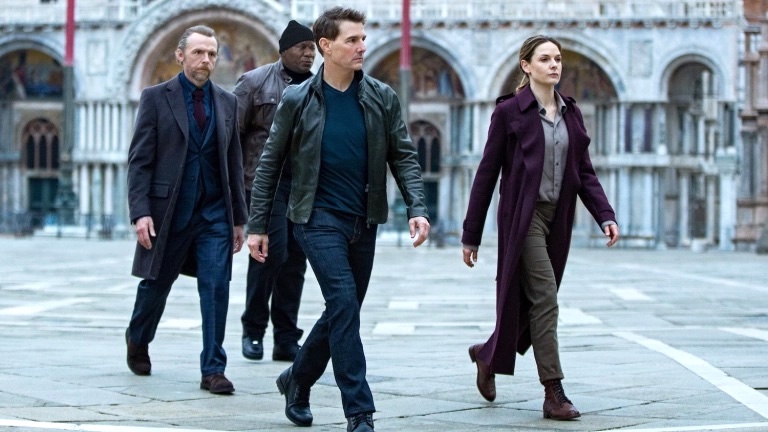
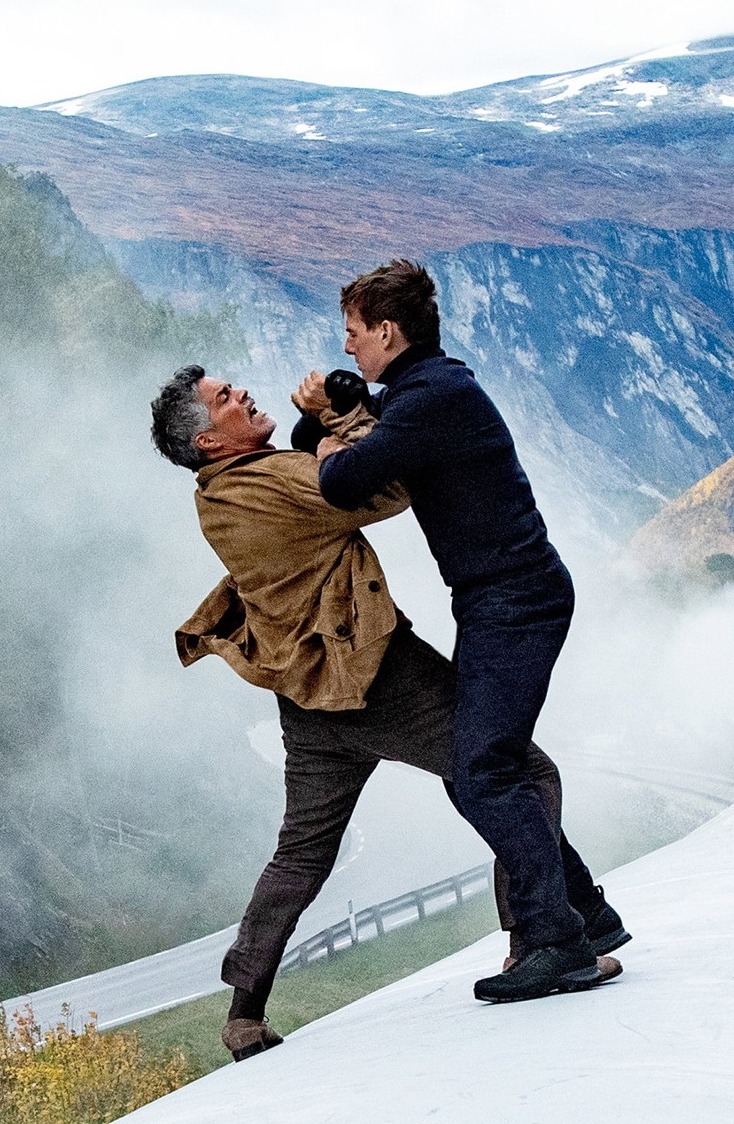
Said merry crew includes old hands, Luther (Ving James), Benji (Simon Pegg) and Ilsa (Rebecca Ferguson), and there’s also new recruit, Grace (Hayley Atwell), a talented pickpocket but – as it transpires – a pretty average driver. The boo-hiss brigade features the return of The White Witch (Vanessa Kirby), who is as smirkingly horrible as ever. The McGuffin this time around is a pair of interlocking keys, which have somehow become separated from each other. When combined, they will grant the possessor access to the sunken submarine where The Entity is currently housed. But the AI has a human ambassador called Gabriel (Esai Morales), who is accompanied everywhere by his enigmatic hit-woman, Paris (Pom Klementieff, without her Guardians of the Galaxy antennae). This formidable duo will go to any lengths to thwart Ethan.

Meanwhile, Hunt’s employer, Kittridge (Henry Czerny), continues to be as fiendish and unpredictable as the villains he’s supposedly trying to defeat. Which side is he on, anyway? I’m still not entirely sure.

As ever, the extremely complex plot is mostly an excuse to link together a whole smorgasbord of action set-pieces, which somehow manage to feel fresh and innovative, no matter how mundane they sound when listed: car chases and countdowns, punch-ups and explosions, mix-ups and murders – and, of course, Tom Cruise running across a variety of landscapes like Mo Farrah on poppers. All the usual suspects are here for your delectation and, it must be said, they are brilliantly executed. A final confrontation aboard an out-of-control Orient Express racks up the tension to such an unbearable degree, I’m virtually chewing my own fingers off.

And then…. Lalo Schifrin’s immortal theme music kicks in, the credits roll and, against all expectations, I find I’m still up for another instalment. Honestly, I can’t wait. Except I’ll have to. Dead Reckoning Part Two is currently scheduled for June 2024 and I’ll be one of the first in the queue – assuming AI hasn’t taken over mankind by then and turned us all into human kitty litter.

Just saying.

4.8 stars

Philip Caveney

Smoking Causes Coughing (Fumer Fait Tousser)

09/07/23

Cineworld, Edinburgh

French writer/director/cinematographer Quentin Dupieux is a singular filmmaker, with an offbeat style that defies definition. This latest offering, for example, is about a superhero task force – except it isn’t, because they’re never called upon to perform any actual heroics and, in any case, it’s hard to know what their particular skillset (harnessing the negative energy from cigarettes, obviously) could achieve. Apart from making people cough.

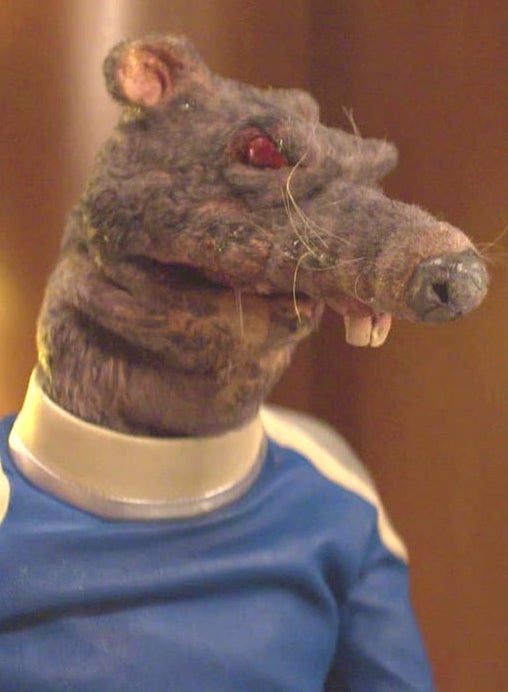
But if saving the world isn’t on the agenda, Chef Didier – a revolting, slimy-mouthed puppet-rat, voiced by Alain Chabat – still has plans for his Tobacco Force (Gilles Lellouche, Vincent Lacoste, Anaïs Demoustier, Jean-Pascal Zadi and Oulaya Amamra). Noticing a little friction in the group, he decides that what they need is some team-building. Ignoring their protests, he packs them off to a country retreat, where they are ordered to focus on re-establishing their bond. This complex set-up is, in fact, just a framing device for what is essentially a whimsical portmanteau movie, as our heroes try to impress each other by telling fantastical tales around a campfire. But even this is far from straightforward, as a wandering child, Josette (Thémis Terrier-Thiebaux), and – ahem – a grilled fish (voiced by Franck Lascombes) also get in on the act…

The bleached-out colour palette, shonky robots and scruffy puppets all add to the sense of unreality that pervades this film. It looks suspiciously like something from 70s children’s TV, and yet it’s oddly polished too, as if it’s been sprinkled with magic movie dust.

Yep – it’s as weird and wonderful as it sounds. In an era of Marvel-saturation and double-digit sequels, it’s refreshing to see an oddity like this on offer in a mainstream cinema. Dupieux lets his imagination roam free and – although the inside of his head must be a strange place indeed – it makes for a very entertaining output. Highlights here include the gross-but-sweet story of a man caught in a wood-chipper, and the superheroes’ matter-of-fact acceptance that their accommodation boasts ‘a supermarket fridge’, complete with shopkeeper. Of course it does.

Don’t ask. Just do yourself a favour and book a ticket to see this in a cinema near you.

4 stars

Susan Singfield

Joy Ride

08/07/23

Cineworld, Edinburgh

Viewed via an Unlimited ‘Secret Screening,’ Joy Ride is a film we probably wouldn’t bother to book in normal circumstances – but I’m all for stepping out of my comfort zone now and then. This is a rumbustious comedy, a sort of Asian-American Bridesmaids.

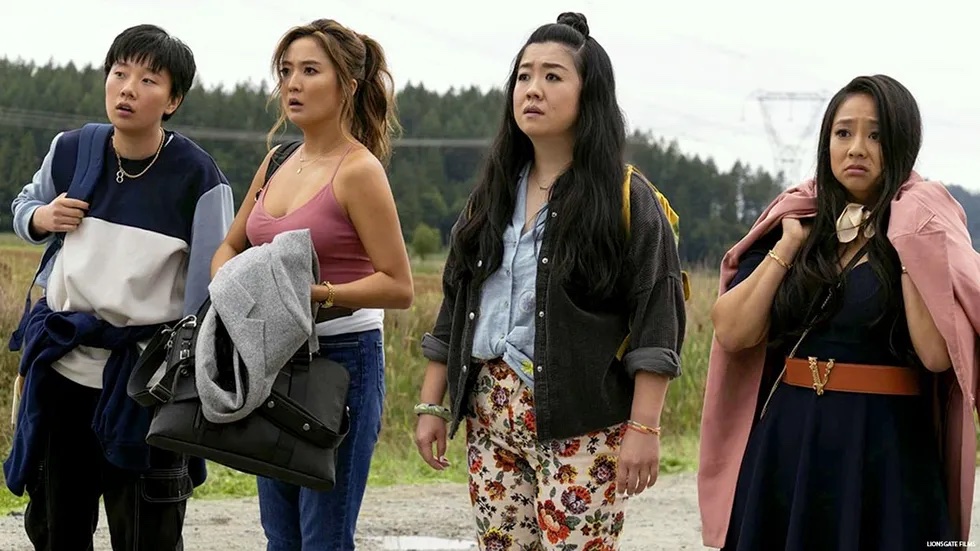
Audrey (Ashley Park) is working in a Seattle law firm and jumps at the chance of going to China to oversee an important business deal. She has no memories of her birthplace because she was adopted as a baby by a white American couple, but she’s still besties with Lolo (Sherry Cola), her friend and protector ever since her arrival in the USA. Lolo is an artist, who specialises in objects inspired by human genitalia – something that writer/director Adele Lim seems to think is hilarious, and something on which we’ll have to agree to differ.

Would it be a good idea for Audrey to take Lolo to China with her? Clearly it wouldn’t, but of course she does anyway. Along for the ride comes Lolo’s hapless pal, ‘Deadeye’ (Sabrina Wu), a non-binary computer nerd obsessed with K Pop. Deadeye is a strangely adorable character and one of the best things about this patchy tale.

Once in Beijing, the trio meet up with mutual friend, Kat (Stephanie Hsu), an actor currently filming a popular television series, with a Hollywood deal in the pipeline. Kat and Lolo have an adversarial relationship, which is intensified when Kat introduces her hunky fiancee, Clarence (Desmond Chiam), a devout Christian who has no knowledge of Kat’s sexually active past, nor of the fact that she sports a memorable tattoo in an intimate place.

When Audrey meets the Chinese businessman with whom she needs to broker a deal, he’s clearly unimpressed when she admits to knowing nothing of her origins. When Lolo suggests it might be a good idea for Audrey to reconnect with her birth mother, in order to save the deal, the four friends promptly set off on an odyssey to the place where Audrey was born…

On paper, it sounds like a complicated scenario, but essentially, it’s an excuse for a breathless romp that meanders through a variety of locations, occasionally managing to be genuinely funny. More often than not, however, it confuses the lead characters’ insatiable appetites for sex and cocaine with humour. You could argue that there have been lots of films in which male characters follow similar trajectories, but if I’m honest, I don’t care much for them either. I’d also be more impressed if Joy Ride‘s ultimate message wasn’t one of those fridge magnet statements about friendship and forgiveness. And the problem is, you can see it coming from miles away.

The best bits here are the observations about different cultures, the way that a person’s upbringing influences the decisions they make throughout life. Trying to find a train carriage, for instance, Audrey shies away from sharing with Chinese people and instead assumes the lone white female on the train is more trustworthy. Big mistake.

Ultimately, Joy Ride delivers pretty much what it says in the title: a silly, frenetic chase through a series of unlikely situations, sometimes hitting the jackpot, but mostly missing by miles. A potentially funny sequence where the foursome try to impersonate a K Pop band (in order to get through an airport checkout without passports) is full of promise, but is squandered when they can only manage to deliver a truly forgettable few lines. Still, I’m hardly in the demographic for this. If Hsu’s recent success in Everything Everywhere All at Once is anything to go by, this could do serious business.

2.9 stars

Philip Caveney

Nimona

30/06/23

Netflix

Nimona is clearly a film with a charmed life. Originally set up as a Disney+ release, the production found itself summarily dismissed even as it neared completion. Perhaps a story with a unapologetically gay hero and his gender (and species) fluid sidekick made the House of Mouse a tad too nervous for comfort. Happily, the production wasn’t left stranded for too long, because in stepped Anapurna and Netflix to save the day – and it’s evident why they felt this project was worth saving.

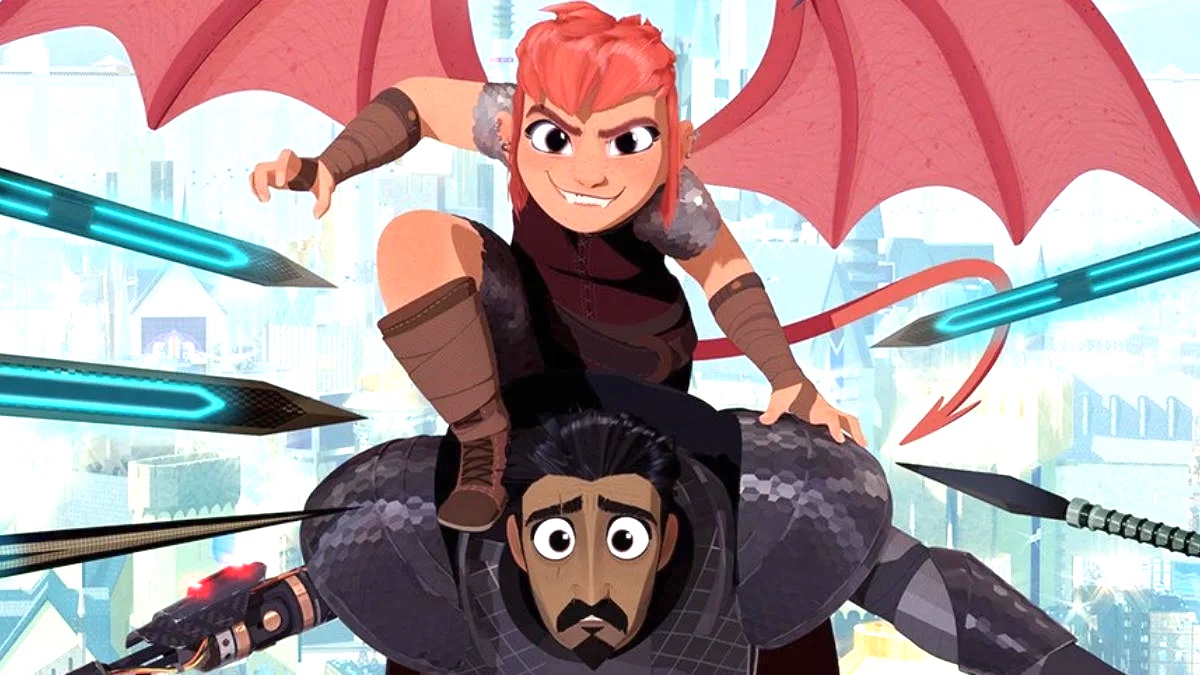
Set in a fantasy world where swords and shields happily co-exist with flat screen TVs and mobile phones, Nimona focuses on the story of Ballister Boldheart (voiced by Riz Ahmed), an enterprising young ‘commoner’ who is offered the opportunity to become a member of the Elite Knights by Queen Valerin (Lorraine Toussaint). The monarch is looking to change a process that dates back to the founding of the order, when a heroic young woman called Gloreth saved the kingdom from a rampaging monster. But when Ballister is framed for a terrible crime, he cannot find anybody to back him up: not even his boyfriend, Ambrosius Goldenloin (Eugene Lee Yang), himself a descendent of Gloreth and everybody’s favourite young hero.

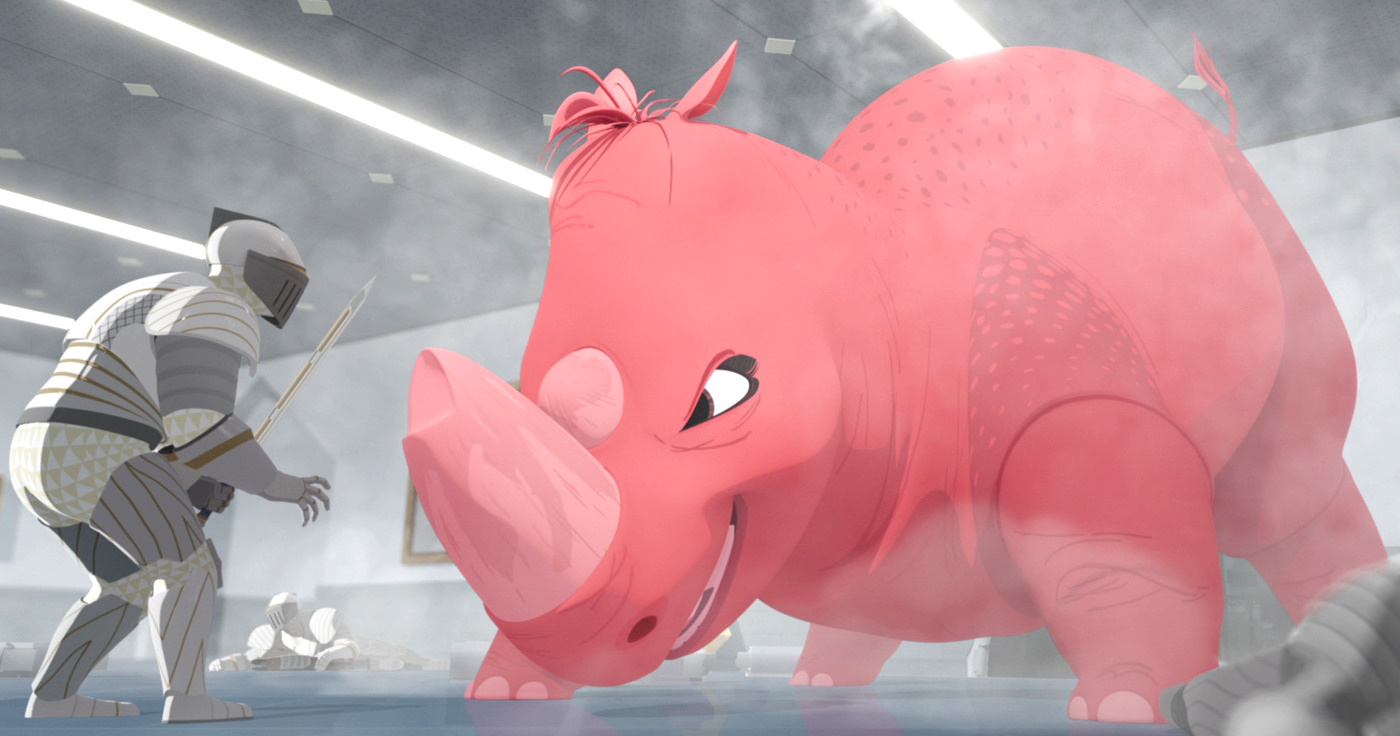
Enter Nimona (Chloë Grace Moretz), a motormouthed shapeshifter, who has decided that Ballister could do with a little help – whether he wants it or not – and that what he needs more than anything else is a sidekick. It’s the growing relationship between these two characters that forms the true heart of this irreverent and very funny feature. Directed by Nick Bruno and Troy Quane , Nimona is based on a graphic novel by Nate Stevenson, and boasts an eye-catching hybrid style that treads a tricky line between 2D and hyper-realistic animation that somehow blends together with absolute authority.

Of course, there’s an allegorical subtext to what’s happening here. Nimona’s comments about never fitting comfortably into the normative world in which she’s obliged to live are telling – but, happily, I never feel like I’m being beaten around the head with the film’s message. On the contrary, I’m thoroughly entertained by what’s on the screen and constantly delighted by the clever twists the story features.

Whatever the true reasons for its cancellation, Disney’s loss is ultimately Netflix’s gain. I haven’t been so seduced by an animated feature since Across the Spider-Verse, and, if Nimona isn’t quite in that exalted league, it’s certainly not far behind it.

4.4 stars

Philip Caveney

Run Rabbit Run

29/06/23

Netflix

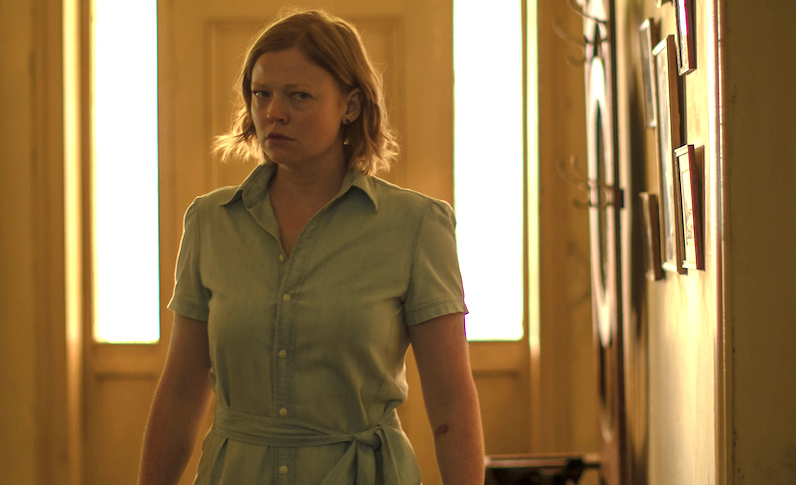
Run Rabbit Run is an unsettling psychodrama, set in an Australia that’s a lot darker and less sun-kissed than we usually see on screen. Woman of the moment, Sarah Snook, stars as single mother Sarah, whose orderly life disintegrates when her young daughter, Mia (Lily LaTorre), begins to exhibit some disturbing behaviours.

On the surface, Sarah seems to have it all: a good job, a nice house, a sweet kid and a civilised relationship with her ex (Damon Herriman). But underneath, she’s struggling. Her dad has just died, and her garage is full of his things, forcing her to confront a childhood trauma she’d rather forget. On Mia’s seventh birthday, a white rabbit appears from nowhere and the little girl adopts him as her pet. And then she starts to talk about things from Sarah’s past, things that she can’t possibly know…

It’s a simple enough story, but director Daina Read manages to generate real tension, despite what is obviously a low-budget, proving that you don’t need expensive gimmicks to make a scary, unnerving film. Sarah’s unravelling is slowly and meticulously examined, so that I’m holding my breath for much of the running time, genuinely fearful, wondering what is going to happen next.

I do suspect that much of the movie is on the cutting room floor. Early press releases (back when Elisabeth Moss was attached, before ‘scheduling conflicts’ meant she had to pull out) make much of the fact that Sarah is a fertility doctor, forced to confront her beliefs about life and death, but there’s not a lot of that in the version before me. True, we see Sarah wearing scrubs, and there’s one scene where she scans a pregnant woman, locating her foetus’s heartbeat, but beyond that and a solitary reference to her as ‘Doctor’, her job isn’t mentioned at all. In fact, when the rabbit bites her, she doesn’t seem to know how to treat the cut, so it’s hard to believe she’s even got a first aid certificate, let alone a medical degree. In addition – and I’m being deliberately vague here so as to avoid a spoiler – there’s quite a big event at the end that isn’t flagged up at all, so that I have to rewind to check if it really happened.

Despite these niggles, Run Rabbit Run is an enjoyably thrilling watch, and Sarah Snook and Lily LaTorre both carry it really well. Mia’s rabbit mask and the oblique Alice in Wonderland imagery are horribly spooky, and I find myself still thinking about this film when I wake up the next day.

3.8 stars

Susan Singfield

Söderberg Pavilion Café

29/06/23

Lister Square, Quartermile, Edinburgh

Söderberg is a bit of an Edinburgh institution: there are seven of the popular Swedish cafés dotted around the city, so it’s unusual to go for a walk without passing at least one. Nonetheless, we’ve never eaten there until today. The closest we’ve come was during the pandemic, in that weird post-lockdown period, when restrictions were slowly being loosened but we still weren’t allowed to sit indoors. During that time, my parents came up for a visit, and – being classed as vulnerable and thus wanting to avoid unnecessary risk – booked themselves into an Airbnb rather than staying at ours as they usually would. Their holiday flat was on the Quartermile so, every evening, we’d sit outside this Lister Square branch for a cup of tea or a glass of wine, shivering but glad to be together, glad to be out in the world again.

The gym we used to go to almost every day is directly opposite that same branch of Söderberg, but our pandemic pause turned into a three-year gap. Six weeks ago, we decided to rejoin, and so we find ourselves once again working up a daily sweat on the cross-trainers or exercise bikes, gazing out of the window at the people sitting in the sunshine, enjoying their coffee. We resolve to treat ourselves to a well-earned brunch one day.

And today seems like the right occasion. The sky is blue, the air is warm and, most importantly, I’m off work this afternoon, so we have time to dally. What’s more, we’ve worked up quite an appetite over the past hour! We request an outdoor table and, once seated, scan the short menu and choose quickly.

We both want a freshly squeezed fruit juice. Philip opts for a simple apple, while I have the fancier-sounding carrot, apple and ginger, which is pleasingly tangy. They’re both just as lovely and refreshing as you’d expect a decent glass of juice to be.

My brunch is Ägg – two eggs baked in a stone oven, served with sourdough and rocket. I add avocado, spinach and pesto, and I’m glad I do, as the boldly-flavoured walnut and basil pesto really elevates the dish. Philip has the Varm getost, an open sourdough sandwich featuring goat’s cheese, walnut, pine nuts and rocket. The goat’s cheese, he says, is delicious.

Sitting outside, lingering over a meal, feels every bit as indulgent as we imagined. In all honesty, however, we’re both a little disappointed by the meagreness of the portions. It’s not that we want anything too over-facing mid-morning, but a single, thin-cut slice of bread just feels a bit stingy. We’re not super-impressed by the mounds of undressed leaves on our plates either. An extra slice of bread and a decent salad dressing would have made this experience a lot more satisfying.

3 stars

Susan Singfield

Indiana Jones and the Dial of Destiny

28/06/23

Cineworld, Edinburgh

Steven Spielberg’s Raiders of the Lost Ark (1981) was a near-perfect movie, a fast-paced action adventure that harked back to the classic serials of the 1940s. It made a huge profit off a comparatively low budget, so – inevitably – there were going to be sequels. Indiana Jones and the Temple of Doom (1984) and Indiana Jones and the Last Crusade (1989) may not have had the perfection of their whip-tight progenitor, but were decent enough efforts in their own right. And that’s probably where the whole enterprise should have ended. 2008’s The Kingdom of the Crystal Skull was – to put it mildly – a major miscalculation, despite being helmed by the usually dependable Spielberg. For a very long time, there were vague rumours of a fifth outing which remained exactly that. Rumours.

After all, Harrison Ford was getting a bit long in the tooth, so… maybe not?

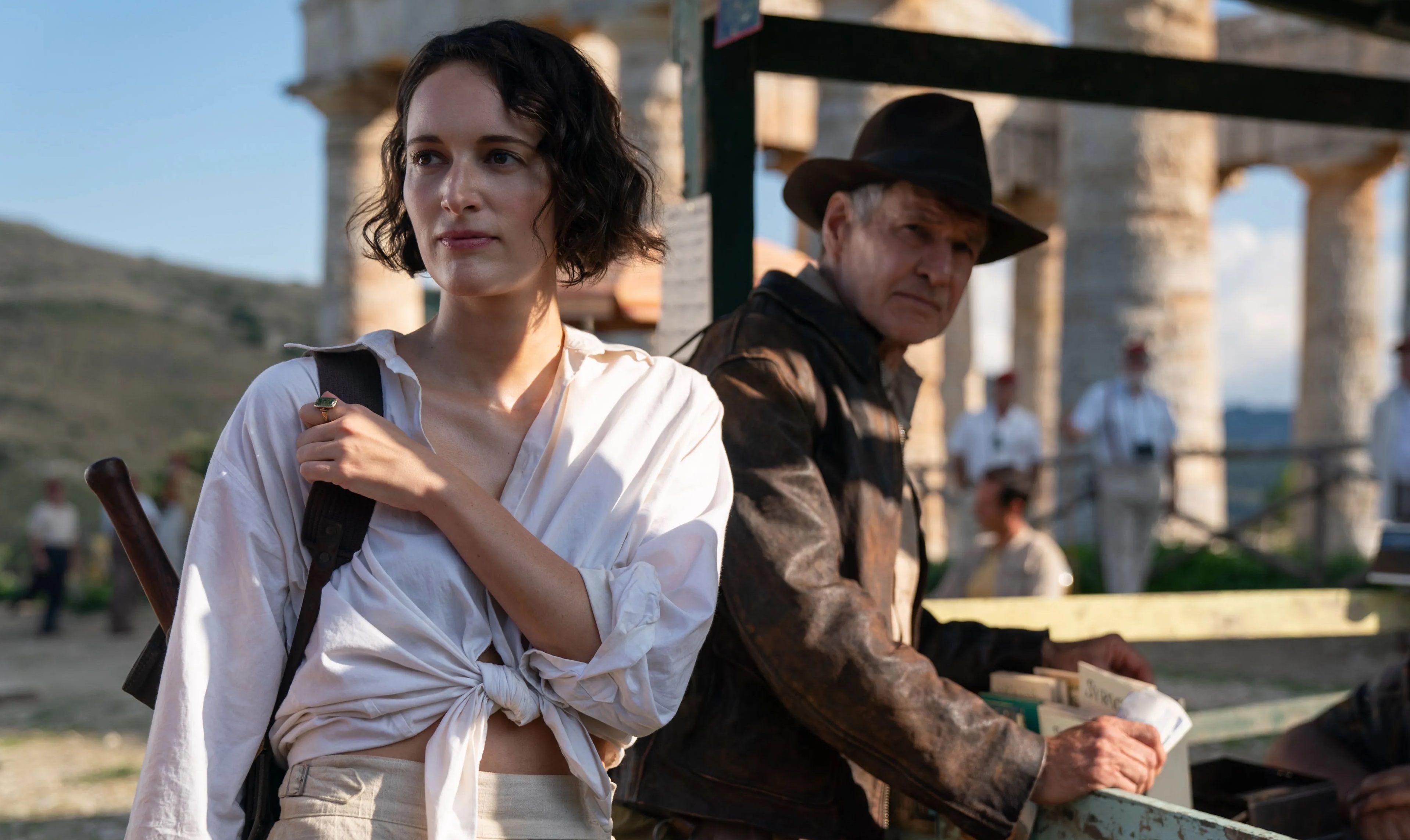
But now, directed by James Mangold, and written (mostly) by Jez Butterworth and his brother John Henry, everyone’s favourite archeologist is back in the game. When we reunite with him it’s via a flashback. It’s 1944, the Germans are rapidly losing the war and, thanks to the wonders of de-aging software, Indy looks like his former self. He’s working alongside his old pal Basil Shaw (Toby Jones) and the two of them are attempting to rescue an ancient antiquity, the Lance of Longinus, from a Nazi train packed with loot. Indy has just been taken prisoner, but needless to say, he’s soon free and wandering the length of the train, looking for the artefact. Also present is Dr Voller (the always excellent Mads Mikkelson), who has already decided the lance is a fake but has discovered instead, on the same train, the titular device (or at least half of it), built by Archimedes and capable of… well, that would be telling. A lengthy action set-piece ensues and it’s pretty good, serving as a promising opener.

But then we move to 1969. Mankind has just landed on the moon and Dr Jones is now earning a crust as a University lecturer, though his students seem much more interested in listening to rock music and smoking dope. Retirement beckons and it’s made very clear that Indy has lost his mojo. Then along comes his Goddaughter, Helena (Phoebe Waller-Bridge), who is also very interested in the Dial of Destiny, but mostly because she plans to sell it to the highest bidder. To give her fair credit, Waller-Bridge gives the franchise a much-needed update, and she’s good on the smart-arse wisecracks, but I’m not sure I quite buy her as an adrenalin-powered action hero. Then again, if I can accept an eighty-year-old male in the role, maybe anything is possible.

The bad guys soon come a-calling and, what do you know, they’re being led by Dr Voller, who has his own unthinkable plans for Archimedes’ invention and won’t hesitate to carry them out. Indy and Helena team up and a game of cat and mouse ensues with some protracted chases. A lengthy sequence featuring Ford on horseback (or at least, his stunt double) is perhaps the film’s standout, but the problem here is that there are just too many of these pursuits. A really complicated one featuring our heroes in a tuk tuk definitely overstays its welcome.

There are frequent nods to those earlier films – some of which work, others which feel meh – and there’s a surprisingly touching scene when Indy tells Helena about what happened to his son and why he and Marion Crane (Karen Allen) are no longer an item. John Rhys-Davies shows up once again as Sallah, but is given very little to do here and, naturally, Helena has a keen young assistant in the shape of Teddy (Ethan Isadore), who seems able to turn his hand to most things, including at one point piloting a plane. As you do.

With a running time over two-and-a-half hours, it’s to Dial of Destiny’s credit that it never really runs out of steam and, if the final conceit is hard to swallow, well, this is a series that’s known for it’s supernatural reveals. (Just don’t overthink the space-time continuum stuff because, on reflection, much of it really doesn’t add up.) I leave feeling that I’ve been suitably entertained but, before I’ve even made the short walk home, I’ve thought of at least half a dozen questions that remain maddeningly unanswered.

So, this is far from the disaster I anticipated but, when held up against that brilliant opening shot of Raiders, it’s frankly not in the same league. I can’t help feeling that, now it’s out in the world, this particular treasure chest should be triple-locked and left in a quiet place to gather dust.

3.8 stars

Philip Caveney

Asteroid City

25/06/23

Cineworld, Edinburgh

If you were ever looking for the film director equivalent of Marmite, Wes Anderson might just be your best bet. His detractors delight in pointing out that he always makes the same film, but that’s a ridiculous over-simplification. While I’d be the first to admit that his films do have an unmistakable look – that you can see one frame, taken at random from any one of his many features, and know instantly that it’s his work – we rarely make that complaint about artists who work with paint and canvas.

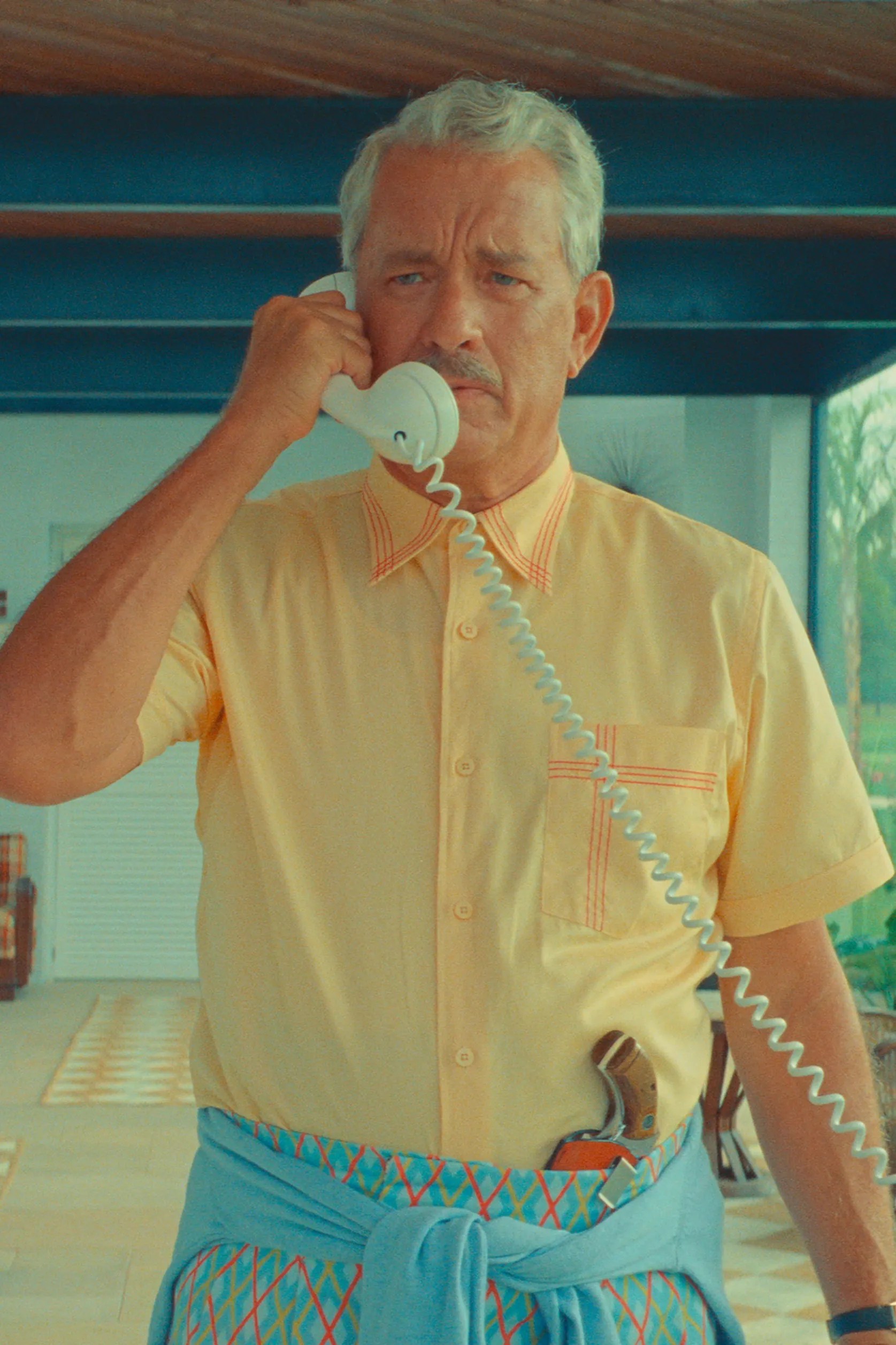
Asteroid City has all of the man’s familiar hallmarks: those sumptuous, vividly-coloured landscapes dotted with unlikely looking ramshackle buildings; a massive roster of A listers, all of them prepared to swallow their pride in return for delivering just a line or two of quirky dialogue; and that weird detachment from reality, those bizarre situations seemingly created to point up the artificiality of the whole undertaking. For me, these are the elements that confirm Anderson as a unique and brilliant filmmaker. But then, I’ve been a fan ever since Rushmore in 1998.

The film opens in stark black and white with an earnest narrator (played by Bryan Cranston) talking about the creation of a new play by hotshot writer, Conrad Earp (Edward Norton), and the play’s tortuous path to production – and then we cut to the full-colour, wide-screen film adaptation of the same story. War photographer Augie Steenbeck (Jason Schwartzman) arrives at the titular desert town with his son, Woodrow (Jake Ryan), who is one of five gifted children invited to attend a ceremony where one of them will be presented with a prize for their latest invention.

Woodrow and his three little sisters have some devastating news to deal with first, but their father seems far more interested in the presence of screen actor, Midge Campbell (Scarlett Johansson), who has her own gifted daughter, Dinah (Grace Edwards), in tow. It’s not long before Dinah and Woodrow begin to develop an interest in each other…

But this is about as far as any rational plot outline can take us. From this point, madness ensues in the form of a group of singing cowboys, the aforementioned weird childhood inventions and a WTF alien visitation. And, as the tale enfolds, we are treated to regular visits back to the monochrome world of the original theatrical version, where we see the actors in the film actually being the actors and learning to handle their roles, whilst commenting on the artificiality of the whole experience. Meta? Well yes, but clearly that’s the point.

If this sounds hard to get your head around, don’t despair, because the sparky script by Anderson and Roman Coppola keeps the pot bubbling happily away as the story unfolds. I find myself laughing at the wonderful absurdity of some of the situations – and is the director making a comment on cinema’s general inability to handle theatrical material with any sense of conviction?

It’s heartening to see that a sizeable audience has come out for this on a rainy Sunday afternoon and also to read that Asteroid City has enjoyed a bigger opening weekend than the latest Transformers movie. Perhaps a lot more people out there are acquiring a taste for Marmite.

4.6 stars

Philip Caveney