Distant Memories of the Near Future

12/08/23

Summerhall (Red Lecture Theatre), Edinburgh

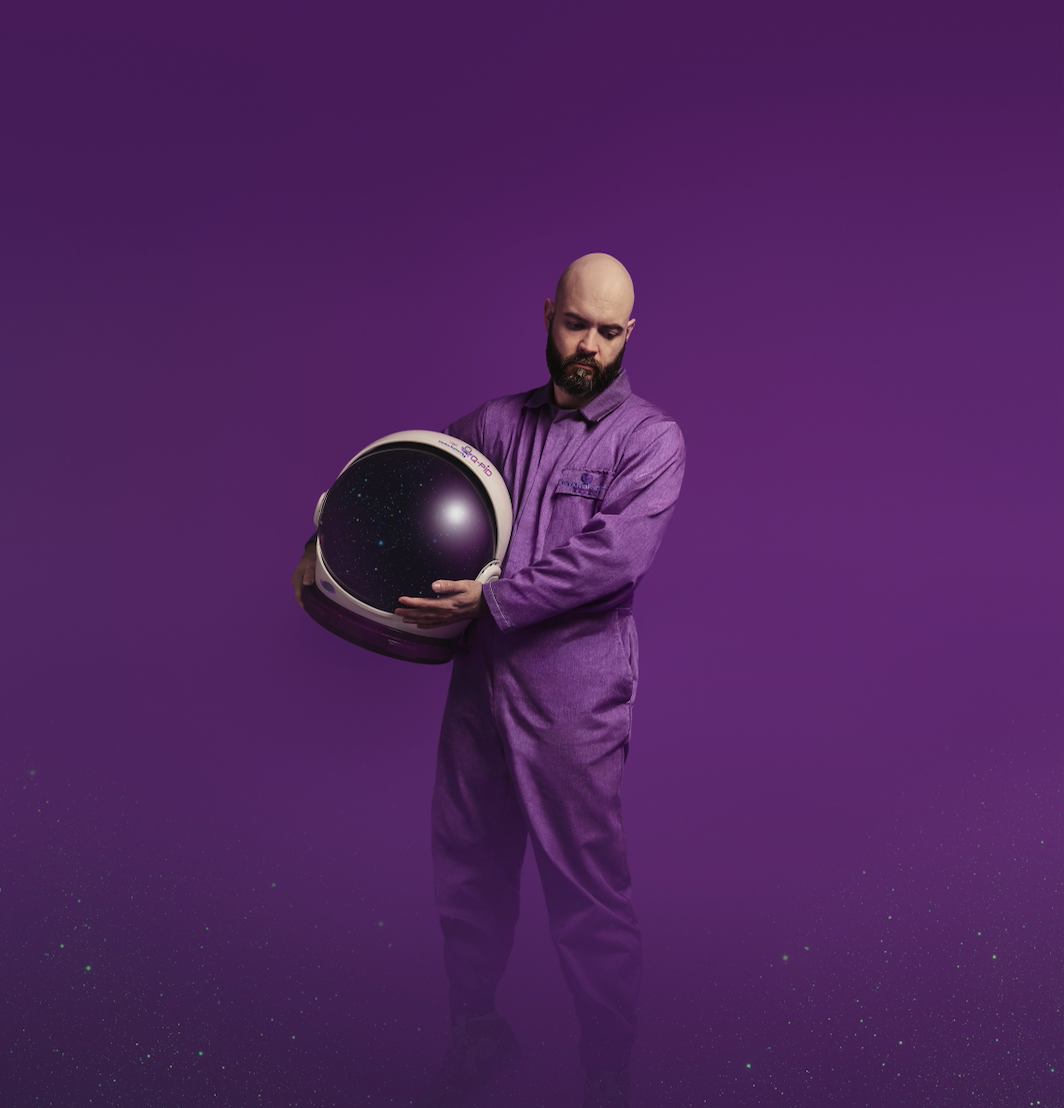
Set somewhere in an all-too-identifiable near future, David Head’s thought-provoking storytelling session is a stern warning that we’re all going to hell in a handcart – and that the eventual destination may be a lot closer than we think. 

In this dystopian world, the Department of Productivity is now partnered with Amazon shopping, and everything that makes us human appears to be up for grabs. 

Head leads us confidently through his quasi-lecture, aided by languorous mood music, remarkable lighting effects and an AI avatar, with whom he occasionally converses – and who seems to disagree with a lot of what he’s saying.

The stories are skilfully interwoven and Head throws in the occasional snarky comment to ensure that proceedings are never in danger of becoming too pompous, but I occasionally find myself thinking that he’s not really telling us anything we don’t already know, he’s just amping it up. The overarching theme seems to be that human relationships develop in their own bumbling, accidental way and that the endless attempts to commodify them are inevitably doomed to failure, because no matter how sophisticated technology becomes, it can’t really duplicate our ability to make connections with each other. 

It won’t stop companies from giving it their best attempt though, not when there’s money to be made. At regular intervals, the talk is paused while we listen to advertisements – a dating app that offers to find our ideal partners; a company that wants to buy the rights to use our voices as selling tools… 

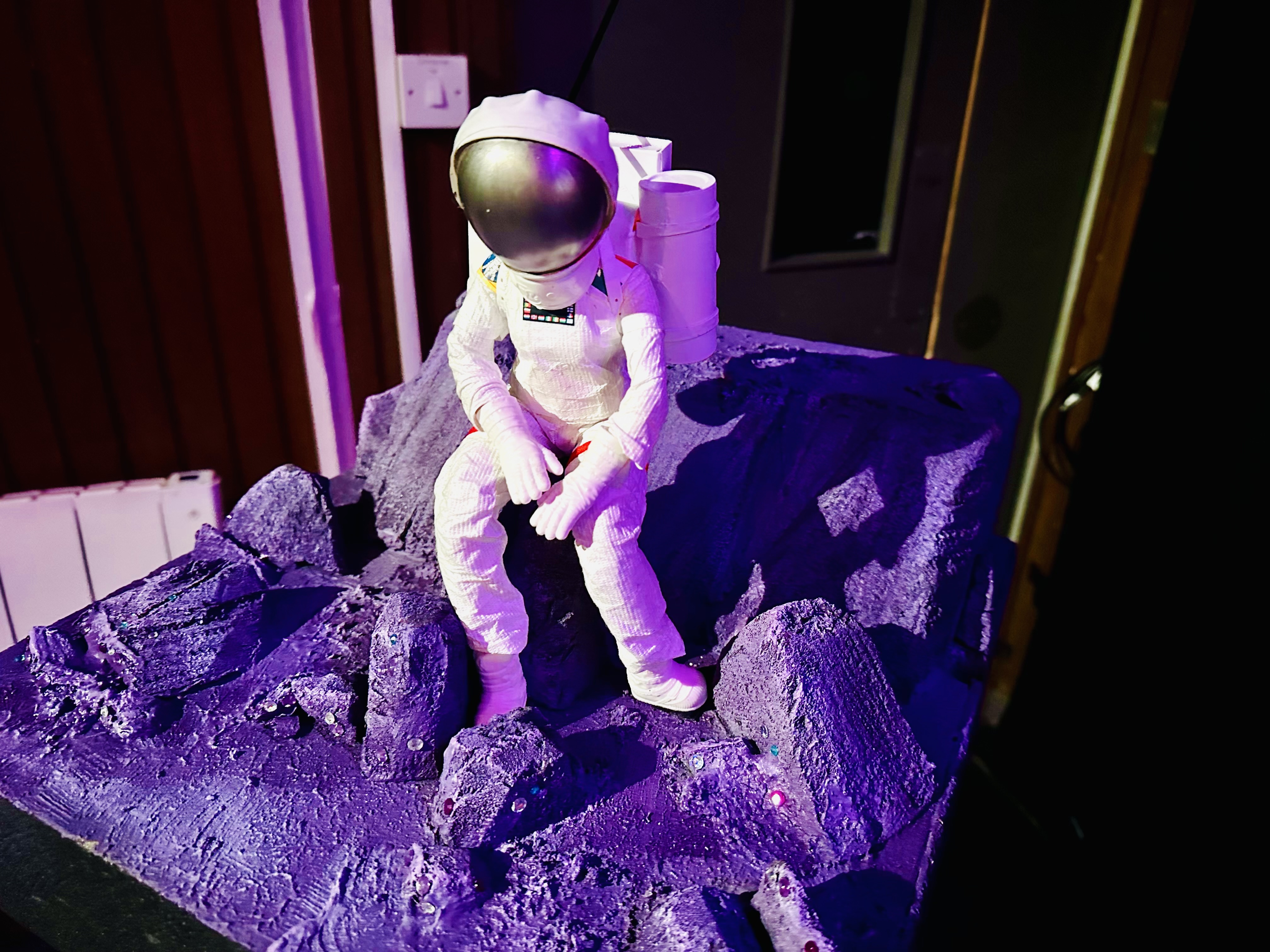
I’m particularly drawn to one section that depicts a space miner, marooned on a planet full of diamonds, trapped by the very wealth she’s been seeking, and helplessly contemplating her own lost love as her air supply runs out. It seems an apt metaphor for the state of humanity in this bleak vision of the future. I love the miniature puppet-figure that Head uses to illustrate this story, illuminated by the light of a torch.

Head is a charismatic and quietly authoritative storyteller and he handles the presentation with consummate skill. I leave the Red Lecture theatre with plenty to think about.

3.4 stars

Philip Caveney

The Box Show

12/08/23

Pleasance Courtyard (Cellar), Edinburgh

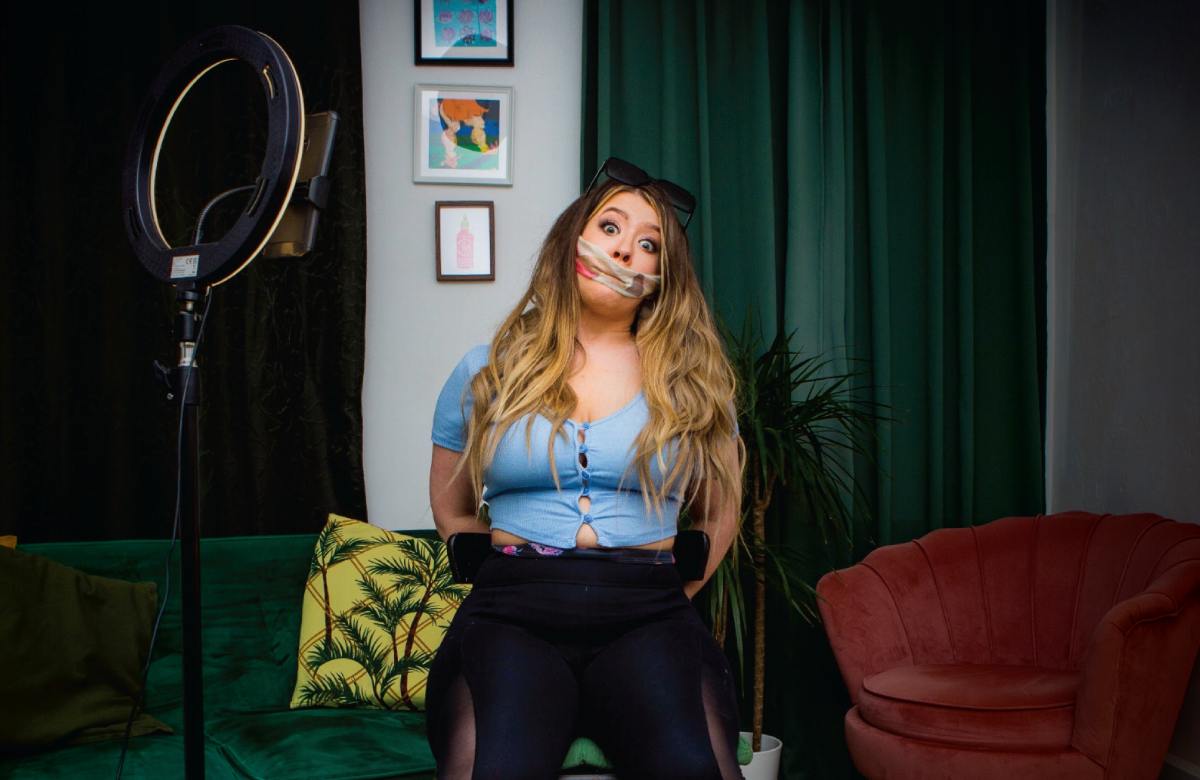
The Box Show (theboxshow.org) is one of the most original acts I’ve ever seen. Incredibly,  the whole production is confined to one small box – every prop, every costume change – like a puppet theatre with myriad human puppets. And Dominique Salerno (dominiquesalerno.com) is the puppet master, changing herself into a giant woman, a fighting couple, a demanding pop star – and a few more esoteric surprises it would be a crime to give away. 

 The constraints of the box mean that Salerno has to be imaginative – necessity is the mother of invention, after all. Low-budget theatre is often more interesting than its splashy, blinged up West End cousin; limiting herself to such a miniscule stage pushes Salerno even further down this road. I’m in awe of her imagination. 

The Box Show is fast-paced, never letting up for the whole hour, the sketches building to a hilarious crescendo. 

Audacious, funny, and perfectly crafted, The Box Show is performed with wit and precision. Salerno has the flexibility of a gymnast or a dancer (it makes my creaky knees hurt just watching her), as well as being a gifted actor and singer.

The tiny venue mirrors the tiny box, so it doesn’t take many punters for this to be sold out. Grab a ticket while you can – this Fringiest of Fringe shows is one not to miss.

5 stars

Susan Singfield

The Ice Hole: A Cardboard Comedy

12/08/23

Pleasance Courtyard (Grand), Edinburgh

The Pleasance Grand is a big venue and this morning it’s packed to the rafters for The Ice Hole: A Cardboard Comedy. It’s the latest offering from French theatre group Le Fils Du Grand Réseau, the people who brought us Fish Bowl in 2019 and, believe me, that’s a tough show to follow. 

But they more than succeed.

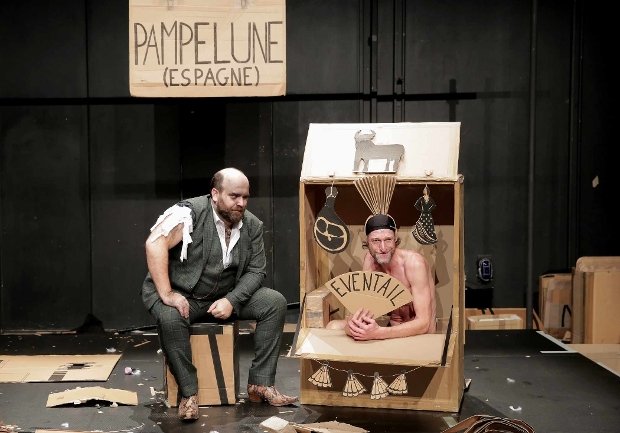
This two man production features Pierre Guillois and Olivier Martin Salvan and begins with the latter fishing in the titular ice hole, when he captures a beautiful mermaid called Salina. As he fishes, Salvan tells us all about what’s happening… in Icelandic. Well, alleged Icelandic anyway. Gobbledygook might be a more apt description, but somehow we understand him.

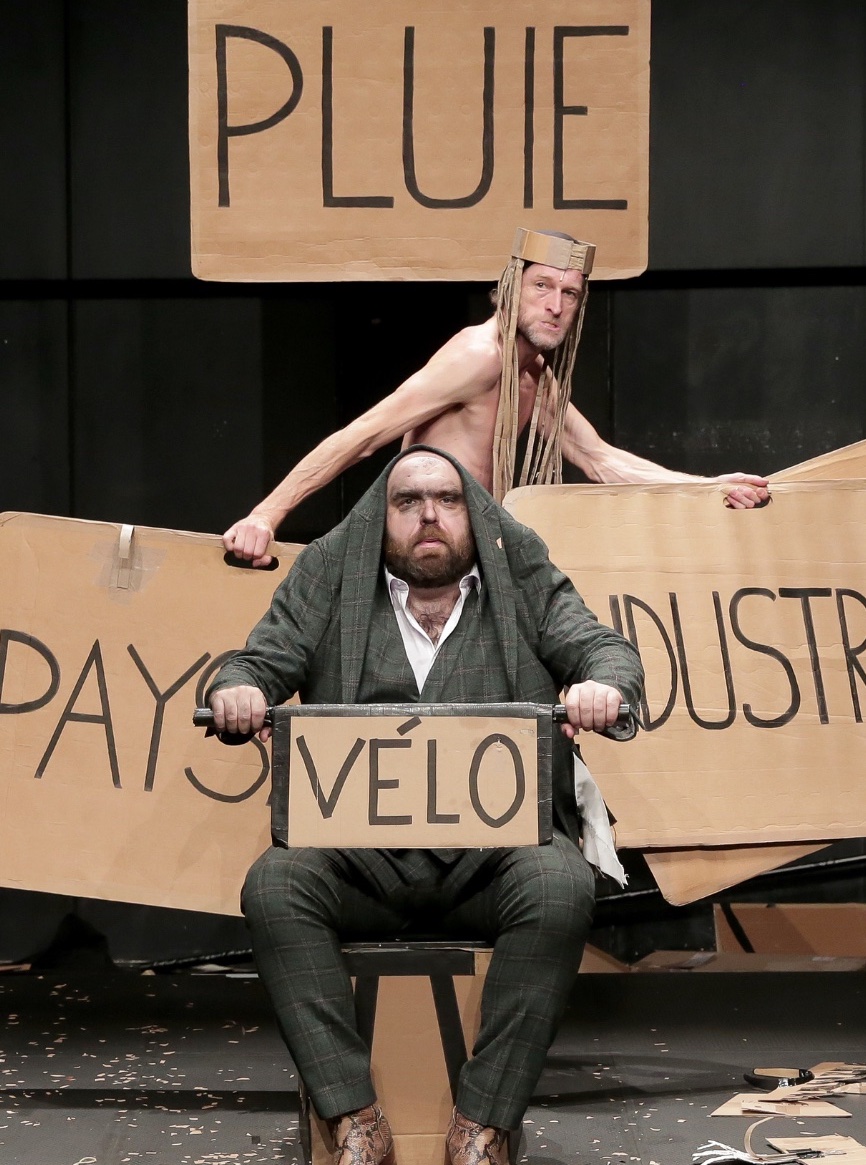
This is just the starting point for an adventure that takes our narrator all around the world – including a memorable stopover in Scotland, complete with bagpipes and authentic weather conditions. The brilliant gimmick here is that Guillois has to provide all the props for the story as it gallops along – and, as you’ve probably guessed from the title, they are all made from cardboard. 

If this sounds underwhelming, don’t be fooled. There’s an endless stream of ingeniously constructed items: machines, costumes, signs (English, not Gobbledygook!), footwear, tools, you name it… and they’re all made from old boxes. The items seem to materialise out of nowhere and the constant interactions between the two actors as this happens keep me laughing uproariously pretty much throughout. 

As I’m watching I’m having the recurring thought that I’m really glad I don’t have to clear up after these guys – and then, at the end, the audience is introduced to the two stagehands who actually have to do it.

TIH:ACC is an inspired piece of surreal lunacy, an hour of sheer unadulterated fun, fuelled by manic levels of invention. Miss it and you’ve only got yourself to blame.

4.8 stars

Philip Caveney

Grown Up Orphan Annie

11/08/23

Gilded Balloon Patter Hoose (Coorie), Edinburgh

Kathryn Bourne Taylor’s premise is a strong one: a ‘Where Are They Now?’ feature brought to life, starring everyone’s favourite plucky red-headed orphan. Leapin’ lizards! Little Annie is an adult! Unfortunately, she’s not a very happy one.

Long estranged from her billionaire adopted father, Annie is struggling to come to terms with his death. She’s angry about the environmental impact of his destructive business model, and bitter about a contract that means he owns the rights to all her songs. “My life has been made into a comic strip, a film, a Broadway musical – and I’ve got nothing to show for it,” she complains. She has a point. Why any kid would wanna be an orphan is beyond me.

Bourne Taylor makes for a believable millennial Annie, effortlessly embodying the familiar ‘please like me’ smile and can-do attitude. She nails Annie’s dazzling desperation, the knowledge that she’ll always have to sing for her supper.

I like the set up a lot, so I’m a little disappointed when the show pivots off in a whimsical direction, as Annie embarks on a mission to find a new sidekick (tragically, Sandy is long gone), and tries to resist opening the box that Daddy Warbucks has left to her. As charming as this stuff is, it’s very slight. There are early hints that we will be dealing with weightier stuff – the troubling power dynamic between a billionaire ‘saviour’ and an impoverished orphan; the effects of childhood neglect and trauma; the impact of sudden fame at an early age – but these are jettisoned in favour of something more kooky and ultimately less satisfying.

Grown Up Orphan Annie is a pleasant show, but I can’t help thinking it could be so much more.

2.8 stars

Susan Singfield

Polko

11/08/23

Roundabout at Summerhall, Edinburgh

Joe (Elliot Norman) spends a lot of time sitting in his parked car, listening to the weird distorted noises which are the only sounds he can get from his radio. Sometimes he shares the space with his old friend, Emma (Rosie Dyer), recently returned to the area after losing her job. She’s now living with her parents and clearly isn’t enjoying the experience very much, but Joe gets it. He’s been living with his mum for ages and claims he’s getting along just fine, even if he’s not actually allowed to sit on the sofa after spilling chilli oil on it.

Sometimes, Joe sits in the car with an older man, the hapless Peter (John McNeil), who has a bit of a thing about Joe’s mum, and was recently rejected by her – which is awkward to say the least. Peter is fond of a drink. Rather too fond, as it happens. The car they are sitting in used to belong to him but now he’s lost his licence and has sold it to Joe at a knockdown price, though he still has a proprietorial attitude towards the vehicle.

The in-car conversation often turns to an absent friend, somebody called Polko. He’s not around any more and nobody seems quite sure where he’s gone…

Polko is a strange, sinewy sort of play, where the characters talk around things rather than coming to the nub of what they are actually discussing. At various points, it becomes clear that these three dispossessed characters are all unreliable narrators, each of them having to revisit what they’ve said earlier in order to tell the full story. We probably shouldn’t trust them – even if we want to.

And the mystery of the titular character really doesn’t fall into place until the very last scene.

Written by Angus Harrison and sparely directed by Emily Ling, this is an intriguing, slowly-unfolding story that ultimately raises more questions than it has answers for, but the performances are strong – especially McNeil’s brooding and mysterious loner, who never manages to be direct – and the sense of slowly-building intrigue keeps me guessing right up to the end.

3.8 stars

Philip Caveney

England & Son

11/08/23

Roundabout at Summerhall, Edinburgh

Written by Ed Edwards especially for Mark Thomas and directed by Cressida Brown, England & Son is a hard play about hard lives. Thomas is the ‘& Son’ of the title, and delivers a bravura performance; from the outset, he has the audience in the palm of his hand. 

A semi-autobiographical piece, based on people Thomas knew in his childhood and Edwards’ experience in prison, this is a bleak exposé of an often overlooked underclass, exemplified by one boy’s complex relationship with his father. As well as this deeply personal account, it also opens up to examine an even more troubling relationship: between Britain and its former colonies. A lot of questions are raised: why is it okay for rich white people to plunder other countries, but not okay for poor white people to burgle houses? Is there any way to prevent armed forces personnel from being dehumanised by what they’ve seen and done? And what the fuck is an ‘artisan’ when it’s at home?

Although this is a dark piece, there are also some very funny lines and – as you’d expect – Thomas delivers these perfectly, the laughs landing every time. These shafts of light are much needed, so it’s a relief when caring social worker Martha offers our young offender the chance of a different life, even though it’s all too clear that he won’t be able to grasp it: his past has already shaped him; his future is assured. As soon as there’s a problem, he only knows one way to react, and he seems destined to follow in his fallen hero’s footsteps.

England & I is a deceptively complex piece, but it certainly hits home with today’s audience, who rise as one to give Thomas a standing ovation.

4.2 stars

Susan Singfield

The Death of Molly Miller

10/08/23

Underbelly Cowgate (Big Belly), Edinburgh

Have you heard the one about the influencer and the thief? No, me neither. It sounds like the set-up for a joke, but it isn’t. Instead it’s the premise for Matthew Greenhough’s thought-provoking and, yes, funny play about penury and privilege.

As far as Tommy (Greenhough) can see, reality TV star Molly (Esther-Grace Button) has it all: a posh flat, designer clothes, an active social life and a gazillion followers. Tommy, on the other hand, has nothing. Desperate to clear his debts with a fearsome loan shark, he decides to burgle Molly. After all, what has she ever done to deserve such riches? He despises her, thinks she’s fair game. But if he thinks that Molly is an easy target, he’s got another think coming. Because Molly Miller didn’t get where she is by being soft…

Under Jonny Kelly’s direction, The Death of Molly Miller is a engaging piece of theatre, and Button in particular is great at eliciting laughs from tonight’s appreciative audience. Between her performance and Greenhough’s writing, Molly’s initially vapid character soon reveals hidden depths, and we see the bottle beneath the Botox. Tommy too is a complex, multi-dimensional man, although perhaps Greenhough’s performance is a little too frenetic at times; some stillness and relative calm would help to highlight the moments of panic.

Like Molly herself, The Death of Molly Miller seems superficial, but actually has a lot to say.

4 stars

Susan Singfield

Salty Irina

10/08/23

Roundabout at Summerhall, Edinburgh

Eve Leigh’s Salty Irina, isn’t your average tale of first love, nor even of coming out – although it is both of those things. Instead, a much darker, more frightening theme emerges as Eirini (Yasemin Özdemir) and Anna (Hannah Van Der Westhuysen) embark on a reckless mission… 

They’re teenagers, so of course they think they’re invincible; of course they’re likely to take risks. Sitting in the audience, several decades ahead of them, I can only watch in horror as they convince themselves that infiltrating a far-right festival is a good idea. From a grown-up, liberal vantage point, it’s clearly a bad idea for anyone. For an immigrant? For lesbians? For two wide-eyed young girls with more idealism than guile? It can only end badly.

But Eirini and Anna want to do something. There’s been a spate of murders in their (unspecified) city and the police don’t seem to see the link. The victims are all immigrants, but – because they’re from different ethnic groups – each is being treated as an isolated case. So when the girls learn that a fascist group is holding an event nearby, it seems logical to them to don disguises and investigate. An older hippy in their squat says what the whole audience is thinking: “Don’t go!” But when have teenagers ever listened to boring know-it-all adults telling them what to do? 

It’s not until the final third of the play that Jana (Francesca Knight) appears. We’ve seen her before, acting as a stagehand, passing props, clearing the set; it’s a neat conceit. The threat she poses has always been there, in the shadows, but it’s only when the girls are isolated and vulnerable that she reveals herself.

If Eirini and Anna were older, the plot would be fantastical. Honestly, at first I think the whole thing is a bit far-fetched, but then I google ‘far-right festivals’ and discover that they really are a thing, even here in Scotland. (God knows what marketing I’ll be faced with now, as the internetty algorithms get to work.) But their age makes me ache for them: I absolutely believe that they would step boldly, naïvely into the fray, convinced that they are doing the right thing. 

Debbie Hannan’s direction is fresh and contemporary, all minimal props and non-literal interpretation. It feels as youthful as the play’s protagonists, the transitions snappy and impetuous. 

Van Der Westhuysen and Özdemir (last seen by us in Autopilot and You Bury Me respectively) are perfectly cast, embodying the journey from youthful innocence to devastating experience. 

4.5 stars

Susan Singfield

Lena

10/08/23

Assembly George Square (Gordon Aikman Theatre), Edinburgh

Back in the olden days before there was The X Factor or Britain’s Got Talent, a certain presenter by the name of Hughie Green was the Simon Cowell of his day, fronting a shonky TV show called Opportunity Knocks. It was avidly watched, every week, by up to twenty million viewers.

I’m actually old enough to recall the fateful night in 1974 when opportunity knocked for Lena Zavaroni, a precocious nine-year-old from the Isle of Bute. She strode on to that little stage and sang a totally inappropriate song in a voice that could just as well have come from a seasoned veteran. British audiences were both shocked and delighted… and the votes flooded in.

The rest, of course, is tragedy. Lena was catapulted headlong into overnight fame, but was persuaded to move away from her parents’ council house in Scotland to live in London with her manager, Dorothy Soloman (Helen Logan). There she was groomed – there’s no more appropriate word for what happened to her – for stardom. After five consecutive wins on Opportunity Knocks, she was politely asked to step aside and then went on to tour the world. But you can’t separate a young child from her parents without dire consequences further down the road. Her father, Victor (Alan McHugh), and her mother, Hilda (Julie Coombe), could only look on in horror as their daughter’s world began to disintegrate around her….

In Tim Whitnall’s play, Lena’s story is recounted by none other than Hughie Green himself (the usual note-perfect impersonation by Jon Culshaw), while Erin Armstrong plays Lena, from childhood right up to her tragic demise at the age of thirty-five, somehow convincing us she can be all those ages without any prosthetics. Here too, a real character is uncannily recreated, complete with those cheesy costumes and that big, BIG voice. The production details have the ring of authenticity – there’s even a clap-o-meter! And if the character of Dorothy Solomon occasionally veers uncomfortably close to pantomine, well, no matter, every fairy tale must have a villain to hiss.

Lena captures an incredible true story, and I have to confess I appear to have something in my eyes as it approaches its inevitable, heartbreaking conclusion.

We’d like to think that it couldn’t possibly happen in this day and age, but a glance at the latest headlines is enough to confirm that, when it comes to the way we treat celebrities, we don’t appear to have learned anything at all.

4.4 stars

Philip Caveney
Bloody Elle

09/08/23

Traverse Theatre, Edinburgh

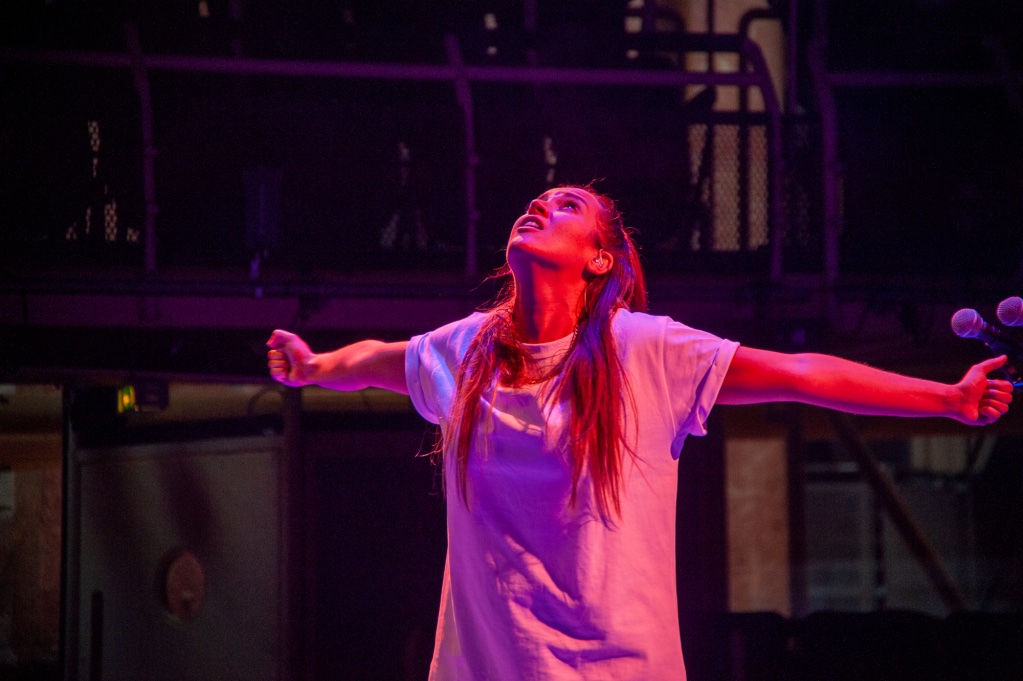
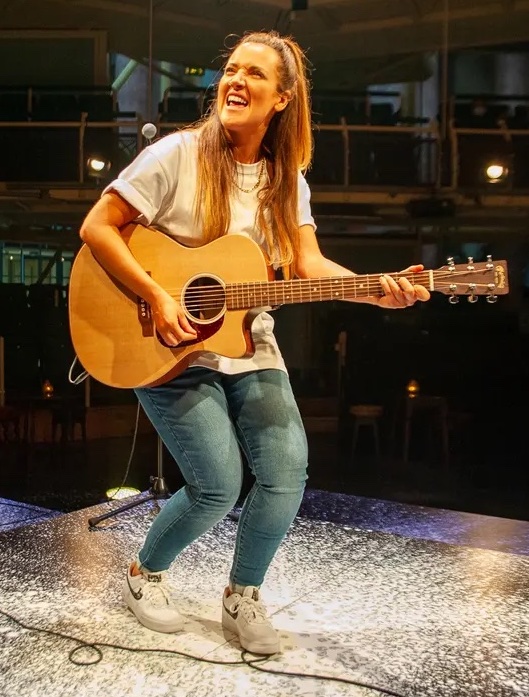
Waiting to go into Traverse One, we hear a voice announcing that most dreaded of terms at the Fringe: technical difficulties. Uh oh! We’re told that there will be a slight delay before tonight’s performance can continue. Should we hang on and see what happens? Or will we leave and try to arrange another date? We decide to stay and thank goodness we do, because otherwise we’d have missed a brilliant show, with a mesmeric solo performance.

Elle (Lauryn Redding) is a straightforward Northern lass, proudly working class and doing nightly shifts at local takeaway, Chips ‘N’ Dips, along with an assorted bunch of colleagues. In her spare time, she’s a songwriter and performer, playing the odd slot at local clubs and hoping that she might take her talents further. And then a new employee arrives at the takeaway. She’s Eve, a girl from the posh side of town, moneyed, privileged and filling in the time before she heads off to university.

But it’s clear from the outset that something has sparked between the two young women, an attraction that quickly develops – and it begins to dawn on Elle what’s happening to her. Is she… falling in love?

Bloody Elle is a fabulous piece of gig theatre, built around Redding’s irrepressible talent. Not only does she deliver a series of memorable songs, her vocals soaring effortlessly over the multi-layered backgrounds she creates using live looping; she also inhabits all the characters in the story, managing to change her persona with the merest physical gesture, a shrug, a wink, a cheeky grin. She’s also a gifted comic, making me laugh at every turn.

This queer love story offers a wonderful celebration of the affecting powers of first love and Redding takes us by the hand and leads us through the experience. Written, composed and performed by Redding, the show is directed by Bryony Shanahan and the lighting effects are by Mark Distin Webster. It’s a lovely, life-affirming and eventually rather poignant production, and you only have a few more chances to catch it in this limited run.

To put it simply, Bloody Elle is bloody fabulous. Go see.

5 stars

Philip Caveney