Traverse Theatre

After the Act

06/08/23

Traverse Theatre, Edinburgh

In 1988 I was in sixth form. I was (am) straight, and didn’t think I knew any gay people at all. No one was out. Nonetheless, when Section 28 was introduced – banning the promotion of homosexuality in schools – we all thought it was stupid. Not just cruel and regressive, but thick. We knew we couldn’t be encouraged into being gay, that no amount of advocacy by teachers – teachers! – could ever change who we were. Outlawing any positive mention of queer people though, that could hurt. We were only kids, but even we could see that.

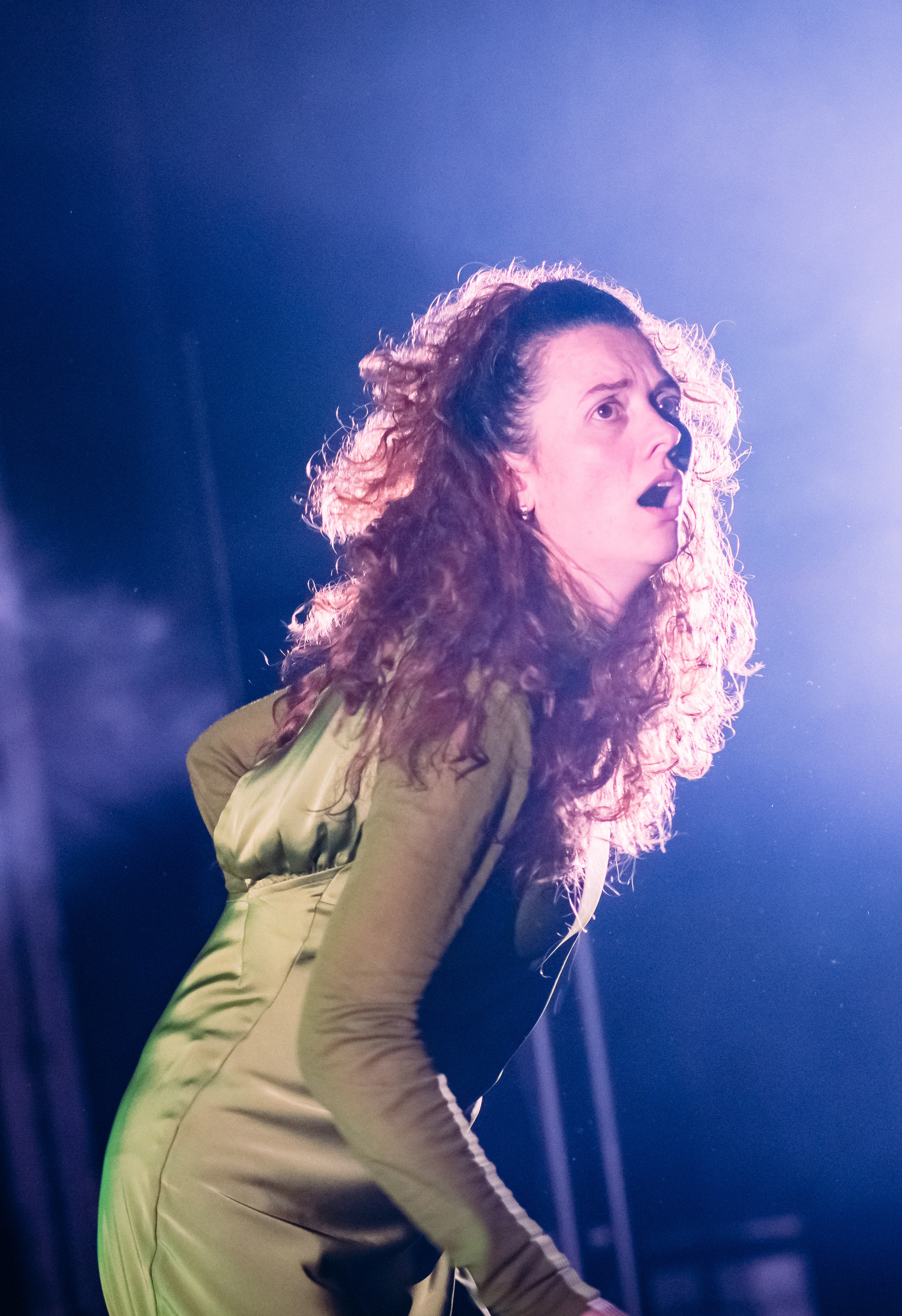
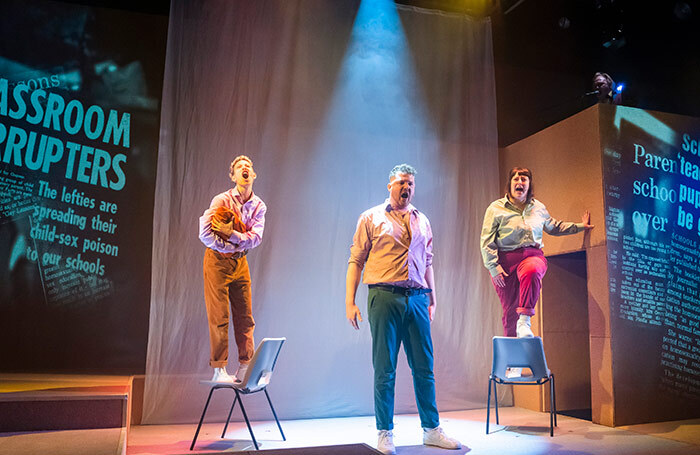
Breach Theatre’s After the Act shows just how much hurt there was. This musical, written by Ellice Stevens and Billy Barrett, with an original score by Frew, is a verbatim piece, relaying the experiences of LGBTQ+ students, teachers and activists who struggled and fought through Section 28’s fifteen-year reign. It’s both shocking and compelling, an object lesson in how to stage a polemic. By turning the words into songs, Breach Theatre give them extra weight and meaning, turning some into plaintive refrains and others into angry protest chants.

There are six performers onstage: two musicians (Ellie Showering and Frew) and four actors (Stevens, Tika Mu’tamir, EM Williams and Zachary Willis. Under Barrett’s direction, this is a lively, insistent piece; indeed, thanks to choreographers Sung-Im Her and Anouk Jouanne, the actors are always in motion, the interweaving stories physicalised into a complex web. Although the production is a serious one, focusing on some very real anguish, there are also moments of humour, of light shining through the darkness.

Much of what we’re shown is shocking. A couple of lesbian protestors disrupt the six o’clock news, and Nicholas Witchell – who wrestles one of them to the ground and puts his hand over her mouth so that Sue Lawley can carry on and read the day’s stories – is lauded as a hero rather than being done for assault. Another particularly striking statement comes from a member of Haringey Council’s Lesbian and Gay Sub-Committee, who notes, “We are at a disadvantage because we can only use rational argument, while the opposition are tapping into irrational fear and bigotry.”

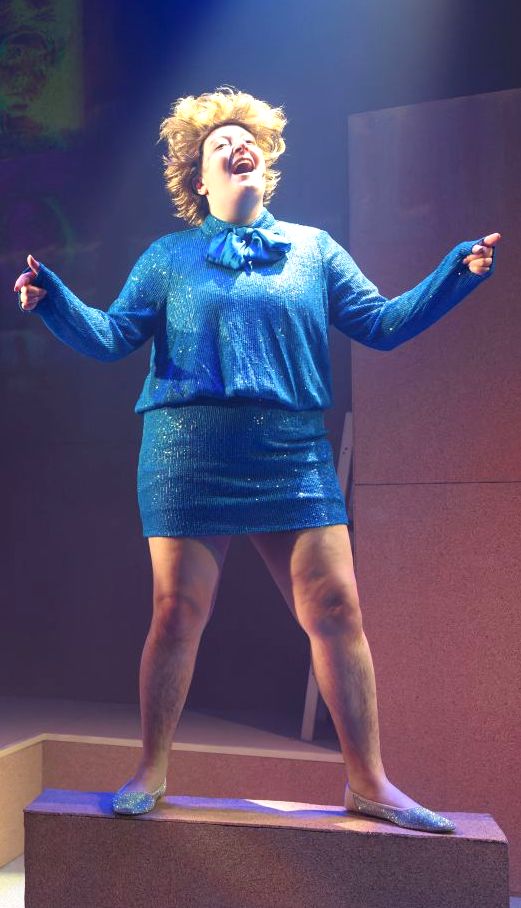
In the end, though, this is a triumphant piece of theatre. Stevens skewers Margaret Thatcher’s self-righteous ignorance in a comical depiction of the ex-PM: if she sounds ridiculous as she defends her nasty law, they’re her own words; she’s hoist by her own petard.

After the Act is vital viewing. Section 28 might have been relegated to the history books, but trans kids are in the middle of the same old battleground. We have to learn from what has gone before.

4.6 stars

Susan Singfield

The Grand Old Opera House Hotel

06/08/23

Traverse Theatre, Edinburgh

Occasionally you see a production that not only exceeds your expectations, but sends you out of the theatre exhilarated by its sheer invention. The Grand Old Opera House Hotel is one such play, a piece that fearlessly swings for the fences and hits all of its targets bang on. Part slapstick, part comic-opera, part mad-as-a-box-of-frogs spectacle, this is something you really don’t want to miss.

Aaron (Ali Watt) arrives at the titular establishment for his staff training and quickly learns that the recently rebuilt hotel is suffering from teething troubles. The electronic door numbers keep changing without warning, the lights flicker constantly and Aaron can hear people singing. A staff member tells him that, back in the day, the place was an actual opera house. It burned down sometime in the 1920s, killing the show’s cast in the process. Could Aaron be hearing their ghosts?

One of the singers he can hear is actually his opera-obsessed colleague, Amy (Karen Fishwick) – but Aaron doesn’t know that. He naturally thinks the place is haunted. If he just met up with Amy, in person, it would all be explained in an instant, but in a building with so many rooms, that’s not going to be easy…

It’s almost pointless to talk about the plot other than to say it all makes a twisted kind of sense. This delicious, sprawling extravaganza galumphs merrily through a whole gamut of different moods, characters and connections, barely stopping to draw a diaphragmatic breath. Isobel McArthur’s script is playful and exciting, while Ana Inés Jabares Pita’s set design opens up and interconnects like a Chinese puzzle box. Director Gareth Nicholls keeps his six-strong cast on their toes, moving through a whole series of lightning-fast costume changes, interacting, singing and sometimes even dancing for all they’re worth. It feels as though there are a lot more than half a dozen people on that stage. And in a way, there are.

McArthur keeps the pot simmering throughout, moving inexorably towards a tantalisingly prolonged conclusion. This is that rarest of creatures, an ambitious production that takes plenty of risks and somehow never puts a foot wrong. If you’re looking for something you’ll remember long after the final curtain, you’ve come to the right place.

5 stars

Philip Caveney

Adults

06/08/23

Traverse Theatre, Edinburgh

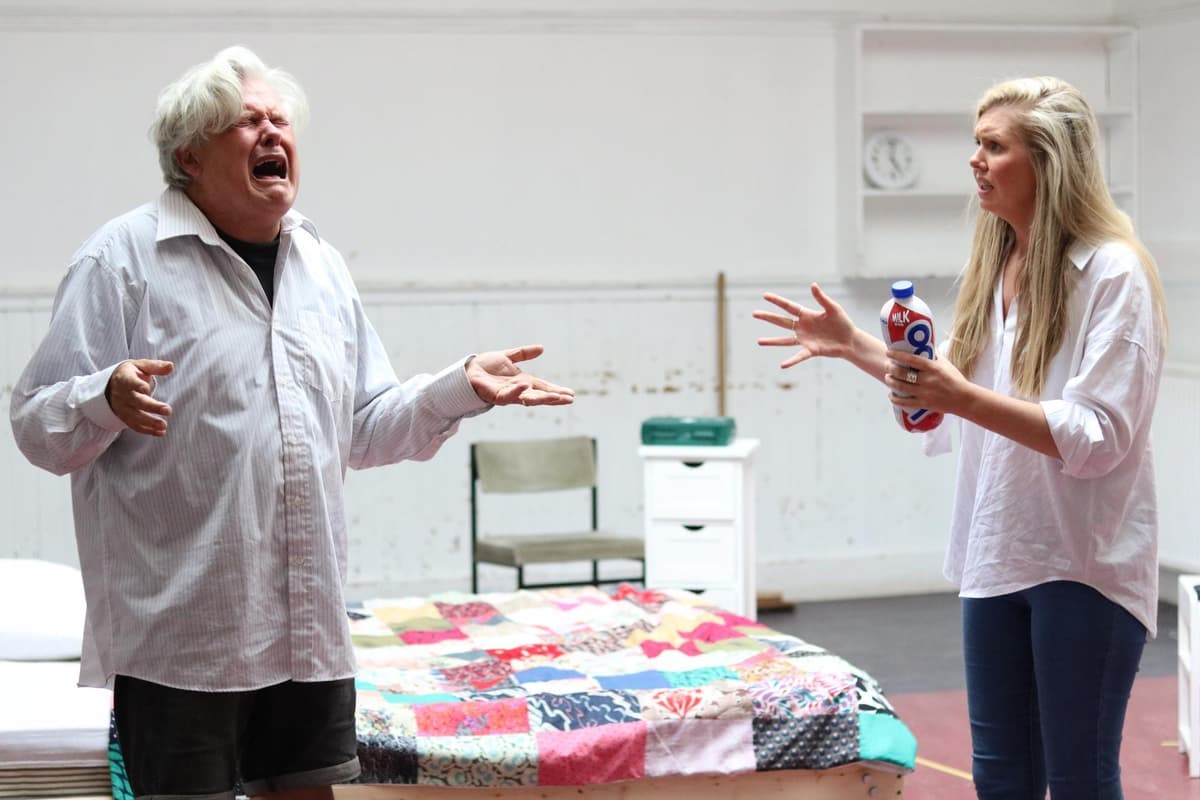
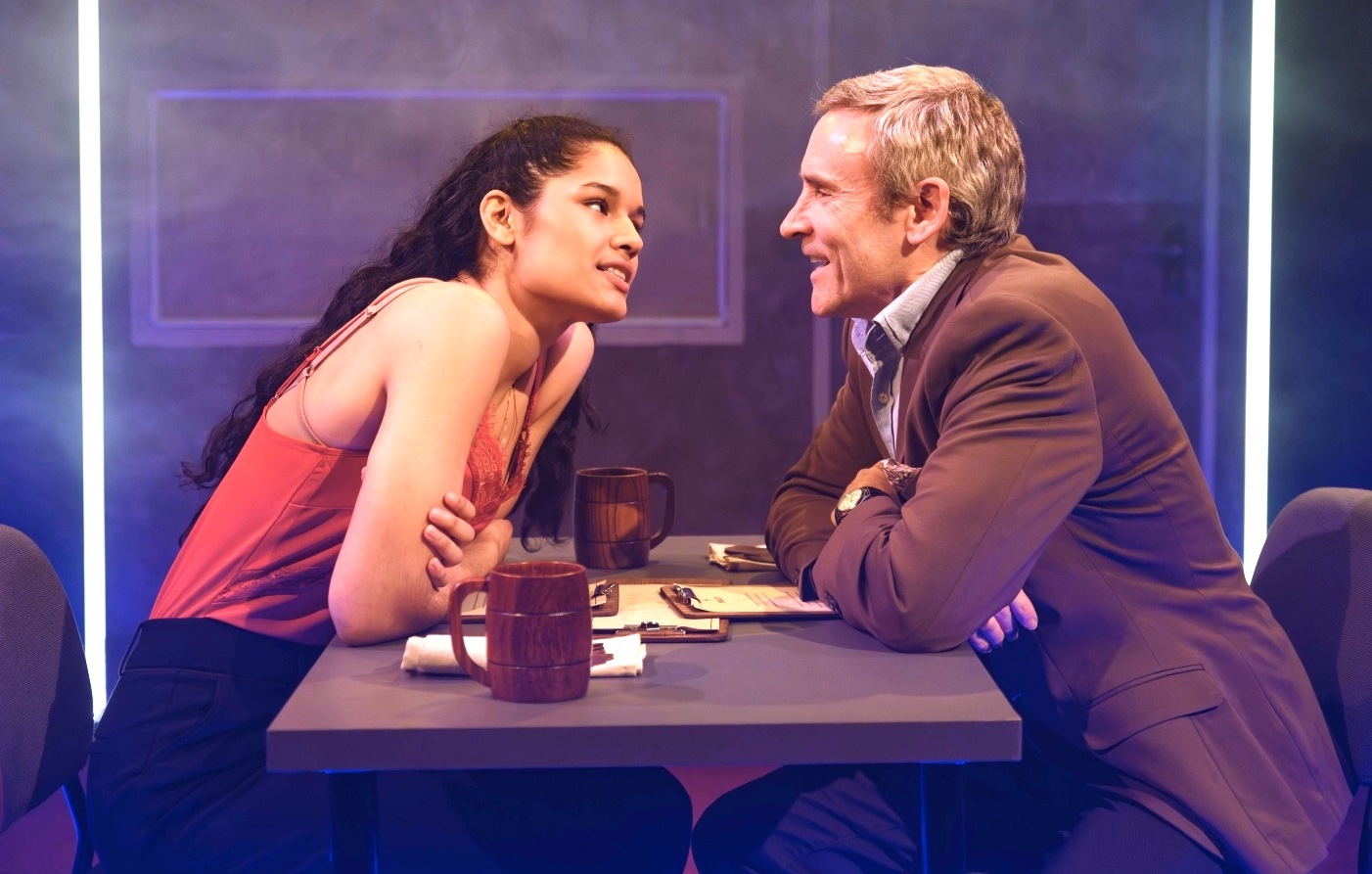
Zara (Dani Heron) has got things sorted, or as sorted as they can be, given the current state of the world. Admittedly, being a sex worker isn’t exactly living the dream, but her brothel is an ethical one – run as a workers’ collective – and she’s proud of the judgement-free service she and her colleague, Jay (Anders Hayward) provide. But still, it’s more than a little awkward when a new customer turns out to be her old teacher…

Mr Urquhart, or Iain (Conleth Hill), isn’t best pleased either. He was nervous anyway, and now he’s scared and embarrassed; he feels exposed. He’s only here to see if acting on his vague attraction to young men might help alleviate his misery, because he can’t go on as he is, hopeless and desperate, sick of his job, his marriage, even his kids…

As if the classroom reminiscences weren’t cringey enough, when Jay turns up – late – he’s got his baby daughter in tow. How can any of them collude in building a fantasy, when reality keeps intruding?

I’ve been a fan of playwright Kieran Hurley’s work since I saw Chalk Farm way back in 2013. He can always be relied upon to offer witty, thought-provoking material, with relatable, convincing characters, and Adults proves this once again. Both Zara’s skittish bravado and Jay’s reckless desperation are perfectly captured by Heron and Hayward, but it’s Hill’s depiction of Iain’s self-loathing and defensiveness that drives the piece. He’s done everything right, hasn’t he? So why does it all feel so wrong?

Directed by Roxanna Silbert, Adults has a stillness at its core, leading the audience to really listen, to hear what all three characters say, to see them for the complex, fascinating people they are. We’re all doomed, the message seems to be, so we might as well try to offer each other a bit of comfort while we can. Every generation will blame the one that’s gone before; it’s the way of the world. And every generation will fuck things up in their turn; we never manage to create that ‘better world’ we always say we want for our kids. It’s tragic – but here it’s belly-laugh funny too.

Sharp, incisive and hugely entertaining, Adults is another must-see offering from 2023’s TravFest.

4.4 stars

Susan Singfield

ChildMinder

10/06/23

Traverse Theatre, Edinburgh

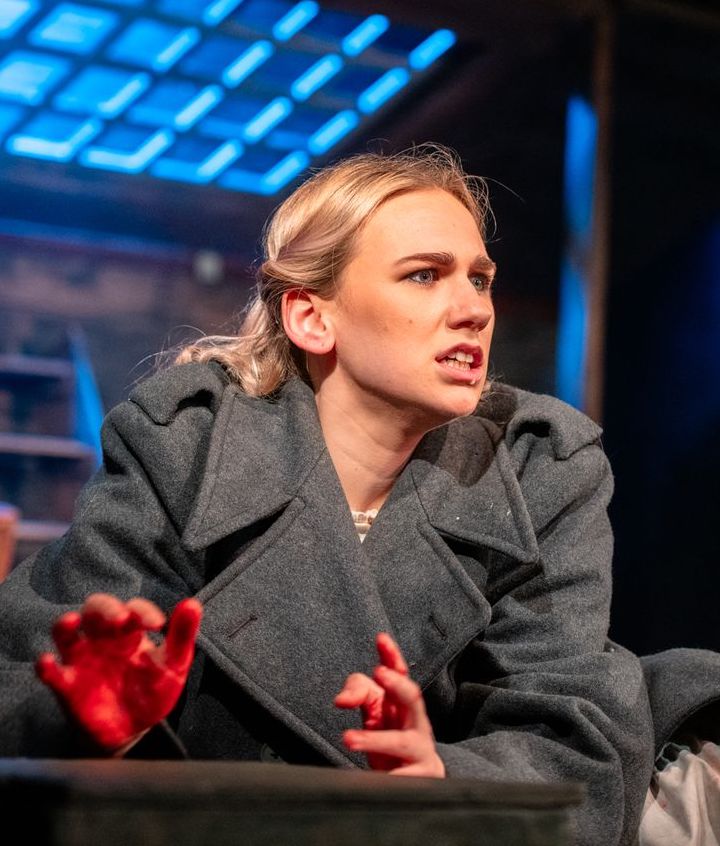
Edinburgh-born Joseph lives in New York, where he is a celebrated child psychiatrist. He seems to be living his best life, with a beautiful, clever girlfriend, as well as a stellar career. But Joseph’s success is built on shameful foundations and a reckoning looms. Reparations need to be made on both the micro and the macro level – for his own transgressions as well as his country’s.

There are two distinct strands here, each echoing the other, their links compelling if not always quite clear.

On the one hand, we have a pretty straightforward ghost story, its origins laid bare in the opening scene, where Joseph (Cal MacAninch) is confronted with a repressed memory from when he was five years old: his baby brother’s murder. This shocking revelation opens the door to other carefully-buried feelings of guilt, and Joseph soon finds himself tormented by the ghost of a thirteen-year-old patient, Sam (Ben Ewing), who holds the doctor accountable for his death.

On the other hand, we have a meditation on the nature of colonisation, symbolised by Joseph’s relationship with Cindy (Mara Huf), a Native American anthropologist. Cindy’s culture, all-but erased by white settlers, has now been commodified for their entertainment, and the couple indulge in an ‘authentic’ 1700s dinner in a fancy Manhattan restaurant. At first, the pair are in celebratory mode. After all, Cindy has just completed her PhD. But, as Joseph insists on sharing a long and rambling fantasy, a feeling of unease begins to grow, and it’s a relief when Cindy calls him out, and the allegorical nature of his proprietorial daydream is made evident.

This is an ambitious piece of theatre, and the actors are clearly revelling in its complexity. Ewing is particularly striking, both as the mysterious “wait”-er and the troubled Sam. The set, by Kenneth MacLeod, is stark and simple, the squares of light redolent of the glass-box apartments on Edinburgh’s Quartermile, ex-home of the Royal Infirmary, where Joseph used to work. These borders also serve to hem the characters in, trapping them in a claustrophobic nightmare.

For the most part, Kolbrún Björt Sigfúsdóttir’s direction is flawless, imbuing the piece with all the gravitas it requires. Even the scene transitions are eerie, each prop moved with intent – all carefully choreographed for maximum impact. However, all this precision makes the use of dry ice especially irritating. It adds nothing; it’s just invasive, obscuring the stage and making the audience cough.

I like what McClure is trying to achieve here. It’s an exacting script with a vast scope. I’m not sure it always comes off – a little more transparency wouldn’t go amiss – and it’s certainly not a crowd-pleaser (there are five walk-outs in tonight’s show). But we need theatre that pushes boundaries and challenges our expectations, and ChildMinder certainly gives us that.

3.7 stars

Susan Singfield

Who Killed My Father

11/05/23

Traverse Theatre, Edinburgh

Who Killed My Father is based on Édouard Louis’s 2018 autobiographical novel, Qui a tué mon père. Adapted and directed by Nora Wardell, it’s an eviscerating piece. Part polemic, part memoir, this monologue is presented as an address to Édouard (Michael Marcus)’s invisible father, thus casting the audience in the paternal role. It’s an interesting conceit.

Édouard’s father is disabled, thanks to his (literally) back-breaking work in a factory. But Édouard’s relationship with his dad is complicated: although he feels sympathy for the dependent old man he has become, he remains angry with the alcoholic homophobe, who made growing up gay in their small French village so very difficult. Still, now that he is an adult, Édouard is able to take a step back, and finally recognise the systemic inequalities that have shaped his father’s destiny, and to extrapolate from that the myriad ways in which so many marginalised people’s lives are damaged by political figures, uncaring and oblivious to the consequences of their acts. This play – where he denunciates these figures – is Édouard’s revenge.

It’s a compelling idea, but – for me – it doesn’t quite come off. For starters, there’s nothing to indicate that we’re in France until the very end, when a number of French politicians are named and shamed. This should be a powerful moment, but instead it momentarily confuses me, so that I’m mentally relocating the story rather than focusing on the point being made. In addition, the stage is cluttered with a vast array of props that just aren’t used, including a fabulously complex Scalextric. (I only had the figure-eight version when I was young; this one is the stuff of dreams, so it’s particularly frustrating that it’s given such prominence but never called into play.)

In the end, the message feels a little muddled, lost in a scattershot of anecdotes and directorial flourishes.

2.8 stars

Susan Singfield

Family Tree

05/04/23

Traverse Theatre, Edinburgh

Henrietta Lacks is not a household name – but she should be. The cervical cancer that killed her also produced one of the most important cell lines in medical research, HeLa. Harvested from her tumour without consent, Lacks’ immortal cells (which continue to divide when most would die) have been crucial in the development of the polio vaccine, AIDS and cancer treatments, IVF and more. She died in 1951, but her cells live on, even proving invaluable in the fight against COVID.

So why haven’t we heard of her? The answer is sadly obvious: because she was a Black woman.

Mojisola Adebayo’s play sets out to right this wrong, to give Lacks the recognition she deserves. It also raises some very important questions about consent and compensation. This isn’t just an historic issue. Sure, the USA now has the ‘Common Rule’ clarifying the principles of ethical research, but certain biotech companies have made huge profits from patenting HeLa cell products – and none of the money has ever found its way to her descendants.

Directed by Matthew Xia, Family Tree is a challenging and confrontational piece of theatre, Adebayo’s writing poetic and arresting. Lacks (Aminita Francis) rises from her grave to undo her erasure, to demand we hear her version of the tale. She’s not alone in the graveyard: three slave women also rest there, finally at peace after enduring years of intrusive experimentation at the hands of the so-called father of modern gynaecology, Dr J Marion Sims. There are three Black NHS nurses too, felled by the pandemic in 2020. Ain (Mofetoluwa Akande) is full of righteous anger, mostly against the ‘Why People’ who claim to be allies until it’s inconvenient. Lyn (Aimée Powell) and Bibi (Keziah Joseph) are quieter and more philosophical, the latter using the leisure time that death affords her to finally read Toni Morrison. Although Lacks’ is certainly the most compelling narrative – she is, quite literally, centre stage – the other women’s stories are important too, contextualising Lacks’ experiences, and showing how she is just one link in a shocking, still ongoing chain. The actors are all electric, their performances poised and bold, intense and heartfelt.

However, despite the painful subject matter, this is not a piece of trauma porn. Although the story is about the horrendous ways Black women have been abused, Adebayo also shows the women’s strength and joy, turning them into dancing goddesses, recognising them for the queens they are.

4.3 stars

Susan Singfield

How Not To Drown

29/03/23

Traverse Theatre, Edinburgh

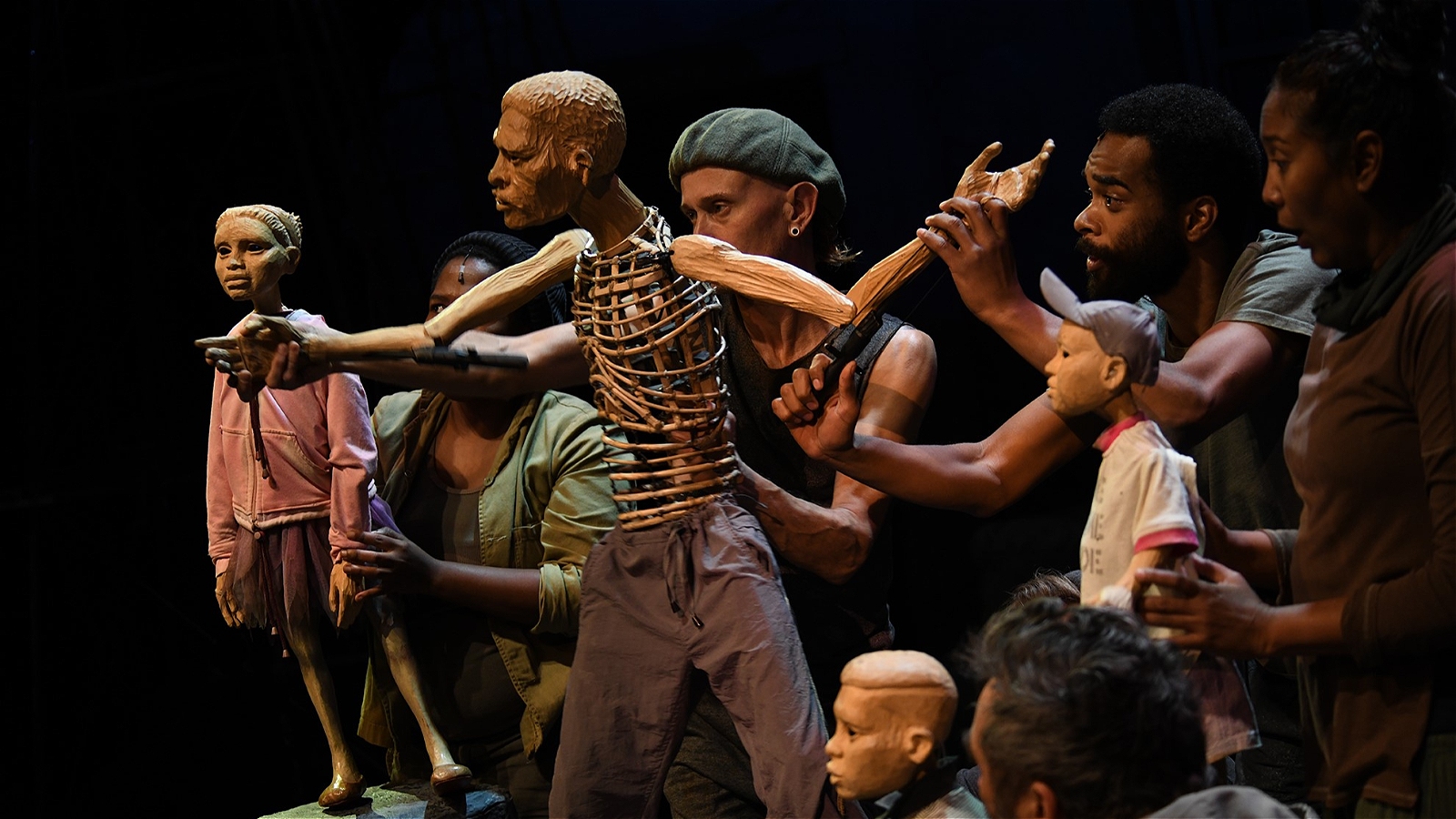
The first thing that captures my attention as I enter the auditorium is Becky Minto’s extraordinary set: a raised island of wooden planks, stark, powerful, simultaneously ramshackle and magisterial. There’s no other set dressing here, just two high towers of lighting on either side of the island, leaving lighting designer Zoe Spurr and composer/sound designer Alexandra Faye Braithwaite to layer on the atmosphere. Onto the dramatically sloping set climb the performers, five actors led by Dritan Kastrati, whose real life story is the inspiration for what we are about to watch (and who co-wrote the script with Nicola McCartney). But it’s clear from the outset that this will be an ensemble piece, as each of the actors in turn – Ajjaz Awad, Esme Bayley, Daniel Cahill and Sam Reuben – step forward to announce that they too are Dritan.

The drama unfolds, as the cast move back and forth on that precarious island, each actor in turn slipping into the role of Dritan, and skipping nimbly out again to portray a whole selection of other characters. There is never a moment’s confusion as to who is who. Director/ choreographer Neil Bettles has the cast drilled to perfection, as – with a modicum of props – they evoke a series of diverse locations and situations… and then, in a jaw-dropping coup de théâtre, the island begins to move.

Dritan’s story is one of abandonment and survival. At the age of eleven, he’s despatched by his well-meaning father from the family home in Albania, as war threatens to engulf the country. What follows is Dritan’s arduous attempt to get to his older brother somewhere in England, a difficult and sometimes dangerous journey. A sequence that portrays a perilous sea crossing feels horribly immersive, capturing the panic and uncertainty of the situation.

 Once in the UK, Dritan is confronted by the punishing series of hurdles faced by all young asylum seekers – a thankless procession of foster families, social workers and interpreters, each trying to give this boy whatever he asks for, but failing to provide him with the one thing he really needs: a family. We watch as his hopes and expectations crumble into dust.

How Not to Drown isn’t easy viewing, yet I wholeheartedly recommend it. It’s a powerful and affecting examination of the failure of bureaucracy, demonstrating all too clearly the problems that occur when it comes to caring for a child, cast adrift from everything he knows. Dritan Kastrati is only one of millions of people who have survived this awful situation, but his play brilliantly illuminates the experience like a beacon shining in a storm.

4.4 stars

Philip Caveney

Babs

14/03/23

Traverse Theatre, Edinburgh

This week’s A Play, A Pie and A Pint is the pithily titled Babs by Morna Young. We’ve enjoyed Young’s work before – Lost at Sea and Aye, Elvis are both excellent examples of Scottish theatre – so we arrive at the Traverse this Tuesday lunch time with high expectations. The set, by Gemma Patchett and Jonny Scott, doesn’t give much away: there are a few fir trees, some pipes, a couple of skulls and a ukelele – an eclectic mix, promising something unusual.

We’re not disappointed.

Bethany Tennick plays Lisa, a troubled young quine from Aberdeen, who lives for her annual holiday with her best pal, Shelley. Apart from that, all Lisa has is her guitar, her tunes and a truckload of attitude. So when Shelley decides she’d rather go away with her new boyfriend, Gareth, Lisa is raging. How dare Shelley ditch her? Desperate and drunk, she signs up for a solo retreat, which turns out to be life-changing, because ‘Babs’, the mysterious host, is none other than Baba Yaga – she of the iron teeth and chicken-legged house… Why has she invited Lisa here?

Young’s decision to write the piece in Doric dialect gives it an urgent authenticity, underscoring Lisa’s need to be true to herself, even as she searches for a new identity. She is a bold, in-your-face character, and Tennick imbues her with such spark and vim that it’s impossible not to warm to her, even when she’s being completely unreasonable. The songs (composed by Tennick) add an extra dimension, showing us that Lisa has the potential to be more than ‘a sheep’, even if she can’t yet see it herself. The plaintive ode to her mother is especially emotive.

Despite its dark themes, Babs is essentially a comedy, and I spend much of the fifty-minute running time laughing at Lisa’s disproportionate outrage, or at her renditions of the other characters who populate the tale. Director Beth Morton keeps the pace snappy, and every joke lands well with the audience.

I’m fair-tricket to say this is another winner from 2023’s first PPP season.

4.2 stars

Susan Singfield

Burning Bright

07/03/23

Traverse Theatre, Edinburgh

This latest season of A Play, A Pie and A Pint promises to be a good ‘un. Hot on the heels of last week’s sprightly Until It’s Gone comes Burning Bright, Áine King’s apocalyptic depiction of the climate crisis engulfing us. It’s no surprise to learn that this play won the 2022 David MacLennan award: it’s evocative and visual, a big story told in small fragments, as economical as poetry.

We are presented with three disparate narratives, linked by an over-arching theme of environmental collapse. Suzanne Magowan is a TV journalist desperately chasing a story about Australian wildfires, more interested in saving her career than in saving the earth. Hannah Jarrett-Scott plays a grief-stricken young woman with an eco-tourism business, taking rich adventurers on her boat, The Ice Princess, to see the polar ice caps before they’re gone. And Adam Buksh is a survivor: he’s escaped floods and tigers in his native India, and now he’s navigating racism on his Glasgow street.

The performances are all strong, the characters compellingly portrayed, and the writing is gorgeously cinematic – the image of a blazing horse, for example, is horribly mesmerising. Roxana Haines (director), Gemma Patchett and Jonny Scott (designers) achieve astonishing things with a tiny stage and a minimal set, so that it’s easy to suspend my disbelief and accept that I am, simultaneously, in the Arctic, Australia, Scotland and India, witnessing fire, floods and melting ice caps.

The conceit works to emphasise the ubiquity and urgency of climate breakdown. Even these characters, closer to the epicentres of disaster than most of us, are each only aware of one aspect of the problem. But here in the audience, we are shown the cumulative effect: their monologues are tangled and entwined, so that we see their interdependence and the extent of the catastrophe that’s looming over us. The image is there throughout, cleverly captured in the juxtaposition of the encroaching wave of plastic waste that dominates the set, and the tiny dinghy representing our precarious position.

Burning Bright is a superbly accomplished piece of theatre, skilfully illuminating why climate change is an issue we can’t afford to ignore.

4.7 stars

Susan Singfield

Until It’s Gone

28/02/23

Traverse Theatre, Edinburgh

This sprightly two-hander packs a lot into its fifty-minute running time. Until It’s Gone is the first of 2023’s A Play, a Pie and a Pint offerings, and it’s a corker: Alison Carr’s tight and cleverly-crafted script imagines a future where all of womankind have disappeared, and men are left to make the best of a world without them. In stark contrast to Charlotte Perkins-Gilman’s Herland, where women have created a female Utopia, this male-only Scotland is a dystopian mess, its citizens desperate for the women to return from their unspecified and unexplained exile.

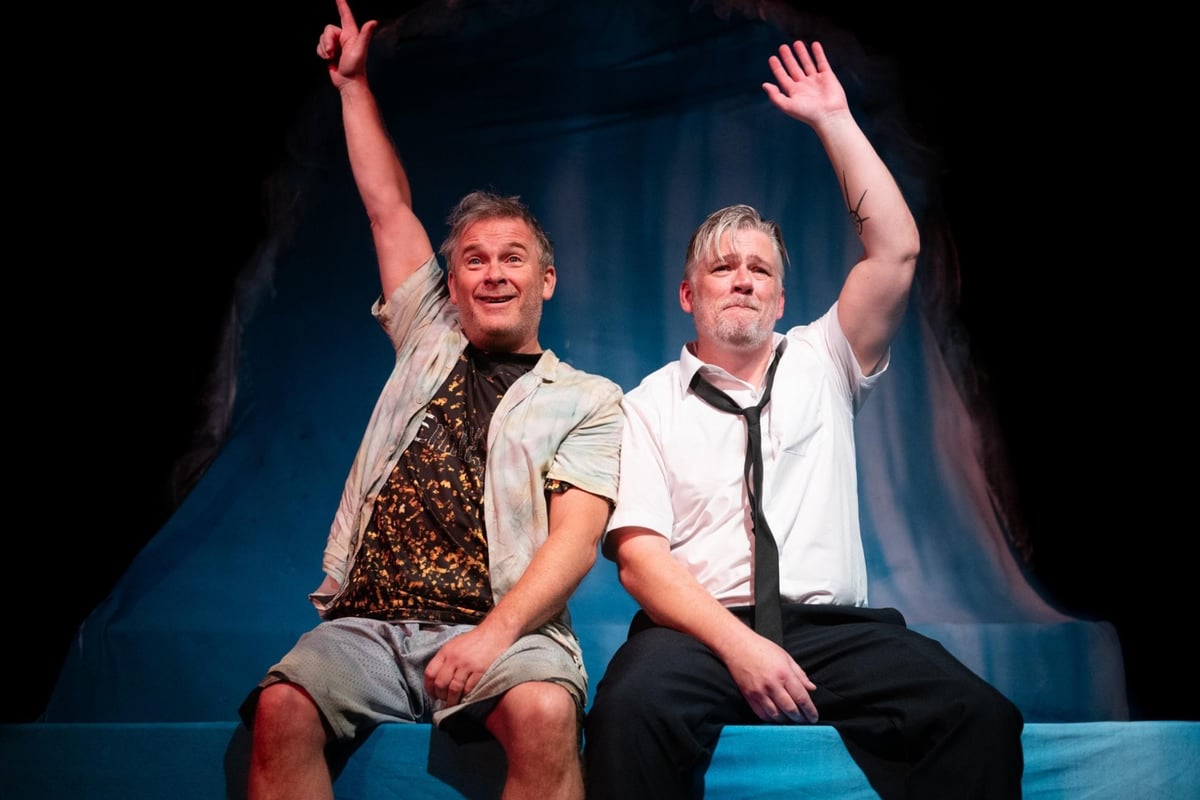
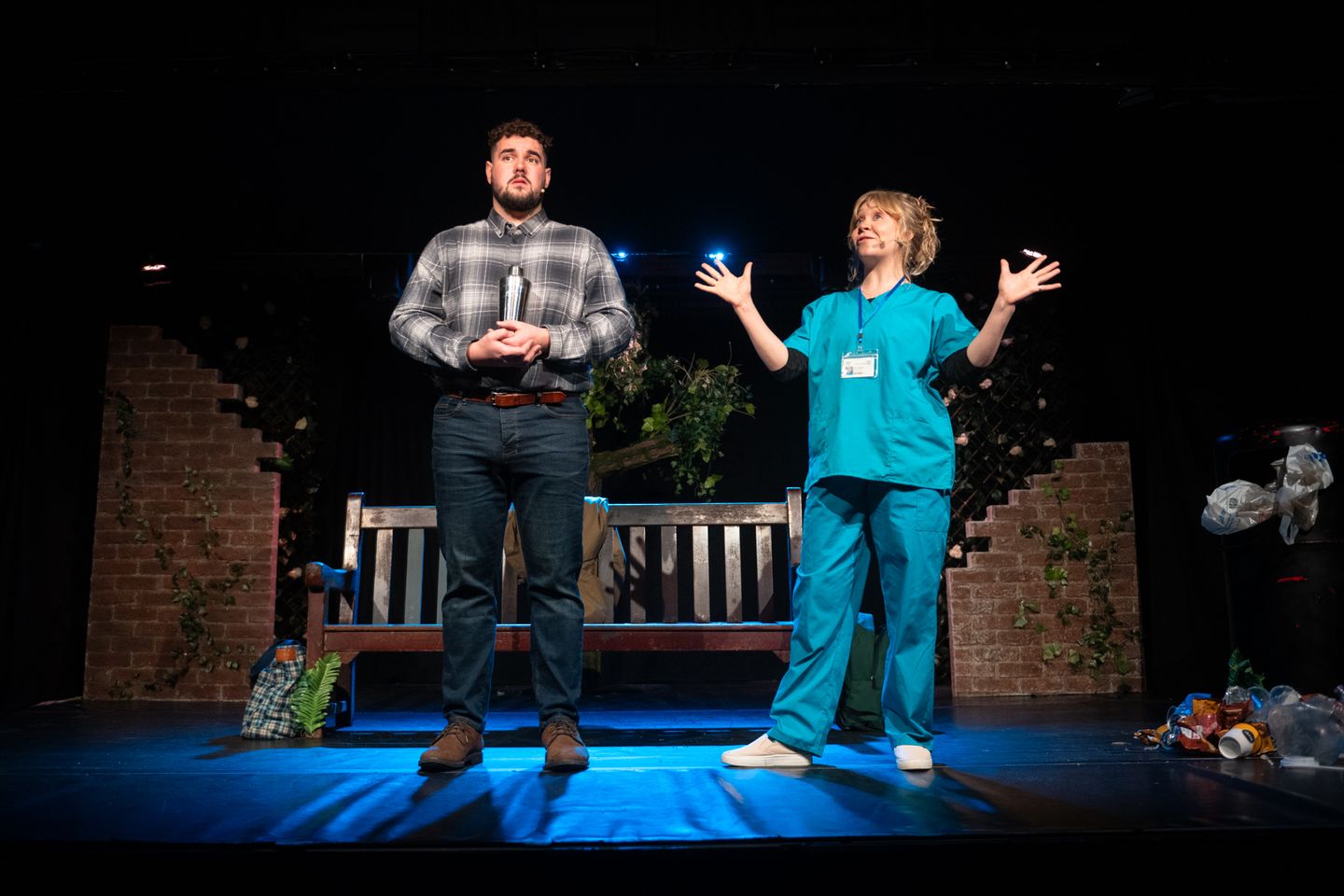
We’re offered a glimpse into this terrifying scenario through a simple park-bench, chalk-and-cheese set-up: a meeting between an eager young man of twenty-five (Sean Connor) and a gruff older one (Billy Mack). They’ve been matched by a supposedly ‘world-beating’ app, but this is not a date – or at least, not a conventional one. They are two avowedly heterosexual, cis-gendered men, following a strict government mandate to ‘connect’ – because things aren’t sustainable as they are. Through this smallest of microcosms, Carr seeds just enough information into the men’s darkly comic dialogue to allow us to envisage the bigger picture, the tortured society in which they live, where schools are closed, most interactions happen online, and everything feels wrong.

The characters are beautifully realised, played with warmth and humour by Connor and Mack, even as they expose the men’s real pain. The generational divide is deftly managed, the initial chasm between them narrowing as they talk and share confidences, slowly realising that they’re more alike than not, that their shared fate should bind them rather than pull them apart.

Under Caitlin Skinner’s assured direction, the play’s political points are clearly made without ever feeling intrusive. I like the cheeky use of tableaux and blackouts to mark the passage of time at the beginning, and the set – by Gemma Patchett and Jonny Scott – is modest but strikingly effective. I’m especially drawn to the myriad images of women adorning the tumbledown walls, and find myself wondering if they are ‘missing’ posters or simply photos, there to remind the men of what they’ve lost. 

Because, of course, you never know until it’s gone…

4.4 stars

Susan Singfield