Traverse Theatre

Lost Girls/ At Bus Stops

15/10/24

Traverse Theatre, Edinburgh

Lost Girls/At Bus Stops is my favourite so far in this PPP season: I love the marriage of Róisín Sheridan-Bryson’s fragmented, non-linear writing with Laila Noble’s kinetic direction. 

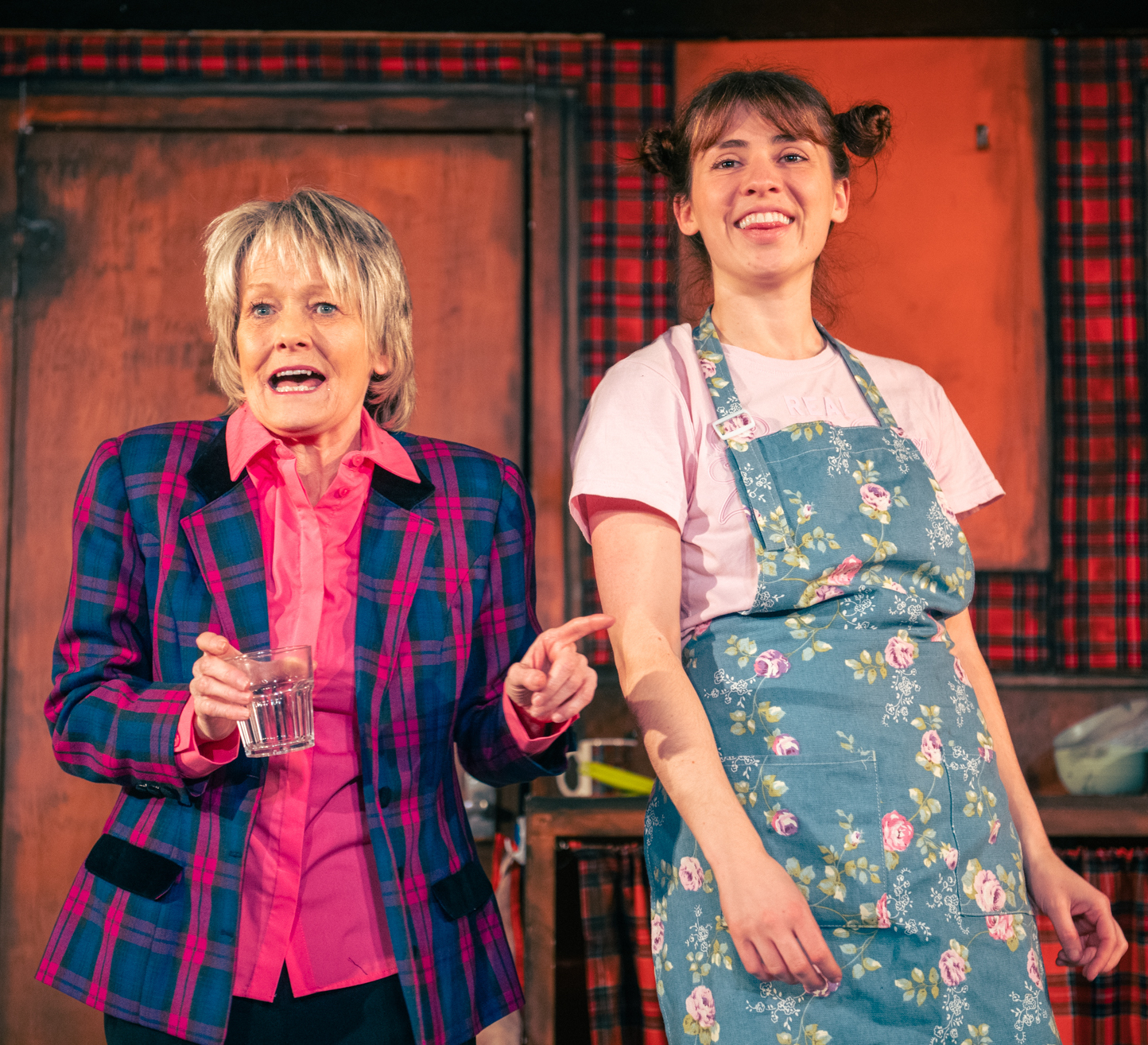
At its heart there’s a simple will-they/won’t they love story. Ever since Jess (Catriona Faint) approached Iona (Leyla Aycan) at a bus stop with a flyer for a Fringe show several years ago, the two have been friends, meeting up every August to make the most of the Festival buzz, weaving their way from show to bar to show again, navigating the crowds, the hills, the closes, the booze. On the surface, theirs is an easy alliance, born of a shared hedonism and an openness about who they are. Underneath, they’re a mess of repressed longing, each too nervous to risk their precious friendship by declaring how they really feel. And this time, with Iona about to leave for pastures new, there’s an added pressure. If neither of them makes a move, it’ll be too late.

Sheridan-Bryson’s script skips nimbly between dialogue and narration, the protagonists referring to themselves in both third and first person, almost mythologising the city, their accounts of various Edinburgh nights colliding as they disagree about details and bring different moments to the fore. The disrupted timeline mirrors a real-life conversation, almost stream-of-consciousness in its construction, bouncing back and forth through their shared memories.

The two actors portray the contrasting characters with aplomb, Aycan’s gentle stillness a perfect foil for Faint’s more manic, agitated demeanour. As Jess reacts to the pressure by downing drink after drink, snogging random men and trying to start fights, Iona – while matching her on the booze front – is altogether calmer, trying time and again to make Jess stop and talk, to say the things they need to say. Their emotions are palpable and it’s impossible not to feel engaged, not to sit silently urging them to take the plunge. 

Zephyr Liddell’s set is simple but effective, the grimy bus stop and disco lights echoing the superficial glamour of a sequin-clad performer in an archetypal dingy Fringe venue. 

Sheridan-Bryson pulls off the difficult task of creating a play that is at once meta-theatrical and down-to-earth, complex in structure but easy to follow. It’s an impressive piece of work. 

4.6 stars

Susan Singfield

Anna/Anastasia

08/10/24

Traverse Theatre, Edinburgh

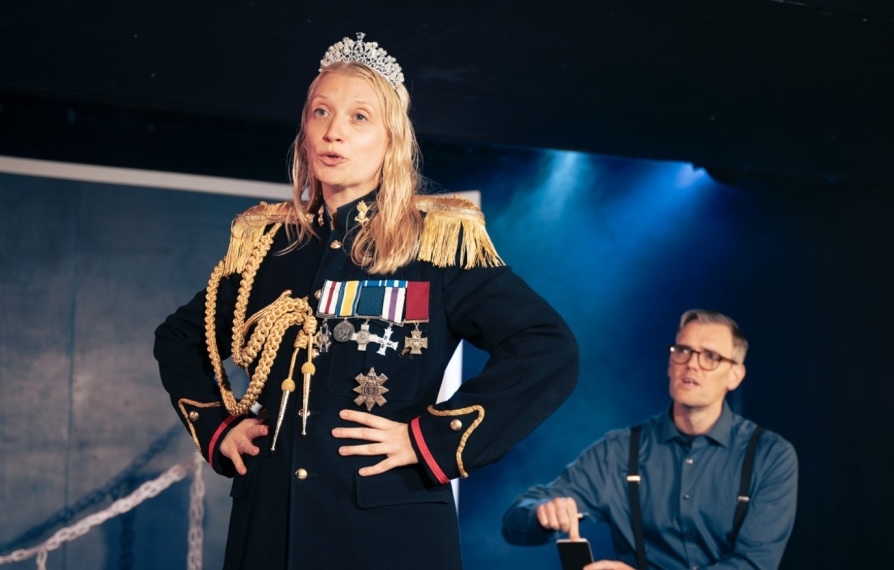
Berlin, February, 1922. Following a failed suicide attempt, Anna (Kirsty McDuff) is brought to a local police station. She’s dripping wet after trying to drown herself in a local canal. She is interviewed by Franz (Chris Forbes), a straight-laced police officer with a liking for equally straight talking. But when she claims to be the Grand Duchess Anastasia, the lone survivor of the assassination of her entire family by Bolshevik revolutionaries two years earlier, Franz isn’t quite sure what to believe. For one thing, Anna talks so lucidly about her glamorous past: her memories from the court of Nicholas and Alexandra, the glittering balls, the wonderful meals.

And for another, she is wearing an expensive-looking tiara that’s clearly been dented by a bullet…

Inspired by real events, Anna/Anastasia approaches its subject matter with an endearing sense of humour, playing Anna’s volatility off against Franz’s restrained, analytical approach. Franz, we are told, paints china swans as a hobby and keeps them up in the attic out of harm’s way. Anna, with her unrestrained bursts of exuberance, represents something he is unaccustomed to, something that threatens to bring all his most established convictions clattering down around him in pieces – and yet, as the years pass and Anna’s fortunes rise and fall, the couple keep re-encountering each other and a kind of guarded relationship develops.

The sprightly script by Jonny Donahoe (whose Every Brilliant Thing is a popular yearly visitor to the Edinburgh Fringe) maintains just the right mix of comedy and pathos, while the two performers make perfect foils for each other. McDuff stays in character the whole way through, inhabiting Anderson’s turbulent persona with considerable skill, while Forbes occasionally steps out of his main role to play a number of subsidiary characters – at one point breathlessly re-enacting the murder of the entire Romonov family single-handedly. Liz Caruthers handles the direction with an assured touch.

The story of Anna Anderson has formed the basis for many plays and films over the years and, though the mystery has recently been pretty much solved thanks to DNA testing, it continues to exert considerable powers over the public imagination. As Anna/Anastasia seems to emphasise, the actual truth of the story is somehow less important than the speculation it has always kindled – and the play’s bitter-sweet conclusion still manages to leave us wondering about the possibilities.

4.4 stars

Philip Caveney

Edfest Bouquets 2024

Another incredible August in Edinburgh. Another Fringe packed with wonders to behold. As ever, we’ve put together our annual list of virtual bouquets for the shows that blew us away.

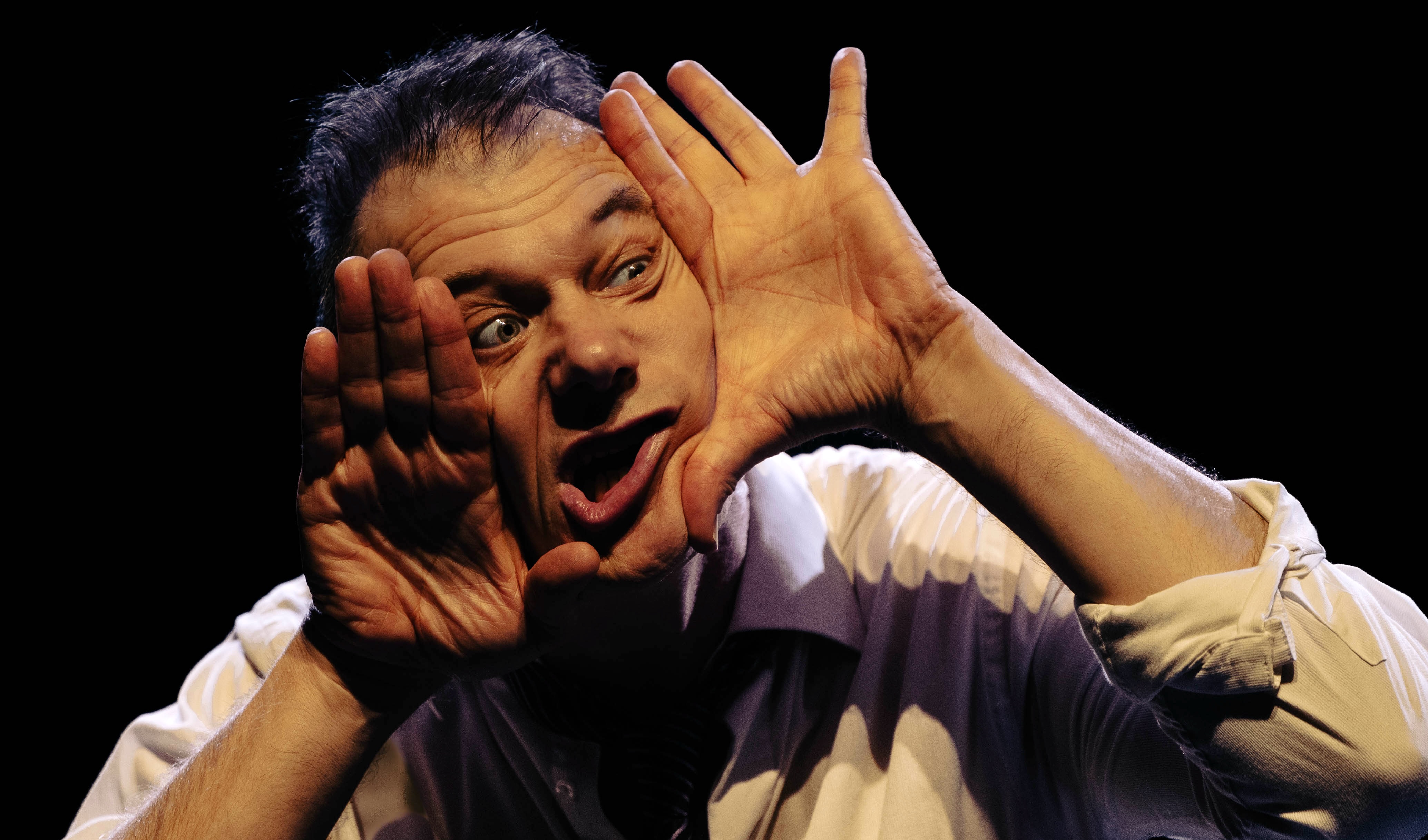
Julia VanderVeen : My Grandmother’s Eye PatchZOO Playground

“A lot of the comedy comes simply from VanderVeen’s exaggerated facial expressions and her tendency to skewer audience members with a scarily intense stare…”

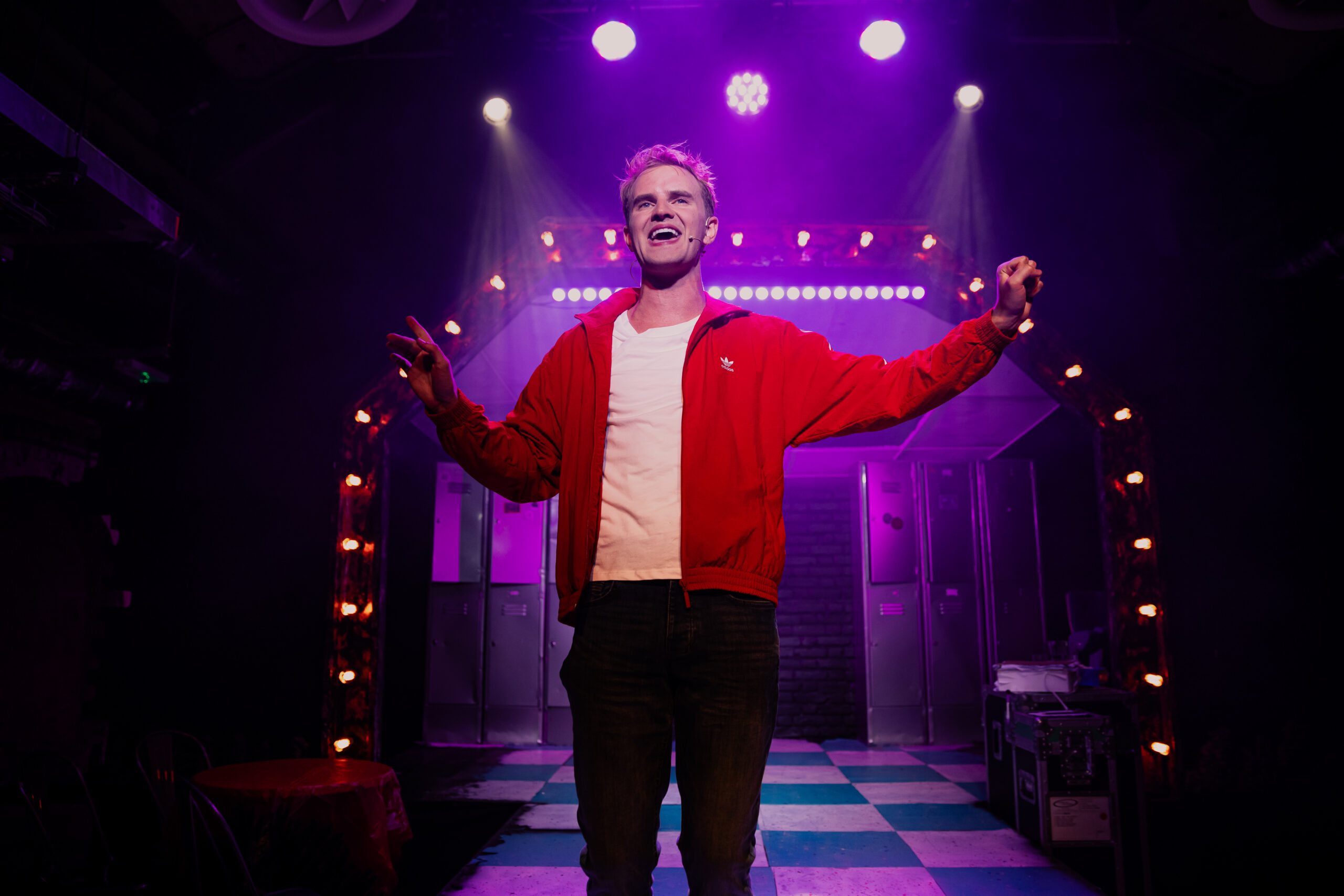
Luke BayerDiva: Live from HellUnderbelly (Belly Button), Cowgate

“Channing (the name is obviously a reference to Bette Davis in All About Eve) is a delightful character, supremely self-obsessed, deliciously callous and intent on achieving stardom at any cost…”

The Sound Inside – Traverse Theatre

“Director Matt Wilkinson handles the various elements of the play with skill, and guides it to a poignant conclusion…”

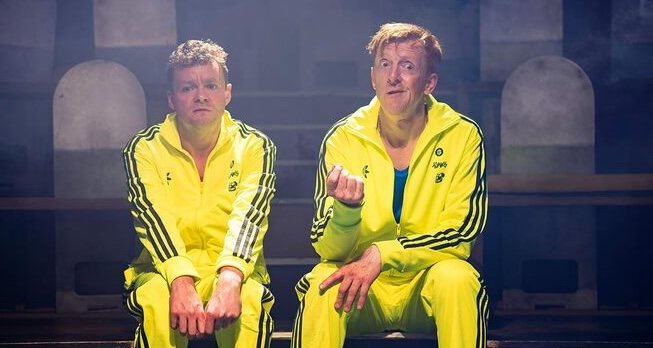
Summer of Harold – Assembly (Checkpoint)

‘If you’re looking for an hour-and-a-half of impressive theatre, with snort-out-loud humour as well as profound emotional moments, then Summer of Harold ticks all the boxes…”

Rebels and Patriots – Pleasance Courtyard (Upstairs)

“Loosely stitched with a sprinkling of history and Shakespeare, it all adds up to something very thoughtful…”

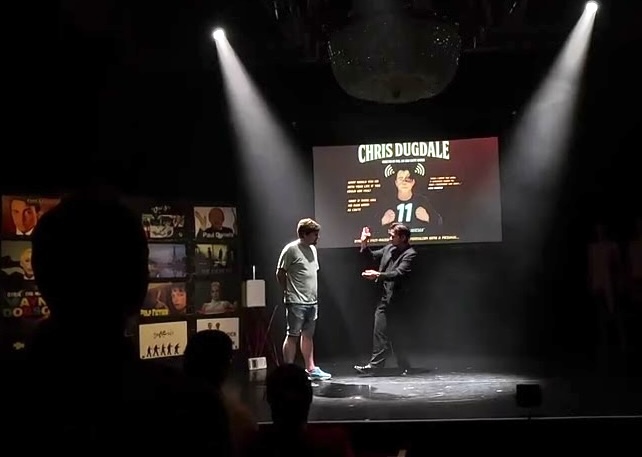
Chris Dugdale: 11 – Assembly George Street (Ballroom)

“There are some examples of mind control that have us shaking our heads in disbelief – and I may be guilty of muttering the odd expletive…”

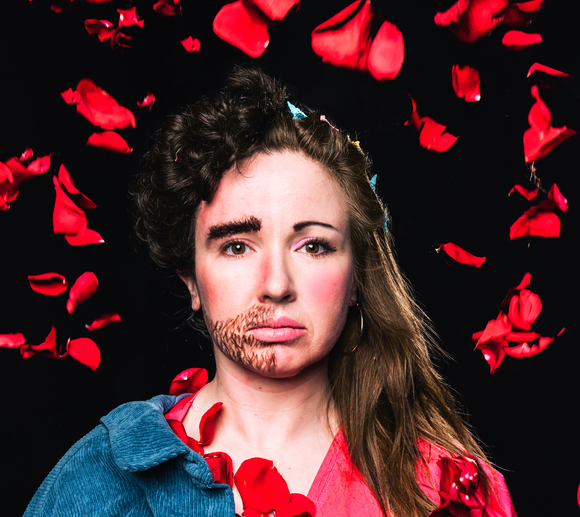
Natalie Palamides: Weer – Traverse Theatre

“A great big slice of the absurd, expert clowning performed with such reckless abandon that you can’t help loving it…”

V.L. – Roundabout at Summerhall

“A whip-smart comedy that also has some incisive things to say about the difficulties of adolescence and the importance of friendship…”

Sam Ipema: Dear Annie, I Hate YouZOO Playground

“A wonderfully inventive and cleverly-assembled slice of true experience, by turns funny, profound and – at one particular point – very challenging…”

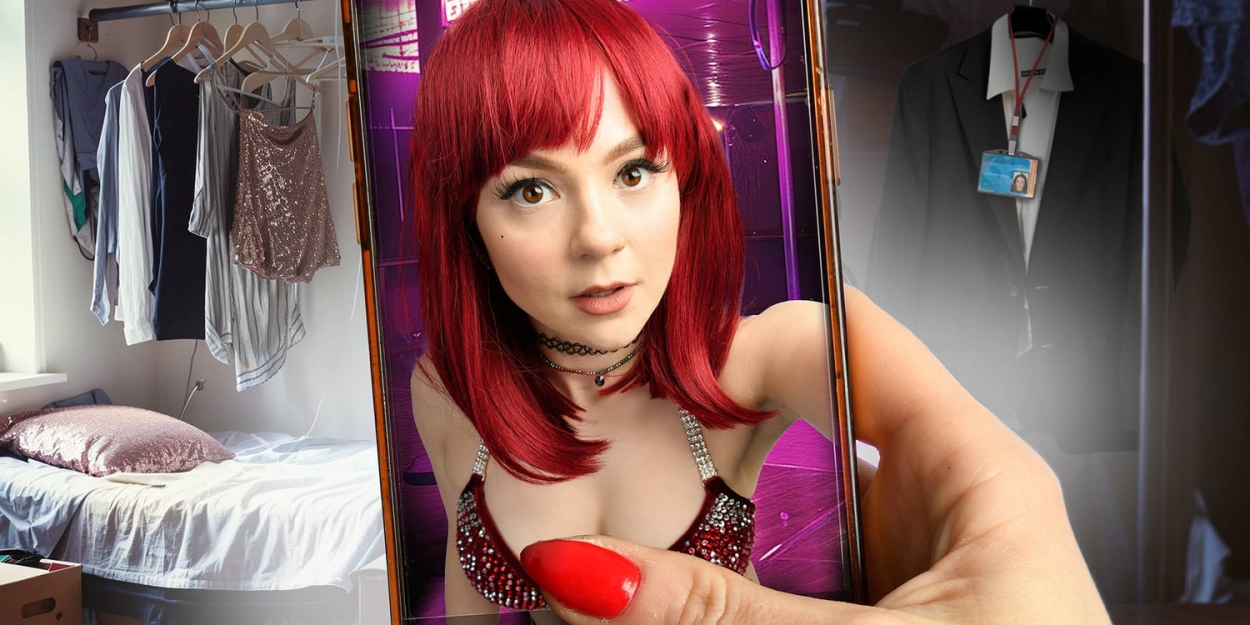
Michaela Burger: The State of Grace – Assembly George Street (Drawing Room)

“Not so much an impersonation as a transformation. Burger talks eloquently and provocatively about the lives of sex workers, explaining why there is a need for their business to be recognised…”

Honourable Mentions

Werewolf – Summerhall (Former Women’s Locker Room)

“I love it. The wardens do an excellent job of inhabiting their characters at the same time as managing the narrative, expertly drawing what they need from the participants…”

Megan Prescot: Really Good Exposure – Underbelly (Belly Button)

“Prescott is an accomplished performer. She tantalises and reels us in before skewering our internal biases and forcing us to think…”

A Knock on the Roof

14/08/24

Traverse Theatre, Edinburgh

Written and performed by Khawla Ibraheem, A Knock on the Roof is a horrifying illustration of the realities of living under Israeli occupation.

Mariam’s ‘normal’ life sounds bad enough. The electricity supply only works for a few hours each day, so she has to be ready when it comes on – to charge her phone, wash the dishes, take a quick shower. Fresh water is in short supply, and she’s forbidden her son from swimming at the beach because the sea is so polluted.

When war comes – again – things are even worse.

Mariam’s biggest fear is the euphemistic ‘knock on the roof’ – a small bomb dropped on a residential building to give notice that a bigger one is on its way. This is a perverse distortion of the international humanitarian law requiring an effective warning before a civilian target is attacked, and it destroys Mariam’s mental health. Her husband is in England – working on his PhD, trying to forge a better life for them – so she’s on her own, looking after her young son and her elderly mother, and the anxiety is too much to bear.

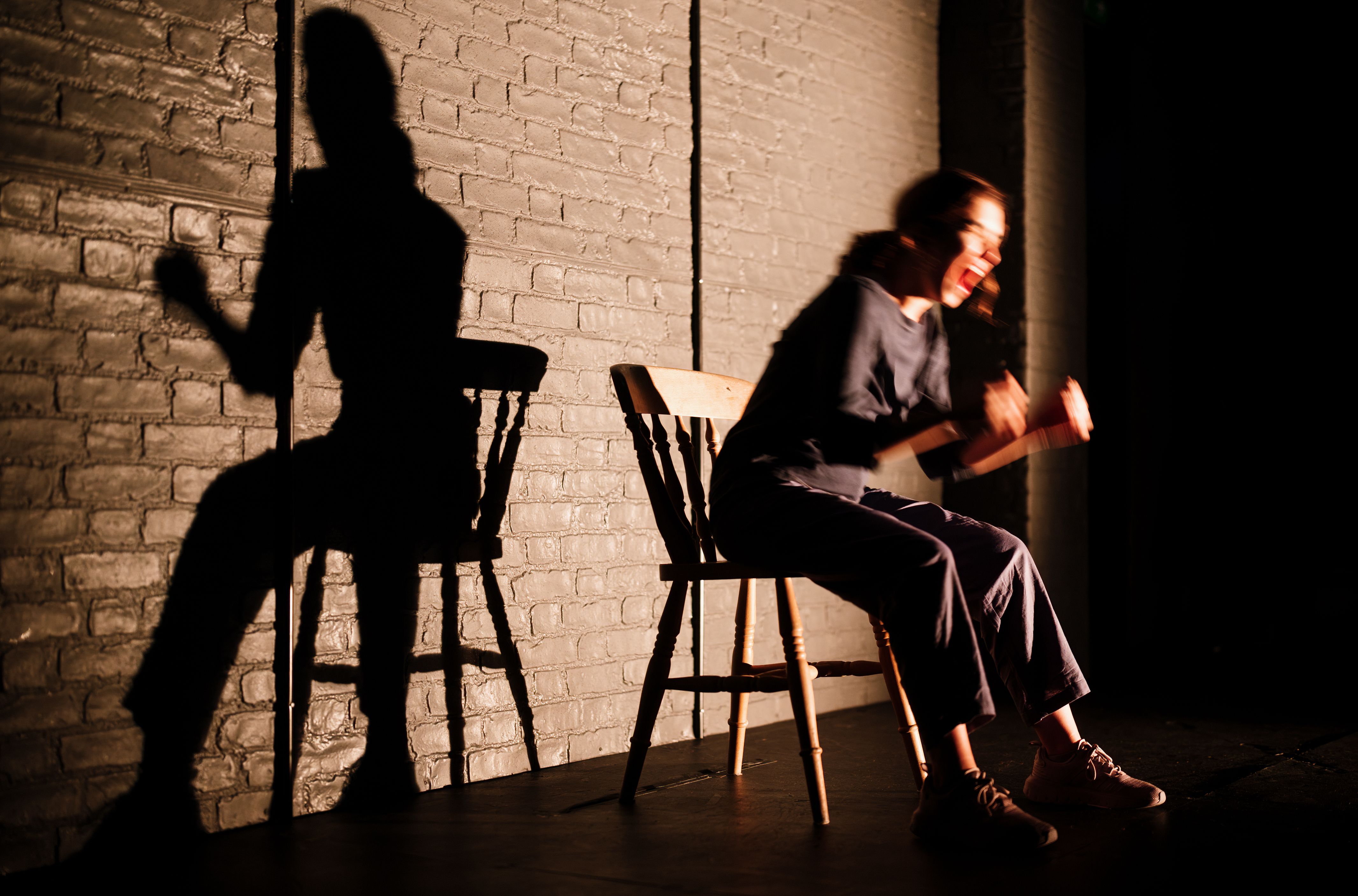
She begins to practise running, to maximise her chances of fleeing to safety in the five minutes she’ll have when the knock on the roof comes. Director Oliver Butler uses these sprints to make the monologue dynamic, Mariam’s kinetic force conveying her panic. This is further emphasised by the frantic pace of Ibraheem’s vocal delivery. In fact, sometimes she speaks so quickly that it’s hard to catch every word, but the gist is always clear, and it ensures we are in no doubt about how terrified she is.

The staging is almost completely stripped back, with a single chair the only prop. There is only one theatrical flourish in the whole play, and – when it comes – Hana S Kim’s projection is genuinely breathtaking.

If A Knock on the Roof begins to feel repetitive, then I guess that’s the point. This is how Mariam lives, repeating the same routine over and over, like a ritual. If she can get this right, she can save her son. In the end, she begins to wish for the bomb, because waiting for it is killing her…

An intense and heartfelt production with a vital message, A Knock on the Roof is a timely eye-opener, and an important part of Travfest 24.

4 stars

Susan Singfield

In Two Minds

02/08/24

Traverse Theatre, Edinburgh

Joanne Ryan’s affecting two-hander explores the complex bond between a woman and her mother. Daughter (Karen McCartney) cherishes the tranquility of her minimalist studio apartment, but Mother (Pom Boyd) needs somewhere to stay while she’s having an extension built. Over the course of her protracted visit, their fragile relationship is pushed to breaking point.

It’s not just the accompanying clutter that grates on Daughter’s nerves. It’s the incessant talking, the veiled (and unveiled) criticisms, the sleeplessness – it’s all an intrusion into her hard-won peace. And she feels guilty too, because none of it is Mother’s fault. She has bipolar disorder.

Both Ryan’s script and Sarah Jane Scaife’s direction deftly convey how accustomed the characters are to Mother’s episodes. They’re not fazed; they have been here too many times before. There’s no dramatic reaction to her illness, rather a weary, frustrated sense of here-we-go-again. They know how this plays out and they know what they have to do. Over the years, they’ve learned to protect their relationship by maintaining some distance; forced together, it begins to disintegrate.

Boyd’s performance is flawless. She perfectly captures Mother’s brittle façade: her inability to stop talking, even when she knows that she’ll regret her words; her vibrant exuberance; her torpid misery. McCartney too is utterly convincing, clinging desperately to her career, trying to care for Mother without losing herself.

Alyson Cummings’ set embodies the quietude Daughter craves: simple, unfussy, light and clean. As soon as Mother enters, we can see the disruption she brings, even her kicked-off shoes a reproach to Daughter’s obsessive tidiness.

I’m not usually a fan of lengthy scene transitions and too many props, but Scaife uses them skilfully to illustrate both the passing of time and the steady accumulation of Mother’s belongings. The tension in these moments is further heightened by Rob Moloney’s unsettling sound design.

In Two Minds is a clever play, at once discomfiting and heartwarming. As well as an unflinching examination of the impact of mental illness on the protagonists’ relationship, it’s also a love story of sorts, and sure to be a success at this year’s Fringe.

4.2 stars

Susan Singfield
This is Memorial Device

05/04/24

Traverse Theatre, Edinburgh

A band does not become a cult all on its own – it takes devoted followers to propel it into those glorious realms, and music critic Ross Raymond (Paul Higgins) is one such follower. We’ve been summoned to a cluttered storage room in Airdrie, wherein he has assembled all the mementos of his youth, the time when he fell head over heels in love with the titular band, the greatest musicians you’ve never heard of. And he so desperately wants to spread the love, to show us exactly why they are legendary, it’s almost embarrassing.

This is Memorial Device, produced in association with The Lyceum Theatre and the Edinburgh International Book Festival, is based upon the acclaimed novel by David Keenan. Graham Eatough’s adaptation is essentially a monologue, though it’s augmented by filmed contributions from four other actors – Julie Wilson Nimmo, Mary Gapinski, Sanjeev Kohli and Gabriel Quigley – all of whom have their own respective ‘memories’ to share. And there are, of course, the four showroom dummies, who stand in for the members of the band, lovingly assembled by Raymond as the story unfolds.

He proudly shows us the various bits and pieces he has curated over the years – the scrapbooks, the vinyls, the cassettes and the T-shirts, the various scribblings and doodles in which he perceives some kind of hidden meaning. His fervour is evident, his wild-eyed enthusiasm utterly compelling as he darts back and forth across the stage, attempting to demonstrate the qualities that first drew him in to the band’s orbit, that first made him want to give them his allegiance.

Higgins submits an extraordinary performance and there’s enough detail here to convince us that this band actually existed. The music by Stephen Pastel and Gavin Thomson completes the illusion and the production hits a fevered peak as Raymond attempts to lead us in a chant hidden within the music that (sadly) only he can hear. If you’ve ever fallen for the charms of an obscure rock band, purchased all their music and followed them from gig to gig with their name proudly emblazoned on a T-shirt, then you’ll identify with what’s happening here.

A hit at this year’s Fringe, This is Memorial Device is back for a short run at The Traverse. If, like us, you missed it, here’s your chance to rectify the situation and become a believer.

4 stars

Philip Caveney

Hotdog

26/03/24

Traverse Theatre, Edinburgh

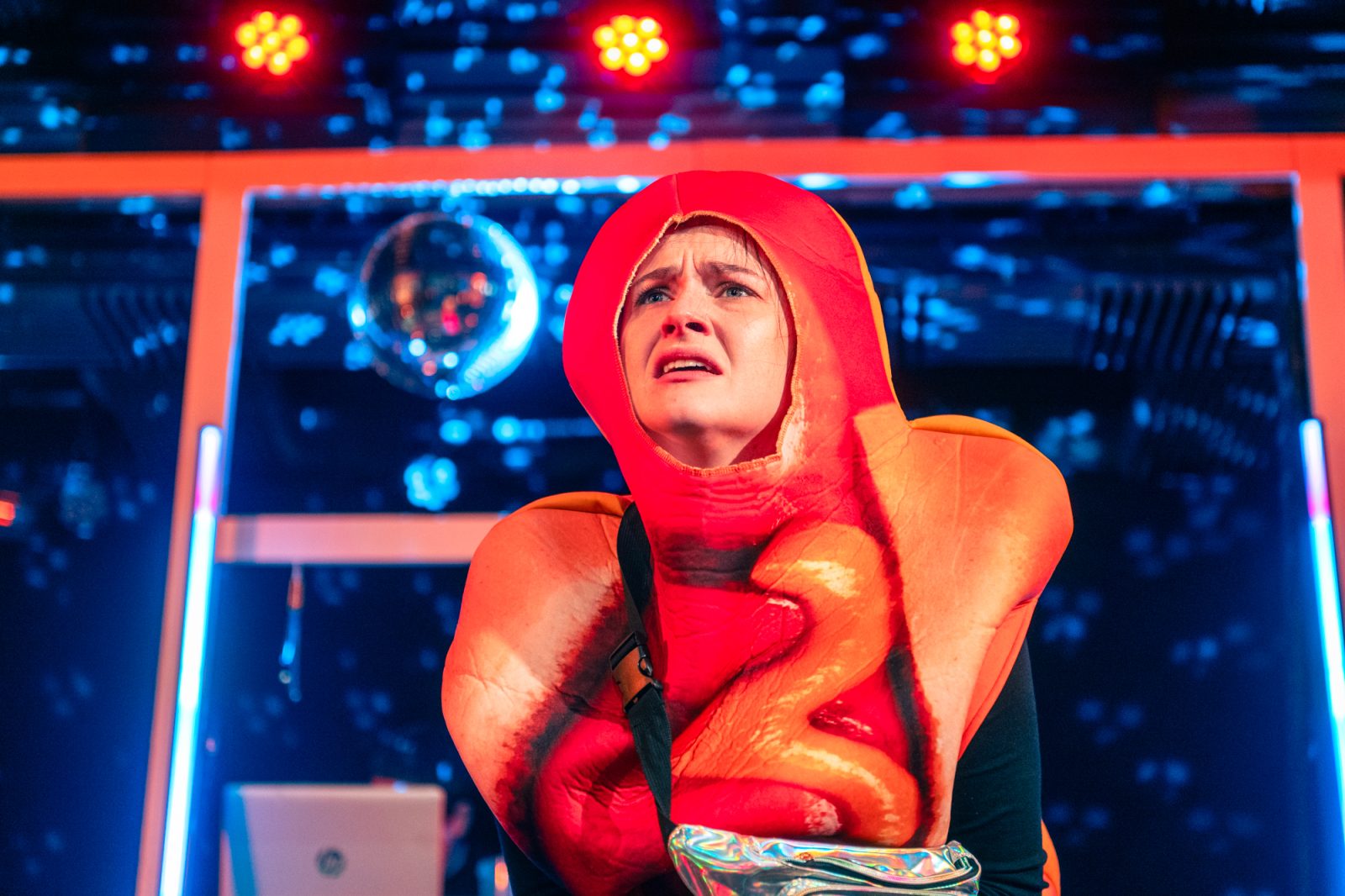
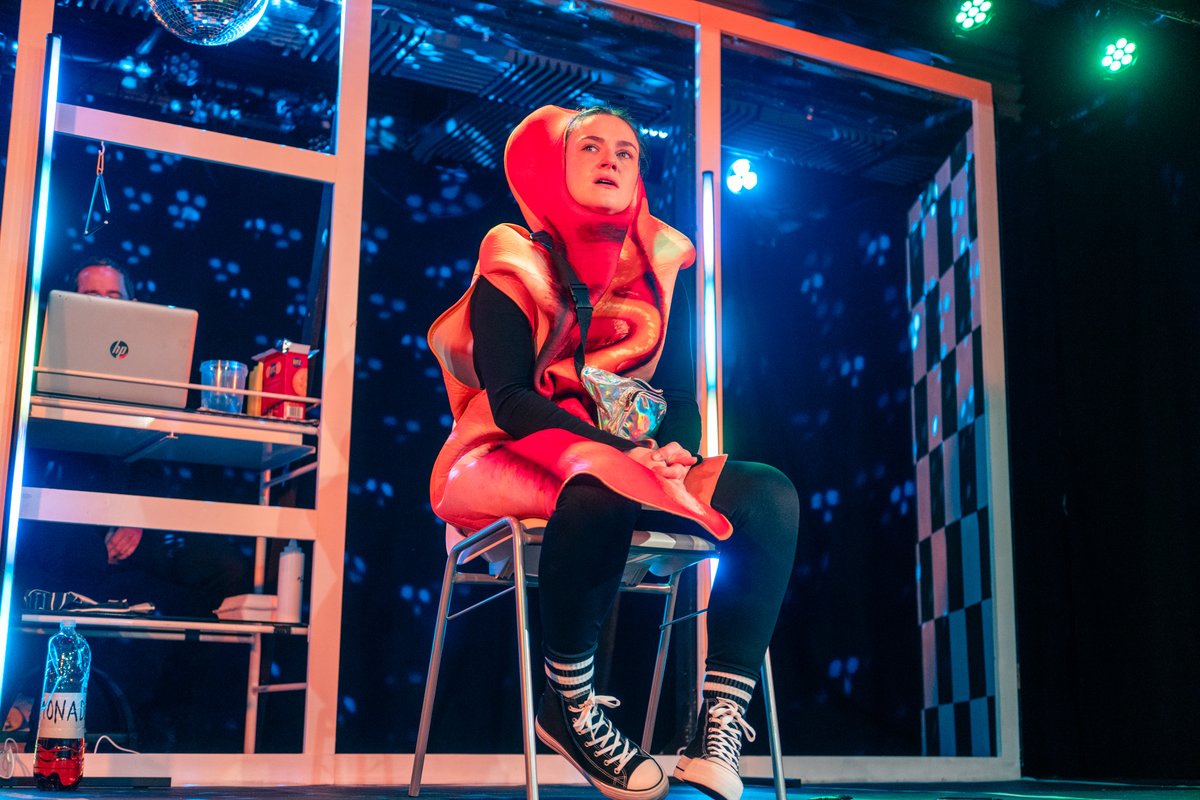
Hotdog (Chloe-Ann Tylor) is all dressed up and ready to party! 

Wearing a garish hired costume and carrying a handbag, a phone and a bottle of lemonade, she’s leaving the sanctuary of her flat and heading off to an undisclosed location to strut her stuff. Outspoken and full of pent-up bile, she is determined that tonight she will be the life and soul of the party. She will dance and drink and curse and laugh out loud! She will sweep aside anybody who has a single bad word to say about her and show them who’s the boss.

But, as is so often the case, her forced exuberance only exists to mask a deeper, darker truth. Because something bad happened to Hotdog in the recent past – something that it’s going to take her a very long time to come to terms with.

Written by Ellen Ritchie and directed by Beckie Hope-Palmer, with an enchanting central performance  by Chloe-Ann Tylor, the latest piece from A Play, A Pie and a Pint is an astutely observed drama that deals with the subject of trauma. Tylor (most recently seen by B&B in  Same Team: A Street Soccer Story and in the fabulous Battery Park) talks directly to the audience, discussing her character’s uncompromising, no-holds-barred approach to life. She tells us about her apparent hatred of her over-protective mother and her revulsion for the kind of fridge-magnet things that people are prone to say to her. 

As she chips steadily away at the brittle carapace she’s constructed around herself, the real story gradually emerges – and it’s utterly heartbreaking.

Tylor is joined onstage by Ross Allan, who at first undertakes the role of a silent stage hand, ensuring that props, music cues and sound effects are there whenever Hotdog needs them. It’s only in the poignant final stretches that he becomes Andy, the proprietor of the chippy where Hotdog tends to finish up her evenings. As in his previous role, he is exactly the helping hand she needs, the one who keeps a caring eye on her. He’s also the bearer of a truth universally acknowledged – that Joni Mitchell is the greatest lyricist of all time.

Kenny Miller’s set might at first glance seem overly complicated, but all those meticulous white lines on the floor – like Hotdog’s motivation – eventually fall into place.

4 stars

Philip Caveney

Escaped Alone

14/03/24

Traverse Theatre, Edinburgh

First performed at the Royal Court in 2016, Caryl Churchill’s Escaped Alone is a fascinating piece, revealing some essential human truths despite the brevity of its running time.

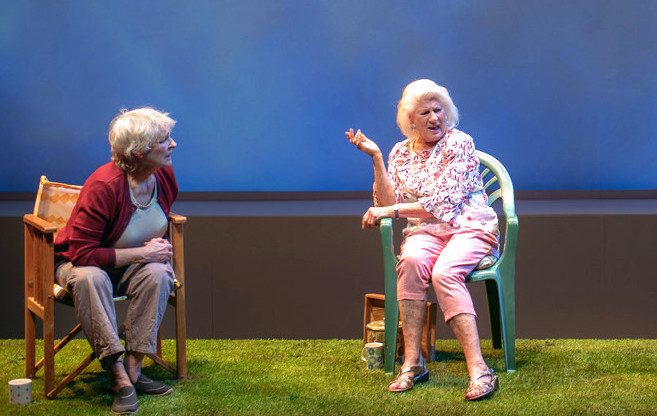
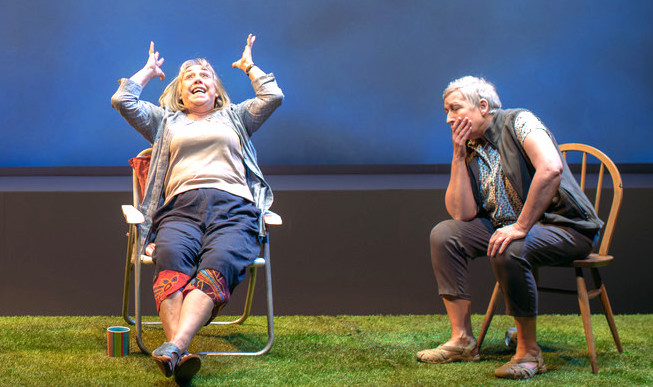
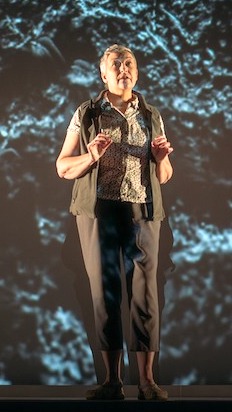
Three retired women – neighbours – sit in a garden, chatting inconsequentially. Mrs Jarrett (Blythe Duff) calls out a greeting as she passes by and is invited to take a seat. On the surface, she fits in, joining in the conversation. But she’s plagued by her knowledge of what’s happening in the news. At regular intervals, while the other women freeze, Mrs Jarrett rises and stands before Lewis den Hertog’s bleak black and white video projection, monologuing about apocalyptic events in the world beyond the garden. It’s like she’s zoning out, and we’re inside her head – and then she’s back again, making small talk, as if nothing has happened.

Although the catastrophes Mrs Jarrett describes are absurd in their extremity – all food has been diverted to TV channels; the hungry only know breakfast as an image on their screens; obese people sell their flesh, cutting rashers from their own bodies – the situation is depressingly normal. Just this morning, listening to the radio, I hear that 300 kidnapped Nigerian schoolchildren are still missing. In Gaza, shots have been fired at starving Palestinians waiting for a food truck. War still rages in Ukraine. It’s horrible. “Should we have curry or pasta for dinner tonight?” I ask my husband. We’re all fiddling while Rome burns.

The set, designed by Anna Orton, heightens the feeling of pretence. The grass is too green, the sky too blue; it’s what the women want to see, not what’s really there.

But, however fervently they cling to the façade they’ve created, real life keeps creeping in. “I’d love to go to Japan,” muses the agoraphobic (Anne Kidd). “Get yourself to Tesco first,” advises the caustic former GP (Joanna Tope), puncturing the daydream. Most resolutely cheerful of all is the ex-hairdresser (Irene McDougall), fresh out of prison for killing her husband. She went down for manslaughter, “but it might have been murder, in actual fact.” Nothing is what it seems.

Under Johanna Bowman’s direction, the performances are pulsing with vitality. There’s an urgency to proceedings that underscores the latent horror. Churchill’s script offers no real plot or character progression and this Tron Theatre production makes sense of that. It’s a snapshot of the way we’re stuck: a never-ending cycle of looking away; distracting ourselves from what’s really happening; ignoring the overpowering emotion consuming us.

“Terrible rage. Terrible rage. TERRIBLE RAGE.”

4.3 stars

Susan Singfield
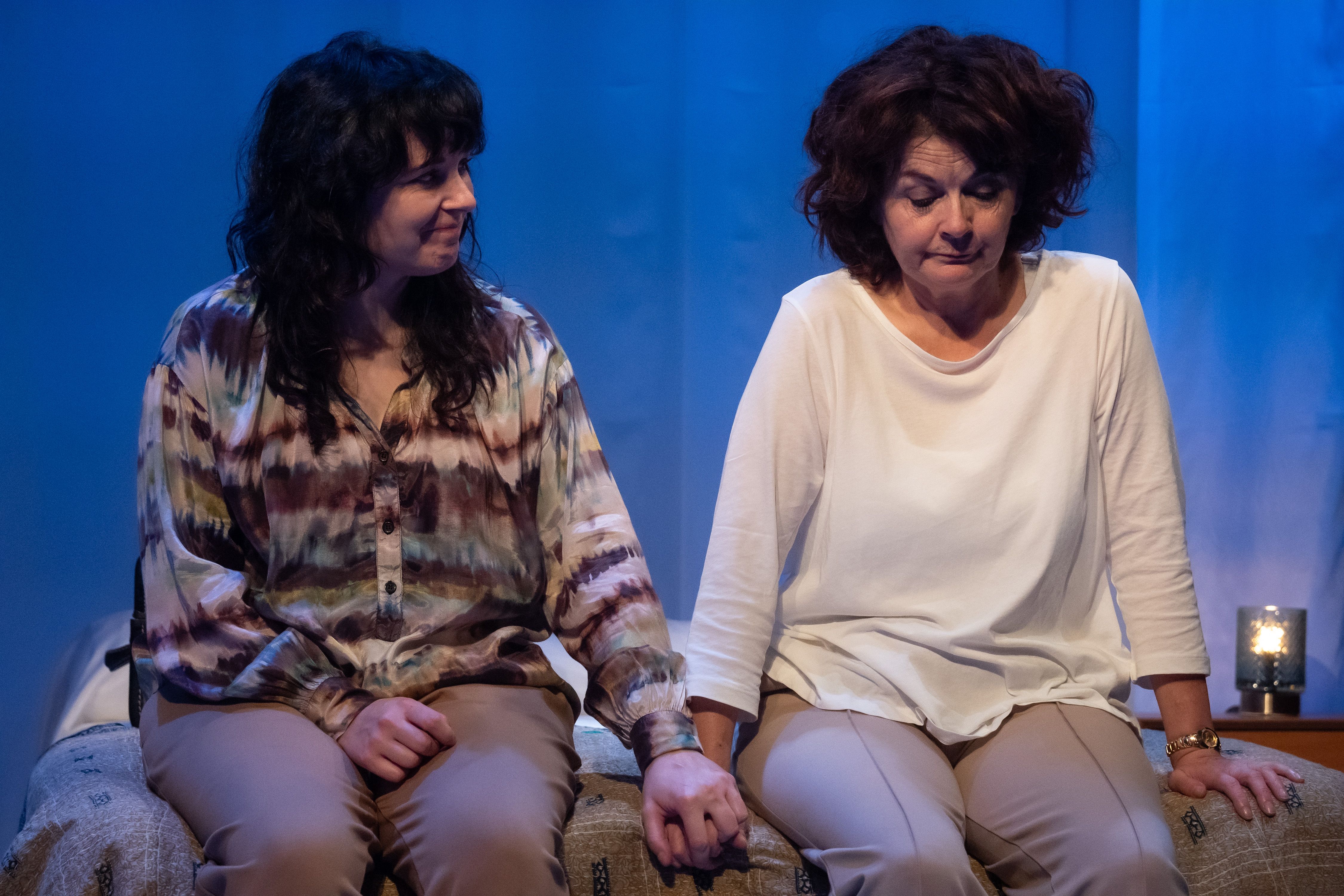
A Giant on the Bridge

08/03/24

Traverse Theatre, Edinburgh

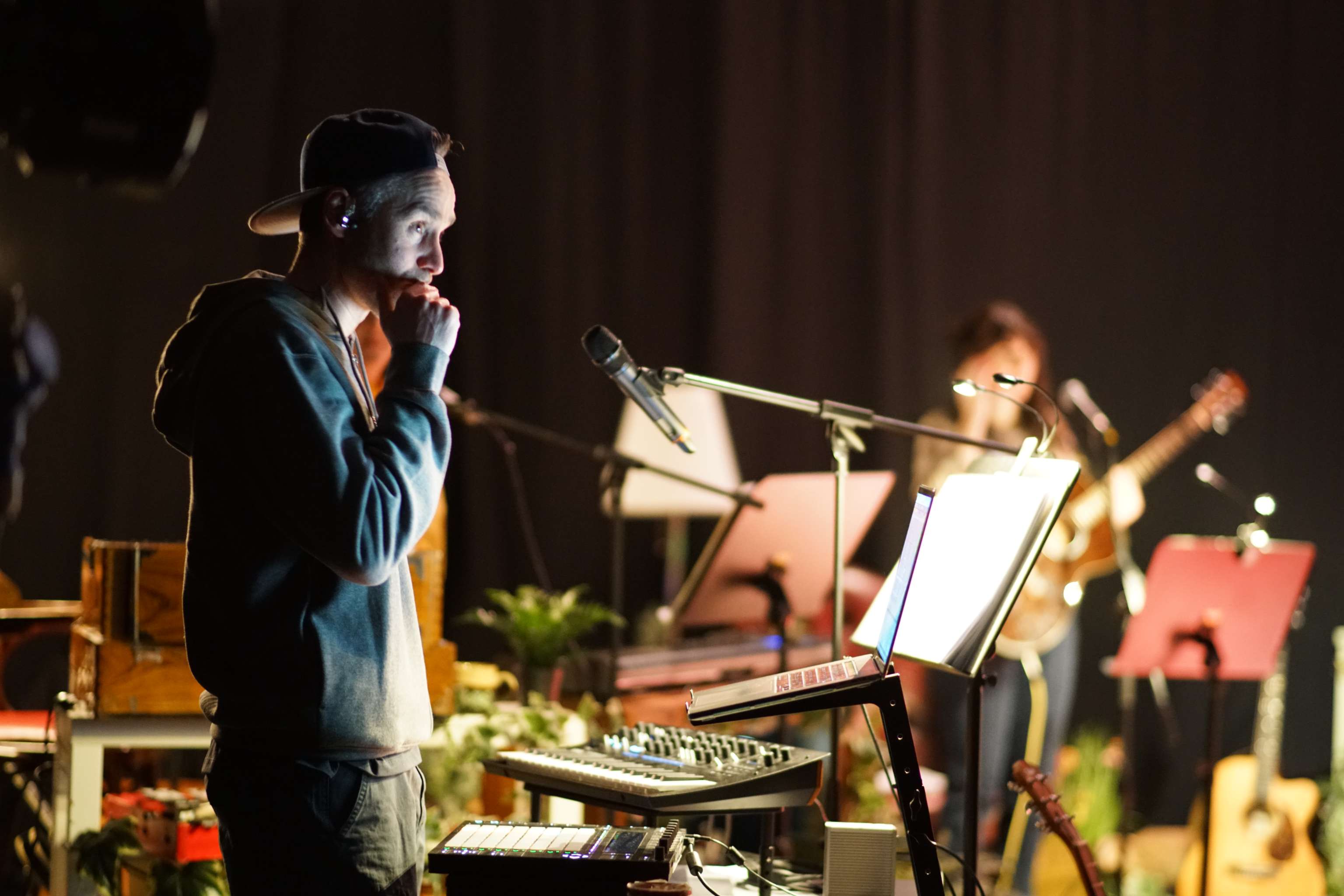
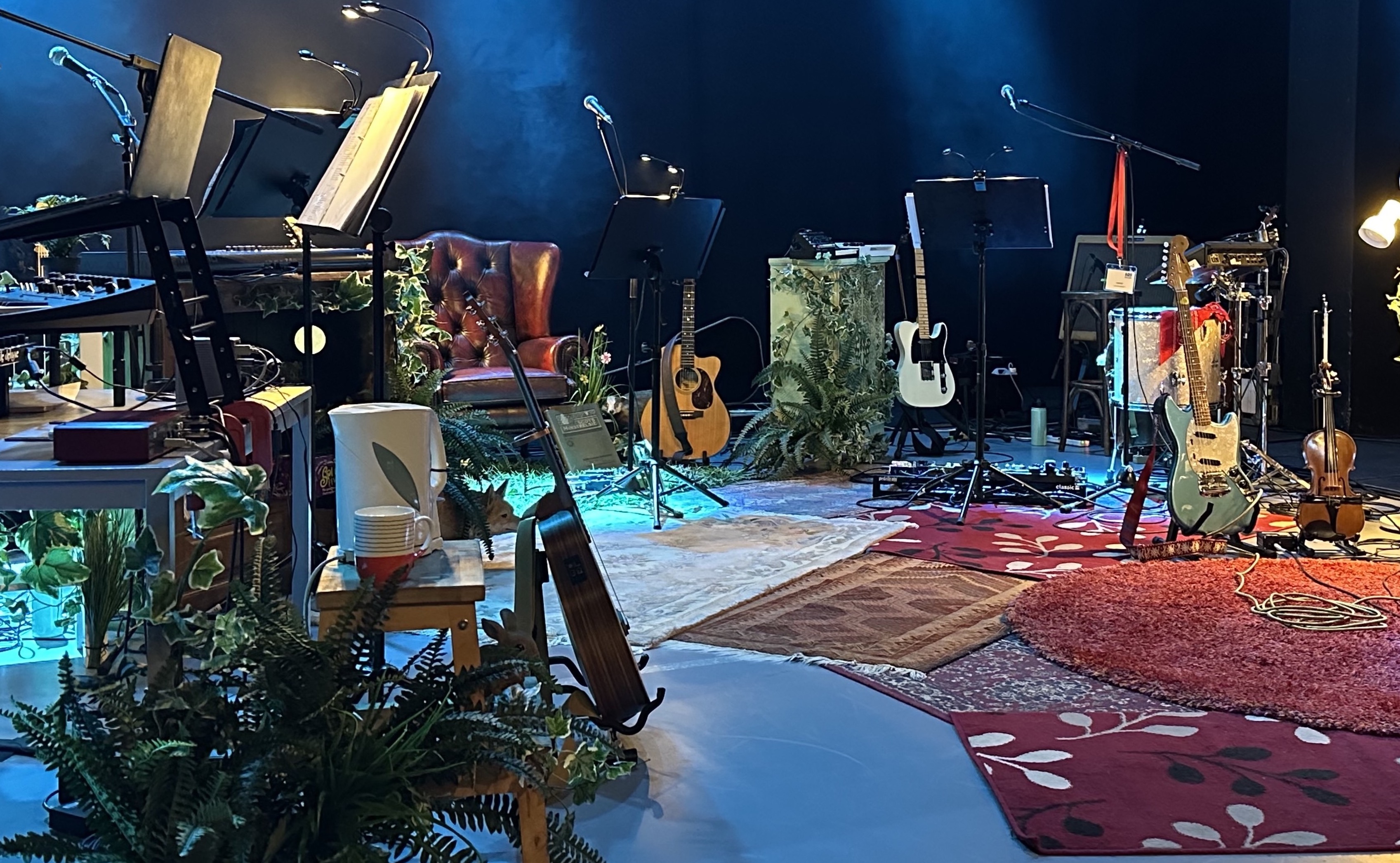
One look at the stage in Traverse 1 is enough to convince me that tonight, I’m going to witness some serious musicianship. There’s a complex arrangement of guitars and drums on display, as well as electronic keyboards, a violin, a harmonium and other instruments I cannot even name. They’re all connected by a jumble of leads and microphones that make me wonder how anyone will negotiate their way through it without tripping up. Then six musicians emerge from the wings, pick up their respective instruments and launch headlong into an extended piece of gig theatre that pretty soon has me in raptures.

Devised by Liam Hurley and Jo Mango, A Giant on the Bridge is created from a collection of songs written in Vox Sessions by the inmates of prisons across Scotland. It’s heartening to acknowledge that this joyful music has emanated from such grim beginnings, but here it is: a complex, labyrinthine piece that explores a whole range of different moods, moving from plaintive acoustic ballads to propulsive electric rock.

There are five different narratives here, the performers often breaking the fourth wall to speak directly to the audience. Louis Abbot delivers The Songwriter’s Story, telling us in essence about his daily routine, trying to coax music from troubled prisoners. Kim Grant delivers her Giant Story, a traditional tale about an imprisoned giantess, who has lost her heart to a ruthless king. Jo Mango gives us Clem’s Story; she’s a social worker and poet whose interactions with the daughter of an inmate unlock her own past trauma, while Jill O’Sullivan shares June’s Story, playing the role of a young woman looking after the daughter of her twin brother, D, and preparing for his imminent release from prison. And finally, Solareye relates D’s Story; he’s a man who sees and translates everything that happens to him into a distinctive form of rap.

If this description makes it all sound like a complex jumble, make no mistake: the various story threads are brilliantly interwoven, the narratives cunningly echoing and reinforcing each other, before the strands are drawn together into a heartfelt and uplifting conclusion. I find myself constantly thrilled by the sheer ambition of this production and the way its various goals have been so consummately achieved. The musicians also take on acting roles with aplomb.

It’s not just me who loves this show.. The wild applause from a packed audience is confirmation of how successful – and how unique – this musical experiment is. If you can grab a ticket to see it before it moves on, I urge you to take the opportunity. This is something very special.

5 stars

Philip Caveney

Bread and Breakfast

05/03/24

Traverse Theatre, Edinburgh

The latest production in the A Play, A Pie and A Pint season offers a distinct change of pace. Who’s up for a good old-fashioned British farce? You know, the kind of vehicle that Brian Rix would have had a field day with back in the 1960s – slapstick characters painted with broad strokes and even broader dialogue.
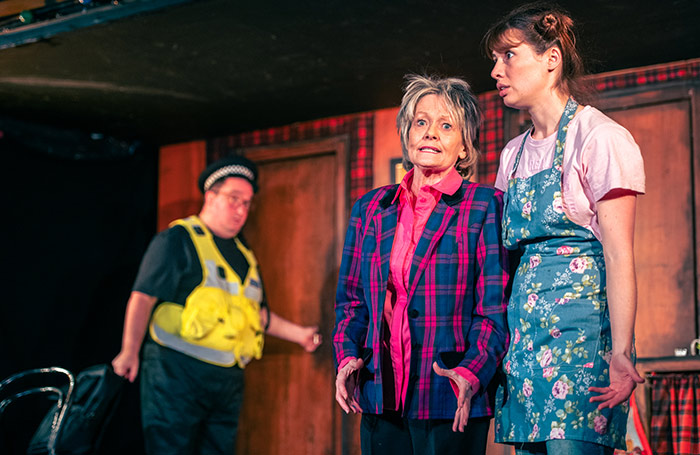
Welcome to Nessie’s Lodge, a bed and breakfast somewhere in the Highlands, a place where holidaymakers can relax in real style – provided they turn a blind eye to the indigestible food and the bedbugs… not to mention the rats. I said not to mention them! Proprietor Irene (Maureen Carr) is growing rather tired of the business, even though it boasts a single star from the AA. She dreams of selling the establishment to anybody who’s dumb enough to shell out money for it. But she’s continually hampered by her dimwitted young employee, Jo (Erin Elkin), who somehow manages to misinterpret every instruction she’s given. 

Then, in a distinctly Fawlty Towers twist, an AA restaurant inspector (James Peake) arrives out of the blue and the writing’s on the wall for Nessie’s Lodge. Also on the wall is a possibly priceless work of art that might just save Irene’s bacon…

Bread and Breakfast, written by Kirsty Halliday and directed by Laila Noble, has some genuinely funny lines in the mix, though there’s a worrying tendency to over-signal and over-explain them. Furthermore, it should also be said that those classic Whitehall farces were always anchored by absolute precision and excellent production values – which we can’t really expect from a modestly-budgeted lunchtime show.

The packed crowd at this afternoon’s show are clearly enjoying themselves, laughing throughout. As ever, stalwart actor Carr generates her own brand of potty-mouthed good humour; she’s a natural comic and has the audience in the palm of her hand. Elkin is excellent as Jo, giving her an edgy, almost manic appeal, as she flails from one hapless misunderstanding to another. Meanwhile Peake has the funniest moment of the show, as he delivers a spirited rendition of God Save Our Gracious Quing!  

If Bread and Breakfast isn’t quite to my taste, it’s nevertheless interesting to see a play so tonally different from anything I’ve previously seen at PPP.

3 stars

Philip Caveney