NT Live

The Fifth Step: NT Live

01/12/25

Dominion Cinema, Edinburgh

As if NT Live performances weren’t enough of a treat, we’ve recently ramped up the indulgence levels by choosing to watch them at Edinburgh’s most bougie cinema, the Dominion. At 3pm this afternoon, we zip up our raincoats and venture out into the December drizzle, ready for the half-hour walk that will take us to our huge, reclining seats.

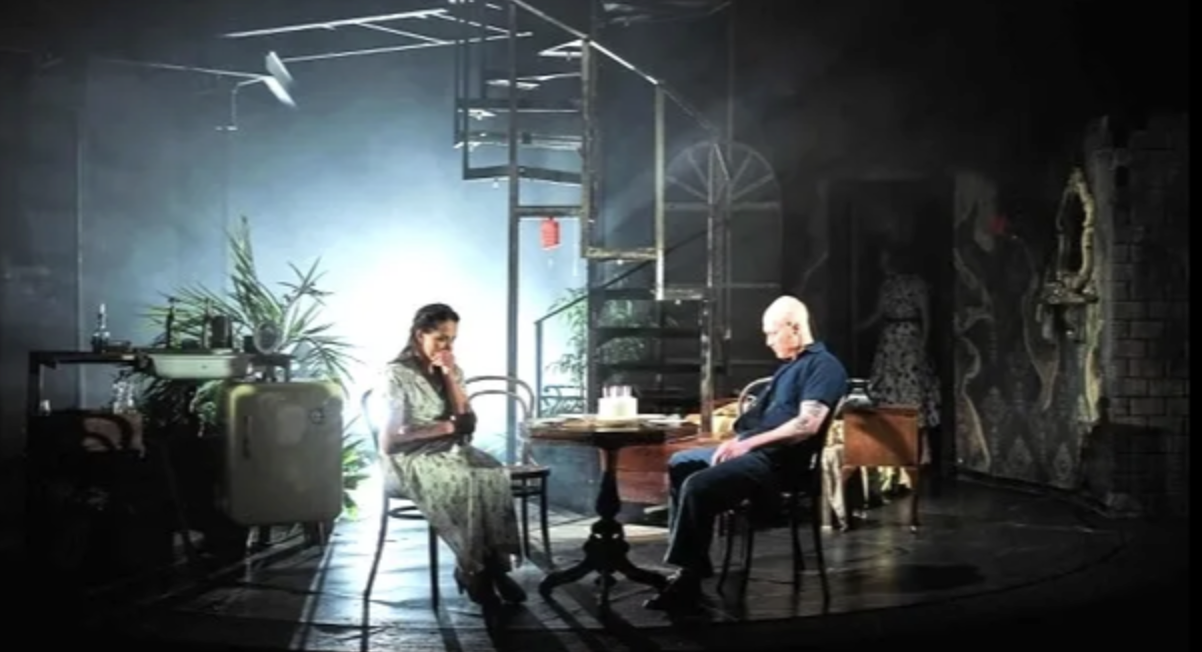
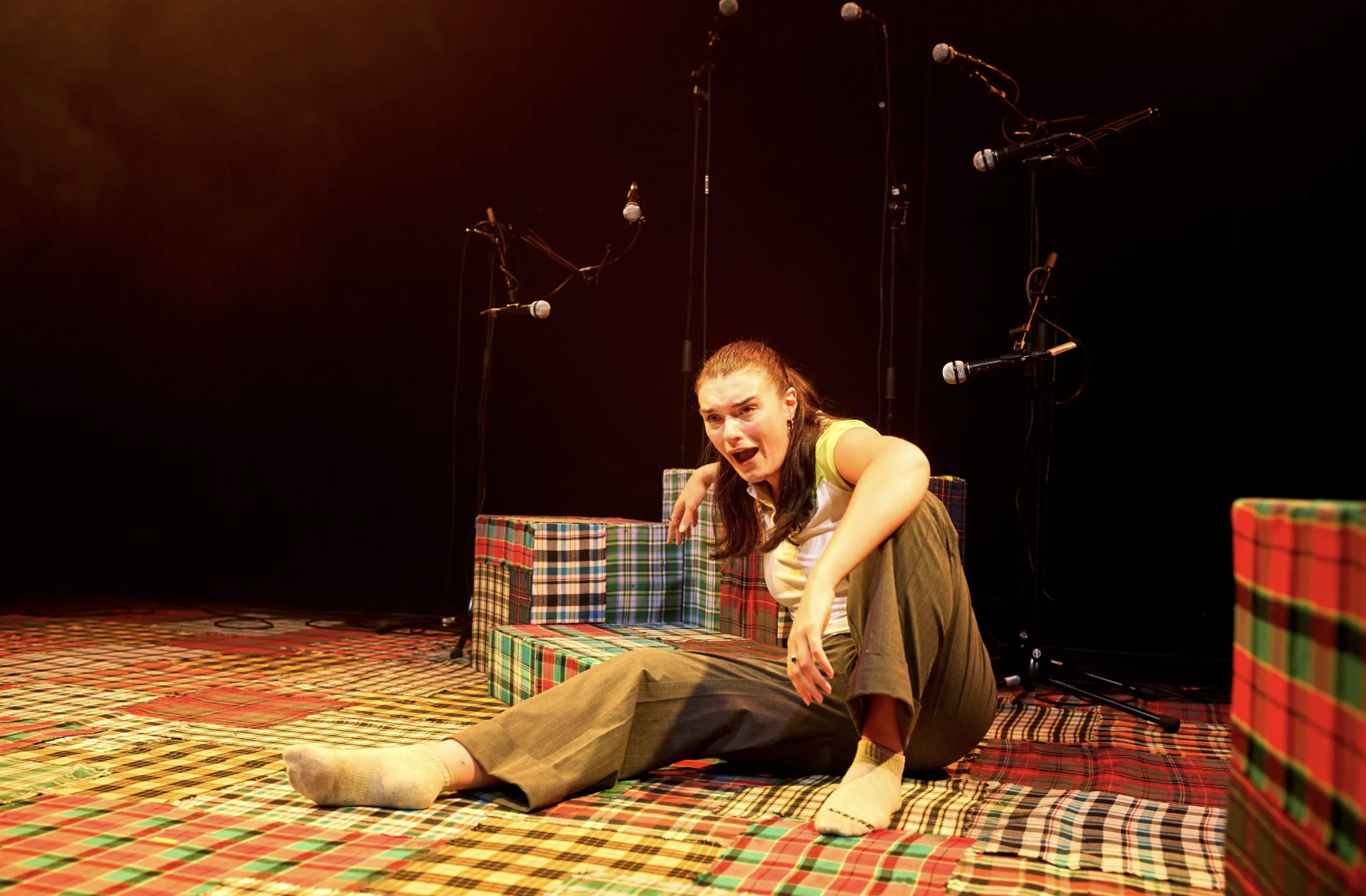
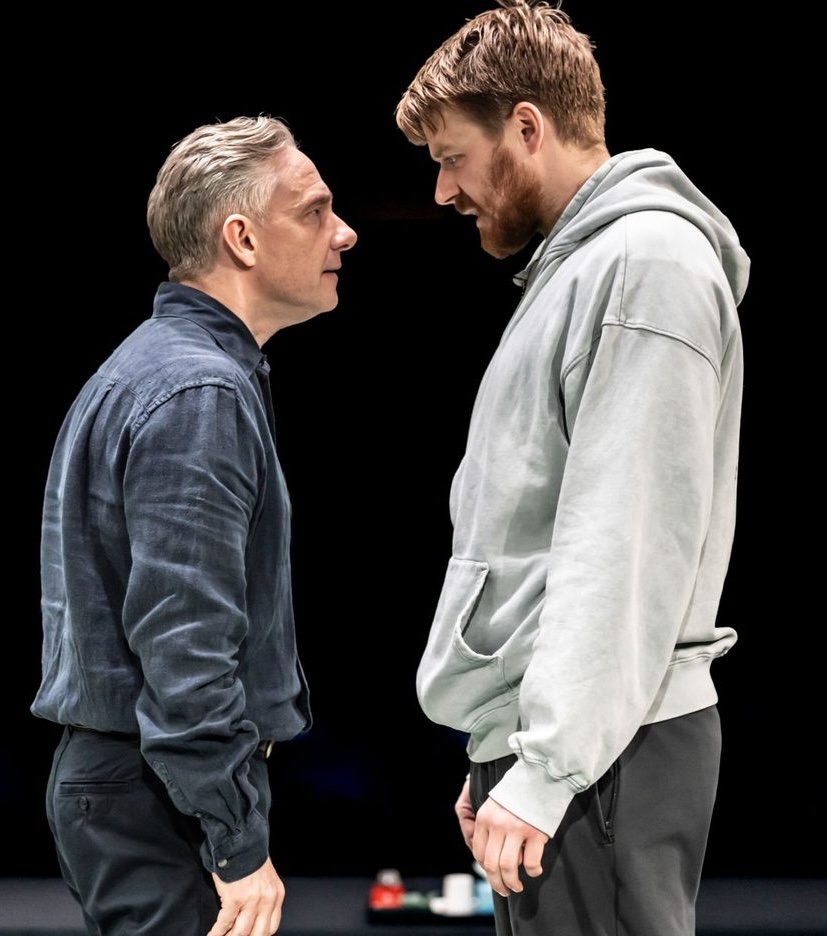
The Fifth Step is a compact, one-act play by Jack Ireland, and its ninety-minute running time is perfectly judged. This is a tight and concentrated piece, where small impulses are magnified, vague doubts forensically explored. The in-the-round set, designed by Milla Clark, is almost brutalist, comprising a stark square with raised, cushioned sides, reminiscent of a boxing ring or a trampoline: a taut jump mat, ready to absorb the characters’ anger, or give them the push they need to set themselves free.

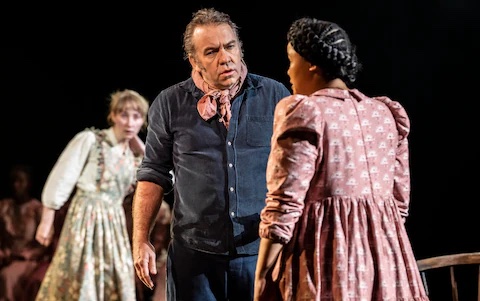
We’re in the world of AA, where acceptance meets strict protocols and kindness sometimes seems harsh. Jack Lowden plays Luka, a twenty-something alcoholic, scared that he’s turning into his dad, and desperate to avoid this destiny. Nervy and uncertain, he isn’t sure that he can do it, not when sobriety leaves a booze-shaped void he fills with loneliness and self-loathing. Hovering in the room after a meeting, he gets chatting to James (Martin Freeman), who has been on the wagon for more than twenty-five years. The older man knows exactly what Luka is going through, and offers to become his sponsor. From hereon in, we watch as their relationship develops – and as they both continue to battle against their respective addictions.

Ireland’s script is darkly funny, and director Finn Den Hertog maximises its comic potential, without ever belittling the men’s experiences. Not much happens, and yet all of human life is here: our frailty, our fabulousness; our bravado, our beauty; our destructiveness and our shared desperation. Luka begins by looking for easy answers: if he does whatever his sponsor says, then surely he’ll find happiness. But James has his own demons to grapple with and he knows that life is far more complex than that. You just have to keep on being honest, keep facing up to your own failings – and keep supporting one another along the way…

Unsurprisingly, Lowden and Freeman deliver faultless performances. They’re perfectly cast, Freeman’s wry stillness the ideal foil for Lowden’s twitchy, pent-up energy. A fascinating insight into not just addiction but also notions of authority and responsibility, this is definitely one to watch if it’s showing at a cinema near you.

4 stars

Susan Singfield

Inter Alia: NT Live

07/09/25

Cineworld, Edinburgh

What Suzie (Miller) Did Next was bound to garner a lot of attention. The mega-success of Prima Facie, starring the inimitable Jodie Comer, has catapulted the Aussie playwright into the limelight, and left the theatre world waiting with baited breath to see what else she has up her silk sleeve.

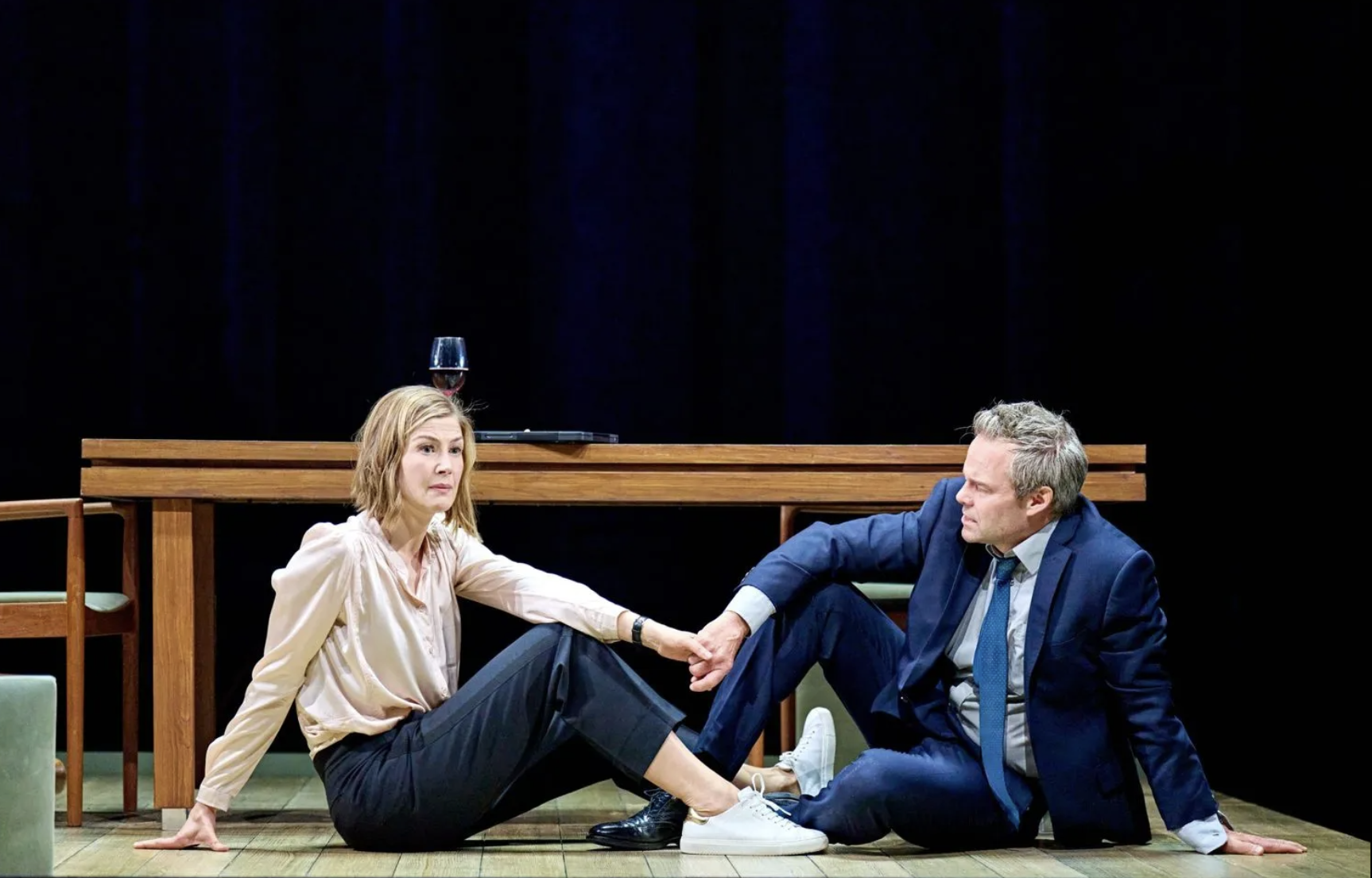
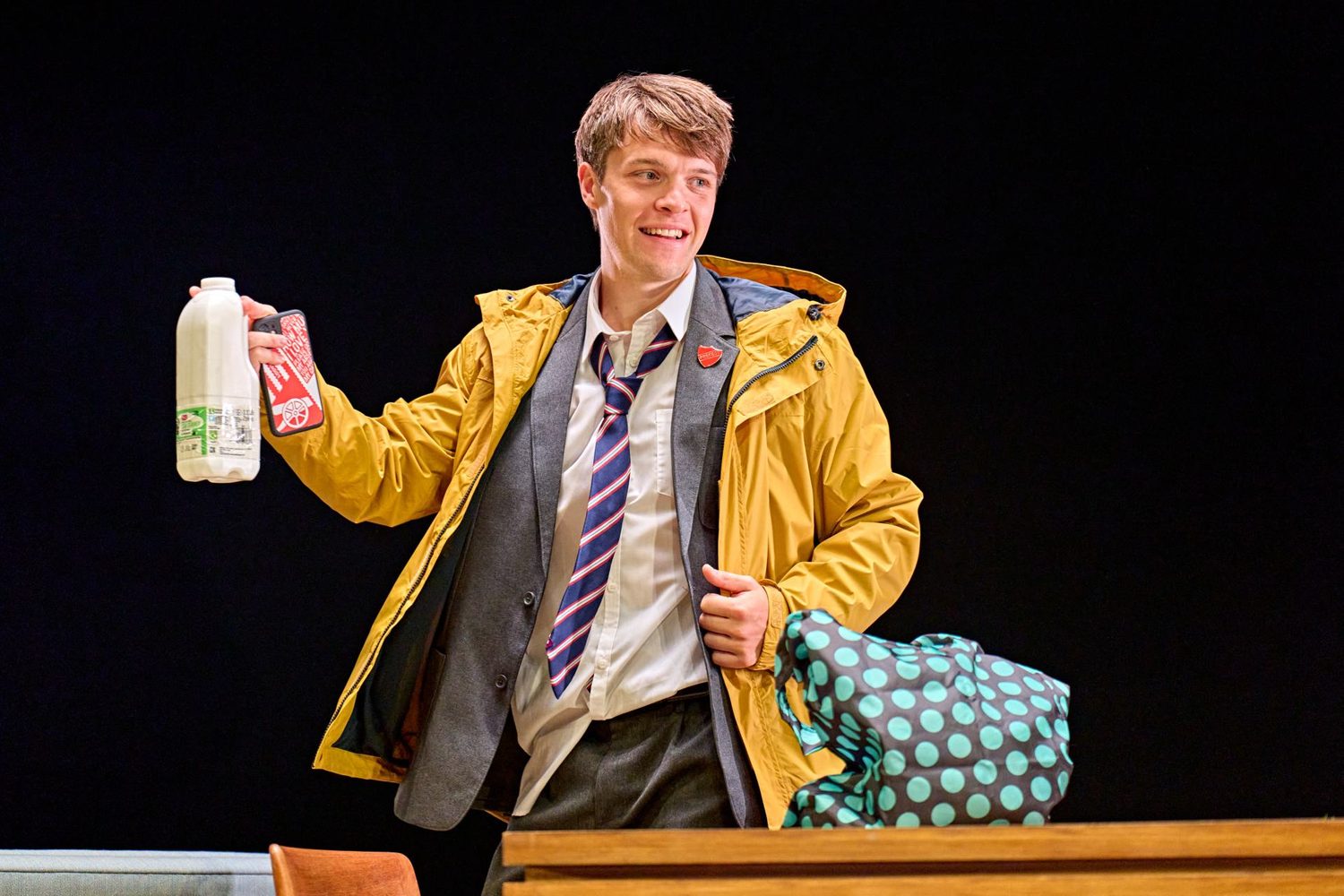
Inter Alia, a three-hander starring Rosamund Pike, serves as a kind of companion piece to the 2019 monologue, this time examining the legal system’s response to sexual assault from the vantage point of the Bench. Pike plays Judge Jessica Parks, a high-flying professional, juggling work and family life. She’s got the drive and energy to give both her all, but there’s no escaping ‘mom guilt’, however feminist you are. Still, she and her barrister husband, Michael (Jamie Glover), seem to be managing well: their teenage son, Harry (Jasper Talbot), isn’t exactly happy – he doesn’t really fit in at school and is the victim of some mild bullying – but he’s generally okay, mooching through his days and studying for A levels. He’s a gentle, sensitive boy, nothing like the entitled defendants Jess encounters in court, with their swaggering justifications for rape…

Until, one fateful night, when the ideals Jessica has long-espoused are suddenly called into question, along with her integrity. Who is to blame when a floundering young man commits a crime? And is it possible to be guilty and innocent at the same time?

Prima Facie‘s director, Justin Martin, is back on board for this follow-up polemic, and it’s just as gorgeously kinetic as the earlier piece, perfectly encapsulating the frantic nature of Jess’s life as she hurtles from conviction to kitchen, from case files to karaoke. The set, designed by Miriam Buether, is ingenious, a combination of the domestic and the professional, with props, costumes and doorways cunningly concealed in the kitchen units. At key moments, a wooded park is revealed beyond the dominant interiors, a glimpse into the outside world – both real and online – where Jessica isn’t in control, and which Harry has to learn to navigate for himself.

This is a gentler play than its predecessor, but no less audacious or thought-provoking. Pike is extraordinary in the lead role, and ably supported by her fellow actors. Miller doesn’t offer any easy answers or let anyone off the hook, but she expertly straddles the fine line between trying to understand assailants without diminishing their victims. Like those around us, we leave the cinema deep in discussion, trawling through our own experiences, trying to work out what we would do in Judge Jessica’s place.

I’m still not sure. But I do solemnly, sincerely and truly declare and affirm that Inter Alia is another searing commentary on our times, and – as such – another must-see from the National Theatre.

5 stars

Susan Singfield

The Importance of Being Earnest: NT Live

20/02/25

Dominion Cinema, Edinburgh

Despite having lived a mere thirty-minute walk from Morningside’s Dominion Cinema for the past decade, we’ve somehow failed to set foot inside – and we dare to call ourselves cinephiles! So tonight’s NT Live screening of The Importance of Being Earnest is extra exciting for us, as it’s also an opportunity to explore a new venue.

So let’s begin with that. The Dominion is undeniably boojie; indeed, it’s the fanciest cinema either of us has ever graced. The design is art deco (think flocked wallpaper, geometric shapes and a colour palette of gold, red and black); our seat is a super-comfy reclining sofa, with privacy screens and side tables. We pour our drinks (sparkling water and alcohol-free lager, since you ask) and sit back, feet up, more than ready to enjoy ourselves in these opulent surroundings.

I’ve seen, read and taught this play so many times that I know it almost by heart, but that’s not to its detriment. After all, the script is so packed with recognisable aphorisms that few in the audience are likely to be surprised by what is said; with Earnest, it’s all in the delivery.

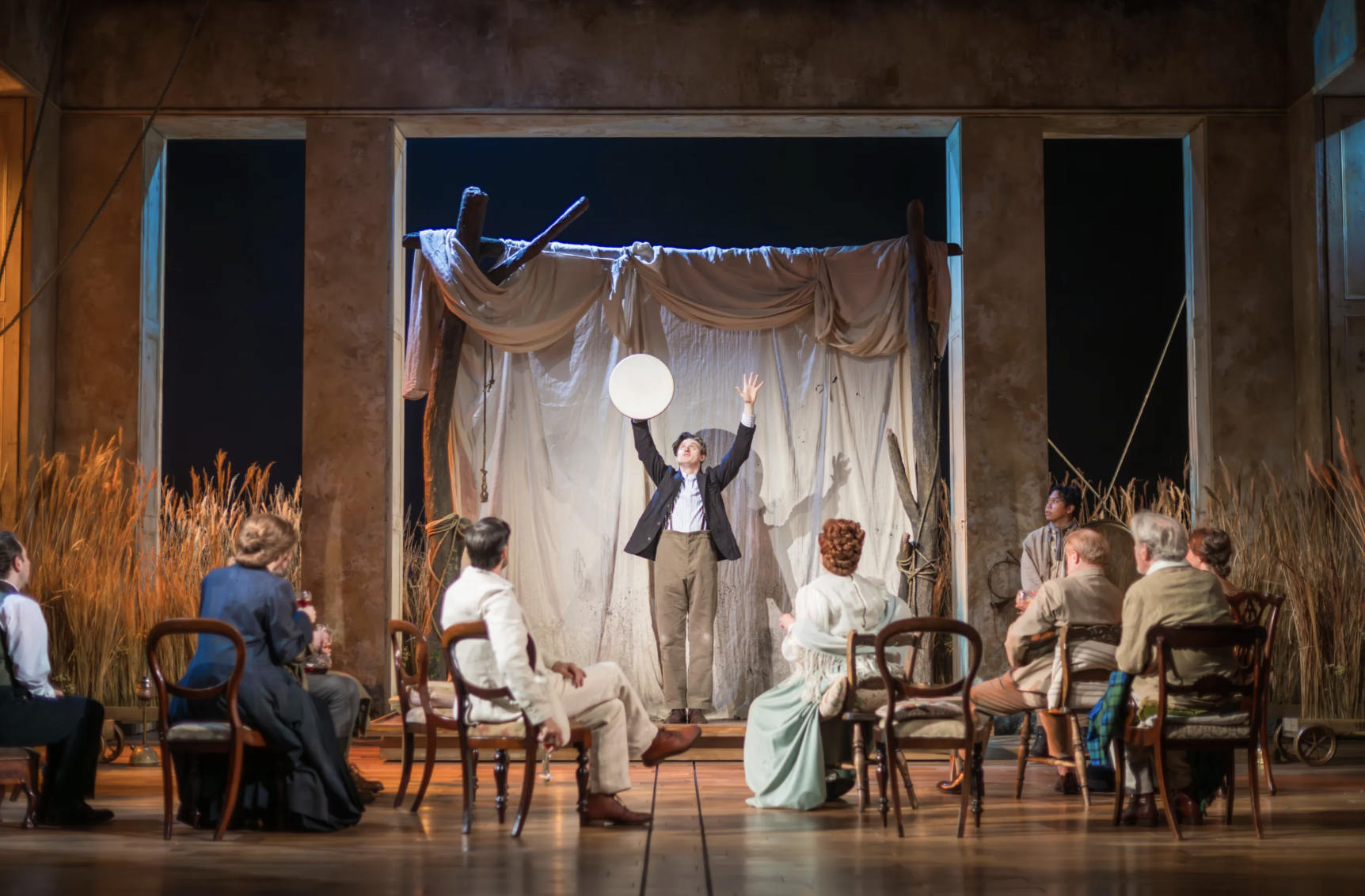
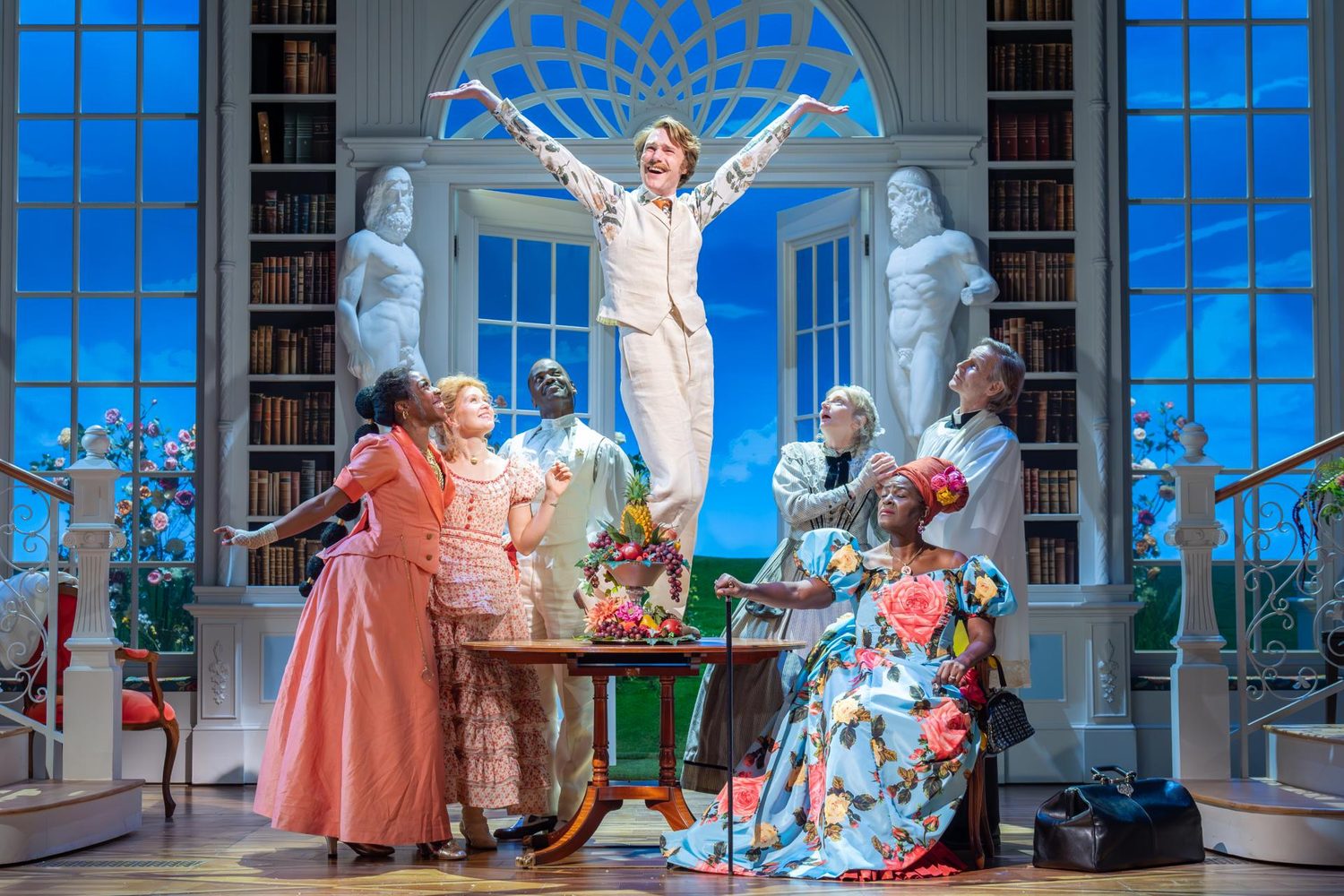
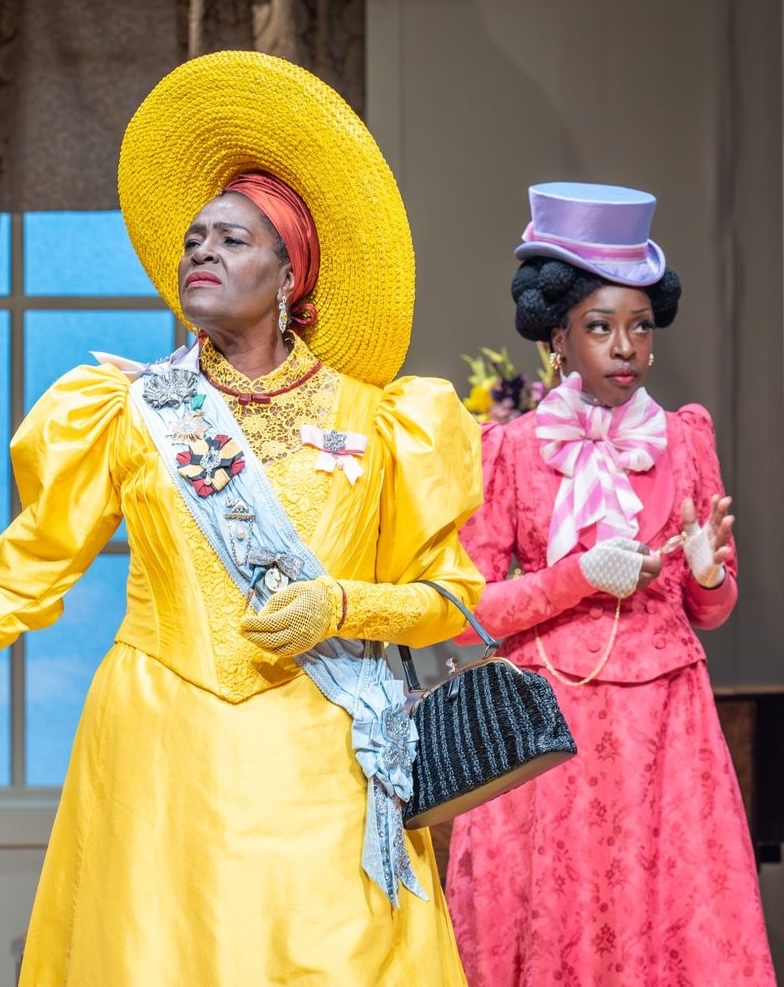
And what delivery it is! Directed by Max Webster, this is an overt celebration of queerness, Wilde’s subtext amplified to the nth degree. From the opening number, where Algernon (Ncuti Gatwa) shimmers in pink-sequinned drag, to the exuberant Mardi Gras-style finale, the closet door is flung wide open, making for a fabulously unsubtle show. To quote the wild wit himself, “moderation is a fatal thing; nothing succeeds like excess.” Webster has certainly taken this to heart.

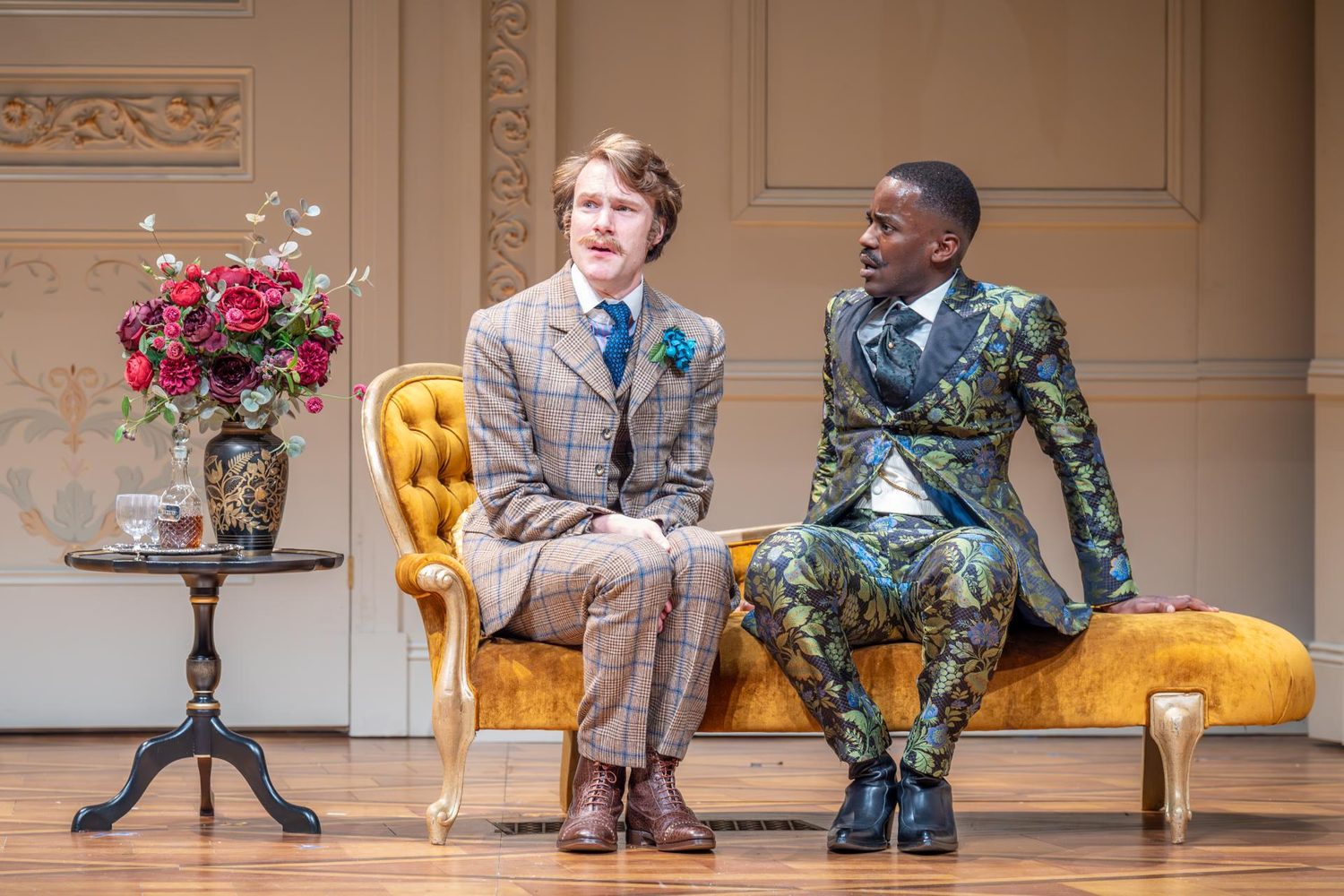
The plot – for those who need a reminder – is at once frivolous and deadly serious. On the surface, it’s a frothy farce, all mistaken identity and foolish foppery. Underneath, it’s about repression – about the lengths people are forced to go to when their very natures are outlawed. Unbeknownst to each other, both Algernon and his best friend, Jack (Hugh Skinner), have found inventive ways to circumvent society’s disapproval of their predilections. Algernon has a pretend-friend, Bunbury, whose ill health Algy uses to excuse himself from dreary social events, while Jack has an alter-ego – an imaginary older brother called Ernest – who gets into mischief whenever he visits the city.

But things become complicated when Jack falls in love with Algy’s cousin, Gwendolen (Ronke Adekoluejo), whose mother, Lady Bracknell (Sharon D Clark), is far from pleased about the match. In desperation, Jack confesses his lies to Algy – who, true to form, responds by assuming Ernest’s identity for himself, and heading off to Jack’s country house to woo his pretty young ward, Cecily (Eliza Scanlen). Throw in a conflicted clergyman (Richard Cant), a dithering governess (Amanda Lawrence) and a couple of manservants (both played by Julian Bleach), and the scene is set for some merry mayhem.

The multi-racial casting within a period drama (courtesy of Alastair Coomer and Chloe Blake) gives the piece a contemporary edge, as do the occasional strains of recent-ish pop music and a cheeky allusion to one of London’s gay hotspots. Gatwa’s newfound fame as Dr Who also helps this production to appeal to a hip young audience, as does the sexual fluidity of the characters.

Clark’s depiction of Lady Bracknell is inspired: she brings a whole new dimension to the part, dispelling all my preconceptions of the character. Here, those oh-so-familiar lines are imbued with a haughty charm to create a formidable British-Jamaican matriarch without so much of a hint of Dench. Adekoluejo’s Gwendolen is a chip off the old block, saved from monstrousness by her cleverness and humour. In contrast, Scanlen’s Cecily is deliciously weird, a mix of doe-eyed intensity, sweetness and steel. But there are no weak links here: even Bleach, in the minor roles of Lane and Merriman, makes his mark, creating two distinct but equally absurd personae, evoking laughter with the simplest of smirks or stumbles.

More than anything, though, this is Skinner and Gatwa’s show, the focus firmly on the men’s friendship and their journey towards coming out. Their performances are jubilant and euphoric, and yet deceptively weighty, carrying with them real emotional heft. I can’t help thinking about Wilde, condemned to hard labour for his homosexuality, and wondering what he’d make of this? Surely, it would gladden his heart to see his characters finally set free.

5 stars

Susan Singfield

Life of Pi

31/03/23

Cineworld, Edinburgh

Yann Martel’s novel, Life of Pi, was published in 2001 and won the Booker Prize the following year. In 2012, it was adapted into an impressive film, directed by Ang Lee. Of course, the inevitable next step was to adapt it for the stage, but that’s a very tall order. Would it be possible to convincingly present such a fantastical story in a theatre? Well, never underestimate what can be achieved with a suitable budget and state-of-the-art special effects. This version, beamed direct from London’s Wyndham Theatre as part of the NT Live season, is absolutely eye-popping.

The play opens in a hospital ward in Mexico, where our eponymous hero is being interviewed about his extraordinary survival in an open boat for 227 days, but his recollections are suddenly punctuated by a scene change so slick, I barely notice it happening, – until it has. 

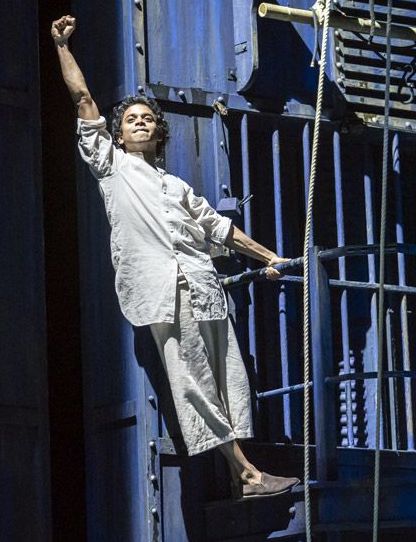
It’s the 1960s and Piscine Molitor Patel (Hiran Abeysekera) lives in Pondicherry, India. Named after a swimming pool in France, he prefers his adopted nickname ‘Pi.’ His parents run a small zoo and Pi and his sister spend much of their time looking after the animals – including the latest arrival, a fierce Siberian tiger called Richard Parker.

And now it’s 1976 and, due to violent political unrest, Pi’s parents have decided to relocate their animals to a zoo in Canada. Pi, his family and all the animals board the Japanese freighter Tsintsum, and set off on a sea voyage. What could possibly go wrong? Well, plenty, as it happens. Pi ends up stranded in a lifeboat with only a zebra, a hyena, an orangutan and er… Richard Parker for company. 

Which is awkward, to say the very least.

To give him his due, Abeysekara offers an extraordinary performance in the lead role but, as you might expect, his efforts and those of his fellow performers are somewhat dwarfed by the aforementioned puppetry and special effects, which are quite frankly, off the scale. 

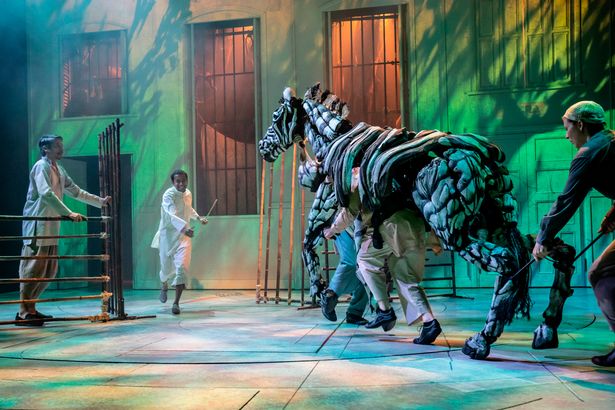
Let’s begin with Tim Hatley’s ingenious set designs, particularly those that deal with Pi’s adventures in the fateful lifeboat tossed upon stormy seas. Raging torrents of water appear to flood across the performance space, while shoals of fluorescent fish speed along just below the surface. I even gasp out loud at one point when Pi takes a nose dive onto an apparently solid stage… and disappears right through it, only to resurface in an entirely different spot a moment later. How have they done that? (With trapdoors, obviously, but it’s astonishing nevertheless.)

As are the animals – or, more accurately,  the puppets, designed by Nick Barnes, which are so intricately made that I actually keep forgetting they’re mechanical, which is ridiculous because I can quite clearly see the people operating them… and yet… and yet, I still believe they’re real, which is some accomplishment. Richard Parker is, of course, la bête du jour, the very essence of feline power, even able to switch into a comedic role as a fan of haute cuisine and back to a snarling, powerful predator, but – to be fair – every creature I see, right down to the swarms of multi coloured butterflies, is an astonishing creations.

Adapted by Lolita Chakrabarti and directed by Max Webster, Life of Pi is like a magician’s box of tricks. There’s a small part of me that feels sorry for the cast of (mostly excellent) actors struggling to make themselves seen amidst all that sturm und drang, but I guess it’s just – ahem – the nature of the beast.

4.3 stars

Philip Caveney

Othello

23/2/23

NT Live: Cineworld, Edinburgh

Although we’re watching it in a cinema, Clint Dyer’s Othello is avowedly theatrical, overtly referencing the play’s stage history via a series of projected images as the audience trickles in. It’s a powerful conceit, acknowledging the fact that our interpretations of classic texts change with the times, informing us that this will be an Othello for the 2020s (and far removed from Olivier’s infamous 1960s blackface).

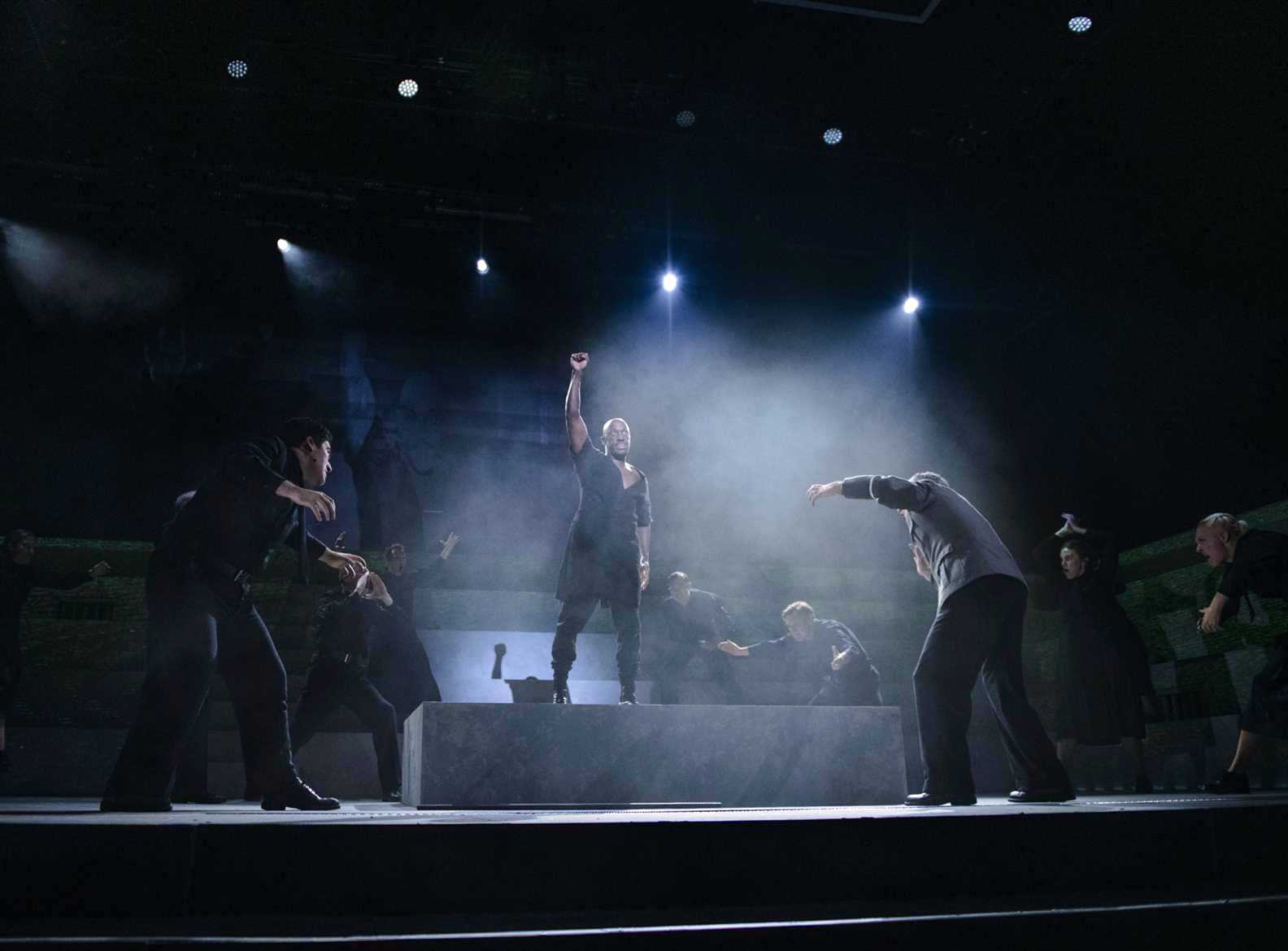
Dyer brings the play’s racism into sharp focus, as well as its sexism. Moving the action to the 1930s means that the widespread bigotry Othello (Giles Terera) endures fits into a recognisable framework of fascism. Brabantio (Jay Simpson), who doesn’t want his daughter to marry ‘a Moor’ – not even a super-soldier, credited with defeating the Turkish army – is far from alone in his prejudice. Indeed, we have a whole System (the chorus), all too willing to endorse his view. Roderigo (Jack Bardoe) is not played here as an amusing fool; instead, he is a jingoist, short on reason but bold in his assertions. Thus, as the only Black actor on stage, Terera’s Othello is isolated and visibly different from those around him, and his relationship with the politically-aware Desdemona (Rosy McEwen) is as much ideological as it is romantic.

In this context, it’s no surprise that an unscrupulous schemer such as Iago (Paul Hilton) can thrive. He is the ultimate embodiment of toxic masculinity, propelled by self-entitlement and envy; Hilton makes this Iago deliciously sinister. He abuses everyone: his wife, Emilia (Tanya Franks) bears the brunt of his frustration, but no one is immune. His bitter resentment sours everything, drags everybody down. Othello doesn’t stand a chance against such an insidious adversary, in such an imbalanced world.

Chloe Lamford’s set is stark and monochrome: a semicircular series of steps, suggestive of a Greek amphitheatre. The chorus heightens this notion, acting as a kind of on-stage audience, reflecting us back at ourselves. We are all the System, it seems to say; we are all complicit. The costumes (by Michael Vale) continue the monochrome theme, highlighting the binary opposition of black and white.

This is an excellent production: bold, contemplative, kinetic and engaging. Terera captures both Othello’s strength and his failings, his dignity and his deficiencies. We see his greatness, but also recognise and despise his misogyny when he tries to justify murdering Desdemona by saying he loved her “too well”. McEwen imbues Desdemona with a steadfast nature, confident and assertive to the end, but it is Franks’ Emilia who really surprises: I’ve never been so aware of her as a victim before, nor of her bravery in finally speaking out.

Dyer’s Othello is a complex, clever piece of work. It’s not a radical reworking – indeed, it’s almost entirely true to Shakespeare’s text – but the lens is very different.

4.5 stars

Susan Singfield

The Crucible

26/01/23

NT Live: Cineworld, Edinburgh

It’s a Thursday night, and a bit of a scramble getting to the cinema after work for a 7pm start. There’s certainly no time for anything so trivial as say, food, this evening. Sure, it’s The Crucible, and we’ve read a lot about this latest production from the National Theatre. But is it worth skipping a meal for?

Thankfully, Lyndsey Turner’s interpretation of Arthur Miller’s timeless classic is so absorbing that we forget our empty bellies: we’re right there in Salem, Massachusetts, drawn into the destructive hysteria of the seventeenth century witch trials.

The story is well-known. A restrictive society collapses in on itself; petty grievances escalate into accusations of witchcraft; accusations of witchcraft further escalate into a feverish cull. Powerful men exploit vulnerable children, and women pay the price.

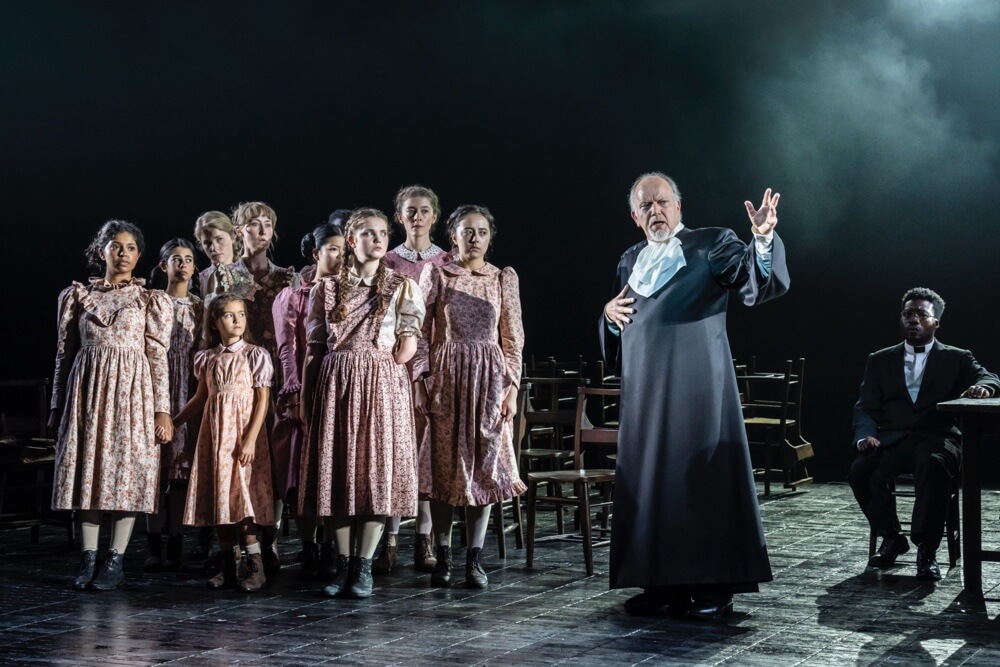
In this production, power imbalance is given centre stage. Erin Doherty’s Abigail Williams is no feisty seductress; instead, she’s a troubled teenager, all stroppy self-absorption and wounded spite. I like the way the girls are styled – as artless kids, kicking against a regime that affords them little in the way of entertainment, let alone autonomy. Proctor’s attempt to blame Abigail for their affair is shown as fundamentally flawed. It is his transgression, because he is the adult.

But he’s a victim too, and Turner’s direction highlights class warfare as well as misogyny. Hathorne (Henry Everett) and Danforth (Matthew Marsh) represent the ruling elite, issuing diktats and seizing ever more control. Reverends Parris and Hale (Nick Fletcher and Fisayo Akinade respectively) are the useful middle-class idiots, serving up the workers to the toffs. They’re very different men, but they fulfil the same role: condemning the villagers to their dreadful fates.

Es Devlin’s roofed set is wonderfully oppressive, a sheet of rain acting as an extra barrier, showing how cut off and isolated the villagers are, making their implosion all the more credible. The costumes (by Catherine Fay) also work well to create a sense of timelessness: they’re sort-of period, sort-of modern; not-quite-now but not-quite then. And what is The Crucible if it’s not a play for all ages, exposing our ongoing susceptibility to witch-hunts, both literal and metaphorical?

Brendan Cowell’s John Proctor is fascinating. He’s a shambling contradiction of a man: an honest cheat; an exploitative victim. I think he might be my favourite of all the Proctors I’ve seen, illuminating the character’s complexities. Here, he’s styled almost as a lone cowboy – a broken maverick, who comes good in the end. “Because it is my name” is such a weighted line, fraught with audience expectation (akin to Lady Bracknell’s “A handbag?” or Hamlet’s “To be or not to be?”) and it’s nice to see it being played down, spoken softly, as if it’s a simple, self-evident thing.

I’ve said it before and I’ll no doubt say it again: hurrah for NT Live. It means that our ‘national theatre’ really is national – easily accessible and (relatively) affordable. And definitely worth one missed evening meal.

4.7 stars

Susan Singfield

Jack Absolute Flies Again

18/10/22

NT Live: The Cameo, Edinburgh

Daytime cinema always feels like playing hooky. A sign that – for today – fun has priority. And NT Live screenings have the same ‘getting away with something’ vibe. I’m watching a play in London, but – shhh, whisper it – I haven’t left Edinburgh. So this afternoon’s indulgence, Jack Absolute Flies Again, is the double whammy: a National Theatre production at lunch time on a Tuesday! And in our favourite picture house too…

Based on Sheridan’s The Rivals, Richard Bean and Oliver Chris’s production exemplifies ‘rollicking’. It’s a silly, frothy, feelgood piece of theatre – and I absolutely love it.

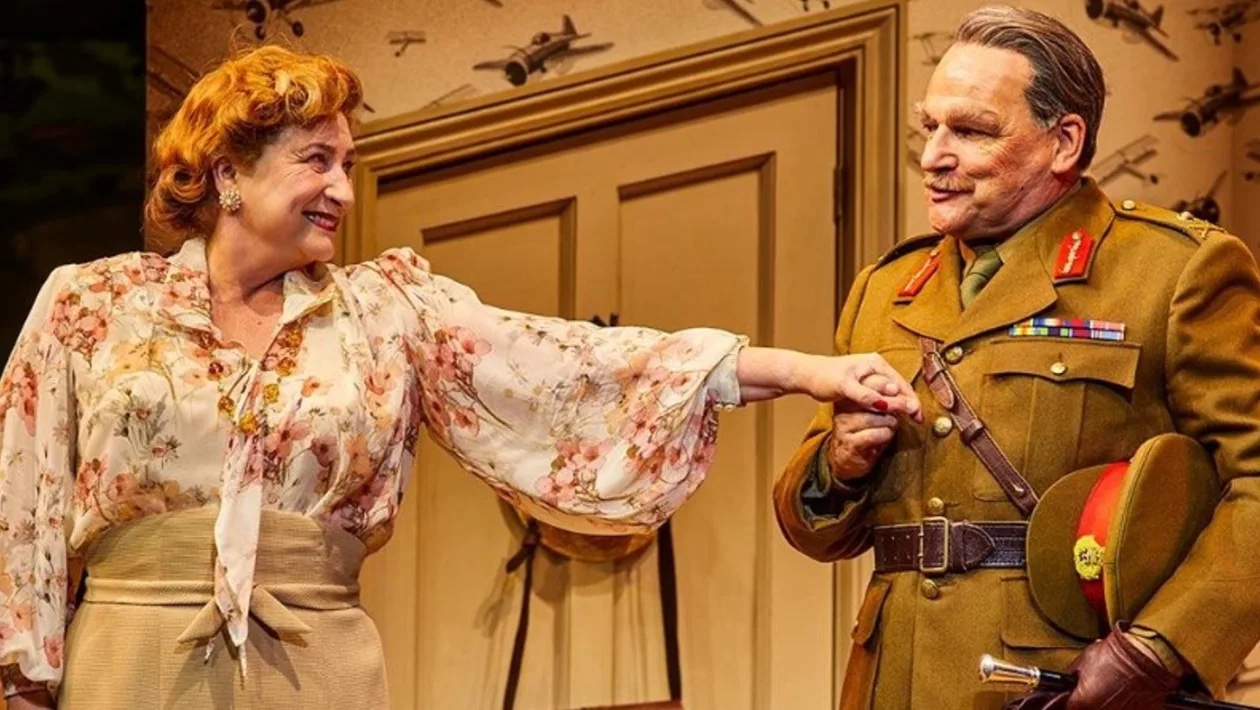
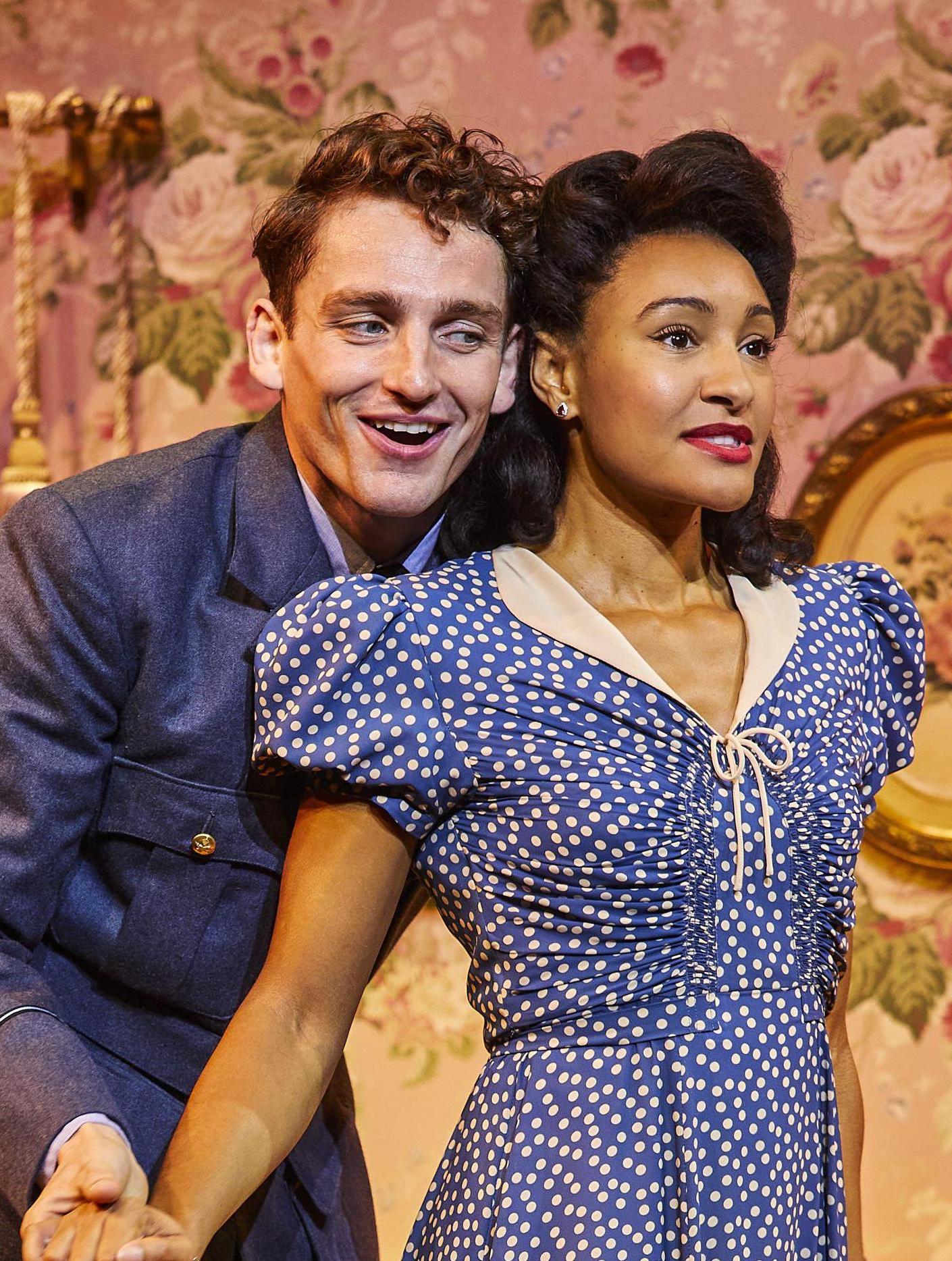
The action has moved from the late 18th century to the early 20th – specifically to World War 2 – and Malaprop Mansion has been requisitioned by the RAF. The titular Jack (Laurie Davidson) is a pilot, stationed in the grounds. He’s in love with fellow pilot, Lydia Languish (Natalie Simpson), who just happens to live in the mansion with her aunt, Mrs Malaprop (Caroline Quentin). Lydia, however, is infatuated with northern mechanic, Dudley Scunthorpe (Kelvin Fletcher), who, in turn, has a thing for Lydia’s maid, Lucy (Kerry Howard). Throw in a couple of other pilots vying for Lydia’s attention, a jealous fiancé and the ever-present spectre of death (these are military people, after all), not to mention Mrs Malaprop’s attraction to Jack’s father, Sir Anthony Absolute (Peter Forbes), and you’ve got quite the heady mix…

This comedy of errors is beautifully handled, all knowing nods to the audience, and perfectly executed groan-out-loud jokes. Sure, we can see the punchlines coming from cruising height, but that’s the point: the laughs are garnered in the gap, the moment when we know what’s coming before it lands. Quentin is particularly funny, clearly relishing the Malapropisms that litter her speech. They are so plentiful they make Sheridan look positively restrained, but their abundance works, again prompting us to pre-empt what she might say (Chekhov’s clematis, if you will). Howard also proves to have that comic edge, and I like her character’s frequent references to the theatricality of the piece, reminding the audience of the genre and what they ought to expect.

The set is delightful: all bucolic beauty and architectural elegance. Its chocolate box design suits the tone of the piece, and I especially like the doll’s house effect, when the mansion opens to reveal the rooms within. Ironically, the only things that don’t translate well to the cinema are, well, the cinematic sequences. I’m sure they’re impactful in the vast Olivier auditorium, but they are diminished by the live-screening process.

The ending is something of a shock, deliberately jarring. I won’t go into any detail (no spoilers here), but – on reflection – I think it works. It’s a brave choice, but probably the only one that makes sense, given the context. It feels tonally different from the rest of the piece, but I guess that’s the point. We all plod along, don’t we, dealing with the minutiae while the big stuff happens around us. Until…

There are a few more ‘encore’ screenings of Jack Absolute over the next month or so. If you’re in need of a laugh, take advantage of NT Live and give your local cinema a much-needed boost at the same time. You won’t regret it.

4.2 stars

Susan Singfield

Prima Facie

21/07/22

NT Live, The Cameo, Edinburgh

It is a truth universally acknowledged that Jodie Comer is a formidable talent, and I am more than happy to add my voice to the fangirl choir. Not only is she a chameleon, she’s also bristling with charisma, and she’s perfectly cast to play this complex, demanding role. The only difficulty is in believing this is her stage debut – because she seems born to it. She is a theatrical tour de force.

Prima Facie is, essentially, a feminist polemic, and a much-needed one. Art, as Aristotle sort of said, is multi-purpose, and can be used to educate as well as simply entertain. And boy, do we need educating. In the UK, a shocking 99% of reported rapes don’t even make it to court, and – of those that do – fewer than a third lead to a guilty verdict. When we take into consideration the enormous number of sexual assaults that are never reported at all (an estimated 83%), there’s only one conclusion to draw: the system isn’t working. Rape is a horrendous crime, but it’s one you’re likely to get away with.

Australian playwright Suzie Miller is on a mission to address this. She used to be a criminal defence lawyer, specialising in human rights, and she realised then that something was amiss. The law, she says, is built on assumptions that don’t acknowledge the realities of rape, without any real understanding of what consent looks like in practice, nor of how a victim might present. And so Prima Facie, directed by Justin Martin, comes howling into the void, forcing us to consider the urgency of change. The sold-out run at London’s Harold Pinter theatre, and the packed live-streamings at cinemas across the land, suggest there’s a lot of support for the idea (as well as a lot of Killing Eve fans, of course).

Comer plays Tessa, a brilliant young woman, who’s made it against the odds. Her first battle – as a state-educated Scouser – was getting into Cambridge law school; her second was graduating; her third becoming a barrister. She’s on the up, winning, sniggering at a young wannabe who asks of a rapist, ‘But is he guilty?” – because objective truth isn’t what she seeks. It’s “legal truth” that matters, which lawyer is best at playing the game. And she’s a fine player, one of the best. Lots of accusees are walking free because of her.

Until, one day, Tessa is raped. It’s a messy, complicated case, the type she knows she’ll never win. She was drunk; she’d had sex with the perpetrator before; she hasn’t any evidence. The whole legal edifice – the thing she’s dedicated her life to – comes crumbling down; the scales fall from her eyes. Her rapist will get off scot-free, thanks to someone like her, just doing their job. And the change in her is utterly and devastatingly believable. She’s always been determined. This might be a losing battle, but she’ll go down fighting.

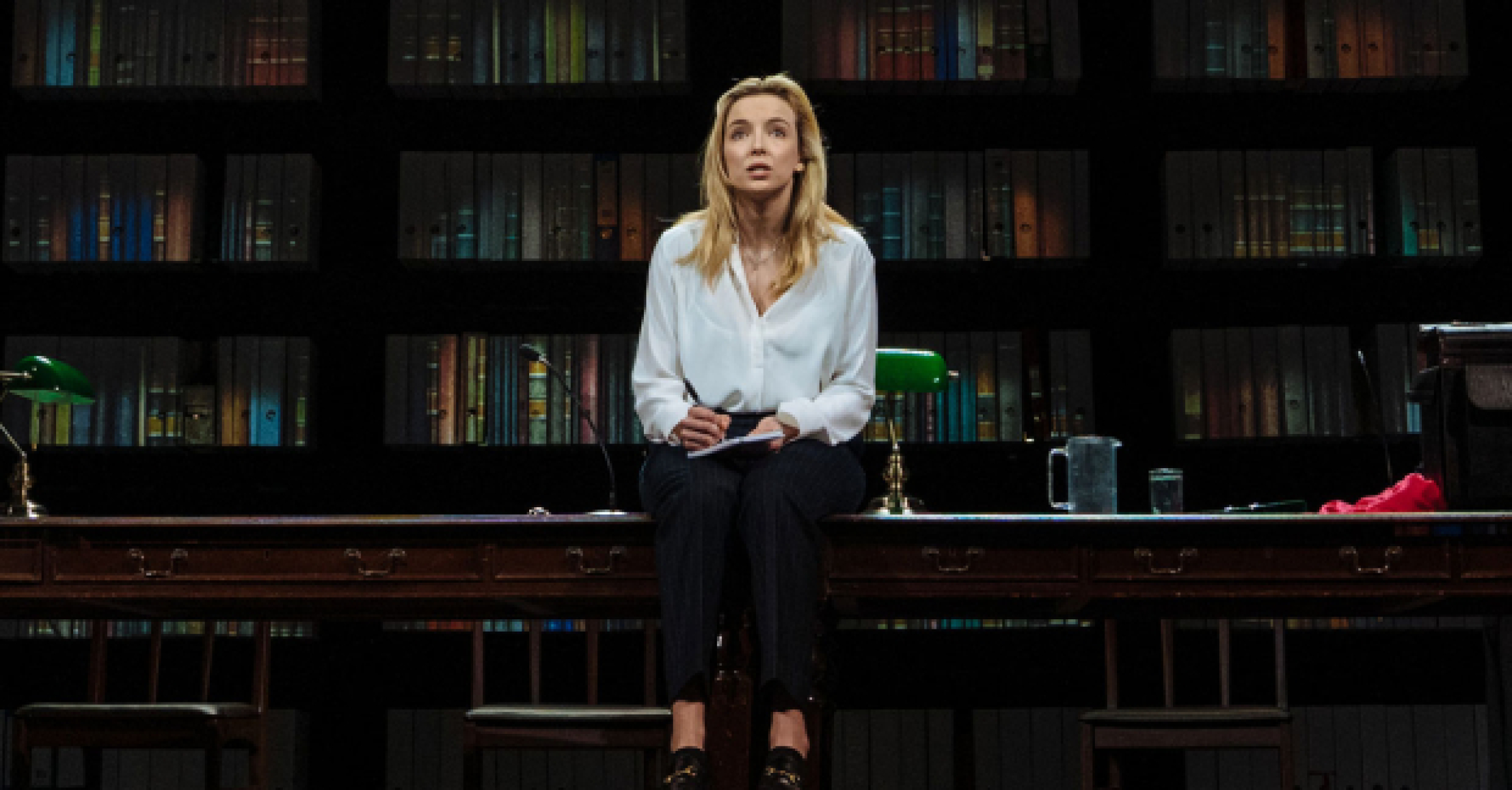
The staging (by Miriam Buether) is an interesting blend: the piece opens in the naturalistic confines of a stuffy, traditional chambers, but the tables are soon being utilised as a courtroom, the chair as a toilet; costume changes happen slickly, on stage: Comer is her own dresser, as well as her own stage hand. Out on the street, after the assault, rain falls almost literally on her parade, washing away her former swagger. The lights change, the stage becomes a suffocating black box, and a projected calendar reveals the shocking truth of just how many days it takes to get your case to court. Years are lost.

The score, composed by the ever-fabulous Self-Esteem (Rebecca Lucy Taylor) perfectly complements the piece – it’s an intelligent marriage of art forms.

I won’t reveal whether Tessa wins; you can consider the statistics and place your bets. What she does do is deliver a final speech that, while it isn’t necessarily believable, is a perfect piece of wish-fulfilment. It’s all the conversations she’s had in her head during the three years she’s been waiting; it’s her fantasy moment, raising her voice and finally being heard.

This is a call to action that walks the walk, directly supporting The Schools Consent Project, “educating and empowering young people to understand and engage with the issues surrounding consent and sexual assault”. It’s also a powerful, tear-inducing play.

More, please.

5 stars

Susan Singfield

A Midsummer Night’s Dream

27/06/20

National Theatre Live

Watching immersive theatre via a screen, especially a small screen, is always going to be oxymoronic. My first thought, as Egeus (Kevin McMonagle) drags his errant daughter, Hermia (Isis Hainsworth), through the Bridge Theatre’s standing audience to face the judgement of Theseus (Oliver Chris) is, ‘Oh, this isn’t going to work…’ By which I mean, this isn’t going to work for me. Because sometimes you really do have to be there.

This production, directed by Nicholas Hytner and Ross MacGibbon, is all about the live experience. I can only imagine how exhilarating it must have been in that auditorium, at once spectator and spectacle. Instead I’m at home (for the millionth night running), sitting on my sofa, watching via a computer.

It’s still very good, and I soon get over feeling distanced. I suppose we’ve all had to get over a lot stranger things in recent times. The chilling opening scene – where father-of-the-year Egeus seeks permission to put his daughter to death if she refuses to marry a man she doesn’t love – highlights the importance of the midsummer madness in the woods. Away from the strict patriarchal rule of Athens, the characters are free to explore their deepest desires, able to give rein to their true selves.

The story – for those who need reminding – is of four young lovers who run away into the forest. Also present is a group of amateur actors, seeking a quiet place to rehearse their latest play, and – of course – the resident fairies, who view these human interlopers as playthings, to be teased and manipulated just for fun. In this version, Oberon (Chris) and Titania (Gwendoline Christie)’s roles are switched, with Titania orchestrating the action.

Bunny Christie’s design is bold and daring, all flying beds and shifting green floors. The audience is called upon to move with the action, to pass a parachute above their heads, to dance; they become the forest’s shadows, the Athenian court. I’ve seen a lot of immersive theatre, but rarely anything as well-integrated as this, where the audience action feels purposeful and not just grafted on. The beds are especially clever, highlighting the dual themes of sex and dreaming; it’s not subtle, but why should it be? This is not a subtle play.

There’s not a bum note here, but there are some standout performances, not least from Hammed Animashaun, who plays Bottom as a wide-eyed enthusiast rather than a bumptious fool. He’s utterly endearing, so I’m delighted with Hytner’s decision to make his drug-fuelled tryst with Oberon a tender one, ill-advised but not risible. David Moorst’s Puck is also a delight, all twisty movements and Mancunian patter.

In short, I wish I’d been there; a show like this reminds me exactly why I love live theatre. But seeing it like this is much, much better than not seeing it at all.

4.6 stars

Susan Singfield

Cat on a Hot Tin Roof

22/02/18

Once again, NT Live offers us the chance to see a noteworthy production we’d otherwise be consigned to reading about. For David Lan, who has stepped down from his role as the Young Vic’s artistic director, Cat on a Hot Tin Roof is a triumphant swan song, elegantly directed by Benedict Andrews, and beautifully performed.

The audacious casting certainly pays off. Sienna Miller’s Maggie is a standout, all bravado and desperation: strong but vulnerable; gorgeous but unloved. She really is like the titular cat, prowling the room, unsure how to function in a world where everything has changed. Brick refuses to acknowledge her, whatever she says, whatever she does. She talks incessantly, needling and provoking, removing her clothes, painting her face. Nothing works. She’s lost him. It’s a bravura performance, a faultless incarnation of a classic role.

Jack O’Connell also gives an impressive turn as Brick, the handsome football-star-turned-alcoholic, traumatised by his best friend, Skipper’s suicide, unable to accept his own homosexuality. Brick is a complex character, at once the most honest and the most duplicitous in the play. He refuses to indulge the ‘happy family’ façade, makes no secret of his drinking, doesn’t care who hears him rejecting his wife. But he lies to himself about his feelings for Skipper, even when Big Daddy offers him absolution; his own prejudices too ingrained to allow him to face the truth. O’Connell imbues Brick with dignity, despite his obvious descent; it’s a clever, nuanced portrayal of a truly tortured soul.

Colm Meany is suitably awful as the tyrannical Big Daddy, a Trump-like figure whose only redeeming feature is his willingness to accept his favourite son’s sexuality. But it’s Lisa Palfrey as Big Momma who really intrigues me: she plays the matriarch as an infantalised neurotic, who has to be protected from realities she can’t stand. Big Daddy openly despises her, calls her fat and stupid; she responds in a high-pitched, lilting, little-girl voice, her ‘He doesn’t mean it’ lines imbued with the rhythm of a fingers-in-the-ear-la-la-la denial. It’s a very different interpretation of the character from any I’ve seen before, but it absolutely works.

There’s not much to criticise here, although I do think more could be done to create the sense of sweltering heat and claustrophobia inside the house. It’s all there in the dialogue, but I never really feel it. The modern setting means there are none of the traditional plantation shutters and whirring fans, and that’s okay – I like the set – but I think I’d like the ice to melt, to know that the water in the shower is cold, to understand why Maggie is wearing tights when it’s so hot. Still, these are mere quibbles.

If you haven’t seen this yet, there’s sure to be an encore screening soon. I urge you to catch it.

4.9 stars

Susan Singfield