King’s Theatre

Fiddler on the Roof

05/04/17

King’s Theatre, Edinburgh

Fiddler on the Roof premiered on Broadway in 1964, a whole seven years before I was born. And yet, even though it has existed longer than I have, and despite my theatre habit, I was almost entirely ignorant of this musical before tonight. I mean, I knew the title, and I was familiar with a couple of the songs, of course, but I knew nothing of the story or the characters. So I came to this modern classic almost entirely unprepared.

Most people probably already know what I didn’t: that the play is about a Jewish community, living precariously in the Russian Pale of Settlement in 1905. Their village, Anatekva, is a temporary safe haven, where, for the most part, people rub along quite well. Teyve (played with assurance and charisma by Alex Kantor) has just one big worry: how to find suitable husbands for his five dowry-less daughters. But times are a-changing, and he soon discovers that he needn’t trouble himself; his daughters are more than capable of finding lovers for themselves, whatever he may think of them. And, by and large, Teyve gloomily accepts his diminishing role as a patriarch, although Chava (Katie McLean) pushes things just a bit too far when she falls for Fyedka (Keith McLeod), a Russian youth. The Russians are the enemy.

Edinburgh Music Theatre’s production is very good indeed, the kind of polished amateur performance that gladdens the heart. Direction and music (by Ian Hammond Brown and Paul Gudgin, respectively) are proficient and adept, and the crowd work (choreographed by Sarah Wilkie) is beautifully done. The performances are uniformly strong; this feels like real ensemble work, but Libby Crabtree’s Golde is particularly good: an engaging interpretation of a fascinating role.

Standout moments include the nightmare scene, where Teyve constructs an elaborate lie to convince Golde to allow Tzeitel (Sally Pugh) to marry impoverished tailor, Motel (Fraser Shand). The choreography here is lively and inventive, and an absolute joy to watch.

And then there’s that devastating ending. I don’t think it counts as a spoiler to reveal what happens when the play is so well-known. But, for me, it is a complete surprise, and a jolting one at that. I sit watching the villagers gather up their belongings as they are evicted from their homes, and I can’t stop the tears from falling. I’ve just spent ninety minutes getting to know these people; I’ve laughed with them, shared their gossip and their fears. And now they’re being exiled, sent to seek another home. The slow circular trudge around the stage feels like a never-ending sorrow. And how apposite a story for our times: this is what it means to be a refugee. Not a cockroach, a scrounger, a potential terrorist. Just this. People. In all their many guises. Sent away from all they know and love, and needing welcome somewhere new.

An excellent production of a truly moving play.

4.6 stars

Susan Singfield

Anita and Me

28/03/17

King’s Theatre, Edinburgh

Meera Syal really knows how to spin a yarn. I read and enjoyed Anita and Me when it was first published, back in 1996. I watched the 2002 movie adaptation too, which was okay, although more superficial than the source novel. So I am interested to see this musical stage production, which is a collaborative effort by The Touring Consortium Theatre Company and Birmingham Repertory Theatre.

And it’s a lively, energetic piece, with an animated central performance from Aasiya Shah as Meena. The story of a young British-Indian girl, coming of age in a time of overt racism, is nicely told. There is anger here – Meena’s fury at local heart-throb Sam’s bigotry and ignorance, for example, and her refusal to allow him to get away with saying “I don’t mean you; I mean those other ones” – but there is humour, sadness, and forgiveness too. Sam’s anger is misdirected, but it’s understandable. He’s at the bottom of the pile, and he’s just lashing out. Far more important is Meena’s internal struggle to come to terms with who she is and who she wants to be.

It doesn’t work as well as the novel: the brush strokes are too broad and the nuances are lost. Without Meena’s internal monologue to temper our impressions, we’re left with a lot of stock characters behaving in predictable ways, declaiming their positions in loud, stagey voices. The Black Country accents feel overdone; it all needs toning down a bit. The novel has the same naivety, but it’s more credible on the page, when it’s told from a ten-year-old’s point of view. Here, we see the adults on their own terms, not Meena’s, and they are just too exaggerated to convince. It’s a shame, because the amplification hides the heart.

Despite this, there are some lovely moments, and some strong performances. Shobna Gulati and Robert Mountford, as Meena’s parents, give the subtlest characterisations, and these are easiest to believe. Nanima is a gift of a comic role, and Rina Fatania clearly revels in it. Meena’s sung letters to agony aunts Cathy and Claire are a nifty device, allowing us some insight into how she feels. And the set is impressively detailed, with some clever scene changes incorporated.

All in all, this is an enjoyable show, with much to recommend it. But it’s not as good as the book.

3.6 stars

Susan Singfield

Cuttin’ A Rug

King’s Theatre, Edinburgh

07/03/17

It’s 1957, a Friday night and, in Paisley Town Hall, the annual staff dance of carpet manufacturers, AF Stobo & Co., is about to kick off in style. All the usual suspects have arrived for the do: the teddy boys and the ready girls, the starchy ex-army boss of the design room, the out-of-his-depth University student. There’s also an aging dowager still steadfastly looking for love, a bluntly spoken tea lady – and let’s not forget ‘weedy Hector’, newly promoted to the role of designer and proudly dressed in his Uncle Bertie’s dinner suit. It promises to be an eventful evening.

This is the second part of John Byrne’s ‘Slab Boys’ trilogy (originally known as Paisley Patterns), first performed at the Traverse Theatre in 1979 and revived here by Glasgow’s iconic Citizens Theatre. It’s unashamedly a period piece, performed in broad Glaswegian dialect and punctuated with lively shots of rock n’ roll. It pinpoints an era, a few years before the Beatles changed the world, when American music still dominated the airwaves. As the protagonists talk and drink and dance and drink and fight and drink, the events become increasingly frenetic, as old rivalries rise to the surface and the Town Hall’s electricity supply becomes ever more erratic.

In all honesty, this production is a little one-note; there’s no real change of pace or tone at any point in the proceedings. But this is made up for by the enthusiasm of the performances. I particularly like Anne Lacey’s turn as the tragic Miss Walkinshaw, dressed in outmoded clothes and drunkenly lamenting the various ways in which life and romance have unerringly passed her by. Ryan Fletcher is also assured as snappy dresser Phil, a role first played by one Robbie Coltrane. Whatever happened to him?

If you know the era and you can handle the salty dialogue, this ribald, saucy comedy might just be the play for you. It’s on at the King’s Theatre until the 11th of March.

3.5 stars

Philip Caveney

Titanic: the Musical

21/02/17

King’s Theatre, Edinburgh

The King’s Theatre has a long and proud tradition of working with amateur companies; but it’s clear from the opening scenes of Southern Light’s production of Titanic, that we’re going to need to redefine the word ‘amateur,’ because this lavishly produced musical is certainly more assured than the term might lead you to expect. Indeed, the overall look and feel of it would give many professional companies a good run for their money.

Of course, we all know – or at least, think we know, the story of the ill-fated White Star liner which struck an iceberg on its maiden voyage in 1912 and sank, resulting in the deaths of over one thousand, five hundred passengers. The story has retained its fascination ever since and little wonder, as it serves as a powerful metaphor for the world’s obsession with the class system and the symbolic end of the British Empire. It has been the inspiration for a whole clutch of novels and films- eerily, it seems, even for a book that was written in 1898, called The Wreck of the Titan, which seemed to predict everything that would happen fourteen years later.

The Southern Light Opera Company’s production fairly bristles with ambition and much like the titular vessel, it’s a colossal undertaking. At one point I counted over seventy performers on stage, moving around in perfectly synchronised choreography, their massed voices soaring in thrilling harmony. A dining room sequence in the first half had three tables full of costumed actors, being served what looked like real food by a battalion of waitresses. (I’d have loved to watch the rehearsals for that!)

As this is so much an ensemble piece, it’s hard to single out individuals for praise, though Chris MacFarlane was very impressive as ‘the Stevedore,’ and Keith Kilgore as the ship’s designer, Thomas Andrews, also shone. Look out too, for a sprightly performance by Judith Walker as would-be social climber, Alice Beane. The musical’s first half, when everyone is optimistic and thrilled with their voyage is by far the most enjoyable. The second half, as we know only too well, heads into darker waters, and at times the sheer impossibility of depicting such a momentous incident onstage threatens to overpower the proceedings -but I did enjoy the moving epilogue where projections of the names of the dead played across the cast as they delivered a final song.

A lot of care and attention to detail has been lavished upon this musical – and the fact that tonight’s performance is dedicated to one of the members of the cast who died just a few days ago, makes it all the more poignant. Don’t let the word ‘amateur’ put you off. This is well worth your attention and it’s on at the King’s Theatre until Saturday the 25th of February.

4 stars

Philip Caveney

A Judgement in Stone

13/02/17

King’s Theatre, Edinburgh

The Classic Thriller Theatre Company’s adaptation of A Judgement in Stone is Sophie Ward’s play. Her performance as Eunice Parchman, the illiterate housekeeper, is astounding: she shape-shifts into an awkward, secretive, resentful old woman, and it is her subtlety and nuance that lend the piece its credibility.

Based on Ruth Rendell’s novel, AJIS is a pretty standard murder-mystery. There’s a large house, a rich family, a slew of servants – and some policemen too. But some of its effectiveness  as a whodunnit is undermined by the fact that there are four victims, which so reduces the number of potential killers that there’s not much element of surprise.

The set is stunning: the attention to detail is incredible, especially considering that this is a touring production. The wooden panelling, the leaded windows: it’s all truly remarkable. This naturalistic single-room setting works well, helping to create a sense of both the period (the seventies) and the isolation of the domestic realm.  And the regular shifts between times are well-handled: the chronology is always clear. It’s a shame, however, that there are so many exits and entrances; scenes are never allowed to overlap; the past never coincides with the present. The  constant stage traffic feels disruptive and unnecessary, and isn’t always timed quite right. It feels a little old-fashioned, all this ‘then they go off, and then they come on’ stuff, and there are moments when we’re left with an empty stage, which doesn’t help the pace at all.

Some of the characterisation feels odd: Joan Smith, for example, isn’t credible at all. To be fair, the problem doesn’t seem to lie with Deborah Grant’s gutsy performance (she’s lively and engaging and very funny at times) but with who the character is supposed to be. Maybe the source material is at fault (I haven’t read Rendell’s novel), but it’s hard to believe she and Eunice would ever become friends. There’s no sense conveyed of what connects them.

Overall, this is an entertaining piece, with some strong performances from the cast. But there are a few misfires: it’s too easy to spot the supposed twists, and the whole thing feels a bit, well, staid. That said, the theatre is almost full, and those around us seem to be enjoying what they see. Why not give it a try and make up your own mind?

3 stars

Susan Singfield

Lysistrata

27/01/17

King’s Theatre, Edinburgh

The Attic Collective’s adaptation of Lysistrata is certainly true to the spirit of Aristophanes’ original play, though it takes the story to extremes I’ve never witnessed before: bawdy, rambunctious and featuring even more inflatable phalluses than you’re likely to see on the average rowdy hen night, it’s also liberally sprinkled with acerbic comments about contemporay political developments (including the inevitable Trump reference).

First performed in Athens in 411 BC, the play is a wry condemnation of the patriarchal society that held sway at the time. Lysistrata (Cait Irvine), tired of watching her husband trotting off to take part in the latest battle of the Peloponnesian war (a conflict which raged on for thirty years), enlists her female friends to join her in a sex strike – the women of Athens, she insists, will not agree to pleasure their husbands until a peace deal can be struck with their adversaries in Sparta. Aristophanes’ point is that sex can be a powerful weapon and that, when men are deprived of it, they will do pretty much anything to earn the right to enjoy it once again.

This is a spirited ensemble production from this emerging new company, brash and clamorous, incorporating music, movement and vocalisation. For a while there, I didn’t really think this was going to be for me , but it gradually exerted its considerable strengths and, by the conclusion, I had been won over. Mind you, this isn’t going to work for everybody. If you’re at all prudish, this may not be your cup of bromide, but as a gutsy interpretation of a classic text, it certainly achieves its aims.

3.8 stars

Philip Caveney

Theatre Bouquets 2016

unknown-18

unknown-18

unknown-18

We’ve been lucky enough to see some amazing theatre again in 2016. Here, in order of viewing (and with the benefit of hindsight), are our favourite productions of the year.

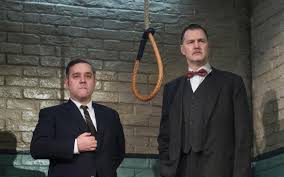
Hangmen – Wyndham’s Theatre, London

Unknown-1

An excellent start to the year’s theatrical viewing, Martin McDonagh’s play was absolutely superb: funny, frightening and thought-provoking with an outstanding central performance by David Morrissey.

The Girls – The Lowry, Salford

Gary Barlow, Tim Firth and the original Calendar Girls credit Matt Crockett

This was the biggest surprise of the year for us: on paper, it sounded a million miles away from the sort of thing we usually enjoy, and we went along reluctantly. But it was a truly delightful production – flawlessly realised.

The Merry Wives – The Lowry, Salford

image

Northern Broadsides version of The Merry Wives of Windsor was a rambunctious, irreverent take on the tale, with the inimitable Barrie Rutter clearly relishing the role of Falstaff.

I Am Thomas – Lyceum Theatre, Edinburgh

I_Am_Thomas_415x800_jpg_300x200_crop_q85

A strange and eclectic production, telling the tale of Thomas Aikenhead, the last person in Scotland to be hanged for blasphemy, this was essentially a series of vignettes and musical interludes, with an ensemble taking turns to play the eponymous role.

King Lear – Royal Exchange Theatre, Manchester

04-KING-LEAR-RET-L-R-Pepter-Lunkuse-Cordelia-Don-Warrington-King-Lear-Photo-Jonathan-Keenan

Michael Buffong’s King Lear was a tour de force, a gimmick-free yet undeniably modern production. Don Warrington was well-cast in the central role, but it was Pepter Lunkuse’s Cordelia who really stood out for us. She’s definitely one to watch!

Stowaway – Home, Manchester

Unknown

Analogue Theatre’s troubling tale of a stowaway falling from a flying aeroplane and landing in the car park of a DIY store was fascinating, depicting a moment where worlds collide and understandings begin to take root. A thought-provoking, political play.

Royal Vauxhall – Underbelly Med Quad, Edinburgh

2016ROYALVA-APJ-300

A quirky and irreverent musical, telling the true story of when Freddie Mercury and Kenny Everett dressed Princess Diana in drag and took her to the Royal Vauxhall Tavern in London for a night out, incognito. We loved this production.

Wonderman – Underbelly Potterrow, Edinburgh

Wonderman_edinburgh_FOURSHEETS-quartersize_final

Based on the short stories of Roald Dahl – and incorporating a true incident from his eventful life – Gagglebabble’s collaboration with the National Theatre of Wales was a sprightly mix of drama and music with a deliciously dark heart.

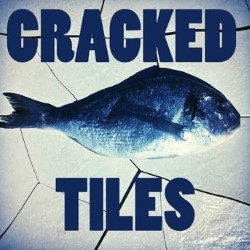
Cracked Tiles – Spotlites, Edinburgh

2016CRACKED_AVH

This beautifully crafted monologue, written and performed by Lorenzo Novani, was the downbeat tale of a young man who inherits a Glasgow fish and chip shop from his father Aldo. Novani was quite staggering as Riccardo.

Dear Home Office – Underbelly Med Quad, Edinburgh

2016DEARHOM_AXD

This was the story of unaccompanied minors applying for asylum in the UK, performed with touching vulnerability by eight refugee boys. The play was an amalgamation of the performers’ own experiences, blended with fictional accounts. A raw and truthful exposé.

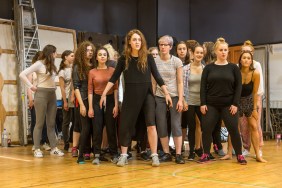
The Suppliant Women – Lyceum Theatre, Edinburgh

29676962992_8e7a020135_b

It’s a rare thing indeed when you go into a theatre and are treated to something unique – but that is the word that kept coming to us, as we sat entranced in the stalls of The Lyceum, watching David Greig’s production of The Suppliant Women. Truly brilliant.

Grain in the Blood – Traverse Theatre, Edinburgh

unknown-2

A real one-off, this was a stark, unnerving chiller, at once contemporary and classical, with dialogue that was taut and ultra-modern in style, all fragments and silences and unfinished thoughts. This was a complex, angular, unwieldy play – a fascinating watch.

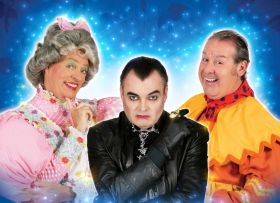
Jack and the Beanstalk – King’s Theatre, Edinburgh

cfk-panto-beanstalk-header

By far the best panto we have ever seen, this was a standout production, with fantastic performances from King’s Theatre regulars Allan Stewart, Andy Gray and Grant Stott. It brought the year to a celebratory end.

Susan Singfield

Jack and the Beanstalk

cfk-panto-beanstalk-header

30/11/16

King’s Theatre, Edinburgh

I thought I knew what to expect with this one. I’ve seen a lot of pantos in my time (and even performed in a few amateur productions when I was a kid). But I have never – NEVER – seen one as accomplished as this. The sheer scale and spectacle of it is genuinely awesome. I left the theatre feeling light as air and full of joy. And surely this is what pantomime is all about?

Allan Stewart (Dame Trot), Andy Gray (Hector) and Grant Stott (Fleshcreep) have made their collective mark as King’s Theatre panto regulars – and it’s easy to see why they’re so popular. They have an easy rapport with each other, as well as with the crowd, and they’re genuinely funny, milking the script for all its worth, as well as ad-libbing profusely to excellent effect. And the supporting cast are all good too, with no weak link among them.

It’s nice to see a pantomime that values its host city; typically, they seem to make jokes at the town’s expense, rather than celebrating its fabulousness as this one does. The good fairy, for example, is presented as ‘The Spirit of the Castle’ (Lisa Lynch), which rather obviously implies that the city itself is a protective one, with goodness at its heart. It’s a lovely touch.

The production values are very high. There’s clearly been no expense spared, and every penny has been well spent. From the superb costuming (the animals are particularly appealing) to the special effects, this is truly a spectacular piece of theatre. The giant, for example, is extraordinarily rendered, a looming monstrosity of a prop, prompting the whole audience to gasp – although even this pales in comparison to Dame Trot’s jaw-dropping beanstalk ascent.

If there’s a criticism, it’s a tiny one: the giant’s demise is perhaps a little underwhelming after everything that has gone before. But honestly, it doesn’t matter. With a show where everything – the music, the choreography, the acting, the writing, the jokes, the scenery – is this impressive, it seems churlish to criticise.

By far the best pantomime I have ever seen: a standout production.

5 stars

Susan Singfield

The Broons: Maggie’s Wedding

01/11/16

The King’s Theatre, Edinburgh

The Broons are a much-loved Scottish institution. It’s hard to believe that, as a popular comic strip,  they have featured in The Sunday Post since 1936 – which makes this theatrical celebration an 80th anniversary event. Written by Rob Drummond and directed by Andrew Panton, it was originally commissioned and developed by Sell A Door Theatre Company and as you might expect, given the subject, there’s a robust cartoonish feel to the show. Maw and Paw Broon (Joyce Falconer and Paul Riley) preside over their working class family in the fictional town of Auchentogle, with real pride and plenty of love. As the title might suggest, the events of the play lead up to the marriage of Maggie (Kim Allan) to the (unseen) Cameron. But Maw doesn’t much like the idea of her little princess leaving the family home – and when she finds out that other members of the family are also planning to move away, she quickly takes steps to ensure that such a thing will never happen…

I’ll be the first to admit that having only recently moved to Scotland, I really don’t have much of a backstory with these characters and consequently, many of the ‘in’ jokes (which elicited roars of appreciative laughter from tonight’s audience) went completely over my head; but there was still much to enjoy here, particularly Laura Szalecki’s portrayal of the man-hungry Daphne and Duncan Brown as the monumentally thick Englishman, Jock Badge, who thinks the term ‘4 to 6 years’ on a jigsaw puzzle is an indication of how long it might take him to put it together.

As events scamper joyfully along,  the actors slip effortlessly from character to character and, since this is a play with music, just about everyone bashes out a tune on some kind of musical instrument at various points in the proceedings. The overall effect is charming and though I don’t really agree with the play’s ultimate message – that it’s better to stay with what you know than to seek out new experiences – it certainly chimes with a story that has remained totally unchanged for so very long. And who could fail to enjoy the rousing singalong at the conclusion that pays tribute to a whole host of Scottish talent from The Waterboys to The Bay City Rollers?

If you’re a fan of these fictional folk, you certainly won’t want to miss this; and, if you’re merely curious as to what the fuss is all about, you’ll still be in for an entertaining night.

4 stars

Philip Caveney

The Full Monty

24/10/16

King’s Theatre, Edinburgh

The Full Monty has been through several incarnations: it started life as a Sheffield-based film starring Robert Carlyle, then evolved into an Americanised musical, this time set in Buffalo, New York. And now it’s back in a third guise that’s much closer to the original concept, with a stage adaptation currently touring the UK, and coming soon to a theatre near you.

The cast features a number of faces punters will recognise as regulars from Hollyoaks, Brookside, Coronation Street and Eastenders, and there’s a decidedly soapy feel to this slice-of-life tale, with its narrative of a working class deprived of work, of disenfranchised men searching for ways to retain a sense of identity and pride, while their families are torn apart by poverty and despair. It’s against this backdrop that Gaz (Gary Lucy) conceives of ‘Bums of Steel’ – when he finds out how much the Chippendales earn, he convinces his friends to forget the misery of Job Club and join him in a new venture, as members of a male strip-group. The money, he hopes, will allow him to pay the child support he owes, and ensure he retains access to his son, Nathan (played tonight by the aptly named Monty Poole).

At its heart, this is a story about socialism: shafted by Thatcher and her politics of individualism, Gary and his friends have a more co-operative approach to life. They unite, help each other, form a team, and show that together they can escape the trap into which they’ve been dropped. Although very firmly set in the 1980s, it speaks volumes about the present day, and the focus on unemployment and a punitive benefits system have never been more relevant.

Despite its serious political stance, it’s a lively, energetic production, with lots of laugh-out-loud moments and some exemplary performances, most notably from Andrew Dunn (as Gerald) and Louis Emerick (as Horse). The humour is broad and exaggerated, which certainly engages the audience and elicits a loud, approving response – but it does mean that some of the pathos is lost at times. Overall though, this is a strong production, and well-worth seeing. The second act, in particular, really hits the mark, and the finale – wink, wink – is definitely worth the wait.

4 stars

Susan Singfield