King’s Theatre

The Real Thing


25/10/17

King’s Theatre, Edinburgh

Tom Stoppard’s The Real Thing is an arch examination of what we mean by ‘truth’ – in love, in life and, of course, in theatre. Despite the linguistic flourishes, however, the central premise – that reality is a shape-shifter, subject to narrative perspective – is pretty bluntly hammered home.

It starts well, with the initial confrontation between husband and wife slowly exposed as fiction: a scene from playwright Henry (Laurence Fox)’s House of Cards. The blurred lines between reality and fantasy are underscored by the revelation that Charlotte (Rebecca Johnson), the cheating wife in the first scene, is – in fact – married to Henry. Her on-stage husband, Max (Adam Jackson-Smith), visits with his real-life wife, Annie (Flora Spencer-Longhurst), and things are further complicated when we discover that Henry and Annie are having an affair. It’s the stuff that farce is made of, and it’s rather nicely done – even if it does at times seem a little too wordy and pleased with itself.

But I’m not sure we need the constant reinforcement of what is, at heart, a straightforward idea. Henry’s Desert Island Discs choices don’t reflect his real musical taste; Charlotte has never been a faithful wife. Brodie (Santino Smith), Annie’s ‘good-cause’, is not the wronged war hero she pretends he is. Most of Billy (Kit Young)’s dialogue is taken from ‘Tis Pity She’s a Whore: he’s rehearsing with Annie; they’re acting the part. It’s all very meta, and interesting to watch, but it does seem to over-complicate an essentially simple premise.

Henry and Charlotte’s daughter, Debbie, is nicely played by Venice Van Someren, but I really don’t understand the character’s function. The role doesn’t add anything to the piece.

The performances are good: the play is dialogue-heavy, but the actors make the most of the sprightly humour, and the verbal jousting is entertaining throughout. Fox’s voice seems a little strained at times, but he plays the part with relish and, particularly in the second act, imbues Henry with real depth.

Stephen Unwin’s direction is clear and unfussy, each scene separated by a choreography of moving furniture, which serves to underline the theatricality. But I think perhaps more layers might have been unearthed had the actors multi-rolled, further calling into question the whole notion of reality. As it is, it’s all a bit one-note, and something of a missed opportunity.

3.8 stars

Susan Singfield


The Kite Runner

09/10/17

King’s Theatre, Edinburgh

Khaled Hosseini’s best-selling novel, set against the changing face of Afghanistan through the nineteen-seventies and beyond, gets an assured if slightly pedestrian adaptation by Matthew Spengler, who opts to use the same first person narration as the book. It’s a powerful and deeply affecting story about friendship and rivalry and how the events of childhood serve to shape the adult psyche.

David Ahmad takes the central role of Amir – and it must be a punishing performance, as he is involved in every single scene. This is the story of young Amir who lives with his father Baba (Emilio Doorgasingh) in a fine house in Afghanistan. It is also the story of the two servants who live and work in the household, Ali (Ezra Foroque Khan) and his son, Hassan (Jo Ben Ayed). Amir and Hassan are friends who play together every day, unmindful of the fact that they are on opposite sides of the Sunni/Shia divide. When the Taliban take control of the country, that divide causes incredible tensions – and when Amir witnesses an act of barbaric cruelty enacted on Hassan by some Sunni boys, he chooses to look the other way… something that in the fullness of time, he comes to bitterly regret.

The play is simply and effectively staged. I love the device of the giant kite-shaped screen that descends from time to time with images projected onto it and shadows swarming behind it. The scene where it is used to mask the story’s most heinous moment is a brilliant piece of theatre – making the event infinitely more horrible, simply because we do not see it. The imagination always paints the most terrible pictures.

I also love the presence of tabla player Hanif Khan on stage, his urgent rhythms serving to propel the story along at key moments. If some scenes occasionally feel a little exposition-heavy, this is perhaps an inevitable consequence of the narrative – but those who love the novel (and they are many) will surely appreciate how much care and attention has gone into adapting this for the stage.

The rapturous applause at the play’s conclusion is ample evidence of how much the audience in the packed auditorium enjoy this performance.

4.2 stars

Philip Caveney

The Sunshine Ghost

07/10/17

The Studio, Festival Theatre, Edinburgh

The Sunshine Ghost, a co-production between Scottish Theatre Producers and the Festival and King’s Theatres in Edinburgh, is a brand-spanking new musical, performed with wit and vigour by its small cast.

Directed by Ken Alexander, it’s a convoluted, melodramatic tale, featuring love and loss, castles and ghosts – with lots of laughs along the way. We meet the cursed ghost Ranald MacKinnon (John Kielty), two hundred years dead, and doomed to haunt his family’s castle until an old wrong is avenged. And we meet the woman he falls in love with, the very-much-alive American archaeologist, Jacqueline Duval (Neshla Caplan), daughter of billionaire property tycoon, Glen Duval (Barrie Hunter). Before Jacqueline can stop him, her boorish father is buying MacKinnon Castle and shipping it stone-by-stone to the USA, all to curry favour with his latest amour, the repulsive media-astrologer, Astrobeth (played with real relish by Helen Logan). Can Ranald save his ancestral home and break the curse that binds him to it? Can the hapless caretaker, Lachlan (Andy Cannon, who co-wrote the play), do anything to help? Here, nothing is as it seems, and the resolution, when it comes, is sure to take you by surprise.

This is a thoroughly enjoyable piece of musical theatre, hindered only by a peponderance of exposition in the first act, and the inevitable limitations of a single piano (masterfully played by Richard Ferguson, who also wrote the score, but without the depth of a full band or orchestra). It’s a silly spoof, a daft extravagance, and the cast play up these elements with obvious glee. There are lots of cheeky little techniques employed with a knowing wink: a sheet cunningly moved to allow a shock reveal; a homage to Beetlejuice in the possession scene. Helen Logan’s Astrobeth is the standout performance (it’s a gift of a role, perfect for comic exaggeration), but the whole cast works well, and it’s a whole lot of fun.

A most enjoyable evening at the theatre.

4 stars

Susan Singfield


A Streetcar Named Desire

03/10/17

King’s Theatre, Edinburgh

Rapture Theatre’s production of A Streetcar Named Desire is as intense and uncomfortable as it should be, with a towering central performance by Gina Isaac as Blanche DuBois, who absolutely captures the oxymoronic tigress/moth nature of Tennessee Williams’ most complex anti-heroine.

The story is well-known: Blanche visits her sister and brother-in-law, Stella and Stanley, in New Orleans, where she soon overstays her welcome, drinking their liquor and sneering at their two-room home. However, despite her airs and graces, it transpires that Blanche has nowhere else to go: the plantation her family owned is gone; there is no money left and she’s lost her teaching job. She’s a tragic creature, as desperate as she is beautiful, as damaged as she is damaging. She clings to the old order, where she had youth and status and respect; she can’t accept that it is gone.

The casting of a black actor (Joseph Black) as Stanley Kowalski adds the suggestion that Blanche’s snobbery is tinged with racism: her descriptions of him as an ‘animal’ or an ‘ape’ mirror the racist language deployed by white supremacists. She feels instinctively superior to him, and is condescending even as she relies on him for the very basics of her existence. Under Michael Emans’ direction, the claustrophobia of their lives is central, emphasised by the small set, which squats at the front of the large stage space. There may well be a world out there, but the characters in this play aren’t able to enjoy it. They’re all trapped, bound together in their misery; it’s a crackling tinderbox.

And when it catches, the fire destroys everything. Stanley rapes Blanche and it’s brutal: Isaac’s depiction of drunken vulnerability makes the moment stark and clear. There is no way this woman is capable of consent. Whatever humiliations she has heaped upon Stanley, in this moment, he is entirely at fault. It’s horrible to watch and it’s very powerful indeed.

I’m not sure about the music, which I think is supposed to be inside Blanche’s head, played at a volume where I can just about catch it. I’m guessing this is the point, but I find it distracting and not a little irritating at times. Still, this is a strong production, which does real justice to Williams’ play, and never shirks from the complexity of the characters portrayed.

4.5 stars

Susan Singfield


Twelfth Night

21/09/17

King’s Theatre, Edinburgh

Following Philip’s enthusiastic review of their Romeo & Juliet last night, I’m primed to expect good things from Merely Theatre, with their gender-blind double casting and sprightly interpretations of the Bard. And I’m not disappointed: Twelfth Night is an absolute delight, and an interesting counterpoint to the star-crossed lovers’ tragedy. To those who claim Shakespeare’s comedies just aren’t funny (Sir Richard Eyre, amongst others), I say: watch this. It’s hilarious. Even the too-cool-for-school teenage girls sitting in front of me – with their teacher and ‘response to live performance’ booklets – can’t help but laugh after a while. I mean, they give eye-rolling indifference a decent go, but it proves impossible in the face of Tamara Astor’s foolish musical antics (she’s playing the fool – conflated with Maria – so it all makes perfect sense).

The plot’s too well-known for me to detail it here, and – to some extent – this production relies on that familiarity. I’m never in any doubt as to who is who, but I might be, if I didn’t know the play. Hannah Ellis, for example, plays the drunken sot, Sir Toby Belch, as well as Orsino, but the only difference in costume is the addition of a tweed jacket and a bow-tie to denote Olivia’s wayward uncle, and – although Ellis plays them very differently – I think there’s a danger the Duke might appear to be the same man, albeit sobered up. Still, her performance is undoubtedly excellent, as is Robert Myles’ turn as the unfortunate Malvolio, not so much cross-gartered as high-Y-fronted, and stupidly amusing. Sarah Peachey and Emmy Rose deliver the ‘straight-man’ roles of Olivia and Viola with aplomb; there’s not a single weak link here.

It’s a lively, pacy piece of theatre: deliciously daft, revelling in its silliness. Scott Ellis’s direction is sublime: this show is fast and funny and entertaining all the time. The simple set works extremely well: there’re no unnecessary props or scenery to slow things down. This is seriously good comedy. Do try to catch it if you can.

4.6 stars

Susan Singfield

Romeo & Juliet


20/09/17

King’s Theatre, Edinburgh

Merely Theatre have a pretty unique approach to staging what they call ‘stripped-back’ Shakespeare. Each play they produce features only five actors and the casting is gender-blind. On this tour, for instance, they are performing Romeo & Juliet and Twelfth Night in rep – so the version of R & J I see features four female actors and one male. It all makes for an interesting dynamic and prompts the viewer to examine really familiar scenes with a fresh eye.

I won’t insult readers by outlining the full plot of R & J – only to observe that a play that so many people think of as the ultimate love story is, in fact, pure tragedy – the tale of a flighty, impetuous youth who becomes infatuated with somebody he’s only just met and, in wooing her, unwittingly leaves a trail of devastation in his wake. Some love story! For once, the two lead characters here are young enough to convince us that they could be so impetuous and the pared-down nature of this production means that it moves like the proverbial tiger on vaseline, with characters dashing back and forth through a series of curtained doorways, slipping in and out of costume as they go.

With so few actors to carry so many roles, the danger is always that an audience won’t be entirely sure who is who, but the simple costume changes (where, for instance, the Capulets are always decked out in Bay City Roller-style flourishes of tartan) means that we’re never confused. Almost before I know it, we’ve hit the interval and, after a short break, the second half fairly scampers by. Sarah Peachey and Emmy Rose make appealing star-crossed lovers and I particularly enjoy Tamara Astor’s performance as the Nurse. Hannah Ellis deftly handles three roles, while Robert Myles manages four.

If you’re trying to encourage reluctant youngsters to embrace a bit of the bard of Stratford-upon-Avon, this is a great way to start them off. It’s pacy and exuberant but doesn’t pull any punches when dealing with the tragedy.

All-in-all, a very satisfying production.

4.2 stars

Philip Caveney

Fame: The Musical

Unknown

21/07/17

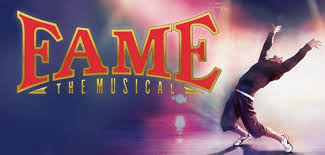
Alan Parker’s 1980 movie, Fame, is the film that launched a million star jumps – and, throughout the 1980s, the television series captured the imaginations of countless more viewers. This musical by The Beyond Broadway Experience manages to take the essence of the concept and uncork it spectacularly in the splendid surroundings of the King’s Theatre. I should point out that this is an amateur production but, like many of the community shows here, it makes you want to find a better word than ‘amateur’ to describe what’s happening, because it’s genuinely dazzling.

The musical follows a cohort of successful applicants through their time at the New York High School of Performing Arts (a genuine establishment with incredibly exacting standards). There’s Tyrone (Rory McLeod), strutting and dancing up a storm, but hiding the fact that he’s dyslexic. There’s Carmen (Caitlin Tipping), bold, brassy and struggling to control a fatal fascination with the street drugs that keep her dancer-thin. There’s Nick (Reuben Woolard), already the star of a peanut butter TV commercial, but desperate to prove himself as a genuine actor, and there’s Serena (Melissa McNaught), a shy girl with a huge voice who finds herself a little bit fixated on Nick.

But perhaps it’s unfair to single out individuals – although Mabel (Sarah Kerr)’s singing is so impressive it gives me chills – because the whole company performs with such aplomb. Choreographer Murray Grant has somehow schooled one hundred and sixty (count them!) young actors into giving the performances of their lives – they jump, twirl and pirouette around the crowded stage with perfect precision and during the song  Dancing On The Sidewalk actually burst off the stage and through the audience in a display of infectious enthusiasm that nearly lifts the roof off the theatre. This is a thrilling production and director Gerard Bentall should really take a well-deserved bow for helming this complex piece so expertly.

The show’s only on for one more night at the King’s but, if you can get seats for it, I’d advise you to grab them. If the pizzazz and energy from tonight’s performance could be bottled we’d all live an extra ten years – and with great big smiles on our faces too.

4.8 stars

Philip Caveney

Death of a Salesman

20/06/17

King’s Theatre, Edinburgh

There’s no doubting the power and tragic beauty of this Arthur Miller play: I remember its strength from sixth-form English lessons; even reading around the classroom, it seemed to come alive. On stage and film, I have always found it utterly compelling, a desperately sad – and sadly desperate – illumination of our times.

Okay, so the specifics are late-forties New York, but Willy Loman is an everyman, and his predicament still common to those of us who live in capitalist societies around the world.  We are sold a dream: we are in charge of our own destinies. Work hard, and you will get somewhere. Compete, and you can be the best. Buy these products; owning them will show others what you’re worth. But for Willy, the dream he’s bought in to is crumbling: he isn’t great; he’s ordinary. And he’s lost his edge. He’s a salesman who no longer sells, and corporate America spits him out. Willy is outraged to discover he’s been had, and rails against the boss that now deems him obsolete: “You can’t eat the orange, and throw the peel away – a man is not a piece of fruit.” But his rage is impotent: the odds are stacked against him. Howard does indeed discard him, and Willy is left bereft, forced to confront the reality that his life has been a sham. His house is small and crumbling; his children haven’t changed the world. He can’t even grow beets in his yard, for pity’s sake. And now, when he’s old and tired, he’s left frantic and worried: how can he make ends meet?

This touring production (by Royal & Derngate, Northampton, in association with Cambridge Arts Theatre) has a thoroughly modern feel. It’s not that the period has changed, exactly, it’s just been made less prominent. The minimalist stage, with its fizzing neon illumination – THE LAND OF THE FREE – gives an eerie sense of transience and flimsiness. Costumes are subtly contemporary in style; Howard’s voice-recorder is tiny and looks like today’s technology, but there’s no suggestion it has more than one function. Howard’s reaction to this piece of kit is illustrative too: Thom Tuck (last seen by Bouquets & Brickbats as the excellent Scaramouche Jones) is delightfully brash and insensitive, showing off about how much money he’s spent on this vanity item, even as he refuses to grant Willy a living wage. “Ask your sons,” he tells Willy, blissfully unaware of his own hypocrisy. “Now’s no time for pride.”

Nicholas Woodeson is perfect for the lead role, conveying Willy’s struggle with warmth and vitality. We are frustrated by his refusal to accept a job offer from Charley (Geff Francis), but we understand it too: Howard is wrong; Willy’s pride is all he has left. The anger that spills out of him in response to Linda’s concern is utterly convincing too: he doesn’t want her to worry about him, to prop him up because he’s down. He wants her to be impressed by him, and he’s self-aware enough to know she pities him these days. Tricia Kelly plays Linda with real heart; her anguish, although quieter, is every bit as real as her husband’s, and her epilogue speech is delivered with unbearable dignity. It makes me weep.

I think it’s the direction that makes this production so good: Abigail Graham has done a wonderful job of clarifying everybody’s pain. We know what they’re all feeling, and can’t help but empathise, even when they’re behaving as badly as they can. Indeed, George Taylor’s dysfunctional Biff is the most fully realised I have ever seen. Infidelities, theft, cruelty: none of these are hidden from our view. Because flawed people are people too, and we’re all deserving of respect.

This is a superb production of a truly great play. It’s on at the King’s until 24th June, and the tour continues elsewhere until 15th July. I urge you to try to catch it if you can.

4.8 stars

Susan Singfield


The Wedding Singer

06/06/17

King’s Theatre, Edinburgh

I’ll be honest, I’m not expecting much of The Wedding Singer. Its tagline (“The Hilarious Musical Based on the Hit Film”) seems designed to put me off: I didn’t much care for the film and am suspicious of anything that calls itself funny. Still, if I’ve learned anything over the years, it’s to give stuff a chance; joy is often found in the most unlikely places.

And The Wedding Singer is really very good. It’s an energetic, riotous show, with some great set pieces and strong performances throughout. The tone is set before the lights go down, with a skewed cinema screen projecting trailers from 1980s classics: there’s The Goonies! Oh, and Desperately Seeking Susan! It’s a real nostalgia-fest, and makes one thing absolutely clear: this is a period piece.

And it needs to be, because the unquestioning conformity to gender roles would surely raise an eyebrow nowadays. Girls just want to get married, you see; they like dresses and rings and crockery. As for homosexuality, it’s the punchline to a lot of jokes in this play – and I don’t think that would fly in a contemporary piece, however affectionate the quips. (Maybe it shouldn’t work here either, but the crowd seems to lap it up; surely some of them are feeling as uncomfortable as I am though?)

Despite these issues, this is undoubtedly a feel-good musical with a lot of heart. It’s easy to engage with the two main characters, Robbie and Julia, who are played with warmth and good humour by Jon Robyns and Cassie Compton respectively. Both have lovely voices, ideally suited to the songs they sing. They make a delightful pair.

Ray Quinn, as Julia’s love-rat fiancé, Glen Gulia, is a standout: his dancing in particular is really impressive. And Ruth Madoc’s turn as Robbie’s young-at-heart grandma, Rosie, is the stuff that comic dreams are made of: sure, it’s a pantomime-ish caricature of a role, but her evident enthusiasm for the sheer silliness of it all is absolutely catching.

So yeah, if you’re after something to make you ponder, to broaden your understanding of the world, then this probably isn’t the play for you. But if you’re up for an evening of unabashed fun, then make your way to the King’s Theatre, and prepare to feel the buzz.

4 stars

Susan Singfield

The Mikado

09/05/17

King’s Theatre, Edinburgh

Sasha Regan’s all-male productions of Gilbert and Sullivan operettas are undoubtedly very good indeed: we saw and enjoyed HMS Pinafore last year at the Lowry, and tonight’s Mikado is equally assured. The conceit is similar: in Pinafore the men were sailors, performing to entertain themselves, this time they are boy scouts, play-acting in the woods – and thus the lack of women is explained. But is it justified?

In some ways: yes. The performances are uniformly strong, and the direction is sprightly and engaging. The set design (by Ryan Dawson Laight) is delightful, evoking a Midsummer Night’s Dream-like sense of magical unreality. It’s fun and it’s funny, accessible and entertaining. We thoroughly enjoy ourselves.

But it’s an odd thing to do, isn’t it? There are few enough parts for female actors, without appropriating those that do exist. Sasha Regan’s assertion that “the fact that we have men dressed as women is silly enough” doesn’t really tell us anything. Of course, there is a fine tradition of drag on the British stage, but I have to confess I’m not convinced it serves much purpose here.

Still, despite this reservation, there is much to admire. Alan Richardson’s portrayal of Yum-Yum is really rather lovely, while David McKechnie’s Ko-Ko is the comedic highlight of the piece. Richard Baker’s piano is faultless – I’ll never cease to be impressed by a one-person musical accompaniment to shows as demanding as these.

In short, this is a high quality piece, with commendable production values. I can’t pretend the all-male cast isn’t a problematic idea, but it doesn’t alter the fact that this is excellent theatre.

4 stars

Susan Singfield