

Joker

Clayface

23/10/26

Cineworld, Edinburgh

DC’s ever more frantic attempts to revive its ailing superhero franchise takes an interesting turn with that most unlikely of things, a comic book movie with an 18 certificate. While it’s still set in Gotham City (with Liverpool standing in on this occasion), there’s not a caped crusader in sight, and not so much as a glimpse of spandex. The film takes a minor character that originated in a detective comic in1940 (and which was later featured in a Batman animation) and makes him the star turn. Well, Todd Phillips’ Joker took a similar approach and that reaped big rewards at the box office, so worth a punt, yes?

Very much so. This is the most fun I’ve had with a DC film in a very long time – though I should perhaps add that I’m using the word ‘fun’ loosely. More squeamish viewers may find themselves traumatised.

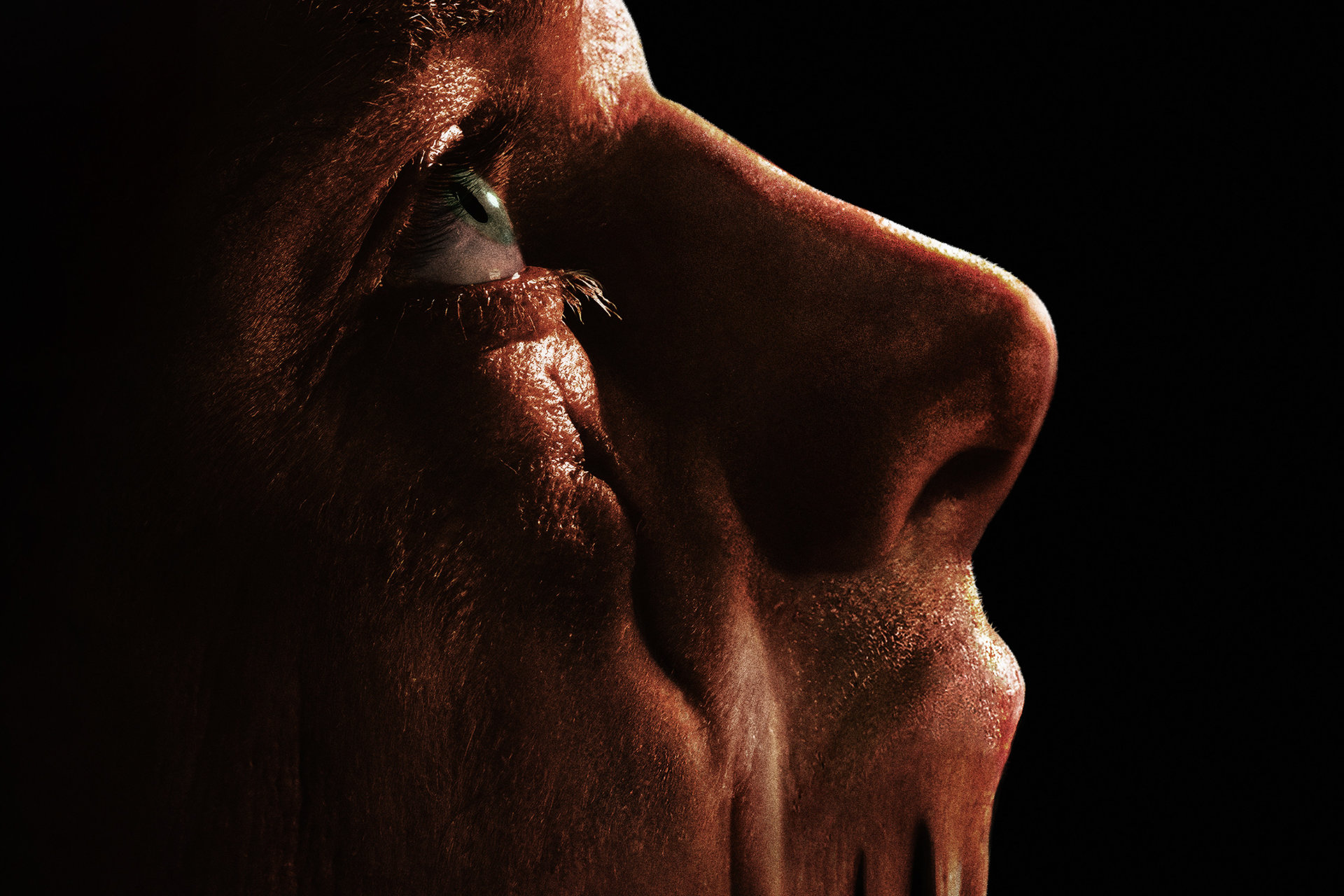
Our titular villain first appears as Matt Hagen (Tom Rhys Harries), a handsome young actor who (much like Harries himself ) appears to be on the verge of major stardom. All fired up after receiving an Oscar nomination, he heads off with his best friend, Corey (Joshua James), for a hedonistic weekend away and, on a disco dance floor, he encounters and romances Mia (Joana Ribeiro). But it turns out she’s the girlfriend of vicious crime boss, Markos (David Dencik), who takes a very dim view of this flirtation and, to teach Matt a lesson, decides to rearrange his face with a razor – a scene which pulls no punches.

Matt is snatched from the heights and plummeted into the depths of despair. With his handsome features mutilated, he loses his agent, Hildie (Nancy Carroll), and his manager, Frank (Eddie Marsan), in swift succession. Attempts at facial surgery are not successful. In desperation, Matt turns to Caitlyn Corr (Naomi Ackie), a scientist who has been working on a breakthrough nanite procedure which she believes can heal damaged skin cells. At first she’s reluctant to use her experimental techniques on Matt, but she can see that he’s desperate so, throwing caution to the wind, she starts some trials.

The first results are very encouraging, almost miraculous – but then Matt begins to realise that his new skin cells seem to react to his different moods. And when he’s angry…

With a screenplay by Mike Flanagan and Hossein Amini and astute direction by James Watkins, Clayface is compelling stuff. While it has no interest in exploring those comic book links, it does step confidently into the world of body horror. Some of the strongest sequences here recall the work of veteran directors like David Cronenberg and Brian Yuzna, utilising gnarly practical makeup effects and dollops of gore. An episode set in a public toilet on an airplane, which involves turbulence, fused eyelids and a pair of nail scissors, has me literally squirming in my seat.

As the story continues and Matt’s abilities develop to the point where he is able to replicate the features of other characters, I find I’m willing to overlook the fact that he can somehow also create perfect copies of their clothing (er, how, exactly?) because the twisty-turny sequences are so outrageous and so perfectly timed I barely have time to think about it.

A warning, though: that 18 certificate is there for a reason and it’s pushed to the limit.

4.3 stars

Philip Caveney
Joker: Folie à Deux

04/10/24

Cineworld, Edinburgh

Todd Philips’ 2019 film, Joker, was cinematic Marmite. For every viewer that loved it (and I was firmly in that camp), there was an equal number of comic book fans who detested it, largely because the film had no truck with the conventions of the genre that inspired it. Instead, here was an unflinching exploration of a mentally ill man, abandoned by the healthcare system and ultimately championed by a bunch of deluded followers. It was grubby, brutal and utterly devastating.

Folie à Deux is equally divisive, though this time around what has incensed most social media pundits is the fact that the film is… well, there’s no other way to say this: a musical. In 2024, the genre appears to have fallen into total disrepute with movie fans, to the extent that even films like Wicked are reluctant to depict any actual singing and dancing in their trailers in case it puts off potential viewers.

Go figure.

It’s two years after the events of Joker and Arthur Fleck (Joaquin Phoenix) is languishing in Arkham State Hospital, overseen by callous prison warder Jackie (Brendan Gleeson), who seems to delight in humiliating him at every opportunity. (Interestingly, it’s Jackie who tells the nearest thing to an actual joke in this story and, it has to be said, it’s a corker.)

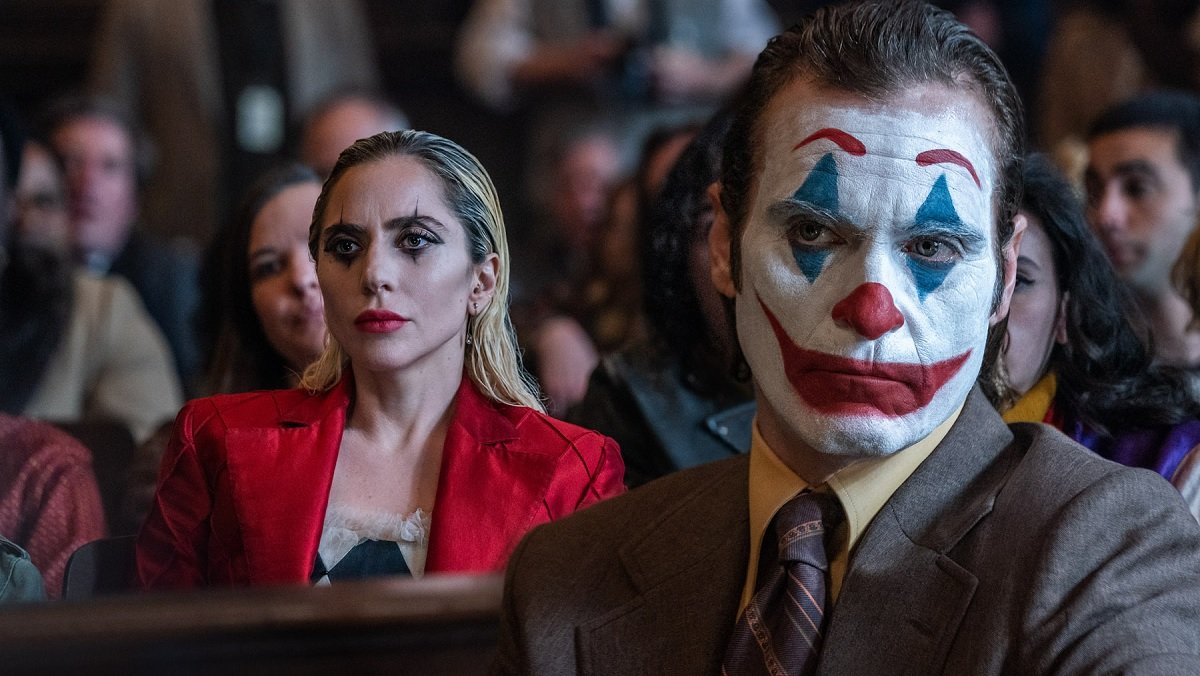
Arthur is fast approaching his day in court, schooled by his defence lawyer Maryanne (Catherine Keener), who is pretty sure that a plea of ‘dissociative identity disorder’ will save him from the death penalty. And then, attending an in-prison musical therapy session where inmates are encouraged to sing their troubles away, Arthur meets Harleen ‘Lee’ Quinzel (Lady Gaga) and, for the first time in his life, he has a reason to want to survive… and to slap that makeup back on his gaunt visage.

The term ‘musical’ is used quite loosely here. Phoenix and Gaga work their way through a series of solid gold bangers from the likes of Sinatra and Jaques Brel, but it’s made clear from the outset that these sequences occur in the cerebral landscape of Arthur’s head, his way of making sense of what’s happening to him. (Those with long memories may be reminded of Dennis Potter’s Pennies from Heaven, which adopted a similar approach.) A scene where Arthur is being interviewed by TV journalist Paddy Meyers (Steve Coogan) is a good case in point. Midway through the interview, Arthur suddenly breaks into song and dances around his cell – but Paddy remains blissfully unaware of his antics.

Phoenix is an actor of extraordinary ability and he slips into this unfamiliar discipline with his usual aplomb, using his newly slimmed-down frame to accentuate every move. Gaga, who has much more experience in the field, is also sensational, able to imbue an old chestnut like Get Happy with a strangely sinister edge, making me feel that I’m hearing it for the first time. As with the previous film, Philips steadfastly refuses to moderate his approach for the spandex brigade, doubling down on the grime and squalor. Folie à Deux is every bit as unsparing and unforgiving as its predecessor, whilst somehow managing to retain a beautiful humanity.

This may not be the perfectly-honed movie that was Joker, but for my money, it runs it a close second and is far (very far) from the embarrassing misfire that so many are describing it as. Some irate comic fans seem to have been hoping for a rerun of its predecessor, but what would be the point of that? I can’t help feeling they’ve somehow missed the point.

But then, I’m always happy to admit that I love a good musical.

4.6 stars

Philip Caveney

Film Bouquets 2019

Bouquets&Brickbats

Bouquets&Brickbats

Bouquets&Brickbats

It’s that time again when we award (virtual) bouquets to our favourite films of the year. As ever, the final choice may not always reflect the films that scored the highest at time of viewing, but rather those that have stayed with us most indelibly.

The Favourite (director – Yorgos Lanthimos; writers – Deborah Davis and Tony McNamara)

Capernaum (director – Nadine Labaki; writers – Nadine Labaki, Jihad Hojeily and Michelle Keserwany)

Eighth Grade (writer/director – Bo Burnham)

Booksmart (director – Olivia Wilde; writers – Emily Halperm, Sarah Haskins, Susanna Fogel and Katie Silberman)

Beats (director – Brian Welsh; writer – Kieran Hurley)

Rocketman (director – Dexter Fletcher; writer – Lee Hall)

Animals (director – Sophie Hyde; writer – Emma Jane Unsworth)

Hustlers (director – Lorene Scafaria; writers – Lorene Scafaria and Jessica Pressler)

Joker (director – Todd Phillips; writers – Todd Phillips and Scott Silver)

Monos (director – Alejandro Landes; writers – Alejandro Landes and Alexis Dos Santos)

Honey Boy (director – Alma Har’el; writer – Shia LaBeouf)

Little Women (director – Greta Gerwig; writers – Greta Gerwig and Louisa May Alcott)


Philip Caveney & Susan Singfield


Joker

05/10/19

Joker arrives in the UK amidst a deluge of controversy. To some minds, it’s a work of genius. To others, it’s a dangerous and divisive polemic that invites troubled souls to indulge in their darkest, most dangerous fantasies. To my mind, the film belongs fully in the former slot, but it would be naïve to suggest that it’s not a searing indictment of American society, and that it doesn’t feel suspiciously like a call to arms. Though the names of a couple of films on a cinema marquee place the action in 1981, make no mistake: this is all about the America of today – and it’s not a pretty picture. The rich corporations rule this Gotham while the poor, the sick and the dispossessed are marginalised and brushed under the carpet.

Joaquin Phoenix puts in an extraordinary performance in the central role. He’s Arthur Fleck, a scrawny, malnourished loser, living with his ageing mother, Penny (Frances Conroy), in a dilapidated apartment in Gotham City. Arthur dreams of being a successful comedian, but lacks the ability to understand jokes or even deliver the routines he writes, since he suffers from a condition that makes him laugh involuntarily at random intervals. He earns a crust as a street-clown and children’s entertainer but, even in these roles, he’s beset by problems, picked on by street gangs and openly mocked by his fellow clowns. Meanwhile, he fantasises hopelessly about his neighbour, Sophie (Zazie Beets), and fills the empty hours watching his chat show idol, Murray Franklin (Robert De Niro), on TV. But the cruelty he experiences on an almost daily basis is building something uncontrollable deep within him… something that will eventually inspire others to follow him.

Director and co-writer Todd Philips, previously best known for lame buddy comedy The Hangover, has really struck a powerful chord here. His reimagining of the Joker’s origin story is bleak but compelling stuff and, despite Phoenix’s dazzling starburst at the film’s core, the supporting characters are all well drawn and the hellish cityscapes in which the story unfolds are strikingly shot. Throw in a brooding musical score by Hildur Guönadóttir and you have a movie that grips like a vice from start to finish. The influences are evident and clearly not accidental. Martin Scorcese’s Taxi Driver and The King of Comedy are both openly referenced, and eagle-eyed film fans will also spot a brief homage to Sidney Lumet’s Network. It’s lovely also to see De Niro in a serious role for the first time in what seems like ages.

It’s ironic to note that this film goes straight to the top of my favourite DC movies, particularly as it doesn’t feature a superhero of any description – unless you count a glimpse of the infant Bruce Wayne, who will of course grow up to be Joker’s main adversary – and, doubly ironic, when you consider that my previous favourite was The Dark Knight, which also featured a memorable Joker in Heath Ledger. I guess the simple truth is that the Joker has overshadowed Batman in most of the films they’ve featured in together; he’s just a more interesting character.

Joker is a must-see: a brilliant evocation of an American city at flashpoint. The central message may trouble you – indeed, it really should trouble you – but this is giant steps ahead of most of the superhero stuff that’s currently out there.

5 stars

Philip Caveney