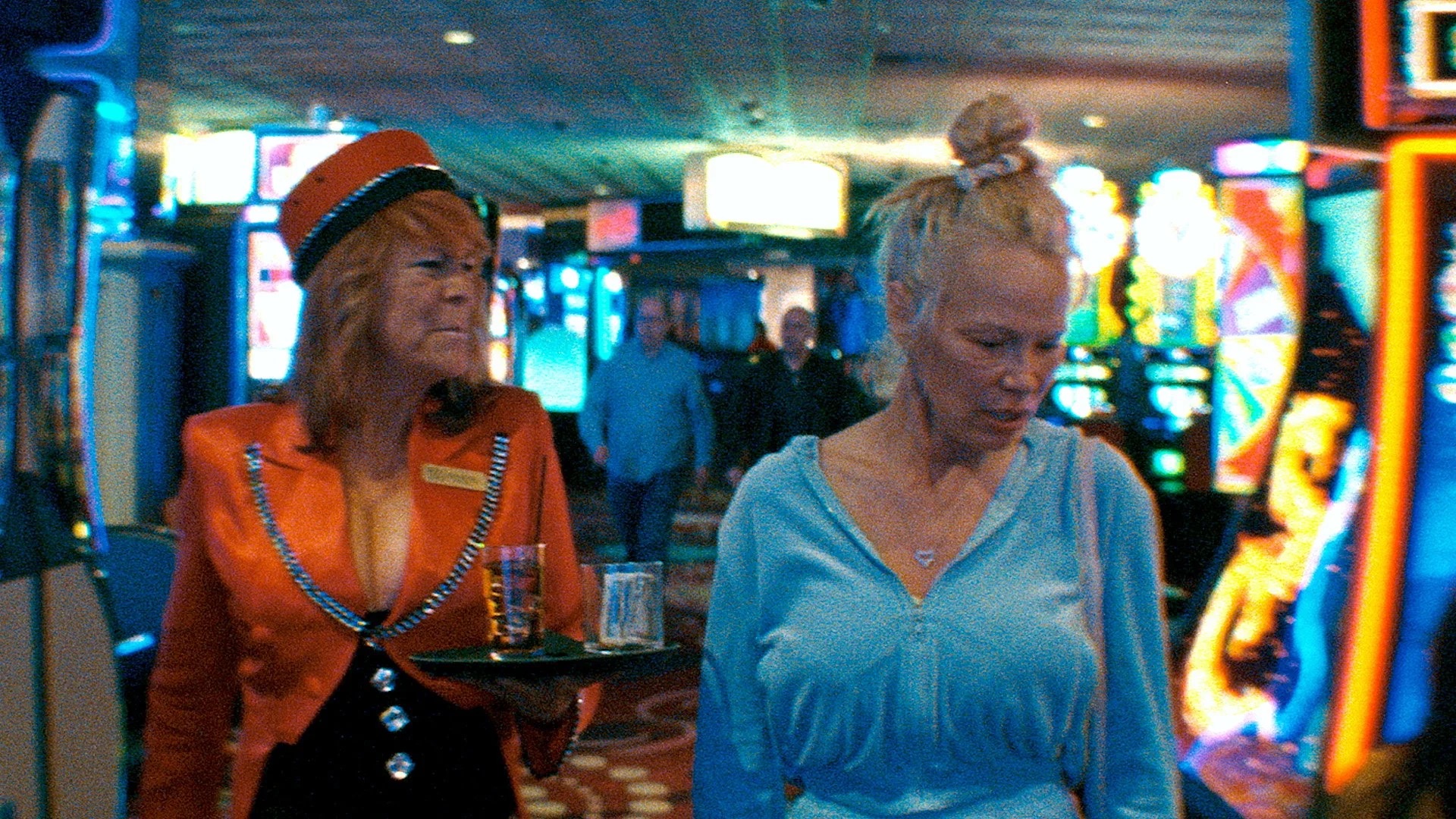
Cineworld

The Order

03/01/24

Cineworld, Edinburgh

The geographical landscape of this film is well-known to me – a Fulbright exchange saw me teaching high school in Walla Walla, Washington for a year in the 90s, and I visited many of the Pacific Northwest locations referenced: Spokane, Boise, Couer d’Alene, Whidbey Island. Thankfully, the film’s ideological and political landscape is far less familiar.

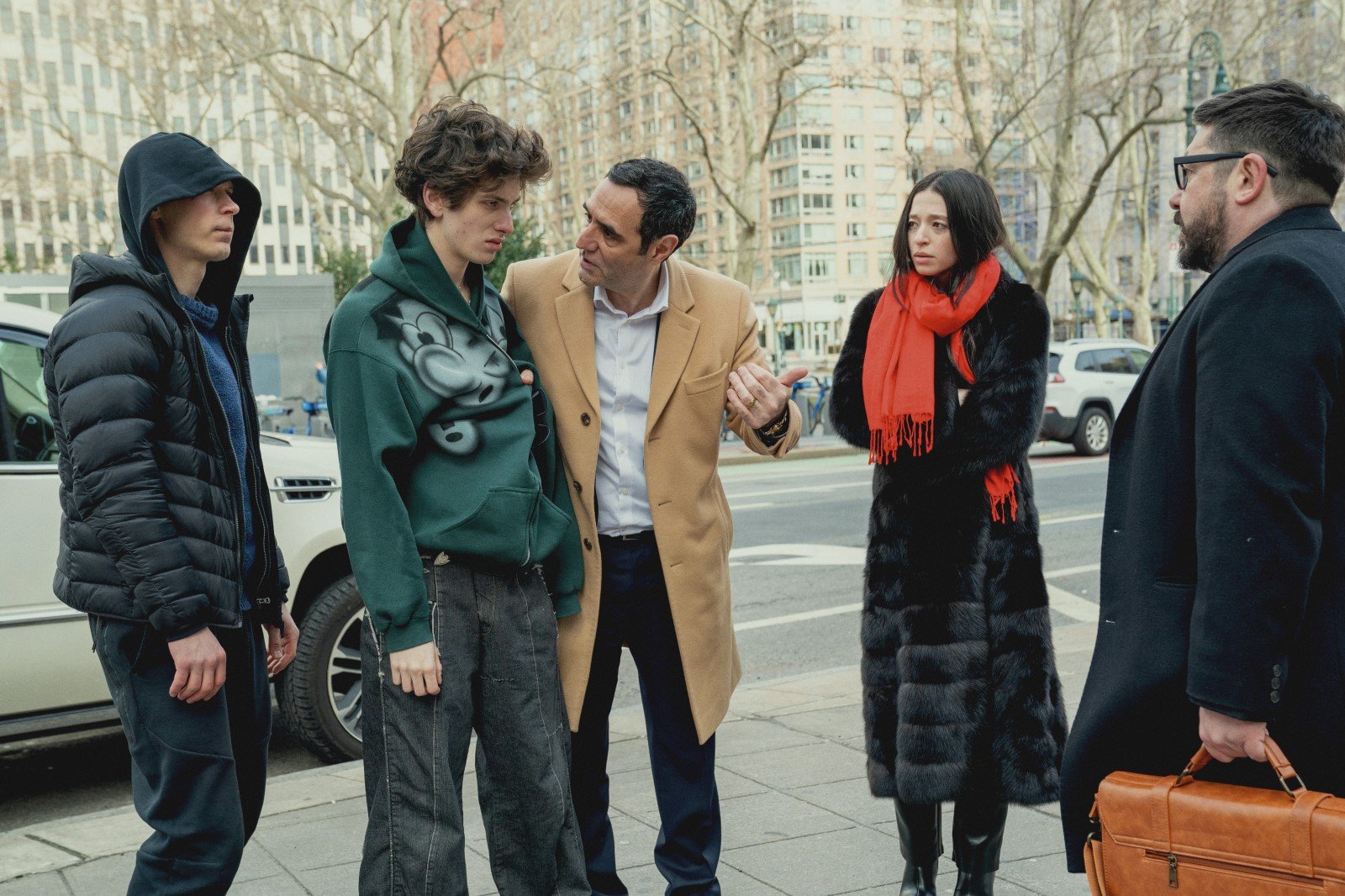
Directed by Justin Kurzel, The Order draws on a true story from 1983, when fascist Bob Mathews (Nicholas Hoult) began his violent mission to create an all-white promised land. In Zach Baylin’s script, a fictional FBI agent called Terry Husk (Jude Law) sets out to foil Mathews’ deadly plan. It’s a chilling tale, not least because it’s clear that not much has changed in the forty years since The Order was created. There are still way too many men like Mathews, spouting their twisted doctrines. Heck, one of them has made it all the way to the White House. Twice.

Adam Arkapaw’s bleached out cinematography evokes the feel of 1980s small town America: the vast swathes of uninhabited land; the isolated homesteads. These are the neighbourhoods where cops and criminals have known each other since kindergarten, have dated the same partners, understand each other even when they disagree. So when young police officer Jamie Bowen’s old school pal, Walter, goes missing, of course he wants to help. It doesn’t matter that they’re ethically opposed – Walter (Daniel Doheny) is a white supremacist, while Jamie (Tye Sheridan) is in a mixed-race marriage – Jamie is an Idaho boy through and through; these people are his kin.

Husk, on the other hand, is an Outsider with a capital ‘O’. Haunted by past failures, he is determined to stop the rot, to prevent any more carnage. He recognises the scale of Mathews’ ambition, but it’s hard to convince anyone but Jamie that The Order poses a real danger.

The success of this film is largely due to the contrasting trio at its heart: Law’s hard-bitten desperation; Sheridan’s hopeful naïvety; Hoult’s chilling fanaticism. All three deliver superb performances, and are perfectly cast in their roles.

Kurzel doesn’t hold back from the ugliness and real-world pain. There are the chases and shoot-outs you’d expect from any crime drama, but here they feel all-too believable, the impact evident on everyone involved, from the furrows on Husk’s forehead to the manic ecstasy of Mathews’ laugh.

It’s no accident that The Order feels so timely, as we stand on the precipice of a new era in US politics. Let’s just hope that there are enough Husks and Bowens to see us through.

4.2 stars

Susan Singfield

We Live in Time

02/12/24

Cineworld, Edinburgh

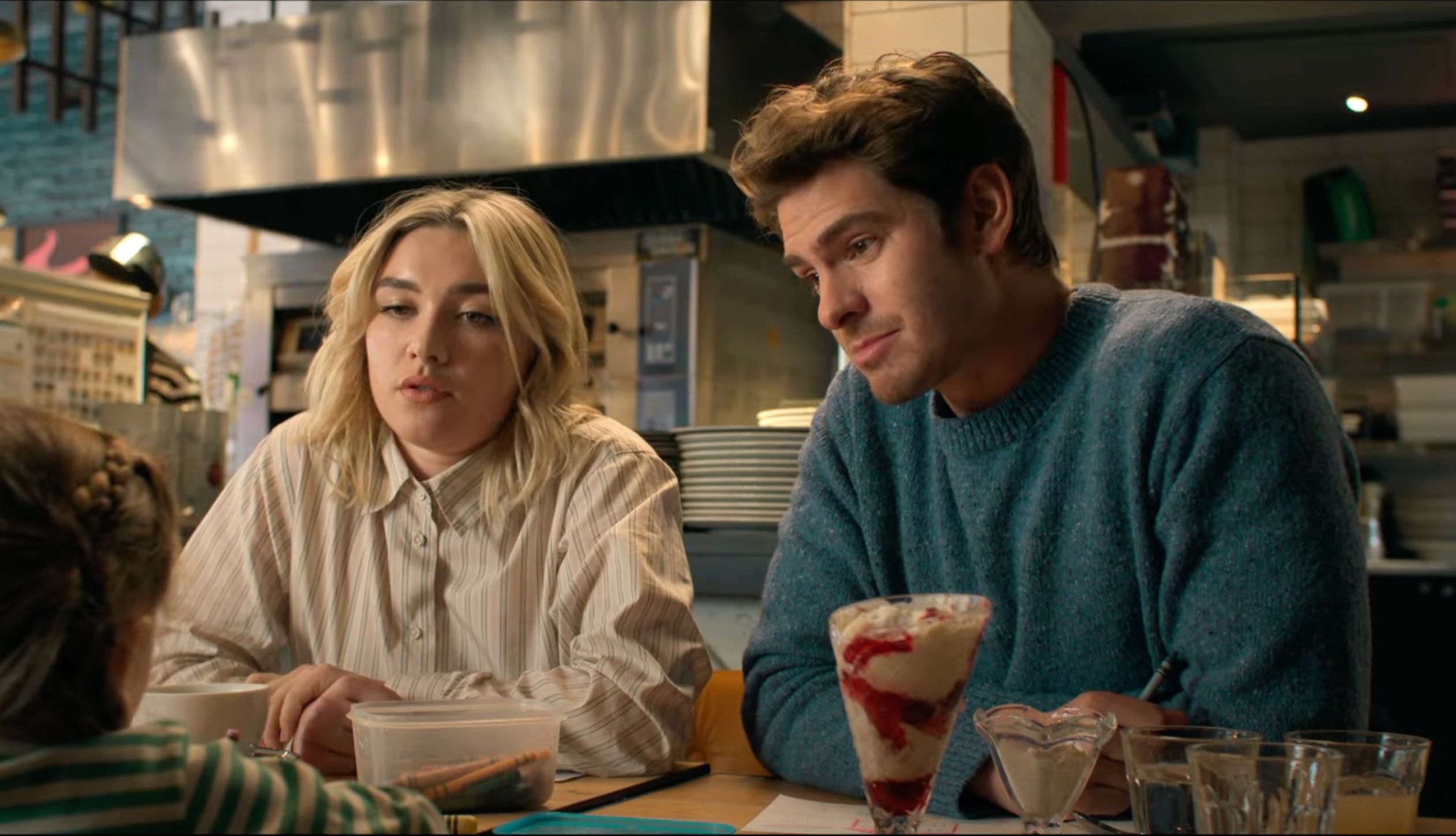
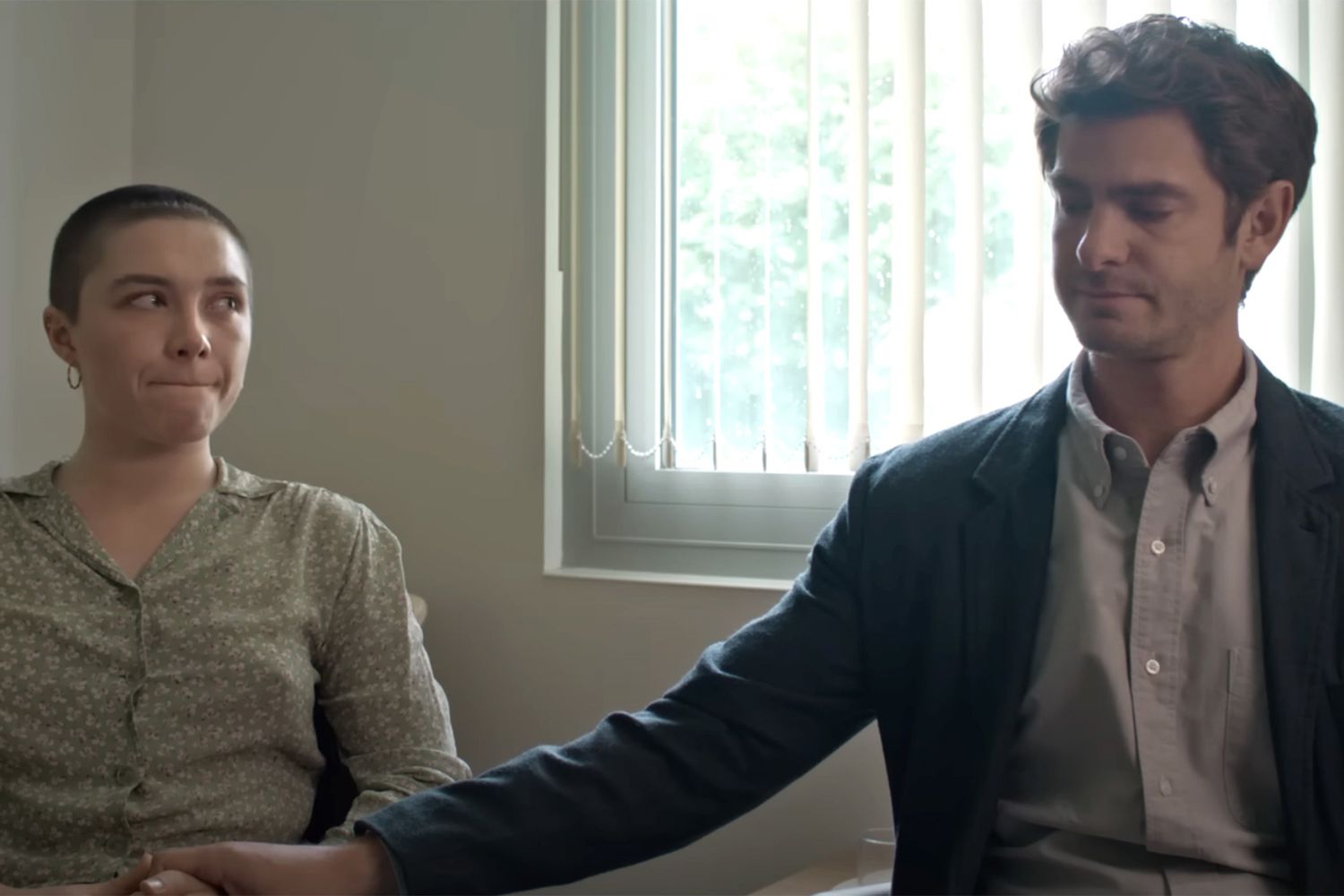
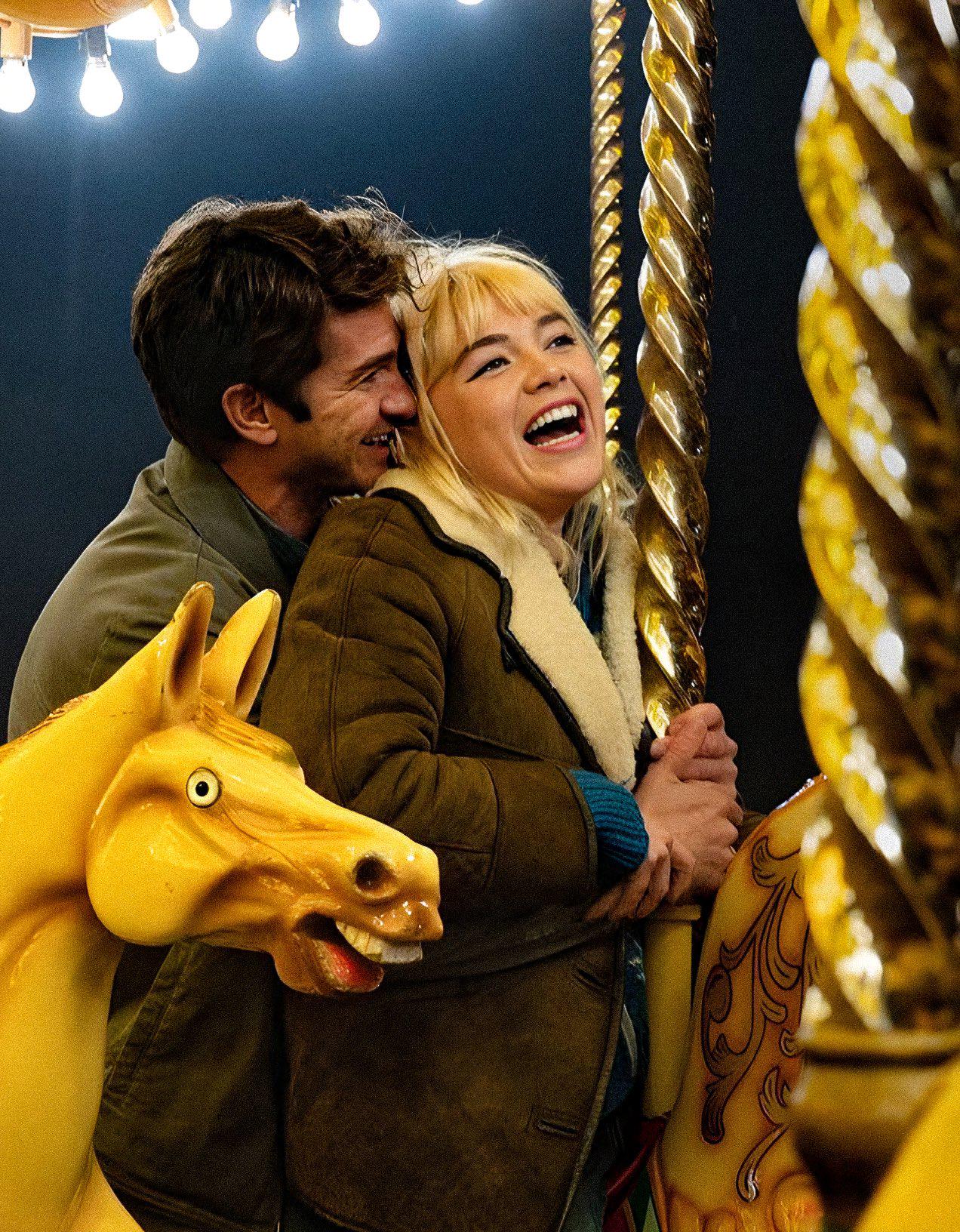
Directed by John Crowley, We Live in Time is a superior rom-com/weepie hybrid, anchored by stunning performances by two of Britain’s best actors, Florence Pugh and Andrew Garfield. Tonight’s advance screening – courtesy of Cineworld Unlimited – is extremely busy; in fact, we’ve managed to grab the very last two seats.

Pugh plays gourmet chef Almut Brühl, who hits a dressing-gown clad Tobias (Garfield) with her car while he’s bending down to pick up a piece of chocolate orange that’s fallen into the street. Luckily for the ‘rom’ part of the ‘com’, they’re both single: indeed, Tobias’s poor road-safety skills are the result of his reaction to signing his divorce papers. Before long, they’re in love – but then the ‘weepie’ element comes along, in the form of an ovarian cancer diagnosis, and a whole truckload of difficult decisions.

Nick Payne’s script is a sprightly delight, skipping around in time and tone with absolute assurance. The chronology is disrupted: we start in the middle of the story, then veer back and forth between the early stages of the couple’s relationship and the later trauma of Almut’s illness. It’s laugh-out-loud funny and devastatingly sad, a duality that’s reflected throughout the film.

Because Almut’s not ‘normal’. She’s a fascinatingly complex character: her restaurant serves Anglo-Bavarian fusion food; she’s bisexual; she’s fit and strong (a committed runner) and frail and weak (from the chemo). She’s a loving mother but it’s not enough: “I want to be remembered as more than a dead mum.” Almut treads her own path, and Tobias – softer and more passive than his go-getting partner – is her biggest supporter. Even if her driving force is sometimes hard to bear.

That Pugh makes a convincing chef is perhaps unsurprising as her father is a restaurateur. Naturally, given the couple’s jobs – Tobias is a data analyst for Weetabix – food plays a big part in this movie. Cinematographer Stuart Bentley highlights the seductive pleasure of a whole range of edible wonders, from Almut’s Michelin-starred concoctions to Jaffa Cakes dunked in mugs of tea and eaten in the bath.

We Live in Time is every bit as compelling as its heroine, and certainly worth a trip to your local cinema on New Year’s Day, when it’s out on general release. Just remember to pack your hanky – and maybe a fancy snack or two.

4.4 stars

Susan Singfield

Wicked: Part One

22/11/24

Cineworld, Edinburgh

It’s gratifying to see the cinema so busy on this icy cold November evening. There’s been a lot of speculation recently about movie-goers being averse to musicals – indeed, there was a notable absence of songs in the trailer for this very film. But, if tonight’s showing is anything to go by, there’s plenty of life in the genre yet. Just not, perhaps, when it strays into the DC universe (Joker: Folie a Deux, I’m looking at you).

Oddly, considering how often I’m at the theatre, I’ve never actually seen Wicked on stage, so the movie is my introduction to the tale. This is clearly not the case for most of the audience: there’s an abundance of green clothing and nail varnish, a lot of excited pre-film chatter and groups of women in the loos afterwards discussing where the film diverges from the show they know and love. Thankfully for the industry, the reactions I overhear are universally positive.

For me, there are a couple of negatives. First, I’m not super-happy about the fact that this is just ‘Part One’. I always feel cheated by movies that only tell me half a story and, although the central relationship between Elphaba and Galinda has a satisfying arc, the dark hinterland – the genocidal capture and destruction of speaking animals – is barely developed at all. Second, with the exception of Defying Gravity, none of the songs seems particularly memorable.

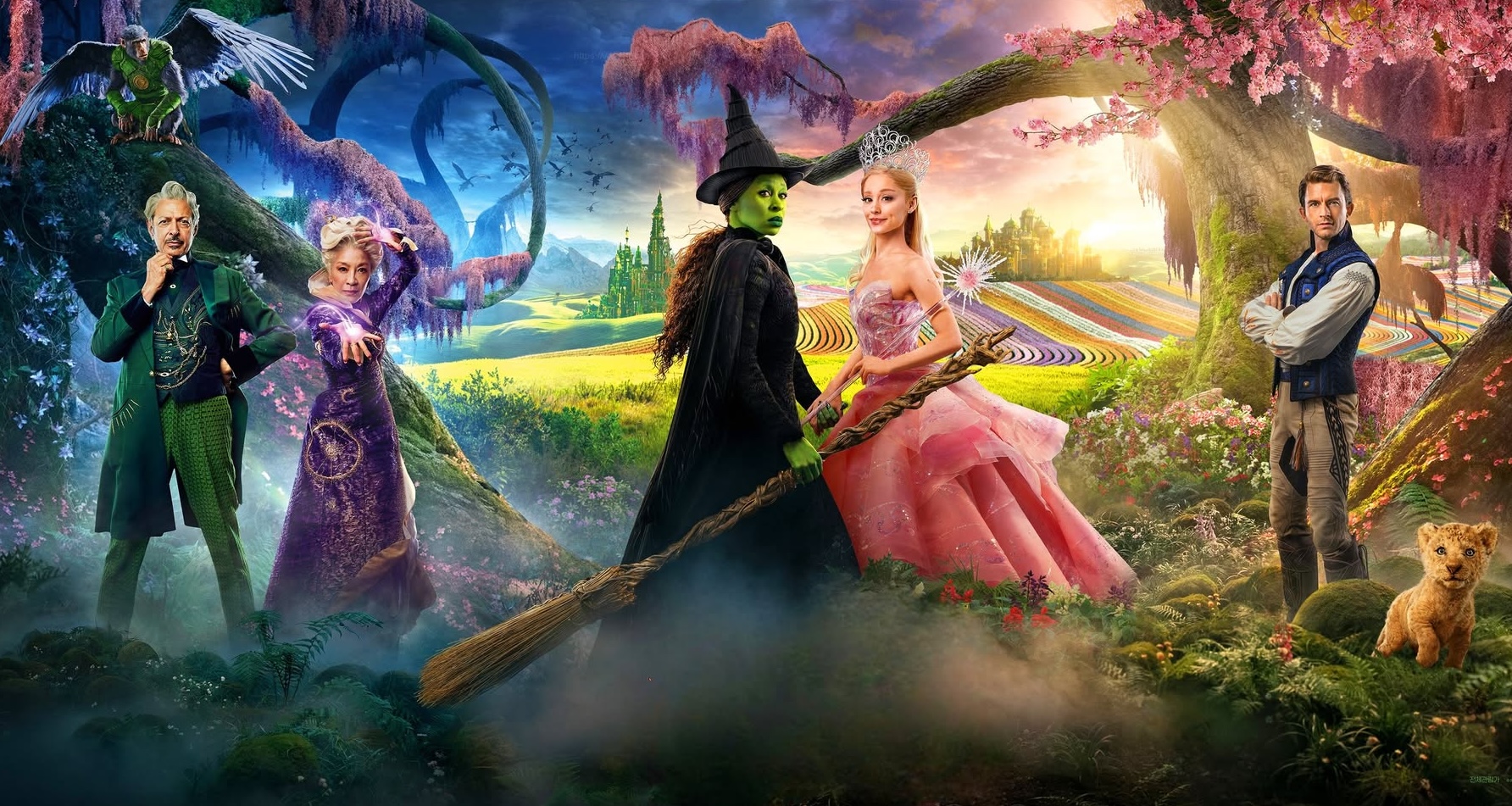
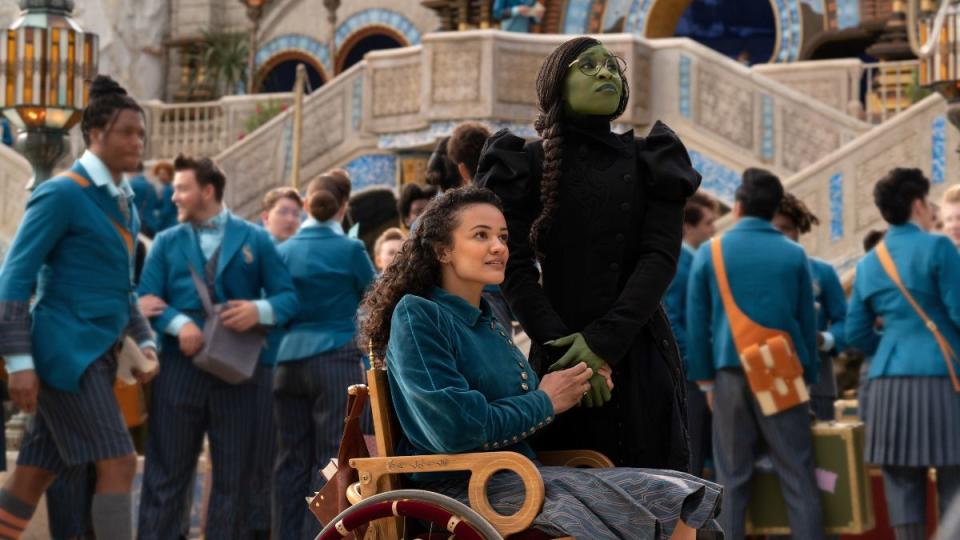
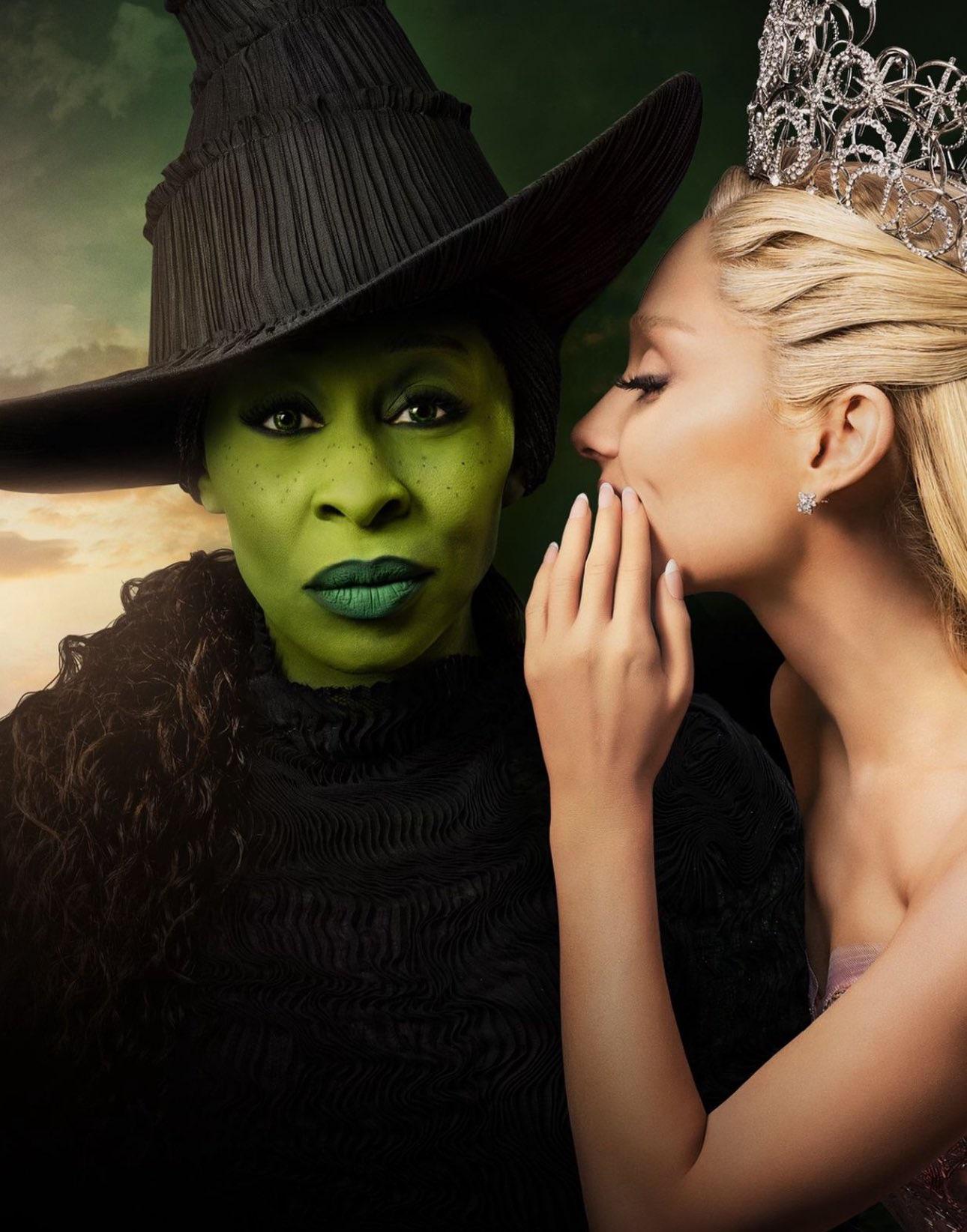
For the most part, though, Wicked is great. For those not in the know, it’s the origins story of the opposing magical forces of good and evil from The Wonderful Wizard of Oz, i.e. The Wicked Witch of the West and Glinda, the Good Witch of the North. In this prequel to L Frank Baum’s novel, Elphaba (Cynthia Erivo) and Galinda (Ariana Grande) meet at boarding school, where they are forced to share a room. Initially, they despise one another: Elphaba is powerful, studious and green, while Galinda is rich, popular and, well… blonde. But opposites attract, and over time they learn to see the good in one another, forging a strong friendship – which even survives the strain of their attraction to the same guy, Fiyero (Jonathan Bailey). When their history professor, a goat called Dr Dillamond (Peter Dinklage), is arrested and forcibly removed from their classroom amid nefarious plans to cage all speaking animals, Elphaba’s sorcery teacher, Madame Morrible (Sandra Yeoh), encourages her to go to the Emerald City, to plead with the Wonderful Wizard (Jeff Goldblum). But all is not as it seems…

Erivo and Grande are perfectly cast as the mis-matched pair, both utterly captivating in their roles. While Erivo provides the emotional depth – Elphaba is a study in suppressed yearning – Grande is the comic relief, all fluffy self-absorption and steely sweetness. It’s a delightful pairing.

Thanks to Alice Brooks’ cinematography, the film looks sumptuous. Oz has been gloriously rendered by designer Nathan Crowley: it’s a little bit steam-punk, a little bit Middle Earth, a truly fantastical land. I love the repeated cog motif, in Shiz academy’s library, on the Oz train and – naturally – in the Emerald City’s Royal Palace. Director Jon M Chu has created a superb stage-screen hybrid, combining established musical theatre-style choreography with a very modern filmic sensibility. LGBTQ+ themes are brought to the fore, with many explicitly queer-coded characters, and lots of deliberate ambiguity, so that we – along with the Ozians involved – are made to ponder where the line is drawn between platonic and sexual attraction, between friendship and love. It works well, emphasising the teenage protagonists’ heightened emotions. No wonder young adults love this story so much.

Judging by tonight’s screening, Wicked: Part One looks certain to be a box office success. I just wish I didn’t have to wait a year for Part Two.

4.1 stars

Susan Singfield

,

Anora

02/11/24

Cineworld, Edinburgh

Sean Baker excels at placing marginalised people centre stage and showing them in all their complex, multi-faceted glory. Transgender sex workers (Tangerine), motel-dwelling families (The Florida Project), washed-up porn stars (Red Rocket): they’ve all emerged from his films as so much more than mere victims or villains. This time, his camera is focused on exotic dancers and escorts.

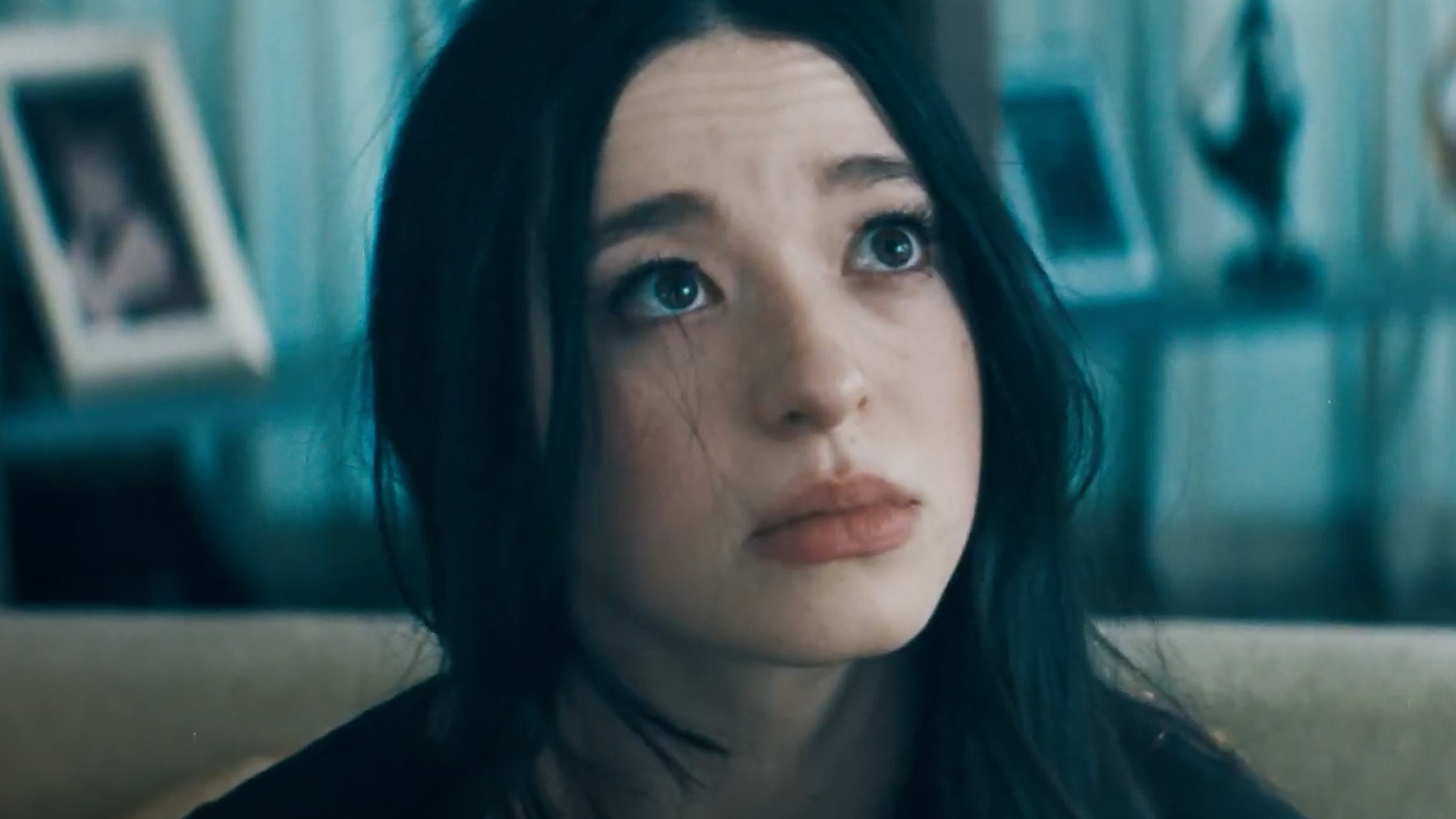
The eponymous Anora (Mikey Madison) – or Ani, as she prefers to be known – works in a New York strip club. In the opening stretches of the film, the emphasis is on the ordinariness of her job: Ani moves from client to client with practised ease, using the same lines, the same moves, spending her break in the staff room, chatting to her co-workers while eating a Tupperware-packed meal.

But one night, a young Russian turns up at the club, demanding an escort who can speak his language. Thanks to her Russian grandmother, Ani fits the bill, although she prefers to speak English because her accent is “terrible”. Ivan (Mark Eidelshtein) turns out to be the son of a billionaire oligarch, and he’s willing to pay handsomely for Ani’s time. He’ll give her $15k if she’ll spend a week with him in his mansion as his girlfriend.

Of course Ani agrees. Why wouldn’t she? Ivan is fun: he’s blithe, impulsive, generous and wild. Ani is many of these things too, although she can’t afford to be so carefree. In Vegas – where they’ve gone on a whim in his private jet – Ivan proposes. “Don’t mess about with this,” Ani cautions him. He’s not messing, he reassures her. And so they get married.

But there’s no happy-ever-after here because Ivan is a long way from Prince Charming. He’s a spoilt brat, infantilised by indulgent parents, who – when they learn of his inappropriate match – send their henchmen (Karren Karagulian, Yura Borisov and Vache Tovmasyan) to set things straight. Like the child he is, Ivan responds by running away…

The middle section of the film combines a comic caper with a tragedy, as Ani and the henchmen try to track Ivan down. The humour is slapstick but the emotions are raw. Madison is extraordinary in the central role, a firebrand of a character, lighting up the screen. While Karagulian and Tovmasyan – as brothers Toros and Garnick – provide the comedy via their ineptitude, Borisov – as Igor – is an altogether more serious and thoughtful character. Even stooges are fully fleshed-out in a Baker film.

In the closing stretches, we see how flawed the Cinderella model is. The social commentary here is fierce: rich people hold all the aces. The fallout is shocking and Baker skilfully leads us to a final scene of utter devastation.

5 stars

Susan Singfield

A Different Man

05/10/24

Cineworld, Edinburgh

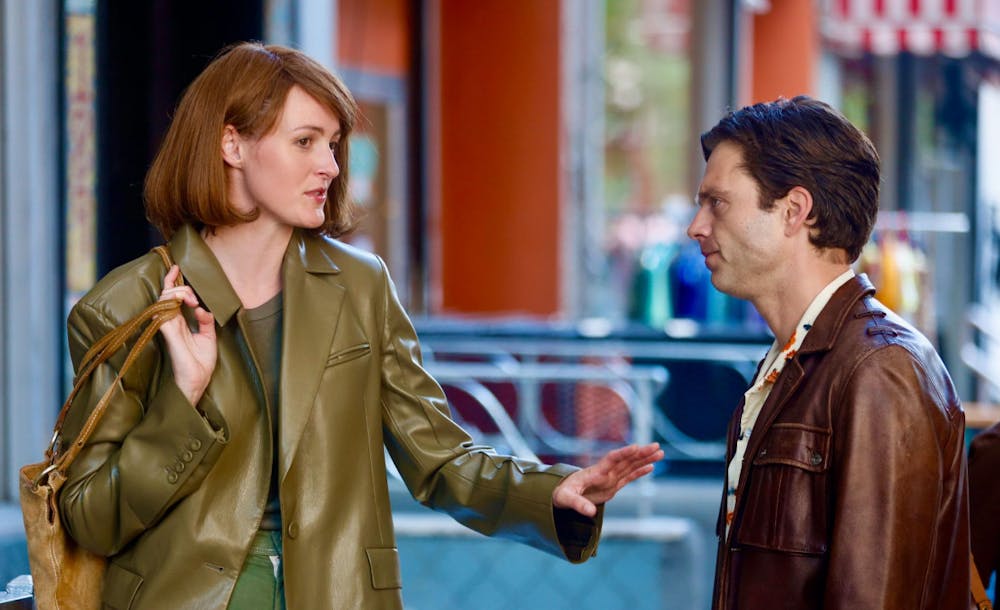
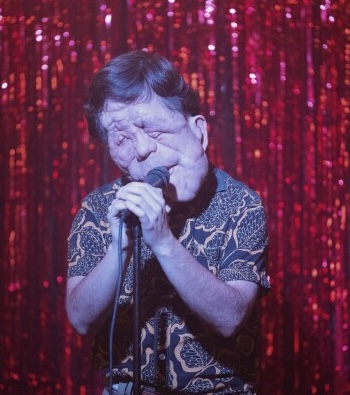
It’s not hard to imagine actor Adam Pearson’s delight on first reading the script for A Different Man. The film, a three-hander, was written expressly for him – and, my word, it gives him a chance to show what he can do. It also challenges our preconceptions and prejudices around disability and disfigurement – but not in any obvious, seen-it-all-before way.

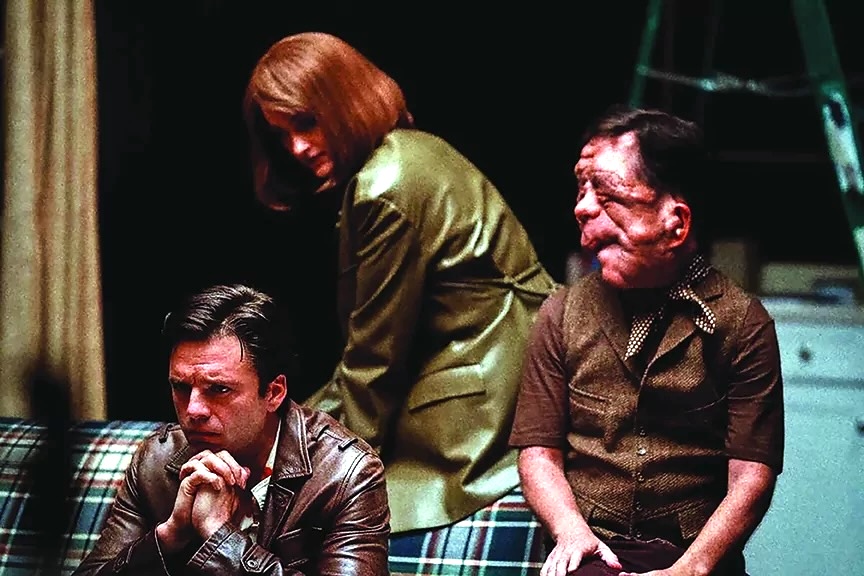
Writer-director Aaron Schimberg has a cleft palate, so he knows something of how it feels to look different. Pearson, meanwhile – along with his character, Oswald, and Sebastian Stan’s character, Edward – has neurofibromatosis, which is a lot more noticeable. Edward copes by keeping his head down and trying to make himself small. He’s quiet, unassuming, and sadly accepting of his lot. He is an actor, but he doesn’t get much work – unless you count condescending corporate training videos of the ‘how to behave around your disabled colleagues’ variety.

And then two things happen.

First, Edward is offered the chance to take part in a drug trial for a revolutionary new treatment that will transform his appearance. Next, he meets his new neighbour, aspiring playwright Ingrid (Renate Reinsve), and begins to develop feelings for her. She’s nice to him – but recoils when he makes a tentative move.

He decides to take the plunge.

As the tumours begin to literally fall from his face (courtesy of some pretty impressive prosthetics), a new Edward emerges, smooth-skinned and conventionally handsome. Keen to shuck off his old identity as well as his deformities, he informs everyone that Edward has committed suicide and rebrands himself as ‘Guy’. Before long, he’s living the dream, with a well-paid job, a luxury flat and an active sex life. What more could he want?

The answer, it turns out, is the starring role in Ingrid’s off-off-Broadway play, Edward, which is all about her friendship with her tragic neighbour. But she’s not sure about giving Guy the part – it wouldn’t be authentic and surely a disfigured actor ought to get the role? But, she has to admit, there’s something compelling about Guy, even if he does have to wear a mask on stage.

And then Oswald turns up, cheerily intrigued by the idea of the play with a central part he feels he was born for. He’s keen to see how Ingrid has written the character and what Guy brings to the role. He looks like Edward used to look, but that’s where the similarity ends. Because Oswald is no one’s victim. He’s a happy, talented, popular man, keen to grasp new opportunities, comfortable in his own skin. Edward can’t cope, his cocksure persona crumbling in the face of Oswald’s frank and open confidence. Before too long, he finds himself replaced…

The three central performances are all impressive, although Pearson is the one who shines. Stan is believably conflicted as the shy, awkward Edward, his true nature visible to the viewer even when he’s swaggering and trying to inhabit his brave new world. Reinsve, meanwhile, is perfect as the deluded Ingrid, convincing herself that she’s not only well-intentioned but also alert to discrimination, despite the self-serving nature of her work, and the fact that she keeps referring to Beauty and the Beast as her inspiration.

A Different Man is well-crafted on every level but, primarily, it is a clever piece of writing, as multi-layered as Stan’s prosthetics, unflinching in its examination of how non-disabled people view those with disabilities. Without offering any easy answers, it also explores the ideas of authenticity and appropriation, all the while avoiding anything resembling a cliché. This is the sort of script that sparks ethical discussions – akin in some ways to American Fiction, The Substance or Scottish playwright Kieran Hurley’s Mouthpiece.

Nuanced, shocking, intelligent and insightful, this is a memorable movie for all the right reasons.

4.7 stars

Susan Singfield

Lee

14/09/24

Cineworld, Edinburgh

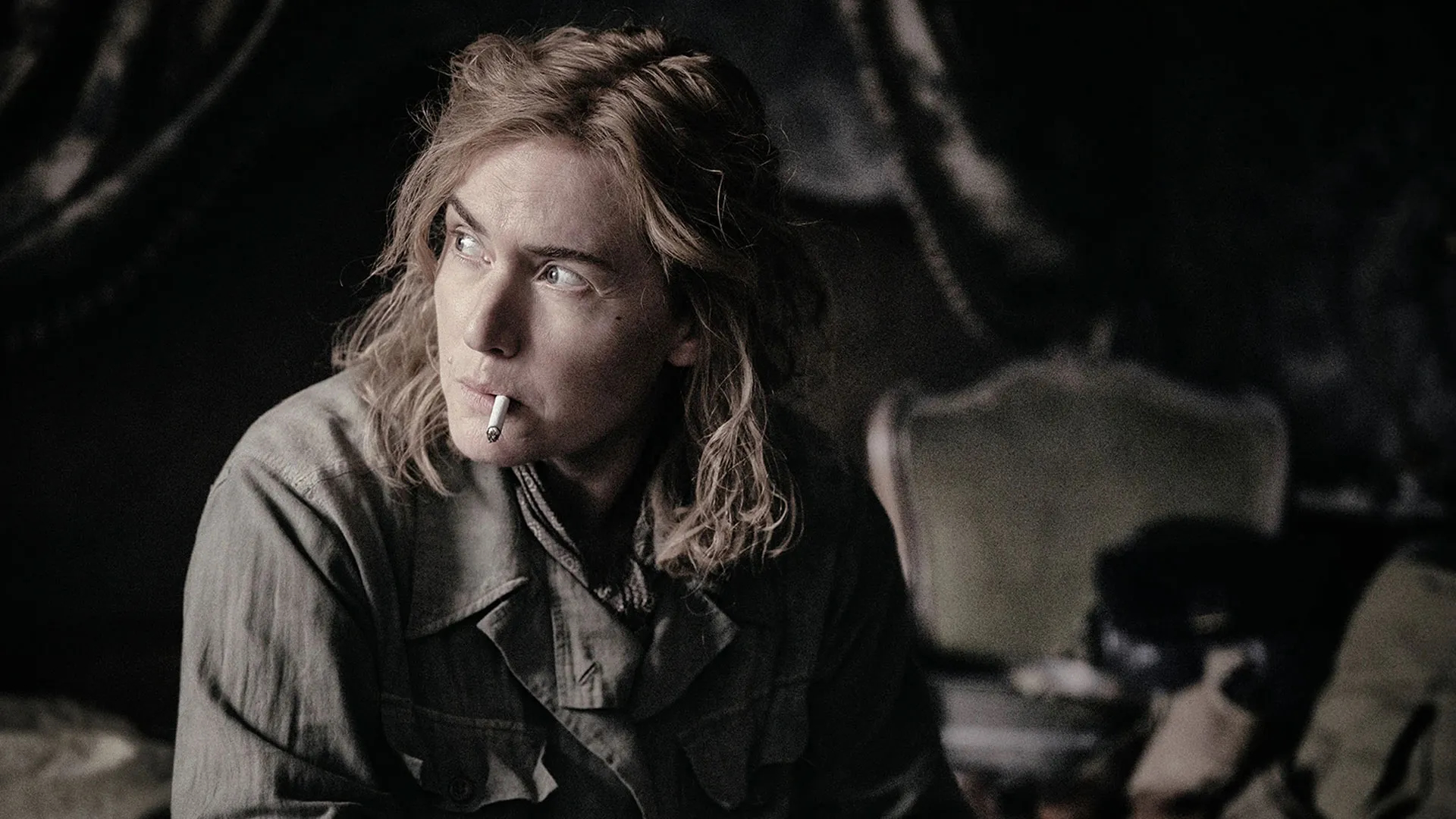
This biopic is as much a tribute to photojournalism as it is to its protagonist, Lee Miller. In an age where AI-trickery can make us doubt our own eyes, it is a timely reminder of why we need to document what’s really happening in the world. In the 1940s, no one wanted to believe in concentration camps or desperate, scapegoated women being hanged for collaboration. War photographers forced people to confront the grim realities, to understand the scale of the horrors that had been unleashed.

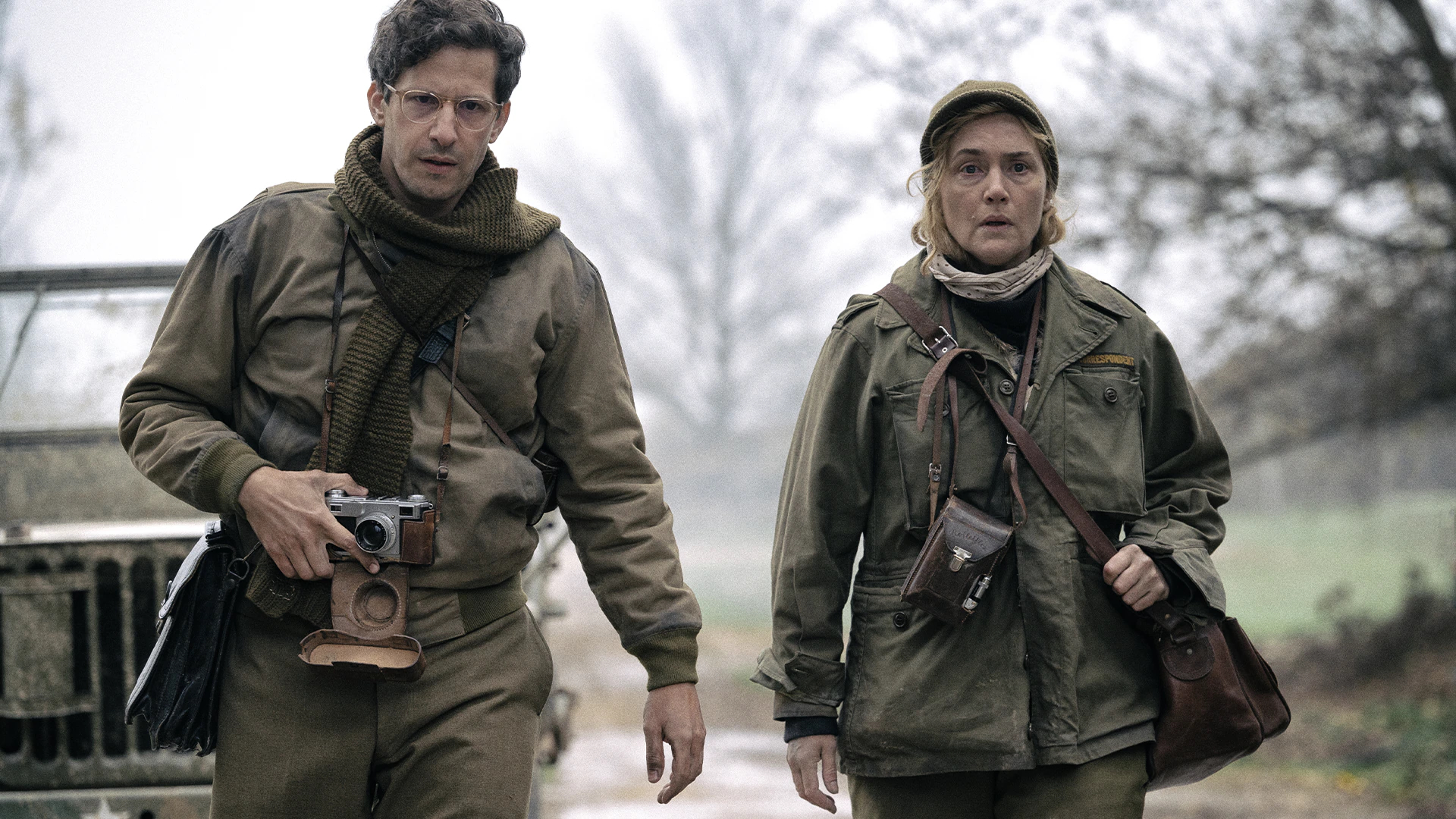
Miller trod a lot of paths in her life, but Lee, directed by Ellen Kuras, focuses on her work during the second world war. There’s a framing device: wannabe journalist Antony (Josh O’Connor) is interviewing the now elderly photographer, his questions evoking stories told in flashback. Her previous work as a fashion model and artists’ muse is acknowledged in a brief but revelatory early scene, where she wonders what on earth she’s going to do with her life now that she’s aged out of – and is bored by – all that. When she meets Roland (Alexander Skarsgård), marriage beckons but it’s not enough. Miller is a formidable woman and she needs to forge her own path.

Kate Winslet is marvellous as Lee, shimmering with pent-up energy and drive. Her Miller is motivated by righteousness as well as ambition: she’s a woman and, what’s more, she knows the camera from the other side; she can tell a different story from her male counterparts. If that means barging her way in and ignoring ‘no women’ regulations, then so be it. Her work is important. Not that she’s a loner: she’s sociable and enjoys working alongside her male colleague and friend, David Scherman (Andy Samberg).

The real Miller was indomitable, and Winslet absolutely does her justice. This is a powerful performance, harnessing the grit and determination that allowed Miller to capture such provocative and controversial images, many of which are recreated here.

Perhaps the biggest surprise for me is the realisation that Miller’s war correspondence work was done for Vogue magazine, then edited by Audrey Withers (Andrea Riseborough). I’ve never read Vogue; I thought it was all fashion and frivolity. Its serious side is a revelation, much like Miller’s shocking photos must have been for those who previously knew her only as a model.

The cinematography – by Pawel Edelman – captures the brutality of war: the scarred landscapes, chaos and traumatised faces. We also see how, ninety years ago, fascism trumpeted its arrival but still caught people by surprise. There’s a lesson here, and it’s not a subtle one.

Focus. Flash. Snap.

See.

4.3 stars

Susan Singfield

La Chimera

11/09/24

Amazon Prime

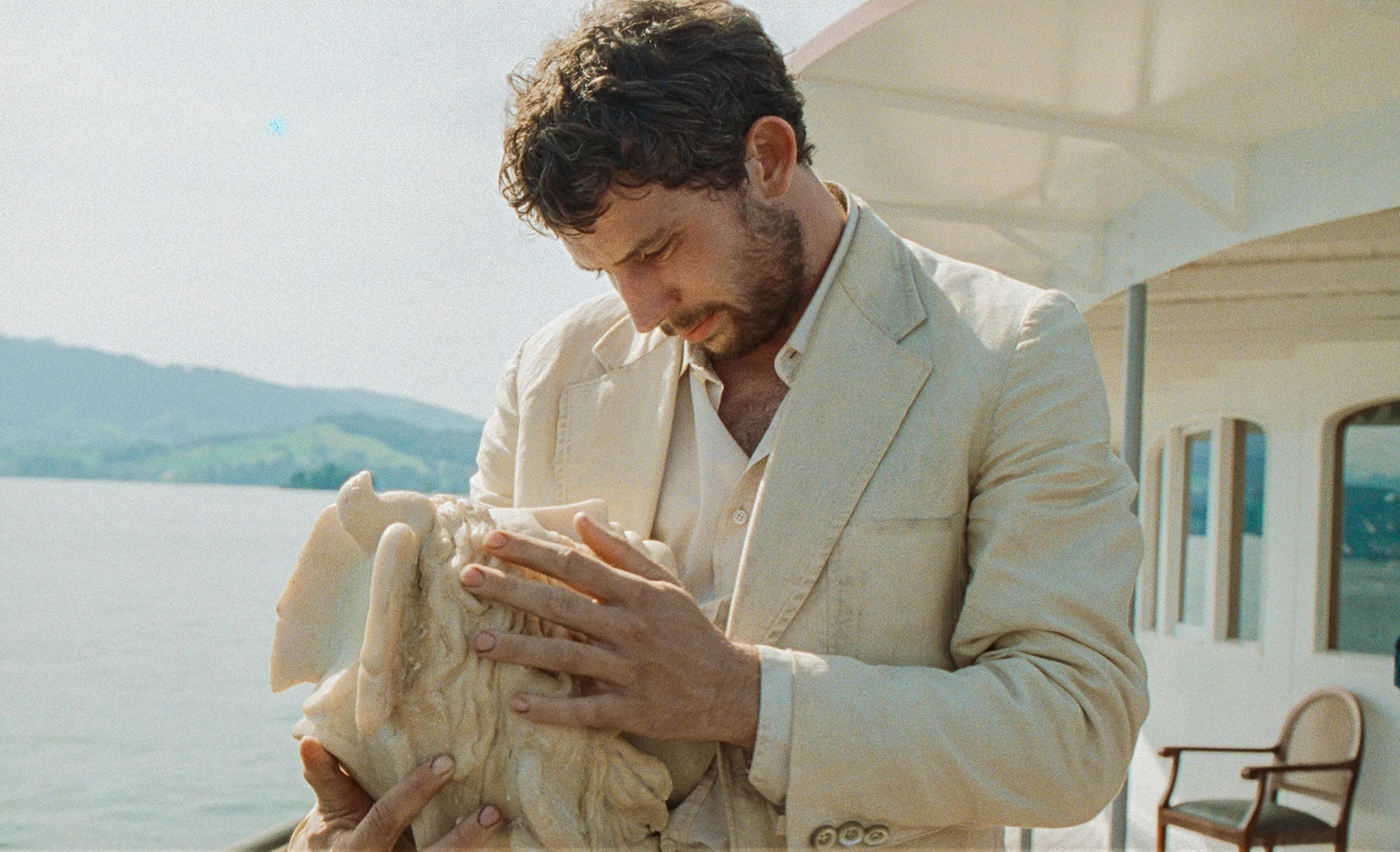
We’re in Tuscany, some time in the 1980s. Dishevelled Englishman Arthur (Josh O’Connor) is sensitive, clever, sweet and engaging. He’s also a grave robber, recently released from an Italian prison and about to head right back to his life of crime.

First though, he has an important visit to make – to the grand but crumbling estate that is home to the aged Flora (Isabella Rossellini). Despite her gaggle of adult daughters’ cacophonous protestations, Flora is Arthur’s biggest champion. Years back, when he was a respectable archaeologist, he was in love with her other daughter, Beniamina (Yile Yara Vianello), now deceased. The bereaved duo cling to their mutual connection.

In fact, Arthur’s yearning for Beniamina is so intense that it allows him to transcend the barriers between past and present. With a dowsing rod, he can pinpoint the long-lost tombs of the Estruscan dead with unerring accuracy. He’s the natural leader of this band of thieves.

The moral questions raised are unsettling. Stealing trinkets from corpses seems inherently wrong, but Arthur and his troubadour friends are homeless, living in poverty. What good are treasures lying in the ground? What’s wrong with living people using them to earn a crust? The rich buyers – whom we glimpse at an exclusive auction – will never go to jail, but they’re the ones profiteering from the poor men’s crimes, turning a blind eye to the items’ provenance. After all, in his old profession, Arthur’s findings were deemed legitimate and sold to museums. Is there really any difference?

But then Arthur begins to fall for Italia (Carol Duarte), Flora’s singing-student-slash-maid. The future is beckoning. Can he stop looking back?

Alice Rohrwacher’s film is a panoply of oxymorons: a firmly realistic supernatural tale; bleakly comic; slow and exciting. Driven entirely by its own logic, there are surprises at every turn, but they all make sense within the story. The Tuscan landscape is beautifully evoked by cinematographer Hélène Louvart, and there’s an unnerving folksy element, caught in the songs and celebrations of the tomb raiders.

But it’s O’Connor’s fine central performance that really makes La Chimera. He embodies the quiet desperation the title connotes, faithful to his impossible quest.

4.1 stars

Susan Singfield

Beetlejuice Beetlejuice

06/09/24

Cineworld, Edinburgh

The juice is loose!

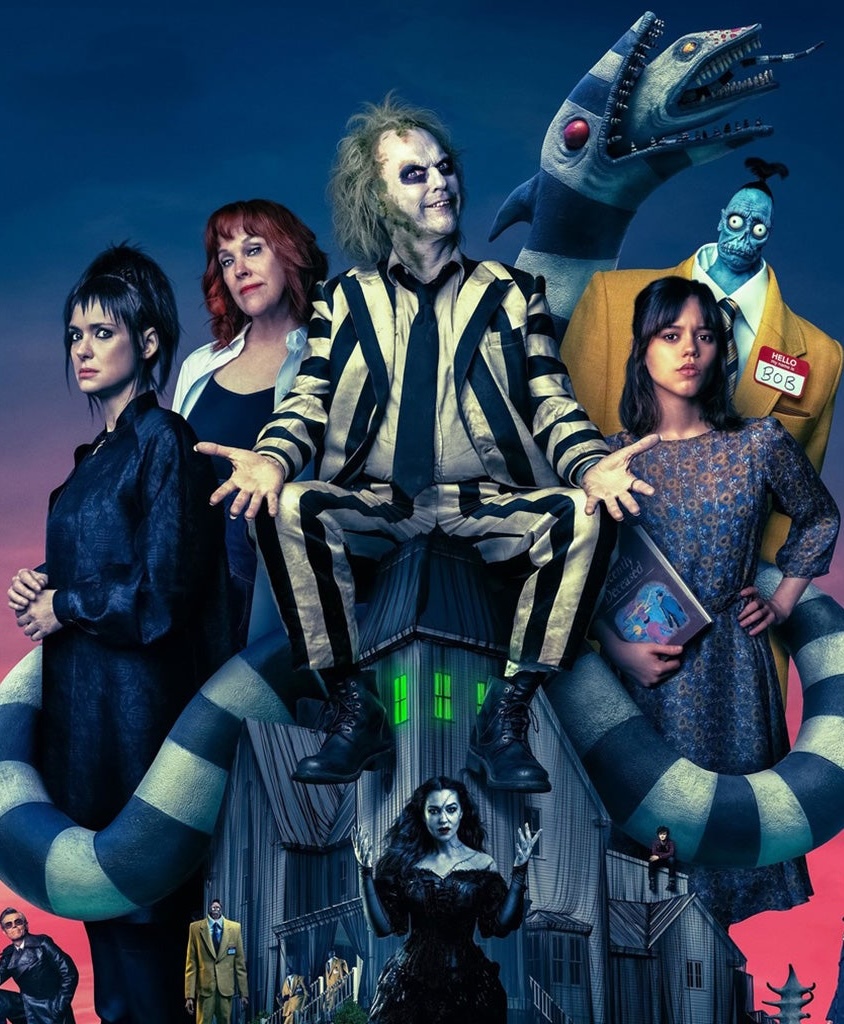
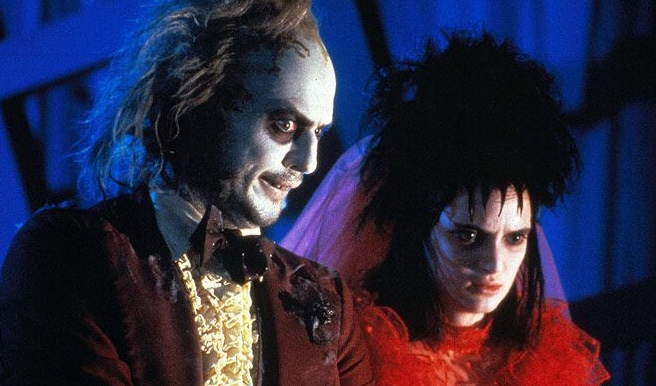
Look, there’s no getting around the fact that Beetlejuice Beetlejuice isn’t a very good film. That’s not to say I don’t enjoy it. I do; I’m not immune to nostalgia. I was seventeen when the original movie was released and I loved Winona. “I myself am strange and unusual,” was every teenage goth girl’s clarion call and Lydia Deetz was my style icon for the next decade. So of course I’m watching Tim Burton’s long-awaited sequel on the day of its release.

It’s been thirty-six years but Ryder has barely changed. Nor has Michael Keaton: his Beetlejuice is as repellant as ever. Still, at least his lust for Lydia is a bit less creepy now that she’s an adult.

Adult Lydia is a celebrated medium. This makes me laugh: it’s gloriously obvious. She’s in the middle of recording her TV show when her stepmum, Delia (Catherine O’Hara) calls with bad news: Lydia’s dad, Charles, has died. It’s time to head back to the haunted house in Winter River, with dodgy boyfriend Rory (Justin Theroux) and angry daughter Astrid (Jenna Ortega) in tow. It’ll be fine. All she has to do is stay away from the model village in the attic and make sure no one says “Beetlejuice” three times.

Beetlejuice. Beetlejuice. Beetle… Oops.

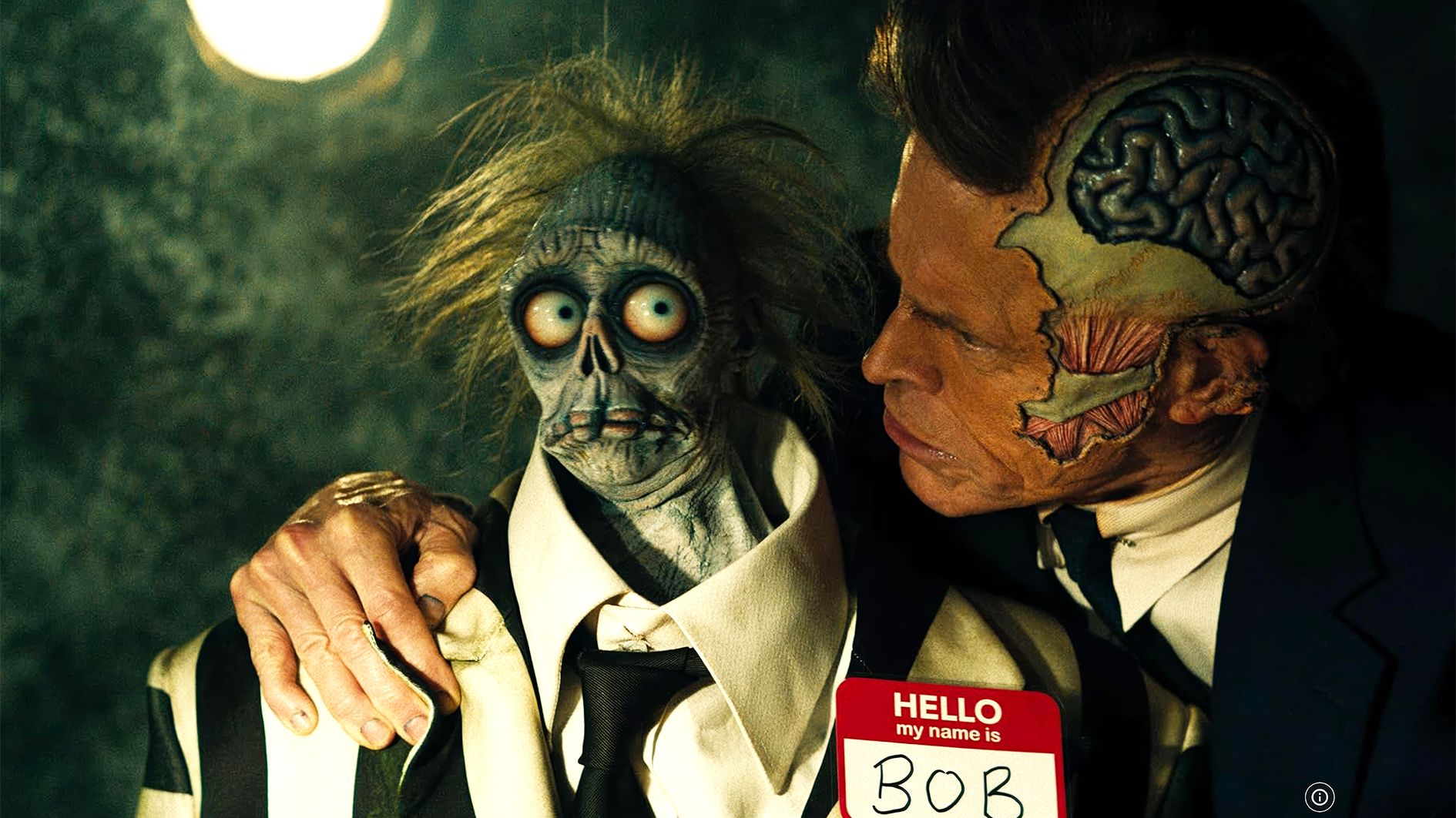
Sadly, from hereon in, the plot veers out of control, as wild and unpredictable as its eponymous antihero. In the underworld, a brilliant sequence where Beetlejuice’s ex-wife, Delores (Monica Bellucci), declares vengeance on him even as she’s stapling her dismembered body parts back together peters out into nothing, squandering a fun idea and a strong performance. Willem Dafoe is similarly under-used as Wolf Jackson, a dead actor struggling to differentiate between himself and the long-running character he played. It’s a neat set-up with nowhere to go. Meanwhile, in the land of the living, Rory is pressuring Lydia to marry him, Delia is turning Charles’ death into an art installation, and Astrid – still mourning her own dad, Richard (Santiago Cabrera) – has met a cute boy (Arthur Conti), who likes reading almost as much as she does… It’s scattershot to say the least.

Of course, when you throw this much at something, some of it sticks – but there’s a lot of wastage. The animated sequence showing Charles’ death is nicely done, but it feels like a segment from a different film. Even more out of place is the black-and-white Italian flashback, the nod to horror pioneer Mario Bava an easter egg for the wrong audience.

It’s much more of a kids’ film than I remember. In fact, Beetlejuice Beetlejuice reminds me of Alice in Wonderland (Lewis Carroll’s original, not Burton’s dismal remake). The imagery is remarkable, there are a lot of memorable characters and some gorgeous set pieces – but the rambling story doesn’t make much sense. Still, I guess there are worse insults. Alice isn’t exactly a failure, and maybe Beetlejuice X 2 will prove similarly popular. At tonight’s screening, the prevalence of gleeful tweenagers in stripy costumes suggests it well might.

So why not go see it and judge for yourself? If you’re happy to sit back for a couple of undemanding hours of gothic silliness, buy your ticket now. You get a free demon possession with every exorcism…

3 stars

Susan Singfield

MaXXXine

08/07/24

Cineworld, Edinburgh

All hail MaXXXine, the third instalment of Ti West’s acclaimed horror trilogy.

Full disclosure: although I loved the second (Pearl), I haven’t seen the first (X). I’m planning to remedy that tonight, courtesy of Amazon Prime Video. Still, I don’t mind watching things in the wrong order – I’m not bothered by so-called spoilers. It reminds me of being a kid and borrowing books from the library based on what was on the shelf, rather than on their position in a series. If they’re good, they usually stand alone. And MaXXXine is very good.

The magnificent Mia Goth returns as the lead and she’s every bit as compelling as I’ve come to expect. Although this sort-of feminist, sort-of arthouse take on an 80s slasher movie isn’t perhaps as exquisite as Pearl, it’s nonetheless irresistible – beautifully crafted and clearly born of real affection for the genre.

Maxine Minx (Goth) is a successful porn actress, looking to cross over into mainstream movies before her star begins to wane. When she impresses the imperious Elizabeth Bender (Elizabeth Debicki), director of the controversial The Puritan, she lands the lead in its imaginatively-titled sequel, The Puritan 2. But there’s a Satanist serial killer prowling LA’s streets, and a dodgy detective called John Labat (Kevin Bacon) is trying to rake up Maxine’s past. “Whatever’s happening in your life that’s getting in the way of this movie,” says Bender, “Squash it.” And Maxine is determined to do just that…

Cinematographer Eliot Rockett perfectly recreates the low-rent look of 80s movies, all flickering edges and fuzzy VHS. There is a knowing, meta-quality on display throughout, although not in the glib, mocking style of some recent fright flicks, which simply invert the well-worn tropes. This is more of a love letter to Hollywood horror, with key scenes played out in the Bates Motel and behind those big white letters on the hill.

The supporting actors are almost as arresting as Goth, Debicki and Bacon in particular lighting up the screen. I especially enjoy Bender’s self-indulgent rationalisation of The Puritan 2 as a serious piece of art, and the deliciously sleazy Labat’s attempts to assert his dominance over Maxine.

There’s a message here too, and it’s about as subtle as Maxine’s perm: puritanical religion is more dangerous than adult entertainment. Whether or not you agree, the point is seductively made, and MaXXXine is a gory delight.

4 stars

Susan Singfield

Hoard

19/05/24

Cineworld, Edinburgh

It’s London, some time in the 1980s. Cynthia (Hayley Squires) and her daughter Maria (Lily Beau Leach) are very close, with a whole host of funny rituals and secret games. They watch movies, threading popcorn on string; they dance until they fall over laughing; they go out at night, scavenging from bins.

The house is full to bursting. When she comes home from school, Maria has to climb over the detritus blocking the front door. Her pet ferret, Pearl, goes missing for days. She can’t find her PE kit. In trouble – again – for ‘forgetting’ it, she snaps at her mum. “I hate us. I’ve been to other people’s houses. They’re not like this.”

When the teetering mounds of junk literally crush Cynthia, Maria is taken into care.

Fast forward to 1994. Maria (Saura Lightfoot Leon) is sixteen now. ‘Mum’ is Michelle (Samantha Spiro), who’s been fostering her for years. Despite still being something of an outsider, Maria has been functioning quite well. But there’s a perfect storm brewing: she’s left school but doesn’t have a job; her only friend, Laraib (Deba Hekmat), is moving away; and news comes in of Cynthia’s death. Enter thirty-year-old Michael (Joseph Quinn), an ex-foster kid of Michelle’s who needs a place to stay for a few weeks. He’s a refuse collector, and Maria finds herself drawn to him, his smell kindling childhood memories. And then she begins to emulate her mother’s hoarding ways…

There’s a lot to admire about Hoard. It’s an ambitious piece, and debut writer-director Luna Carmoon depicts Maria’s fracturing mental health with an unflinching eye, managing to convey both her inner turmoil and how she appears to those outside. The thread of images – fireworks, sherbert, tin drums, irons – is boldly interwoven; and the metaphor-made-literal bullfight scene is particularly memorable. Both Leach and Leon evoke empathy for Maria, convincingly portraying her complex character. Squires is wonderful as Cynthia too, her brittle joie de vivre always just about to crack.

The first act is brilliant, but the early stretches of the second are less compelling: I find it hard to believe in Maria’s relationship with Laraib and in her interactions with the people at the pub. I don’t understand why the lovely Michelle would keep inviting her friend, Sam (Cathy Tyson), to bring her daughters over to visit, when she knows that they bully Maria.

Things pick up again as Michael and Maria fuel each other’s neuroses, spinning further and further out of control. It’s a tough watch – even stomach-churning – but that’s okay; it should be. The resolution, when it comes, is perhaps a little pat, but it’s a relief nonetheless. A short coda provides a clue as to where the story comes from, apparently inspired by events from Carmoon’s own life.

If the ambition sometimes exceeds the execution, Hoard is never less than interesting, and Saura Lightfoot Leon is certainly one to watch.

3.2 stars

Susan Singfield