Cineworld

Inter Alia: NT Live

07/09/25

Cineworld, Edinburgh

What Suzie (Miller) Did Next was bound to garner a lot of attention. The mega-success of Prima Facie, starring the inimitable Jodie Comer, has catapulted the Aussie playwright into the limelight, and left the theatre world waiting with baited breath to see what else she has up her silk sleeve.

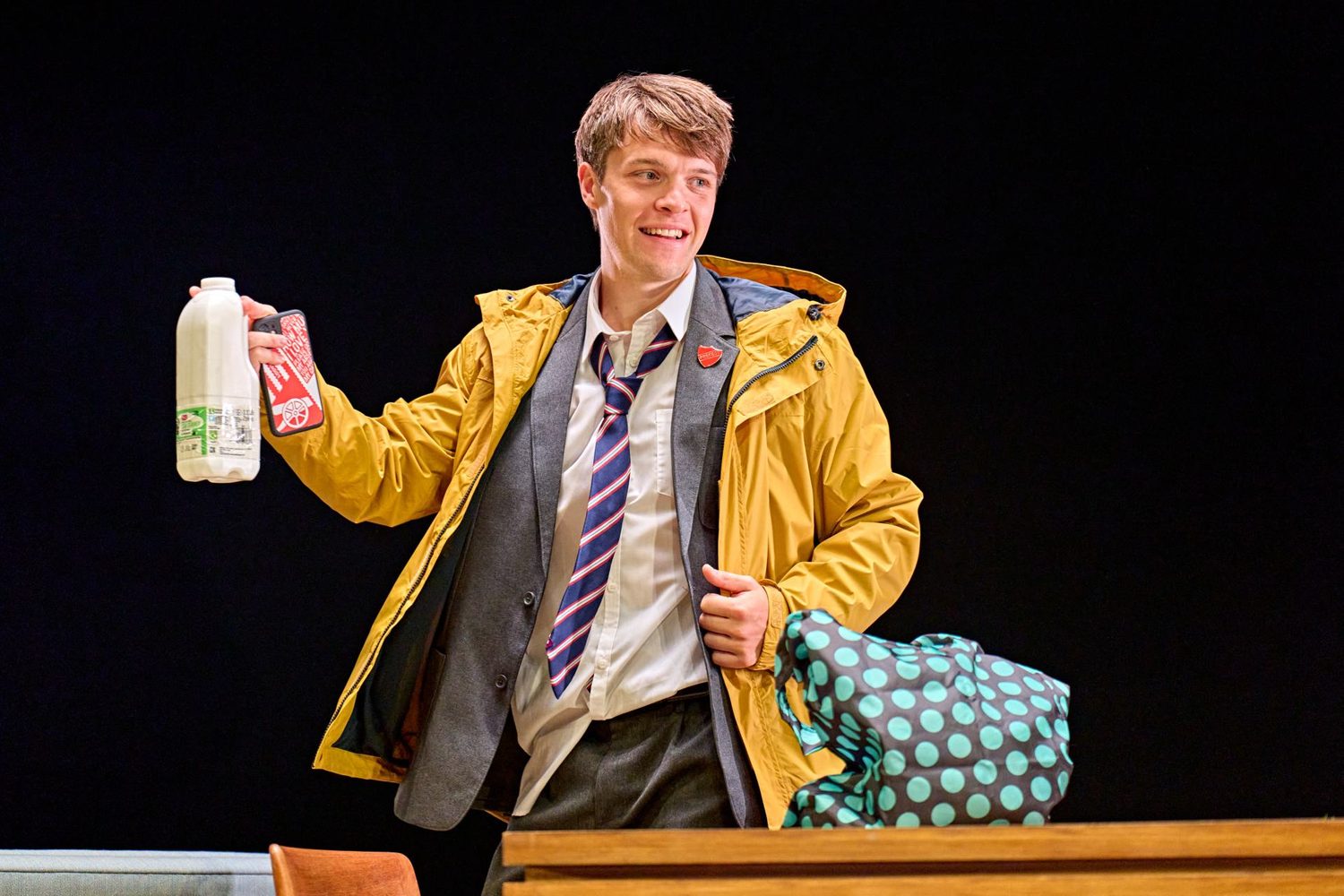
Inter Alia, a three-hander starring Rosamund Pike, serves as a kind of companion piece to the 2019 monologue, this time examining the legal system’s response to sexual assault from the vantage point of the Bench. Pike plays Judge Jessica Parks, a high-flying professional, juggling work and family life. She’s got the drive and energy to give both her all, but there’s no escaping ‘mom guilt’, however feminist you are. Still, she and her barrister husband, Michael (Jamie Glover), seem to be managing well: their teenage son, Harry (Jasper Talbot), isn’t exactly happy – he doesn’t really fit in at school and is the victim of some mild bullying – but he’s generally okay, mooching through his days and studying for A levels. He’s a gentle, sensitive boy, nothing like the entitled defendants Jess encounters in court, with their swaggering justifications for rape…

Until, one fateful night, when the ideals Jessica has long-espoused are suddenly called into question, along with her integrity. Who is to blame when a floundering young man commits a crime? And is it possible to be guilty and innocent at the same time?

Prima Facie‘s director, Justin Martin, is back on board for this follow-up polemic, and it’s just as gorgeously kinetic as the earlier piece, perfectly encapsulating the frantic nature of Jess’s life as she hurtles from conviction to kitchen, from case files to karaoke. The set, designed by Miriam Buether, is ingenious, a combination of the domestic and the professional, with props, costumes and doorways cunningly concealed in the kitchen units. At key moments, a wooded park is revealed beyond the dominant interiors, a glimpse into the outside world – both real and online – where Jessica isn’t in control, and which Harry has to learn to navigate for himself.

This is a gentler play than its predecessor, but no less audacious or thought-provoking. Pike is extraordinary in the lead role, and ably supported by her fellow actors. Miller doesn’t offer any easy answers or let anyone off the hook, but she expertly straddles the fine line between trying to understand assailants without diminishing their victims. Like those around us, we leave the cinema deep in discussion, trawling through our own experiences, trying to work out what we would do in Judge Jessica’s place.

I’m still not sure. But I do solemnly, sincerely and truly declare and affirm that Inter Alia is another searing commentary on our times, and – as such – another must-see from the National Theatre.

5 stars

Susan Singfield

The Thursday Murder Club

01/09/25

Netflix

Oh dear. The first film of the month and it’s a stinker. I haven’t read Richard Osman’s best-selling novel (cosy crime isn’t really my thing) but I’m sure it deserves a better adaptation than this. His podcasts (which I do listen to) show him to be clever and erudite. This movie is neither.

All the right pieces are in play: popular source material, a stellar cast, the prettiest of English villages. There’s even cake – but sadly not enough to sweeten this twaddle.

The Thursday Murder Club comprises four wealthy pensioners: Elizabeth (Helen Mirren), Ibrahim (Ben Kingsley), Ron (Pierce Brosnan) and Joyce (Celia Imrie). They live in a stately home called Coopers Chase, which has been converted into the the most luxurious retirement apartments imaginable, and pass their time investigating the cold case files their fellow resident, Penny (Susan Kirkby), a former detective, has somehow managed to hold onto.

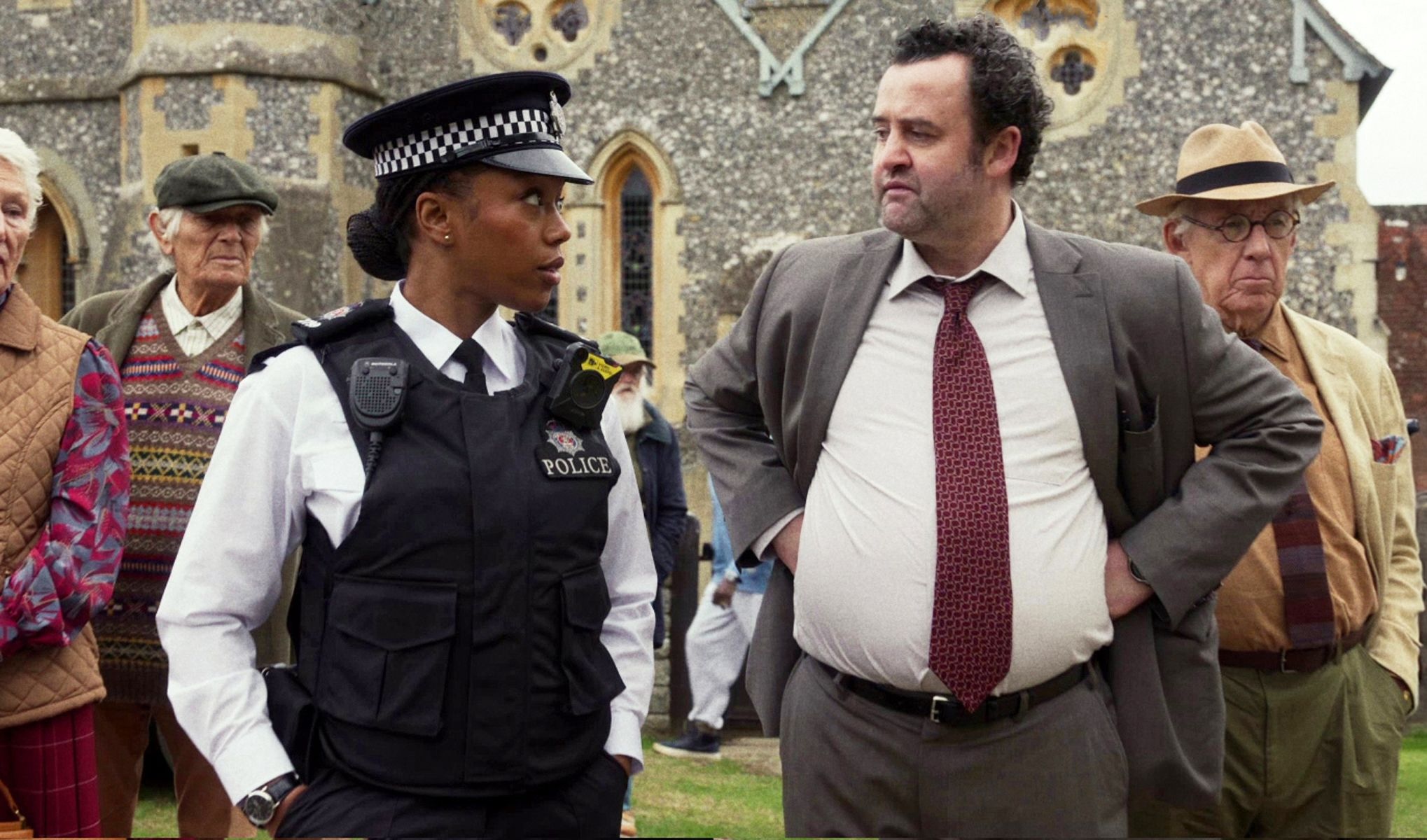
But when money-grubbing landowner, Ian Ventham (David Tennant), reveals his plans to redevelop Coopers Chase, murder is no longer confined to the past. The privileged pensioners can barely conceal their glee at having something real to get their dentures into, much to the dismay of local police officers, Chris Hudson (Daniel Mays) and Donna de Freitas (Naomi Ackie).

Amidst the lightweight sleuthing, some serious issues are raised, including people-trafficking and dementia. But these are hopelessly out of place, treated so glibly that it feels very uncomfortable. There’s some real snobbery at play here too, presumably unconscious: the working-class-man-made-good with his loud voice and tacky McMansion; the upper-class oldies with their mellow tones and oh-so-tasteful decor.

I want to find nice things to say because it’s Helen Mirren, for God’s sake. But hers isn’t even the most wasted talent – at least she’s in a lot of scenes. The wonderful Ruth Sheen barely gets a look in as Aunt Maud. (What’s the purpose of this character? She adds nothing to the plot.)

To quote a catchphrase that’ll only mean something to Gen X, here’s my suggestion: Just Switch Off Your Television Set and Go and Do Something Less Boring Instead.

2 stars

Susan Singfield

The Roses

30/08/25

Cineworld, Edinburgh

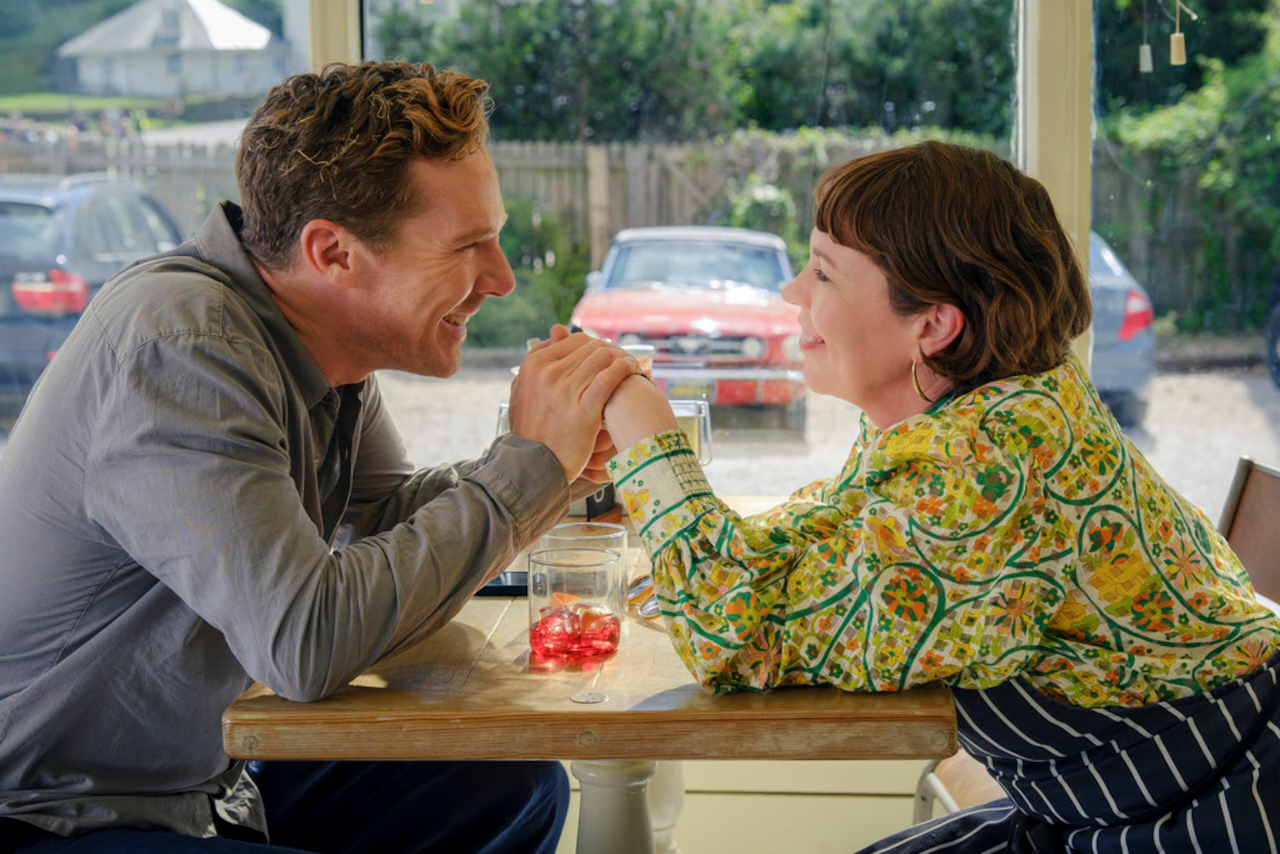
It’s an ill wind that blows nobody any good, so perhaps it shouldn’t come as a surprise to Theo Rose (Benedict Cumberbatch) when the very storm that shatters his career as an architect also heralds a renaissance for his restaurateur wife, Ivy (Olivia Colman).

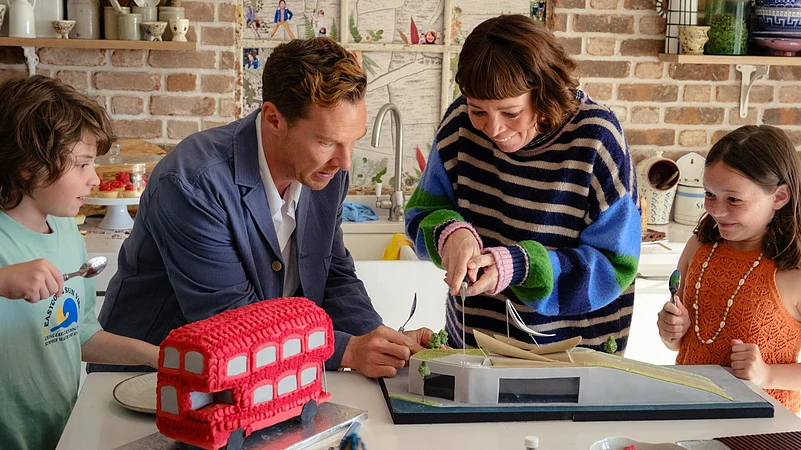
Theo and Ivy have relocated from London to Northern California, where Theo has been commissioned to design a naval history museum. Ivy’s professional aspirations have been on hold since their two kids, Roy (Ollie Robinson/Wells Rappaport) and Hattie (Delaney Quinn/Hala Finley) came along, but now they’re busy with school and friends and she’s starting to get itchy feet. How long can she carry on cooking elaborate tasting menus for a family of four? Theo is nothing if not supportive, encouraging her to set up a new eatery, opening a few evenings a week.

But when Theo’s high-profile building collapses in a hurricane, he finds himself persona non grata in the architectural community, unable to find work. Meanwhile, seeking shelter from the same weather, an influential food critic is blown into Ivy’s restaurant, and her review catapults Ivy to stardom. It makes sense, then, for Theo to take over domestic duties, while Ivy capitalises on her success and expands her business.

But Theo finds it hard to cope with his sense of failure, and Ivy finds it hard not to resent his newfound closeness to their kids. Before long, their relationship begins to sour, their grievances mounting to monstrous proportions…

Directed by Jay Roach, The Roses is laugh-out-loud funny, as the couple’s responses to their problems escalate cartoonishly, their excesses both shocking and exhilarating to watch. At the same time, with such skilful actors in the lead roles, it’s also desperately sad: we’re bearing witness to the disintegration of a once-happy marriage, observing as two people find themselves travelling a path towards mutual ruin, unable to stop as the momentum builds.

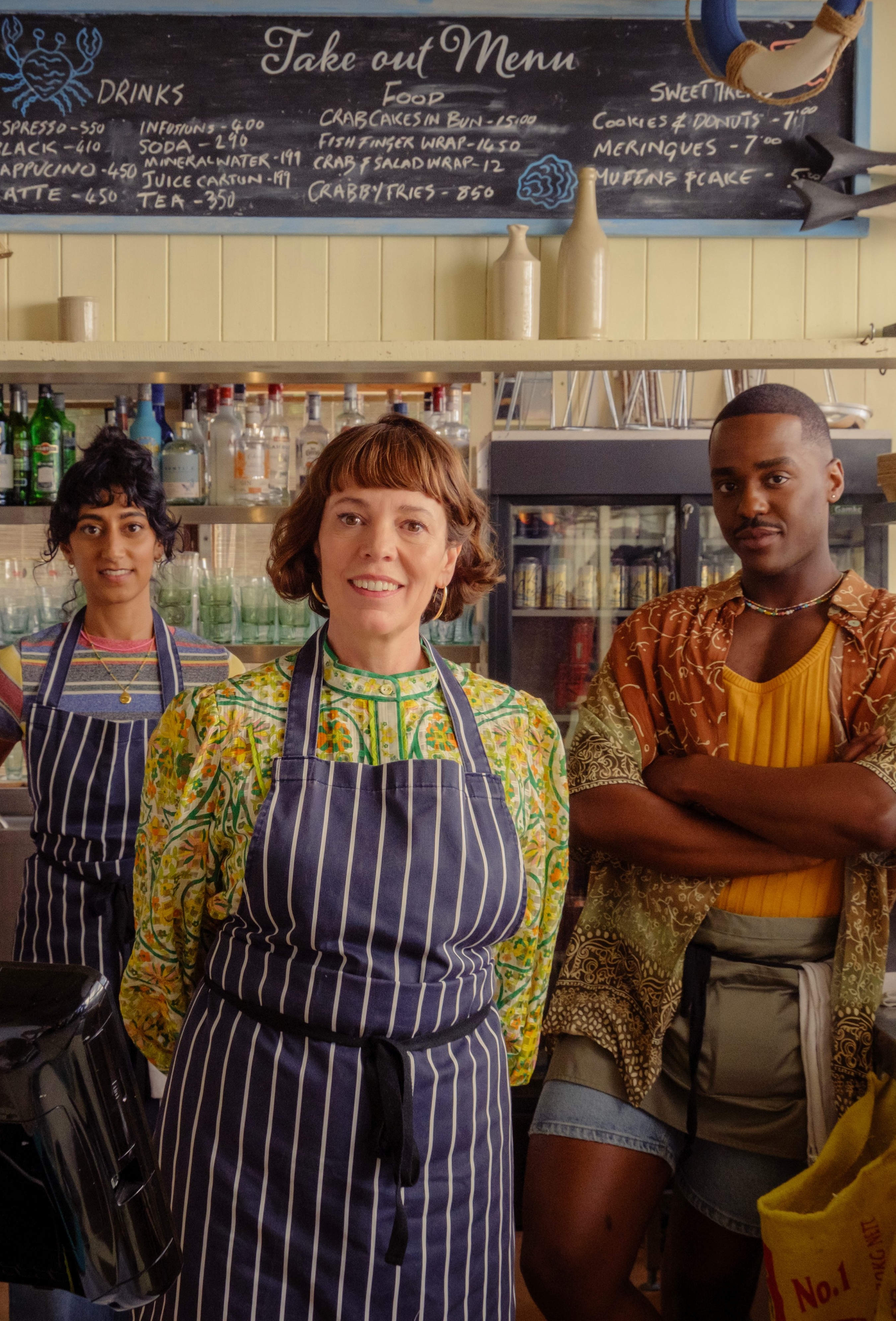
Despite its destructive premise, The Roses turns out to be a feelgood kind of film. Based on the novel by Warren Adler and famously filmed as The War of the Roses in 1989, Tony McNamara’s script is bitingly funny, with lots of arch lines and bitchy humour to lighten the tension. The supporting cast provide some excellent comic relief – particularly Ncuti Gatwa as Jeffrey, Ivy’s loyal waiter, and Kate McKinnon as Amy, the couple’s sex-starved friend.

As for the ending? I don’t think it’s giving anything away to say that it’s best described as “audacious”.

4.3 stars

Susan Singfield
Bring Her Back

26/07/25

Cineworld, Edinburgh

Okay, so Bring Her Back is predicated on my least-favourite horror trope: the monstrous mother – in this case, a formerly-fêted counsellor, rendered grotesque by the tragic loss of her child. However, although I can’t deny being put off by the reductive motif, nor can I forget how highly I rated Danny and Michael Philippou’s 2022 debut feature film, Talk to Me, so I’m keen to see their sophomore effort.

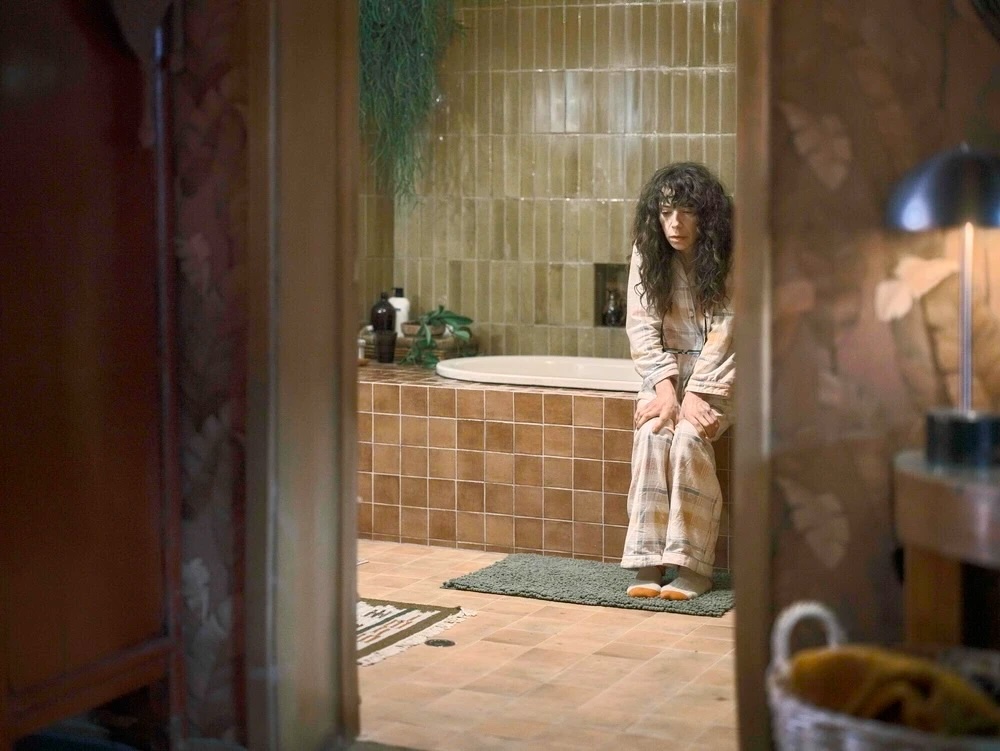
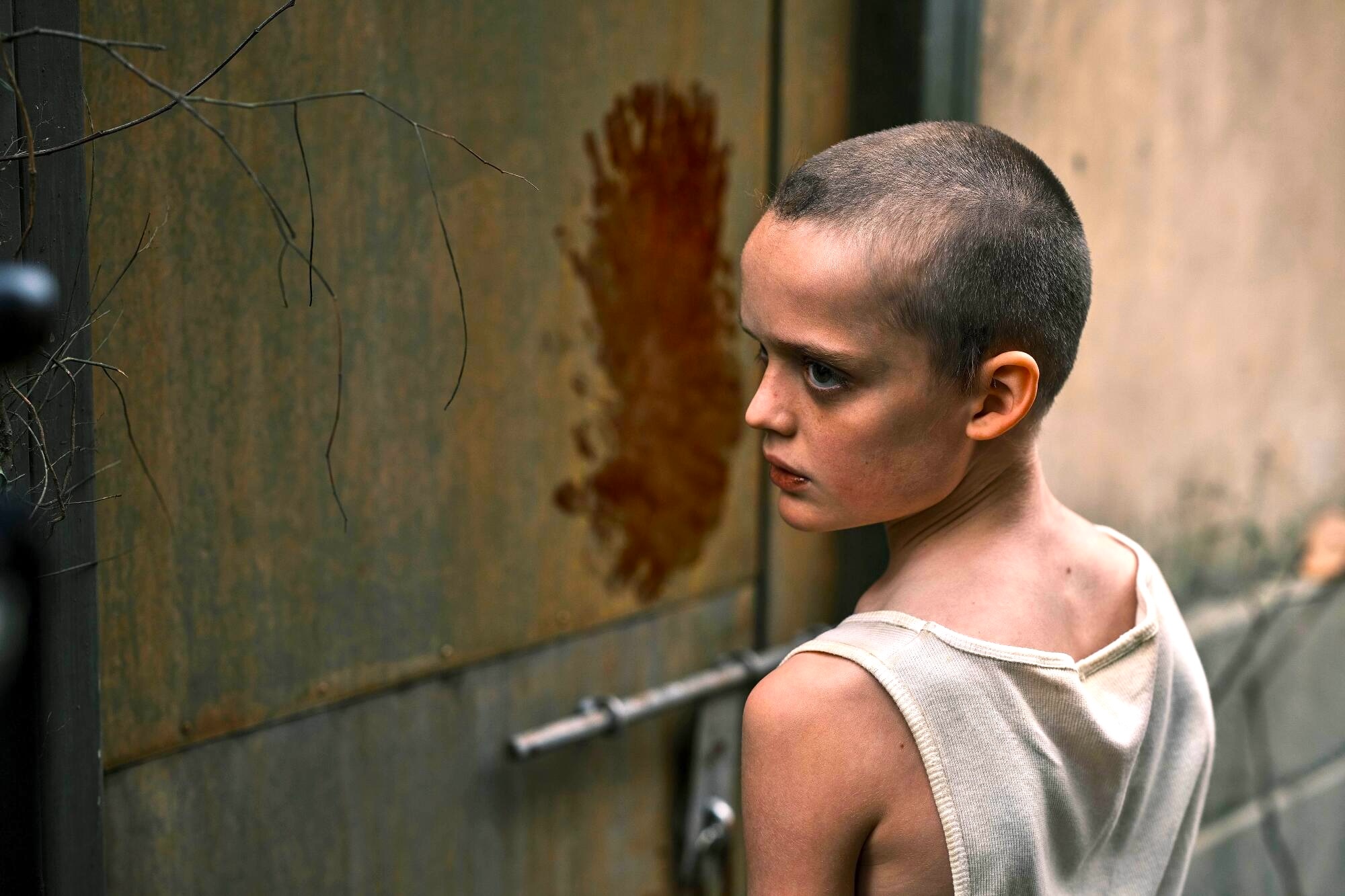
And, while there’s no clever subversion of the aforementioned trope, I’m pleased to report that the Philippou brothers have made another gloriously unsettling movie. Sally Hawkins is terrifying as Laura, the scary foster-mum who takes in orphaned step-siblings, Andy (Billy Barratt) and Piper (Sora Wong). The pair just need somewhere to stay for a few months until Andy turns eighteen and can apply for guardianship of his sister, but Laura has other ideas. She’s desperate to replace her daughter, Cathy, who drowned in her now-empty swimming pool – and Piper is the perfect match. Not only is she the same age, height and build, she’s also partially sighted, just like Cathy was. She has no idea that Laura is dressing her in borrowed clothes…

Andy’s not happy, but he isn’t sure what’s making him so jumpy. Is it grief? After all, he has just lost his dad. He doesn’t want to be negative about Laura, who’s going out of her way for him and Piper, but why is the other foster kid, Olly (Jonah Wren Phillips), so uncommunicative, and why is he locked in his room?

Bring Her Back is a tight thriller, never overstaying its welcome. The body horror is minimal but shockingly potent (dentists in particular are likely to wince), and I find myself holding my breath and peeking at the screen from behind my hands. Hawkins embodies creepiness, her hyper-focused characterisation dominating the film exactly as it should, but there are also strong performances from the supporting trio of youngsters, who find themselves at Laura’s mercy. I like the way that cinematographer Aaron McLisky blurs the focus to allow us to see some scenes from Piper’s point of view, and the dialogue (by Danny Philippou and Bill Hinzman) is nicely scripted.

There are a couple of areas that could do with sharpening, such as what exactly has Laura done to Olly? And where has she found the how-to videos she obsessively watches? But these are minor quibbles, far outnumbered by the clever moments that make the whole thing eminently watchable.

Go see it, if you dare. Grapefruit.

4.3 stars

Susan Singfield

Elio

23/06/25

Cineworld, Edinburgh

Here’s the thing: despite all the ‘gorgeous’ artwork and ‘fantastic’ world-building, on the whole, Elio is better described by adjectives like ‘generic’ and ‘forgettable’. It’s a shame because there’s a lot to like. It’s just that it all gets drowned in a sea of schmaltz.

Elio (Yonas Kibreab) is a lonely eleven-year-old orphan, obsessed with extra-terrestrial life forms. Since his parents’ death, he’s been living with his Aunt Olga (Zoe Saldaña), an ‘orbital analyst’ on a military base, where there is plenty of tech for studying the night sky. He’s convinced that Olga doesn’t really want him, and dreams of being abducted by friendly aliens and finally fitting in. It’s a sweet enough idea, although – dressed in his superhero cape and colander hat – Elio seems a lot younger than eleven. Have the film-makers ever talked to anyone that age?

It’s not much of a spoiler to say that Elio’s dearest wish comes true, transporting him to the Communiverse, an interplanetary organisation, where representatives from every galaxy meet to ensure the smooth running of the universe. He announces himself as Earth’s ambassador, befriends a slug-like creature called Glordon (Remy Edgerly) and embarks on the adventure of a lifetime. So far, so good – until the preachy life-lessons start to overwhelm the plot.

Directed by Adrian Molina, Elio is a frustrating film, nowhere near as sophisticated as Pixar’s usual output – not as funny, not as smart. It looks lovely: the bright colours are sure to appeal to kids (indeed, it almost seems designed with merch in mind) but there’s not much here to engage an adult audience. Julia Cho’s script dances around some interesting ideas – such as gender stereotypes and toxic masculinity – but wimps out of fully exploring them. The ultimate message seems to be ‘there’s no place like home’, which is disappointingly regressive, falling back on that same-old, same-old. Has nothing changed since Judy Garland’s day? Are we still supposed to give up on our dreams and choose the bleak monochrome of Kansas over the vibrant colours of Oz?

Elio is a watchable movie with enough excitement to hold the interest of younger viewers, although I doubt it’s sufficiently refined to appeal to those of Elio’s own age. It needs more edge, more bite, more jeopardy.

2.8 stars

Susan Singfield

The Salt Path

08/07/25

Update

In the aftermath of the bombshell dropped by Chloe Hadjimatheou in this weekend’s Observer, where she exposes the lies this story is based on, it feels right to reassess our original response to the movie. Our opening sentence included the words “raised eyebrows”. Perhaps we shouldn’t have been so gullible.

But we’re in good company, including Penguin Random House, Number 9 Films and more than two million readers worldwide. Chivalrous Jason Isaacs, sitting next to Raynor Winn on The One Show sofa, gently corrects her when she says it all began when she and her husband “got into a financial dispute”. “You were conned out of everything you had,” he says sympathetically. “You might not be able to say it but I can.”

The Winns’ audacity is breathtaking. According to Hadjimatheou, the real con-artist is Raynor, aka Sally Walker. Aka embezzler of £64k from her employer; aka borrower of £100k to pay back her ill-gotten gains and thus avoid a criminal trial. When their house was repossessed, it wasn’t because a good friend betrayed them; it wasn’t a naïve business investment gone wrong. It was the simple calling-in of an unpaid debt, ratified by the courts. Did Walker and her husband Ti-Moth-y really believe the truth would stay buried as they appeared on national television to publicise their untruths?

So how gullible were we, really? Like many, we believed the basic premise. Why wouldn’t we? Sure, it was clear that the exact circumstances of the couple’s slide into destitution were being glossed over, and of course their story was shaped into a neater narrative than real life provides. But we had no reason to doubt the fundamentals. (How could anyone have guessed they had a ‘spare’ property in France?) In fact, my interest piqued by the movie, I went on to read Winn’s books. I liked The Salt Path, although I was disappointed not to learn more about the calamitous investment. I found books two and three (The Wild Silence and Landlines) less interesting: just more of the same, but – now that the couple were housed and embracing successful careers – without the jeopardy. In these sequels, the focus shifts to Moth’s terminal illness, corticobasal degeneration, and the miraculous curative effect that hiking has for him. While the first book tentatively suggests that strenuous exercise might be beneficial for those with this rare condition, by the third we’re deep into dubious ‘wellness’ territory, with Winn’s ‘own research’ supposedly trumping anything a neurologist might purport to know.

Still, we won’t be taking down our review (you can read it in full below). We stand by it as a reaction to a well-acted and nicely-crafted film that we enjoyed. Of course, its message of grit in the face of adversity doesn’t have quite the same potency it did, now that we know the protagonists are a pair of grifters, but, if we can steel ourselves to view it as a work of fiction, it’s an affecting and moving piece.

Susan Singfield and Philip Caveney

01/06/25

Cineworld, Edinburgh

I’ve often remarked that real-life stories, depicted as fiction, would more often than not be the case for raised eyebrows. Take the case of Raynor and Moth Winn, for example: a married couple who, after a badly-judged business investment went tits up, found themselves evicted from their family farm, unable to obtain any financial help, bar a paltry £40 a week benefit. Around the same time, Moth was diagnosed with a rare (and inoperable) degenerative brain condition. Their response? To set off to walk the South West Coastal Path, a trip of hundreds of miles, telling themselves that if they just kept walking, something was sure to turn up…

Okay, so in a move they could surely never have anticipated, the book that Raynor wrote about the experience eventually went on to sell two million copies… but it would be a hard-hearted reviewer who begrudged them this success.

In this adaptation by Rebecca Lenkiewicz, we first encounter Raynor (Gillian Anderson) and Moth (Jason Isaacs) as they fight to save their last real possession – a small tent – from the ravages of the incoming tide. The couples’ back story is told in a series of fragmentary flashbacks, though director Marianne Elliott is less interested in the events that brought the couple to this sorry situation, than exploring the possibilities of what their newfound freedom brings them.

As the two of them progress on their journey, struggling at first but gradually adapting to a different kind of life, it becomes clear that there is something to be said for casting off the familiar shackles of a home and a mortgage. The couple find an inner strength they didn’t know existed and, along the way, they rediscover what drew them together in the first place. This could easily have been overly -sentimental but manages to pursue a less obvious route.

The story takes the duo across some jaw-dropping locations around Cornwall and Devon and the majesty of the scenery is nicely set against Chris Roe’s ethereal soundtrack. Anderson and Isaacs make a winning duo, conveying the real life couple’s indomitable spirit and genuine devotion to each other, while the various situations they stumble into range from the comical to the deeply affecting.

The film’s final drone sequence cleverly encapsulates its central message in one soaring extended shot. There have been some mean-spirited early reviews for The Salt Path but I find it genuinely moving and a cinematic journey worth sharing.

4.2 stars

Philip Caveney and Susan Singfield

SIX The Musical Live!

27/04/25

Cineworld, Edinburgh

We first saw SIX The Musical in 2018 on its triumphant return to the Edinburgh Fringe. A year earlier, as a bare-bones student production, it had garnered a lot of attention. Now it was back with a big budget and a lot of buzz. We duly went along to the purple upside-down cow tent dominating George Square Gardens (AKA the Udderbelly) and immediately understood what all the fuss was about. With its high-octane energy and witty lyrics, this re-writing of herstory was bursting with vim and invention. Afterwards, we bought the album and listened to it on repeat.

We saw it a second time when it came to the Festival Theatre on tour, now with a different cast. The production was as compelling as ever – but those Udderbelly Queens will always reign as far as we’re concerned.

So we’re delighted to see that an original-cast reunion performance has been filmed; what’s more, it’s included in our Cineworld Unlimited plan. What better way to spend a Sunday morning than engaging in a little Fringe-nostalgia, and trying to suppress the urge to sing along with some of our favourite songs?

It’s astonishing to think that Lucy Moss and Toby Marlow were still at uni when they wrote this juggernaut, which now boasts more than a thousand performances both in the West End and on Broadway, to say nothing of its wider global reach. Their combined talent is truly awesome and, directed by Liz Clare, the musical absolutely deserves its huge success.

The conceit is simple: each of Horrid Henry’s wives thinks she’s the most historically important. Unable to come to a consensus, they decide to battle it out via the medium of song, so that the audience can judge who’s suffered the most and is therefore the most deserving. It’s hardly a spoiler to reveal that, in this feminist reframing, they end up setting their differences aside and embracing their sisterhood. After all, together they amount to more than just one word in a stupid rhyme, right? Combined, they’re the main reason anyone remembers Henry at all.

They sing in herstorical order: Jarneia Richard-Noel (Catherine of Aragon – divorced), Millie O’Connell (Anne Boleyn – beheaded), Natalie Paris (Jane Seymour – died), Alexia McIntosh (Anne of Cleves – divorced), Aimie Atkinson (Katherine Howard – beheaded) and Maiya Quansah-Breed (Catherine Parr – survived). The songs are wonderfully distinct, incorporating Latin-American-tinged funk, a plaintive ballad and thumping Teutonic techno. Each Queen earns every minute of her time on the throne.

For anyone who hasn’t seen it, grab the chance while you can: this version, filmed live at London’s Vaudeville Theatre, comes with a précis of the production’s journey, as well as a pre-show cast interview, and has several showings a day in multiplexes this week. You’d be hard pressed to find a more dynamic and entertaining group of dead women to spend your time with.

5 stars

Susan Singfield

Drop

18/04/25

Cineworld, Edinburgh

I’m not at all sure about Drop at first. It begins with a woman trying to escape a brutal attack from a violent man, the camera lingering on her battered face, so I’m worried it’s going to tread the ‘female suffering as spectacle’ path – and that, therefore, I’ll hate it. Thankfully, this approach is limited to the opening scene, and things quickly take a turn for the better.

The woman, Violet (Meghann Fahy), is a psychotherapist, specialising in survivors of domestic abuse. She knows what they’ve endured because she’s been there too. Since her ex’s death, dating hasn’t exactly been her priority: she’s been focusing on raising her son, Toby (Jacob Robinson), and building her career. But her sister, Jen (Violett Beane), thinks it’s time that Violet had some fun, and persuades her to meet up with the guy she’s been chatting to via social media. He seems nice, and Jen’ll babysit Toby. What’s the worst that can happen?

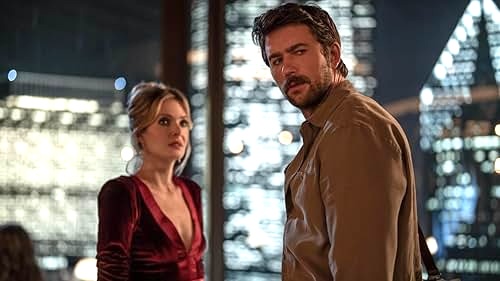
Henry (Brandon Sklenar) is almost too good to be true. He’s handsome, charming and easy to talk to. Sure, the fancy restaurant he’s suggested for their date is situated on the top floor of a soaring skyscraper, but how is he supposed to know that Violet’s afraid of heights? Palate has an excellent reputation and a lovely atmosphere. Surely this is the start of something promising…

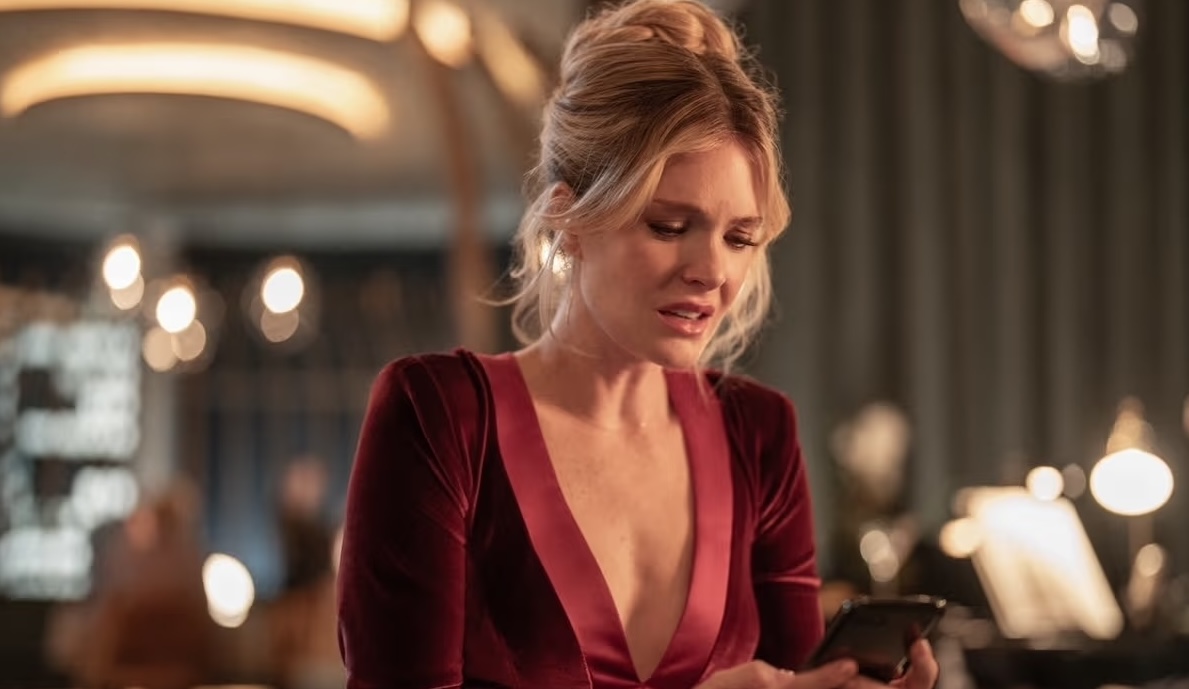
But then Violet begins to receive mysterious ‘digi-drops’ (airdrops), which gradually grow more threatening in tone. Digi-drops can only be sent within a fifty-metre radius, so she knows they’re coming from within the restaurant. But, of course, there are countless people glued to their phones; how can she identify who’s responsible? And anyway, that’s soon the least of her worries because, before she knows it, she’s being instructed to murder her date – and, if she refuses, her tormenter says he will kill her son.

If the premise sounds preposterous, that’s because it is, but the script – by Jillian Jacobs and Chris Roach – is genuinely thrilling, the tension ramped up with each passing minute. Fahy convinces as the desperate woman, fighting an unseen enemy with everything she’s got, and the plot is twisty, turny and delightfully unpredictable. Indeed, under Christopher Landon’s direction, Drop exhibits as much sophistication as Palate‘s Michelin-starred dishes – until we reach the final scenes, where ‘bold’ segues into ‘bonkers’ and ‘believability’ flies out of the smashed window.

In the end, the good outweighs the bad, and I leave the cinema more than satisfied by this exciting whodunnit with its appealing central duo and intriguing cast of suspects.

4 stars

Susan Singfield
The Last Showgirl

02/03/25

Cineworld, Edinburgh

I haven’t seen any of Pamela Anderson’s previous work (Baywatch never appealed) so my knowledge of her is limited to three headline facts: red swimsuit, sex tapes and – recently – no make-up. I’m not surprised that this reductive list doesn’t do the woman justice, but I am impressed by her nuanced performance in Gia Coppola’s latest film.

Anderson is Shelly, the titular last showgirl, still strutting her stuff in a Vegas casino. The clock is ticking, both for Shelly and the show itself. They’re both past their sell-by dates, and they’re being pushed aside for newer, brighter, fresher fare. But the fifty-seven-year-old has devoted her whole life to Le Razzle Dazzle and she doesn’t know who she is without it. News of the show’s impending closure is utterly devastating.

The sacrifices Shelly has made are huge. For more than thirty years, she has placed this job before her marriage, her security, even before her daughter, Hannah (Billie Lourd). But it turns out her bosses owe her nothing in return: no pension, no severance pay, no training for a different job. And, this being the USA, she won’t even have any health insurance when the curtain falls for the final time. What has it all been for?

Kate Gersten’s screenplay is deceptively simple, a layering of vignettes that slowly build to something quite profound. We already know how vampiric the industry is, sucking the last drop of blood from its initially willing victims before callously discarding them and calling, “Next!” Here, we see what happens to the husks it leaves behind.

At its heart, The Last Showgirl is a film about delusion, about the myths we tell ourselves to justify our lives. Shelly clings to the idea that Le Razzle Dazzle is a cut above, a Parisian-style extravaganza of glamour and elegance. But when Hannah sees the show, she bursts her mom’s balloon. “I’d hoped it would be worth it,” she says, before eviscerating Shelly’s dream, denouncing it as tawdry and outmoded, a nude show like any other – nothing special at all.

And Shelly’s not the only one. Her old friend Annette (Jamie Lee Curtis) gave up dancing long ago, and claims to be happy working as a hostess on a casino floor. But she is sent home whenever the place is quiet, her boss favouring her younger colleagues. No wonder she drinks; no wonder she gambles. Jodie (Kiernan Shipka) is only nineteen, but she’s already starting to realise the costs of pursuing her art, as her family disown her. Meanwhile, Eddie (Dave Bautista) is immune to the devastation. He’s a nice guy, seemingly quiet and kind, but he’s not at the mercy of a sexist world. He’ll be kept on to do the lighting for the next batch of sexy young women who come to the venue to perform.

The Last Showgirl is – ironically – an unshowy film. The social commentary is sharp but it’s cleverly-cloaked; the characters bold but the performances restrained. There’s a lot going on beneath the rhinestones and feathers.

4 stars

Susan Singfield

A Real Pain

12/01/25

Cineworld, Edinburgh

On paper, it sounds like a terrible idea: a comedy about chalk-and-cheese Jewish cousins on a tourist trip to a concentration camp. I’m sorry, what? But Jesse Eisenberg’s script successfully navigates the many potential pitfalls, and A Real Pain emerges as a thoughtful exploration of how we try to make sense of the horrors of recent history, expertly leavened by the mismatched buddy lols.

This is very much Eisenberg’s project: he also directs and co-stars as David, the uptight, neurotic half of the central pair. Kieran Culkin is Benji, the cousin he was inseparable from when they were young. Their backstory emerges through the dialogue: as they approach forty, we learn, David doesn’t want to hang out with Benji like he used to. He’s moved to NYC, where he has a wife, a child and a career to focus on. Benji, on the other hand, has yet to find his groove. Sure, he’s funny, charming and very popular, but he’s also living in his parents’ basement, depressed, without a steady job. Their paths rarely cross. But then their beloved Grandmother Dory dies, leaving money in her will for the two of them to travel to Poland, to see the house where she grew up and the camp that she survived. It feels like a canny final plan, to reunite her grandsons while also honouring the past.

It helps, of course, that Eisenberg and Culkin are both such strong actors, easily securing the audience’s sympathy. Culkin in particular shines here in the showier role, Benji’s vulnerability writ large, despite his devil-may-care attitude. Even as he’s selfishly appropriating the window seat – again – or disrupting a whole train carriage with a tantrum, it’s impossible not to feel protective of him, the carapace he’s constructed so obviously fragile. Eisenberg provides the comedic foil; he’s the helpless observer apologising for his cousin’s outbursts, blinking with embarrassment as Benji transgresses social mores.

The supporting cast are also well-drawn, a convincing mix of characters, contentedly muddling along. British tour guide James (Will Sharpe) is an affable chap. He’s not Jewish but he is an Oxford graduate with a detailed knowledge of Polish history. The two solo travellers are Marcia (Jennifer Grey), a recently-divorced woman in her early sixties, and Eloge (Kurt Egyiawan), a survivor of the Rwandan genocide who has emigrated to the USA and converted to Judaism. Married couple Mark and Diane (Daniel Oreskes and Liza Sadovy) complete the group; like David and Benji, they’re visiting Lublin because it’s where their family comes from – and where many of them were killed.

The scenes in the Majdanek concentration camp are very moving. Eisenberg sensibly eschews any directorial flourishes here: there’s no music, no flashbacks, no fancy editing tricks. The bare walls speak for themselves, atrocities literally etched onto them in the blue stains left by poison gas. The tour group moves through in silence; their return bus journey passes quietly too, as they reflect on what they’ve seen – and what it means. Later, smoking a joint on the hotel roof, David points out three lights. “That’s the camp,” he says. “It’s so close” – a perfect example of the understated poignancy that makes the movie work so well.

A Real Pain is a clever film, a tight ninety minutes of carefully-structured storytelling, with never a dull moment. Eisenberg straddles the line between respect and irreverence, gently mocking people’s reactions without ever trivialising the Holocaust. It’s no mean feat to create such a heartwarming, thought-provoking tragicomedy.

4.4 stars

Susan Singfield