Brendan Gleeson

Joker: Folie à Deux

04/10/24

Cineworld, Edinburgh

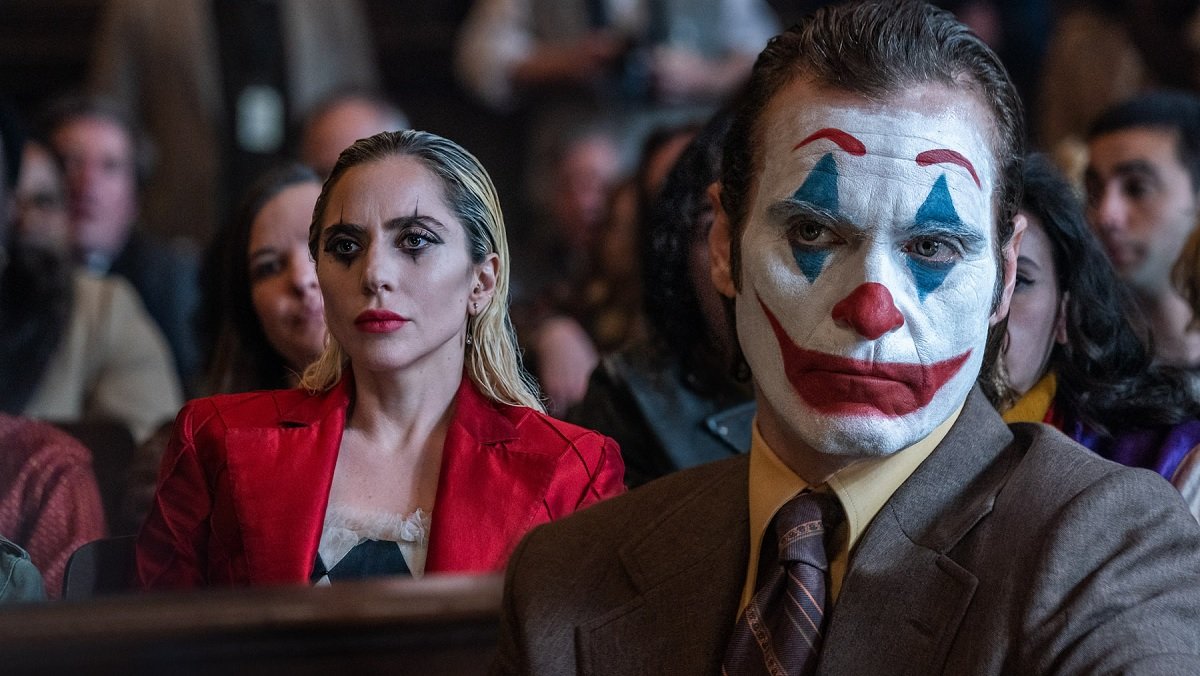
Todd Philips’ 2019 film, Joker, was cinematic Marmite. For every viewer that loved it (and I was firmly in that camp), there was an equal number of comic book fans who detested it, largely because the film had no truck with the conventions of the genre that inspired it. Instead, here was an unflinching exploration of a mentally ill man, abandoned by the healthcare system and ultimately championed by a bunch of deluded followers. It was grubby, brutal and utterly devastating.

Folie à Deux is equally divisive, though this time around what has incensed most social media pundits is the fact that the film is… well, there’s no other way to say this: a musical. In 2024, the genre appears to have fallen into total disrepute with movie fans, to the extent that even films like Wicked are reluctant to depict any actual singing and dancing in their trailers in case it puts off potential viewers.

Go figure.

It’s two years after the events of Joker and Arthur Fleck (Joaquin Phoenix) is languishing in Arkham State Hospital, overseen by callous prison warder Jackie (Brendan Gleeson), who seems to delight in humiliating him at every opportunity. (Interestingly, it’s Jackie who tells the nearest thing to an actual joke in this story and, it has to be said, it’s a corker.)

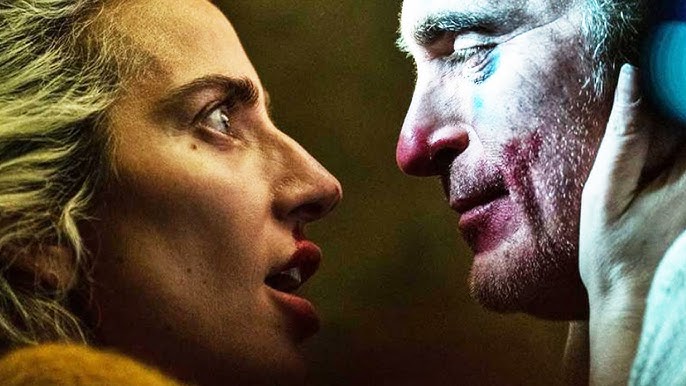
Arthur is fast approaching his day in court, schooled by his defence lawyer Maryanne (Catherine Keener), who is pretty sure that a plea of ‘dissociative identity disorder’ will save him from the death penalty. And then, attending an in-prison musical therapy session where inmates are encouraged to sing their troubles away, Arthur meets Harleen ‘Lee’ Quinzel (Lady Gaga) and, for the first time in his life, he has a reason to want to survive… and to slap that makeup back on his gaunt visage.

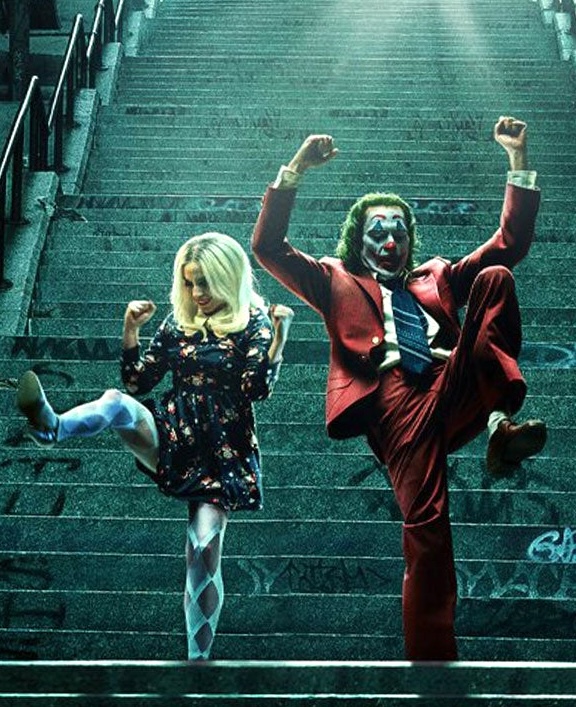
The term ‘musical’ is used quite loosely here. Phoenix and Gaga work their way through a series of solid gold bangers from the likes of Sinatra and Jaques Brel, but it’s made clear from the outset that these sequences occur in the cerebral landscape of Arthur’s head, his way of making sense of what’s happening to him. (Those with long memories may be reminded of Dennis Potter’s Pennies from Heaven, which adopted a similar approach.) A scene where Arthur is being interviewed by TV journalist Paddy Meyers (Steve Coogan) is a good case in point. Midway through the interview, Arthur suddenly breaks into song and dances around his cell – but Paddy remains blissfully unaware of his antics.

Phoenix is an actor of extraordinary ability and he slips into this unfamiliar discipline with his usual aplomb, using his newly slimmed-down frame to accentuate every move. Gaga, who has much more experience in the field, is also sensational, able to imbue an old chestnut like Get Happy with a strangely sinister edge, making me feel that I’m hearing it for the first time. As with the previous film, Philips steadfastly refuses to moderate his approach for the spandex brigade, doubling down on the grime and squalor. Folie à Deux is every bit as unsparing and unforgiving as its predecessor, whilst somehow managing to retain a beautiful humanity.

This may not be the perfectly-honed movie that was Joker, but for my money, it runs it a close second and is far (very far) from the embarrassing misfire that so many are describing it as. Some irate comic fans seem to have been hoping for a rerun of its predecessor, but what would be the point of that? I can’t help feeling they’ve somehow missed the point.

But then, I’m always happy to admit that I love a good musical.

4.6 stars

Philip Caveney
Film Bouquets 2022

2022 was a surprisingly good year for film, although – as cinephiles – it was worrying to note that audiences seemed happy enough to continue watching movies at home after last year’s lockdowns ended. Cinemas were feeling the pinch and there was a lot of talk of this being the end of an era, while others pinned their hope on Avatar: The Way of Water bringing people back in droves. Here at B&B, we’ve always believed that the big screen is the best possible place to watch a movie, so we were delighted to be back in our local multiplex and indie venues. Here’s our selection of the films that have really stayed with us throughout the year.

Belfast

Kenneth Branagh’s semi-autobiographical film was the first must-see of the year – an absolute joy, with a brilliant central performance from newcomer Jude Hill. This film is all about formative experiences, the kind that shape a young boy’s future.

Nightmare Alley

A new film from Guillermo del Toro is always cause for celebration. This bleak, dark tale is the work of a gifted director at the peak of his powers, handling a tricky subject with consummate skill.

Red Rocket

Director Sean Baker’s ability to depict working-class life is his real strength and Red Rocket, powered by astonishing performances by Simon Rex and Suzanna Son, offers a brilliant exploration of Trump’s America.

The Worst Person in the World

Joaquin Trier’s film is a rare beauty, a picaresque tale of life and love in contemporary Oslo. It’s built around a superb, award-winning performance by Renate Reinsve. A film that positively buzzes with invention.

Elvis

Baz Luhrmann’s biopic is a big, brash, noisy exploration of the late singer’s life and times. Against all the odds, Austin Butler makes the role his own and Tom Hank’s portrayal of the sleazy, manipulative Colonel Tom Parker is also right on the button.

Bones and All

Luca Guadadigno’s visceral tale of love and cannibalism is a brilliant reinvention of a well-worn trope which can be seen as an allegory about drug addiction. It’s brilliant stuff, but not for the faint-hearted – by turns romantic and repugnant.

She Said

This searing account of the uncovering of Harvey Weinstein’s crimes by two Washington Post journalists is timely and superbly recreated, with excellent performances from Carey Mulligan and Zoe Kazan in the central roles.

The Banshees of Inisherin

Martin McDonagh’s film is a beautifully observed contemplation of the thankless futility of human existence. This is his best offering since the sublime In Bruges, with wonderful performances from Colin Farrell and Brendan Gleeson.

Aftersun

A gorgeous film, sweetly sad and tinged with tragedy. Debut writer/director Charlotte Wells knocks it out of the park with her first feature, coaxing extraordinary performances from Paul Mescal and Frankie Corio. An absolute must-see.

Guillermo del Toro’s Pinocchio

Not content with one title in our selection, del Toro has two – despite the fact that we had to watch Pinocchio on the small screen. Few films deserve the description ‘masterpiece’ as thoroughly as this one.

Philip Caveney & Susan Singfield

The Banshees of Insisherin

25/10/22

Cineworld, Edinburgh

Last week, I finally managed to catch up with Martin McDonagh’s debut play, The Beauty Queen of Leenane, at the Traverse Theatre – and now here’s his latest cinematic offering, which itself started life as a play, the projected third piece in his Aran Islands trilogy. For various reasons, McDonagh wasn’t happy with it in its original form, so it was never released. He should be delighted, however, with the critical reception for The Banshees of Inisherin, where important voices have been talking about potential Oscar nominations.

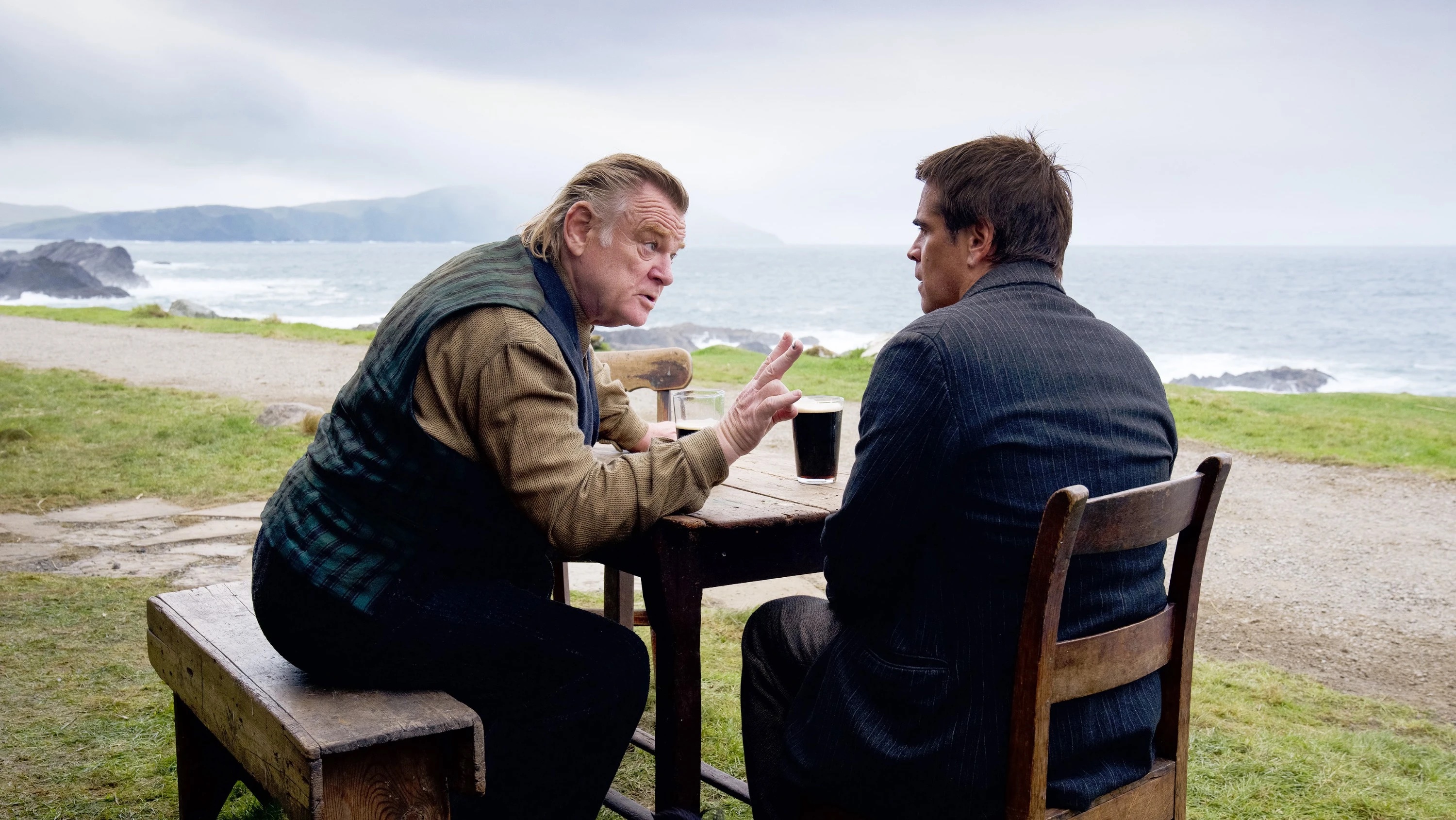
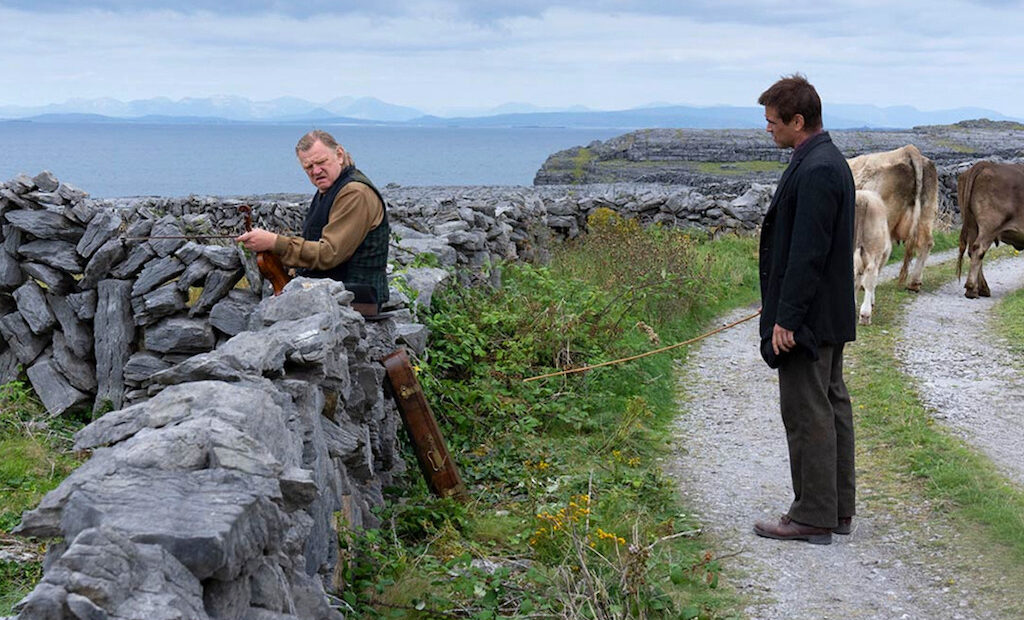
It’s 1923 and the titular island is a remote and inaccessible place. Across the water on the mainland, a civil war is raging and, even from a distance, the sound and fury can be overheard. But here there’s precious little to occupy the inhabitants, who spend their days trying to grub some kind of living from the soil. Pádraic Súilleabháin (Colin Farrell) lives with his sister, Siobhan (Kerry Condon), and he’s a man who likes to follow a routine. Every day at 2 pm, it’s his custom to call on his best friend, Colm Doherty (Brendan Gleeson), and accompany him to the local pub for a couple of pints.

He’s understandably shocked when one day Colm announces that he doesn’t want to be friends with Pádraic anymore. Colm claims that his regular drinking companion is the dullest man on the island and that he wishes to devote the rest of his life to writing his music. Pádraic is never to speak a word to him again – and, if he does, there will be terrible consequences…

Pádraic is hit for six by this announcement and haplessly tries to rescue the situation – but he has no idea how far Colm is prepared to go in order that his edict is followed.

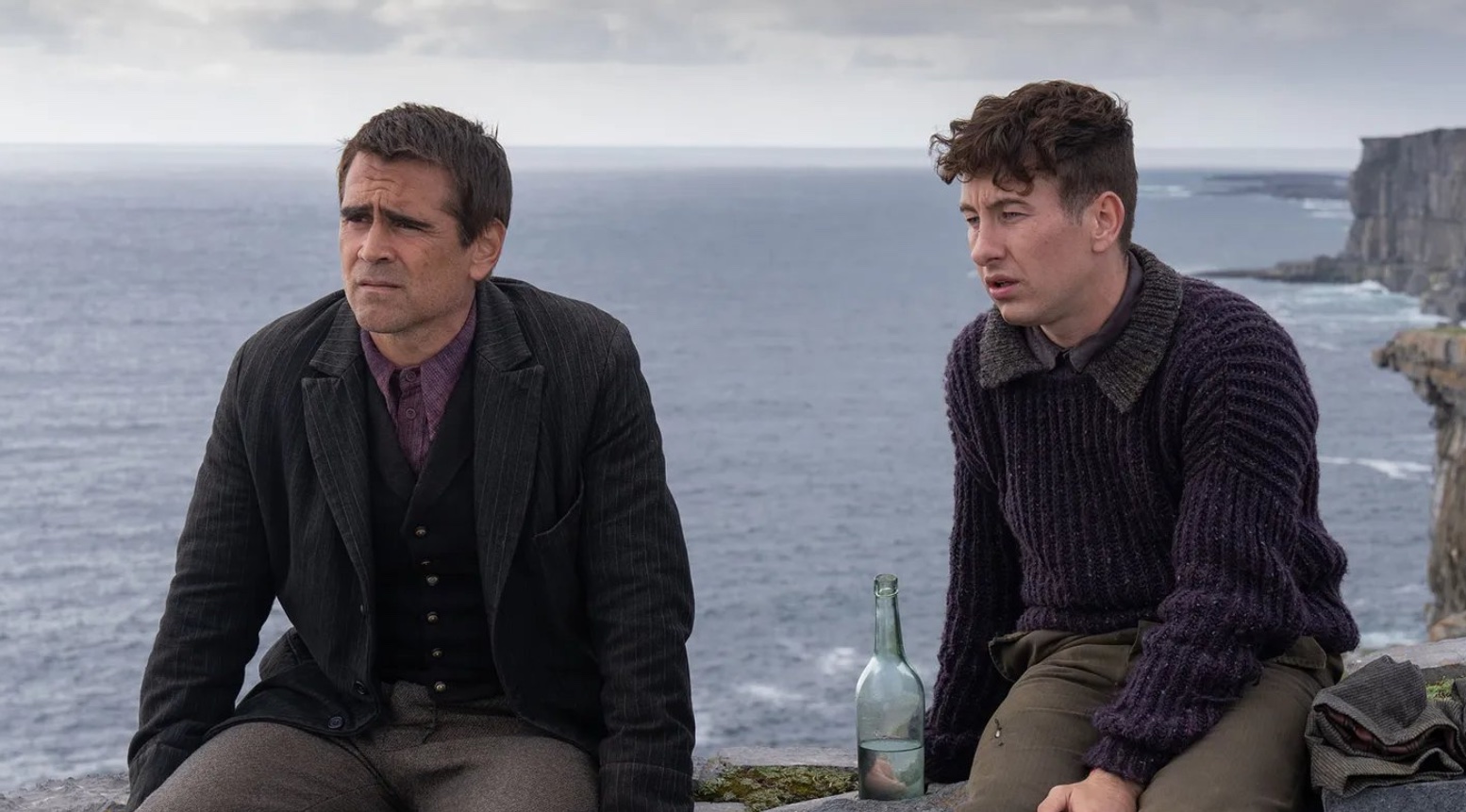
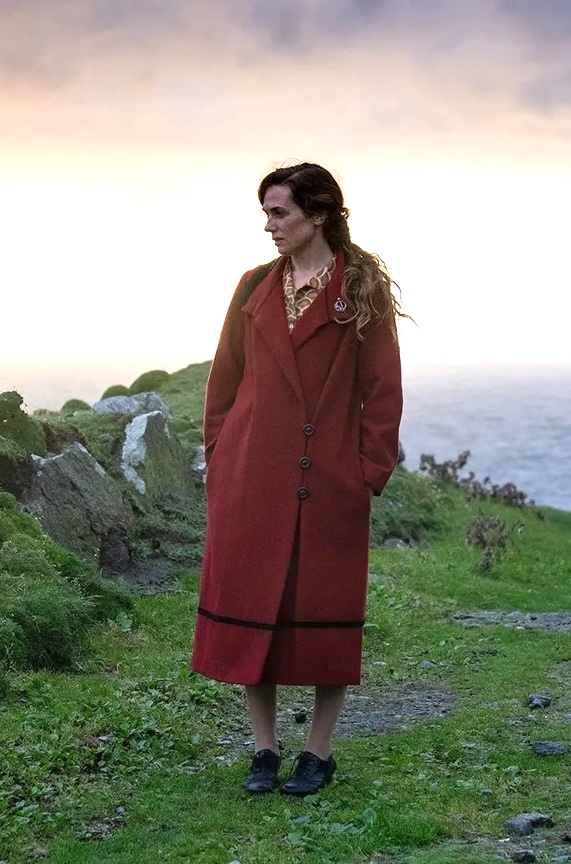
Banshee’s theatrical origins are evident from the opening scenes and it’s clear that here is a piece that could work very effectively on stage, though the beautiful rural settings do help to open the story up to wider horizons. McDonagh’s ear for absurdist black humour has rarely been better and the plot, which sounds slight on paper, is filled with fascinating nuance. McDonagh has plenty to say about the insular psyche of island communities, an unforgiving world where everyone knows everyone else’s business and is happy to discuss it in public. Both Farrell and Gleeson make the most of their acting reunion, fourteen years after In Bruges, though I would suspect Farrell’s performance as the vulnerable Pádraic is the most Oscar-worthy of the two. Both Condon and Barry Keoghan (as, respectively, Siobhan and the tragic Dominic) may be worthy of ‘best supporting’ nods.

The Banshees of Inisherin is a beautifully observed contemplation of the thankless futility of human existence. Colm is stubborn and self-aggrandising, locked in hopeless dreams of being remembered after his death. Pádraic, meanwhile, is incapable of dealing with anything that compromises his preferred schedule.

Only Siobhan has the courage to change her life, but even that simple act – it turns out – has dark consequences.

4.6 Stars

Philip Caveney

Frankie

01/06/21

Cameo Cinema, Edinburgh

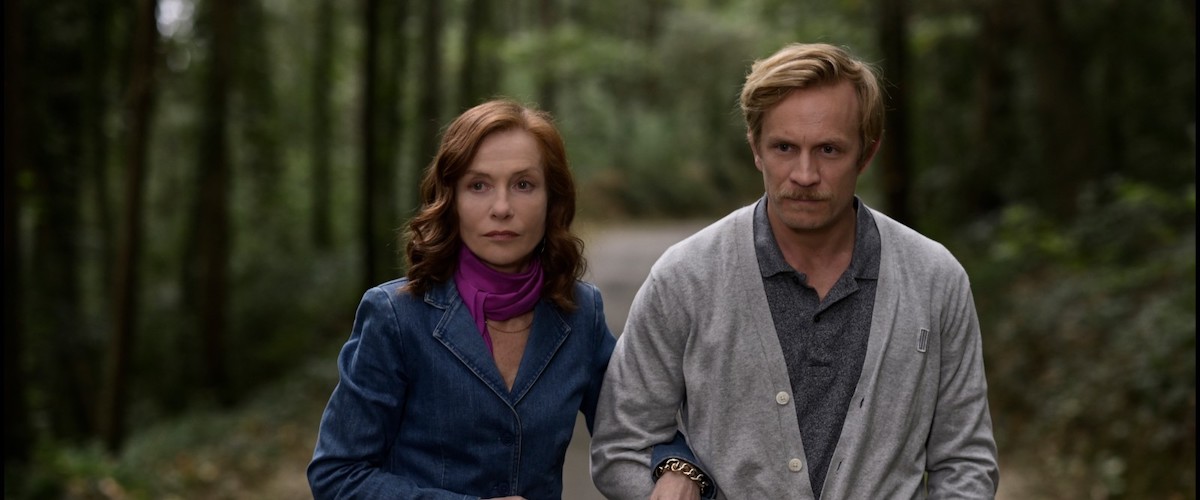
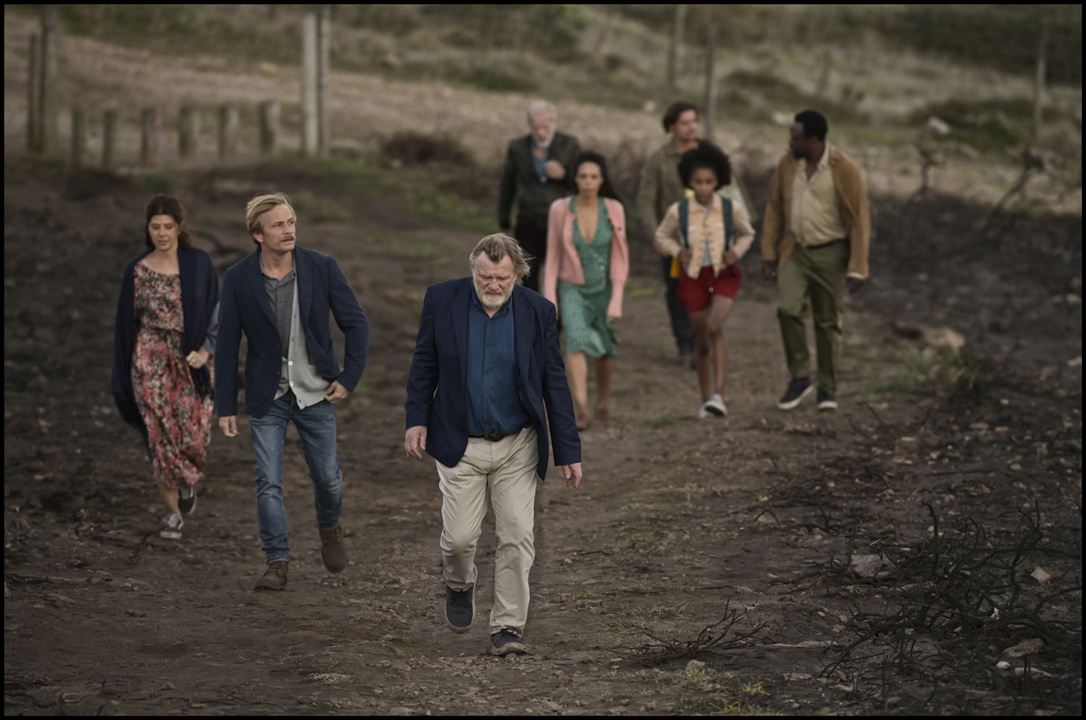
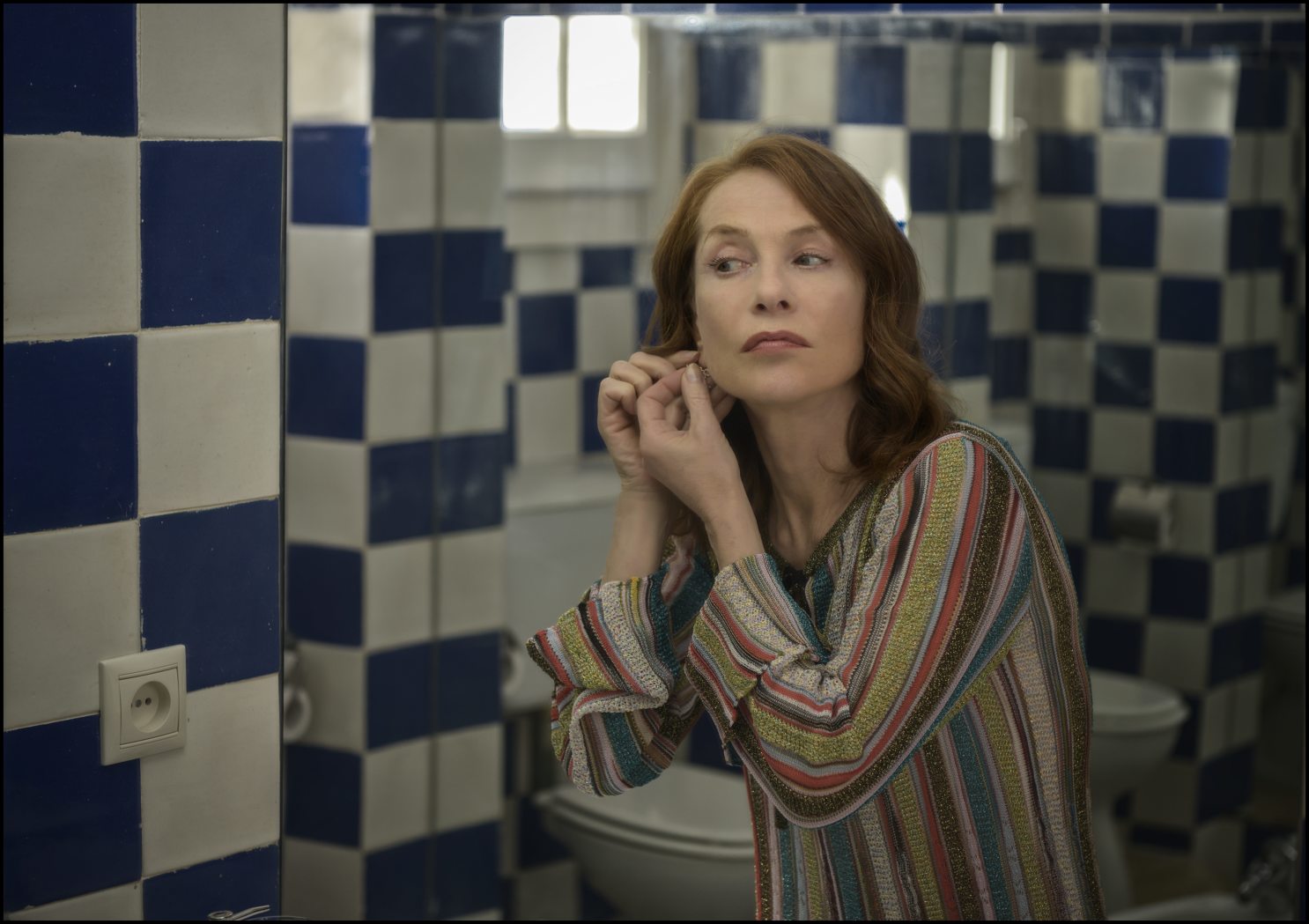
Frankie had its premiere at Cannes in 2019 and, for obvious reasons, has been waiting ever since for a UK release. Finally, here it is in all its underwhelming glory. Starring the seemingly ageless Isabelle Huppert in the title role, this is the story of a successful film and TV actor (so no stretch there) who, when she finds herself stricken by incurable cancer, summons her extended family for one last vacation in Sintra, an idyllic beach location in Portugal.

She’s accompanied by (amongst others) her husband, Jimmy (Brendan Gleeson), her wayward son, Paul (Jérémie Renier), her former husband, Michel (Pascal Greggory), and her close friend, Ilene (Marisa Tomei), who, we are told, works in the film industry, currently on Star Wars. Frankie appears to be hatching a scheme to matchmake Paul and Ilene, so it’s a bit of a nuisance when she turns up with a boyfriend in tow, cinematographer Gary (Greg Kinnear) – and even more of problem when he proposes. But Frankie is skilled at manipulating the lives of those who love her and she likes nothing so much as a challenge…

Ira Sach’s languorous film is a melancholy affair that sets a bunch characters down in an idyllic location, and then fails to give them enough to do. They interact with each other, but no great drama is generated through their conversations and not much in the way of interest, either. Frankie is a siren figure, the brilliant star around which all the others circle like satellites. As Jimmy says in a key moment, he cannot really envisage any sort of life ‘after Frankie’ and nor, it seems, can the rest of them. But is this enough to create a satisfying movie? Well, no, not really, especially when some of the characters remain enigmas.

Frankie’s daughter, Sylvia (Vinette Robinson), for instance, is going through a separation from her husband, Ian (Ariyon Bakare), but we’re never really sure why – and we learn even less about their teenage daughter, Maya (Sennia Nanua), other than the fact that she likes to spend time on the beach. (But then, who doesn’t, especially in a place like Sintra?) Huppert is as enigmatic as ever, giving an almost ethereal performance – although for somebody succumbing to the ravages of cancer, she appears to be in perfect health.

Ultimately, this is pleasant enough, but it fails to kindle enoughof sparks to set the proceedings alight.

2.9 stars

Philip Caveney
Paddington 2

10/11/17

Paddington is a tough act to follow. That first film got everything right – a family entertainment that really did have something for everyone. It was also highly successful, so of course there was always going to be a sequel. The modestly titled Paddington 2 says it all. Not Paddington Episode Two, or Paddington Rides Again. No, this does exactly what it says on the tin –  a second adventure featuring Michael Bond’s celebrated ursine hero.

But, can it hope to be as good as its progenitor? The fact that the film’s release has been delayed for a month while the production company scrambles to disassociate itself from a certain Harvey Weinstein doesn’t augur well but, against all the odds, this second installment of the franchise manages to unfold its delightfully silly story without putting a single paw wrong.

The film opens with a flashback to darkest Peru, where Uncle Pastuzu (Michael Gambon) and Aunt Lucy (Imelda Staunton) first encounter the orphaned bear cub who will become Paddington – and we discover that Aunt Lucy has a longheld ambition to visit the city of London. After the credits we nip smartly back to the present day, where Paddington is now a valued member of the Brown family, helping Henry (Hugh Bonneville), Mary (Sally Hawkins), Jonathan (Samuel Joslin) and Judy (Madeleine Harris). He’s also fitting in nicely with the community of the street on which he lives – cue plenty of cameos from what seems like scores of celebrated comic actors.

But with Aunt Lucy’s 100th birthday approaching, Paddington is looking for a suitable present for his beloved aunt so, when his friend, Mr Gruber, (Jim Broadbent) who runs the local antique shop, shows him a charming (and rather expensive) pop-up book of the city, Paddington resolves to earn enough money to buy it for her. To this end, he tries his hand at window cleaning and barbering, both with suitably hilarious results. Then, by chance, his path crosses with that of has-been actor, Phoenix Buchanan (Hugh Grant), who, it transpires, wants the pop-up book for his own nefarious purposes…

Once again, the screenwriters have managed to capture the spirit of Michael Bond’s evergreen tales, presenting us with a storyline that will have people of all ages laughing uproariously – when they’re not clutching for their handkerchieves. Yes, this is undoubtedly manipulative stuff, but it’s done with such style and such sure-footedness, that you cannot help but be swept along. Scenes where the unthinkable happens and Paddington is actually sentenced to a spell in jail will have the hardest heart breaking into tiny pieces – and the little bear’s developing friendship with prison chef Knuckles McGinty (the ever dependable Brendan Gleeson) is a brilliant conceit which occasionally yields comedy gold.

It doesn’t end there. Paddington 2 is endlessly inventive (scenes where the little bear and his aunt cavort amidst a pop-up recreation of the city of London are a particular highlight). Perhaps the biggest surprise here is Hugh Grant (who, weirdly, we think we spotted walking a tiny dog near Rosslyn Chapel a couple of weeks ago). His turn as the self-obsessed Phoenix Buchanan is one of his best performances ever and he very nearly steals the show from the titular bear – still endearingly voiced by Ben Whishaw.

When you witness some of the absolute dross that passes for ‘family entertainment’ these days, it’s reassuring to see something as lovingly crafted as this. The next question? Can they do it a third time? Well, that remains to be seen. Meanwhile, this will do very nicely indeed.

5 stars

Philip Caveney

Hampstead

25/06/17

Well, we can’t say we haven’t been warned. Reviewers of Hampstead are mostly unimpressed by this based-on-real-life wannabe rom-com, which tells the tale of Donald Horner (Brendan Gleeson), a vagrant who builds a shack on Hampstead Heath, and his unlikely relationship with Emily Walker (Diane Keaton), an American widow in financial straits. Indeed, Wendy Ide, writing for The Guardian, goes so far as to call it “a ghastly faux-mance,” while Peter Bradshaw, in the same newspaper, notes ruefully that “Richard Curtis’s style of comedy drama is very difficult to imitate.” But it’s The Telegraph’s Robbie Collins who really skewers the movie with a one-star review and the acerbic observation that “Donald’s tumbledown cabin has its own well-stocked lake and an immaculate kitchen garden – when Emily pops around for a cosy diner à deux, there’s fresh salad served in a wooden bowl, grilled fish, and wine served in elegant stemware – while his vagrant’s beard is so well-conditioned it could win a prize at Crufts.” And, while my socialist leanings mean I never thought I’d side with anyone writing for this particular Tory rag, I find I just can’t argue with him.

Okay, I can argue a bit. I think the single star is a little unfair. The acting is, for the most part, really very good (Keaton and Gleeson are both extremely engaging, while Lesley Manville somehow manages to transcend her role, which is, it seems, ‘under-developed cypher, with a bit of secretly-tragic rich bitch thrown in’). The plot is nicely stitched together, holding our attention throughout. But… oh dear. This is very much an outsider’s view of poverty, a romanticised vision of the ‘authenticity’ that being poor provides. What it reminds me of most is the Noel Streatfeild novels I read as a child, which I both loved and derided, amused as I was by their privileged depiction of what it meant to be poor. “They’ve got no money,” I’d tell my mum, raising my seven-year-old eyebrows. “So they’re down to just a couple of servants, a nanny and a cook and some woman who comes in from the village now and again. And they’ve got to take in lodgers, because they’ve got this massive house. So there’re a couple of university professors and an opera singer all sharing the space. They can’t afford their places at ballet school, so they have to get scholarships.” And then we’d laugh, putting on ‘posh’ voices, and braying, “How on earth are we supposed to manage, dahling, with just a nanny and a cook?” Well, we found it funny anyway. Maybe you had to be there.

I understand the comparisons to Richard Curtis, but I think they miss something important. It’s not just that he’s better at it (funnier, more charming), but that he doesn’t pretend to be making a social point. His films are unabashedly about those who have it all: they’re frothy, unrealistic depictions of a London that doesn’t really exist, but they don’t claim to be anything else. Hampstead has pretentions toward social commentary, but it doesn’t understand its own material.

It’s not just the improbably delightful home that Donald has constructed from old windows and planks of wood, it’s Emily’s so-called money worries that make me pause for breath. “After I’ve sold the flat and paid off all the debts,” she sobs, “I’ll be left with a little bit, not much, but enough to get me something small outside London, maybe.” Enough, it turns out, to buy a sizeable beamed cottage next to a river on the outskirts of a picturesque Cotswolds village. Ah, that kind of ‘little bit.’ Poor Emily. And after all the hard work she’s never done and the jobs she’s never had. Surely she deserves more than this? (Actually, she does seem to have travelled back in time to the 1960s – well, it is outside London, so what do I expect? – maybe the property prices hark back to that time too?)

In the end, sadly, Hampstead is just a load of ill-informed nonsense, and there’s not much to be said in its defence. The true story it’s based on must have been much grimier and more interesting, and it’s a real shame we can’t get to the nub of it. The rose-tinted worldview we are presented with here is far too shallow to convey the important truths that are hinted at but never properly explored.

2.4 stars

Susan Singfield

Live By Night

18/01/17

Ben Affleck has already proved his worth as a director – Gone Baby Gone and Argo are just two examples that spring to mind – and adaptations of the novels of Dennis Lehane have already yielded cinematic gold on several occasions, so it’s hard to pin down exactly why Live By Night fails to measure up to expectation. It’s a handsomely mounted production, its 1920s setting lovingly evoked and there’s a stellar cast in evidence, with the likes of Brendan Gleeson, Chris Cooper and Elle Fanning submitting strong performances in what amount to little more than cameo roles. But there’s an overpowering conviction that the film is simply trying to cover too many bases for its own good, that a simpler, more linear narrative  would have exerted a stronger grip on its intended audience.

Affleck plays Irish-American Joe Coughlin, an ‘outlaw’ with his own moral code. As he puts it, he doesn’t mind working for gangsters, he just doesn’t want to be one. Which is, it has to be said,  a fairly nebulous difference. After a violent brush with New York Irish mob boss, Albert White (Robert Glenister), results in a lengthy stay in the chokey, Coughlin goes to work for the Italian mob, run by Maso Pescatore (Remo Girone) and finds himself relocating to Florida, where he becomes a major player in the burgeoning rum-running business. He also romances and marries Graciela (Zoe Saldana) and it begins to look as though a pleasant future is assured for both of them. But when Pescatore’s plans for a big casino go awry (largely because of Joe’s refusal to be as villainous as he actually needs to be), it soon becomes clear that there will be the inevitable deadly reckoning…

This is by no means a terrible film and, every now and then, events do spark into fitful life. An early car chase featuring vintage automobiles is decent enough and Elle Fanning’s role as a former heroin addict who turns to religion for salvation is briefly diverting, but too often events become bogged down in a lot of talking and not enough action. And the screenplay seems to want to have a bit of everything, involving as it does the Ku Klux Klan, Latin American swing music and whatever else happens to be wandering across the cinematic horizon. Even the film’s climactic shootout is followed by another half hour of loose ends being tied, all of which goes to dilute its appeal.

Which is a shame because it’s evident that much love and care has gone into the making of Live By Night. A stronger hand in the editing booth would probably have delivered a different viewing experience but, as it stands, this is to be filed under M for ‘Meh.’

3.4 stars

Philip Caveney