The Banshees of Inisherin

Wild Horse Nine

05/11/26

Cineworld, Edinburgh.

Director Martin McDonagh has followed an unusual path to filmmaking. He first established his reputation as a playwright in the early 90s with the Leenane trilogy – and more plays followed before he made an assured transition onto the big screen with In Bruges in 2008. This dark but hilarious first feature remains one of my all-time favourite movies. It established the fact that Colin Farrell can act – something he hadn’t really been called upon to do before this point – and, if there’s a more quotable script out there, I’ve yet to discover it.

The films that followed have been variable in quality and I’m sure I’m not the only cinema-goer who favours the Irish-centred projects over the American ones. 2012’s Seven Psychopaths, for instance, felt like a complete misfire. But McDonagh’s last release, The Banshees of Inisherin, reunited Farrell with his In Bruges partner, Brendan Gleeson, and the result was impressive.

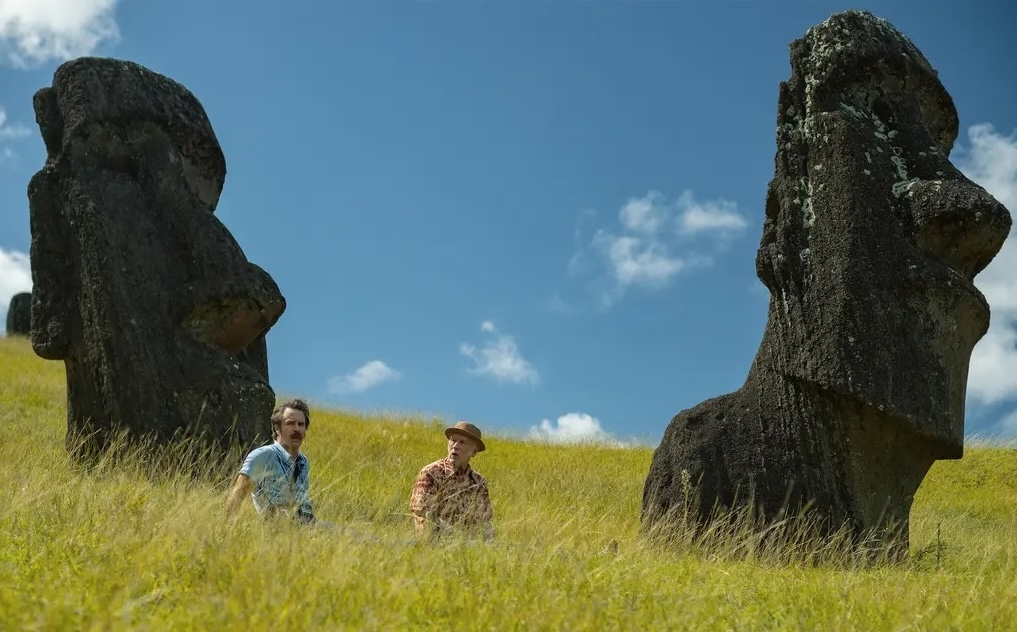
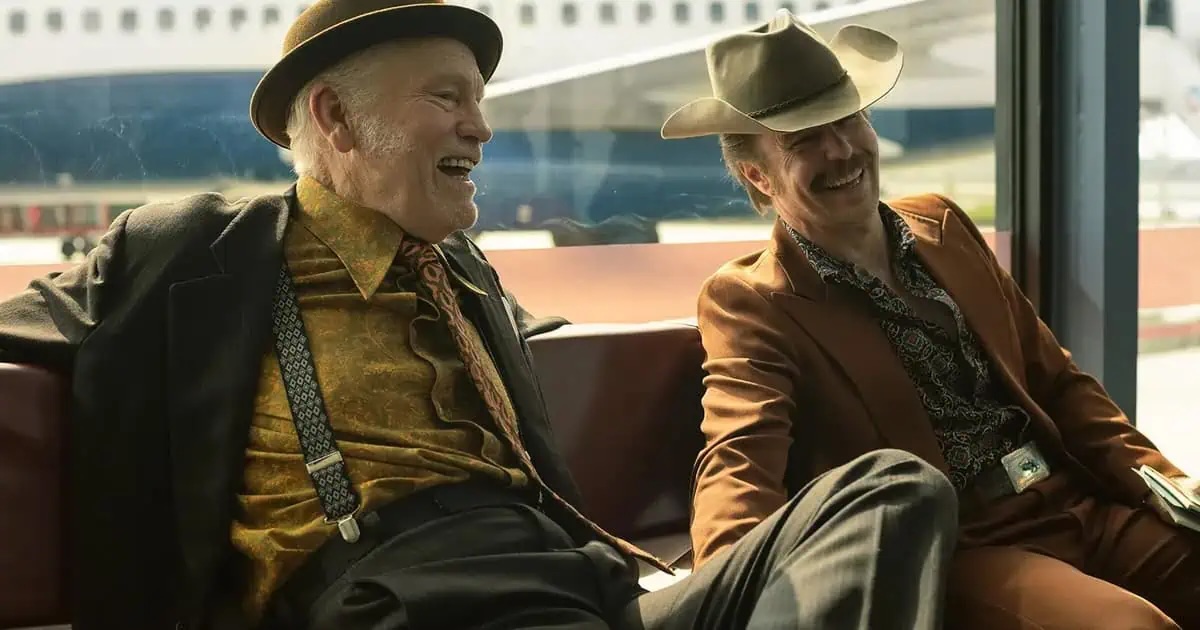
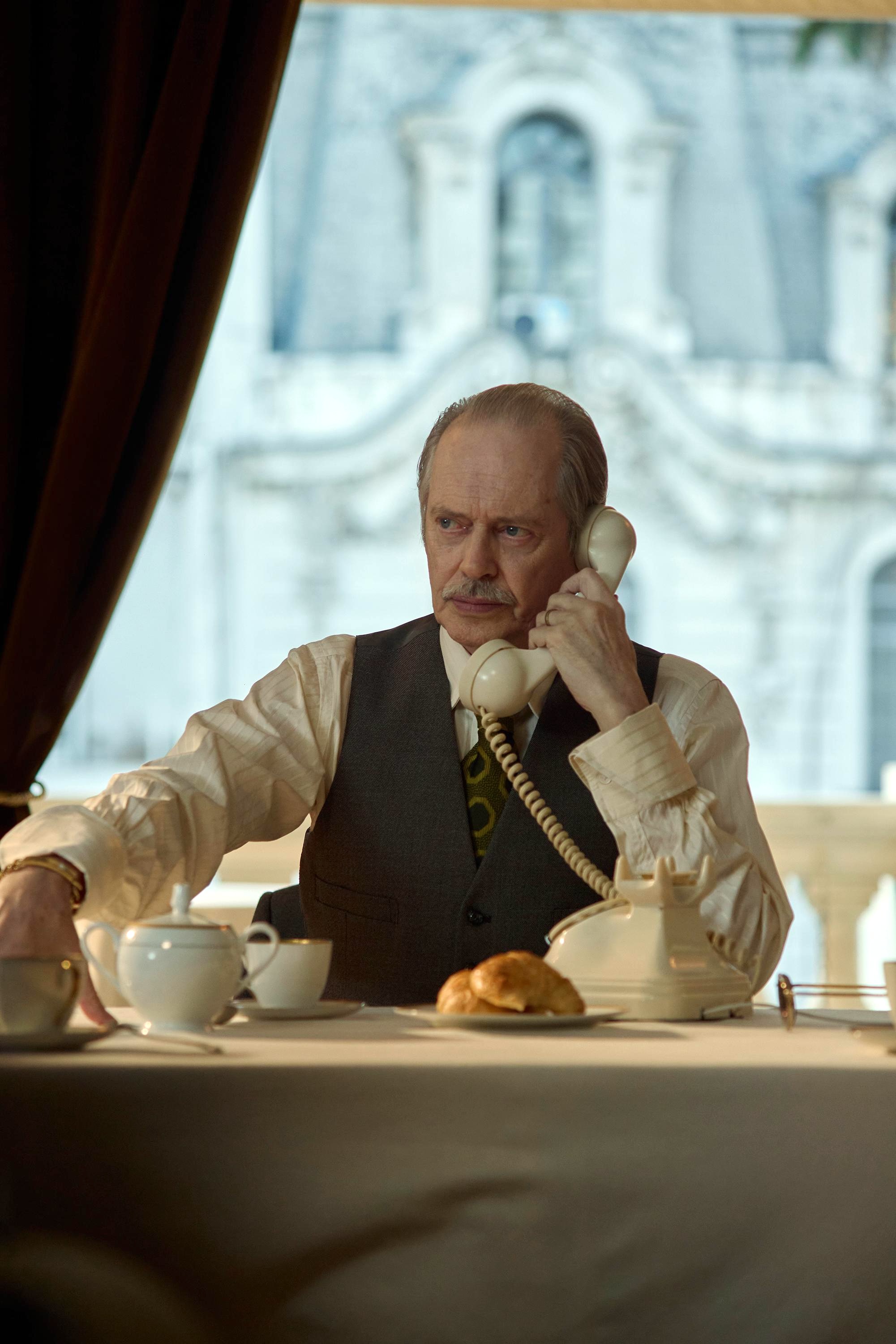
Wild Horse Nine is set in neither Ireland nor the USA. It’s 1973 and CIA hit men Chris (John Malkovich) and Lee (Sam Rockwell) are based in Santiago, quietly meddling with the left-wing government of President Allende, which is now only months away from the military junta that will result in the deaths of thousands of people. Chris has terminal cancer and, as his illness deepens, he’s become prone to shooting his mouth off about all kinds of things that are supposed to be top secret. So the duo’s exasperated boss, MJ (Steve Buscemi), dispatches them to Easter Island (or Rapa Nui, to use its indigenous name).

For one thing, Chris has always expressed an interest in seeing ‘the big heads’ before his time is up. And for another, well, what harm can he possibly do in such a remote location?

Lee is uncomfortably aware that MJ is expecting him to ‘take care’ of Chris if he steps too far out of line; meanwhile, Lee’s serially unfaithful wife Marge (Parker Posey) keeps phoning him up, complaining of mysterious break-ins at the family home. Chris’s outpourings have lately turned towards awkward mentions of one particular CIA operation that took place back in 1963… and the CIA needs him to shut the fuck up.

The film focuses on a dynamic that McDonagh has always been adept at capturing on film: the intense and fluctuating relationships between men with a propensity for violence. Indeed, this does play out like an older, more jaded version of In Bruges, with the two main characters’ roles reversed. Here, it’s the older man who is the most unpredictable, the younger who is required to step up and take care of any problems. Some of the scenes play out like alternative versions of what has gone before, as if McDonagh’s own advancing years have afforded him a new perspective.

Both Malkovich and Rockwell are in great form and much of their dialogue – while not quite of the insanely rollicking calibre of In Bruges – is acerbically funny. The female roles are less well served. Posey doesn’t have an awful lot to do as the awful Marge, though Mariana di Girolamo as young student, Monika, does at least manage to make the most of her scenes – and there’s a vague father-daughter vibe between Monika and Chris that adds a little warmth to what is essentially a cold-hearted tale. Cinematographer Ben Davis captures Rapa Nui in all its weird majesty and the 1970s period stylings are convincingly done. For my money this is a step down from Banshees but a step up from 3 Billboards Outside Ebbing, Missouri. How well it will fare at the box office is another matter.

Oh, and for nit-picky types like me, I’ll ask one question. Rifle and suitcase? Could the former really fit inside the latter? Answers on a postcard, please.

4.3 stars

Philip Caveney

In the Land of Saints and Sinners

07/04/24

Netflix

In recent years, Liam Neeson’s film output seems to have evolved into a series of geri-action brawls, so In the Land of Saints and Sinners comes as something of a breath of fresh air. Not that it doesn’t feature plenty of action – it does. But it’s also a deceptively gentle, almost pastoral, sort of film that has the good sense to show us enough about its many characters to make us care what happens to them.

Written by Mark Michael McNally and Terry Loane, the story takes place largely in the tranquil setting of Glencomcille, County Donegal. It’s 1976 and Finbar Murphy (Neeson) is a pillar of the community, kind, gentle and always ready to help anyone in trouble. He’s best friends with the local garda officer Vinnie (Ciarán Hinds) and enjoys a chaste but tender relationship with his neighbour, Rita (Niamh Cusack). But like many freelancers, Finbar has hidden depths.

Since the death of his wife, he’s worked for local crime kingpin, Robert McQue (Colm Meaney), helping to rid him of his enemies by taking them to a tranquil nook, despatching them with his trusty shotgun and burying them deep. He always plants a tree to commemorate each shooting and there are a lot of saplings in evidence.

But his latest victim (another contract killer)’s final words strike a chord with Finbar and make him think wistfully about abandoning this lucrative sideline and doing something less stressful. He asks McQue to pass on his cleaning-up duties to eager young hotshot, Kevin (Jack Gleeson), and McQue reluctantly agrees. But it isn’t long before the actions of nasty piece of work, Curtis June (Desmond Eastwood), recall Finbar to his former endeavours. Curtis is the brother of Doireann (Kerry Condon), a member of the provisional IRA, who, with two other members of her unit, is currently hiding out in in Glencomcille after fleeing a bombing incident in Belfast. Doireann is a force to be reckoned with and it’s clear that the tranquility of this sleepy suburb is soon to be rudely interrupted…

Though the ever-present threat of violence does inevitably build to a bloody conclusion, what really works for the film are the moments that lead up to it. Neeson is great here, as a kind, caring and avuncular character, always ready to do what has to be done when the situation demands it. He’s surrounded by the cream of Irish talent, not least Condon (a recent Oscar-winner, lest we forget, for The Banshees of Inisherin), who imbues Doireann with a fierce and unrelenting determination to destroy anyone reckless enough to stand in her way. Gleeson’s Kevin is also a revelation, a kid who’s never been treated kindly and who nurtures a hopeless ambition to go to California where, he’s been told, peace and love are currently in the air. Mind you, all the characters in this drama have the resonance of real people and that’s one of the elements that makes it work so effectively.

Director Robert Lorenz uses the majestic landscape of Donegal to the film’s advantage, counterpointing scenes of stark violence with the beauty and serenity of nature. It all makes for something far more nuanced than I’d normally expect to find in this genre – and ensures that the tragedy of its brutal conclusion is all the more affecting.

4.2 stars

Philip Caveney

Film Bouquets 2022

2022 was a surprisingly good year for film, although – as cinephiles – it was worrying to note that audiences seemed happy enough to continue watching movies at home after last year’s lockdowns ended. Cinemas were feeling the pinch and there was a lot of talk of this being the end of an era, while others pinned their hope on Avatar: The Way of Water bringing people back in droves. Here at B&B, we’ve always believed that the big screen is the best possible place to watch a movie, so we were delighted to be back in our local multiplex and indie venues. Here’s our selection of the films that have really stayed with us throughout the year.

Belfast

Kenneth Branagh’s semi-autobiographical film was the first must-see of the year – an absolute joy, with a brilliant central performance from newcomer Jude Hill. This film is all about formative experiences, the kind that shape a young boy’s future.

Nightmare Alley

A new film from Guillermo del Toro is always cause for celebration. This bleak, dark tale is the work of a gifted director at the peak of his powers, handling a tricky subject with consummate skill.

Red Rocket

Director Sean Baker’s ability to depict working-class life is his real strength and Red Rocket, powered by astonishing performances by Simon Rex and Suzanna Son, offers a brilliant exploration of Trump’s America.

The Worst Person in the World

Joaquin Trier’s film is a rare beauty, a picaresque tale of life and love in contemporary Oslo. It’s built around a superb, award-winning performance by Renate Reinsve. A film that positively buzzes with invention.

Elvis

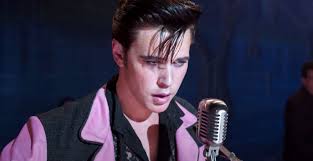
Baz Luhrmann’s biopic is a big, brash, noisy exploration of the late singer’s life and times. Against all the odds, Austin Butler makes the role his own and Tom Hank’s portrayal of the sleazy, manipulative Colonel Tom Parker is also right on the button.

Bones and All

Luca Guadadigno’s visceral tale of love and cannibalism is a brilliant reinvention of a well-worn trope which can be seen as an allegory about drug addiction. It’s brilliant stuff, but not for the faint-hearted – by turns romantic and repugnant.

She Said

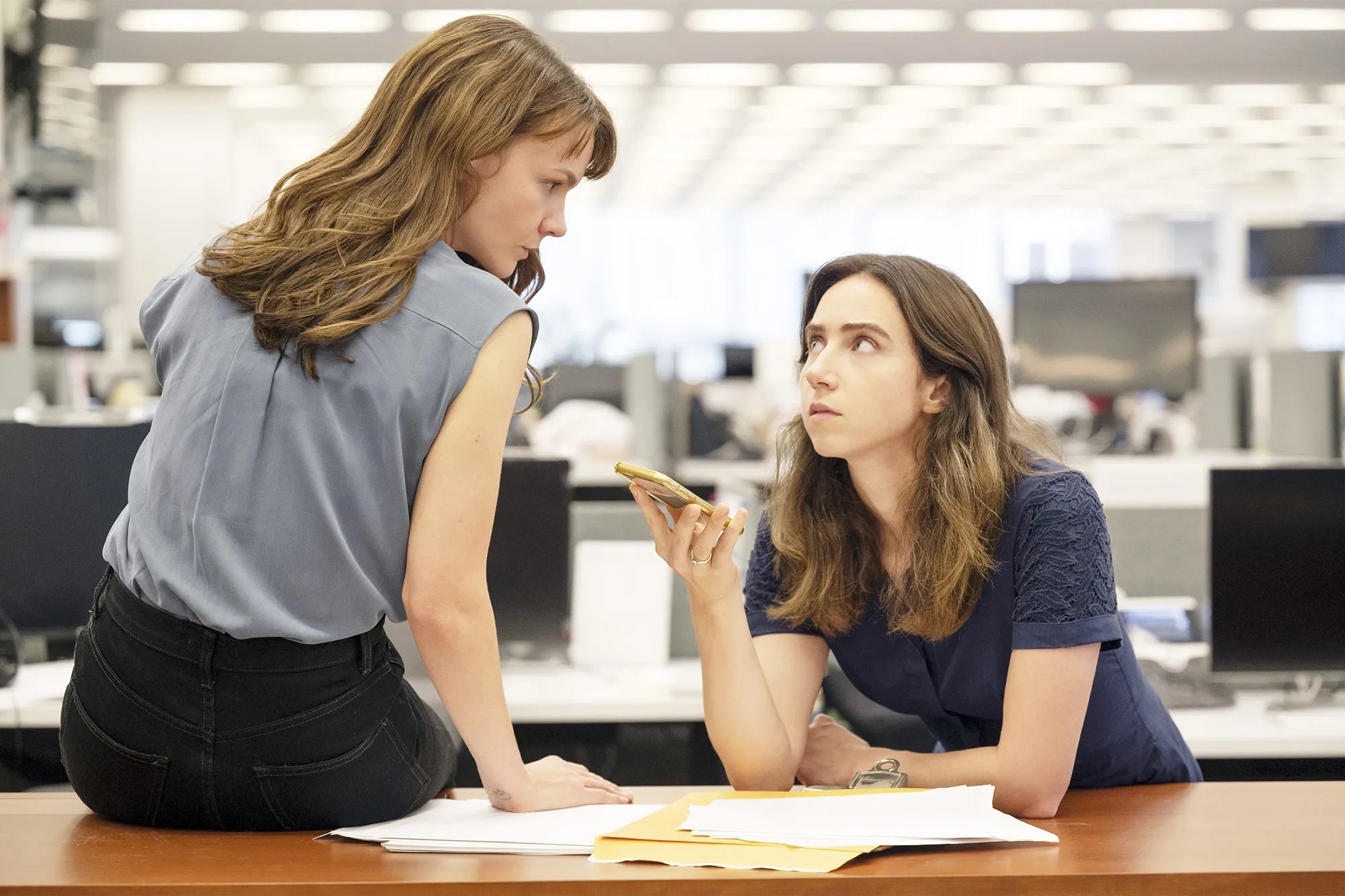
This searing account of the uncovering of Harvey Weinstein’s crimes by two Washington Post journalists is timely and superbly recreated, with excellent performances from Carey Mulligan and Zoe Kazan in the central roles.

The Banshees of Inisherin

Martin McDonagh’s film is a beautifully observed contemplation of the thankless futility of human existence. This is his best offering since the sublime In Bruges, with wonderful performances from Colin Farrell and Brendan Gleeson.

Aftersun

A gorgeous film, sweetly sad and tinged with tragedy. Debut writer/director Charlotte Wells knocks it out of the park with her first feature, coaxing extraordinary performances from Paul Mescal and Frankie Corio. An absolute must-see.

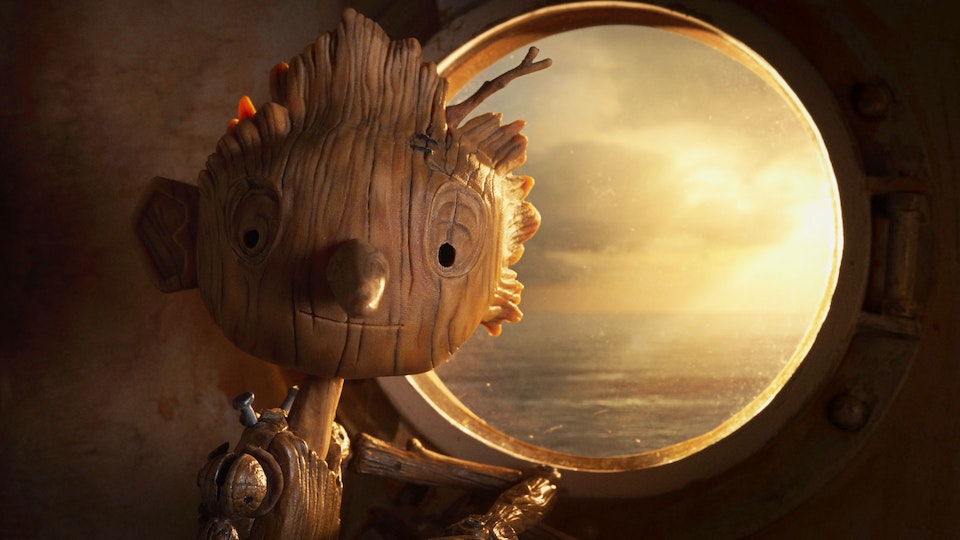
Guillermo del Toro’s Pinocchio

Not content with one title in our selection, del Toro has two – despite the fact that we had to watch Pinocchio on the small screen. Few films deserve the description ‘masterpiece’ as thoroughly as this one.

Philip Caveney & Susan Singfield

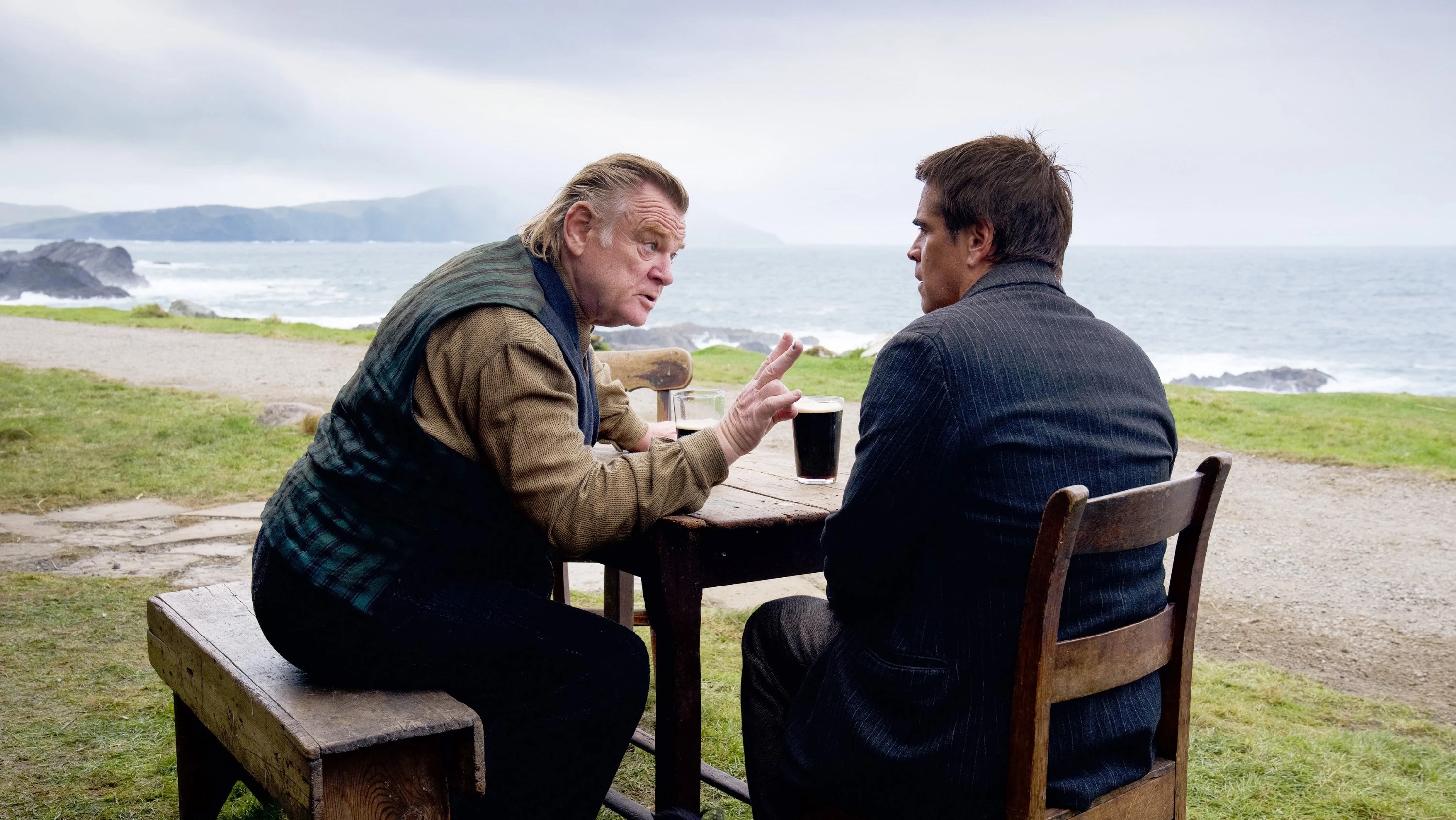
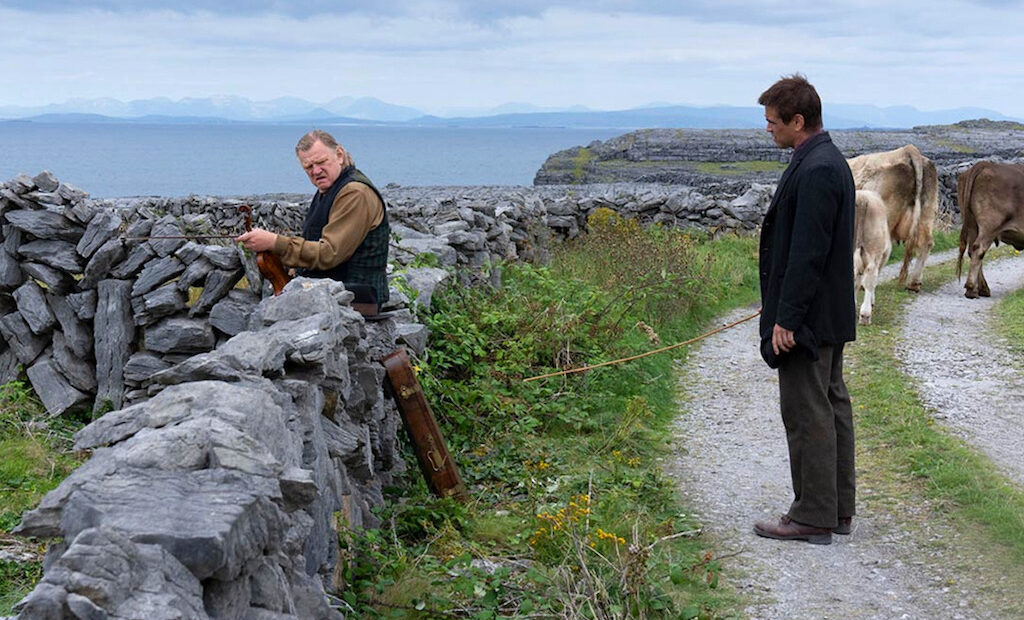
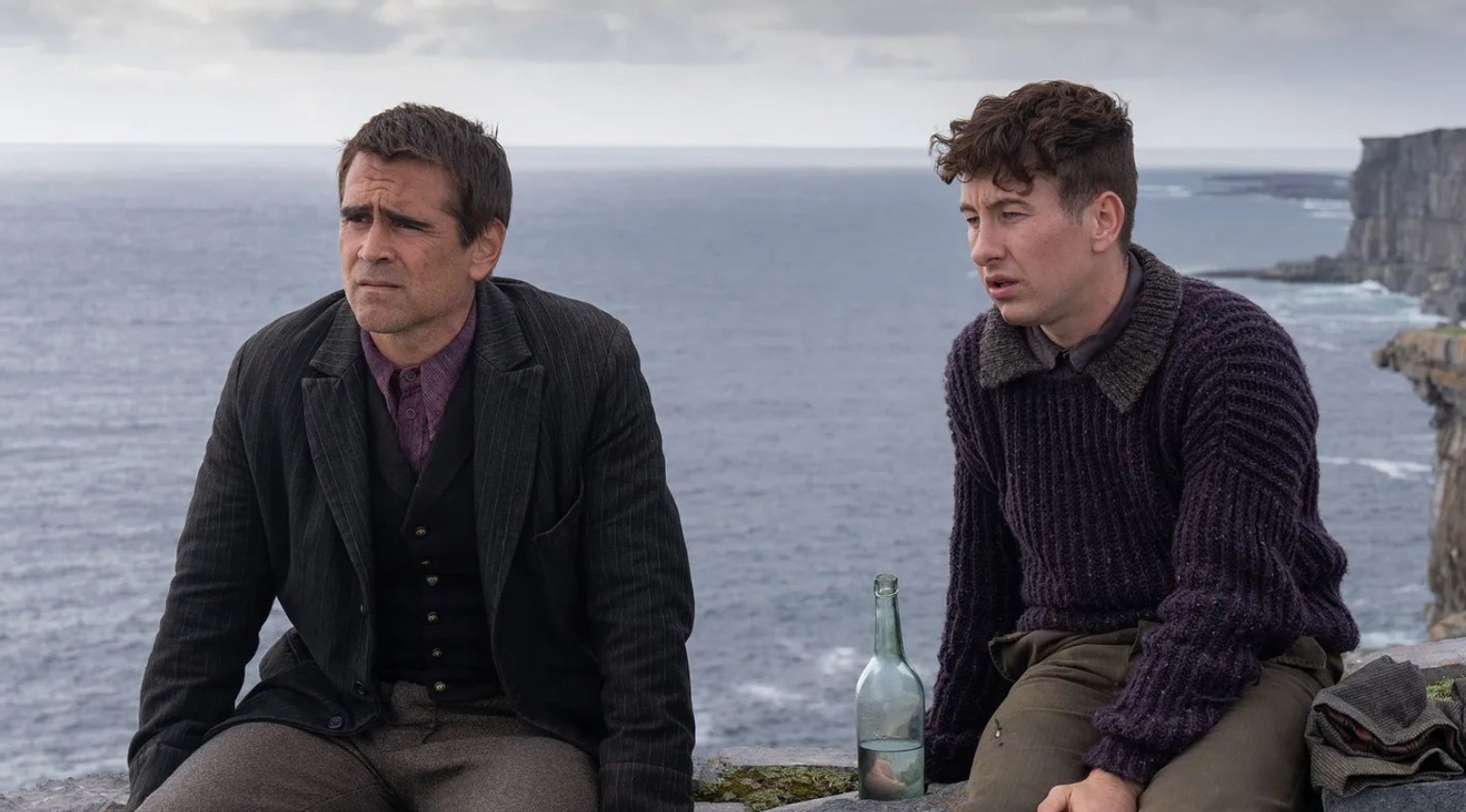
The Banshees of Insisherin

25/10/22

Cineworld, Edinburgh

Last week, I finally managed to catch up with Martin McDonagh’s debut play, The Beauty Queen of Leenane, at the Traverse Theatre – and now here’s his latest cinematic offering, which itself started life as a play, the projected third piece in his Aran Islands trilogy. For various reasons, McDonagh wasn’t happy with it in its original form, so it was never released. He should be delighted, however, with the critical reception for The Banshees of Inisherin, where important voices have been talking about potential Oscar nominations.

It’s 1923 and the titular island is a remote and inaccessible place. Across the water on the mainland, a civil war is raging and, even from a distance, the sound and fury can be overheard. But here there’s precious little to occupy the inhabitants, who spend their days trying to grub some kind of living from the soil. Pádraic Súilleabháin (Colin Farrell) lives with his sister, Siobhan (Kerry Condon), and he’s a man who likes to follow a routine. Every day at 2 pm, it’s his custom to call on his best friend, Colm Doherty (Brendan Gleeson), and accompany him to the local pub for a couple of pints.

He’s understandably shocked when one day Colm announces that he doesn’t want to be friends with Pádraic anymore. Colm claims that his regular drinking companion is the dullest man on the island and that he wishes to devote the rest of his life to writing his music. Pádraic is never to speak a word to him again – and, if he does, there will be terrible consequences…

Pádraic is hit for six by this announcement and haplessly tries to rescue the situation – but he has no idea how far Colm is prepared to go in order that his edict is followed.

Banshee’s theatrical origins are evident from the opening scenes and it’s clear that here is a piece that could work very effectively on stage, though the beautiful rural settings do help to open the story up to wider horizons. McDonagh’s ear for absurdist black humour has rarely been better and the plot, which sounds slight on paper, is filled with fascinating nuance. McDonagh has plenty to say about the insular psyche of island communities, an unforgiving world where everyone knows everyone else’s business and is happy to discuss it in public. Both Farrell and Gleeson make the most of their acting reunion, fourteen years after In Bruges, though I would suspect Farrell’s performance as the vulnerable Pádraic is the most Oscar-worthy of the two. Both Condon and Barry Keoghan (as, respectively, Siobhan and the tragic Dominic) may be worthy of ‘best supporting’ nods.

The Banshees of Inisherin is a beautifully observed contemplation of the thankless futility of human existence. Colm is stubborn and self-aggrandising, locked in hopeless dreams of being remembered after his death. Pádraic, meanwhile, is incapable of dealing with anything that compromises his preferred schedule.

Only Siobhan has the courage to change her life, but even that simple act – it turns out – has dark consequences.

4.6 Stars

Philip Caveney