The Legend of Sleepy Hollow

09/11/21

Kings Theatre, Edinburgh

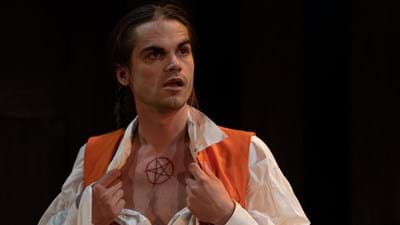
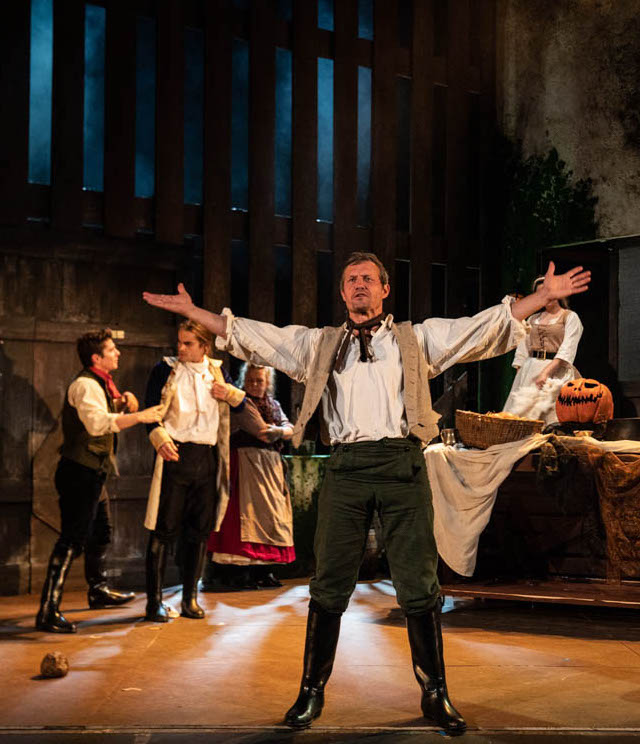
On the face of it, Tilted Wig’s adaptation of The Legend of Sleepy Hollow would seem an appropriate choice for Autumnal viewing.

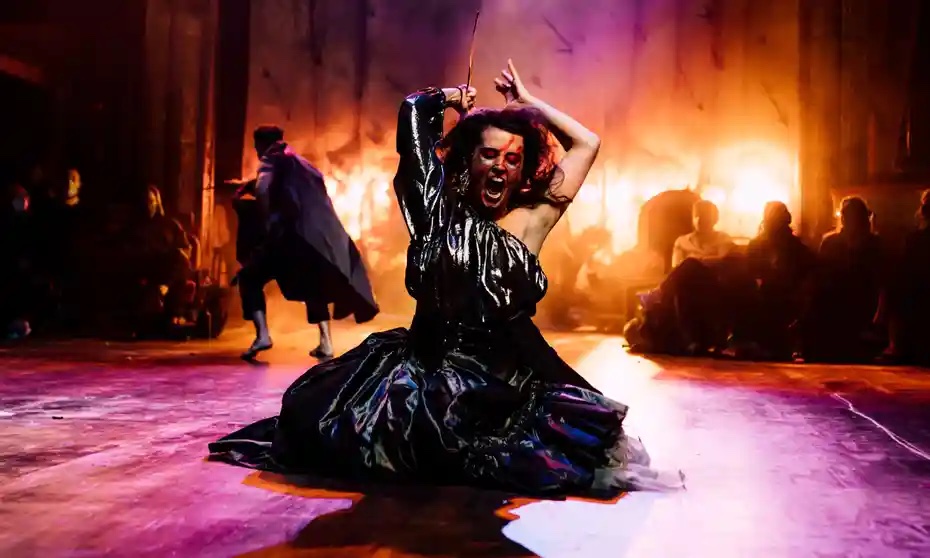
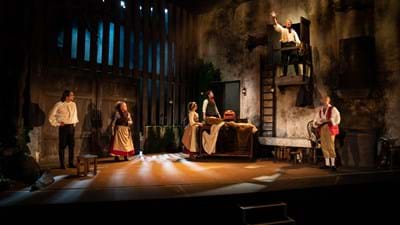
Washington Irving’s short story, published in 1819, is one of the very first Hallowe’en tales, replete with ghostly hauntings, a plethora of pumpkins and, of course, the infamous headless horseman who pursues superstitious schoolmaster Ichabod Crane and chases him clear out of town. But that is hardly ideal material for a full-length story, so playwright Philip Meeks pitches Crane (Sam Jackson) as a man of mystery, who arrives unexpectedly in Sleepy Hollow and quickly establishes himself as the town’s schoolmaster. But what is his secret agenda? And why does he never seem to do any teaching?

Local landowner, Balthus Van Tassel (Bill Ward), grudgingly accepts Crane’s presence, much to the disgust of local bully boy Brom Van Brunt (Lewis Cope), who is convinced that the incomer has set his sights on Van Tassel’s daughter, Katrina (Rose Quentin). And when local matriarch Mariette Papenfuss (Wendi Peters) takes Crane under her wing, it starts to look as though the schoolmaster will soon be offering Katrina his hand in marriage and, consequently inheriting all of her father’s wealth.

But the true reasons for Crane’s presence in the area are complicated. Perhaps too complicated, because at times the plotting here becomes almost unfathomable. Sometimes I find myself struggling to understand what characters are doing and, more importantly, why they’re doing it.

Still, there are elements to enjoy. I like the stylised linking devices, where the cast dance their way from one scene to the next; an ingeniously staged shadow-play relating one of the county’s oldest myths is clever and effective – and Sam Glossop’s ominous soundscapes give the production an atmosphere of mounting dread. Director Jake Smith pulls off a few effective jump scares and one sequence in particular, where Crane finds himself caught up in an ingeniously staged nightmare, complete with magical effects, is a highlight.

But there are rather less successful elements – too many scenes of characters climbing up a perilous-looking ladder for no apparent reason soon become wearisome – and, when the legendary headless horseman is finally glimpsed (as of course he really must be), the impact has been somewhat diminished by an earlier scene where two members of the cast burst in dressed as a pantomime version of the real thing. And then there’s a final plot twist which just feels… baffling.

Ultimately, The Legend of Sleepy Hollow is a mixed bag of a production, but it does have some saving graces.

3 stars

Philip Caveney

Rockpool Café & Restaurant

07/11/21

The Square, Cullen

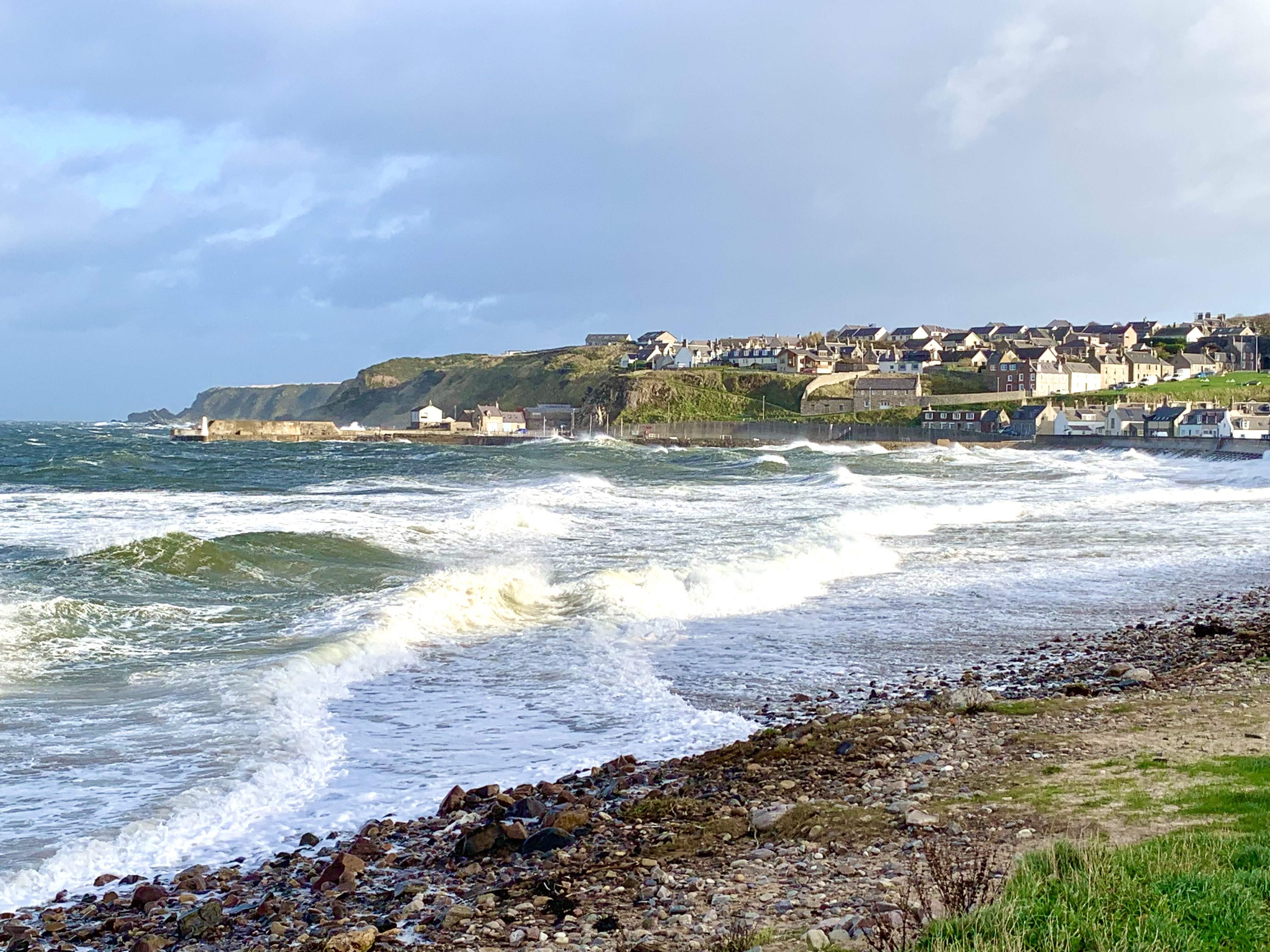
Philip’s working in Moray tomorrow and, as it’s a four-hour drive from Edinburgh, we’ve come up a day early. This gives us a very welcome opportunity to explore some more of Scotland’s beautiful northern coastline. Friends have recommended Cullen and Findochty as ‘must-see’ places, and a google search has yielded the Rockpool Café and Restaurant, which sits on a corner, a few hundred metres from the sea.

Of course, we need to stretch our legs after sitting still for so long in the car, and we can’t think of a better way to build up our appetites than to take a stroll along the shore. I say ‘stroll.’ The wind is so strong today that ‘struggle’ might be a more appropriate term. Any lingering cobwebs are well and truly blown away. It’s glorious.

An hour later, we walk (okay, toil) the short distance up the hill to the Rockpool, our cheeks glowing and our hair awry. We’re definitely hungry now. We’ve talked about ordering Cullen Skink, given that we’re actually in Cullen, home of the aforementioned smoked fish soup but, once we’re sitting with a couple of coffees, warming up, and looking at the menu, we change our minds. Because this is quirky with a capital Q, eclectic to the nth degree. There’s nothing coherent about the short list, and yet it somehow works. It’s intriguing. Whatever we expected a seaside café to offer, it certainly wasn’t this particular chef’s special: Korean chicken bao buns

The Rockpool is a traditional looking place: all white wood and pale blue accents; a cake counter full of tray bakes and scones; scrubbed pine tables and a bustling yet laid-back vibe. The staff are friendly and efficient; they know their stuff. “We’ve only one portion of the stovies left; the sausages are pork today, not beef.” We order the bao buns. Obviously. And a croque monsieur. We call the waitress back and add a side of fries to each sandwich. I mean, why wouldn’t we?

And when the food arrives, we know we’ve made the right choices. It’s all delicious – and nicely presented too. The bao buns are soft and pillowy, the chicken perfectly judged. It’s sticky and more-ish, served with a little pot of kimchi and a gochujang sauce that really brings the dish to life. The croque monsieur is delightful too: generously filled with a rich, creamy sauce, lots of smoky ham and topped with cheese. This is simple food prepared by someone with real skill – someone who clearly loves to experiment in their small kitchen, and who knows exactly how to hit those flavour notes.

So, we’re impressed. As for the Cullen Skink, we’ll just have to come back another time to give that one a go. Now, off to find our glamping pod. Because who doesn’t want to sleep in a shed on a hill in a howling November wind?

4.3 stars

Susan Singfield

The Harder They Fall

03/11/21

Netflix

It’s a shameful fact that many of the cinema’s most revered westerns feature less than a handful of black characters – even though history informs us that up to a quarter of the citizens forging new lives in the Old West were people of colour. So it would seem a propitious time for a cowboy film where black characters are centre stage and their white counterparts relegated to supporting roles. Directed – and co-written – by Jeymes Samuel, The Harder They Fall sets out to be a revisionist piece and to some degree it hits its targets. What a shame, then, that the main protagonists in this story are, almost without exception, a bunch of callous murderers, ready to obliterate anyone who stands in their way.

Who then are we supposed to identify with?

Nat Love (Jonathan Majors) is looking for vengeance against the man who killed his parents when he was a child and who carved a cross on his forehead with the tip of a knife. The charmer in question is Rufus Buck (Idris Elba), recently freed from prison and now seeking to recoup the $25,000 that Love’s gang took from him – money that his own followers have recently stolen from a train. But… his gang stole it first, right? So obviously it belongs to him!

Love, meanwhile, returns to his old stamping ground to reconnect with former lover, Mary Fields (Zazie Beetz), whom he hopes to marry one day, but first there’s the little matter of taking his revenge on Buck, who has returned to the all-black town of Redwood and removed the man he left in charge by pistol-whipping him and taking his place. It’s clear from the outset that Buck doesn’t plan to be a benevolent ruler, shooting a man in cold blood for having the temerity to question him about the steep taxes he’s planning to enforce. Buck is backed up by the equally malevolent Trudy Smith (Regina King) and fast draw merchant, Cherokee Bill (LaKeith Stanfield). As the two rival gangs square up to each other for a showdown, it can only end in bloodshed.

There are some elements in The Harder They Fall that I really like. The widescreen cinematography is gorgeous and the recreations of frontier towns are quite different from anything I’ve seen before. Furthermore, the decision to use contemporary reggae and township music as a soundtrack is an inspired move, lending a sense of urgency to the action. There’s also an expertly-handled climactic shoot out. All points in the film’s favour.

But every story needs characters that an audience is willing to root for and there’s a sad dearth of them here. Even US Marshal Bass Reeves (Delroy Lindo) seems to have no qualms about bending the rules when there’s money to be made. (Western scholars will doubtless recognise many of these names, because they are taken from historical characters, but there’s been no attempt to reproduce any of their actual accomplishments, which seems self-defeating.) All we learn of these people is that they’re quick on the trigger and the constant litany of shootings, beatings and stabbings becomes wearisome after a while. We’re probably supposed to identify with Nat Love, but the truth is, he’s not really all that different from his nemesis, Rufus Buck. He just shoots people with a smile on his face, while Rufus scowls.

So, while I agree this is an important release that’s come at exactly the right time, I just wish I cared more about the people who are being shot and bludgeoned to death right in front of me.

As it stands, this feels like a squandered opportunity. And that’s a real shame. Samuel is clearly a skilled filmmaker but he needs a stronger script to make this fly.

2.8 stars

Philip Caveney
Life is a Dream

02/11/21

Lyceum Theatre, Edinburgh

There’s something decidedly dreamlike about our return to the Lyceum.

It’s been so very long since we’ve entered these hallowed portals and, now that we’re here, we hardly recognise the place. It’s had a major makeover for this play, with a new floor built up over the stalls. The result is a more intimate performance space; this production is presented in the round, with some members of the audience sitting right next to the actors. I’m reminded, more than anything, of the Royal Exchange in Manchester, our old ‘go to’ venue for new and innovative theatre, and this reinvention seems like an astute move on the part of the Lyceum. And if director Wils Wilson doesn’t maximise the reconfigured space’s potential quite as well as, say, Sarah Frankcom might, that’s only to be expected; after all, the Exchange’s artistic directors have had a lot of practice at this!

Life is a Dream is one of those weird seventeenth century fairy tales, written by Pedro Calderon and first staged in Madrid in 1630. This translation, by Jo Clifford (who, coincidentally, is sitting in the row in front of us), is strong on acerbic humour and gender confusion and, while it probably wouldn’t do to think too closely about the bizarre machinations of the plot, the actors’ confidence seems to grows steadily throughout the performance, exerting a powerful grip on the audience.

This is the story of captive prince, Segismundo (Lorn MacDonald), imprisoned in a tower by his own mother, Queen Basilio (Alison Peebles), who once dreamed that her son would turn out to be a tyrant, so decided to be proactive and imprison him just in case. But Segismundo is released by his old tutor, Clotaldo (John McCaulay), and pretty soon, the prince has the opportunity to show that he can be kind and considerate, but, driven half mad by his long imprisonment chooses to do exactly the opposite – until he is told that life is all a dream, and so he should do his best to behave well and stop the nightmares. Then there’s angry, jilted Rosaura (Anna Russell Martin) and her companion, Clarin (Laura Lovemore), the latter of whom keeps breaking the fourth wall to make sarcastic comments about what we’re watching…

Actually, there’s little point in going over the plot in detail, because it’s quite frankly bonkers, but what comes across so powerfully here is the magical feel of the production and the excitement of seeing something new, fresh and innovative. McDonald is terrific as the near feral Segismundo, scampering around the stage, snorting and quivering like a hunted animal, seemingly unable to make a quick decision. Peebles brings a sense of quiet authority to her role as the much misguided Queen of Poland and Russell Martin has a delightful knack for uttering sarcastic asides.

More than anything else, it’s great to back at the Lyceum and this sparky piece makes for a delightful return.

We’re already excited to see what comes next.

4 stars

Philip Caveney
Antlers

01/11/21

Cineworld, Edinburgh

To describe Antlers as ‘dark’ would be something of an understatement.

The tone of this powerful little eco-horror is jet black with a side order of obsidian. Directed by Scott Cooper and co-produced by Guillermo del Toro, it’s a bleak tale, an allegory that carries its twin themes – the desecration of nature and the destructive power of poverty – in plain view. The story is by no means subtle and it doesn’t make for comfortable viewing – but to be fair, that’s the last thing it’s trying to be.

In an abandoned coal mine, somewhere in the wilds of Oregon, Frank Weaver (Scott Haze) is running a covert meth operation. His home town is broken beyond repair, the nearby mountains plundered of their ‘black gold,’ and now he’s getting by the only way he knows how. But his youngest son, Aiden (Sawyer Jones), has an unfortunate habit of sticking his nose into things – and, when Frank and an employee encounter something supernatural down in the darkness, Aiden inevitably goes to investigate.

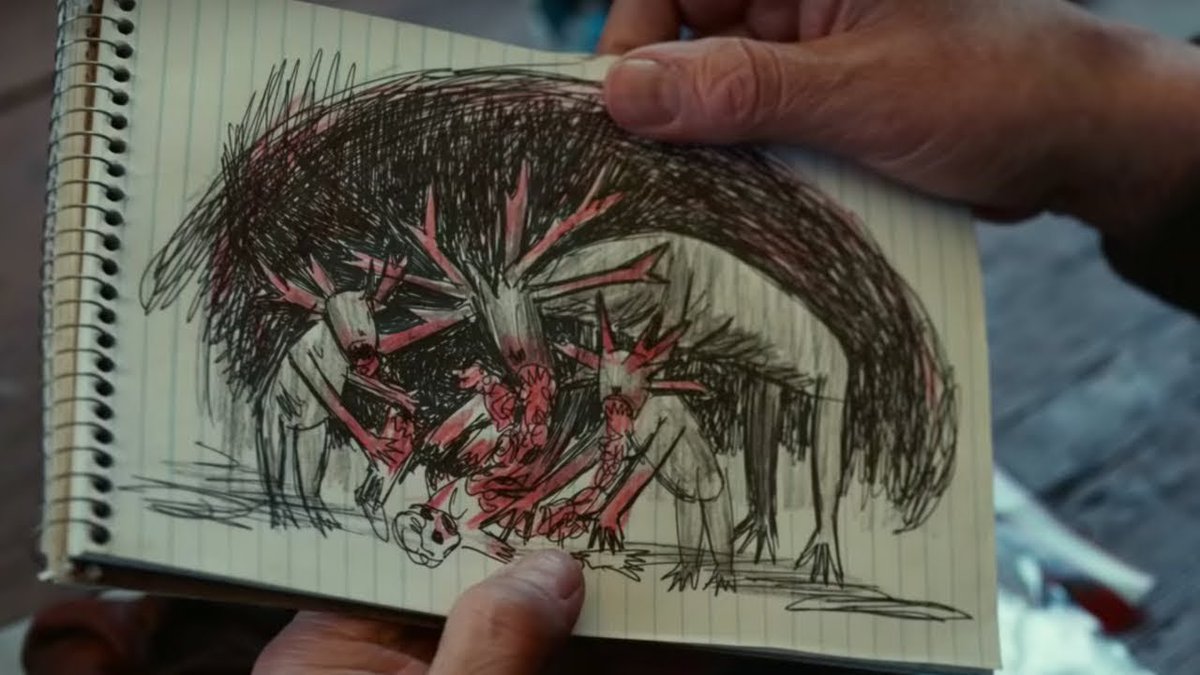
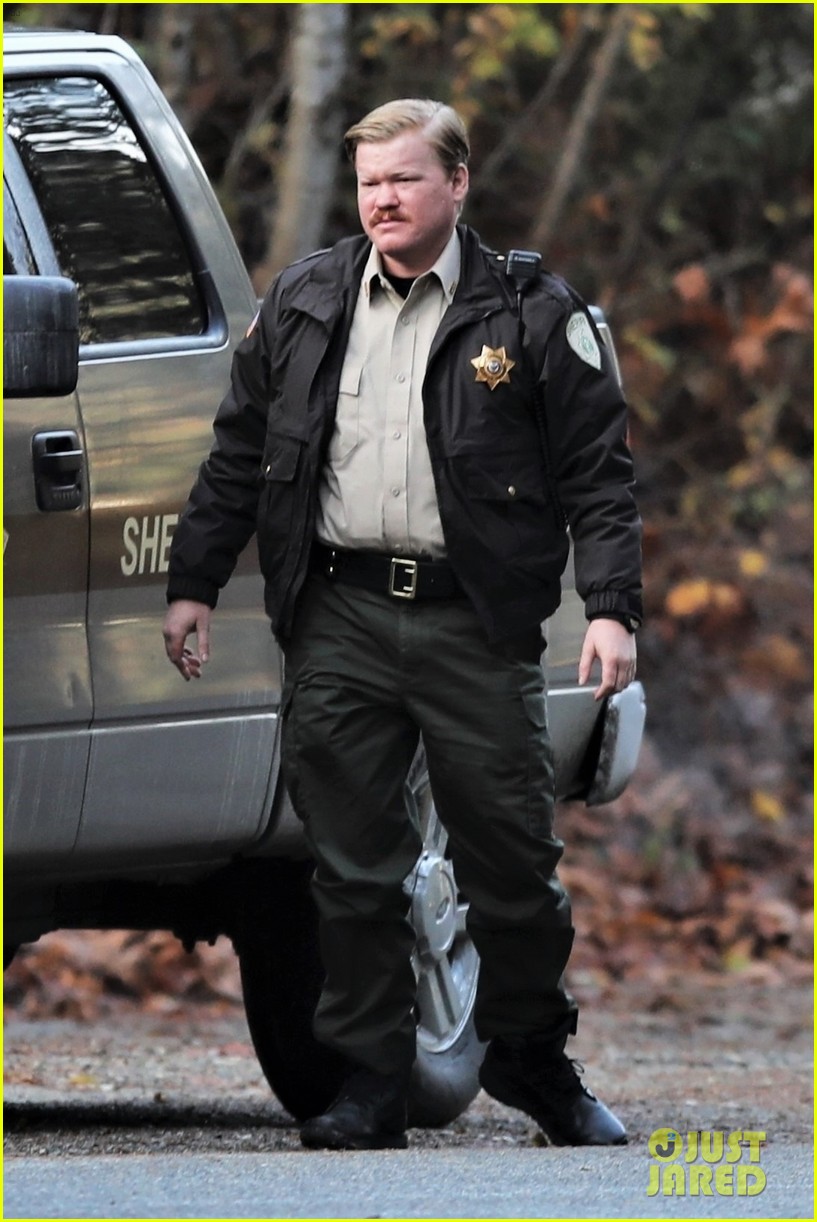
Some time later, high school teacher Julia Meadows (Keri Russell) is struggling to keep her life together. She’s failing to bond with the kids in her classes, she can’t seem to visit the local liquor store without casting yearning glances at the bottles of spirits – and she’s troubled by horrors from her childhood. She is currently living with her brother, the town sheriff, Paul (Jesse Plemons), and they share a past that they’d clearly rather forget. Perhaps that’s why Julia is so drawn to the plight of Lucas Weaver (Jeremy T. Thomas), who sits silently at his school desk, drawing a series of very disturbing pictures. But what has happened to his father and his younger brother? And what exactly is he keeping locked up in the attic of the family home?

It would be too much of a spoiler to tell you more about the story. Suffice to say that the creature that the Weavers have unwittingly unleashed is parasitic in nature and has a habit of vacating its hosts in a very messy manner. But while the story goes to some fantastic places, the grubby reality of the setting keeps everything anchored. The squalid, dying town is a realistic place and its inhabitants are believable enough to encourage us to follow them deep into the realms of the unreal.

Those who flinch from body horror should be warned there are visceral scenes here. We all know that teachers have a tough time, but the events endured by school principal, Miss Booth (Amy Madigan), must qualify as an all time low. Cooper keeps offering tantalising glimpses of something unspeakable lurking in the shadows and his ‘less-is-more’ approach consequently ramps up the fear factor. It’s only towards the end of the film, when we finally see the creature in more detail, that the tension dissipates somewhat… but by then, the director’s work is done and we’ve well and truly been put through the mill.

Antlers is a an accomplished creature feature, that generates an atmosphere of mounting dread for most of its duration. Grim and immersive, it’s eminently suitable for spooky autumn viewing, but we warned, the central premise is not for the faint-hearted.

4.2 stars

Philip Caveney
Last Night in Soho

30/10/21

Cineworld, Edinburgh

Some cinema releases are more anticipated than others.

I’ve been a fan of director Edgar Wright ever since Spaced – and, through the ‘Three Cornetto‘ trilogy, the odd-but-enjoyable misfire that was Scott Pilgrim, and the wildly inventive Baby Driver, he’s delivered some of the most watchable films in recent cinema history. So, as soon as Last Night in Soho was announced, I was counting the days to its release. Too much anticipation can sometimes be a problem, but not in the case of this powerful psychological thriller. Chung-hoon Chung’s dazzling cinematography, the twisty-turny script (by Wright and and Krysty Wilson-Cairns) and a sparky soundtrack of solid gold 60s bangers all work together to make this a thrill ride from the opening credits onward.

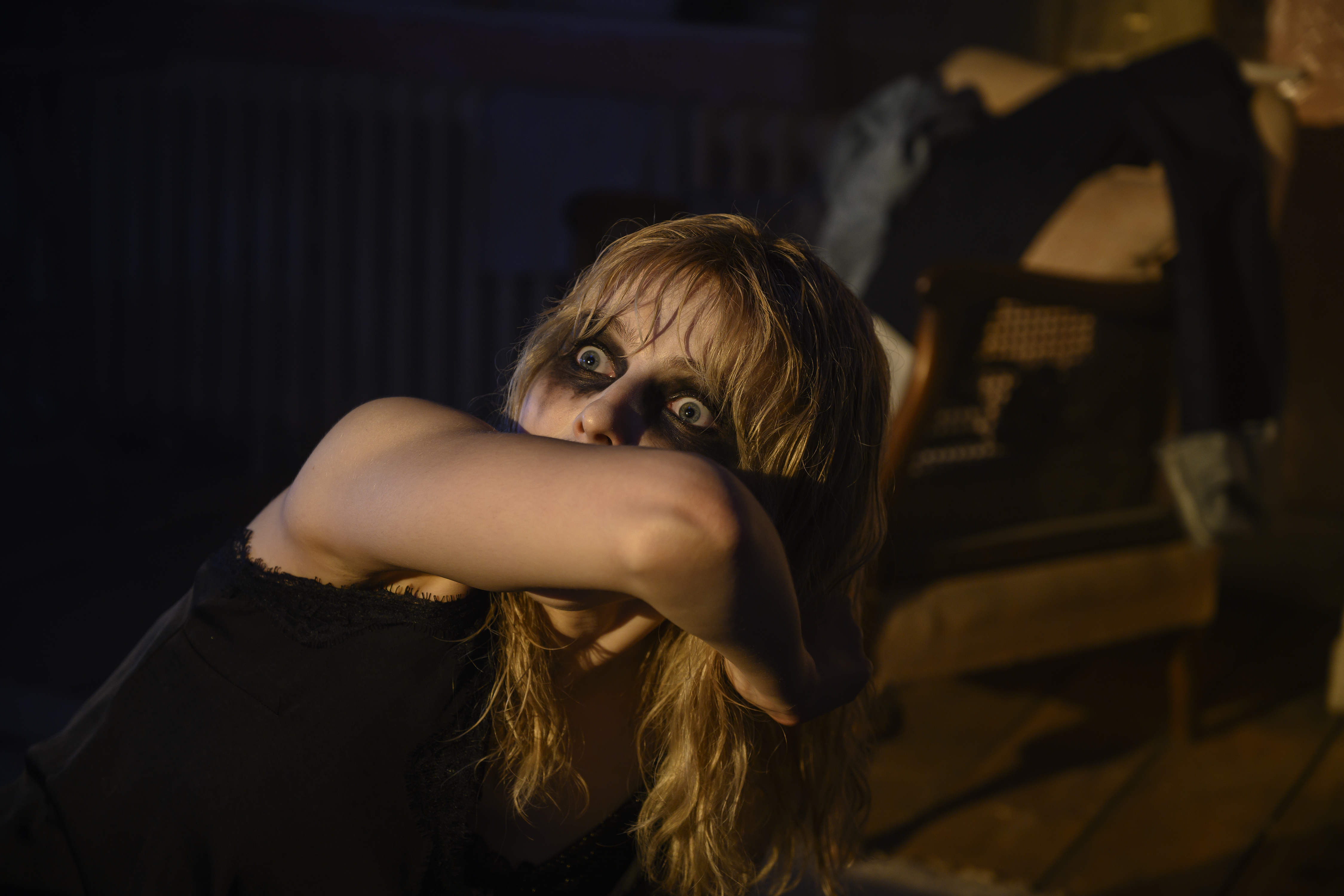
After her mum’s suicide, Ellie Turner (Thomasin McKenzie) has led a sheltered life in Cornwall with her Gran, Peggy (Rita Tushingham) – though Ellie’s late mother still has an unnerving habit of watching her from mirrors. Ellie has always longed to be a fashion designer, so she heads off to the big city to take her place at the London College of Fashion. From the very start, she is uncomfortable in this unfamiliar environment, suffering the predatory advances of a cab driver, whose lascivious gaze threatens her from his rear view mirror. On arrival in her halls of residence, she is immediately alienated from her fellow students, a sneering, superior bunch who regard her as some kind of weird country bumpkin. She decides to be proactive and rents a bedsit on Goodge Place, presided over by the mysterious Ms Collins (Diana Rigg, having a great time in her final screen role). The tiny flat feels like a throwback to the 1960s but Ellie doesn’t mind. As evidenced by her dress designs and her vinyl record collection, it’s long been her favourite era.

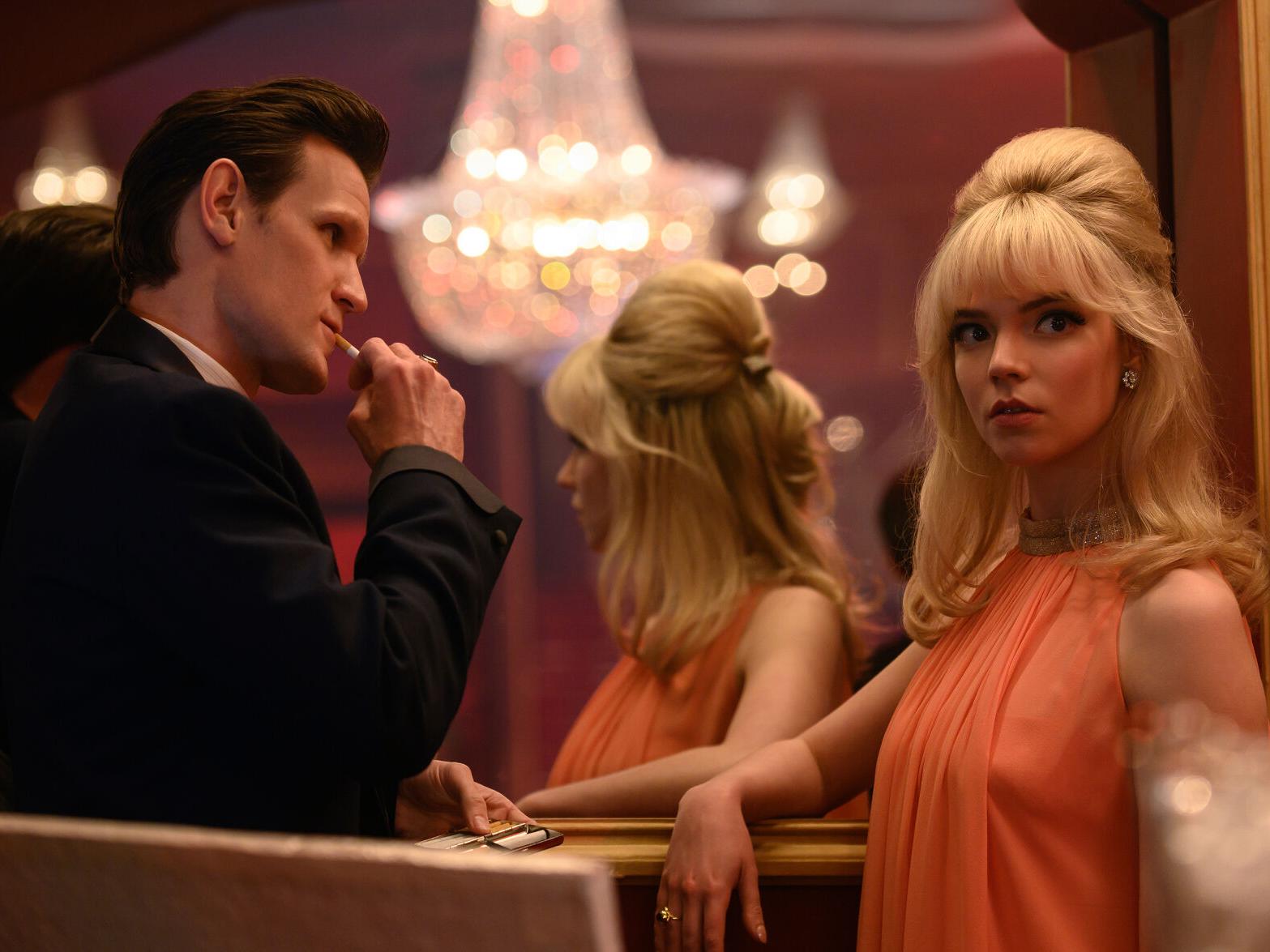
But from her first night there she has disturbing dreams about a young woman called Sandie (Anya Taylor-Joy), an aspiring pop star and would-be 60s fashion icon, who falls under the influence of sleazy ‘manager’ Jack (Matt Smith). Jack, it transpires, sees little difference between a pop star and a prostitute. The trouble is, Ellie is increasingly involved in the resulting relationship, finding herself observing – and then sharing – the indignities that are heaped upon Sandie at every turn. As these experiences become ever more violent, ever more carnal, Ellie begins a rapid descent into darkness. The problem is, to those around her in the present day, she appears to be losing her mind…

There’s nothing particularly new about this premise, but Wright’s approach to it is refreshingly different and, for the first forty minutes or so, he doesn’t put a foot wrong. The film swoops and soars and segues through the various unearthly set pieces with consummate skill, and, while terrible things happen to Ellie, she is never allowed to be ‘the victim.’ The underlying theme is the toxicity of Soho – the disturbing underbelly that lurks beneath the bright lights. This film is simultaneously a love letter to and a condemnation of the 1960s. Both McKenzie and Taylor-Joy are exceptional in their respective roles and the presence of Terence Stamp as the ‘silver haired gentleman’ is a wonderfully threatening addition (watching Stamp singing along to Barry Ryan’s Eloise is a masterclass in understated menace). There are also some real surprises packed into the script, ones that I genuinely don’t anticipate.

So what’s wrong, I hear you ask? Well, to be fair, not much, but to my mind there are a couple of missteps. The faceless armies of male ghosts that pursue Ellie relentlessly around the city are brilliantly realised, but there’s a moment where they start to feel overused. Haven’t we watched what is essentially the same scene a couple of times already? And… I’m being picky here… there’s John (Michael Ajao), Ellie’s only real friend from college, a man so sweet-natured he could rot your teeth at thirty paces, a fellow so forgiving, he would make Ghandi seem downright surly by comparison. It’s not Ajao’s performance that’s at fault but the dreadful lines of dialogue he’s obliged to come out with, quips that feel like they’ve been drafted in from an entirely more lighthearted project and are consequently jarring.

It’s only these two elements that make Last Night in Soho fall short of a perfect five stars. Niggles aside, the film is an absolute blast and another success to add to Wright’s growing score of brilliantly inventive movies. I haven’t stopped singing Cilla Black’s You’re My World since I stepped out of the cinema and, until you’ve seen it performed on a blazing staircase with an accompanying kitchen knife, you haven’t really experienced it at all.

Go see! You won’t be disappointed.

4.8 stars

Philip Caveney
The French Dispatch

23/10/21

Cameo, Edinburgh

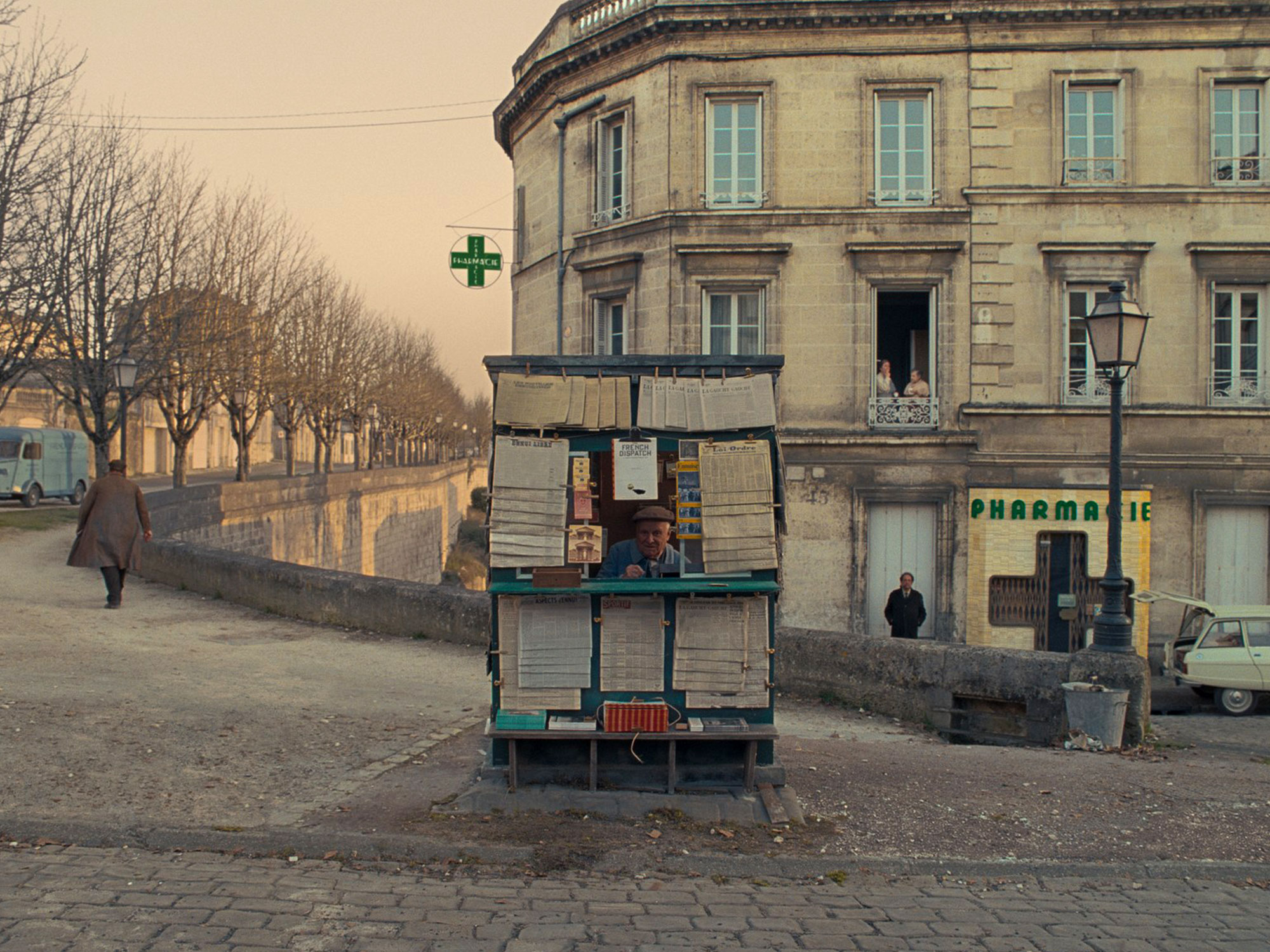
The word ‘quirky’ could almost have been invented for Wes Anderson. Since his breakthrough with Bottle Rocket in 1996, the director has relentlessly followed the path less travelled. Along the way, he’s dallied with stop-frame animation and, in his live-action features, has developed a visual style used by nobody else in the business. Take off a blindfold in a movie theatre and watch ten seconds of any one of his films and, chances are, you’ll recognise his style instantly.

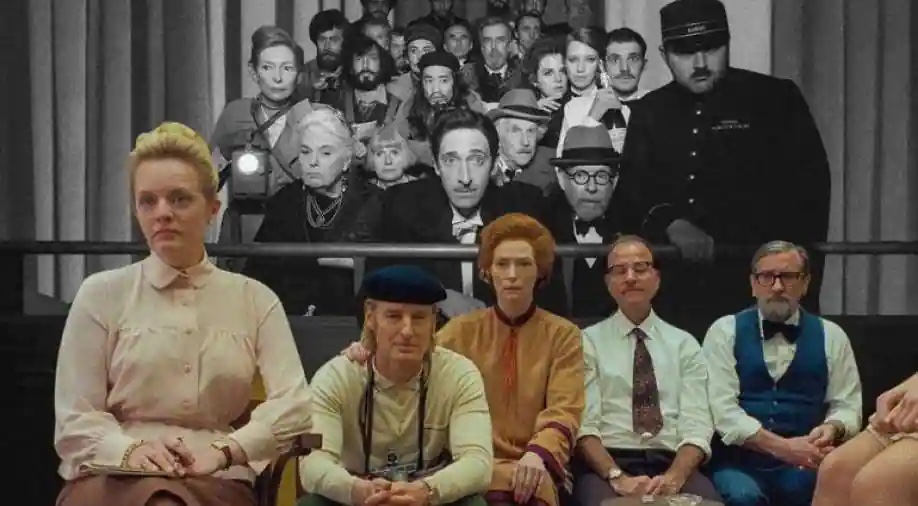
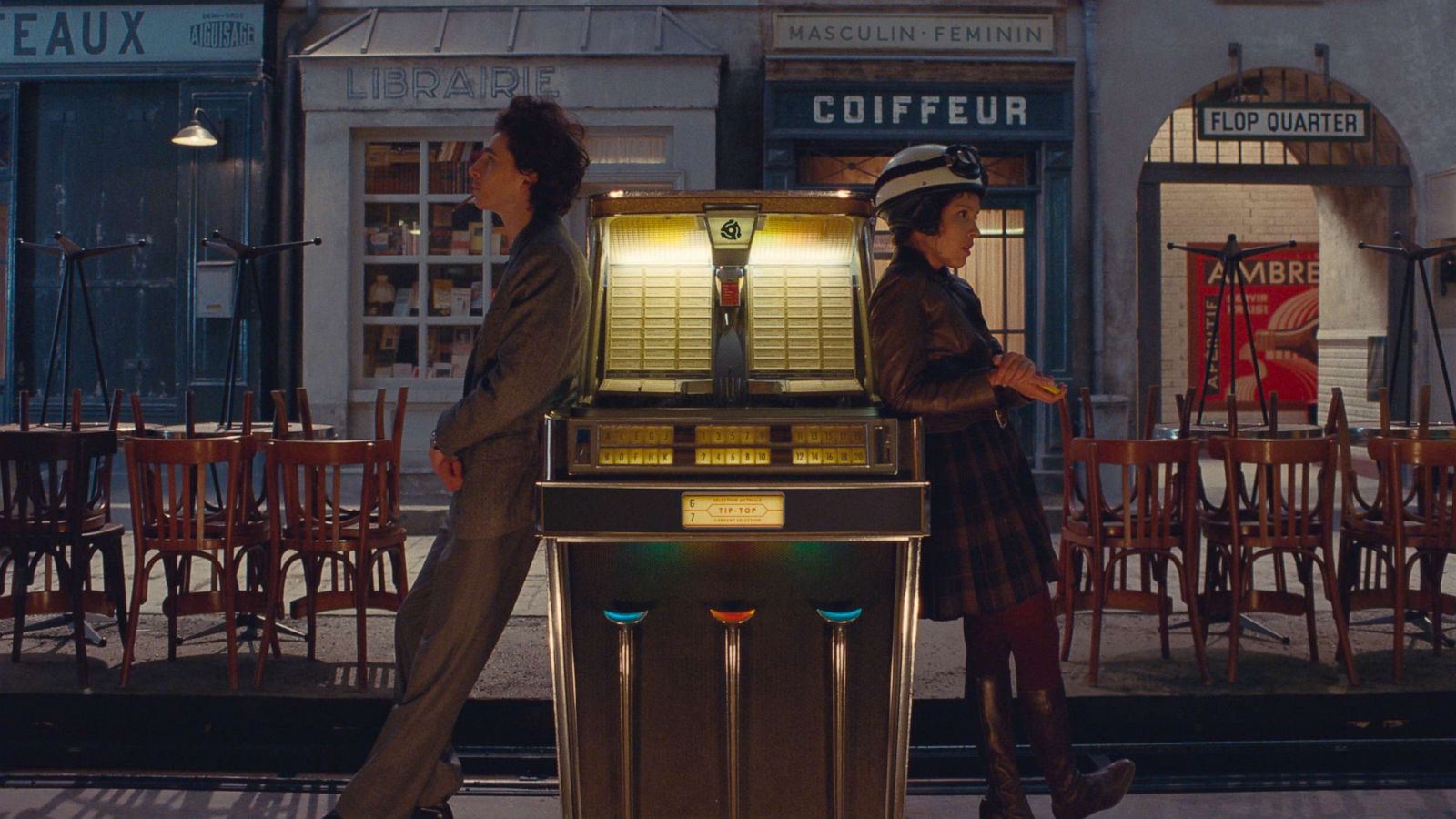
Now here’s the much-delayed The French Dispatch, a portmanteau made up of three short films, linked by a framing device. It probably has a valid claim for being the most Wes Anderson-like film yet as it employs all of the tics and, yes, quirks we associate with him: those bizarre doll house vistas; jarring cuts from colour to monochrome; weird frozen tableaux of action scenes – and characters that are as eccentric as they are amusing. And, of course, there’s also the WA repertory company, a seemingly endless supply of big-name actors, who seem perfectly happy to put their famous mugs in front of the camera, even if they’ve not actually been given much to do.

We begin at the offices of the titular publication, a New Yorker-style literary magazine that is itself an offshoot off a newspaper in Kansas, yet somehow has its headquarters at the top of a ramshackle building in the sleepy French town of Ennui-Sur-Blasé. It’s from here that editor Arthur Howitzer Jnr (Bill Murray) sends his various critics around the country to seek out and document stories of interest – and we are subsequently treated to three of them, all set in the 1960s.

First up we have the tale of convicted murderer, Moses Rosenthaler (Benicio Del Toro), who, inspired by his love for prison warden – and sometime model – Simone (Lea Seydoux), decides to express his love, by creating works of modern art in tribute to her. He inadvertently becomes a cause celebre. Next there’s the story of journalist Lucinda Krementz (Frances McDormand) and her dalliance with dashing young revolutionary, Zefferelli (Timothée Chalamet), whose rebellion against authority is played out as a literal game of chess. Finally, there’s the story of writer Roebuck Wright (Jeffrey Wright), assigned to write a piece about celebrated prison chef, Nescafier (Steve Park), only to find himself caught up in a kidnapping drama involving the adopted son of the prison’s Commisaire (Mathieu Almaric).

The stories are dazzlingly told and the main theme here seems to be one of affection for an age that’s largely gone – a yearning for old-school journalism, when editors cared more about the writing than the money it might generate. Anderson – who co-wrote the story – also has much scorn to heap on the world of art, mocking the ways in which commerce waits greedily in the wings to get its hooks into the next big thing, qualities evidenced by Adrien Brody’s ruthless art dealer, Julien Cadazio. There’s some evident homaging going on here too. The second piece eerily captures the look of French new wave cinema – and did I imagine that little salute to The Twilight Zone’s Rod Serling?

I have to say that I admire The French Dispatch enormously, rather than love it. There’s always an element of grandstanding about Anderson’s work, a celebration of his own uniqueness that can sometimes feel a little too arch – and the parade of characters unleashed here are essentially caricatures rather than people I can believe in. Perhaps that’s entirely the point, but it’s a quality that can polarise audiences.

Suffice to say, if you’re a fan of the director, you certainly won’t be disappointed by what’s on offer here. This is Wes Anderson turned up all the way up to 11. And, in the unlikely event that it’s the first of his films you’ve seen, then enjoy the trip.

4.4 stars

Philip Caveney
Dune

21/10/21

Cineworld, Edinburgh

After the long shutdown of the pandemic and the recent Bond-led ‘resurrection’ of cinema, what we need next is an epic – one of those big, sprawling sci-fi adventures replete with stunning alien landscapes and awe-inducing special effects. So Dune really couldn’t come at a better time, but director Denis Villeneuve must be all too aware of the potential pitfalls. A previous attempt to put Frank Herbert’s source novel onto film – in 1984 – almost stopped David Lynch’s burgeoning career dead in its tracks. And while Lynch attempted to pack the entire contents of the book into one film, Villeneuve adds the extra gamble of shooting just the first half of the story, trusting to providence that the resulting movie will be successful enough to bring him sufficient revenue to make the second part.

The jury is still out on that but initial worldwide box office figures look promising.

It’s the year 10,191 and Duke Leto Atreides (Oscar Isaac) has recently been assigned – by the Emperor of the Universe, no less – to become the fief ruler of the desert planet of Arrakis (Or Dune, as it’s sometimes known). He and the rest of House Atreides will be taking over from its previous overlords, House Harkonnen, led by the corrupt Baron Vladimir (a hideously bloated Stellan Skarsgård). Arakis is the source of spice, a mysterious substance that pretty much runs the entire solar system, so of course the Harkonnens are far from pleased about being ousted from their exalted position.

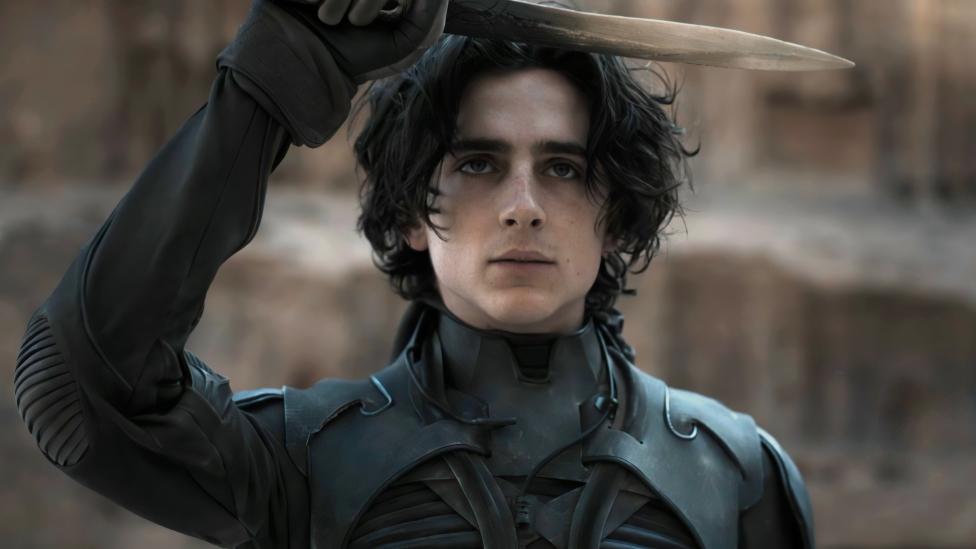
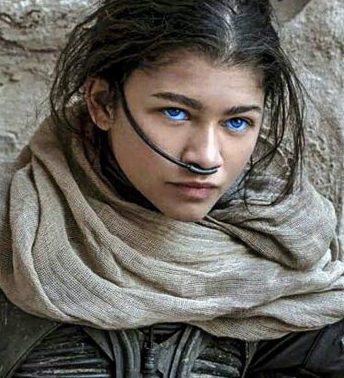
Meanwhile, Leto’s son, Paul (Timothée Chalamet), has been having recurring dreams about Arakis, or – more specifically – about a young woman who lives there, Chani (Zendaya). She is one of the indigenous Fremen, who have always endured a precarious existence under the yoke of their despotic rulers. Paul begins to think that he’s destined for something important and, when he learns his friend, Duncan Idaho (Jason Momoa), is setting off on a preliminary reconnaissance of the planet, Paul begs to be allowed to accompany him. But he’s told he must wait until Leto and the others can go with him.

So it is not until he and the rest of House Atreides set foot on the sun-blasted sands of Arakis that they discover they are venturing into a carefully laid trap….

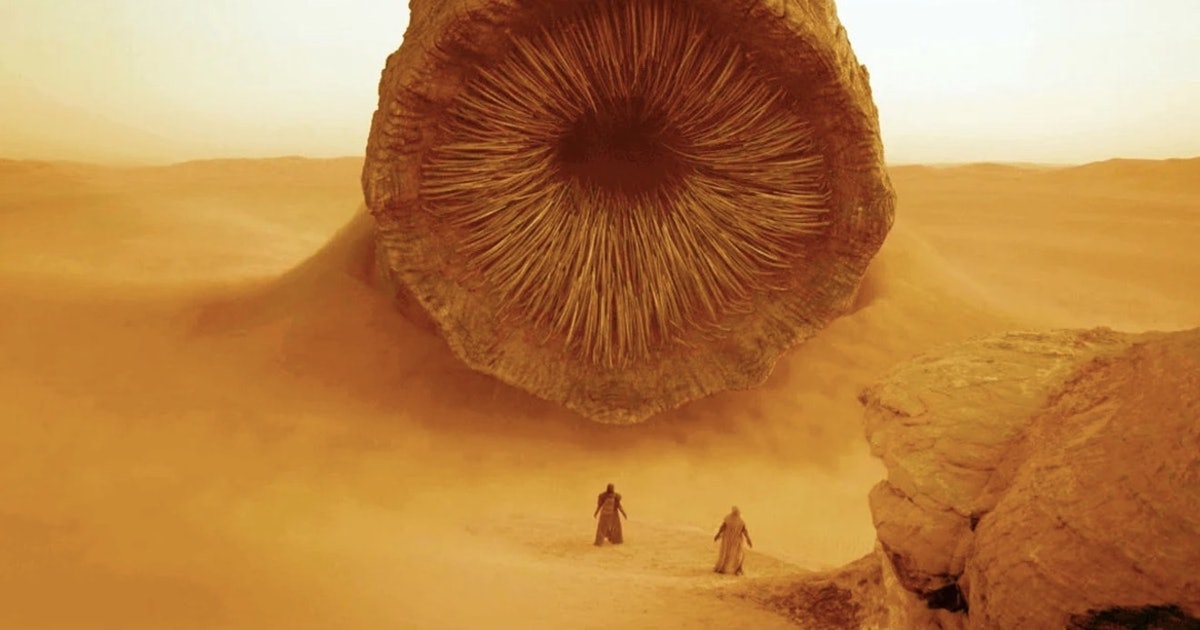
James Herbert’s novel has an almost messianic following and I imagine most of its readers will be pleased with what’s on offer here. Villeneuve’s direction, combined with the almost hallucinatory qualities of Greig Fraser’s cinematography and Hans Zimmer’s eerie score, makes for a memorable experience. The casting is impeccable, with Rebecca Ferguson excellent as Paul’s mother, Lady Jessica, and Josh Brolin a perfect choice as the dour warrior, Gurney Halleck. And then, of course, there are those infamous sandworms, one of the elements that really didn’t work in Lynch’s movie, but they certainly generate lots of tension here…

Villeneuve keeps everything bubbling along at a sedate pace, taking enough time to set out his stall. The world-building is beautifully done and the theme of colonialism convincingly explored. And if Paul Atreides is just another in a long list of Christ figures, a popular conceit in science fiction, well it hardly matters. Dune carries us along on a tidal wave of sensory overload until we dimly register that the first instalment is over and we’ll have to wait another year to see how things turn out for Paul.

Quibbles? Well, yes, and it’s one that’s becoming increasingly common. Dune has a 12A certificate, which means that some of the more violent elements of the tale have been downplayed. While I understand there’s a wish to maximise the potential audience for the film, this was never going to be another Star Wars (Dune comes from a much more po-faced universe than Obi Wan and his merry gang). So I think a 15 would be a much better fit. But I absolutely understand why it is what it is.

That said, I enjoy the film enormously and I’m sure I won’t be the only one eager for a second helping, which… all being well… will be coming to a universe near you in the not-too-distant future.

4. 6 stars

Philip Caveney
The Enemy

20/10/21

King’s Theatre, Edinburgh

Ooh. I’m VERY excited about this one. I’m an avid admirer of Ibsen – what self-respecting theatre-lover isn’t? I’m in awe of the way he combines theatrical innovation and political conviction with accessible story-telling. I’m also a fan of Kieran Hurley’s work (Chalk Farm, Mouthpiece and Beats are all excellent), so I’m fascinated to see what he and director Finn den Hertog do with the Norwegian’s masterpiece, An Enemy of the People.

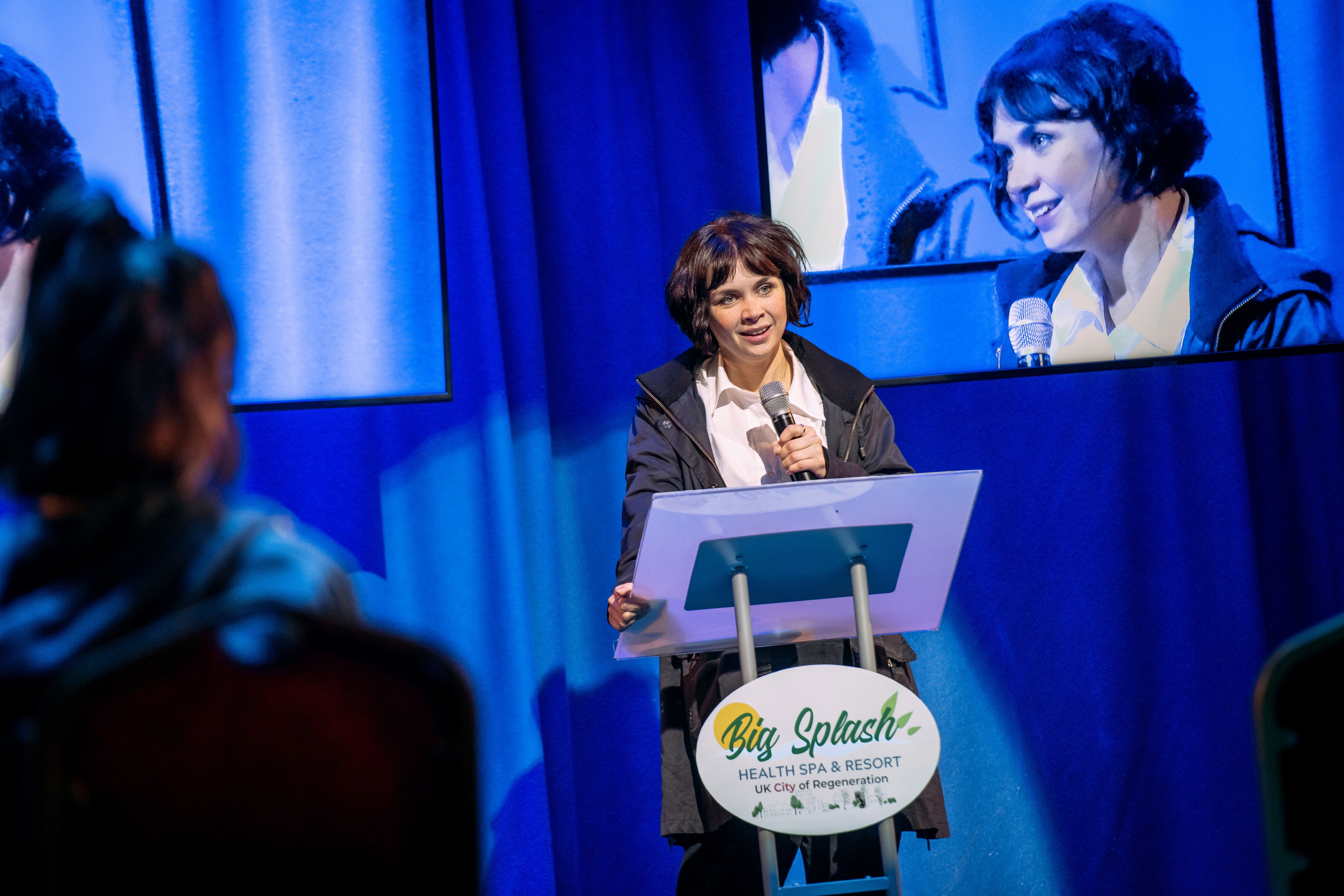
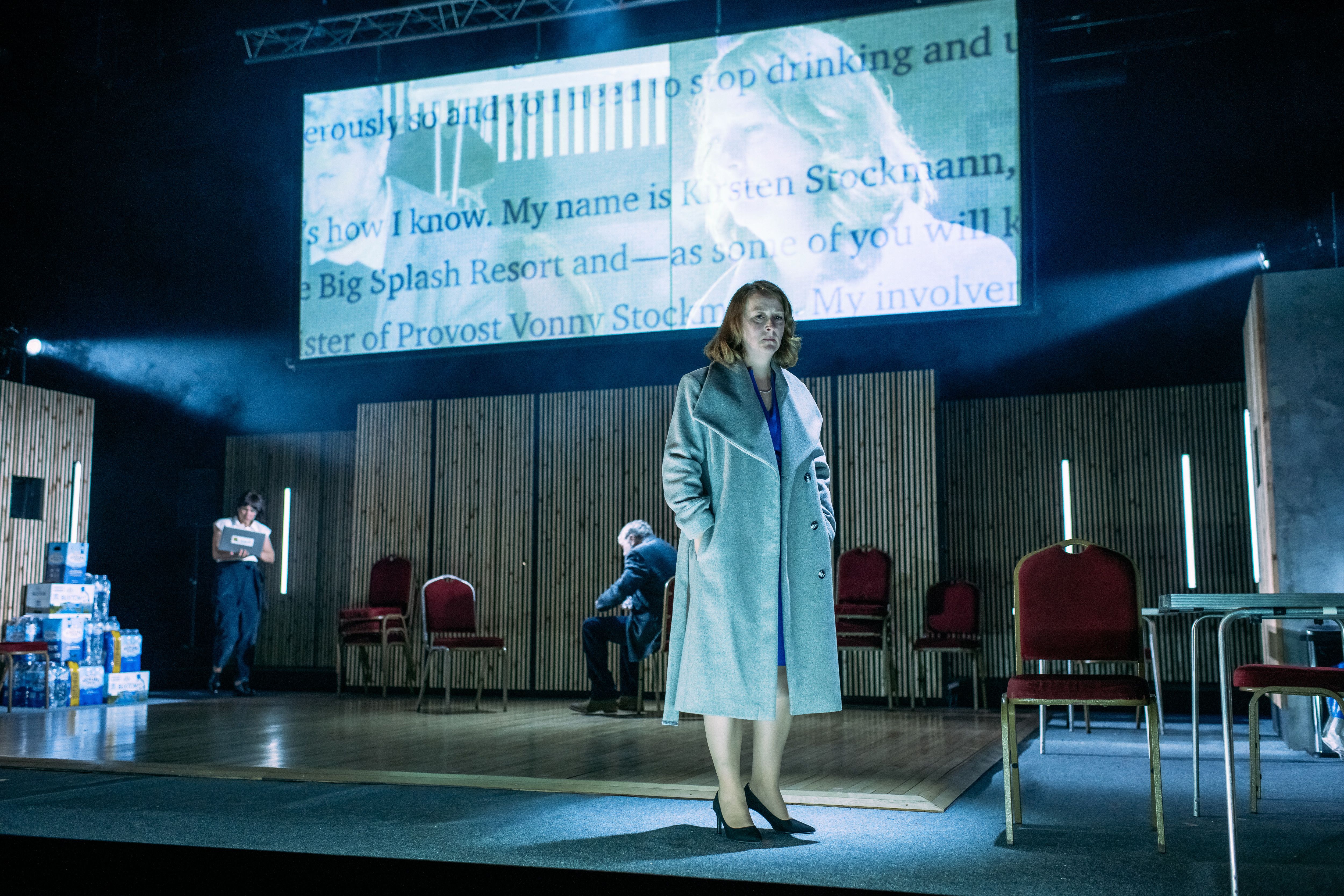
In fact, Hurley doesn’t change much at all, plot-wise. This 140-year-old play is uncannily prescient. The difference is all on the surface: in the modes of communication, and the cadence of the dialogue – and it’s beautifully done. The story shifts easily to a contemporary “once-great Scottish town,” where a new spa resort promises regeneration, and offers hope to the poor and dispossessed who live there. But Dr Kirsten Stockmann (Hannah Donaldson) is concerned: a sickness bug is spreading, and she’s almost certain the town’s water supply has been contaminated. But how? Could blame lie with council-approved shortcuts, aimed at bringing forward the resort’s opening? Maybe. If so, it’s more than a little awkward, because the provost is Kirsten’s sister, Vonny (Gabriel Quigley). Still, surely she will be grateful for the heads up, pleased to be able to avert a public health disaster, no matter what the cost? But no. Vonny has no qualms: without the resort, the people have nothing. They’re not sick because of poison, she tells her sister; they’re sick because they’re poor. She has a point.

Although the story remains unchanged, the staging is bang up-to-date: video designer Lewis den Hertog has created a multi-media piece à la Katie Mitchell, with ‘live cinema’ (where the onstage action is filmed and projected simultaneously onto a large screen) a key feature. There are pre-filmed sequences too, such as a jarringly upbeat advert for the new resort, and a series of enthusiastic vox pops on the local news. And there are text messages, and YouTube videos, and Skype and BTL comments a-plenty. It’s Ibsen with all the socials. It works. There’s a dizzying sense of things spiralling out of control, with Kirsten in the middle, alone, holding on to the damning test result – a dreadful talisman.

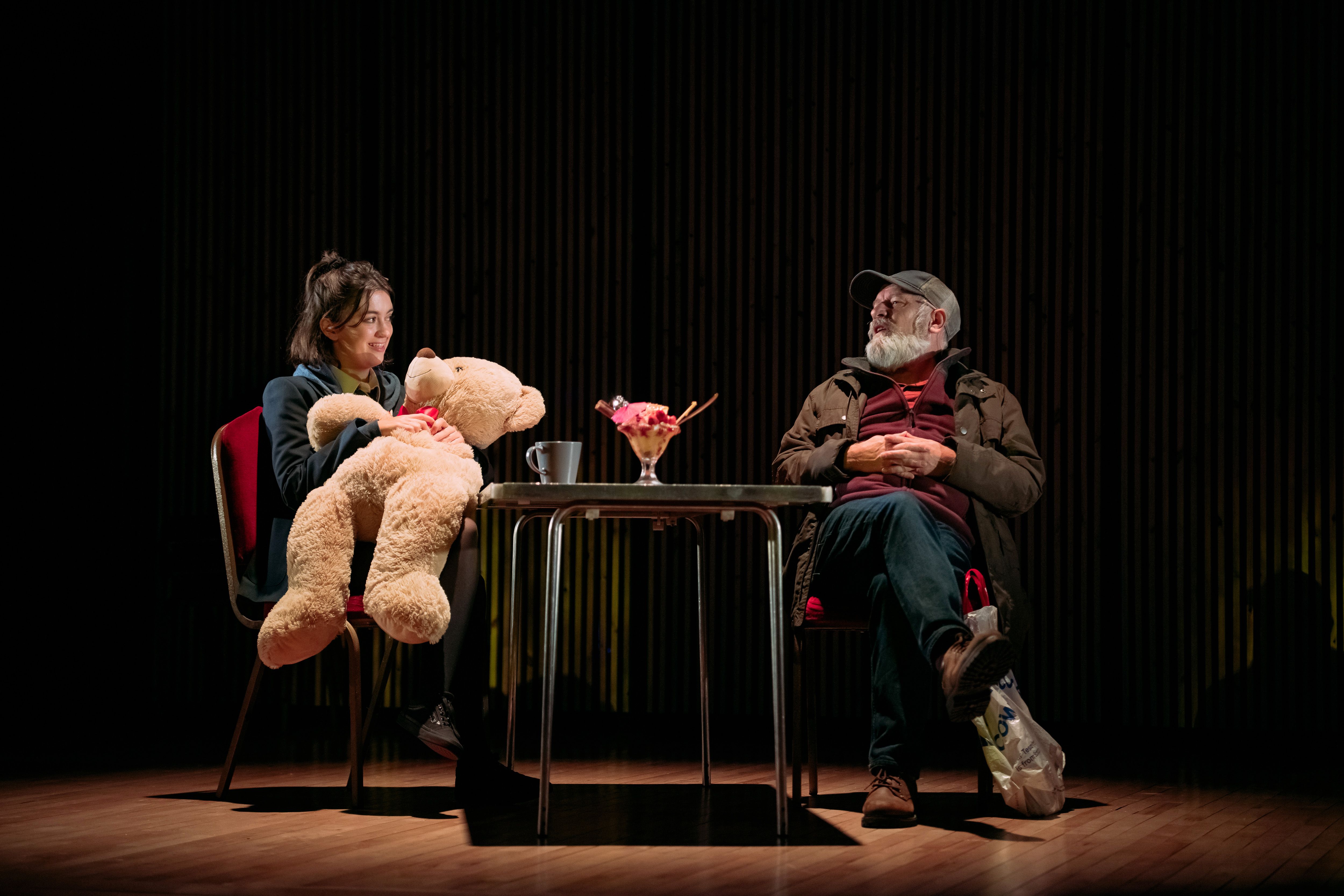
But Kirsten isn’t quite alone. She might have broken ties with her sister; her friend, Benny (Neil McKinven), and local celeb, Aly (Taqi Nazeer), might have sidled away – but her teenage daughter, Petra (Eléna Redmond) is firmly on her side. And so, perhaps, is Derek Kilmartin (Billy Mack), who has a proposal for Kirsten to consider…

It’s wonderful to see creative theatre projects taking shape again (I’ve nothing against old favourites, and it’s clear to see why theatres are being cautious post-pandemic, but it’s definitely time for something new). This particular project seems like a canny move, combining Ibsen’s timeless appeal with something bold and fresh. It’s almost guaranteed to get bums on seats, while simultaneously allowing playmakers the chance to experiment. Good call!

For the most part, it pays off. I have a little trouble hearing some of the dialogue, especially in the first act. I’m sitting quite far back in the stalls, which might have something to do with it, but I wonder if it’s more about the actors delivering their lines to cameras rather than to the auditorium. But this is my only gripe. The performances are natural and convincing, the relationships well-defined.

The message is clear: the truth matters, however unpalatable. It’s a timely homily. We need to heed the experts. The only problem is, we all think we’re Kirsten Stockmann.

4.3 stars

Susan Singfield


The Last Duel

16/10/21

Cineworld, Edinburgh

You have to hand it to Ridley Scott. At an age when most people are seeking nothing more than a mug of Horlicks and a pair of comfy slippers, he’s still creating big, powerful movies at a rate that would make most younger directors quail. Lurking just over the cinematic horizon is The House of Gucci, but meanwhile there’s The Last Duel, a powerful slice of true history, that unfolds its controversial story over a leisurely two hours and thirty-two minutes. Set in France in the fourteenth century, it relates the story of the last official duel ever fought there.

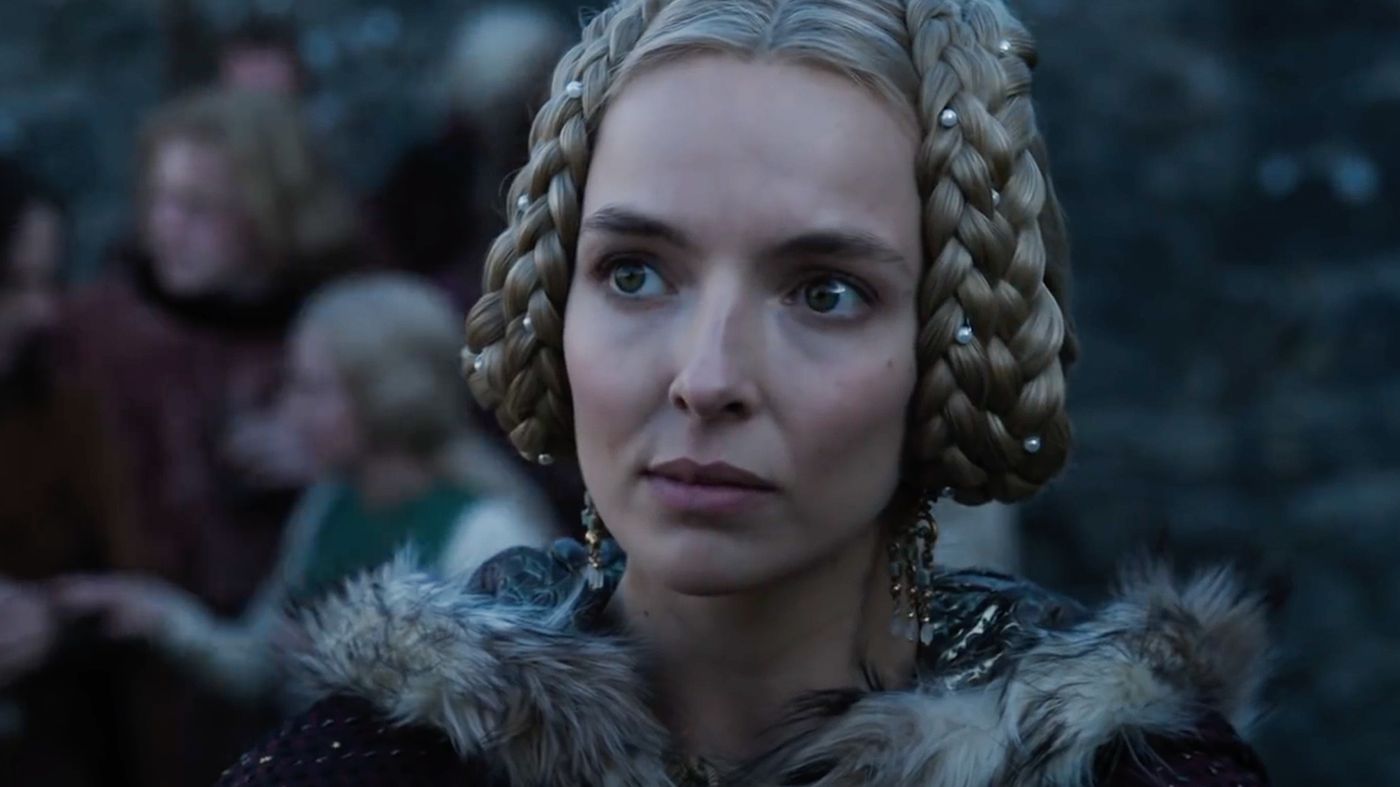
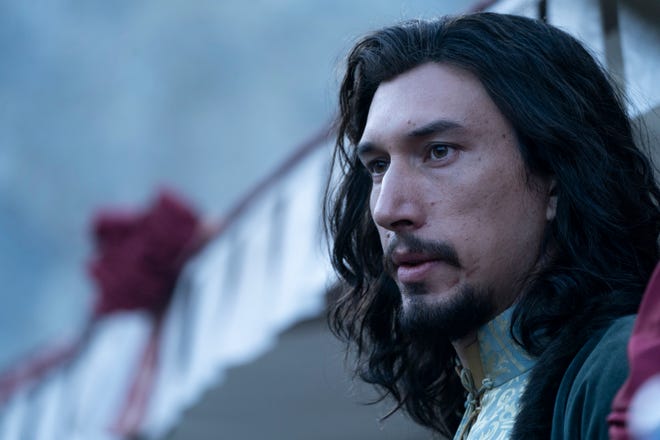
After years of military service in various wars under the sponsorship of Count Pierre d’ Alençon (Ben Affleck), Sir Jean de Carrouges (Matt Damon) is struggling to maintain his house and lands, after the death of his wife. So he marries Marguerite de Thibouville (Jodie Comer), the daughter of a disgraced but prosperous landowner. As part of the dowry, Jean is promised an area of land he’s long coveted, so he’s understandably miffed when Pierre takes control of it and gifts it to his squire, Jacques le Gris (Adam Driver), a former friend of Jean’s.

A powerful rivalry develops between the two men – a rivalry that finally culminates in Jacques visiting Jean’s castle in his absence and raping Marguerite. Jacques denies the allegation – in his self-aggrandising mind, Marguerite was attracted to him and therefore there was no rape. She meanwhile insists on speaking out against her assailant in an age when women in such situations were advised to keep quiet about such matters for their own safety.

Jean demands that Jacques meets him in mortal combat, and that God should decide who is telling the truth – but the consequences of him losing the fight are severe to say the very least. Marguerite will be burned alive if God judges her to be a liar.

The message here is inescapable. In a world where toxic masculinity holds sway, a woman’s word is worth nothing. She is expected to obey her husband in all matters and keep her mouth firmly shut, just as Jean’s mother, Nicole (Harriet Walter), had to when she was younger. It’s sad to observe that, many centuries later, this situation hasn’t improved as much as it should have done. Only recently, certain commentators in America have insisted on holding to the medieval belief that a woman cannot become pregnant through rape. It beggars belief but it’s still out there.

The Last Duel is told, Rashomon style, in three separate chapters, each one seen from the point of view of one of the leading characters. Often we see the same scene replayed with sometimes subtle, sometimes jarring differences. It’s not until we reach the final stretch that we witness Marguerite’s account of what actually happened to her and there’s no doubt in our minds that hers is the one we ought to believe. The script by Damon, Afflick and Nicole Holofcener, based on the novel by Eric Jager, is perfectly judged and a quick perusal of the actual events reveals that the writers have been assiduously faithful to what happened. Both Damon and Driver excel as men driven by their own overbearing sense of privilege, while Comer dazzles in every frame, clearly a woman on the verge of becoming a major star of the big screen. Little wonder that Scott has lined her up to play Josephine in his upcoming Napoleon biopic.

This is serious, grown-up filmmaking of a kind that’s sadly all too rare in a cinema dominated by cartoonish fantasy films. Scott has always excelled in recreating history on an epic scale and The Last Duel doesn’t disappoint. The big screen virtually explodes with a whole series of magnificent set pieces. Here is a medieval world that convinces down to the final detail, one that looks and feels thoroughly believable. And is there any other director who can depict medieval warfare in such brutal, unflinching detail? For once, the film’s 18 certificate feels entirely appropriate. I find myself gasping at just about every sword, axe and hammer blow.

The Last Duel won’t be for everyone, but for me it provides a visual feast with a compelling and fascinating story – and reinforces my belief that Ridley Scott is one of cinema’s most enduring and most versatile talents.

4.6 stars

Philip Caveney