Kora by Tom Kitchin

16/12/22

Bruntsfield Place, Edinburgh

We visited Kora a few days after it opened, back in July, and loved it. But then it was in its infancy, and Mr Kitchin was a friendly and visible presence. The perfect storm of Brexit, COVID and cost-of-living crisis means that restaurants are even more vulnerable than they were before, and he was clearly focused on giving this place a decent start. The question is, five months on, with a slightly longer menu and the restaurant staff given more autonomy, is Kora still delivering five star meals?

The answer is: yes. Yes, it is.

It’s a welcoming place, with a cosy, informal vibe; the staff are warm without being overbearing, professional without being stuffy. The diners before us are running a little late, so we have to wait a while for our table, but we’re happy enough to sit at the bar with some wine (a Chilean Sauvignon Blanc), perusing the menu. It’s hard to pick from the delights on offer.

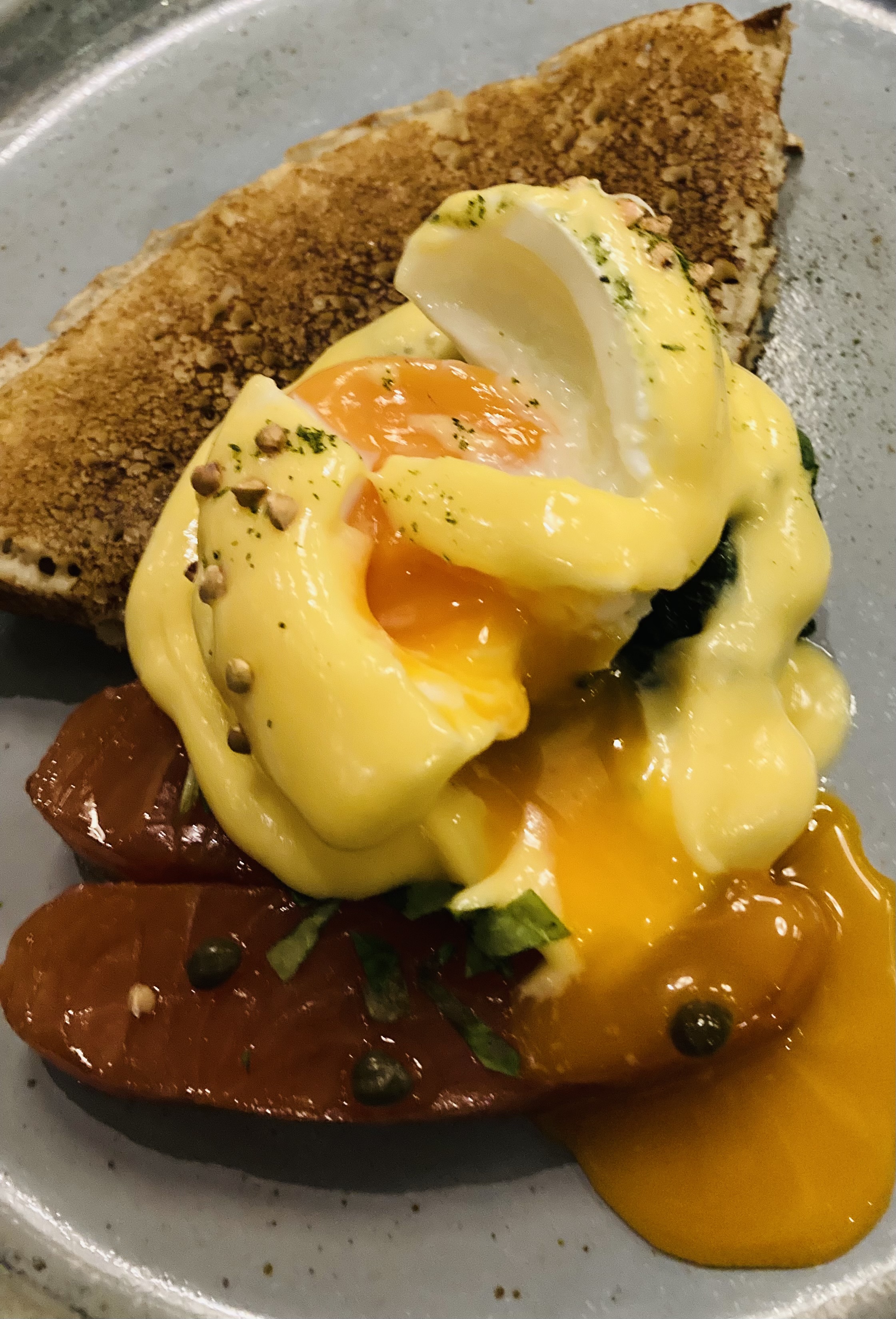
In the end, we both opt for the salmon starter. This comprises two thick slices of smoked salmon, served with a buckwheat galette, spinach, a perfectly poached egg and a buttery hollandaise sauce. It’s mouthwateringly-wonderful: the thick orange yolk cascading over everything; the salmon robust yet still delicate. It’s a great beginning!

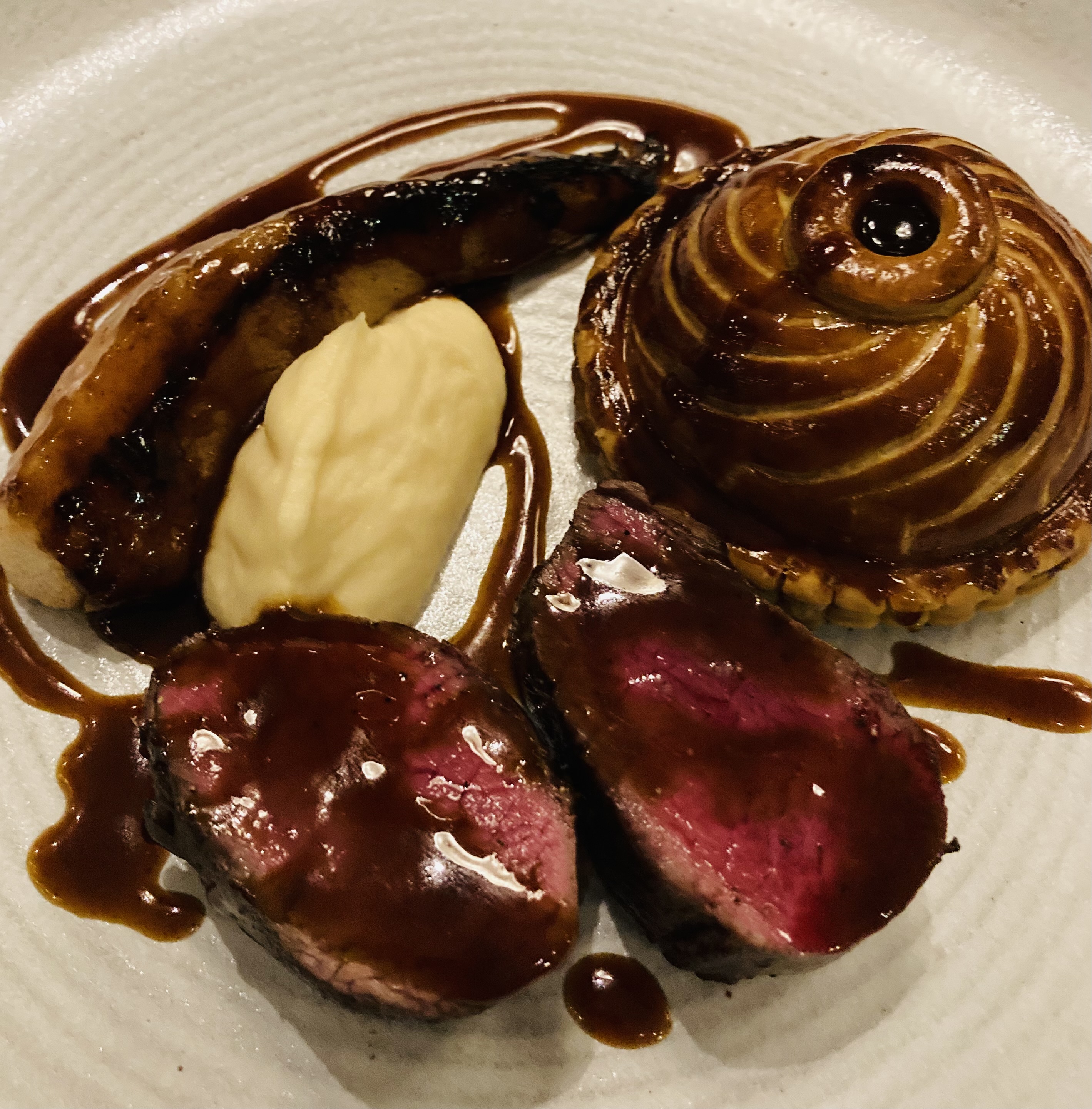
My main course is the Sika deer: a venison pithivier with some medium rare roasted loin, both cooked to perfection. I’m worried before it arrives that it’ll be too much, too rich, with all the pastry and red meat, but it’s perfectly judged, so that I feel satisfied rather than bloated. This comes with celeriac, which, although not my favourite vegetable, is beautifully cooked, and complements the meat well. Perhaps it would be better to have something fresh and green to offset all that richness, but this is just a minor quibble.

Philip has the partridge, which comes en croute, with a roasted leg on the side, as well as some salsify. This is succulent, well-spiced and subtly flavoured, the pastry flaky and crisp. He declares it to be ‘faultless’ and relishes every mouthful.

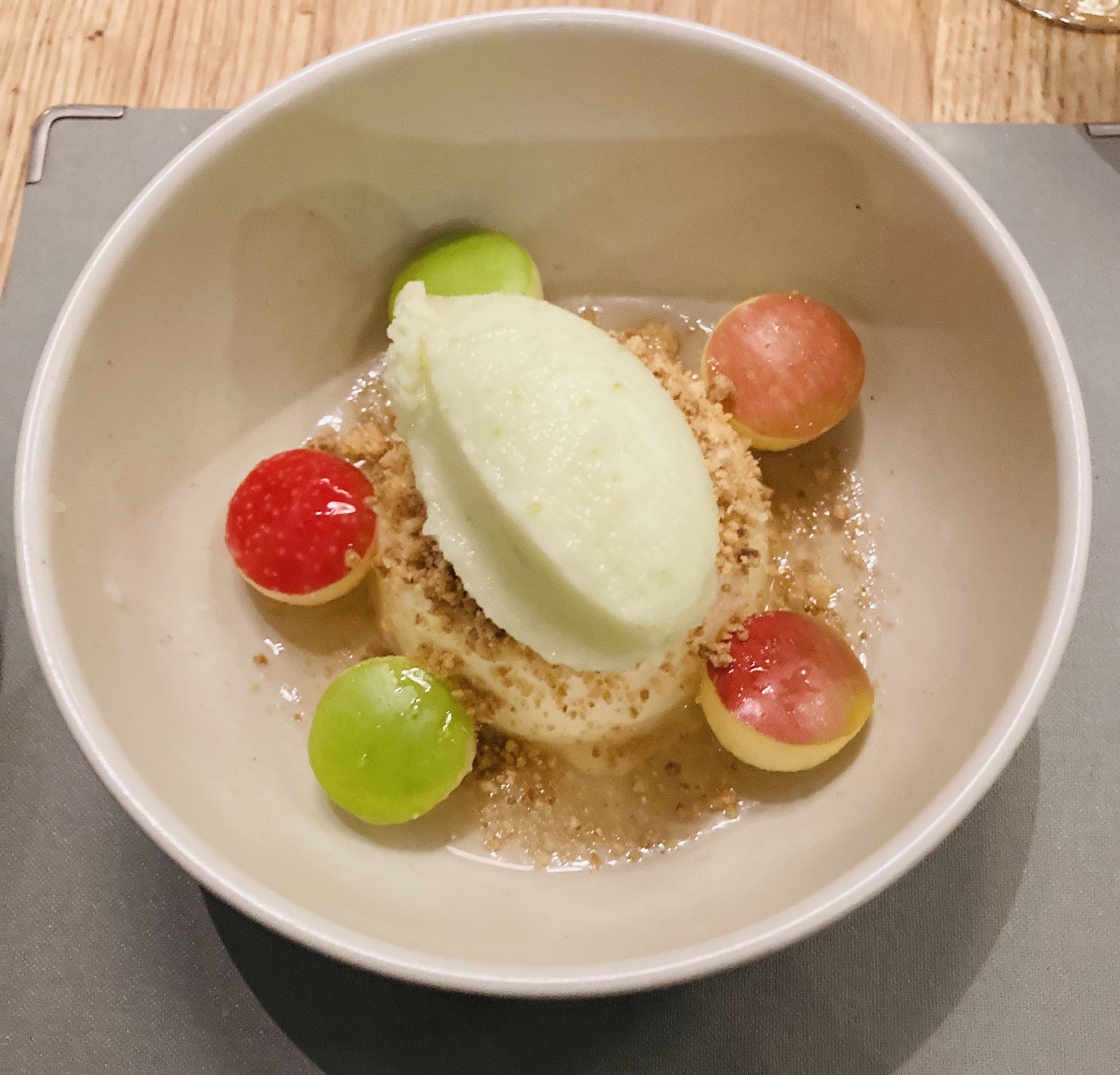
Philip’s pudding is chocolate, i.e. warm doughnut balls, a dark chocolate sauce, and Chantilly cream. It’s one of those dishes that makes you say ‘oooh’ a lot; it feels indulgent and nostalgic in equal measure. My cinnamon is something of an eye-opener, so much more than its description gives away. A real contender for my ‘Off Menu dream meal dessert’, this consists of a cinnamon panna cotta, served with tart, crisp pieces of apple and an apple sorbet, with a small, warm cinnamon bun on the side. I just know I’ll be ordering this again before too long.

We decline coffee, pay our bill, and head off into the cold, night air. Kora is only a ten minute walk from home; what a privilege to live so near a place as stellar as this.

5 stars

Susan Singfield
Avatar: the Way of Water

16/12/22

Cineworld, Edinburgh

There’s no denying the fact that, back in back in 2009, James Cameron’s Avatar was an absolute game-changer. It demonstrated the possibilities of digital filmmaking, relaunched the idea of 3D cinema and, in terms of the box office, was one of the most successful films in history. Of course there would be a sequel. It was a no-brainer. But we could have no idea, back then, how long it was going to take…

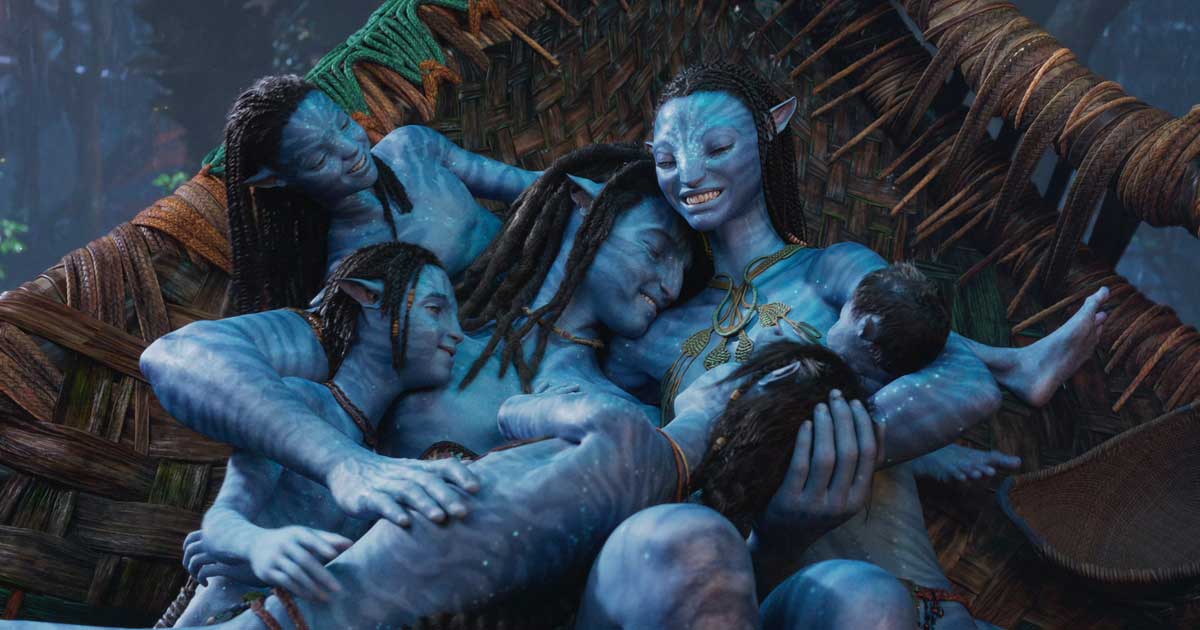
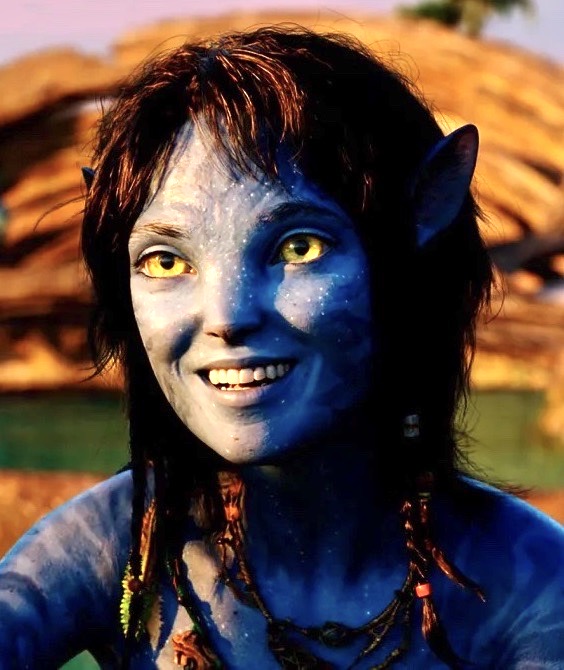
Thirteen years later, here I am in my local multiplex, staring at a giant screen through a pair of 3D glasses. It must be said that Pandora looks even more ravishing than it did last time. The world-building is second to none, the action set pieces as explosive as ever… but in terms of story, not an awful lot has changed. Jake Sully (Sam Worthington) has learned to love the Na’vi body he now inhabits and he and his wife, Neytiri (Zoe Saldana), have acquired a family, mostly by traditional methods – though in the case of Kiri (Sigourney Weaver), through some scientific tinkering in a laboratory, taking genes from Grace Augustine’s avatar. Together the extended family live an undemanding life in their exotic jungle home, even finding room for Spider (Jack Champion), the human son of Sully’s old nemesis, Colonel Myles Quaritch.

But of course, happiness cannot last forever and all too soon, The Sky People (who sound disconcertingly like a 1980s dance troupe) return in force, landing their fleet of space craft with enough power to burn down hundreds of acres of forest. Among them is Quaritch (Stephen Lang), reanimated as a Na’vi version of his former self and assigned the role of hunting down Jake. After an initial skirmish with Quaritch and his crew, Jake realises that he is putting everyone in his tribe in danger, so the Sully family leave their familiar home and seek refuge among the people of the Metakayina Reef.

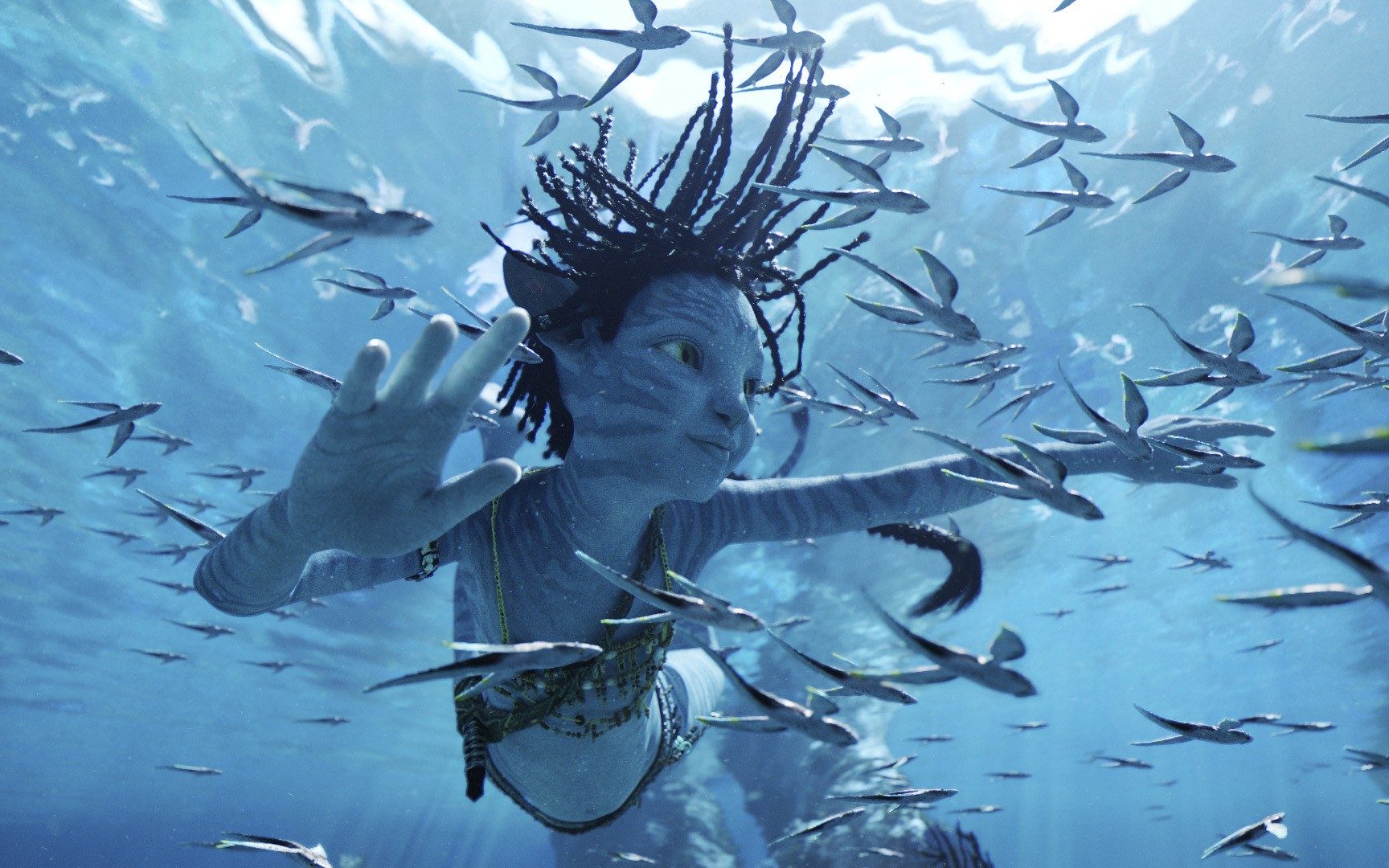
It’s here of course that the major difference from the first film comes into play. This new tribe is an aquatic one and much of the ensuing action takes place in and under the ocean as the Sullys learn how to operate in an unfamiliar environment. And the film does look exquisite, every frame captured in photo realistic style, the various denizens of the ocean portrayed with all the veracity of a Blue Planet documentary. It is an extraordinary technical achievement and you see exactly where all those millions of dollars have been spent.

But… The Way of Water has a three-hour-twelve-minute running time and, consequently, no matter how stunning it looks, I’m all too aware that there really isn’t enough story here to keep me fully engaged. Every set-piece seems to take forever to play out and, try as I might, I can’t help thinking about the other three (or is is four?) movies that Cameron has waiting in the wings. The final scenes take place in a sinking ship and have more than a nod to Titanic about them. This feels somehow meta: Cameron harking back to another of his former triumphs, where he took on the nay-sayers and won?

I find myself simultaneously hoping and doubting that The Way of Water is the film that will encourage audiences back to the cinema en masse. There are about eight of us at the afternoon screening I attend, which isn’t encouraging – but we’ll have to wait to see how it all plays out. Increasingly, however, the Avatar franchise is in danger of becoming James Cameron’s folly.

It’s massive, it’s impressive, but it’s ultimately an empty vessel. Can he really hope to rekindle those former glories?

The jury is out.

3.6 stars

Philip Caveney

White Noise

13/12/22

The Cameo, Edinburgh

Noah Baumbach’s latest film – based on the 1985 novel by Dom Delillo – is mostly about death: humanity’s fear of it, the inevitability of it and the final irrefutable truth that one day it comes to us all. If this makes White Noise sound about as much fun as a car crash at a funeral, don’t be misled. It’s a fascinating film, by turns absurdly funny, deeply puzzling and profoundly worrying. If, ultimately, it attempts to bite off a little more than it can chew, it’s nonetheless an ambitious and bravely experimental slice of filmmaking.

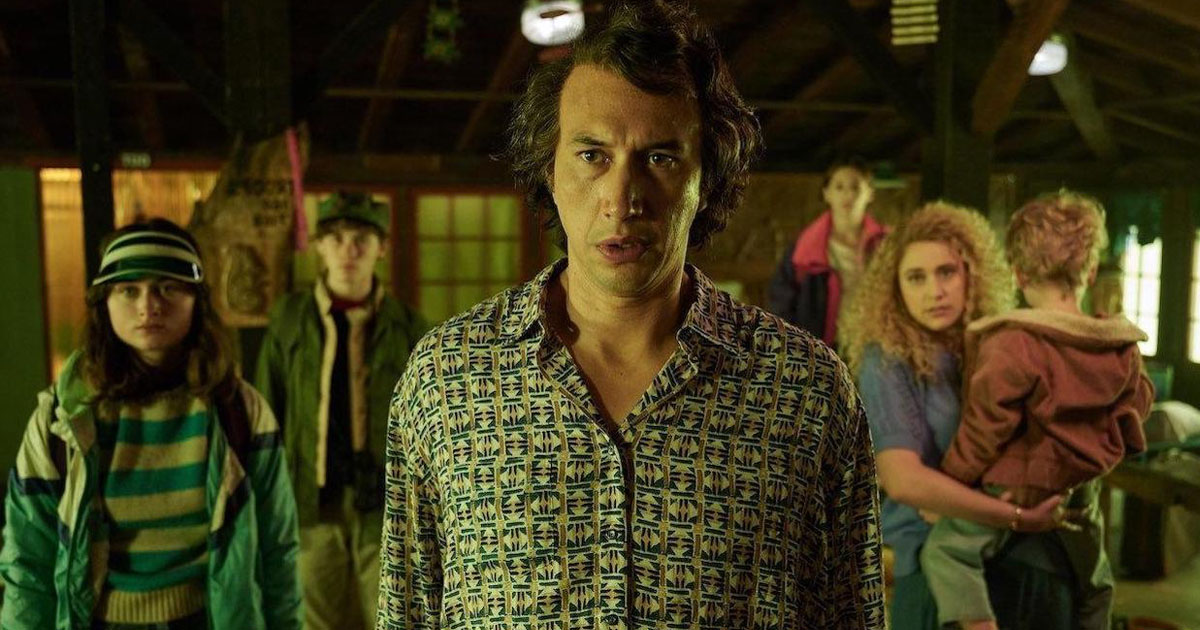
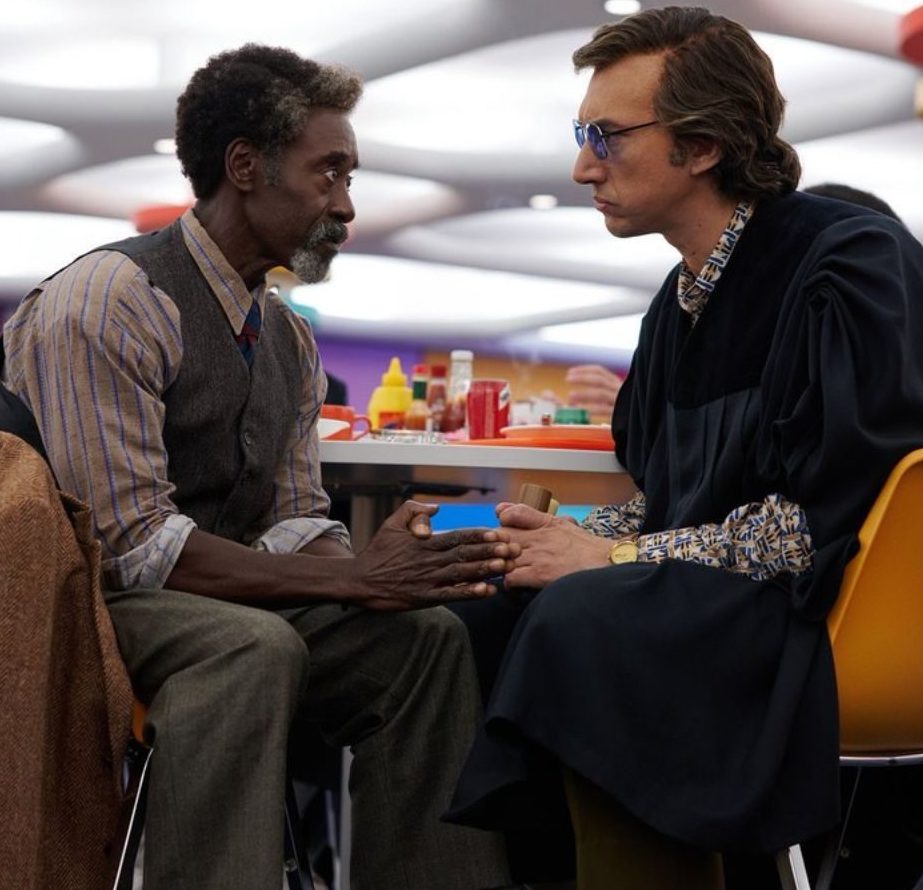
We’re somewhere in the American midwest where Jack Gladney (Adam Driver) is ‘Professor of Hitler Studies’ at the prestigious ‘College on the Hill’, where he’s fond of waxing lyrical about the rise of the Nazis without, it seems, any inkling of how distressing a subject it actually is. He’s also hiding the embarrassing fact that he can’t speak a word of German. Jack enjoys an adversarial friendship with another lecturer, Murray Siskind (Don Cheadle), who specialises in two main subjects, Elvis and er… car crashes. A scene where the two men attempt to engage in a kind of intellectual battle of wits in front of a spellbound class is a particular highlight.

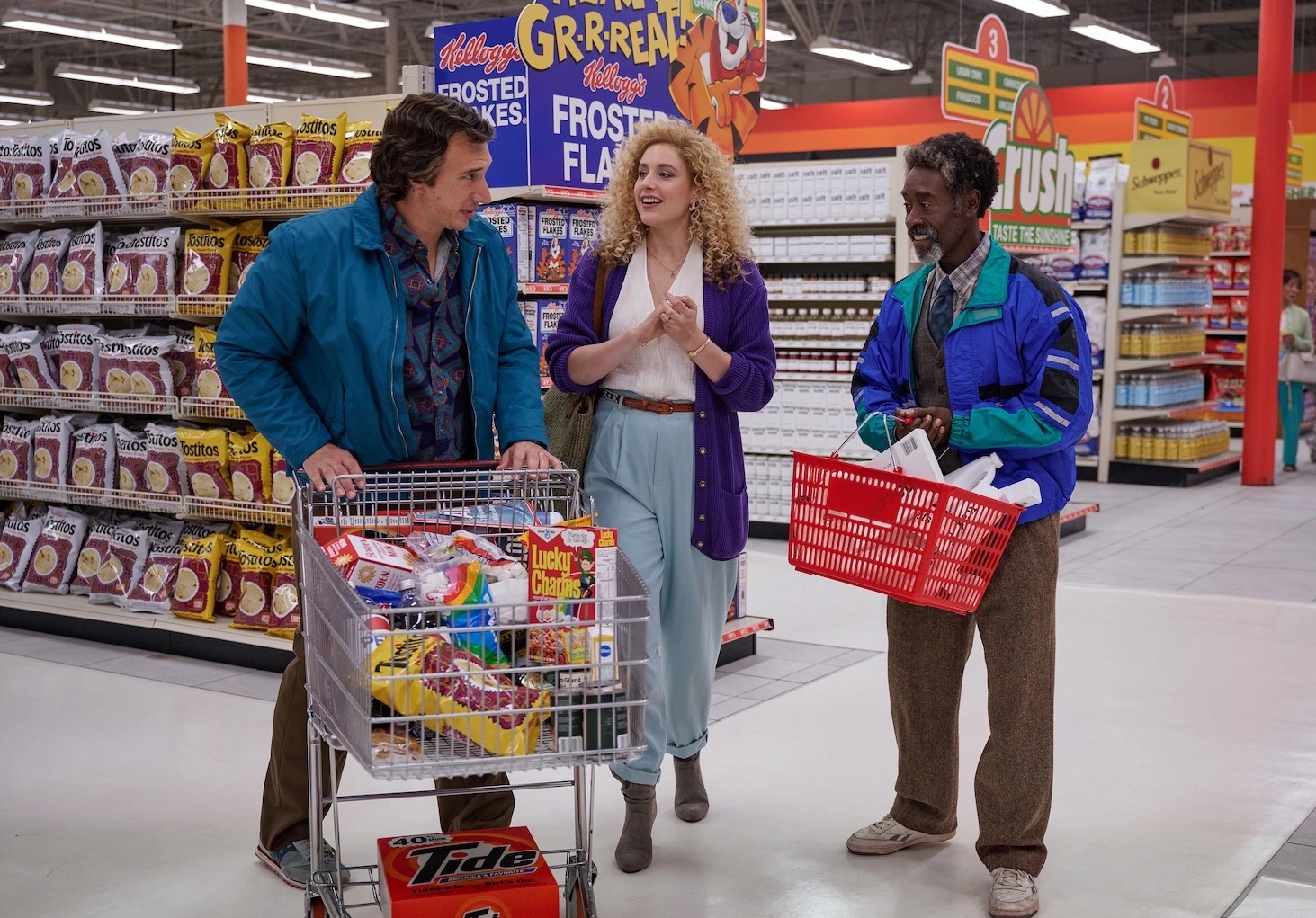
Jack lives with his wife, Babette (Greta Gerwig), and their extended family. Both have had previous marriages and the gaggle of kids who live with them are all better informed than either of their parents. The family lives in a bubble of domestic bliss, interspersed with regular trips to a gigantic, day-glo supermarket, which seems to hold for them the importance of a church. But not everything is quite as cosy as it seems. What are those pills that Babette is secretly taking? And why, when challenged, does she deny their very existence?

Matters take a dramatic turn for the worse when a freight train laden with dangerous chemicals collides with an articulated lorry, carrying something equally nasty. The result in an ‘airborne toxic event’ which sends clouds of deadly fumes into the sky. The Gladney family – and just about everybody else in the vicinity – vacate their home in a desperate attempt to escape. But what exactly are they fleeing from? And what’s the prognosis if you’re exposed to those ‘deadly’ clouds? Nobody seems to know.

White Noise offers as many questions as it does answers. If not everything we’re offered here quite comes off, much of it works brilliantly. Baumbach’s vision of suburban America is packed full of surprises, from doctors who clearly don’t care about the welfare of their patients to a Mother Superior who rubbishes the idea of heaven and angels. There are perfectly judged performances from Driver and Gerwig (particularly the latter who plays her role as if in a permanent drug daze) and Lol Crawley’s cinematography gives everything an unearthly sheen.

In the film’s final third, Jack finds himself driven to seek out the person responsible for Babette’s addiction, but even that doesn’t follow the lines you’d generally expect to encounter in such a narrative. It’s here that the film begins to feel a little too unhinged, though the enterprise is rescued by a delightful end-credit sequence.

It’s an ingenious device that keeps me glued to my seat until the screen finally fades to black.  

3. 8 stars

Philip Caveney

The Silent Twins

09/12/22

Cineworld, Edinburgh

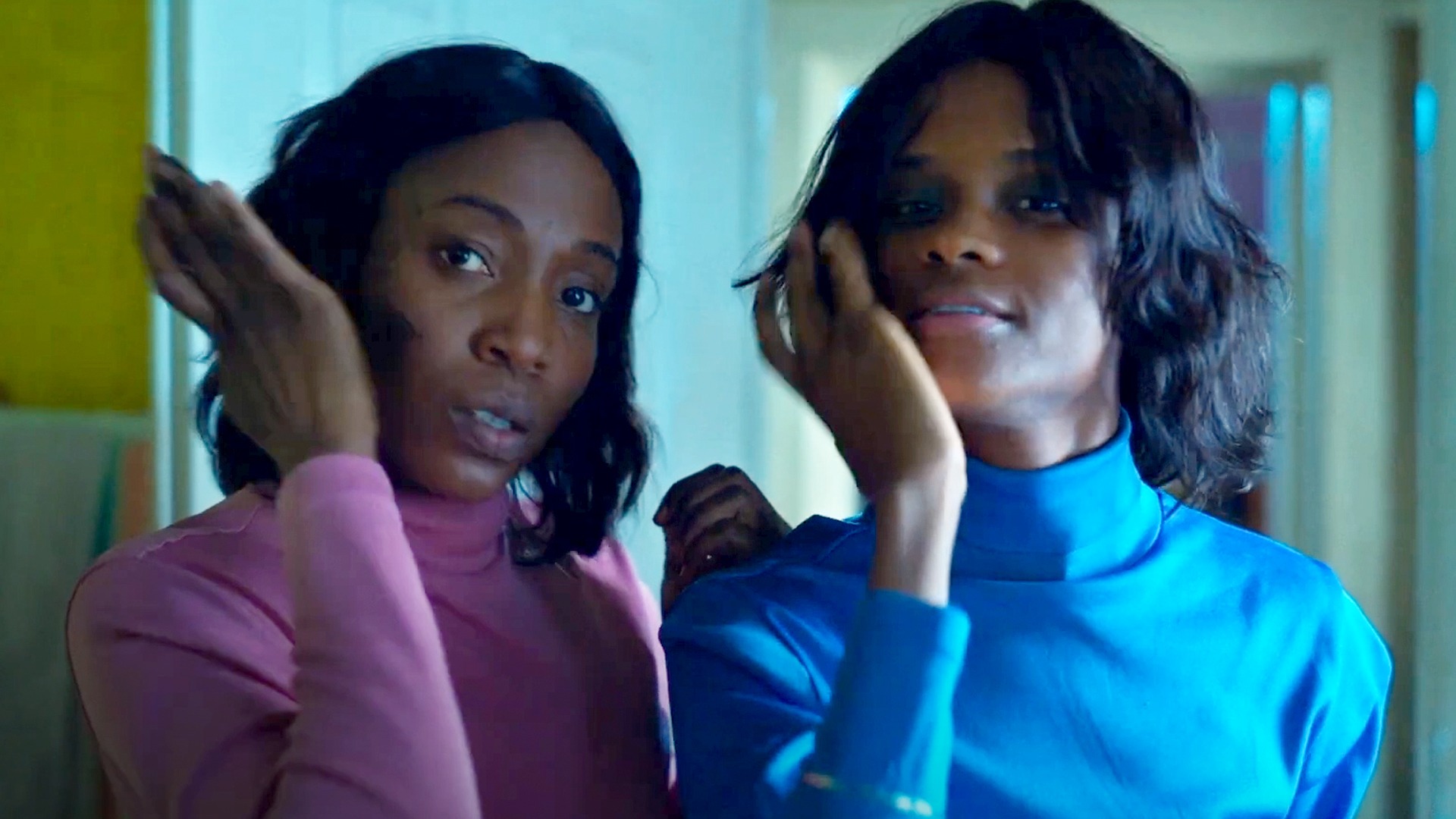
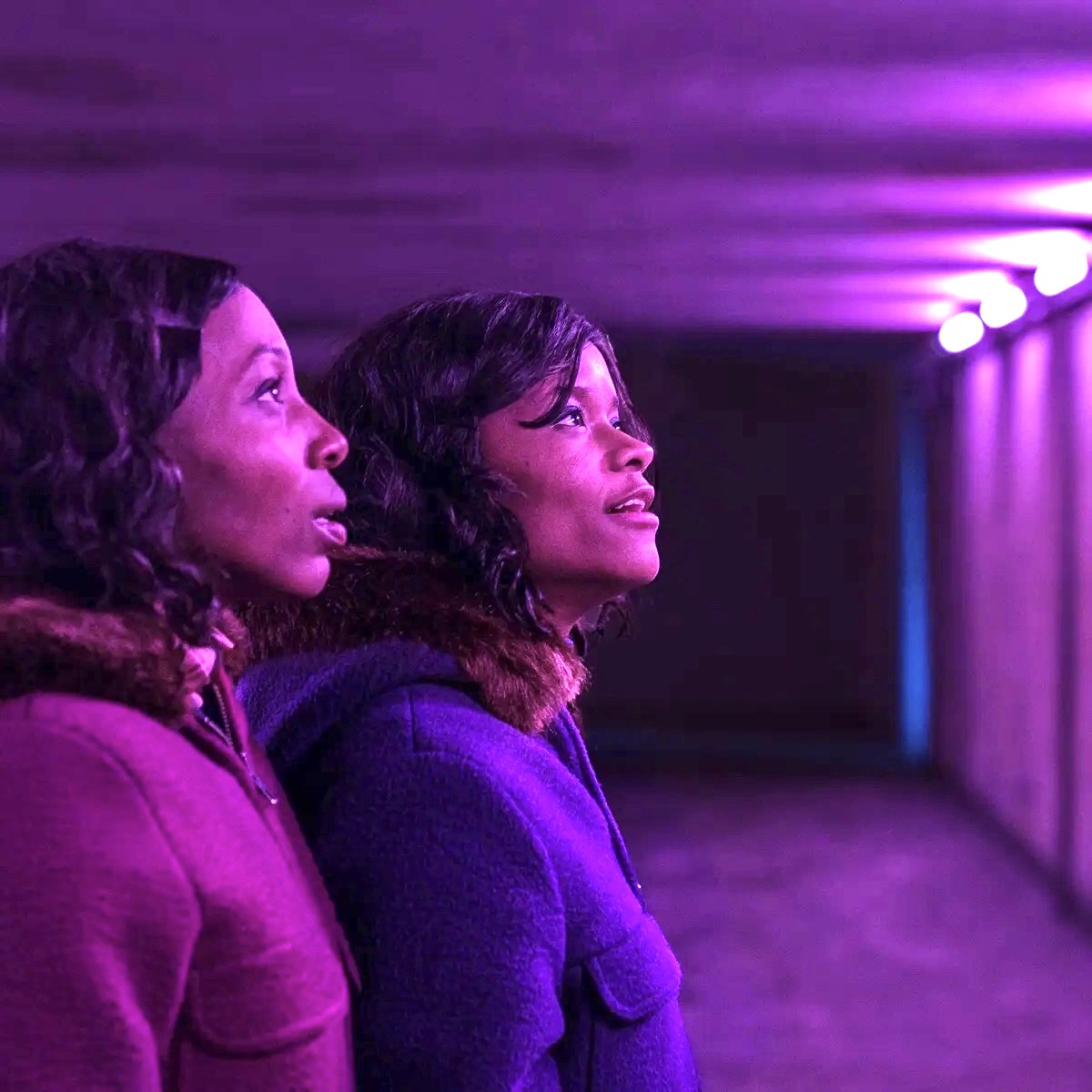
The real-life silent twins of the title are Jennifer and June Gibbons, born in 1963, who refused – for years – to speak to anyone but each other. No one really knows why, but there are myriad theories: they were outsiders – the only Black kids in their small Welsh town; they were bullied; one was controlling the other – or, more crudely, they were ‘disturbed’.

Certainly ‘disturbed’ was the verdict of a baffled legal system, which over-reacted to the girls’ teenage crimes of petty theft and arson, and sent them to Broadmoor high security mental health hospital – a place more commonly associated with hardened murderers than wayward kids. How did they get through the eleven long years they spent there?

Director Agnieszka Smoczynska shows us how: by retreating into their rich inner lives. In this illuminating biopic, adapted by Andrea Seigel from the book by journalist Marjorie Wallace (played here by Jodhi May), we see that Jenny and June are far from mute and far from short of things to say. They just have a different way of expressing themselves. In reality, their so-called ‘secret language’ was a mixture of Bajan slang and super-fast English, which they used to tell stories to each other; here, their tales are depicted as distinctive animations. The girls are writers, producing countless reams of short stories, poems, even novels, spending their meagre benefits on foolscap, typewriter ink and – eventually – vanity publishing. They refuse to engage with their seemingly lovely family, rejecting any offers of help. Sent to separate schools for kids with special educational needs, they both become further withdrawn, refusing to move or eat, let alone speak. They’re driven by their art: once school is behind them, they realise they need to interact with the outside world – how can they write about romance if they’ve never experienced it? But romance is in short supply in their dalliances with the odious Wayne (Jack Bandeira)…

If only all biopics were as imaginative, engaging and sensitive as this! Jenny and June are not presented here as curiosities, but as troubled young people, let down by a system totally lacking in empathy, keen to other them, to set them apart. We see them as little girls (Eva-Arianna Baxter and Leah Mondesir-Simmonds) and as young women (Tamara Lawrance and Letitia Wright), by turns mischievous and vulnerable, selfish and self-absorbed. The four performances are exemplary, like a house of mirrors, amplifying the twins’ co-dependence, as well as the monstrous cruelty of sending them to an institution destined to destroy them, breaking two butterflies on a barbaric wheel.

Smoczynska imbues the girls’ story with humanity: there is sweetness here, and humour, as well as misery and obsession. It’s a thought-provoking, insightful piece of work.

4.5 stars

Susan Singfield

Guillermo del Toro’s Pinocchio

19/12/22

Netflix

Guillermo del Toro is one of my favourite film directors – and Disney’s Pinocchio one of the formative films of my childhood. So when I first hear the news that the Mexican director is planning to deliver his own version of Carlo Collodi’s classic tale, it’s naturally something I eagerly look forward to – for a very long time. Indeed, it turns out that del Toro has actually been working on this astonishing stop-frame animation for something like fifteen years.

As the release date finally approaches, I look everywhere for a cinema in Edinburgh that’s planning to show del Toro’s film on the big screen, but alas, with the Filmhouse out of action, it cannot be found. So Netflix it must be. As it turns out, some visions are so powerful, so perfect, that they can blaze out of a small screen like meteors. Guillermo del Toro’s Pinocchio is an astonishing film, that has the audacity to take everything we know about the story and give it a thorough makeover. What’s more, the changes that he makes (he co-wrote the screenplay with Patrick McHale) all seem to enrich the original, making it more logical, more explicable.

Revelation number one: when we first encounter woodcarver, Geppetto (David Bradley), he has a real son, Carlo (voiced by Gregory Mann). But Carlo dies tragically when Italian air force planes unload their bombs onto the church, where Gepetto is working on a huge crucifixion. This backstory helps flesh Geppetto out and makes his subsequent actions more believable – especially when Pinocchio is forged from the very tree planted to mark Carlo’s grave.

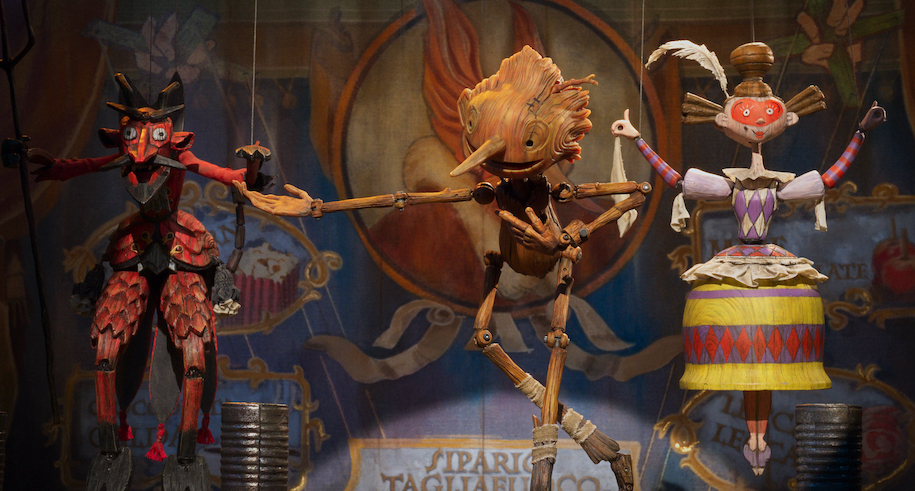
Revelation number two: the Pinocchio that Geppetto eventually carves in a drunken rage looks nothing like a ‘real boy’. He’s a strange, spindly, half-finished marionette, generally shunned and mistrusted by the people in his home village. Contrary to the original tale, it’s the villagers who have to learn to accept Pinocchio, rather than the other way around.

Revelation number three: this version is set in Italy in the 1930s, under the rule of Benito Mussolini. Pinocchio’s adventures on the ‘Donkey Island’ are exchanged for scenes where he unwittingly becomes a poster boy for fascism. (It’s nakedly clear what del Toro is saying here. And it makes perfect sense, because to take on Disney’s most iconic scenes would be a pointless exercise. If you can’t better a scene, do something entirely different, right?)

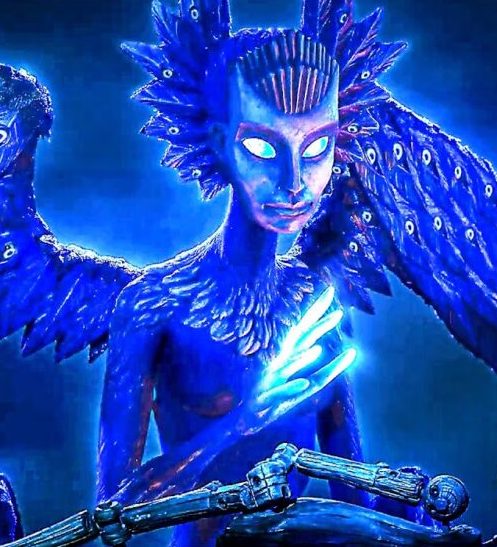
There’s more, much more, packed into the film’s two hour run. We meet Sebastian J Cricket (Ewan McGegor), an ambitious, self-aggrandising would-be author, who only agrees to take on the task of being Pinocchio’s ‘conscience’ in the hope off getting a book deal. There’s Count Volpe (Christoph Waltz), the greedy, venal owner of a travelling freak show, who spots an opportunity to make lots of money and who bullies his monkey assistant, Spazzatura (Cate Blanchett) at every opportunity. And wait till you see what the animators (and Tilda Swinton) have done with the infamous Blue Fairy, rechristened here as the Woodland Sprite. More than anything else, there are fundamental changes to the character of Pinocchio himself. He’s no longer the obnoxious, pig-headed lout of the novel, but a sweet, misguided misfit, desperately trying to be liked. A scene where he can’t understand why all the villagers hate him, but adore the other wooden figure nailed to a cross on the church wall is a stand-out.

It’s not just the levels of invention in the story that make this such a unmitigated triumph. It’s the loving attention to detail: every character, every set, every painted landscape; it all pulses and dazzles with imagination of the highest calibre. There’s so much to see here, it’s clearly going to need repeated viewings to really take it all in. And watching it makes me wish that dear old Ray Harryhausen was still alive to see where modern technology has brought the art of stop-motion animation.

Many films have the word ‘masterpiece’ attached to them, but few deserve it as thoroughly as this one. All you need to do it hit the Netflix button, so… no pressure.

5 stars

Philip Caveney

Once Upon a Snowstorm

09/12/22

Traverse Theatre, Edinburgh

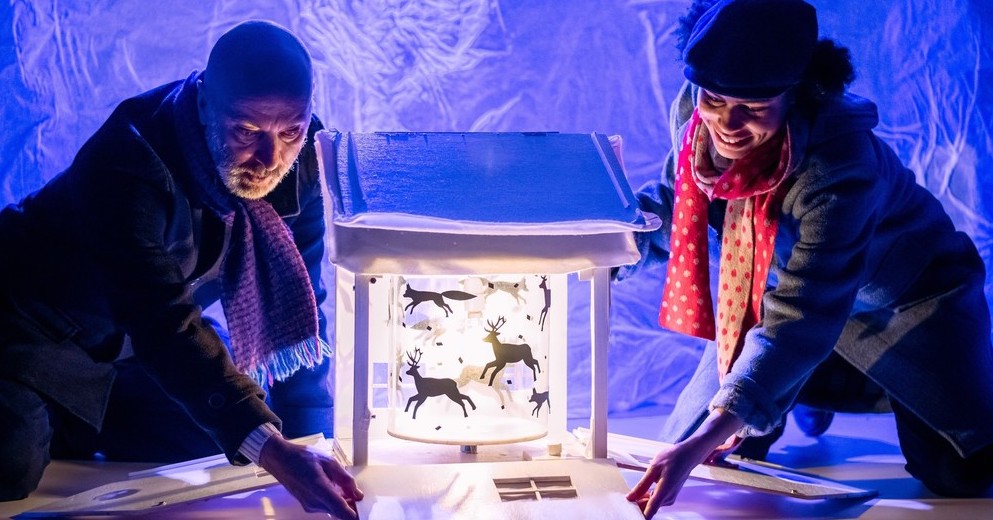
Described as a play for children aged 5-8 and their families, Once Upon a Snowstorm is based on the popular picture book by Richard Johnson. It tells the tale of a boy (Fay Guiffo) and his dad (Michael Sherin), who live in a woodland cottage. One day, they go out to hunt in the snow, but are separated and the boy is lost. Eventually, he ftakes shelter in a cavern and falls asleep. When he awakes, he finds himself surrounded by friendly animals, who teach him all about their ways…

It’s a charming – if slight – tale. Although Jo Timmins’ adaptation includes dialogue, it retains the quiet solemnity of Johnson’s wordless original, as well as the gentle pace. It feels true to the book, capturing its tranquil, earnest tone, and illuminating the boy’s sense of wonder. I’m especially entranced by the music (composed by David Paul Jones), and the way Guiffo’s violin is integrated seamlessly into her performance.

Traverse 2 has been reconfigured for this show, and it’s good to see it being used imaginatively. The acting space is tented with crumpled white sheets, and the seating comprises rows of ‘tree stumps’ (covered stools) and cushions, presumably intended for the wee ones to sit on and, at the back, a single row of adult-sized chairs. On entering, we’re asked to hang up our coats and remove our shoes, which somehow adds to the sense of occasion: something different is happening here. Largely, it works well, although there are some issues with the sight lines. There’s no one organising the smallest children to the front rows, and not enough full-sized seats for the grown-ups accompanying them. I can understand the wish to create something intimate, with no clear boundaries. But it might make sense to place the beautiful model house on a higher plinth, so that we can actually see it, and for the boy not to spend quite so much time sitting or lying on the floor.

Sherin and Guiffo embody all the different animals, and their performances are enchanting. Perhaps there’s a little too much repetition for me (the same route through the audience; three different lots of projected images), but the target audience seem to lap it up and, at forty-five minutes, there’s no time for this to flag.

Once Upon a Snowstorm is a sweet, simple tale, with some beautiful imagery.

3 stars

Philip Caveney

Your Christmas or Mine?

08/12/22

Amazon Prime

Christmas movies are so hard to get right, especially when it comes to pleasing a committed Scrooge like me. Much of what passes for festive fare turns out to be inane, tinsel-adorned tat, often built around some available musical output. 2019’s Last Christmas springs immediately to mind. Pitched as a tribute to the late George Michael, it is a big dollop of vacuous candy floss. So I approach this film with some trepidation, noting that it barely registered at cinemas across the UK on its recent release – but a combination of ill-health and freezing weather conditions prompt me to take a gamble on it. I’m glad I do.

Your Christmas or Mine? (terrible title) is written by comedian Tom Parry and directed by Jim O’ Hanlon. James (Asa Butterfield) and Hayley (Cora Kirk) are young drama students in the throes of a heady romance. We first meet them at a busy railway station, where they are preparing to head off to their respective family homes to spend Christmas on different sides of the North/South divide. But, at the last moment, James experiences a sudden overpowering longing to spend more time with Hayley. He jumps off his train, changes platforms and scrambles aboard her service, seconds before it leaves the station.

Unfortunately, Hayley has had the very same idea…

After a sudden snowfall, the twosome find themselves marooned in unfamiliar locations and obliged to spend Christmas with their partner’s families. Once I’ve accepted this unlikely event, things rapidly get more interesting, as James and Hayley realise that neither of them has been entirely truthful. Why does James’ dad, Humphrey (Alex Jennings) hate Christmas so much? Why is Hayley’s dad (Daniel Mays) so obsessed with turduckens? And… who the hell is Hubert?

Parry’s culture-clash comedy sparkles with delightful dialogue, manic misunderstandings and riveting revelations, while the two central characters’ escapades are pitched just on the right side of believability. There’s a poignant explanation for Humphrey’s Scrooge-like persona that unexpectedly gives my tear ducts a bit of a workout; the two leads are immensely likeable, and there are cameos by excellent character actors (Mark Heap, Harriet Walter and David Bradley, to name but three.) Best of all, there are a couple of surprises I genuinely don’t see coming.

Your Christmas or Mine? is a pleasant way to spend a couple of hours and, after witnessing some real festive stinkers in recent years, that’s something to be thankful for. If asked for a Christmas movie recommendation this year, I’m happy to go with this.

Or Die Hard. It’s a tough call.

4 stars

Philip Caveney

Matilda the Musical

08/12/22

Cineworld, Edinburgh

Way back in 2010, we spent a few days in Stratford-upon-Avon, to see in the New Year. Of course, we planned to go to the theatre while we were there, but we were winging it, and didn’t check what was on. We just assumed there’d be a Shakespeare, and thought we’d pick up tickets on the night. So we were disappointed to find nothing from the Bard on offer, and grimaced at the thought of the only thing there was: a kids’ musical. Still, we didn’t have anything else to do, so we wandered disconsolately up to the box office, only to find that there were no seats left. Double dejection. “There are some standing tickets,” we were told. “They’re £5 each.” We dithered. Did we really want to spend a couple of hours on our feet watching a play we weren’t that keen to see? “It’s only a fiver,” we reasoned. “If we don’t like it, we can leave at the interval.”

That night, we were treated to the delight that is Matilda the Musical – one of the most fortuitous accidents of our lives. Of course we didn’t leave at the interval: we were captivated. Tim Minchin and Dennis Kelly had created a masterpiece, and we’d been lucky enough to stumble upon it.

Of course, the raw material they had was good. Roald Dahl’s Matilda is an engaging character: a little girl with more wit and gumption than any of the adults in her life. At the tender age of ten, she realises that she can’t put up with either her parents’ wilful neglect or her cruel headteacher’s bullying. After all, “if you always take it on the chin and wear it, nothing will change”. It shouldn’t take a child to put things right, but she only knows two decent grown-ups: Miss Honey, who is stymied by her own fear, and Miss Phelps, who doesn’t know the dismal truth, only the fairytale Matilda has concocted for her. It’s a David and Goliath tale, of pantomime proportions.

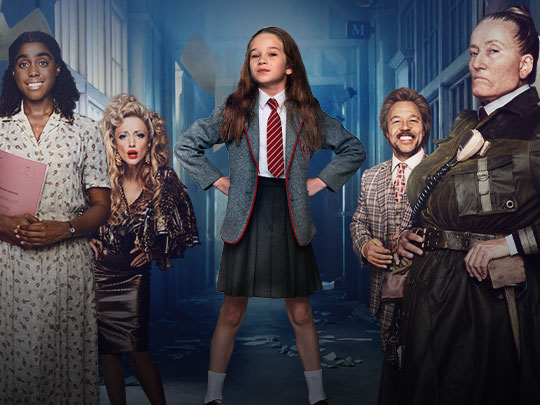
I am excited to see the film version of this (by now) hit stage show, and it doesn’t disappoint. Alisha Weir imbues Matilda with just the right amounts of sass and vulnerability, all righteous anger and secret yearning. Emma Thompson’s Miss Trunchbull is a towering threat, oversized to illuminate the mountain Matilda has to climb; she’s clearly revelling in the role. Indeed, there’s a sense of relish from all the adult actors playing against type: Lashana Lynch (Miss Honey) unleashing her softer side and some seriously impressive vocals; Stephen Graham and Andrea Riseborough taking a break from the highbrow as Matilda’s comedically grotesque parents. It’s a fun, feel-good film – despite the horrific violence and cruelty it contains – with a bright, rainbow palette, and the sense, all the way through, that Matilda will triumph.

The young cast are adorable – cute, but not overly contrived. Andrei Shen (Eric), Charlie Hodson-Prior (Bruce), Rei Yamauchi Fulker (Lavender), Ashton Robertson (Nigel) and Winter Jarrett-Glasspool (Amanda) make a formidable team, following Matilda’s lead and ultimately freeing themselves from Miss Trunchbull’s clutches.

Matthew Warchus, who also directed the theatre version, makes the transition to film successfully. There is an element of staginess, it must be said, but only in the best possible way: those huge, ensemble dance numbers are a delight.

With kids or without them, Matilda the Musical feels like a Christmas must-see this year.

4.2 stars

Susan Singfield

The Menu

06/12/22

Cineworld, Edinburgh

This dark and malevolently funny film, directed by Mark Mylod, expertly skewers the pretensions of fine dining and the people who indulge in it. It’s an assured piece of work, but, as somebody who enjoys the occasional bit of haute cuisine, I take its final assertion – that the only food worth getting worked up about is cheeseburger and fries – with a large pinch of smoked paprika.

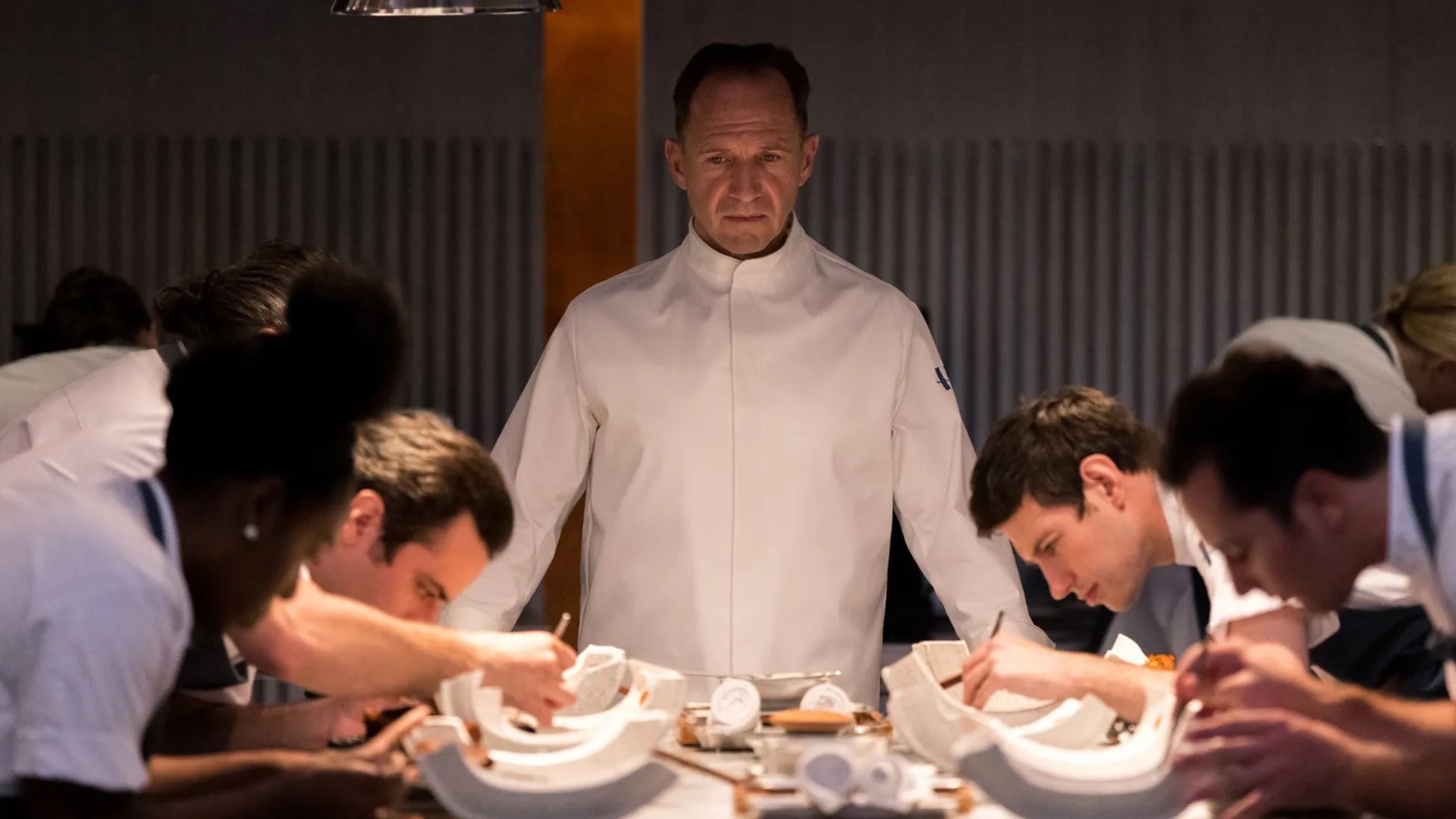
Tyler (Nicholas Hoult) is a lover of good cooking, sycophantically devoted to the work of culinary genius, Chef Slowik (Ralph Fiennes), about whom he has an encyclopaedic knowledge. When we first encounter Tyler, he’s waiting impatiently at a quayside with his date, ‘Margot’ (Anya Taylor-Joy), for the boat that will take the two of them over to Slowik’s private island. Once there, along with a group of other specially invited guests, the couple will experience the great man’s latest menu. Their dinner companions include a couple of influential food critics, a trio of investors, a B-list movie star and even Slowik’s mother, who appears to be hopelessly drunk as the guests take their seats.

Slowik’s devoted staff hurry obey his every word, while his second in command, Elsa (Hong Chau), wanders around the restaurant politely insulting the diners to their faces.

The ensuing events are presented as a series of courses, complete with onscreen descriptions and, as the time slips by, Slowik’s offerings become ever more absurd. (I particularly love the course that consists of a selection of accompaniments for bread that neglects to include any actual bread, no matter how vociferously the diners demand it.) But soon violence and bloodshed become major ingredients and the diners are fast losing their appetite. It’s clear that this is going to be Slowik’s swan song, a rebuke to a way of life that he has increasingly come to despise – and that it’s going to take considerable ingenuity to survive the final course.

An inventive satire packed with scenes of cruelty and humiliation, The Menu seems to take great delight in settling scores. There are some clever plot twists here – though not everything stands up to close scrutiny – and Fiennes excels as a man who has let his own burgeoning success push him to the very edge of sanity. Taylor-Joy is terrific too, as the only character in the film prepared to tell Slowik exactly what she thinks of his food.

It won’t be to everyone’s taste, but I thought The Menu was delicious. Bon appetit!

4 stars

Philip Caveney

The Humans

04/12/22

Netflix

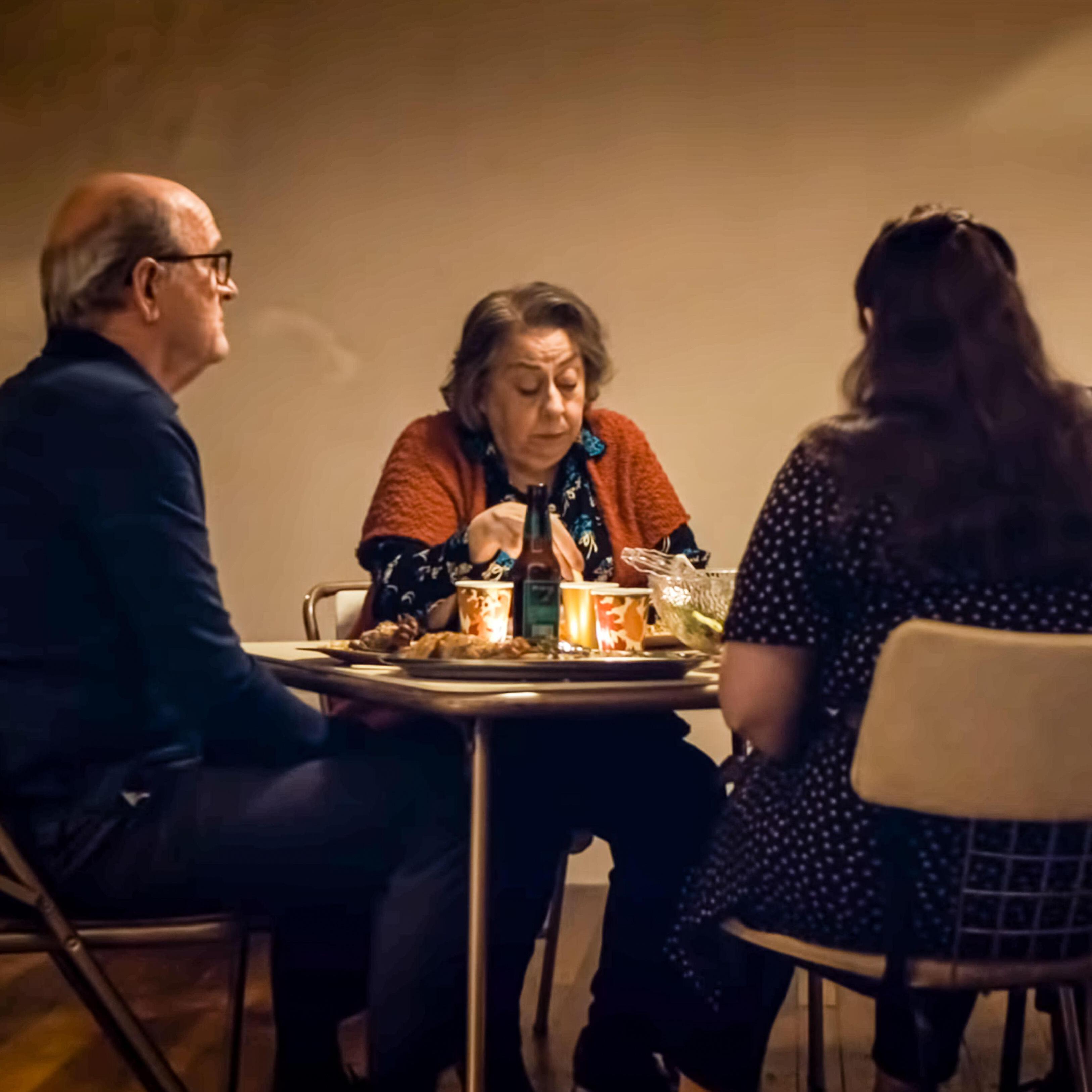
Adapting a stage play into a film can be fraught with difficulties and it’s not often that one manages to rise above the strictures that such a process imposes. The Humans is playwright Stephen Karam’s attempt to do exactly that with his Tony-Award winning drama. His ‘opening out’ procedure is to use the apartment where the action takes place almost as an extra character. As the extended Blake family go about trying to celebrate Thanksgiving, the ugly, ramshackle new home of Brigid (Beanie Feldstein) and Richard (Steven Yeun) has all the grim oppressiveness of a traditional haunted house. We watch the family conversing at the end of a filthy corridor or crammed into an awkward corner. The camera lingers on blistered plaster and rusting metal. It’s almost as though the place is sentient and spying upon them. The sense of impending dread is palpable.

But this is far from being a straightforward ghost story. The Blakes are haunted by their own sense of failure. Patriarch Erik (Richard Jenkins) seems obsessed with the idea that something bad is going to happen, and often refers to the near miss the family experienced with the tragedy of the Twin Towers. His wife, Deidre (Jayne Howdishell), laments another slip-up with her Weight Watchers schedule, while Brigid announces that she hasn’t managed to secure a grant to fund her career as a musician and will have to contemplate working in retail. Brigid’s sister, Aimee (Amy Schumer) is suffering from a debilitating illness and has broken up with her girlfriend, while Richard refers to mental health issues back in his youth. And Erik’s mother, Momo (June Squibb), sits in her wheelchair and unleashes the occasional string of what appears to be rambling gibberish…

The Humans is nobody’s idea of ‘a fun night as the flicks’. Indeed, it’s tortuous, uncomfortable and, at times, dismaying. And yet, it manages to exert a slow, powerful grip on me, as the tension slowly rises to boiling point. If there is no real resolution to the mess of unconnected distress that’s unearthed at the Thanksgiving from Hell, it should also be said that, in its own way, it’s a cinematic offering like no other and – to my mind – that makes it well worth checking out.

3.8 stars

Philip Caveney